Overview
Health disparities represent systematic differences in health outcomes and access to healthcare services among different population groups, particularly those defined by socioeconomic status, race, ethnicity, gender, geographic location, sexual orientation, and disability status. These disparities are not random variations but rather reflect deep-rooted patterns of social stratification and inequality that manifest in measurable differences in disease prevalence, mortality rates, life expectancy, and quality of care. Understanding health disparities is fundamental to Sociology because they serve as tangible evidence of how social structures, institutions, and power dynamics directly impact biological outcomes and human wellbeing.
For the MCAT, health disparities represent a high-yield topic that bridges multiple disciplines including sociology, psychology, and biological sciences. The exam frequently tests students' ability to analyze how social determinants of health create and perpetuate unequal health outcomes across populations. Questions may present data showing differential disease rates, describe barriers to healthcare access, or ask students to identify the sociological mechanisms underlying observed health differences. This topic appears regularly in both discrete questions and passage-based items, particularly in the Psychological, Social, and Biological Foundations of Behavior section.
The concept of health disparities connects intimately with broader themes in social stratification and inequality, including social class, institutional discrimination, cultural capital, and structural barriers. Health outcomes serve as one of the most measurable and consequential manifestations of social inequality, making this topic essential for understanding how abstract sociological concepts translate into concrete human experiences. Mastering health disparities enables students to analyze complex social phenomena through a critical lens that recognizes the interplay between individual behaviors, social structures, and health outcomes.
Learning Objectives
- [ ] Define health disparities using accurate Sociology terminology
- [ ] Explain why health disparities matters for the MCAT
- [ ] Apply health disparities to exam-style questions
- [ ] Identify common mistakes related to health disparities
- [ ] Connect health disparities to related Sociology concepts
- [ ] Distinguish between health disparities and healthcare disparities
- [ ] Analyze the role of social determinants of health in creating and maintaining health disparities
- [ ] Evaluate the relationship between structural inequality and health outcomes across different demographic groups
Prerequisites
- Basic understanding of social stratification: Necessary to comprehend how hierarchical social structures create differential access to resources that affect health
- Familiarity with socioeconomic status (SES): Required to understand one of the primary axes along which health disparities manifest
- Knowledge of institutional discrimination: Essential for recognizing how systemic barriers operate within healthcare systems
- Understanding of social determinants of health: Foundational for identifying the upstream factors that produce health disparities
- Basic epidemiological concepts: Needed to interpret data on disease prevalence, incidence, and mortality rates across populations
Why This Topic Matters
Health disparities represent one of the most pressing public health challenges globally and serve as a critical lens through which to understand the real-world consequences of social inequality. In clinical practice, healthcare providers must recognize how patients' social positions influence their health risks, healthcare-seeking behaviors, treatment adherence, and outcomes. Physicians who understand health disparities can provide more culturally competent care, advocate for vulnerable populations, and address the social factors that contribute to disease beyond purely biomedical interventions.
On the MCAT, health disparities appear with high frequency, particularly in the Psychological, Social, and Biological Foundations of Behavior section. Approximately 15-20% of sociology questions involve some aspect of health disparities or social determinants of health. The topic appears in multiple question formats: data interpretation questions presenting epidemiological statistics across demographic groups, passage-based questions describing healthcare access barriers, and discrete questions testing knowledge of specific mechanisms linking social factors to health outcomes. Questions often require students to move beyond simple correlation to identify causal mechanisms and distinguish between individual-level and structural-level explanations.
Common exam scenarios include passages describing differential disease rates by race or SES, vignettes about patients facing healthcare access barriers, research studies examining the effectiveness of interventions to reduce disparities, and questions asking students to identify which social factors best explain observed health differences. The MCAT particularly emphasizes the ability to recognize structural and systemic explanations rather than attributing disparities solely to individual choices or biological differences. Students must be prepared to analyze complex scenarios where multiple social determinants interact to produce health outcomes.
Core Concepts
Defining Health Disparities
Health disparities are systematic, plausibly avoidable differences in health or in the major socially determined influences on health between groups of people who have different relative positions in social hierarchies according to wealth, power, or prestige. These differences are not merely statistical variations but represent inequities—unfair and unjust differences that are preventable through social policy and structural interventions. Health disparities encompass differences in disease incidence, prevalence, mortality, burden of disease, and other adverse health conditions.
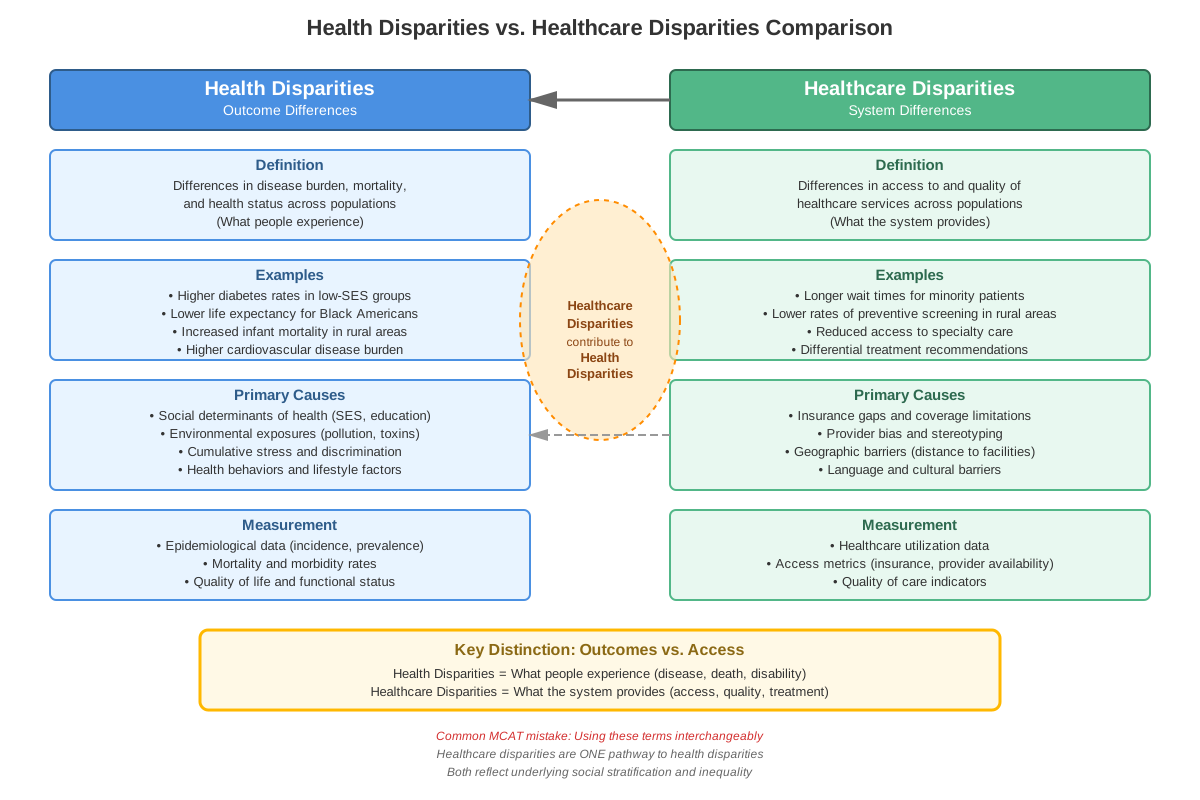
It is crucial to distinguish health disparities from healthcare disparities. While health disparities refer to differences in health outcomes and status, healthcare disparities specifically refer to differences in access to, quality of, and utilization of healthcare services. Healthcare disparities often contribute to health disparities but represent only one pathway among many social determinants. For example, differential rates of diabetes between socioeconomic groups represent a health disparity, while differences in access to diabetes screening and treatment represent a healthcare disparity.
Social Determinants of Health
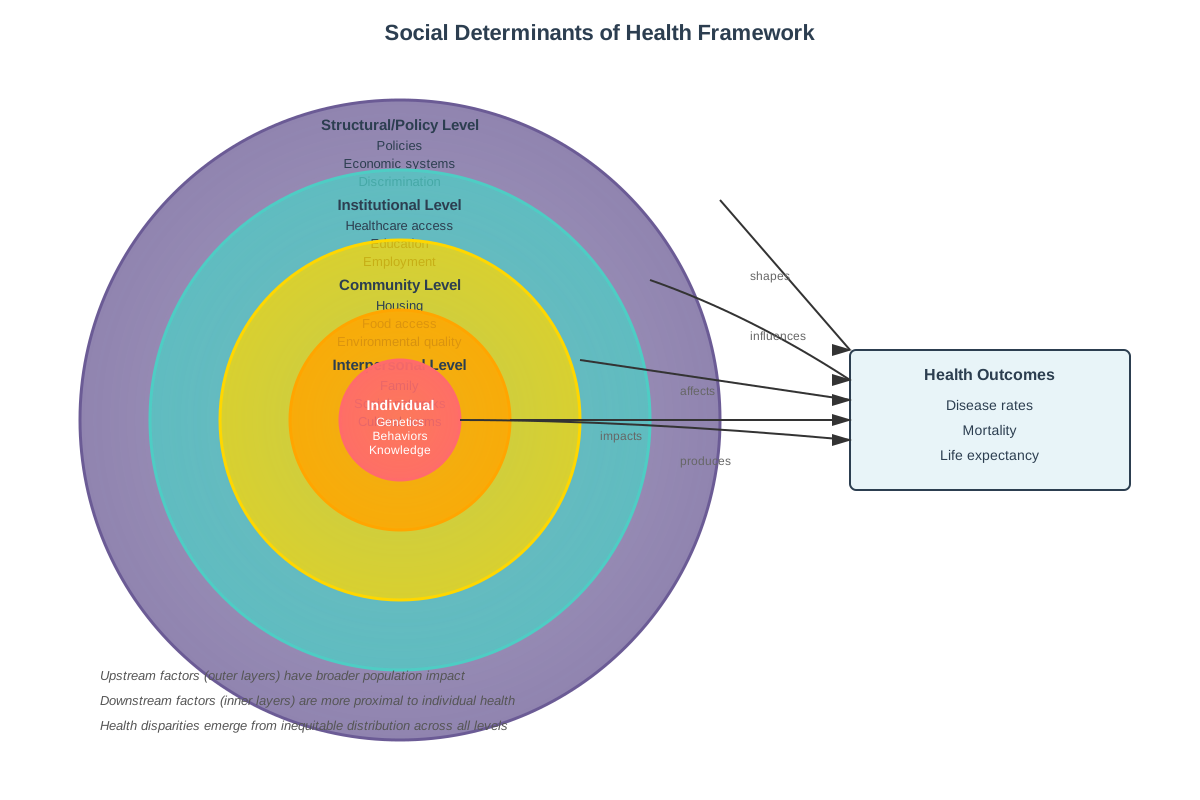
Social determinants of health are the conditions in which people are born, grow, live, work, and age that shape health outcomes. These determinants include socioeconomic status, education, neighborhood and physical environment, employment, social support networks, and access to healthcare. The social determinants framework recognizes that health is produced not primarily through healthcare but through the broader social, economic, and environmental conditions that influence daily life.
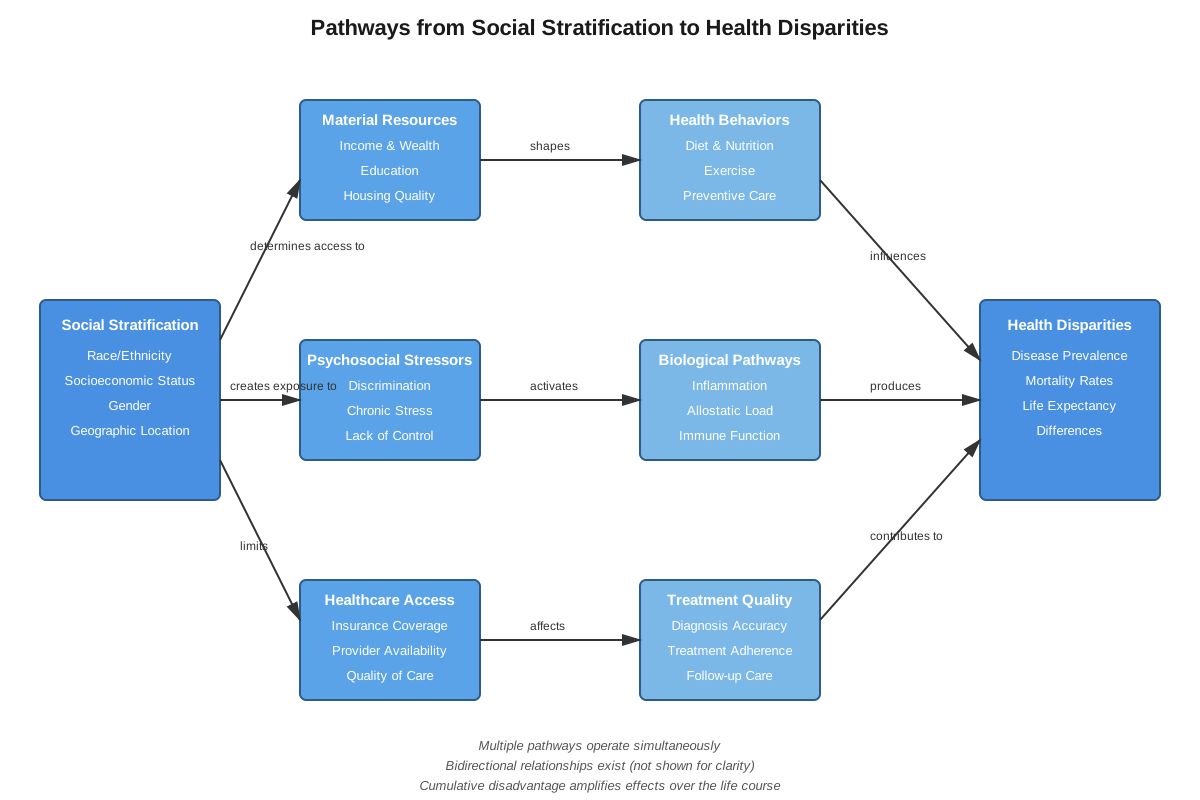
The relationship between social determinants and health disparities operates through multiple pathways:
- Material deprivation: Lower income limits access to nutritious food, safe housing, and healthcare
- Chronic stress: Experiences of discrimination, financial insecurity, and unsafe environments activate physiological stress responses
- Health behaviors: Social contexts shape opportunities for exercise, exposure to tobacco and alcohol, and dietary patterns
- Healthcare access: Insurance status, geographic proximity to providers, and cultural competence of healthcare systems vary by social position
- Environmental exposures: Disadvantaged communities face greater exposure to pollution, toxins, and hazardous conditions
Axes of Health Disparities
Health disparities manifest along multiple dimensions of social stratification:
| Dimension | Key Disparities | Mechanisms |
|---|---|---|
| Socioeconomic Status | Lower SES associated with higher rates of chronic disease, infant mortality, and shorter life expectancy | Material deprivation, chronic stress, limited healthcare access, environmental exposures |
| Race/Ethnicity | Black Americans have higher rates of hypertension, diabetes, and maternal mortality; Native Americans face elevated rates of substance use disorders | Structural racism, residential segregation, discrimination in healthcare, historical trauma |
| Gender | Women live longer but experience more chronic illness; men have higher rates of cardiovascular disease and suicide | Biological differences, gender roles, healthcare-seeking behaviors, occupational exposures |
| Geographic Location | Rural populations face higher mortality rates and limited healthcare access; urban poor face environmental hazards | Healthcare infrastructure, transportation barriers, environmental conditions, economic opportunities |
| Sexual Orientation/Gender Identity | LGBTQ+ individuals experience higher rates of mental health conditions and face barriers to culturally competent care | Minority stress, discrimination, healthcare avoidance, lack of provider training |
Structural vs. Individual Explanations
A critical distinction for the MCAT involves differentiating between structural explanations and individual explanations for health disparities. Individual explanations attribute health differences to personal choices, behaviors, or biological characteristics of group members. Structural explanations recognize how social systems, institutions, and policies create differential opportunities and constraints that shape health outcomes.
For example, higher rates of obesity in low-income communities can be explained individually (poor food choices, lack of exercise motivation) or structurally (food deserts limiting access to fresh produce, unsafe neighborhoods restricting outdoor activity, work schedules limiting time for meal preparation, chronic stress from financial insecurity affecting metabolism). The MCAT consistently favors structural explanations that recognize how social contexts constrain individual choices and how seemingly "individual" behaviors reflect broader social patterns.
Fundamental Cause Theory
Fundamental cause theory explains why health disparities persist even as specific diseases and risk factors change over time. According to this theory, socioeconomic status acts as a "fundamental cause" of health disparities because it provides access to flexible resources—knowledge, money, power, prestige, and beneficial social connections—that can be deployed to avoid disease and death regardless of the specific health risks prevalent at any given time.
As new health knowledge emerges or new treatments become available, those with greater socioeconomic resources can leverage them first and most effectively. This explains why disparities often widen when new preventive measures or treatments are introduced, as advantaged groups adopt innovations more rapidly. For instance, when smoking cessation became recognized as health-protective, higher SES individuals quit at faster rates, widening the SES gradient in smoking-related diseases.
Weathering Hypothesis
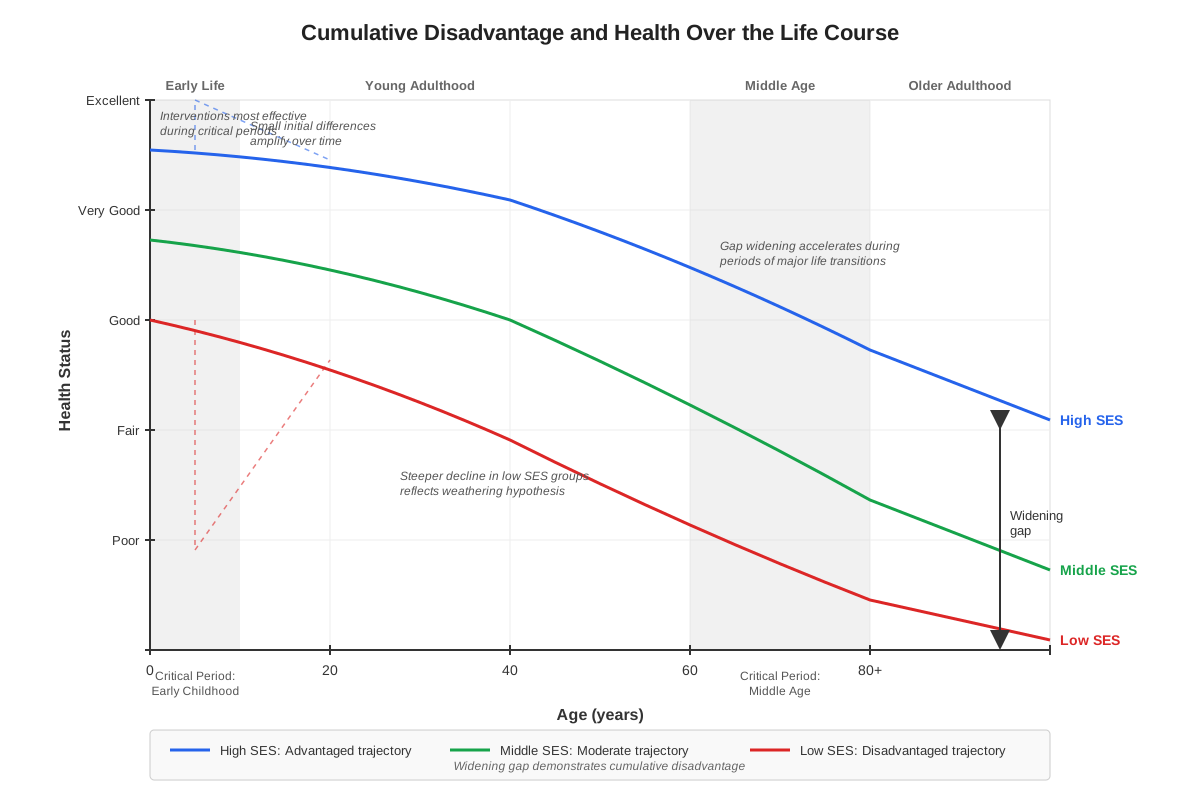
The weathering hypothesis proposes that chronic exposure to social and economic disadvantage leads to accelerated physiological deterioration, particularly among marginalized racial groups. This "weathering" effect means that health begins to decline at earlier ages for disadvantaged populations compared to advantaged groups. The hypothesis helps explain why, for example, Black women experience higher rates of pregnancy complications and maternal mortality even after controlling for individual-level risk factors—their bodies have experienced cumulative physiological stress from years of discrimination and disadvantage.
Intersectionality and Health
Intersectionality recognizes that individuals hold multiple social identities simultaneously (race, class, gender, sexuality, etc.) and that these identities interact to create unique experiences of privilege and oppression. In health disparities research, intersectionality reveals that health outcomes cannot be understood by examining single dimensions of identity in isolation. For example, the health experiences of low-income Black women differ from those of middle-class Black women, low-income white women, and low-income Black men in ways that reflect the unique intersection of race, class, and gender.
Concept Relationships
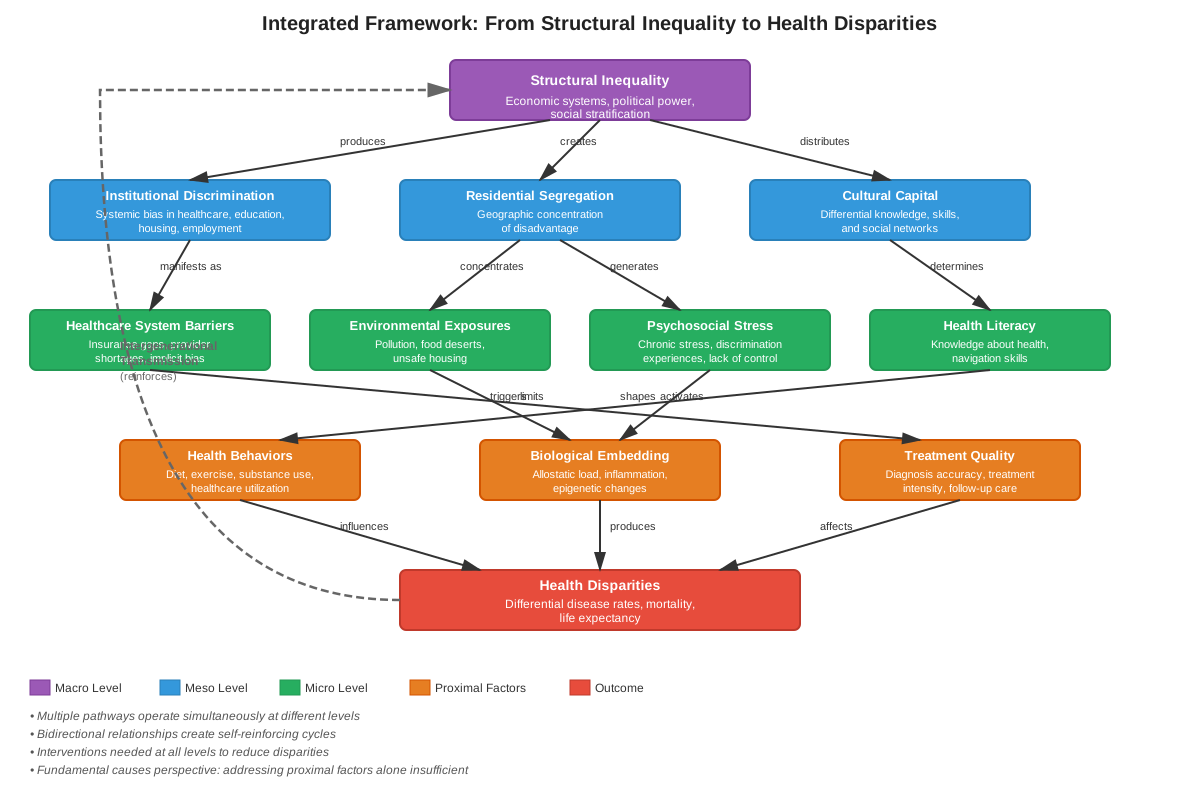
Health disparities emerge from the interaction of multiple interconnected concepts within sociology and public health. At the foundation lies social stratification, the hierarchical arrangement of individuals and groups in society based on wealth, power, and prestige. Social stratification creates differential access to resources, opportunities, and power, which directly influences the social determinants of health—the upstream factors that shape health outcomes.
The relationship flows as follows: Social stratification → Differential access to social determinants → Healthcare disparities + Environmental exposures + Chronic stress + Material deprivation → Health disparities. This pathway demonstrates that health disparities are not isolated phenomena but rather downstream consequences of broader patterns of social inequality.
Institutional discrimination and structural racism operate as mechanisms that maintain and reproduce health disparities across generations. These systemic forces shape where people live (residential segregation), what resources they can access (educational and economic opportunities), and how they are treated within healthcare systems (implicit bias, cultural incompetence). The weathering hypothesis connects to these structural forces by explaining the biological pathways through which chronic social disadvantage becomes embodied as physiological deterioration.
Fundamental cause theory links back to social stratification by explaining why health disparities persist despite changes in specific diseases and treatments—because the underlying resource inequalities remain constant. Intersectionality adds complexity by revealing that health disparities cannot be understood through single dimensions of identity but require attention to how multiple forms of stratification interact.
The concept also connects forward to potential solutions: understanding health disparities as products of social structures rather than individual failings suggests that effective interventions must address upstream social determinants through policy changes, not merely downstream healthcare interventions. This connects to concepts of social change, health policy, and structural interventions in public health.
Quick check — test yourself on Health disparities so far.
Try Flashcards →High-Yield Facts
⭐ Health disparities are systematic differences in health outcomes between groups with different social positions, not random variations or solely biological differences
⭐ Social determinants of health (conditions in which people live, work, and age) are the primary drivers of health disparities, not just healthcare access
⭐ Socioeconomic status is the strongest predictor of health outcomes across virtually all diseases and health conditions
⭐ Structural explanations for health disparities (focusing on systems and institutions) are consistently favored over individual explanations (focusing on personal choices) on the MCAT
⭐ Fundamental cause theory explains why health disparities persist even as specific diseases change—because underlying resource inequalities remain constant
- Healthcare disparities (differences in access and quality of care) are distinct from but contribute to health disparities (differences in health outcomes)
- The weathering hypothesis explains accelerated physiological aging among marginalized groups due to cumulative stress from discrimination and disadvantage
- Intersectionality reveals that health outcomes reflect the interaction of multiple social identities (race, class, gender, etc.), not single dimensions in isolation
- Residential segregation concentrates poverty and limits access to resources, creating geographic health disparities
- Implicit bias among healthcare providers contributes to healthcare disparities through differential treatment recommendations and quality of care
- Minority stress theory explains elevated mental health disparities among LGBTQ+ populations due to chronic stress from discrimination and stigma
- Food deserts (areas lacking access to affordable, nutritious food) represent a structural barrier that contributes to dietary-related health disparities
- Environmental racism describes the disproportionate exposure of communities of color to environmental hazards and pollution
Common Misconceptions
Misconception: Health disparities primarily reflect genetic or biological differences between racial groups → Correction: While some biological differences exist, health disparities are overwhelmingly driven by social factors including discrimination, differential access to resources, and environmental exposures. Race is a social construct, not a biological category, and observed health differences reflect social experiences of racialization, not inherent biological traits.
Misconception: Health disparities would disappear if everyone had equal access to healthcare → Correction: Healthcare access is only one social determinant among many. Even with universal healthcare access, disparities would persist due to differences in education, income, housing, environmental exposures, chronic stress, and other upstream social determinants. Healthcare addresses disease after it develops but doesn't prevent the social conditions that produce disease.
Misconception: Health disparities result from poor individual choices by disadvantaged groups → Correction: This victim-blaming perspective ignores how social structures constrain choices and create differential opportunities. Behaviors occur within social contexts that shape available options, resources, and constraints. Structural factors like food deserts, unsafe neighborhoods, and work schedules limit "choices" available to disadvantaged populations.
Misconception: Controlling for socioeconomic status eliminates racial health disparities → Correction: Significant racial health disparities persist even after accounting for SES, reflecting the independent effects of racism, discrimination, and racialized experiences. For example, Black infants born to college-educated mothers have higher mortality rates than white infants born to mothers who didn't complete high school, demonstrating that race-related factors operate beyond SES.
Misconception: Health disparities are inevitable and cannot be changed → Correction: Health disparities are socially produced and therefore modifiable through policy interventions, structural changes, and addressing social determinants. International comparisons show that countries with stronger social safety nets and more equitable resource distribution have smaller health disparities, demonstrating that these patterns are not inevitable.
Misconception: Cultural differences fully explain health disparities between ethnic groups → Correction: While cultural factors may play some role, attributing disparities primarily to culture risks cultural stereotyping and ignores structural barriers. What appears as "cultural" behavior often reflects adaptation to structural constraints. Additionally, this explanation cannot account for why disparities widen or narrow over time as structural conditions change.
Worked Examples
Example 1: Analyzing Maternal Mortality Disparities
Vignette: A study finds that Black women in the United States are three times more likely to die from pregnancy-related complications than white women. This disparity persists across all education and income levels. Even Black women with college degrees face higher maternal mortality than white women who did not complete high school. Researchers note that Black women report experiencing discrimination in healthcare settings and that their reports of pain and complications are sometimes dismissed by providers.
Question: Which of the following best explains the persistent maternal mortality disparity described?
A) Genetic differences between racial groups affecting pregnancy outcomes
B) Lower rates of prenatal care utilization among Black women
C) Structural racism and implicit bias in healthcare delivery
D) Cultural differences in health-seeking behaviors
Analysis:
Step 1: Identify the key features of the disparity. The disparity persists across all SES levels, which immediately suggests that individual-level factors like education or income cannot fully explain it. The vignette specifically mentions discrimination and dismissal of symptoms, pointing toward systemic issues in healthcare delivery.
Step 2: Evaluate each option against the evidence. Option A (genetic differences) is inconsistent with the social nature of race and cannot explain why disparities vary across time and place. Option B (prenatal care utilization) is contradicted by the fact that disparities persist even among highly educated women who typically have high healthcare utilization. Option D (cultural differences) doesn't explain why providers dismiss symptoms or why disparities exist across all SES levels.
Step 3: Recognize the structural explanation. Option C identifies structural racism (systemic discrimination embedded in institutions) and implicit bias (unconscious attitudes affecting behavior) as mechanisms. This explains why disparities persist regardless of individual characteristics and why patient reports are dismissed—providers' unconscious biases affect clinical decision-making and quality of care.
Answer: C is correct. This example demonstrates how the MCAT tests the ability to distinguish between individual and structural explanations and to recognize that health disparities persisting across SES levels indicate structural mechanisms beyond individual factors.
Example 2: Applying Fundamental Cause Theory
Vignette: In the 1950s, smoking was more common among higher socioeconomic status individuals. By the 2000s, smoking rates were substantially higher among lower SES individuals. Throughout this period, the gap in life expectancy between high and low SES groups remained relatively constant, though the specific diseases contributing to mortality shifted.
Question: Which sociological theory best explains why SES-based health disparities persisted despite changes in specific risk factors?
A) Sick role theory
B) Fundamental cause theory
C) Medicalization theory
D) Social epidemiology
Analysis:
Step 1: Identify the pattern described. The vignette shows that health disparities persist over time even though the specific behaviors and diseases change. Higher SES individuals initially smoked more but later smoked less, yet their health advantage remained constant.
Step 2: Connect to theoretical frameworks. Fundamental cause theory specifically addresses this phenomenon—it proposes that SES acts as a "fundamental cause" because it provides flexible resources (knowledge, money, power, connections) that can be deployed to avoid disease regardless of which specific risks are prevalent. When smoking became recognized as harmful, higher SES individuals had the resources to quit more easily.
Step 3: Eliminate alternatives. Sick role theory addresses how society responds to illness, not why disparities persist. Medicalization theory concerns the expansion of medical authority over previously non-medical issues. Social epidemiology is a field of study, not a specific theory explaining persistent disparities.
Answer: B is correct. This example illustrates how fundamental cause theory explains the persistence of health disparities across changing disease landscapes and demonstrates the MCAT's emphasis on understanding theoretical frameworks that explain patterns of health inequality.
Exam Strategy
When approaching MCAT questions on health disparities, begin by identifying whether the question asks about mechanisms (how disparities arise), patterns (which groups experience disparities), or interventions (how to address disparities). Questions about mechanisms typically require distinguishing between individual and structural explanations—consistently favor structural explanations that recognize how social systems and institutions shape health outcomes.
Trigger words and phrases to watch for include: "systematic differences," "social determinants," "structural barriers," "access to resources," "discrimination," "socioeconomic status," and "health equity." When you see data showing health differences between demographic groups, immediately consider what social factors might explain the pattern rather than jumping to biological or individual behavioral explanations.
For process-of-elimination, rule out answer choices that:
- Attribute disparities solely to genetic or biological differences between racial groups
- Blame individuals for "poor choices" without acknowledging structural constraints
- Suggest that healthcare access alone explains all health disparities
- Ignore the persistence of racial disparities after controlling for SES
- Propose that disparities are inevitable or unchangeable
When passages present data on health disparities, pay attention to whether disparities persist across different levels of other variables (e.g., racial disparities that exist at all income levels). This pattern indicates that the disparity cannot be explained by the controlled variable alone and suggests additional structural mechanisms.
Time allocation: Most health disparities questions can be answered in 60-90 seconds if you quickly identify whether the question requires structural vs. individual explanations. Don't overthink—the MCAT consistently favors answers recognizing systemic and structural factors over individual-level explanations. If you find yourself debating between a structural and individual explanation, choose structural.
For passage-based questions, skim for information about: which groups are compared, what health outcomes are measured, what explanatory factors are mentioned, and whether the passage emphasizes individual behaviors or social contexts. This information will guide you toward the correct theoretical framework for answering questions.
Memory Techniques
Mnemonic for Social Determinants of Health (SHEEN):
- Socioeconomic status
- Housing and neighborhood environment
- Education
- Employment
- Networks (social support)
Mnemonic for Distinguishing Explanations (STRUCT):
When evaluating health disparities, favor STRUCTural explanations:
- Systems and institutions
- Time-persistent patterns
- Resource distribution
- Upstream factors
- Context over choice
- Testable through policy changes
Visualization Strategy: Picture health disparities as a pyramid. At the base (widest, most fundamental) are social stratification and structural inequality. The middle layer contains social determinants of health (education, income, housing, environment). The top (narrowest) contains healthcare access and individual behaviors. This visual reinforces that addressing only the top of the pyramid (healthcare and behavior) cannot eliminate disparities rooted in the broader base.
Acronym for Fundamental Cause Theory (FLEX):
SES provides FLEXible resources:
- Financial capital
- Learning and knowledge
- Empowerment and agency
- X-factor (social connections and networks)
Memory hook: "Disparities aren't about DNA, they're about SES and structural inequality"—this phrase reminds you to avoid biological explanations and focus on social factors.
Summary
Health disparities represent systematic, preventable differences in health outcomes between groups occupying different positions in social hierarchies. These disparities are not random variations but reflect how social stratification creates differential access to the social determinants of health—the conditions in which people live, work, and age. For the MCAT, understanding health disparities requires recognizing that structural and systemic factors (institutional discrimination, resource inequality, environmental exposures, chronic stress) drive health differences more powerfully than individual choices or biological factors. Key frameworks include fundamental cause theory, which explains why disparities persist despite changing disease patterns, and intersectionality, which reveals how multiple dimensions of identity interact to shape health. The exam consistently favors structural explanations over individual explanations and tests the ability to distinguish health disparities (outcome differences) from healthcare disparities (access and quality differences). Mastering this topic requires understanding that health is produced primarily through social conditions rather than healthcare alone, and that addressing disparities demands upstream interventions targeting social determinants rather than merely downstream medical treatments.
Key Takeaways
- Health disparities are systematic differences in health outcomes between social groups that reflect structural inequality, not individual failings or biological destiny
- Social determinants of health (SES, education, housing, environment, employment) are the primary drivers of health disparities and operate upstream of healthcare access
- Structural explanations recognizing how systems and institutions shape health are consistently favored over individual explanations on the MCAT
- Fundamental cause theory explains why health disparities persist across time despite changes in specific diseases—because underlying resource inequalities remain constant
- Racial health disparities persist even after controlling for socioeconomic status, reflecting the independent effects of racism and discrimination
- Intersectionality reveals that health outcomes reflect the interaction of multiple social identities, not single dimensions examined in isolation
- Effective interventions to reduce health disparities must address upstream social determinants through policy and structural changes, not merely downstream healthcare improvements
Related Topics
Social Determinants of Health: Deeper exploration of the specific pathways through which social conditions influence health outcomes, including detailed examination of how education, income, housing, and environment shape disease risk. Mastering health disparities provides the foundation for understanding these mechanisms.
Institutional Discrimination and Structural Racism: Examination of how discriminatory practices become embedded in institutions and policies, creating systematic disadvantages for marginalized groups. Understanding health disparities illustrates the concrete health consequences of these structural forces.
Healthcare Access and Utilization: Analysis of barriers to healthcare including financial, geographic, cultural, and systemic obstacles. Health disparities knowledge enables recognition of how access issues contribute to but don't fully explain health outcome differences.
Social Epidemiology: Study of how social factors distribute disease and health in populations, including research methods for identifying and measuring health disparities. This topic builds on foundational understanding of health disparities to examine research approaches.
Health Policy and Interventions: Exploration of policy approaches to reducing health disparities, including universal healthcare, social safety nets, and structural interventions. Understanding health disparities is prerequisite to evaluating potential solutions.
Practice CTA
Now that you've mastered the core concepts of health disparities, reinforce your learning by attempting practice questions and flashcards on this topic. Focus particularly on questions requiring you to distinguish between structural and individual explanations, apply fundamental cause theory, and analyze data showing health differences across demographic groups. The more you practice identifying the social mechanisms underlying health disparities, the more confident you'll become in tackling these high-yield MCAT questions. Remember: understanding health disparities isn't just about exam success—it's about developing the sociological perspective essential for becoming a physician who recognizes and addresses the social roots of disease. You've got this!
Sign up free to keep reading
Create a free AnvayaPrep account to finish this MCAT guide on Health disparities — plus flashcards and practice questions.