Overview
Healthcare access refers to the ability of individuals and populations to obtain needed medical services in a timely manner. This multifaceted concept encompasses not only the availability of healthcare facilities and providers but also the financial, geographic, cultural, and systemic factors that enable or prevent people from receiving appropriate care. Within Sociology, healthcare access is understood as a critical dimension of social stratification and inequality, as access to medical services is unevenly distributed across different social groups based on socioeconomic status, race, ethnicity, geographic location, insurance status, and other social determinants of health.
For the MCAT, understanding healthcare access is essential because it represents a convergence point for multiple sociological concepts including social inequality, discrimination, cultural competence, and health disparities. The exam frequently tests students' ability to analyze how social structures create barriers to healthcare and how these barriers perpetuate cycles of disadvantage. Questions may present scenarios involving patients from different socioeconomic backgrounds, ask students to identify factors limiting access to care, or require analysis of policy interventions designed to improve healthcare equity. This topic appears regularly in both passage-based and discrete questions in the Psychological, Social, and Biological Foundations of Behavior section.
Healthcare access connects to broader sociological frameworks including theories of social stratification, institutional discrimination, and the social construction of health and illness. Understanding this topic requires integrating knowledge about how social institutions (healthcare systems, insurance companies, government programs) interact with individual-level factors (income, education, health literacy) and community-level factors (availability of providers, transportation infrastructure) to shape health outcomes. Mastery of healthcare access enables students to analyze complex social scenarios and understand how inequality manifests in one of society's most critical domains.
Learning Objectives
- [ ] Define healthcare access using accurate Sociology terminology
- [ ] Explain why healthcare access matters for the MCAT
- [ ] Apply healthcare access concepts to exam-style questions
- [ ] Identify common mistakes related to healthcare access
- [ ] Connect healthcare access to related Sociology concepts
- [ ] Analyze the multiple dimensions of healthcare access (availability, accessibility, affordability, acceptability, accommodation)
- [ ] Evaluate how social determinants of health influence healthcare access across different populations
- [ ] Distinguish between different types of barriers to healthcare access and their sociological implications
Prerequisites
- Social stratification concepts: Understanding how societies organize into hierarchical layers is essential because healthcare access varies systematically by social class
- Basic health insurance terminology: Familiarity with terms like premiums, deductibles, and coverage enables comprehension of financial barriers to care
- Social determinants of health: Knowledge of factors like income, education, and neighborhood environment provides context for understanding access disparities
- Discrimination and prejudice: Understanding these concepts is necessary to recognize how bias affects healthcare delivery and access
- Cultural competence: Basic awareness of how cultural differences affect healthcare interactions helps explain acceptability barriers
Why This Topic Matters
Healthcare access represents one of the most tangible manifestations of social inequality in modern societies. Disparities in access contribute directly to differences in health outcomes, life expectancy, and quality of life across social groups. In the United States, millions of individuals face barriers to obtaining necessary medical care, leading to delayed diagnoses, preventable complications, and premature mortality. Understanding healthcare access is crucial for future physicians who will encounter patients from diverse backgrounds and must recognize how social factors influence their patients' ability to follow treatment recommendations and maintain health.
On the MCAT, healthcare access appears with high frequency in the Psychological, Social, and Biological Foundations of Behavior section. Approximately 5-8% of questions in this section directly or indirectly address healthcare access and health disparities. The topic most commonly appears in passage-based questions that present research studies examining access barriers, interventions to improve access, or correlations between social factors and healthcare utilization. Discrete questions may test knowledge of specific concepts like the dimensions of access or the relationship between socioeconomic status and healthcare outcomes.
Exam passages frequently present scenarios involving: patients from low-income backgrounds struggling to afford medications; rural populations lacking nearby healthcare facilities; immigrant communities facing language barriers; elderly patients navigating complex insurance systems; or minority groups experiencing discrimination in healthcare settings. Students must be prepared to identify which dimension of access is being affected, recognize the sociological concepts at play, and predict outcomes or evaluate interventions. The MCAT particularly emphasizes understanding how multiple barriers can compound to create severe access limitations for vulnerable populations.
Core Concepts
Defining Healthcare Access
Healthcare access is formally defined as the timely use of personal health services to achieve the best possible health outcomes. This definition emphasizes that access is not merely about the existence of healthcare facilities but about the actual ability of individuals to obtain and utilize appropriate services when needed. The concept encompasses both potential access (the presence of enabling resources) and realized access (actual utilization of services).
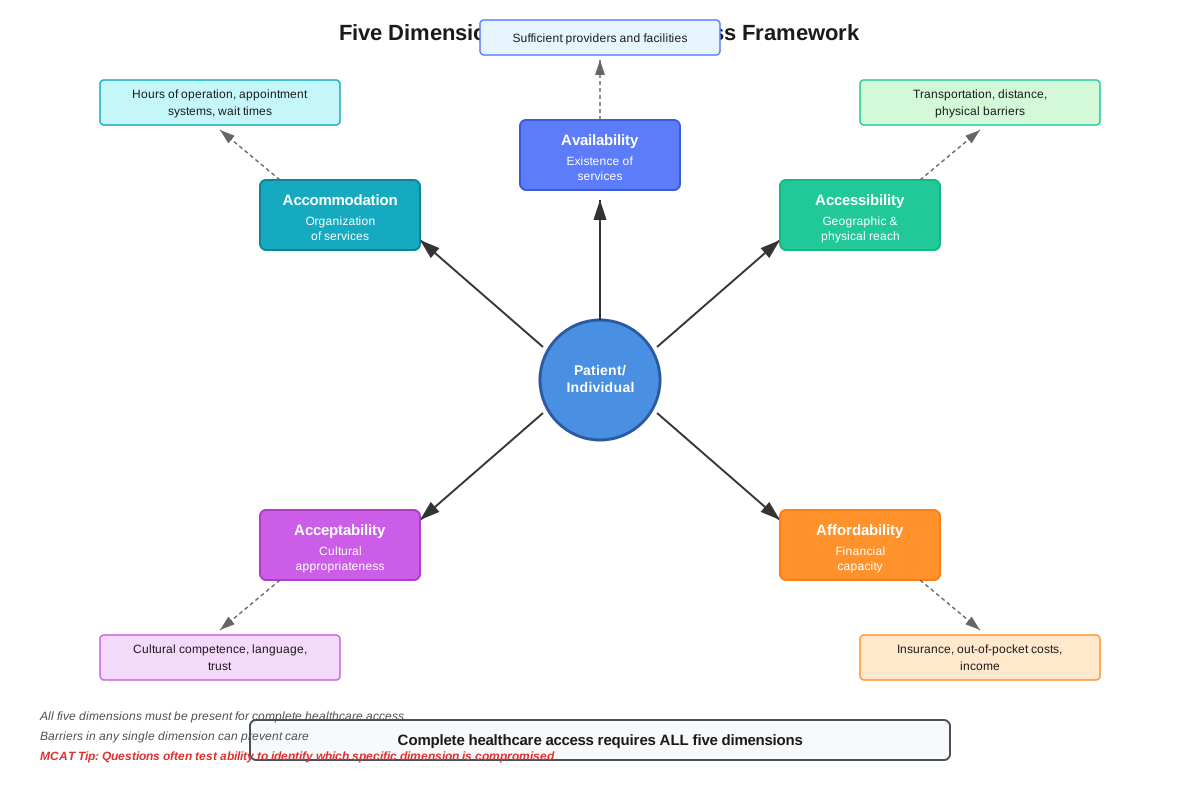
The Institute of Medicine framework identifies five key dimensions of healthcare access, often remembered as the "Five A's":
- Availability: The presence of healthcare services and providers in sufficient supply
- Accessibility: The geographic proximity and ease of reaching healthcare facilities
- Affordability: The financial capacity to pay for services without excessive burden
- Acceptability: The cultural appropriateness and patient-provider compatibility
- Accommodation: The organization of services to meet patient needs (hours, appointment systems, etc.)
Barriers to Healthcare Access
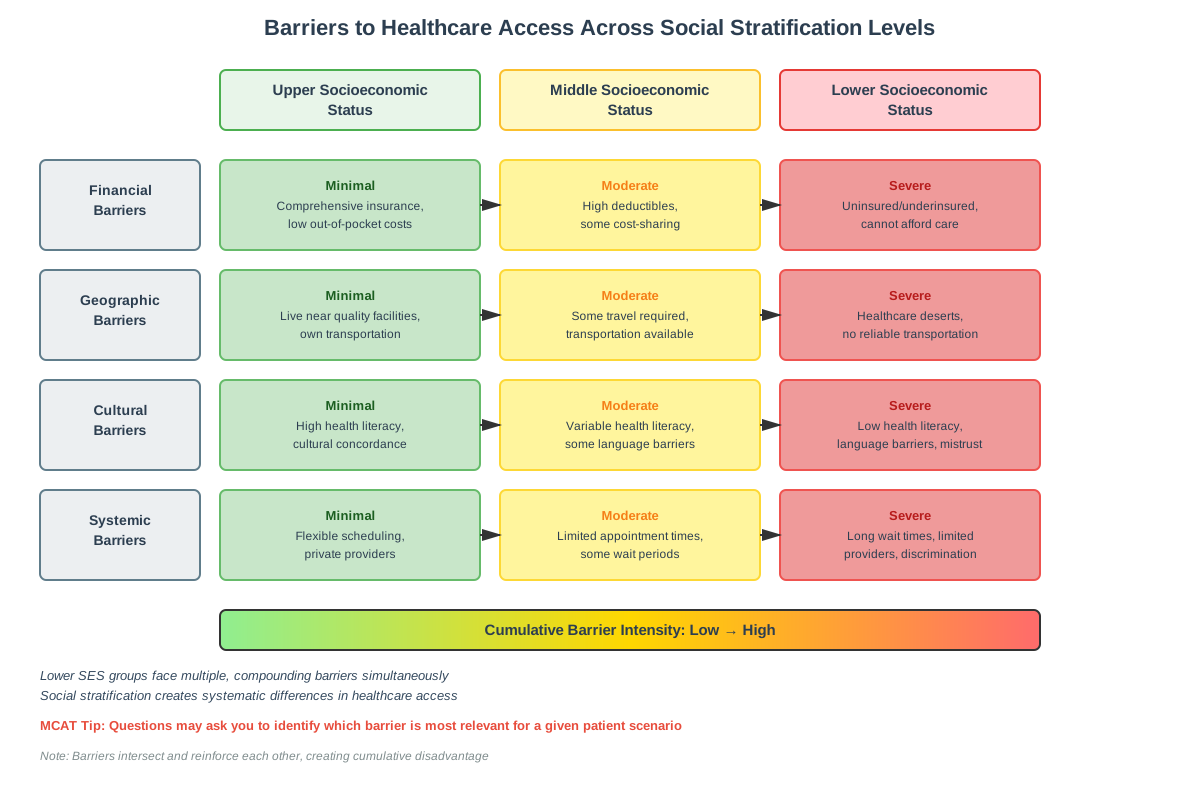
Barriers to healthcare access can be categorized into several types, each reflecting different aspects of social stratification and inequality:
Financial Barriers represent the most commonly cited obstacles to healthcare access. These include lack of health insurance, high out-of-pocket costs, inability to afford copayments or deductibles, and the cost of prescription medications. In the United States, despite the Affordable Care Act, millions remain uninsured or underinsured. Even individuals with insurance may face substantial financial barriers due to high-deductible plans or limited coverage for certain services. Financial barriers disproportionately affect low-income populations and contribute to delayed care-seeking, medication non-adherence, and avoidance of preventive services.
Geographic Barriers arise from the uneven distribution of healthcare resources across regions. Rural areas often experience severe provider shortages, with residents traveling long distances to reach hospitals or specialists. Urban areas may have healthcare deserts—neighborhoods lacking adequate medical facilities despite high population density. Transportation limitations compound geographic barriers, particularly for elderly, disabled, or low-income individuals who may lack personal vehicles or access to public transit. The concept of spatial inequality describes how geographic location systematically affects access to resources and opportunities, including healthcare.
Structural Barriers encompass systemic features of healthcare delivery that impede access. These include limited clinic hours that conflict with work schedules, long wait times for appointments, complex bureaucratic procedures for enrollment in insurance programs, fragmented care systems requiring navigation across multiple providers, and inadequate capacity leading to provider shortages. Structural barriers often reflect how healthcare systems are designed primarily for middle-class patients with flexible schedules, reliable transportation, and health literacy.
Cultural and Linguistic Barriers affect populations whose cultural backgrounds or languages differ from the dominant healthcare culture. Limited English proficiency creates communication obstacles that can lead to misunderstandings, medical errors, and patient dissatisfaction. Cultural differences in health beliefs, preferences for traditional medicine, attitudes toward authority figures, and concepts of illness may create mismatches between patient expectations and provider approaches. Cultural competence—the ability of healthcare providers and systems to effectively serve patients from diverse backgrounds—is essential for reducing these barriers.
Informational Barriers involve lack of knowledge about available services, how to navigate the healthcare system, health insurance options, or health conditions themselves. Health literacy—the capacity to obtain, process, and understand basic health information needed to make appropriate health decisions—varies significantly across populations and strongly predicts healthcare utilization. Low health literacy is associated with poorer health outcomes, less preventive care, and higher hospitalization rates.
Social Determinants and Healthcare Access
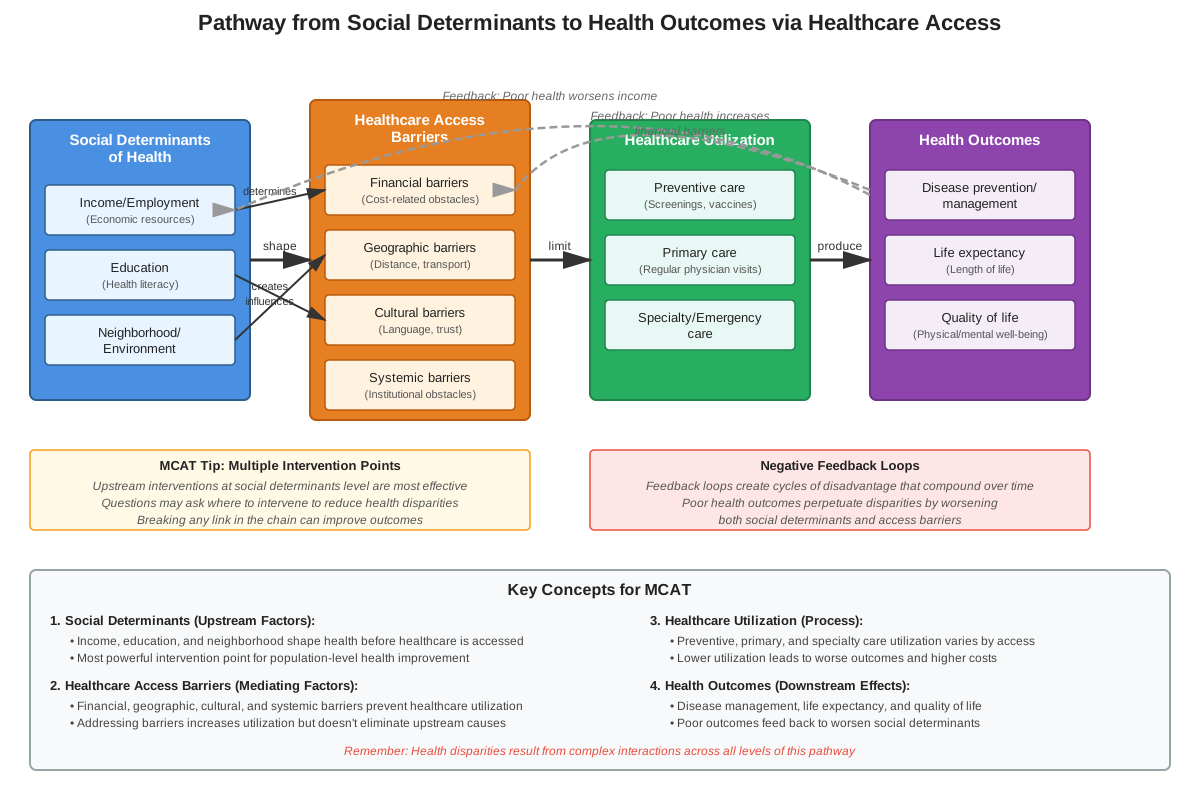
Social determinants of health are the conditions in which people are born, grow, live, work, and age that shape health outcomes. These determinants profoundly influence healthcare access:
| Social Determinant | Impact on Healthcare Access |
|---|---|
| Income/Socioeconomic Status | Determines insurance coverage, ability to afford care, quality of available providers |
| Education | Affects health literacy, awareness of services, ability to navigate systems |
| Employment | Influences insurance access, schedule flexibility for appointments, occupational health risks |
| Housing | Determines proximity to healthcare facilities, exposure to environmental health hazards |
| Neighborhood | Affects availability of providers, safety for travel to appointments, community health resources |
| Social Support | Influences ability to obtain transportation, childcare during appointments, assistance with care |
The relationship between socioeconomic status and healthcare access exemplifies how social stratification creates health inequalities. Higher-income individuals typically have employer-sponsored insurance, can afford out-of-pocket costs, live in areas with abundant healthcare resources, and possess the education and social capital to effectively navigate healthcare systems. Lower-income individuals face multiple compounding barriers: lack of insurance, inability to take time off work, residence in underserved areas, and limited health literacy.
Healthcare Disparities
Healthcare disparities refer to differences in access to or quality of healthcare across population groups. These disparities are closely linked to access barriers and reflect broader patterns of social inequality. Key disparities include:
Racial and Ethnic Disparities: Minority populations, particularly Black, Hispanic, and Native American communities, experience systematically lower access to healthcare services. These disparities result from multiple factors including higher uninsurance rates, concentration in medically underserved areas, discrimination within healthcare settings, lower quality care even when access is achieved, and historical mistrust of medical institutions stemming from past abuses.
Socioeconomic Disparities: Low-income populations have substantially reduced access across all dimensions. They are more likely to be uninsured, live in healthcare deserts, delay seeking care due to cost, and experience worse health outcomes. The concept of cumulative disadvantage explains how initial inequalities compound over time, as poor access to preventive care leads to more severe health problems requiring more expensive treatment that becomes even less accessible.
Geographic Disparities: Rural populations face unique access challenges including provider shortages, hospital closures, long travel distances, and limited specialty care. Urban-rural disparities have widened in recent decades as healthcare resources increasingly concentrate in metropolitan areas.
Policy Approaches to Improving Access
Understanding policy interventions to improve healthcare access is important for MCAT questions about solutions to health disparities:
Insurance Expansion: Programs like Medicaid expansion, the Affordable Care Act marketplaces, and proposals for universal coverage aim to reduce financial barriers by providing insurance to previously uninsured populations.
Safety Net Providers: Community health centers, free clinics, and public hospitals serve as crucial access points for vulnerable populations, often providing care regardless of ability to pay.
Workforce Development: Loan forgiveness programs, scholarships for students from underserved communities, and incentives for providers to practice in shortage areas attempt to address provider distribution problems.
Telehealth: Technology-enabled remote care can reduce geographic barriers, though it may create new barriers related to technology access and digital literacy.
Quick check — test yourself on Healthcare access so far.
Try Flashcards →Concept Relationships
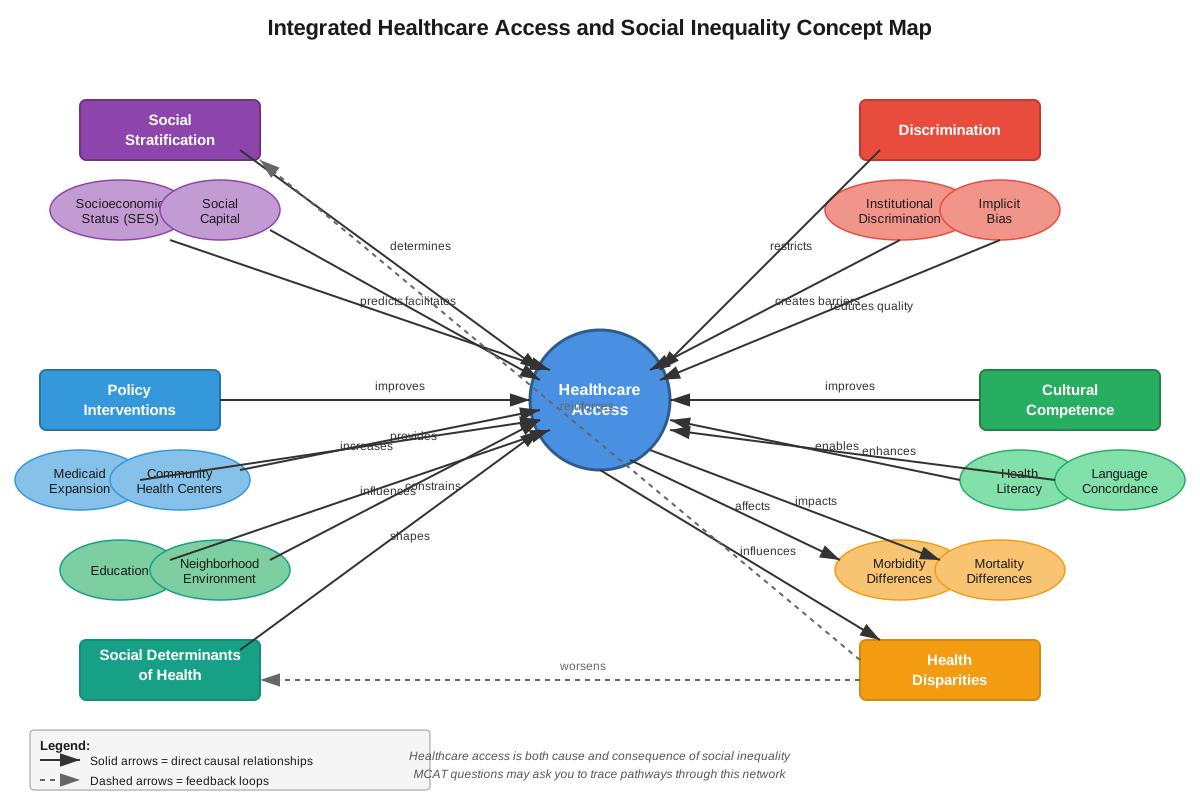
Healthcare access serves as a central node connecting multiple sociological concepts. Social stratification creates the fundamental conditions that determine access—individuals' positions in social hierarchies based on class, race, and other factors directly predict their healthcare access. This stratification operates through social determinants of health, which are the mechanisms by which social position translates into health outcomes. Income, education, and occupation (components of socioeconomic status) determine insurance coverage, geographic location, and ability to navigate healthcare systems.
Discrimination and prejudice create additional barriers to access beyond those explained by socioeconomic factors alone. Institutional discrimination manifests in healthcare systems through policies and practices that systematically disadvantage certain groups, such as insurance networks that exclude providers in minority neighborhoods or hospital closures in low-income areas. Interpersonal discrimination occurs in patient-provider interactions when bias affects treatment recommendations or quality of care.
The relationship flows as follows: Social Stratification → Unequal Distribution of Social Determinants → Differential Healthcare Access → Health Disparities → Reinforcement of Social Inequality. This creates a feedback loop where poor health limits educational and employment opportunities, further entrenching disadvantage.
Cultural capital—the knowledge, skills, and education that enable navigation of social institutions—directly affects healthcare access. Individuals with high cultural capital can effectively communicate with providers, understand medical terminology, advocate for themselves, and navigate complex insurance and referral systems. Those lacking cultural capital face informational and structural barriers even when other resources are available.
Social capital—networks of relationships and community resources—influences access through mechanisms like obtaining referrals to quality providers, receiving transportation assistance, or learning about available services through social networks. Communities with strong social capital may collectively advocate for healthcare resources, while socially isolated individuals face compounded access barriers.
High-Yield Facts
⭐ Healthcare access encompasses five dimensions: availability, accessibility, affordability, acceptability, and accommodation
⭐ Financial barriers are the most commonly cited obstacle to healthcare access in the United States
⭐ Racial and ethnic minorities experience healthcare disparities even after controlling for socioeconomic status, indicating discrimination plays an independent role
⭐ Rural populations face particularly severe geographic barriers including provider shortages and long travel distances
⭐ Low health literacy is associated with poorer health outcomes and reduced healthcare utilization
- Uninsured individuals are significantly less likely to have a regular source of care and more likely to delay or forgo needed services
- Social determinants of health (income, education, employment, housing, neighborhood) are stronger predictors of health outcomes than healthcare access alone
- Cultural competence in healthcare providers and systems reduces barriers for diverse populations
- Structural barriers include limited clinic hours, long wait times, and complex bureaucratic procedures
- Telehealth can reduce geographic barriers but may create new access barriers related to technology and digital literacy
Common Misconceptions
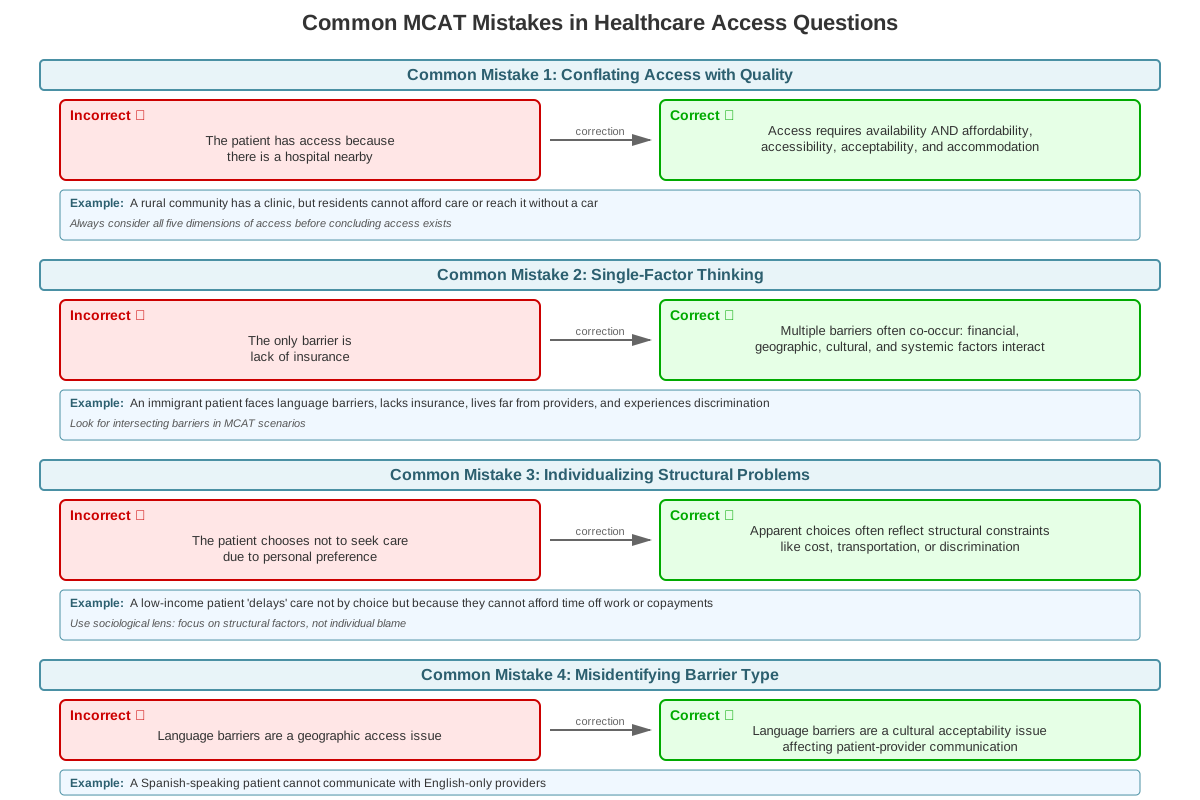
Misconception: Healthcare access is simply about having health insurance.
Correction: While insurance is crucial, healthcare access involves multiple dimensions including geographic proximity, cultural appropriateness, provider availability, and system accommodation. Many insured individuals still face significant access barriers.
Misconception: Healthcare disparities are entirely explained by socioeconomic differences.
Correction: While socioeconomic status is a major factor, racial and ethnic disparities persist even after controlling for income and education, indicating that discrimination, cultural barriers, and historical factors play independent roles in creating access inequalities.
Misconception: Rural areas have poor healthcare access, but urban areas have uniformly good access.
Correction: Urban areas contain healthcare deserts—neighborhoods with inadequate medical facilities despite high population density. Low-income urban neighborhoods often have fewer providers and lower-quality facilities than suburban areas.
Misconception: Improving healthcare access will immediately eliminate health disparities.
Correction: Health disparities result from multiple factors including social determinants of health, environmental exposures, and cumulative disadvantage over lifetimes. Improved access is necessary but not sufficient to eliminate disparities; broader social interventions are required.
Misconception: Patients who don't seek care simply don't prioritize their health.
Correction: This represents victim-blaming that ignores structural barriers. Many individuals face multiple obstacles including inability to take time off work, lack of transportation, inability to afford care, or previous negative experiences with healthcare systems. These are systemic problems, not individual failures.
Worked Examples
Example 1: Analyzing Multiple Access Barriers
Vignette: Maria is a 45-year-old immigrant who works two part-time jobs, neither offering health insurance. She speaks limited English and lives in a neighborhood with few medical facilities. She has been experiencing chest pain but has not sought care. When asked why, she explains she cannot afford to miss work, doesn't know where to go for care, worries about the cost, and feels uncomfortable in medical settings where she has previously experienced language difficulties.
Analysis: This scenario illustrates multiple compounding barriers to healthcare access across all five dimensions:
- Availability: The neighborhood has few medical facilities, indicating limited provider supply
- Accessibility: Geographic barriers exist due to the scarcity of nearby facilities
- Affordability: Lack of insurance and inability to afford care create financial barriers
- Acceptability: Language barriers and previous negative experiences create cultural obstacles
- Accommodation: Inflexible work schedule conflicts with typical clinic hours
Sociological Concepts: This case demonstrates how social stratification creates healthcare access barriers. Maria's position as a low-wage worker without benefits reflects her socioeconomic status. Her immigrant status intersects with class position to create additional barriers (language, cultural differences). The concept of intersectionality is relevant—Maria's multiple marginalized identities (low-income, immigrant, female, limited English proficiency) create compounding disadvantages.
MCAT Application: An exam question might ask which intervention would most effectively improve Maria's access. Students must recognize that single-dimension solutions (like providing insurance alone) would be insufficient given the multiple barriers. Comprehensive interventions addressing language services, flexible clinic hours, community-based care, and financial assistance would be most effective.
Example 2: Distinguishing Access from Utilization
Vignette: A research study finds that after a community health center opens in a previously underserved neighborhood, the number of emergency department visits for non-urgent conditions decreases by 40%. The study concludes that improved healthcare access led to more appropriate utilization patterns.
Analysis: This scenario requires understanding the relationship between access and utilization:
- Potential access improved when the health center opened, providing an available, accessible source of primary care
- Realized access (actual utilization) changed as residents began using the health center instead of the emergency department
- The shift from emergency to primary care represents more appropriate utilization, as emergency departments are designed for urgent conditions
Mechanism: Previously, residents likely used emergency departments for non-urgent care because hospitals cannot turn away patients regardless of ability to pay (EMTALA law), making emergency departments the only accessible option for uninsured or underinsured individuals. The health center provided a more appropriate, accessible alternative for primary care needs.
MCAT Application: Questions might present similar data and ask students to identify which dimension of access improved (availability and accessibility), explain why utilization patterns changed (emergency departments were previously the only accessible option), or evaluate whether the intervention addressed underlying health disparities (it improved access but may not address other social determinants affecting health outcomes).
Exam Strategy
When approaching MCAT questions about healthcare access, begin by identifying which dimension(s) of access the question addresses. Many questions will describe a scenario and ask what type of barrier is present or what intervention would be most effective. Systematically consider the Five A's framework to categorize the situation.
Trigger words to watch for include:
- "Uninsured" or "cannot afford" → financial barriers, affordability dimension
- "Rural area" or "long distance" → geographic barriers, accessibility dimension
- "Language barrier" or "cultural differences" → acceptability dimension
- "No providers available" or "long wait times" → availability or accommodation dimensions
- "Health literacy" or "doesn't understand" → informational barriers
For questions asking about interventions or solutions, eliminate options that address only one dimension when the scenario presents multiple barriers. The MCAT often includes distractor answers that would partially help but don't address the primary obstacle. For example, if a patient lacks both insurance and transportation, providing insurance alone wouldn't fully solve the access problem.
When passages present research studies about healthcare access, pay attention to:
- The population studied (which social groups face which barriers)
- The type of access measured (potential vs. realized, which dimensions)
- Confounding variables (socioeconomic status often confounds relationships)
- Whether the study addresses access or outcomes (these are related but distinct)
Process of elimination tips: Eliminate answers that:
- Blame individuals for structural problems (victim-blaming)
- Suggest single-factor explanations for complex disparities
- Ignore the role of social determinants of health
- Propose interventions that don't match the identified barriers
- Confuse correlation with causation in access-outcome relationships
Allocate approximately 1-2 minutes for discrete questions on this topic and 8-10 minutes for passage-based question sets. Healthcare access questions often require careful reading to identify multiple factors, so avoid rushing through scenario details.
Memory Techniques
Mnemonic for the Five Dimensions of Access - "The Five A's":
- Availability (Are there enough providers?)
- Accessibility (Can you get there?)
- Affordability (Can you pay for it?)
- Acceptability (Is it culturally appropriate?)
- Accommodation (Does it fit your schedule/needs?)
Visualization Strategy: Picture a patient's journey to healthcare as a path with five gates. Each gate represents one dimension of access. The patient must pass through all five gates to achieve full healthcare access. Barriers are locks on these gates—some patients face locks on multiple gates simultaneously.
Acronym for Major Barrier Categories - "FIGS":
- Financial (insurance, cost)
- Informational (health literacy, awareness)
- Geographic (distance, transportation)
- Structural (system design, hours, wait times)
- (Cultural barriers can be remembered as part of Structural or as a separate category)
Conceptual Framework: Remember that healthcare access operates at three levels:
- Individual level: Personal resources (income, education, insurance)
- Community level: Local availability of services, neighborhood resources
- System level: Healthcare system design, policies, provider distribution
This multi-level framework helps organize thinking about both barriers and interventions.
Summary
Healthcare access represents a critical intersection of social stratification, inequality, and health outcomes. The concept encompasses five key dimensions—availability, accessibility, affordability, acceptability, and accommodation—all of which must be present for individuals to obtain needed medical services. Barriers to access operate at multiple levels and disproportionately affect disadvantaged populations, creating healthcare disparities that reflect and reinforce broader social inequalities. Financial barriers, particularly lack of insurance, represent the most commonly cited obstacle, but geographic, structural, cultural, and informational barriers also significantly impede access. Social determinants of health—including income, education, employment, housing, and neighborhood—fundamentally shape healthcare access patterns across populations. Understanding healthcare access requires recognizing how multiple barriers often compound for vulnerable populations and how interventions must address multiple dimensions simultaneously to be effective. For the MCAT, students must be able to identify types of barriers, analyze how social factors create access inequalities, and evaluate potential interventions in the context of sociological frameworks about stratification and discrimination.
Key Takeaways
- Healthcare access involves five dimensions (availability, accessibility, affordability, acceptability, accommodation), all necessary for obtaining care
- Multiple types of barriers—financial, geographic, structural, cultural, and informational—create access inequalities across social groups
- Social determinants of health are the fundamental mechanisms through which social stratification translates into differential healthcare access
- Healthcare disparities persist across racial, ethnic, socioeconomic, and geographic lines, reflecting broader patterns of social inequality
- Effective interventions must address multiple dimensions of access simultaneously, as barriers often compound for vulnerable populations
- Healthcare access is distinct from but related to health outcomes; improving access is necessary but not sufficient to eliminate health disparities
- Understanding healthcare access requires integrating concepts of social stratification, discrimination, cultural competence, and institutional inequality
Related Topics
Health Disparities and Social Determinants of Health: This topic expands on how social factors create differential health outcomes across populations. Mastering healthcare access provides the foundation for understanding how unequal access contributes to disparities in disease prevalence, mortality, and quality of life.
Social Stratification Systems: Deeper exploration of how societies organize into hierarchies based on class, race, gender, and other factors. Understanding stratification systems explains why healthcare access is distributed unequally.
Discrimination and Prejudice in Healthcare: Examines how bias operates within medical settings, affecting both access to care and quality of care received. This builds on healthcare access concepts by exploring what happens after access barriers are overcome.
Cultural Competence and Health Literacy: Focuses specifically on the acceptability dimension of access and informational barriers. These topics provide detailed strategies for reducing cultural and linguistic obstacles to care.
Healthcare Policy and Reform: Analyzes system-level interventions designed to improve access, including insurance programs, safety net providers, and workforce development initiatives. Understanding access barriers is essential for evaluating policy solutions.
Practice CTA
Now that you've mastered the core concepts of healthcare access, it's time to test your understanding with practice questions and flashcards. These resources will help you identify any remaining gaps in your knowledge and build the rapid recall necessary for MCAT success. Focus particularly on questions that present complex scenarios with multiple access barriers—these mirror the types of challenging passages you'll encounter on test day. Remember, healthcare access is a high-yield topic that integrates multiple sociological concepts, so thorough practice will pay dividends across many question types. You've built a strong foundation—now reinforce it through active application!
Sign up free to keep reading
Create a free AnvayaPrep account to finish this MCAT guide on Healthcare access — plus flashcards and practice questions.