Overview
Institutional discrimination represents one of the most critical concepts in Sociology for the MCAT, particularly within the domain of Social Stratification and Inequality. Unlike individual acts of prejudice or discrimination that stem from personal biases, institutional discrimination refers to systematic policies, practices, and procedures embedded within social institutions (such as education, healthcare, criminal justice, employment, and housing) that produce differential treatment and outcomes for different groups, regardless of individual intent. These discriminatory patterns are often codified in laws, regulations, organizational norms, or standard operating procedures that appear neutral on their surface but disproportionately disadvantage certain racial, ethnic, gender, or socioeconomic groups while privileging others.
Understanding institutional discrimination is essential for the MCAT because it bridges multiple high-yield topics in the Psychological, Social, and Biological Foundations of Behavior section. This concept connects directly to theories of social inequality, stratification systems, prejudice and discrimination, social institutions, power dynamics, and health disparities. The MCAT frequently tests students' ability to distinguish between individual-level discrimination and structural/institutional forms, to identify examples of institutional discrimination in research passages, and to analyze how institutional practices perpetuate inequality across generations even after explicitly discriminatory laws have been abolished.
From a broader sociological perspective, institutional discrimination serves as a foundational concept for understanding how inequality becomes self-perpetuating through social structures rather than merely through individual attitudes. It explains persistent disparities in wealth, health outcomes, educational achievement, and criminal justice involvement that cannot be attributed solely to individual choices or overt prejudice. This concept is intimately connected to theories of structural functionalism, conflict theory, and symbolic interactionism, making it a nexus point for integrating multiple sociological frameworks that appear throughout MCAT passages.
Learning Objectives
- [ ] Define institutional discrimination using accurate Sociology terminology
- [ ] Explain why institutional discrimination matters for the MCAT
- [ ] Apply institutional discrimination to exam-style questions
- [ ] Identify common mistakes related to institutional discrimination
- [ ] Connect institutional discrimination to related Sociology concepts
- [ ] Distinguish between institutional discrimination and individual discrimination with specific examples
- [ ] Analyze how institutional discrimination operates independently of individual intent
- [ ] Evaluate the relationship between historical discrimination and contemporary institutional practices
- [ ] Synthesize connections between institutional discrimination and health disparities in clinical contexts
Prerequisites
- Individual discrimination and prejudice: Understanding person-to-person discriminatory acts provides the contrast needed to recognize institutional patterns
- Social institutions: Familiarity with major social institutions (education, healthcare, criminal justice, economy) is necessary to identify where institutional discrimination operates
- Social stratification systems: Knowledge of how societies organize hierarchically helps explain how institutional discrimination maintains stratification
- In-group vs. out-group dynamics: Understanding group categorization processes illuminates how institutional policies differentially affect groups
- Power and privilege: Recognizing how power operates in society is essential for understanding how institutional discrimination benefits dominant groups
Why This Topic Matters
Institutional discrimination appears with high frequency on the MCAT because it represents a sophisticated understanding of how social inequality operates beyond individual attitudes. The MCAT Psychological, Social, and Biological Foundations section emphasizes understanding social determinants of health, health disparities, and how social structures influence behavior and outcomes. Institutional discrimination provides the explanatory framework for many of these disparities, making it a recurring theme in research passages and standalone questions.
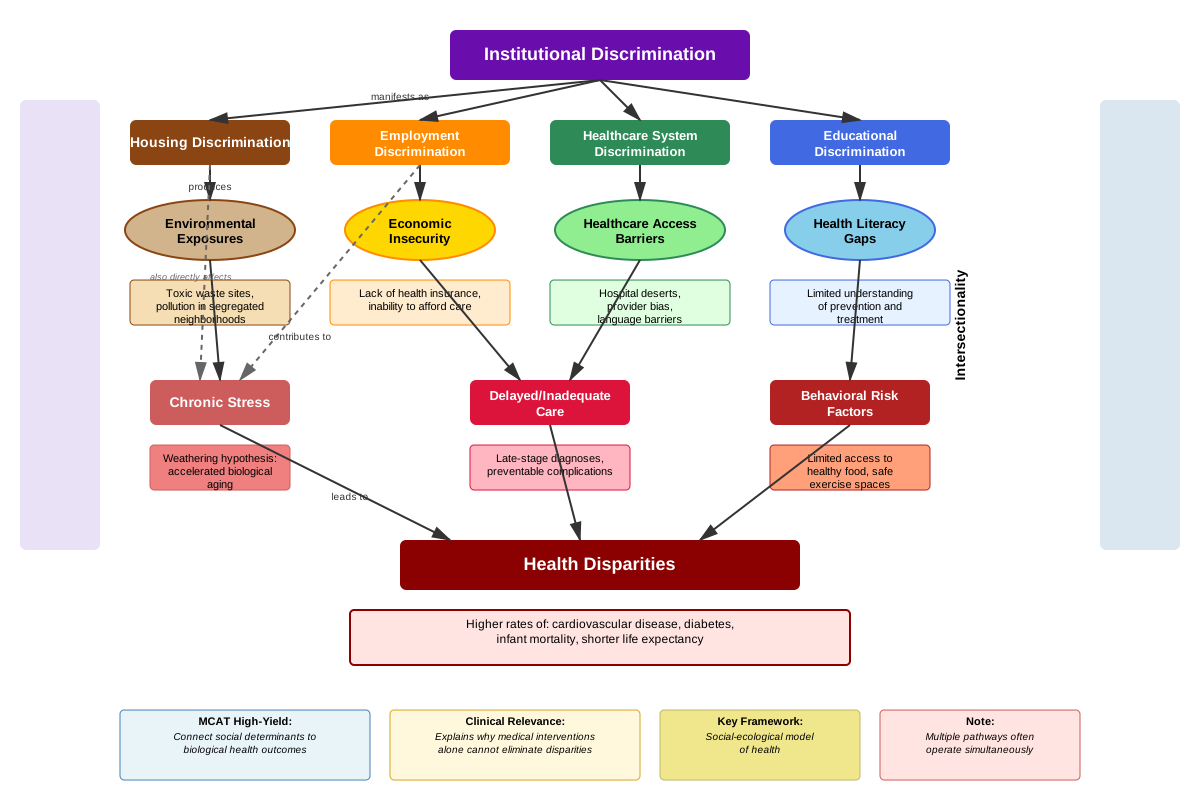
From a clinical and real-world perspective, future physicians must understand how institutional factors—not just individual patient choices or biological differences—contribute to health disparities. For example, residential segregation (a form of institutional discrimination) leads to differential exposure to environmental toxins, access to quality healthcare facilities, availability of healthy food options, and chronic stress from living in under-resourced neighborhoods. These institutional factors produce measurable differences in cardiovascular disease, asthma rates, infant mortality, and life expectancy between racial and socioeconomic groups. Recognizing these patterns as institutional rather than individual phenomena is crucial for developing effective public health interventions and providing culturally competent care.
On the MCAT, institutional discrimination appears in approximately 15-20% of Sociology questions, either as the primary focus or as context for understanding research findings. Common question formats include: (1) identifying which scenario represents institutional versus individual discrimination, (2) explaining how historical discriminatory policies continue to affect contemporary outcomes, (3) analyzing research data showing group disparities and determining whether institutional factors explain the findings, and (4) applying sociological theories to explain how institutions perpetuate inequality. Passages frequently present research on educational achievement gaps, healthcare access disparities, employment discrimination, or criminal justice outcomes, requiring students to recognize institutional discrimination as the underlying explanatory mechanism.
Core Concepts
Definition and Characteristics of Institutional Discrimination
Institutional discrimination (also called structural discrimination or systemic discrimination) refers to discriminatory policies, practices, and procedures that are embedded within the normal operations of social institutions, producing differential outcomes for different groups regardless of whether individual actors within those institutions hold prejudiced attitudes. This concept is central to Institutional discrimination Sociology and represents a shift from understanding discrimination as primarily an individual psychological phenomenon to recognizing it as a structural feature of social organization.
The defining characteristics of institutional discrimination include:
- Embedded in standard procedures: Discriminatory effects result from "business as usual" operations rather than exceptional acts
- Independence from individual intent: Institutional discrimination can occur even when no individual actor intends to discriminate
- Systematic patterns: Effects are consistent, predictable, and produce measurable group disparities
- Self-perpetuating mechanisms: Institutional discrimination often creates conditions that justify its continuation
- Legitimized by institutional authority: Discriminatory practices carry the weight of organizational or legal authority
Types and Mechanisms of Institutional Discrimination
Institutional discrimination operates through several distinct mechanisms, each producing differential outcomes through different pathways:
Past-in-present discrimination refers to contemporary neutral policies that perpetuate the effects of historical explicitly discriminatory practices. For example, wealth-based college admissions advantages (legacy admissions, ability to pay full tuition) appear race-neutral but perpetuate historical exclusion of racial minorities from wealth accumulation through practices like redlining, employment discrimination, and exclusion from Social Security and GI Bill benefits. The current policy doesn't explicitly discriminate, but it maintains inequality created by past discrimination.
Side-effect discrimination occurs when policies designed for one purpose have discriminatory effects on certain groups as an unintended consequence. For example, height and weight requirements for police officers or firefighters may appear neutral but disproportionately exclude women and certain ethnic groups, even when these physical characteristics aren't necessary for job performance. The policy wasn't designed to discriminate, but its effects are discriminatory nonetheless.
Differential implementation involves facially neutral policies that are applied differently to different groups. For example, school discipline policies may be written neutrally but enforced more harshly against Black students than white students for identical behaviors. Similarly, mortgage lending criteria may be applied more stringently to minority applicants than white applicants with similar financial profiles.
Institutional Discrimination Across Social Institutions
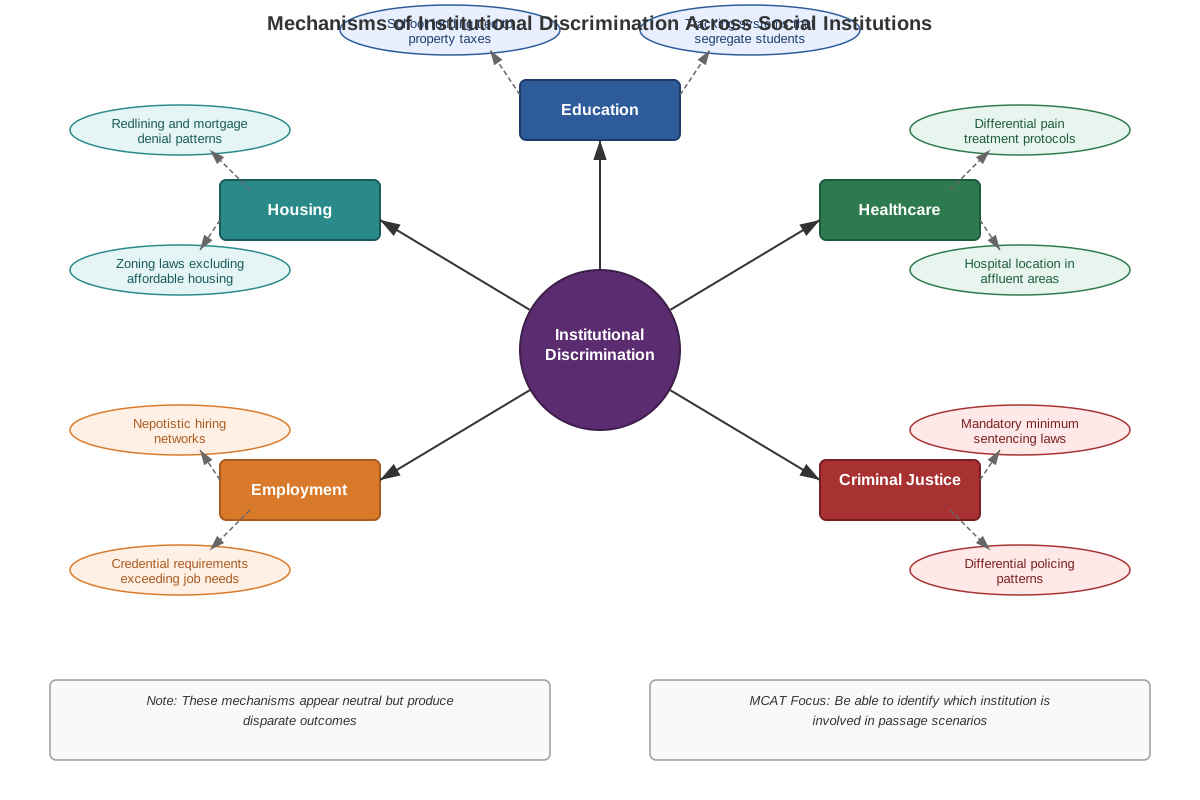
Educational institutions demonstrate institutional discrimination through multiple mechanisms: school funding based on property taxes (which perpetuates residential segregation effects), tracking systems that disproportionately place minority students in lower academic tracks, standardized testing that reflects cultural knowledge of dominant groups, and discipline policies that result in higher suspension and expulsion rates for Black students. These practices create cumulative disadvantages that affect college admission, degree completion, and subsequent employment opportunities.
Healthcare institutions exhibit institutional discrimination through the geographic distribution of quality facilities (fewer in minority neighborhoods), insurance structures that exclude undocumented immigrants, language barriers in medical settings without adequate translation services, clinical research that underrepresents minority populations (leading to less effective treatments), and implicit bias training gaps that allow differential treatment to persist. These factors contribute directly to health disparities that MCAT passages frequently address.
Criminal justice institutions show institutional discrimination through policies like mandatory minimum sentencing (which disproportionately affects minorities), differential policing intensity in minority neighborhoods, bail systems that disadvantage the poor, and the collateral consequences of conviction (loss of voting rights, employment barriers, housing restrictions) that create permanent underclass status. The cumulative effect is vastly disproportionate incarceration rates for minorities even when controlling for crime rates.
Employment institutions perpetuate discrimination through credential requirements that exceed job necessity (screening out groups with less educational access), social network-based hiring (reproducing existing workforce demographics), salary history inquiries (perpetuating past pay discrimination), and workplace cultures that create hostile environments for underrepresented groups.
Distinguishing Institutional from Individual Discrimination
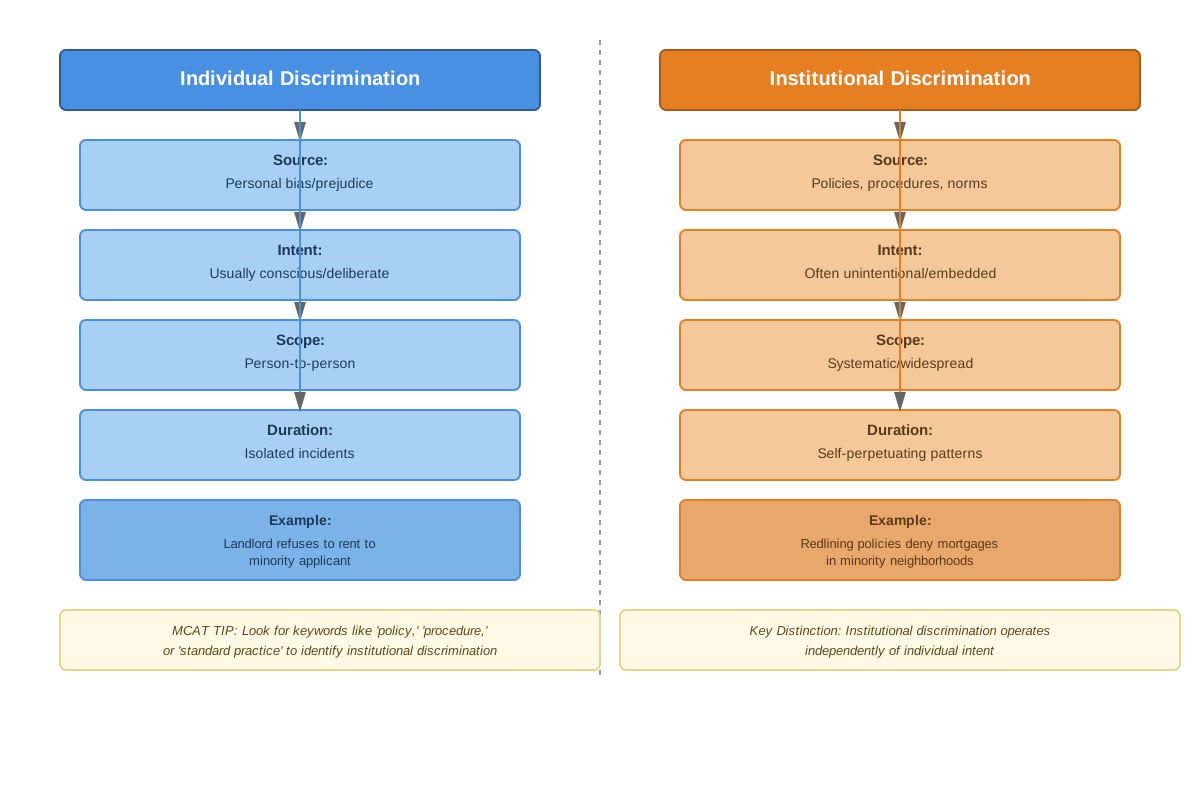
| Feature | Individual Discrimination | Institutional Discrimination |
|---|---|---|
| Source | Personal prejudice and bias | Organizational policies and procedures |
| Intent | Usually intentional | May occur without discriminatory intent |
| Scope | Affects specific individuals in isolated incidents | Affects entire groups systematically |
| Visibility | Often overt and identifiable | Often subtle and embedded in normal operations |
| Remedy | Address individual behavior, training, sanctions | Requires policy change and structural reform |
| Perpetuation | Depends on continued individual prejudice | Self-perpetuating through institutional inertia |
| Legal status | Clearly illegal when proven | May be legal despite discriminatory effects |
This distinction is crucial for Institutional discrimination MCAT questions, which frequently test whether students can identify the level at which discrimination operates.
Relationship to Social Stratification and Inequality
Institutional discrimination serves as a primary mechanism through which Social Stratification and Inequality is maintained across generations. While individual discrimination can create temporary disadvantages, institutional discrimination creates durable inequality by controlling access to resources, opportunities, and social mobility pathways. The stratification system is reinforced when institutions allocate education, employment, housing, healthcare, and political power differentially to groups.
Conflict theory perspectives emphasize how institutional discrimination serves the interests of dominant groups by maintaining their privileged access to resources and opportunities. The institutional nature of discrimination makes it more efficient for dominant groups—they don't need to actively discriminate as individuals because institutions do this work automatically through established procedures. Functionalist perspectives might examine how institutional discrimination creates social dysfunction by preventing optimal allocation of human capital and generating social conflict.
Contemporary Manifestations and Colorblind Racism
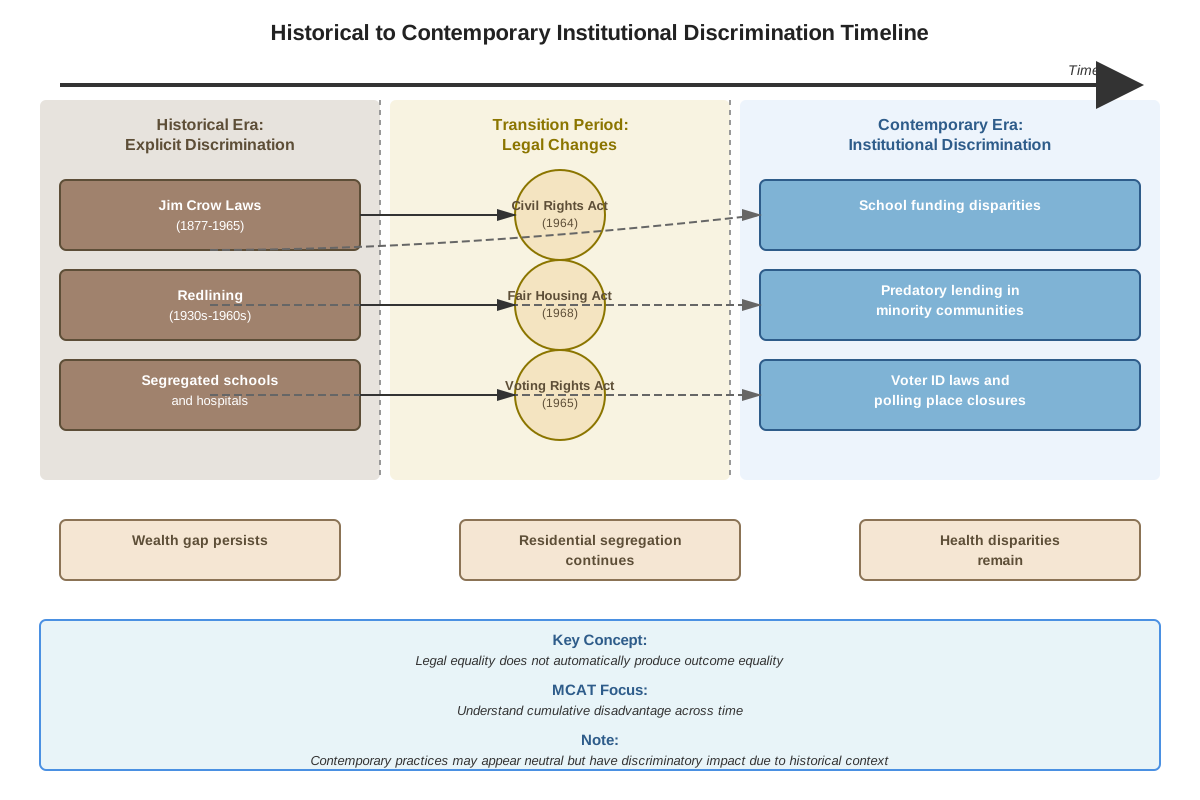
Modern institutional discrimination often operates through colorblind or race-neutral policies that avoid explicit racial language while producing racially disparate outcomes. This represents an evolution from historical explicitly discriminatory policies (Jim Crow laws, Chinese Exclusion Act, etc.) to contemporary practices that achieve similar effects without explicit racial classification. Examples include:
- Voter ID laws: Appear neutral but disproportionately affect minorities who are less likely to possess required identification
- Drug sentencing disparities: Crack cocaine (associated with Black communities) carried much harsher sentences than powder cocaine (associated with white communities) despite similar pharmacology
- Exclusionary zoning: Minimum lot sizes and prohibitions on multi-family housing maintain residential segregation without explicit racial restrictions
- Credit scoring algorithms: May incorporate factors that correlate with race, producing discriminatory lending patterns without explicit racial criteria
Concept Relationships
Institutional discrimination connects to multiple sociological concepts in a web of relationships. At the foundation, individual discrimination and prejudice represent the micro-level phenomena that institutional discrimination transcends. While individual discrimination requires personal bias, institutional discrimination operates at the macro level through organizational structures, demonstrating how micro-level attitudes can become embedded in meso- and macro-level structures.
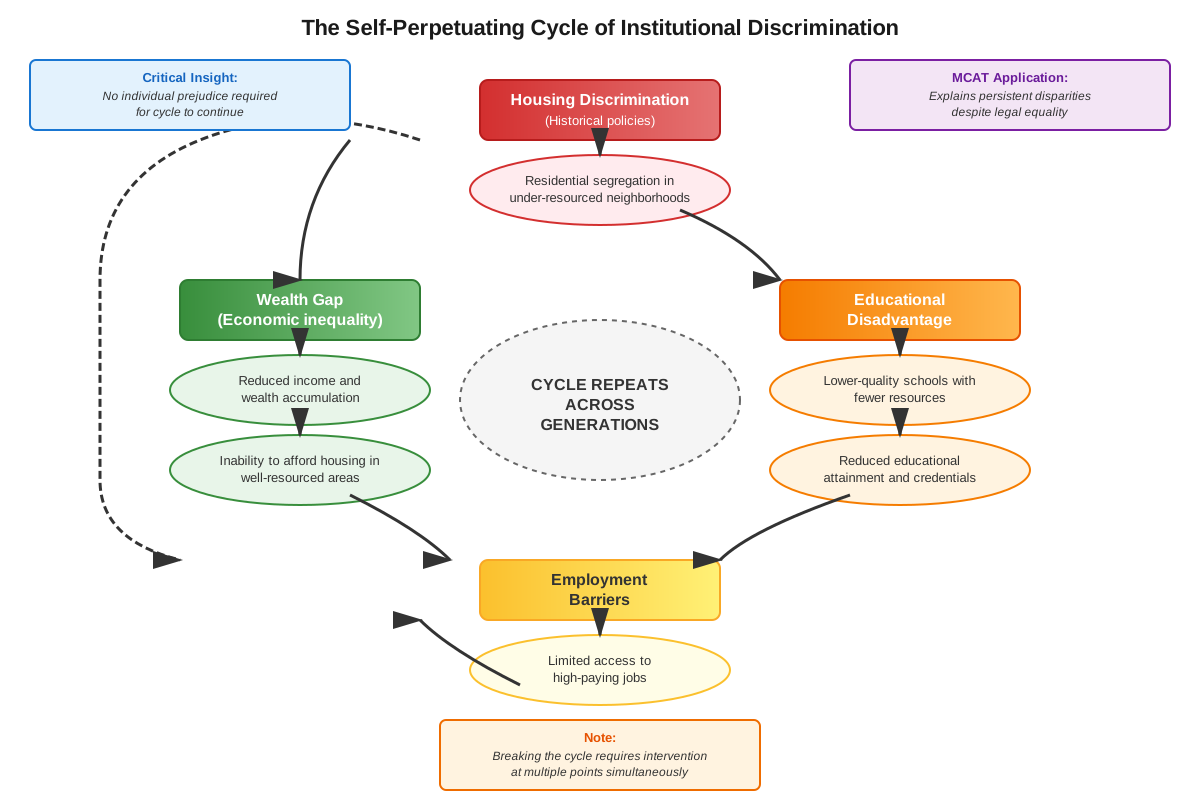
The relationship flows: Individual prejudice → Discriminatory practices → Institutionalization of practices → Institutional discrimination → Maintenance of social stratification → Justification of continued discrimination (through stereotypes about group differences) → Reinforcement of prejudice. This creates a self-perpetuating cycle.
Social stratification systems are both cause and consequence of institutional discrimination. Stratification creates groups with differential power, and powerful groups use institutions to maintain their advantages. Simultaneously, institutional discrimination maintains stratification by controlling access to mobility pathways (education, employment, wealth accumulation).
Social institutions (education, healthcare, criminal justice, economy, family, religion, government) serve as the venues where institutional discrimination operates. Each institution has specific mechanisms through which discrimination occurs, but these mechanisms interact. For example, educational discrimination affects employment opportunities, which affects healthcare access, which affects health outcomes, which affects educational achievement of the next generation—creating intergenerational transmission of inequality.
Health disparities represent a key outcome of institutional discrimination that appears frequently in MCAT passages. The pathway: Institutional discrimination → Differential access to resources → Chronic stress from discrimination → Environmental exposures → Healthcare access barriers → Health disparities. Understanding this causal chain is essential for analyzing research passages on health outcomes.
Symbolic interactionism helps explain how institutional discrimination shapes identity formation and social interactions. When institutions consistently treat groups differently, this affects how group members understand themselves and how others perceive them, creating self-fulfilling prophecies that appear to justify institutional practices.
High-Yield Facts
⭐ Institutional discrimination operates independently of individual intent—discriminatory outcomes can occur even when no individual actor holds prejudiced attitudes or intends to discriminate.
⭐ Institutional discrimination is embedded in standard organizational procedures—it represents "business as usual" rather than exceptional acts, making it difficult to identify and challenge.
⭐ Past-in-present discrimination perpetuates historical explicitly discriminatory policies through contemporary race-neutral practices (e.g., wealth-based advantages perpetuating effects of redlining).
⭐ Institutional discrimination differs from individual discrimination in scope, intent, visibility, and remedy—it affects entire groups systematically rather than isolated individuals.
⭐ Colorblind policies can constitute institutional discrimination when they produce racially disparate outcomes, even without explicit racial language.
- Institutional discrimination operates across all major social institutions: education, healthcare, criminal justice, employment, housing, and government.
- Side-effect discrimination occurs when policies designed for one purpose have discriminatory effects on certain groups as unintended consequences.
- Differential implementation involves applying facially neutral policies more harshly to some groups than others.
- Institutional discrimination creates self-perpetuating cycles by generating conditions that appear to justify continued discriminatory practices.
- The cumulative effect of institutional discrimination across multiple institutions creates compound disadvantages that affect life chances from birth through death.
- Residential segregation, maintained through institutional discrimination in housing, creates differential exposure to environmental hazards, school quality, healthcare access, and employment opportunities.
- Institutional discrimination in criminal justice includes policies like mandatory minimums, differential policing intensity, and collateral consequences of conviction that create permanent disadvantages.
- Healthcare institutional discrimination includes facility location, insurance structures, language barriers, and research underrepresentation that contribute to health disparities.
- Educational institutional discrimination includes funding mechanisms, tracking systems, standardized testing, and discipline policies that create cumulative disadvantages.
- Remedying institutional discrimination requires structural and policy changes, not just addressing individual attitudes or providing diversity training.
Quick check — test yourself on Institutional discrimination so far.
Try Flashcards →Common Misconceptions
Misconception: Institutional discrimination requires discriminatory intent by individuals within the institution.
Correction: Institutional discrimination operates through organizational structures and policies that produce discriminatory outcomes regardless of whether individual actors intend to discriminate. A policy can be institutionally discriminatory even when every person implementing it has no prejudiced attitudes.
Misconception: If a policy doesn't explicitly mention race, gender, or other protected characteristics, it cannot be discriminatory.
Correction: Colorblind or facially neutral policies can constitute institutional discrimination when they produce systematic disparate outcomes for different groups. The absence of explicit discriminatory language doesn't prevent discriminatory effects.
Misconception: Institutional discrimination ended when explicitly discriminatory laws were abolished (e.g., after the Civil Rights Act).
Correction: While explicitly discriminatory laws have been largely eliminated, institutional discrimination persists through past-in-present mechanisms, differential implementation of neutral policies, and new colorblind policies that achieve similar effects. Historical discrimination created conditions (wealth gaps, residential segregation, educational disparities) that contemporary neutral policies perpetuate.
Misconception: Institutional discrimination and individual discrimination are just different terms for the same phenomenon.
Correction: These represent fundamentally different levels of analysis. Individual discrimination involves person-to-person acts based on prejudice, while institutional discrimination involves systematic organizational patterns that may occur without any individual prejudice. They differ in source, scope, visibility, and remedy.
Misconception: If members of disadvantaged groups sometimes succeed despite institutional discrimination, this proves the discrimination isn't significant.
Correction: Institutional discrimination creates systematic barriers and disparities at the group level, but doesn't prevent all individual success. The existence of exceptions doesn't negate the pattern. Statistical disparities in outcomes demonstrate institutional discrimination even when some individuals overcome these barriers.
Misconception: Institutional discrimination only affects racial and ethnic minorities.
Correction: While racial institutional discrimination is prominent and frequently tested on the MCAT, institutional discrimination can affect any group based on gender, socioeconomic status, disability status, sexual orientation, age, or other characteristics. The mechanisms are similar across different forms of institutional discrimination.
Misconception: Addressing institutional discrimination just means making people more aware of their biases.
Correction: While implicit bias training may address individual discrimination, remedying institutional discrimination requires changing policies, procedures, resource allocation, and organizational structures—not just changing individual attitudes.
Worked Examples
Example 1: Educational Funding and Institutional Discrimination
Scenario: A research passage describes a study examining educational outcomes across school districts. The study finds that schools in predominantly minority neighborhoods have significantly lower per-pupil spending, fewer experienced teachers, older facilities, and fewer advanced course offerings compared to schools in predominantly white neighborhoods. The passage notes that school funding is based primarily on local property taxes, and that this funding mechanism has been in place for decades. Students in underfunded schools show lower standardized test scores and college attendance rates. The passage asks: Which concept best explains the persistent educational disparities described?
Analysis:
Step 1: Identify the level at which discrimination operates. The disparities result from a funding policy (property tax-based school funding), not from individual teachers' prejudices or isolated discriminatory acts. This suggests institutional rather than individual discrimination.
Step 2: Examine intent versus outcome. The property tax funding mechanism doesn't explicitly mention race and wasn't necessarily designed to discriminate. However, it produces systematic disparities that disadvantage minority students. This pattern of neutral policy with discriminatory effects is characteristic of institutional discrimination.
Step 3: Consider the mechanism. This represents past-in-present discrimination—the current funding policy perpetuates effects of historical residential segregation (created through explicitly discriminatory practices like redlining, restrictive covenants, and discriminatory lending). The contemporary policy appears neutral but maintains inequality created by past discrimination.
Step 4: Evaluate persistence and scope. The disparities are systematic (affecting entire groups), persistent (continuing across years), and self-perpetuating (lower educational outcomes limit future earning potential, which limits property values, which limits school funding for the next generation).
Answer: This scenario exemplifies institutional discrimination in education. The property tax-based funding mechanism represents a facially neutral policy that produces systematic educational disparities by perpetuating residential segregation effects. This is institutional rather than individual discrimination because it operates through organizational policy rather than personal prejudice, affects entire groups systematically, and persists independently of individual intent.
Connection to learning objectives: This example demonstrates how to apply institutional discrimination concepts to exam-style passages, distinguish institutional from individual discrimination, and connect institutional discrimination to social stratification (educational disparities affect future socioeconomic outcomes).
Example 2: Healthcare Access and Multiple Institutional Mechanisms
Scenario: A MCAT passage presents research on healthcare disparities. The study finds that: (1) hospitals in minority neighborhoods are more likely to close due to financial pressures, (2) insurance companies are less likely to contract with remaining facilities in these areas, (3) when minority patients do access care, they receive fewer diagnostic tests and less aggressive treatment for identical conditions compared to white patients, and (4) clinical trials for new treatments underrepresent minority populations. The question asks: Which of the following statements about these findings is most accurate?
A) These disparities result primarily from individual discrimination by prejudiced healthcare providers
B) These patterns represent multiple mechanisms of institutional discrimination operating simultaneously
C) These disparities would be eliminated if healthcare providers received implicit bias training
D) These findings demonstrate that minority patients prefer less aggressive treatment
Analysis:
Step 1: Evaluate each finding for the level and mechanism of discrimination.
Finding 1 (hospital closures): This represents institutional discrimination through resource allocation decisions. The pattern of closures in minority neighborhoods creates systematic barriers to healthcare access regardless of individual provider attitudes.
Finding 2 (insurance contracting): This represents institutional discrimination in the insurance industry, creating structural barriers to care access through business decisions that disproportionately affect minority communities.
Finding 3 (differential treatment): This could involve both individual discrimination (provider bias) and institutional discrimination (protocols that are differentially applied or that don't account for cultural differences).
Finding 4 (research underrepresentation): This represents institutional discrimination in research practices, leading to treatments that are less effective for underrepresented groups.
Step 2: Evaluate answer choices.
Choice A focuses only on individual discrimination and only addresses finding 3, ignoring the structural factors in findings 1, 2, and 4. This is too narrow.
Choice B recognizes multiple institutional mechanisms operating across different healthcare institutions (hospitals, insurance companies, research institutions, clinical practice). This captures the systematic, multi-institutional nature of the disparities.
Choice C suggests implicit bias training as the remedy, which might address individual discrimination in finding 3 but wouldn't remedy the structural issues in findings 1, 2, and 4. This confuses individual and institutional discrimination.
Choice D attributes disparities to patient preferences, which represents a common victim-blaming misconception that ignores institutional factors.
Answer: B is correct. The passage describes multiple mechanisms of institutional discrimination: resource allocation (hospital closures), insurance industry practices (contracting decisions), differential implementation of clinical protocols (treatment disparities), and research practices (underrepresentation in trials). These operate across multiple institutions simultaneously, creating compound disadvantages. The systematic nature of disparities across different institutional domains indicates institutional rather than merely individual discrimination.
Connection to learning objectives: This example demonstrates how to identify institutional discrimination in complex scenarios involving multiple mechanisms, distinguish it from individual discrimination, avoid common misconceptions (conflating individual and institutional discrimination, attributing disparities to patient preferences), and connect institutional discrimination to health disparities—a high-yield MCAT topic.
Exam Strategy
When approaching Institutional discrimination MCAT questions, use this systematic strategy:
Step 1: Identify the level of analysis. Determine whether the question asks about individual acts or institutional patterns. Trigger words for institutional discrimination include: "systematic," "policy," "organizational," "structural," "persistent disparities," "group-level outcomes," and "embedded practices." Trigger words for individual discrimination include: "personal bias," "individual prejudice," "specific incident," and "interpersonal interaction."
Step 2: Assess intent versus outcome. MCAT questions frequently test whether students understand that institutional discrimination can occur without discriminatory intent. If a passage describes a neutral policy producing disparate outcomes, consider institutional discrimination even if no individual prejudice is mentioned. Don't be distracted by statements about individuals' good intentions—institutional discrimination operates independently of intent.
Step 3: Look for mechanism clues. Identify which type of institutional discrimination the passage describes:
- Past-in-present: Contemporary neutral policies perpetuating historical discrimination effects
- Side-effect: Policies designed for one purpose with discriminatory effects as unintended consequences
- Differential implementation: Neutral policies applied more harshly to some groups
Step 4: Evaluate scope and persistence. Institutional discrimination affects entire groups systematically over time, not just isolated individuals in single incidents. If the passage describes persistent group-level disparities that continue despite changes in individual attitudes, this suggests institutional discrimination.
Step 5: Consider remedy implications. Questions asking about solutions test whether students understand that institutional discrimination requires structural changes (policy reform, resource reallocation, procedural changes) rather than just individual-level interventions (bias training, education, attitude change). If answer choices suggest only individual-level remedies for systematic disparities, these are likely incorrect.
Process of elimination tips:
- Eliminate answers that attribute institutional patterns to individual psychology alone
- Eliminate answers that require discriminatory intent for institutional discrimination to exist
- Eliminate answers that suggest individual-level remedies for structural problems
- Eliminate answers that deny discrimination exists if explicit discriminatory language is absent
Time allocation: Institutional discrimination questions often appear in longer passages requiring careful analysis of research findings. Allocate 1.5-2 minutes per question, spending extra time identifying the mechanism and level of discrimination rather than rushing to answer. The investment in careful analysis prevents errors from confusing individual and institutional discrimination.
Exam Tip: If a passage describes group disparities in outcomes (health, education, employment, criminal justice) and asks for an explanation, institutional discrimination is often the correct answer, especially if the passage mentions policies, organizational practices, or historical context.
Memory Techniques
Mnemonic for types of institutional discrimination: "PSD"
- Past-in-present: Contemporary neutral policies perpetuating historical discrimination
- Side-effect: Unintended discriminatory consequences of policies designed for other purposes
- Differential implementation: Neutral policies applied differently to different groups
Mnemonic for distinguishing individual vs. institutional: "SPIVS"
- Scope: Individual affects specific people; Institutional affects entire groups
- Persistence: Individual depends on continued prejudice; Institutional self-perpetuates
- Intent: Individual usually intentional; Institutional may lack intent
- Visibility: Individual often overt; Institutional often subtle
- Source: Individual from personal bias; Institutional from organizational policy
Visualization strategy: Picture a building (institution) with pipes (policies) running through the walls. The pipes are built into the structure and deliver resources to different rooms (groups). Some pipes are wider (more resources) and some narrower (fewer resources). Even if the people in the building are fair-minded, the built-in pipe structure creates unequal distribution. This represents how institutional discrimination is embedded in organizational structure rather than dependent on individual attitudes.
Acronym for institutional discrimination characteristics: "EISEL"
- Embedded in standard procedures
- Independent of individual intent
- Systematic patterns affecting groups
- Effects are self-perpetuating
- Legitimized by institutional authority
Memory hook for past-in-present discrimination: Think "History's shadow"—historical discrimination casts a shadow that contemporary neutral policies can't eliminate without active intervention. The shadow (effects of past discrimination) remains even when the object blocking the light (explicitly discriminatory laws) is removed.
Summary
Institutional discrimination represents systematic policies, practices, and procedures embedded within social institutions that produce differential treatment and outcomes for different groups, operating independently of individual intent or prejudice. This concept is essential for the MCAT because it explains persistent disparities in health, education, employment, and criminal justice that cannot be attributed to individual discrimination alone. Institutional discrimination operates through multiple mechanisms—past-in-present discrimination (neutral policies perpetuating historical discrimination effects), side-effect discrimination (unintended discriminatory consequences), and differential implementation (neutral policies applied differently to different groups). It differs fundamentally from individual discrimination in scope (affecting entire groups versus isolated individuals), intent (may occur without discriminatory intent), visibility (often subtle and embedded versus overt), and remedy (requiring structural change versus individual intervention). Understanding institutional discrimination is crucial for analyzing MCAT passages on health disparities, social stratification, and inequality, as it provides the explanatory framework for systematic group differences in outcomes across multiple domains. Students must be able to identify institutional discrimination in research scenarios, distinguish it from individual discrimination, recognize its various mechanisms, and understand how it perpetuates social stratification across generations.
Key Takeaways
- Institutional discrimination operates through organizational policies and procedures that produce systematic disparities, regardless of individual intent or prejudice
- The three main mechanisms are past-in-present discrimination, side-effect discrimination, and differential implementation of neutral policies
- Institutional discrimination differs from individual discrimination in scope, intent, visibility, source, and remedy—requiring structural rather than individual-level solutions
- Colorblind or race-neutral policies can constitute institutional discrimination when they produce systematic disparate outcomes for different groups
- Institutional discrimination operates across all major social institutions (education, healthcare, criminal justice, employment, housing) and creates compound disadvantages through interaction effects
- Past-in-present discrimination explains how contemporary neutral policies perpetuate effects of historical explicitly discriminatory practices like redlining, employment exclusion, and educational segregation
- Understanding institutional discrimination is essential for analyzing MCAT passages on health disparities, social stratification, and inequality, as it provides the primary explanatory framework for systematic group differences in outcomes
Related Topics
Individual discrimination and prejudice: Understanding person-to-person discriminatory acts and the psychological basis of prejudice provides essential contrast for recognizing institutional patterns. Mastering institutional discrimination enables deeper analysis of how individual attitudes become embedded in organizational structures.
Social stratification systems: Institutional discrimination serves as a primary mechanism maintaining stratification across generations. Understanding stratification theory provides context for why institutional discrimination persists and whom it benefits.
Health disparities and social determinants of health: Institutional discrimination in healthcare, housing, education, and employment creates the social determinants that produce health disparities. This connection appears frequently in MCAT passages linking sociology to biological outcomes.
Conflict theory and structural functionalism: These theoretical frameworks provide different perspectives on institutional discrimination—conflict theory emphasizing how it serves dominant group interests, functionalism examining its dysfunctional consequences for society.
Social capital and cultural capital: Institutional discrimination affects access to these resources, which in turn affects ability to navigate institutions. Understanding these concepts deepens analysis of how institutional discrimination perpetuates inequality.
Intersectionality: This framework examines how multiple forms of institutional discrimination (based on race, gender, class, etc.) interact to create unique experiences of disadvantage. Mastering basic institutional discrimination concepts enables progression to this more sophisticated analysis.
Practice CTA
Now that you've mastered the core concepts of institutional discrimination, it's time to solidify your understanding through active practice. Attempt the practice questions to test your ability to identify institutional discrimination in various scenarios, distinguish it from individual discrimination, and apply these concepts to MCAT-style passages. Use the flashcards to reinforce high-yield facts and mechanisms. Remember: understanding institutional discrimination isn't just about memorizing definitions—it's about developing the analytical skills to recognize how social structures create and maintain inequality, a perspective that will serve you throughout your medical career and is essential for MCAT success. You've built a strong foundation; now apply it!
Sign up free to keep reading
Create a free AnvayaPrep account to finish this MCAT guide on Institutional discrimination — plus flashcards and practice questions.