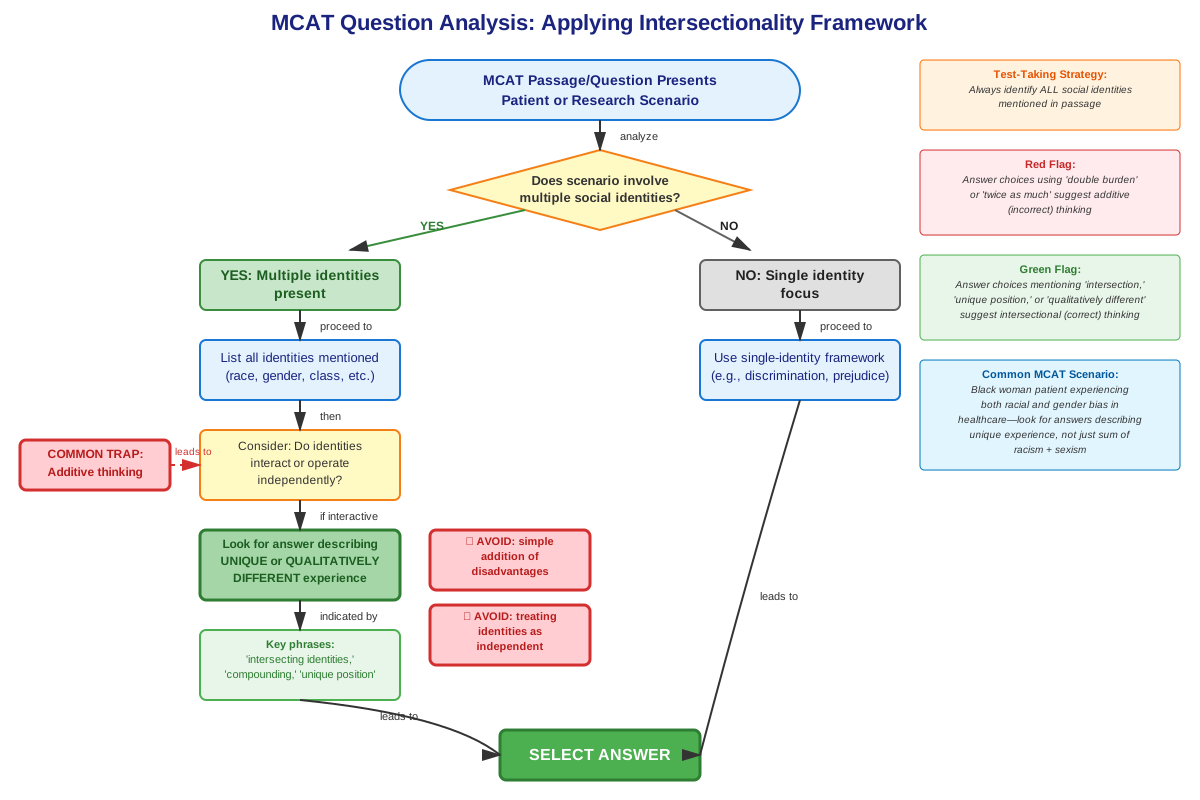
Overview
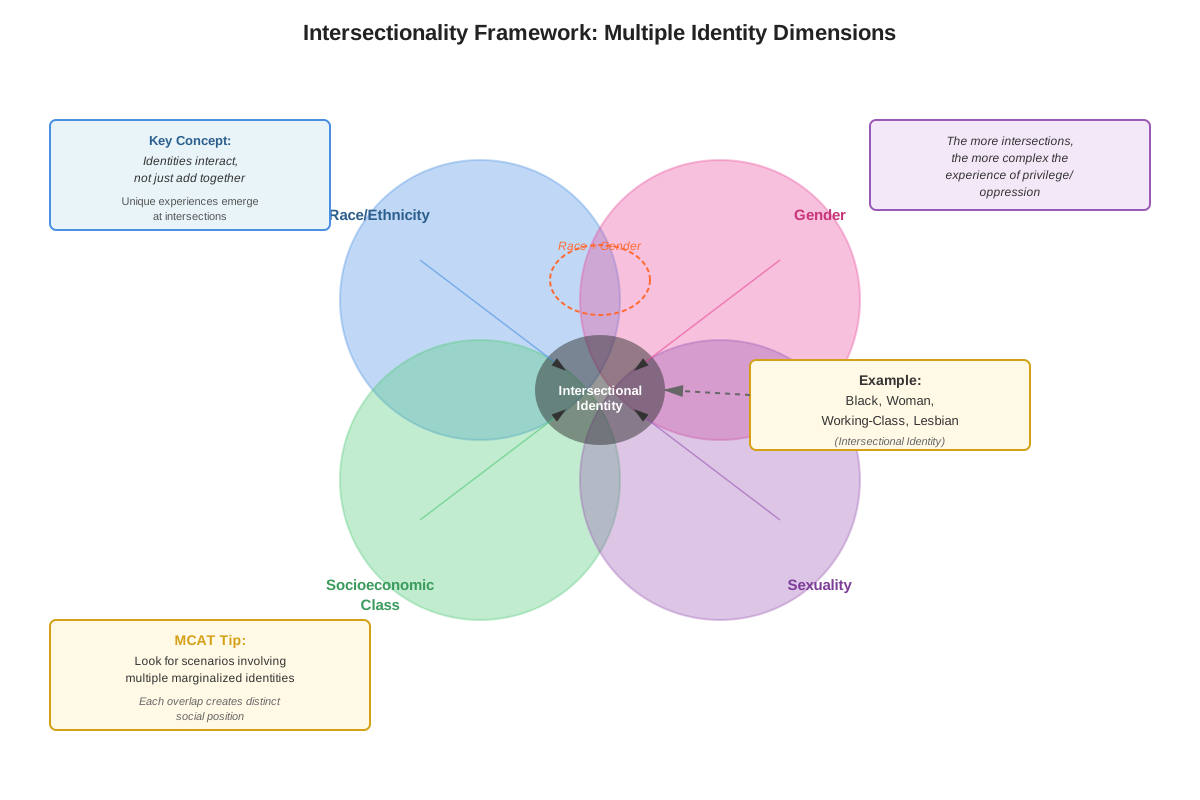
Intersectionality is a critical framework in Sociology that examines how multiple social identities—such as race, gender, class, sexuality, disability, and age—intersect and interact to create unique experiences of privilege and oppression. Originally coined by legal scholar Kimberlé Crenshaw in 1989, this concept has become fundamental to understanding Social Stratification and Inequality in contemporary sociology. Rather than viewing social categories as separate and independent, intersectionality recognizes that individuals simultaneously occupy multiple social positions that compound, modify, or contradict one another in ways that cannot be understood by examining each identity in isolation.
For the MCAT, Intersectionality Sociology represents a high-yield topic that frequently appears in Psychological, Social, and Biological Foundations of Behavior passages. The exam tests students' ability to analyze complex social scenarios where multiple forms of discrimination or privilege operate simultaneously. Understanding intersectionality enables test-takers to correctly interpret research findings about health disparities, access to healthcare, patient-provider interactions, and social determinants of health—all common themes in MCAT passages. Questions may present vignettes involving patients with multiple marginalized identities and ask students to identify which sociological framework best explains observed patterns of inequality or discrimination.
The concept of Intersectionality MCAT connects to broader themes in sociology including social inequality, discrimination, prejudice, stereotyping, institutional racism, sexism, and social justice. It serves as a lens through which students can analyze how social structures create and maintain disparities in health outcomes, educational achievement, economic opportunity, and access to resources. Mastering this topic requires moving beyond additive models of discrimination (where disadvantages simply accumulate) to multiplicative or interactive models where identities create qualitatively different experiences that cannot be predicted by examining single categories alone.
Learning Objectives
- [ ] Define Intersectionality using accurate Sociology terminology
- [ ] Explain why Intersectionality matters for the MCAT
- [ ] Apply Intersectionality to exam-style questions
- [ ] Identify common mistakes related to Intersectionality
- [ ] Connect Intersectionality to related Sociology concepts
- [ ] Distinguish between additive and intersectional models of identity and discrimination
- [ ] Analyze how intersecting identities create unique experiences of privilege and oppression
- [ ] Evaluate research findings and health disparities through an intersectional lens
Prerequisites
- Social identity: Understanding that individuals possess multiple social identities based on group membership; relevant because intersectionality examines how these identities interact
- Discrimination and prejudice: Knowledge of unfair treatment and negative attitudes toward groups; necessary foundation for understanding how multiple forms of discrimination intersect
- Social stratification: Familiarity with hierarchical ranking of individuals and groups; intersectionality explains how stratification operates across multiple dimensions simultaneously
- Privilege: Awareness of unearned advantages based on social group membership; intersectionality reveals how privilege operates differently depending on identity combinations
- Social inequality: Basic understanding of unequal distribution of resources and opportunities; intersectionality provides a framework for analyzing complex patterns of inequality
Why This Topic Matters
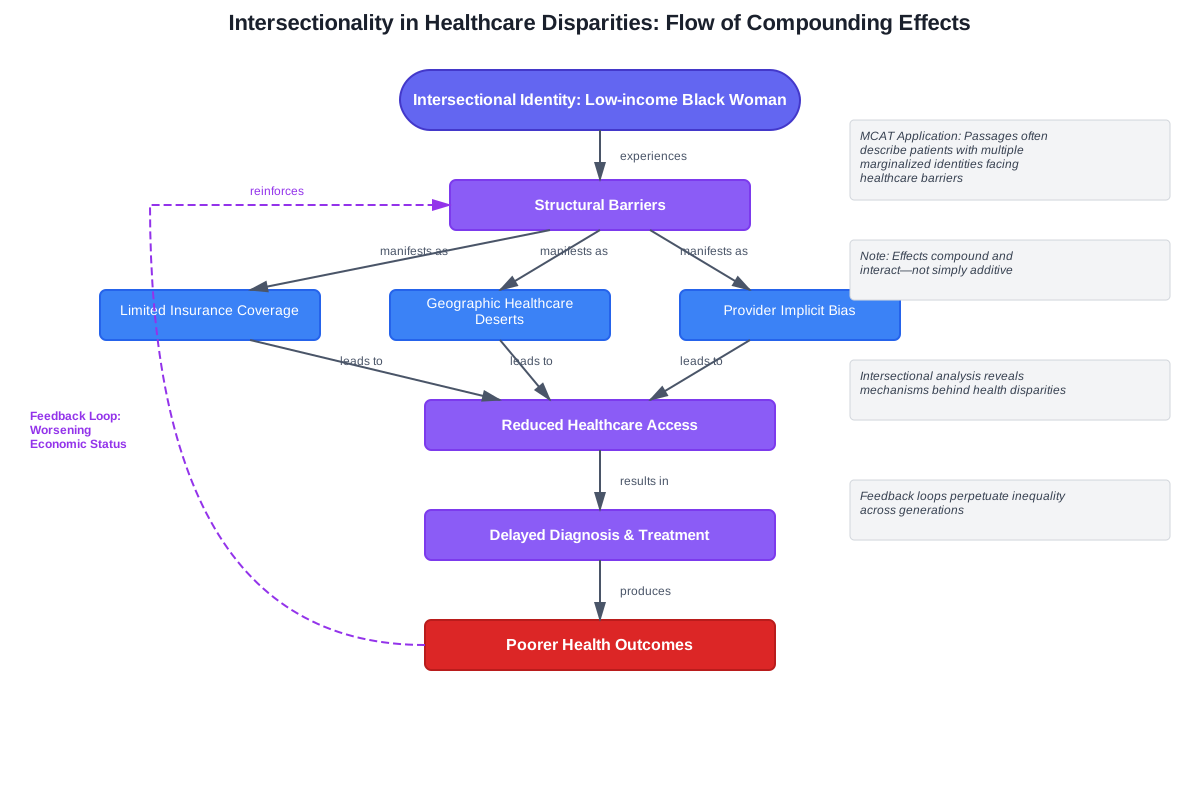
Intersectionality has profound clinical and real-world significance for future healthcare professionals. Medical research has consistently demonstrated that health outcomes, disease prevalence, treatment quality, and healthcare access vary not just by single demographic factors but by their intersections. For example, Black women experience maternal mortality rates significantly higher than would be predicted by examining race or gender alone—an intersectional effect. Understanding these patterns enables physicians to recognize how patients' multiple identities shape their health experiences, barriers to care, and interactions with the healthcare system.
On the MCAT, intersectionality appears with high frequency in the Psychological, Social, and Biological Foundations of Behavior section, particularly in passages addressing health disparities, social determinants of health, and healthcare access. Exam statistics indicate that 3-5 questions per exam directly or indirectly test intersectionality concepts. Questions typically present research studies examining health outcomes across multiple demographic variables, clinical vignettes involving patients with multiple marginalized identities, or scenarios requiring analysis of discrimination patterns.
Common exam passage formats include: (1) research studies showing differential health outcomes that cannot be explained by single variables alone, (2) descriptions of healthcare interventions that succeed or fail based on consideration of intersecting identities, (3) patient-provider interaction scenarios where multiple forms of bias may operate, and (4) epidemiological data requiring interpretation through an intersectional framework. The MCAT frequently tests whether students can distinguish between additive models (where disadvantages simply sum) and truly intersectional models (where identities interact to create qualitatively different experiences).
Core Concepts
Definition and Origins of Intersectionality
Intersectionality is a theoretical framework that posits that multiple social identities—including but not limited to race, ethnicity, gender, sexual orientation, socioeconomic status, disability, age, and religion—intersect at the individual level to reflect interlocking systems of privilege and oppression. These intersections create unique experiences that cannot be fully understood by examining each identity category independently. The term was coined by Kimberlé Crenshaw in her 1989 analysis of how Black women's experiences of discrimination were inadequately addressed by both feminist and antiracist frameworks that treated gender and race as separate categories.
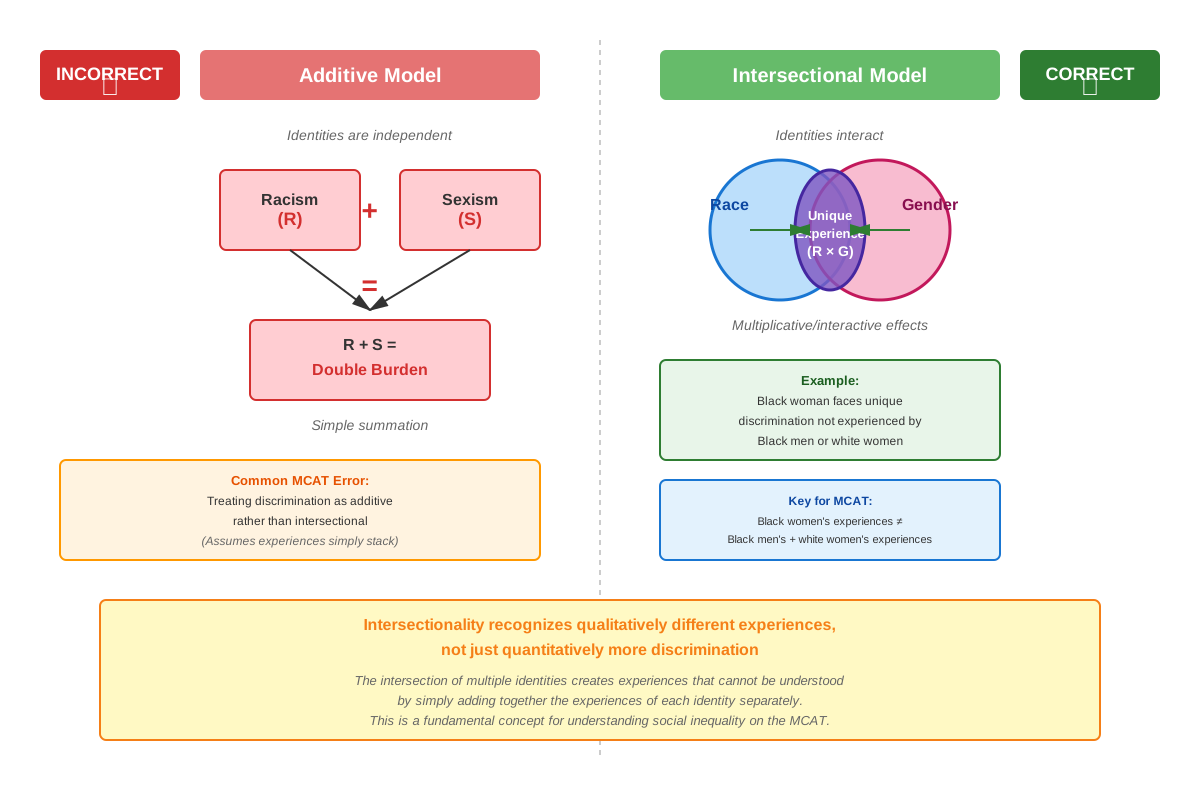
The core insight of intersectionality is that social identities are not additive but multiplicative or interactive. An additive model would suggest that a Black woman experiences racism plus sexism, making her experience simply the sum of two separate forms of discrimination. An intersectional model recognizes that being both Black and a woman creates a qualitatively distinct experience—one that involves unique stereotypes (e.g., the "angry Black woman" trope), specific forms of discrimination (e.g., being overlooked for both race-based and gender-based opportunities), and particular barriers that neither Black men nor white women face in the same way.
Matrix of Domination
The matrix of domination is a sociological framework closely related to intersectionality, developed by Patricia Hill Collins. It describes how intersecting systems of oppression—including racism, sexism, classism, heterosexism, and ableism—operate at multiple levels: individual (personal biography and experiences), group (cultural practices and meanings), and institutional (structural policies and practices). This matrix emphasizes that everyone occupies a position within this system, experiencing both privilege and oppression depending on their various identities and the context.
The matrix of domination helps explain why intersectionality is not simply about "adding up" disadvantages. Instead, it reveals how power operates through interconnected systems that simultaneously privilege some while oppressing others. For example, a wealthy white woman may experience gender-based oppression while simultaneously benefiting from race-based and class-based privilege. Understanding this complexity is essential for MCAT passages that present nuanced scenarios of healthcare access and social determinants of health.
Intersectionality vs. Additive Models
| Aspect | Additive Model | Intersectional Model |
|---|---|---|
| Conceptualization | Identities are separate and independent | Identities interact and modify each other |
| Discrimination calculation | Disadvantages sum (A + B) | Disadvantages interact (A × B creates C) |
| Experience prediction | Can predict experience from separate categories | Creates unique experiences unpredictable from single categories |
| Example | Black woman = racism + sexism | Black woman = unique experience distinct from Black men or white women |
| Policy implications | Address each form of discrimination separately | Must address intersecting systems simultaneously |
This distinction is frequently tested on the MCAT. Students must recognize when a passage describes truly intersectional effects versus simple additive effects. For instance, if a study shows that low-income elderly women of color have health outcomes worse than would be predicted by examining income, age, gender, and race separately, this demonstrates intersectionality.
Applications to Health Disparities
Intersectionality provides a powerful framework for understanding health disparities—differences in health outcomes and healthcare access across social groups. Traditional approaches to health disparities often examine single variables (e.g., racial disparities in diabetes prevalence), but intersectional approaches reveal more complex patterns. Research has shown that:
- Maternal mortality: Black women in the United States experience maternal mortality rates 3-4 times higher than white women, and this disparity persists across income and education levels—suggesting intersectional effects of race and gender that cannot be explained by socioeconomic status alone
- Cardiovascular disease: The intersection of race, gender, and socioeconomic status creates distinct risk profiles and treatment patterns that vary across groups
- Mental health: LGBTQ+ individuals of color experience unique mental health challenges related to both racism and heterosexism/transphobia, with outcomes differing from white LGBTQ+ individuals or heterosexual people of color
- Healthcare access: Undocumented immigrants with disabilities face compounded barriers to healthcare that result from the intersection of immigration status, disability, and often race/ethnicity and socioeconomic status
Structural vs. Individual Intersectionality
Intersectionality operates at both structural and individual levels. Structural intersectionality refers to how social institutions, policies, and systems create intersecting forms of inequality. For example, healthcare policies that fail to provide interpreter services disproportionately affect non-English-speaking immigrants, and when combined with lack of insurance coverage for undocumented individuals, create compounded barriers for undocumented immigrants who don't speak English.
Individual intersectionality refers to how people experience and navigate their multiple identities in daily life. This includes how individuals are perceived by others, how they self-identify, and how they experience discrimination or privilege. On the MCAT, passages may present clinical vignettes where a patient's multiple identities shape their healthcare experience—for instance, an elderly transgender person of color may face age-based dismissal of symptoms, transphobia from providers, and racial bias in pain management, all simultaneously.
Intersectionality and Social Determinants of Health
Social determinants of health (SDOH)—the conditions in which people are born, grow, live, work, and age—are fundamentally intersectional. Factors such as neighborhood quality, educational opportunity, employment conditions, and access to nutritious food are not distributed randomly but reflect intersecting systems of inequality. An intersectional analysis reveals how SDOH affect different groups in distinct ways:
- A low-income neighborhood may have limited healthy food options (food desert), but the health impact differs for elderly residents with mobility limitations versus young families with transportation
- Educational disparities affect health literacy and health outcomes, but the specific pathways differ for immigrant communities facing language barriers versus racial minorities experiencing discrimination in educational settings
- Employment-based health insurance creates different barriers for women (who are more likely to work part-time), people with disabilities (who may face employment discrimination), and undocumented immigrants (who may work in informal sectors)
Concept Relationships
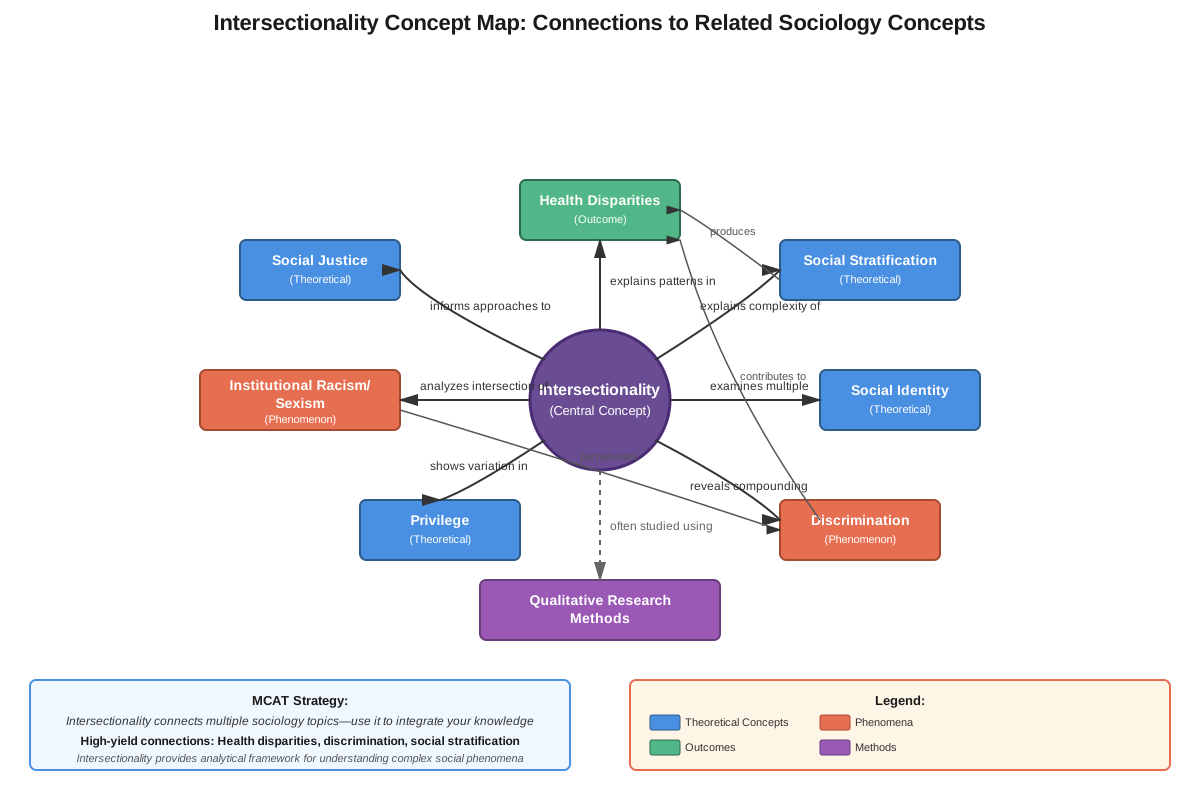
Intersectionality serves as a unifying framework that connects multiple concepts within Social Stratification and Inequality. The relationship map flows as follows:
Social identities (race, gender, class, sexuality, disability, age) → intersect to create → unique positions within social hierarchies → which are maintained by → interlocking systems of oppression (racism, sexism, classism, heterosexism, ableism) → operating through → social institutions (healthcare, education, criminal justice, employment) → resulting in → differential access to resources and opportunities → manifesting as → health disparities and social inequalities.
This framework connects to prerequisite concepts of discrimination and prejudice by showing how these phenomena operate simultaneously across multiple dimensions rather than in isolation. It extends basic understanding of social stratification by revealing that hierarchies are multidimensional and interactive rather than simple rankings on single dimensions. The concept also links to topics in social psychology (stereotyping, implicit bias), medical sociology (healthcare access, patient-provider communication), and public health (health disparities, social determinants of health).
Intersectionality also relates to concepts of social capital, cultural capital, and symbolic capital by showing how access to these resources varies based on intersecting identities. For example, professional networks (social capital) may be less accessible to individuals who face multiple forms of exclusion, and cultural knowledge valued in healthcare settings (cultural capital) may be distributed unequally across intersecting identity groups.
Quick check — test yourself on Intersectionality so far.
Try Flashcards →High-Yield Facts
⭐ Intersectionality was coined by Kimberlé Crenshaw in 1989 to describe how race and gender intersect to create unique experiences of discrimination for Black women
⭐ Intersectionality posits that social identities interact multiplicatively rather than additively—creating qualitatively distinct experiences that cannot be predicted from single categories alone
⭐ The matrix of domination describes how intersecting systems of oppression operate at individual, group, and institutional levels simultaneously
⭐ Health disparities research increasingly demonstrates that outcomes vary by intersections of identities (e.g., race × gender × class) rather than single demographic variables
⭐ Intersectionality applies to both privilege and oppression—individuals may experience advantage in some identity dimensions while facing disadvantage in others
- Structural intersectionality refers to how policies and institutions create intersecting barriers, while individual intersectionality refers to personal experiences of multiple identities
- Intersectional approaches to healthcare recognize that patients' multiple identities shape their health risks, healthcare access, and interactions with providers
- The concept challenges single-axis frameworks that address discrimination based on only one identity category at a time
- Intersectionality is essential for understanding why interventions that work for one group may fail for others with different identity intersections
- MCAT passages frequently test whether students can distinguish between additive models and truly intersectional effects in research findings
Common Misconceptions
Misconception: Intersectionality is only about adding up disadvantages—more marginalized identities simply mean more discrimination
Correction: Intersectionality emphasizes that identities interact to create qualitatively unique experiences, not just quantitatively more discrimination. A Black woman doesn't experience "racism plus sexism" but rather a distinct form of discrimination that is specific to being both Black and a woman
Misconception: Intersectionality only applies to people with multiple marginalized identities
Correction: Intersectionality is a framework for analyzing all identity intersections, including those involving privilege. A wealthy white man's experience is also intersectional—shaped by the interaction of race, gender, and class—though his intersecting identities confer privilege rather than oppression
Misconception: Intersectionality means that people with more marginalized identities always have worse outcomes than those with fewer
Correction: Outcomes depend on context and specific intersections. In some situations, particular identity combinations may provide unexpected advantages or protections. The framework emphasizes complexity rather than simple hierarchies of disadvantage
Misconception: Intersectionality is the same as diversity or multiculturalism
Correction: While related, intersectionality specifically analyzes how power, privilege, and oppression operate through intersecting identity systems. It's an analytical framework focused on inequality, not simply recognition of difference or cultural variety
Misconception: Intersectionality only matters for social sciences and has no relevance to medicine or healthcare
Correction: Intersectionality is crucial for understanding health disparities, patient-provider communication, healthcare access, treatment adherence, and health outcomes. Medical research increasingly demonstrates that health patterns cannot be understood without considering intersecting identities
Misconception: If a study controls for multiple demographic variables statistically, it has taken an intersectional approach
Correction: Simply including multiple variables as separate controls is not intersectional analysis. True intersectional research examines interaction effects—how variables combine to create unique patterns—not just their independent effects
Worked Examples
Example 1: Analyzing a Health Disparity Study
Vignette: A research study examines diabetes prevalence across different demographic groups. The findings show: white men (5%), white women (6%), Black men (9%), Black women (13%), Latina women (14%). The researchers note that Black women's diabetes rate is higher than would be predicted by simply adding the effects of being Black (4% increase over white men) and being a woman (1% increase over white men).
Question: Which sociological framework best explains these findings?
Analysis:
- First, identify what the data shows: Black women have diabetes rates that exceed what would be predicted by examining race and gender separately
- Calculate the additive prediction: If being Black adds 4% and being a woman adds 1%, an additive model would predict Black women at 5% + 4% + 1% = 10%
- Observe the actual rate: 13%, which is 3% higher than the additive prediction
- Recognize the key feature: The interaction between race and gender creates an effect beyond the sum of individual effects
- Connect to theory: This demonstrates intersectionality—the intersection of race and gender creates a unique experience and health outcome
Answer: Intersectionality best explains these findings because the data demonstrate that race and gender interact to create health outcomes that cannot be predicted by examining each identity category independently. The excess risk for Black women beyond additive predictions indicates a multiplicative or interactive effect characteristic of intersectional processes.
Connection to Learning Objectives: This example demonstrates how to apply intersectionality to exam-style questions by distinguishing between additive and intersectional models, and shows why intersectionality matters for understanding health disparities.
Example 2: Clinical Vignette Analysis
Vignette: A 68-year-old Latina woman with limited English proficiency presents to the emergency department with chest pain. Despite meeting criteria for cardiac catheterization, she is discharged with a diagnosis of anxiety. Later investigation reveals that the physician made assumptions about her symptoms based on stereotypes about both women (who are often undertreated for cardiac symptoms) and Latina patients (who may be stereotyped as overly emotional). Additionally, language barriers prevented her from fully describing her symptoms.
Question: How does intersectionality help explain this patient's experience?
Analysis:
- Identify the multiple identities: elderly, Latina, woman, limited English proficiency
- Recognize single-axis discrimination: Gender bias (women's cardiac symptoms dismissed), ethnic bias (stereotypes about Latina patients), language-based discrimination
- Analyze the intersection: The patient faces a unique combination of biases that interact—she's not just experiencing sexism plus racism plus language discrimination separately
- Consider how identities interact: Stereotypes about Latina women specifically (not just women or Latinos generally) may have influenced the physician's judgment
- Evaluate structural factors: Healthcare systems that lack adequate interpreter services disproportionately affect non-English-speaking elderly immigrants
- Recognize the outcome: The specific combination of identities created a particular vulnerability that wouldn't affect a white English-speaking woman or a Latino English-speaking man in the same way
Answer: Intersectionality reveals that this patient's experience results from the interaction of multiple identities—age, ethnicity, gender, and language—creating a unique vulnerability to medical dismissal. The physician's biases operated at the intersection of stereotypes about women's cardiac symptoms and stereotypes about Latina patients, compounded by structural barriers (lack of interpreter services) that disproportionately affect elderly immigrant women. This intersectional analysis shows why addressing sexism or racism alone would be insufficient—the intervention must address how these systems interact in healthcare settings.
Connection to Learning Objectives: This example demonstrates application of intersectionality to clinical scenarios, connects the concept to healthcare disparities, and illustrates how to identify intersectional effects in MCAT passages.
Exam Strategy
When approaching MCAT questions on intersectionality, follow this systematic strategy:
1. Identify the trigger words: Watch for passages mentioning "multiple identities," "intersecting," "compounding effects," "unique experiences," or data showing that outcomes for groups with multiple marginalized identities differ from predictions based on single categories. Phrases like "cannot be explained by X alone" or "the combination of X and Y creates" signal intersectional concepts.
2. Distinguish additive from intersectional models: If a question presents data or scenarios, determine whether it shows simple addition of effects (A + B) or interaction effects (A × B creates something qualitatively different). Look for outcomes that exceed or differ from what would be predicted by summing individual effects.
3. Avoid single-axis thinking: Eliminate answer choices that explain complex social phenomena using only one identity category (e.g., "this is due to racism" when both race and gender are relevant). The correct answer will acknowledge multiple intersecting identities.
4. Consider both structure and experience: Strong answers often address both structural/institutional factors (policies, systems) and individual experiences (how people navigate multiple identities). Be wary of answers that focus exclusively on one level.
5. Time allocation: Intersectionality questions typically appear in longer passages with multiple questions. Allocate 1.5-2 minutes for initial passage reading, noting all mentioned identity categories and any data showing interaction effects. Spend 60-90 seconds per question, using process of elimination to remove single-axis explanations first.
6. Process of elimination tips specific to intersectionality:
- Eliminate answers suggesting that one identity is "more important" than others
- Remove options that treat identities as completely independent
- Reject explanations that ignore structural/institutional factors
- Avoid answers that suggest intersectionality only applies to marginalized groups
7. Common wrong answer patterns: Watch for distractors that (a) describe additive models when the passage shows interaction effects, (b) focus on individual prejudice while ignoring institutional discrimination, (c) suggest that controlling for variables statistically is the same as intersectional analysis, or (d) imply that intersectionality means some groups always have worse outcomes regardless of context.
Memory Techniques
INTERSECT Mnemonic for key features of intersectionality:
- Interactive effects (not additive)
- Not single-axis analysis
- Transforms understanding of privilege and oppression
- Experiences are unique to identity combinations
- Recognizes multiple systems of power
- Structural and individual levels
- Everyone has intersecting identities
- Complex, context-dependent outcomes
- Theorized by Kimberlé Crenshaw
Visualization Strategy: Picture a street intersection where multiple roads meet. Just as you can't understand traffic patterns by looking at only one street, you can't understand social experiences by examining only one identity. The intersection itself creates unique dynamics—cars coming from different directions interact in ways that wouldn't happen on any single road. This visual metaphor helps remember that intersectionality is about interactions, not simple combinations.
Acronym for Common Intersecting Identities: RAGES CD
- Race/ethnicity
- Age
- Gender
- Economic status/class
- Sexuality
- Citizenship/immigration status
- Disability
Contrast Memory Aid: Remember "Addition vs. Multiplication"
- Addition (wrong): Black + Woman = two separate disadvantages
- Multiplication (correct): Black × Woman = unique experience (Black woman ≠ Black man + white woman)
Summary
Intersectionality is a foundational sociological framework that examines how multiple social identities—including race, gender, class, sexuality, disability, and age—intersect to create unique experiences of privilege and oppression that cannot be understood by analyzing each identity separately. Coined by Kimberlé Crenshaw in 1989, this concept challenges additive models of discrimination by demonstrating that identities interact multiplicatively, producing qualitatively distinct experiences and outcomes. For the MCAT, intersectionality is essential for analyzing health disparities, understanding patient experiences, and interpreting research findings that show how outcomes vary across intersecting demographic categories. The framework operates at both structural levels (how institutions and policies create intersecting barriers) and individual levels (how people experience and navigate multiple identities). Mastery requires recognizing when data or scenarios demonstrate true intersectional effects versus simple additive effects, understanding the matrix of domination, and applying intersectional analysis to healthcare contexts. Students must be able to identify intersectionality in passages, distinguish it from related concepts, and use it to explain complex patterns of inequality in health outcomes and healthcare access.
Key Takeaways
- Intersectionality describes how multiple social identities interact to create unique experiences that cannot be predicted from examining single categories independently—identities multiply rather than add
- The framework was developed by Kimberlé Crenshaw to address how Black women's experiences were inadequately explained by examining race or gender alone
- Intersectionality applies to both privilege and oppression—everyone has intersecting identities that shape their social position and experiences in context-dependent ways
- Health disparities research increasingly demonstrates that outcomes vary by intersections of identities (race × gender × class) rather than single demographic variables, making intersectionality essential for medical sociology
- On the MCAT, distinguish between additive models (disadvantages sum) and intersectional models (identities interact to create qualitatively different experiences)—this distinction is frequently tested
- The matrix of domination describes how intersecting systems of oppression operate simultaneously at individual, group, and institutional levels
- Intersectional analysis requires examining both structural factors (policies, institutions) and individual experiences (how people navigate multiple identities in daily life)
Related Topics
Social Identity Theory: Examines how individuals derive part of their self-concept from group memberships; intersectionality extends this by analyzing how multiple group memberships interact to shape identity and experience
Institutional Discrimination: Studies how organizational policies and practices create systematic disadvantages for certain groups; intersectionality reveals how institutional discrimination operates across multiple identity dimensions simultaneously
Health Disparities and Social Determinants of Health: Investigates unequal health outcomes across social groups and their root causes; intersectionality provides the analytical framework for understanding complex disparity patterns
Feminist Theory and Critical Race Theory: Theoretical traditions that analyze gender-based and race-based oppression respectively; intersectionality emerged from and extends these frameworks by examining their intersection
Implicit Bias and Stereotyping: Explores unconscious attitudes and oversimplified beliefs about social groups; intersectionality shows how biases operate at the intersection of multiple identities, creating unique stereotypes for specific identity combinations
Mastering intersectionality provides the foundation for understanding these related topics and enables more sophisticated analysis of social inequality in healthcare contexts.
Practice CTA
Now that you've completed this comprehensive guide on intersectionality, you're ready to test your understanding and reinforce your learning. Attempt the practice questions to apply these concepts to MCAT-style scenarios, and use the flashcards to memorize high-yield facts and definitions. Remember that intersectionality appears frequently on the MCAT, particularly in passages addressing health disparities and social determinants of health. Your ability to recognize intersectional effects and distinguish them from additive models will be crucial for achieving a top score. Consistent practice with these concepts will build the analytical skills needed to excel on exam day—you've got this!
Sign up free to keep reading
Create a free AnvayaPrep account to finish this MCAT guide on Intersectionality — plus flashcards and practice questions.