Overview
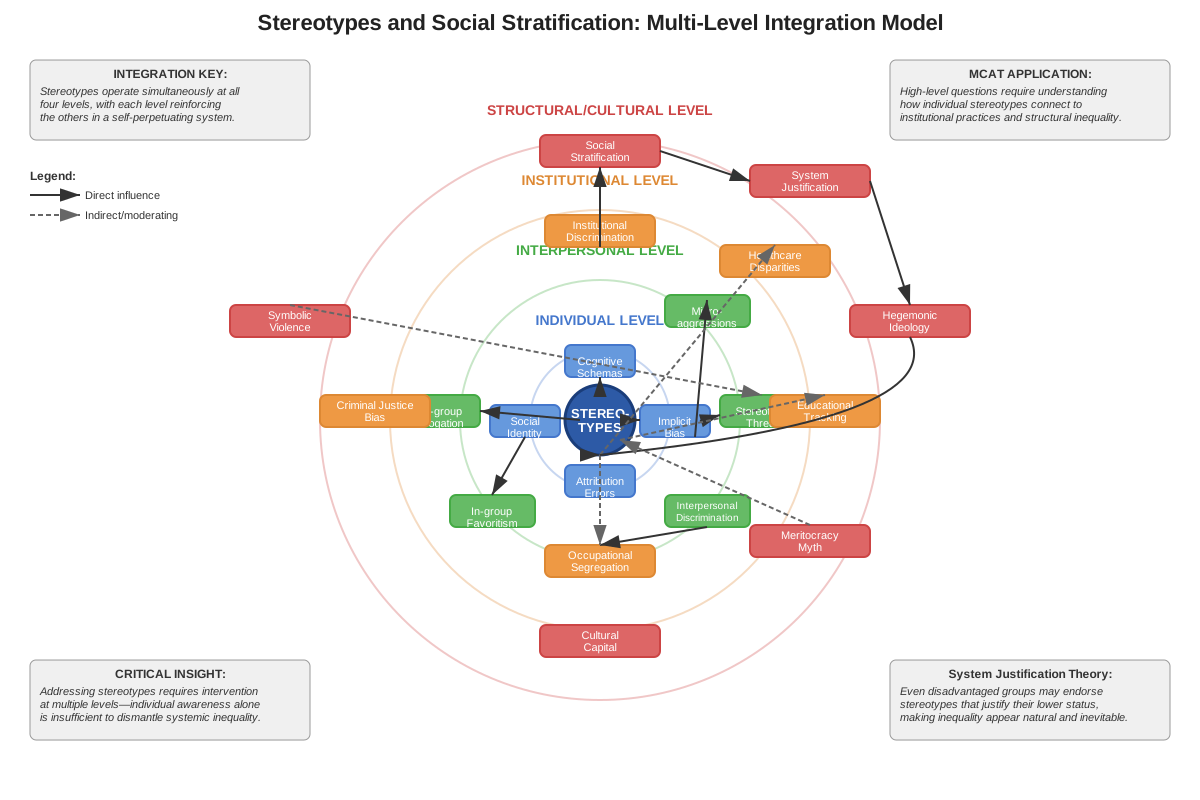
Stereotypes are cognitive structures that represent oversimplified, generalized beliefs about particular groups of people. In Sociology, stereotypes function as mental shortcuts that categorize individuals based on their membership in social groups—whether defined by race, ethnicity, gender, age, religion, occupation, or other characteristics. These cognitive schemas allow individuals to process social information quickly but often at the cost of accuracy and fairness. Stereotypes are not merely individual psychological phenomena; they are deeply embedded in cultural narratives, institutional practices, and systems of social stratification and inequality.
For the MCAT, understanding stereotypes is essential because they appear across multiple contexts within the Psychological, Social, and Biological Foundations of Behavior section. Questions may present research scenarios examining stereotype formation, experimental passages on stereotype threat, or clinical vignettes exploring how stereotypes affect patient-provider interactions and health outcomes. The MCAT frequently tests the ability to distinguish stereotypes from related concepts like prejudice and discrimination, to identify mechanisms through which stereotypes perpetuate inequality, and to analyze how stereotypes influence behavior at individual, interpersonal, and institutional levels.
Stereotypes connect to broader themes in Sociology including social identity theory, in-group/out-group dynamics, attribution theory, and structural inequality. They serve as cognitive foundations for prejudice (affective responses) and discrimination (behavioral manifestations), forming a conceptual triad that explains how social inequality is maintained across generations. Understanding stereotypes requires integrating knowledge from cognitive psychology (schema theory, heuristics), social psychology (social categorization, implicit bias), and sociology (power structures, institutional discrimination). This interdisciplinary nature makes stereotypes a high-yield topic that bridges multiple MCAT content areas.
Learning Objectives
- [ ] Define stereotypes using accurate Sociology terminology
- [ ] Explain why stereotypes matter for the MCAT
- [ ] Apply stereotypes to exam-style questions
- [ ] Identify common mistakes related to stereotypes
- [ ] Connect stereotypes to related Sociology concepts
- [ ] Distinguish between stereotypes, prejudice, and discrimination with specific examples
- [ ] Analyze how stereotypes contribute to social stratification and perpetuate inequality
- [ ] Evaluate the psychological mechanisms underlying stereotype formation and maintenance
- [ ] Assess the impact of stereotype threat on performance and identity
Prerequisites
- Social categorization: The cognitive process of classifying people into groups; relevant because stereotypes emerge from and reinforce categorical thinking about social groups
- Cognitive schemas: Mental frameworks that organize and interpret information; relevant because stereotypes function as group-based schemas that guide perception and memory
- In-groups and out-groups: Distinction between groups one belongs to versus groups one does not; relevant because stereotypes typically involve beliefs about out-groups and are used to maintain in-group identity
- Social identity theory: Framework explaining how group membership contributes to self-concept; relevant because stereotypes help define group boundaries and justify status hierarchies
Why This Topic Matters
Stereotypes have profound real-world significance in healthcare settings, where they can lead to diagnostic errors, treatment disparities, and compromised patient-provider relationships. Medical professionals who hold stereotypes about patients based on race, gender, socioeconomic status, or other characteristics may unconsciously provide differential care, contributing to documented health disparities. For example, stereotypes about pain tolerance across racial groups have been linked to inadequate pain management for minority patients. Understanding stereotypes is crucial for future physicians to provide equitable, patient-centered care and to recognize their own implicit biases.
On the MCAT, stereotypes appear with high frequency in the Psychological, Social, and Biological Foundations of Behavior section. Approximately 8-12% of questions in this section relate to social processes, and stereotypes feature prominently within this content area. Questions typically appear in three formats: (1) research-based passages presenting experimental studies on stereotype activation, stereotype threat, or implicit bias; (2) standalone questions testing definitional knowledge and the ability to distinguish related concepts; and (3) clinical or social vignettes requiring application of stereotype concepts to analyze behavior or predict outcomes.
Common exam scenarios include passages describing studies where participants rate individuals from different social groups, experiments manipulating stereotype salience before performance tasks, or situations where healthcare providers make diagnostic or treatment decisions. The MCAT particularly emphasizes stereotype threat—the phenomenon where awareness of negative stereotypes impairs performance—and the distinction between explicit (conscious) and implicit (unconscious) stereotypes. Questions often require identifying which scenario best exemplifies stereotype activation, predicting how stereotypes might influence behavior, or explaining mechanisms through which stereotypes perpetuate social inequality.
Core Concepts
Definition and Characteristics of Stereotypes
Stereotypes are cognitive generalizations about groups of people whereby individuals are assigned characteristics based solely on their group membership rather than their individual qualities. These mental representations are overgeneralized (applied broadly without accounting for individual variation), oversimplified (reducing complex human characteristics to a few traits), and resistant to change (persisting even when contradicted by evidence). Stereotypes can be positive, negative, or neutral in valence, though negative stereotypes receive more attention due to their harmful consequences.
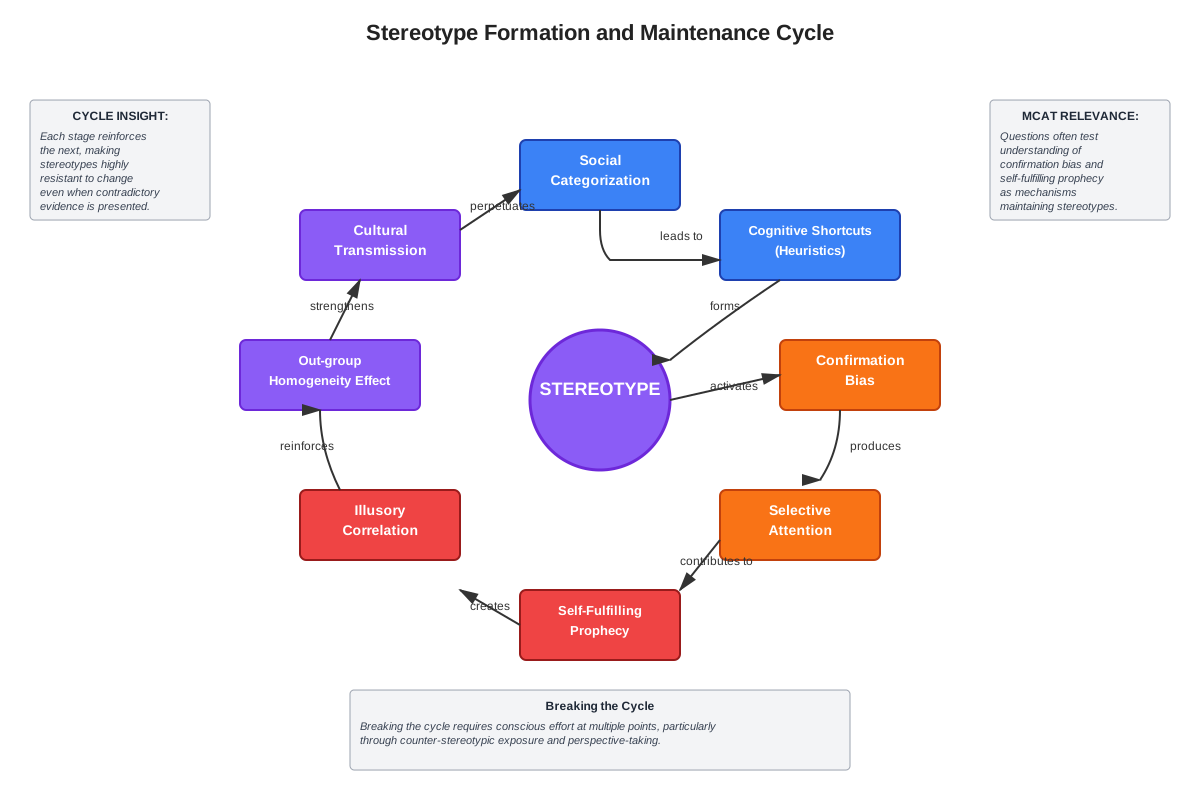
Key characteristics distinguish stereotypes from accurate group-level observations. First, stereotypes are categorical rather than probabilistic—they treat group membership as determinative rather than merely correlative with certain characteristics. Second, stereotypes are essentialist, attributing observed differences to inherent, unchangeable group qualities rather than to social, historical, or contextual factors. Third, stereotypes demonstrate confirmation bias, whereby individuals selectively attend to information confirming stereotypical beliefs while discounting disconfirming evidence.
Stereotypes operate through cognitive efficiency—they allow rapid social perception by providing ready-made interpretations of others' behavior. However, this efficiency comes at the cost of accuracy and fairness. When encountering a group member, individuals may engage in category-based processing (relying on stereotypical expectations) rather than individuating (attending to person-specific information). The likelihood of stereotype application increases under cognitive load, time pressure, or when the perceiver is unmotivated to form accurate impressions.
The Stereotype-Prejudice-Discrimination Triad
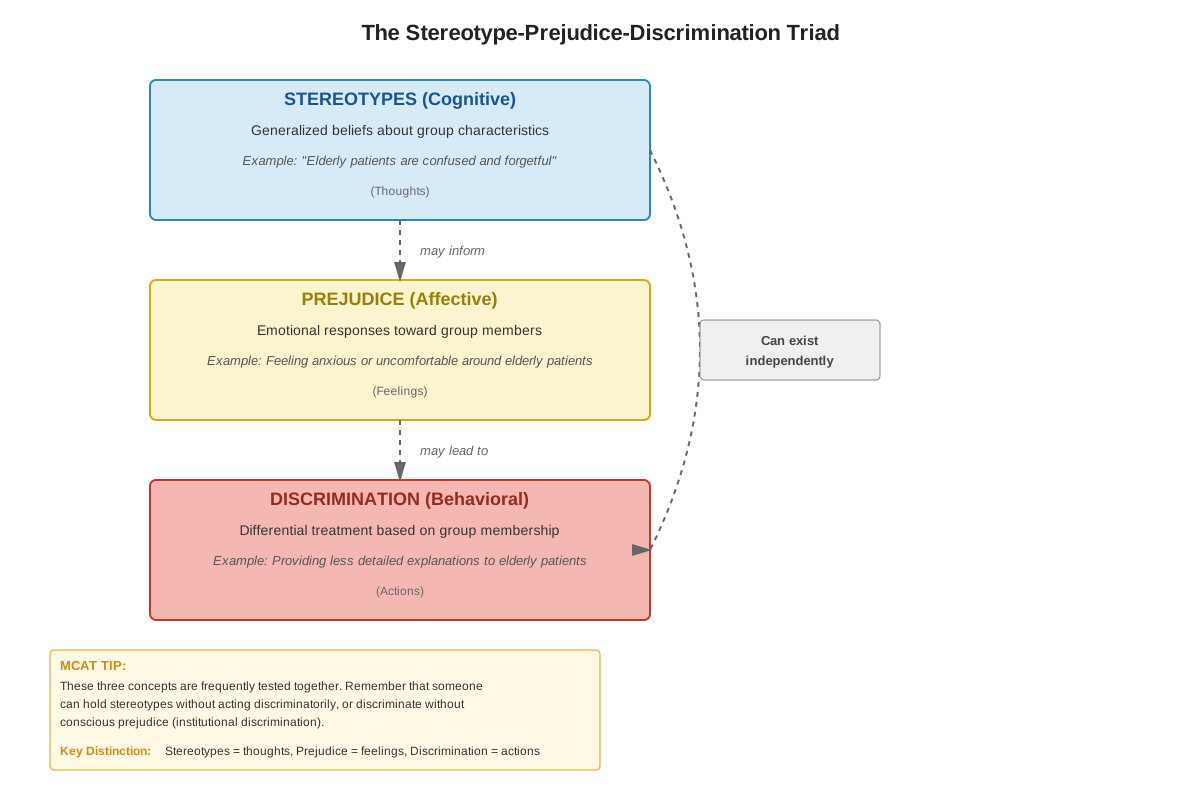
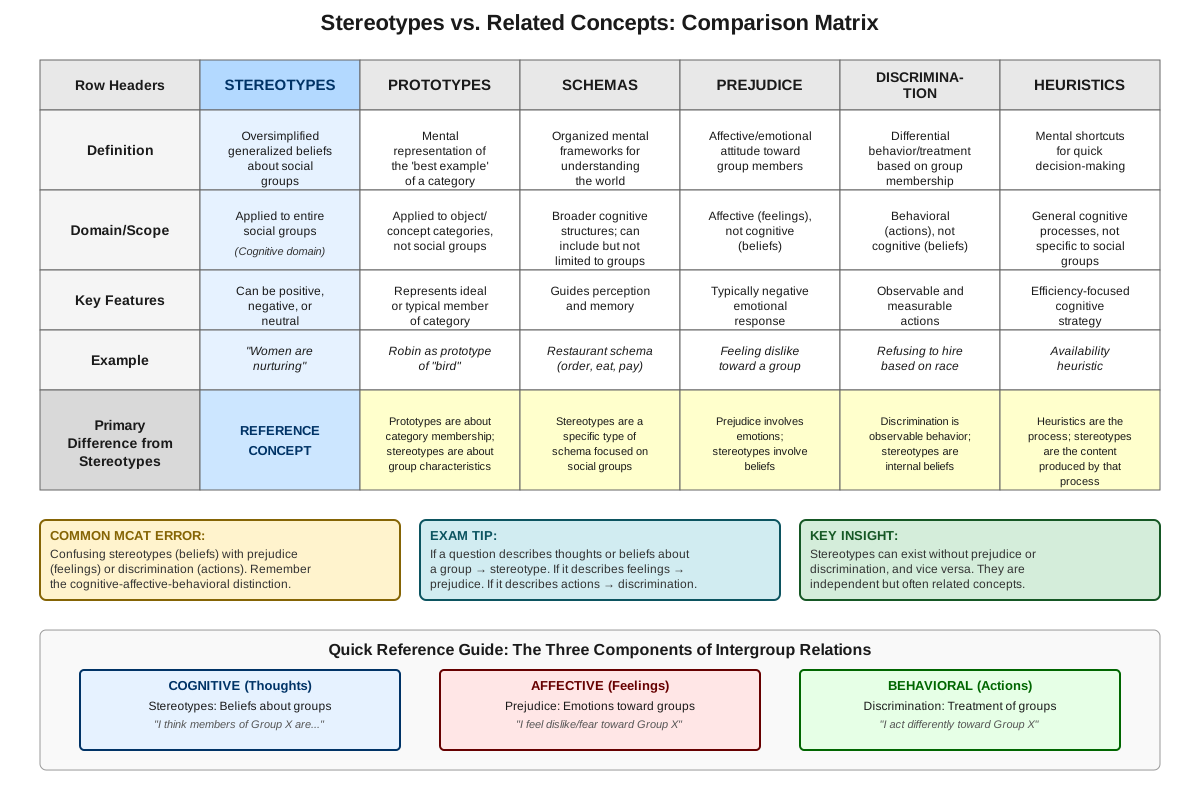
Understanding stereotypes requires distinguishing them from two related but distinct concepts: prejudice and discrimination. These three form a conceptual framework explaining how social inequality operates at cognitive, affective, and behavioral levels.
| Component | Domain | Definition | Example |
|---|---|---|---|
| Stereotype | Cognitive | Generalized beliefs about group characteristics | "Elderly people are technologically incompetent" |
| Prejudice | Affective | Negative attitudes or feelings toward a group | Feeling frustrated or impatient with elderly patients |
| Discrimination | Behavioral | Differential treatment based on group membership | Refusing to teach elderly patients to use health apps |
This triad operates sequentially but not inevitably—stereotypes can exist without prejudice, and prejudice without discrimination. However, stereotypes often provide cognitive justification for prejudicial attitudes, which in turn motivate discriminatory behavior. The MCAT frequently tests the ability to identify which component is illustrated in a given scenario. For example, a physician believing that women exaggerate pain symptoms demonstrates a stereotype; feeling annoyed by female patients' pain complaints reflects prejudice; and ordering fewer diagnostic tests for women than men with identical symptoms constitutes discrimination.
Mechanisms of Stereotype Formation
Stereotypes develop through multiple psychological and social processes. Social learning occurs when individuals acquire stereotypes through observation, instruction, and media exposure during socialization. Children internalize cultural stereotypes long before they can critically evaluate them, often by age 3-4. Illusory correlation contributes to stereotype formation when people overestimate the association between group membership and distinctive behaviors, particularly negative ones. Because negative behaviors are statistically rare and minority groups are numerically smaller, the co-occurrence of minority status and negative behavior becomes cognitively salient, leading to exaggerated beliefs about the frequency of such pairings.
Out-group homogeneity effect describes the tendency to perceive out-group members as more similar to each other than in-group members ("they all look/act alike"). This occurs because individuals have more extensive, individuated experience with in-group members and process out-group members more categorically. The effect strengthens stereotypes by reducing attention to within-group variability. Ultimate attribution error further reinforces stereotypes by attributing negative out-group behavior to dispositional (internal, stable) causes while attributing positive out-group behavior to situational (external, unstable) factors—the reverse pattern applied to in-group members.
Kernel of truth hypothesis suggests some stereotypes may originate from actual group differences, though these differences are typically exaggerated, decontextualized, and misattributed. For example, if members of a particular group are disproportionately employed in service occupations due to historical discrimination limiting educational opportunities, observers might develop stereotypes about that group's intellectual capabilities—mistaking a consequence of structural inequality for an inherent group characteristic.
Stereotype Activation and Application
Stereotype activation refers to the process by which stereotypical knowledge becomes cognitively accessible, while stereotype application involves using that activated knowledge to judge or interact with group members. These are dissociable processes—stereotypes can be activated automatically without being applied to judgments.
Automatic activation occurs rapidly and unconsciously when encountering cues associated with stereotyped groups (physical features, names, clothing, accents). Research using priming paradigms demonstrates that stereotype activation can occur within milliseconds and influence subsequent perception and behavior without conscious awareness. Implicit stereotypes are automatically activated associations measured through techniques like the Implicit Association Test (IAT), which assesses the strength of associations between group categories and attributes by measuring response latencies.
Controlled processing can inhibit stereotype application when individuals are motivated and have sufficient cognitive resources. Factors promoting controlled processing include accountability (knowing one's judgments will be evaluated), egalitarian values, and explicit instructions to avoid stereotyping. However, cognitive depletion, time pressure, and distraction increase reliance on stereotypical judgments. The MCAT often presents scenarios testing understanding of when stereotypes are more versus less likely to influence behavior.
Stereotype Threat
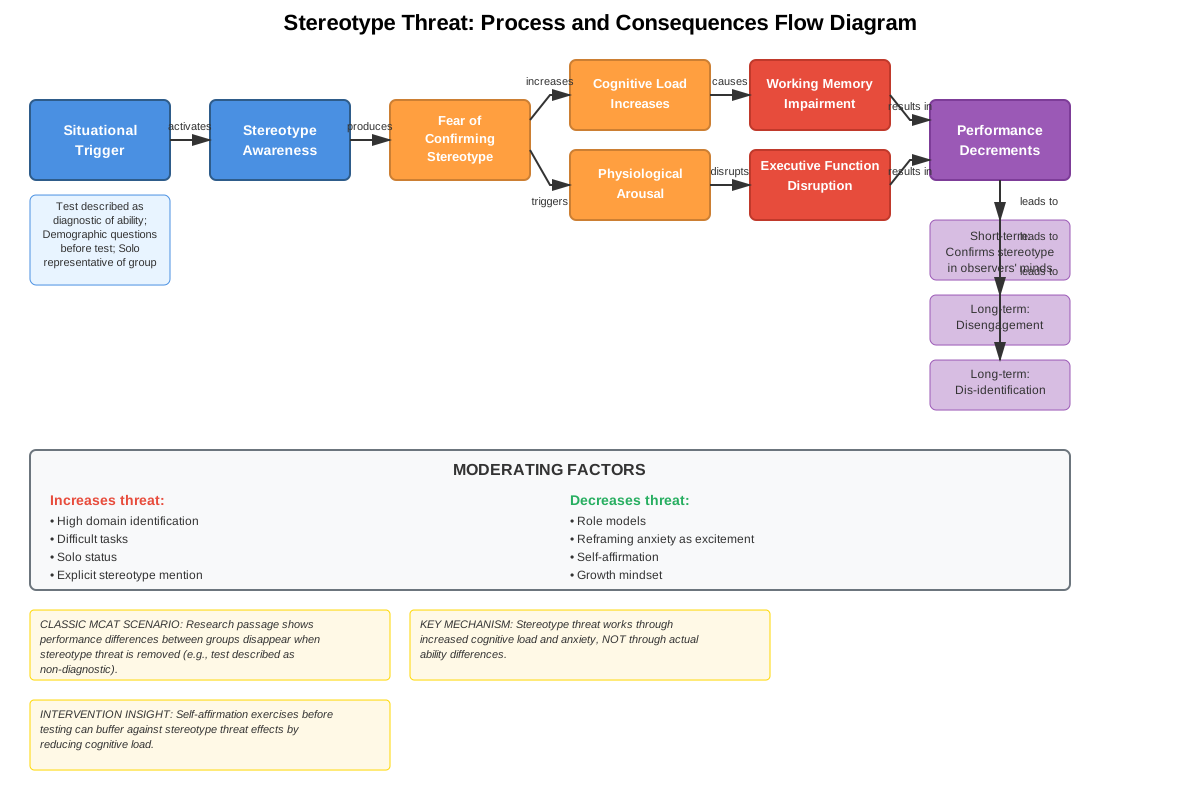
Stereotype threat is a situational predicament where individuals risk confirming negative stereotypes about their group, and this awareness impairs performance. First systematically studied by Claude Steele and Joshua Aronson, stereotype threat demonstrates how stereotypes harm targeted groups beyond direct discrimination. When stereotypes are made salient (through explicit mention, demographic questions, or contextual cues), individuals experience anxiety and cognitive interference that undermines performance, particularly on difficult tasks in domains where negative stereotypes exist about their group.
Mechanisms underlying stereotype threat include:
- Physiological stress response: Increased arousal and cortisol release that impairs executive function
- Cognitive load: Mental resources consumed by monitoring performance and suppressing anxiety
- Reduced working memory capacity: Intrusive thoughts about confirming stereotypes occupy working memory
- Regulatory focus: Shift from promotion focus (achieving success) to prevention focus (avoiding failure)
Stereotype threat affects numerous groups and domains: women in mathematics and science, African Americans on academic tests, elderly individuals on memory tasks, and white men in athletic contexts. The effect is strongest when (1) the domain is important to one's identity, (2) the task is challenging, (3) stereotypes are explicitly mentioned or implicitly cued, and (4) individuals are aware of being evaluated. Interventions reducing stereotype threat include reframing tasks as non-diagnostic of ability, providing role models who contradict stereotypes, and encouraging self-affirmation.
Stereotypes and Social Stratification
Stereotypes play a crucial role in maintaining social stratification—the hierarchical arrangement of groups with differential access to resources, power, and prestige. They function as ideological justifications for inequality by attributing group differences in outcomes to inherent characteristics rather than structural factors. This process, called system justification, helps maintain existing social arrangements by making them appear natural and legitimate.
Prescriptive stereotypes specify how group members should behave, not just how they typically do behave. These create normative expectations that constrain behavior and punish deviation. For example, stereotypes prescribing that women should be nurturing and communal lead to backlash against women who display agentic, assertive leadership styles. Prescriptive stereotypes thus maintain gender hierarchies by penalizing women who violate traditional role expectations.
Intersectionality recognizes that individuals hold multiple social identities simultaneously, and stereotypes about intersecting identities cannot be understood by simply adding stereotypes about each identity separately. For instance, stereotypes about Black women differ from stereotypes about Black men or white women. The MCAT may present scenarios requiring recognition that stereotype effects vary depending on which combination of identities is salient.
Self-Fulfilling Prophecies and Behavioral Confirmation
Stereotypes can become self-fulfilling through multiple pathways. Behavioral confirmation occurs when stereotypical expectations elicit behavior from targets that confirms those expectations. In classic studies, teachers given false information that certain students were "intellectual bloomers" subsequently treated those students differently (more attention, encouragement, feedback), leading to actual performance improvements. Similarly, stereotypes can influence how individuals interact with group members, eliciting stereotype-consistent behavior.
Stereotype internalization occurs when targets of stereotypes come to believe stereotypical characterizations of their group, affecting self-concept and behavior. This process, related to internalized oppression, demonstrates how stereotypes exert power even in the absence of direct discrimination. For example, if members of a stereotyped group internalize beliefs about their group's limited abilities, they may reduce effort, avoid challenging domains, or experience diminished self-efficacy.
Concept Relationships
Stereotypes connect to multiple concepts within social psychology and sociology, forming an integrated network of ideas about social perception and inequality. The foundational relationship is: Social categorization → Stereotype formation → Prejudice → Discrimination → Social stratification. This sequence illustrates how cognitive processes (categorization) lead to belief structures (stereotypes) that generate emotional responses (prejudice) and behaviors (discrimination), ultimately maintaining hierarchical social systems.
Stereotypes relate bidirectionally to social identity theory. Social identity theory explains that individuals derive self-esteem partly from group memberships, motivating them to view in-groups positively and out-groups negatively. This motivation contributes to stereotype formation and maintenance. Conversely, stereotypes reinforce social identities by clearly defining group boundaries and characteristics, making group membership psychologically meaningful.
The connection between stereotypes and attribution theory is crucial for understanding stereotype persistence. Fundamental attribution error (overattributing behavior to dispositions rather than situations) combines with stereotypes to create particularly resistant beliefs. When observing stereotype-consistent behavior, individuals make dispositional attributions ("they acted that way because of who they are"), but when observing stereotype-inconsistent behavior, they make situational attributions ("they acted that way because of unusual circumstances"). This asymmetry prevents stereotype revision.
Stereotypes connect to cognitive heuristics, particularly the representativeness heuristic (judging probability based on similarity to prototypes) and availability heuristic (judging frequency based on ease of recall). These mental shortcuts facilitate stereotype application—individuals judge whether someone possesses stereotypical traits based on how representative they seem of the group, and vivid examples of stereotype-consistent individuals are easily recalled, inflating perceived prevalence.
The relationship between stereotypes and implicit bias is one of measurement and awareness. Implicit biases are automatically activated stereotypical associations that operate outside conscious awareness or control. While explicit stereotypes are consciously endorsed beliefs, implicit stereotypes may contradict stated values. This distinction is important for understanding how well-intentioned individuals can still perpetuate inequality through unconscious bias.
Finally, stereotypes connect to structural functionalism and conflict theory—competing sociological paradigms. Functionalists might view stereotypes as serving social functions (simplifying complex social worlds, facilitating group coordination), while conflict theorists emphasize how stereotypes serve dominant groups by justifying exploitation and maintaining power differentials. The MCAT may present scenarios requiring application of these theoretical perspectives to analyze stereotype functions.
Quick check — test yourself on Stereotypes so far.
Try Flashcards →High-Yield Facts
⭐ Stereotypes are cognitive (beliefs), prejudice is affective (feelings), and discrimination is behavioral (actions)—these are distinct but related components of intergroup bias
⭐ Stereotype threat occurs when awareness of negative stereotypes about one's group impairs performance, particularly on difficult tasks in stereotype-relevant domains
⭐ Stereotypes can be activated automatically and unconsciously but require cognitive resources to inhibit their application to judgments
⭐ The out-group homogeneity effect leads people to perceive out-group members as more similar to each other than in-group members, strengthening stereotypes
⭐ Self-fulfilling prophecies occur when stereotypical expectations elicit behavior from targets that confirms those expectations
- Illusory correlation contributes to stereotype formation by causing overestimation of the association between minority group membership and negative behaviors
- Prescriptive stereotypes specify how group members should behave and create backlash when violated, maintaining social hierarchies
- Implicit stereotypes measured by the IAT can contradict explicit, consciously endorsed beliefs
- Stereotype internalization occurs when targets accept stereotypical beliefs about their group, affecting self-concept and behavior
- System justification theory explains how stereotypes legitimize existing social hierarchies by attributing inequality to group characteristics rather than structural factors
- Intersectionality recognizes that stereotypes about individuals with multiple marginalized identities cannot be understood by simply combining stereotypes about each identity
- Confirmation bias causes individuals to selectively attend to stereotype-consistent information while discounting inconsistent information
Common Misconceptions
Misconception: Stereotypes are always negative characterizations of groups.
Correction: Stereotypes can be positive, negative, or neutral in valence. Positive stereotypes (e.g., "Asians are good at math") are still problematic because they overgeneralize, create pressure to conform, ignore individual variation, and can mask discrimination. The MCAT may present positive stereotypes to test whether students recognize them as stereotypes.
Misconception: Stereotypes are the same as discrimination.
Correction: Stereotypes are cognitive beliefs about groups, while discrimination involves differential treatment or behavior. A person can hold stereotypes without discriminating, and discrimination can occur without conscious stereotypical beliefs (through institutional policies). The MCAT frequently tests the ability to distinguish these concepts by presenting scenarios and asking which term best applies.
Misconception: If a stereotype has some statistical basis in group differences, it is not really a stereotype.
Correction: Even when group differences exist on average, stereotypes are problematic because they (1) exaggerate the magnitude of differences, (2) ignore within-group variation and between-group overlap, (3) apply group-level patterns to individuals, and (4) misattribute causes (treating consequences of discrimination as inherent group characteristics). The kernel of truth hypothesis acknowledges possible origins in real differences while recognizing the distortion stereotypes introduce.
Misconception: People who are not prejudiced do not have stereotypes.
Correction: Stereotype activation can occur automatically even in individuals who consciously reject prejudice and discrimination. Implicit stereotypes, measured through reaction time tasks, often contradict explicit egalitarian values. The distinction between automatic activation and controlled application is crucial—egalitarian individuals can inhibit stereotype application despite automatic activation.
Misconception: Stereotype threat only affects academic test performance.
Correction: Stereotype threat affects performance across diverse domains including athletics, driving, negotiation, social interactions, and health behaviors. Any domain where negative stereotypes exist about a group and performance is evaluated can produce stereotype threat effects. The MCAT may present non-academic scenarios to test comprehensive understanding.
Misconception: Stereotypes are individual psychological phenomena unrelated to social structure.
Correction: While stereotypes involve individual cognition, they are socially shared beliefs transmitted through culture, embedded in institutions, and systematically related to power structures. Stereotypes both reflect and perpetuate social stratification, serving ideological functions that justify inequality. Understanding stereotypes requires integrating psychological and sociological levels of analysis.
Worked Examples
Example 1: Distinguishing Stereotype, Prejudice, and Discrimination
Scenario: Dr. Martinez believes that elderly patients are generally less capable of understanding complex medical information compared to younger patients. When meeting with an 80-year-old patient, Dr. Martinez feels frustrated before the appointment begins. During the consultation, Dr. Martinez uses simpler language and provides less detailed explanations than she would for a younger patient with the same condition and educational background.
Question: Identify which aspects of this scenario represent stereotype, prejudice, and discrimination.
Analysis:
Step 1: Identify the cognitive component (belief about the group).
Dr. Martinez's belief that elderly patients are "generally less capable of understanding complex medical information" represents a stereotype. This is an overgeneralized belief about a social group (elderly people) that attributes a characteristic (reduced cognitive capability) based on group membership rather than individual assessment.
Step 2: Identify the affective component (emotional response).
Dr. Martinez feeling "frustrated before the appointment begins" represents prejudice. This is a negative emotional response directed toward the patient based on group membership (age) rather than individual behavior or characteristics. The frustration occurs before any interaction, indicating it stems from preexisting attitudes about elderly patients.
Step 3: Identify the behavioral component (differential treatment).
Dr. Martinez "uses simpler language and provides less detailed explanations than she would for a younger patient with the same condition and educational background" represents discrimination. This is differential treatment based on group membership. The key phrase "same condition and educational background" indicates the different treatment is not justified by individual patient characteristics but rather by age-based assumptions.
Step 4: Explain the relationships.
The stereotype (belief about elderly cognitive capabilities) provides cognitive justification for the prejudice (frustration), which motivates the discrimination (simplified communication). This illustrates the stereotype-prejudice-discrimination triad and how these components interact to produce unequal treatment.
MCAT Connection: This type of clinical vignette is common on the MCAT. Questions might ask "Which of the following best describes Dr. Martinez's belief about elderly patients?" (answer: stereotype) or "The physician's use of simpler language represents which concept?" (answer: discrimination). Success requires precisely distinguishing these related but distinct concepts.
Example 2: Stereotype Threat Mechanism
Scenario: A research study examines mathematical performance among female college students. Participants are randomly assigned to two conditions. In Condition A, before taking a challenging math test, participants complete a demographic form asking them to indicate their gender. In Condition B, participants take the same math test without completing any demographic form. Results show that women in Condition A score significantly lower than women in Condition B, despite no differences in prior math achievement or ability.
Question: Explain the mechanism producing these results using stereotype threat theory.
Analysis:
Step 1: Identify the stereotype being activated.
The demographic form asking participants to indicate gender makes salient the social category "women" and activates the cultural stereotype that women have lower mathematical ability than men. This stereotype is widely known even by those who do not personally endorse it.
Step 2: Explain why this creates a "threat."
When gender is made salient before a math test, female participants become aware that their performance might confirm the negative stereotype about women's math abilities. This creates a situational predicament—performing poorly would confirm the stereotype, reflecting badly not just on themselves individually but on their entire gender group. This awareness constitutes the "threat."
Step 3: Describe the psychological mechanisms impairing performance.
The stereotype threat triggers several processes that undermine performance:
- Increased anxiety and physiological arousal: Concern about confirming the stereotype activates stress responses
- Cognitive load: Mental resources are consumed by monitoring performance and managing anxiety rather than focusing on test items
- Reduced working memory capacity: Intrusive thoughts about the stereotype occupy working memory needed for complex problem-solving
- Regulatory focus shift: Attention shifts from achieving success to avoiding failure, which impairs performance on difficult tasks
Step 4: Explain why Condition B shows better performance.
Without the demographic form, gender is less salient, stereotype threat is not activated, and participants can devote full cognitive resources to the test. This demonstrates that the performance difference is not due to actual ability differences but to the situational activation of stereotype threat.
Step 5: Connect to broader implications.
This example illustrates how stereotypes harm targeted groups even without direct discrimination. The stereotype itself, once activated, impairs performance, potentially creating a self-fulfilling prophecy. If women consistently perform worse on math tests due to stereotype threat, this might be misinterpreted as evidence of actual ability differences, further reinforcing the stereotype.
MCAT Connection: Stereotype threat is a high-yield topic frequently tested through research scenarios. The MCAT expects students to recognize experimental manipulations that activate stereotypes, predict performance effects, identify mechanisms, and distinguish stereotype threat from other phenomena. Questions might ask "Which of the following best explains the performance difference?" or "What mechanism most likely accounts for the results in Condition A?"
Exam Strategy
When approaching MCAT questions about stereotypes, employ a systematic strategy to maximize accuracy and efficiency:
Step 1: Identify the concept being tested. Determine whether the question asks about stereotype definition, the stereotype-prejudice-discrimination distinction, stereotype formation mechanisms, stereotype threat, or stereotypes' role in social stratification. Trigger words include "belief," "generalization," "group," "threat," "performance," "implicit," and "automatic."
Step 2: Watch for definitional precision. The MCAT frequently tests whether students can distinguish stereotypes from related concepts. When answer choices include stereotype, prejudice, discrimination, and bias, carefully identify whether the scenario describes beliefs (stereotype), feelings (prejudice), or behaviors (discrimination). The cognitive-affective-behavioral framework is your guide.
Step 3: Apply the "individual vs. group" test. Stereotypes involve attributing characteristics based on group membership rather than individual qualities. If a scenario describes someone making judgments about a person based on their individual behavior, history, or characteristics, that is not stereotyping—even if the judgment is negative or inaccurate. Stereotyping specifically involves group-based generalizations.
Step 4: Recognize stereotype threat scenarios. These typically involve: (1) a stereotyped group, (2) a task in a stereotype-relevant domain, (3) manipulation making group membership or stereotypes salient, and (4) performance impairment. If all four elements are present, stereotype threat is likely the correct answer. Be alert for subtle manipulations like demographic questions, mentions of group differences, or evaluative contexts.
Step 5: Distinguish automatic activation from controlled application. Questions may present scenarios where stereotypes are activated but not applied, or where individuals successfully inhibit stereotype application. The key distinction is between having stereotypical knowledge become accessible (activation) and using that knowledge to judge individuals (application). Phrases like "automatically," "unconsciously," or "despite intentions" suggest automatic activation.
Step 6: Use process of elimination strategically. When uncertain, eliminate answers that:
- Confuse stereotype, prejudice, and discrimination
- Suggest stereotypes require conscious endorsement (ignoring implicit stereotypes)
- Claim positive generalizations cannot be stereotypes
- Attribute stereotype effects solely to actual group differences
- Ignore the role of stereotypes in maintaining social hierarchies
Time allocation: Stereotype questions typically require 60-90 seconds. Definitional questions testing the stereotype-prejudice-discrimination distinction should take 60 seconds or less. Research passage questions about stereotype threat or implicit bias may require 90 seconds to carefully analyze the experimental design and results. Do not overthink—the MCAT tests straightforward application of concepts, not obscure edge cases.
Common trigger phrases:
- "Generalized belief about..." → stereotype
- "Negative attitude toward..." → prejudice
- "Differential treatment of..." → discrimination
- "Performance impairment when..." → stereotype threat
- "Automatically activated associations..." → implicit stereotypes
- "Justification for inequality..." → system justification function
Memory Techniques
Mnemonic for Stereotype-Prejudice-Discrimination Triad: "CBS" (Cognitive-Behavioral-Sentiment)
- Cognitive = Stereotype (beliefs)
- Behavioral = Discrimination (actions)
- Sentiment = Prejudice (feelings)
Alternatively: "Think-Feel-Do"
- Think = Stereotype (what you think about groups)
- Feel = Prejudice (how you feel about groups)
- Do = Discrimination (what you do to groups)
Mnemonic for Stereotype Threat Mechanisms: "WARM"
- Working memory reduction (cognitive resources consumed)
- Anxiety and arousal (physiological stress response)
- Regulatory focus shift (prevention vs. promotion)
- Monitoring performance (self-consciousness and vigilance)
Visualization for Stereotype Formation: Picture a filing cabinet in your mind. Each drawer is labeled with a social group. When you encounter someone, you quickly pull open the relevant drawer (social categorization) and apply the generalized information inside (stereotype) rather than carefully examining the individual person. This image captures how stereotypes function as cognitive shortcuts—efficient but often inaccurate.
Acronym for Stereotype Characteristics: "CORE"
- Categorical (applied based on group membership)
- Overgeneralized (applied broadly without individual variation)
- Resistant to change (persist despite contradictory evidence)
- Essentialist (attribute differences to inherent group qualities)
Memory aid for Implicit vs. Explicit: "Implicit = Invisible". Both start with "I" and implicit stereotypes operate invisibly (unconsciously), while explicit stereotypes are visible (conscious). This simple association helps distinguish these important concepts.
Conceptual anchor for System Justification: Think of stereotypes as "inequality's alibi"—they provide an excuse for social stratification by making it seem natural and deserved rather than constructed and unjust. This phrase captures the ideological function of stereotypes in maintaining hierarchies.
Summary
Stereotypes are overgeneralized, oversimplified cognitive beliefs about social groups that attribute characteristics to individuals based on group membership rather than individual qualities. They form the cognitive component of a triad including prejudice (affective) and discrimination (behavioral), and they play a crucial role in maintaining social stratification by providing ideological justification for inequality. Stereotypes develop through social learning, illusory correlation, out-group homogeneity effects, and attribution biases. They can be activated automatically and unconsciously (implicit stereotypes) or consciously endorsed (explicit stereotypes), and their application to judgments depends on motivation and cognitive resources. Stereotype threat demonstrates how stereotypes harm targeted groups by impairing performance when stereotypes are made salient in relevant domains. For the MCAT, students must be able to precisely distinguish stereotypes from related concepts, identify mechanisms of stereotype formation and effects, recognize stereotype threat scenarios, and understand how stereotypes connect to broader themes of social inequality and stratification. Success requires integrating knowledge from cognitive psychology (schemas, heuristics), social psychology (social identity, attribution), and sociology (power, inequality) to analyze how stereotypes operate at individual, interpersonal, and institutional levels.
Key Takeaways
- Stereotypes are cognitive beliefs about groups; prejudice is affective responses; discrimination is behavioral treatment—these are distinct but interconnected concepts
- Stereotype threat occurs when awareness of negative stereotypes impairs performance through increased anxiety, cognitive load, and reduced working memory capacity
- Stereotypes can be activated automatically (implicit) even in individuals who consciously reject them (explicit), requiring cognitive resources to inhibit application
- Stereotypes perpetuate social stratification by providing ideological justification for inequality, attributing group differences to inherent characteristics rather than structural factors
- Self-fulfilling prophecies occur when stereotypical expectations elicit confirming behavior from targets, and stereotype internalization occurs when targets accept stereotypical beliefs about their group
- The MCAT emphasizes distinguishing related concepts, recognizing stereotype threat scenarios, understanding implicit vs. explicit stereotypes, and connecting stereotypes to social inequality
- Effective exam strategy involves identifying whether scenarios describe beliefs (stereotype), feelings (prejudice), or behaviors (discrimination), and recognizing the four elements of stereotype threat situations
Related Topics
Prejudice and Discrimination: Building on stereotype knowledge, these topics explore the affective and behavioral components of intergroup bias, including modern forms of subtle prejudice and institutional discrimination that perpetuate inequality without explicit bias.
Social Identity Theory: Examines how group membership contributes to self-concept and motivates intergroup bias, providing theoretical foundation for understanding why stereotypes develop and persist as tools for maintaining positive social identity.
Attribution Theory: Explores how people explain behavior, including fundamental attribution error and actor-observer bias, which interact with stereotypes to create particularly resistant beliefs about group characteristics.
Implicit Bias and Implicit Association Test: Delves deeper into unconscious stereotypes and prejudice, examining measurement techniques and implications for behavior in contexts where individuals are motivated to avoid bias.
Intersectionality: Extends stereotype analysis to consider how multiple social identities interact, recognizing that stereotypes about individuals with intersecting marginalized identities cannot be understood by simply combining stereotypes about each identity.
System Justification Theory: Examines psychological processes that lead people to defend and rationalize existing social arrangements, including how stereotypes serve ideological functions legitimizing inequality.
Mastering stereotypes provides essential foundation for understanding these related topics, as stereotypes represent the cognitive building blocks through which social categorization, identity, and inequality operate.
Practice CTA
Now that you have thoroughly reviewed stereotypes, reinforce your understanding by completing the practice questions and flashcards for this topic. These resources will help you apply concepts to MCAT-style scenarios, identify areas needing further review, and build the rapid recall necessary for exam success. Focus particularly on distinguishing stereotypes from prejudice and discrimination, recognizing stereotype threat scenarios, and understanding how stereotypes maintain social stratification. Consistent practice with these high-yield concepts will build confidence and competence for test day. You've built a strong conceptual foundation—now strengthen it through active retrieval and application!
Sign up free to keep reading
Create a free AnvayaPrep account to finish this MCAT guide on Stereotypes — plus flashcards and practice questions.