Overview
Social stratification is the hierarchical arrangement of individuals and groups in society based on various factors such as wealth, income, education, occupation, and social status. This fundamental concept in Sociology describes how societies organize themselves into layers or strata, creating systematic inequalities that affect access to resources, opportunities, and power. Understanding social stratification is crucial for the MCAT because it forms the foundation for analyzing health disparities, patient-physician interactions, and healthcare access—all topics frequently tested in the Psychological, Social, and Biological Foundations of Behavior section.
The MCAT extensively tests social stratification concepts because they directly relate to understanding how social factors influence health outcomes and medical practice. Questions often present scenarios involving patients from different socioeconomic backgrounds, requiring test-takers to identify how stratification systems create barriers to healthcare, influence health behaviors, or perpetuate health inequalities. The exam expects students to recognize various forms of stratification (class, caste, meritocracy) and understand how these systems operate both overtly and subtly in medical contexts.
Within the broader Social Stratification and Inequality unit, this topic connects to numerous other sociological concepts including social mobility, poverty, social capital, and discrimination. Social stratification provides the structural framework for understanding why certain groups experience better health outcomes than others, how social determinants of health operate, and why healthcare systems may inadvertently perpetuate existing inequalities. Mastering this topic enables students to analyze complex passages about healthcare disparities, public health interventions, and the social context of medical practice.
Learning Objectives
- [ ] Define social stratification using accurate Sociology terminology
- [ ] Explain why social stratification matters for the MCAT
- [ ] Apply social stratification to exam-style questions
- [ ] Identify common mistakes related to social stratification
- [ ] Connect social stratification to related Sociology concepts
- [ ] Distinguish between different systems of stratification (class, caste, estate, meritocracy)
- [ ] Analyze how social stratification creates and maintains health disparities
- [ ] Evaluate the relationship between stratification and social mobility patterns
Prerequisites
- Basic sociology terminology: Understanding fundamental concepts like society, social structure, and social institutions provides the foundation for comprehending how stratification systems organize populations
- Social groups and networks: Knowledge of how individuals form groups and interact within social structures helps explain how stratification boundaries are maintained and reinforced
- Culture and socialization: Familiarity with how societies transmit values and norms is essential for understanding how stratification systems are legitimized and perpetuated across generations
Why This Topic Matters
Social stratification appears in approximately 15-20% of MCAT Sociology questions, making it one of the highest-yield topics in the Psychological, Social, and Biological Foundations section. The MCAT frequently uses stratification concepts to frame passages about healthcare disparities, patient populations, public health interventions, and medical ethics. Understanding stratification is essential for analyzing why certain demographic groups experience higher rates of chronic disease, have less access to preventive care, or face barriers to treatment adherence.
In clinical practice, recognizing how social stratification affects patients is fundamental to providing equitable, culturally competent care. Physicians must understand that a patient's position in the stratification system influences their health literacy, ability to afford medications, access to healthy food, exposure to environmental hazards, and even their trust in medical institutions. These factors directly impact diagnosis, treatment planning, and health outcomes.
On the MCAT, stratification concepts typically appear in several question formats: passage-based questions analyzing research studies on health disparities, discrete questions testing definitions and characteristics of stratification systems, and scenario-based questions requiring application of stratification concepts to patient care situations. The exam often presents data tables showing health outcomes across different socioeconomic groups, requiring students to interpret patterns and identify underlying stratification mechanisms. Questions may also ask students to predict how interventions might differentially affect various social strata or to identify which stratification factors most strongly influence a particular health outcome.
Core Concepts
Definition and Fundamental Characteristics
Social stratification refers to a society's categorization of its members into rankings based on factors like wealth, income, race, education, and power. Unlike simple social differences or individual variations, stratification represents a systematic and institutionalized form of inequality that persists across generations. Four key characteristics define all stratification systems:
- Universal but variable: Every society exhibits some form of stratification, but the specific criteria and degree of inequality vary significantly across cultures and historical periods
- Persistent across generations: Stratification systems tend to reproduce themselves, with children typically inheriting their parents' social position
- Socially patterned: The inequalities are not random but follow predictable patterns based on group membership
- Supported by ideology: Belief systems and cultural values legitimize and justify the existing stratification system
Major Stratification Systems
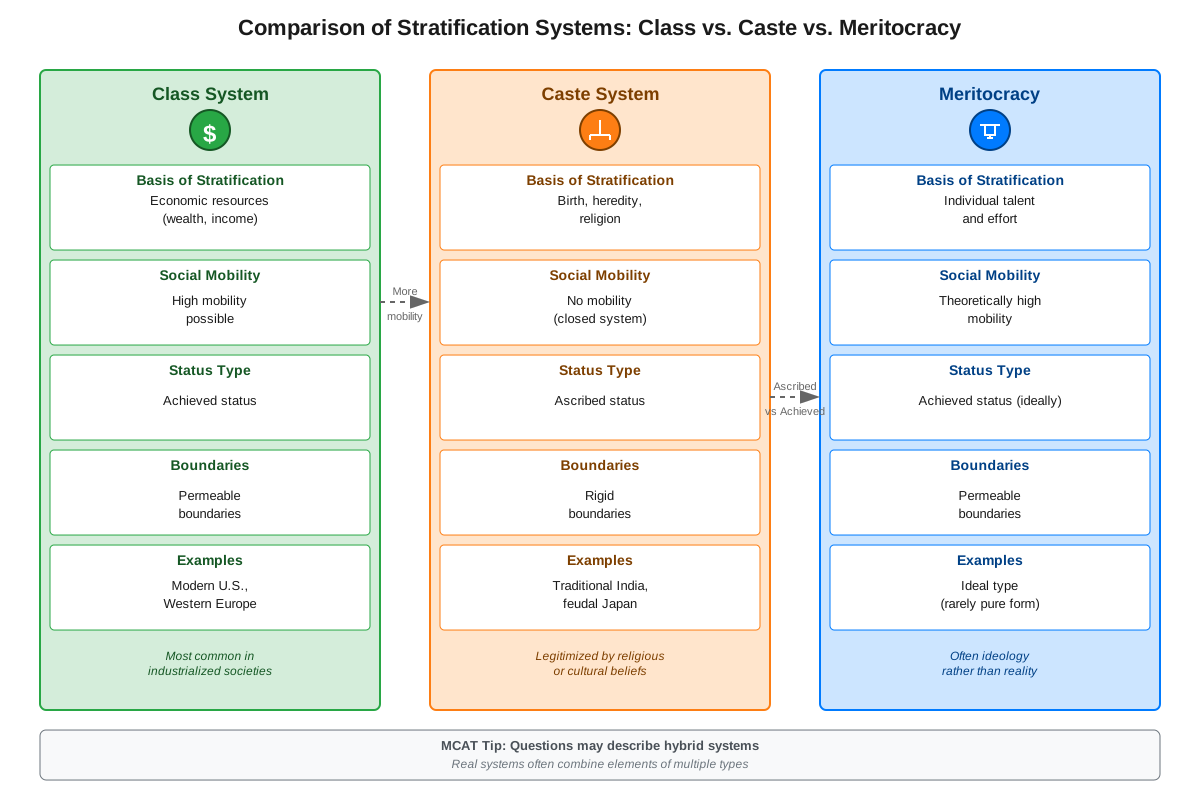
Different societies organize stratification in distinct ways. Understanding these systems is crucial for MCAT questions that compare societies or analyze how stratification operates:
| System | Characteristics | Social Mobility | Examples |
|---|---|---|---|
| Caste System | Ascribed status at birth; rigid boundaries; endogamy required | Virtually none; position fixed for life | Traditional India, feudal Japan |
| Class System | Based on economic factors; more fluid boundaries; achieved status possible | Possible but difficult; varies by society | Modern United States, Western Europe |
| Estate System | Legal categories with different rights; hereditary but some mobility | Limited; primarily through marriage or military service | Medieval Europe |
| Meritocracy | Theoretically based on individual talent and effort; achieved status | High; based on individual achievement | Ideal system (rarely exists purely) |
Socioeconomic Status (SES)
Socioeconomic status represents an individual's or group's position within a stratified society, typically measured through three primary dimensions:
Income: The flow of money received through wages, investments, or government transfers. Income affects immediate purchasing power and access to resources but doesn't capture accumulated wealth or social prestige.
Education: Formal schooling and credentials that influence occupational opportunities, earning potential, and social networks. Education strongly predicts health outcomes because it affects health literacy, employment options, and lifestyle choices.
Occupation: The type of work performed, which carries varying levels of prestige, autonomy, and economic rewards. Occupational prestige often matters independently of income for determining social position.
These three dimensions don't always align perfectly—a phenomenon called status inconsistency. For example, a graduate student may have high education but low income, or a lottery winner may have high income but low occupational prestige. Status inconsistency can create psychological stress and social tension.
Social Class
Social class refers to a group of people with similar economic positions, life chances, and often shared attitudes and behaviors. Karl Marx defined class primarily through relationship to the means of production (ownership of productive resources), distinguishing between the bourgeoisie (owners) and proletariat (workers). Max Weber expanded this concept to include not just economic factors but also status (social prestige) and power (ability to influence others).
Contemporary sociologists typically identify several classes in modern societies:
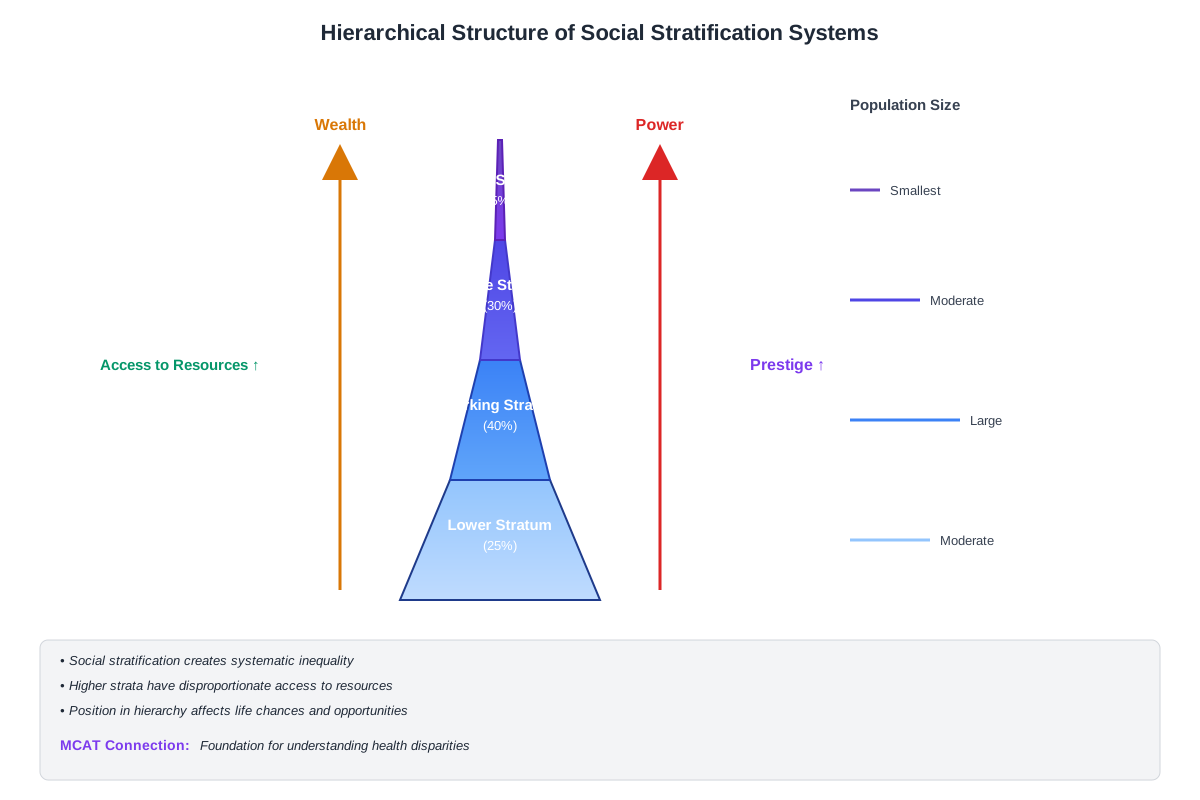
- Upper class: Wealthy individuals with significant assets, often inherited; includes both "old money" and newly wealthy
- Upper-middle class: Professionals and managers with advanced education and comfortable incomes
- Middle class: White-collar workers, small business owners, and skilled blue-collar workers with moderate economic security
- Working class: Blue-collar and service workers with less job security and limited economic cushion
- Lower class/Underclass: Individuals experiencing poverty, unemployment, or precarious employment
Stratification and Health
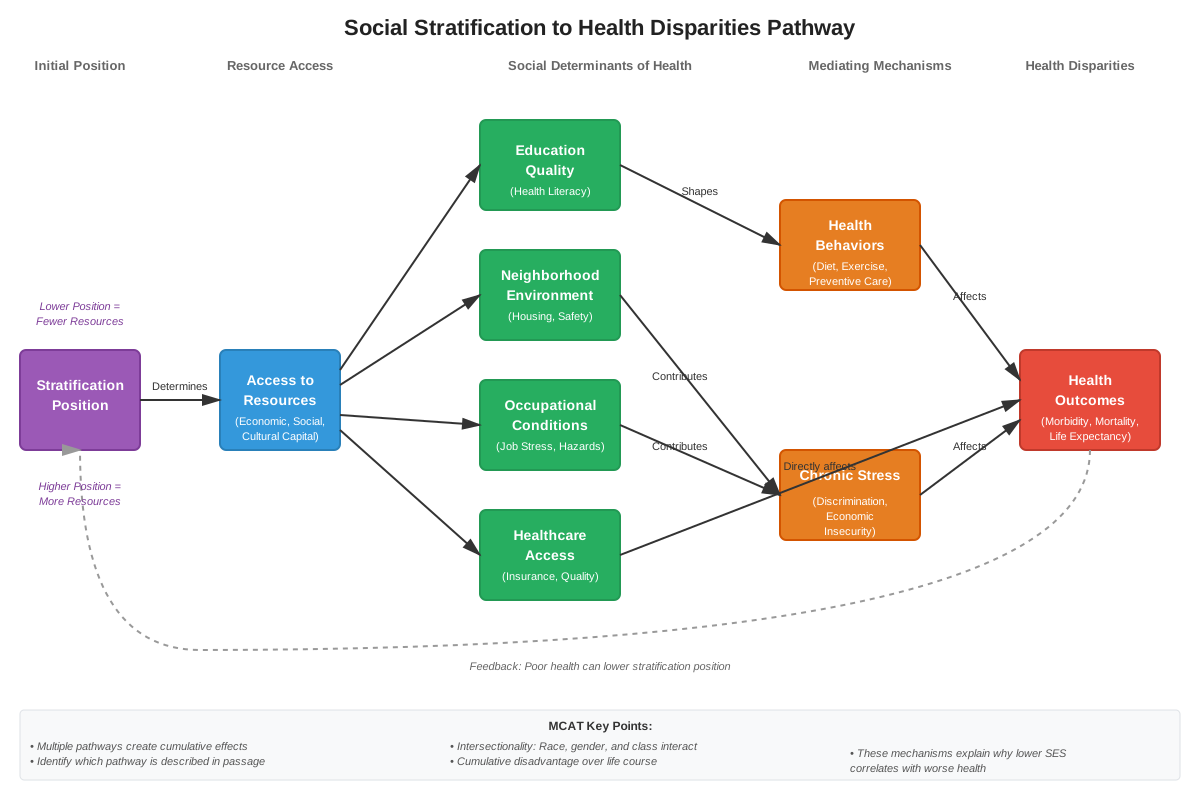
The relationship between social stratification and health outcomes represents one of the most robust findings in medical sociology and is heavily tested on the MCAT. This relationship manifests through multiple pathways:
Material resources: Higher social positions provide better access to healthcare, nutritious food, safe housing, and health-promoting environments. Lower-SES individuals face greater exposure to environmental toxins, dangerous working conditions, and neighborhood violence.
Psychosocial factors: Lower social position creates chronic stress through financial insecurity, discrimination, and lack of control over life circumstances. This chronic stress activates physiological stress responses that increase risk for cardiovascular disease, diabetes, and mental health disorders.
Health behaviors: Social position influences smoking rates, exercise patterns, dietary choices, and healthcare utilization. These patterns reflect both individual choices and structural constraints (e.g., lack of safe spaces for exercise, limited access to fresh produce).
Healthcare access and quality: Stratification affects insurance coverage, ability to take time off work for medical appointments, transportation to healthcare facilities, and the quality of care received. Physicians may unconsciously provide different levels of care based on patients' social characteristics.
Social Mobility
Social mobility refers to movement between positions in the stratification system. Understanding mobility patterns is essential for analyzing whether stratification systems are open or closed:
Intergenerational mobility: Changes in social position between parents and children. High intergenerational mobility indicates an open system where children's outcomes don't strongly depend on parents' position.
Intragenerational mobility: Changes in an individual's position during their lifetime, such as career advancement or economic setbacks.
Vertical mobility: Movement up or down the stratification hierarchy (upward or downward mobility).
Horizontal mobility: Changes in position without significant change in rank, such as switching between similarly prestigious occupations.
Structural mobility: Mobility resulting from changes in the economy or society rather than individual achievement (e.g., industrialization creating new middle-class jobs).
The United States historically emphasized high social mobility as part of the "American Dream," but research shows mobility rates are actually lower than in many other developed nations, and the correlation between parents' and children's income has strengthened in recent decades.
Poverty
Poverty represents the bottom of the stratification system and is defined in two ways:
Absolute poverty: Inability to meet basic needs for food, shelter, and clothing; measured against a fixed standard of living.
Relative poverty: Having significantly less than the average person in society; measured in comparison to others rather than absolute standards.
The poverty line (or poverty threshold) represents the official income level below which a household is considered poor. In the United States, this is calculated based on food costs multiplied by three, adjusted for household size. However, critics argue this measure is outdated and doesn't account for regional cost-of-living differences or modern expenses like childcare and healthcare.
Social exclusion describes how poverty involves not just lack of money but also exclusion from full participation in society—limited access to education, healthcare, political participation, and social networks. This multidimensional nature of poverty explains why simply increasing income doesn't always resolve all poverty-related problems.
Global Stratification
Stratification operates not just within societies but also between nations. Global stratification refers to the unequal distribution of wealth, power, and prestige among countries:
High-income countries: Wealthy, industrialized nations with strong economies, advanced technology, and high standards of living (e.g., United States, Japan, Western Europe).
Middle-income countries: Nations with moderate industrialization and income levels, often experiencing rapid economic change (e.g., China, Brazil, Mexico).
Low-income countries: Poor nations with limited industrialization, often dependent on agriculture, with low standards of living (e.g., many sub-Saharan African nations).
Theories explaining global stratification include modernization theory (poor countries will develop by adopting Western practices), dependency theory (poor countries are exploited by wealthy nations), and world systems theory (global economy creates core, periphery, and semi-periphery nations with different roles).
Concept Relationships
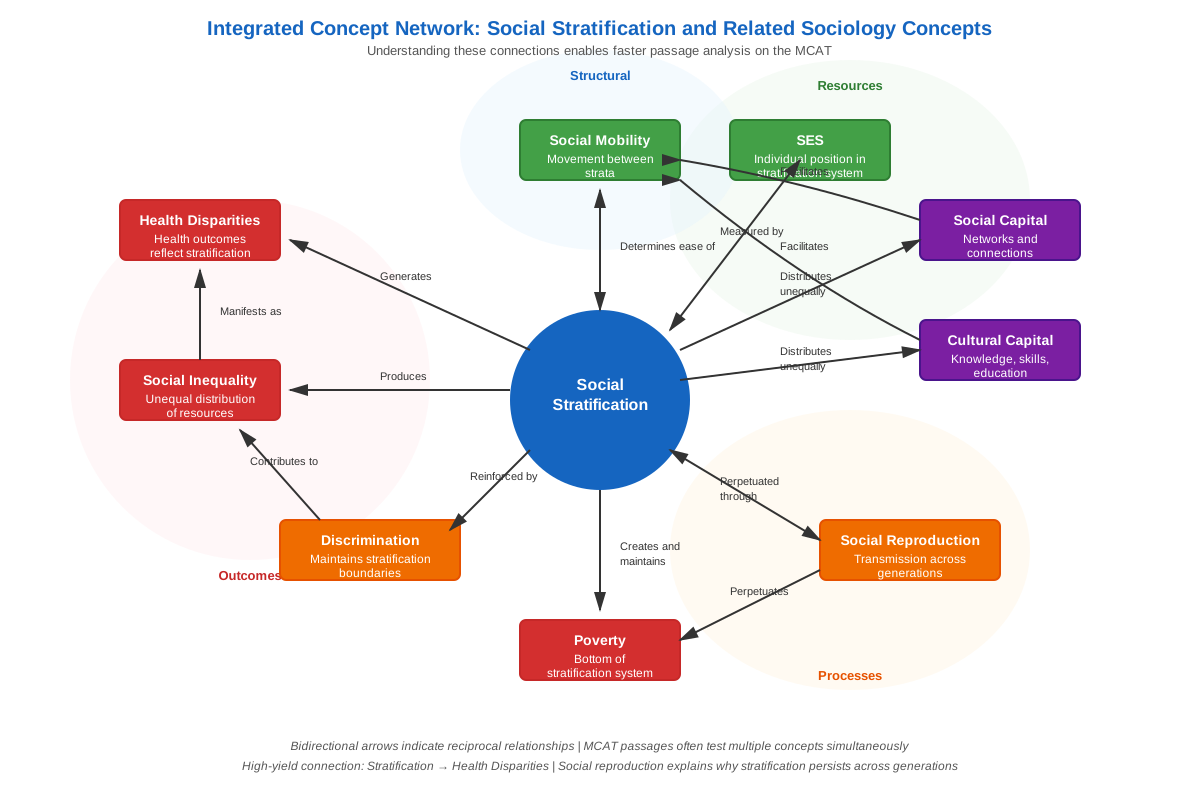
Social stratification serves as the foundational concept connecting numerous sociological phenomena. The stratification system creates and maintains patterns of social inequality, which then influence health outcomes, educational opportunities, and life chances. Stratification determines an individual's socioeconomic status (SES), which affects their access to resources, exposure to stressors, and social networks.
Within stratification systems, social class shapes cultural capital (knowledge, skills, and education valued by society) and social capital (networks and relationships that provide advantages). These forms of capital facilitate or constrain social mobility, creating feedback loops that perpetuate existing stratification patterns across generations.
The relationship flows as follows: Stratification system → Social class position → SES (income, education, occupation) → Access to resources → Health behaviors and healthcare access → Health outcomes. Simultaneously, stratification → Social mobility patterns → Intergenerational transmission of advantage/disadvantage → Reproduction of stratification system.
Stratification also connects to discrimination and prejudice, as stratification systems often align with racial, ethnic, or gender categories, creating intersectional disadvantages. The ideology supporting stratification relates to cultural beliefs about meritocracy, individualism, and deservingness, which influence social policies and individual attitudes toward inequality.
Understanding these relationships enables students to analyze complex MCAT passages that present research on health disparities, recognize how multiple social factors interact to affect health, and predict how interventions might differentially impact various social groups.
Quick check — test yourself on Social stratification so far.
Try Flashcards →High-Yield Facts
⭐ Social stratification is universal across all societies but varies in form, criteria, and degree of inequality
⭐ Socioeconomic status (SES) is measured through three primary dimensions: income, education, and occupation
⭐ The relationship between SES and health outcomes follows a gradient pattern—each step up the socioeconomic ladder is associated with better health
⭐ Caste systems feature ascribed status and virtually no social mobility, while class systems allow for achieved status and some mobility
⭐ Social stratification creates health disparities through multiple pathways: material resources, psychosocial stress, health behaviors, and healthcare access
- Intergenerational mobility refers to changes in social position between parents and children, while intragenerational mobility refers to changes during an individual's lifetime
- Status inconsistency occurs when an individual ranks differently on various dimensions of stratification (e.g., high education but low income)
- Absolute poverty is defined by inability to meet basic needs, while relative poverty is defined by comparison to societal standards
- Global stratification divides nations into high-income, middle-income, and low-income countries based on economic development
- Structural mobility results from societal changes (like industrialization) rather than individual achievement, affecting large groups simultaneously
Common Misconceptions
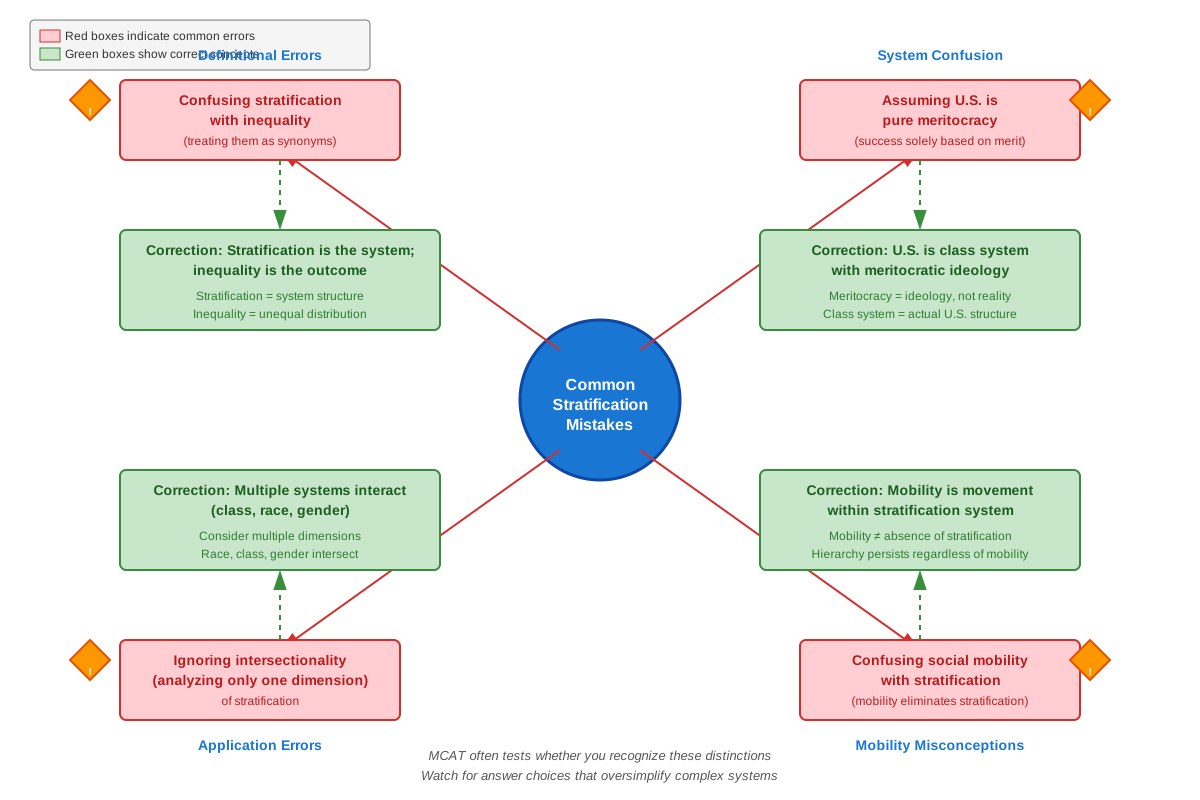
Misconception: Social stratification is the same as individual differences in talent or effort → Correction: Stratification is a systematic, institutionalized form of inequality that persists across generations and is maintained by social structures, not just individual characteristics. Even highly talented individuals from lower strata face structural barriers to advancement.
Misconception: The United States is a pure meritocracy where anyone can succeed through hard work → Correction: While the U.S. has a class system that allows some mobility, research shows that parental income strongly predicts children's outcomes, social mobility is lower than in many other developed nations, and structural factors (discrimination, unequal educational opportunities, social capital) significantly affect success beyond individual effort.
Misconception: Income and wealth are the same thing → Correction: Income is the flow of money received (wages, salaries), while wealth is the total value of assets owned (property, investments, savings). Wealth inequality is much greater than income inequality, and wealth provides security and opportunities that income alone cannot. Two families with identical incomes may have vastly different wealth levels.
Misconception: Social class only affects economic outcomes, not health → Correction: Social class creates a health gradient affecting virtually every health outcome, from life expectancy to chronic disease rates to mental health. This occurs through multiple mechanisms including stress, healthcare access, health behaviors, and environmental exposures. The relationship is causal, not just correlational.
Misconception: Poverty is primarily an individual problem caused by poor choices → Correction: Poverty results from structural factors including economic systems, labor markets, educational inequality, discrimination, and social policies. While individual choices matter, they occur within constrained circumstances. Most people experiencing poverty work but earn insufficient wages, and children in poverty have no control over their circumstances.
Misconception: Stratification systems are natural and inevitable in their current form → Correction: While some degree of differentiation exists in all societies, the specific form, criteria, and degree of inequality in stratification systems are socially constructed and vary dramatically across societies and historical periods. Stratification systems are maintained through ideology, institutions, and power relations, not natural law.
Worked Examples
Example 1: Analyzing Health Disparities Through Stratification
Scenario: A research study examines cardiovascular disease (CVD) rates across different socioeconomic groups in a large urban area. The data show that individuals in the lowest income quartile have CVD rates 2.5 times higher than those in the highest income quartile. This relationship persists even after controlling for health behaviors like smoking, diet, and exercise. The researchers also find that the gradient is continuous—each step up the income ladder is associated with lower CVD rates.
Question: Which concept best explains why the income-CVD relationship persists after controlling for health behaviors?
Analysis:
Step 1: Identify the key observation—health behaviors don't fully explain the relationship between SES and health outcomes.
Step 2: Recall that social stratification affects health through multiple pathways, not just health behaviors. These include:
- Material resources (healthcare access, safe housing, nutritious food)
- Psychosocial factors (chronic stress from financial insecurity, discrimination, lack of control)
- Environmental exposures (pollution, neighborhood safety, occupational hazards)
- Healthcare quality (insurance coverage, provider bias, continuity of care)
Step 3: The continuous gradient pattern is characteristic of the social gradient in health—a fundamental finding in medical sociology showing that health improves at each successive level of the stratification hierarchy.
Step 4: The persistence after controlling for behaviors suggests that psychosocial stress and material resources are likely playing major roles. Lower-income individuals experience chronic activation of stress responses (elevated cortisol, inflammation) that directly affect cardiovascular health, independent of behaviors.
Answer: The social gradient in health, operating through psychosocial stress pathways and differential access to material resources, explains why stratification affects health beyond behavioral factors. This demonstrates how social stratification creates systematic health inequalities through multiple mechanisms simultaneously.
Example 2: Distinguishing Stratification Systems
Scenario: A medical anthropologist studies healthcare access in two different societies. In Society A, individuals are born into one of four hierarchical groups, and marriage between groups is forbidden. Healthcare facilities are segregated by group, with the highest group receiving advanced medical care and the lowest group having access only to basic clinics. Movement between groups is not possible. In Society B, healthcare access varies based on income and insurance coverage, which are related to occupation and education. While most people remain in similar economic positions to their parents, some individuals experience upward or downward mobility through education or career changes.
Question: Identify the stratification systems in each society and explain how they differently affect healthcare access.
Analysis:
Step 1: Identify characteristics of Society A:
- Ascribed status at birth
- Rigid boundaries with no mobility
- Endogamy (marriage within group) required
- Formal segregation of services
These characteristics indicate a caste system.
Step 2: Identify characteristics of Society B:
- Status based on economic factors (income, occupation, education)
- Some social mobility possible (through education, career)
- More fluid boundaries
- No formal segregation, but practical barriers based on resources
These characteristics indicate a class system.
Step 3: Compare healthcare implications:
- Caste system: Healthcare inequality is formalized and legitimized by the system itself. Barriers are explicit and legally/culturally enforced. No possibility of improving access through individual achievement.
- Class system: Healthcare inequality results from economic disparities rather than formal restrictions. Barriers are practical (cost, insurance, location) rather than legal. Possibility exists for improving access through social mobility, though this may be difficult.
Step 4: Connect to MCAT relevance: Understanding these differences helps analyze how different societies structure healthcare access and why interventions that work in one system may not transfer to another.
Answer: Society A represents a caste system with formalized, rigid healthcare stratification and no mobility, while Society B represents a class system with economic-based healthcare stratification and some mobility potential. The caste system creates explicit, insurmountable barriers, while the class system creates practical barriers that are theoretically (though not easily) overcome through social mobility.
Exam Strategy
When approaching social stratification questions on the MCAT, begin by identifying whether the question asks about the stratification system itself, its effects, or its relationship to other concepts. Look for trigger words that signal stratification concepts:
System identification triggers: "caste," "class," "meritocracy," "ascribed status," "achieved status," "social mobility," "rigid boundaries," "fluid boundaries"
SES measurement triggers: "income," "education," "occupation," "socioeconomic status," "wealth," "poverty line"
Health disparity triggers: "gradient," "disparities," "unequal outcomes," "differential access," "social determinants of health"
Mobility triggers: "intergenerational," "intragenerational," "upward mobility," "downward mobility," "structural mobility"
For passage-based questions, quickly scan data tables or figures for patterns showing systematic differences between social groups. The MCAT often presents research comparing health outcomes, healthcare utilization, or health behaviors across SES levels. Identify whether the pattern shows:
- A threshold effect (difference only at poverty level)
- A gradient effect (continuous improvement at each level)
- An interaction effect (stratification affects different groups differently)
When eliminating answer choices, watch for options that:
- Confuse correlation with causation (stratification research often shows causal relationships, not just correlations)
- Attribute structural problems to individual choices (the MCAT typically expects recognition of structural factors)
- Oversimplify the relationship between stratification and outcomes (multiple pathways usually operate simultaneously)
- Confuse different stratification systems (caste vs. class) or mobility types (intergenerational vs. intragenerational)
Time allocation: Stratification questions typically require 60-90 seconds. Spend 20-30 seconds identifying the key concept being tested, 20-30 seconds analyzing the scenario or data, and 20-30 seconds evaluating answer choices. If a question involves complex data interpretation, allow up to 2 minutes.
Exam Tip: When a question presents health disparities data, the answer almost always involves recognizing multiple pathways (material, psychosocial, behavioral, healthcare access) rather than a single explanation. Avoid answers that attribute disparities solely to individual choices or genetic factors.
Memory Techniques
MCAT Stratification Systems - Use the acronym CCEM to remember the four major types:
- Caste (rigid, ascribed, no mobility)
- Class (fluid, achieved possible, some mobility)
- Estate (legal categories, hereditary, limited mobility)
- Meritocracy (ideal system based on achievement)
SES Dimensions - Remember I.E.O. (like "Old MacDonald had a farm, E-I-E-I-O"):
- Income
- Education
- Occupation
Health Disparity Pathways - Use MPHB ("My Public Health Book"):
- Material resources
- Psychosocial stress
- Health behaviors
- Barriers to healthcare access
Mobility Types - Visualize a ladder:
- Vertical mobility = climbing up or down the ladder (changing rank)
- Horizontal mobility = moving sideways at the same rung (same rank, different position)
- Intergenerational = comparing your rung to your parents' rung
- Intragenerational = your movement on the ladder during your lifetime
Poverty Types - Think "Absolute needs vs. Relative comparison":
- Absolute = Can you meet basic survival needs?
- Relative = How do you compare to others in your society?
Visualization Strategy: Picture stratification as a pyramid with multiple layers. Each layer has different thickness (representing the proportion of population), different colors (representing different access to resources), and different permeability of boundaries (representing mobility possibilities). For caste systems, imagine solid walls between layers; for class systems, imagine dotted lines that can be crossed with difficulty.
Summary
Social stratification represents the systematic, hierarchical organization of individuals and groups in society based on factors including wealth, income, education, occupation, and social status. This fundamental sociological concept is essential for understanding health disparities, healthcare access, and the social determinants of health—all high-yield topics on the MCAT. Stratification systems vary from rigid caste systems with ascribed status and no mobility to more fluid class systems that allow some achieved status and social mobility. Socioeconomic status, measured through income, education, and occupation, determines individuals' positions within stratification systems and profoundly affects health outcomes through multiple pathways: material resources, psychosocial stress, health behaviors, and healthcare access. The relationship between SES and health follows a gradient pattern, with each step up the socioeconomic ladder associated with better health outcomes. Understanding social stratification enables analysis of why certain populations experience worse health outcomes, how structural factors create and maintain health inequalities, and why interventions must address systemic issues rather than just individual behaviors.
Key Takeaways
- Social stratification is a universal, systematic form of inequality that persists across generations and is supported by ideology, distinguishing it from simple individual differences
- The four major stratification systems (caste, class, estate, meritocracy) differ in rigidity, basis for status assignment, and possibilities for social mobility
- Socioeconomic status encompasses three dimensions—income, education, and occupation—that don't always align, creating status inconsistency
- The social gradient in health demonstrates that stratification affects health outcomes at every level through material, psychosocial, behavioral, and healthcare access pathways
- Social mobility (intergenerational, intragenerational, vertical, horizontal, structural) varies across societies and indicates how open or closed a stratification system is
- Poverty is defined both absolutely (inability to meet basic needs) and relatively (comparison to societal standards), with important implications for measurement and policy
- Global stratification creates systematic inequalities between nations that affect health, development, and international relations
Related Topics
Social Mobility and Meritocracy: Deeper exploration of factors enabling or constraining movement between social strata, including education systems, social capital, and structural barriers. Mastering stratification provides the foundation for understanding why mobility rates vary and whether meritocratic ideals are realized.
Social Capital and Cultural Capital: Examination of non-economic resources that contribute to social position and mobility. Understanding stratification helps explain how these forms of capital are distributed and transmitted across generations.
Health Disparities and Social Determinants of Health: Detailed analysis of how social factors create differential health outcomes across populations. Stratification concepts provide the framework for understanding why disparities exist and persist.
Discrimination and Prejudice: Study of how stratification systems often align with racial, ethnic, gender, and other social categories, creating intersectional disadvantages. Stratification theory explains the structural basis for systematic discrimination.
Social Institutions and Healthcare Systems: Analysis of how educational, economic, and healthcare institutions maintain or challenge existing stratification patterns. Understanding stratification is essential for evaluating how institutions affect different social groups.
Practice CTA
Now that you've mastered the core concepts of social stratification, test your understanding with practice questions and flashcards. Focus on applying these concepts to MCAT-style passages about health disparities, patient populations, and healthcare access. Challenge yourself to identify stratification systems, analyze how SES affects health through multiple pathways, and distinguish between different types of social mobility. Remember, stratification appears in approximately 15-20% of Sociology questions—making this one of your highest-yield study topics. Your ability to quickly recognize stratification concepts and apply them to complex scenarios will significantly boost your score. You've got this!
Sign up free to keep reading
Create a free AnvayaPrep account to finish this MCAT guide on Social stratification — plus flashcards and practice questions.