Overview
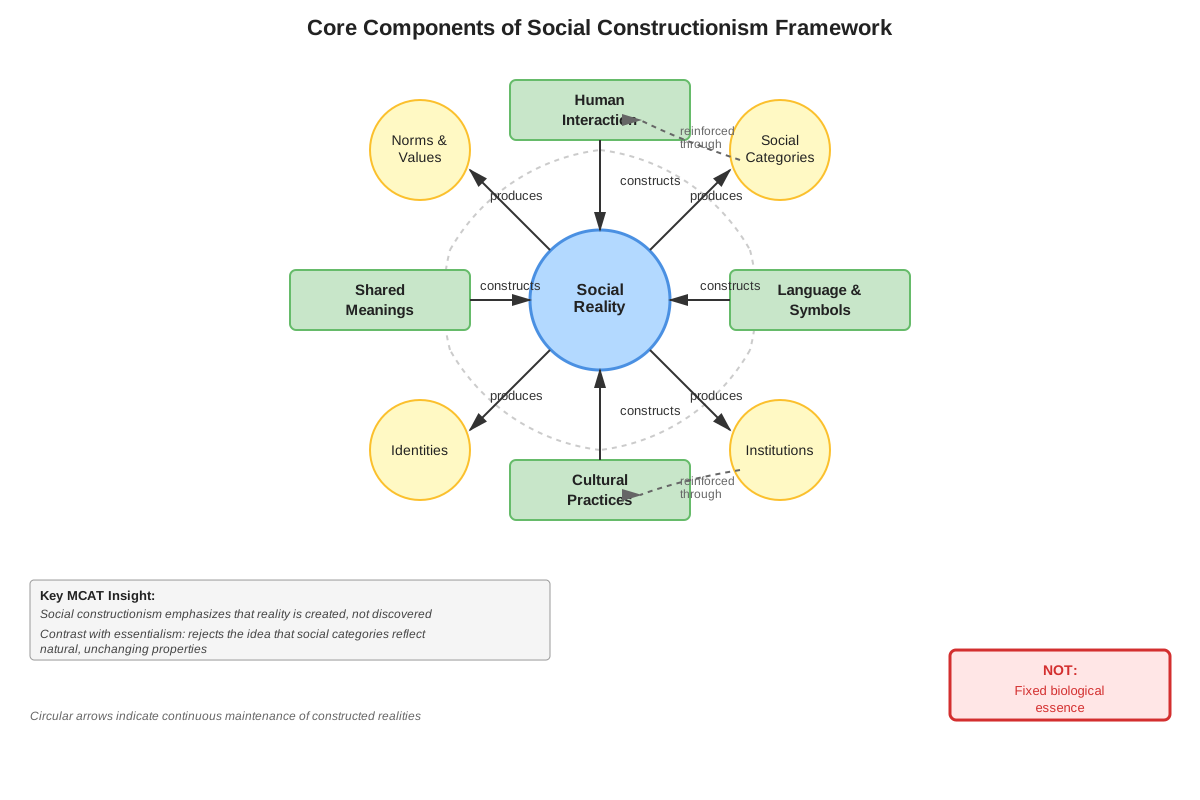
Social constructionism is a foundational theoretical framework in Sociology that posits reality, knowledge, and social phenomena are not objectively given but are actively created through human interaction, cultural practices, and shared meanings. Rather than viewing social categories, identities, and institutions as natural or inevitable, social constructionism emphasizes that these elements emerge from collective human activity and are maintained through ongoing social processes. This perspective challenges essentialist views that treat social phenomena as fixed or biologically determined, instead highlighting how societies create and perpetuate meanings, norms, and structures through language, symbols, and social practices.
For the MCAT, social constructionism represents a critical lens through which test-takers must analyze questions about identity formation, health disparities, medical knowledge, illness experiences, and Social Structure and Institutions. The MCAT Psychological, Social, and Biological Foundations of Behavior section frequently tests students' ability to recognize how social forces shape seemingly "natural" categories like race, gender, disability, and disease. Understanding that these categories are socially constructed—rather than purely biological—enables students to critically evaluate research findings, identify cultural biases in medical practice, and recognize how social contexts influence health outcomes and patient experiences.
Social constructionism MCAT questions typically require students to distinguish between biological realities and socially constructed meanings, analyze how medical institutions create and legitimize certain forms of knowledge, and understand how individuals internalize socially constructed categories as part of their identity. This topic connects intimately with symbolic interactionism, medicalization, labeling theory, and the social determinants of health, making it a high-yield concept that appears across multiple question types and passage contexts within the Sociology domain.
Learning Objectives
- [ ] Define Social constructionism using accurate Sociology terminology
- [ ] Explain why Social constructionism matters for the MCAT
- [ ] Apply Social constructionism to exam-style questions
- [ ] Identify common mistakes related to Social constructionism
- [ ] Connect Social constructionism to related Sociology concepts
- [ ] Distinguish between social constructionism and biological essentialism in medical contexts
- [ ] Analyze how social constructionism applies to race, gender, disability, and illness categories
- [ ] Evaluate the role of language and discourse in maintaining socially constructed realities
Prerequisites
- Basic understanding of sociological perspectives: Social constructionism represents one of several major theoretical frameworks; familiarity with functionalism and conflict theory provides comparative context
- Symbolic interactionism fundamentals: Social constructionism builds on the idea that meaning emerges through social interaction and symbolic communication
- Concept of socialization: Understanding how individuals learn and internalize social norms is essential for grasping how constructed realities become subjectively real
- Nature vs. nurture debate: Recognizing the distinction between biological and environmental influences helps contextualize constructionist arguments about social phenomena
Why This Topic Matters
Social constructionism provides the theoretical foundation for understanding numerous high-yield MCAT topics, including health disparities, the sick role, medicalization, and stigma. In clinical contexts, recognizing that categories like "mental illness," "disability," or "race" are socially constructed (while still having real consequences) helps future physicians provide culturally competent care, avoid biological determinism, and understand how social factors influence patient experiences and health outcomes. The constructionist perspective reveals how medical knowledge itself is shaped by social, historical, and cultural contexts—not merely discovered as objective truth.
On the MCAT, social constructionism appears with remarkable frequency across multiple question formats. Approximately 15-20% of Sociology questions directly or indirectly test constructionist concepts, making it one of the highest-yield theoretical frameworks. Questions commonly present research passages examining racial health disparities, gender differences in diagnosis rates, or cultural variations in illness experience, then ask students to identify which theoretical perspective best explains the findings. Social constructionism also appears in questions about the medicalization of deviance, the social creation of disability categories, and how language shapes medical understanding.
Typical MCAT passages incorporating social constructionism include: (1) research comparing how different cultures conceptualize mental illness, requiring students to recognize that diagnostic categories are culturally specific; (2) studies showing how physician bias affects diagnosis rates across racial groups, testing understanding that race is socially constructed yet has real health consequences; (3) historical analyses of how certain conditions became medicalized, assessing knowledge of how medical institutions construct disease categories; and (4) experiments demonstrating how labels affect behavior and self-perception, connecting constructionism to labeling theory and the looking-glass self.
Core Concepts
Definition and Fundamental Principles
Social constructionism (also called social constructivism in some contexts) is a theoretical perspective asserting that reality, knowledge, and social phenomena are created through social processes rather than existing as objective, natural facts. The core premise holds that what societies accept as "real" or "true" emerges from collective human activity, cultural practices, shared language, and institutional power. Rather than discovering pre-existing truths, humans actively construct meanings through interaction, then treat these constructions as objective reality.
Three fundamental principles define social constructionism:
- Reality is socially created: What people experience as reality is produced through social interaction and cultural practices
- Knowledge is historically and culturally specific: What counts as "truth" varies across time periods and cultures, reflecting particular social contexts rather than universal facts
- Language and discourse are constitutive: Language doesn't merely describe reality; it actively creates and maintains social categories and meanings
The Social Construction Process
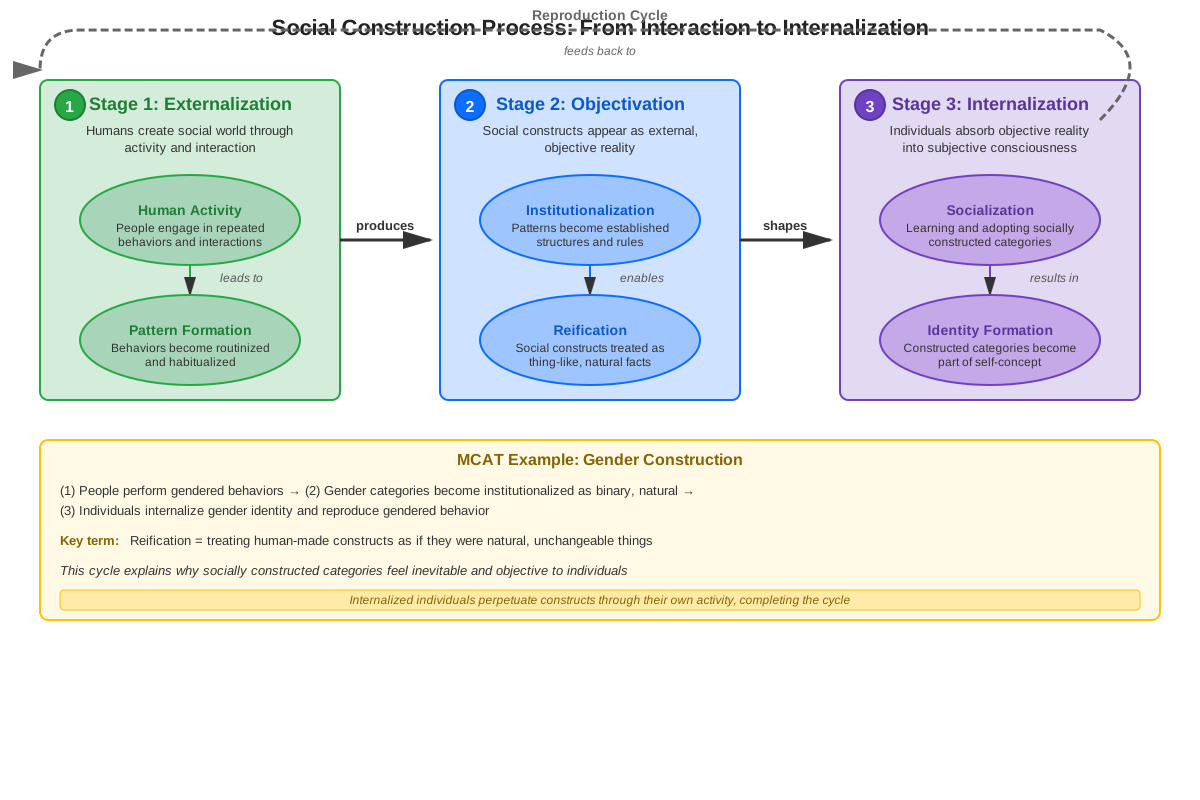
Social phenomena become constructed through a multi-stage process that transforms human-created categories into seemingly natural, inevitable facts:
Stage 1: Externalization - Humans create social practices, categories, and institutions through collective activity. For example, societies develop systems for categorizing people by physical characteristics, creating racial classifications.
Stage 2: Objectivation - These human-created categories become treated as external, objective facts independent of human activity. Racial categories, initially created through social processes, become viewed as natural biological divisions.
Stage 3: Internalization - Individuals learn and internalize these socially constructed categories through socialization, experiencing them as subjective reality. People come to understand themselves and others through racial categories, making these constructions psychologically real.
Stage 4: Legitimation - Institutions develop explanations and justifications that make constructed categories appear natural and necessary. Scientific racism, for instance, provided biological explanations that legitimized socially constructed racial hierarchies.
Key Distinctions: Constructed vs. Real
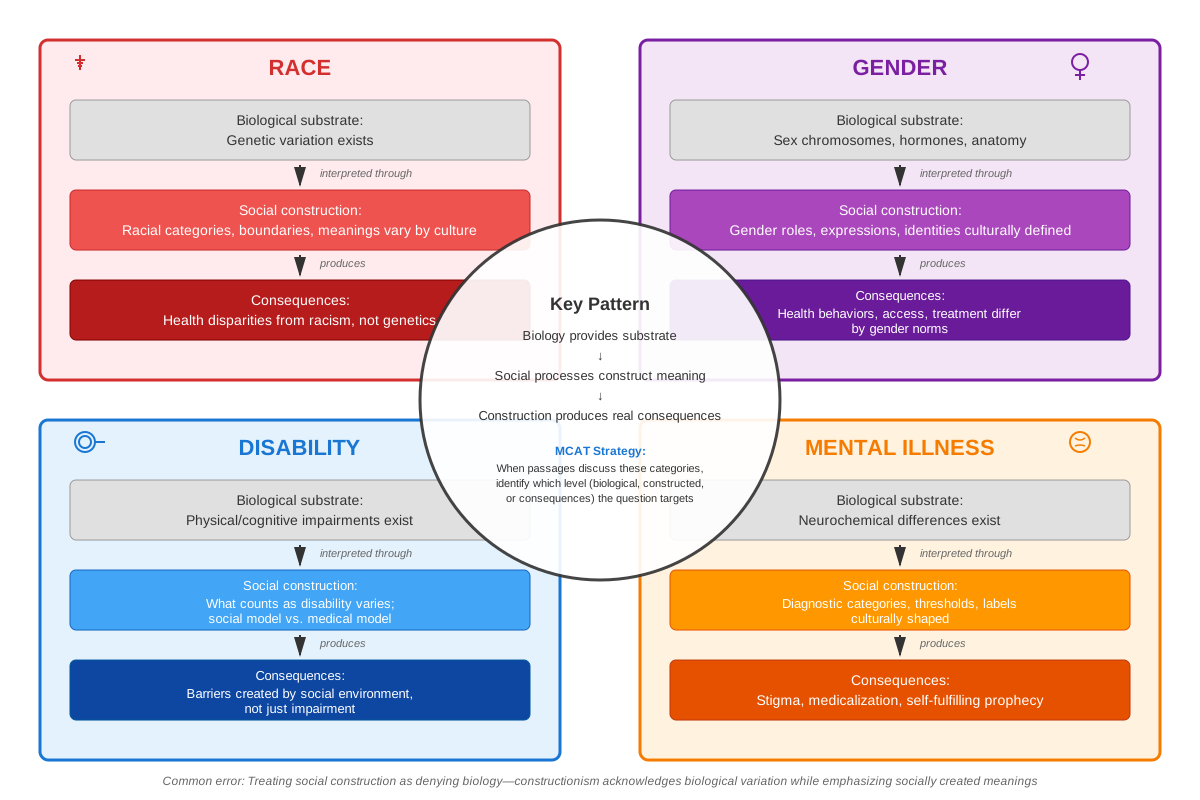
A critical point frequently tested on the MCAT: socially constructed does not mean "not real" or "imaginary." Social constructions have profound real-world consequences. Race, for example, is socially constructed—there is no biological basis for racial categories as societies define them—yet race powerfully affects health outcomes, life experiences, and social opportunities. The constructionist argument is that the categories and meanings are socially created, not that the consequences are illusory.
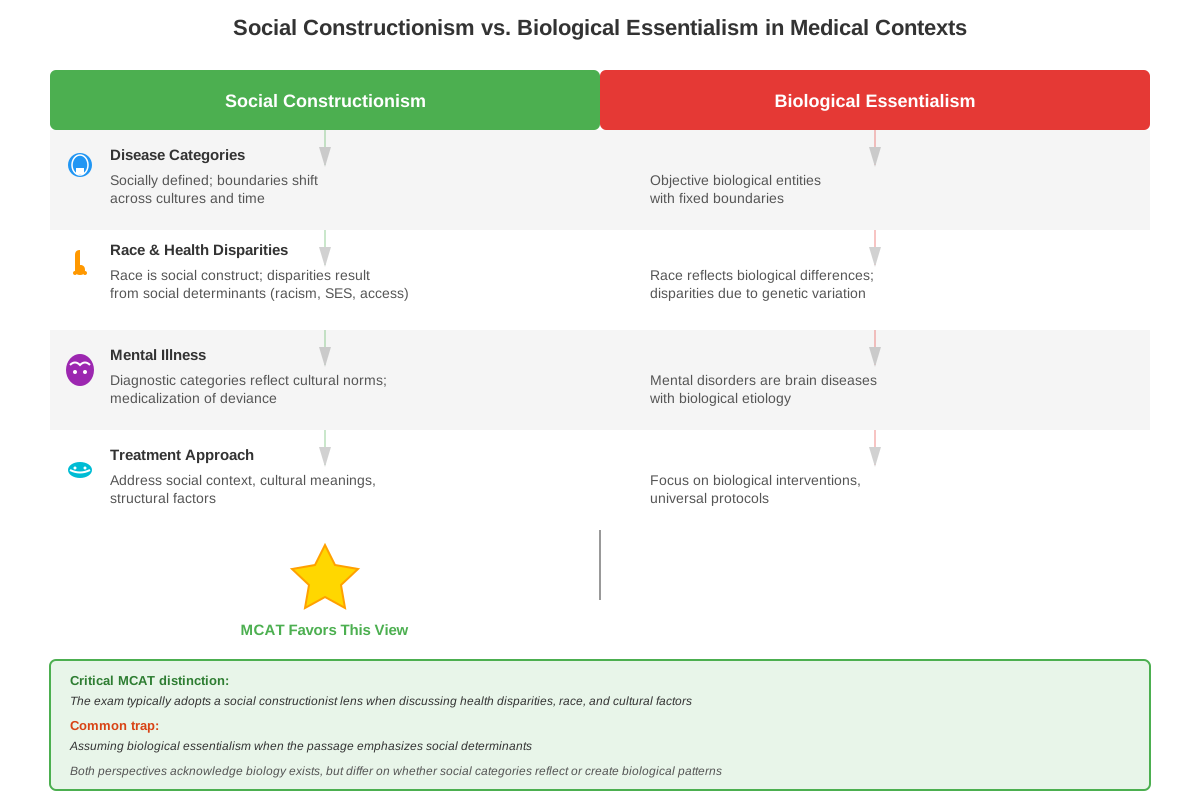
| Aspect | Socially Constructed | Biologically Essential |
|---|---|---|
| Origin | Created through social processes | Determined by biological factors |
| Variability | Varies across cultures and time | Universal and unchanging |
| Categories | Arbitrary boundaries with social meaning | Natural divisions based on biology |
| Example | Gender roles and expectations | Chromosomal sex (though even this has complexity) |
| Changeability | Can be transformed through social change | Fixed by biological reality |
Applications to Medical and Health Contexts
Social constructionism Sociology has particular relevance for understanding health, illness, and medical practice:
Disease vs. Illness: Constructionists distinguish between disease (biological pathology) and illness (the social experience and meaning of symptoms). While disease may have biological components, how societies define, categorize, and experience illness is socially constructed. What counts as "mental illness," for instance, varies dramatically across cultures and historical periods.
Medicalization: The process by which non-medical conditions become defined and treated as medical problems exemplifies social construction. Childbirth, menopause, ADHD, and alcoholism have all undergone medicalization, transforming from normal life experiences or moral failings into medical conditions requiring professional intervention. This construction process involves medical institutions, pharmaceutical companies, and cultural beliefs about what constitutes health and disease.
Disability: The social model of disability, grounded in constructionist thinking, argues that disability is created by social barriers rather than individual impairments. While physical or cognitive differences exist, "disability" emerges from how societies organize space, communication, and participation. A wheelchair user is "disabled" by stairs (social construction) not by paralysis (biological reality).
Race and Health Disparities: Race is perhaps the paradigmatic example of social construction in medical contexts. Genetic research confirms that racial categories as societies define them have no biological basis—there is more genetic variation within racial groups than between them. Yet race profoundly affects health outcomes through social mechanisms: discrimination, differential access to care, environmental exposures, and chronic stress from racism. Understanding race as socially constructed prevents biological determinism while acknowledging real health consequences.
The Role of Language and Discourse
Language plays a constitutive role in social constructionism—it doesn't merely describe pre-existing reality but actively creates social categories and meanings. Medical terminology, diagnostic labels, and health discourse construct particular understandings of bodies, illness, and treatment. When psychiatry creates a new diagnostic category (like "social anxiety disorder"), it doesn't simply name a pre-existing condition; it constructs a new way of understanding and experiencing distress.
Discourse refers to systems of language, knowledge, and practice that construct particular versions of reality. Medical discourse, for example, constructs bodies as biological machines, illness as malfunction, and treatment as technical intervention. This construction shapes how patients experience symptoms, how physicians understand disease, and what interventions seem appropriate. Alternative discourses (holistic medicine, traditional healing) construct different realities with different implications for practice.
Power and Social Construction
Social constructionism emphasizes that not all groups have equal power to construct reality. Dominant institutions—medicine, law, science, media—have greater capacity to make their constructions "stick" as accepted truth. Medical institutions, for instance, have the power to define what counts as disease, who is sick, and what treatments are legitimate. This power dimension connects social constructionism to conflict theory and critical perspectives on Social Structure and Institutions.
The concept of hegemony describes how dominant constructions become so naturalized that they seem like common sense, making alternative constructions difficult to imagine. The medicalization of childbirth, for example, has become so hegemonic in Western societies that home birth or midwife-attended birth seems risky or irresponsible, despite evidence supporting their safety for low-risk pregnancies.
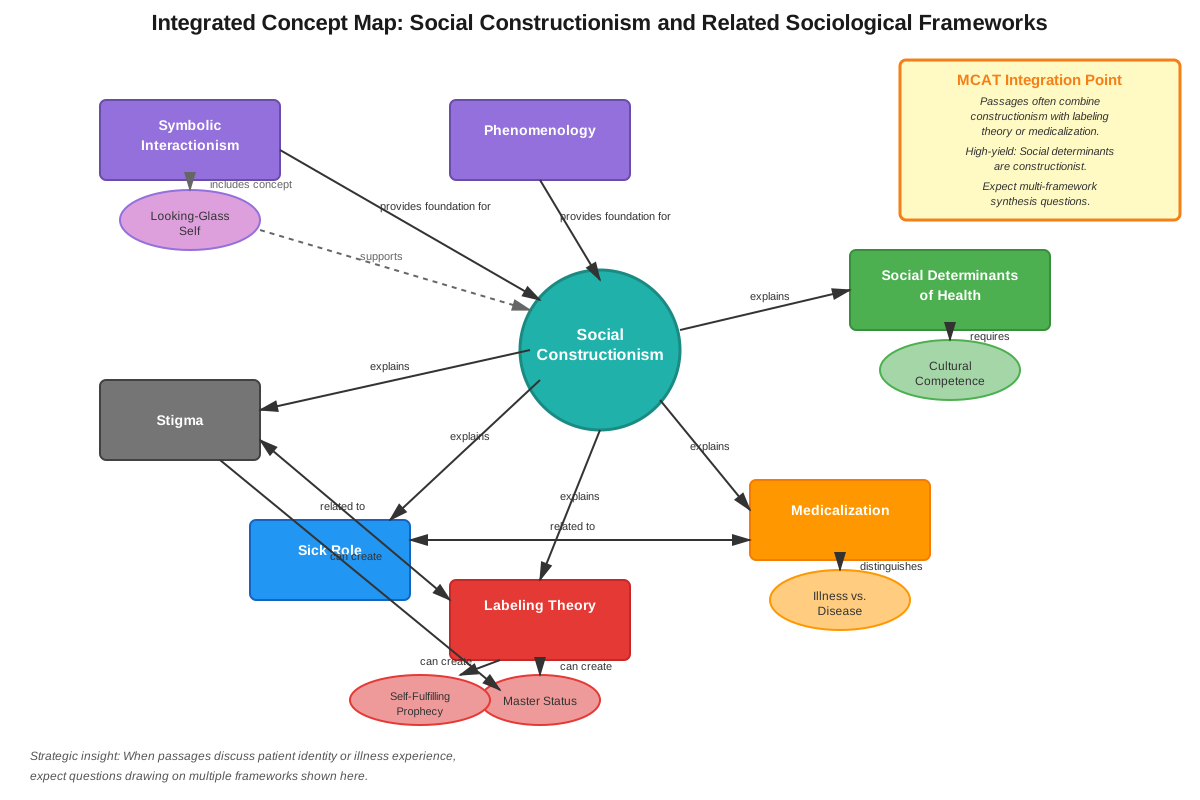
Concept Relationships
Social constructionism connects to numerous other Sociology concepts tested on the MCAT, forming an interconnected web of theoretical understanding:
Symbolic Interactionism → Social Constructionism: Symbolic interactionism provides the micro-level foundation for constructionism, explaining how meanings emerge through interaction. Social constructionism extends this to macro-level phenomena, showing how entire social structures and institutions are constructed through accumulated interactions.
Social Constructionism → Medicalization: Medicalization represents a specific application of constructionist principles, demonstrating how medical institutions construct disease categories and expand medical jurisdiction over previously non-medical domains.
Social Constructionism → Labeling Theory: Labeling theory applies constructionist thinking to deviance, showing how labels create deviant identities rather than merely describing pre-existing deviance. The label "mentally ill" or "criminal" constructs a social identity with profound consequences.
Social Constructionism → Looking-Glass Self: Cooley's concept explains how individuals construct self-identity through imagining how others perceive them, illustrating the constructionist principle that even personal identity is socially created.
Social Constructionism → Social Determinants of Health: Understanding health disparities requires recognizing that categories like race, class, and gender are socially constructed yet have real health consequences through social mechanisms (discrimination, stress, access to resources).
Social Constructionism ↔ Conflict Theory: Both perspectives emphasize power and inequality, though constructionism focuses on how dominant groups construct reality while conflict theory emphasizes resource competition. They complement each other in analyzing how powerful institutions maintain dominance partly through controlling knowledge and meaning.
Textual Relationship Map:
Social Interaction (symbolic interactionism) → Creates Shared Meanings → Accumulates into Social Constructions → Become Objectified as "Reality" → Maintained by Institutions (power) → Internalized by Individuals (socialization) → Shapes Identity and Behavior → Reinforces Constructions → Cycle continues
High-Yield Facts
⭐ Social constructionism asserts that reality, knowledge, and social phenomena are created through social processes rather than existing as objective, natural facts
⭐ Socially constructed does NOT mean "not real"—constructions have profound real-world consequences even though the categories themselves are human-created
⭐ Race is socially constructed (no biological basis for racial categories as defined) but has real health consequences through social mechanisms like discrimination and differential access to care
⭐ Medicalization is the process by which non-medical conditions become defined and treated as medical problems, exemplifying how medical institutions construct disease categories
⭐ The social model of disability argues that disability is created by social barriers rather than individual impairments—the environment disables people, not their bodies
- Language and discourse don't merely describe reality; they actively create and maintain social categories and meanings
- The three stages of social construction are externalization (creation), objectivation (treating as objective fact), and internalization (learning as subjective reality)
- Gender (social roles and expectations) is socially constructed, while sex (chromosomal and anatomical characteristics) has biological components, though even sex categories involve social construction
- Hegemony describes how dominant constructions become naturalized as common sense, making alternatives difficult to imagine
- Medical discourse constructs bodies as biological machines and illness as malfunction, shaping how patients experience symptoms and how physicians understand disease
- Power determines whose constructions become accepted as truth—dominant institutions have greater capacity to make their versions of reality "stick"
- What counts as "mental illness" varies dramatically across cultures and historical periods, demonstrating the social construction of diagnostic categories
Quick check — test yourself on Social constructionism so far.
Try Flashcards →Common Misconceptions
Misconception: Social constructionism claims that everything is socially constructed, including biological reality and physical phenomena.
Correction: Social constructionism focuses on social phenomena, categories, and meanings—not physical or biological facts. Gravity is not socially constructed; racial categories are. The perspective argues that how societies categorize, interpret, and give meaning to biological differences is constructed, not that the biological differences themselves don't exist.
Misconception: If something is socially constructed, it's not real or doesn't have real consequences.
Correction: This is the most critical misconception for MCAT purposes. Social constructions have profound real-world effects. Race is socially constructed but powerfully affects health outcomes, life expectancy, and access to care. The argument is that the categories and meanings are socially created, not that the consequences are imaginary.
Misconception: Social constructionism and biological explanations are mutually exclusive—you must choose one or the other.
Correction: Most phenomena involve both biological and social components. Sex differences in health outcomes, for example, reflect both biological factors (hormones, chromosomes) and socially constructed gender roles (occupational exposures, healthcare-seeking behavior, stress from discrimination). The constructionist perspective highlights that biological factors are often overemphasized while social construction is overlooked.
Misconception: Social constructionism means that individuals can simply choose to reject or change social constructions at will.
Correction: Social constructions are maintained by powerful institutions and internalized through socialization, making them resistant to individual rejection. A person cannot simply decide that race doesn't matter; racial categories are embedded in social structures and have real consequences regardless of individual beliefs. Social constructions change through collective social processes, not individual choice.
Misconception: Recognizing something as socially constructed means it should be eliminated or isn't useful.
Correction: Some social constructions serve important functions even while being constructed. Diagnostic categories in medicine, for example, are socially constructed but provide useful frameworks for understanding symptoms and guiding treatment. The constructionist insight is that these categories are human creations that could be organized differently, not that they should be abandoned.
Worked Examples
Example 1: Racial Health Disparities Passage
MCAT-Style Passage Summary: A study examines cardiovascular disease rates across racial groups in the United States. Researchers find that African Americans have significantly higher rates of hypertension and heart disease compared to White Americans. The passage presents data showing these disparities persist even after controlling for socioeconomic status. One researcher suggests genetic differences between races explain the findings, while another proposes that chronic stress from racial discrimination activates physiological stress responses that damage cardiovascular health over time.
Question: Which theoretical perspective best supports the second researcher's explanation?
A) Biological determinism
B) Social constructionism
C) Functionalism
D) Rational choice theory
Worked Solution:
Step 1: Identify what the second researcher is arguing. They propose that racial health disparities result from chronic stress from discrimination—a social mechanism—rather than genetic differences.
Step 2: Recognize the key constructionist insight. This explanation treats race as socially constructed (discrimination is a social process) while acknowledging real biological consequences (stress responses affecting cardiovascular health). This exemplifies how socially constructed categories have real health effects through social mechanisms.
Step 3: Eliminate incorrect answers:
- (A) Biological determinism would support the first researcher's genetic explanation, not the second researcher's social mechanism
- (C) Functionalism focuses on how social structures serve societal needs, not on how social constructions affect health
- (D) Rational choice theory examines individual decision-making based on costs and benefits, irrelevant to this explanation
Step 4: Confirm the correct answer. (B) Social constructionism is correct because it recognizes that race is socially constructed (no biological basis for racial categories) yet has real health consequences through social mechanisms (discrimination causing chronic stress). This perfectly aligns with the second researcher's explanation.
Connection to Learning Objectives: This example demonstrates applying social constructionism to exam-style questions, distinguishing between biological essentialism and constructionist explanations, and connecting constructionism to health disparities.
Example 2: Medicalization Vignette
MCAT-Style Vignette: In the 1950s, menopause was considered a normal life transition. By the 1990s, it was widely treated as a medical condition requiring hormone replacement therapy. Pharmaceutical companies funded research on menopause symptoms, medical journals published articles on "treating" menopause, and physicians began routinely prescribing hormones to menopausal women. Women increasingly sought medical care for menopause symptoms and understood their experience through medical terminology.
Question: This scenario best illustrates which sociological concept?
A) The sick role
B) Medicalization as social construction
C) Social epidemiology
D) The health belief model
Worked Solution:
Step 1: Identify the key process described. A normal life experience (menopause) became defined and treated as a medical condition requiring professional intervention. This transformation involved medical institutions, pharmaceutical companies, and changing cultural understandings.
Step 2: Recognize the constructionist elements. The passage shows how medical institutions constructed menopause as a disease category. This construction involved creating medical knowledge (research, journal articles), establishing treatment protocols (hormone therapy), and changing how women experienced and understood menopause (seeking medical care, using medical terminology).
Step 3: Apply the medicalization concept. Medicalization is the process by which non-medical conditions become defined and treated as medical problems. This exemplifies social construction because it shows how medical institutions create disease categories rather than merely discovering pre-existing diseases. Menopause didn't change biologically; its social meaning and medical status were constructed.
Step 4: Eliminate incorrect answers:
- (A) The sick role describes the rights and responsibilities of people defined as ill, not the process of creating illness categories
- (C) Social epidemiology studies how social factors affect disease distribution, not how disease categories are constructed
- (D) The health belief model explains individual health behaviors, not institutional construction of disease categories
Step 5: Confirm the correct answer. (B) Medicalization as social construction is correct because the scenario demonstrates how medical institutions constructed menopause as a disease category through social processes (research, discourse, pharmaceutical development), transforming a normal experience into a medical condition.
Connection to Learning Objectives: This example demonstrates applying social constructionism to medicalization, recognizing how institutions construct medical knowledge, and connecting constructionism to Social Structure and Institutions.
Exam Strategy
When approaching social constructionism MCAT questions, employ these strategic approaches:
Trigger Words and Phrases: Watch for language indicating social construction: "varies across cultures," "historically specific," "socially created categories," "no biological basis," "culturally defined," "institutional power," "discourse," "medicalization," "labels create," and "meaning emerges through interaction." These phrases signal that the question involves constructionist concepts.
Distinguish Construction from Consequences: MCAT questions frequently test whether students understand that socially constructed phenomena have real effects. When a question presents real health disparities or behavioral differences across social groups, don't assume this disproves social construction. Instead, look for explanations emphasizing social mechanisms (discrimination, differential access, stress) rather than biological determinism.
Identify the Level of Analysis: Social constructionism operates at multiple levels. Micro-level questions focus on how individuals internalize constructions through interaction (symbolic interactionism, looking-glass self). Macro-level questions examine how institutions construct categories and maintain power (medicalization, hegemony). Identify which level the question addresses.
Process of Elimination Strategy: When choosing between theoretical perspectives:
- Eliminate biological determinism if the passage emphasizes cultural variation or social mechanisms
- Eliminate functionalism if the question focuses on power, inequality, or how categories are created rather than how they serve societal needs
- Choose social constructionism when the passage shows categories varying across cultures, being created by institutions, or having social rather than biological origins
Time Allocation: Social constructionism questions often appear in longer passages requiring careful reading to distinguish between biological and social factors. Allocate 2-3 minutes for passage reading, focusing on identifying whether the research emphasizes biological or social mechanisms. Question answering should take 60-90 seconds once you've identified the constructionist elements.
Common Question Formats:
- "Which theoretical perspective best explains these findings?" → Look for constructionist elements (cultural variation, social mechanisms, institutional power)
- "The researcher's explanation is most consistent with which concept?" → Match the explanation to constructionist principles (categories are socially created, language constructs reality)
- "This scenario best illustrates..." → Identify specific applications of constructionism (medicalization, social model of disability, race as social construction)
Red Flags: Be cautious when passages present genetic or biological explanations for social phenomena. MCAT questions often include these as distractors. If the passage also presents social mechanisms or cultural variation, the constructionist explanation is likely correct. Remember: biological factors may contribute, but constructionism emphasizes how social processes create categories and meanings.
Memory Techniques
EOI Mnemonic for Social Construction Process:
- Externalization: Humans create categories through social activity
- Objectivation: Categories become treated as objective facts
- Internalization: Individuals learn categories as subjective reality
"REAL but CONSTRUCTED" Framework: Remember that social constructions are REAL (have real consequences) but CONSTRUCTED (categories and meanings are socially created). This prevents the most common misconception.
RACE Mnemonic for Race as Social Construction:
- Race has no biological basis (more genetic variation within than between racial groups)
- Arbitrary boundaries (racial categories vary across cultures and time)
- Consequences are real (health disparities, discrimination, differential access)
- Explanations are social (stress, discrimination, access—not genetics)
Medicalization Memory Device: "From NORMAL to MEDICAL"
- Non-medical condition starts as normal life experience
- Organizations (medical institutions, pharmaceutical companies) get involved
- Research and discourse create medical knowledge
- Meaning changes—condition becomes disease
- Experts (physicians) gain jurisdiction
- Diagnosis and treatment become standard
- Individuals experience condition medically
- Category is now constructed as medical problem
- Accepted as objective medical fact
- Legitimated by institutions
Visualization Strategy: Picture a building being constructed. Just as buildings are human-made structures that become solid and real, social constructions are human-made categories that become solid and real through social processes. The building doesn't exist naturally—humans built it—but once constructed, it's undeniably real and shapes how people move through space. Similarly, race, gender roles, and disease categories don't exist naturally—societies built them—but once constructed, they're undeniably real and shape how people move through social space.
Summary
Social constructionism is a foundational theoretical framework asserting that reality, knowledge, and social phenomena are created through social processes rather than existing as objective, natural facts. This perspective emphasizes that categories like race, gender, disability, and disease are socially constructed through human interaction, institutional power, and cultural practices, then become objectified as seemingly natural facts that individuals internalize through socialization. Critically, socially constructed does not mean "not real"—constructions have profound real-world consequences even though the categories themselves are human-created. For the MCAT, social constructionism provides essential tools for analyzing health disparities, medicalization, the social model of disability, and how medical institutions create and legitimize knowledge. Understanding that race is socially constructed yet has real health consequences through social mechanisms (discrimination, stress, differential access) exemplifies the constructionist insight that biological essentialism often obscures social processes. Language and discourse play constitutive roles in construction, actively creating rather than merely describing reality. Power determines whose constructions become accepted truth, connecting constructionism to conflict theory and critical analysis of social institutions. Mastering social constructionism enables students to distinguish between biological and social explanations, recognize how institutions construct categories, and analyze the social determinants of health—all high-yield skills for MCAT success.
Key Takeaways
- Social constructionism asserts that social phenomena, categories, and knowledge are created through social processes rather than existing as objective natural facts, but socially constructed phenomena still have profound real-world consequences
- Race is the paradigmatic example of social construction in medical contexts—no biological basis for racial categories as societies define them, yet race powerfully affects health outcomes through social mechanisms like discrimination and differential access to care
- Medicalization exemplifies social construction by showing how medical institutions construct disease categories, transforming normal life experiences into medical conditions requiring professional intervention
- The social construction process involves externalization (creating categories), objectivation (treating them as objective facts), and internalization (learning them as subjective reality), maintained by institutional power and legitimation
- Language and discourse are constitutive—they don't merely describe pre-existing reality but actively create and maintain social categories and meanings, shaping how people experience illness, identity, and health
- The social model of disability demonstrates constructionism by arguing that disability is created by social barriers rather than individual impairments—societies disable people through how they organize space and participation
- Understanding social constructionism prevents biological determinism while acknowledging real consequences, enabling analysis of health disparities, institutional power, and the social determinants of health—all high-yield MCAT topics
Related Topics
Symbolic Interactionism: Provides the micro-level foundation for social constructionism, explaining how meanings emerge through social interaction using symbols and language. Mastering constructionism enables deeper understanding of how individual interactions accumulate into macro-level social constructions.
Medicalization and Demedicalization: Specific applications of constructionist principles to medical sociology, examining how conditions become defined as medical problems and how medical jurisdiction expands or contracts. Understanding constructionism is essential for analyzing medicalization processes.
Labeling Theory: Applies constructionist thinking to deviance, showing how labels create deviant identities rather than describing pre-existing deviance. The connection between constructionism and labeling theory frequently appears in MCAT questions about mental illness and stigma.
Social Determinants of Health: Understanding how social factors (socioeconomic status, discrimination, access to resources) affect health outcomes requires recognizing that categories like race and class are socially constructed yet have real health consequences through social mechanisms.
The Sick Role and Illness Experience: Parsons' sick role concept and research on illness experience both involve social construction—how societies define legitimate illness, what behaviors are expected from sick people, and how patients experience and interpret symptoms through cultural frameworks.
Conflict Theory and Power: Constructionism's emphasis on how dominant institutions construct reality connects to conflict theory's focus on power and inequality. Understanding both perspectives enables analysis of how powerful groups maintain dominance through controlling knowledge and meaning.
Practice CTA
Now that you've mastered the theoretical foundations of social constructionism, it's time to solidify your understanding through active practice. Challenge yourself with MCAT-style practice questions that require you to distinguish between biological and social explanations, identify constructionist elements in research passages, and apply these concepts to health disparities and medicalization scenarios. Work through flashcards focusing on key definitions, the social construction process, and high-yield examples like race and disability. Remember: social constructionism appears in approximately 15-20% of Sociology questions, making it one of the highest-yield topics for your MCAT preparation. The more you practice applying these concepts to exam-style questions, the more automatic your recognition of constructionist elements will become. You've built the foundation—now strengthen it through deliberate practice. Your ability to think like a sociologist about medical and health phenomena will serve you not only on test day but throughout your medical career.
Sign up free to keep reading
Create a free AnvayaPrep account to finish this MCAT guide on Social constructionism — plus flashcards and practice questions.