Overview
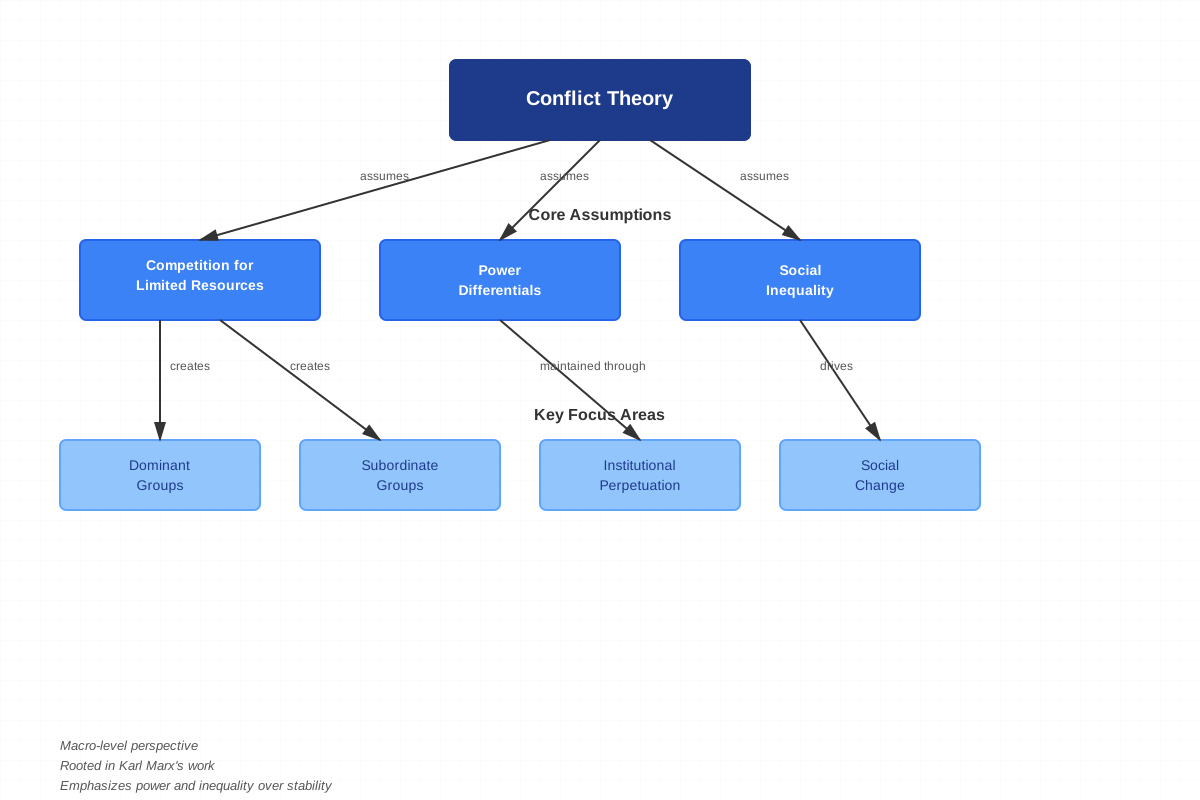
Conflict theory is a foundational macro-level sociological perspective that views society as an arena of inequality generating conflict and social change. Rooted in the work of Karl Marx, this theoretical framework posits that society is characterized by competition for limited resources, where dominant groups maintain power and privilege at the expense of subordinate groups. Unlike functionalist perspectives that emphasize social stability and consensus, Conflict theory Sociology focuses on power differentials, social inequality, and the ways in which social structures perpetuate disparities in wealth, status, and authority. This perspective examines how institutions—including education, healthcare, government, and the economy—serve the interests of those in power while marginalizing others.
For the MCAT, understanding Conflict theory MCAT applications is essential because the exam frequently tests students' ability to analyze social phenomena through multiple theoretical lenses. The Psychological, Social, and Biological Foundations of Behavior section regularly presents passages describing healthcare disparities, educational inequalities, or institutional discrimination, requiring test-takers to identify which sociological perspective best explains the observed patterns. Conflict theory provides a critical framework for understanding how power dynamics shape health outcomes, access to medical care, and the social determinants of health—all high-yield topics for medical school applicants.
Within the broader context of Social Structure and Institutions, conflict theory serves as one of three major theoretical paradigms in Sociology, alongside functionalism and symbolic interactionism. While functionalism examines how social institutions contribute to societal stability, conflict theory reveals the tensions, inequalities, and power struggles embedded within these same structures. This theoretical approach connects directly to concepts such as social stratification, social inequality, healthcare disparities, institutional discrimination, and social movements—all critical topics for MCAT success. Mastering conflict theory enables students to critically analyze social phenomena and recognize when exam questions require identification of power imbalances, resource competition, or structural inequality as explanatory mechanisms.
Learning Objectives
- [ ] Define Conflict theory using accurate Sociology terminology
- [ ] Explain why Conflict theory matters for the MCAT
- [ ] Apply Conflict theory to exam-style questions
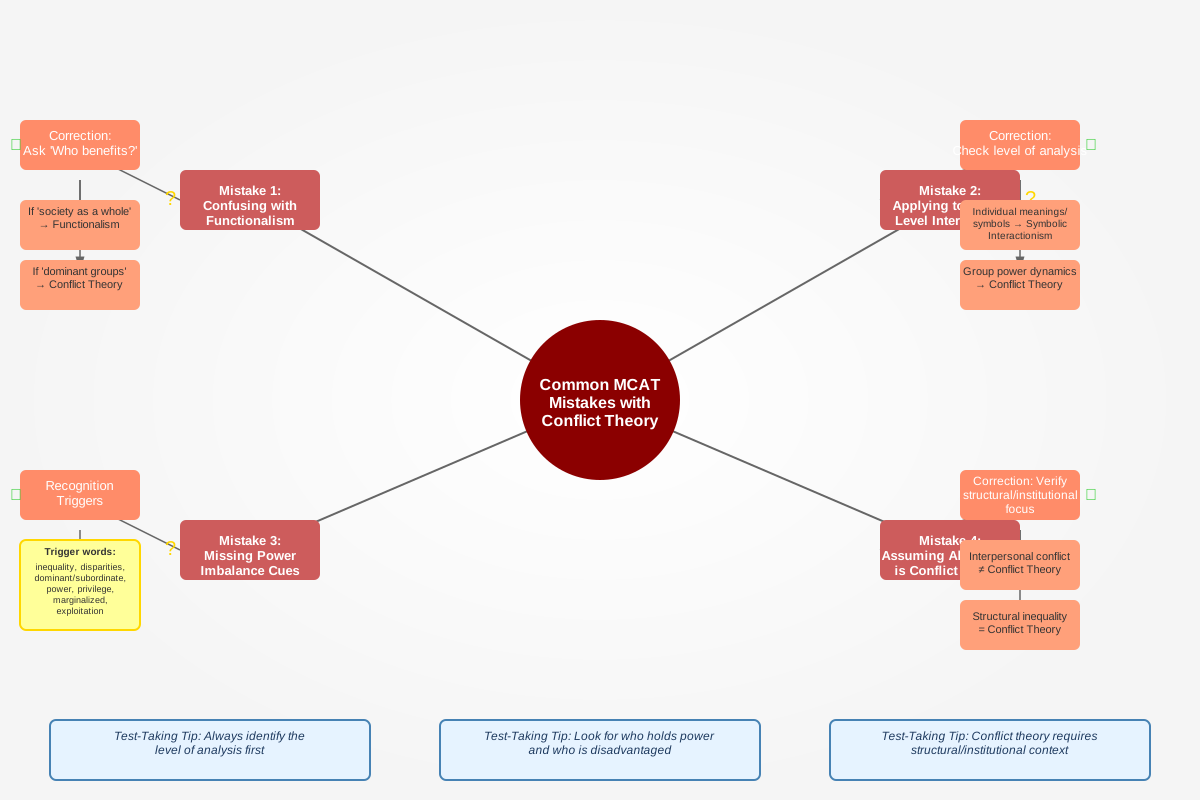
- [ ] Identify common mistakes related to Conflict theory
- [ ] Connect Conflict theory to related Sociology concepts
- [ ] Compare and contrast Conflict theory with functionalism and symbolic interactionism
- [ ] Analyze healthcare scenarios using a conflict theory framework
- [ ] Identify the key assumptions and limitations of Conflict theory
- [ ] Recognize trigger words and phrases that signal conflict theory applications on the MCAT
Prerequisites
- Basic understanding of sociological perspectives: Familiarity with the concept that sociology employs different theoretical frameworks to analyze society; relevant because conflict theory is one of three major paradigms students must distinguish on the MCAT.
- Social stratification concepts: Knowledge of how societies organize into hierarchical layers based on wealth, power, and prestige; relevant because conflict theory specifically examines how these hierarchies are maintained and challenged.
- Basic understanding of social institutions: Awareness that institutions (family, education, healthcare, government, economy) are organized patterns of social relationships; relevant because conflict theory analyzes how these institutions perpetuate inequality.
- Power and authority concepts: Understanding that power is the ability to influence others and that authority is legitimate power; relevant because power differentials are central to conflict theory analysis.
Why This Topic Matters
Clinical and Real-World Significance: Conflict theory provides essential analytical tools for understanding healthcare disparities that future physicians will encounter daily. The framework explains why certain populations experience worse health outcomes, limited access to quality care, and discrimination within medical systems. For example, conflict theory illuminates how healthcare operates as a commodity in capitalist societies, where those with greater economic resources access superior care while marginalized groups face barriers. Understanding these power dynamics helps future physicians recognize systemic issues beyond individual patient interactions, including how pharmaceutical companies prioritize profitable treatments over public health needs, how insurance systems create access barriers, and how medical research has historically excluded or exploited vulnerable populations.
Exam Statistics and Frequency: Conflict theory appears with high frequency on the MCAT, particularly in the Psychological, Social, and Biological Foundations of Behavior section. Approximately 15-20% of sociology questions require students to identify or apply conflict theory principles. The AAMC explicitly lists conflict theory as a testable concept within the Social Structure and Institutions content category. Questions typically appear in two formats: (1) passage-based questions where students must identify which theoretical perspective best explains described social phenomena, and (2) discrete questions asking students to apply conflict theory to specific scenarios involving inequality, power, or resource distribution.
Common Exam Appearances: Conflict theory most frequently appears in MCAT passages describing: healthcare access disparities across socioeconomic groups; educational inequality and tracking systems; workplace hierarchies and labor exploitation; racial and ethnic discrimination in institutions; gender inequality in professional settings; the medicalization of social problems; pharmaceutical industry practices; and social movements challenging existing power structures. Test-takers must recognize when passages emphasize power imbalances, resource competition, dominant versus subordinate group dynamics, or structural barriers—all signals that conflict theory provides the appropriate analytical framework.
Core Concepts
Definition and Foundational Principles
Conflict theory is a macro-level sociological perspective that views society as composed of groups competing for scarce resources, where social structures and institutions perpetuate inequality by serving the interests of dominant groups at the expense of subordinate groups. The theory posits that conflict, rather than consensus, is the fundamental characteristic of social relations, and that social change occurs through struggle and resistance rather than gradual evolution or functional adaptation.
The foundational assumptions of conflict theory include:
- Scarcity and competition: Resources (wealth, power, prestige, healthcare, education) are limited, creating inevitable competition between groups
- Inequality as structural: Social inequality is built into societal structures rather than resulting from individual differences in ability or effort
- Power maintenance: Dominant groups actively work to maintain their advantaged position through control of institutions, ideology, and resources
- Conflict as catalyst: Social conflict drives social change, as subordinate groups challenge existing arrangements
- Ideology and false consciousness: Dominant groups promote belief systems that justify inequality and obscure exploitation
Historical Development and Key Theorists
Karl Marx (1818-1883) established the foundation for conflict theory through his analysis of capitalism and class struggle. Marx argued that society is fundamentally divided between the bourgeoisie (owners of the means of production) and the proletariat (workers who sell their labor). He introduced the concept of false consciousness—the acceptance by subordinate groups of ideologies that justify their own oppression—and predicted that class conflict would eventually lead to revolutionary social change.
Max Weber expanded conflict theory beyond purely economic factors, introducing the concept of life chances—the opportunities individuals have to improve their quality of life—and arguing that power derives from multiple sources including class, status, and party (political power). Weber's multidimensional approach to stratification enriched conflict theory by acknowledging that power operates through various mechanisms beyond economic control.
C. Wright Mills applied conflict theory to mid-20th century American society, describing the power elite—a small group of military, corporate, and political leaders who control major institutions and make decisions affecting the entire society. Mills emphasized how institutional arrangements concentrate power and limit democratic participation.
Contemporary conflict theorists have extended the framework to analyze gender inequality (feminist conflict theory), racial and ethnic stratification (critical race theory), and global inequality (world systems theory), demonstrating the theory's adaptability to diverse forms of social conflict.
Core Mechanisms of Conflict Theory
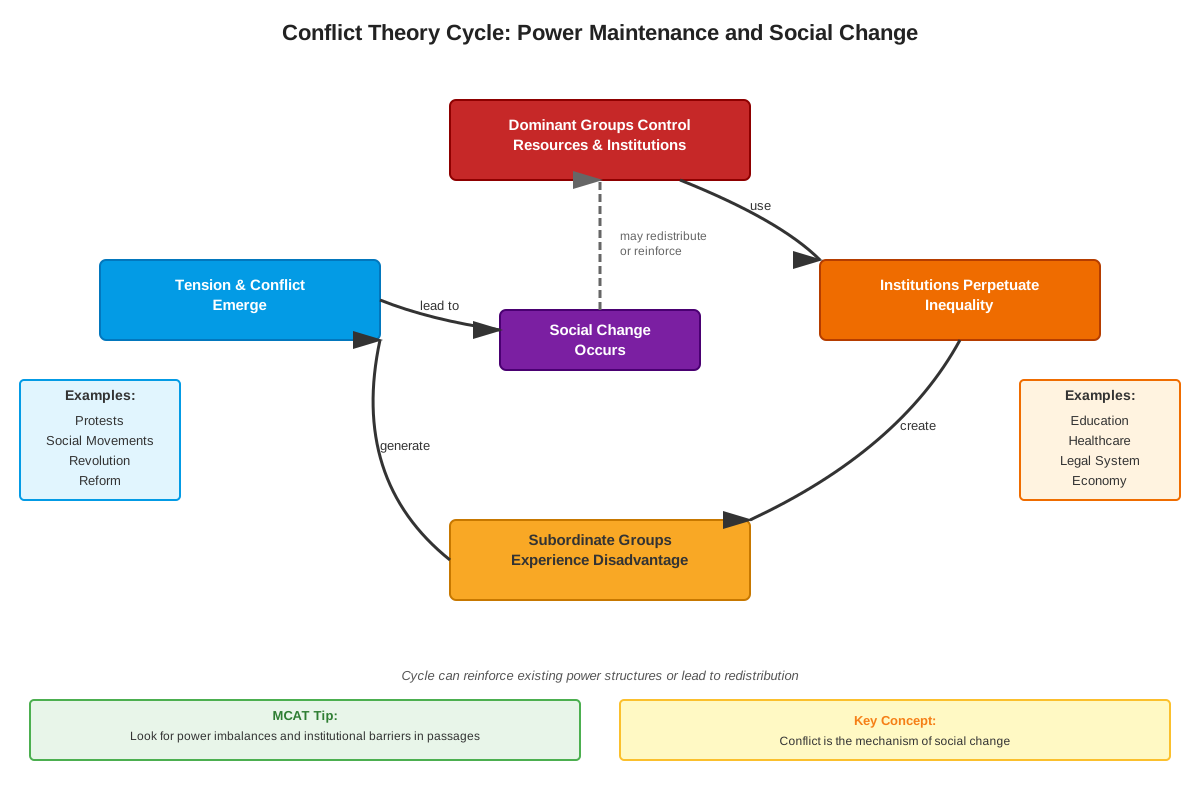
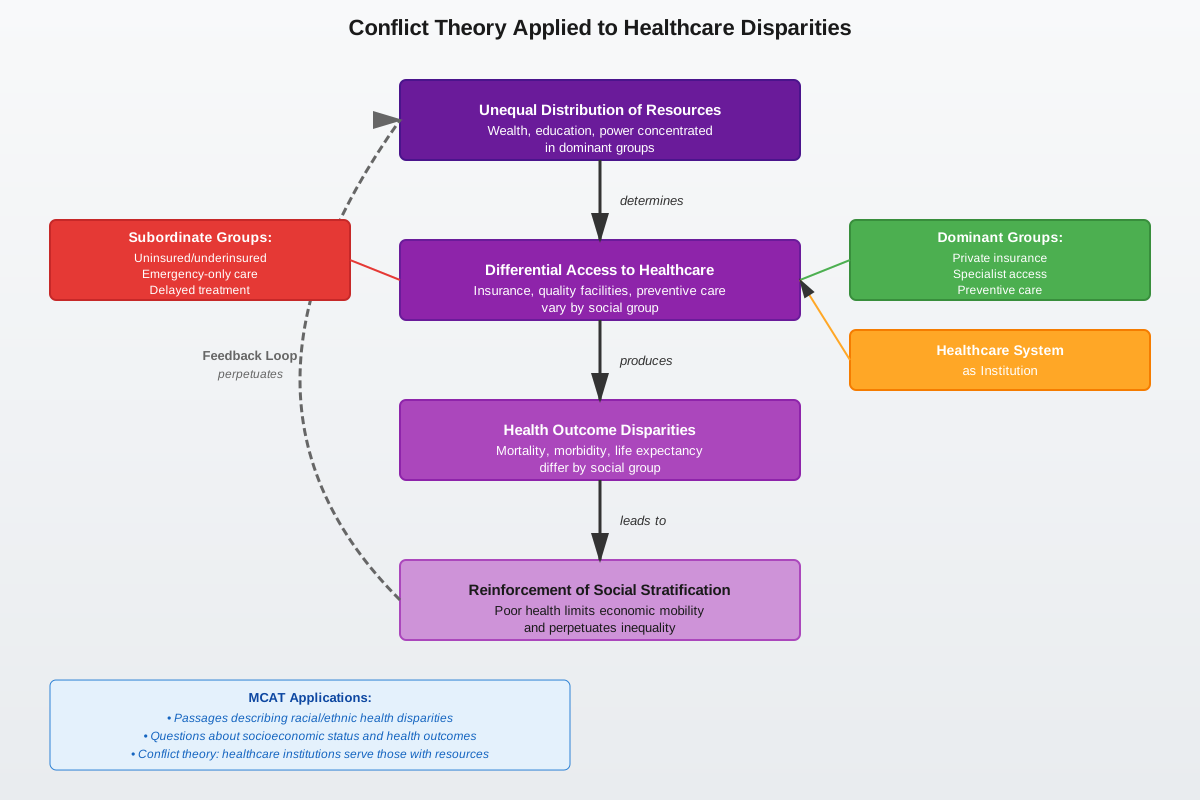
Resource Distribution and Control: Conflict theory examines how societies allocate valued resources unequally. In healthcare, this manifests as differential access to quality medical care, with wealthy individuals receiving preventive care, specialist consultations, and cutting-edge treatments, while poor and marginalized populations rely on emergency rooms, face longer wait times, and experience worse outcomes. The theory emphasizes that this distribution is not accidental but results from institutional arrangements that protect the interests of dominant groups.
Institutional Reproduction of Inequality: Social institutions function to maintain existing power structures rather than serving all members of society equally. Educational systems, for example, reproduce class inequality through tracking, differential funding, and cultural capital requirements that advantage children from privileged backgrounds. Healthcare institutions similarly perpetuate inequality through insurance-based access models, geographic distribution of facilities, and implicit bias in treatment decisions.
Ideology and Hegemony: Dominant groups maintain power not only through force but through ideological hegemony—the promotion of belief systems that make existing arrangements appear natural, inevitable, or justified. Examples include meritocracy ideology (the belief that success results purely from individual effort), victim-blaming narratives that attribute poverty to personal failings, and medical models that individualize health problems while ignoring social determinants.
Social Change Through Conflict: Unlike functionalism, which views change as gradual adaptation, conflict theory sees meaningful social change emerging from struggle between groups with opposing interests. Social movements—civil rights, labor, feminist, LGBTQ+ rights—exemplify how subordinate groups challenge existing power structures and force institutional reforms. In healthcare, patient advocacy movements have challenged medical paternalism, demanded research into neglected diseases, and fought for universal access.
Conflict Theory vs. Other Sociological Perspectives
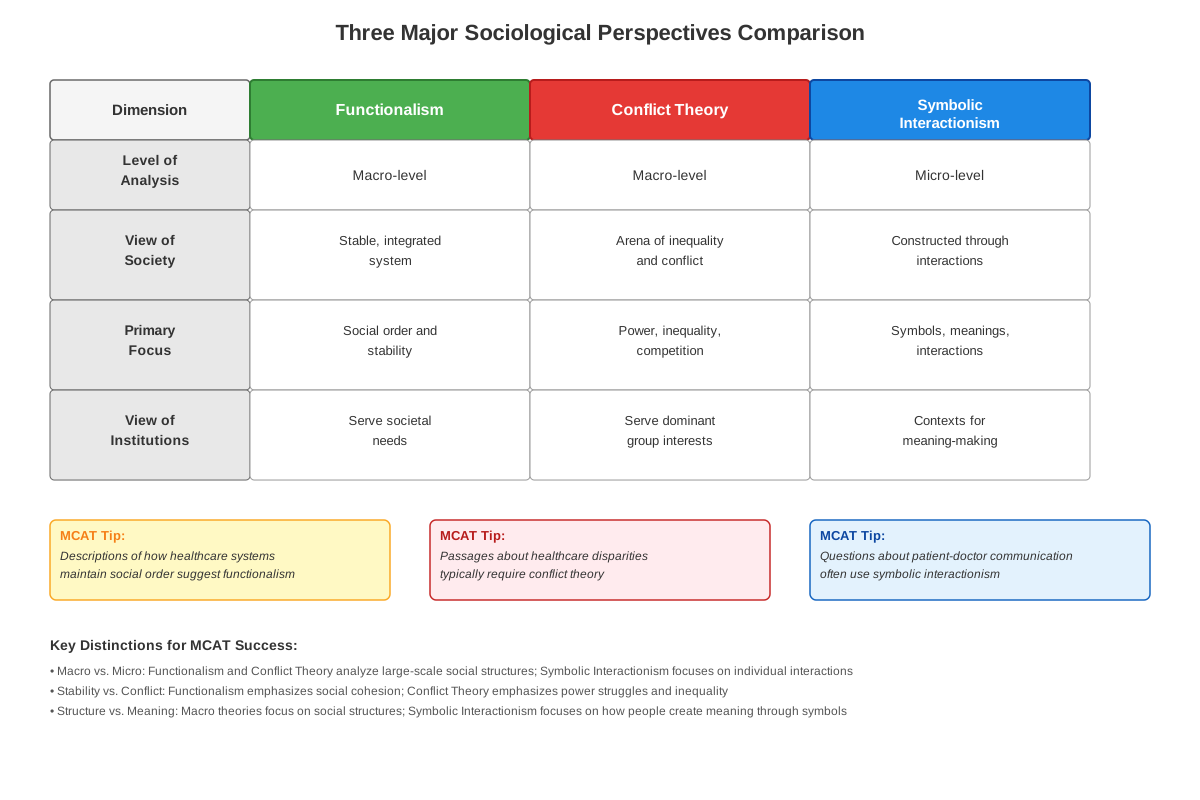
| Aspect | Conflict Theory | Functionalism | Symbolic Interactionism |
|---|---|---|---|
| Level of analysis | Macro (societal structures) | Macro (societal structures) | Micro (individual interactions) |
| View of society | Arena of inequality and competition | Integrated system of interdependent parts | Constructed through social interaction |
| Focus | Power, inequality, conflict | Stability, consensus, social order | Meanings, symbols, everyday life |
| Social change | Through conflict and struggle | Gradual adaptation to maintain equilibrium | Through changing definitions and meanings |
| Institutions | Serve dominant group interests | Fulfill necessary social functions | Settings where meanings are negotiated |
| Inequality | Structural and exploitative | Functional and motivating | Emerges from labeling and stigma |
| MCAT trigger words | Power, inequality, exploitation, dominant/subordinate, conflict, resources | Function, stability, equilibrium, integration, consensus | Interaction, meaning, symbols, identity, labeling |
Applications to Healthcare and Medicine
Healthcare as Commodity: Conflict theory analyzes how healthcare operates as a market commodity in capitalist societies rather than as a universal right. This commodification creates a two-tiered system where quality care depends on ability to pay, pharmaceutical companies prioritize profitable drugs over public health needs, and medical innovation focuses on conditions affecting wealthy populations while neglecting diseases prevalent in poor countries.
Medical Dominance and Professional Power: The medical profession maintains significant social power through control over medical knowledge, licensing requirements, and healthcare delivery. Conflict theorists examine how physicians have historically opposed reforms (such as universal healthcare) that might reduce their autonomy or income, how medical associations lobby to protect professional interests, and how the medical model marginalizes alternative healing traditions.
Social Determinants and Structural Violence: Conflict theory emphasizes that health disparities result from structural arrangements rather than individual choices. Structural violence—harm caused by social structures that prevent people from meeting basic needs—manifests in differential exposure to environmental toxins, food deserts in poor neighborhoods, occupational hazards in low-wage work, and chronic stress from discrimination. These structural factors produce measurable health inequalities across race, class, and gender lines.
Medicalization and Social Control: Conflict theorists critique medicalization—the process by which non-medical problems become defined and treated as medical conditions. This process extends medical authority into new domains (childbirth, aging, sexuality, behavior) while generating profits for pharmaceutical and healthcare industries. Medicalization can serve social control functions by individualizing social problems and obscuring their structural causes.
Concept Relationships
Conflict theory connects to multiple sociological concepts in a hierarchical and interactive network. At the broadest level, conflict theory operates as one of three major theoretical paradigms in Sociology, existing in tension with functionalism (which emphasizes social stability) and complementing symbolic interactionism (which examines micro-level processes that conflict theory addresses at the macro level).
Conflict theory → explains → Social stratification: The theory provides the primary framework for understanding why societies organize into hierarchical layers. Social stratification (the ranking of individuals and groups) exists because dominant groups control resources and use institutions to maintain their advantages. This connection flows bidirectionally, as stratification patterns provide evidence supporting conflict theory's core claims about power and inequality.
Social stratification → manifests through → Social inequality: Stratification creates measurable inequalities in wealth, income, education, health outcomes, and life expectancy. Conflict theory explains these inequalities as structural rather than natural or merit-based, emphasizing how institutional arrangements systematically advantage some groups while disadvantaging others.
Social inequality → perpetuated by → Social institutions: Educational systems, healthcare systems, legal systems, and economic structures reproduce inequality across generations. Conflict theory analyzes how institutions that appear neutral actually serve dominant group interests—for example, how educational tracking systems channel working-class students toward vocational paths while preparing upper-class students for professional careers.
Institutional inequality → challenged by → Social movements: When subordinate groups recognize their shared interests and organize collectively, social movements emerge to challenge existing power structures. Conflict theory views social movements as the primary mechanism of progressive social change, whether labor movements demanding better working conditions, civil rights movements challenging racial hierarchy, or healthcare reform movements advocating for universal access.
Power differentials → maintained through → Ideology and false consciousness: Dominant groups promote belief systems that justify inequality and discourage resistance. This ideological dimension connects conflict theory to concepts of culture, socialization, and social control, demonstrating how power operates through both material resources and symbolic systems.
The relationship map: Conflict theory → Social stratification → Social inequality → Institutional reproduction → Social movements → Social change → Modified power structures → Ongoing conflict
High-Yield Facts
⭐ Conflict theory views society as an arena of inequality where groups compete for scarce resources, with dominant groups using institutions to maintain power over subordinate groups.
⭐ Karl Marx founded conflict theory by analyzing class struggle between the bourgeoisie (owners) and proletariat (workers) under capitalism.
⭐ Unlike functionalism (which emphasizes stability and consensus), conflict theory focuses on power, inequality, and social change through struggle.
⭐ False consciousness refers to subordinate groups accepting ideologies that justify their own oppression, preventing them from recognizing their true interests.
⭐ Conflict theory operates at the macro level, analyzing large-scale social structures rather than individual interactions.
- Social institutions (education, healthcare, legal systems) perpetuate inequality by serving dominant group interests rather than society as a whole.
- Conflict theory explains healthcare disparities as resulting from structural arrangements that treat healthcare as a commodity rather than a universal right.
- Medicalization—defining social problems as medical conditions—extends medical authority while generating profits and individualizing structural issues.
- Social change occurs through conflict and struggle (social movements, protests, collective action) rather than gradual adaptation or evolution.
- Ideology and hegemony allow dominant groups to maintain power through belief systems that make inequality appear natural or justified.
- Max Weber expanded conflict theory beyond economics to include status and political power as sources of stratification.
- Structural violence refers to harm caused by social structures that prevent people from meeting basic needs, producing health disparities.
- The power elite (C. Wright Mills) describes how military, corporate, and political leaders control major institutions and concentrate decision-making power.
- Conflict theory connects to social determinants of health by emphasizing how structural factors (poverty, discrimination, environmental hazards) produce health inequalities.
- On the MCAT, passages emphasizing power imbalances, resource competition, dominant/subordinate group dynamics, or institutional barriers signal conflict theory applications.
Quick check — test yourself on Conflict theory so far.
Try Flashcards →Common Misconceptions
Misconception: Conflict theory claims that all social interaction involves conflict and competition. → Correction: Conflict theory analyzes macro-level structural arrangements and power dynamics, not every individual interaction. The theory recognizes that cooperation exists but emphasizes that underlying structural inequalities shape social relations. Symbolic interactionism, not conflict theory, focuses on individual-level interactions.
Misconception: Conflict theory and functionalism are completely incompatible and cannot both be correct. → Correction: These perspectives offer complementary rather than mutually exclusive analyses. Social institutions can simultaneously serve functions (as functionalism emphasizes) while also perpetuating inequality (as conflict theory highlights). The MCAT may present scenarios where both perspectives offer partial insights, requiring students to identify which framework best explains the specific phenomenon described.
Misconception: Conflict theory only applies to economic class differences and Marxist analysis. → Correction: While Marx founded conflict theory with class analysis, the framework has expanded to examine multiple forms of inequality including gender (feminist conflict theory), race and ethnicity (critical race theory), age, sexuality, and global stratification. Contemporary conflict theory analyzes power differentials across diverse social categories.
Misconception: Conflict theory views dominant groups as intentionally malicious or conspiratorial. → Correction: Conflict theory analyzes structural arrangements and institutional patterns rather than individual motivations. Dominant groups benefit from existing arrangements and act to protect their interests, but this occurs through institutional mechanisms and ideological systems rather than conscious conspiracy. The theory emphasizes structural analysis over individual blame.
Misconception: If conflict theory is correct, social change is impossible because dominant groups control all institutions. → Correction: Conflict theory actually emphasizes social change as inevitable, occurring through struggle between groups with opposing interests. Social movements demonstrate how subordinate groups organize to challenge power structures and force institutional reforms. Historical examples (labor rights, civil rights, women's suffrage) show that collective action produces meaningful change despite institutional resistance.
Misconception: Conflict theory applies only to capitalist societies or Western contexts. → Correction: While Marx analyzed capitalism specifically, conflict theory's core principles—competition for resources, power differentials, institutional reproduction of inequality—apply across diverse economic systems and cultural contexts. Socialist societies, feudal systems, and non-Western societies all exhibit forms of stratification and power dynamics analyzable through conflict theory frameworks.
Worked Examples
Example 1: Healthcare Access Passage
MCAT-Style Passage: "A study examined healthcare utilization patterns across socioeconomic groups in a major metropolitan area. Researchers found that individuals in the highest income quartile received an average of 4.2 preventive care visits annually, had access to specialists within 2 weeks of referral, and reported high satisfaction with care quality. In contrast, individuals in the lowest income quartile averaged 0.8 preventive care visits annually, waited an average of 8 weeks for specialist appointments, and frequently used emergency departments for primary care needs. The study also found that hospitals in wealthy neighborhoods offered advanced diagnostic technology and specialized services, while hospitals serving poor neighborhoods faced budget constraints and staffing shortages. Despite these disparities, public health campaigns emphasized individual responsibility for health maintenance through diet, exercise, and regular checkups."
Question: Which sociological perspective best explains the healthcare patterns described in the passage?
A) Functionalism, because different healthcare services fulfill different societal needs
B) Symbolic interactionism, because patient-provider interactions shape healthcare experiences
C) Conflict theory, because healthcare access reflects structural inequality and resource distribution
D) Social constructionism, because health is defined differently across social groups
Worked Solution:
Step 1: Identify key features of the passage. The passage emphasizes: (1) systematic differences in healthcare access based on socioeconomic status, (2) unequal distribution of healthcare resources (technology, specialists, facilities) across neighborhoods, (3) structural barriers (wait times, facility locations) rather than individual preferences, and (4) ideology (individual responsibility messaging) that obscures structural causes.
Step 2: Evaluate each theoretical perspective against passage content.
- Functionalism (Option A) would emphasize how healthcare institutions serve societal functions and contribute to social stability. The passage does not discuss healthcare's functions or how disparities maintain social order. Eliminate.
- Symbolic interactionism (Option B) focuses on micro-level interactions, meanings, and identity construction. While patient-provider interactions occur in healthcare, the passage emphasizes macro-level patterns of resource distribution and structural barriers. Eliminate.
- Conflict theory (Option C) analyzes power differentials, resource competition, and structural inequality. The passage directly describes unequal resource distribution (preventive care, specialists, technology) based on socioeconomic position, structural barriers (facility locations, wait times), and ideology (individual responsibility) that obscures structural causes—all core conflict theory concepts.
- Social constructionism (Option D) examines how social categories and meanings are created through social processes. The passage does not discuss how health is defined or constructed differently across groups. Eliminate.
Step 3: Confirm the answer. Option C (conflict theory) best explains the passage because it addresses: the unequal distribution of healthcare resources across socioeconomic groups (resource competition), the structural barriers that systematically disadvantage poor populations (institutional reproduction of inequality), and the individual responsibility ideology that obscures these structural causes (ideological hegemony). The passage exemplifies conflict theory's analysis of healthcare as a commodity distributed unequally based on power and resources.
Answer: C
Connection to Learning Objectives: This example demonstrates applying conflict theory to exam-style questions by identifying trigger words (inequality, resource distribution, structural barriers, dominant/subordinate groups) and distinguishing conflict theory from other sociological perspectives.
Example 2: Educational Tracking Scenario
MCAT-Style Question: A school district implements a tracking system that places students into "advanced," "regular," or "remedial" classes based on standardized test scores from third grade. A sociologist studying the system finds that students from wealthy families are disproportionately placed in advanced tracks, while students from poor families are overrepresented in remedial tracks. Once tracked, students rarely move between levels. Advanced track students receive experienced teachers, enriched curriculum, and college preparatory coursework, while remedial track students receive basic skills instruction and vocational training. The district superintendent defends the system as "meeting each student's individual needs" and ensuring that "students receive appropriate instruction for their ability level."
Question: From a conflict theory perspective, this tracking system primarily functions to:
A) Fulfill the educational system's function of sorting students by ability
B) Reproduce social class inequality across generations
C) Allow students to construct educational identities through interaction
D) Adapt to diverse student learning styles
Worked Solution:
Step 1: Identify the conflict theory framework. The question explicitly asks for a conflict theory perspective, so the correct answer must reflect conflict theory's core principles: institutional reproduction of inequality, dominant group advantage, and structural barriers to mobility.
Step 2: Analyze the scenario through conflict theory. Key elements include: (1) tracking correlates with family wealth rather than purely individual ability, (2) the system creates differential opportunities (experienced teachers, enriched curriculum for wealthy students; basic skills for poor students), (3) mobility between tracks is rare (structural barriers), and (4) ideology ("meeting individual needs," "appropriate for ability") justifies the unequal system.
Step 3: Evaluate each option.
- Option A describes a functionalist perspective—sorting by ability serves society's need for differentiated workers. This is not a conflict theory analysis. Eliminate.
- Option B directly reflects conflict theory: the tracking system reproduces class inequality by providing wealthy students with advantages (better teachers, college prep) while limiting poor students' opportunities (basic skills, vocational training). Because tracking correlates with family wealth and mobility is rare, the system perpetuates existing class structures across generations—a core conflict theory concept.
- Option C describes symbolic interactionism—identity construction through interaction. The scenario emphasizes structural arrangements rather than micro-level interactions. Eliminate.
- Option D suggests the system adapts to individual differences, which accepts the system's stated justification rather than analyzing it critically. Conflict theory would view this "adaptation" claim as ideology obscuring structural inequality. Eliminate.
Step 4: Confirm through conflict theory principles. Option B aligns with conflict theory's emphasis on: (1) institutional reproduction of inequality (schools perpetuate class structure), (2) dominant group advantage (wealthy families' children receive superior education), (3) structural barriers (rare mobility between tracks), and (4) ideology (the superintendent's justification obscures how the system serves privileged groups).
Answer: B
Connection to Learning Objectives: This example demonstrates applying conflict theory to educational institutions, recognizing how ideology justifies structural inequality, and distinguishing conflict theory's focus on reproduction of inequality from functionalism's emphasis on social functions.
Exam Strategy
Identifying Conflict Theory Questions: MCAT questions testing conflict theory typically include specific trigger words and phrases. Watch for: "power," "inequality," "dominant/subordinate groups," "resources," "structural barriers," "access," "disparities," "exploitation," "social class," "privilege," "marginalized," and "social change through struggle." Passages emphasizing systematic differences in outcomes across social groups (race, class, gender) or describing how institutions advantage some groups while disadvantaging others signal conflict theory applications.
Distinguishing Between Theoretical Perspectives: The MCAT frequently asks students to identify which sociological perspective best explains a described phenomenon. Use this decision tree:
- Determine the level of analysis: Macro-level (societal structures) suggests functionalism or conflict theory; micro-level (individual interactions) suggests symbolic interactionism.
- Identify the emphasis: If the passage emphasizes stability, integration, or social functions → functionalism. If it emphasizes inequality, power, or conflict → conflict theory. If it emphasizes meanings, symbols, or identity → symbolic interactionism.
- Look for value orientation: Functionalism tends toward neutral or positive descriptions of institutions; conflict theory emphasizes critique and inequality; symbolic interactionism focuses on subjective meanings.
Process of Elimination: When conflict theory appears among answer choices:
- Eliminate functionalist options if the passage emphasizes inequality, power differentials, or structural barriers rather than social stability or institutional functions.
- Eliminate symbolic interactionist options if the passage focuses on macro-level patterns rather than individual interactions or meaning-making.
- Eliminate options that blame individuals for structural problems—conflict theory emphasizes structural rather than individual explanations.
- Eliminate options suggesting inequality is natural or inevitable—conflict theory views inequality as socially constructed and changeable.
Approaching Passage-Based Questions: When a passage describes social phenomena:
- Identify the groups involved: Who has power/resources? Who lacks power/resources?
- Analyze resource distribution: Are resources (healthcare, education, wealth, opportunities) distributed equally or unequally?
- Look for structural patterns: Do institutions systematically advantage some groups while disadvantaging others?
- Identify ideology: Does the passage mention beliefs or justifications that obscure inequality?
- Consider social change: Does the passage describe conflict, resistance, or social movements?
If you answer "yes" to questions 2-4, conflict theory likely provides the best framework.
Time Allocation: Conflict theory questions typically require 60-90 seconds. Spend 30-40 seconds analyzing the passage or scenario to identify key features (inequality, power, structural barriers), 20-30 seconds evaluating answer choices against conflict theory principles, and 10-20 seconds confirming your selection. Do not overthink—if a passage clearly describes structural inequality and power differentials, conflict theory is almost certainly correct.
Common Trap Answers: Watch for options that: (1) describe functionalist perspectives but use conflict theory vocabulary, (2) acknowledge inequality but attribute it to individual differences rather than structural causes, (3) suggest inequality serves positive social functions, or (4) confuse conflict theory with symbolic interactionism by emphasizing micro-level processes.
Memory Techniques
POWER Mnemonic for conflict theory core concepts:
- Power differentials between groups
- Oppression of subordinate groups
- Wealth and resource inequality
- Exploitation through institutions
- Resistance and social change
MARX Mnemonic for distinguishing conflict theory from functionalism:
- Macro-level analysis (both theories)
- Adversarial relationships (conflict) vs. cooperative integration (functionalism)
- Resources are scarce and competed for (conflict) vs. resources fulfill functions (functionalism)
- X-change through conflict (conflict) vs. gradual adaptation (functionalism)
Visualization Strategy: Picture society as a pyramid with a small group at the top controlling resources (wealth, healthcare, education) and a large group at the bottom with limited access. Imagine the top group actively defending their position through institutions (schools, hospitals, legal systems) that appear neutral but actually maintain inequality. Visualize the bottom group organizing and pushing upward (social movements) to challenge the structure. This image captures conflict theory's emphasis on hierarchy, power, institutional reproduction, and change through struggle.
Comparison Table Memory Aid: Create a mental table with three columns (Conflict Theory, Functionalism, Symbolic Interactionism) and three rows (Level, Focus, Change). Fill in: Conflict = Macro/Inequality/Struggle; Functionalism = Macro/Stability/Adaptation; Symbolic Interactionism = Micro/Meaning/Interaction. This 3×3 grid helps quickly distinguish perspectives on the exam.
Trigger Word Association: Associate conflict theory with "versus" language—dominant versus subordinate, haves versus have-nots, powerful versus powerless. When you see "versus" framing in a passage, think conflict theory. Associate functionalism with "for" language—institutions function for society, parts work for the whole. Associate symbolic interactionism with "between" language—interactions between individuals, meanings negotiated between people.
Summary
Conflict theory is a macro-level sociological perspective that analyzes society as an arena of inequality where groups compete for scarce resources, with dominant groups using social institutions to maintain power over subordinate groups. Founded by Karl Marx's analysis of class struggle under capitalism, the theory emphasizes that social structures perpetuate inequality rather than serving all members equally, that ideology obscures exploitation through false consciousness, and that meaningful social change occurs through conflict and resistance rather than gradual adaptation. For the MCAT, conflict theory provides essential frameworks for analyzing healthcare disparities, educational inequality, and institutional discrimination. Students must distinguish conflict theory from functionalism (which emphasizes stability and social functions) and symbolic interactionism (which focuses on micro-level interactions and meanings). The theory applies directly to understanding healthcare as a commodity, medical dominance, social determinants of health, and structural violence. Recognizing trigger words like power, inequality, dominant/subordinate groups, resources, and structural barriers enables test-takers to identify when conflict theory provides the appropriate analytical framework for exam questions.
Key Takeaways
- Conflict theory views society as characterized by inequality, power differentials, and competition for scarce resources, with dominant groups using institutions to maintain advantages over subordinate groups.
- The theory operates at the macro level, analyzing large-scale social structures rather than individual interactions, distinguishing it from symbolic interactionism.
- Unlike functionalism (which emphasizes stability and consensus), conflict theory focuses on inequality, power, and social change through struggle and resistance.
- For the MCAT, conflict theory explains healthcare disparities, educational inequality, and institutional discrimination as resulting from structural arrangements rather than individual differences.
- Key trigger words signaling conflict theory applications include: power, inequality, dominant/subordinate, resources, structural barriers, exploitation, and social class.
- Social institutions (education, healthcare, legal systems) reproduce inequality across generations by systematically advantaging dominant groups while creating barriers for subordinate groups.
- Conflict theory connects to multiple high-yield MCAT topics including social stratification, social determinants of health, healthcare access, medicalization, and social movements.
Related Topics
Social Stratification: The hierarchical ranking of individuals and groups in society based on wealth, power, and prestige. Mastering conflict theory provides the primary theoretical framework for understanding why stratification exists and how it is maintained, enabling progression to analyzing specific stratification systems (class, race, gender).
Social Inequality: The unequal distribution of resources, opportunities, and outcomes across social groups. Conflict theory explains the structural causes of inequality, preparing students to analyze health disparities, educational gaps, and economic inequality on the MCAT.
Functionalism: The macro-level perspective emphasizing social stability, integration, and how institutions fulfill necessary social functions. Understanding conflict theory enables comparison with functionalism, a frequent MCAT task requiring students to distinguish between these competing perspectives.
Symbolic Interactionism: The micro-level perspective focusing on how individuals create meaning through social interaction. Mastering conflict theory's macro-level analysis prepares students to recognize when questions require micro-level versus macro-level frameworks.
Social Movements: Organized collective action aimed at social change. Conflict theory provides the theoretical foundation for understanding why social movements emerge (to challenge power structures) and how they produce change (through struggle and resistance).
Social Determinants of Health: The social, economic, and environmental factors that influence health outcomes. Conflict theory explains how structural inequality produces health disparities, connecting sociological theory to medical applications.
Practice CTA
Now that you have mastered the core concepts, theoretical foundations, and exam strategies for conflict theory, test your understanding with practice questions and flashcards. Focus on distinguishing conflict theory from other sociological perspectives, identifying trigger words in passages, and applying the framework to healthcare scenarios. Remember that conflict theory appears frequently on the MCAT, particularly in questions about healthcare disparities, institutional inequality, and social change—making this one of the highest-yield topics in sociology. Your ability to quickly recognize when passages describe power differentials, structural barriers, and resource competition will directly translate to points on test day. Approach practice deliberately, analyzing why correct answers reflect conflict theory principles and why incorrect answers represent other perspectives. You've built a strong foundation—now reinforce it through active practice!
Sign up free to keep reading
Create a free AnvayaPrep account to finish this MCAT guide on Conflict theory — plus flashcards and practice questions.