Overview
The SAT Reading and Writing section frequently tests students' ability to distinguish between answer choices that are too narrow vs broad answers—a critical skill that separates high scorers from average performers. This concept appears across multiple question types, particularly in questions asking about main ideas, primary purposes, and central claims of passages. Understanding how to identify when an answer choice captures too little information (narrow) or too much information (broad) is essential for selecting the most accurate response.
Many students struggle with this distinction because both narrow and broad answers often contain factually correct information from the passage. The challenge lies not in identifying false statements, but in determining which answer choice best matches the scope of what the question is asking. A narrow answer might accurately describe one paragraph or example but fail to encompass the passage's overall point. Conversely, a broad answer might make claims that extend beyond what the passage actually discusses, introducing ideas or generalizations the author never intended.
This topic connects directly to fundamental reading comprehension skills tested throughout the SAT narrow vs broad answers questions in the RW (Reading and Writing) section. Mastering this concept strengthens your ability to analyze passage structure, identify author's purpose, and evaluate the relationship between supporting details and main ideas—skills that apply to virtually every passage-based question you'll encounter on test day.
Learning Objectives
- [ ] Identify key features of narrow vs broad answers
- [ ] Explain how narrow vs broad answers appears on the SAT
- [ ] Apply narrow vs broad answers to answer SAT-style questions
- [ ] Distinguish between appropriate scope and inappropriate scope in answer choices
- [ ] Evaluate whether an answer choice matches the specific focus of a question stem
- [ ] Recognize common patterns in how test writers construct overly narrow or overly broad distractors
Prerequisites
- Basic reading comprehension skills: Understanding literal meaning of passages is necessary before evaluating answer scope
- Familiarity with main idea vs. supporting detail: Distinguishing between central claims and examples helps identify scope issues
- Understanding of passage structure: Recognizing how paragraphs relate to overall purpose aids in scope evaluation
- Knowledge of question stem analysis: Interpreting what questions actually ask determines the appropriate answer scope
Why This Topic Matters
The ability to evaluate answer scope appears in approximately 30-40% of SAT Reading and Writing questions, making it one of the most frequently tested skills on the exam. Questions about main ideas, primary purposes, central claims, and passage functions all require students to select answers with appropriate scope. Even inference and detail questions can include scope-based distractors designed to trap students who don't carefully match answer breadth to question requirements.
In real-world applications, this skill translates to critical reading abilities essential for college success: distinguishing between thesis statements and supporting evidence, evaluating whether sources adequately support claims, and determining whether conclusions are justified by available data. These competencies extend beyond standardized testing into academic writing, research evaluation, and professional communication.
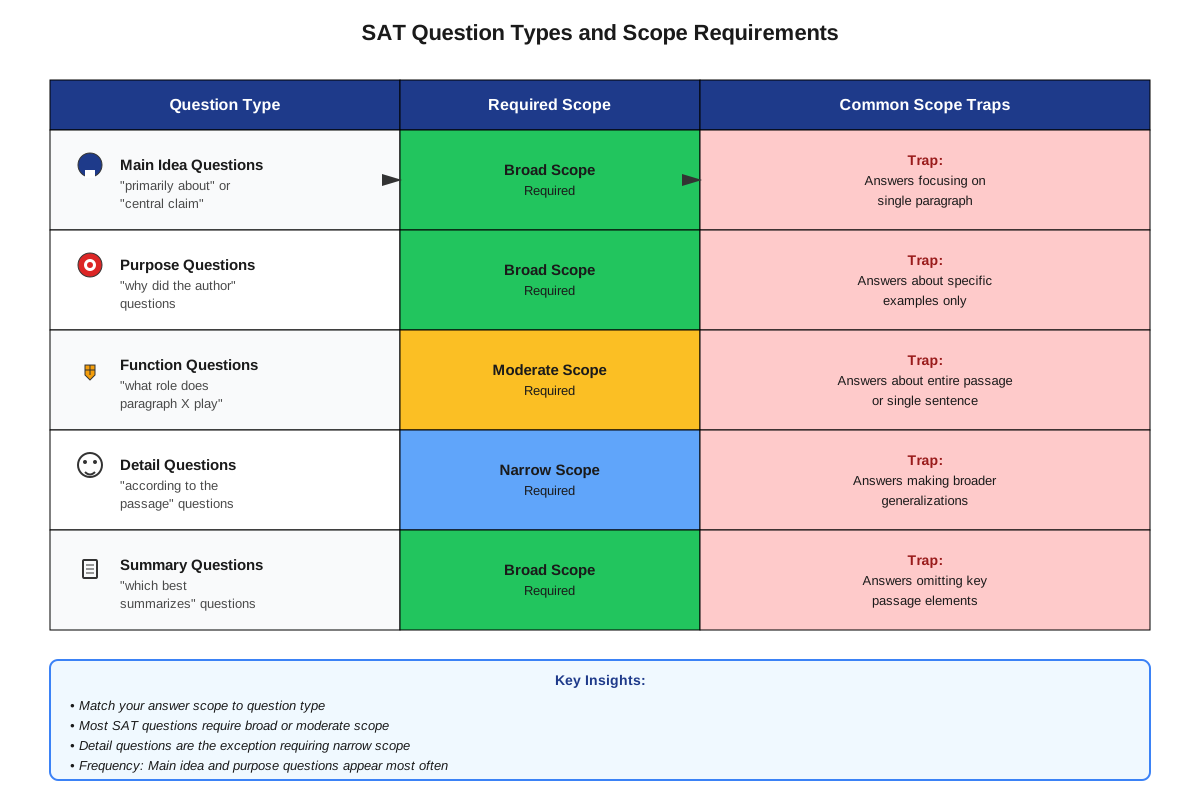
On the SAT, scope issues appear most commonly in:
- Main idea questions asking what a passage is "primarily about" or its "central claim"
- Purpose questions asking why an author wrote a passage or included specific information
- Function questions asking what role a paragraph or sentence plays in the overall passage
- Summary questions requiring selection of the most accurate passage overview
Test writers deliberately craft narrow and broad distractors because they know students often focus on factual accuracy rather than scope appropriateness. A statement can be completely true based on passage content yet still be incorrect because it doesn't match what the question is asking for.
Core Concepts
Understanding Answer Scope
Answer scope refers to the breadth or range of information an answer choice addresses. The correct answer to any SAT question must match the scope of both the passage content and the specific question being asked. Think of scope as a zoom level on a camera: narrow answers zoom in too closely on specific details, while broad answers zoom out too far beyond what the passage actually covers.
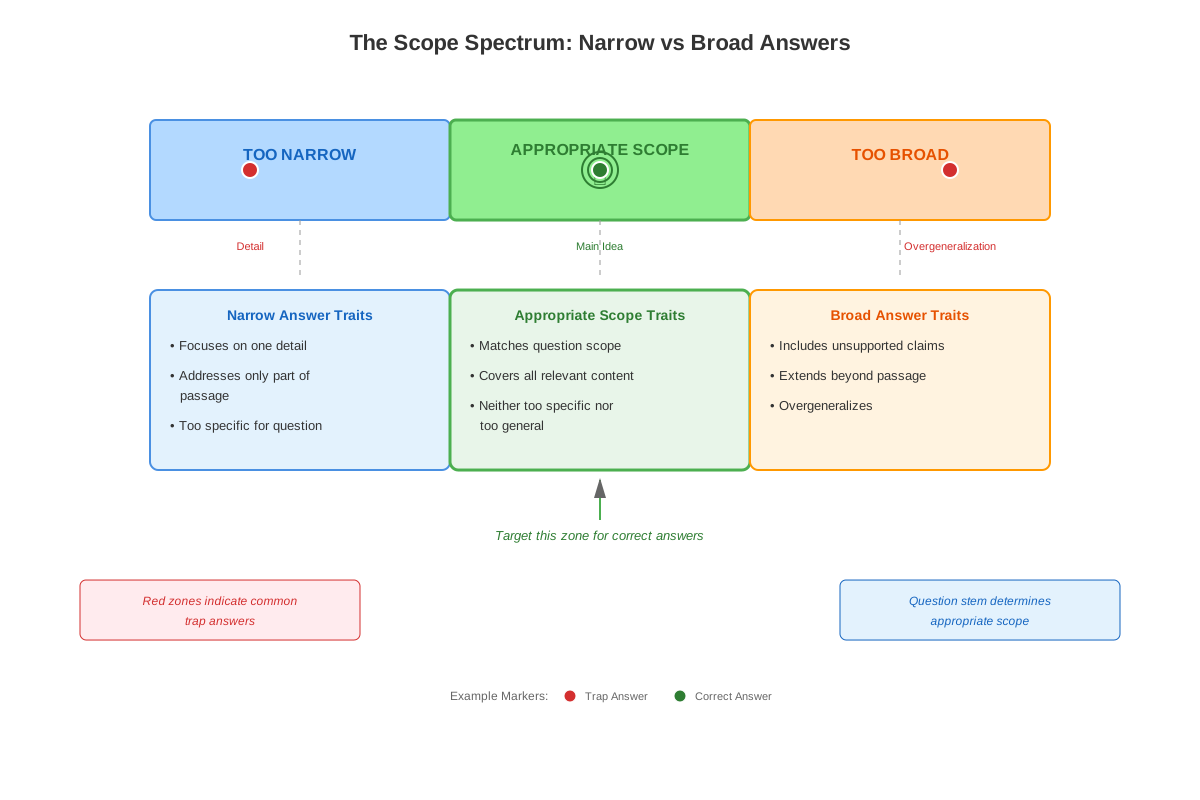
The narrow vs broad answers distinction operates on a spectrum rather than as a binary choice. Between perfectly scoped answers and obviously incorrect ones lie subtle gradations that challenge even strong readers. Developing sensitivity to these gradations requires understanding three key scope categories:
| Scope Type | Definition | Typical Indicators | Example Context |
|---|---|---|---|
| Too Narrow | Addresses only part of what's needed | Focuses on one example, paragraph, or detail | Uses specific names, dates, or examples as the main focus |
| Appropriate Scope | Matches exactly what the question asks | Covers all relevant information without exceeding it | Balances specificity with comprehensiveness |
| Too Broad | Extends beyond passage content or question requirements | Uses absolute language, introduces new concepts | Includes "all," "every," "never," or topics not discussed |
Identifying Narrow Answers
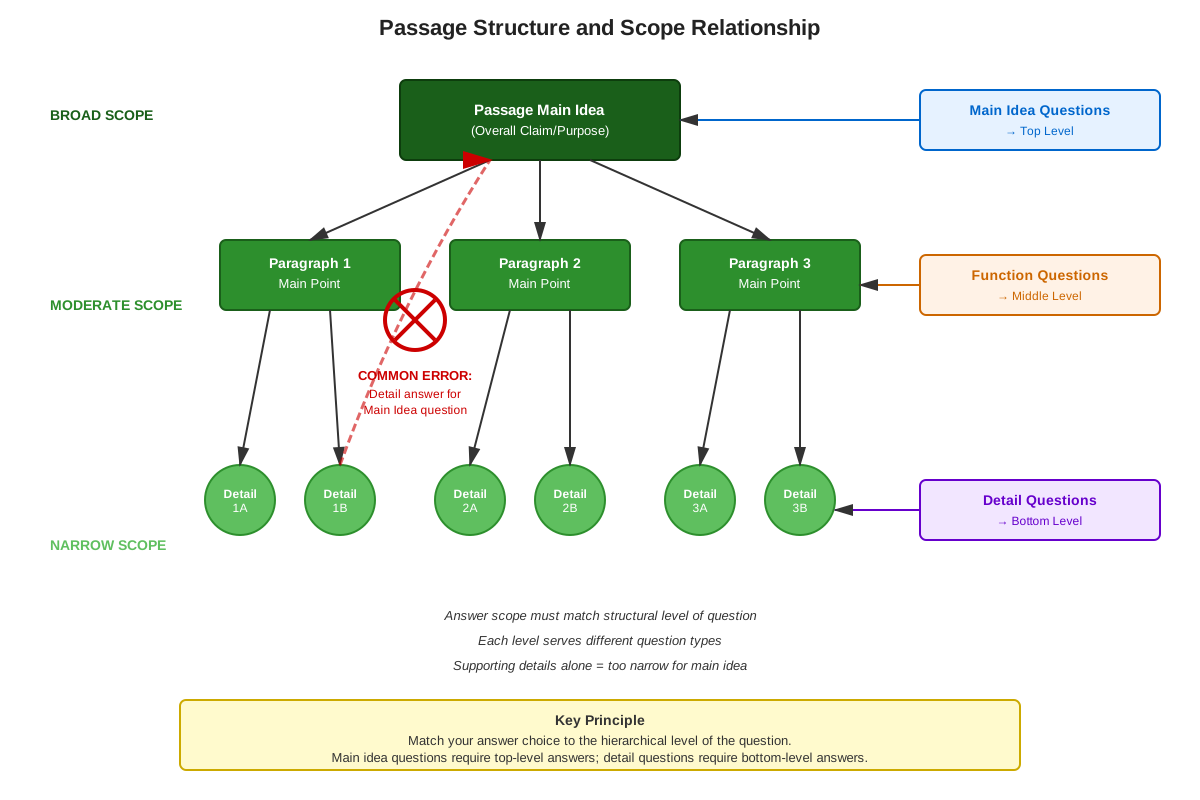
A narrow answer captures only a portion of the information required to fully address the question. These answers are particularly deceptive because they're typically factually accurate—they just don't go far enough. On main idea questions, narrow answers often describe supporting details, specific examples, or the content of individual paragraphs rather than the passage's overall point.
Common characteristics of narrow answers include:
- Excessive specificity: Mentioning particular names, dates, studies, or examples that represent only one part of a larger discussion
- Paragraph-level focus: Accurately describing one section of a passage when the question asks about the entire text
- Single-aspect coverage: Addressing only one dimension of a multi-faceted argument or explanation
- Example-based language: Centering on illustrative cases rather than the general principle they demonstrate
For instance, if a passage discusses three different renewable energy sources and their environmental benefits, a narrow answer might focus exclusively on solar power, ignoring wind and hydroelectric energy entirely. While everything stated about solar power might be accurate, the answer fails to encompass the passage's full scope.
Identifying Broad Answers
A broad answer makes claims that extend beyond what the passage actually states or implies. These answers often feel appealing because they sound important and comprehensive, but they introduce information, generalizations, or conclusions not supported by the text. Broad answers frequently appear in questions about specific passages but make universal claims or discuss topics the author never addressed.
Key indicators of broad answers include:
- Absolute language: Words like "all," "every," "always," "never," "only," or "must" that make stronger claims than the passage supports
- Topic expansion: Introducing related subjects not discussed in the passage
- Overgeneralization: Extending passage-specific observations to universal principles
- Unsupported conclusions: Making logical leaps beyond what the author explicitly argues
Consider a passage describing how one city implemented a successful recycling program. A broad answer might claim "recycling programs always succeed when properly implemented" or discuss waste management strategies never mentioned in the text. These answers exceed the passage's scope by making claims the author didn't make or discussing topics beyond the text's boundaries.
Matching Scope to Question Type
Different question types require different scope considerations:
Main Idea Questions ("The passage is primarily about..." or "Which choice best states the main idea?"):
- Correct answers must encompass the entire passage without exceeding it
- Narrow trap: Focuses on one paragraph or example
- Broad trap: Introduces topics not discussed or makes universal claims
Purpose Questions ("The author's primary purpose is to..." or "The passage serves mainly to..."):
- Correct answers identify the author's overarching goal
- Narrow trap: Describes a secondary purpose or one paragraph's function
- Broad trap: Attributes purposes the author never demonstrated
Detail Questions ("According to the passage..." or "The passage states that..."):
- Correct answers must be directly stated or clearly implied
- Narrow trap: Less common, but might focus on part of a multi-part answer
- Broad trap: Extends specific statements to broader generalizations
The Goldilocks Principle
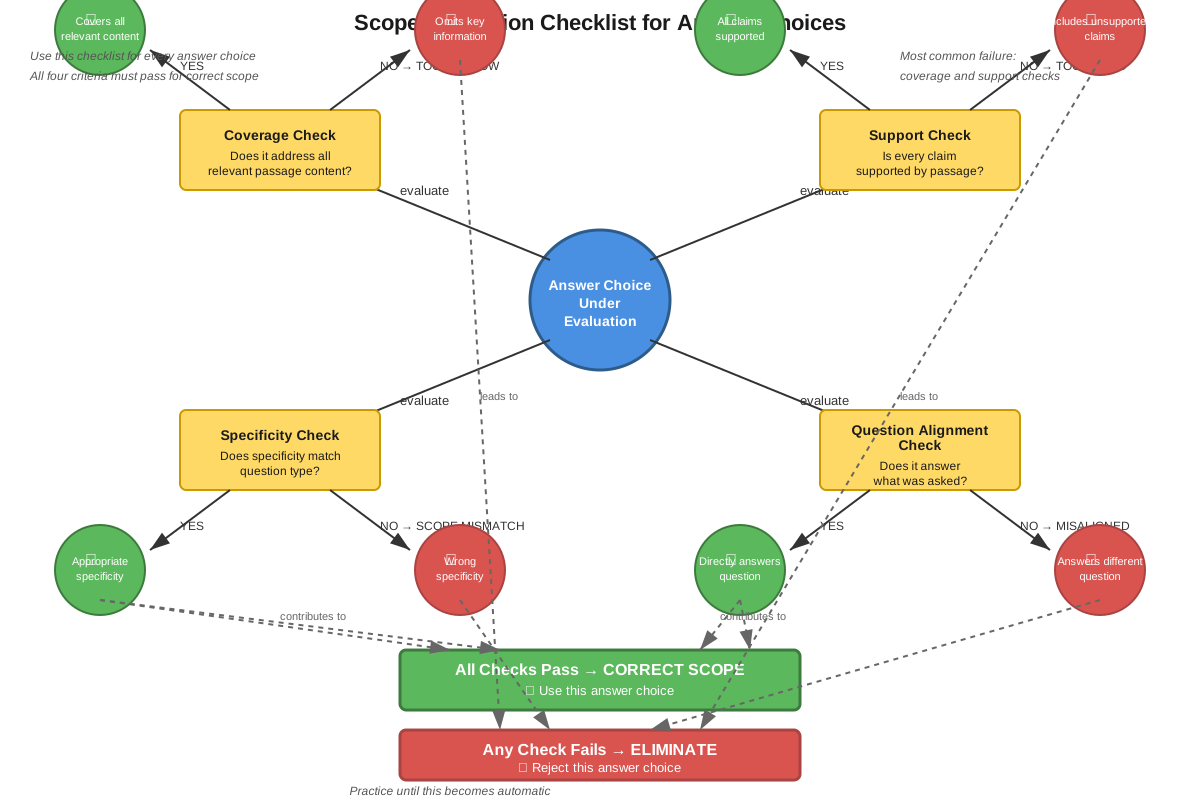
The most effective approach to scope evaluation employs what can be called the Goldilocks Principle: the correct answer is neither too narrow nor too broad, but "just right." This requires active comparison of answer choices against both the passage content and the question's specific requirements.
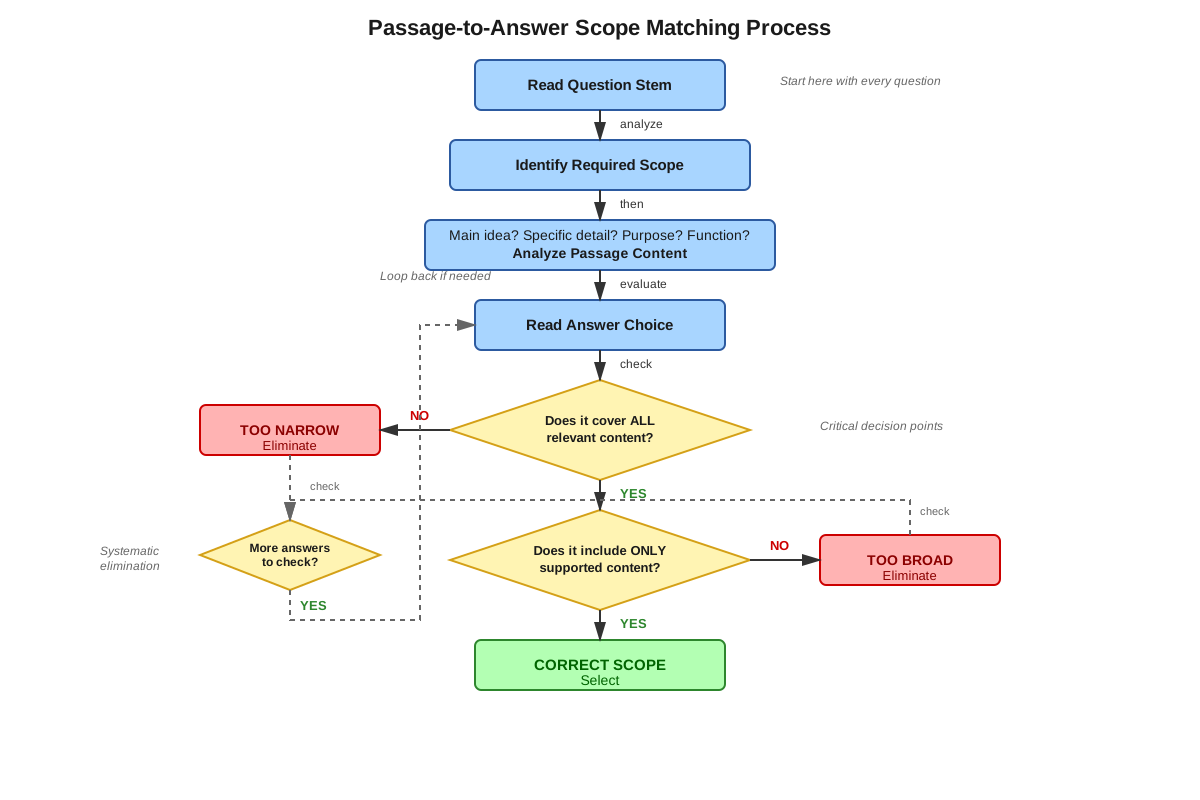
To apply this principle:
- Identify the question's scope requirement: Does it ask about the entire passage, one paragraph, a specific claim, or the author's overall purpose?
- Evaluate each answer's coverage: Does it address everything required? Does it include information beyond what's required?
- Eliminate scope mismatches: Remove answers that are clearly too narrow or too broad before considering other factors
- Verify factual accuracy: Only after confirming appropriate scope, check whether remaining answers are factually correct
Concept Relationships
The narrow vs broad answers concept serves as a bridge between multiple reading comprehension skills. It builds directly on the ability to distinguish main ideas from supporting details—narrow answers often mistake supporting details for main ideas, while broad answers extend beyond even the main idea into unsupported territory.
This concept connects to passage structure analysis because recognizing how paragraphs relate to overall purpose helps identify when an answer focuses too narrowly on one section. Understanding author's purpose prevents selecting broad answers that attribute intentions the author never demonstrated.
The relationship flow operates as follows:
Passage Structure Analysis → enables → Main Idea Identification → requires → Scope Evaluation (Narrow vs Broad) → supports → Answer Choice Elimination → leads to → Correct Answer Selection
Additionally, scope evaluation connects to inference questions because appropriate inferences must stay within the boundaries of what the passage supports—going too far creates a broad answer, while staying too close to explicit statements might miss the inference entirely.
Mastering scope evaluation also strengthens critical reading skills applicable to synthesis questions, where students must evaluate how multiple texts relate. Determining whether a claim is too narrow or broad for a given context becomes essential when comparing perspectives across passages.
High-Yield Facts
⭐ The correct answer to a main idea question must account for the entire passage, not just one paragraph or example
⭐ Narrow answers are typically factually accurate but incomplete; broad answers often introduce information not in the passage
⭐ Words like "all," "every," "always," "never," and "only" frequently signal overly broad answers
⭐ If an answer choice mentions specific examples, names, or dates as its primary focus, it's likely too narrow for a main idea question
⭐ The correct answer matches both the passage's scope AND the question's scope—both must align
- Broad answers often "sound smart" or comprehensive, making them appealing traps for rushed test-takers
- Narrow answers frequently describe the content of the first or last paragraph, which students remember most clearly
- Purpose questions require answers that describe the author's overarching goal, not individual paragraph functions
- An answer can be too narrow for one question type but appropriately scoped for another question about the same passage
- Eliminating scope mismatches first, before evaluating other answer qualities, improves accuracy and saves time
Quick check — test yourself on Narrow vs broad answers so far.
Try Flashcards →Common Misconceptions
Misconception: If an answer choice contains true information from the passage, it must be correct.
Correction: Factual accuracy is necessary but insufficient. The answer must also match the scope of what the question asks. Many wrong answers contain true statements that are either too narrow or too broad for the specific question.
Misconception: Longer, more detailed answer choices are more likely to be correct because they're more comprehensive.
Correction: Length doesn't determine correctness. Longer answers often include excessive detail that makes them too narrow, or they add information that makes them too broad. The correct answer is appropriately scoped, regardless of length.
Misconception: The correct answer to a main idea question must mention every topic discussed in the passage.
Correction: The correct answer should encompass the passage's central point, which may be broader than a list of topics. An answer that merely catalogs everything mentioned might actually be too narrow if it misses the unifying theme.
Misconception: Broad answers are always wrong and should be eliminated immediately.
Correction: An answer is only "too broad" relative to the passage content and question requirements. For some passages and questions, what seems like a broad statement might actually be appropriately scoped. Always evaluate scope in context.
Misconception: If most of the passage discusses a particular topic, an answer focusing on that topic must be correct.
Correction: Quantity of discussion doesn't always indicate main idea. A passage might spend considerable time on examples or background information while making a broader point. The correct answer captures the author's purpose, not just the most-discussed topic.
Worked Examples
Example 1: Main Idea Question
Passage Summary: A three-paragraph passage discusses how the invention of the printing press in the 15th century revolutionized information sharing. Paragraph 1 describes the printing press's mechanism. Paragraph 2 explains how it reduced book costs. Paragraph 3 discusses how increased book availability promoted literacy and education across Europe.
Question: Which choice best states the main idea of the passage?
Answer Choices:
A) The printing press used movable type to transfer ink onto paper, making book production more efficient.
B) The printing press transformed European society by making books affordable and accessible, thereby promoting widespread literacy.
C) Johannes Gutenberg's invention of the printing press in 1440 was one of the most important technological developments in human history.
D) By reducing book production costs, the printing press enabled more people to purchase books for personal libraries.
Analysis:
Choice A is too narrow. While this accurately describes the content of paragraph 1, it focuses only on the mechanism of the printing press, ignoring the social and educational impacts discussed in paragraphs 2 and 3. This answer zooms in too closely on one technical detail.
Choice B is appropriately scoped. This answer encompasses all three paragraphs: it acknowledges the printing press's impact (paragraph 1's context), mentions affordability and accessibility (paragraph 2), and identifies the literacy promotion outcome (paragraph 3). It captures the passage's central point without exceeding what's discussed.
Choice C is too broad. While the passage might support the claim that the printing press was important, it never discusses "human history" broadly or compares the printing press to other technological developments. This answer makes a larger claim than the passage supports and introduces the comparative element ("most important") not present in the text.
Choice D is too narrow. This answer accurately reflects paragraph 2's content about reduced costs but ignores the broader literacy and education impacts discussed in paragraph 3. It captures one consequence but misses the passage's larger point about societal transformation.
Correct Answer: B
Example 2: Purpose Question
Passage Summary: A passage describes a recent study showing that urban gardens increase neighborhood social cohesion. The author explains the study's methodology, presents its findings, and notes that the results align with previous research on community spaces.
Question: The author's primary purpose in the passage is to
Answer Choices:
A) argue that all cities should invest in urban garden programs to improve social cohesion
B) describe research findings that demonstrate a relationship between urban gardens and community connection
C) explain the specific methodology researchers used to measure social cohesion in neighborhoods with gardens
D) prove that urban gardens are more effective than other community spaces at bringing people together
Analysis:
Choice A is too broad. The passage presents research findings but never makes a prescriptive argument about what "all cities should" do. This answer attributes an advocacy purpose the author never demonstrated and uses absolute language ("all cities") that exceeds the passage's scope.
Choice B is appropriately scoped. The author's primary purpose is indeed to present research findings about the relationship between urban gardens and social cohesion. This encompasses the entire passage—methodology, findings, and context—without making claims the author didn't make.
Choice C is too narrow. While the passage does explain methodology, this is not the primary purpose but rather a supporting element. The author's main goal is to present the findings and their significance, not to focus specifically on methodological details.
Choice D is too broad. The passage mentions that findings "align with previous research on community spaces" but never makes comparative claims about urban gardens being "more effective" than other spaces. This answer introduces a comparison the author didn't make.
Correct Answer: B
Exam Strategy
When approaching SAT narrow vs broad answers questions, implement this systematic process:
Step 1: Analyze the Question Stem
Identify exactly what scope the question requires. Key phrases include:
- "primarily about" or "main idea" → requires full passage scope
- "according to paragraph 2" → requires single paragraph scope
- "the author's primary purpose" → requires overarching goal, not individual paragraph functions
- "the passage suggests" → requires supported inference, not explicit statement
Step 2: Predict Before Reading Choices
Before looking at answer options, formulate your own answer to the question. This prediction helps you recognize scope issues in the provided choices. Ask yourself: "What's the big picture here?" for main idea questions or "What's the author trying to accomplish?" for purpose questions.
Step 3: Eliminate Scope Mismatches First
Before evaluating factual accuracy or other qualities, eliminate answers that are clearly too narrow or too broad:
Trigger words for potentially broad answers: all, every, always, never, only, must, best, worst, most important, throughout history, universally
Trigger words for potentially narrow answers: specific names/dates/examples as main focus, "one way," "an example," "a method"
Step 4: Apply the Coverage Test
For remaining answers, ask:
- Does this answer account for everything the question asks about?
- Does this answer include information beyond what the question asks about?
- If I knew nothing about the passage except this answer, would I have an accurate understanding of what the question asks?
Step 5: Verify Factual Accuracy
Only after confirming appropriate scope, verify that the answer is factually correct based on passage content.
Time Management: Spend 10-15 seconds on initial question stem analysis. This upfront investment prevents wasting time on answers with scope mismatches. If you find yourself debating between two answers, check their scope first—often one will have a scope issue you initially missed.
Process of Elimination Tip: When stuck between two answers, identify which is narrower and which is broader. Then return to the question stem to determine which scope is required. This comparison often reveals the correct choice.
Memory Techniques
The SPAN Acronym for evaluating answer scope:
- Specific vs. General: Does the question want specific details or general overview?
- Passage coverage: Does the answer account for the whole passage (when required)?
- Absolute language: Watch for "all," "every," "never" signaling broad answers
- Narrow focus: Check if the answer zooms in on just one example or paragraph
The Zoom Lens Visualization: Picture a camera lens zooming in and out:
- Zoomed too far in (narrow): You see one tree but miss the forest
- Perfect zoom (appropriate): You see the whole forest clearly
- Zoomed too far out (broad): You see the forest plus mountains and cities not in the original picture
The Goldilocks Chant: "Not too narrow, not too broad, just right for what the question asked"
Repeat this when evaluating answer choices to maintain focus on scope appropriateness.
The Three-Question Check:
- Does it cover enough? (eliminates narrow)
- Does it cover too much? (eliminates broad)
- Is it actually true? (confirms accuracy)
Summary
Mastering the distinction between narrow and broad answers is essential for SAT Reading and Writing success, as scope evaluation appears in 30-40% of passage-based questions. Narrow answers capture only part of the required information, typically focusing on specific examples, individual paragraphs, or supporting details when the question asks for main ideas or primary purposes. Broad answers extend beyond passage content by introducing unsupported topics, making universal claims, or using absolute language not justified by the text. The correct answer matches both the passage's scope and the question's specific requirements—it's neither too narrow nor too broad, but "just right." Success requires systematic evaluation: analyze the question stem to determine required scope, eliminate scope mismatches before considering other factors, and verify that remaining answers are factually accurate. This skill connects directly to fundamental reading comprehension abilities including distinguishing main ideas from supporting details, understanding passage structure, and identifying author's purpose.
Key Takeaways
- The correct answer must match BOTH the passage's scope AND the question's scope—both alignments are necessary
- Narrow answers are typically factually accurate but incomplete; broad answers often introduce unsupported information
- Eliminate scope mismatches first, before evaluating other answer qualities, to improve accuracy and save time
- Absolute language ("all," "every," "always," "never") frequently signals overly broad answers
- Main idea questions require answers that encompass the entire passage, not just memorable examples or individual paragraphs
- Specific names, dates, or examples as an answer's primary focus usually indicate excessive narrowness
- The Goldilocks Principle applies: evaluate whether each answer covers too little, too much, or just the right amount
Related Topics
Main Ideas and Supporting Details: Understanding the hierarchical relationship between central claims and evidence directly supports scope evaluation, as narrow answers often mistake supporting details for main ideas.
Passage Structure and Organization: Recognizing how paragraphs relate to overall purpose helps identify when answers focus too narrowly on individual sections rather than the complete text.
Author's Purpose and Tone: Determining what the author intends to accomplish prevents selecting broad answers that attribute purposes never demonstrated in the passage.
Inference and Implication: Appropriate inferences must stay within supportable boundaries—going too far creates broad answers, while staying too literal might miss the inference entirely.
Synthesis Across Multiple Texts: Evaluating scope becomes even more critical when comparing perspectives across passages, requiring precise understanding of what each text actually claims.
Practice CTA
Now that you understand how to distinguish between narrow and broad answers, you're ready to apply these strategies to real SAT questions. Complete the practice questions to reinforce your scope evaluation skills, and use the flashcards to memorize key indicators of scope mismatches. Remember: the difference between a good score and a great score often comes down to mastering subtle distinctions like answer scope. Every practice question you complete strengthens your ability to recognize these patterns quickly and accurately on test day. You've got this!
Sign up free to keep reading
Create a free AnvayaPrep account to finish this SAT guide on Narrow vs broad answers — plus flashcards and practice questions.