Overview
The compare and contrast structure is one of the most frequently tested organizational patterns in the SAT Reading and Writing section. This text structure presents two or more subjects, ideas, theories, or phenomena and examines their similarities (comparisons) and differences (contrasts). Understanding this structure is crucial because approximately 15-20% of SAT RW questions require students to identify how authors organize information to develop their arguments or present research findings.
On the SAT, passages employing compare and contrast structure appear across various content domains—from literary analysis comparing two authors' styles to scientific texts contrasting competing hypotheses. The College Board specifically tests whether students can recognize organizational patterns, understand how structure supports meaning, and identify the rhetorical purpose behind an author's choice to compare or contrast elements. Mastering this topic directly impacts performance on questions asking about text structure, author's purpose, and logical relationships between ideas.
The sat compare and contrast structure connects fundamentally to broader reading comprehension skills, particularly understanding how authors develop complex arguments and present nuanced perspectives. This organizational pattern rarely exists in isolation; authors frequently embed compare-and-contrast elements within larger argumentative, explanatory, or narrative structures. Recognizing these patterns enables students to predict information flow, locate key details efficiently, and understand the author's analytical framework—skills that enhance performance across all question types in the Reading and Writing section.
Learning Objectives
- [ ] Identify key features of compare and contrast structure in SAT passages
- [ ] Explain how compare and contrast structure appears on the SAT
- [ ] Apply compare and contrast structure to answer SAT-style questions
- [ ] Distinguish between block organization and point-by-point organization in comparative texts
- [ ] Recognize transition words and phrases that signal comparison and contrast relationships
- [ ] Analyze how authors use compare and contrast structure to develop arguments and support claims
- [ ] Evaluate the rhetorical effectiveness of compare and contrast structure for specific purposes
Prerequisites
- Basic reading comprehension skills: Understanding main ideas and supporting details forms the foundation for recognizing how those ideas are organized structurally.
- Familiarity with text structure concepts: Knowing that authors deliberately organize information in patterns helps students approach passages analytically rather than passively.
- Understanding of transition words: Recognizing logical connectors enables students to identify relationships between sentences and paragraphs.
- Ability to identify main ideas and supporting details: Compare and contrast structures organize these elements in specific ways that students must recognize.
Why This Topic Matters
Compare and contrast structure appears in virtually every academic discipline and professional field. Scientists compare experimental results, historians contrast different interpretations of events, literary critics compare authors' techniques, and policy analysts contrast proposed solutions. This organizational pattern represents fundamental analytical thinking—the ability to examine multiple perspectives, weigh alternatives, and understand relationships between concepts.
On the SAT, compare and contrast structure questions appear in approximately 3-5 questions per test, making this a high-yield topic. These questions typically fall into several categories: identifying the overall organizational pattern of a passage, understanding how specific paragraphs function within the structure, recognizing transition words that signal comparisons or contrasts, and determining why an author chose this particular structure. The College Board frequently presents paired passages or single passages discussing multiple theories, approaches, or phenomena—contexts where compare and contrast structure naturally emerges.
Common manifestations include: scientific passages contrasting two competing hypotheses about a phenomenon; historical passages comparing different time periods or cultural practices; literary passages contrasting two authors' approaches to similar themes; social science passages comparing research methodologies or findings; and argumentative passages presenting multiple perspectives on an issue before advocating for one position. Understanding this structure helps students navigate these complex texts efficiently and answer questions accurately.
Core Concepts
Defining Compare and Contrast Structure
Compare and contrast structure is an organizational pattern in which an author examines two or more subjects by identifying their similarities (comparisons) and differences (contrasts). This structure serves multiple rhetorical purposes: helping readers understand unfamiliar concepts by relating them to familiar ones, highlighting the distinctive features of each subject, supporting argumentative claims about which option is superior, or presenting a balanced analysis of multiple perspectives.
The structure operates on two levels. At the macro level, entire passages or substantial sections may be organized around comparison and contrast. At the micro level, individual sentences and paragraphs may employ comparative language even within passages that follow other primary organizational patterns. SAT questions test both levels, requiring students to recognize both overarching structural patterns and localized comparative relationships.
Two Primary Organizational Patterns
Authors employing compare and contrast structure typically choose between two organizational approaches, each with distinct characteristics and purposes.
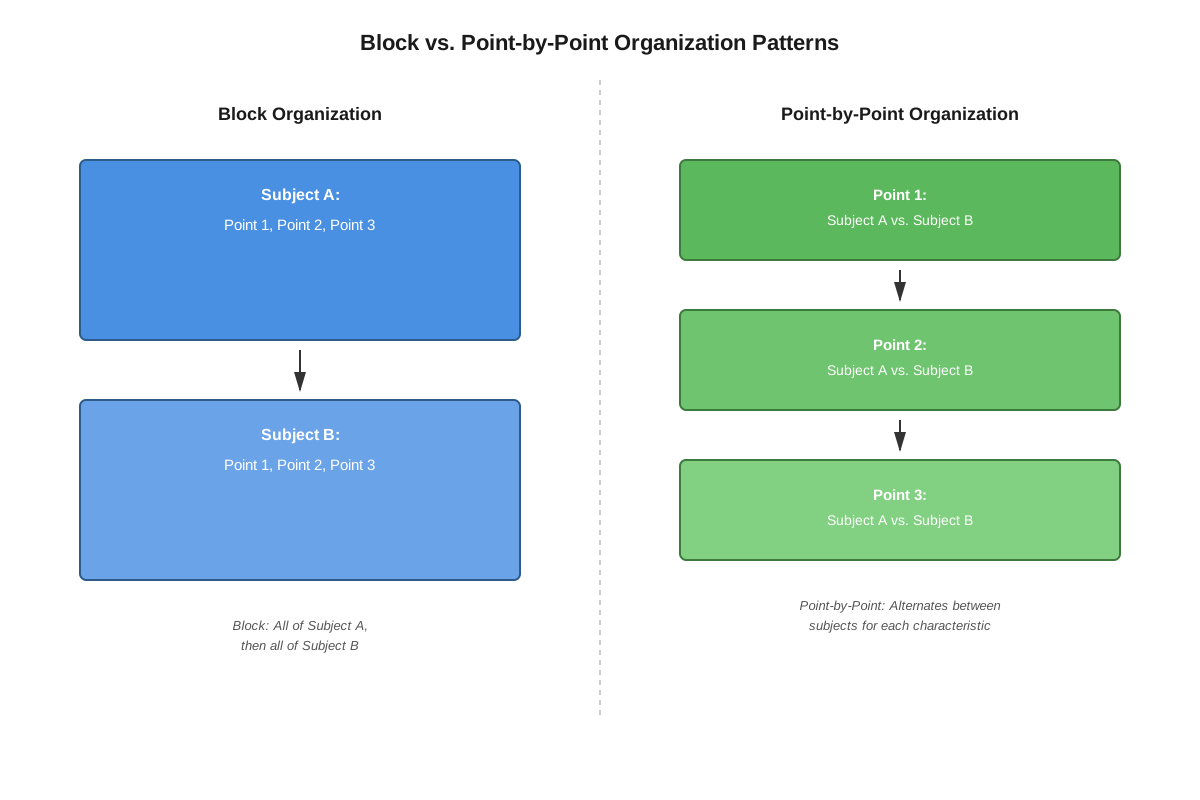
Block organization (also called subject-by-subject organization) presents all information about Subject A, followed by all information about Subject B. This pattern works effectively when subjects are relatively simple or when the author wants readers to develop a complete understanding of each subject independently before considering relationships between them. For example, a passage might discuss all aspects of solar energy in paragraphs 1-3, then discuss all aspects of wind energy in paragraphs 4-6.
Point-by-point organization (also called alternating organization) discusses one specific aspect of both subjects, then moves to the next aspect, alternating between subjects throughout. This pattern emphasizes direct comparison and works well when subjects are complex or when the author wants readers to continuously evaluate similarities and differences. For example, a passage might compare solar and wind energy's cost in paragraph 1, their environmental impact in paragraph 2, and their scalability in paragraph 3.
| Organizational Pattern | Structure | Best Used When | SAT Frequency |
|---|---|---|---|
| Block (Subject-by-Subject) | All of Subject A → All of Subject B | Subjects are relatively simple; establishing complete understanding of each subject is priority | Moderate |
| Point-by-Point (Alternating) | Point 1: A vs. B → Point 2: A vs. B → Point 3: A vs. B | Subjects are complex; direct comparison is priority; highlighting specific differences/similarities | High |
Transition Words and Signal Phrases
Recognizing transition words that signal comparison and contrast relationships is essential for identifying this structure quickly on the SAT. These linguistic markers function as signposts, alerting readers to the type of relationship being established between ideas.
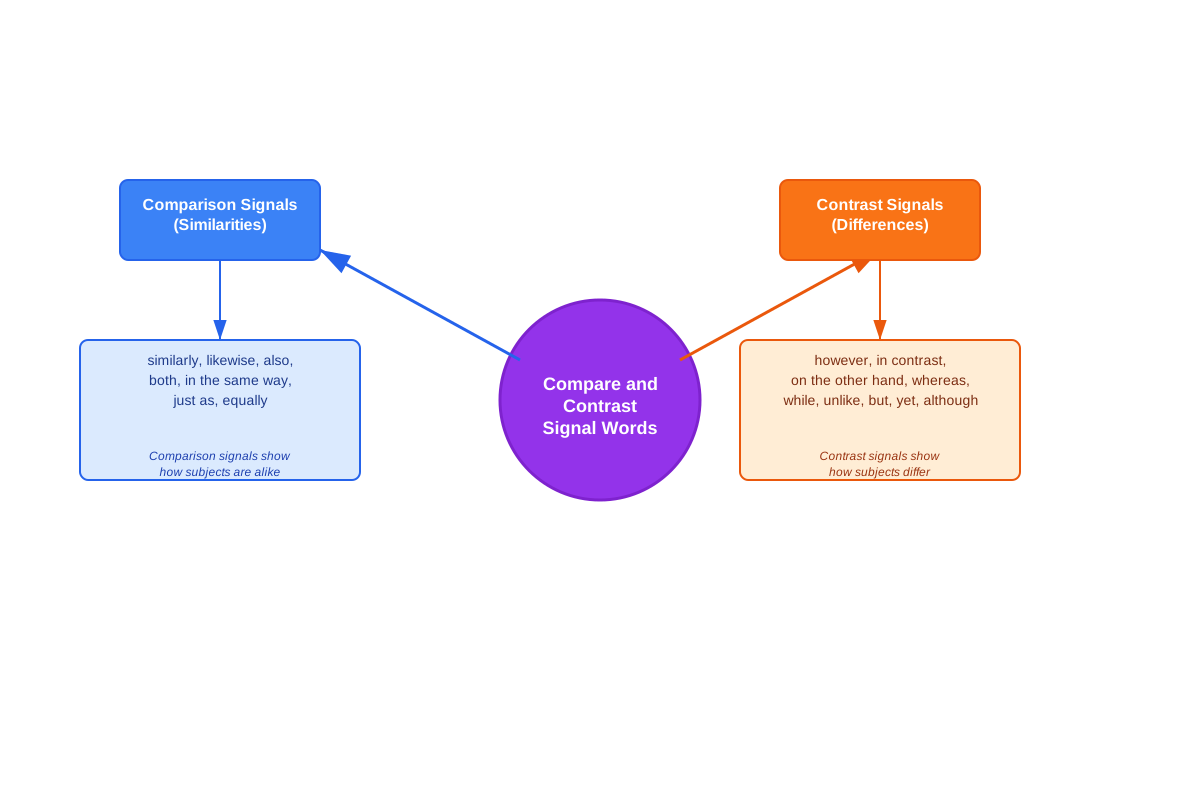
Comparison signals (indicating similarity) include: similarly, likewise, in the same way, just as, also, both, equally, correspondingly, in comparison, analogously, and parallel to. These words tell readers that the author is highlighting how subjects share characteristics or behave in similar ways.
Contrast signals (indicating difference) include: however, in contrast, on the other hand, whereas, while, unlike, conversely, nevertheless, although, despite, yet, but, instead, rather, and alternatively. These words alert readers that the author is emphasizing differences or presenting opposing information.
On the SAT, questions may directly ask students to identify which transition word best connects two sentences or paragraphs. More commonly, recognizing these signals helps students understand passage organization and locate information efficiently when answering content questions.
Rhetorical Purposes of Compare and Contrast Structure
Authors choose compare and contrast structure to achieve specific rhetorical goals. Understanding these purposes helps students answer questions about why an author organized a passage in a particular way.
Clarification through analogy: Authors compare unfamiliar concepts to familiar ones, helping readers understand new information by relating it to existing knowledge. Scientific passages frequently use this approach when explaining novel phenomena.
Evaluation and argumentation: By contrasting options, authors can argue for the superiority of one approach over alternatives. This purpose appears frequently in passages discussing policy options, scientific methodologies, or technological solutions.
Balanced analysis: Authors may present multiple perspectives on an issue without advocating for one position, allowing readers to understand the complexity of a topic. This approach appears in academic and journalistic passages.
Highlighting distinctive features: Contrasting subjects emphasizes what makes each unique. Literary analysis passages often use this approach when discussing different authors' styles or techniques.
Structural Markers Beyond Transition Words
Beyond explicit transition words, several structural features signal compare and contrast organization:
Parallel sentence structure: Authors often use grammatically parallel constructions when comparing subjects, making the comparison visually and rhythmically apparent. For example: "Method A requires extensive preparation; Method B demands minimal setup."
Comparative and superlative adjectives: Words like "more," "less," "better," "worse," "larger," "smaller," and superlatives signal evaluative comparisons.
Explicit comparison statements: Phrases like "in comparison to," "when compared with," "the difference between," and "the similarity lies in" directly announce comparative analysis.
Balanced paragraph structure: When passages devote equal space to multiple subjects or present information in obviously parallel ways, this structural balance itself signals compare and contrast organization.
Concept Relationships
The compare and contrast structure concept connects internally through a hierarchical relationship: the overarching organizational pattern (block vs. point-by-point) determines how specific comparative elements (transition words, parallel structures, explicit comparisons) are deployed throughout the passage. Transition words function as the micro-level indicators of the macro-level organizational choice.
This topic builds directly on prerequisite knowledge of text structure and transition words. Understanding that texts have deliberate organizational patterns (prerequisite) enables recognition of compare and contrast as one specific pattern type. Familiarity with transition words (prerequisite) provides the linguistic tools to identify comparative relationships at the sentence level.
Compare and contrast structure connects forward to more advanced topics in text analysis: understanding author's purpose (why did the author choose to compare these subjects?), evaluating argument effectiveness (does the comparison support the author's claim?), and analyzing rhetorical choices (how does the organizational pattern affect reader understanding?).
Relationship map: Basic text structure awareness → Recognition of transition words → Identification of compare/contrast pattern → Understanding organizational approach (block vs. point-by-point) → Analysis of rhetorical purpose → Application to question answering
High-Yield Facts
⭐ Compare and contrast structure appears in approximately 15-20% of SAT Reading and Writing questions, making it one of the most frequently tested organizational patterns.
⭐ Block organization presents all information about Subject A before discussing Subject B, while point-by-point organization alternates between subjects when discussing each comparative point.
⭐ Transition words like "however," "in contrast," "whereas," and "unlike" signal contrast relationships, while "similarly," "likewise," and "in the same way" signal comparison relationships.
⭐ Authors use compare and contrast structure for four primary purposes: clarification through analogy, evaluation and argumentation, balanced analysis, and highlighting distinctive features.
⭐ Point-by-point organization appears more frequently than block organization in SAT passages because it emphasizes direct comparison and works well with complex subjects.
- Compare and contrast structure can appear at both the passage level (overall organization) and the paragraph/sentence level (localized comparisons).
- Parallel sentence structure often accompanies compare and contrast organization, providing visual and rhythmic cues to the comparative relationship.
- SAT questions may ask students to identify the overall structure, select appropriate transition words, or explain why an author chose to compare/contrast specific elements.
- Comparative and superlative adjectives ("more effective," "less expensive," "most significant") serve as linguistic markers of compare and contrast relationships.
- Authors frequently embed compare and contrast elements within larger argumentative or explanatory structures rather than using pure compare/contrast organization throughout an entire passage.
- Recognizing compare and contrast structure helps students predict where information will appear in a passage, improving efficiency when answering detail questions.
- The SAT often presents passages comparing two scientific theories, historical periods, literary techniques, or policy approaches—contexts where compare/contrast structure naturally emerges.
Quick check — test yourself on Compare and contrast structure so far.
Try Flashcards →Common Misconceptions
Misconception: Compare and contrast structure means the passage must discuss exactly two subjects. → Correction: While two subjects are most common, passages can compare and contrast three or more subjects. The defining feature is examining similarities and differences among multiple subjects, regardless of the specific number.
Misconception: If a passage mentions two things, it automatically has compare and contrast structure. → Correction: Merely mentioning multiple subjects doesn't create compare and contrast structure. The author must actively examine similarities and/or differences between the subjects. A passage might mention two scientists but focus on one scientist's work without comparing them—this wouldn't be compare and contrast structure.
Misconception: Compare and contrast structure requires both comparison (similarities) AND contrast (differences). → Correction: A passage can employ compare and contrast structure by focusing exclusively on similarities or exclusively on differences. The structure is defined by examining relationships between subjects, not by requiring both types of relationships.
Misconception: Block organization is inferior to point-by-point organization. → Correction: Neither organizational pattern is inherently superior; effectiveness depends on the author's purpose and the complexity of the subjects. Block organization works well for simpler subjects or when establishing complete understanding of each subject independently is important.
Misconception: Transition words alone determine whether a passage uses compare and contrast structure. → Correction: While transition words are important signals, overall organizational pattern matters more. A passage might use occasional comparative transition words without having compare and contrast as its primary structure. Students must examine how the entire passage is organized, not just individual transitions.
Misconception: Compare and contrast structure is only used in argumentative writing. → Correction: This structure appears across all rhetorical modes—argumentative, expository, analytical, and even narrative writing. Scientists use it to present research findings, historians use it to analyze different time periods, and literary critics use it to examine authors' techniques.
Worked Examples
Example 1: Identifying Organizational Pattern
Passage excerpt: "The Renaissance approach to portraiture emphasized realistic representation of physical features, with artists like Leonardo da Vinci employing techniques such as sfumato to create lifelike depth and dimension. Renaissance portraits typically depicted subjects in naturalistic poses against detailed backgrounds that provided context about the subject's social status and interests. In contrast, Baroque portraiture, which emerged in the 17th century, prioritized dramatic emotional expression over strict realism. Baroque artists like Rembrandt used strong contrasts of light and shadow—a technique called chiaroscuro—to create psychological intensity. Unlike the balanced compositions of Renaissance portraits, Baroque portraits often featured dynamic, asymmetrical arrangements that conveyed movement and energy."
Question: The passage is primarily organized by:
A) Chronological sequence of artistic developments
B) Cause and effect relationships between artistic movements
C) Comparison and contrast of two artistic approaches
D) Problem and solution in portrait painting
Solution Process:
Step 1: Identify the main subjects discussed. The passage discusses Renaissance portraiture and Baroque portraiture—two distinct subjects.
Step 2: Look for transition words and signal phrases. The passage contains "In contrast" (contrast signal) and "Unlike" (contrast signal), both indicating the author is highlighting differences.
Step 3: Examine how information is organized. The passage presents characteristics of Renaissance portraiture (realistic representation, naturalistic poses, detailed backgrounds), then presents characteristics of Baroque portraiture (emotional expression, chiaroscuro, dynamic arrangements), explicitly contrasting them.
Step 4: Evaluate each answer choice:
- A) While the passage mentions that Baroque emerged after Renaissance, chronological sequence is not the primary organizational principle—the author focuses on differences, not temporal progression.
- B) The passage doesn't explain how Renaissance portraiture caused Baroque portraiture or establish causal relationships.
- C) ✓ This matches our analysis—the passage systematically contrasts characteristics of two artistic approaches.
- D) No problem or solution is presented; the passage analyzes two approaches without suggesting either is problematic.
Answer: C
Connection to learning objectives: This example demonstrates identifying key features of compare and contrast structure (transition words, parallel presentation of subjects) and applying this knowledge to answer SAT-style questions.
Example 2: Selecting Appropriate Transition Words
Passage excerpt: "Traditional economic models assume that individuals make rational decisions based on complete information and consistent preferences. _____ behavioral economics recognizes that human decision-making is often influenced by cognitive biases, emotional factors, and limited information processing capacity. This fundamental difference in assumptions leads to divergent predictions about market behavior."
Question: Which choice completes the text with the most logical transition?
A) Furthermore,
B) For example,
C) However,
D) Subsequently,
Solution Process:
Step 1: Analyze the relationship between sentences. The first sentence describes traditional economic models' assumptions (rational decisions, complete information, consistent preferences). The second sentence describes behavioral economics' recognition of different factors (cognitive biases, emotional factors, limited processing).
Step 2: Determine whether the relationship is comparison (similarity) or contrast (difference). The sentences present opposing views—traditional models assume rationality while behavioral economics recognizes irrationality. This is a contrast relationship.
Step 3: Evaluate each transition word:
- A) "Furthermore" signals addition of similar information—incorrect because the second sentence contradicts rather than adds to the first.
- B) "For example" signals that the second sentence provides an example of the first—incorrect because behavioral economics isn't an example of traditional models; it's an alternative approach.
- C) ✓ "However" signals contrast, which matches the opposing relationship between traditional and behavioral economics.
- D) "Subsequently" signals temporal sequence—incorrect because the passage isn't describing events in chronological order.
Step 4: Verify the choice by reading the complete passage with the selected transition. "However" creates a logical flow that emphasizes the contrast between the two economic approaches.
Answer: C
Connection to learning objectives: This example demonstrates recognizing transition words that signal contrast relationships and applying compare and contrast structure knowledge to select appropriate logical connectors—a common SAT question type.
Exam Strategy
Approaching Compare and Contrast Questions
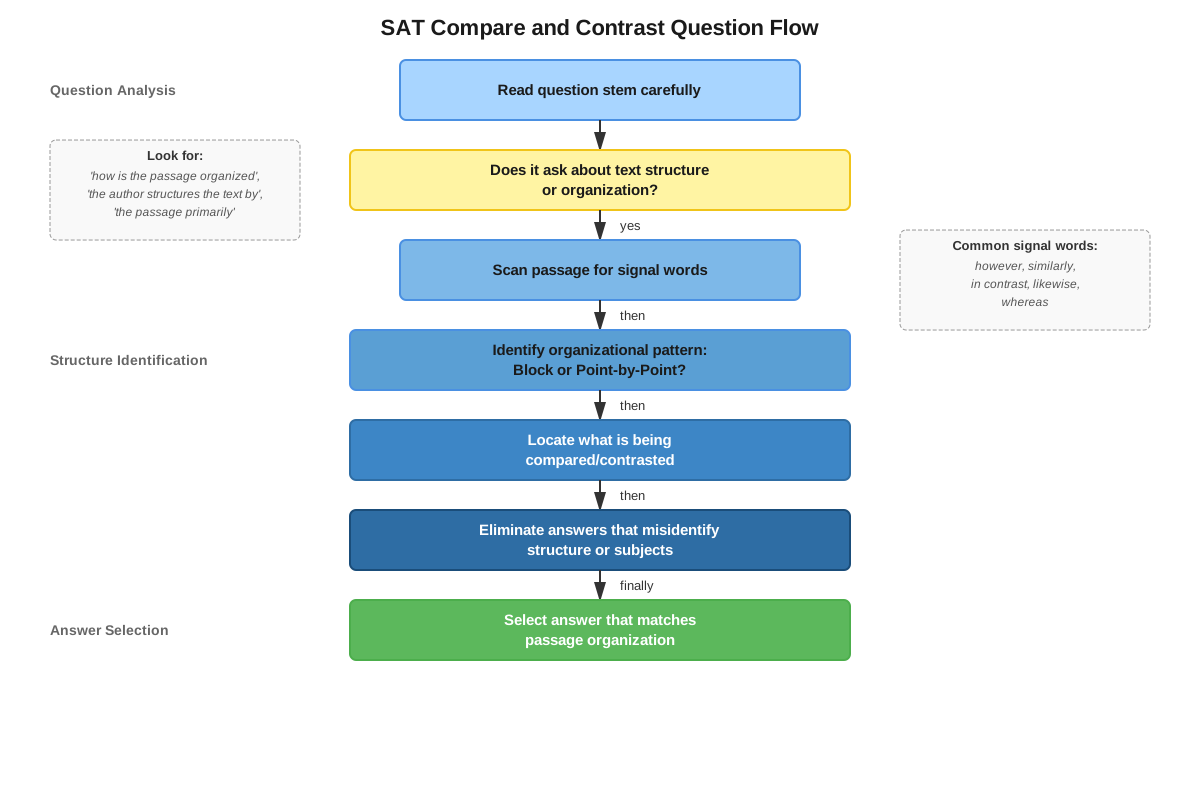
When encountering a passage that may employ compare and contrast structure, follow this systematic approach:
1. Skim for subjects: Quickly identify whether the passage discusses multiple subjects, theories, approaches, or time periods. If you spot two or more distinct subjects, compare and contrast structure is likely.
2. Hunt for transition words: Circle or mentally note contrast signals (however, whereas, unlike) and comparison signals (similarly, likewise, both). These provide immediate confirmation of comparative relationships.
3. Determine organizational pattern: Decide whether the passage uses block organization (all of A, then all of B) or point-by-point organization (alternating between A and B). This helps you predict where information will appear.
4. Identify the author's purpose: Ask why the author is comparing/contrasting these subjects. Is it to argue for one option, clarify an unfamiliar concept, present balanced analysis, or highlight distinctive features?
Trigger Words and Phrases
Exam Tip: When you see these phrases in questions, compare and contrast structure is being tested: "the passage is primarily organized by," "the author contrasts X and Y in order to," "which transition best connects," "the relationship between the two paragraphs is best described as," and "the passage suggests that unlike X, Y..."
Watch for these high-frequency trigger words in passages:
- Contrast markers: however, in contrast, on the other hand, whereas, while, unlike, conversely, nevertheless, although, despite, yet, but, instead, rather, alternatively, different from, distinguishes
- Comparison markers: similarly, likewise, in the same way, just as, also, both, equally, correspondingly, in comparison, analogously, parallel to, resembles, shares
Process of Elimination Tips
When answering structure questions, eliminate choices that:
Describe the wrong organizational pattern: If the passage clearly contrasts two subjects, eliminate answers suggesting chronological, cause-effect, or problem-solution organization.
Misidentify the relationship: If subjects are being contrasted (differences emphasized), eliminate answers suggesting they're being compared (similarities emphasized), and vice versa.
Confuse mention with structure: Eliminate answers that claim compare and contrast structure simply because two things are mentioned, when the passage doesn't actually examine their similarities or differences.
Overstate the scope: If only one paragraph uses compare and contrast while the overall passage follows a different structure, eliminate answers claiming the entire passage is organized by comparison and contrast.
Time Allocation Advice
Structure questions typically require 30-45 seconds once you understand the organizational pattern. Invest 15-20 seconds identifying the structure during your initial passage reading, then structure questions become quick points. If you're unsure about the overall structure, don't spend more than 60 seconds on a single structure question—use transition words and local context to make your best choice and move forward.
Memory Techniques
Mnemonic for Contrast Transition Words
"HOW WE DIFFER" captures high-frequency contrast transitions:
- However
- On the other hand
- Whereas
- While
- Even though
- Despite
- Instead
- For all that
- For contrast
- Even so
- Rather
Visualization Strategy for Organizational Patterns
Block organization: Visualize two separate blocks or boxes, each containing complete information about one subject. Picture reading everything in Box A, then moving to Box B.
Point-by-point organization: Visualize a tennis match or ping-pong game, with your attention bouncing back and forth between subjects as each point is discussed. This back-and-forth motion represents the alternating structure.
Acronym for Rhetorical Purposes
CABE represents the four main purposes of compare and contrast structure:
- Clarification (through analogy)
- Argumentation (evaluation of options)
- Balanced analysis (multiple perspectives)
- Emphasizing distinctive features
Summary
Compare and contrast structure is a fundamental organizational pattern in which authors examine similarities and differences between two or more subjects. This structure appears frequently on the SAT Reading and Writing section, with approximately 15-20% of questions testing students' ability to recognize organizational patterns, understand transition words, and analyze rhetorical purposes. The two primary organizational approaches—block organization (subject-by-subject) and point-by-point organization (alternating)—serve different rhetorical purposes depending on subject complexity and the author's goals. Students must recognize linguistic signals including transition words (however, similarly, whereas, likewise), parallel sentence structures, and comparative adjectives that mark compare and contrast relationships. Authors employ this structure to clarify unfamiliar concepts through analogy, argue for one option over alternatives, present balanced analysis of multiple perspectives, or highlight distinctive features of each subject. Mastering this topic requires identifying structural patterns at both passage and paragraph levels, understanding how organizational choices support meaning, and applying this knowledge to answer questions about text structure, transition word selection, and author's purpose.
Key Takeaways
- Compare and contrast structure examines similarities and/or differences between two or more subjects and appears in 15-20% of SAT Reading and Writing questions.
- Block organization presents all information about Subject A before Subject B, while point-by-point organization alternates between subjects when discussing each comparative aspect.
- Transition words serve as critical signals: "however," "whereas," and "unlike" indicate contrast; "similarly," "likewise," and "both" indicate comparison.
- Authors use compare and contrast structure for four main purposes: clarification through analogy, evaluation and argumentation, balanced analysis, and highlighting distinctive features (remember: CABE).
- Recognizing compare and contrast structure helps predict information location, select appropriate transitions, and understand author's purpose—skills that improve performance across multiple question types.
- Point-by-point organization appears more frequently on the SAT because it emphasizes direct comparison and works well with complex subjects common in test passages.
- Compare and contrast structure can function at both the overall passage level and within individual paragraphs, requiring students to recognize organizational patterns at multiple scales.
Related Topics
Cause and Effect Structure: Understanding how authors organize information to show causal relationships builds on the same structural analysis skills used for compare and contrast. Mastering compare and contrast structure prepares students to recognize other organizational patterns.
Author's Purpose and Rhetorical Choices: Analyzing why authors choose specific organizational structures connects directly to understanding rhetorical effectiveness. Compare and contrast structure knowledge enables deeper analysis of how organizational choices support argumentative goals.
Transition Words and Logical Relationships: Compare and contrast structure relies heavily on transition words that signal logical relationships. Mastering this topic strengthens overall understanding of how sentences and paragraphs connect logically.
Argumentative Structure: Many argumentative passages incorporate compare and contrast elements when evaluating multiple positions or solutions. Understanding compare and contrast structure enhances comprehension of complex arguments.
Text Structure and Purpose (Unit Overview): Compare and contrast structure is one of several organizational patterns within the broader unit. Mastering this specific structure contributes to comprehensive understanding of how authors organize information to achieve various purposes.
Practice CTA
Now that you've mastered the core concepts of compare and contrast structure, it's time to apply this knowledge! Work through the practice questions to test your ability to identify organizational patterns, select appropriate transition words, and analyze rhetorical purposes. Use the flashcards to reinforce key terminology and transition words until recognition becomes automatic. Remember: recognizing compare and contrast structure quickly and accurately will save you valuable time on test day and improve your performance across multiple question types. Each practice question you complete strengthens your pattern recognition skills and builds the confidence you need to excel on the SAT Reading and Writing section. You've got this!
Sign up free to keep reading
Create a free AnvayaPrep account to finish this SAT guide on Compare and contrast structure — plus flashcards and practice questions.