Overview
Neutral connotation refers to words that carry no emotional charge—neither positive nor negative. These words present information objectively, without suggesting approval, disapproval, or any particular emotional stance. On the SAT Reading and Writing section, understanding neutral connotation is crucial for success in the Words in Context questions, where students must select the word that best fits the tone, meaning, and purpose of a passage.
The SAT frequently tests whether students can distinguish between words with similar denotations (dictionary definitions) but different connotations (emotional associations). While some questions ask students to identify positive or negative words, many require selecting a neutral term that presents information factually without bias. This skill reflects real-world literacy demands: academic writing, journalism, and professional communication all require the ability to recognize and use neutral language appropriately.
Mastering sat neutral connotation connects directly to broader rw (Reading and Writing) competencies. Understanding connotation helps students analyze author's tone, evaluate rhetorical choices, and interpret how word choice shapes meaning. This topic builds upon fundamental vocabulary knowledge while preparing students for more advanced skills like analyzing authorial intent and evaluating argumentative strategies. Students who excel at identifying neutral connotation demonstrate sophisticated reading comprehension and nuanced understanding of how language functions in different contexts.
Learning Objectives
- [ ] Identify key features of neutral connotation
- [ ] Explain how neutral connotation appears on the SAT
- [ ] Apply neutral connotation to answer SAT-style questions
- [ ] Distinguish neutral words from positive and negative alternatives with similar meanings
- [ ] Analyze how neutral word choice affects passage tone and credibility
- [ ] Evaluate whether a word's connotation matches the context and purpose of a passage
Prerequisites
- Basic vocabulary knowledge: Understanding word definitions is essential before analyzing their emotional associations and contextual appropriateness.
- Reading comprehension skills: Students must grasp passage meaning and tone to determine which word choice fits the context.
- Understanding of denotation vs. connotation: Recognizing that words have both literal meanings and emotional associations forms the foundation for connotation analysis.
- Familiarity with SAT question formats: Knowing how Words in Context questions are structured helps students approach them strategically.
Why This Topic Matters
Understanding neutral connotation has significant real-world applications beyond standardized testing. Academic writing demands neutral, objective language to maintain credibility and present information without bias. Scientific reports, research papers, and formal essays all rely on neutral vocabulary to convey facts rather than opinions. In professional contexts, business communications, technical documentation, and policy writing require precise, emotionally neutral language to ensure clarity and professionalism.
On the SAT, connotation questions appear with high frequency in the Reading and Writing section. Approximately 13-15% of all Reading and Writing questions test vocabulary in context, and a substantial portion of these specifically assess understanding of connotation. These questions typically present a sentence from a passage with one word underlined, followed by four answer choices that are similar in meaning but differ in connotation. Students must select the word that best maintains the passage's tone and purpose.
Neutral connotation appears most commonly in passages that aim to inform, explain, or present balanced analysis. Scientific articles, historical accounts, and expository texts frequently employ neutral language to establish objectivity and credibility. The SAT tests whether students recognize that certain contexts demand neutral vocabulary rather than emotionally charged alternatives. For example, a passage discussing research findings would use "participants" (neutral) rather than "subjects" (potentially negative) or "volunteers" (potentially positive), depending on the specific context and tone.
Core Concepts
Understanding Connotation vs. Denotation
Denotation refers to a word's literal, dictionary definition—the objective meaning shared by all speakers of a language. Connotation, by contrast, encompasses the emotional associations, cultural implications, and subjective feelings that a word evokes. While multiple words may share similar denotations, their connotations can differ dramatically, making word choice a powerful tool for shaping meaning and tone.
Consider three words with similar denotations: "thin," "slender," and "scrawny." All three describe someone with little body fat, but their connotations differ significantly. "Thin" is neutral—it simply describes physical appearance without judgment. "Slender" carries positive connotations, suggesting attractiveness and grace. "Scrawny" has negative connotations, implying unhealthy weakness or unattractiveness. Understanding these distinctions is essential for SAT success.
Characteristics of Neutral Connotation
Words with neutral connotation share several defining characteristics:
- Objectivity: They present information without suggesting the writer's emotional stance or judgment
- Factual tone: They focus on observable, verifiable qualities rather than subjective evaluations
- Versatility: They function appropriately in formal, academic, and professional contexts
- Lack of bias: They don't predispose readers toward positive or negative interpretations
- Precision: They convey specific meaning without unnecessary emotional coloring
Neutral words serve as the foundation of informative and explanatory writing. They allow writers to present information clearly while letting readers form their own judgments. In academic and scientific contexts, neutral language establishes credibility by demonstrating objectivity and avoiding bias.
The Connotation Spectrum
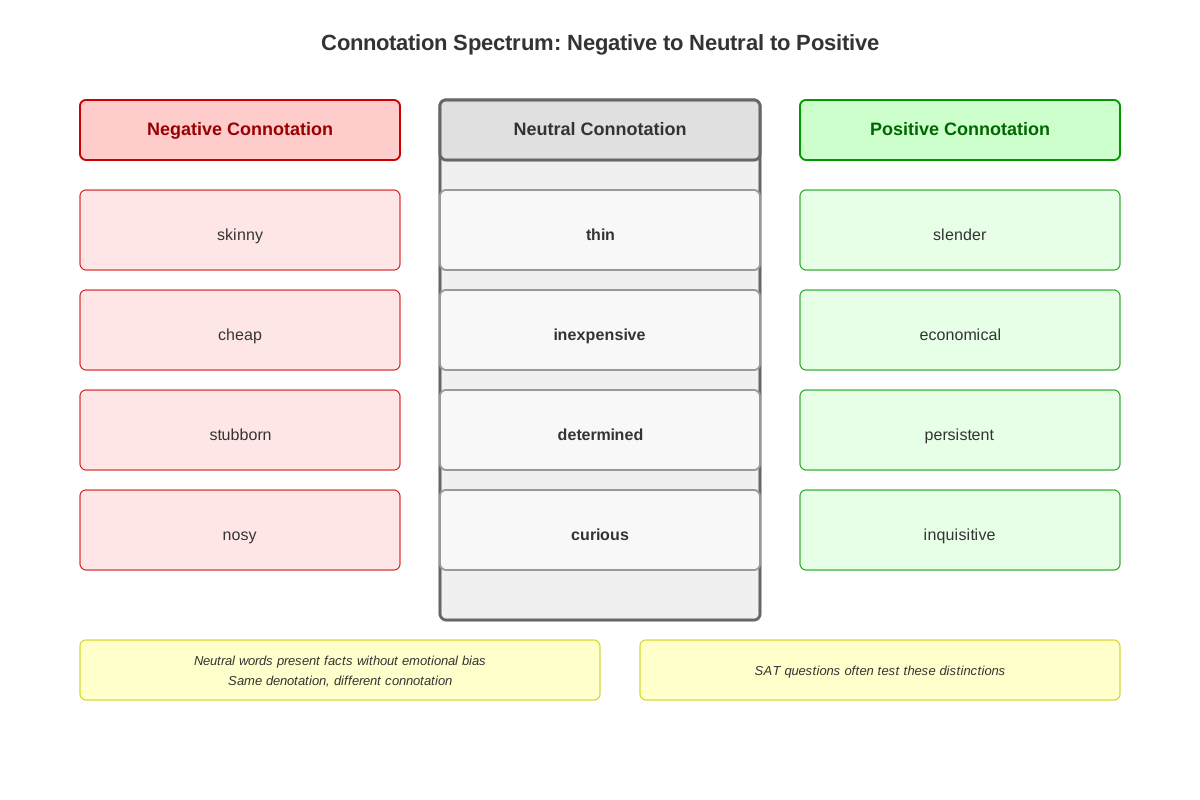
Understanding connotation requires recognizing that words exist on a spectrum from negative to neutral to positive:
| Negative | Neutral | Positive |
|---|---|---|
| cheap | inexpensive | economical |
| stubborn | determined | resolute |
| nosy | curious | inquisitive |
| old | mature | experienced |
| childish | youthful | young-at-heart |
This spectrum illustrates how words with similar denotations can convey vastly different attitudes. SAT questions frequently test whether students can identify the neutral option among alternatives that lean positive or negative.
Context Determines Appropriateness
The appropriateness of neutral connotation depends heavily on context and purpose. Different writing situations call for different levels of emotional engagement:
- Scientific and academic writing: Demands neutral language to maintain objectivity and credibility
- Persuasive writing: Often employs positive or negative connotations to influence readers
- Narrative and creative writing: Uses varied connotations to create mood and develop characterization
- Informative journalism: Typically requires neutral language to present facts without bias
On the SAT, passages that explain processes, present research findings, or provide historical information typically require neutral vocabulary. Recognizing the passage's purpose helps students identify which connotation level is appropriate.
Subtle Distinctions in Neutral Words
Not all neutral words are equally neutral in every context. Some words that seem neutral in isolation may carry subtle implications depending on usage:
- "Individual" vs. "person": Both neutral, but "individual" sounds more formal and clinical
- "Residence" vs. "home": "Residence" is more neutral and formal; "home" carries emotional warmth
- "Consume" vs. "eat": "Consume" is more neutral and technical; "eat" is more casual
- "Observe" vs. "see": "Observe" suggests careful, deliberate attention; "see" is more neutral
The SAT tests these subtle distinctions, requiring students to consider not just whether a word is neutral, but whether it matches the specific tone and formality level of the passage.
Recognizing Neutral Connotation in SAT Questions
SAT Words in Context questions testing neutral connotation typically follow this pattern:
- A passage excerpt appears with one word underlined
- Four answer choices present words with similar meanings
- The correct answer maintains the passage's neutral, objective tone
- Wrong answers introduce inappropriate positive or negative connotations
The key to success lies in reading the surrounding context carefully to determine the passage's tone and purpose. Students must ask: "Is this passage trying to persuade me, or simply inform me? Does the author express judgment, or present facts objectively?"
Concept Relationships
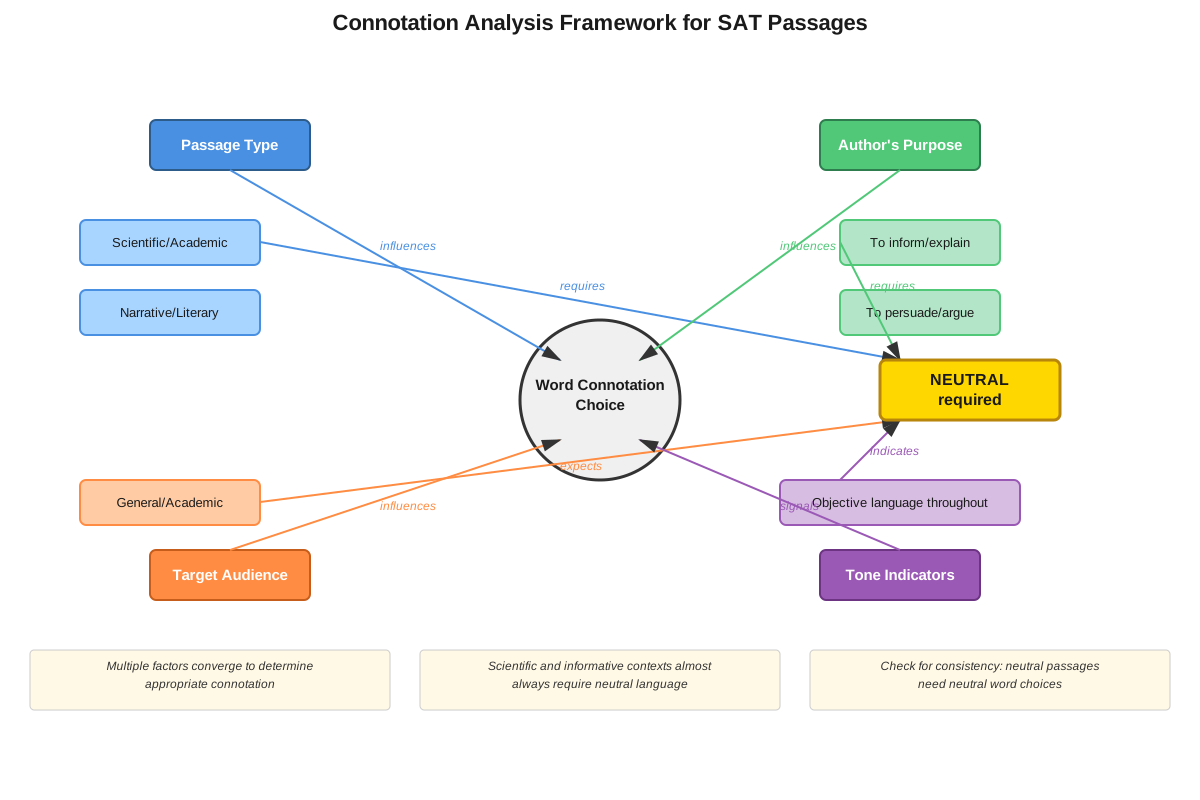
Understanding neutral connotation connects to multiple aspects of SAT Reading and Writing proficiency. The relationship flows as follows:
Vocabulary Knowledge → Denotation Understanding → Connotation Recognition → Neutral Connotation Identification → Tone Analysis → Author's Purpose Understanding
Neutral connotation serves as the middle ground between positive and negative connotations, making it essential for understanding the full spectrum of word choice. This concept directly supports tone analysis, as recognizing neutral language helps students identify objective, informative passages versus persuasive or emotional ones.
The skill also connects to author's purpose: writers who aim to inform or explain typically employ neutral vocabulary, while those seeking to persuade or entertain often choose words with stronger connotations. Understanding these relationships helps students make strategic decisions when answering multiple question types, not just vocabulary questions.
Within the Words in Context unit, neutral connotation relates closely to precision in word choice and context clues. Students must use surrounding sentences to determine whether a neutral word fits better than emotionally charged alternatives. This skill builds toward more advanced competencies like rhetorical analysis and evaluating arguments, where understanding how word choice shapes meaning becomes crucial.
High-Yield Facts
⭐ Neutral words present information objectively without suggesting positive or negative judgment
⭐ Approximately 13-15% of SAT Reading and Writing questions test vocabulary in context, with many focusing on connotation
⭐ Scientific, academic, and informative passages typically require neutral vocabulary to maintain credibility
⭐ Words with similar denotations can have vastly different connotations (thin/slender/scrawny)
⭐ Context and purpose determine whether neutral connotation is appropriate for a given passage
- Neutral connotation differs from lack of precision—neutral words can be highly specific
- The SAT tests subtle distinctions between words that all seem relatively neutral
- Recognizing a passage's tone (objective vs. subjective) helps identify appropriate connotation level
- Formal academic writing almost always demands neutral vocabulary over emotionally charged alternatives
- Wrong answers in connotation questions often introduce bias or judgment that doesn't match the passage
- Neutral words allow readers to form their own judgments rather than being guided toward specific conclusions
- Professional and technical writing relies heavily on neutral connotation for clarity and objectivity
Quick check — test yourself on Neutral connotation so far.
Try Flashcards →Common Misconceptions
Misconception: Neutral words are always simple or basic vocabulary.
Correction: Neutral words can be sophisticated and precise. "Ameliorate" (neutral) is more advanced than "improve" (slightly positive), yet both can function neutrally depending on context. Neutrality refers to emotional charge, not vocabulary level.
Misconception: If a word isn't strongly positive or negative, it must be neutral.
Correction: Many words carry subtle connotations that aren't immediately obvious. "Unique" seems neutral but often implies positive distinctiveness, while "peculiar" suggests oddness. True neutral alternatives might be "distinctive" or "characteristic."
Misconception: The same word always has the same connotation regardless of context.
Correction: Context significantly influences connotation. "Aggressive" has negative connotations when describing interpersonal behavior but can be neutral or even positive when describing business strategies or medical treatment approaches.
Misconception: Neutral connotation means the word is boring or lacks impact.
Correction: Neutral words can be powerful and precise. In scientific writing, neutral vocabulary enhances credibility and allows findings to speak for themselves. The impact comes from accuracy and clarity, not emotional manipulation.
Misconception: All synonyms have the same connotation if they have the same denotation.
Correction: Synonyms frequently differ in connotation despite similar meanings. "Frugal" (positive), "economical" (neutral), and "cheap" (negative) all relate to spending little money, but their connotations vary dramatically.
Misconception: Formal words are automatically neutral.
Correction: Formality and neutrality are separate dimensions. "Terminate" is formal but can carry negative connotations in certain contexts (terminating employment), while "end" is less formal but more neutral.
Worked Examples
Example 1: Scientific Passage Context
Passage excerpt: "The researchers found that the new medication _______ the symptoms of the disease in 78% of participants."
Answer choices:
A) eliminated
B) reduced
C) conquered
D) defeated
Step 1: Analyze the passage context
This excerpt comes from a scientific study reporting research findings. The tone is objective and informative, typical of academic writing. The passage aims to present data without exaggeration or emotional appeal.
Step 2: Evaluate each answer choice's connotation
- "Eliminated" (A): Slightly positive, suggesting complete removal; may overstate the finding
- "Reduced" (B): Neutral, objectively describing a decrease without judgment
- "Conquered" (C): Strongly positive, suggesting triumph; inappropriate for scientific writing
- "Defeated" (D): Positive with militaristic overtones; too dramatic for research reporting
Step 3: Consider precision and appropriateness
The passage states that 78% of participants experienced improvement, not 100%. "Eliminated" would be too strong even if neutral, as it suggests complete removal. "Reduced" accurately describes a decrease while maintaining the objective tone appropriate for scientific reporting.
Correct answer: B) reduced
This example demonstrates how neutral connotation aligns with passage purpose. Scientific writing demands objectivity, making neutral vocabulary essential for maintaining credibility.
Example 2: Historical Narrative Context
Passage excerpt: "During the 1920s, many Americans _______ to urban centers in search of employment opportunities."
Answer choices:
A) fled
B) migrated
C) escaped
D) rushed
Step 1: Analyze the passage context
This sentence appears in a historical account describing demographic changes. The tone is informative and analytical, presenting historical facts without suggesting whether this movement was positive or negative.
Step 2: Evaluate each answer choice's connotation
- "Fled" (A): Negative connotation, suggesting desperate escape from danger
- "Migrated" (B): Neutral, objectively describing movement from one place to another
- "Escaped" (C): Negative connotation, implying they were trapped or endangered
- "Rushed" (D): Suggests urgency and haste; adds emotional coloring not present in the context
Step 3: Consider historical accuracy and tone
The passage describes economic migration during a period of industrial growth. While some people may have left difficult rural conditions, the passage presents this as a general demographic trend rather than a crisis. "Migrated" maintains the objective, analytical tone appropriate for historical writing while accurately describing the movement.
Correct answer: B) migrated
This example illustrates how neutral vocabulary allows historical writing to present facts without imposing modern judgments or emotional interpretations on past events.
Exam Strategy
Approaching Neutral Connotation Questions
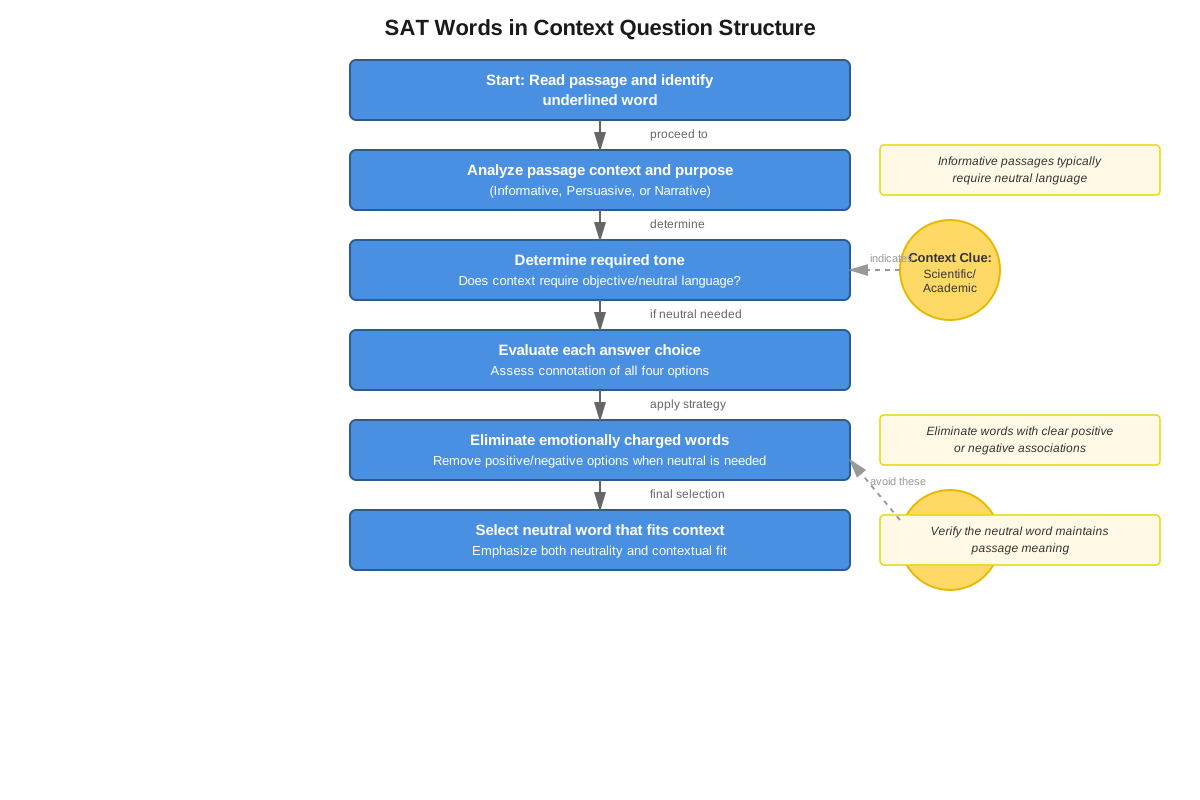
When encountering Words in Context questions on the SAT, follow this systematic approach:
- Read the entire sentence and surrounding context (at least 2-3 sentences before and after)
- Identify the passage's purpose and tone (inform, persuade, entertain, analyze)
- Determine what connotation level the context demands (neutral, positive, or negative)
- Eliminate answers with inappropriate connotations first
- Choose the most precise neutral option among remaining choices
Exam Tip: If a passage presents research, explains a process, or provides historical information without obvious bias, neutral connotation is almost always correct.
Trigger Words and Phrases
Certain phrases in passages signal that neutral connotation is appropriate:
- "Research indicates..."
- "Studies show..."
- "Historically..."
- "The data suggests..."
- "Analysis reveals..."
- "Observations demonstrate..."
- "According to..."
These phrases indicate objective, informative writing that requires neutral vocabulary. Conversely, phrases like "unfortunately," "remarkably," or "surprisingly" suggest the author is expressing judgment, which might call for non-neutral vocabulary.
Process of Elimination Strategy
Use this hierarchy when eliminating answer choices:
- First pass: Eliminate words with obviously wrong denotations (different meanings entirely)
- Second pass: Eliminate words with inappropriate connotations (too positive or negative for context)
- Third pass: Choose between remaining options based on precision and formality level
Exam Tip: Wrong answers often include words that are technically correct in meaning but introduce bias or judgment inconsistent with the passage's objective tone.
Time Allocation
Words in Context questions should take approximately 30-45 seconds each:
- 10-15 seconds: Read context and identify tone
- 10-15 seconds: Evaluate answer choices
- 10-15 seconds: Verify selection and move on
Don't overthink these questions. Your first instinct about tone and appropriateness is usually correct. If you're torn between two neutral options, choose the simpler, more straightforward word.
Common Traps to Avoid
- Don't choose words just because they sound sophisticated: Complexity doesn't equal correctness
- Don't ignore subtle connotations: Even slight emotional coloring can make an answer wrong
- Don't forget to consider formality level: Match the passage's register (formal vs. casual)
- Don't select words that are too specific or too general: Precision matters alongside neutrality
Memory Techniques
The "Reporter Test" Mnemonic
When evaluating whether a word is neutral, imagine a news reporter using it in an objective news story. Would the word sound appropriate in a straightforward news report? If yes, it's likely neutral. If it would make the report sound biased or emotional, it's not neutral.
Example: "The company's profits increased" (neutral—appropriate for news) vs. "The company's profits skyrocketed" (positive—sounds like opinion)
The Connotation Spectrum Visualization
Visualize a horizontal line with "Negative" on the left, "Neutral" in the center, and "Positive" on the right. When evaluating words, mentally place each answer choice on this line. The word closest to the center is usually correct for passages requiring neutral connotation.
The "Academic Paper" Rule
Acronym: PAPER
- Purpose: Identify whether the passage aims to inform objectively
- Audience: Consider whether formal, educated readers are the target
- Precision: Ensure the word is specific enough without being biased
- Emotion: Check that the word doesn't evoke unnecessary feelings
- Readability: Confirm the word maintains clear, straightforward communication
If all five criteria are met, the word likely has appropriate neutral connotation.
The Synonym Substitution Technique
When unsure about a word's connotation, substitute it with a clearly positive or clearly negative synonym. If the meaning changes significantly, the original word wasn't truly neutral.
Example: Testing "inexpensive"
- Substitute positive: "economical" (meaning stays similar—good sign)
- Substitute negative: "cheap" (meaning shifts to suggest poor quality—confirms "inexpensive" is neutral)
Summary
Neutral connotation represents words that convey information objectively without emotional charge or bias. On the SAT Reading and Writing section, understanding neutral connotation is essential for success in Words in Context questions, which frequently test whether students can distinguish between words with similar denotations but different connotations. Neutral vocabulary is characteristic of academic, scientific, and informative writing, where objectivity and credibility depend on presenting facts without judgment. Students must analyze passage context and purpose to determine when neutral connotation is appropriate, then select words that maintain the objective tone while providing precise meaning. Success requires recognizing subtle distinctions between seemingly similar words and understanding how connotation shapes reader perception. Mastering this skill supports broader reading comprehension competencies, including tone analysis, author's purpose identification, and rhetorical evaluation.
Key Takeaways
- Neutral connotation refers to words that present information objectively without positive or negative emotional associations
- SAT passages that inform, explain, or present research typically require neutral vocabulary to maintain credibility
- Words with similar denotations (dictionary definitions) can have vastly different connotations (emotional associations)
- Context and purpose determine whether neutral connotation is appropriate—scientific and academic writing almost always demands neutrality
- Effective strategy involves identifying passage tone first, then eliminating answers with inappropriate connotations
- Subtle distinctions matter: even slightly positive or negative words can be incorrect in contexts requiring strict neutrality
- Neutral words allow readers to form independent judgments rather than being guided toward specific emotional responses
Related Topics
Positive and Negative Connotation: Understanding the full spectrum of connotation requires mastering how words convey favorable or unfavorable attitudes. This topic builds directly on neutral connotation knowledge.
Tone and Style Analysis: Recognizing neutral connotation supports broader skills in identifying author's tone, from objective and analytical to passionate and persuasive.
Rhetorical Strategies: Advanced analysis of how writers use word choice to achieve specific effects builds on foundational connotation understanding.
Context Clues and Vocabulary in Context: Determining word meaning from surrounding text connects closely to evaluating whether a word's connotation fits the passage.
Formal vs. Informal Register: Understanding how formality level interacts with connotation helps students make sophisticated word choice decisions.
Practice CTA
Now that you've mastered the fundamentals of neutral connotation, it's time to put your knowledge into action! Complete the practice questions to reinforce your understanding and build confidence with SAT-style Words in Context questions. Use the flashcards to memorize key distinctions between neutral, positive, and negative words with similar meanings. Remember: consistent practice with immediate feedback is the most effective way to internalize these concepts and improve your performance. Every question you practice brings you closer to your target score. You've got this!
Sign up free to keep reading
Create a free AnvayaPrep account to finish this SAT guide on Neutral connotation — plus flashcards and practice questions.