Overview
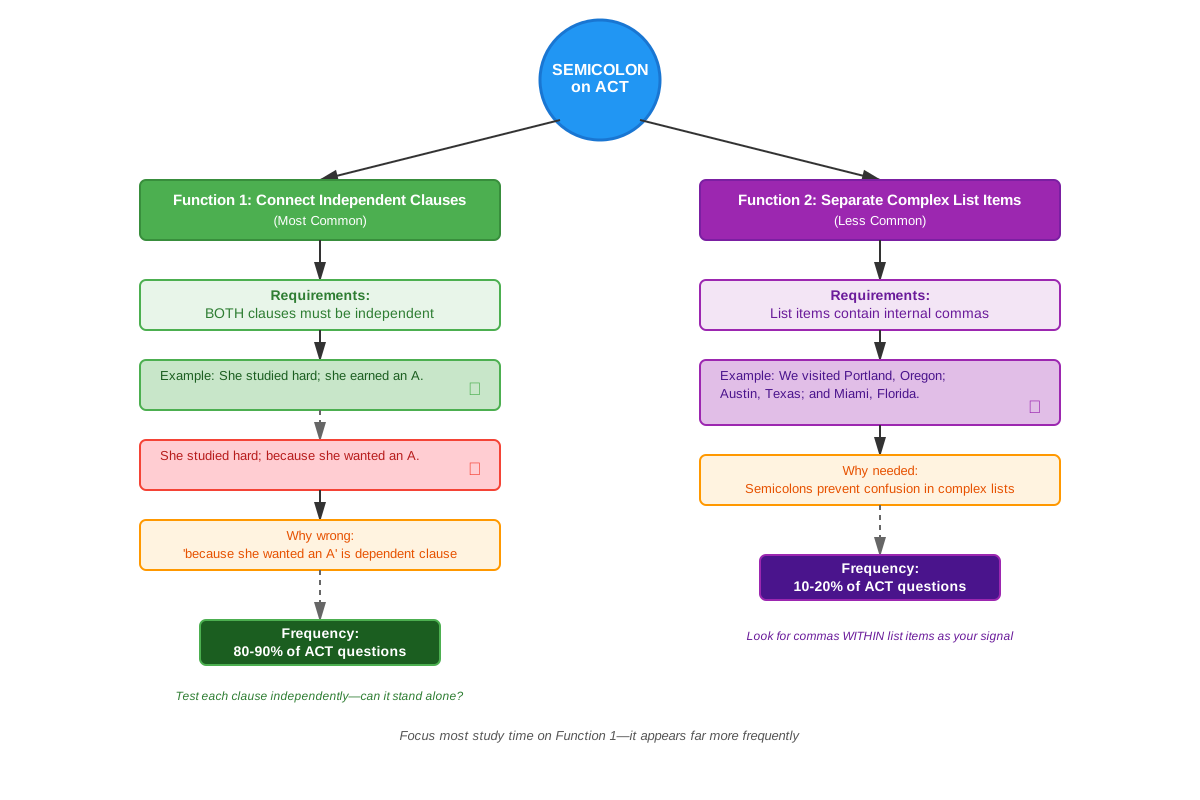
The semicolon stands as one of the most frequently tested punctuation marks on the ACT English section, appearing in approximately 3-5 questions per test. Understanding semicolon usage is crucial because these questions are highly predictable and, with proper preparation, nearly guaranteed points. The semicolon serves two primary functions: connecting independent clauses and separating complex items in a list. Mastery of this punctuation mark demonstrates sophisticated writing skills and the ability to create varied sentence structures.
On the ACT, ACT semicolon usage questions typically appear as part of the Conventions of Standard English category, which comprises roughly 40% of the English section. Test-makers frequently present answer choices that include semicolons alongside other punctuation marks (commas, periods, colons), requiring students to identify which punctuation correctly reflects the relationship between sentence elements. The predictable nature of semicolon rules makes this topic one of the highest-yield areas for focused study.
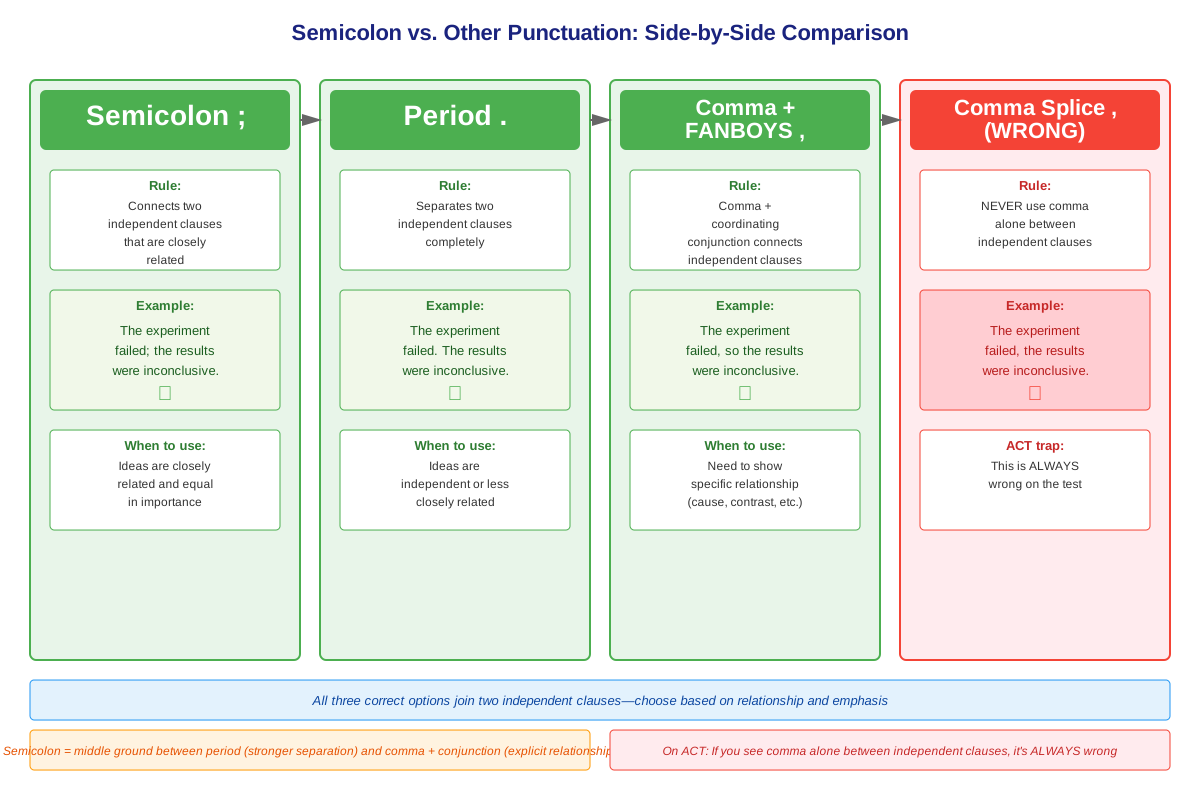
The semicolon occupies a unique position in the punctuation hierarchy, functioning as a bridge between the comma and the period. It creates a stronger pause than a comma but maintains connection between ideas more explicitly than a period. Understanding semicolons requires solid knowledge of independent and dependent clauses, as the semicolon's primary function depends on recognizing complete sentences. This topic connects directly to comma usage, run-on sentences, sentence fragments, and coordination/subordination—making it a cornerstone concept for overall punctuation mastery on the ACT.
Learning Objectives
- [ ] Identify when Semicolon usage is being tested in ACT English passages
- [ ] Explain the core rule or strategy behind Semicolon usage
- [ ] Apply Semicolon usage to ACT-style questions accurately
- [ ] Distinguish between correct and incorrect semicolon placement in complex sentences
- [ ] Recognize when semicolons are preferable to other punctuation marks
- [ ] Evaluate whether clauses on both sides of a semicolon are independent
- [ ] Identify semicolon usage in series with internal punctuation
Prerequisites
- Independent clauses: Understanding complete sentences with subjects and verbs is essential because semicolons primarily connect two independent clauses
- Dependent clauses: Recognizing incomplete thoughts helps identify when semicolons should NOT be used
- Comma usage: Basic comma rules provide context for understanding when semicolons replace or work alongside commas
- Coordinating conjunctions: Knowledge of FANBOYS (for, and, nor, but, or, yet, so) helps distinguish between comma-conjunction pairs and semicolons
- Subject-verb agreement: Identifying subjects and verbs enables recognition of independent clauses
Why This Topic Matters
Semicolons represent one of the most practical punctuation marks for creating sophisticated, varied prose. In academic and professional writing, proper semicolon usage demonstrates command of complex sentence structures and the ability to show relationships between closely related ideas. Writers use semicolons to create rhythm, emphasize connections, and avoid choppy sentence patterns that result from overusing periods.
On the ACT English section, semicolon questions appear with remarkable consistency. Statistical analysis of released ACT tests shows that 2-4 questions per test directly assess semicolon usage, with additional questions incorporating semicolons as part of broader punctuation decisions. These questions typically appear in two formats: standalone punctuation questions where students must choose between semicolons and other marks, and sentence structure questions where semicolon usage affects the grammatical correctness of the entire sentence. The predictability of semicolon rules means that students who master this topic can confidently answer these questions in under 15 seconds each.
Common ACT passage scenarios include: scientific passages describing experimental procedures with multiple steps, historical narratives connecting related events, and argumentative essays linking supporting evidence. The test-makers frequently place semicolon questions at natural transition points between ideas, making them relatively easy to spot once students understand the underlying patterns. Additionally, incorrect answer choices often include comma splices or misused colons, making semicolon questions excellent opportunities to apply process-of-elimination strategies.
Core Concepts
The Primary Rule: Connecting Independent Clauses
The fundamental principle of semicolon usage is that semicolons connect two independent clauses—complete sentences that could stand alone but are closely related in meaning. This is the most frequently tested application on the ACT, appearing in approximately 70% of semicolon questions.
An independent clause contains a subject and a verb and expresses a complete thought. When two such clauses share a close logical relationship, a semicolon can join them:
Correct: The experiment yielded unexpected results; the researchers decided to replicate the study.
Both sides of the semicolon are complete sentences. The semicolon indicates that these ideas are closely connected—the unexpected results led directly to the decision to replicate.
Incorrect: The experiment yielded unexpected results; which surprised the researchers.
The second clause ("which surprised the researchers") is dependent and cannot stand alone. This error appears frequently in ACT wrong answer choices.
The Test: Can Both Sides Stand Alone?
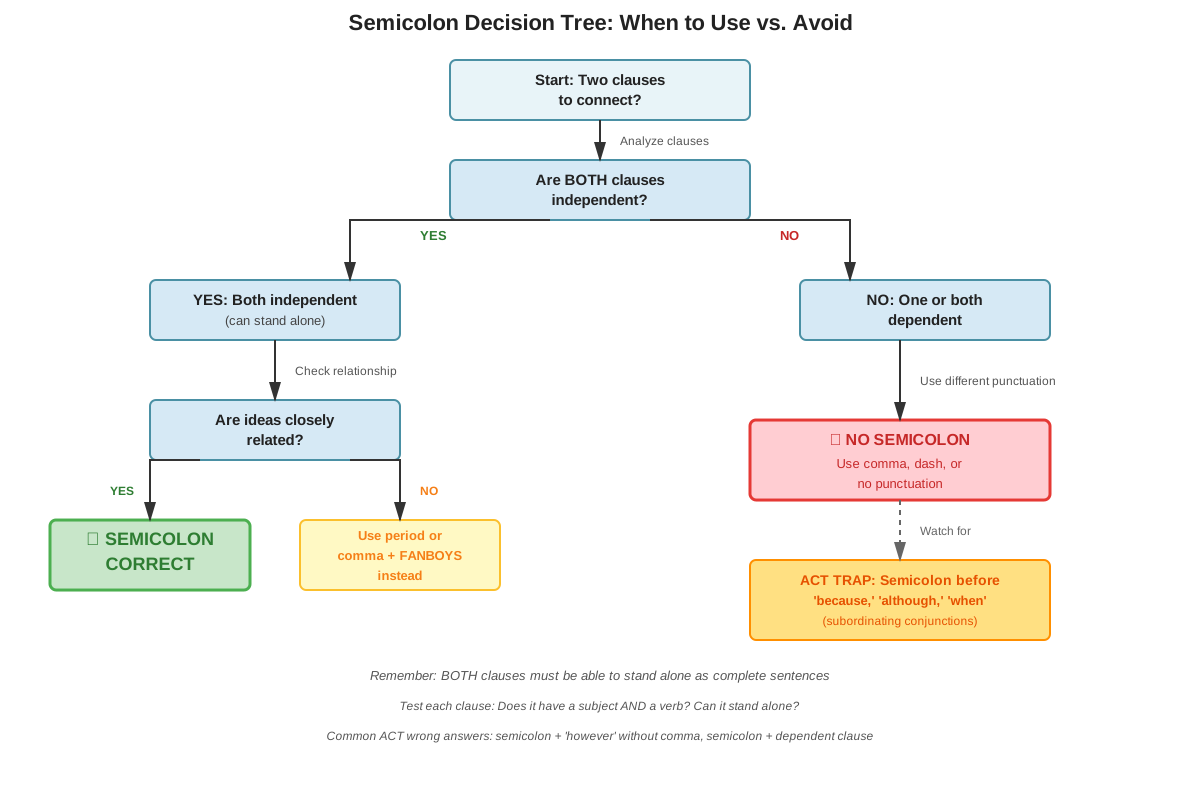
The most reliable strategy for ACT semicolon usage questions is the "period test." If you can replace the semicolon with a period and create two grammatically correct sentences, the semicolon is used correctly. If either side would be a fragment, the semicolon is incorrect.
Testing the semicolon:
- Cover the semicolon and everything after it
- Read what remains—is it a complete sentence?
- Cover everything before the semicolon
- Read what remains—is it a complete sentence?
- If both answers are "yes," the semicolon works
Semicolons with Transitional Expressions
Semicolons frequently appear before conjunctive adverbs and transitional phrases that connect independent clauses. Common transitions include: however, therefore, moreover, furthermore, consequently, nevertheless, thus, meanwhile, instead, and likewise.
Pattern: Independent clause; transitional expression, independent clause.
Correct: The data supported the hypothesis; however, additional research was needed.
Correct: The committee approved the proposal; therefore, construction will begin next month.
Note that a comma follows the transitional expression. This pattern is highly testable on the ACT because it combines multiple punctuation rules. Wrong answer choices often use only a comma before the transition (creating a comma splice) or omit the comma after the transition.
Semicolons vs. Commas with Coordinating Conjunctions
A common ACT question type asks students to choose between a semicolon and a comma-conjunction pair. Both can correctly join independent clauses, but they follow different rules:
| Punctuation Pattern | Structure | Example |
|---|---|---|
| Semicolon alone | Independent clause; independent clause | The storm intensified; residents evacuated immediately. |
| Comma + FANBOYS | Independent clause, coordinating conjunction independent clause | The storm intensified, so residents evacuated immediately. |
Key distinction: Use a semicolon alone OR a comma with a coordinating conjunction (for, and, nor, but, or, yet, so). Never use both together, and never use a comma alone between independent clauses.
Incorrect: The storm intensified, residents evacuated immediately. (comma splice)
Incorrect: The storm intensified; and residents evacuated immediately. (semicolon + conjunction is redundant)
Semicolons in Complex Lists
The second major function of semicolons is separating items in a series when those items contain internal commas. This prevents confusion about where one item ends and another begins.
Correct: The research team included Dr. Sarah Chen, a biochemist from Stanford; Dr. James Morrison, a geneticist from MIT; and Dr. Elena Rodriguez, a molecular biologist from Yale.
Without semicolons, the list would be ambiguous—readers might think there are six people rather than three. This usage appears less frequently on the ACT (approximately 20% of semicolon questions) but is still important to recognize.
When NOT to Use Semicolons
Understanding incorrect semicolon usage is equally important for ACT success:
Never between an independent and dependent clause:
- Incorrect: The experiment failed; because the temperature was too high.
- Correct: The experiment failed because the temperature was too high.
Never before a list introduced by a phrase:
- Incorrect: The study examined three variables; temperature, pressure, and humidity.
- Correct: The study examined three variables: temperature, pressure, and humidity.
Never after a dependent clause:
- Incorrect: Although the results were promising; the study had limitations.
- Correct: Although the results were promising, the study had limitations.
Semicolons and Stylistic Choice
On the ACT, semicolon questions sometimes test whether a semicolon is grammatically correct versus whether it's the best stylistic choice. When multiple punctuation marks are grammatically correct, consider:
- Relationship strength: Semicolons emphasize close connection between ideas
- Sentence variety: Overusing semicolons creates monotony
- Clarity: Choose the punctuation that makes relationships clearest
However, most ACT questions have only one grammatically correct answer, making stylistic considerations secondary to grammatical correctness.
Concept Relationships
The concepts within semicolon usage form a hierarchical structure. At the foundation lies independent clause recognition—without the ability to identify complete sentences, students cannot apply any semicolon rules. This foundational skill leads directly to the primary semicolon rule (connecting independent clauses), which represents the core application tested on the ACT.
From the primary rule, two branches emerge. The first branch extends to semicolons with transitional expressions, which builds upon the basic independent clause connection by adding conjunctive adverbs. This concept requires understanding both semicolon placement and comma usage after transitions. The second branch leads to semicolons versus comma-conjunction pairs, which requires distinguishing between two grammatically correct options and understanding coordinating conjunctions.
A separate but related concept is semicolons in complex lists, which serves a different function than connecting clauses but follows similar principles of clarity and separation. This concept connects back to basic comma usage in series.
All semicolon concepts connect to broader punctuation principles: avoiding comma splices (using semicolons instead of commas between independent clauses), preventing run-on sentences (using semicolons to properly separate complete thoughts), and creating sentence variety (using semicolons as an alternative to periods and comma-conjunction pairs).
Relationship map:
Independent Clause Recognition → Primary Semicolon Rule → Semicolons with Transitions → Complete Semicolon Mastery
Independent Clause Recognition → Primary Semicolon Rule → Semicolons vs. Comma-Conjunction → Complete Semicolon Mastery
Comma Usage in Series → Semicolons in Complex Lists → Complete Semicolon Mastery
High-Yield Facts
⭐ A semicolon must have an independent clause (complete sentence) on BOTH sides when connecting clauses
⭐ You can replace a correctly used semicolon with a period and create two grammatically correct sentences
⭐ Semicolons can connect independent clauses alone, while commas require a coordinating conjunction (FANBOYS) to connect independent clauses
⭐ Transitional expressions like "however," "therefore," and "moreover" typically require a semicolon before them and a comma after them when connecting independent clauses
⭐ Never use a semicolon between an independent clause and a dependent clause
- Semicolons create a stronger pause than commas but maintain connection between ideas more explicitly than periods
- In complex lists where items contain internal commas, semicolons separate the major items
- A semicolon followed by a coordinating conjunction (and, but, or, etc.) is redundant and incorrect
- Colons introduce lists, explanations, or examples; semicolons connect equal independent clauses
- The phrase "for example" following a semicolon should be followed by a comma: "The study had limitations; for example, the sample size was small."
- Semicolons appear 2-4 times per ACT English section, making them high-yield for focused study
- When a semicolon appears in an answer choice, immediately check whether both sides are independent clauses
Quick check — test yourself on Semicolon usage so far.
Try Flashcards →Common Misconceptions
Misconception: Semicolons and colons are interchangeable. → Correction: Semicolons connect two independent clauses of equal weight, while colons introduce lists, explanations, or elaborations. The clause after a colon often explains or expands on the clause before it, and doesn't always need to be independent.
Misconception: You can use a semicolon whenever you want a longer pause than a comma. → Correction: Semicolons have specific grammatical functions—primarily connecting independent clauses. The length of pause is a result of correct usage, not the reason for using a semicolon.
Misconception: "However" and similar transition words always require semicolons before them. → Correction: Transitional expressions require semicolons only when connecting two independent clauses. When "however" appears within a single clause or at the beginning of a sentence, it's set off by commas: "The results, however, were inconclusive."
Misconception: If both sides of a semicolon have subjects and verbs, the semicolon is correct. → Correction: Both sides must be independent clauses—having a subject and verb isn't sufficient if the clause is dependent. "The experiment failed; because the temperature was too high" has subjects and verbs on both sides but is incorrect because "because the temperature was too high" is dependent.
Misconception: Semicolons make writing more sophisticated, so using more is better. → Correction: Semicolons should be used only when grammatically appropriate and when they clarify relationships between ideas. Overusing semicolons creates awkward, monotonous prose. On the ACT, correctness matters more than perceived sophistication.
Misconception: A semicolon can separate an introductory phrase from the main clause. → Correction: Introductory phrases and clauses are separated from main clauses with commas, not semicolons. "After the experiment concluded; the researchers analyzed the data" is incorrect; it should use a comma.
Misconception: You need a semicolon before "and" when connecting two long independent clauses. → Correction: Length doesn't determine punctuation. Use a comma before "and" when connecting independent clauses, regardless of length: "The researchers conducted extensive analysis of the data collected over three years, and they published their findings in a prestigious journal."
Worked Examples
Example 1: Basic Semicolon vs. Comma Decision
ACT-Style Question:
"The archaeological team discovered ancient pottery fragments at the site, they carefully documented each finding before removing it."
Which of the following is the best replacement for the underlined portion?
A. site, they
B. site; they
C. site they
D. site, and they
Step 1: Identify what comes before and after the punctuation
Before: "The archaeological team discovered ancient pottery fragments at the site"
- Subject: team
- Verb: discovered
- Complete thought? Yes—this is an independent clause
After: "they carefully documented each finding before removing it"
- Subject: they
- Verb: documented
- Complete thought? Yes—this is an independent clause
Step 2: Determine the relationship
We have two independent clauses. We need punctuation that can correctly connect them.
Step 3: Evaluate each answer choice
A. site, they → This creates a comma splice (comma alone between independent clauses). INCORRECT
B. site; they → Semicolon correctly connects two independent clauses. POTENTIALLY CORRECT
C. site they → No punctuation creates a run-on sentence. INCORRECT
D. site, and they → Comma + coordinating conjunction correctly connects independent clauses. POTENTIALLY CORRECT
Step 4: Choose between B and D
Both B and D are grammatically correct. On the ACT, when multiple answers are grammatically correct, consider context and style. However, in most cases, one answer will be clearly preferable. Here, both work equally well, but if this were an actual ACT question, there would typically be additional context making one choice superior. For pure grammatical correctness, B is the most direct answer to a semicolon usage question.
Answer: B
Connection to learning objectives: This example demonstrates identifying when semicolon usage is tested (two independent clauses), explaining the core rule (semicolons connect independent clauses), and applying the rule to an ACT-style question.
Example 2: Semicolon with Transitional Expression
ACT-Style Question:
"The initial hypothesis predicted a positive correlation between the variables, however, the data revealed a negative correlation instead."
Which of the following is the best replacement for the underlined portion?
A. variables, however,
B. variables; however,
C. variables however,
D. variables, however
Step 1: Identify the transitional expression
"However" is a conjunctive adverb that connects two independent clauses.
Step 2: Check both sides for independence
Before: "The initial hypothesis predicted a positive correlation between the variables"
- Complete sentence? Yes
After: "the data revealed a negative correlation instead"
- Complete sentence? Yes
Step 3: Apply the rule for transitions between independent clauses
Pattern: Independent clause; transitional expression, independent clause
The semicolon goes BEFORE the transition, and a comma goes AFTER it.
Step 4: Evaluate answer choices
A. variables, however, → Comma before "however" creates a comma splice. INCORRECT
B. variables; however, → Semicolon before and comma after—follows the correct pattern. CORRECT
C. variables however, → No punctuation before "however" creates a run-on. INCORRECT
D. variables, however → Comma before but not after "however"—still a comma splice and missing the comma after the transition. INCORRECT
Answer: B
Connection to learning objectives: This example shows how to identify semicolon questions involving transitions, explains the specific rule for transitional expressions, and demonstrates application to a common ACT question type.
Exam Strategy
Immediate Recognition Triggers
When you see a semicolon in an answer choice or underlined in a passage, immediately activate your semicolon checklist. ACT semicolon questions are among the fastest to answer once you recognize the pattern. Look for these trigger scenarios:
- Underlined commas between two clauses: Often testing whether a semicolon should replace the comma
- Answer choices with varying punctuation: When choices include semicolon, comma, period, and colon, you're likely being tested on punctuation rules
- Transitional words like "however," "therefore," "moreover": These frequently signal semicolon questions
- Long sentences with multiple clauses: Check whether clauses are independent or dependent
The Two-Step Verification Process
Step 1: Apply the Period Test
Replace the semicolon with a period. Read each resulting sentence separately. If both are complete, grammatically correct sentences, the semicolon is likely correct. This takes 5-10 seconds and eliminates most wrong answers.
Step 2: Check for Exceptions
Verify that you're not in one of the "never use a semicolon" situations:
- After a dependent clause
- Before a list (unless it's a complex list with internal commas)
- Between an independent and dependent clause
Process of Elimination Strategy
When semicolons appear among answer choices:
- Eliminate comma splices first: If a choice has only a comma between independent clauses (no FANBOYS), eliminate it immediately
- Eliminate run-ons: Choices with no punctuation between independent clauses are incorrect
- Check semicolon placement: If the semicolon doesn't have independent clauses on both sides, eliminate it
- Compare remaining choices: Often you'll be left choosing between a semicolon and a comma-conjunction pair—both may be correct, but context determines the best choice
Time Management
Semicolon questions should take 15-20 seconds maximum once you've mastered the rules. If you find yourself spending more than 30 seconds, you're likely overthinking. Apply the period test, check for independent clauses, and move on. These questions are designed to be straightforward applications of clear rules.
Common Wrong Answer Patterns
The ACT uses predictable incorrect answer choices for semicolon questions:
- Comma splices: Comma alone between independent clauses (most common wrong answer)
- Semicolon + conjunction: Redundant combination like "; and" or "; but"
- Semicolon after dependent clause: "Although X; Y" patterns
- Colon instead of semicolon: When connecting equal independent clauses
Recognizing these patterns helps you eliminate wrong answers quickly and confidently select the correct choice.
Memory Techniques
The "Period Test" Mnemonic
"Semi = Separate Sentences"
Remember that "semi" means half—a semicolon is halfway between a comma and a period. If you can replace it with a period and create two separate, complete sentences, the semicolon works.
The FANBOYS Reminder
"Comma needs a Friend; Semicolon flies Solo"
A comma needs a coordinating conjunction friend (FANBOYS: For, And, Nor, But, Or, Yet, So) to connect independent clauses. A semicolon works alone. Never use both together.
The Transition Pattern
"Semi-BEFORE, Comma-AFTER"
For transitional expressions between independent clauses:
- Semicolon comes BEFORE the transition
- Comma comes AFTER the transition
Example: Independent clause; however, independent clause
The Independence Test
"Both sides must Stand Alone"
Visualize the semicolon as a balance scale. Both sides must have equal weight (independence). If one side can't stand alone, the scale tips and the semicolon fails.
The List Exception
"Internal Commas = External Semicolons"
When list items have internal commas (commas inside the items), use external semicolons (semicolons between the items) to separate them clearly.
Summary
Semicolon usage on the ACT follows predictable, testable rules that students can master with focused practice. The primary function of semicolons is connecting two independent clauses—complete sentences that could stand alone but share a close relationship. The "period test" provides a reliable verification method: if you can replace the semicolon with a period and create two grammatically correct sentences, the semicolon is used correctly. Semicolons also appear before transitional expressions like "however" and "therefore" when connecting independent clauses, following the pattern: independent clause; transition, independent clause. Students must distinguish between semicolons (which work alone) and commas (which require coordinating conjunctions to connect independent clauses). The secondary function of semicolons involves separating items in complex lists where items contain internal commas. Common errors include using semicolons between independent and dependent clauses, creating comma splices by using commas alone between independent clauses, and redundantly combining semicolons with coordinating conjunctions. Mastering these rules enables students to answer 2-4 questions per ACT with confidence and speed.
Key Takeaways
- Semicolons connect two independent clauses—both sides must be complete sentences that could stand alone
- Apply the period test: Replace the semicolon with a period; if both resulting sentences are grammatically correct, the semicolon works
- Semicolons work alone; commas need FANBOYS—never use a comma alone between independent clauses, and never combine a semicolon with a coordinating conjunction
- Transitional expressions follow the pattern: Independent clause; transition, independent clause (semicolon before, comma after)
- Never use semicolons between independent and dependent clauses—dependent clauses cannot stand alone
- Semicolons separate items in complex lists when those items contain internal commas
- Semicolon questions appear 2-4 times per ACT and are among the most predictable, high-yield question types for focused study
Related Topics
Comma Usage: Understanding comma rules is essential for distinguishing when to use commas versus semicolons, particularly with coordinating conjunctions and introductory elements. Mastering semicolons builds directly on comma knowledge.
Independent and Dependent Clauses: The foundation of semicolon usage requires identifying complete versus incomplete thoughts. Deepening clause recognition skills enhances all punctuation decisions.
Run-on Sentences and Comma Splices: These errors occur when writers incorrectly connect independent clauses. Understanding semicolons provides solutions for fixing these common mistakes.
Colon Usage: Colons and semicolons are frequently confused but serve different functions. Learning to distinguish between them improves overall punctuation accuracy.
Sentence Structure and Variety: Semicolons contribute to sophisticated sentence construction. Mastering their use enables more varied, mature writing styles.
Coordinating and Subordinating Conjunctions: Understanding how conjunctions connect clauses helps determine when semicolons are appropriate alternatives to comma-conjunction pairs.
Practice CTA
Now that you understand the core principles of semicolon usage, it's time to reinforce your knowledge through active practice. Attempt the practice questions designed specifically for this topic—they mirror actual ACT question formats and difficulty levels. Use the flashcards to drill the key rules until they become automatic. Remember, semicolon questions are among the most predictable on the ACT; with focused practice, these become nearly guaranteed points. Each practice question you complete strengthens your pattern recognition and speeds up your response time. Aim to answer semicolon questions in under 20 seconds by test day. You've got this!
Sign up free to keep reading
Create a free AnvayaPrep account to finish this ACT guide on Semicolon usage — plus flashcards and practice questions.