Overview
Appositive phrases are one of the most frequently tested punctuation and sentence structure concepts on the ACT English section. An appositive is a noun or noun phrase that renames, identifies, or provides additional information about another noun immediately beside it. These phrases appear in approximately 3-5 questions per ACT English test, making them a high-yield topic that can significantly impact your score. Understanding how to properly punctuate and structure appositives is essential for success on questions involving commas, dashes, and sentence clarity.
The ACT tests appositives primarily through punctuation questions, asking students to identify whether commas, dashes, or no punctuation should surround these renaming phrases. Test-makers frequently create questions where students must distinguish between essential and non-essential appositives, determine proper comma placement, or recognize when an appositive creates a sentence fragment. Mastering this topic requires understanding both the grammatical function of appositives and the punctuation rules that govern them.
ACT appositive phrases connect directly to broader concepts in sentence structure, including restrictive and non-restrictive clauses, comma usage, and sentence boundaries. They also relate to parallelism and clarity, as improperly punctuated appositives can create confusion about what information is essential to a sentence's meaning. This topic serves as a foundation for understanding how English uses punctuation to signal relationships between sentence elements, a skill that extends beyond appositives to many other ACT English concepts.
Learning Objectives
- [ ] Identify when Appositive phrases is being tested
- [ ] Explain the core rule or strategy behind Appositive phrases
- [ ] Apply Appositive phrases to ACT-style questions accurately
- [ ] Distinguish between essential (restrictive) and non-essential (non-restrictive) appositives
- [ ] Recognize common appositive placement errors and fragments
- [ ] Evaluate whether commas, dashes, or no punctuation should be used with appositives
- [ ] Identify when an appositive creates ambiguity or requires revision for clarity
Prerequisites
- Basic comma rules: Understanding fundamental comma usage is necessary because appositives most commonly require comma punctuation to set them off from the rest of the sentence.
- Noun identification: Recognizing nouns and noun phrases is essential since appositives are always nouns or noun phrases that rename other nouns.
- Sentence structure fundamentals: Knowledge of subjects, predicates, and complete sentences helps identify when an appositive creates a fragment or disrupts sentence flow.
- Restrictive vs. non-restrictive modifiers: This distinction applies directly to determining whether an appositive needs punctuation.
Why This Topic Matters
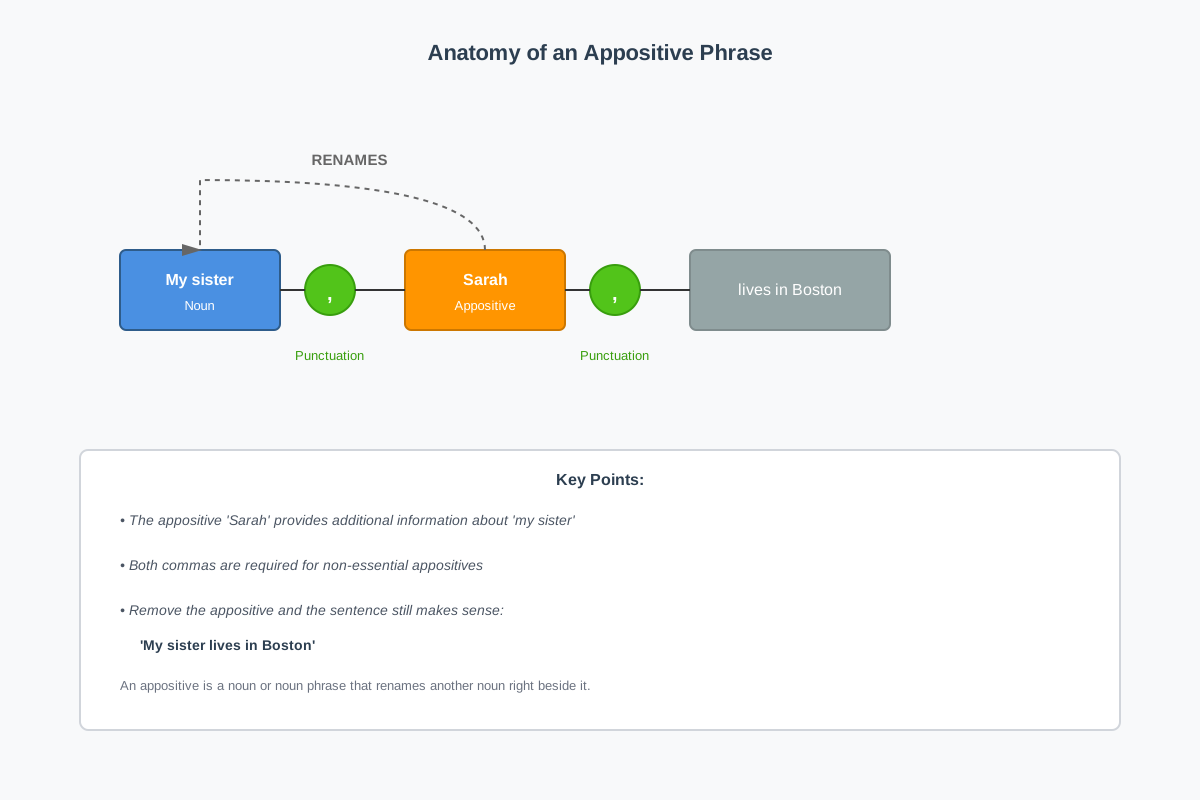
In real-world writing, appositives serve as an elegant tool for combining information efficiently. Rather than writing two separate sentences ("My sister lives in Boston. Her name is Sarah."), appositives allow writers to combine ideas smoothly: "My sister, Sarah, lives in Boston." This skill appears constantly in professional writing, journalism, academic papers, and everyday communication, making it both practically valuable and academically important.
On the ACT English section, appositive questions appear with remarkable consistency. Approximately 10-15% of all punctuation questions involve appositives, and they frequently appear in questions testing sentence structure and clarity. The ACT typically includes 2-3 direct appositive punctuation questions per test, plus an additional 1-2 questions where understanding appositives helps eliminate incorrect answer choices. These questions often appear in the middle difficulty range, making them accessible points for students who master the rules.
The ACT tests appositives in several predictable ways: questions asking whether to add or delete commas around a phrase, questions about whether to use commas or dashes, questions involving appositive fragments, and questions where an appositive's placement affects sentence clarity. Test-makers particularly favor questions where students must recognize that removing the appositive would still leave a grammatically complete sentence—this is the key test for identifying non-essential appositives that require punctuation.
Core Concepts
Definition and Function of Appositives
An appositive phrase is a noun or noun phrase placed beside another noun to rename, identify, explain, or provide additional information about it. The appositive and the noun it renames refer to the same person, place, thing, or idea. For example, in "My friend Maria loves reading," the word "Maria" is an appositive that identifies which friend is being discussed. The appositive provides clarifying information without requiring a separate sentence or clause.
Appositives can be single words or lengthy phrases. Simple appositives consist of just one noun: "The poet Whitman wrote Leaves of Grass." Complex appositives include multiple words and modifiers: "My uncle, a retired firefighter with thirty years of experience, volunteers at the community center." Regardless of length, all appositives function identically—they rename or identify an adjacent noun.
Essential vs. Non-Essential Appositives
The most critical distinction for ACT questions is between essential (restrictive) and non-essential (non-restrictive) appositives. This distinction determines whether punctuation is required.
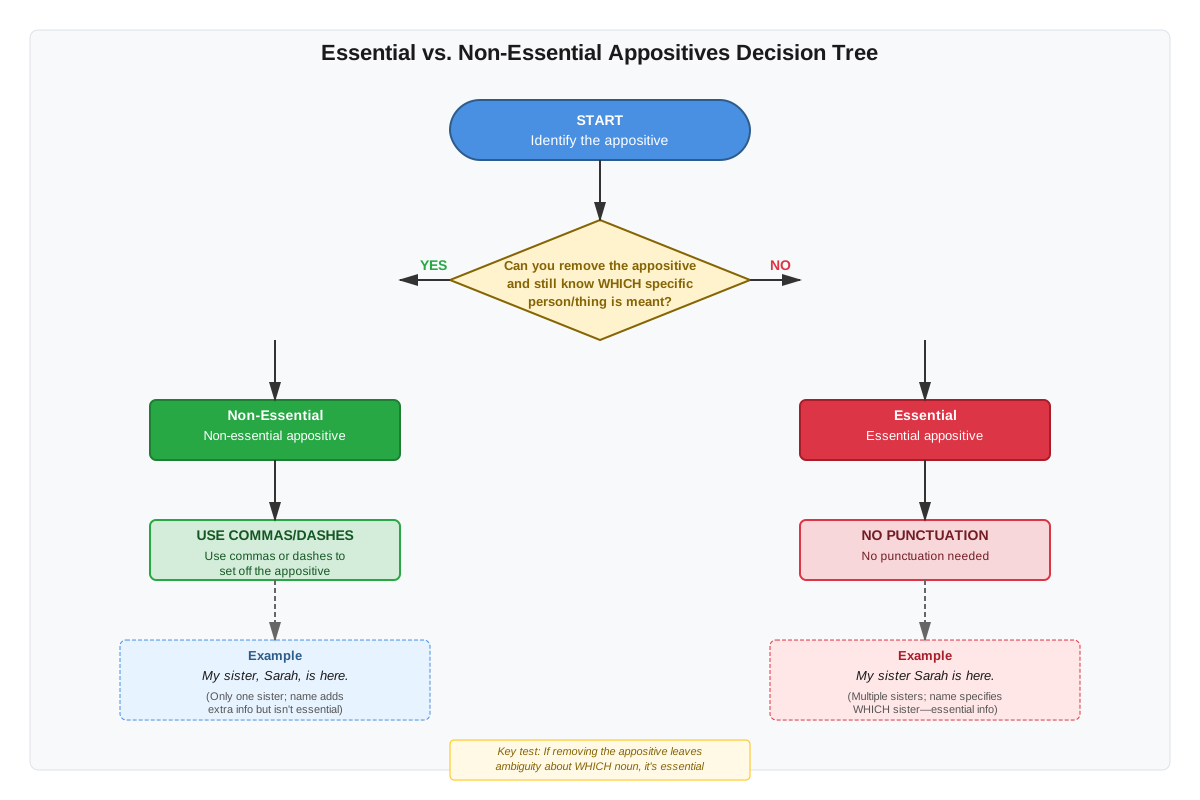
Non-essential appositives provide additional information that could be removed without changing the sentence's core meaning or creating ambiguity. These appositives require punctuation (usually commas) on both sides to set them off from the sentence. Example: "My oldest sister, Jennifer, graduated from college last year." If we remove "Jennifer," the sentence still makes complete sense because "oldest sister" already identifies which sister is meant. The name provides extra information but isn't necessary for identification.
Essential appositives provide information crucial for identifying which specific noun is being discussed. These appositives do NOT use punctuation because they're integral to the sentence's meaning. Example: "My sister Jennifer graduated from college last year." Without "Jennifer," we wouldn't know which sister is meant (implying the speaker has multiple sisters). The appositive is essential for proper identification.
| Feature | Essential Appositive | Non-Essential Appositive |
|---|---|---|
| Punctuation | No commas or dashes | Commas or dashes required |
| Removability | Cannot be removed without losing meaning | Can be removed; sentence remains clear |
| Function | Necessary for identification | Provides additional information |
| Example | "The novel Pride and Prejudice is famous." | "Austen's most famous novel, Pride and Prejudice, was published in 1813." |
The Removal Test
The most reliable strategy for determining whether an appositive needs punctuation is the removal test. Mentally remove the appositive from the sentence and ask two questions:
- Is the sentence still grammatically complete?
- Is the meaning still clear and unambiguous?
If both answers are "yes," the appositive is non-essential and requires punctuation. If removing the appositive creates confusion about which noun is meant, it's essential and should not have punctuation.
Example: "The composer Mozart wrote over 600 works." Remove "Mozart" → "The composer wrote over 600 works." This is grammatically complete but vague (which composer?). Therefore, "Mozart" is essential and needs no commas.
Example: "Wolfgang Amadeus Mozart, a prolific composer, wrote over 600 works." Remove "a prolific composer" → "Wolfgang Amadeus Mozart wrote over 600 works." This remains clear and complete. Therefore, "a prolific composer" is non-essential and requires commas.
Punctuation Options for Non-Essential Appositives
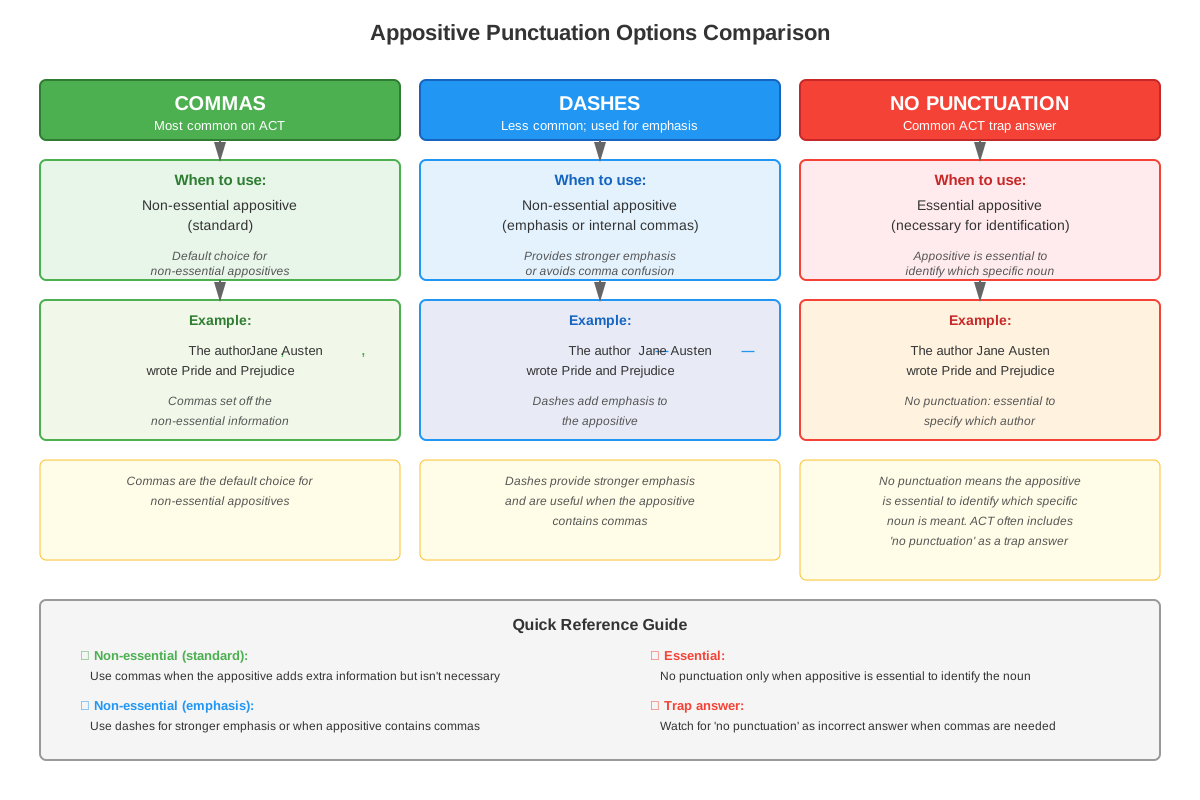
Non-essential appositives can be set off with three punctuation options:
- Commas (most common): "The capital of France, Paris, attracts millions of tourists."
- Dashes (for emphasis or when the appositive contains internal commas): "The ingredients—flour, sugar, eggs, and butter—were already measured."
- Parentheses (rarely tested on ACT): "The author (a Nobel Prize winner) spoke at our school."
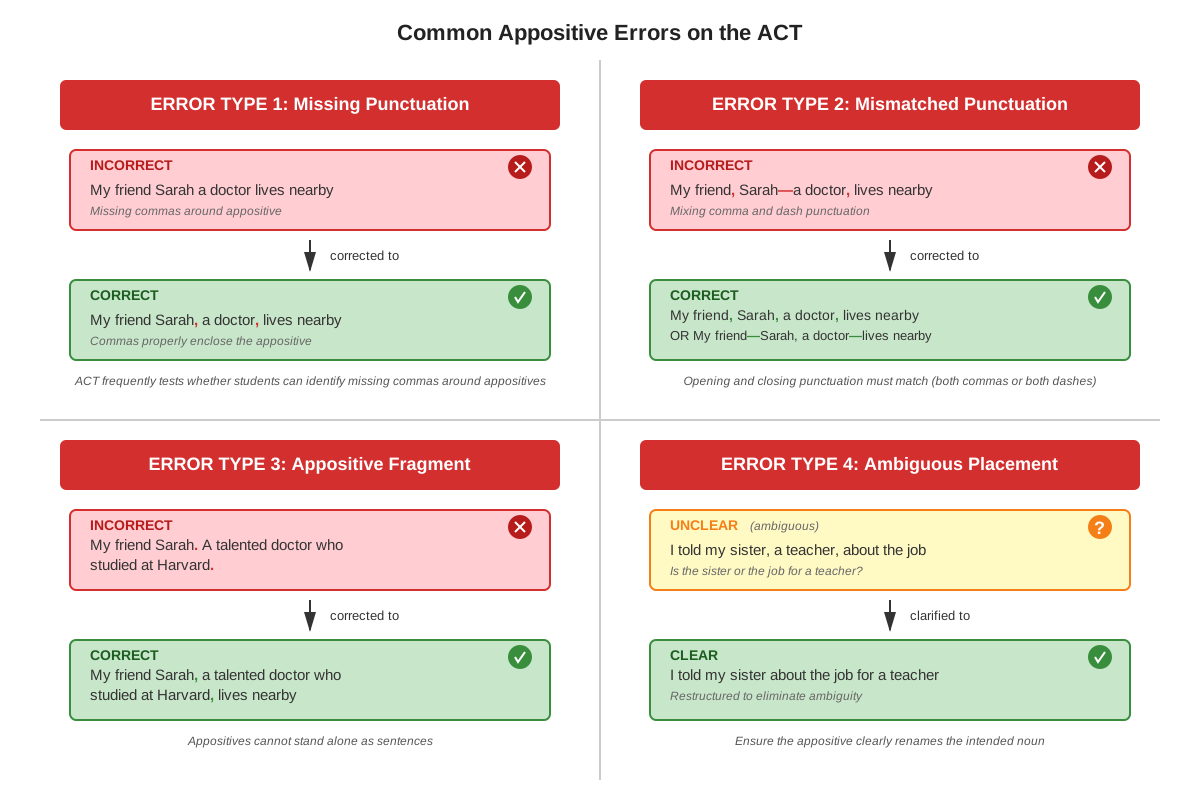
The ACT primarily tests commas and dashes. The key rule is consistency: if you begin with a comma, you must end with a comma; if you begin with a dash, you must end with a dash. Mixing punctuation marks is always incorrect.
Appositive Placement and Fragments
Appositives must be placed immediately adjacent to the noun they rename. Incorrect placement creates confusion: "A dedicated teacher, the students loved Mr. Johnson." This incorrectly suggests the students are the dedicated teacher. Correct: "The students loved Mr. Johnson, a dedicated teacher."
A common ACT trap involves appositive fragments—incomplete sentences where an appositive is punctuated as if it were a complete sentence. Example: "We visited the museum. A building constructed in 1892." The second "sentence" is just an appositive phrase and cannot stand alone. Correct: "We visited the museum, a building constructed in 1892."
Multiple Appositives
Sentences can contain multiple appositives, each requiring appropriate punctuation: "My friend Sarah, a talented musician, plays the violin, her favorite instrument, every day." Each appositive must be properly set off, and students must track which noun each appositive renames.
Concept Relationships
The concept of essential versus non-essential appositives directly parallels the distinction between restrictive and non-restrictive clauses, a related grammar topic. Both concepts rely on the same principle: information necessary for identification requires no punctuation, while additional information requires punctuation to signal its optional nature. Understanding appositives strengthens comprehension of all non-essential modifiers.
Appositive punctuation connects to broader comma usage rules. The same logic that governs appositive commas applies to parenthetical expressions, introductory phrases, and interrupters. All these elements require punctuation when they provide non-essential information that could be removed without destroying sentence meaning.
The relationship map flows as follows: Noun identification → enables recognition of → Appositive phrases → which require understanding of → Essential vs. non-essential distinction → which determines → Punctuation choice (commas/dashes/none) → which affects → Sentence clarity and correctness. Additionally, Appositive fragments connect back to Sentence structure fundamentals, as recognizing complete sentences is necessary to avoid punctuating appositives as independent clauses.
High-Yield Facts
⭐ Non-essential appositives require punctuation on BOTH sides—forgetting the second comma is the most common error.
⭐ If you can remove the phrase and the sentence remains clear and complete, the appositive is non-essential and needs commas.
⭐ Essential appositives that identify which specific noun is meant do NOT use any punctuation.
⭐ Appositives must be placed immediately next to the noun they rename to avoid ambiguity.
⭐ You cannot mix punctuation marks—if you start with a comma, you must end with a comma; if you start with a dash, you must end with a dash.
- Appositive phrases are always nouns or noun phrases, never adjectives or adverbs.
- Single-word appositives (especially names) are often essential when they specify which person is meant.
- Dashes are preferred over commas when the appositive itself contains commas or when emphasis is desired.
- An appositive cannot stand alone as a sentence—it must be attached to a complete independent clause.
- The ACT frequently tests whether a comma should appear before or after an appositive phrase.
- Appositives can appear at the beginning, middle, or end of a sentence, but placement affects punctuation needs.
- When an appositive ends a sentence, only one comma is needed (before the appositive), not two.
- Proper nouns used as appositives follow the same essential/non-essential rules as common nouns.
- The phrase "such as" often introduces examples that function similarly to appositives but follow different punctuation rules.
- Appositives can rename pronouns as well as nouns: "We students must study hard."
Quick check — test yourself on Appositive phrases so far.
Try Flashcards →Common Misconceptions
Misconception: All appositives require commas.
Correction: Only non-essential appositives require punctuation. Essential appositives that are necessary for identifying which specific noun is meant should not be set off with commas. "My friend Sarah" (essential if you have multiple friends) versus "My best friend, Sarah," (non-essential because "best friend" already identifies who).
Misconception: An appositive only needs one comma, placed before it.
Correction: Non-essential appositives in the middle of a sentence require punctuation on BOTH sides. "My teacher, Mr. Rodriguez, assigned homework" needs commas before and after the appositive. Omitting the second comma is a frequent error that the ACT tests directly.
Misconception: Longer phrases are always non-essential and need commas.
Correction: Length doesn't determine whether an appositive is essential. "The novel The Great Gatsby" is essential regardless of the title's length because it specifies which novel. The essential/non-essential distinction depends on whether the information is necessary for identification, not on phrase length.
Misconception: You can start with a comma and end with a dash when punctuating an appositive.
Correction: Punctuation marks must match. If you begin setting off an appositive with a comma, you must end with a comma. If you begin with a dash, you must end with a dash. Mixing punctuation marks is always incorrect and creates a grammatical error.
Misconception: Appositives can only rename the subject of a sentence.
Correction: Appositives can rename any noun in a sentence, including objects, objects of prepositions, and even other appositives. "I gave the book to my cousin, a voracious reader" has an appositive renaming the object of the preposition "to."
Misconception: If a phrase provides extra information, it's automatically an appositive.
Correction: Appositives must be nouns or noun phrases that rename another noun. Adjective phrases, adverb phrases, and clauses that provide additional information are not appositives, even if they're non-essential. "The teacher, who was tired, dismissed class early" contains a non-essential clause, not an appositive.
Worked Examples
Example 1: Identifying Essential vs. Non-Essential
Question: Which version is correct?
A) My brother Michael is studying engineering.
B) My brother, Michael, is studying engineering.
Step 1: Identify the potential appositive. "Michael" is a noun that renames "brother."
Step 2: Apply the removal test. Remove "Michael" from each version:
- Version A becomes: "My brother is studying engineering."
- Version B becomes: "My brother is studying engineering."
Step 3: Determine if the meaning is clear without the appositive. This depends on context. If the speaker has only one brother, "Michael" is non-essential additional information, making version B correct. If the speaker has multiple brothers, "Michael" is essential to identify which brother, making version A correct.
Step 4: On the ACT, look for context clues in surrounding sentences. If the passage mentions multiple brothers or if this is the first mention without prior identification, the appositive is likely essential (no commas). If the passage has already established which brother or implies only one exists, the appositive is non-essential (commas needed).
Answer: Without additional context suggesting multiple brothers, version B is typically correct because "my brother" usually implies a specific, already-identified person, making the name additional information rather than essential identification.
Example 2: Correcting Appositive Punctuation
Question: The museum a building that houses ancient artifacts attracts thousands of visitors annually.
Which is correct?
A) NO CHANGE
B) museum, a building that houses ancient artifacts,
C) museum a building that houses ancient artifacts,
D) museum, a building that houses ancient artifacts
Step 1: Identify the appositive. "A building that houses ancient artifacts" is a noun phrase renaming "museum."
Step 2: Determine if it's essential or non-essential. Remove the phrase: "The museum attracts thousands of visitors annually." This sentence is complete and clear. The appositive provides additional information but isn't necessary for identification. Therefore, it's non-essential.
Step 3: Non-essential appositives require punctuation on BOTH sides when in the middle of a sentence.
Step 4: Evaluate the choices:
- A: No punctuation—incorrect for non-essential appositive
- B: Commas on both sides—correct
- C: Comma only after—incorrect; needs punctuation on both sides
- D: Comma only before—incorrect; needs punctuation on both sides
Answer: B is correct. The non-essential appositive must be set off with commas on both sides.
Exam Strategy
When approaching ACT questions involving appositives, follow this systematic process:
Step 1: Identify potential appositives. Look for noun phrases that appear to rename or provide additional information about an adjacent noun. Common trigger words include "a," "an," and "the" followed by descriptive noun phrases.
Step 2: Apply the removal test. Mentally remove the suspected appositive and check if the sentence remains grammatically complete and clear in meaning. This single test determines whether punctuation is needed.
Step 3: Check for context clues. Read the surrounding sentences to determine whether the information is necessary for identification. If the noun has already been specifically identified or if only one such noun exists in context, the appositive is likely non-essential.
Step 4: Verify punctuation on BOTH sides. If the appositive is non-essential and appears in the middle of a sentence, confirm that punctuation appears before AND after it. Missing the second comma is the most common trap.
Step 5: Ensure punctuation consistency. If the question involves choosing between commas and dashes, verify that the same punctuation mark appears on both sides of the appositive.
Exam Tip: When you see answer choices that differ only in comma placement around a phrase, immediately suspect an appositive question. Apply the removal test to determine if commas are needed.
Trigger phrases to watch for:
- "a [descriptive noun phrase]" following a specific noun
- Names following titles or relationships (my sister Sarah, President Lincoln)
- Phrases beginning with "a," "an," or "the" that seem to rename a previous noun
- Descriptive phrases set between commas or dashes
Process of elimination strategy:
- Eliminate any choice that uses only one comma for a mid-sentence appositive
- Eliminate choices that mix punctuation marks (comma on one side, dash on the other)
- Eliminate choices that use commas for essential appositives that specify which noun is meant
- Eliminate choices that create sentence fragments by separating an appositive from its sentence
Time allocation: Appositive questions should take 20-30 seconds each. If you're uncertain, apply the removal test quickly and move on. These questions reward systematic application of rules rather than prolonged deliberation.
Memory Techniques
RENAME mnemonic for identifying appositives:
- Recognize the noun phrase
- Evaluate if it identifies another noun
- Note its position (next to the noun it renames)
- Apply the removal test
- Match punctuation on both sides
- Ensure sentence completeness
The "Sandwich Rule": Think of non-essential appositives as sandwich fillings—they need bread (punctuation) on BOTH sides. Just as a sandwich with bread on only one side falls apart, an appositive with punctuation on only one side is incorrect.
The "Name Game": When you see a name following a relationship or title, ask: "Could there be more than one?" If yes, the name is essential (no commas): "My sister Jennifer." If no, the name is non-essential (commas needed): "My only sister, Jennifer."
Visual technique: When reading a sentence with a potential appositive, visualize parentheses around the phrase. If the sentence makes complete sense with the parenthetical information removed, the phrase is non-essential and needs punctuation.
The "Both or Neither" rule: For mid-sentence appositives, remember "both or neither"—either punctuation on both sides (non-essential) or punctuation on neither side (essential). Never just one.
Summary
Appositive phrases are noun phrases that rename or provide additional information about adjacent nouns, and they represent a high-yield topic on the ACT English section. The fundamental distinction between essential and non-essential appositives determines all punctuation decisions: essential appositives that are necessary for identifying which specific noun is meant require no punctuation, while non-essential appositives that provide additional but removable information must be set off with commas or dashes on both sides. The removal test—checking whether a sentence remains complete and clear without the appositive—is the most reliable strategy for determining whether punctuation is needed. Common ACT traps include forgetting the second comma in mid-sentence appositives, mixing punctuation marks, and incorrectly punctuating essential appositives. Success on appositive questions requires recognizing these phrases quickly, applying the removal test systematically, and ensuring punctuation consistency. Mastering appositives not only improves ACT scores but also enhances overall writing clarity and sophistication.
Key Takeaways
- Appositives are noun phrases that rename adjacent nouns; they can be single words or lengthy phrases but always function to identify or describe another noun.
- The removal test is the gold standard: if removing the appositive leaves a complete, clear sentence, it's non-essential and needs punctuation; if removal creates ambiguity, it's essential and needs no punctuation.
- Non-essential appositives require punctuation on BOTH sides when they appear in the middle of a sentence—forgetting the second comma is the most frequently tested error.
- Essential appositives that specify which noun is meant never use punctuation; they're integral to the sentence's meaning and cannot be removed without creating confusion.
- Punctuation marks must match: begin and end with commas, or begin and end with dashes—never mix punctuation marks when setting off an appositive.
- Appositives must be placed immediately next to the noun they rename to avoid ambiguity and ensure clarity.
- Context matters: read surrounding sentences to determine whether information is necessary for identification or merely provides additional detail.
Related Topics
Restrictive and Non-Restrictive Clauses: This topic extends the essential/non-essential distinction to full clauses beginning with "which," "who," or "that." Mastering appositives provides the foundation for understanding when these clauses require commas.
Comma Usage in Complex Sentences: Appositives represent one specific application of comma rules. Studying broader comma usage helps students understand the underlying principle that punctuation signals relationships between sentence elements.
Sentence Fragments and Run-Ons: Understanding appositives helps identify fragments created when appositive phrases are incorrectly punctuated as complete sentences, connecting to broader sentence boundary concepts.
Parallelism and Lists: When appositives contain internal lists or parallel structures, students must coordinate appositive punctuation with list punctuation, making this an advanced application of both concepts.
Dash Usage and Emphasis: While commas are most common for appositives, dashes provide an alternative that creates emphasis or handles appositives with internal punctuation, extending understanding of dash functions.
Practice CTA
Now that you've mastered the core concepts of appositive phrases, it's time to cement your understanding through active practice. The practice questions and flashcards will challenge you to apply the removal test, distinguish between essential and non-essential appositives, and identify proper punctuation in ACT-style contexts. Remember, appositive questions are high-yield opportunities to earn quick points—with systematic application of these rules, you can confidently tackle every appositive question you encounter on test day. Start practicing now to transform this knowledge into automatic, accurate responses!
Sign up free to keep reading
Create a free AnvayaPrep account to finish this ACT guide on Appositive phrases — plus flashcards and practice questions.