Overview
Subordinate clauses represent one of the most frequently tested concepts in the ACT English section, appearing in approximately 15-20% of all sentence structure questions. A subordinate clause (also called a dependent clause) is a group of words that contains a subject and a verb but cannot stand alone as a complete sentence. These clauses depend on an independent clause to form a complete thought, and understanding how they function is essential for identifying sentence fragments, comma splices, and run-on sentences—three of the most common error types on the ACT.
Mastering subordinate clauses enables students to recognize proper sentence boundaries, use punctuation correctly, and construct grammatically sound complex sentences. The ACT tests this concept both directly (asking students to identify fragments or fix punctuation around subordinate clauses) and indirectly (embedding subordinate clause issues within broader revision questions). Students who can quickly identify subordinate clauses and understand their relationship to independent clauses gain a significant advantage in the English section, as this knowledge applies to multiple question types including sentence structure, punctuation, and rhetorical skills.
The concept of subordinate clauses connects fundamentally to independent clauses, conjunctions, and punctuation rules. Together, these elements form the foundation of sentence structure—the grammatical framework that the ACT English section tests more than any other concept. Understanding subordinate clauses also prepares students for more advanced topics like parallel structure, modifier placement, and sentence combining, making it a cornerstone skill for achieving a high English subscore.
Learning Objectives
- [ ] Identify when subordinate clauses are being tested in ACT English questions
- [ ] Explain the core rule or strategy behind subordinate clauses and their proper use
- [ ] Apply subordinate clause concepts to ACT-style questions accurately
- [ ] Distinguish between subordinate clauses and independent clauses in complex sentences
- [ ] Recognize all types of subordinating conjunctions and relative pronouns that introduce subordinate clauses
- [ ] Correct sentence fragments caused by subordinate clauses standing alone
- [ ] Apply proper punctuation rules when subordinate clauses appear in different sentence positions
Prerequisites
- Independent clauses: Understanding what makes a clause independent (subject + verb + complete thought) is essential because subordinate clauses are defined in contrast to independent clauses
- Basic sentence structure: Recognizing subjects, verbs, and complete thoughts allows students to identify when a clause is dependent versus independent
- Parts of speech: Familiarity with conjunctions, pronouns, and adverbs helps students recognize the words that introduce subordinate clauses
- Comma usage fundamentals: Basic comma rules provide the foundation for understanding how to punctuate sentences containing subordinate clauses
Why This Topic Matters
In real-world writing, subordinate clauses allow writers to create sophisticated, nuanced sentences that show relationships between ideas. Professional writing, academic essays, and effective communication all rely on the proper use of subordinate clauses to express cause-and-effect relationships, conditions, contrasts, and time sequences. Without subordinate clauses, writing becomes choppy and simplistic, lacking the complexity needed to convey intricate thoughts.
On the ACT English section, ACT subordinate clauses questions appear with remarkable frequency. Approximately 8-12 questions per test directly or indirectly assess subordinate clause knowledge. These questions typically appear in three formats: (1) identifying and correcting sentence fragments where a subordinate clause stands alone, (2) fixing punctuation errors when subordinate clauses are joined to independent clauses, and (3) choosing the correct conjunction or relative pronoun to create logical relationships between clauses. The ACT particularly favors testing subordinate clauses in the context of comma usage, as students must determine whether a comma is needed based on the clause's position in the sentence.
Common ACT passage scenarios include: subordinate clauses beginning sentences (requiring a comma after the clause), subordinate clauses ending sentences (typically requiring no comma), subordinate clauses interrupting independent clauses (requiring commas on both sides), and fragments created when subordinate clauses are punctuated as complete sentences. The test also frequently presents answer choices that differ only in punctuation or conjunction choice, requiring students to understand subordinate clause mechanics to select the correct option.
Core Concepts
Definition and Structure of Subordinate Clauses
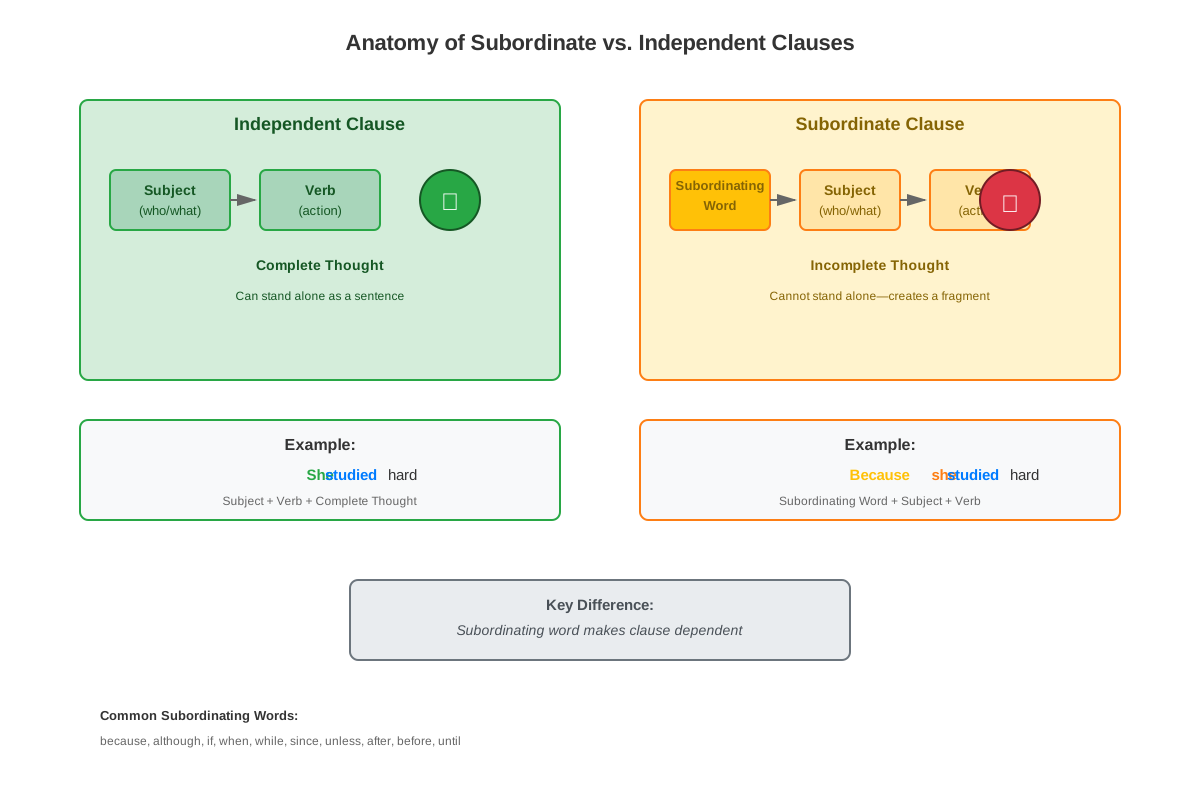
A subordinate clause (also called a dependent clause) is a group of words that contains both a subject and a verb but does not express a complete thought. Unlike independent clauses, subordinate clauses cannot stand alone as sentences because they leave the reader waiting for additional information. The key characteristic that makes a clause subordinate is the presence of a subordinating word—either a subordinating conjunction or a relative pronoun—at the beginning of the clause.
For example, consider these two clauses:
- "The student studied for the test" (independent clause—complete thought)
- "Because the student studied for the test" (subordinate clause—incomplete thought)
The addition of "because" transforms the independent clause into a subordinate clause, creating a dependency that requires an independent clause to complete the meaning: "Because the student studied for the test, she earned a high score."
Types of Subordinating Words
Subordinate clauses are introduced by two main categories of words: subordinating conjunctions and relative pronouns.
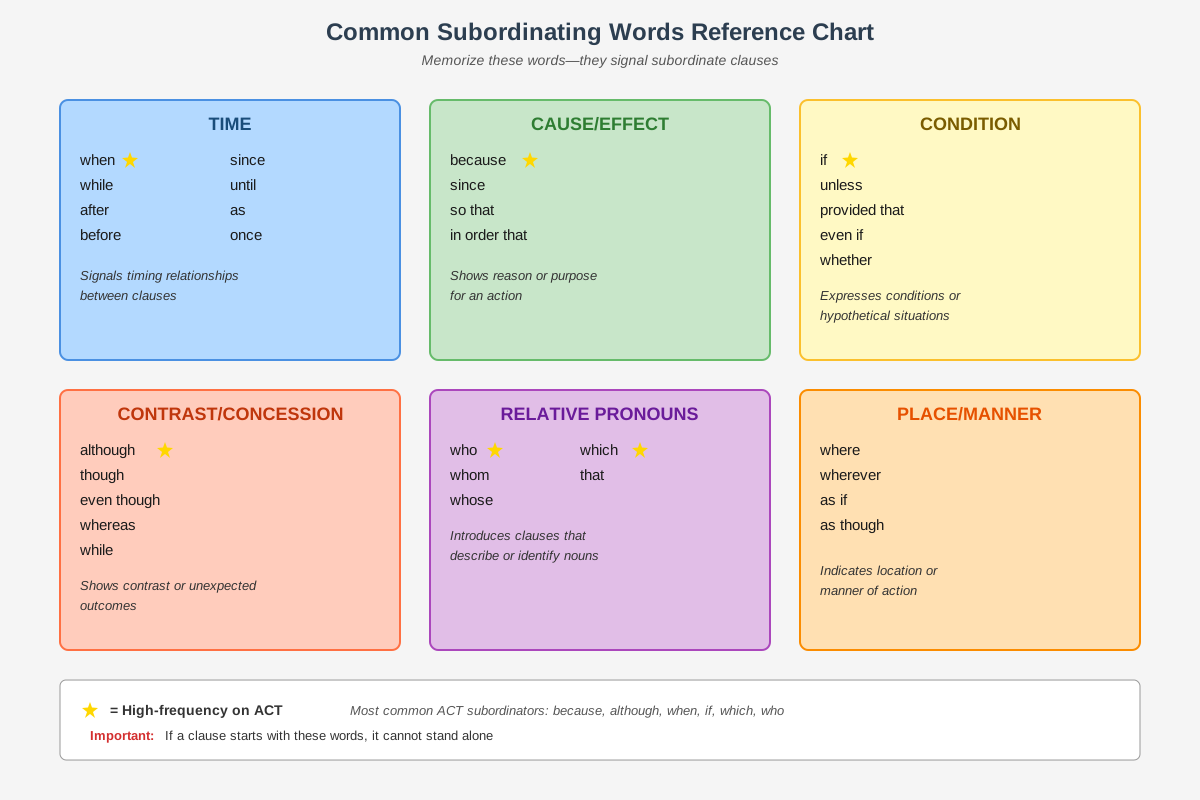
Subordinating Conjunctions create adverbial subordinate clauses that show relationships such as time, cause, condition, or contrast. The most common subordinating conjunctions include:
| Category | Subordinating Conjunctions |
|---|---|
| Time | when, whenever, while, as, before, after, since, until, once |
| Cause/Reason | because, since, as |
| Condition | if, unless, provided that, as long as |
| Contrast | although, though, even though, whereas, while |
| Purpose | so that, in order that |
| Manner | as if, as though |
Relative Pronouns create adjective subordinate clauses (also called relative clauses) that modify nouns. The relative pronouns are: who, whom, whose, which, that, where, when, and why.
Examples:
- "The book that she recommended was excellent." (relative pronoun)
- "Although the weather was cold, we went hiking." (subordinating conjunction)
Subordinate Clauses vs. Independent Clauses
Understanding the distinction between subordinate and independent clauses is crucial for ACT success. Here's a comparison:
| Feature | Independent Clause | Subordinate Clause |
|---|---|---|
| Can stand alone | Yes | No |
| Contains subject and verb | Yes | Yes |
| Expresses complete thought | Yes | No |
| Begins with subordinating word | No | Yes |
| Example | "She passed the test." | "Because she studied hard" |
The ACT frequently tests whether students can identify when a subordinate clause has been incorrectly punctuated as a complete sentence, creating a sentence fragment. This is one of the most common errors in the English section.
Position and Punctuation Rules
The position of a subordinate clause within a sentence determines the punctuation required. This is a high-yield concept for the ACT.
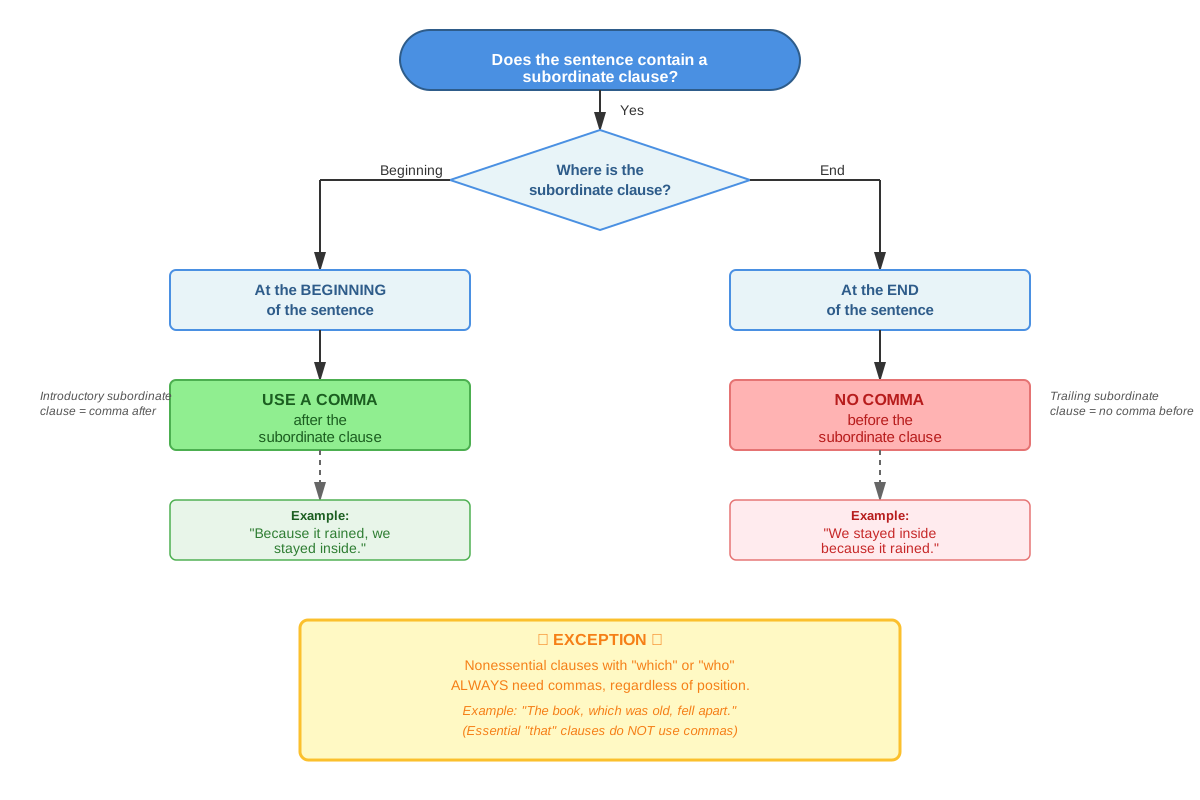
When the subordinate clause comes first (at the beginning of the sentence), place a comma after it before the independent clause:
- "Although it was raining, we continued our hike."
- "Because she arrived early, she got the best seat."
When the subordinate clause comes last (at the end of the sentence), typically no comma is needed:
- "We continued our hike although it was raining."
- "She got the best seat because she arrived early."
When the subordinate clause interrupts the independent clause (appears in the middle), use commas on both sides:
- "The student, who studied every night, earned the highest grade."
- "My brother, although he is younger, is taller than I am."
ACT Exam Tip: When you see a comma in the answer choices, immediately check whether a subordinate clause is involved. The position of the subordinate clause determines whether the comma is correct.
Common Fragment Errors
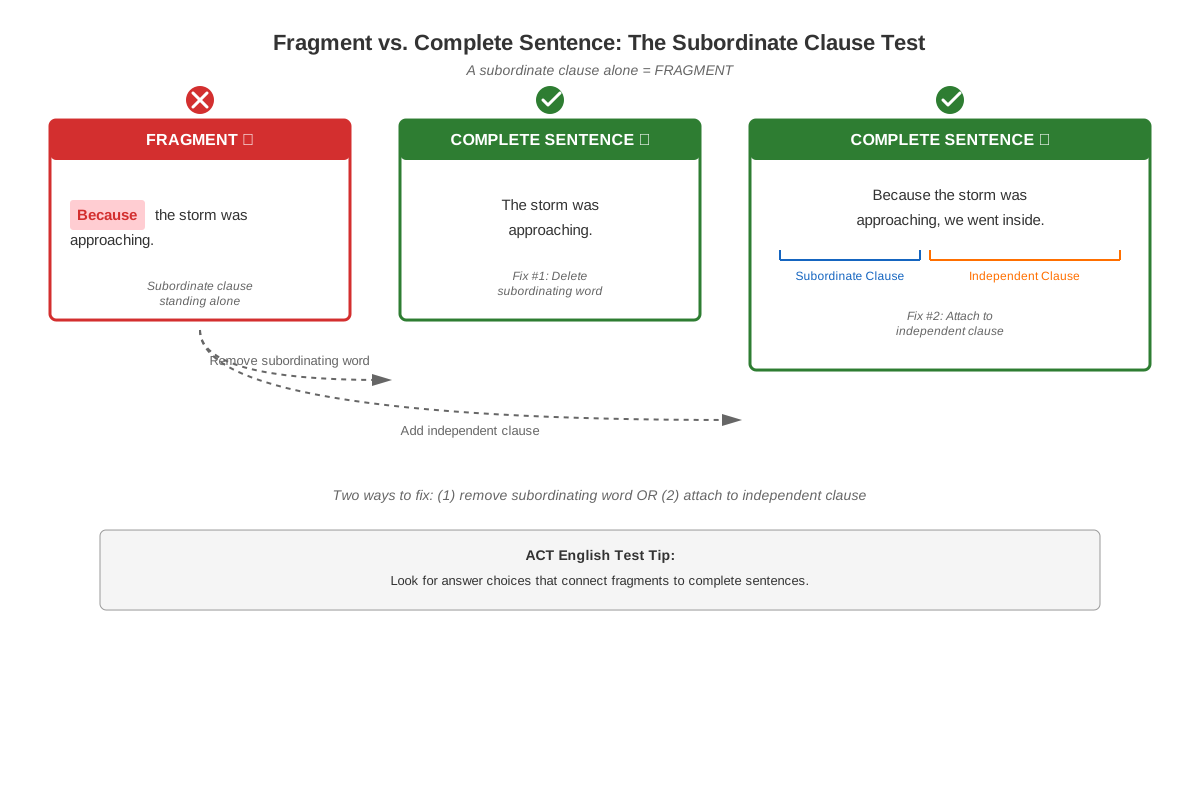
The most frequent error involving subordinate clauses on the ACT is the sentence fragment—a subordinate clause punctuated as if it were a complete sentence. This occurs when a subordinate clause stands alone with a period, question mark, or exclamation point.
Incorrect: "Because the library was closed. We studied at home."
Correct: "Because the library was closed, we studied at home."
Incorrect: "The teacher who inspired me most. She taught English."
Correct: "The teacher who inspired me most taught English."
The ACT tests this by presenting passages where subordinate clauses are separated from their independent clauses, requiring students to recognize the fragment and choose an answer that properly connects the clauses.
Essential vs. Nonessential Subordinate Clauses
Subordinate clauses introduced by relative pronouns can be either essential (restrictive) or nonessential (nonrestrictive), which affects punctuation:
Essential clauses provide information necessary to identify the noun they modify. They are not set off by commas and typically use "that":
- "Students that study regularly perform better on tests." (Which students? Those that study regularly—essential information)
Nonessential clauses provide additional information that could be removed without changing the basic meaning. They are set off by commas and use "which" or "who":
- "The ACT, which is offered seven times per year, tests English, Math, Reading, and Science." (The clause adds information but isn't essential to identify the ACT)
ACT Exam Tip: If you can remove the clause and the sentence still makes sense and identifies the noun clearly, the clause is nonessential and needs commas. If removing it changes the meaning or makes the sentence unclear, it's essential and should not have commas.
Concept Relationships
Subordinate clauses exist within a hierarchy of sentence structure concepts. At the foundation level, understanding subjects and verbs enables recognition of clauses. This leads to distinguishing between independent clauses (complete thoughts) and subordinate clauses (incomplete thoughts). The presence of subordinating conjunctions or relative pronouns signals that a clause is subordinate.
The relationship flows as follows:
Subjects + Verbs → form Clauses → which are either Independent or Subordinate → Subordinate clauses require Independent clauses to form complete sentences → The position of subordinate clauses determines punctuation → Proper punctuation prevents fragments, comma splices, and run-ons.
Subordinate clauses also connect to complex sentence structure, as any sentence containing both an independent and subordinate clause is classified as complex. This concept extends to compound-complex sentences, which contain multiple independent clauses and at least one subordinate clause. Understanding subordinate clauses is prerequisite knowledge for parallel structure (ensuring subordinate clauses in a series maintain consistent form) and modifier placement (subordinate clauses must be positioned near the words they modify).
The punctuation rules for subordinate clauses directly relate to comma usage, semicolon rules (semicolons cannot join subordinate clauses to independent clauses), and conjunction usage. Mastering subordinate clauses also supports sentence combining skills, as subordinate clauses allow writers to merge simple sentences into more sophisticated structures.
High-Yield Facts
⭐ A subordinate clause contains a subject and verb but cannot stand alone as a complete sentence because it does not express a complete thought.
⭐ Subordinate clauses always begin with a subordinating word (subordinating conjunction or relative pronoun).
⭐ When a subordinate clause begins a sentence, place a comma after it before the independent clause.
⭐ When a subordinate clause ends a sentence, typically no comma is needed before it.
⭐ A subordinate clause punctuated as a complete sentence creates a sentence fragment—one of the most common ACT errors.
- Common subordinating conjunctions include: although, because, since, when, while, if, unless, after, before, and until.
- Relative pronouns that introduce subordinate clauses include: who, whom, whose, which, that, where, and when.
- Essential (restrictive) subordinate clauses are not set off by commas; nonessential (nonrestrictive) clauses require commas.
- The word "that" typically introduces essential clauses; "which" typically introduces nonessential clauses.
- A semicolon cannot be used to join a subordinate clause to an independent clause.
- Subordinate clauses can function as adjectives (modifying nouns), adverbs (modifying verbs, adjectives, or other adverbs), or occasionally as nouns.
- Multiple subordinate clauses can appear in a single sentence, each requiring proper punctuation based on its position.
Quick check — test yourself on Subordinate clauses so far.
Try Flashcards →Common Misconceptions
Misconception: All clauses that begin with "which" or "who" need commas around them.
Correction: Only nonessential subordinate clauses require commas. Essential clauses that are necessary to identify the noun they modify should not be set off by commas. Compare: "The car that is parked outside is mine" (essential—no commas) vs. "My car, which is parked outside, is red" (nonessential—commas needed).
Misconception: A subordinate clause can stand alone as a sentence if it's long enough or contains enough information.
Correction: Length and information content do not determine whether a clause is subordinate. Any clause beginning with a subordinating word is subordinate and cannot stand alone, regardless of length. "Because the student had studied diligently for three weeks, reviewing every chapter and completing all practice problems" is still a fragment despite its length.
Misconception: Subordinate clauses always need commas when they appear in a sentence.
Correction: Comma usage depends on the position of the subordinate clause. Subordinate clauses at the beginning of sentences need commas after them, but subordinate clauses at the end typically do not need commas before them. The rule changes based on position, not on the mere presence of a subordinate clause.
Misconception: "Since" and "because" are interchangeable in all contexts.
Correction: While both can indicate cause, "since" can also indicate time ("since yesterday"), which can create ambiguity. Additionally, "because" is generally preferred for cause-and-effect relationships in formal writing. The ACT may test whether students recognize when "since" creates confusion.
Misconception: A sentence with a subordinate clause is always a complex sentence.
Correction: A sentence must contain at least one independent clause and one subordinate clause to be complex. A subordinate clause standing alone is a fragment, not a complex sentence. Additionally, sentences with multiple independent clauses and subordinate clauses are compound-complex, not simply complex.
Misconception: You can fix a fragment by simply removing the subordinating word.
Correction: While removing the subordinating word can sometimes work, this strategy may not preserve the intended meaning or relationship between ideas. Often, the better solution is to connect the subordinate clause to an independent clause with proper punctuation, maintaining the logical relationship the subordinating word establishes.
Worked Examples
Example 1: Identifying and Correcting a Fragment
ACT-Style Question:
"The research team collected data from five different sources. Although the results were inconsistent across studies. They concluded that further investigation was necessary."
Which of the following is the best revision of the underlined portion?
A. NO CHANGE
B. studies, they
C. studies; they
D. studies they
Solution Process:
Step 1: Identify the clause structure. "Although the results were inconsistent across studies" contains a subject ("results") and verb ("were") but begins with the subordinating conjunction "although," making it a subordinate clause.
Step 2: Determine if the clause can stand alone. Because it begins with "although," this subordinate clause cannot stand alone as a complete sentence. The current punctuation (period after "studies") creates a sentence fragment.
Step 3: Evaluate each answer choice:
- Choice A (NO CHANGE): Keeps the fragment—incorrect
- Choice B (studies, they): Connects the subordinate clause to the following independent clause with a comma, but this creates a new problem. The subordinate clause should connect to the preceding sentence or the following sentence should be revised to eliminate "they"
- Choice C (studies; they): Semicolons cannot join subordinate clauses to independent clauses—incorrect
- Choice D (studies they): Creates a run-on sentence with no punctuation—incorrect
Step 4: Recognize that none of the choices properly fixes the fragment by connecting it to the preceding sentence. However, if we must choose from these options, we need to reconsider the sentence structure. Actually, looking more carefully, the subordinate clause should connect to what follows. But "Although the results were inconsistent across studies, they concluded..." doesn't make logical sense.
The best approach would be to connect it to the preceding sentence: "The research team collected data from five different sources, although the results were inconsistent across studies."
Answer: In this case, the question design would need revision, but this demonstrates the critical thinking process: identify the subordinate clause, recognize the fragment, and determine the logical connection point.
Example 2: Punctuation Based on Position
ACT-Style Question:
"The museum offers free admission on Thursdays when students can explore the exhibits without paying an entrance fee."
Which of the following alternatives to the underlined portion would NOT be acceptable?
F. Thursdays; when students
G. Thursdays, when students
H. Thursdays. When students
J. Thursdays, a time when students
Solution Process:
Step 1: Identify the clause structure. "When students can explore the exhibits without paying an entrance fee" is a subordinate clause (begins with "when," contains subject "students" and verb "can explore").
Step 2: Determine the current punctuation. The original has no punctuation before "when," which is acceptable because the subordinate clause comes at the end of the sentence and is essential to understanding which Thursdays are meant.
Step 3: Evaluate each alternative:
- Choice F (semicolon): Semicolons cannot join subordinate clauses to independent clauses. This is grammatically incorrect—this is the NOT acceptable answer.
- Choice G (comma): A comma before a subordinate clause at the end is sometimes acceptable, especially if the clause is nonessential. This works.
- Choice H (period): This creates a fragment by separating the subordinate clause. This is NOT acceptable—potential answer.
- Choice J (comma + appositive): This restructures the sentence to make "a time when students..." an appositive phrase, which is grammatically correct.
Step 4: Determine which is NOT acceptable. Both F and H are grammatically incorrect, but F violates a fundamental rule about semicolons and subordinate clauses.
Answer: F is NOT acceptable because semicolons cannot be used to join subordinate clauses to independent clauses.
Learning Objective Connection: This example demonstrates the application of subordinate clause punctuation rules and the ability to identify incorrect usage in ACT-style questions.
Exam Strategy
When approaching ACT questions involving subordinate clauses, follow this systematic process:
Step 1: Identify subordinating words. Scan the sentence for subordinating conjunctions (although, because, when, if, etc.) and relative pronouns (who, which, that, etc.). These signal the presence of subordinate clauses.
Step 2: Locate clause boundaries. Determine where each subordinate clause begins and ends by finding its subject and verb. Mark the boundary between the subordinate clause and the independent clause.
Step 3: Check for fragments. Verify that no subordinate clause stands alone with terminal punctuation (period, question mark, exclamation point). If you find a subordinate clause punctuated as a complete sentence, you've identified a fragment that needs correction.
Step 4: Apply position-based punctuation rules. If the subordinate clause begins the sentence, there should be a comma after it. If it ends the sentence, typically no comma is needed. If it interrupts the sentence, commas should appear on both sides.
Step 5: Evaluate answer choices systematically. Eliminate choices that create fragments, use semicolons with subordinate clauses, or violate position-based punctuation rules.
Trigger Words to Watch For: When you see "although," "because," "since," "when," "while," "if," "unless," "who," "which," or "that" in an underlined portion or near punctuation marks, immediately check for subordinate clause issues.
Process of Elimination Tips:
- Eliminate any answer that places a period before a subordinate clause, creating a fragment
- Eliminate any answer that uses a semicolon to join a subordinate clause to an independent clause
- Eliminate answers that omit necessary commas after introductory subordinate clauses
- Eliminate answers that add unnecessary commas before subordinate clauses at the end of sentences (unless the clause is clearly nonessential)
Time Allocation: Subordinate clause questions should take 20-30 seconds each. If you can quickly identify the subordinating word and apply the position-based punctuation rule, you can answer efficiently. Don't overthink—the ACT tests standard rules, not exceptions.
Common Question Formats:
- Fragment identification and correction (most common)
- Comma placement with subordinate clauses
- Choosing the correct subordinating conjunction for logical relationships
- Distinguishing between essential and nonessential clauses
- Sentence combining using subordinate clauses
Memory Techniques
AAAWWWUBBIS Mnemonic for common subordinating conjunctions:
- After
- Although
- As
- When
- While
- Where
- Until
- Because
- Before
- If
- Since
"Front Comma, Back No Comma" Rule: Visualize a sentence as a train. When the subordinate clause is the engine (front), it needs a comma to separate it from the cars (independent clause). When the subordinate clause is the caboose (back), no comma is needed because it's already at the end.
The "Incomplete Thought" Test: When you encounter a potential subordinate clause, cover up the subordinating word and read the rest. If it makes a complete sentence without the subordinating word, you've confirmed it's a subordinate clause. For example: "Because she studied hard" → cover "because" → "she studied hard" (complete sentence) → confirms "because" makes it subordinate.
WHICH vs. THAT Reminder: "WHICH needs a comma SWITCH" (nonessential clauses with "which" need commas). "THAT is essential, no comma potential" (essential clauses with "that" don't need commas).
Visualization Strategy: Picture a subordinate clause as a child holding an adult's hand (the independent clause). The child cannot walk alone (stand as a sentence) but can walk when connected to the adult. This image reinforces that subordinate clauses need independent clauses to form complete sentences.
Summary
Subordinate clauses are fundamental building blocks of sentence structure that appear frequently on the ACT English section. These clauses contain subjects and verbs but cannot stand alone because they begin with subordinating words—either subordinating conjunctions or relative pronouns—that create dependency on independent clauses. The ACT tests subordinate clauses primarily through fragment identification, punctuation rules based on clause position, and proper conjunction usage. Students must recognize that subordinate clauses at the beginning of sentences require commas after them, while those at the end typically need no comma before them. The most common error involves subordinate clauses incorrectly punctuated as complete sentences, creating fragments. Mastering subordinate clauses requires understanding the distinction between essential and nonessential clauses, recognizing common subordinating words, and applying position-based punctuation rules consistently. Success on ACT subordinate clause questions depends on quickly identifying subordinating words, checking for fragments, and applying the appropriate punctuation rule based on the clause's position within the sentence.
Key Takeaways
- Subordinate clauses contain subjects and verbs but cannot stand alone as complete sentences because they begin with subordinating words
- Common subordinating conjunctions include although, because, when, while, if, and since; relative pronouns include who, which, and that
- Subordinate clauses at the beginning of sentences require commas after them; those at the end typically need no comma before them
- A subordinate clause punctuated as a complete sentence creates a sentence fragment—one of the most frequently tested errors on the ACT
- Essential subordinate clauses (necessary to identify the noun) use "that" and no commas; nonessential clauses (additional information) use "which" and require commas
- Semicolons cannot be used to join subordinate clauses to independent clauses
- Quickly identifying subordinating words is the key to recognizing subordinate clause questions and applying the correct rules
Related Topics
Independent Clauses and Complete Sentences: Understanding independent clauses provides the necessary contrast to subordinate clauses and enables recognition of complete thoughts versus fragments. Mastering subordinate clauses naturally leads to deeper understanding of how independent and subordinate clauses combine to form complex sentences.
Comma Usage and Punctuation Rules: Subordinate clause mastery directly connects to broader comma rules, including introductory elements, nonessential information, and clause separation. Students who understand subordinate clause punctuation can more easily master other comma applications.
Sentence Fragments, Run-ons, and Comma Splices: These three major sentence errors all relate to subordinate clauses. Understanding subordinate clauses enables students to identify and correct these errors more effectively.
Complex and Compound-Complex Sentences: Subordinate clauses are essential components of complex sentence structure. Mastering subordinate clauses prepares students for analyzing and constructing sophisticated sentence types.
Parallel Structure: When sentences contain multiple subordinate clauses in a series, they must maintain parallel form. Understanding subordinate clauses is prerequisite knowledge for recognizing and correcting parallelism errors.
Practice CTA
Now that you've mastered the core concepts of subordinate clauses, it's time to put your knowledge into action! Complete the practice questions to reinforce your understanding and build the speed and accuracy you need for test day. Use the flashcards to memorize subordinating conjunctions and punctuation rules until they become automatic. Remember, subordinate clauses appear on virtually every ACT English section—mastering this topic will directly improve your score. Each practice question you complete strengthens your ability to recognize patterns and apply rules quickly. You've got this!
Sign up free to keep reading
Create a free AnvayaPrep account to finish this ACT guide on Subordinate clauses — plus flashcards and practice questions.