Overview
Independent clauses form the foundation of sentence structure on the ACT English test and represent one of the most frequently tested concepts across multiple question types. An independent clause is a group of words that contains both a subject and a predicate (verb) and expresses a complete thought that can stand alone as a sentence. Understanding independent clauses is crucial because the ACT consistently tests how these clauses connect, separate, and relate to one another within complex sentences.
The ACT English section dedicates approximately 15-20% of its questions to punctuation and sentence structure issues that directly involve independent clauses. These questions assess whether students can identify when two independent clauses require proper punctuation (such as a period, semicolon, or comma with a coordinating conjunction) or when they've been incorrectly joined, creating run-on sentences or comma splices. Mastery of ACT independent clauses enables students to quickly eliminate incorrect answer choices and confidently select grammatically correct options.
Beyond isolated punctuation questions, independent clauses connect to broader concepts in sentence structure, including dependent clauses, sentence fragments, and complex sentence construction. Students who thoroughly understand independent clauses gain the ability to analyze sentence boundaries, recognize structural errors, and apply appropriate correction strategies—skills that translate directly into higher scores on the ACT English section. This topic serves as a gateway to understanding more sophisticated grammatical concepts and represents essential knowledge for achieving scores in the upper percentile ranges.
Learning Objectives
- [ ] Identify when Independent clauses is being tested
- [ ] Explain the core rule or strategy behind Independent clauses
- [ ] Apply Independent clauses to ACT-style questions accurately
- [ ] Distinguish between independent clauses and dependent clauses in complex sentences
- [ ] Recognize and correct run-on sentences and comma splices involving independent clauses
- [ ] Evaluate multiple punctuation options for connecting independent clauses and select the most appropriate choice
- [ ] Analyze sentence structure to determine clause boundaries and relationships
Prerequisites
- Basic sentence structure: Understanding subjects and predicates is essential because independent clauses must contain both elements to qualify as complete thoughts.
- Parts of speech: Recognizing nouns, verbs, conjunctions, and other word categories enables accurate identification of clause components and connection methods.
- Punctuation fundamentals: Familiarity with periods, commas, semicolons, and colons provides the foundation for understanding how independent clauses connect properly.
- Complete vs. incomplete thoughts: Distinguishing between fragments and complete sentences is necessary to identify whether a clause can stand independently.
Why This Topic Matters
Independent clauses represent a cornerstone of written communication in academic, professional, and personal contexts. Every well-constructed sentence either consists of a single independent clause or builds upon independent clauses through coordination or subordination. Writers who master independent clause usage produce clear, grammatically correct prose that effectively communicates complex ideas without confusing readers.
On the ACT English test, independent clause questions appear with remarkable frequency—typically 8-12 questions per test directly assess this concept. These questions manifest in several formats: punctuation questions asking how to connect two independent clauses, sentence structure questions testing run-on identification, and rhetorical skills questions where clause relationships affect meaning and clarity. The ACT particularly favors testing comma splices (incorrectly joining two independent clauses with only a comma) and run-on sentences (joining independent clauses without proper punctuation or conjunctions).
Common question patterns include underlined punctuation marks between two independent clauses with answer choices offering different punctuation options, sentences with multiple clauses where students must identify proper boundaries, and revision questions where understanding independent clause structure determines the most effective sentence construction. The test also frequently embeds independent clause questions within longer passages, requiring students to maintain focus on grammatical structure while processing content. Students who quickly recognize independent clause patterns save valuable time and maintain accuracy throughout the English section.
Core Concepts
Definition and Components of Independent Clauses
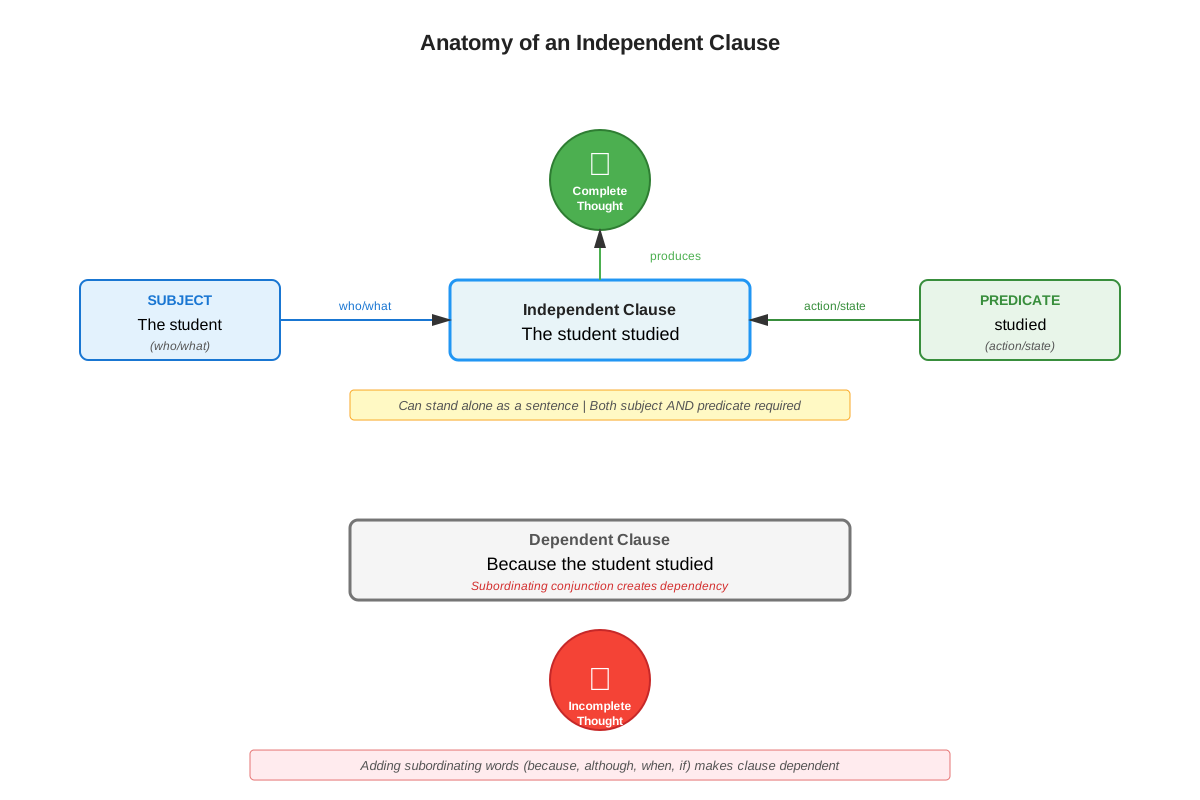
An independent clause contains a subject (the noun or pronoun performing the action) and a predicate (the verb and any associated words describing the action or state of being) while expressing a complete thought that requires no additional information to make sense. The completeness criterion distinguishes independent clauses from dependent clauses, which contain subjects and predicates but cannot stand alone due to subordinating elements.
Consider these examples:
- "The student studied diligently" (subject: student; predicate: studied diligently; complete thought: yes)
- "She earned a perfect score" (subject: She; predicate: earned a perfect score; complete thought: yes)
- "Because the test was challenging" (subject: test; predicate: was challenging; complete thought: no—this is a dependent clause)
The independent clause must be able to function as a standalone sentence. If a reader encounters an independent clause in isolation, they should feel no confusion or sense that information is missing. This completeness test serves as the primary diagnostic tool for identifying independent clauses on the ACT.
Methods for Connecting Independent Clauses
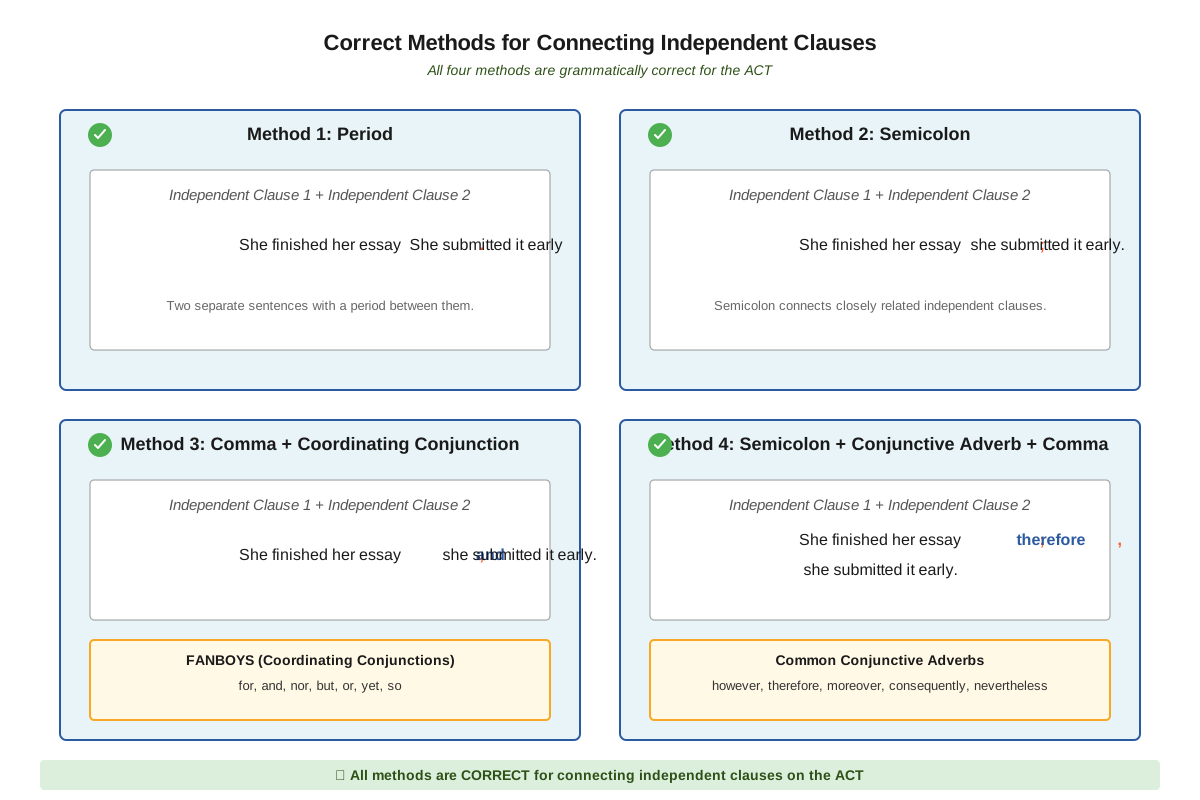
The ACT extensively tests the four grammatically correct methods for connecting independent clauses. Understanding each method and its appropriate usage is essential for success.
| Connection Method | Punctuation/Words Required | Example | ACT Frequency |
|---|---|---|---|
| Period | Period (.) | "The rain stopped. The sun emerged." | High |
| Semicolon | Semicolon (;) | "The rain stopped; the sun emerged." | Very High |
| Comma + Coordinating Conjunction | Comma + FANBOYS | "The rain stopped, and the sun emerged." | Very High |
| Colon | Colon (:) when second clause explains first | "The forecast was accurate: rain fell all morning." | Medium |
Coordinating conjunctions (remembered through the acronym FANBOYS: For, And, Nor, But, Or, Yet, So) are the only conjunctions that can connect two independent clauses with a comma. This represents one of the most tested rules on the ACT. Using a comma alone without a coordinating conjunction creates a comma splice, a serious grammatical error that the ACT frequently includes as an incorrect answer choice.
Run-On Sentences and Comma Splices
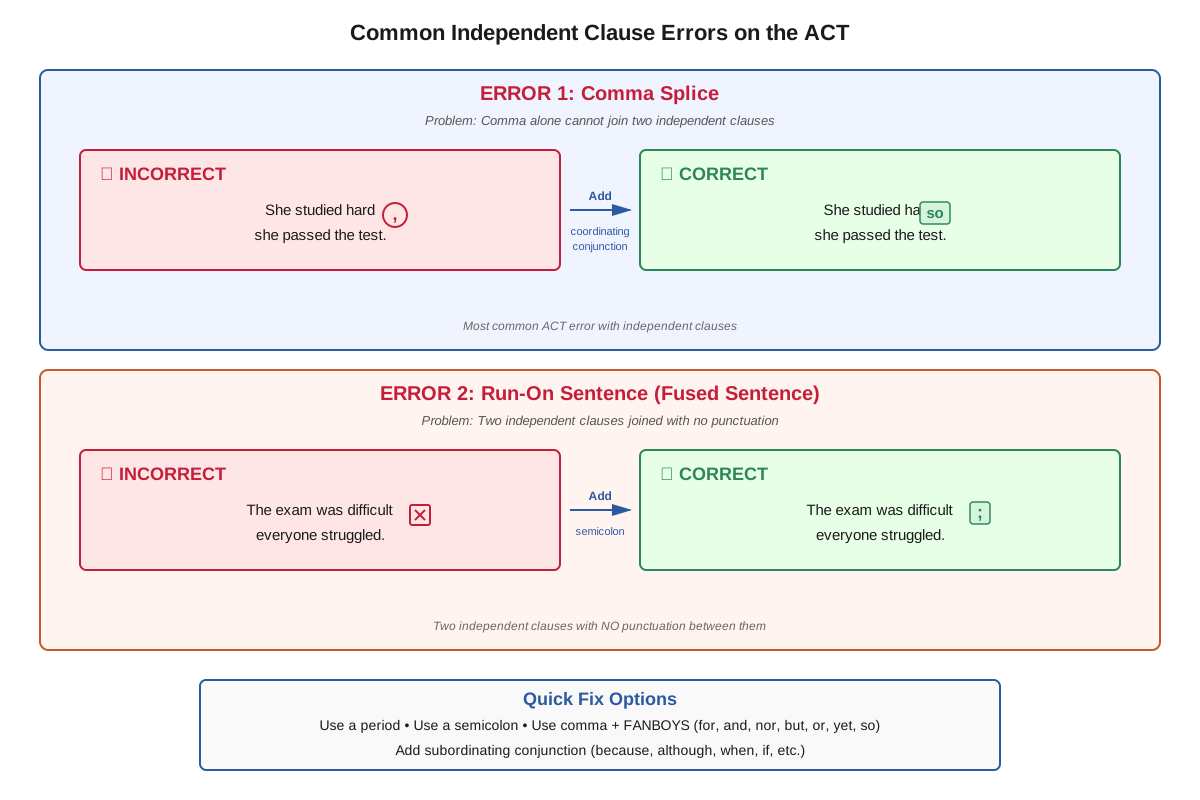
A run-on sentence occurs when two or more independent clauses are joined without proper punctuation or conjunctions. The ACT tests two primary types:
Fused sentences join independent clauses with no punctuation whatsoever:
- Incorrect: "The experiment succeeded the hypothesis was confirmed"
- Correct: "The experiment succeeded. The hypothesis was confirmed."
Comma splices join independent clauses with only a comma (without a coordinating conjunction):
- Incorrect: "The experiment succeeded, the hypothesis was confirmed"
- Correct: "The experiment succeeded, and the hypothesis was confirmed."
Both errors violate fundamental rules of sentence structure and appear frequently in ACT questions. Students must develop the ability to quickly scan sentences for these patterns, particularly when answer choices offer different punctuation options.
Semicolon Usage with Independent Clauses
The semicolon represents the most frequently tested punctuation mark for connecting independent clauses on the ACT. A semicolon can connect two independent clauses when they are closely related in meaning and of approximately equal importance. The semicolon essentially functions as a "soft period"—stronger than a comma but weaker than a period.
Key rules for semicolons with independent clauses:
- Both clauses must be independent (complete thoughts)
- The clauses should be closely related in content or meaning
- No coordinating conjunction should follow the semicolon
- The word following the semicolon is not capitalized (unless it's a proper noun)
Example: "The library closes at midnight; students must plan accordingly."
The ACT often includes incorrect answer choices that use semicolons before dependent clauses or after phrases that aren't complete thoughts. Students must verify that both sides of a semicolon contain independent clauses.
Conjunctive Adverbs and Transitional Phrases
Conjunctive adverbs (however, therefore, moreover, nevertheless, consequently, furthermore, etc.) and transitional phrases create a common trap on the ACT. These words cannot connect two independent clauses with only a comma—they require either a semicolon before them or a period, making the second clause a new sentence.
Incorrect: "The data was inconclusive, however, the researchers continued their work."
Correct: "The data was inconclusive; however, the researchers continued their work."
Correct: "The data was inconclusive. However, the researchers continued their work."
This pattern appears frequently because it sounds correct to many students who confuse conjunctive adverbs with coordinating conjunctions. The ACT capitalizes on this confusion by offering comma splice options with conjunctive adverbs as tempting incorrect answers.
Concept Relationships
Independent clauses serve as the building blocks for all sentence types and connect directly to multiple grammatical concepts tested on the ACT. Understanding these relationships creates a comprehensive framework for sentence structure mastery.
Independent clauses → Sentence types: Simple sentences consist of one independent clause; compound sentences contain two or more independent clauses connected properly; complex sentences combine independent clauses with dependent clauses; compound-complex sentences include multiple independent clauses and at least one dependent clause.
Independent clauses ↔ Dependent clauses: These clause types exist in contrast to each other. Dependent clauses contain subjects and predicates but include subordinating conjunctions (because, although, when, if, etc.) or relative pronouns (who, which, that) that prevent them from standing alone. Recognizing this distinction enables students to apply appropriate punctuation rules.
Independent clauses → Punctuation rules: The methods for connecting independent clauses determine correct punctuation usage. This relationship flows in both directions—identifying independent clauses dictates punctuation choices, while punctuation questions often require identifying whether clauses are independent.
Independent clauses → Run-on sentences and fragments: Understanding independent clauses enables recognition of sentence boundary errors. Run-ons occur when independent clauses connect improperly; fragments occur when dependent clauses or phrases are punctuated as complete sentences.
Independent clauses → Parallel structure: When multiple independent clauses appear in a series or list, they must maintain parallel grammatical structure, another frequently tested ACT concept.
Quick check — test yourself on Independent clauses so far.
Try Flashcards →High-Yield Facts
⭐ An independent clause must contain both a subject and a predicate and express a complete thought that can stand alone as a sentence.
⭐ Two independent clauses can be connected with a semicolon, a comma plus a coordinating conjunction (FANBOYS), or a period—these are the three most common correct methods on the ACT.
⭐ A comma splice (joining two independent clauses with only a comma) is always incorrect on the ACT and appears frequently as a wrong answer choice.
⭐ Conjunctive adverbs like "however," "therefore," and "moreover" cannot connect two independent clauses with only a comma—they require a semicolon or period before them.
⭐ The FANBOYS coordinating conjunctions (For, And, Nor, But, Or, Yet, So) are the only conjunctions that can connect independent clauses with a comma.
- A semicolon can only connect two independent clauses; using a semicolon before a dependent clause is incorrect.
- Run-on sentences (fused sentences) join independent clauses without any punctuation and represent serious grammatical errors.
- A colon can connect two independent clauses when the second clause explains, illustrates, or elaborates on the first clause.
- The word following a semicolon should not be capitalized unless it's a proper noun or the start of a quoted sentence.
- Independent clause questions appear 8-12 times per ACT English test, making this one of the highest-yield grammar topics.
- When a sentence contains a conjunctive adverb like "however" between two clauses, the correct punctuation is semicolon + however + comma.
- Subordinating conjunctions (because, although, since, while, etc.) create dependent clauses, not independent clauses.
- The ACT frequently tests whether students can identify that both clauses on either side of punctuation are independent before selecting punctuation.
Common Misconceptions
Misconception: Any two sentences can be connected with a comma if they're related in meaning.
Correction: Two independent clauses require either a comma with a coordinating conjunction, a semicolon, or a period. A comma alone always creates a comma splice, regardless of how closely related the ideas are.
Misconception: Words like "however" and "therefore" function the same way as "and" and "but" when connecting clauses.
Correction: Conjunctive adverbs (however, therefore, moreover, etc.) are not coordinating conjunctions and cannot connect two independent clauses with only a comma. They require a semicolon before them or must begin a new sentence.
Misconception: A semicolon can be used whenever there's a pause in the sentence or before a list.
Correction: Semicolons specifically connect two independent clauses or separate items in a complex list. Both sides of a semicolon must be complete thoughts that could stand alone as sentences (except in complex lists).
Misconception: Long sentences are automatically run-ons, and short sentences cannot be run-ons.
Correction: Sentence length doesn't determine whether a run-on exists. A run-on occurs when two or more independent clauses are improperly connected, regardless of the sentence's total length. Even short sentences like "I ran she walked" are run-ons.
Misconception: If a sentence has a subject and verb, it's automatically an independent clause.
Correction: While independent clauses must have subjects and verbs, dependent clauses also contain these elements. The presence of subordinating conjunctions (because, although, when, etc.) or relative pronouns (who, which, that) creates dependent clauses that cannot stand alone.
Misconception: The ACT accepts comma splices if the clauses are very short or closely related.
Correction: The ACT never accepts comma splices under any circumstances. This is an absolute rule with no exceptions based on clause length, relationship, or style preferences.
Worked Examples
Example 1: Identifying and Correcting a Comma Splice
Original sentence: "The research team collected extensive data, they analyzed the results for three months."
Step 1: Identify the clauses and their types.
- First clause: "The research team collected extensive data" (subject: team; verb: collected; complete thought: yes → independent clause)
- Second clause: "they analyzed the results for three months" (subject: they; verb: analyzed; complete thought: yes → independent clause)
Step 2: Identify the current connection method.
- The clauses are connected with only a comma, creating a comma splice.
Step 3: Evaluate correction options.
- Option A: "data, they" (comma splice—incorrect)
- Option B: "data; they" (semicolon connecting two independent clauses—correct)
- Option C: "data they" (run-on/fused sentence—incorrect)
- Option D: "data, and they" (comma + coordinating conjunction—correct)
Step 4: Select the best answer.
Both options B and D are grammatically correct. On the ACT, if both appear as answer choices, consider context and emphasis. The semicolon (option B) emphasizes the close relationship between data collection and analysis. The comma + "and" (option D) creates a more straightforward connection. Both would be acceptable; the ACT would typically include only one of these as an option.
Learning objective addressed: This example demonstrates how to identify independent clauses, recognize comma splices, and apply correct connection methods—core skills for ACT success.
Example 2: Distinguishing Between Coordinating Conjunctions and Conjunctive Adverbs
Original sentence: "The experiment failed to produce expected results, however the scientists gained valuable insights."
Step 1: Identify the word connecting the clauses.
- "However" is a conjunctive adverb, not a coordinating conjunction (not part of FANBOYS).
Step 2: Determine if the clauses are independent.
- First clause: "The experiment failed to produce expected results" (independent—complete thought)
- Second clause: "the scientists gained valuable insights" (independent—complete thought)
Step 3: Apply the rule for conjunctive adverbs.
- Conjunctive adverbs cannot connect two independent clauses with only a comma. They require a semicolon before them or must start a new sentence.
Step 4: Evaluate correction options.
- Option A: "results, however the" (comma splice—incorrect)
- Option B: "results; however, the" (semicolon before conjunctive adverb, comma after—correct)
- Option C: "results, and however the" (incorrect—"and however" is redundant and awkward)
- Option D: "results however the" (run-on—incorrect)
Correct answer: Option B properly uses a semicolon to connect the independent clauses, with "however" functioning as a transitional word within the second clause.
Learning objective addressed: This example illustrates the critical distinction between coordinating conjunctions and conjunctive adverbs, a frequent source of ACT questions and student errors.
Exam Strategy
Recognition Triggers
When approaching ACT English questions, certain patterns signal that independent clause knowledge is being tested:
Punctuation underlined between two clauses: When the underlined portion includes or immediately precedes punctuation between two groups of words with subjects and verbs, immediately check whether both clauses are independent. This pattern appears in 60-70% of independent clause questions.
Answer choices with varying punctuation: When answer choices offer different punctuation marks (comma vs. semicolon vs. period vs. no punctuation), the question almost certainly tests independent clause connection rules.
Conjunctive adverbs in or near underlined portions: Words like "however," "therefore," "moreover," "consequently," and "nevertheless" frequently appear in questions testing whether students understand these cannot connect independent clauses with only a comma.
Systematic Approach
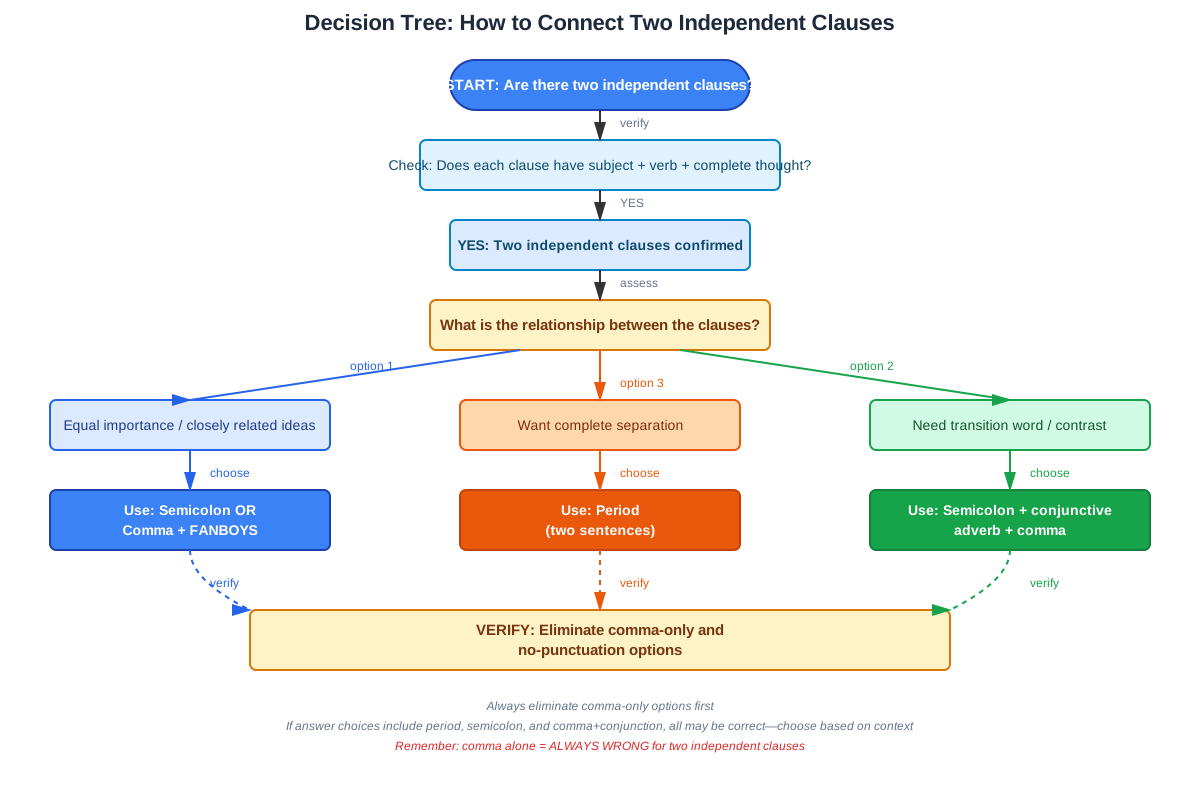
Follow this process for every suspected independent clause question:
- Identify clause boundaries: Locate subjects and verbs on both sides of the punctuation or conjunction.
- Test for independence: Ask whether each clause expresses a complete thought that could stand alone as a sentence.
- Check the connection method: Identify what currently connects the clauses (comma, semicolon, conjunction, etc.).
- Apply the rules: Verify that the connection method is appropriate for two independent clauses.
- Eliminate incorrect options: Remove any answer choices that create comma splices, run-ons, or use semicolons incorrectly.
Time-Saving Techniques
Quick Test: If you can replace the punctuation with a period and create two grammatically correct sentences, you have two independent clauses that require proper connection.
Develop the habit of scanning for FANBOYS when you see commas between clauses. If a comma appears without a coordinating conjunction, it's likely incorrect. This pattern recognition saves 10-15 seconds per question.
When semicolons appear in answer choices, immediately verify that both sides are independent clauses. If either side is a fragment or dependent clause, eliminate that option immediately.
Common Trap Answers
The ACT consistently includes these incorrect options:
- Comma splices with conjunctive adverbs (", however" or ", therefore")
- Semicolons before dependent clauses
- Commas without coordinating conjunctions between independent clauses
- Run-on sentences with no punctuation
Train yourself to recognize these patterns instantly and eliminate them without extensive analysis.
Memory Techniques
FANBOYS Acronym
Remember the seven coordinating conjunctions that can connect independent clauses with a comma:
- For
- And
- Nor
- But
- Or
- Yet
- So
Visualize a group of "fan boys" holding hands (commas) to connect two independent people (clauses).
The Semicolon Test
Mnemonic: "Semi-equals-two-complete"
A semicolon equals two complete thoughts. Both sides must be independent clauses.
The Comma Splice Detector
Phrase to remember: "Comma alone = comma splice = wrong"
When you see a comma between two clauses, immediately check for a FANBOYS conjunction. If none exists, the answer is incorrect.
Conjunctive Adverb Warning
Visualization: Picture conjunctive adverbs (however, therefore, moreover) wearing stop signs. They cannot cross between independent clauses with only a comma—they need a semicolon "bridge" or must start a new sentence.
The Independence Test
Question to ask: "Can this stand alone at a party?"
If a clause can introduce itself and make complete sense without additional information (like a person at a party), it's independent. If it leaves people confused or waiting for more information, it's dependent.
Summary
Independent clauses represent the fundamental building blocks of sentence structure and constitute one of the most frequently tested concepts on the ACT English section. An independent clause contains a subject and predicate while expressing a complete thought capable of standing alone as a sentence. The ACT primarily tests whether students can identify independent clauses and apply the correct methods for connecting them: semicolons, commas with coordinating conjunctions (FANBOYS), periods, or occasionally colons when the second clause explains the first. The most common errors tested are comma splices (joining independent clauses with only a comma) and run-on sentences (joining them without proper punctuation). Students must distinguish between coordinating conjunctions, which can connect independent clauses with commas, and conjunctive adverbs like "however" and "therefore," which require semicolons or periods. Mastering independent clauses enables students to quickly identify and correct sentence structure errors, recognize proper punctuation patterns, and confidently approach 8-12 questions per test that directly assess this concept.
Key Takeaways
- Independent clauses contain subjects, predicates, and complete thoughts that can stand alone as sentences—verify all three elements before applying connection rules.
- The four correct methods for connecting independent clauses are: (1) semicolon, (2) comma + FANBOYS conjunction, (3) period, and (4) colon when the second clause explains the first.
- Comma splices (comma only between independent clauses) and run-on sentences (no punctuation between independent clauses) are always incorrect on the ACT.
- Conjunctive adverbs (however, therefore, moreover, etc.) cannot connect independent clauses with only a comma—they require semicolons or must begin new sentences.
- When answer choices offer different punctuation options, immediately test whether both clauses are independent to determine correct punctuation.
- FANBOYS (For, And, Nor, But, Or, Yet, So) are the only conjunctions that can connect independent clauses with a comma.
- Independent clause questions appear 8-12 times per ACT English test, making this one of the highest-yield topics for score improvement.
Related Topics
Dependent Clauses and Subordination: Understanding how dependent clauses function in contrast to independent clauses enables mastery of complex sentence structure and proper punctuation of subordinate elements. This topic builds directly on independent clause knowledge.
Sentence Fragments: Recognizing incomplete thoughts and understanding why they cannot stand alone as sentences requires solid comprehension of what makes clauses independent. Fragment identification represents the inverse skill of independent clause recognition.
Comma Usage Rules: Beyond connecting independent clauses, commas serve multiple functions in sentences. Mastering independent clause punctuation provides the foundation for understanding restrictive vs. non-restrictive clauses, introductory elements, and series punctuation.
Parallel Structure: When sentences contain multiple independent clauses in series or lists, they must maintain parallel grammatical structure. This advanced concept builds on the ability to identify and analyze independent clauses.
Sentence Types and Variety: Understanding how independent clauses combine with dependent clauses to create simple, compound, complex, and compound-complex sentences enables sophisticated writing and comprehension of rhetorical skills questions.
Practice CTA
Now that you've mastered the core concepts of independent clauses, it's time to reinforce your learning through active practice. Complete the practice questions to test your ability to identify independent clauses, recognize connection errors, and apply correct punctuation rules under timed conditions. Use the flashcards to drill the key rules and exceptions until they become automatic. Remember: independent clause questions appear on every ACT English section, and mastering this topic will directly improve your score. Each practice question you complete builds the pattern recognition and speed essential for test day success. Start practicing now to transform this knowledge into points!
Sign up free to keep reading
Create a free AnvayaPrep account to finish this ACT guide on Independent clauses — plus flashcards and practice questions.