Overview
Mood is one of the most frequently tested literary elements on the ACT Reading section, appearing in approximately 15-20% of all Craft and Structure questions. Understanding mood requires students to move beyond literal comprehension and engage with the emotional atmosphere an author creates through deliberate word choice, imagery, and descriptive details. On the ACT, mood questions assess a student's ability to recognize the overall feeling or emotional quality that permeates a passage, which differs from simply identifying what happens in the text.
The ACT Reading test consistently evaluates whether students can distinguish between their personal emotional reactions and the actual emotional atmosphere the author has constructed. This skill becomes particularly important when analyzing fiction passages and literary narratives, where authors carefully craft every sentence to evoke specific feelings in readers. Mood questions often appear as "tone" or "atmosphere" questions, asking students to identify words that best describe the emotional quality of a scene, paragraph, or entire passage.
Mastering mood analysis connects directly to other essential Reading skills tested on the ACT, including understanding author's purpose, analyzing word choice and diction, interpreting figurative language, and recognizing how structural elements contribute to meaning. Students who excel at identifying mood demonstrate sophisticated reading comprehension that extends beyond surface-level understanding to encompass the nuanced emotional dimensions of literary texts.
Learning Objectives
- [ ] Identify when Mood is being tested in ACT Reading questions
- [ ] Explain the core rule or strategy behind determining Mood in passages
- [ ] Apply Mood analysis to ACT-style questions accurately
- [ ] Distinguish between mood and tone in literary passages
- [ ] Analyze how specific textual evidence creates and supports mood
- [ ] Evaluate how mood shifts within a passage and identify transition points
- [ ] Synthesize multiple mood indicators to select the most accurate answer choice
Prerequisites
- Basic vocabulary knowledge: Understanding descriptive adjectives and emotional terminology is essential for identifying and articulating mood accurately
- Literal comprehension skills: Students must grasp the basic plot, setting, and events before analyzing the emotional atmosphere surrounding them
- Understanding of connotation vs. denotation: Recognizing that words carry emotional associations beyond their dictionary definitions enables mood analysis
- Familiarity with figurative language: Metaphors, similes, and imagery often serve as primary mood-creating devices in passages
Why This Topic Matters
Understanding mood has practical applications far beyond standardized testing. In professional contexts, recognizing the emotional undertones in written communication—from business emails to policy documents—enables more effective interpretation and response. In academic settings, analyzing mood helps students engage critically with literature, historical documents, and persuasive texts across disciplines.
On the ACT Reading test, mood questions appear with remarkable consistency. Approximately 2-3 questions per test directly assess mood recognition, while many additional questions require mood awareness as part of broader comprehension. These questions typically appear in the Prose Fiction and Literary Narrative passages, though they occasionally surface in Humanities passages discussing artistic works or cultural movements.
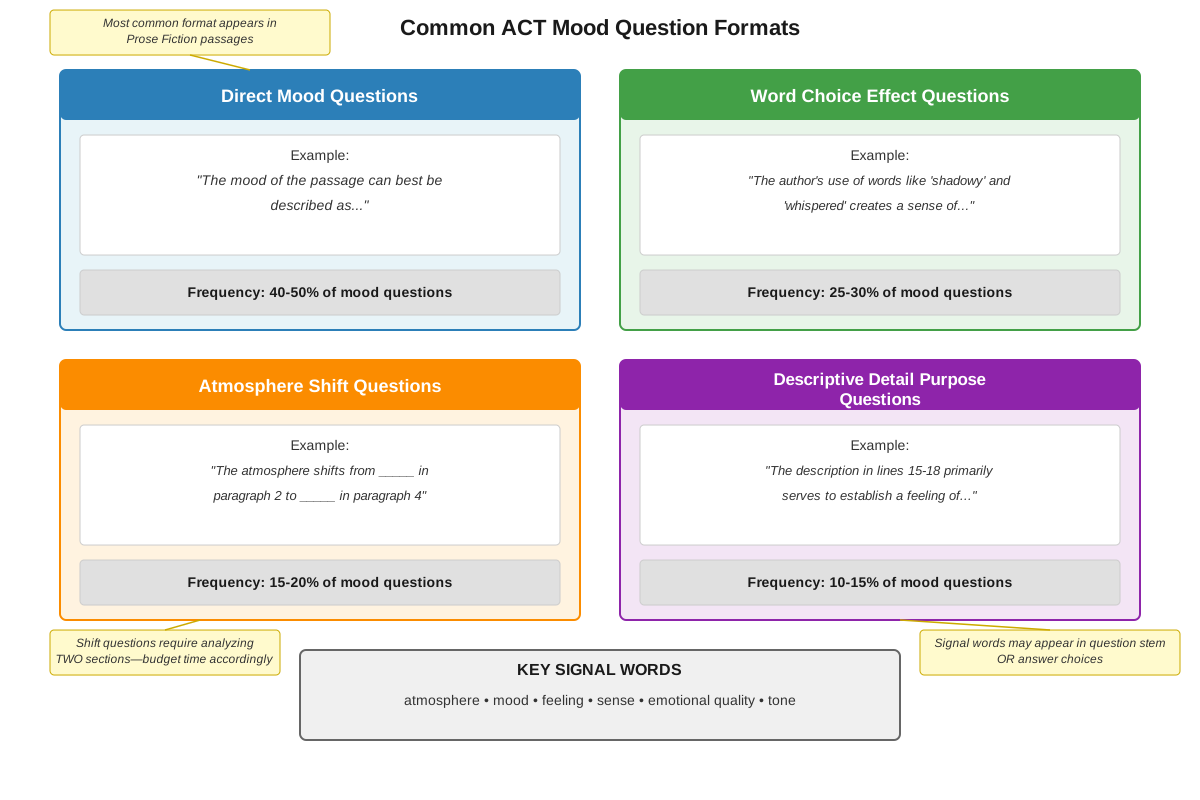
ACT mood questions manifest in several predictable formats: direct questions asking students to identify the mood of a passage or section; questions about the emotional effect of specific word choices; questions requiring students to recognize how descriptive details contribute to atmosphere; and comparative questions asking how mood shifts between paragraphs or sections. The test frequently presents answer choices with subtle distinctions—for example, distinguishing between "melancholic" and "somber," or "tense" and "anxious"—requiring precise understanding rather than approximate recognition.
Core Concepts
Defining Mood in Literary Analysis
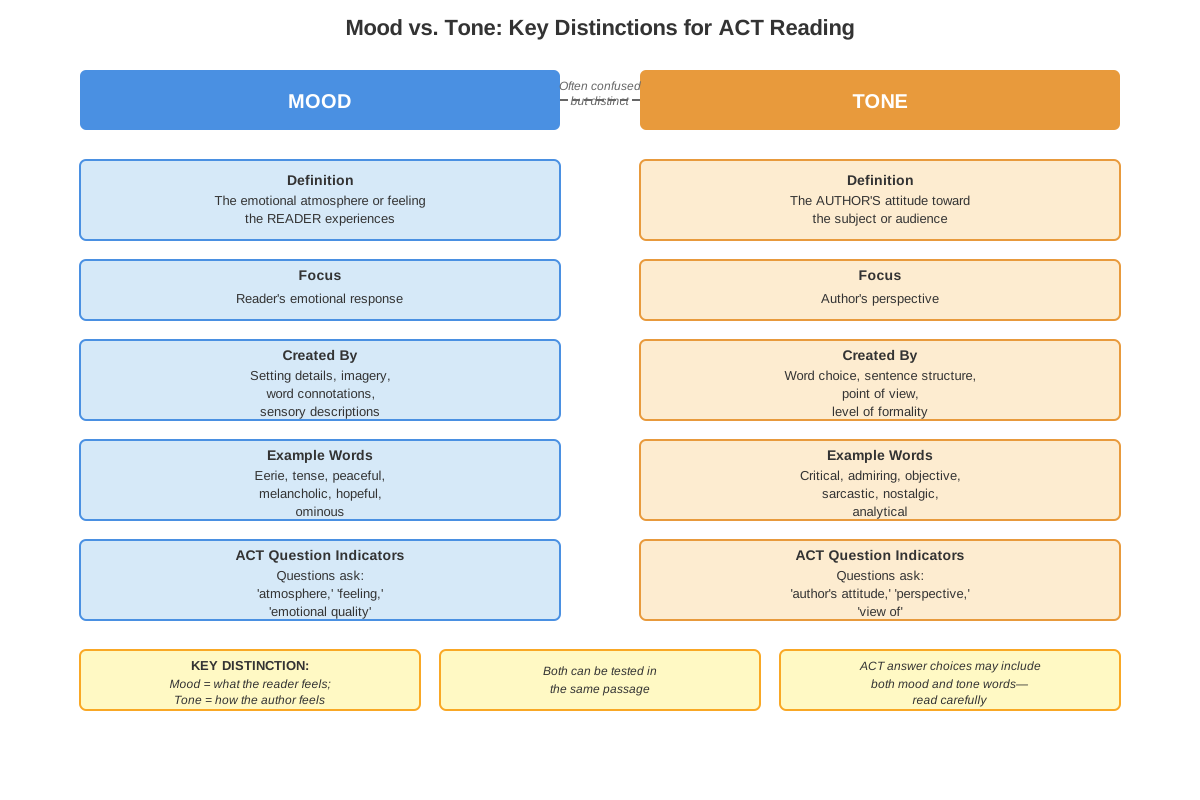
Mood refers to the emotional atmosphere or feeling that pervades a literary work and affects the reader's emotional response. Unlike tone (which reflects the author's or narrator's attitude), mood describes the overall feeling created by the combination of setting, imagery, word choice, and descriptive details. When analyzing mood, readers should ask: "What emotion does this passage make me feel?" or "What emotional atmosphere has the author created here?"
The ACT consistently tests whether students can identify mood by examining textual evidence rather than relying on personal reactions. A passage might describe a character experiencing joy, but if the author uses ominous imagery and foreboding language, the mood remains dark or tense despite the character's emotional state. This distinction proves crucial for answering questions correctly.
Components That Create Mood
Multiple literary elements work together to establish and maintain mood throughout a passage:
Diction and Word Choice: Authors select specific words for their emotional connotations. Compare "the house stood on the hill" with "the house loomed over the valley"—the second creates a more ominous mood through the verb "loomed." On the ACT, students must recognize how individual word choices accumulate to create overall atmosphere.
Imagery and Sensory Details: Descriptions appealing to the five senses powerfully establish mood. Dark, cold, damp imagery typically creates somber or foreboding moods, while bright, warm, fragrant descriptions often establish cheerful or peaceful atmospheres. ACT passages frequently use weather, lighting, and physical sensations as mood indicators.
Setting and Atmosphere: The physical environment described in a passage significantly influences mood. A cramped, dusty attic creates different feelings than a sun-drenched meadow. The ACT often includes detailed setting descriptions specifically to establish mood, making these sections high-yield for answering questions.
Pacing and Sentence Structure: Short, choppy sentences can create tension or urgency, while long, flowing sentences might establish a dreamy or contemplative mood. The rhythm of prose contributes to emotional atmosphere in ways students must recognize.
Common Mood Categories on the ACT
The ACT Reading test draws from a relatively predictable range of moods. Understanding these categories helps students quickly identify correct answers:
| Mood Category | Common Descriptors | Textual Indicators |
|---|---|---|
| Positive/Uplifting | Joyful, optimistic, peaceful, content, hopeful | Bright imagery, warm colors, pleasant sensory details, positive connotations |
| Negative/Dark | Gloomy, somber, melancholic, depressing, bleak | Dark imagery, cold sensations, negative connotations, isolation |
| Tense/Suspenseful | Anxious, ominous, foreboding, uneasy, threatening | Foreshadowing, uncertain outcomes, danger signals, short sentences |
| Nostalgic/Reflective | Wistful, contemplative, reminiscent, bittersweet | Past tense, memory language, contrasts between past and present |
| Mysterious/Eerie | Enigmatic, strange, unsettling, supernatural, cryptic | Ambiguous details, unexplained phenomena, shadowy imagery |
Distinguishing Mood from Related Concepts
Students frequently confuse mood with tone, theme, or character emotion. Understanding these distinctions prevents common errors:
Mood vs. Tone: Tone reflects the author's or narrator's attitude toward the subject matter (sarcastic, serious, humorous), while mood describes the emotional atmosphere experienced by the reader. A passage might have a humorous tone while creating an uncomfortable mood.
Mood vs. Character Emotion: A character might feel happy, but if the author surrounds that happiness with ominous imagery and foreshadowing, the mood remains tense or foreboding. The ACT specifically tests whether students can separate character feelings from overall atmosphere.
Mood vs. Theme: Theme represents the central idea or message of a work, while mood describes its emotional quality. A passage about loss (theme) might have a peaceful, accepting mood rather than a sad one.
Tracking Mood Shifts
Sophisticated ACT passages often feature mood changes that signal important narrative developments. Students must recognize transition points where mood shifts occur:
Transitional Indicators: Words like "but," "however," "suddenly," "then," or "until" often signal mood changes. Paragraph breaks frequently mark shifts in emotional atmosphere. The ACT may ask students to identify where mood changes or to describe the mood of specific sections rather than entire passages.
Analyzing Mood Progression: Some passages move from one mood to another deliberately—from tense to relieved, from melancholic to hopeful, from mysterious to clear. Recognizing these progressions helps students answer questions about passage structure and author's purpose.
Concept Relationships
Mood analysis serves as a foundational skill that connects to virtually every other aspect of ACT Reading comprehension. Understanding mood requires and reinforces vocabulary knowledge, as students must recognize emotional connotations of descriptive words. This vocabulary foundation → enables mood recognition → which supports understanding of author's purpose (why create this emotional atmosphere?) → which connects to theme analysis (what larger meaning does this mood support?).
The relationship between mood and textual evidence proves particularly important: specific details and word choices → create and support mood → which students must identify using those same details as evidence. This circular relationship means that mood questions often require students to work backward from their emotional impression to locate the textual support that created it.
Mood analysis also connects forward to more advanced skills like evaluating narrative perspective (how does point of view affect mood?), analyzing structure (how do mood shifts organize the passage?), and understanding character development (how does mood reflect or contrast with character emotions?). Students who master mood recognition find these advanced concepts more accessible because they've developed sensitivity to the emotional dimensions of texts.
High-Yield Facts
⭐ Mood describes the emotional atmosphere created for the reader, not the author's attitude or character's feelings
⭐ Word choice (diction) and imagery are the two most powerful mood-creating elements tested on the ACT
⭐ The ACT frequently includes answer choices that confuse mood with tone or character emotion
⭐ Mood questions often ask about specific sections rather than entire passages, requiring careful attention to question scope
⭐ Textual evidence for mood typically appears in descriptive passages rather than dialogue or action sequences
- Mood can shift within a passage, and the ACT may test recognition of these transitions
- Weather, lighting, and temperature descriptions almost always contribute to mood establishment
- The most common mood categories on the ACT are tense/suspenseful, nostalgic/reflective, and somber/melancholic
- Answer choices for mood questions typically include subtle distinctions requiring precise vocabulary knowledge
- Mood questions frequently use phrases like "the atmosphere can best be described as," "the overall feeling is," or "the passage creates a sense of"
- Negative moods appear more frequently in ACT passages than positive ones, particularly in literary fiction
- Students should eliminate answer choices that describe only part of the passage rather than the dominant mood
- Mood analysis requires synthesizing multiple details rather than focusing on single words or sentences
Quick check — test yourself on Mood so far.
Try Flashcards →Common Misconceptions
Misconception: Mood and tone are the same thing and can be used interchangeably.
Correction: Mood refers to the emotional atmosphere created for the reader, while tone reflects the author's or narrator's attitude toward the subject. A passage can have a sarcastic tone while creating an uncomfortable mood, or a serious tone while establishing a peaceful mood.
Misconception: The mood of a passage matches whatever emotion the main character is experiencing.
Correction: Character emotions and passage mood often differ deliberately. An author might describe a character's happiness using ominous imagery and foreshadowing, creating a tense mood that contrasts with the character's feelings. The ACT specifically tests this distinction.
Misconception: Mood questions ask for personal emotional reactions to the passage.
Correction: The ACT asks students to identify the mood the author has created through specific textual evidence, not to describe their own feelings. The correct answer must be supported by concrete details from the passage, regardless of personal response.
Misconception: The mood of a passage remains constant throughout.
Correction: Many ACT passages feature mood shifts that signal important narrative developments. Students must pay attention to question scope—whether asking about the entire passage, a specific paragraph, or a particular section—and recognize where mood changes occur.
Misconception: Any descriptive word that sounds literary or sophisticated is a good answer for mood questions.
Correction: The correct answer must precisely match the emotional atmosphere created by textual evidence. "Melancholic" and "somber" both sound appropriate for sad passages, but only one will accurately reflect the specific type of sadness the author has created. Precision matters more than sophistication.
Misconception: Mood can be determined by reading only the first and last paragraphs.
Correction: While opening and closing sections often establish and reinforce mood, the ACT frequently tests mood in middle sections or asks about mood shifts. Complete, careful reading of the relevant passage sections is essential for accurate mood identification.
Worked Examples
Example 1: Identifying Mood in a Descriptive Passage
Passage Excerpt:
"The old library stood silent in the afternoon shadows, dust motes drifting lazily through shafts of amber light that filtered between heavy curtains. The musty scent of aging paper filled the air, and the leather-bound volumes lining the walls seemed to whisper of forgotten stories and distant times. Sarah ran her fingers along the spines, feeling the cracked leather and faded gilt lettering, each book a doorway to worlds that had once captivated readers now long gone."
Question: The mood of this passage can best be described as:
A) Melancholic and depressing
B) Nostalgic and contemplative
C) Mysterious and foreboding
D) Peaceful and content
Analysis:
First, identify the mood-creating elements:
- Imagery: "dust motes drifting lazily," "amber light," "heavy curtains"—creates a quiet, still atmosphere
- Sensory details: "musty scent," "cracked leather," "faded gilt"—emphasizes age and the passage of time
- Word choice: "whisper," "forgotten," "distant times," "long gone"—suggests reflection on the past
- Overall feeling: The passage creates a sense of looking back, of connection to the past, but without sadness
Eliminate incorrect answers:
- (A) Melancholic and depressing: While the passage mentions things that are "forgotten" and "long gone," the tone isn't sad. The "amber light" and "lazily drifting" dust create a peaceful rather than depressing atmosphere.
- (C) Mysterious and foreboding: Nothing suggests danger or threat. The atmosphere is calm and reflective, not ominous.
- (D) Peaceful and content: While there is peacefulness, this misses the backward-looking, memory-focused quality that dominates the passage.
Correct Answer: B - The passage creates a nostalgic and contemplative mood through its focus on the past ("forgotten stories," "distant times," "readers now long gone"), combined with peaceful, reflective imagery. The mood invites quiet reflection on history and memory rather than creating sadness or mystery.
Example 2: Recognizing Mood Shift
Passage Excerpt:
"The morning had begun with promise—bright sunshine streaming through the kitchen windows, the cheerful clatter of breakfast dishes, and Mother humming as she packed our lunches. But by afternoon, everything had changed. Dark clouds gathered on the horizon, and a cold wind rattled the windowpanes. Mother stood at the window, her face pale and drawn, staring at the empty driveway. The clock ticked loudly in the silence, each second stretching longer than the last."
Question: The mood shifts from:
A) Peaceful to mysterious
B) Optimistic to anxious
C) Content to melancholic
D) Joyful to angry
Analysis:
Identify the two distinct moods:
First section mood indicators:
- "bright sunshine," "cheerful clatter," "humming"—positive, happy imagery
- "promise"—suggests hope and positive expectations
- Active, pleasant sensory details
Second section mood indicators:
- "Dark clouds," "cold wind," "rattled"—threatening, uncomfortable imagery
- "pale and drawn," "empty driveway"—suggests worry and waiting
- "ticked loudly," "silence," "stretching"—creates tension and unease
- The shift is marked by "But by afternoon, everything had changed"
Evaluate answer choices:
- (A) Peaceful to mysterious: The first section is more actively happy than merely peaceful, and the second creates tension rather than mystery.
- (C) Content to melancholic: "Melancholic" suggests sadness and reflection, but the second section creates worry and tension, not sadness.
- (D) Joyful to angry: Nothing in the second section suggests anger—the mood is worried and tense, not hostile.
Correct Answer: B - The passage shifts from optimistic (morning "began with promise," cheerful activities) to anxious (ominous weather imagery, mother's worried appearance, emphasis on waiting and time passing). The mood progression moves from hopeful expectation to worried tension.
Exam Strategy
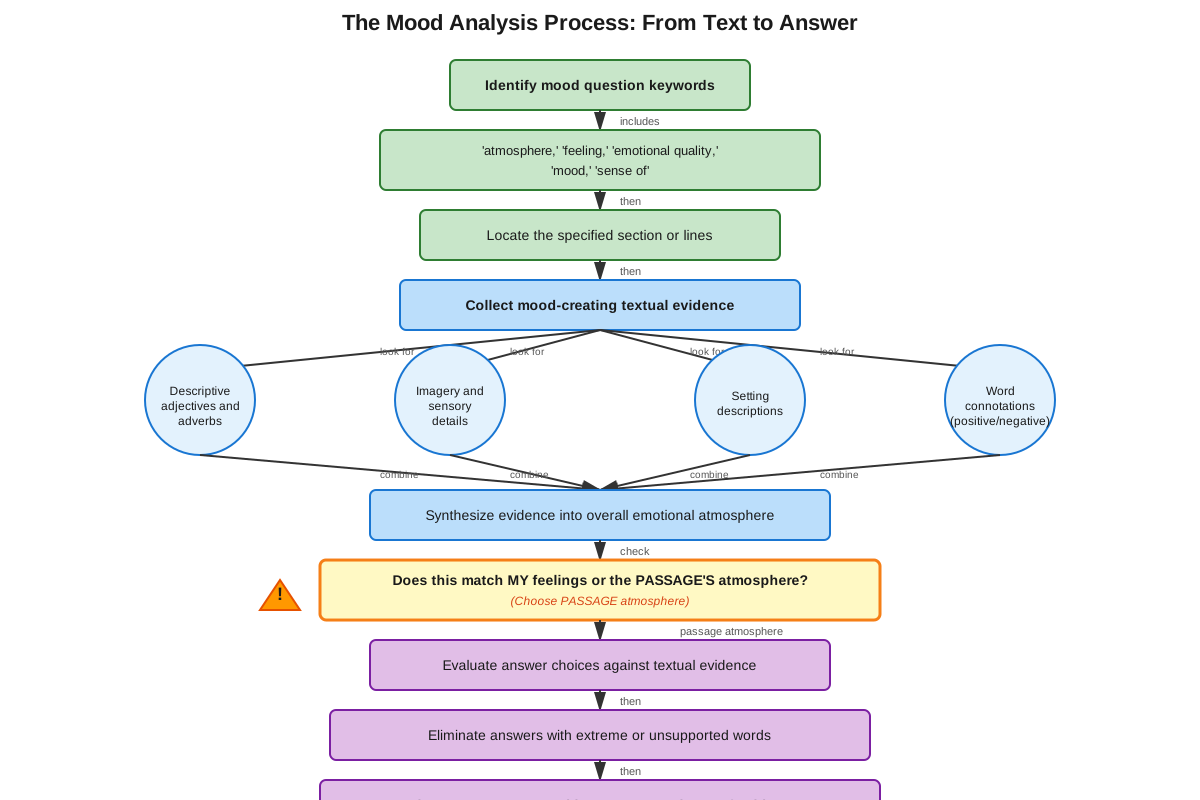
When approaching ACT mood questions, follow this systematic process:
Step 1: Identify the Question Scope - Determine whether the question asks about the entire passage, a specific paragraph, or a particular section. Underline or note the scope in the question stem. Many students miss mood questions by analyzing the wrong section of the passage.
Step 2: Locate Descriptive Language - Scan the relevant section for imagery, sensory details, and descriptive word choices. These elements create mood more reliably than dialogue or action sequences. Pay special attention to:
- Weather and lighting descriptions
- Color words and their connotations
- Adjectives describing settings and atmospheres
- Verbs with emotional connotations
Step 3: Synthesize Multiple Details - Mood emerges from the accumulation of details, not single words. Identify at least 3-4 specific textual elements that contribute to the emotional atmosphere before selecting an answer.
Exam Tip: If you can only find one or two details supporting a mood, you're probably on the wrong track. The correct answer will have multiple supporting elements throughout the relevant section.
Trigger Words and Phrases to watch for in question stems:
- "The atmosphere can best be described as..."
- "The overall feeling of the passage is..."
- "The mood shifts from... to..."
- "The author creates a sense of..."
- "The emotional quality of this section is..."
- "The passage evokes a feeling of..."
Process of Elimination Strategy:
- Eliminate answers that describe character emotions rather than overall atmosphere
- Eliminate answers that describe tone (author's attitude) rather than mood
- Eliminate answers that apply to only part of the relevant section
- Between remaining choices, select the answer with the most precise vocabulary match to textual evidence
Time Allocation: Mood questions typically require 45-60 seconds. Spend 20 seconds locating and reviewing relevant textual evidence, 15 seconds evaluating answer choices, and 10 seconds confirming your selection with specific details. Don't rush—mood questions reward careful analysis.
Common Trap Answers:
- Answers that sound sophisticated but don't match textual evidence
- Answers that describe only the beginning or end of the relevant section
- Answers that confuse mood with theme or character development
- Answers with extreme emotional descriptors when the passage is more moderate
Memory Techniques
DIPS Acronym for identifying mood-creating elements:
- Diction (word choice and connotations)
- Imagery (sensory details and descriptions)
- Pacing (sentence structure and rhythm)
- Setting (physical environment and atmosphere)
The "Weather Report" Visualization: Think of mood as the emotional weather of a passage. Just as meteorologists synthesize multiple data points (temperature, pressure, humidity) to describe weather, readers synthesize multiple textual elements to identify mood. This helps students remember to look for multiple supporting details rather than single words.
Mood vs. Tone Memory Device:
- Mood = Me (how it makes the reader feel)
- Tone = Them (the author's attitude)
The "Three-Detail Rule": Before selecting a mood answer, identify three specific textual details that support it. If you can't find three, reconsider your choice. This prevents hasty, unsupported answers.
Color-Coding Mental Strategy: Mentally associate mood categories with colors:
- Positive/uplifting = Yellow (sunshine)
- Negative/dark = Gray (clouds)
- Tense/suspenseful = Red (danger)
- Nostalgic/reflective = Sepia (old photographs)
- Mysterious/eerie = Purple (twilight)
This visualization helps students quickly categorize passages and eliminate incompatible answer choices.
Summary
Mood represents the emotional atmosphere an author creates through deliberate choices in diction, imagery, setting, and pacing. On the ACT Reading test, mood questions assess whether students can identify this atmosphere using textual evidence rather than personal reactions. Success requires distinguishing mood from related concepts like tone (author's attitude), theme (central message), and character emotion (what characters feel). The most effective approach involves identifying the question scope, locating multiple descriptive details that create atmosphere, and synthesizing these elements to select the answer choice that most precisely matches the textual evidence. Students must recognize that mood can shift within passages and that the ACT frequently tests these transitions. The key to mastering mood questions lies in careful attention to connotative word choices, sensory imagery, and setting descriptions, combined with precise vocabulary knowledge that enables distinction between subtle answer choices. By systematically analyzing textual evidence and avoiding common misconceptions, students can consistently answer mood questions correctly and demonstrate sophisticated reading comprehension.
Key Takeaways
- Mood describes the emotional atmosphere created for readers through textual elements, distinct from tone, theme, or character emotions
- Word choice (diction) and imagery serve as the primary mood-creating devices tested on the ACT
- Successful mood analysis requires synthesizing multiple textual details rather than focusing on isolated words or sentences
- The ACT frequently tests mood shifts within passages, requiring attention to question scope and transition points
- Answer choices often include subtle distinctions requiring precise vocabulary knowledge and careful textual support
- Descriptive passages, particularly those involving setting and atmosphere, provide the richest evidence for mood identification
- Systematic analysis using the DIPS framework (Diction, Imagery, Pacing, Setting) ensures comprehensive mood evaluation
Related Topics
Tone and Author's Attitude: While mood focuses on the reader's emotional experience, tone examines the author's or narrator's attitude toward the subject matter. Mastering mood provides the foundation for distinguishing these closely related concepts.
Word Choice and Diction Analysis: Understanding how individual words carry emotional connotations enables more sophisticated mood recognition. This topic deepens the vocabulary skills essential for mood mastery.
Figurative Language and Imagery: Metaphors, similes, and sensory descriptions serve as primary mood-creating devices. Advanced study of figurative language enhances mood analysis capabilities.
Narrative Perspective and Point of View: The narrator's position and reliability affect how mood is established and perceived. Understanding perspective builds on mood recognition skills.
Passage Structure and Organization: Recognizing how mood shifts organize passages and signal important transitions connects mood analysis to broader structural comprehension.
Practice CTA
Now that you've mastered the core concepts of mood analysis, it's time to apply these skills to ACT-style practice questions. The practice set includes passages with varying mood types, mood shifts, and the subtle answer choice distinctions you'll encounter on test day. Work through each question systematically, using the DIPS framework and three-detail rule to support your answers. Review the flashcards to reinforce vocabulary for describing different moods and to practice distinguishing mood from related concepts. Remember: mood questions reward careful, evidence-based analysis—skills that improve with deliberate practice. You've built a strong foundation; now strengthen it through application!
Sign up free to keep reading
Create a free AnvayaPrep account to finish this ACT guide on Mood — plus flashcards and practice questions.