Overview
Understanding author's purpose is one of the most fundamental skills tested on the ACT Reading section. Every passage on the exam exists for a reason—the author wrote it with specific intentions, whether to inform, persuade, entertain, or reflect. Recognizing these intentions allows test-takers to comprehend not just what the text says, but why it was written and how the author crafted it to achieve their goals. This skill goes beyond surface-level reading comprehension and requires students to think critically about the choices authors make in tone, structure, evidence selection, and rhetorical strategies.
The ACT author's purpose questions appear consistently across all four passage types: Literary Narrative/Prose Fiction, Social Science, Humanities, and Natural Science. These questions may ask directly about the author's intent ("The author's main purpose in this passage is to...") or indirectly through questions about tone, perspective, or the function of specific paragraphs or details. Mastering this topic is essential because it serves as a foundation for understanding other Craft and Structure concepts, including point of view, rhetorical strategies, and text structure. When students can identify why an author wrote something, they can better predict what information will appear, how arguments will develop, and which details matter most.
Author's purpose questions typically account for 15-20% of the questions on any given ACT Reading test, making this a high-yield topic that directly impacts scores. Beyond the exam, this skill translates to college-level reading across disciplines, where understanding scholarly purpose, bias, and argumentation becomes critical for academic success. Students who master author's purpose develop stronger analytical reading skills that serve them throughout their educational careers.
Learning Objectives
- [ ] Identify when author's purpose is being tested in ACT Reading questions
- [ ] Explain the core rule or strategy behind determining author's purpose
- [ ] Apply author's purpose analysis to ACT-style questions accurately
- [ ] Distinguish between primary and secondary purposes within a single passage
- [ ] Recognize how textual evidence supports conclusions about author's intent
- [ ] Evaluate how different passage types typically align with specific purposes
- [ ] Analyze how tone and word choice reveal underlying authorial intentions
Prerequisites
- Basic reading comprehension: Understanding literal meaning is necessary before analyzing deeper authorial intent; students must grasp what is being said before determining why it's being said
- Familiarity with passage types: Knowing the four ACT passage categories helps predict likely purposes; narrative passages often entertain or reflect while science passages typically inform
- Understanding of main idea vs. details: Distinguishing central claims from supporting evidence enables recognition of how authors structure arguments to achieve their purpose
- Basic vocabulary knowledge: Recognizing connotation and tone requires understanding word meanings and their emotional implications
Why This Topic Matters
In real-world contexts, identifying author's purpose is essential for critical thinking and media literacy. Every article, advertisement, editorial, and social media post has an underlying purpose, and recognizing these intentions helps readers evaluate credibility, detect bias, and make informed decisions. Students who develop this skill become more discerning consumers of information in an age of abundant content with varying degrees of reliability and hidden agendas.
On the ACT Reading section, author's purpose questions appear in approximately 3-5 questions per test, distributed across the four passages. These questions carry significant weight because they often unlock understanding of other questions—when students grasp why an author wrote something, they can better answer questions about structure, tone, function of details, and rhetorical strategies. The College Board research indicates that students who score 30+ on Reading consistently demonstrate strong performance on purpose-related questions, while students scoring below 24 frequently struggle with these items.
Common manifestations of this topic on the exam include: direct purpose questions ("The author's primary purpose is to..."), functional questions about specific paragraphs or sections ("The author includes the anecdote in lines 15-20 primarily to..."), tone questions that require understanding intent, and questions about why specific evidence or examples were chosen. Author's purpose also appears implicitly in questions about passage structure, as organizational choices reflect authorial goals. Natural Science passages frequently test whether students recognize the purpose is to explain a phenomenon or present research findings, while Humanities passages often explore whether the purpose is to analyze, critique, or celebrate a cultural artifact.
Core Concepts
The Four Primary Purposes
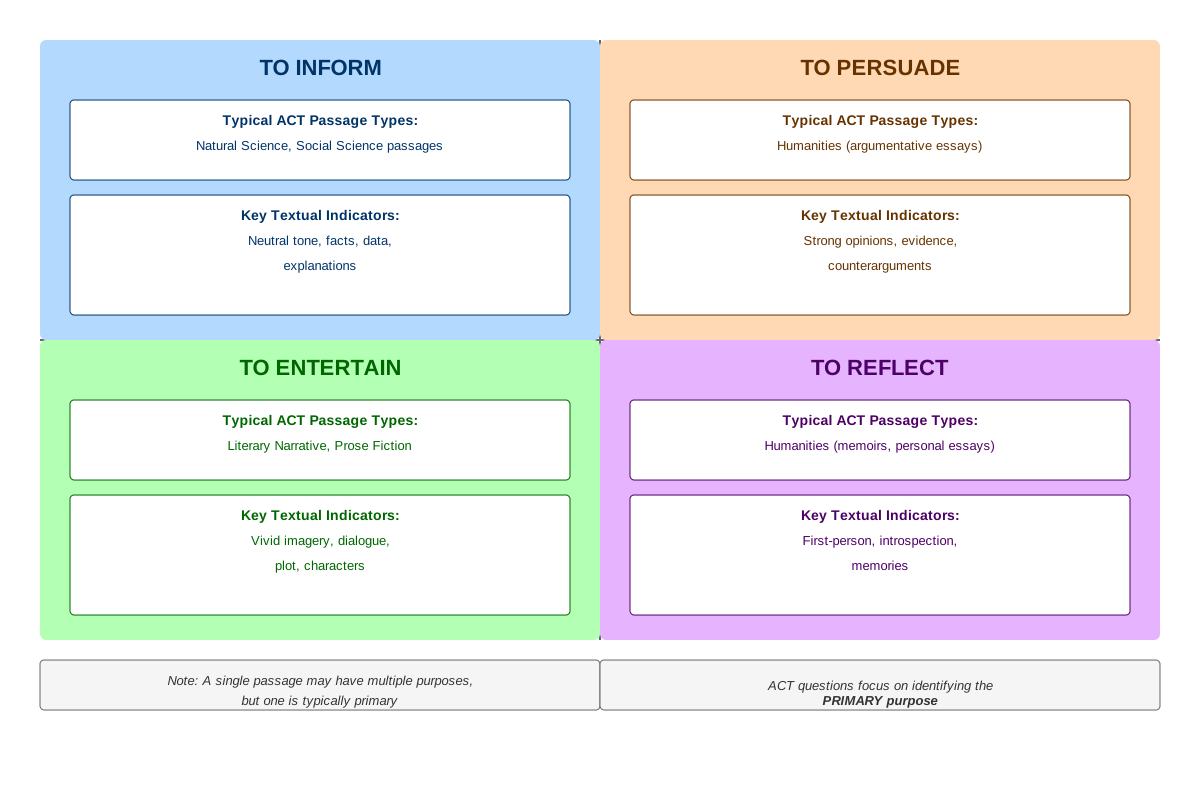
Author's purpose refers to the reason an author writes a text—the goal they hope to achieve with their audience. While purposes can be complex and multifaceted, the ACT typically focuses on four primary categories:
To Inform/Explain: The author seeks to educate readers about a topic, present factual information, or clarify a concept. This purpose dominates Natural Science and many Social Science passages. The writing is typically objective, uses clear organizational structures, and includes specific data, examples, and explanations. Key indicators include neutral tone, technical vocabulary with definitions, cause-effect relationships, and step-by-step processes.
To Persuade/Argue: The author attempts to convince readers to adopt a viewpoint, take action, or accept a claim. This purpose appears frequently in Social Science and Humanities passages. The writing includes thesis statements, supporting evidence, counterargument acknowledgment, and logical reasoning. Indicators include evaluative language, comparative analysis, rhetorical questions, and explicit or implicit calls to action.
To Entertain: The author aims to engage readers through narrative, humor, vivid description, or emotional resonance. This purpose is most common in Literary Narrative/Prose Fiction passages but can appear in creative nonfiction within Humanities. Indicators include dialogue, sensory details, figurative language, plot development, and character development.
To Reflect/Describe: The author explores personal experiences, observations, or meditations on a subject without necessarily arguing a position. This purpose often appears in memoir-style Literary Narratives and personal essays in Humanities passages. The writing includes introspection, descriptive language, and exploration of meaning without rigid argumentation.
Primary vs. Secondary Purposes
Most passages have a primary purpose—the main reason the text exists—but may also serve secondary purposes that support or complement the main goal. For example, a Natural Science passage might primarily inform readers about climate change research (inform), but secondarily persuade readers that the research is significant (persuade). A Literary Narrative might primarily entertain through storytelling (entertain), but secondarily reflect on themes of identity or belonging (reflect).
The ACT frequently tests whether students can distinguish these layers. Questions asking for the "primary" or "main" purpose require identifying the overarching goal, while questions about specific paragraphs or sections may focus on secondary purposes that serve the larger aim.
Textual Evidence for Purpose
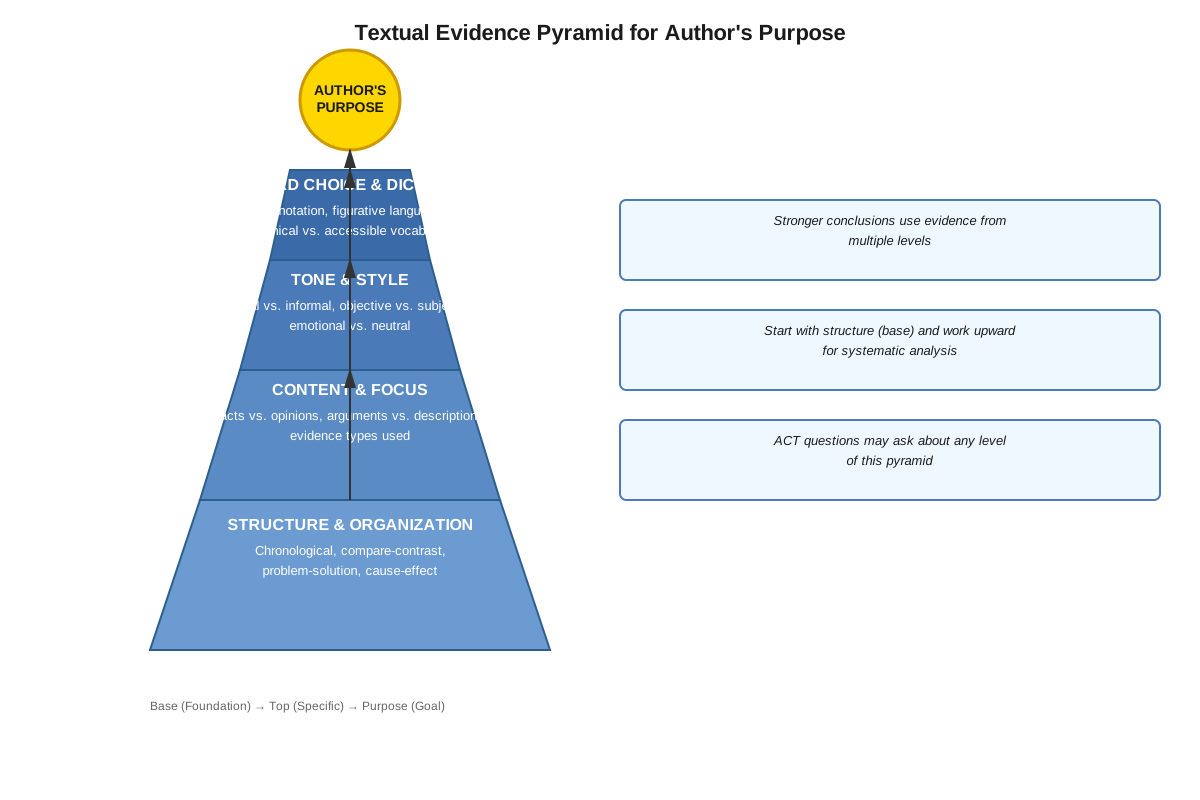
Determining author's purpose requires analyzing multiple textual elements:
| Textual Element | What It Reveals | Example Indicators |
|---|---|---|
| Tone | Author's attitude toward subject | Enthusiastic, critical, neutral, nostalgic, urgent |
| Word Choice | Emotional coloring and bias | Loaded language vs. neutral terms; "claimed" vs. "proved" |
| Structure | How information is organized | Problem-solution, chronological, compare-contrast, thesis-support |
| Evidence Type | Nature of support provided | Statistics, anecdotes, expert testimony, personal experience |
| Opening/Closing | Framing of the discussion | Hook that engages vs. thesis that argues vs. scene that immerses |
Purpose by Passage Type
While any purpose can appear in any passage type, certain patterns emerge on the ACT:
Natural Science passages overwhelmingly inform and explain. They present research findings, describe natural phenomena, or explain scientific processes. Even when discussing controversial topics, these passages typically maintain objectivity and focus on presenting information rather than advocating positions.
Social Science passages frequently inform but also commonly persuade. They may present historical analysis, psychological research, or sociological studies while also advancing interpretive arguments about significance or implications.
Humanities passages show the widest variety. They may analyze artistic works (inform/persuade), critique cultural phenomena (persuade), celebrate achievements (persuade/reflect), or explore personal connections to art and culture (reflect/entertain).
Literary Narrative/Prose Fiction passages primarily entertain through storytelling but often simultaneously reflect on human experiences, relationships, or universal themes. The purpose is rarely to inform or persuade in these passages, though character perspectives within the narrative may attempt to persuade other characters.
Identifying Purpose in Questions
The ACT signals author's purpose questions through specific language patterns:
- Direct purpose questions: "The author's main purpose is to...", "The passage can best be described as...", "The author wrote this passage primarily to..."
- Functional questions: "The author includes [detail] primarily to...", "The third paragraph serves mainly to...", "The author mentions [example] in order to..."
- Tone/attitude questions: "The author's tone can best be described as...", "The author's attitude toward [subject] is..."
- Perspective questions: "From the author's perspective...", "The author would most likely agree that..."
Concept Relationships
Author's purpose serves as a foundational concept that connects to virtually every other aspect of reading comprehension tested on the ACT. Understanding purpose enables deeper analysis of how texts work and why authors make specific choices.
Purpose → Tone: An author's purpose directly influences their tone. A persuasive purpose typically produces an evaluative or passionate tone, while an informative purpose generates a neutral or explanatory tone. Recognizing purpose helps predict and identify tone, and vice versa.
Purpose → Structure: Authors organize texts to achieve their purposes. A persuasive text might use problem-solution structure to argue for change, while an informative text might use classification or process structure to clarify concepts. Understanding purpose helps students anticipate organizational patterns.
Purpose → Evidence Selection: The types of evidence authors choose reflect their purposes. Persuasive texts emphasize compelling examples and expert testimony, while informative texts prioritize comprehensive data and clear explanations. Recognizing purpose helps students understand why specific details appear.
Purpose → Main Idea: The main idea represents what the author says, while purpose represents why they say it. These concepts are intimately connected—the main idea is the vehicle through which the author achieves their purpose. A passage about renewable energy might have a main idea (solar power is becoming more efficient) that serves a persuasive purpose (we should invest in solar technology).
Purpose → Point of View: An author's purpose influences their choice of perspective. First-person narratives often serve reflective or entertaining purposes, while third-person objective writing typically serves informative purposes. Understanding the relationship between purpose and point of view enhances comprehension of both.
Within the topic itself, the four primary purposes interconnect. Many passages blend purposes, with one dominant and others supporting. A passage might primarily inform about a historical event while secondarily persuading readers of its significance. Recognizing these layers requires understanding how purposes can coexist and complement each other.
High-Yield Facts
⭐ Author's purpose questions appear 3-5 times per ACT Reading test, making this one of the most frequently tested Craft and Structure concepts
⭐ The four primary purposes tested on the ACT are: inform/explain, persuade/argue, entertain, and reflect/describe
⭐ Natural Science passages almost always have an informative purpose as their primary goal
⭐ Questions asking about "primarily" or "mainly" signal that secondary purposes exist but should not be chosen as the answer
⭐ Tone and word choice are the most reliable textual evidence for determining author's purpose
- Literary Narrative passages typically entertain as their primary purpose, even when they also reflect on deeper themes
- Functional questions about why authors include specific details are testing author's purpose indirectly
- Persuasive purposes often include acknowledgment of counterarguments or alternative viewpoints
- The opening and closing paragraphs frequently contain the clearest signals of author's purpose
- Authors can have different purposes for different sections of the same passage, but one overarching purpose unifies the text
- Descriptive language and sensory details typically signal an entertaining or reflective purpose rather than informative or persuasive
- When two answer choices seem correct, the one that encompasses the entire passage rather than just part of it is usually the primary purpose
- Neutral, objective language indicates an informative purpose, while evaluative language indicates a persuasive purpose
- The ACT rarely tests purposes like "to confuse" or "to criticize harshly"—purposes are generally constructive
- Understanding purpose helps eliminate wrong answers on other question types by revealing what the author would or wouldn't emphasize
Quick check — test yourself on Author's purpose so far.
Try Flashcards →Common Misconceptions
Misconception: The author's purpose is always stated explicitly in the passage.
Correction: Author's purpose is usually implicit and must be inferred from tone, structure, evidence, and word choice. While thesis statements in persuasive texts come close to stating purpose, most passages require readers to analyze multiple elements to determine intent.
Misconception: A passage can only have one purpose.
Correction: Most passages have a primary purpose and one or more secondary purposes. The key is identifying which purpose is dominant and overarching. A science passage might inform about research while also persuading readers of its importance, but if the bulk of the passage presents findings objectively, the primary purpose is to inform.
Misconception: If a passage is interesting or well-written, the author's purpose must be to entertain.
Correction: Entertainment as a purpose refers to narrative engagement through storytelling, not simply being engaging to read. An informative passage can be fascinating without having entertainment as its purpose. Entertainment purpose specifically involves narrative elements like plot, character, and scene.
Misconception: Persuasive passages always use aggressive or obviously biased language.
Correction: Sophisticated persuasive writing often appears balanced and reasonable, acknowledging counterarguments and using measured tone. The purpose to persuade can be present even when the author seems objective, revealed through subtle word choices, emphasis patterns, and the ultimate conclusions drawn.
Misconception: The purpose of a paragraph is always the same as the purpose of the entire passage.
Correction: Individual paragraphs or sections may serve different purposes that support the overall goal. A primarily informative passage might include a persuasive paragraph arguing for the significance of the information, or an anecdote that entertains while illustrating a point.
Misconception: Author's purpose questions are just asking for the main idea.
Correction: Main idea addresses what the passage is about (content), while purpose addresses why the author wrote it (intent). A passage about deforestation (main idea) might be written to inform readers about causes, persuade them to support conservation, or reflect on personal experiences in threatened forests (different purposes).
Misconception: If the passage presents facts and data, the purpose cannot be persuasive.
Correction: Persuasive writing frequently uses factual evidence to support arguments. The presence of data doesn't automatically make a purpose informative—what matters is whether the author is neutrally presenting information or using that information to advance a particular viewpoint or conclusion.
Worked Examples
Example 1: Natural Science Passage
Passage Excerpt: "Recent advances in CRISPR gene-editing technology have revolutionized biological research. This technique allows scientists to precisely modify DNA sequences in living organisms with unprecedented accuracy. The process involves guide RNA molecules that direct the Cas9 enzyme to specific genetic locations, where it can cut and modify the DNA strand. Researchers have successfully used CRISPR to correct genetic mutations in laboratory animals, offering hope for treating hereditary diseases in humans. While ethical concerns remain about the technology's applications, particularly regarding human germline editing, the scientific community generally agrees that CRISPR represents a significant breakthrough in molecular biology."
Question: The author's primary purpose in this passage is to:
A) Persuade readers that CRISPR technology should be used to edit human genes
B) Entertain readers with an engaging story about scientific discovery
C) Inform readers about how CRISPR technology works and its potential applications
D) Reflect on the ethical implications of genetic engineering
Analysis:
Step 1: Identify passage type and typical purpose. This is a Natural Science passage, which typically informs/explains.
Step 2: Analyze tone and word choice. The language is neutral and explanatory ("allows scientists to," "the process involves," "researchers have successfully used"). While "revolutionized" and "breakthrough" show some enthusiasm, the overall tone remains objective and educational.
Step 3: Examine structure and content. The passage explains what CRISPR is, describes how it works (guide RNA, Cas9 enzyme), presents applications (correcting mutations), and briefly acknowledges ethical concerns. This structure is characteristic of informative writing.
Step 4: Evaluate each answer choice:
- Choice A is too narrow and too strong—the passage mentions ethical concerns and doesn't advocate for human gene editing
- Choice B is incorrect—there's no narrative storytelling or entertainment elements
- Choice C aligns with the neutral tone, explanatory structure, and comprehensive content
- Choice D is too narrow—ethics are mentioned but occupy only one sentence and aren't the focus
Answer: C. The primary purpose is to inform readers about CRISPR technology, how it functions, and its potential uses. While the passage briefly touches on ethics (secondary consideration) and uses some positive language about the breakthrough (not the same as persuading), the dominant purpose throughout is educational and explanatory.
Example 2: Humanities Passage
Passage Excerpt: "Walking through the Museum of Modern Art's retrospective of Frida Kahlo's work, I found myself transfixed by the raw emotional power radiating from each canvas. Her self-portraits don't merely depict her physical appearance; they excavate the depths of pain, resilience, and defiance that defined her existence. In 'The Broken Column' (1944), Kahlo presents herself split open, her spine replaced by a crumbling Ionic column, her body pierced by nails, yet her face remains stoic, tears streaming but posture erect. This painting, created during a period of intense physical suffering following spinal surgery, transcends personal narrative to become a universal meditation on human endurance. Kahlo's unflinching self-examination challenges viewers to confront their own vulnerabilities and strengths. Her work demands that we acknowledge pain not as weakness but as an integral part of the human experience that can coexist with dignity and power."
Question: The author's main purpose in this passage is to:
A) Inform readers about the technical painting methods Frida Kahlo employed
B) Persuade readers that Kahlo's work represents an important artistic achievement
C) Describe the author's personal experience viewing Kahlo's paintings
D) Reflect on the emotional impact and deeper meaning of Kahlo's art
Analysis:
Step 1: Identify passage type and typical purpose. This is a Humanities passage, which can inform, persuade, or reflect. The first-person perspective ("I found myself") immediately signals a personal, reflective approach.
Step 2: Analyze tone and word choice. The language is personal and interpretive ("transfixed," "excavate the depths," "transcends," "demands"). The author uses evaluative language ("raw emotional power," "unflinching") that reveals engagement and interpretation rather than neutral description.
Step 3: Examine structure and content. The passage moves from personal experience (walking through the museum) to detailed analysis of one painting to broader conclusions about meaning and impact. This structure reflects the author's journey of understanding and interpretation.
Step 4: Evaluate each answer choice:
- Choice A is incorrect—technical methods aren't discussed
- Choice B is partially true (the author clearly values the work) but doesn't capture the personal, meditative quality of the passage
- Choice C is too narrow—the personal experience is the starting point, not the main focus
- Choice D encompasses both the personal reflection and the analytical interpretation of meaning
Answer: D. While the passage includes elements of persuasion (the author clearly believes Kahlo's work is significant) and personal description, the primary purpose is to reflect on what the art means and how it affects viewers emotionally and intellectually. The first-person perspective, interpretive language, and movement from personal experience to universal meaning all indicate a reflective purpose.
Exam Strategy
Approaching Author's Purpose Questions
Step 1: Identify the question type. Look for keywords like "purpose," "primarily," "mainly," "in order to," or "serves to." These signal that you need to determine intent rather than just content.
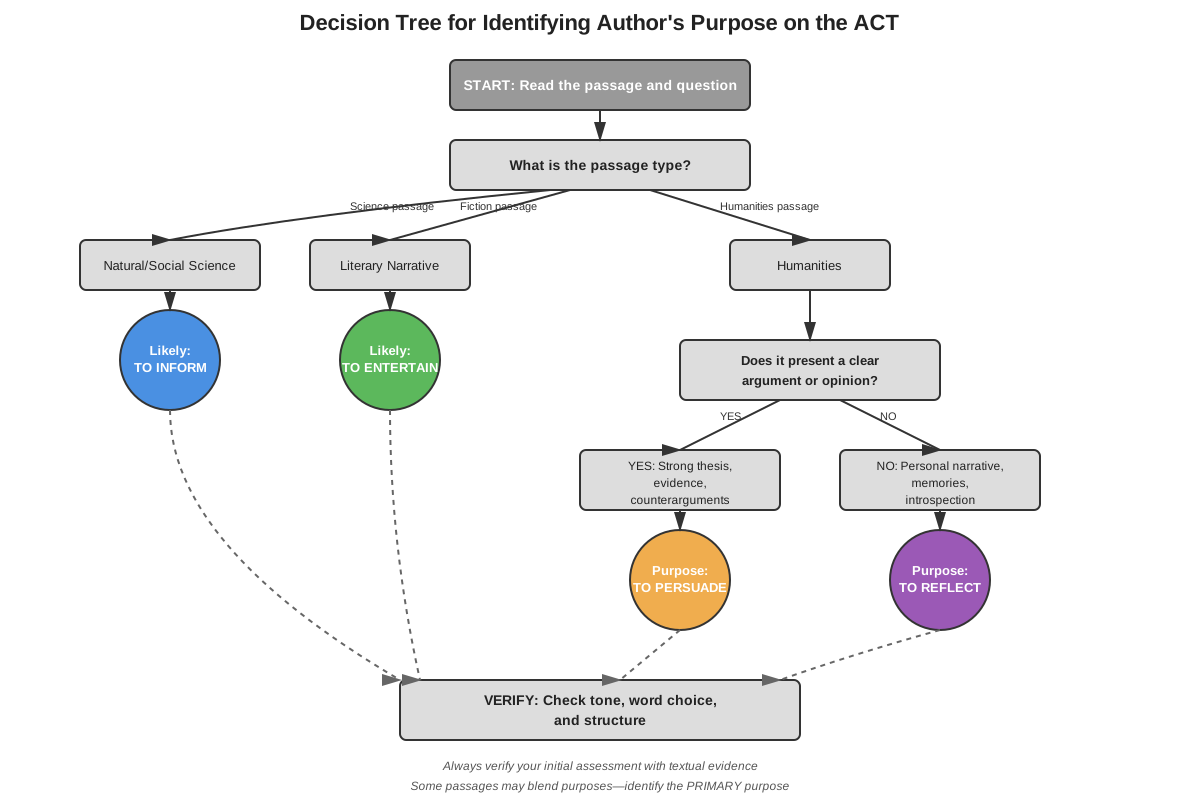
Step 2: Consider passage type first. Before even re-reading, use your knowledge of typical purposes for each passage type as a starting framework. This helps you predict likely answers and eliminate unlikely ones quickly.
Step 3: Analyze tone as your primary evidence. Tone is the most reliable indicator of purpose. Neutral, objective tone suggests informative purpose. Evaluative, passionate tone suggests persuasive purpose. Personal, introspective tone suggests reflective purpose. Vivid, narrative tone suggests entertaining purpose.
Step 4: Check scope carefully. For questions about the entire passage, eliminate answers that only address part of it. For questions about specific paragraphs or details, focus only on that section's function within the larger purpose.
Step 5: Distinguish primary from secondary purposes. When two answers seem correct, ask which purpose dominates the passage and which merely supports it. Words like "primarily" and "mainly" tell you to choose the overarching purpose.
Trigger Words and Phrases
Watch for these question stems that signal author's purpose:
- "The author's main purpose is to..."
- "The passage can best be described as..."
- "The author includes [detail] primarily in order to..."
- "The [paragraph number] paragraph serves mainly to..."
- "The author mentions [example] to..."
- "The author's primary intent is to..."
In answer choices, watch for these purpose indicators:
- Inform/Explain: "explain," "describe," "present," "illustrate," "clarify," "demonstrate"
- Persuade/Argue: "argue," "convince," "advocate," "support the claim," "challenge," "defend"
- Entertain: "engage readers through narrative," "tell the story of," "create a vivid portrait"
- Reflect: "explore," "meditate on," "examine," "consider," "contemplate"
Process of Elimination Tips
Eliminate answers that are too narrow: If an answer choice only addresses one paragraph or section, it's probably not the primary purpose of the entire passage.
Eliminate answers that are too broad: If an answer choice could apply to almost any passage on that general topic, it's probably too vague.
Eliminate answers with extreme language: The ACT rarely tests purposes like "to harshly criticize," "to mock," or "to confuse." Purposes are generally constructive.
Eliminate answers that contradict the tone: If the passage is neutral and objective, eliminate persuasive purposes. If the passage is evaluative and argumentative, eliminate purely informative purposes.
Eliminate answers that misidentify the subject: Sometimes wrong answers correctly identify a purpose but apply it to the wrong subject matter.
Time Allocation
Author's purpose questions should take 30-45 seconds each when you understand the passage well. If you're struggling:
- Don't re-read the entire passage—focus on the opening, closing, and tone
- Use passage type to guide your prediction
- Eliminate clearly wrong answers first, then choose between remaining options
- If stuck between two answers, choose the one that encompasses more of the passage
Exam Tip: If you correctly identify the author's purpose early in your reading, you'll answer other questions more quickly and accurately. Spend 10-15 seconds after reading each passage asking yourself: "Why did the author write this?"
Memory Techniques
The PURPOSE Acronym
Passage type predicts purpose (Natural Science = inform)
Understand tone reveals intent (neutral = inform, evaluative = persuade)
Read opening and closing for clearest signals
Primary purpose covers the whole passage
Objective language = inform; subjective language = persuade/reflect
Structure supports purpose (thesis-evidence = persuade)
Evidence type indicates intent (data = inform, anecdotes = entertain/persuade)
The Four Purposes Visualization
Create a mental image linking each purpose to its passage type:
- Inform/Explain: Picture a textbook or encyclopedia (Natural Science passages)
- Persuade/Argue: Picture a lawyer presenting a case (Social Science, Humanities)
- Entertain: Picture a novel or movie scene (Literary Narrative)
- Reflect: Picture a journal or diary entry (Literary Narrative, Humanities)
Tone-Purpose Connection
Remember this simple formula:
- Neutral tone = Inform
- Evaluative tone = Persuade
- Personal tone = Reflect
- Narrative tone = Entertain
The "Why Not What" Reminder
When you see a purpose question, write a small "WHY?" in the margin. This reminds you that the question asks about intent (why the author wrote it), not content (what the passage says). This simple reminder prevents the common error of choosing main idea answers for purpose questions.
Summary
Author's purpose represents the fundamental reason a text exists—the goal the author hopes to achieve with readers. The ACT tests this concept through direct purpose questions and indirect functional questions about specific details or sections. The four primary purposes are inform/explain, persuade/argue, entertain, and reflect/describe, with most passages having one dominant primary purpose and potentially several secondary purposes that support the main goal. Determining purpose requires analyzing multiple textual elements, particularly tone and word choice, which provide the most reliable evidence of authorial intent. Natural Science passages typically inform, Literary Narratives typically entertain or reflect, and Social Science and Humanities passages show more variety but frequently persuade or inform. Success on purpose questions requires distinguishing between what the passage says (main idea) and why the author wrote it (purpose), recognizing that primary purposes encompass entire passages while secondary purposes may apply to specific sections, and using passage type and tone as predictive tools. Understanding author's purpose unlocks comprehension of other reading concepts including structure, evidence selection, and rhetorical strategies, making this a foundational skill for ACT Reading success.
Key Takeaways
- Author's purpose questions appear 3-5 times per ACT Reading test and are essential for understanding other question types
- The four primary purposes tested are inform/explain, persuade/argue, entertain, and reflect/describe
- Tone and word choice provide the most reliable evidence for determining author's purpose
- Primary purposes encompass the entire passage, while secondary purposes may apply to specific sections
- Natural Science passages almost always inform, while Literary Narratives typically entertain or reflect
- Purpose questions ask why the author wrote something (intent), not what the passage says (content)
- Passage type, tone, structure, and evidence type all provide clues to authorial purpose
Related Topics
Tone and Mood: Understanding tone is essential for determining purpose, as an author's attitude toward their subject reveals their intent. Mastering purpose analysis provides a foundation for more nuanced tone questions.
Text Structure and Organization: Authors organize passages to achieve their purposes, making structure analysis a natural extension of purpose identification. Understanding why authors choose specific organizational patterns deepens comprehension.
Rhetorical Strategies: Once students can identify that an author's purpose is persuasive, they can analyze the specific rhetorical techniques used to achieve that persuasion, including appeals to logic, emotion, and credibility.
Point of View and Perspective: An author's choice of narrative perspective connects directly to their purpose, with first-person often serving reflective purposes and third-person objective often serving informative purposes.
Main Idea and Supporting Details: While distinct from purpose, main idea and purpose work together—the main idea is what the author says, while purpose is why they say it. Understanding both creates complete comprehension.
Practice CTA
Now that you understand the core concepts of author's purpose, it's time to apply this knowledge! Work through the practice questions to test your ability to identify purpose in various passage types and question formats. Use the flashcards to reinforce the key distinctions between the four primary purposes and the textual evidence that reveals authorial intent. Remember, author's purpose is one of the most frequently tested concepts on the ACT Reading section—mastering it will significantly boost your score and your confidence. Each practice question you complete strengthens your ability to quickly and accurately determine why authors write, making you a more efficient and effective test-taker. You've got this!
Sign up free to keep reading
Create a free AnvayaPrep account to finish this ACT guide on Author's purpose — plus flashcards and practice questions.