Overview
Narrator perspective is one of the most frequently tested concepts on the ACT Reading section, appearing in virtually every prose fiction and literary narrative passage. Understanding narrator perspective means recognizing who is telling the story, what their relationship is to the events being described, and how their viewpoint shapes the information presented to the reader. This skill is fundamental because the narrator's perspective directly influences what information is available, how events are interpreted, and what biases or limitations color the narrative.
On the ACT, questions about ACT narrator perspective require students to distinguish between first-person and third-person narration, identify whether a narrator is limited or omniscient, recognize the narrator's tone and attitude, and understand how the narrator's position affects the reliability and scope of information in the passage. These questions often ask students to identify what the narrator can or cannot know, how the narrator feels about characters or events, or why the author chose a particular narrative perspective. Mastering this topic is essential because it unlocks deeper comprehension of the passage's structure and meaning.
Narrator perspective connects intimately with other Reading concepts including point of view, characterization, tone, and inference. Understanding who is narrating helps students make accurate inferences about character motivations, interpret the significance of events, and recognize when information might be biased or incomplete. This foundational skill supports success across multiple question types, from detail questions to broader questions about passage structure and authorial intent.
Learning Objectives
- [ ] Identify when Narrator perspective is being tested in ACT Reading questions
- [ ] Explain the core rule or strategy behind Narrator perspective analysis
- [ ] Apply Narrator perspective concepts to ACT-style questions accurately
- [ ] Distinguish between first-person, second-person, and third-person narration in passages
- [ ] Differentiate between limited and omniscient narrative perspectives
- [ ] Analyze how narrator perspective affects the reliability and scope of information presented
- [ ] Recognize the narrator's tone, attitude, and relationship to story events
Prerequisites
- Basic understanding of pronouns: Recognizing first-person (I, we), second-person (you), and third-person (he, she, they) pronouns is essential for identifying narrative perspective
- Comprehension of character vs. narrator: Understanding that the narrator may or may not be a character in the story helps distinguish different perspective types
- Ability to identify tone: Recognizing emotional attitudes in text supports understanding narrator perspective and bias
- Basic inference skills: Drawing conclusions from textual evidence is necessary for determining what narrators know and how they feel
Why This Topic Matters
Understanding narrator perspective is crucial for real-world reading comprehension beyond standardized tests. In literature, journalism, memoirs, and even social media, recognizing who is telling a story and what their limitations or biases might be enables critical thinking and informed interpretation. This skill helps readers evaluate source credibility, understand multiple viewpoints, and recognize when information might be incomplete or slanted.
On the ACT Reading section, narrator perspective questions appear with remarkable consistency. Approximately 15-20% of all Reading questions directly test this concept, with at least 1-2 questions per test explicitly asking about narrative perspective, narrator knowledge, or narrator attitude. Additionally, understanding narrator perspective is essential for correctly answering many other question types, including inference questions, tone questions, and questions about character relationships.
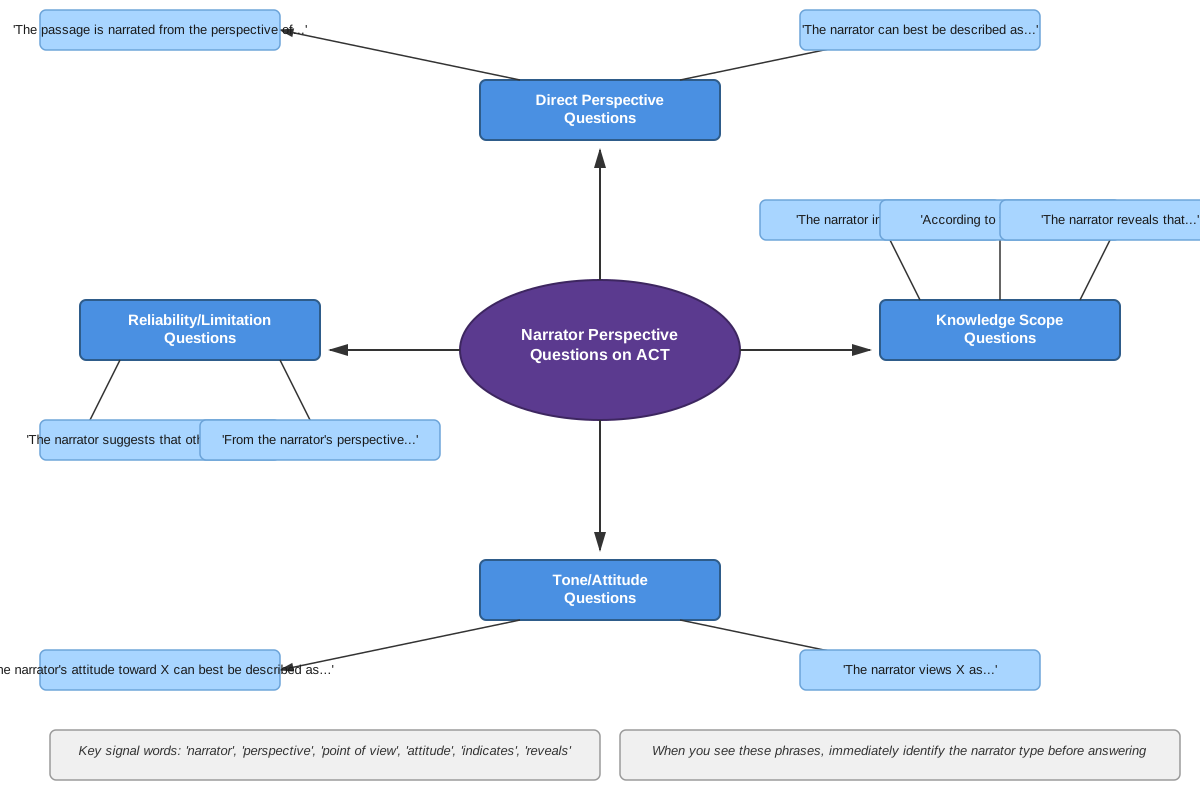
Narrator perspective appears most commonly in prose fiction passages, which constitute one of the four passage types on every ACT Reading test. These questions typically ask students to identify the narrative point of view, determine what the narrator knows or doesn't know, recognize the narrator's attitude toward characters or events, or explain how the narrative perspective affects the reader's understanding. Literary narrative passages and memoir excerpts also frequently test this concept. Questions may be phrased as "The narrator's perspective can best be described as...", "From whose point of view is the passage told?", "The narrator's attitude toward [character/event] is...", or "The narrator indicates that..."
Core Concepts
Types of Narrative Perspective
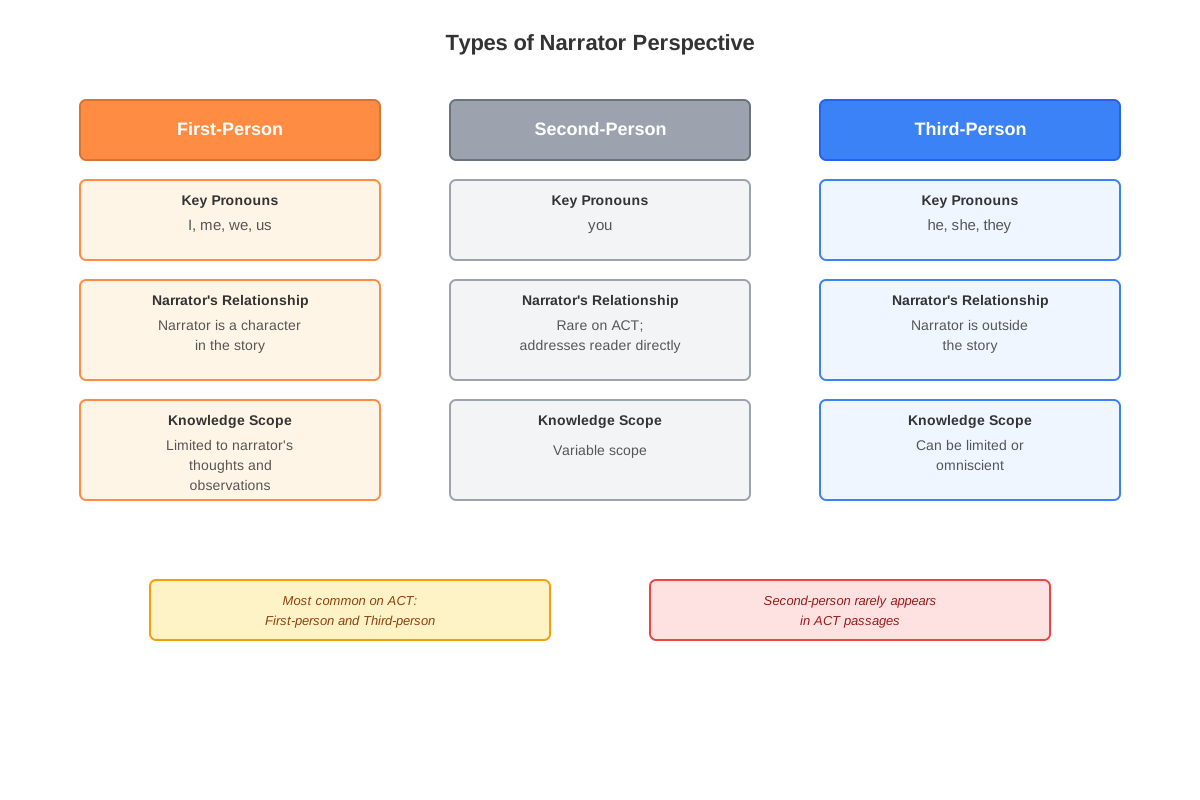
The narrator perspective refers to the vantage point from which a story is told. The ACT primarily tests three main categories of narrative perspective, each with distinct characteristics that affect how information is presented.
First-person narration uses "I" or "we" pronouns, with the narrator being a character within the story who recounts events from their personal experience. This perspective provides intimate access to one character's thoughts and feelings but limits the reader to what that character observes, knows, and chooses to share. First-person narrators may be protagonists (main characters) or peripheral characters observing the main action. On the ACT, first-person passages require careful attention to what the narrator directly experiences versus what they learn secondhand or infer.
Third-person narration uses "he," "she," or "they" pronouns, with the narrator existing outside the story's events. This perspective creates distance between the narrator and characters but can vary significantly in scope. Third-person narration divides into two crucial subcategories that the ACT frequently tests: limited and omniscient.
Second-person narration uses "you" pronouns and is extremely rare on the ACT. When it appears, it typically occurs in instructional or experimental texts rather than traditional narratives.
Limited vs. Omniscient Narration
Within third-person narration, the distinction between limited and omniscient perspectives is critical for ACT success.
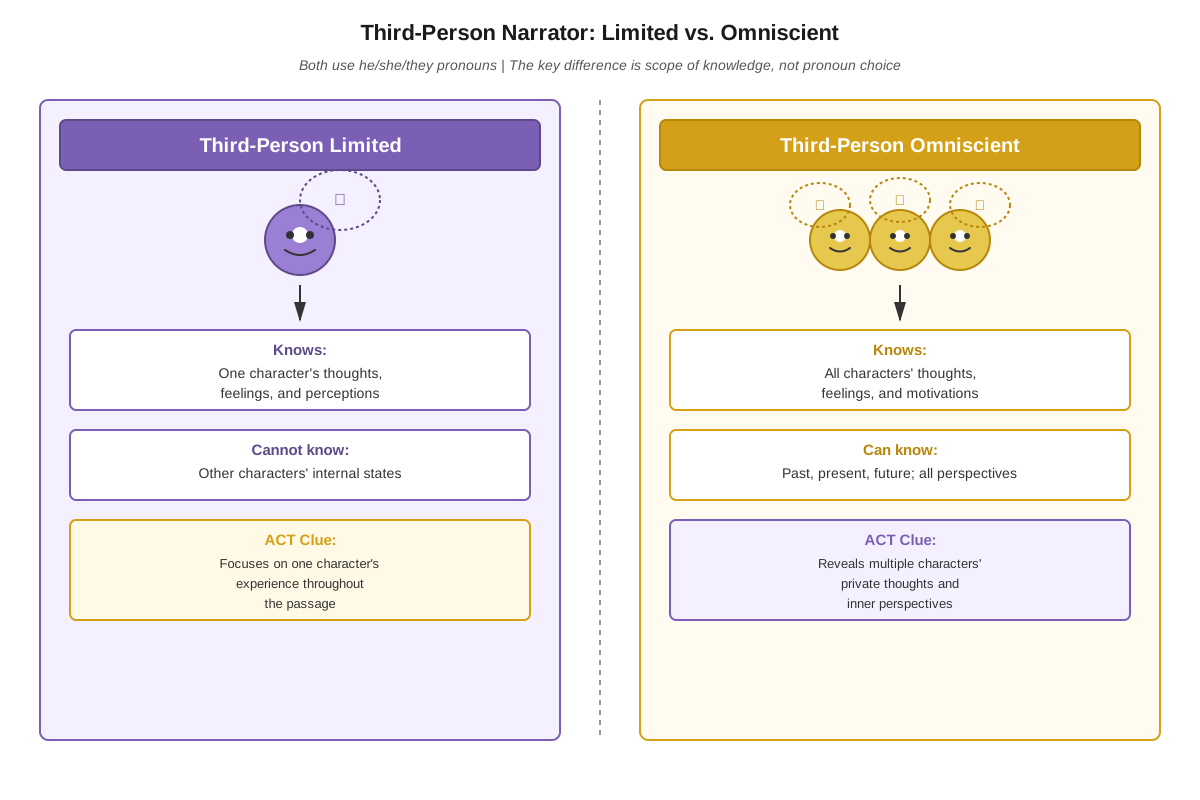
Third-person limited narration follows one character closely, accessing only that character's thoughts, feelings, and perceptions while describing other characters from the outside. This perspective combines the intimacy of first-person narration with the objectivity of third-person pronouns. The narrator can describe what the focal character thinks and feels but can only describe other characters' external actions and dialogue. On the ACT, recognizing limited narration helps students understand why certain information is unavailable and why the passage focuses on one character's experience.
Third-person omniscient narration has unlimited access to multiple characters' thoughts, feelings, and experiences. An omniscient narrator can move freely between characters' minds, reveal information unknown to any character, provide historical context, and offer commentary on events. This "all-knowing" perspective gives readers the broadest possible view of the story world. ACT passages with omniscient narration often shift between different characters' perspectives or reveal information that no single character possesses.
| Narrative Type | Pronouns | Narrator Position | Knowledge Scope | ACT Frequency |
|---|---|---|---|---|
| First-person | I, we, me, us | Inside story (character) | Limited to narrator's experience | High (40%) |
| Third-person limited | He, she, they | Outside story | Limited to one character's mind | High (45%) |
| Third-person omniscient | He, she, they | Outside story | Unlimited access to all minds | Medium (15%) |
| Second-person | You | Variable | Variable | Rare (<1%) |
Narrator Reliability and Bias
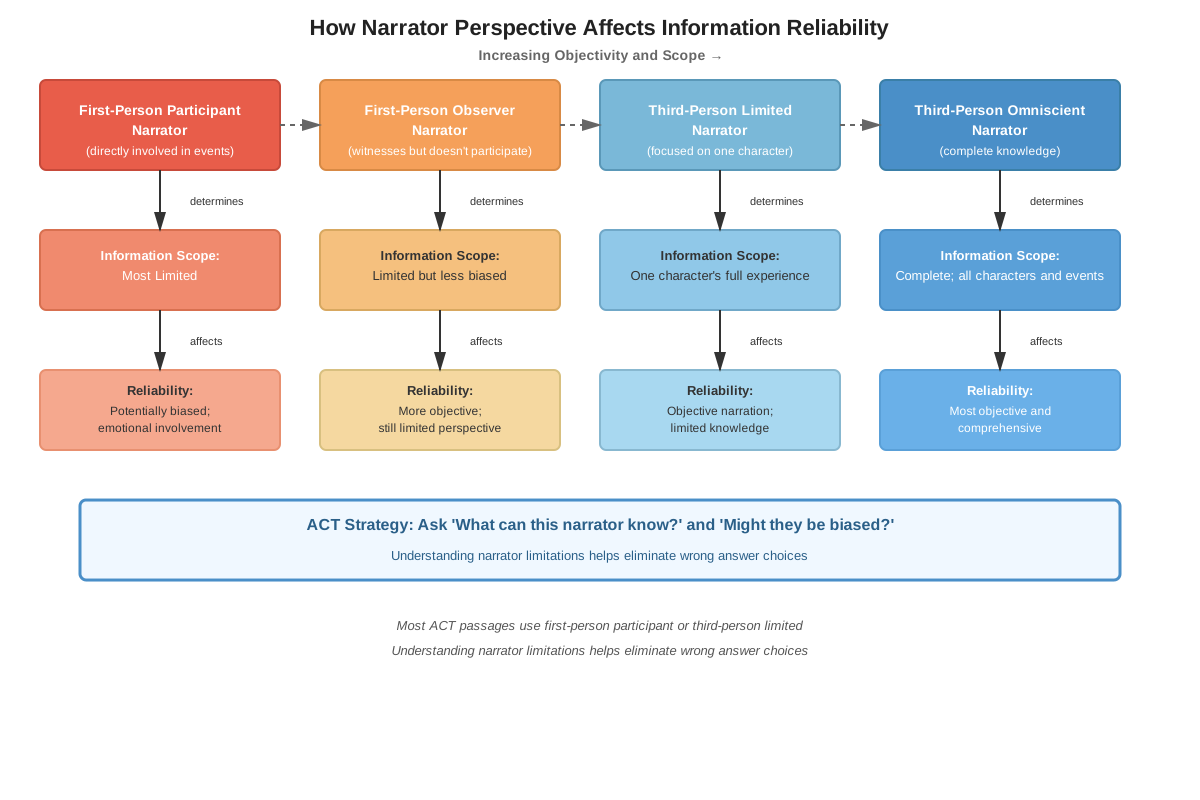
Understanding narrator reliability is essential for sophisticated ACT Reading comprehension. Not all narrators present information objectively or accurately.
Reliable narrators present information that readers can trust as accurate within the story world. Most ACT passages feature reliable narrators whose descriptions and interpretations align with the passage's overall truth.
Unreliable narrators present information colored by ignorance, bias, self-deception, or deliberate dishonesty. While less common on the ACT, unreliable narrators appear occasionally, particularly in literary fiction passages. Clues to unreliability include contradictions between the narrator's statements and other evidence in the passage, extreme emotional language suggesting bias, or indications that the narrator lacks complete information.
All narrators have some degree of bias—attitudes, preferences, or prejudices that color their presentation of events. On the ACT, recognizing narrator bias helps students understand why certain details are emphasized, how characters are portrayed, and what the passage's underlying perspective might be. Questions often ask students to identify the narrator's attitude as "sympathetic," "critical," "nostalgic," "ambivalent," or other descriptors.
Narrator's Relationship to Events
The narrator's temporal and emotional distance from events significantly affects the narrative perspective. This concept appears frequently in ACT passages, particularly memoirs and retrospective narratives.
Immediate narration presents events as they happen, with the narrator experiencing and describing simultaneously. This creates urgency and limits the narrator's understanding to the present moment.
Retrospective narration describes past events from a later vantage point, allowing the narrator to reflect, interpret, and understand significance that wasn't apparent during the original events. Many ACT passages feature adult narrators recounting childhood experiences, creating a dual perspective where the narrator describes both what they experienced then and what they understand now.
The narrator's emotional involvement also shapes perspective. Narrators may be deeply invested participants, detached observers, or somewhere between these extremes. ACT questions often test whether students recognize the narrator's emotional stake in events and how this affects their presentation.
Concept Relationships
The concepts within narrator perspective form an interconnected system where each element influences the others. The fundamental distinction between first-person and third-person narration determines the narrator's basic position relative to the story, which then influences all other aspects of perspective. This foundational choice leads to questions of knowledge scope—what the narrator can and cannot know—which manifests as the distinction between limited and omniscient perspectives.
Narrator reliability and bias overlay these structural elements, affecting how trustworthy or objective the presented information is regardless of whether the narration is first-person or third-person. A first-person narrator might be highly reliable or deeply unreliable; similarly, a third-person narrator might present events objectively or with clear bias toward certain characters.
The narrator's relationship to events (immediate versus retrospective, involved versus detached) interacts with all other perspective elements. A first-person retrospective narrator, for example, combines the limitations of first-person perspective with the interpretive advantages of hindsight, creating a complex dual perspective common in memoir passages.
These narrator perspective concepts connect directly to prerequisite knowledge of pronouns (which signal perspective type), tone (which reveals narrator attitude), and inference skills (which help readers recognize what narrators know or feel even when not explicitly stated). Narrator perspective also enables more advanced skills like characterization analysis (understanding how narrator bias affects character portrayal), theme identification (recognizing how perspective shapes meaning), and structural analysis (understanding why authors choose particular perspectives).
Relationship map: Pronoun identification → Perspective type (1st/3rd person) → Knowledge scope (limited/omniscient) → Reliability assessment → Understanding of narrator's relationship to events → Comprehensive perspective analysis → Accurate interpretation of passage meaning and authorial intent
High-Yield Facts
- ⭐ First-person narration uses "I" or "we" pronouns and limits knowledge to the narrator's direct experience and observations
- ⭐ Third-person limited narration accesses only one character's thoughts while describing others externally
- ⭐ Third-person omniscient narration can reveal multiple characters' thoughts and information unknown to any character
- ⭐ The narrator's perspective determines what information is available to the reader and what remains hidden
- ⭐ Narrator attitude questions ask about the narrator's feelings toward characters or events, not the characters' feelings
- Retrospective narrators describe past events from a later vantage point, often with interpretive commentary
- Reliable narrators present trustworthy information; unreliable narrators may be biased, ignorant, or deceptive
- The narrator is not the same as the author; the narrator is a constructed voice within the text
- Narrator perspective affects tone, emphasis, and which details are included or omitted from the narrative
- Questions asking "from whose point of view" or "the narrator's perspective" directly test this concept
- Recognizing narrative limitations helps students avoid choosing answers that require information the narrator couldn't possess
Quick check — test yourself on Narrator perspective so far.
Try Flashcards →Common Misconceptions
Misconception: The narrator and the author are the same person. → Correction: The narrator is a constructed voice created by the author. Even in first-person narratives, the "I" is a character or persona, not necessarily the author themselves. This distinction is crucial for analyzing narrator reliability and perspective.
Misconception: Third-person narration is always objective and omniscient. → Correction: Third-person narration can be limited to one character's perspective, providing a subjective viewpoint despite using third-person pronouns. Many ACT passages use third-person limited narration that closely follows one character's experience and thoughts while remaining outside that character.
Misconception: First-person narrators always tell the truth about events. → Correction: First-person narrators can be unreliable due to bias, limited understanding, self-deception, or deliberate dishonesty. Students must evaluate whether the narrator's interpretation aligns with other evidence in the passage.
Misconception: If a passage describes a character's thoughts, it must be first-person narration. → Correction: Third-person narration (both limited and omniscient) can reveal characters' thoughts using third-person pronouns. The pronoun usage, not the access to thoughts, determines whether narration is first-person or third-person.
Misconception: Narrator perspective questions only appear in fiction passages. → Correction: While most common in prose fiction, narrator perspective questions also appear in literary narrative nonfiction, memoirs, personal essays, and humanities passages that include narrative elements. Any passage with a narrator can test this concept.
Misconception: The narrator's attitude is the same as the character's attitude. → Correction: The narrator's perspective on a character or event may differ significantly from how characters within the story view those same elements. Questions specifically asking about "the narrator's attitude" require identifying the narrator's viewpoint, not a character's feelings.
Worked Examples
Example 1: Identifying Limited Third-Person Perspective
Passage excerpt: "Sarah watched her mother's face carefully, searching for any sign of disappointment. The older woman's expression remained neutral, but Sarah felt certain she had failed somehow. If only she could know what her mother was really thinking. The silence stretched between them, heavy with unspoken words."
Question: The passage is told from which point of view?
A) First-person, from Sarah's perspective
B) First-person, from the mother's perspective
C) Third-person limited, focusing on Sarah
D) Third-person omniscient
Analysis:
Step 1: Identify pronouns. The passage uses "Sarah" and "she" (third-person pronouns), not "I" or "we," eliminating options A and B.
Step 2: Determine knowledge scope. The passage reveals Sarah's thoughts ("Sarah felt certain") and perceptions ("Sarah watched") but explicitly states that Sarah cannot access her mother's thoughts ("If only she could know what her mother was really thinking"). The mother's expression is described only externally ("remained neutral").
Step 3: Apply the limited vs. omniscient distinction. Because the narration accesses only Sarah's internal experience while describing the mother from outside, this is third-person limited narration focused on Sarah.
Answer: C) Third-person limited, focusing on Sarah
Connection to learning objectives: This example demonstrates how to identify narrative perspective by examining pronouns and determining knowledge scope, directly applying the core strategy for narrator perspective questions.
Example 2: Analyzing Narrator Attitude and Reliability
Passage excerpt: "I'll never forget the summer I turned twelve, when everything changed. At the time, I thought my parents were impossibly strict, denying me freedoms my friends enjoyed. Now, looking back from the distance of thirty years, I understand they were simply trying to protect me from dangers I was too young to recognize. Their caution, which seemed so unreasonable then, was actually a profound expression of love."
Question: The narrator's perspective on the parents' behavior can best be described as:
A) Consistently critical throughout the passage
B) Initially resentful but ultimately appreciative
C) Detached and objective
D) Confused and uncertain
Analysis:
Step 1: Identify the narrative structure. This is first-person retrospective narration, with an adult narrator reflecting on childhood experiences. The phrase "At the time" signals the past perspective, while "Now, looking back" signals the present perspective.
Step 2: Track the narrator's attitude shift. The narrator describes two different attitudes: the childhood view ("I thought my parents were impossibly strict," "seemed so unreasonable") and the adult view ("I understand," "was actually a profound expression of love").
Step 3: Characterize the overall perspective. The narrator moved from a negative view (resentment at restrictions) to a positive view (appreciation of parental love and protection). This represents a clear evolution in understanding.
Step 4: Evaluate answer choices. Option A ignores the shift. Option C misses the emotional investment evident throughout. Option D doesn't match the narrator's clear understanding in the second half. Option B accurately captures the movement from "resentful" (childhood view) to "appreciative" (adult view).
Answer: B) Initially resentful but ultimately appreciative
Connection to learning objectives: This example shows how to analyze narrator attitude by recognizing temporal shifts in perspective and tracking how the narrator's understanding evolves, demonstrating the application of narrator perspective concepts to complex ACT questions.
Exam Strategy
When approaching ACT Reading questions about narrator perspective, follow this systematic process:
Step 1: Identify perspective type immediately. As you read the passage, note within the first few sentences whether it uses first-person or third-person pronouns. This fundamental distinction eliminates half the answer choices on perspective identification questions.
Step 2: Watch for trigger words and phrases. Questions testing narrator perspective typically include specific language:
- "From whose point of view..."
- "The narrator's perspective can best be described as..."
- "The narrator regards [character/event] with..."
- "The passage is narrated by..."
- "The narrator's attitude toward..."
- "According to the narrator..."
Exam Tip: When you see "the narrator" in a question stem, you're being asked about the voice telling the story, not about characters within the story. This distinction is crucial for avoiding wrong answers that describe character attitudes instead of narrator perspective.
Step 3: Determine knowledge scope. For third-person passages, quickly assess whether the narrator accesses multiple characters' thoughts (omniscient) or stays with one character's perspective (limited). Look for phrases like "she thought," "he felt," or "she wondered" to identify whose mind the narrator enters.
Step 4: Assess reliability and bias. Notice whether the narrator presents information neutrally or with clear emotional coloring. Extreme language, value judgments, or contradictions between the narrator's claims and passage evidence suggest bias or unreliability.
Step 5: Use process of elimination strategically. For narrator perspective questions:
- Eliminate answers requiring information the narrator couldn't possess given their perspective limitations
- Eliminate answers confusing character attitudes with narrator attitudes
- Eliminate answers that describe only part of the passage when the question asks about overall perspective
- Eliminate answers using extreme language unless the passage clearly supports such intensity
Time allocation: Narrator perspective questions typically require 30-45 seconds once you understand the passage's basic perspective. If you identified the narrative perspective during your initial reading (recommended), these questions become quick points. Don't spend excessive time second-guessing your initial assessment unless you find clear contradictory evidence.
Common trap answers: The ACT frequently includes wrong answers that describe a character's perspective instead of the narrator's perspective, or that confuse limited and omniscient narration. Always verify that your chosen answer matches what the narrator (the voice telling the story) knows and feels, not what characters experience.
Memory Techniques
Mnemonic for perspective types: "I-3-O"
- I = First-person (uses "I")
- 3 = Third-person
- O = Omniscient (knows all) vs. Limited (knows one)
Visualization strategy: Picture the narrator as a camera. A first-person narrator is a camera attached to one character's head, seeing only what that character sees. A third-person limited narrator is a camera following one character closely, able to see their thoughts but viewing others from outside. A third-person omniscient narrator is multiple cameras with access to everyone's thoughts, plus a bird's-eye view of the entire scene.
Acronym for analyzing narrator reliability: PACE
- Position: Where is the narrator relative to events?
- Attitude: What emotional stance does the narrator take?
- Consistency: Does the narrator's account align with other passage evidence?
- Experience: Does the narrator have direct knowledge or secondhand information?
Memory aid for common question types: "The Three A's of Narrator Questions"
- Access: What can the narrator know?
- Attitude: How does the narrator feel?
- Angle: From whose viewpoint is the story told?
Rhyme for perspective limitations: "First-person sees through just one pair of eyes; third-person limited has the same disguise; omniscient narrators know all and see all; they're the ones who can answer every call."
Summary
Narrator perspective is a foundational concept for ACT Reading success, determining who tells the story, what information is available, and how events are interpreted. The primary distinction between first-person narration (using "I" or "we") and third-person narration (using "he," "she," or "they") establishes the narrator's basic position. Within third-person narration, limited perspective accesses only one character's thoughts while omniscient perspective can reveal multiple characters' internal experiences. Understanding these distinctions enables students to recognize what narrators can and cannot know, identify narrator attitudes and biases, and distinguish between narrator and character perspectives. ACT questions frequently test whether students can identify narrative perspective type, recognize narrator attitudes, and understand how perspective limitations affect available information. Mastering narrator perspective requires attention to pronouns, careful tracking of whose thoughts are revealed, recognition of temporal and emotional distance between narrator and events, and awareness of reliability and bias. This skill supports success across multiple question types and is essential for deep passage comprehension.
Key Takeaways
- First-person narration uses "I/we" and limits knowledge to the narrator's experience; third-person uses "he/she/they" and varies in scope
- Third-person limited accesses one character's mind; third-person omniscient can reveal multiple characters' thoughts
- The narrator is the voice telling the story, distinct from both the author and the characters
- Narrator perspective determines what information readers can access and what remains hidden
- Questions about "the narrator's attitude" ask about the storytelling voice's feelings, not characters' emotions
- Retrospective narrators describe past events with the benefit of hindsight and mature understanding
- Recognizing narrative limitations helps eliminate wrong answers that require impossible knowledge
Related Topics
Point of View and Perspective in Literature: Builds on narrator perspective by exploring how different viewpoints create meaning, affect reader sympathy, and shape thematic interpretation. Mastering narrator perspective provides the foundation for this more advanced analysis.
Characterization Techniques: Understanding narrator perspective is essential for analyzing how characters are portrayed, since the narrator's bias and knowledge limitations affect character presentation. This topic extends narrator perspective skills to character analysis.
Tone and Mood: Narrator perspective directly influences tone (the narrator's attitude) and contributes to mood (the emotional atmosphere). These concepts work together to create the passage's overall emotional effect.
Inference and Textual Evidence: Narrator perspective determines what information is explicitly stated versus what must be inferred. Understanding perspective helps students make accurate inferences within the narrator's knowledge limitations.
Author's Purpose and Rhetorical Choices: Why an author chooses a particular narrator perspective is a sophisticated question about authorial intent. This advanced topic builds on fundamental narrator perspective understanding.
Practice CTA
Now that you've mastered the core concepts of narrator perspective, it's time to apply this knowledge! Work through the practice questions to test your ability to identify narrative perspective types, analyze narrator attitudes, and recognize knowledge limitations. The flashcards will help you memorize key distinctions and reinforce the trigger words that signal narrator perspective questions. Remember, narrator perspective appears on every ACT Reading test—mastering this topic will boost your score across multiple question types. You've built a strong foundation; now practice will make these skills automatic and fast!
Sign up free to keep reading
Create a free AnvayaPrep account to finish this ACT guide on Narrator perspective — plus flashcards and practice questions.