Overview
Theme in prose fiction represents one of the most sophisticated and frequently tested concepts on the ACT Reading section. Unlike surface-level comprehension questions that ask about specific details or events, theme questions require students to synthesize information across an entire passage to identify the underlying message, central insight, or universal truth the author conveys through characters, plot, and literary devices. Mastering theme identification is essential because these questions typically appear 1-2 times per prose fiction passage and often serve as the highest-difficulty items that separate top scorers from average performers.
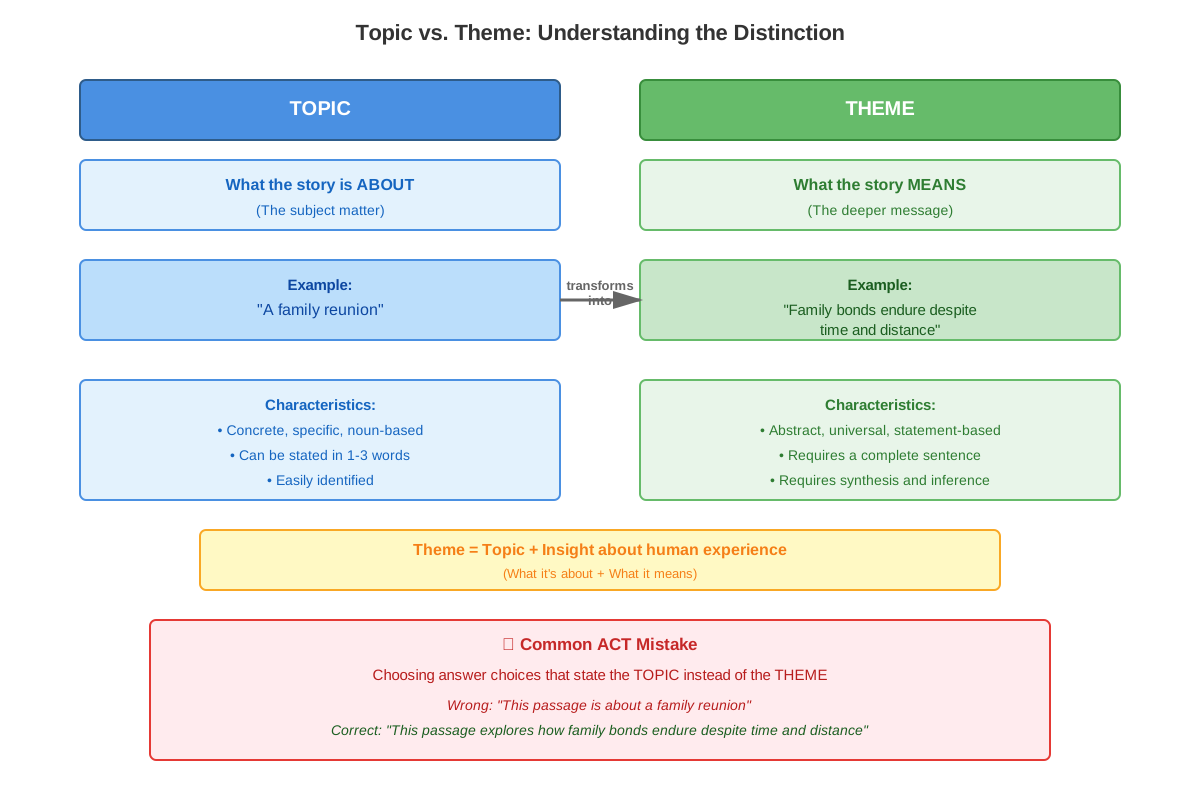
The ACT theme in prose fiction questions challenge students to move beyond literal interpretation and engage with abstract ideas that give meaning to a story. Theme differs from topic or subject matter—it's not simply what a story is about, but rather what the story reveals about human nature, society, relationships, or life itself. For instance, while a passage's topic might be "a family reunion," its theme could be "the enduring power of family bonds despite years of separation" or "the impossibility of recapturing the past."
Understanding theme connects directly to other critical Reading skills tested on the ACT. Theme analysis builds upon character analysis (understanding motivations and development), plot comprehension (recognizing how events create meaning), and inference skills (reading between the lines). Additionally, theme identification strengthens your ability to answer main idea questions, author's purpose questions, and questions about the passage's overall structure—making it a foundational skill that enhances performance across multiple question types in the Key Ideas and Details category.
Learning Objectives
- [ ] Identify when Theme in prose fiction is being tested
- [ ] Explain the core rule or strategy behind Theme in prose fiction
- [ ] Apply Theme in prose fiction to ACT-style questions accurately
- [ ] Distinguish between a passage's topic, subject matter, and its underlying theme
- [ ] Recognize how literary elements (character development, conflict, setting, symbolism) work together to convey theme
- [ ] Evaluate answer choices to eliminate options that are too specific, too broad, or unsupported by textual evidence
- [ ] Synthesize information from multiple paragraphs to construct a comprehensive understanding of thematic meaning
Prerequisites
- Basic plot comprehension: Understanding the sequence of events in a narrative is essential because theme emerges from how those events unfold and resolve
- Character analysis fundamentals: Recognizing character traits, motivations, and changes enables students to see how characters embody or discover thematic truths
- Inference skills: The ability to read between the lines and understand implied meanings is crucial since themes are rarely stated explicitly
- Vocabulary in context: Understanding nuanced word meanings helps students grasp the subtle ways authors communicate thematic ideas through language choice
Why This Topic Matters
Theme identification represents a critical real-world literacy skill that extends far beyond standardized testing. The ability to recognize underlying messages in narratives enhances critical thinking, cultural literacy, and the capacity to engage meaningfully with literature, film, journalism, and even political discourse. Understanding theme helps readers recognize how stories shape values, challenge assumptions, and communicate complex ideas about human experience across cultures and time periods.
On the ACT Reading section, theme questions appear with high frequency and strategic importance. Approximately 15-20% of prose fiction questions directly test theme identification, making it one of the most common question types in literary passages. These questions typically appear in formats such as "The passage as a whole suggests that..." or "A central theme of the passage is..." or "The author uses the story primarily to explore the idea that..." Additionally, theme understanding indirectly supports performance on roughly 30% of other question types, including main idea, author's purpose, and function questions.
Theme questions commonly appear in ACT passages featuring coming-of-age narratives, family dynamics, cultural identity exploration, personal transformation stories, and reflections on memory or loss. The test makers favor passages where theme emerges through character development and internal conflict rather than through explicit authorial commentary. Recognizing these common contexts helps students anticipate when theme-focused reading strategies will be most valuable.
Core Concepts
Defining Theme in Prose Fiction
Theme in prose fiction refers to the central insight, universal truth, or underlying message about life, human nature, or society that an author conveys through the narrative elements of a story. Unlike a moral (which prescribes behavior) or a topic (which names a subject), theme represents an observation or commentary that readers can extract and apply beyond the specific circumstances of the story. Themes are typically expressed as complete statements rather than single words—for example, "isolation" is a topic, while "prolonged isolation can lead individuals to question their own identity" is a theme.
Effective themes possess several key characteristics: they are universal (applicable across different contexts and cultures), debatable (reasonable people might interpret or respond differently), complex (avoiding oversimplification of human experience), and supported throughout the passage (not based on a single line or scene). On the ACT, correct theme answers reflect these qualities, while incorrect answers often fail one or more of these criteria.
How Authors Convey Theme
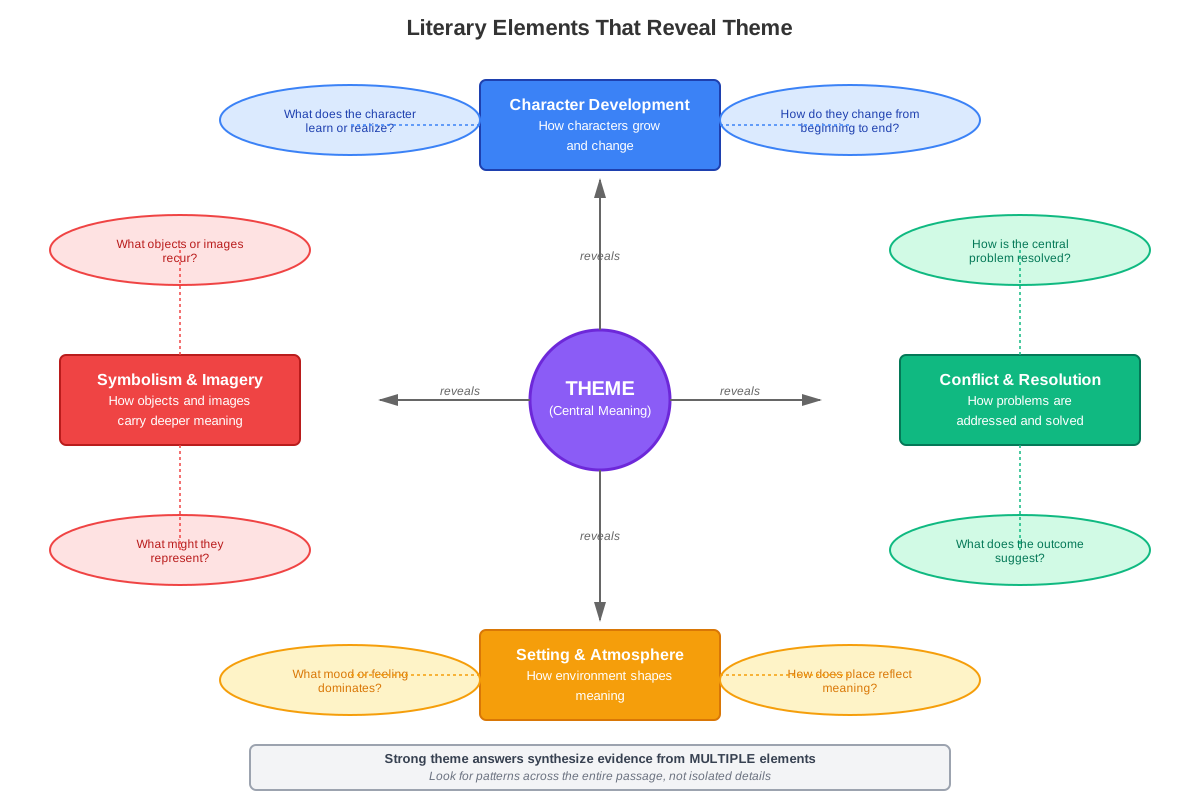
Authors rarely state themes explicitly; instead, they embed thematic meaning through multiple literary elements working in concert. Understanding these vehicles of theme is essential for ACT success:
Character Development and Change: The most common method of conveying theme involves showing how characters grow, learn, or fail to change in response to challenges. The nature of their transformation (or lack thereof) reveals the author's thematic insight. For example, if a character learns to value relationships over material success, the theme might concern the true sources of fulfillment.
Conflict and Resolution: How conflicts are resolved—or left unresolved—communicates thematic meaning. The consequences characters face for their choices, the obstacles they overcome or succumb to, and the final state of relationships all contribute to theme. A conflict that ends ambiguously might suggest themes about life's complexity or the absence of simple solutions.
Symbolism and Motifs: Recurring images, objects, or patterns often carry thematic weight. A recurring symbol of a locked door might reinforce themes about barriers to communication or self-imposed limitations. On the ACT, recognizing these patterns helps confirm thematic interpretations.
Setting and Atmosphere: The physical and temporal context can reinforce theme. A story set during a transitional season might emphasize themes of change, while a claustrophobic setting might underscore themes of entrapment or limitation.
Narrative Structure: How a story is organized—through flashbacks, parallel plotlines, or circular structure—can emphasize thematic concerns. A narrative that returns to its beginning might suggest themes about cycles, inevitability, or the persistence of the past.
Theme vs. Related Concepts
Understanding what theme is NOT helps students avoid common errors on the ACT:
| Concept | Definition | Example | Relationship to Theme |
|---|---|---|---|
| Topic | The general subject matter | "Family relationships" | The broad category theme explores |
| Subject | The specific focus | "A daughter's relationship with her aging father" | The particular situation through which theme emerges |
| Theme | The insight or message | "Adult children must learn to see their parents as complex individuals rather than idealized figures" | The universal truth the story reveals |
| Moral | A prescriptive lesson | "Honor your parents" | A simplified, directive version that lacks theme's complexity |
| Plot Summary | What happens | "A woman visits her father and discovers his secret past" | The events that convey theme but are not themselves the theme |
| Main Idea | The central point | "The passage explores how discovering a parent's hidden history changes a daughter's perspective" | A close cousin to theme, but more passage-specific and less universal |
Identifying Theme on the ACT
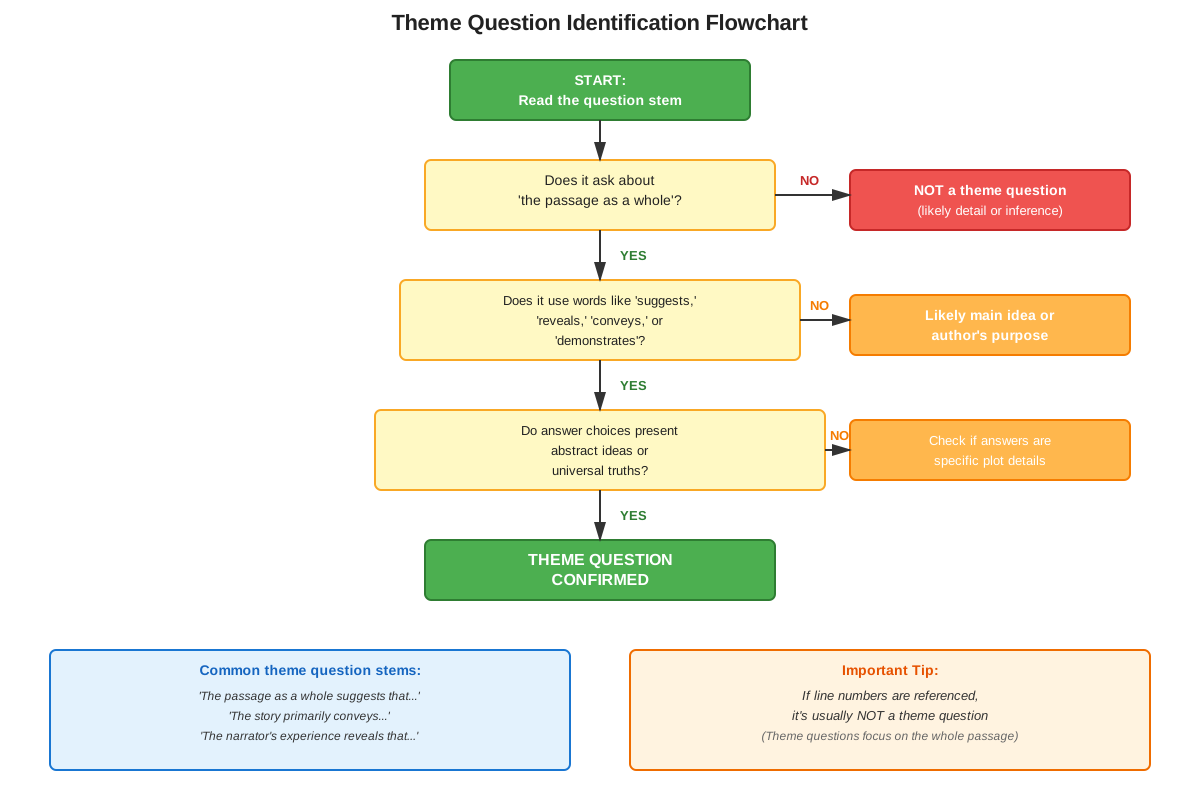
The ACT tests theme identification through several question formats, each requiring slightly different approaches:
Direct Theme Questions: These explicitly ask about theme using phrases like "central theme," "main insight," or "underlying message." Approach these by considering what the entire passage reveals about human experience, not just what happens in the plot.
Purpose Questions with Thematic Elements: Questions asking "The author uses the story primarily to..." often have thematic answers. The correct choice typically describes the exploration or illustration of an idea rather than merely recounting events.
Inference Questions About Meaning: Questions like "The passage as a whole suggests that..." require thematic thinking. These demand synthesis of multiple passage elements to arrive at a broader truth.
Function Questions: When asked why an author includes a particular scene or detail, thematic answers explain how that element contributes to the passage's larger meaning or message.
The Theme Identification Process
Successful theme identification on the ACT follows a systematic approach:
- Read actively for patterns: As you read, note recurring ideas, repeated words or images, and moments of character realization or change
- Identify the protagonist's journey: Determine what the main character learns, loses, gains, or fails to achieve
- Consider the resolution: Examine the passage's ending or final emotional state—what does it suggest about the human condition?
- Formulate a theme statement: Create a complete sentence expressing what the passage reveals about life, relationships, or human nature
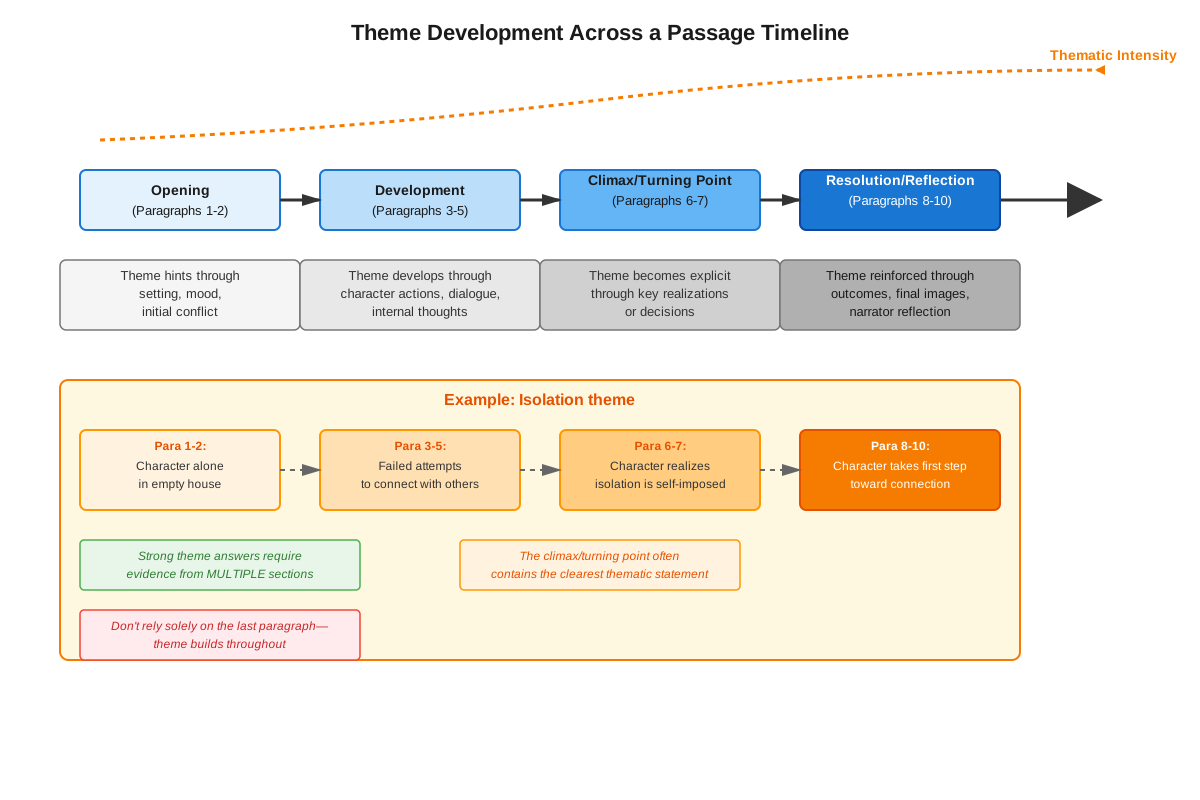
- Test against the entire passage: Verify that your theme statement is supported by multiple elements throughout, not just one section
- Evaluate answer choices: Select the option that best matches your theme statement while being neither too specific nor too broad
Concept Relationships
Theme identification relies on a hierarchical relationship among reading comprehension skills. At the foundation lies literal comprehension (understanding what happens), which enables character analysis (understanding who people are and why they act). Character analysis combines with plot comprehension to support inference skills (understanding what's implied but not stated). These three skills converge to enable theme identification (understanding what it all means).
Within the topic of theme itself, concepts connect in a progressive sequence: Understanding the definition of theme → enables → distinguishing theme from related concepts → which supports → recognizing how authors convey theme → leading to → identifying theme in ACT passages → culminating in → evaluating answer choices effectively.
Theme also connects forward to other ACT Reading skills. Mastering theme strengthens performance on main idea questions (theme is often the main idea expressed universally), author's purpose questions (authors often write to explore themes), and tone questions (an author's attitude toward their theme influences tone). Additionally, theme understanding enhances comparative passage analysis when the ACT presents paired passages exploring similar thematic territory.
High-Yield Facts
⭐ Theme is always expressed as a complete statement or insight, never as a single word or phrase—if an answer choice is just "family" or "identity," it's describing a topic, not a theme.
⭐ The correct theme answer on the ACT is supported by multiple elements throughout the passage, not just one paragraph or scene—if you can only find evidence in one section, the answer is likely too specific.
⭐ Theme questions often appear as the last question about a prose fiction passage—this placement reflects that theme requires understanding the entire narrative arc.
⭐ Character change or realization is the most common vehicle for theme in ACT passages—pay special attention to moments when characters gain insight or perspective shifts.
⭐ Correct theme answers avoid extreme language and absolute statements—words like "always," "never," "all," or "only" typically signal incorrect answers because themes reflect life's complexity.
- Theme differs from moral in that theme observes rather than prescribes—it reveals truth rather than dictating behavior.
- The passage's ending carries disproportionate thematic weight—how conflicts resolve or remain unresolved strongly indicates theme.
- Recurring images, symbols, or phrases often point toward theme—if the author repeats something, it likely carries thematic significance.
- Theme answers that merely summarize plot events are always incorrect—theme must transcend the specific story to express universal insight.
- Multiple themes can coexist in a single passage, but ACT questions ask for the central or primary theme—choose the most comprehensive answer supported throughout.
- Abstract or philosophical answer choices are more likely to be correct theme answers than concrete, plot-specific options.
- When two answers seem equally valid, choose the one that applies more universally beyond the passage's specific circumstances.
- Theme questions reward slow, careful reading more than speed—rushing through prose fiction passages significantly decreases theme identification accuracy.
- The protagonist's internal conflict usually reveals theme more clearly than external conflicts or action sequences.
- Effective theme answers on the ACT typically range from 15-25 words—they're substantial statements, not brief phrases.
Quick check — test yourself on Theme in prose fiction so far.
Try Flashcards →Common Misconceptions
Misconception: Theme is the same as the story's topic or subject matter.
Correction: Topic identifies what a story is about (e.g., "immigration"), while theme expresses what the story reveals about that topic (e.g., "immigrants often experience a painful tension between honoring their heritage and adapting to new cultural contexts"). Theme requires a complete thought that could apply beyond the specific story.
Misconception: The theme is always stated explicitly somewhere in the passage.
Correction: Authors rarely state theme directly; instead, they convey it through character development, conflict resolution, symbolism, and other literary elements. On the ACT, if you find a sentence that seems to state the theme explicitly, it's more likely to be a character's limited perspective than the passage's actual theme.
Misconception: Every detail in the passage must directly support the theme.
Correction: While theme should be supported throughout the passage, not every detail serves a thematic function. Some details establish setting, create atmosphere, or develop character without directly contributing to theme. Focus on patterns and recurring elements rather than trying to make every sentence fit a thematic interpretation.
Misconception: Theme answers should be specific to the passage's particular characters and situation.
Correction: Effective themes are universal and transferable. An answer like "Sarah learns to appreciate her grandmother's sacrifices" is too specific; it's plot summary. A better theme would be "understanding previous generations' struggles can deepen family bonds across age differences"—this could apply to many situations beyond Sarah's story.
Misconception: The longest or most complex answer choice is usually the correct theme.
Correction: While theme answers are typically substantial statements, length and complexity don't guarantee correctness. The ACT often includes verbose wrong answers that sound sophisticated but don't accurately capture the passage's central insight. Focus on accuracy and textual support rather than impressive-sounding language.
Misconception: Theme is the same as the author's purpose for writing.
Correction: While related, these concepts differ. Author's purpose describes the writer's goal (to entertain, persuade, inform, explore), while theme describes the insight conveyed. An author's purpose might be "to explore," and the theme would be what they explore (e.g., "the lasting impact of childhood experiences on adult identity").
Misconception: If a passage has a sad ending, the theme must be pessimistic; if it has a happy ending, the theme must be optimistic.
Correction: Theme complexity transcends simple optimism or pessimism. A story with a sad ending might have an uplifting theme about human resilience, while a story with a happy ending might have a bittersweet theme about the costs of success. Focus on what the ending reveals about human experience, not just whether it's positive or negative.
Worked Examples
Example 1: Coming-of-Age Passage
Passage Summary: A 16-year-old narrator describes returning to her childhood neighborhood after her family moved away three years earlier. She visits her old house, now occupied by strangers, and walks through the park where she spent countless hours. Throughout the passage, she notices how small everything seems now and realizes that her memories have preserved a version of the neighborhood that no longer exists—and perhaps never existed exactly as she remembers. The passage ends with her feeling both sad about the loss and grateful for having moved forward.
Question: "A central theme of the passage is that:"
Answer Choices:
A) Childhood neighborhoods always seem smaller when revisited as an adult
B) Moving to a new place helps people appreciate what they've left behind
C) The passage of time inevitably transforms both places and our memories of them
D) Returning to familiar places from the past is usually a disappointing experience
Step-by-Step Analysis:
Step 1 - Identify what changed: The narrator's perspective shifted. She began with nostalgia and ended with acceptance that both she and the place have changed.
Step 2 - Consider universality: Which answer could apply beyond this specific situation?
- Choice A uses "always," which is too absolute and focuses only on physical size
- Choice B suggests the move was necessary for appreciation, but the passage emphasizes change and memory, not appreciation
- Choice C addresses transformation of both external reality and internal memory—this is universal
- Choice D is too negative; the passage ends with gratitude, not just disappointment
Step 3 - Check textual support:
- The narrator notes physical changes to the neighborhood (external transformation)
- She realizes her memories may not be accurate (internal transformation)
- Multiple paragraphs support this dual transformation, not just one scene
Step 4 - Evaluate scope:
- Choice A is too narrow (only about physical perception)
- Choice B misses the memory component
- Choice C encompasses both the external changes and the narrator's evolving understanding
- Choice D oversimplifies the emotional complexity
Correct Answer: C - This theme statement is universal (applies beyond this story), complex (acknowledges both external and internal change), and supported throughout the passage (multiple examples of both physical changes and memory's unreliability).
Example 2: Family Relationship Passage
Passage Summary: An adult son visits his elderly father, who has recently moved into assisted living. Throughout the visit, the son notices his father telling stories he's heard dozens of times before, but with new details that contradict earlier versions. Initially frustrated, the son gradually realizes that his father is not losing his memory but rather reshaping his past to make sense of his present circumstances. The passage explores how the son moves from viewing his father as declining to seeing him as actively constructing meaning in his final years.
Question: "The passage as a whole suggests that:"
Answer Choices:
A) Elderly people often revise their memories to cope with difficult life transitions
B) Adult children must learn to accept their parents' changing abilities with patience
C) Understanding another person's perspective requires setting aside one's own assumptions
D) Family relationships become more complicated as parents age and require care
Step-by-Step Analysis:
Step 1 - Identify the protagonist's journey: The son moves from frustration → confusion → understanding. His transformation is the key to theme.
Step 2 - Determine what he learns: He learns that what he interpreted as memory loss is actually meaning-making. More broadly, he learns to see his father's behavior through his father's perspective rather than his own assumptions.
Step 3 - Evaluate each choice:
- Choice A focuses on the father's behavior, but the passage is really about the son's changing understanding
- Choice B is about acceptance and patience, but the passage emphasizes perspective-shifting and understanding
- Choice C captures the son's journey from assumption to understanding and is universal enough to apply beyond this situation
- Choice D is too general and doesn't capture the specific insight about perspective that the passage develops
Step 4 - Test against multiple passage elements:
- The son's initial frustration stems from his assumptions (supports C)
- His breakthrough comes when he considers his father's perspective (supports C)
- The passage structure moves from the son's viewpoint to incorporating the father's viewpoint (supports C)
Correct Answer: C - While choice A accurately describes what happens in the passage, it doesn't capture the theme because it focuses on the father's actions rather than the son's (and by extension, the reader's) learning. Choice C expresses the universal insight that emerges from the specific situation: understanding requires perspective-shifting, not just observation.
Exam Strategy
Approaching Theme Questions Systematically
When you encounter a theme question on the ACT, implement this strategic approach:
Before reading answer choices, formulate your own theme statement based on the passage. Ask yourself: "What did the main character learn or fail to learn?" and "What does this story reveal about human nature or life?" Having your own answer prevents you from being swayed by attractive but incorrect options.
Watch for trigger words that signal theme questions: "central theme," "passage as a whole suggests," "underlying message," "primarily explores the idea," "main insight," "reveals that," and "demonstrates that." These phrases indicate you need to think beyond plot to meaning.
Apply the universality test: Read each answer choice and ask, "Could this apply to situations beyond this specific story?" If an answer is too tied to the passage's particular characters, setting, or events, eliminate it. For example, "John learns to forgive his brother" is too specific, while "forgiveness requires understanding the circumstances that led to betrayal" is appropriately universal.
Use the evidence distribution test: For each remaining answer choice, identify where in the passage you find support. If you can only point to one paragraph or scene, the answer is likely too narrow. Correct theme answers have supporting evidence distributed across multiple sections of the passage.
Eliminate extremes: Answer choices containing absolute language ("always," "never," "all," "only," "impossible," "inevitable") are usually incorrect because themes reflect life's complexity and nuance. However, be careful—words like "often" or "can" that allow for complexity are acceptable.
Beware of plot summary answers: If an answer choice simply describes what happens in the passage without expressing an insight or observation about human experience, eliminate it. Theme transcends plot.
Time Management for Theme Questions
Theme questions typically require more processing time than detail questions. Budget approximately 60-75 seconds for theme questions compared to 30-45 seconds for detail questions. This investment pays off because theme questions are often worth the same points as easier questions, and rushing leads to careless errors on these high-difficulty items.
If you're running short on time, theme questions are actually good candidates for educated guessing using these shortcuts: eliminate any answer that's a single word or short phrase, eliminate any answer with extreme language, and choose the most universal-sounding remaining option.
Process of Elimination Specific to Theme
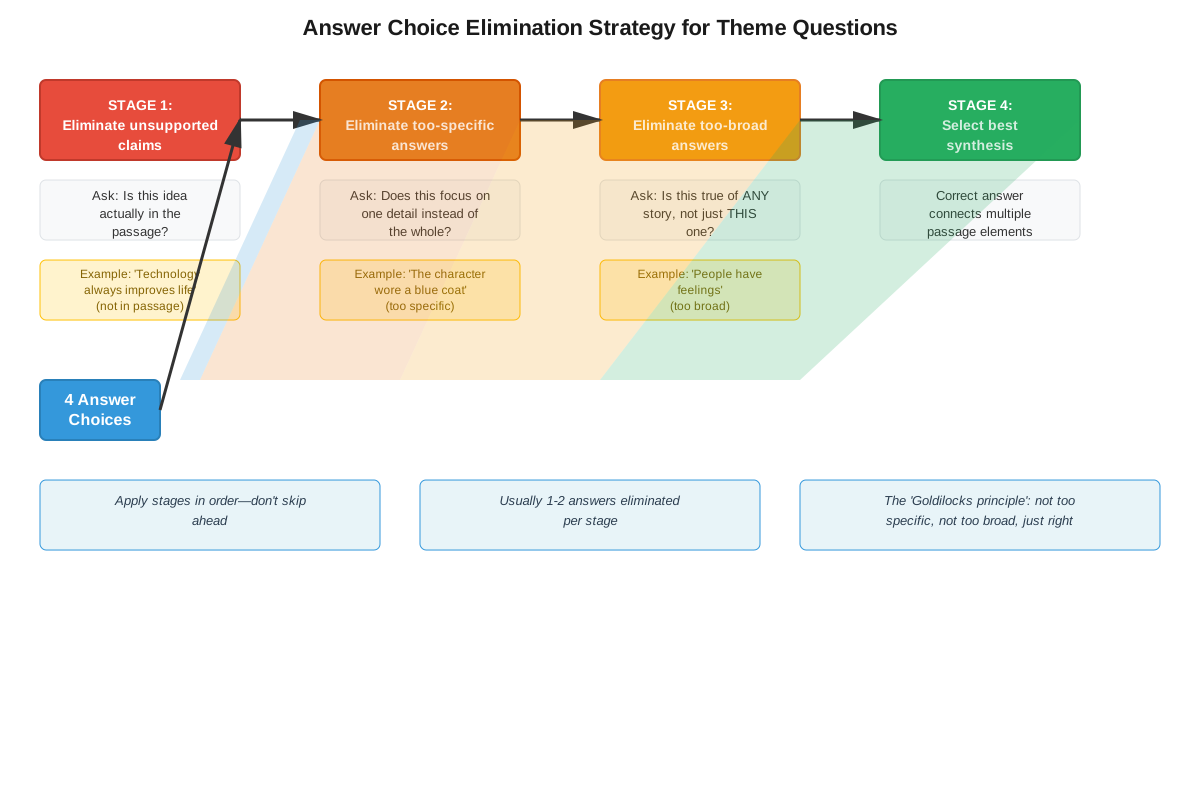
First elimination pass: Remove answers that are topics rather than themes (single words or short phrases), plot summaries (just describing events), or character-specific statements (too narrow).
Second elimination pass: Remove answers with extreme or absolute language, answers contradicted by the passage's ending, and answers supported by only one section of the passage.
Final selection: Between two strong candidates, choose the answer that is more universal, more complex (acknowledging nuance rather than oversimplifying), and better supported by the protagonist's journey or transformation.
Memory Techniques
The THEME Acronym for evaluating answer choices:
- Transcends the specific story (universal application)
- Has support throughout (not just one section)
- Expresses a complete thought (not a single word)
- Matches the protagonist's journey (character development)
- Embodies complexity (avoids oversimplification)
The Three C's of Theme: Correct theme answers are Complete (full statements), Complex (acknowledge nuance), and Comprehensive (supported throughout).
Visualization Strategy: Picture theme as the invisible thread connecting all the beads (events, characters, symbols) on a necklace. You can't see the thread directly, but it's what holds everything together and gives the necklace its shape. When reading, look for what connects disparate elements.
The "So What?" Technique: After reading a passage, ask yourself "So what?" three times:
- "So what happens?" → Plot summary
- "So what does it mean for the character?" → Character development
- "So what does it reveal about life/people/relationships?" → Theme
The Zoom Out Method: Imagine you're describing the passage to someone who will never read it, but you can't mention specific character names, places, or events. What universal insight would you communicate? That's likely the theme.
Summary
Theme in prose fiction represents the central insight, universal truth, or underlying message about human experience that an author conveys through narrative elements rather than explicit statement. On the ACT Reading section, theme questions test your ability to synthesize information across an entire passage, moving beyond literal comprehension to abstract understanding. Successful theme identification requires recognizing how authors use character development, conflict resolution, symbolism, and structure to communicate meaning. The key distinction is that theme transcends the specific story—it's not what happens (plot) or who it happens to (character), but what it reveals about life, relationships, or human nature that could apply universally. Correct theme answers on the ACT are complete statements supported by multiple passage elements, avoiding both excessive specificity and extreme generalizations. Mastering theme identification enhances performance not only on direct theme questions but also on main idea, author's purpose, and inference questions, making it a foundational skill for ACT Reading success.
Key Takeaways
- Theme is a complete statement expressing universal insight, not a single word, topic, or plot summary—always eliminate answer choices that are merely topics or phrases
- Character transformation is the primary vehicle for theme—pay special attention to what protagonists learn, realize, or fail to understand
- Correct theme answers have supporting evidence distributed throughout the passage, not concentrated in a single paragraph or scene
- The passage's ending carries disproportionate thematic weight—how conflicts resolve or remain unresolved strongly indicates the author's central message
- Eliminate answers with extreme or absolute language ("always," "never," "all")—themes reflect life's complexity and nuance
- Theme transcends the specific story—test each answer choice by asking whether it could apply to situations beyond the passage's particular characters and circumstances
- Formulate your own theme statement before reading answer choices—this prevents you from being misled by attractive but incorrect options
Related Topics
Main Idea in Prose Fiction: While theme expresses universal insights, main idea describes the central point of a specific passage. Mastering theme strengthens main idea identification because the main idea often expresses theme in passage-specific terms. Understanding their relationship helps you distinguish between questions asking "what is this passage about?" versus "what does this passage reveal?"
Author's Purpose and Point of View: Theme connects directly to why authors write and how their perspectives shape narratives. Understanding theme helps you recognize that authors often write to explore thematic questions, and their point of view influences which themes they emphasize and how they present them.
Character Development and Motivation: Since character transformation is the primary vehicle for theme in ACT passages, deepening your character analysis skills directly enhances theme identification. The more precisely you can track how and why characters change, the more accurately you'll identify theme.
Symbolism and Literary Devices: Authors use symbols, motifs, metaphors, and other literary devices to reinforce theme without stating it explicitly. Studying these devices helps you recognize the multiple layers through which theme operates in sophisticated prose fiction.
Comparative Reading: When the ACT presents paired passages, theme often provides the basis for comparison. Mastering theme in single passages prepares you to analyze how different authors explore similar thematic territory or how the same theme manifests in different contexts.
Practice CTA
Now that you've mastered the core concepts of theme identification in prose fiction, it's time to apply these strategies to ACT-style practice questions. The practice questions will challenge you to distinguish theme from topic, evaluate answer choices using the universality test, and identify supporting evidence across complete passages. Additionally, the flashcards will reinforce key distinctions and help you internalize the systematic approach to theme questions. Remember: theme identification is a skill that improves dramatically with deliberate practice. Each practice passage you analyze strengthens your ability to synthesize information and recognize patterns—skills that will serve you not only on test day but in all your future reading and critical thinking. You've built a strong foundation; now build your confidence through application!
Sign up free to keep reading
Create a free AnvayaPrep account to finish this ACT guide on Theme in prose fiction — plus flashcards and practice questions.