Overview
Symbolism is one of the most frequently tested literary devices on the ACT Reading test, appearing in both prose fiction and humanities passages. Understanding symbolism involves recognizing when an author uses concrete objects, characters, settings, or actions to represent abstract ideas, emotions, or themes beyond their literal meaning. This skill is essential because the ACT regularly asks students to interpret deeper meanings, understand authorial intent, and analyze how literary elements contribute to a passage's overall message.
On the ACT, ACT symbolism questions typically require students to move beyond surface-level comprehension and engage with the text's figurative dimensions. These questions might ask what a recurring image represents, why an author emphasizes particular details, or how specific elements contribute to the passage's theme. Mastering symbolism enables students to tackle questions about tone, purpose, and thematic development—all high-value question types that separate average scores from top-tier performance.
Symbolism connects intimately with other Craft and Structure concepts tested on the ACT, including figurative language, point of view, and text structure. When authors employ symbols, they're making deliberate choices about how to convey meaning indirectly, which relates to understanding authorial purpose and rhetorical strategies. Strong symbol recognition also enhances comprehension of character development, setting significance, and thematic unity—all critical components of ACT Reading passages.
Learning Objectives
- [ ] Identify when Symbolism is being tested in ACT Reading questions
- [ ] Explain the core rule or strategy behind Symbolism interpretation
- [ ] Apply Symbolism analysis to ACT-style questions accurately
- [ ] Distinguish between literal descriptions and symbolic representations in passages
- [ ] Analyze how context clues reveal symbolic meaning
- [ ] Evaluate the relationship between symbols and passage themes
- [ ] Recognize common symbolic patterns in literary and humanities texts
Prerequisites
- Basic reading comprehension: Understanding literal meaning is essential before interpreting figurative or symbolic dimensions of text
- Familiarity with main idea and theme: Symbols typically reinforce or illuminate the central themes of a passage
- Understanding of context clues: Determining symbolic meaning requires analyzing how objects or images function within their textual context
- Knowledge of figurative language basics: Symbolism shares characteristics with metaphor and other non-literal language devices
Why This Topic Matters
Symbolism appears in approximately 15-20% of ACT Reading questions, making it one of the highest-yield topics for score improvement. Questions testing symbolism often carry significant weight because they assess higher-order thinking skills—interpretation, analysis, and synthesis—rather than simple recall or surface comprehension. Students who master symbolic interpretation gain access to points that many test-takers miss, creating opportunities for score differentiation.
In real-world contexts, understanding symbolism enhances critical thinking across disciplines. Literary analysis, historical document interpretation, visual art criticism, and even scientific communication all employ symbolic representation. The ability to recognize when something stands for more than its literal self is fundamental to sophisticated reading and cultural literacy.
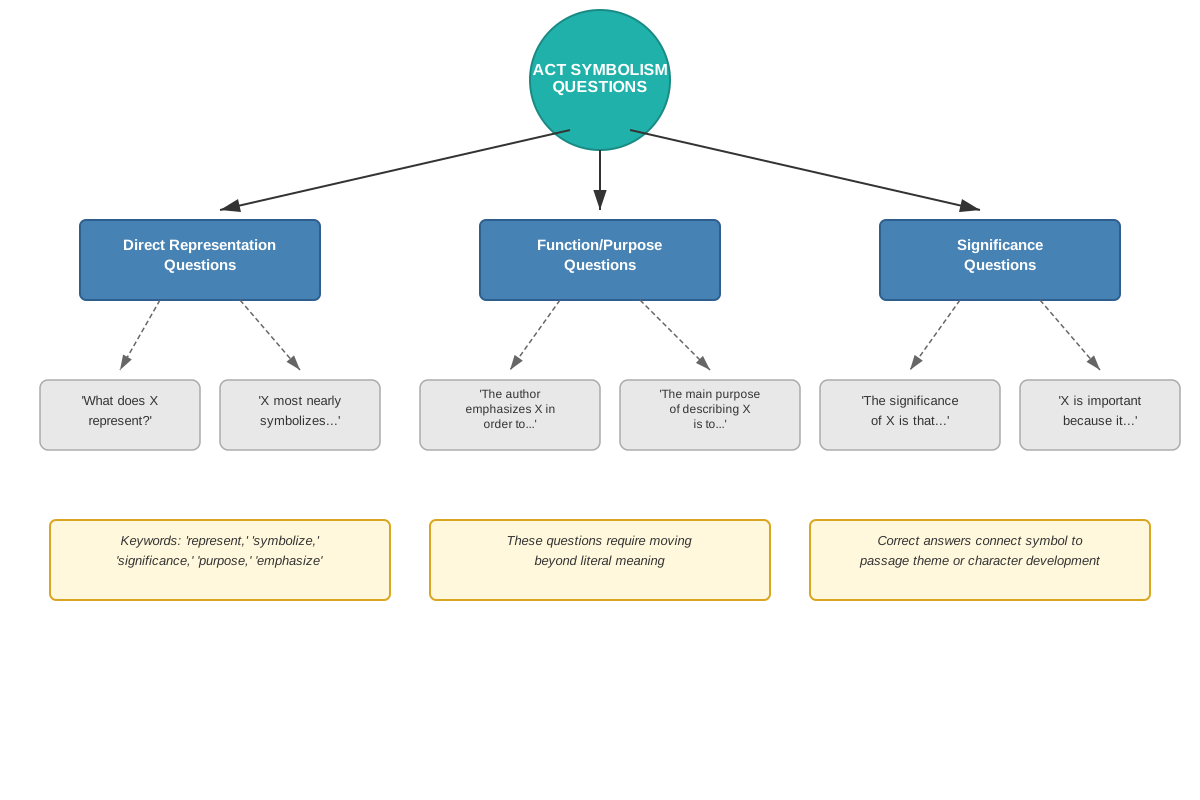
On the ACT, symbolism appears most commonly in prose fiction passages, where authors use recurring images, significant objects, or meaningful settings to develop themes. Humanities passages discussing art, music, or cultural movements also frequently incorporate symbolic analysis. Questions might ask directly about what something "represents" or "symbolizes," but more often they're embedded in questions about purpose, function, or thematic significance. Typical question stems include: "The author's repeated references to X primarily serve to...," "In context, X most nearly represents...," or "The description of X emphasizes..."
Core Concepts
Definition and Function of Symbolism
Symbolism occurs when an author uses a concrete element—an object, character, action, setting, or image—to represent abstract ideas, concepts, emotions, or themes beyond its literal meaning. Unlike simple description, symbolic elements carry layered significance that enriches the text's meaning. A storm isn't just weather; it might symbolize internal turmoil, social upheaval, or impending change. A journey isn't merely physical movement; it might represent personal growth, life's progression, or the search for identity.
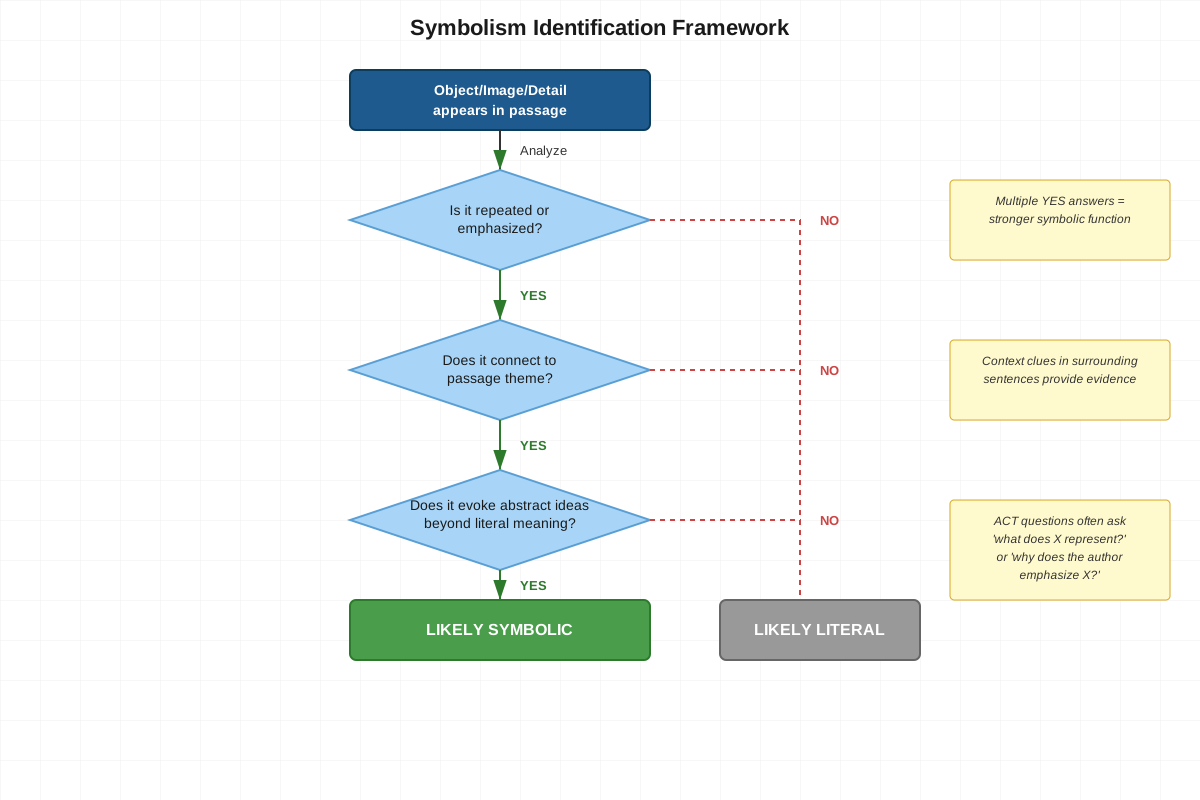
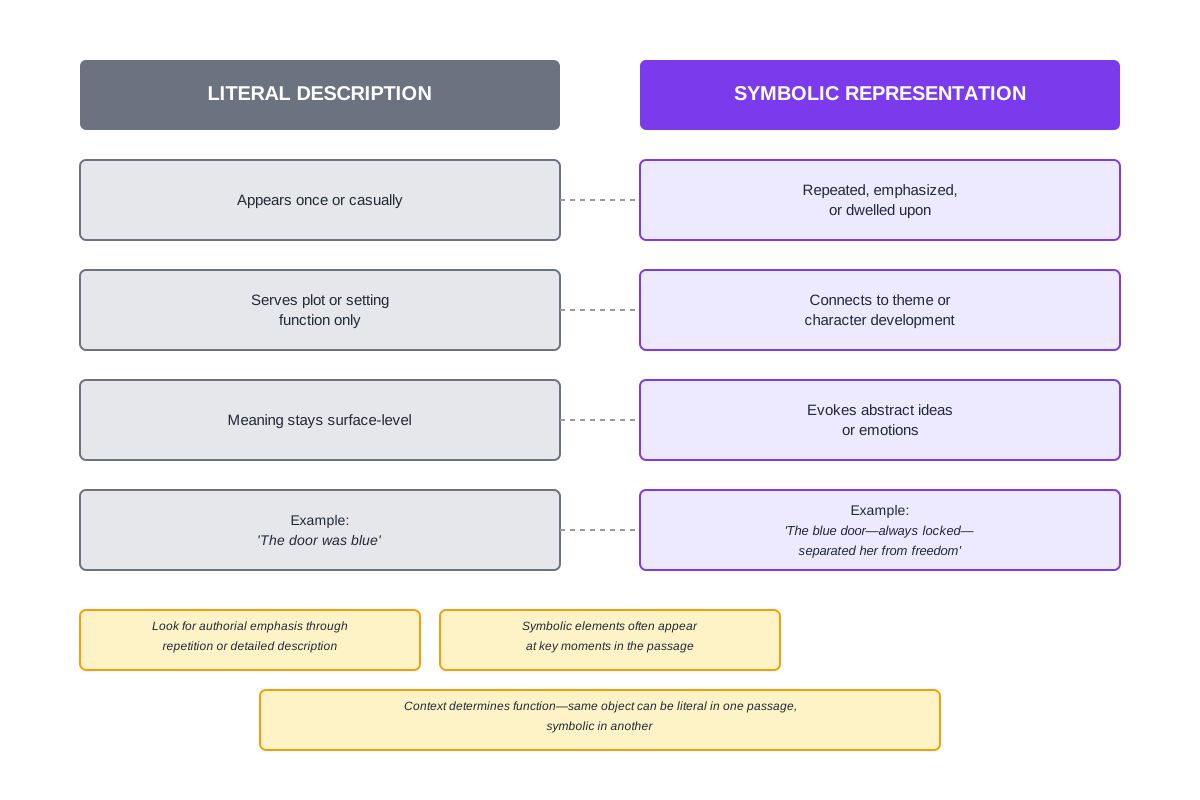
The key distinction between literal and symbolic meaning lies in intentional representation. When an author repeatedly emphasizes an element, describes it with unusual detail, or connects it to thematic concerns, that element likely functions symbolically. Symbols work through association and context—their meaning emerges from how they're presented, when they appear, and what ideas they're linked to throughout the passage.
Types of Symbols on the ACT
Symbols appearing in ACT passages generally fall into several categories:
Universal or Archetypal Symbols: These carry widely recognized meanings across cultures and time periods. Light typically represents knowledge, hope, or goodness; darkness suggests ignorance, despair, or evil. Water often symbolizes life, cleansing, or change; fire represents destruction, passion, or transformation. While these conventional meanings provide starting points, ACT passages may complicate or subvert traditional symbolic associations.
Contextual or Passage-Specific Symbols: These elements gain symbolic meaning specifically within the passage's context. An author might establish a particular object—a photograph, a piece of jewelry, a specific location—as symbolically significant through repeated reference, detailed description, or explicit connection to themes. These symbols require careful attention to how the passage develops their meaning.
Cultural or Historical Symbols: Humanities passages often discuss symbols with specific cultural significance—religious icons, national emblems, artistic motifs, or historical artifacts. Understanding these requires recognizing how communities invest objects or images with shared meaning.
Identifying Symbolic Elements
Several textual signals indicate when an element functions symbolically:
- Repetition: When an object, image, or detail appears multiple times throughout a passage, it likely carries symbolic weight
- Disproportionate attention: Unusually detailed or lengthy descriptions suggest significance beyond literal function
- Thematic connection: Elements explicitly linked to the passage's central ideas or conflicts often operate symbolically
- Emotional emphasis: Objects or images associated with strong feelings or pivotal moments frequently symbolize those emotions or experiences
- Contrast or juxtaposition: Elements presented in opposition (light/dark, old/new, natural/artificial) often symbolize competing values or ideas
Interpreting Symbolic Meaning
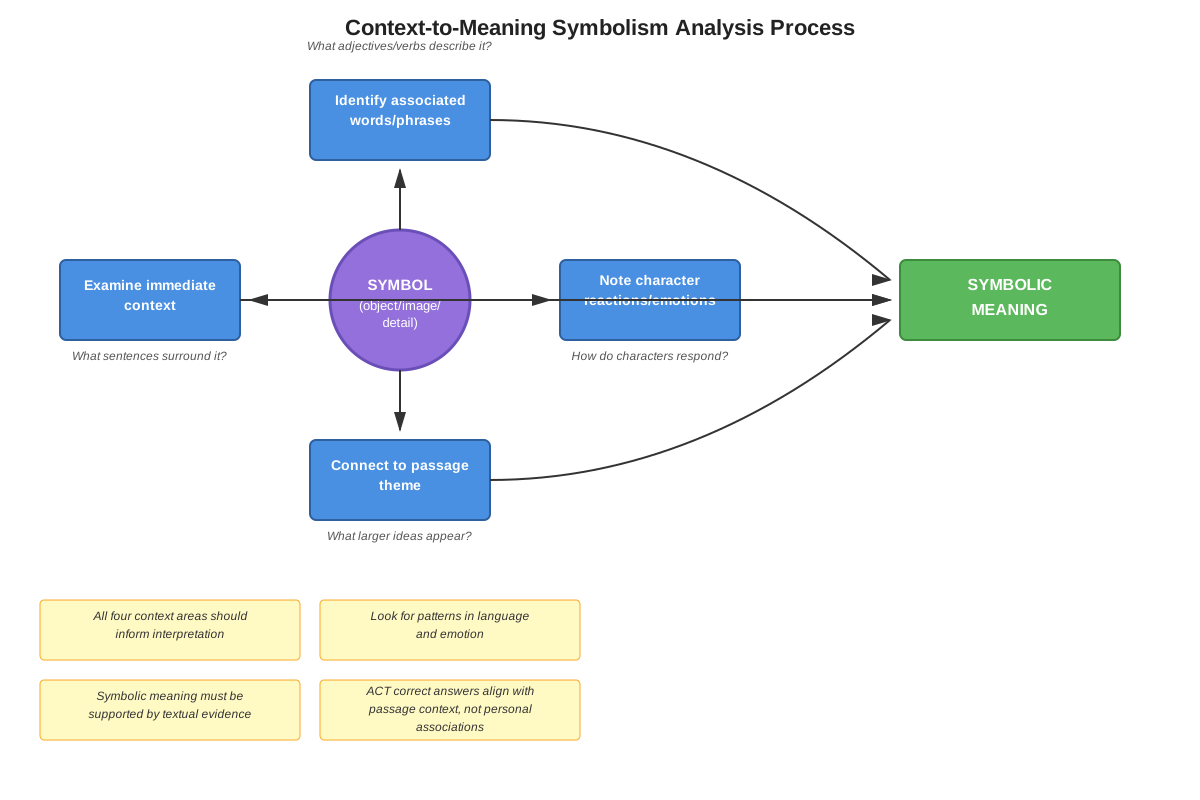
Determining what a symbol represents requires systematic analysis:
| Step | Process | Example |
|---|---|---|
| 1. Identify | Note the repeated or emphasized element | A character repeatedly looks at a locked door |
| 2. Contextualize | Examine when and how it appears | The door appears during moments of frustration or limitation |
| 3. Connect | Link to passage themes and character development | The passage explores themes of opportunity and constraint |
| 4. Interpret | Determine what abstract concept it represents | The locked door symbolizes barriers to advancement or freedom |
| 5. Verify | Confirm interpretation fits all instances | Each door reference relates to limitation or denied access |
The most reliable interpretations emerge from textual evidence—specific details, descriptions, and contexts the passage provides. Avoid importing external meanings that the passage doesn't support. If a passage presents rain during a character's moment of relief and renewal, that rain symbolizes cleansing or fresh starts within that specific context, regardless of how rain functions in other texts.
Symbols vs. Other Literary Devices
Understanding what symbolism is not helps clarify what it is:
- Metaphor: Direct comparison stating one thing IS another ("Time is a thief"). Symbols are more subtle, representing rather than equating
- Allegory: Extended narrative where characters and events systematically represent abstract concepts. Symbols are typically individual elements within realistic narratives
- Motif: Recurring element that may or may not be symbolic. All symbols that repeat are motifs, but not all motifs are symbols
- Imagery: Descriptive language appealing to senses. Imagery can be symbolic, but much imagery functions purely descriptively
Common Symbolic Patterns in ACT Passages
Certain symbolic patterns appear frequently enough to warrant recognition:
Journey/Travel: Often symbolizes personal growth, life progression, or the search for identity or meaning. Pay attention to what the character learns or how they change during travel.
Seasons/Weather: Typically represent emotional states, life stages, or change. Spring suggests renewal; winter implies dormancy or death; storms indicate conflict or turmoil.
Light/Darkness: Usually represents knowledge/ignorance, hope/despair, or good/evil, though passages may complicate these associations.
Boundaries/Barriers: Doors, windows, walls, rivers, or borders often symbolize transitions, limitations, opportunities, or divisions between states of being.
Objects from the Past: Photographs, heirlooms, or artifacts frequently symbolize memory, heritage, loss, or the relationship between past and present.
Concept Relationships
Symbolism functions as a bridge between concrete textual details and abstract thematic meaning. The relationship flows: Literal Element → Contextual Emphasis → Symbolic Meaning → Thematic Significance. An author first presents a concrete element, then emphasizes it through repetition or detailed description, which establishes its symbolic function, ultimately reinforcing the passage's central themes.
Symbolism connects directly to theme identification because symbols typically embody or illuminate the passage's main ideas. Understanding what elements symbolize helps determine what the passage is fundamentally about. Similarly, symbolism relates to authorial purpose and tone—the symbols an author chooses and how they're presented reveal attitude and intent.
The relationship to point of view is also significant. First-person narrators might explicitly reflect on symbolic meaning, while third-person narration often requires readers to infer symbolic significance from description and context. Understanding the narrative perspective helps determine how directly or subtly symbolic meaning is conveyed.
Symbolism also connects to text structure concepts. Symbols often appear at structurally significant moments—beginnings, endings, turning points—and their development across a passage can parallel plot or argument progression. Tracking how a symbol's presentation changes throughout a text reveals development in character, theme, or argument.
High-Yield Facts
⭐ Symbolism involves concrete elements representing abstract ideas beyond their literal meaning
⭐ Repetition and disproportionate attention are the strongest signals that an element functions symbolically
⭐ Symbolic meaning must be supported by textual evidence and context, not external associations
⭐ ACT questions about symbolism often ask about "purpose," "function," or what something "represents"
⭐ Symbols typically reinforce or illuminate the passage's central themes
- Universal symbols (light, darkness, water, journey) may appear, but passages often complicate conventional meanings
- Not every detailed description is symbolic; symbols connect to larger thematic concerns
- Multiple symbols in a passage usually work together to develop related ideas
- The same object can symbolize different things in different passages depending on context
- Symbolic interpretation questions reward answers that are specific to the passage rather than generic
- Authors rarely explain symbolic meaning explicitly; interpretation requires inference from context
- Symbols often appear at structurally significant moments in passages
Quick check — test yourself on Symbolism so far.
Try Flashcards →Common Misconceptions
Misconception: Every detailed description or repeated element is symbolic.
Correction: Symbols must connect to abstract ideas or themes. Some repetition serves structural purposes (like establishing setting) or emphasizes literal importance without symbolic dimension. Symbolic elements specifically represent concepts beyond their literal function.
Misconception: Symbols have fixed, universal meanings that apply across all texts.
Correction: While some symbols carry conventional associations, their meaning is always context-dependent. Water might symbolize life in one passage and danger in another. Always derive symbolic meaning from how the specific passage presents and uses the element.
Misconception: If you can think of a symbolic interpretation, it must be correct.
Correction: Valid symbolic interpretations require textual support. The passage must provide evidence through description, context, or thematic connection. Personal associations or creative readings that lack textual grounding are incorrect on the ACT.
Misconception: Symbolism only appears in fiction passages.
Correction: Humanities passages frequently discuss symbolic elements in art, culture, history, and social movements. Natural science and social science passages rarely employ literary symbolism, but humanities passages regularly analyze symbolic meaning.
Misconception: Authors always intend symbolic meaning consciously.
Correction: While authorial intent is debated in literary criticism, the ACT focuses on what the text demonstrates. If textual evidence supports a symbolic reading—through repetition, emphasis, and thematic connection—that interpretation is valid regardless of whether the author consciously planned it.
Misconception: Symbolic meaning is subjective and any interpretation is acceptable.
Correction: While interpretation involves inference, the ACT rewards readings grounded in textual evidence. Correct answers align with passage details, context, and themes. Symbolic interpretation has boundaries established by what the text actually says and does.
Worked Examples
Example 1: Prose Fiction Passage
Passage Excerpt:
Throughout her childhood, Maria had watched her grandmother's hands—weathered, calloused, perpetually stained with garden soil. Now, standing in her own urban apartment, Maria looked down at her own smooth, pale hands, unmarked by physical labor. She thought of her grandmother's hands again as she signed the contract for her first corporate position, the pen feeling foreign and light compared to the tools her grandmother had wielded. That evening, she bought a small potted plant for her windowsill, pressing her fingers into the dark earth as she transplanted it.
Question: In the passage, the grandmother's hands primarily serve to represent:
A) The physical demands of agricultural work
B) The passage of time and aging
C) A connection to heritage and authentic labor
D) The grandmother's skill as a gardener
Analysis:
Step 1 - Identify the symbolic element: The grandmother's hands receive disproportionate attention and are contrasted with Maria's hands, signaling symbolic function.
Step 2 - Examine context: The hands appear when Maria reflects on her life transition from her family's background to corporate work. The passage emphasizes the hands' qualities (weathered, calloused, soil-stained) rather than their function.
Step 3 - Connect to themes: The passage explores the relationship between Maria's new professional life and her family heritage, particularly the contrast between physical and corporate labor.
Step 4 - Evaluate answer choices:
- Choice A is too literal—while the hands did perform agricultural work, their symbolic function goes beyond describing physical demands
- Choice B is partially true but incomplete—aging is mentioned but isn't the primary symbolic significance
- Choice C captures the symbolic meaning—the hands represent Maria's heritage and a type of authentic, physical labor she's moving away from. Her final action of planting connects her back to this heritage
- Choice D is too literal and narrow—the passage isn't about gardening skill
Correct Answer: C
The grandmother's hands symbolize heritage and authentic physical labor, contrasting with Maria's new corporate identity. The final image of Maria planting reinforces this symbolic connection—she's literally reconnecting with what the hands represent.
Example 2: Humanities Passage
Passage Excerpt:
In her 1960s paintings, Morrison repeatedly returned to the image of the threshold—doorways, windows, gates—always depicted from the interior looking out. Critics initially dismissed these as simple architectural studies, but Morrison insisted the frames themselves were her true subject. "I paint the boundary," she explained, "the moment before crossing, the space between inside and outside, known and unknown." Her figures, when present, invariably stand at these thresholds, neither fully in nor out, captured in perpetual transition.
Question: The passage suggests that Morrison's threshold images primarily function to:
F) Demonstrate her technical skill in architectural rendering
G) Represent states of transition and the tension between opposing conditions
H) Critique the architectural design of 1960s buildings
J) Symbolize the physical barriers that divided communities during that era
Analysis:
Step 1 - Identify the symbolic element: The repeated threshold images (doorways, windows, gates) are explicitly discussed as symbolically significant, not merely architectural.
Step 2 - Examine context: Morrison's own explanation emphasizes "the boundary," "the moment before crossing," and "the space between"—all language suggesting transition and in-between states. The passage notes figures are "neither fully in nor out, captured in perpetual transition."
Step 3 - Connect to themes: The passage presents Morrison's work as exploring liminal spaces and transitional moments rather than architecture itself.
Step 4 - Evaluate answer choices:
- Choice F contradicts the passage—critics who viewed them as "simple architectural studies" were wrong; Morrison insisted on deeper meaning
- Choice G aligns with Morrison's explanation and the passage's emphasis on "boundary," "transition," and "between" states
- Choice H isn't supported—there's no critique of architectural design mentioned
- Choice J, while potentially relevant to the 1960s context, isn't supported by the passage's discussion of Morrison's intent or the paintings' meaning
Correct Answer: G
The thresholds symbolize transitional states and the tension between opposing conditions (inside/outside, known/unknown), as explicitly supported by Morrison's explanation and the passage's description of figures in "perpetual transition."
Exam Strategy
Recognizing Symbolism Questions
ACT symbolism questions rarely use the word "symbolize" directly. Instead, watch for these trigger phrases:
- "primarily serves to..."
- "functions to..."
- "represents..."
- "suggests..."
- "emphasizes..."
- "the significance of X is..."
- "the author's repeated references to X..."
Questions asking about the "purpose" or "function" of a specific detail, especially one that appears multiple times, are often testing symbolic interpretation.
Systematic Approach
- Locate all instances: When a question asks about a specific element, quickly scan the passage for every mention. Note what's happening each time it appears.
- Identify patterns: Do the instances share common contexts? Do they appear during similar emotional moments or thematic discussions?
- Connect to theme: Ask yourself how this element relates to the passage's main ideas. Symbols almost always reinforce central themes.
- Eliminate literal answers: Choices that describe only the element's literal function or appearance are typically incorrect for symbolism questions.
- Verify with evidence: The correct answer should fit every instance of the symbolic element in the passage.
Time Management
Symbolism questions typically require 45-60 seconds—slightly longer than detail questions but less than main idea questions. Don't overthink or import outside knowledge. The passage provides all necessary evidence. If you're spending more than a minute, you're likely overcomplicating the interpretation.
Process of Elimination Tips
Eliminate answers that:
- Focus only on literal, surface-level meaning
- Introduce ideas not present in the passage
- Apply only to one instance of the element but not others
- Use extreme or absolute language unsupported by the text
- Rely on conventional symbolic meanings that the passage contradicts
Favor answers that:
- Connect the element to passage themes
- Account for all instances of the element
- Use language similar to the passage's thematic vocabulary
- Balance specificity with appropriate abstraction
Memory Techniques
The RICE Method for Symbol Identification
Repetition - Does it appear multiple times?
Intensity - Is it described with unusual detail or emotion?
Connection - Does it link to themes or pivotal moments?
Emphasis - Does the author draw attention to it?
If an element meets 2+ RICE criteria, it likely functions symbolically.
The CAVE Interpretation Process
Context - When and how does it appear?
Associations - What ideas or emotions connect to it?
Verify - Does the interpretation fit all instances?
Evidence - What specific textual support exists?
Visualization Strategy
Picture symbols as bridges connecting concrete details (the literal element) to abstract ideas (themes and concepts). When you identify a potential symbol, visualize it as a bridge and ask: "What concrete thing is on one side, and what abstract idea is on the other?"
Common Symbol Acronym: JSLB
Journeys = growth/change
Seasons = life stages/emotions
Light/dark = knowledge/ignorance
Boundaries = transitions/limitations
While not exhaustive, this acronym helps recall frequently appearing symbolic patterns.
Summary
Symbolism is a high-yield ACT Reading topic that requires students to recognize when concrete elements represent abstract ideas beyond their literal meaning. Success depends on identifying symbolic elements through textual signals like repetition and disproportionate attention, then interpreting their meaning through careful analysis of context and thematic connections. The ACT tests symbolism through questions about purpose, function, and representation, typically in prose fiction and humanities passages. Correct interpretation always grounds itself in textual evidence rather than external associations or conventional meanings. Mastering symbolism involves systematic analysis: identifying the element, examining its contexts, connecting it to themes, and verifying the interpretation fits all instances. This skill connects intimately with theme identification, authorial purpose, and higher-order comprehension—all critical for achieving top ACT Reading scores.
Key Takeaways
- Symbolism involves concrete elements representing abstract ideas, identified through repetition, detailed description, and thematic connection
- Symbolic meaning must be derived from passage context and textual evidence, not external associations or conventional meanings
- ACT symbolism questions use trigger phrases like "serves to," "represents," "functions to," and "significance of"
- Eliminate answer choices that focus only on literal meaning or introduce unsupported ideas
- Symbols typically reinforce central themes and appear at structurally significant moments
- The RICE method (Repetition, Intensity, Connection, Emphasis) helps identify symbolic elements
- Valid interpretations account for all instances of the symbolic element and connect to passage themes
Related Topics
Figurative Language: Understanding metaphor, simile, and personification deepens symbolic interpretation skills, as these devices share the characteristic of non-literal meaning. Mastering symbolism provides foundation for analyzing all figurative language.
Theme and Main Idea: Since symbols typically embody or illuminate themes, strong theme identification skills enhance symbolic interpretation, and vice versa. These topics reinforce each other.
Authorial Purpose and Tone: Recognizing why authors include specific symbolic elements and how symbols convey attitude connects directly to purpose and tone analysis.
Text Structure and Organization: Understanding how symbols develop across a passage and appear at key structural moments enhances both symbolic interpretation and structural analysis skills.
Point of View and Perspective: The narrative perspective affects how directly or subtly symbolic meaning is conveyed, making POV analysis relevant to symbolic interpretation.
Practice CTA
Now that you've mastered the core concepts of symbolism, it's time to apply these skills to ACT-style passages and questions. The practice questions and flashcards will reinforce your ability to identify symbolic elements, interpret their meaning using textual evidence, and select correct answers efficiently. Remember: symbolism questions are high-value opportunities to demonstrate sophisticated reading skills. With systematic analysis and attention to textual evidence, you can confidently tackle these questions and boost your ACT Reading score. Start practicing now to transform your understanding into test-day success!
Sign up free to keep reading
Create a free AnvayaPrep account to finish this ACT guide on Symbolism — plus flashcards and practice questions.