Overview
Understanding the distinction between correlation versus causation is one of the most critical scientific reasoning skills tested on the ACT Science section. This concept addresses a fundamental principle in scientific thinking: just because two variables change together does not mean that one causes the other. The ACT frequently presents data showing relationships between variables and asks students to determine whether the relationship is merely correlational or truly causal. Mastering this distinction separates students who can think critically about scientific evidence from those who jump to unwarranted conclusions.
On the ACT Science test, ACT correlation versus causation questions appear across multiple passage types, including Data Representation, Research Summaries, and Conflicting Viewpoints passages. These questions test whether students can evaluate the strength of scientific claims, identify confounding variables, recognize experimental design limitations, and distinguish between association and causation. Students who understand this concept can avoid common traps where answer choices suggest causal relationships that the data cannot support.
This topic connects directly to broader scientific reasoning principles, including experimental design, variable identification, hypothesis testing, and data interpretation. It also relates to understanding control groups, sample size considerations, and the role of randomization in establishing causality. Strong performance on correlation versus causation questions demonstrates scientific literacy that extends beyond memorizing facts to truly understanding how scientific knowledge is validated and established.
Learning Objectives
- [ ] Identify when correlation versus causation is being tested in ACT Science passages
- [ ] Explain the core rule or strategy behind correlation versus causation
- [ ] Apply correlation versus causation to ACT-style questions accurately
- [ ] Distinguish between observational studies and controlled experiments in passage descriptions
- [ ] Recognize confounding variables that might explain correlational relationships
- [ ] Evaluate whether experimental design supports causal claims
- [ ] Identify language in answer choices that inappropriately suggests causation
Prerequisites
- Basic understanding of variables: Students must recognize independent and dependent variables, as correlation involves examining how two variables change together
- Graph and table interpretation: Reading trends from data presentations is essential since correlational relationships are typically shown through data visualizations
- Experimental design fundamentals: Understanding the difference between observation and manipulation helps distinguish correlational from causal studies
- Scientific method basics: Familiarity with hypothesis testing provides context for why establishing causation requires more rigorous evidence than identifying correlation
Why This Topic Matters
In real-world applications, the correlation versus causation distinction prevents flawed decision-making in medicine, public policy, business, and personal choices. Medical researchers must determine whether a treatment actually causes improvement or merely correlates with it. Policy makers need to know whether an intervention causes desired outcomes or simply occurs alongside them. The ability to think critically about causal claims protects against manipulation by misleading statistics and helps evaluate scientific claims in news media.
On the ACT Science test, correlation versus causation questions appear in approximately 15-20% of passages, making this a high-yield topic for score improvement. These questions typically appear 1-2 times per test, often in Research Summaries passages where experimental procedures are described. The ACT specifically tests this concept because it represents authentic scientific reasoning that students need for college-level science courses.
Common question formats include: asking whether data "proves" or "demonstrates" causation (trap answers), requiring students to identify what additional information would establish causation, presenting answer choices that overstate conclusions from correlational data, asking students to identify alternative explanations for observed relationships, and requiring evaluation of whether study design supports causal claims. Questions may also ask students to distinguish between "associated with" versus "caused by" language or to identify confounding variables that weaken causal arguments.
Core Concepts
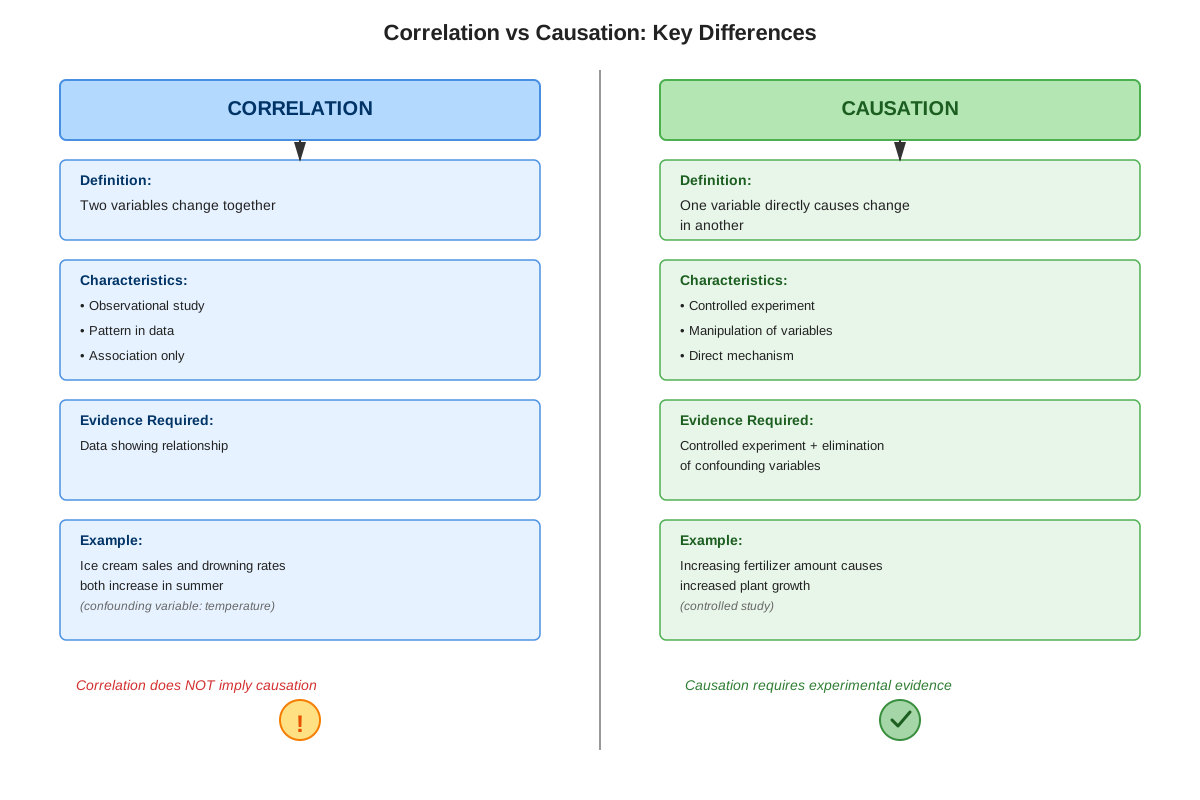
Defining Correlation
Correlation refers to a statistical relationship between two variables where they tend to change together in a predictable pattern. When one variable increases and the other also increases, this represents a positive correlation. When one variable increases while the other decreases, this represents a negative correlation. Correlation can be measured and quantified, but it describes only the pattern of association, not the underlying mechanism.
Correlational relationships are identified through observation and data collection without manipulating variables. For example, researchers might observe that students who eat breakfast tend to have higher test scores. This correlation can be documented by collecting data on breakfast habits and academic performance, then analyzing whether the two variables show a consistent relationship across many students.
Defining Causation
Causation means that changes in one variable directly produce changes in another variable. A causal relationship requires that the independent variable actually causes the dependent variable to change through a direct mechanism. Establishing causation requires more than observing that variables change together—it demands evidence that one variable's change produces the other's change.
The gold standard for establishing causation involves controlled experiments where researchers manipulate one variable while holding all other factors constant, then observe whether the manipulated variable produces changes in the outcome variable. Random assignment to treatment and control groups helps ensure that any observed differences result from the manipulated variable rather than pre-existing differences between groups.
The Critical Distinction
The fundamental principle is: correlation does not imply causation. Two variables can be strongly correlated without any causal relationship between them. This occurs through several mechanisms:
- Coincidence: Pure chance can create apparent correlations, especially with small sample sizes
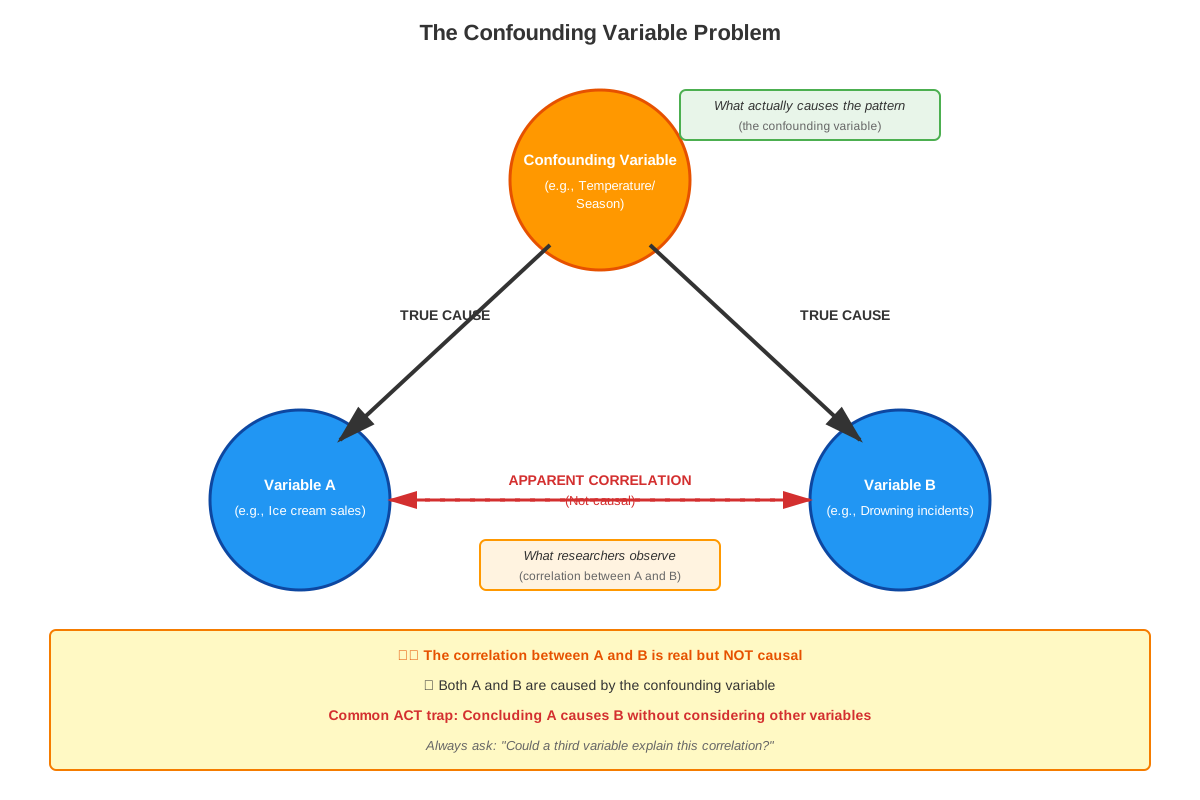
- Confounding variables: A third variable might cause both observed variables to change
- Reverse causation: Variable B might cause Variable A rather than A causing B
- Complex interactions: Multiple variables might interact in ways that create correlational patterns
Criteria for Establishing Causation
Scientists use several criteria to evaluate whether a correlation represents causation:
| Criterion | Description | Example |
|---|---|---|
| Temporal precedence | The cause must occur before the effect | Smoking must precede lung cancer diagnosis |
| Covariation | Changes in cause must correlate with changes in effect | More smoking correlates with higher cancer rates |
| No plausible alternatives | Other explanations must be ruled out | Control for genetics, pollution, other risk factors |
| Mechanism | A biological or physical pathway must exist | Carcinogens in smoke damage DNA |
| Dose-response | Larger "doses" of cause produce larger effects | Heavier smoking increases cancer risk more |
| Experimental manipulation | Controlled experiments support the relationship | Lab studies show smoke causes cellular damage |
Confounding Variables
A confounding variable (also called a lurking variable) is an unmeasured factor that influences both variables in an observed correlation, creating a spurious relationship. For example, ice cream sales and drowning deaths are positively correlated, but ice cream doesn't cause drowning. Instead, hot weather (the confounding variable) increases both ice cream consumption and swimming activity, which increases drowning risk.
Identifying potential confounding variables is crucial for ACT questions. When a passage presents correlational data, students should ask: "What other factors might explain this relationship?" Common confounding variables include time (trends over time can create spurious correlations), age, socioeconomic status, geographic location, and pre-existing differences between groups.
Observational Studies versus Experiments
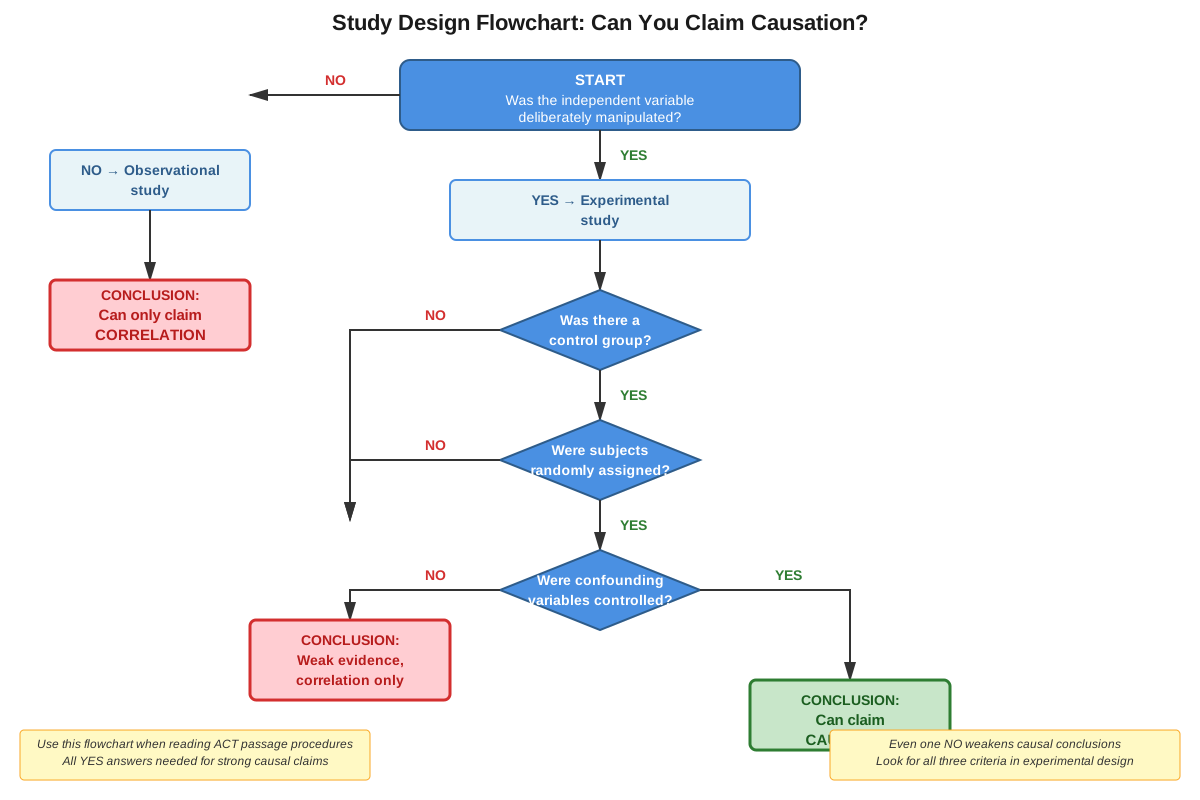
Observational studies collect data without manipulating variables. Researchers observe naturally occurring variation and look for patterns. These studies can identify correlations but cannot definitively establish causation because confounding variables cannot be controlled. Surveys, case studies, and naturalistic observations are observational methods.
Controlled experiments involve deliberate manipulation of an independent variable while controlling other factors. Random assignment to experimental and control groups helps ensure groups are equivalent except for the manipulated variable. When properly designed, experiments can establish causation because they eliminate alternative explanations.
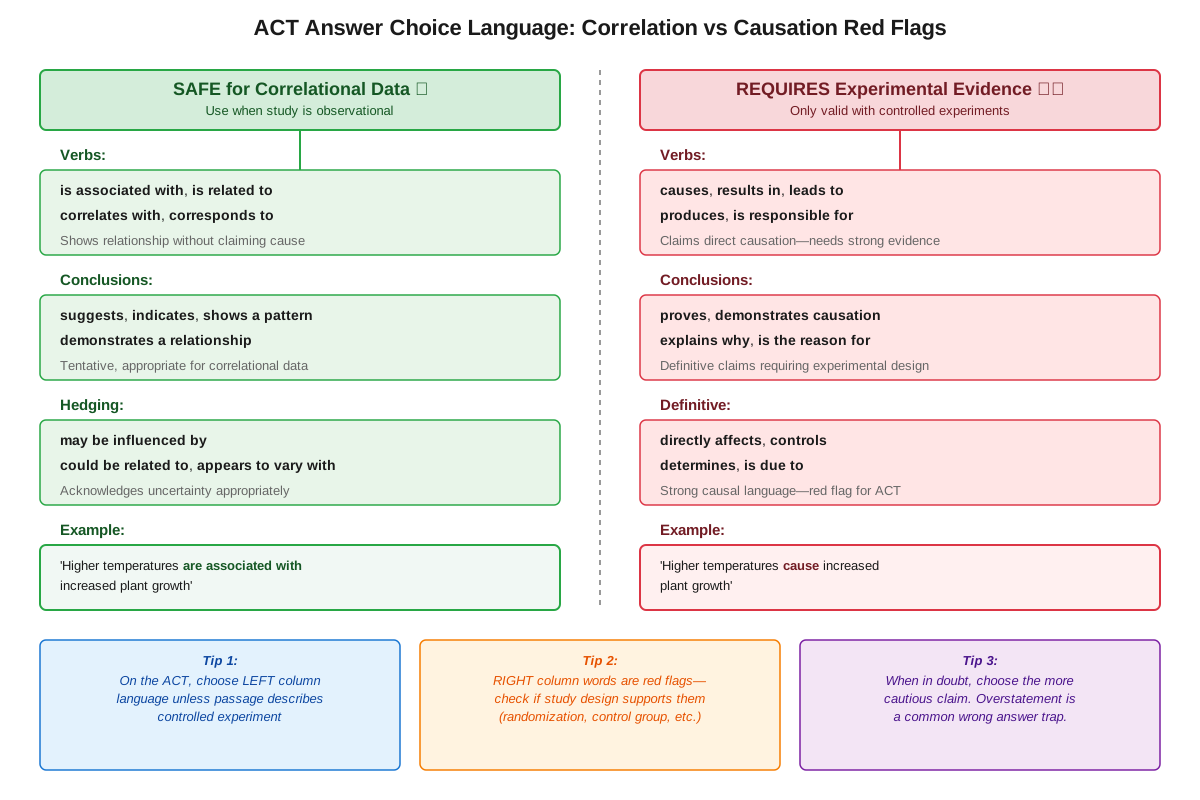
The ACT frequently presents study descriptions and asks whether conclusions are justified. Students must recognize that observational studies support correlational claims ("associated with," "related to") but not causal claims ("causes," "produces," "results in").
Language Signals
Specific language indicates whether a claim is correlational or causal:
Correlational language: associated with, related to, linked to, correlated with, connected to, tends to occur with, predicts, corresponds to
Causal language: causes, produces, results in, leads to, creates, generates, brings about, is responsible for, makes happen
ACT answer choices often include one option with appropriate correlational language and another with inappropriate causal language. Recognizing these linguistic signals helps identify correct answers.
Concept Relationships
The correlation versus causation distinction builds directly on understanding variables and experimental design. Students must first identify independent and dependent variables (prerequisite knowledge) before evaluating whether their relationship is correlational or causal. This evaluation then depends on understanding experimental design—specifically whether the study involved manipulation and control (experimental) or merely observation (correlational).
The relationship flow follows this pattern: Variable identification → Study design analysis → Correlation or causation determination → Evaluation of confounding variables → Assessment of claim validity
Confounding variables connect to the correlation versus causation distinction by providing alternative explanations for observed correlations. When students identify potential confounding variables, they demonstrate understanding that correlation alone doesn't establish causation. This connects to the broader concept of scientific skepticism and the need for rigorous evidence before accepting causal claims.
The concept also relates to data interpretation skills tested throughout the ACT Science section. Students must read graphs and tables to identify correlations, then apply critical thinking to determine whether causal conclusions are warranted. This integration of data literacy and logical reasoning represents authentic scientific thinking.
High-Yield Facts
⭐ Correlation means two variables change together; causation means one variable directly produces changes in the other
⭐ Observational studies can identify correlations but cannot definitively establish causation
⭐ Controlled experiments with random assignment are required to establish causation
⭐ Confounding variables are third factors that influence both observed variables, creating spurious correlations
⭐ The phrase "correlation does not imply causation" is the fundamental principle for this topic
- Positive correlation means variables increase together; negative correlation means one increases while the other decreases
- Temporal precedence (cause before effect) is necessary but not sufficient for establishing causation
- Strong correlations can exist without any causal relationship between variables
- Reverse causation occurs when the presumed effect actually causes the presumed cause
- Language like "associated with" indicates correlation, while "causes" indicates causation
- Random assignment helps eliminate confounding variables by distributing them equally across groups
- Dose-response relationships (more cause produces more effect) strengthen causal arguments
- Replication across multiple studies strengthens evidence for causation
- Sample size affects correlation reliability but doesn't determine whether correlation implies causation
- ACT answer choices often include trap options that claim causation from correlational data
Quick check — test yourself on Correlation versus causation so far.
Try Flashcards →Common Misconceptions
Misconception: If two variables are strongly correlated, one must cause the other → Correction: Strong correlations can result from confounding variables, coincidence, or reverse causation. Correlation strength indicates how reliably variables change together but says nothing about whether a causal mechanism exists. Ice cream sales and shark attacks are strongly correlated (both increase in summer) without any causal relationship.
Misconception: Observational studies with large sample sizes can establish causation → Correction: Sample size affects statistical power and correlation reliability but doesn't address confounding variables. Even with millions of observations, an observational study cannot control for unmeasured confounding factors. Only experimental manipulation with proper controls can establish causation, regardless of sample size.
Misconception: If A occurs before B, then A causes B → Correction: Temporal precedence is necessary for causation but not sufficient. Many events occur in sequence without causal relationships. Roosters crow before sunrise, but they don't cause the sun to rise. Additional evidence including mechanism, experimental manipulation, and ruling out alternatives is required.
Misconception: If there's no correlation, there's definitely no causation → Correction: While causation typically produces correlation, complex relationships can mask correlations. Non-linear relationships, threshold effects, or interactions with other variables might hide correlations even when causal relationships exist. However, for ACT purposes, lack of correlation generally suggests lack of causation.
Misconception: Correlation versus causation only matters in statistics, not in real science → Correction: This distinction is fundamental to all scientific reasoning. Scientists constantly evaluate whether observed relationships are causal or merely correlational. Medical treatments, environmental policies, and technological innovations all depend on correctly identifying causal relationships rather than acting on spurious correlations.
Worked Examples
Example 1: Evaluating a Research Study
Passage Summary: A study examined 500 high school students and found that those who reported sleeping 8+ hours per night had GPAs averaging 0.4 points higher than students sleeping less than 6 hours. The researchers concluded that "adequate sleep improves academic performance."
Question: Which statement best describes the researchers' conclusion?
A) The conclusion is justified because the sample size is large
B) The conclusion is justified because sleep occurred before academic performance was measured
C) The conclusion overstates the findings because the study only demonstrates correlation
D) The conclusion is too weak because the GPA difference is substantial
Solution Process:
Step 1: Identify the study design. The passage describes examining students and finding a relationship between existing sleep habits and grades. This is observational—no manipulation of sleep occurred.
Step 2: Recognize the language in the conclusion. "Improves" is causal language suggesting sleep causes better academic performance.
Step 3: Evaluate whether the study design supports causal claims. Observational studies can identify correlations but cannot establish causation because confounding variables aren't controlled.
Step 4: Consider potential confounding variables. Students who sleep more might differ in other ways: better time management, less stress, fewer jobs/responsibilities, better overall health, more supportive home environments. Any of these could explain both more sleep and higher grades.
Step 5: Eliminate answer choices. Choice A is incorrect because sample size doesn't address causation. Choice B is incorrect because temporal precedence alone doesn't establish causation. Choice D is incorrect because the issue isn't the strength of the conclusion but its type (causal vs. correlational).
Answer: C - The study demonstrates that sleep and GPA are correlated (associated), but the observational design cannot establish that sleep causes improved grades. The conclusion inappropriately uses causal language for correlational findings.
Connection to Learning Objectives: This example demonstrates identifying when correlation versus causation is tested (objective 1), applying the core principle that observational studies show correlation not causation (objective 2), and accurately answering an ACT-style question (objective 3).
Example 2: Identifying Confounding Variables
Passage Summary: Researchers noticed that cities with more hospitals have higher death rates than cities with fewer hospitals. A graph shows a positive correlation between number of hospitals per capita and annual death rate.
Question: Which explanation best accounts for this correlation?
A) Hospitals cause deaths through medical errors
B) Population size is a confounding variable affecting both hospitals and death rates
C) The correlation is coincidental and meaningless
D) Reverse causation: higher death rates lead cities to build more hospitals
Solution Process:
Step 1: Recognize this as a correlation versus causation question. The passage presents a correlation and asks for explanation.
Step 2: Evaluate whether the correlation suggests causation. The idea that hospitals cause deaths contradicts common sense and medical evidence, suggesting the correlation doesn't reflect causation.
Step 3: Consider confounding variables. What factors might influence both hospital numbers and death rates? Larger cities have more hospitals (more people need more medical facilities) and higher absolute death rates (more people means more deaths). Population size could explain both variables.
Step 4: Evaluate each answer. Choice A suggests causation without evidence and contradicts medical knowledge. Choice C dismisses the correlation without explanation. Choice D suggests reverse causation, which is partially plausible but doesn't fully explain why more deaths would correlate with more hospitals per capita.
Step 5: Recognize that Choice B identifies a classic confounding variable. When controlling for population size (looking at per capita rates properly), the correlation likely disappears or reverses.
Answer: B - Population size is a confounding variable that influences both the number of hospitals and death rates, creating a spurious correlation between them.
Connection to Learning Objectives: This example demonstrates recognizing confounding variables (objective 5), distinguishing between correlation and causation (objective 2), and applying critical thinking to ACT-style questions (objective 3).
Exam Strategy
When approaching ACT correlation versus causation questions, follow this systematic process:
Step 1: Identify the study design. Read the passage carefully to determine whether researchers manipulated variables (experiment) or observed existing patterns (observational study). Look for phrases like "researchers assigned," "participants were randomly divided," or "the experiment involved" (suggesting experiments) versus "researchers observed," "data was collected," or "a survey found" (suggesting observational studies).
Step 2: Watch for trigger words in questions and answer choices. Questions asking whether data "proves," "demonstrates," "establishes," or "shows causation" are testing this concept. Answer choices using "causes," "results in," "produces," or "leads to" make causal claims that require experimental evidence. Choices using "associated with," "correlated with," or "related to" make appropriate correlational claims.
Step 3: Apply the decision rule: Observational studies → correlation only; Controlled experiments → possible causation. If the study is observational, eliminate any answer choice claiming causation. If the study is experimental with proper controls, causal claims may be justified.
Step 4: Consider confounding variables. When a passage presents a correlation, ask yourself: "What other factors might explain this relationship?" Common confounding variables include time, age, socioeconomic status, geographic location, and pre-existing group differences. Answer choices that identify plausible confounding variables often explain correlations without invoking causation.
Step 5: Use process of elimination. Eliminate answers that:
- Claim causation from observational data
- Use causal language ("causes," "produces") when only correlation is shown
- Ignore obvious confounding variables
- Overstate conclusions beyond what the data support
Exam Tip: If you're unsure whether causation is established, default to correlation. The ACT rarely presents perfect experimental designs that definitively prove causation. When in doubt, choose the answer with correlational language.
Time allocation: These questions typically require 30-45 seconds. Spend 15-20 seconds identifying study design and 15-25 seconds evaluating answer choices. Don't overthink—apply the basic rule about observational versus experimental studies.
Common trap patterns: The ACT frequently includes one answer with appropriate correlational language and another nearly identical answer with inappropriate causal language. Read carefully to distinguish "associated with" from "caused by." Another common trap presents a confounding variable explanation alongside a causal explanation—choose the confounding variable when the study is observational.
Memory Techniques
Mnemonic for Causation Criteria: "TEMPO"
- Temporal precedence (cause before effect)
- Experimental manipulation (controlled study)
- Mechanism (plausible pathway)
- Plausible alternatives ruled out
- Observation alone isn't enough
Visualization Strategy: Picture correlation as two dancers moving together—they're synchronized but neither is pulling the other. Picture causation as one dancer physically pushing or pulling the other—there's a direct force creating the movement.
Acronym for Study Types: "OCE"
- Observational studies show Correlation
- Experiments can show causation
Memory phrase: "Correlation is not causation—observation needs experimentation for explanation." This reminds students that observational correlations require experimental evidence to establish causal explanations.
Language reminder: "Associated = Correlation; Causes = Causation." The similar starting letters help remember which language indicates which type of relationship.
Summary
The correlation versus causation distinction is fundamental to scientific reasoning and frequently tested on the ACT Science section. Correlation describes variables that change together in predictable patterns, while causation means one variable directly produces changes in another. The critical principle is that correlation does not imply causation—two variables can be strongly correlated without any causal relationship between them. Observational studies can identify correlations but cannot establish causation because they don't control for confounding variables. Only controlled experiments with random assignment and proper controls can provide strong evidence for causation. On the ACT, students must recognize study designs, identify appropriate versus inappropriate language in answer choices, consider confounding variables, and avoid trap answers that claim causation from correlational data. Success requires distinguishing between correlational language ("associated with," "related to") and causal language ("causes," "produces"), then matching conclusions to the strength of evidence provided by the study design.
Key Takeaways
- Correlation does not imply causation is the fundamental principle—variables can change together without causal relationships
- Observational studies demonstrate correlation; controlled experiments are required to establish causation
- Confounding variables create spurious correlations by influencing both observed variables
- Language matters: "associated with" indicates correlation while "causes" indicates causation
- ACT questions test whether students can match conclusions to study designs and avoid overstating correlational findings
- Identifying potential confounding variables helps explain correlations without invoking causation
- When evaluating answer choices, eliminate options that claim causation from observational data
Related Topics
Experimental Design and Controls: Understanding control groups, random assignment, and variable manipulation deepens comprehension of why experiments can establish causation while observational studies cannot. This topic extends the correlation versus causation distinction by explaining the mechanisms that make causal inference possible.
Statistical Significance and Sample Size: Learning about p-values, confidence intervals, and statistical power helps students understand that even statistically significant correlations don't imply causation. This topic complements correlation versus causation by addressing the reliability of observed relationships.
Bias and Confounding in Research: Studying selection bias, measurement bias, and systematic errors provides deeper understanding of how confounding variables operate and why controlling for them is essential. This advanced topic builds on the foundation of recognizing confounding variables.
Scientific Method and Hypothesis Testing: Exploring how scientists formulate and test hypotheses provides context for why establishing causation requires rigorous evidence. Mastering correlation versus causation enables better understanding of the complete scientific process.
Practice CTA
Now that you understand the critical distinction between correlation and causation, test your mastery with practice questions and flashcards. These resources will reinforce your ability to identify study designs, recognize appropriate language, spot confounding variables, and avoid common traps on ACT Science questions. Consistent practice with this high-yield topic will boost your scientific reasoning skills and improve your overall Science score. Remember: every correlation versus causation question you encounter is an opportunity to apply systematic thinking and demonstrate true scientific literacy!
Sign up free to keep reading
Create a free AnvayaPrep account to finish this ACT guide on Correlation versus causation — plus flashcards and practice questions.