Overview
The third variable concept is one of the most powerful and frequently tested reasoning patterns in LSAT Logical Reasoning. This concept addresses a fundamental flaw in causal reasoning: when two phenomena occur together, people often assume one causes the other, but fail to consider that both might be caused by an entirely separate factor—a third variable. Understanding this pattern is essential for success on the LSAT because it appears across multiple question types, including Weaken, Strengthen, Flaw, and Assumption questions.
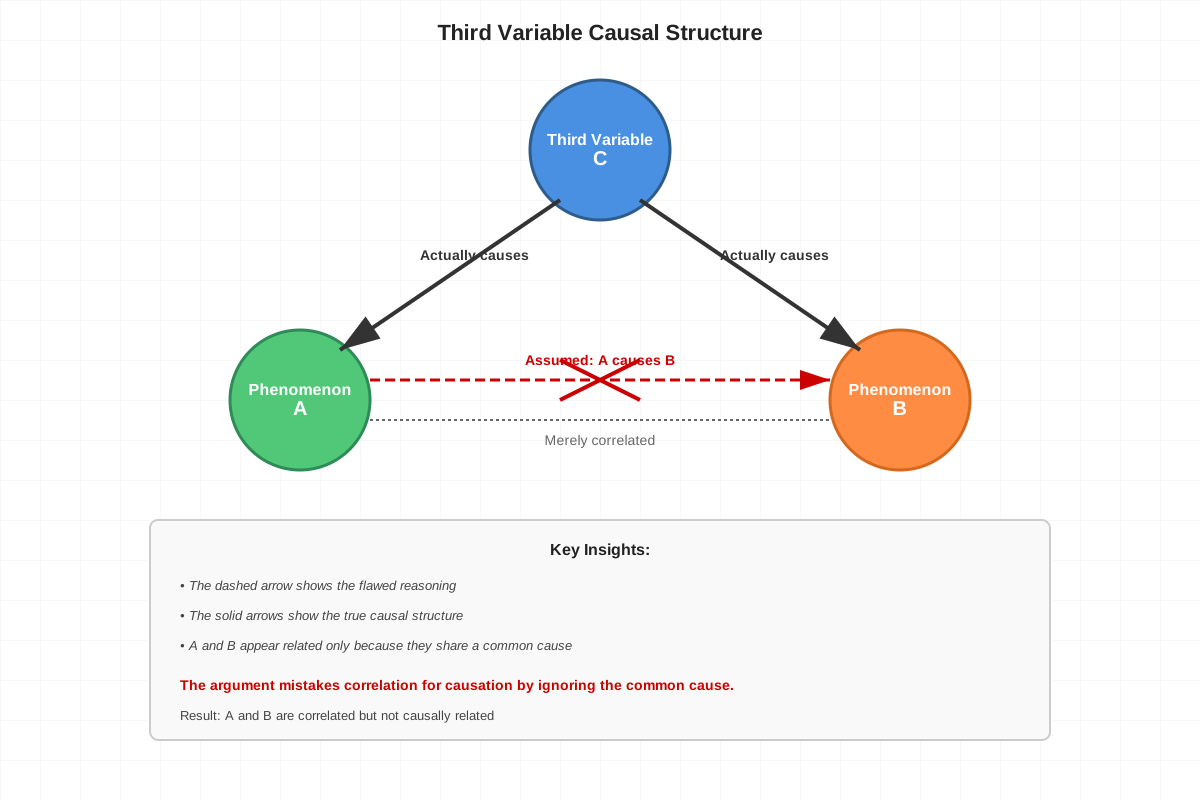
In the context of causation and explanation, the third variable represents an alternative explanation that challenges simple cause-and-effect relationships. When an argument observes a correlation between A and B and concludes that A causes B, a third variable (let's call it C) might actually be causing both A and B, making their relationship merely coincidental rather than causal. This reasoning pattern tests a student's ability to think critically about evidence and to recognize that correlation does not necessarily imply causation—a cornerstone principle of logical analysis.
Mastering the LSAT third variable concept strengthens overall performance in Logical Reasoning by developing the analytical skills needed to identify gaps in causal arguments, evaluate alternative explanations, and distinguish between genuine causal relationships and spurious correlations. This topic connects directly to broader themes in causation, including reverse causation, coincidence, and the general principle that observational data alone cannot establish causal direction without ruling out alternative explanations.
Learning Objectives
By the end of this study guide, students should be able to:
- [ ] Identify how Third variable appears in LSAT questions
- [ ] Explain the reasoning pattern behind Third variable
- [ ] Apply Third variable to solve LSAT-style problems accurately
- [ ] Distinguish between third variable scenarios and other causal reasoning flaws (such as reverse causation or coincidence)
- [ ] Generate potential third variables when analyzing causal arguments
- [ ] Recognize the specific language patterns that signal third variable vulnerabilities in LSAT stimuli
Prerequisites
Students should have foundational knowledge in the following areas:
- Basic causal reasoning: Understanding the difference between correlation and causation is essential because third variable scenarios exploit this distinction
- Argument structure: Recognizing premises and conclusions allows students to identify where causal claims appear and where they might be vulnerable
- Conditional logic fundamentals: Understanding necessary and sufficient conditions helps distinguish causal relationships from mere conditional statements
- Common LSAT question types: Familiarity with Weaken, Strengthen, Flaw, and Assumption questions provides context for how third variable reasoning appears on the exam
Why This Topic Matters
The third variable concept appears with remarkable frequency on the LSAT, making it one of the highest-yield topics in Logical Reasoning. Research on LSAT question patterns suggests that causal reasoning flaws, including third variable scenarios, appear in approximately 15-20% of all Logical Reasoning questions. This translates to roughly 5-8 questions per exam, making it one of the most commonly tested reasoning patterns.
In real-world applications, third variable reasoning is fundamental to scientific thinking, policy analysis, and legal argumentation. Medical researchers must consider confounding variables when evaluating treatment effectiveness. Legal professionals must evaluate whether observed correlations between defendant characteristics and case outcomes reflect genuine causal relationships or are explained by third factors like quality of legal representation. Business analysts must determine whether marketing initiatives actually drive sales increases or whether both are driven by seasonal factors.
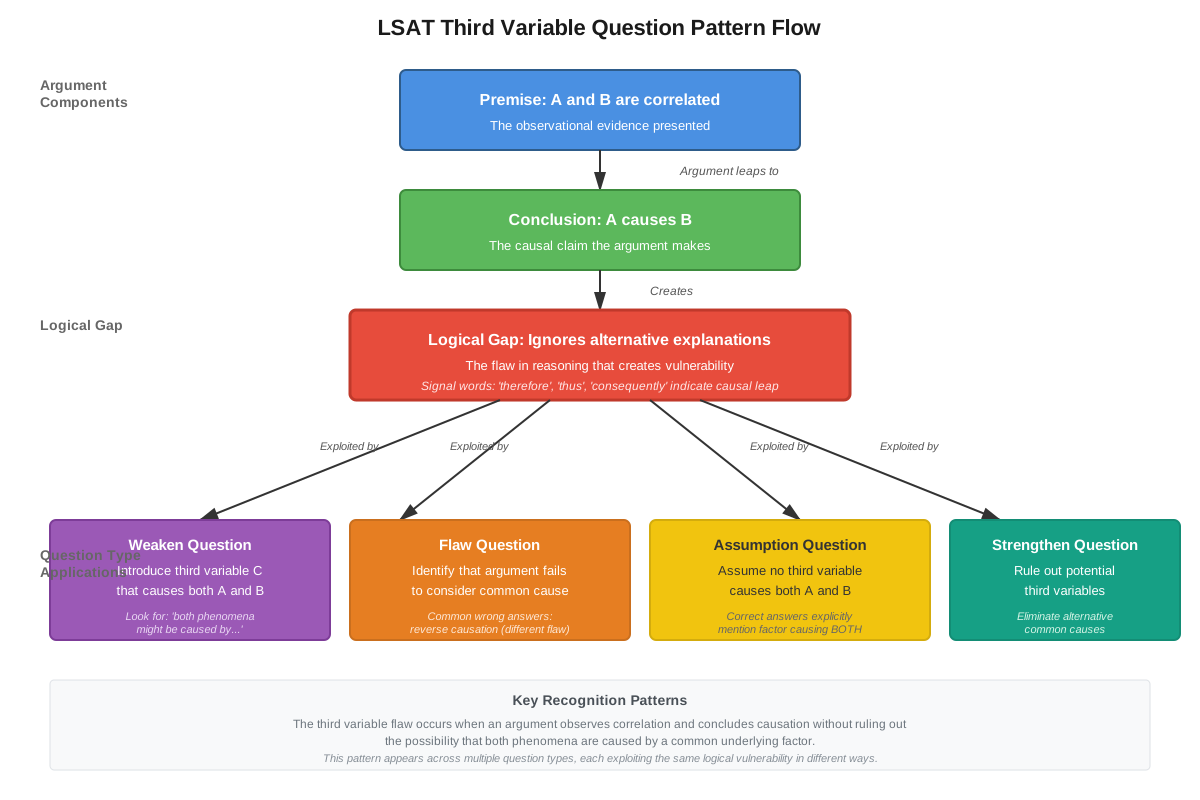
On the LSAT specifically, third variable reasoning appears in several distinct ways:
- Weaken questions: Answer choices introduce a third variable that undermines a causal conclusion
- Strengthen questions: Answer choices eliminate potential third variables, making the causal claim more credible
- Flaw questions: The correct answer identifies that the argument fails to consider alternative explanations
- Assumption questions: The correct answer states that no third variable is responsible for the observed correlation
- Explain questions: Answer choices may provide third variables that account for seemingly paradoxical observations
Core Concepts
The Basic Third Variable Pattern
A third variable (also called a confounding variable or common cause) is a factor that causes both the observed phenomenon and the supposed effect, creating a spurious correlation between them. The basic logical structure follows this pattern:
Flawed reasoning: A and B are correlated → Therefore, A causes B
Third variable alternative: C causes both A and B → Therefore, A and B appear correlated but neither causes the other
For example, consider this argument: "Ice cream sales and drowning deaths are strongly correlated. Therefore, ice cream consumption causes drowning." The obvious third variable here is warm weather, which increases both ice cream purchases and swimming activity. The correlation between ice cream and drowning is real, but the causal inference is flawed because both are effects of a common cause.
Identifying Third Variable Vulnerabilities
Arguments vulnerable to third variable objections share several characteristics:
- They observe a correlation or temporal relationship: The argument notes that two things occur together or in sequence
- They make a causal claim: The argument concludes that one phenomenon causes the other
- They lack mechanism explanation: The argument doesn't explain HOW the supposed cause produces the effect
- They ignore alternative explanations: The argument doesn't acknowledge or rule out other possible causes
When analyzing LSAT arguments, students should actively ask: "Could something else be causing both of these observations?"
Types of Third Variable Scenarios
Third variable scenarios on the LSAT typically fall into several categories:
| Third Variable Type | Description | Example |
|---|---|---|
| Demographic factor | A characteristic of the population explains both observations | Age explains both retirement and health issues |
| Environmental condition | An external circumstance affects both variables | Economic conditions affect both education funding and employment |
| Selection bias | The way subjects are chosen creates the correlation | Motivated students both attend tutoring and study independently |
| Temporal factor | Time-related changes affect both variables | Seasonal patterns affect both mood and vitamin D levels |
| Underlying trait | A fundamental characteristic drives both observations | Conscientiousness leads to both exercise and career success |
Third Variable in Different Question Types
In Weaken Questions: The correct answer introduces a plausible third variable that provides an alternative explanation for the observed correlation. The answer doesn't need to prove the third variable is responsible—it only needs to make the original causal claim less certain.
In Strengthen Questions: The correct answer eliminates potential third variables, often by stating that the groups being compared are similar in all relevant respects except for the supposed cause. This makes the causal inference more credible by ruling out alternative explanations.
In Flaw Questions: The correct answer explicitly identifies that the argument "fails to consider that both phenomena might be effects of a common cause" or uses similar language describing the third variable flaw.
In Assumption Questions: The correct answer, when negated, introduces a third variable that would undermine the argument. The assumption is essentially that no such third variable exists or is operative.
Distinguishing Third Variable from Related Concepts
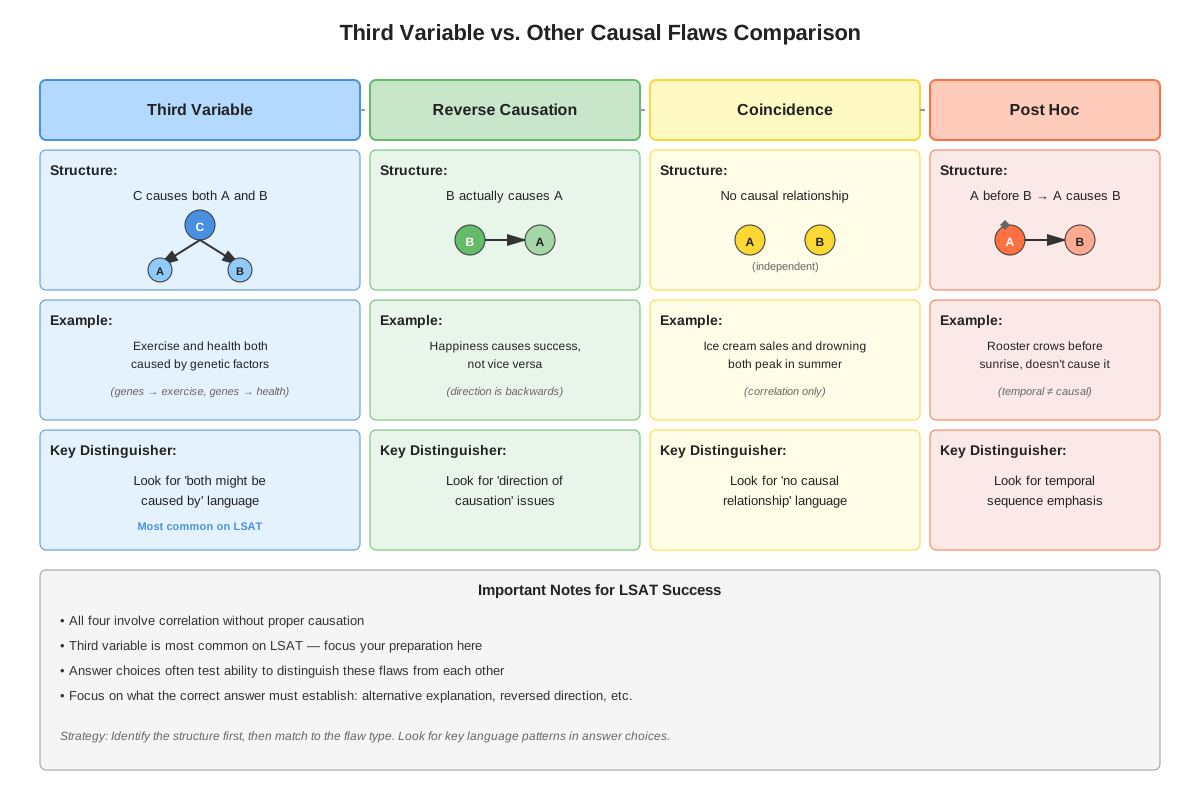
Understanding what third variable reasoning is NOT helps clarify the concept:
- Not reverse causation: Reverse causation suggests B causes A rather than A causing B. Third variable suggests C causes both A and B.
- Not mere coincidence: While third variable scenarios involve correlation without causation, they provide a specific alternative explanation (the third variable) rather than suggesting random chance.
- Not insufficient sample size: Third variable objections don't challenge whether the correlation exists, but rather what explains it.
- Not alternative cause of the effect: A third variable causes BOTH the supposed cause and the supposed effect, not just the effect alone.
The Logical Structure of Third Variable Arguments
When an LSAT question involves third variable reasoning, the logical structure typically follows this pattern:
Premise: Observation of correlation (A and B occur together)
Conclusion: Causal claim (A causes B)
Gap: Failure to rule out that C causes both A and B
Third Variable Answer: Introduces or eliminates factor C that could explain both A and B
Recognizing this structure allows students to anticipate what type of answer choice will be correct before even reading the options.
Concept Relationships
The third variable concept sits at the intersection of several important logical reasoning principles. It directly builds upon the fundamental distinction between correlation and causation, serving as one specific way that correlation can exist without causation. While correlation-causation confusion is the broader category, third variable provides a precise mechanism explaining why the confusion occurs.
Third variable reasoning connects to alternative explanation more generally. In LSAT arguments, alternative explanations can take many forms: different causes of the same effect, different interpretations of the same evidence, or different mechanisms producing the same outcome. Third variable is a specific type of alternative explanation where the alternative is a common cause of both observed phenomena.
The relationship map looks like this:
Correlation observed → Causal claim made → Third variable vulnerability created → Alternative explanation available → Causal claim weakened
Conversely: Correlation observed → Causal claim made → Third variables ruled out → Alternative explanations eliminated → Causal claim strengthened
Third variable reasoning also relates to necessary and sufficient conditions. When an argument claims A causes B, it implicitly suggests A is sufficient for B. A third variable objection shows that A alone may not be sufficient—C might be necessary for both A and B to occur.
Understanding third variable enhances performance on Method of Reasoning questions, where students must describe how an argument proceeds. Recognizing that an argument "presents evidence of a correlation and concludes a causal relationship" helps identify the reasoning pattern and its vulnerabilities.
High-Yield Facts
⭐ Third variable scenarios involve a common cause that produces both the supposed cause and the supposed effect, making them appear correlated without a direct causal relationship.
⭐ On Weaken questions, introducing a plausible third variable is one of the most common correct answer patterns for arguments making causal claims from correlational evidence.
⭐ On Strengthen questions, eliminating potential third variables by showing the compared groups are otherwise similar is a frequent correct answer pattern.
⭐ The language "fails to consider that both might be effects of a common cause" or similar phrasing directly identifies the third variable flaw in Flaw questions.
⭐ Arguments that move from "A and B are correlated" to "A causes B" without providing mechanism or ruling out alternatives are highly vulnerable to third variable objections.
- Third variable objections don't require proving the alternative explanation is correct—only that it's plausible enough to weaken the original causal claim.
- Demographic factors (age, income, education level) are among the most common third variables on the LSAT because they plausibly affect many different outcomes.
- Selection bias often functions as a third variable when the characteristic that led to selection also affects the outcome being measured.
- Temporal factors like seasons, economic cycles, or historical periods can serve as third variables affecting multiple phenomena simultaneously.
- The mere existence of correlation, even strong correlation, never by itself establishes causation—additional evidence about mechanism, temporal sequence, or elimination of alternatives is required.
- Third variable scenarios are distinct from reverse causation; in reverse causation, one of the two observed variables causes the other, just in the opposite direction from what the argument claims.
- When an argument includes phrases like "the only explanation" or "must be due to," it's making a strong causal claim that's particularly vulnerable to third variable objections.
- Controlled experiments that randomly assign subjects to conditions are specifically designed to eliminate third variable problems by ensuring groups are similar except for the variable being tested.
Quick check — test yourself on Third variable so far.
Try Flashcards →Common Misconceptions
Misconception: A third variable must completely explain the correlation to weaken a causal argument.
Correction: On Weaken questions, a third variable only needs to provide a plausible alternative explanation that makes the causal claim less certain. Even if the third variable explains only part of the correlation, it successfully weakens the argument that the supposed cause is responsible.
Misconception: Third variable and reverse causation are the same thing.
Correction: These are distinct reasoning patterns. Reverse causation suggests B causes A instead of A causing B (the causal arrow is reversed). Third variable suggests C causes both A and B (there's a common cause). For example, if an argument claims "exercise causes happiness," reverse causation would be "happiness causes exercise," while third variable might be "conscientiousness causes both exercise and happiness."
Misconception: If two things are correlated and one happens before the other, the earlier one must cause the later one.
Correction: Temporal sequence is necessary but not sufficient for causation. A third variable can cause both phenomena, with one simply occurring before the other. For example, "students who attend orientation perform better academically" might reflect that motivated students both attend orientation and study hard, not that orientation causes better performance.
Misconception: On Strengthen questions, the correct answer must prove the causal claim is true.
Correction: Strengthen questions only require making the conclusion more likely, not certain. Eliminating one potential third variable strengthens the argument even if other alternative explanations remain possible.
Misconception: Third variable objections only work when the third variable is obvious or explicitly mentioned in the stimulus.
Correction: On the LSAT, correct answers frequently introduce third variables that weren't mentioned in the original argument. The test assesses the ability to generate alternative explanations, not just recognize ones already presented.
Misconception: If an argument acknowledges that correlation doesn't prove causation, it's immune to third variable objections.
Correction: Merely acknowledging the correlation-causation distinction doesn't eliminate the flaw if the argument still concludes a causal relationship without ruling out alternatives. The argument must actually address potential third variables, not just acknowledge they could theoretically exist.
Misconception: Statistical significance eliminates third variable concerns.
Correction: Statistical significance indicates the correlation is unlikely due to random chance, but it doesn't address whether a third variable explains the correlation. A highly significant correlation can still be entirely explained by a confounding variable.
Worked Examples
Example 1: Weaken Question
Stimulus: "A recent study found that employees who work from home are 25% more productive than those who work in the office. This demonstrates that the home environment enhances productivity. Therefore, companies should allow more employees to work from home to increase overall productivity."
Question: Which of the following, if true, most weakens the argument?
Analysis:
The argument observes a correlation (working from home is associated with higher productivity) and concludes a causal relationship (the home environment causes the increased productivity). This is vulnerable to third variable reasoning.
Let's identify the logical structure:
- Premise: Remote workers are more productive
- Conclusion: Remote work environment causes increased productivity
- Gap: Doesn't consider that another factor might cause both remote work and high productivity
We should look for an answer that introduces a third variable—something that causes both working from home and being highly productive.
Correct Answer: "The employees who were allowed to work from home were selected based on their history of high performance and self-motivation."
Why this works: This introduces a third variable (high performance and self-motivation) that explains both why these employees were given remote work privileges AND why they're productive. The correlation between remote work and productivity might not reflect that remote work causes productivity, but rather that productive people were selected for remote work. The selection criteria is the common cause of both observations.
Connection to learning objectives: This example demonstrates how to identify third variable patterns (the correlation-to-causation move), explain the reasoning flaw (assuming causation without ruling out common causes), and apply the concept to select the correct answer (recognizing that selection criteria can function as a third variable).
Example 2: Strengthen Question
Stimulus: "Researchers found that children who regularly eat breakfast perform better on standardized tests than children who skip breakfast. The researchers concluded that eating breakfast improves cognitive function and academic performance."
Question: Which of the following, if true, most strengthens the researchers' conclusion?
Analysis:
The argument makes a causal claim (breakfast causes better test performance) based on a correlation. To strengthen this, we need to eliminate potential third variables that might explain both breakfast eating and test performance.
Potential third variables to consider:
- Family income (wealthier families might provide both breakfast and better educational resources)
- Parental involvement (engaged parents might ensure both breakfast and homework completion)
- Overall health (healthier children might both eat breakfast and perform better)
- Sleep patterns (children with good routines might both eat breakfast and be well-rested)
Correct Answer: "The study controlled for family income, parental education level, and overall health status, finding that the correlation between breakfast and test performance held across all groups."
Why this works: This answer eliminates multiple potential third variables by showing that the correlation persists even when these factors are held constant. If breakfast eaters perform better regardless of income, parental education, and health status, these cannot be the common causes explaining both breakfast consumption and test performance. This makes the causal claim more credible.
Alternative approach: Another strengthening answer might be: "Children who didn't normally eat breakfast were randomly assigned to either eat breakfast or continue skipping it, and those assigned to eat breakfast showed improved test scores."
This would be even stronger because random assignment eliminates all potential third variables—if children are randomly assigned, there's no systematic difference between groups except breakfast consumption.
Connection to learning objectives: This example shows how third variable reasoning works in Strengthen questions (by eliminating rather than introducing alternative explanations) and demonstrates the application of the concept to evaluate answer choices systematically.
Exam Strategy
Recognizing Third Variable Questions
Watch for these trigger phrases in stimuli that signal third variable vulnerability:
- "A and B are correlated, therefore A causes B"
- "Studies show that people who do A also tend to experience B"
- "The increase in A coincided with an increase in B"
- "Those who exhibit A are more likely to exhibit B"
- "The only explanation for the correlation is..."
Trigger Phrases in Answer Choices
For Weaken questions, correct third variable answers often include:
- "Both phenomena are caused by..."
- "The subjects who exhibited A were selected based on..."
- "A third factor influences both..."
- "Those who do A also tend to..." (introducing a characteristic that might cause both)
For Strengthen questions, correct answers eliminating third variables often include:
- "The groups were similar in all relevant respects except..."
- "The study controlled for..."
- "Subjects were randomly assigned..."
- "The correlation held even when accounting for..."
For Flaw questions, correct answers identifying third variable flaws typically state:
- "Fails to consider that both might be effects of a common cause"
- "Treats a correlation as evidence of causation without ruling out alternative explanations"
- "Overlooks the possibility that a third factor is responsible for both"
Process of Elimination Strategy
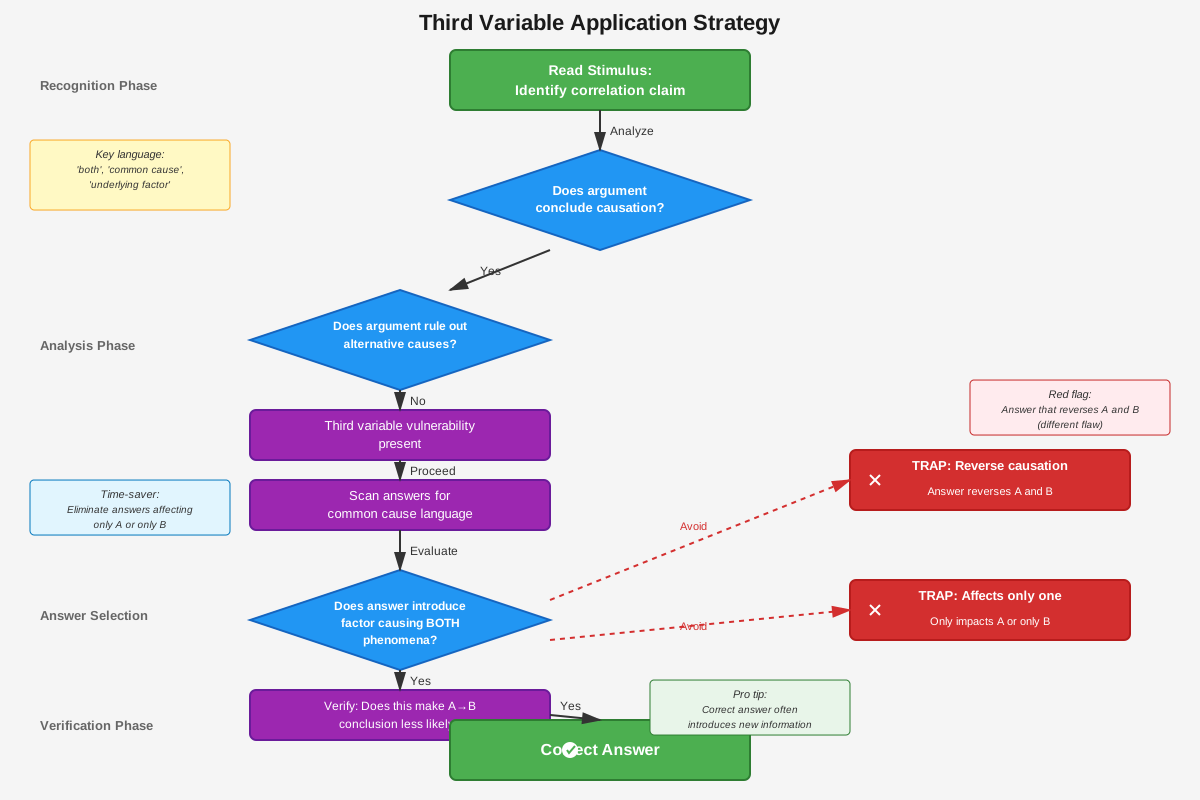
When facing a causal reasoning question:
- Identify the causal claim: What does the argument say causes what?
- Ask the third variable question: Could something else cause both?
- Evaluate each answer choice: Does it introduce (Weaken) or eliminate (Strengthen) a plausible common cause?
- Eliminate answers that:
- Address only the effect, not both phenomena
- Suggest reverse causation rather than common cause
- Are implausible or too weak to impact the argument
- Introduce factors unrelated to both observations
Time Allocation
Third variable questions are typically medium difficulty and should take 1:15-1:30 minutes. The pattern recognition is straightforward once mastered, but generating or evaluating potential third variables requires careful thought. Don't rush the analysis of what could plausibly cause both observed phenomena.
Exam Tip: If you're stuck between two answers on a Weaken question, ask: "Which answer provides a common cause of BOTH the supposed cause and the supposed effect?" The answer that addresses both phenomena is more likely correct than one addressing only the effect.
Common Trap Answers
Be wary of answers that:
- Provide alternative causes of only the effect: These aren't third variables because they don't explain the supposed cause
- Strengthen when you need to weaken or vice versa: Eliminating a third variable strengthens; introducing one weakens
- Are too extreme: "The third variable is the ONLY cause" is usually too strong
- Confuse correlation with causation in the opposite direction: These are reverse causation, not third variable
Memory Techniques
The "Triangle Mnemonic"
Visualize third variable scenarios as a triangle:
        C (Third Variable)
       / \
      /   \
     /     \
    A ---- B
  (Supposed   (Supposed
   Cause)      Effect)
The argument claims A → B (horizontal arrow), but actually C → A and C → B (arrows from the top). The correlation between A and B is real (they're connected through C), but the causal direction is wrong.
The "CAUSE" Acronym
When evaluating causal arguments, remember CAUSE:
- Correlation observed?
- Alternative explanations considered?
- Underlying factors ruled out?
- Selection bias possible?
- Evidence of mechanism provided?
If the argument shows correlation but doesn't address A, U, S, or E, it's vulnerable to third variable objections.
The "Both-Caused-By" Phrase
When analyzing arguments, mentally insert "or both are caused by something else" after any causal claim. For example:
"Exercise causes happiness [or both are caused by something else]."
This automatic questioning helps identify third variable vulnerabilities quickly.
The "Selection Signal"
Remember: "Selected" = Suspect third variable
Whenever you see that subjects were "selected," "chosen," "allowed," or "volunteered" based on any criteria, that selection criterion is a prime candidate for a third variable. The characteristic that led to selection might also affect the outcome.
Summary
The third variable concept represents one of the most important and frequently tested reasoning patterns in LSAT Logical Reasoning. When arguments observe that two phenomena occur together and conclude that one causes the other, they're vulnerable to the objection that both phenomena might be caused by a third factor—a common cause that creates a spurious correlation. This reasoning pattern appears across multiple question types: in Weaken questions, correct answers introduce plausible third variables; in Strengthen questions, they eliminate potential confounding factors; in Flaw questions, they explicitly identify the failure to consider common causes; and in Assumption questions, they state that no such third variable exists. Mastering this concept requires recognizing the correlation-to-causation move in arguments, generating potential alternative explanations, and understanding that correlation, even strong correlation, never by itself establishes causation. The key insight is that when A and B are correlated, three possibilities exist: A causes B, B causes A, or C causes both A and B. Arguments that assume the first possibility without ruling out the third are committing the third variable reasoning flaw.
Key Takeaways
- Third variable scenarios involve a common cause (C) that produces both the supposed cause (A) and supposed effect (B), creating correlation without direct causation
- Arguments moving from "A and B are correlated" to "A causes B" without ruling out alternatives are highly vulnerable to third variable objections
- On Weaken questions, introducing a plausible third variable is sufficient—you don't need to prove it's the actual explanation
- On Strengthen questions, eliminating potential third variables by showing groups are otherwise similar or through random assignment makes causal claims more credible
- Selection bias is a particularly common form of third variable on the LSAT—the criteria for selection often affects the outcome being measured
- Third variable is distinct from reverse causation: reverse causation flips the causal arrow between A and B, while third variable introduces C as a common cause of both
- Demographic factors, environmental conditions, and underlying traits are the most frequent types of third variables on the LSAT
Related Topics
Reverse Causation: While third variable suggests a common cause of both phenomena, reverse causation suggests the causal arrow points in the opposite direction from what the argument claims. Mastering third variable reasoning provides the foundation for recognizing this related but distinct flaw.
Necessary vs. Sufficient Conditions: Understanding third variable scenarios deepens comprehension of causation by showing that correlation doesn't establish whether a factor is necessary, sufficient, both, or neither for an outcome.
Experimental Design and Controls: The concept of third variables illuminates why controlled experiments use random assignment and control groups—these design features specifically eliminate confounding variables.
Statistical Reasoning: Third variable reasoning connects to broader statistical concepts like confounding variables, spurious correlation, and the distinction between observational studies and controlled experiments.
Sampling and Selection Bias: Selection bias often functions as a third variable, making this a natural progression for deeper study of how sample characteristics affect conclusions.
Practice CTA
Now that you've mastered the conceptual foundation of third variable reasoning, it's time to cement your understanding through practice. The pattern recognition skills you've developed will become automatic only through repeated application to actual LSAT questions. Challenge yourself with the practice questions and flashcards, paying special attention to identifying the correlation-to-causation move in stimuli and generating potential third variables before looking at answer choices. Remember: every question you practice strengthens your ability to spot these patterns quickly and accurately on test day. The investment you make in deliberate practice now will pay dividends across multiple questions on every Logical Reasoning section you encounter.
Sign up free to keep reading
Create a free AnvayaPrep account to finish this LSAT guide on Third variable — plus flashcards and practice questions.