Overview
Alternative explanations represent one of the most critical reasoning patterns tested in LSAT Logical Reasoning sections. This concept appears when an argument presents evidence for a particular conclusion, but that same evidence could plausibly support a different conclusion entirely. Understanding alternative explanations is fundamental to success on strengthen and weaken questions, which together constitute approximately 35-40% of all Logical Reasoning questions on the LSAT.
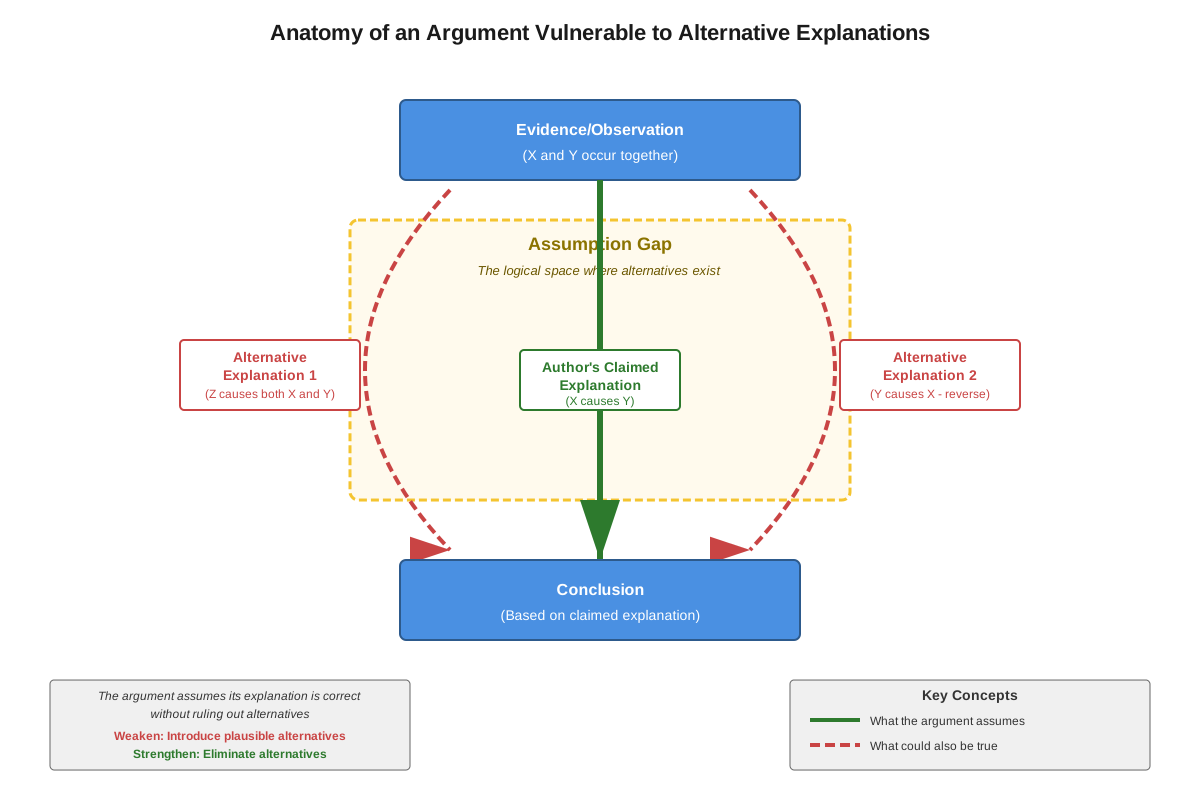
The core challenge with alternative explanations lies in recognizing that correlation does not establish causation, and that observed phenomena can often be explained through multiple causal pathways. When an LSAT argument claims that X caused Y based on observing them together, a strong alternative explanation might suggest that Z actually caused both X and Y, or that Y caused X (reverse causation), or that the relationship is merely coincidental. Mastering this pattern enables test-takers to identify logical vulnerabilities in arguments and to recognize which answer choices genuinely strengthen or weaken the reasoning presented.
Within the broader landscape of LSAT Logical Reasoning, alternative explanations connect intimately with causal reasoning, assumption identification, and flaw recognition. This topic serves as a bridge between understanding what an argument assumes and recognizing how to attack or defend that argument's logical structure. Students who master lsat alternative explanations develop a sophisticated ability to think critically about evidence and conclusions—a skill that extends far beyond test day into legal reasoning and analytical thinking more broadly.
Learning Objectives
- [ ] Identify how Alternative explanations appears in LSAT questions
- [ ] Explain the reasoning pattern behind Alternative explanations
- [ ] Apply Alternative explanations to solve LSAT-style problems accurately
- [ ] Distinguish between relevant and irrelevant alternative explanations in answer choices
- [ ] Construct alternative explanations that would weaken a given argument
- [ ] Evaluate the comparative strength of multiple competing explanations
- [ ] Recognize when eliminating alternative explanations strengthens an argument
Prerequisites
- Basic argument structure: Understanding premises, conclusions, and how evidence supports claims is essential because alternative explanations challenge the connection between evidence and conclusion
- Causal reasoning fundamentals: Recognizing causal claims versus correlational observations matters because alternative explanations most commonly target causal arguments
- Conditional logic basics: Understanding sufficient and necessary conditions helps distinguish between what must be true versus what could be true when evaluating alternatives
- Assumption identification: Recognizing unstated assumptions enables students to see the gaps where alternative explanations can emerge
Why This Topic Matters
Alternative explanations appear with remarkable frequency on the LSAT, showing up in weaken questions, strengthen questions, flaw questions, and even some assumption questions. Research on recent LSAT administrations suggests that approximately 15-20% of all Logical Reasoning questions either directly test alternative explanations or require understanding this concept to eliminate wrong answers. This makes alternative explanations one of the highest-yield topics in the entire Logical Reasoning curriculum.
In real-world legal practice, attorneys constantly evaluate competing explanations for events, behaviors, and evidence. A prosecutor might argue that a defendant's presence at a crime scene indicates guilt, while a defense attorney offers alternative explanations for that presence. Judges and juries must weigh these competing accounts, making the ability to generate and evaluate alternative explanations a cornerstone of legal reasoning.
On the LSAT specifically, alternative explanations most commonly appear in:
- Weaken questions where the correct answer provides an alternative explanation that undermines the argument's causal claim
- Strengthen questions where the correct answer eliminates a plausible alternative explanation
- Flaw questions where the argument's error involves failing to consider alternative explanations
- Explain the discrepancy questions where multiple explanations might account for surprising data
The LSAT tests this concept because it reveals whether test-takers can think beyond the information explicitly provided and consider what else might be true given the evidence presented.
Core Concepts
The Structure of Alternative Explanation Arguments
An alternative explanation emerges when an argument presents evidence and draws a conclusion about what caused or explains that evidence, but other plausible causes or explanations exist. The basic structure follows this pattern:
Argument's reasoning: Evidence E occurred, therefore Explanation X must account for E.
Alternative explanation: Evidence E occurred, but Explanation Y (not X) could account for E.
The power of an alternative explanation depends on its plausibility and its ability to account for the observed evidence as well as or better than the original explanation. Not every conceivable alternative weakens an argument—only those that are reasonable given the context and that genuinely compete with the original explanation.
Causal Claims and Alternative Explanations
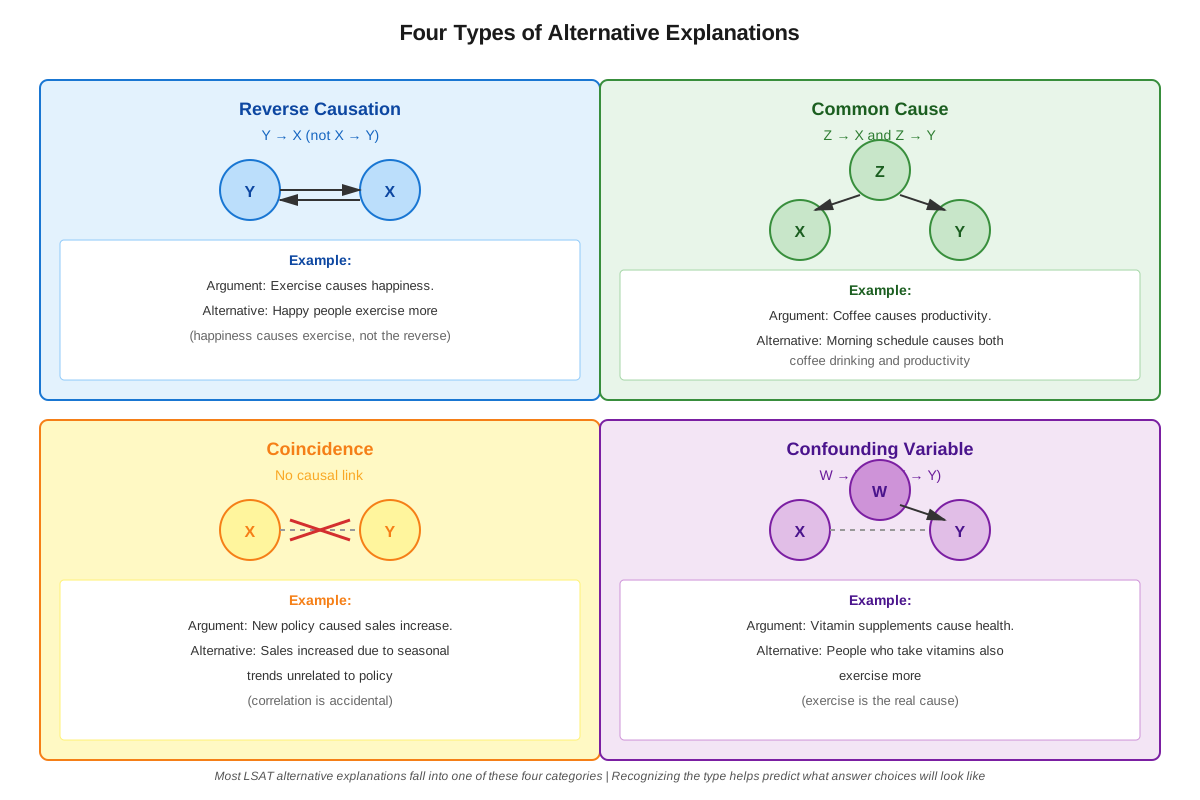
Most alternative explanation questions on the LSAT involve causal reasoning. When an argument claims "A caused B," it typically relies on evidence showing that A and B occurred together or in sequence. However, this correlation might be explained by:
- Reverse causation: B actually caused A, not the other way around
- Common cause: Some third factor C caused both A and B
- Coincidence: A and B occurred together by chance without causal connection
- Complex causation: Multiple factors including but not limited to A contributed to B
Consider this example: "Sales of ice cream and drowning deaths both increase in summer. Therefore, ice cream consumption causes drowning." The alternative explanation is obvious: warm weather (a common cause) leads to both increased ice cream sales and more swimming, which increases drowning incidents.
Identifying Alternative Explanations in Questions
The LSAT signals alternative explanation questions through specific question stems and argument structures:
Weaken question stems that invite alternative explanations:
- "Which one of the following, if true, most seriously weakens the argument?"
- "Which one of the following, if true, casts the most doubt on the conclusion?"
- "Which one of the following, if true, provides the strongest grounds for questioning the argument?"
Strengthen question stems that involve eliminating alternatives:
- "Which one of the following, if true, most strengthens the argument?"
- "Which one of the following, if true, provides the most support for the conclusion?"
Within the argument itself, watch for:
- Causal language: "caused by," "resulted in," "led to," "responsible for," "explains why"
- Correlational evidence presented as causal: "After X occurred, Y happened"
- Explanatory claims: "The reason for X is Y"
- Predictive reasoning based on assumed causes: "Because X causes Y, we can expect..."
Evaluating the Strength of Alternative Explanations
Not all alternative explanations equally weaken an argument. The LSAT requires distinguishing between strong and weak alternatives based on several criteria:
| Criterion | Strong Alternative | Weak Alternative |
|---|---|---|
| Plausibility | Consistent with common knowledge and the passage facts | Requires unlikely assumptions or contradicts passage information |
| Completeness | Accounts for all the evidence presented | Explains only part of the evidence |
| Specificity | Directly addresses the specific situation in the argument | Vague or applies only generally |
| Relevance | Competes with the same causal claim | Addresses a different aspect of the argument |
For example, if an argument claims "Company profits increased after hiring a new CEO, so the new CEO caused the profit increase," consider these alternatives:
Strong alternative: "The company's main competitor went bankrupt the same month the new CEO was hired, eliminating market competition."
Weak alternative: "Sometimes companies experience profit increases for various reasons."
The strong alternative provides a specific, plausible competing cause that fully accounts for the profit increase. The weak alternative, while technically true, lacks the specificity and explanatory power to genuinely challenge the argument.
Eliminating Alternative Explanations to Strengthen Arguments
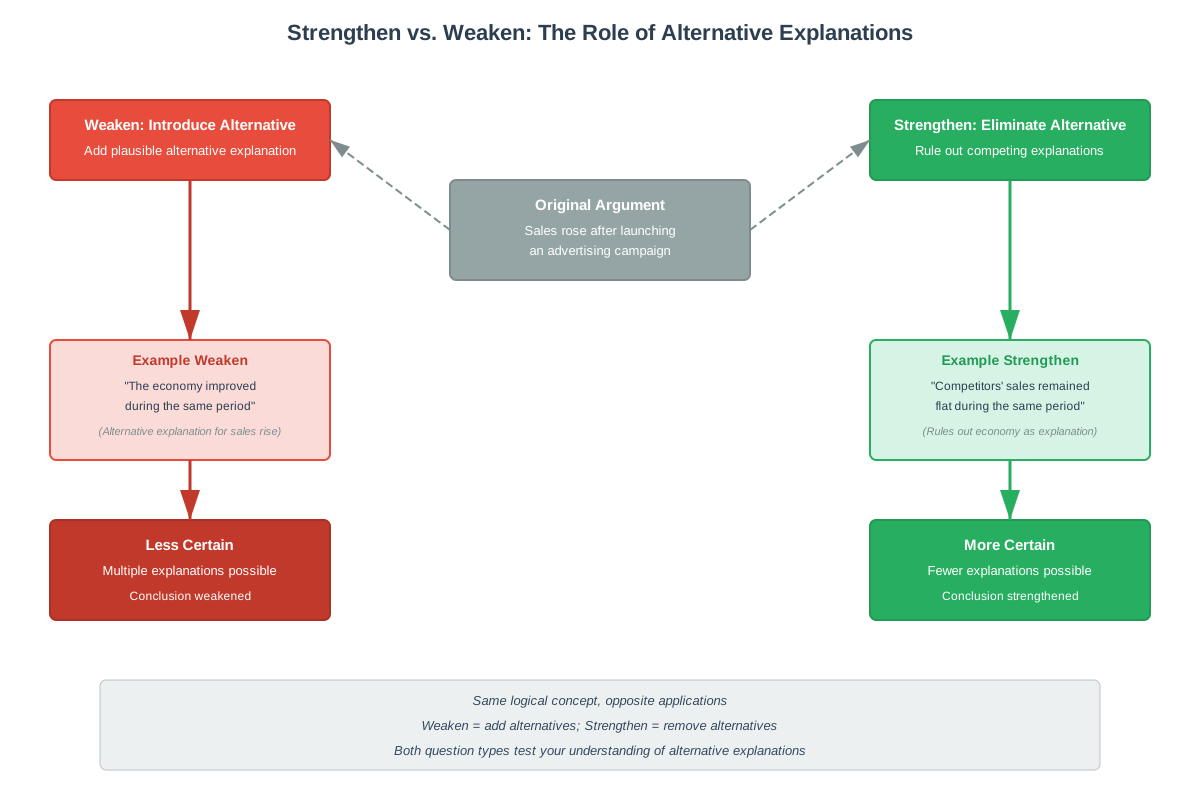
Understanding alternative explanations also illuminates how strengthen questions work. When an answer choice eliminates a plausible alternative explanation, it strengthens the original argument by removing a competing account of the evidence.
Using the CEO example above, these answer choices would strengthen the argument:
- "The company's competitors maintained stable market positions during this period" (eliminates the competitor-bankruptcy alternative)
- "The profit increase occurred specifically in divisions where the new CEO implemented policy changes" (provides additional evidence linking the CEO to the outcome)
- "Companies in the same industry without CEO changes experienced no profit increases during this period" (suggests something specific to this company, not general market conditions, caused the change)
The key principle: Strengthening often means ruling out alternatives; weakening often means introducing alternatives.
Common Patterns of Alternative Explanations on the LSAT
The LSAT recycles certain alternative explanation patterns across different content areas:
- Selection bias: The sample studied differs systematically from the general population
- Temporal coincidence: Events occurred at the same time without causal connection
- Reverse causation: The supposed effect actually caused the supposed cause
- Confounding variables: An unmeasured third factor explains the relationship
- Measurement artifacts: The method of observation created the apparent pattern
- Pre-existing differences: Groups differed before the supposed cause was introduced
Recognizing these patterns enables faster question analysis and more confident answer selection.
Concept Relationships
Alternative explanations connect to multiple Logical Reasoning concepts in a hierarchical and functional network:
Causal Reasoning → Alternative Explanations: Causal reasoning provides the foundation; alternative explanations represent the primary way to challenge causal claims. Every alternative explanation question involves evaluating a causal or explanatory claim.
Assumptions → Alternative Explanations: Arguments that are vulnerable to alternative explanations typically assume that no other explanation exists. Identifying the assumption reveals where alternative explanations can attack the reasoning.
Strengthen Questions ← Alternative Explanations → Weaken Questions: Alternative explanations function bidirectionally. Introducing an alternative weakens an argument; eliminating an alternative strengthens it. This makes alternative explanations central to both question types.
Alternative Explanations → Flaw Recognition: Many logical flaws involve failing to consider alternative explanations. Understanding alternatives helps identify flaws like "confusing correlation with causation" or "failing to consider other possible causes."
Evidence Evaluation → Alternative Explanations → Conclusion Assessment: The process flows from examining what evidence the argument provides, considering what alternative explanations that evidence might support, and then evaluating whether the conclusion necessarily follows.
Within the topic itself: Identifying alternatives → Evaluating plausibility → Determining impact on argument represents the analytical sequence students should follow when approaching these questions.
High-Yield Facts
⭐ Alternative explanations most commonly appear in weaken questions, where introducing a plausible alternative explanation undermines a causal claim
⭐ To strengthen an argument vulnerable to alternative explanations, eliminate the most plausible competing explanation
⭐ Correlation between two events does not establish causation; alternative explanations exploit this gap
⭐ The strongest alternative explanations account for all the evidence presented while proposing a different cause
⭐ Common cause (a third factor causing both observed phenomena) represents one of the most frequent alternative explanation patterns on the LSAT
- Reverse causation (effect causing supposed cause) appears regularly in LSAT arguments about behavior and outcomes
- Alternative explanations must be plausible within the context of the passage; far-fetched alternatives do not weaken arguments
- When an argument presents only correlational evidence but draws a causal conclusion, it is highly vulnerable to alternative explanations
- Temporal sequence (A before B) does not prove causation; alternative explanations can still account for the sequence
- Eliminating just one alternative explanation does not prove the original explanation correct unless all plausible alternatives are ruled out
- Arguments that acknowledge and address potential alternative explanations are stronger than those that ignore alternatives
- The LSAT rarely requires specialized knowledge to generate alternative explanations; common sense and careful reading suffice
Quick check — test yourself on Alternative explanations so far.
Try Flashcards →Common Misconceptions
Misconception: Any possible alternative explanation, no matter how unlikely, weakens an argument.
Correction: Only plausible alternative explanations that reasonably account for the evidence weaken arguments. The LSAT tests realistic reasoning, not the ability to imagine far-fetched scenarios. An alternative must be consistent with the passage facts and common knowledge to have weakening force.
Misconception: If an argument provides any evidence for its conclusion, alternative explanations cannot weaken it.
Correction: The presence of evidence does not immunize an argument from alternative explanations. The question is whether the evidence specifically supports the stated conclusion or whether it could equally support a different conclusion. Evidence can be consistent with multiple explanations.
Misconception: Strengthen questions never involve alternative explanations.
Correction: Strengthen questions frequently involve alternative explanations—specifically, answer choices that eliminate plausible alternatives strengthen the argument. Understanding alternative explanations is just as important for strengthen questions as for weaken questions.
Misconception: Alternative explanations only apply to causal arguments.
Correction: While causal arguments are most vulnerable to alternative explanations, any explanatory claim can face alternatives. Arguments about reasons, motivations, purposes, or interpretations of evidence can all be challenged by alternative explanations.
Misconception: The correct answer in a weaken question must completely disprove the conclusion.
Correction: Weaken questions ask which answer "most weakens" or "casts doubt on" the argument—not which proves it wrong. Introducing a strong alternative explanation weakens an argument by showing the conclusion is less certain, even if the conclusion might still be true.
Misconception: If the argument considers one alternative explanation, it is immune to others.
Correction: Addressing one alternative explanation does not eliminate all alternatives. An argument might acknowledge one competing explanation while remaining vulnerable to others. The LSAT often tests whether students can identify unaddressed alternatives.
Worked Examples
Example 1: Weaken Question with Alternative Explanation
Argument: "A recent study found that students who eat breakfast before school perform better on standardized tests than students who skip breakfast. Therefore, eating breakfast causes improved test performance, and schools should provide breakfast to all students to improve academic outcomes."
Question: Which one of the following, if true, most weakens the argument?
Answer Choices:
(A) Some students who eat breakfast still perform poorly on standardized tests
(B) Students from higher-income families are more likely both to eat breakfast regularly and to have access to educational resources like tutoring
(C) Standardized tests measure only certain types of academic skills
(D) Many schools already offer breakfast programs
(E) Nutritionists recommend that children eat breakfast daily
Analysis:
First, identify the argument's structure:
- Evidence: Correlation between eating breakfast and better test performance
- Conclusion: Eating breakfast causes improved test performance
- Recommendation: Schools should provide breakfast
This is a classic causal argument based on correlational evidence, making it vulnerable to alternative explanations.
Evaluate each answer choice:
(A) This shows the relationship is not universal but does not provide an alternative explanation for the correlation observed in the study. Some exceptions do not weaken the general pattern. Eliminate.
(B) This provides a common cause alternative explanation: family income might cause both breakfast eating (families can afford food) and test performance (families can afford tutoring and resources). This suggests the correlation exists not because breakfast causes performance, but because both are caused by a third factor. Strong contender.
(C) This is irrelevant to whether breakfast causes improved performance on whatever tests measure. Eliminate.
(D) This addresses the recommendation but does not challenge the causal claim about breakfast and performance. Eliminate.
(E) This might support the recommendation but does not weaken the causal reasoning. Eliminate.
Correct Answer: (B)
This answer weakens the argument by providing a plausible alternative explanation for the observed correlation. Instead of breakfast causing better performance, family socioeconomic status causes both breakfast consumption and better test scores. This alternative explanation accounts for all the evidence (the correlation) while undermining the causal conclusion.
Example 2: Strengthen Question by Eliminating Alternatives
Argument: "After the city installed brighter streetlights in the downtown area, reported crime decreased by 30%. The brighter lighting must have deterred criminal activity, proving that improved lighting is an effective crime prevention measure."
Question: Which one of the following, if true, most strengthens the argument?
Answer Choices:
(A) Other cities that installed brighter streetlights also experienced crime reductions
(B) The city simultaneously increased police patrols in the downtown area
(C) Crime rates in areas adjacent to downtown, which did not receive new lighting, remained constant during the same period
(D) Some criminals reported that they prefer to operate in darker areas
(E) The new streetlights were more energy-efficient than the old ones
Analysis:
The argument claims brighter lighting caused the crime reduction. To strengthen this causal claim, we need to eliminate alternative explanations for the crime decrease.
Potential alternative explanations include:
- Increased police presence
- General crime trends affecting the whole city
- Seasonal variations in crime
- Economic changes affecting crime rates
Evaluate each answer:
(A) This shows a pattern across multiple cities, which provides some support, but does not eliminate alternatives specific to this city. Moderate support.
(B) This introduces an alternative explanation (police patrols) rather than eliminating one. If police patrols increased simultaneously, we cannot determine whether lighting or patrols caused the crime reduction. This weakens rather than strengthens.
(C) This eliminates the alternative explanation that general crime trends (affecting the whole city) caused the reduction. If crime decreased only where lighting improved but stayed constant in adjacent areas without new lighting, this suggests something specific to the lit areas—likely the lighting—caused the change. Strong contender.
(D) This provides weak support by suggesting a mechanism but does not eliminate alternative explanations for this specific crime reduction. Weak support.
(E) This is irrelevant to whether lighting caused crime reduction. Eliminate.
Correct Answer: (C)
This answer strengthens the argument by eliminating a major alternative explanation: that city-wide crime trends (unrelated to lighting) caused the reduction. By showing that crime decreased specifically where lighting improved but not in comparable areas without lighting changes, the answer provides evidence that the lighting specifically, rather than other factors, caused the crime reduction. This is a classic "control group" strengthener that eliminates alternatives.
Exam Strategy
Approaching Alternative Explanation Questions
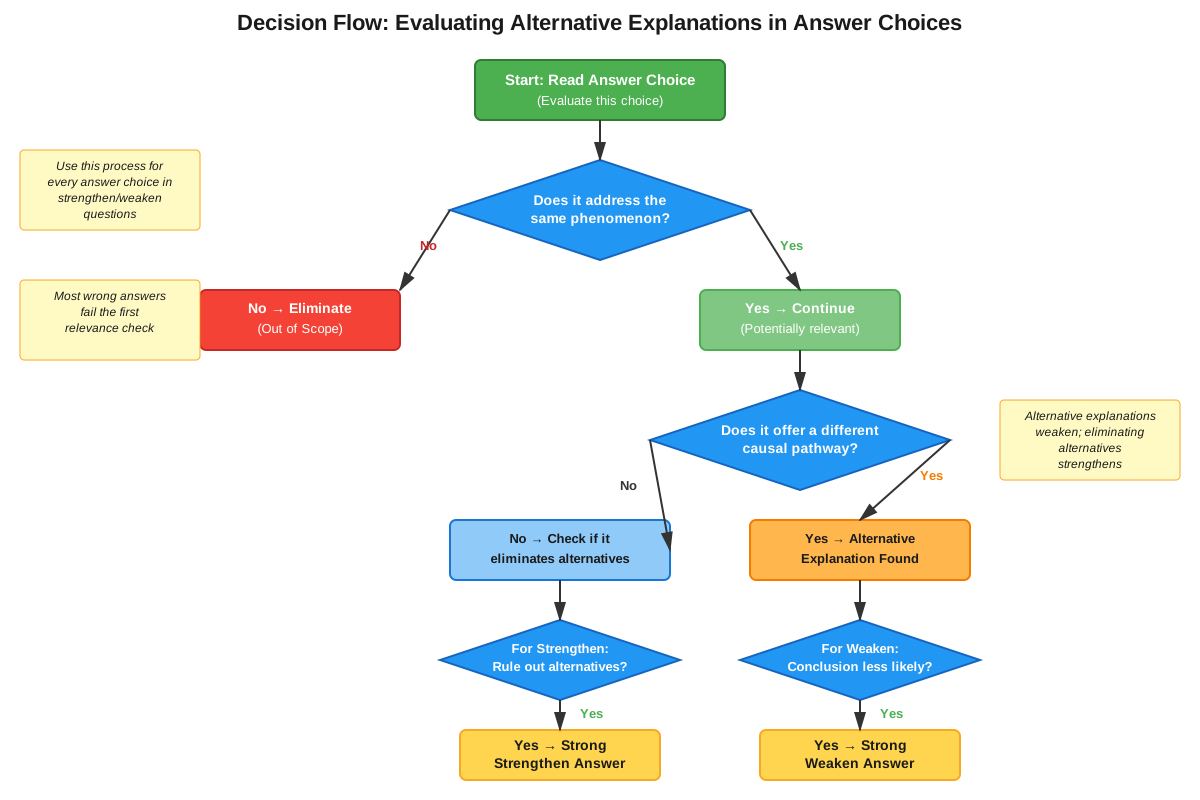
Follow this systematic process:
- Identify the argument's conclusion and evidence (10-15 seconds)
- Determine if the argument makes a causal or explanatory claim (5 seconds)
- Ask yourself: "What else could explain this evidence?" (10 seconds)
- For weaken questions: Look for answers that provide plausible alternatives
- For strengthen questions: Look for answers that eliminate plausible alternatives
- Evaluate answer choices against the specific evidence and conclusion (30-40 seconds)
Trigger Words and Phrases
In the argument, watch for:
- "caused by," "resulted in," "led to," "responsible for"
- "explains why," "the reason for," "accounts for"
- "therefore," "thus," "consequently" (introducing causal conclusions)
- "after X, Y occurred" (temporal sequence suggesting causation)
In answer choices for weaken questions, look for:
- "actually," "in fact," "however" (signaling contradictory information)
- Language introducing other causes: "another factor," "also," "instead"
- Common cause indicators: "both X and Y were caused by..."
- Reverse causation indicators: "Y actually caused X"
In answer choices for strengthen questions, look for:
- "no other," "only," "exclusively" (eliminating alternatives)
- "remained constant," "did not change" (control group language)
- "specifically," "particularly" (linking cause to effect)
Process of Elimination Tips
Eliminate answer choices that:
- Provide irrelevant information that does not compete with the original explanation
- Are too vague or general to constitute a specific alternative
- Actually support the argument when you need to weaken it (or vice versa)
- Introduce implausible scenarios inconsistent with the passage or common knowledge
- Address a different part of the argument than the causal/explanatory claim
Keep answer choices that:
- Directly address the same phenomenon the argument explains
- Provide specific, plausible mechanisms or causes
- Account for all the evidence mentioned in the argument
- Are consistent with the passage facts and reasonable assumptions
Time Allocation
For alternative explanation questions:
- Reading and understanding the argument: 20-30 seconds
- Identifying the causal claim and potential alternatives: 10-15 seconds
- Evaluating answer choices: 30-45 seconds
- Total target time: 60-90 seconds
These questions reward careful analysis more than speed. If you find yourself stuck between two answers, return to the argument's specific evidence and ask which answer choice more directly addresses that evidence with a competing explanation.
Memory Techniques
The RACE Acronym for Alternative Explanations
Reverse causation: Could the effect actually cause the supposed cause?
Alternative cause: Could a different factor cause the observed effect?
Common cause: Could a third factor cause both observed phenomena?
Eliminate alternatives: Does the answer remove competing explanations?
Visualization Strategy
Picture the argument as a bridge connecting evidence (one island) to conclusion (another island). An alternative explanation is a different bridge connecting the same evidence island to a different conclusion island. Weaken questions ask you to build a competing bridge; strengthen questions ask you to destroy competing bridges, leaving only the argument's bridge standing.
The "What Else?" Habit
Train yourself to automatically ask "What else could explain this?" whenever you see:
- Correlation presented as causation
- "After X, Y happened" reasoning
- Explanatory claims about why something occurred
- Recommendations based on causal claims
This mental habit activates alternative explanation thinking before you even reach the answer choices.
Pattern Recognition Mnemonic: "SCTR"
Selection bias: The sample differs from the population
Common cause: Third factor causes both observed phenomena
Temporal coincidence: Events occurred together by chance
Reverse causation: Effect causes supposed cause
These four patterns account for the majority of alternative explanations on the LSAT.
Summary
Alternative explanations represent a fundamental reasoning pattern in LSAT Logical Reasoning, appearing most prominently in strengthen and weaken questions. When an argument presents evidence and draws a causal or explanatory conclusion, alternative explanations challenge that reasoning by showing that the same evidence could support different conclusions. The LSAT tests whether students can identify when arguments are vulnerable to alternatives, generate plausible competing explanations, and evaluate which alternatives genuinely weaken arguments versus which are irrelevant or implausible. Strengthening arguments often involves eliminating alternative explanations, while weakening them involves introducing plausible alternatives. The most common patterns include reverse causation, common cause, and temporal coincidence mistaken for causation. Success requires recognizing causal claims in arguments, systematically considering what else might explain the evidence, and carefully evaluating answer choices for relevance, plausibility, and completeness. Mastering alternative explanations provides a significant advantage on the LSAT because this concept appears across multiple question types and represents a core skill in legal reasoning.
Key Takeaways
- Alternative explanations challenge causal and explanatory arguments by showing that evidence could support different conclusions
- Weaken questions often require introducing plausible alternative explanations; strengthen questions often require eliminating them
- The strongest alternatives are specific, plausible, and account for all the evidence presented in the argument
- Common patterns include reverse causation, common cause (third factor), and temporal coincidence without causation
- Not every conceivable alternative weakens an argument—only plausible alternatives consistent with passage facts and common knowledge
- Correlation does not prove causation; this gap is where alternative explanations attack arguments
- Systematically asking "What else could explain this evidence?" improves performance on 15-20% of Logical Reasoning questions
Related Topics
Causal Reasoning: Understanding how the LSAT tests causal claims provides the foundation for recognizing when alternative explanations apply. Mastering alternative explanations naturally leads to deeper study of causal reasoning patterns, including necessary and sufficient conditions for causation.
Assumption Questions: Alternative explanations reveal what arguments assume—specifically, that no other explanation exists. Studying assumptions alongside alternatives creates a comprehensive understanding of argument structure.
Flaw Questions: Many logical flaws involve failing to consider alternative explanations. Students who master alternatives will recognize flaws like "confusing correlation with causation" and "failing to consider other possible causes" more readily.
Strengthen and Weaken Question Strategies: Alternative explanations represent just one strategy among several for these question types. Expanding to other strengthen/weaken patterns (such as attacking premises, questioning representativeness, or challenging predictions) builds comprehensive mastery.
Necessary Assumptions: Understanding what an argument must assume to work connects directly to alternative explanations, as arguments often assume no plausible alternatives exist.
Practice CTA
Now that you understand alternative explanations, the next crucial step is applying this knowledge to actual LSAT questions. Work through the practice questions and flashcards to reinforce these concepts and build the pattern recognition that leads to confident, accurate answers on test day. Remember: understanding the theory is essential, but mastery comes through deliberate practice. Each practice question you analyze strengthens your ability to spot alternative explanations quickly and evaluate them accurately—skills that will serve you throughout the Logical Reasoning section and beyond. You've built the foundation; now construct expertise through application.
Sign up free to keep reading
Create a free AnvayaPrep account to finish this LSAT guide on Alternative explanations — plus flashcards and practice questions.