Overview
Comparative reading questions represent a distinctive and challenging component of the LSAT Reading Comprehension section. Introduced in 2007, this question format presents test-takers with two shorter passages (Passage A and Passage B) instead of one longer passage, requiring students to analyze each passage individually while also synthesizing information across both texts. These paired passages typically share a common theme or topic but approach it from different perspectives, employ different argumentative strategies, or reach contrasting conclusions. The comparative format demands a sophisticated skill set: readers must track multiple authors' viewpoints simultaneously, identify points of agreement and disagreement, and understand how different rhetorical approaches can illuminate the same subject matter.
The significance of lsat comparative reading questions extends beyond their structural uniqueness. This question type tests the very skills that law students and attorneys must employ daily: comparing legal precedents, analyzing competing arguments, identifying subtle distinctions between similar positions, and synthesizing information from multiple sources. Approximately one of the four Reading Comprehension passages on every LSAT will be a comparative reading set, making this a high-frequency, high-stakes component of the exam. Students who master comparative reading gain not only points on test day but also develop critical analytical abilities essential for legal reasoning.
Within the broader landscape of reading comprehension question types, comparative reading questions occupy a special position. They build upon foundational skills like identifying main ideas, understanding author's purpose, and recognizing argumentative structure, but add an additional layer of complexity by requiring cross-textual analysis. Success with comparative passages depends on mastering standard reading comprehension techniques while developing specialized strategies for managing dual texts, tracking multiple perspectives, and answering questions that explicitly require synthesis across passages.
Learning Objectives
- [ ] Identify how Comparative reading questions appears in LSAT questions
- [ ] Explain the reasoning pattern behind Comparative reading questions
- [ ] Apply Comparative reading questions to solve LSAT-style problems accurately
- [ ] Distinguish between questions asking about individual passages versus questions requiring cross-passage synthesis
- [ ] Analyze the relationship between two passages (agreement, disagreement, complementary perspectives)
- [ ] Evaluate how different authors use evidence and reasoning to support similar or contrasting positions
- [ ] Predict common comparative question stems and develop efficient approaches for each type
Prerequisites
- Main idea identification: Essential for understanding each passage's central claim before comparing them
- Author's tone and purpose recognition: Necessary to distinguish how different authors approach the same topic
- Argument structure analysis: Required to compare how each passage builds its case and uses evidence
- Inference skills: Needed to determine implicit relationships between passages when not explicitly stated
- Standard question type familiarity: Comparative questions often combine traditional question formats with cross-passage elements
Why This Topic Matters
Comparative reading questions assess a lawyer's fundamental skill: the ability to analyze multiple perspectives on a single issue and identify meaningful similarities and differences. In legal practice, attorneys constantly compare case precedents, evaluate competing interpretations of statutes, and synthesize arguments from multiple sources. The LSAT's comparative format directly mirrors these professional demands, making it one of the most practically relevant question types on the exam.
From a statistical perspective, comparative reading appears with absolute consistency on the LSAT. Every test administration includes exactly one comparative reading set among the four Reading Comprehension passages, accounting for approximately 25% of all reading questions. These sets typically contain 6-8 questions, meaning roughly 15-20% of a test-taker's Reading Comprehension score depends directly on comparative reading performance. Given that Reading Comprehension constitutes approximately one-third of the entire LSAT, mastering comparative reading can significantly impact overall scores.
Comparative reading questions manifest in several predictable patterns on the exam. Questions may ask about individual passages (treating them as standalone texts), require direct comparison between passages (identifying agreements or disagreements), or demand synthesis (determining how one passage would respond to the other's argument). Common question stems include: "Both passages are primarily concerned with...", "The author of Passage B would most likely respond to the claim in lines X-Y of Passage A by...", "Which of the following is discussed in Passage A but not in Passage B?", and "The relationship between the two passages is most analogous to..." Understanding these patterns enables efficient, strategic approaches to this high-yield question type.
Core Concepts
Structure of Comparative Reading Sets
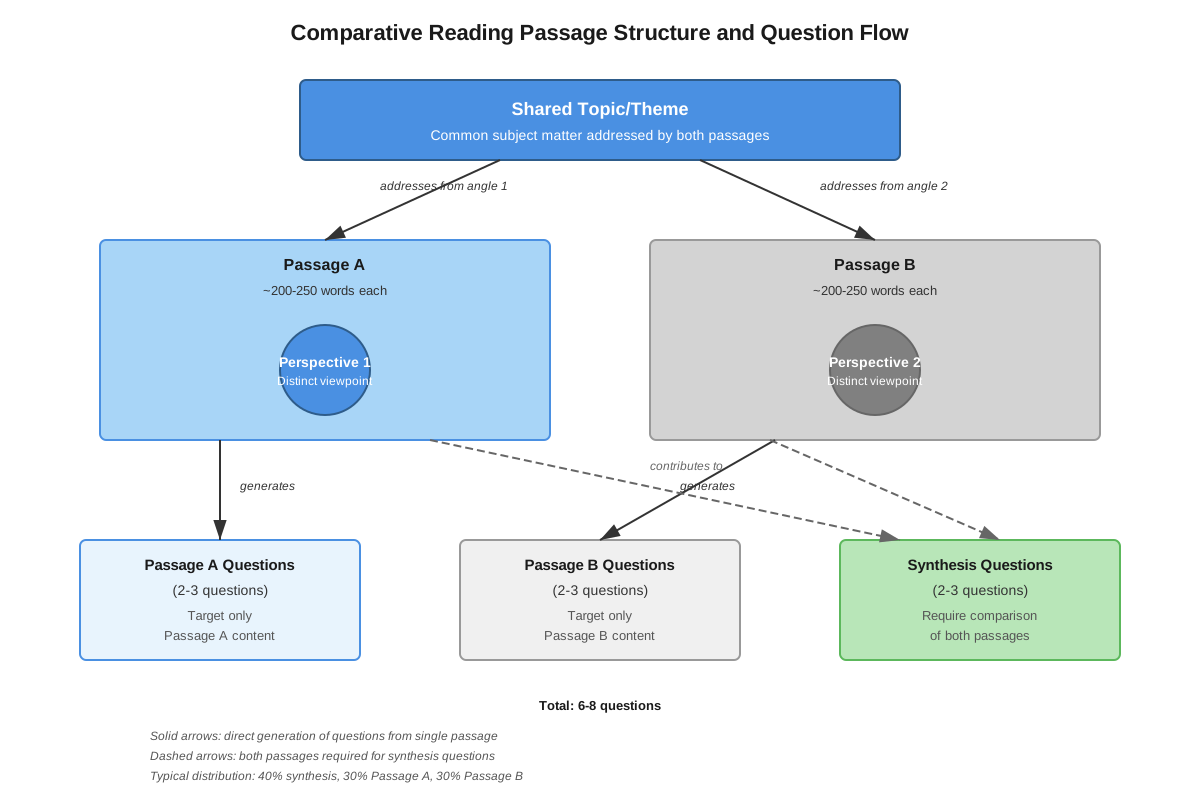
Comparative reading questions on the LSAT follow a consistent structural format that test-takers must recognize immediately. Each comparative set presents two passages—designated Passage A and Passage B—that together approximate the length of a single standard passage (roughly 450-500 words total). Passage A typically ranges from 200-250 words, while Passage B occupies a similar length. The passages share a common topic or theme but approach it from different angles, represent different viewpoints, or employ different rhetorical strategies. This structural consistency allows for strategic preparation: students can develop specialized approaches knowing exactly what format to expect.
The passages are always presented sequentially (A then B) with clear labeling, and questions follow both passages. Crucially, questions are ordered strategically: typically, early questions address Passage A individually, middle questions focus on Passage B alone, and later questions require cross-passage analysis. However, this ordering is not absolute, and test-takers must read each question stem carefully to determine whether it addresses one passage or both.
Types of Passage Relationships
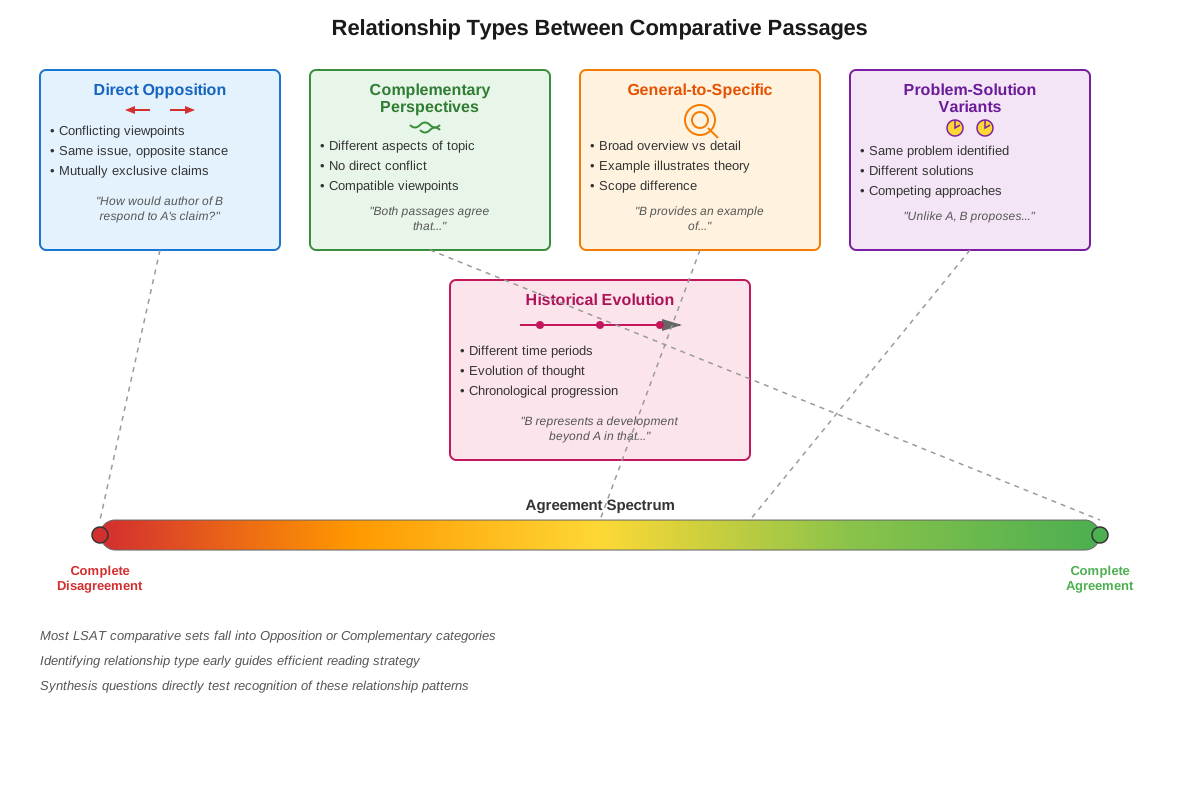
Understanding the relationship between paired passages is fundamental to answering comparative reading questions accurately. The LSAT employs several recurring relationship patterns:
Opposing Viewpoints: The most common relationship presents two authors who disagree about a central issue. Passage A might argue for one position while Passage B advocates the contrary view. For example, Passage A could support increased regulation of a technology while Passage B argues for market-based solutions. These sets test the ability to track competing arguments and identify specific points of disagreement.
Complementary Perspectives: Some paired passages agree on fundamental points but explore different aspects of a topic. Passage A might discuss the historical origins of a phenomenon while Passage B examines its contemporary implications. Both passages support compatible conclusions but contribute different evidence or analysis.
General-to-Specific Relationships: One passage may present a broad theoretical framework while the other applies that framework to a specific case or example. Passage A might outline a general principle while Passage B demonstrates that principle through a concrete instance.
Problem-Solution Structures: Passage A identifies and analyzes a problem while Passage B proposes or evaluates potential solutions. This relationship tests understanding of how different texts can address sequential aspects of a single issue.
Question Categories in Comparative Reading
Comparative reading questions fall into three distinct categories, each requiring different analytical approaches:
Single-Passage Questions ask about Passage A or Passage B individually, functioning identically to questions in standard reading comprehension sets. These questions might ask: "The primary purpose of Passage A is to..." or "According to Passage B, which of the following is true?" Despite appearing in a comparative set, these questions require only understanding of one passage. Strategic test-takers recognize these questions as opportunities to earn points using familiar techniques.
Direct Comparison Questions explicitly ask about similarities or differences between passages. Common stems include: "Both passages mention which of the following?", "Unlike the author of Passage A, the author of Passage B...", or "Which of the following is discussed in Passage B but not in Passage A?" These questions test the ability to track specific content across both texts and identify precise points of convergence or divergence.
Synthesis Questions require deeper integration of both passages, asking how one author would respond to the other's argument or how the passages relate conceptually. Examples include: "The author of Passage B would most likely respond to the argument in lines 15-20 of Passage A by...", "The relationship between the two passages is most analogous to the relationship between...", or "Both passages are primarily concerned with answering which of the following questions?" These questions demand sophisticated understanding of both passages' arguments and the ability to project how different perspectives would interact.
Strategic Reading Approach for Comparative Passages
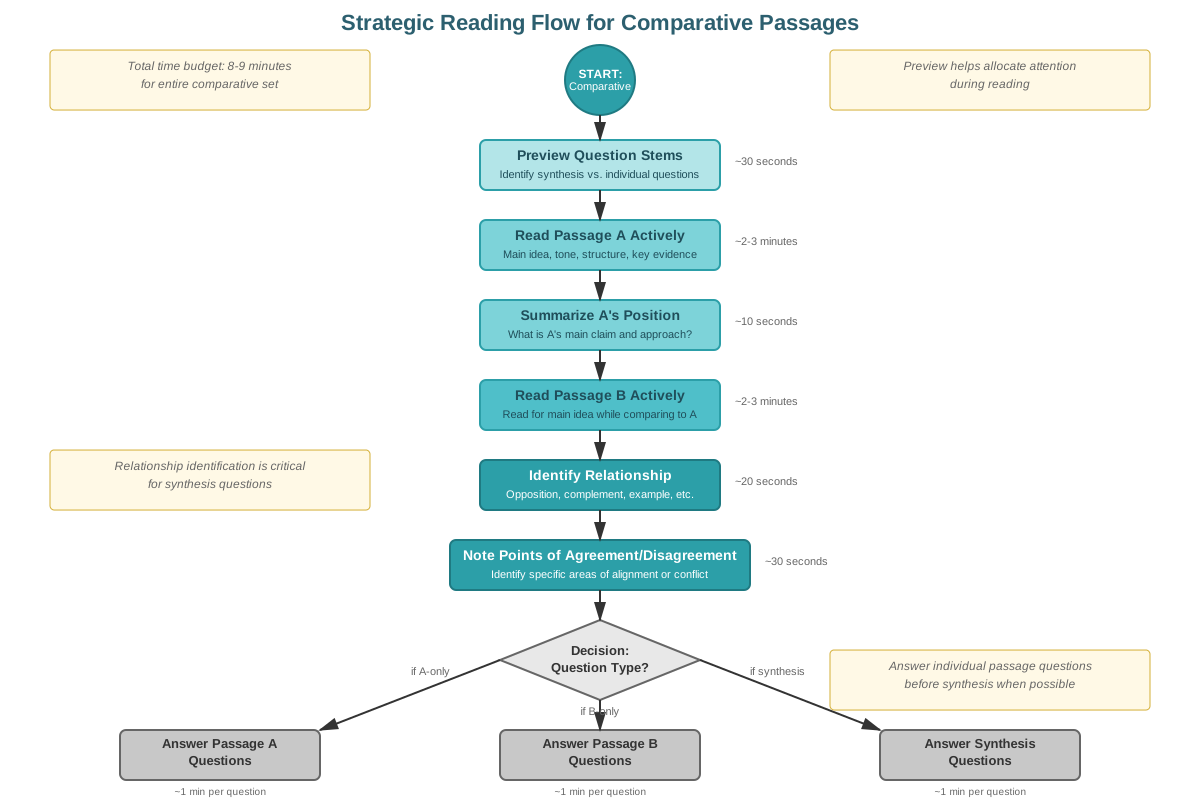
Effective comparative reading requires a modified approach to passage analysis. The optimal strategy involves:
First Pass Through Passage A: Read Passage A actively, identifying its main point, author's purpose, tone, and key supporting evidence. Take brief mental or physical notes about the passage's structure and central argument. Treat this reading exactly as you would a standard passage.
Immediate Passage A Questions: Some test-takers benefit from answering questions about Passage A alone before reading Passage B, ensuring that information from the second passage doesn't create confusion. However, this approach requires checking that questions truly address only Passage A.
Second Pass Through Passage B: Read Passage B with Passage A in mind, actively noting similarities, differences, and potential points of interaction. Ask: Does this author agree or disagree with Passage A? What new information or perspective does this passage add? How do the passages' tones compare?
Synthesis and Comparison: Before approaching cross-passage questions, mentally articulate the relationship between passages. Create a simple mental framework: "Passage A argues X using evidence Y, while Passage B argues Z using evidence W. They agree on point 1 but disagree on point 2."
Common Comparative Question Stems and Approaches
Recognizing question stem patterns enables efficient, accurate responses:
| Question Stem Pattern | What It's Testing | Strategic Approach |
|---|---|---|
| "Both passages are primarily concerned with..." | Shared main idea or purpose | Identify the broadest common theme; wrong answers often describe only one passage |
| "Unlike the author of Passage A, the author of Passage B..." | Specific difference between passages | Look for explicit contrasts in approach, evidence, or conclusion |
| "The author of Passage B would most likely respond to [claim in Passage A] by..." | Synthesis and projection | Apply Passage B's perspective to Passage A's argument; find the answer most consistent with B's viewpoint |
| "Which of the following is discussed in Passage A but not in Passage B?" | Content comparison | Systematically check each answer against both passages; requires careful tracking |
| "The relationship between the two passages is most analogous to..." | Structural relationship | First characterize the actual relationship, then find the answer choice with parallel structure |
Concept Relationships
The concepts within comparative reading form an interconnected hierarchy. Understanding passage structure provides the foundation for all other skills: recognizing that two shorter passages will appear, each with its own main idea and supporting structure. This structural awareness leads directly to identifying passage relationships—determining whether passages agree, disagree, or complement each other. The relationship type, in turn, determines which question categories will likely appear and how to approach them efficiently.
Question categories connect back to passage relationships: opposing viewpoints generate more synthesis questions asking how one author would respond to the other, while complementary perspectives produce more questions about shared themes. The strategic reading approach integrates all previous concepts, providing a systematic method for processing both passages and preparing for all question types.
These comparative reading concepts build upon prerequisite skills from standard reading comprehension. Main idea identification from single passages extends to identifying two main ideas and their relationship. Author's purpose analysis becomes comparative: understanding not just why each author wrote their passage, but how their purposes relate. Argument structure skills enable tracking two parallel or contrasting argumentative frameworks simultaneously.
The relationship map flows: Passage Structure → Passage Relationship Identification → Question Category Recognition → Strategic Approach Selection → Accurate Answer Selection. Mastering each step enhances performance on subsequent steps, creating a comprehensive skill set for comparative reading excellence.
High-Yield Facts
⭐ Every LSAT contains exactly one comparative reading set among four Reading Comprehension passages, making it a guaranteed test component.
⭐ Comparative reading questions fall into three categories: single-passage questions, direct comparison questions, and synthesis questions.
⭐ The most common passage relationship is opposing viewpoints, where authors disagree on a central issue.
⭐ Questions typically progress from single-passage focus (early questions) to cross-passage synthesis (later questions), though this pattern is not absolute.
⭐ "Both passages" questions require identifying information or themes present in BOTH texts; if something appears in only one passage, it cannot be correct.
- Passage A and Passage B together approximate the length of one standard passage (450-500 words total).
- Comparative reading was introduced to the LSAT in 2007 and has appeared consistently since then.
- Wrong answers on "Unlike Passage A, Passage B..." questions often describe similarities rather than differences.
- Synthesis questions asking "How would Author B respond to Author A?" require applying Passage B's perspective, not creating new arguments.
- The relationship between passages is often tested through analogy questions: "The relationship between the passages is most like..."
- Complementary passages may agree on conclusions while providing different types of evidence or examining different aspects.
- Tone differences between passages (skeptical vs. enthusiastic, theoretical vs. practical) often signal important distinctions tested in questions.
- Questions about what is discussed in one passage "but not" the other require careful verification against both texts.
Quick check — test yourself on Comparative reading questions so far.
Try Flashcards →Common Misconceptions
Misconception: Both passages must be read completely before answering any questions. → Correction: While both passages should be read before attempting cross-passage synthesis questions, some test-takers successfully answer single-passage questions after reading only that passage. The optimal approach depends on individual working style, but flexibility is key.
Misconception: If passages discuss the same topic, they must reach the same conclusion. → Correction: Shared topics often lead to contrasting conclusions. The LSAT frequently pairs passages that approach the same subject from opposing perspectives, testing the ability to track competing arguments on a single issue.
Misconception: "Both passages" questions can be answered if the correct answer appears in the longer or more detailed passage. → Correction: "Both passages" questions require that the correct answer be supported by BOTH texts. Even if one passage extensively discusses a concept, if the other passage doesn't mention it, that answer is incorrect.
Misconception: Synthesis questions asking how one author would respond require speculation about what the author might say. → Correction: These questions require applying the author's stated perspective from their passage to the other passage's argument. The correct answer must be supported by explicit content in the passage, not speculation.
Misconception: Comparative reading questions are inherently more difficult than standard reading comprehension questions. → Correction: While comparative reading adds complexity through dual texts, individual questions often test the same skills as standard passages. Many comparative questions are actually easier because shorter passages contain less information to track.
Misconception: The passages always present completely opposing viewpoints. → Correction: While opposing viewpoints are common, passages may also present complementary perspectives, general-to-specific relationships, or problem-solution structures. Assuming opposition can lead to misunderstanding the actual relationship.
Misconception: More time should be spent reading comparative passages because there are two texts. → Correction: Comparative passages together equal the length of one standard passage, so reading time should be similar. The key difference is mental organization: tracking two perspectives rather than one.
Worked Examples
Example 1: Direct Comparison Question
Passage A (summarized): Argues that artificial intelligence development should be slowed through government regulation because rapid advancement poses existential risks. Emphasizes precautionary principle and cites historical examples of technology outpacing safety measures.
Passage B (summarized): Contends that AI development should proceed rapidly with minimal regulation because innovation drives economic growth and competitive advantage. Argues that excessive regulation stifles beneficial technological progress and that market forces naturally address safety concerns.
Question: Unlike the author of Passage A, the author of Passage B does which of the following?
Answer Choices:
(A) Discusses the economic implications of AI development
(B) Expresses concern about potential risks of technology
(C) Relies primarily on market mechanisms rather than government intervention
(D) Uses historical examples to support the argument
(E) Addresses the pace of technological development
Step 1 - Identify Question Type: The stem "Unlike the author of Passage A..." signals a direct comparison question asking for a difference between passages.
Step 2 - Analyze Each Answer Against Both Passages:
(A) Economic implications: Passage B explicitly discusses economic growth and competitive advantage. Does Passage A discuss economics? The summary suggests Passage A focuses on safety and risks, not economics. This is a potential difference. KEEP
(B) Concern about risks: Passage A clearly expresses concern about risks (existential risks, safety measures). Does Passage B express concern? The summary indicates Passage B argues market forces address safety, suggesting some acknowledgment of concerns. This is likely a similarity, not a difference. ELIMINATE
(C) Market mechanisms vs. government intervention: This captures the core disagreement. Passage A advocates government regulation; Passage B advocates market forces. This is a clear difference. KEEP
(D) Historical examples: Passage A uses historical examples. Does Passage B? The summary doesn't mention historical examples in Passage B. However, the question asks what Passage B does that A doesn't, not vice versa. If only A uses historical examples, this answer is backwards. ELIMINATE
(E) Pace of development: Both passages address pace—A wants to slow it, B wants rapid development. This is a shared topic, not a difference in whether they address it. ELIMINATE
Step 3 - Compare Remaining Answers: Between (A) and (C), which represents a clearer, more fundamental difference? Answer (C) captures the central methodological disagreement (regulation vs. market forces), while (A) identifies a topic that might be implicit in A's discussion of risks. Answer (C) is more precise and fundamental.
Correct Answer: (C) - This answer identifies the core difference in approach between the passages.
Connection to Learning Objectives: This example demonstrates identifying how comparative reading questions appear (direct comparison format), explaining the reasoning pattern (systematic elimination based on checking each answer against both passages), and applying the approach to solve accurately.
Example 2: Synthesis Question
Passage A (summarized): Describes how traditional peer review in scientific publishing ensures quality by having experts evaluate research before publication. Acknowledges the process is slow but argues this deliberation is necessary for maintaining scientific standards.
Passage B (summarized): Proposes that open online publication with post-publication peer review would accelerate scientific communication. Argues that traditional pre-publication review creates unnecessary delays and that community-based evaluation after publication can effectively identify quality research.
Question: The author of Passage A would most likely respond to the proposal in Passage B by pointing out that
Answer Choices:
(A) post-publication review has never been attempted in scientific publishing
(B) the speed of publication is less important than ensuring research quality before dissemination
(C) online publication platforms lack the prestige of traditional journals
(D) community-based evaluation cannot identify quality research
(E) scientific communication has not been significantly delayed by traditional methods
Step 1 - Identify Question Type: "The author of Passage A would most likely respond to..." signals a synthesis question requiring application of Passage A's perspective to Passage B's proposal.
Step 2 - Identify Passage A's Core Values/Arguments: Passage A values quality assurance through expert pre-publication review and believes deliberation (even if slow) is necessary for maintaining standards.
Step 3 - Identify What Passage B Proposes: Passage B proposes replacing pre-publication review with post-publication review to accelerate communication.
Step 4 - Predict the Response: Author A would likely object that Passage B's proposal sacrifices quality for speed, arguing that pre-publication review is necessary to maintain standards before research is disseminated.
Step 5 - Evaluate Answer Choices:
(A) Never been attempted: This is a factual claim about history that Passage A doesn't address. Author A's argument is about principles (quality, standards), not historical precedent. ELIMINATE
(B) Speed less important than quality: This directly reflects Passage A's core value—quality through deliberation matters more than speed. This matches our prediction. KEEP
(C) Prestige of journals: Passage A doesn't discuss prestige or journal reputation; it focuses on the review process itself. ELIMINATE
(D) Community evaluation cannot work: This is too absolute. Passage A argues for expert pre-publication review but doesn't claim community evaluation is completely ineffective. This overstates A's position. ELIMINATE
(E) No significant delays: This contradicts Passage A, which acknowledges the process is slow. Author A wouldn't deny delays exist. ELIMINATE
Correct Answer: (B) - This answer accurately applies Passage A's stated priority (quality over speed) to respond to Passage B's proposal (prioritizing speed).
Connection to Learning Objectives: This example demonstrates explaining the reasoning pattern behind synthesis questions (applying one author's stated perspective to another's argument) and applying this understanding to solve problems accurately by predicting responses based on textual evidence.
Exam Strategy
Approaching Comparative Reading Sets Efficiently
When encountering a comparative reading set on the LSAT, implement this systematic approach:
Time Management: Allocate approximately 8-9 minutes total for a comparative set (similar to a standard passage), divided as follows: 3-4 minutes reading both passages, 4-5 minutes answering questions. The shorter individual passages allow for slightly faster reading, but the need to track relationships requires mental organization time.
Active Reading Protocol: While reading Passage A, identify and mentally note: main point, author's purpose, tone, and key evidence. When reading Passage B, actively compare: Does this agree or disagree with A? What's different about the approach or evidence? What's the relationship? Spend 15-20 seconds after reading both passages mentally articulating their relationship before approaching questions.
Trigger Words and Phrases
Recognize these high-frequency question stem patterns and their implications:
"Both passages..." - Requires finding information or themes present in BOTH texts. Eliminate any answer appearing in only one passage.
"Unlike the author of Passage A, the author of Passage B..." - Signals a direct comparison question. Look for explicit differences in approach, evidence, or conclusion.
"The author of Passage B would most likely respond to [claim in Passage A] by..." - Synthesis question requiring application of Passage B's perspective. The correct answer must be supported by explicit content in Passage B.
"Which of the following is discussed in Passage A but not in Passage B?" - Content comparison requiring systematic checking. Verify each answer against both passages.
"The relationship between the two passages is most analogous to..." - First characterize the actual relationship (opposing, complementary, general-to-specific), then find the answer with parallel structure.
"Both passages are primarily concerned with answering which of the following questions?" - Identify the broadest question that both passages address, even if they answer it differently.
Process of Elimination Strategies
For "Both passages" questions: Eliminate any answer that appears in only one passage, even if extensively discussed there. The correct answer must have support in both texts.
For "Unlike" questions: Eliminate answers that describe similarities rather than differences. Also eliminate answers that reverse the actual difference (describing what A does that B doesn't when the question asks the opposite).
For synthesis questions: Eliminate answers that introduce new arguments not supported by the relevant passage. The correct answer must be grounded in explicit textual content, not speculation.
For relationship analogy questions: First eliminate answers with incorrect relationship structures (e.g., if passages oppose each other, eliminate answers describing complementary relationships), then evaluate remaining answers for parallel content.
Question Order Strategy
While questions typically progress from single-passage to cross-passage focus, always read the question stem carefully to determine scope. Consider this flexible approach:
- Answer clearly labeled single-passage questions first (those explicitly about "Passage A" or "Passage B")
- Tackle direct comparison questions next (those asking about specific similarities or differences)
- Save complex synthesis questions for last (those requiring projection of one author's response to the other)
This progression moves from simpler to more complex, building confidence and ensuring easier points are secured first.
Memory Techniques
COMPARE Acronym for Comparative Reading Approach:
- Characterize each passage's main point
- Observe the relationship (agree, disagree, complement)
- Mark differences in tone, evidence, and approach
- Predict question types based on relationship
- Answer single-passage questions first
- Review both passages for synthesis questions
- Eliminate answers lacking support in both texts (for "both passages" questions)
The "Both Test" Visualization: For "both passages" questions, visualize a Venn diagram. The correct answer must fall in the overlapping center section where both passages intersect. If an answer falls only in the Passage A circle or only in the Passage B circle, eliminate it immediately.
Relationship Categories Mnemonic - "COPS":
- Complementary (passages agree, different aspects)
- Opposing (passages disagree on central issue)
- Problem-Solution (one identifies problem, other proposes solution)
- Specific-General (one provides framework, other applies it)
The "Response Test" for Synthesis Questions: When asked how Author B would respond to Author A, imagine Author B sitting across a table from Author A. What would B say based on B's actual written argument? The correct answer is what B already argued in their passage, applied to A's claim.
Summary
Comparative reading questions constitute a high-yield, predictable component of LSAT Reading Comprehension, appearing exactly once per test with two shorter passages addressing a common theme from different perspectives. Success requires mastering three question categories: single-passage questions (treating each passage independently), direct comparison questions (identifying specific similarities or differences), and synthesis questions (applying one author's perspective to the other's argument). The most common passage relationship is opposing viewpoints, though complementary perspectives and problem-solution structures also appear. Effective strategy involves active reading to identify each passage's main point and purpose, immediately characterizing the relationship between passages, and approaching questions systematically—typically moving from single-passage to cross-passage synthesis questions. Critical skills include verifying that "both passages" answers have support in both texts, identifying precise differences for comparison questions, and grounding synthesis responses in explicit textual evidence rather than speculation. Mastering comparative reading provides both immediate test-day benefits and develops essential legal reasoning skills for law school and practice.
Key Takeaways
- Comparative reading appears exactly once per LSAT with two shorter passages totaling approximately 450-500 words, making it a guaranteed high-frequency component worth mastering
- Three question categories require different approaches: single-passage questions (standard techniques), direct comparison questions (systematic checking against both texts), and synthesis questions (applying stated perspectives)
- "Both passages" questions require support from BOTH texts; eliminate any answer appearing in only one passage, regardless of how extensively discussed
- The most common passage relationship is opposing viewpoints, but complementary perspectives, problem-solution structures, and general-to-specific relationships also appear regularly
- Synthesis questions asking how one author would respond must be answered using that author's explicit arguments from their passage, not speculation or new arguments
- Active reading should identify each passage's main point, purpose, and tone, then immediately characterize the relationship before approaching questions
- Time management for comparative sets should mirror standard passages (8-9 minutes total) since combined length is similar, with emphasis on mental organization of the relationship between texts
Related Topics
Main Idea and Primary Purpose Questions: Mastering these fundamental question types in standard passages provides the foundation for identifying each passage's central claim in comparative sets, enabling accurate relationship characterization.
Author's Tone and Attitude: Understanding how to identify and distinguish authorial tone becomes especially important in comparative reading, where tone differences often signal key distinctions between passages.
Inference Questions in Reading Comprehension: Synthesis questions in comparative reading are essentially inference questions requiring projection across passages, making inference skills crucial for comparative success.
Argument Structure and Reasoning: Analyzing how each passage builds its argument and uses evidence enables sophisticated comparison of different argumentative approaches to the same topic.
Point at Issue Questions in Logical Reasoning: The skills used to identify points of disagreement between speakers in Logical Reasoning directly transfer to identifying disagreements between comparative passages.
Practice CTA
Now that you've mastered the core concepts, strategies, and patterns of comparative reading questions, it's time to apply this knowledge through deliberate practice. Attempt the practice questions and flashcards for this topic, focusing on implementing the systematic approaches outlined in this guide. Pay special attention to identifying question categories, characterizing passage relationships, and applying the elimination strategies specific to each question type. Remember that comparative reading is one of the most predictable LSAT components—with consistent practice using these strategies, you can transform this question type into a reliable source of points on test day. Your investment in mastering comparative reading will pay dividends not only on the LSAT but throughout your legal education and career.
Sign up free to keep reading
Create a free AnvayaPrep account to finish this LSAT guide on Comparative reading questions — plus flashcards and practice questions.