Overview
Acidic amino acids represent a critical subset of the 20 standard amino acids that serve as the building blocks of proteins. These amino acids are characterized by the presence of a carboxylic acid group in their side chain (R group), which can donate a proton (H⁺) under physiological conditions, making them negatively charged at physiological pH (~7.4). The two acidic amino acids—aspartic acid (aspartate) and glutamic acid (glutamate)—play essential roles in protein structure, enzyme catalysis, cellular signaling, and metabolic pathways. Understanding their chemical properties, ionization behavior, and functional roles is fundamental to mastering Biochemistry concepts tested on the MCAT.
For the MCAT, acidic amino acids appear frequently across multiple contexts within the Biochemistry section and integrated passages. Test-makers commonly assess students' understanding of amino acid classification, protein structure stabilization through ionic interactions, enzyme active site chemistry, and pH-dependent behavior of amino acid residues. Questions may present experimental scenarios involving protein purification techniques (such as ion-exchange chromatography), enzyme mechanism analysis, or structural biology problems where students must predict how pH changes affect protein conformation and function. Mastery of acidic amino acids enables students to tackle questions involving isoelectric point calculations, buffer systems, and electrophoretic separation techniques.
The significance of acidic amino acids extends beyond isolated amino acid chemistry into broader Amino Acids and Proteins concepts. These residues frequently participate in salt bridges (ionic bonds) that stabilize tertiary and quaternary protein structures, serve as catalytic residues in enzyme active sites, and function as sites for post-translational modifications. Their negative charge at physiological pH makes them crucial for protein-protein interactions, substrate binding, and the formation of binding pockets. Understanding acidic amino acids provides the foundation for comprehending protein folding, enzyme kinetics, metabolic regulation, and cellular signaling mechanisms—all high-yield topics for MCAT success.
Learning Objectives
- [ ] Define acidic amino acids using accurate Biochemistry terminology, including their structural features and ionization properties
- [ ] Explain why acidic amino acids matter for the MCAT, including their frequency and context in exam questions
- [ ] Apply acidic amino acids concepts to exam-style questions involving protein structure, enzyme mechanisms, and separation techniques
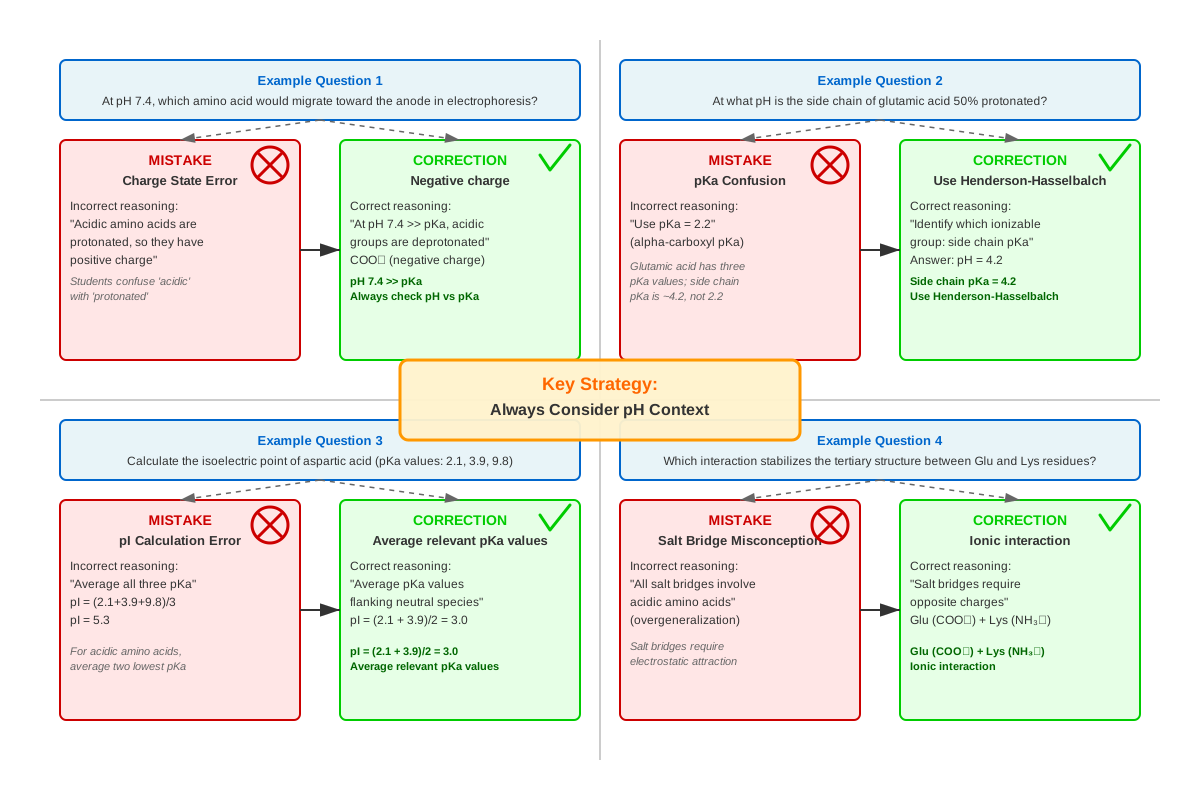
- [ ] Identify common mistakes related to acidic amino acids, particularly regarding charge states and pKa values
- [ ] Connect acidic amino acids to related Biochemistry concepts including protein structure, enzyme catalysis, and pH-dependent phenomena
- [ ] Predict the ionization state and net charge of acidic amino acids at various pH values using Henderson-Hasselbalch principles
- [ ] Analyze the role of acidic amino acid residues in protein stability, enzyme active sites, and protein-ligand interactions
- [ ] Evaluate experimental scenarios involving acidic amino acids in chromatography, electrophoresis, and protein purification techniques
Prerequisites
- Basic amino acid structure: Understanding of the general amino acid structure (amino group, carboxyl group, alpha carbon, and R group) is essential because acidic amino acids are distinguished specifically by their R group composition
- Acid-base chemistry: Knowledge of proton donation/acceptance, pH, pKa, and the Henderson-Hasselbalch equation is necessary to predict the ionization state of acidic amino acids under different conditions
- Protein structure levels: Familiarity with primary, secondary, tertiary, and quaternary structure provides context for understanding how acidic amino acids contribute to protein folding and stability
- Electronegativity and polarity: Understanding these concepts helps explain why acidic amino acids are hydrophilic and prefer aqueous environments or protein surfaces
- Chemical functional groups: Recognition of carboxylic acid groups and their behavior enables prediction of acidic amino acid properties and reactivity
Why This Topic Matters
Clinical and Real-World Significance
Acidic amino acids play vital roles in human physiology and disease. Glutamate serves as the primary excitatory neurotransmitter in the central nervous system, with dysregulation implicated in neurological disorders including epilepsy, stroke, and neurodegenerative diseases. Aspartate participates in the urea cycle, amino acid metabolism, and the malate-aspartate shuttle for NADH transport across mitochondrial membranes. Mutations affecting acidic amino acid residues in proteins can cause conformational diseases, such as sickle cell anemia (though this involves a different amino acid substitution, the principle of charge alteration applies). Enzyme deficiencies involving catalytic aspartate or glutamate residues can lead to metabolic disorders. Understanding acidic amino acids provides insight into drug design, as many pharmaceutical compounds target binding sites containing these charged residues.
MCAT Exam Statistics and Question Types
Acidic amino acids appear in approximately 15-20% of Biochemistry passages and discrete questions on the MCAT. The topic is considered high-yield because it integrates multiple testable concepts: acid-base chemistry, protein structure, enzyme mechanisms, and separation techniques. Common question formats include:
- Discrete questions asking students to identify amino acids by properties or classify them by charge at specific pH values
- Passage-based questions presenting experimental data from ion-exchange chromatography or isoelectric focusing requiring interpretation based on amino acid composition
- Enzyme mechanism questions where students must identify catalytic residues or explain pH-dependent activity changes
- Protein structure questions asking students to predict the location of acidic residues (surface vs. interior) or their role in salt bridge formation
- Integrated passages combining biochemistry with biology or organic chemistry, such as neurotransmitter function or metabolic pathway regulation
Common Exam Contexts
The MCAT frequently presents acidic amino acids within these contexts: protein purification experiments using charge-based separation; enzyme kinetics studies showing pH-dependent activity profiles; structural biology passages describing protein-protein or protein-DNA interactions; metabolic pathway diagrams highlighting transamination reactions; and neuroscience passages discussing glutamate signaling. Students must recognize that acidic amino acids are almost always negatively charged under physiological conditions and use this knowledge to predict behavior in various experimental and biological scenarios.
Core Concepts
Definition and Chemical Structure
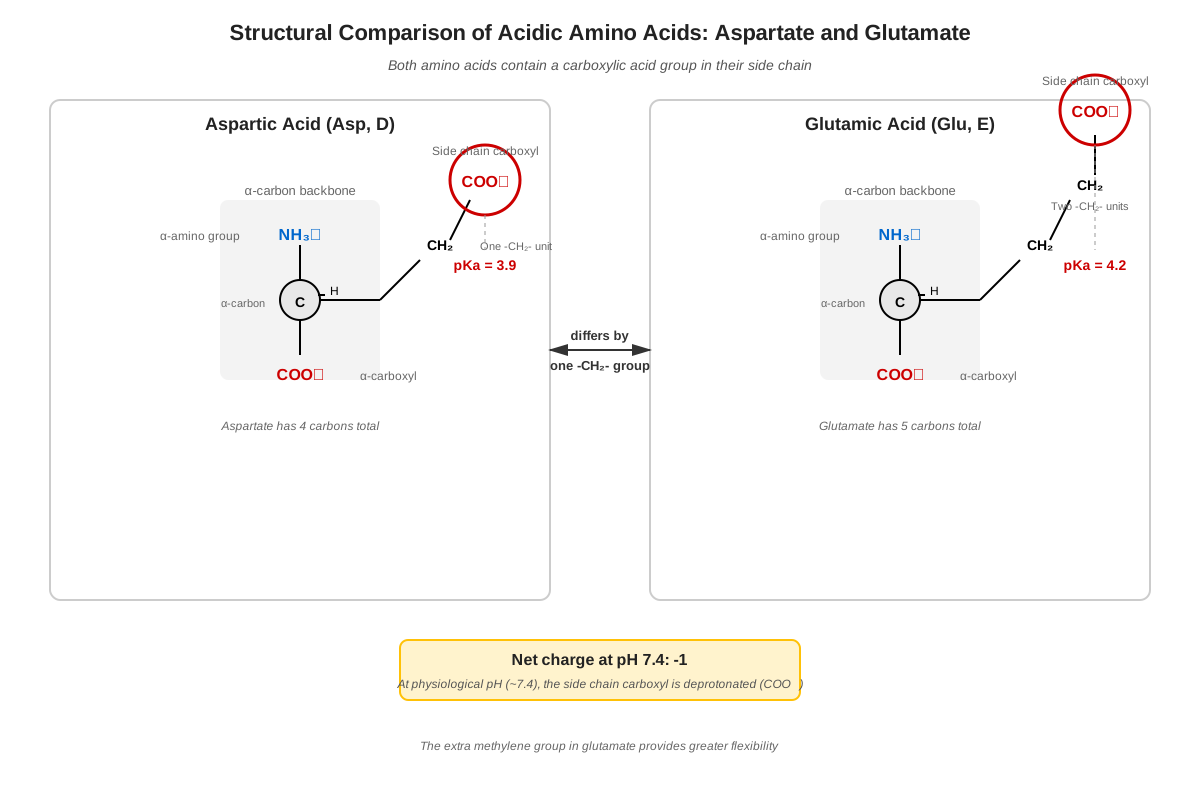
Acidic amino acids are amino acids containing a carboxylic acid functional group (-COOH) in their side chain (R group), in addition to the carboxylic acid group present in the backbone of all amino acids. This additional acidic group can donate a proton (act as a Brønsted-Lowry acid), resulting in a negatively charged carboxylate ion (-COO⁻) at physiological pH. The two standard acidic amino acids are:
- Aspartic acid (Asp, D): Contains a two-carbon side chain terminating in a carboxylic acid group
- Glutamic acid (Glu, E): Contains a three-carbon side chain terminating in a carboxylic acid group
The structural difference between aspartate and glutamate is a single methylene (-CH₂-) group, making glutamate's side chain one carbon longer. This seemingly minor difference affects their spatial reach in protein structures and their participation in different metabolic pathways.
Ionization States and pKa Values
The ionization behavior of acidic amino acids is crucial for understanding their function and charge state under various conditions. Each acidic amino acid has three ionizable groups:
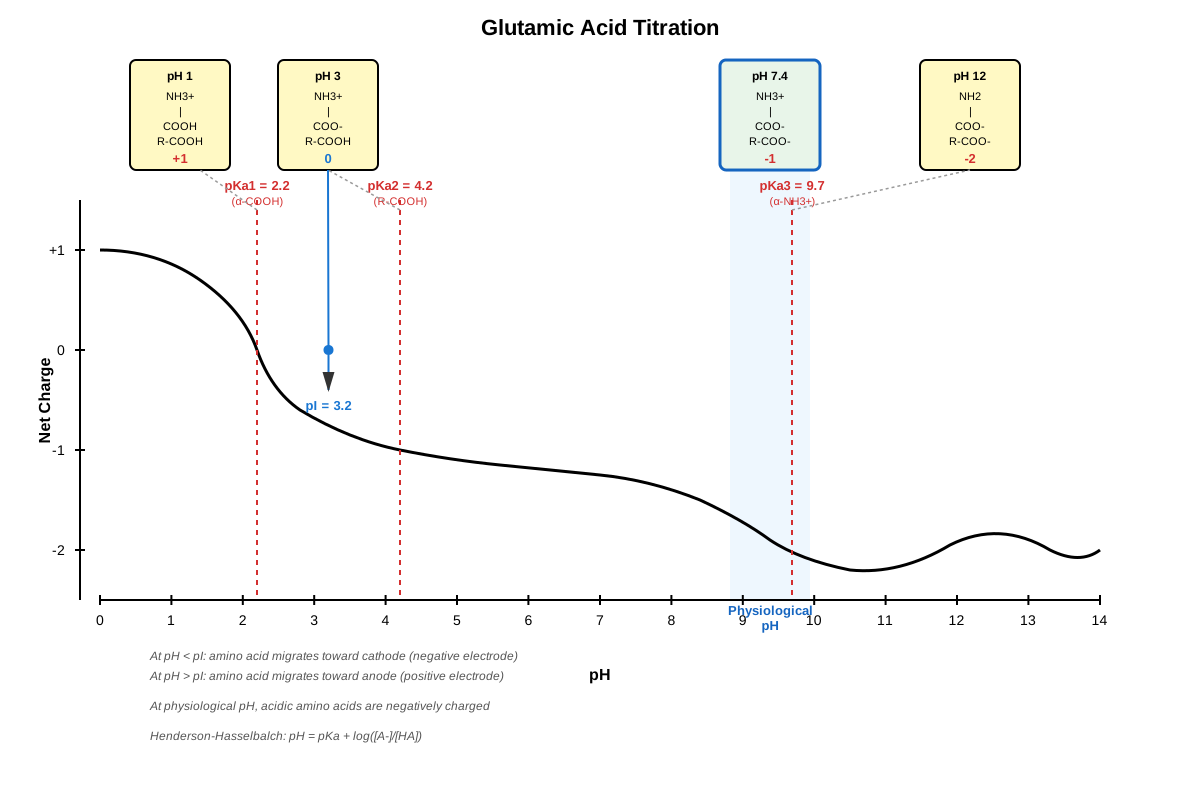
- The α-carboxyl group (backbone) with pKa ≈ 2.0
- The α-amino group (backbone) with pKa ≈ 9.5
- The side chain carboxyl group with distinct pKa values
| Amino Acid | Side Chain pKa | Charge at pH 7.4 | Net Charge at pH 7.4 |
|---|---|---|---|
| Aspartic acid (Asp) | 3.9 | -1 (COO⁻) | -1 |
| Glutamic acid (Glu) | 4.2 | -1 (COO⁻) | -1 |
At physiological pH (7.4), which is well above the pKa of the side chain carboxyl groups, these groups exist predominantly in their deprotonated, negatively charged carboxylate form. The deprotonated forms are often referred to as aspartate and glutamate (rather than aspartic acid and glutamic acid), reflecting their ionic state under physiological conditions.
Henderson-Hasselbalch Application
The Henderson-Hasselbalch equation allows prediction of the ionization state of acidic amino acids at any pH:
pH = pKa + log([A⁻]/[HA])Where [A⁻] is the concentration of the deprotonated (charged) form and [HA] is the protonated (neutral) form. When pH > pKa, the deprotonated form predominates; when pH < pKa, the protonated form predominates. For acidic amino acids at pH 7.4:
- Side chain carboxyl groups (pKa ~4): pH >> pKa, so >99% deprotonated (negatively charged)
- α-amino groups (pKa ~9.5): pH < pKa, so predominantly protonated (positively charged)
- α-carboxyl groups (pKa ~2): pH >> pKa, so fully deprotonated (negatively charged)
The net charge of free aspartate or glutamate at pH 7.4 is -1 because the two negative charges (α-carboxyl and side chain carboxyl) are partially offset by the one positive charge (α-amino group).
Structural and Functional Roles in Proteins
Acidic amino acids contribute to protein structure and function through multiple mechanisms:
Surface Localization
Due to their hydrophilic, charged nature, acidic amino acid residues preferentially locate on protein surfaces where they can interact with the aqueous environment. This localization enhances protein solubility and prevents aggregation. Interior placement of acidic residues is energetically unfavorable unless they participate in specific interactions like salt bridges.
Salt Bridge Formation
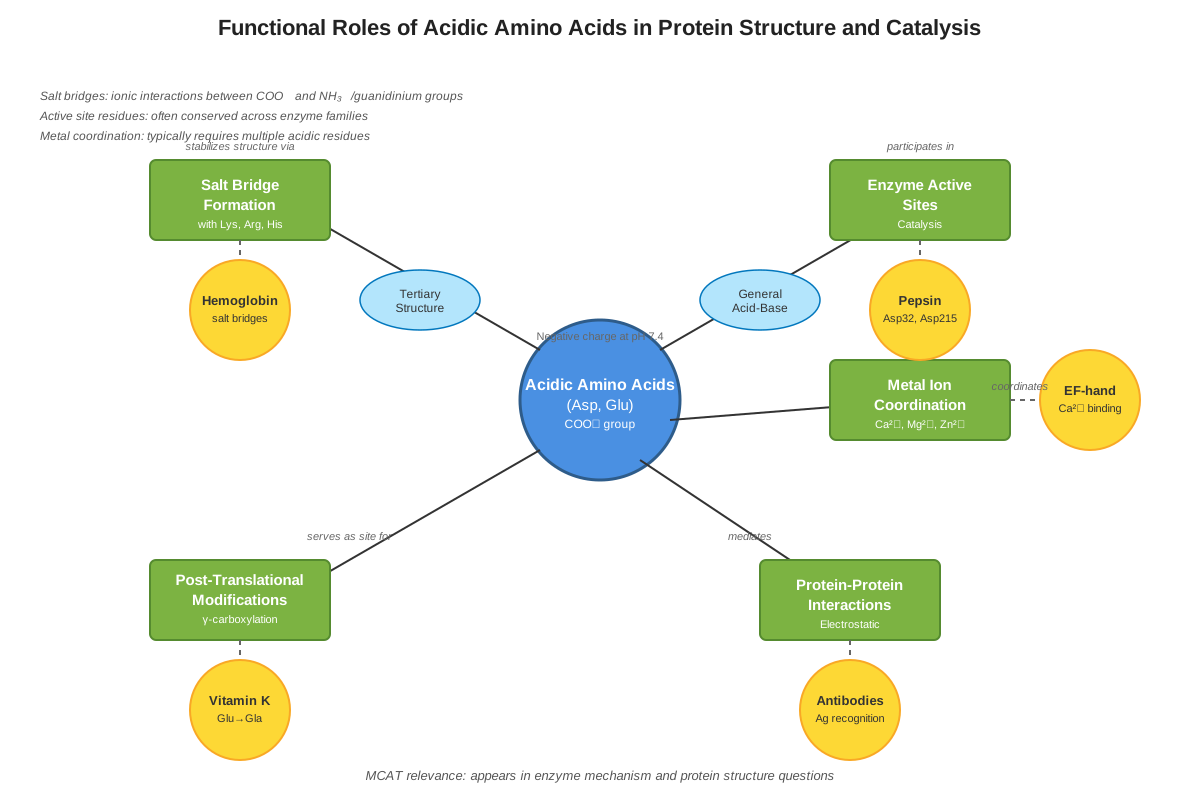
Acidic amino acids form salt bridges (ionic bonds) with basic amino acids (lysine, arginine, histidine) when their charged side chains are in close proximity. These electrostatic interactions stabilize tertiary and quaternary protein structures. Salt bridges are particularly important in:
- Stabilizing protein domains
- Maintaining quaternary structure in multi-subunit proteins
- Creating pH-sensitive conformational switches
- Stabilizing proteins in thermophilic organisms
Enzyme Active Sites
Many enzymes utilize acidic amino acid residues as catalytic residues. Common mechanisms include:
- General acid-base catalysis: Aspartate or glutamate can donate or accept protons during catalytic cycles
- Nucleophilic catalysis: The carboxylate group can act as a nucleophile
- Metal ion coordination: Acidic residues coordinate metal cofactors (Mg²⁺, Ca²⁺, Zn²⁺) essential for catalysis
- Substrate binding: Negatively charged residues attract and position positively charged substrates
Examples include aspartate residues in serine proteases (catalytic triad), glutamate in lysozyme, and aspartate in DNA polymerases.
Protein-Ligand Interactions
Acidic amino acids participate in binding interactions with:
- Positively charged ligands and substrates
- Metal ions in metalloproteins
- DNA and RNA (through interactions with positively charged phosphate backbone-binding proteins)
- Other proteins in protein-protein interaction interfaces
Metabolic Roles
Beyond their structural roles in proteins, free aspartate and glutamate serve critical metabolic functions:
Glutamate Functions
- Primary excitatory neurotransmitter in the CNS
- Nitrogen donor in transamination reactions
- Precursor for GABA (inhibitory neurotransmitter) synthesis
- Component of glutathione (antioxidant tripeptide)
- Participant in the γ-glutamyl cycle
Aspartate Functions
- Participant in the urea cycle (condensation with citrulline)
- Nitrogen donor in purine and pyrimidine biosynthesis
- Component of the malate-aspartate shuttle
- Substrate for asparagine synthesis
- Participant in transamination reactions
Separation and Analysis Techniques
The charged nature of acidic amino acids makes them amenable to specific separation techniques frequently tested on the MCAT:
Ion-Exchange Chromatography
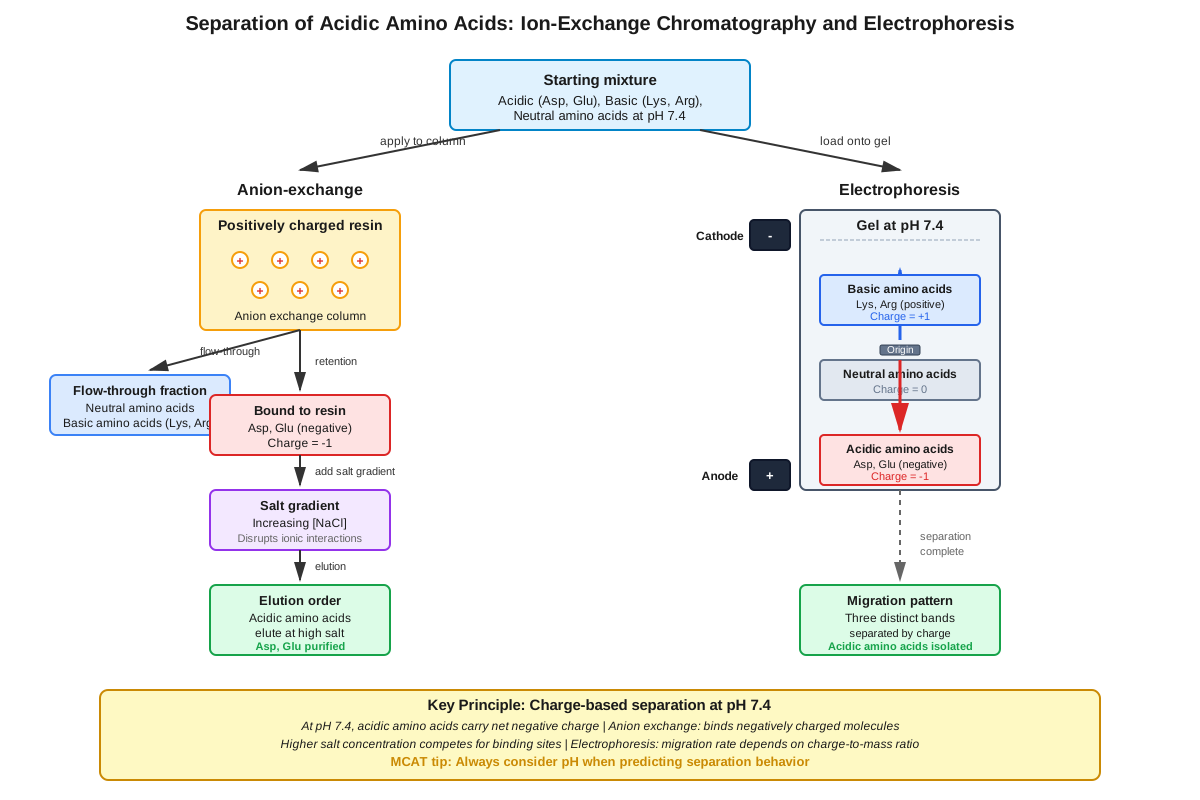
Cation-exchange chromatography (negatively charged resin) does not bind acidic amino acids at physiological pH because both are negatively charged. Anion-exchange chromatography (positively charged resin) strongly binds acidic amino acids at physiological pH. Elution requires increasing salt concentration or pH adjustment.
Isoelectric Focusing
Acidic amino acids have low isoelectric points (pI) because they possess extra negative charges. The pI is the pH at which the molecule has no net charge:
- Aspartic acid: pI ≈ 2.8
- Glutamic acid: pI ≈ 3.2
In isoelectric focusing, acidic amino acids migrate toward the anode (positive electrode) and focus at low pH regions of the gel.
Electrophoresis
At pH 7.4, acidic amino acids migrate toward the anode (positive electrode) due to their negative charge. The migration rate depends on the charge-to-mass ratio and the number of acidic residues in a protein.
Concept Relationships
The understanding of acidic amino acids integrates multiple biochemical concepts in a hierarchical and interconnected manner. At the foundation, acid-base chemistry and Henderson-Hasselbalch principles determine the ionization state of acidic amino acids, which directly influences their charge at any given pH. This charge state → determines their behavior in separation techniques (ion-exchange chromatography, electrophoresis, isoelectric focusing) and → affects their location within protein structures (surface vs. interior).
The structural properties of acidic amino acids → enable salt bridge formation with basic amino acids → which stabilizes tertiary and quaternary protein structures → affecting protein folding and stability. This connection extends to protein denaturation, where pH changes can disrupt salt bridges by altering the ionization states of acidic and basic residues.
In enzyme catalysis, acidic amino acid residues in active sites → participate in catalytic mechanisms → enabling substrate binding and chemical transformation → which connects to enzyme kinetics and pH-dependent activity profiles. The metabolic roles of free glutamate and aspartate → connect to amino acid metabolism, neurotransmitter function, the urea cycle, and nucleotide biosynthesis → integrating acidic amino acids into broader metabolic pathways.
The relationship between acidic amino acids and buffer systems is bidirectional: acidic amino acids contribute to the buffering capacity of proteins, while buffer pH affects their ionization state. This concept → extends to understanding physiological pH regulation and → connects to respiratory and metabolic acid-base disorders tested in the Biological and Biochemical Foundations section.
High-Yield Facts
⭐ Aspartic acid (Asp, D) and glutamic acid (Glu, E) are the only two acidic amino acids among the 20 standard amino acids
⭐ At physiological pH (7.4), acidic amino acids carry a net negative charge (-1) because their side chain carboxyl groups (pKa ~4) are deprotonated
⭐ Acidic amino acids have low isoelectric points (pI < 3.5) and migrate toward the anode (positive electrode) during electrophoresis at neutral pH
⭐ Acidic amino acid residues preferentially locate on protein surfaces due to their hydrophilic, charged nature and rarely occur in hydrophobic protein cores
⭐ Salt bridges between acidic amino acids (Asp, Glu) and basic amino acids (Lys, Arg, His) stabilize protein tertiary and quaternary structures
- Glutamate serves as the primary excitatory neurotransmitter in the central nervous system
- Aspartate participates in the urea cycle by condensing with citrulline to form argininosuccinate
- The side chain pKa values are approximately 3.9 for aspartate and 4.2 for glutamate
- Acidic amino acids can coordinate metal ions (Mg²⁺, Ca²⁺, Zn²⁺) in metalloprotein active sites
- Anion-exchange chromatography (positively charged resin) binds acidic amino acids at physiological pH
- Glutamate differs from aspartate by one additional methylene (-CH₂-) group in the side chain
- Acidic amino acid residues frequently serve as catalytic residues in enzyme active sites through general acid-base catalysis
- The deprotonated forms (aspartate and glutamate) are the predominant species under physiological conditions
- Proteins rich in acidic amino acids have lower isoelectric points and are more negatively charged at neutral pH
- pH changes that protonate acidic amino acid side chains (lowering pH below ~4) can disrupt salt bridges and cause protein denaturation
Quick check — test yourself on Acidic amino acids so far.
Try Flashcards →Common Misconceptions
Misconception: All amino acids with carboxylic acid groups are acidic amino acids.
Correction: All amino acids contain a backbone carboxylic acid group, but only aspartic acid and glutamic acid are classified as acidic amino acids because they possess an additional carboxylic acid group in their side chain (R group). The classification refers specifically to the side chain properties.
Misconception: Acidic amino acids are always negatively charged regardless of pH.
Correction: The charge state of acidic amino acids depends on pH relative to their pKa values. At very low pH (below ~2), all carboxyl groups become protonated and the amino acid carries a net positive charge. At physiological pH, acidic amino acids are negatively charged, but this is pH-dependent, not an inherent property.
Misconception: Aspartate and glutamate are different names for the same amino acid.
Correction: Aspartate and glutamate are two distinct amino acids with different structures. Aspartate has a two-carbon side chain while glutamate has a three-carbon side chain. The terms "aspartate" and "glutamate" refer to the deprotonated (ionic) forms of aspartic acid and glutamic acid, respectively.
Misconception: Acidic amino acids bind to cation-exchange chromatography resins at physiological pH.
Correction: At physiological pH, acidic amino acids are negatively charged and therefore bind to anion-exchange resins (positively charged), not cation-exchange resins (negatively charged). Like charges repel, so negatively charged acidic amino acids do not bind to negatively charged cation-exchange resins.
Misconception: The isoelectric point (pI) of acidic amino acids is around pH 7.
Correction: Acidic amino acids have low isoelectric points (pI < 3.5) because they possess an extra negative charge from their side chain carboxyl group. The pI is calculated as the average of the two lowest pKa values for acidic amino acids, resulting in values around pH 2.8-3.2, not neutral pH.
Misconception: Acidic amino acids cannot exist in the interior of proteins.
Correction: While acidic amino acids preferentially locate on protein surfaces due to their charged, hydrophilic nature, they can exist in protein interiors when they participate in specific interactions such as salt bridges with basic amino acids or metal ion coordination. However, unpaired charged residues in hydrophobic environments are energetically unfavorable.
Misconception: The pKa of the side chain carboxyl group is the same as the backbone carboxyl group.
Correction: The side chain carboxyl groups of acidic amino acids have pKa values around 3.9-4.2, which is significantly higher than the backbone α-carboxyl group (pKa ~2.0). This difference reflects the different chemical environments and is important for predicting ionization states at various pH values.
Worked Examples
Example 1: Predicting Charge State and Electrophoretic Migration
Question: A researcher is studying a pentapeptide with the sequence Lys-Asp-Gly-Glu-Arg. Predict the net charge of this peptide at pH 7.4 and describe its migration pattern during gel electrophoresis at this pH. Assume standard pKa values: Lys side chain = 10.5, Asp side chain = 3.9, Glu side chain = 4.2, Arg side chain = 12.5, N-terminus = 9.5, C-terminus = 2.0.
Solution:
Step 1: Identify all ionizable groups and their states at pH 7.4
- N-terminus (pKa = 9.5): pH < pKa, so predominantly protonated → +1 charge
- C-terminus (pKa = 2.0): pH >> pKa, so fully deprotonated → -1 charge
- Lys side chain (pKa = 10.5): pH < pKa, so predominantly protonated → +1 charge
- Asp side chain (pKa = 3.9): pH >> pKa, so fully deprotonated → -1 charge
- Glu side chain (pKa = 4.2): pH >> pKa, so fully deprotonated → -1 charge
- Arg side chain (pKa = 12.5): pH << pKa, so fully protonated → +1 charge
Step 2: Calculate net charge
- Positive charges: N-terminus (+1) + Lys (+1) + Arg (+1) = +3
- Negative charges: C-terminus (-1) + Asp (-1) + Glu (-1) = -3
- Net charge = +3 + (-3) = 0
Step 3: Predict electrophoretic behavior
At pH 7.4, this pentapeptide has a net charge of zero, meaning it is at or very near its isoelectric point. During electrophoresis, the peptide will show minimal migration toward either electrode and will remain near the origin. This demonstrates how the presence of two acidic amino acids (Asp and Glu) balances the positive charges from basic amino acids (Lys and Arg) plus the N-terminus.
Key Concept Connection: This example illustrates the importance of considering all ionizable groups when predicting charge state and connects acidic amino acid properties to separation techniques and isoelectric point concepts.
Example 2: Enzyme Mechanism and pH Dependence
Question: An enzyme contains an aspartate residue (Asp-102) in its active site that is essential for catalysis. The enzyme shows maximal activity at pH 6.0, with activity decreasing sharply at pH values below 4.0 and above 8.0. Experimental data shows that mutation of Asp-102 to asparagine (Asn) eliminates enzyme activity. A nearby histidine residue (His-57) is also present in the active site. Explain the likely catalytic role of Asp-102 and why activity decreases at extreme pH values.
Solution:
Step 1: Analyze the role of Asp-102
The aspartate residue likely functions as a general base in the catalytic mechanism. At pH 6.0 (optimal pH), the side chain carboxyl group (pKa ~3.9) is fully deprotonated (-COO⁻) and can accept a proton from the substrate or another catalytic residue. The mutation to asparagine eliminates the carboxyl group, replacing it with an amide group that cannot participate in acid-base catalysis, explaining the complete loss of activity.
Step 2: Explain pH dependence below pH 4.0
At pH values below 4.0, which approaches the pKa of the aspartate side chain (~3.9), the carboxyl group becomes increasingly protonated (-COOH). The protonated form cannot act as a base to accept protons, disrupting the catalytic mechanism and reducing enzyme activity. This demonstrates pH-dependent ionization of acidic amino acids affecting enzyme function.
Step 3: Explain pH dependence above pH 8.0
The decrease in activity at pH > 8.0 likely involves the histidine residue (His-57, pKa ~6.0). At high pH, histidine becomes deprotonated and loses its positive charge, potentially disrupting electrostatic interactions with the negatively charged aspartate or affecting its own catalytic role. Additionally, substrate or other active site residues may be affected at high pH.
Step 4: Integrate concepts
This enzyme likely employs a catalytic dyad or triad mechanism where aspartate and histidine work cooperatively. The aspartate's negative charge at physiological pH stabilizes positive charges that develop during catalysis, while histidine acts as a proton shuttle. The pH optimum of 6.0 represents the pH at which both residues are in their optimal ionization states for catalysis.
Key Concept Connection: This example demonstrates how acidic amino acids function in enzyme active sites, the importance of ionization state for catalytic activity, and the connection between pH, pKa values, and enzyme kinetics—all high-yield MCAT concepts.
Exam Strategy
Approaching MCAT Questions on Acidic Amino Acids
When encountering questions involving acidic amino acids, follow this systematic approach:
- Identify the pH context immediately: Determine whether the question involves physiological pH (~7.4), acidic conditions, or basic conditions. This single piece of information allows prediction of charge states.
- Apply the pKa rule: If pH > pKa + 2, the group is >99% deprotonated; if pH < pKa - 2, the group is >99% protonated. For acidic amino acids at physiological pH, the side chain is always deprotonated (negatively charged).
- Watch for charge-based separation techniques: Questions involving chromatography, electrophoresis, or isoelectric focusing almost always test understanding of amino acid charge properties. Remember that acidic amino acids bind to anion-exchange resins and migrate toward the anode.
Trigger Words and Phrases
Be alert for these high-yield trigger phrases that signal acidic amino acid involvement:
- "Negatively charged residue" or "anionic amino acid" → Think Asp or Glu
- "Salt bridge formation" → Look for interactions between acidic and basic amino acids
- "pH-dependent activity" → Consider ionization state changes of acidic (and basic) residues
- "Surface-exposed residues" → Acidic amino acids are likely candidates due to hydrophilicity
- "Catalytic residue" or "general base" → Asp or Glu may be involved in the mechanism
- "Isoelectric point below 4" → Indicates a protein rich in acidic amino acids
- "Metal ion coordination" → Acidic amino acids often coordinate metal cofactors
- "Excitatory neurotransmitter" → Specifically refers to glutamate
Process-of-Elimination Tips
When facing multiple-choice questions about acidic amino acids:
- Eliminate options suggesting positive charge at physiological pH: Acidic amino acids are never positively charged at pH 7.4; this is a common distractor.
- Eliminate options placing acidic residues in hydrophobic protein cores without explanation: Unless the question mentions salt bridges or metal coordination, acidic residues in protein interiors is unlikely.
- For separation technique questions, eliminate the opposite charge: If the question asks what binds to a cation-exchange resin at pH 7, eliminate acidic amino acids (they're negatively charged).
- For pI questions, eliminate high values: Acidic amino acids and proteins rich in them have low isoelectric points (< 4), never near neutral or basic pH values.
Time Allocation Advice
Acidic amino acid questions typically require 60-90 seconds for discrete questions and 90-120 seconds for passage-based questions. If a question requires Henderson-Hasselbalch calculations, budget an additional 30 seconds. For complex enzyme mechanism questions involving multiple residues, allocate up to 2 minutes. If you cannot immediately identify the charge state or separation behavior, flag the question and return to it—these are usually straightforward once you recall the key principle that acidic amino acids are negatively charged at physiological pH.
Exam Tip: If a passage presents experimental data showing protein behavior at different pH values, immediately create a mental or written table of expected charge states for acidic amino acids at each pH. This framework will help you answer multiple questions efficiently.
Memory Techniques
Mnemonics for Acidic Amino Acids
"DEAD" - D-aspartate and E-glutamate are Acidic with Deprotonated side chains (at physiological pH)
"Asp and Glu are Negative too" - Reminds you that both acidic amino acids carry negative charges at physiological pH
"Short Asp, Long Glu" - Aspartate has a shorter (2-carbon) side chain, glutamate has a longer (3-carbon) side chain
Visualization Strategy for Charge States
Visualize a pH scale from 0-14 with key landmarks:
- pH 0-3: Acidic amino acids are protonated (neutral or positive overall)
- pH 4 (pKa region): Transition zone, 50% protonated/deprotonated
- pH 7.4 (physiological): Acidic amino acids are fully deprotonated (negative)
- pH 14: Still deprotonated (negative)
Create a mental image of aspartate and glutamate as "negative magnets" at physiological pH, attracting positive charges (basic amino acids, metal ions, positively charged substrates).
Acronym for Functional Roles
"SCENT" - Functions of acidic amino acids:
- Salt bridge formation
- Catalytic residues in enzymes
- Electrostatic interactions
- Neurotransmitter (glutamate)
- Tethering metal ions
pKa Memory Aid
Remember that acidic amino acid side chain pKa values are "around 4":
- Asp = 3.9 (think "Asp is 3.9, almost 4")
- Glu = 4.2 (think "Glu is 4.2, just past 4")
The small difference (0.3 units) is rarely tested, but knowing both are near 4 and well below physiological pH is essential.
Isoelectric Point Memory
"Acidic amino acids have acidic pI values" - Both Asp and Glu have pI values below 3.5 (around pH 3), which makes intuitive sense: they're called "acidic" for a reason, and their isoelectric points are in the acidic pH range.
Summary
Acidic amino acids—aspartic acid (Asp, D) and glutamic acid (Glu, E)—are distinguished by the presence of a carboxylic acid group in their side chains, which exists predominantly in the deprotonated, negatively charged carboxylate form at physiological pH. With side chain pKa values around 4 (3.9 for Asp, 4.2 for Glu), these amino acids carry a net negative charge under physiological conditions, making them hydrophilic and preferentially located on protein surfaces. Their charged nature enables critical functions including salt bridge formation with basic amino acids to stabilize protein structures, participation as catalytic residues in enzyme active sites through general acid-base catalysis, coordination of metal ions in metalloproteins, and facilitation of protein-ligand interactions. Beyond their roles in protein structure and function, free glutamate serves as the primary excitatory neurotransmitter while aspartate participates in the urea cycle and nucleotide biosynthesis. The charged properties of acidic amino acids make them amenable to separation techniques including anion-exchange chromatography and electrophoresis, where they migrate toward the anode at neutral pH. Understanding the pH-dependent ionization behavior, structural roles, and metabolic functions of acidic amino acids is essential for MCAT success, as these concepts integrate acid-base chemistry, protein biochemistry, enzyme mechanisms, and separation techniques into a cohesive framework tested across multiple question types and passage contexts.
Key Takeaways
- Aspartic acid (Asp, D) and glutamic acid (Glu, E) are the only two acidic amino acids, distinguished by carboxylic acid groups in their side chains (2-carbon for Asp, 3-carbon for Glu)
- At physiological pH (7.4), acidic amino acids are negatively charged because their side chain carboxyl groups (pKa ~4) are deprotonated to carboxylate ions
- Acidic amino acids have low isoelectric points (pI < 3.5), preferentially locate on protein surfaces, and migrate toward the anode during electrophoresis at neutral pH
- Salt bridges between acidic amino acids and basic amino acids (Lys, Arg, His) stabilize protein tertiary and quaternary structures through electrostatic interactions
- Acidic amino acid residues frequently serve as catalytic residues in enzyme active sites and coordinate metal ions in metalloproteins
- Glutamate functions as the primary excitatory neurotransmitter in the CNS, while aspartate participates in the urea cycle and nucleotide biosynthesis
- Understanding the pH-dependent ionization behavior of acidic amino acids is essential for predicting their charge state, protein behavior, and performance in separation techniques on the MCAT
Related Topics
Basic Amino Acids (Lysine, Arginine, Histidine): Understanding basic amino acids complements knowledge of acidic amino acids, particularly for predicting salt bridge formation, isoelectric points of proteins, and behavior in separation techniques. Mastery of acidic amino acids provides the foundation for understanding electrostatic interactions in proteins.
Protein Structure and Folding: Acidic amino acids play crucial roles in stabilizing secondary, tertiary, and quaternary structures through salt bridges and surface hydration. Understanding their properties enables deeper comprehension of protein folding thermodynamics and stability.
Enzyme Kinetics and Mechanisms: Many enzymes utilize acidic amino acid residues as catalytic residues. Knowledge of their ionization states and chemical properties is essential for understanding pH-dependent enzyme activity, catalytic mechanisms, and enzyme inhibition.
Amino Acid Metabolism: Glutamate and aspartate serve as central molecules in nitrogen metabolism, connecting to transamination reactions, the urea cycle, and amino acid biosynthesis pathways. Understanding acidic amino acids provides entry into broader metabolic networks.
Protein Purification and Analysis: Techniques including ion-exchange chromatography, isoelectric focusing, and electrophoresis rely on the charged properties of acidic amino acids. Mastery of these properties enables prediction of protein behavior in various analytical and preparative techniques.
Neurotransmitter Biochemistry: Glutamate's role as an excitatory neurotransmitter connects acidic amino acid biochemistry to neuroscience, synaptic transmission, and neurological disorders—topics that appear in integrated MCAT passages.
Practice CTA
Now that you have mastered the core concepts of acidic amino acids, it's time to reinforce your understanding through active practice. Attempt the practice questions and flashcards associated with this topic to test your ability to apply these concepts in exam-style scenarios. Focus particularly on questions involving charge state predictions, separation techniques, and enzyme mechanisms—these represent the highest-yield applications of acidic amino acid knowledge on the MCAT. Remember that understanding acidic amino acids provides a foundation for broader biochemistry concepts, so solidifying this knowledge now will pay dividends throughout your MCAT preparation. You've built a strong conceptual framework—now strengthen it through deliberate practice and spaced repetition!
Sign up free to keep reading
Create a free AnvayaPrep account to finish this MCAT guide on Acidic amino acids — plus flashcards and practice questions.