Overview
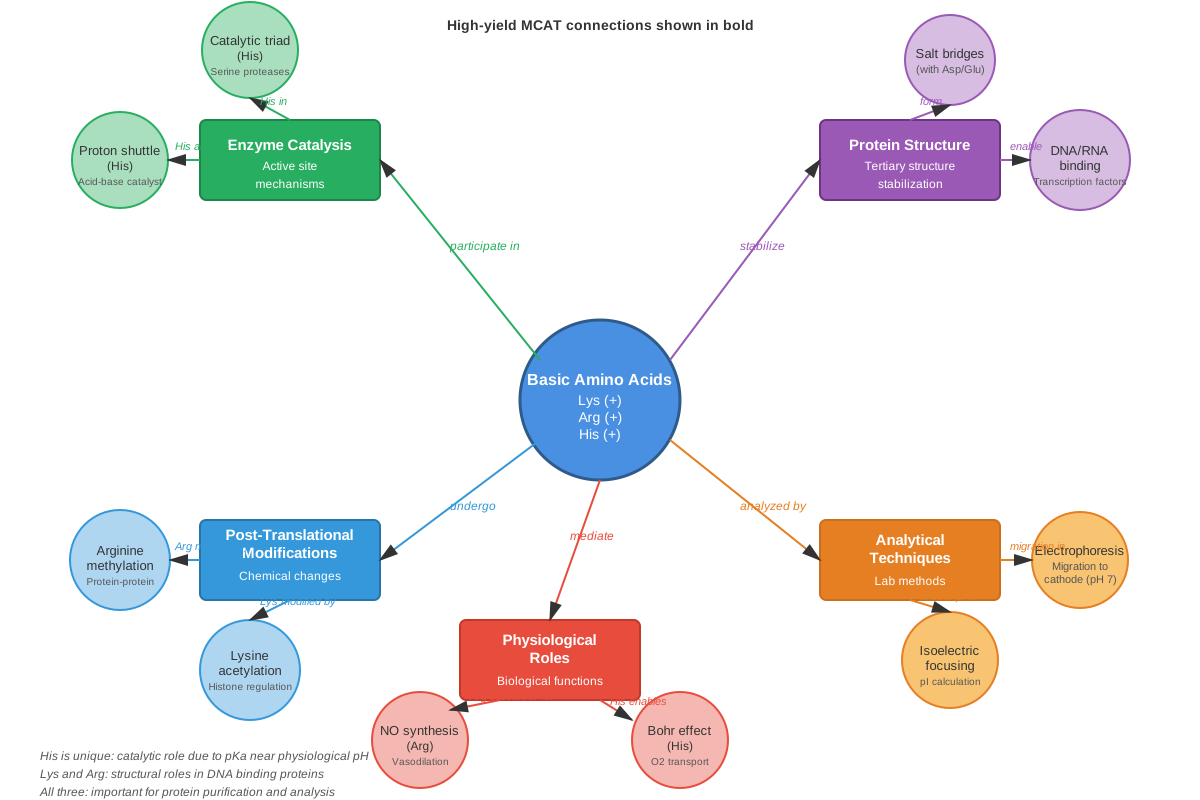
Basic amino acids represent one of the four major categories of amino acids classified by the chemical properties of their side chains (R groups). These amino acids possess side chains that contain nitrogen-bearing functional groups capable of accepting protons (H⁺) at physiological pH, giving them a net positive charge under normal cellular conditions. The three basic amino acids—lysine, arginine, and histidine—play critical roles in protein structure, enzyme catalysis, and cellular signaling. Understanding their chemical properties, ionization behavior, and functional roles is fundamental to mastering Biochemistry concepts tested on the MCAT.
For MCAT success, recognizing basic amino acids is essential because they appear frequently in passages involving protein structure, enzyme mechanisms, pH-dependent phenomena, and electrophoresis experiments. Questions often test the ability to predict how these amino acids behave at different pH values, identify them in peptide sequences, or explain their roles in protein function. The positive charge of basic amino acids at physiological pH makes them particularly important for electrostatic interactions, DNA-protein binding, and maintaining protein tertiary structure through salt bridges with acidic amino acids.
Within the broader context of Amino Acids and Proteins, basic amino acids connect to numerous high-yield topics including isoelectric point calculations, protein purification techniques, enzyme active site chemistry, and post-translational modifications. Their unique chemical properties influence protein solubility, stability, and biological activity. Mastery of basic amino acids provides the foundation for understanding more complex biochemical processes such as histone-DNA interactions, receptor-ligand binding, and the catalytic mechanisms of serine proteases and other enzymes that utilize histidine residues in their active sites.
Learning Objectives
- [ ] Define basic amino acids using accurate Biochemistry terminology
- [ ] Explain why basic amino acids matters for the MCAT
- [ ] Apply basic amino acids to exam-style questions
- [ ] Identify common mistakes related to basic amino acids
- [ ] Connect basic amino acids to related Biochemistry concepts
- [ ] Predict the ionization state of each basic amino acid at various pH values
- [ ] Distinguish between the three basic amino acids based on their pKa values and structural features
- [ ] Analyze the role of basic amino acids in protein-protein and protein-nucleic acid interactions
- [ ] Calculate the net charge of peptides containing basic amino acids at specified pH values
Prerequisites
- Acid-base chemistry and pH: Understanding proton donation/acceptance is essential for predicting ionization states of basic amino acid side chains
- Amino acid general structure: Knowledge of the common backbone (amino group, carboxyl group, alpha carbon, R group) allows focus on distinguishing side chain properties
- Electronegativity and functional groups: Recognizing nitrogen-containing groups helps identify which amino acids can accept protons
- Henderson-Hasselbalch equation: This mathematical relationship enables calculation of ionization states at different pH values
- Protein structure levels: Understanding how amino acid properties influence secondary, tertiary, and quaternary structure provides context for functional significance
Why This Topic Matters
Clinical and Real-World Significance
Basic amino acids play crucial roles in human health and disease. Arginine serves as the precursor for nitric oxide synthesis, a critical signaling molecule involved in vasodilation and blood pressure regulation. Lysine residues undergo acetylation and methylation in histone proteins, directly regulating gene expression through epigenetic mechanisms. Histidine serves as a pH buffer in hemoglobin, facilitating the Bohr effect that allows efficient oxygen delivery to tissues. Deficiencies in basic amino acids can impair immune function, wound healing, and growth. Clinically, understanding basic amino acids helps explain drug-protein interactions, as many pharmaceutical compounds are designed to interact with positively charged residues in target proteins.
MCAT Exam Statistics and Question Types
Basic amino acids appear in approximately 15-20% of Biochemistry questions on the MCAT, making them high-yield content. Questions typically fall into several categories: (1) identification questions asking students to recognize basic amino acids from structures or one-letter codes, (2) charge calculation problems requiring determination of net charge at specific pH values, (3) protein structure questions exploring salt bridge formation and electrostatic interactions, (4) enzyme mechanism questions involving histidine's role in catalysis, and (5) experimental technique questions about electrophoresis, chromatography, or isoelectric focusing. The AAMC frequently embeds basic amino acid concepts within longer passages about protein purification, site-directed mutagenesis experiments, or pH-dependent protein conformational changes.
Common Exam Passage Contexts
Basic amino acids commonly appear in passages describing: histone modifications and chromatin remodeling, enzyme active sites (particularly serine proteases with the catalytic triad), protein-DNA binding domains (such as zinc fingers and leucine zippers), hemoglobin structure and the Bohr effect, antibody-antigen interactions, ion channel selectivity filters, and experimental protein purification schemes. Discrete questions often test recognition of three-letter and one-letter codes, prediction of migration patterns in electrophoresis, or identification of amino acids capable of forming specific interactions at physiological pH.
Core Concepts
Definition and Classification of Basic Amino Acids
Basic amino acids are amino acids whose side chains contain functional groups with pKa values above 7, allowing them to accept protons and carry a positive charge at physiological pH (approximately 7.4). The three proteinogenic basic amino acids are lysine (Lys, K), arginine (Arg, R), and histidine (His, H). These amino acids are classified as "basic" because their side chains can act as bases according to the Brønsted-Lowry definition—they accept protons from the surrounding aqueous environment.
The classification of amino acids by side chain properties is fundamental to Biochemistry because it predicts how amino acids will behave in different chemical environments and what roles they can play in protein structure and function. Basic amino acids contrast with acidic amino acids (aspartate and glutamate), which donate protons and carry negative charges at physiological pH, and with nonpolar and polar uncharged amino acids, which do not ionize significantly under normal conditions.
Lysine (Lys, K): Structure and Properties
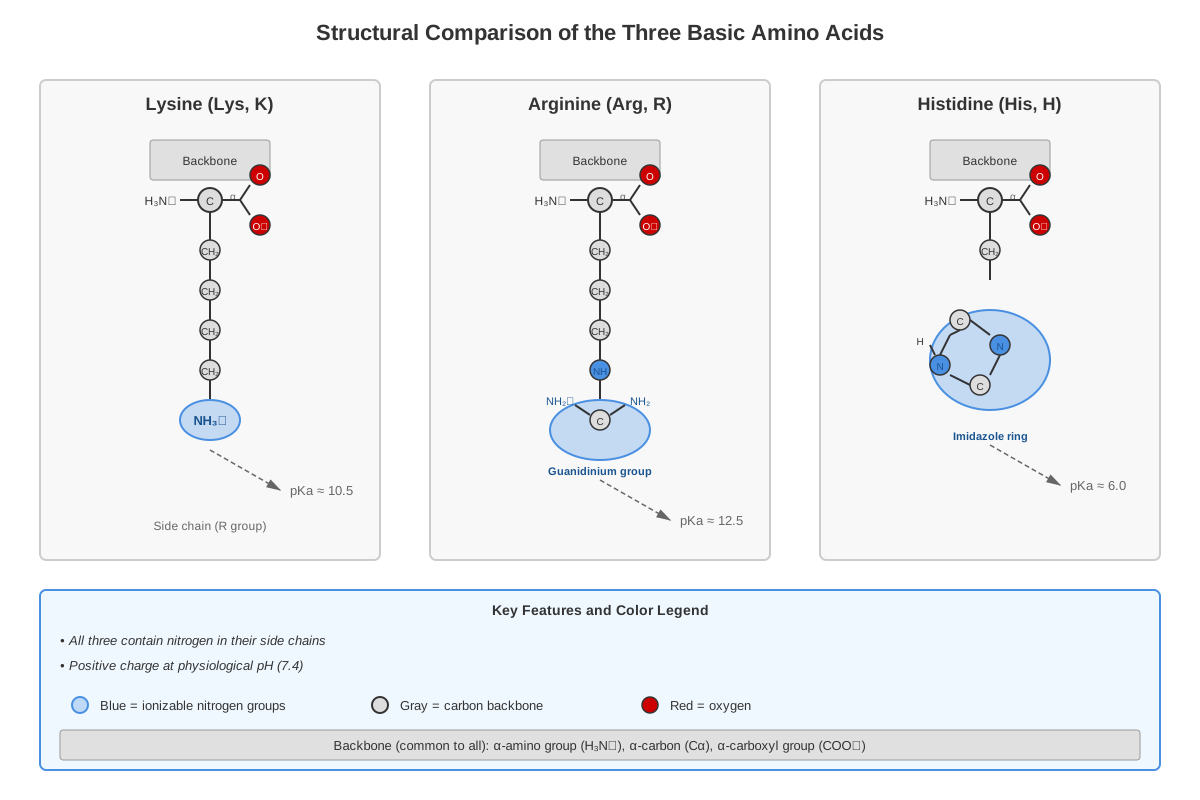
Lysine contains a four-carbon aliphatic side chain terminating in a primary amino group (-NH₃⁺ at physiological pH). The side chain amino group has a pKa of approximately 10.5, meaning it remains protonated and positively charged across the entire physiological pH range. Lysine is one of the most hydrophilic amino acids and is typically found on protein surfaces where it can interact with the aqueous environment or with negatively charged molecules such as DNA, RNA, or acidic amino acid residues.
The structural formula shows lysine with the general amino acid backbone plus a -(CH₂)₄-NH₃⁺ side chain. This extended, flexible side chain allows lysine to reach across space to form electrostatic interactions (salt bridges) with distant acidic residues or phosphate groups. Lysine residues are common sites for post-translational modifications including acetylation (which neutralizes the positive charge), methylation, ubiquitination, and SUMOylation—modifications that regulate protein function, localization, and degradation.
Arginine (Arg, R): Structure and Properties
Arginine possesses a three-carbon aliphatic chain terminating in a guanidinium group, which is protonated at physiological pH. The guanidinium group has a pKa of approximately 12.5, the highest of all amino acid side chains, ensuring that arginine remains positively charged under virtually all biological conditions. The positive charge is delocalized across the three nitrogen atoms of the guanidinium group through resonance, making it exceptionally stable.
Arginine's structure includes a -(CH₂)₃-NH-C(NH₂)₂⁺ side chain. The resonance stabilization of the positive charge makes arginine the most basic of the three basic amino acids. Arginine frequently appears in protein binding sites for negatively charged ligands, particularly phosphate groups (as in kinase substrate recognition sites) and nucleic acids (as in DNA-binding proteins and RNA-binding proteins). The planar geometry of the guanidinium group allows it to form multiple hydrogen bonds simultaneously, making arginine particularly effective at recognizing specific molecular patterns.
Histidine (His, H): Structure and Unique Properties
Histidine contains an imidazole side chain, a five-membered aromatic ring with two nitrogen atoms. The imidazole group has a pKa of approximately 6.0, which is close to physiological pH. This unique property means that histidine can exist in both protonated (positively charged) and deprotonated (neutral) forms under physiological conditions, making it an excellent biological buffer and a versatile participant in enzyme catalysis.
The structure of histidine includes a -CH₂-imidazole side chain. The imidazole ring can accept or donate protons depending on the local pH environment, allowing histidine to serve as both an acid and a base in enzyme active sites. This dual functionality makes histidine a critical component of catalytic triads in serine proteases (such as chymotrypsin and trypsin) and in the active sites of many other enzymes. Histidine's ability to shuttle protons makes it essential for the Bohr effect in hemoglobin, where protonation of histidine residues at lower pH promotes oxygen release in metabolically active tissues.
Ionization Behavior and pH Dependence
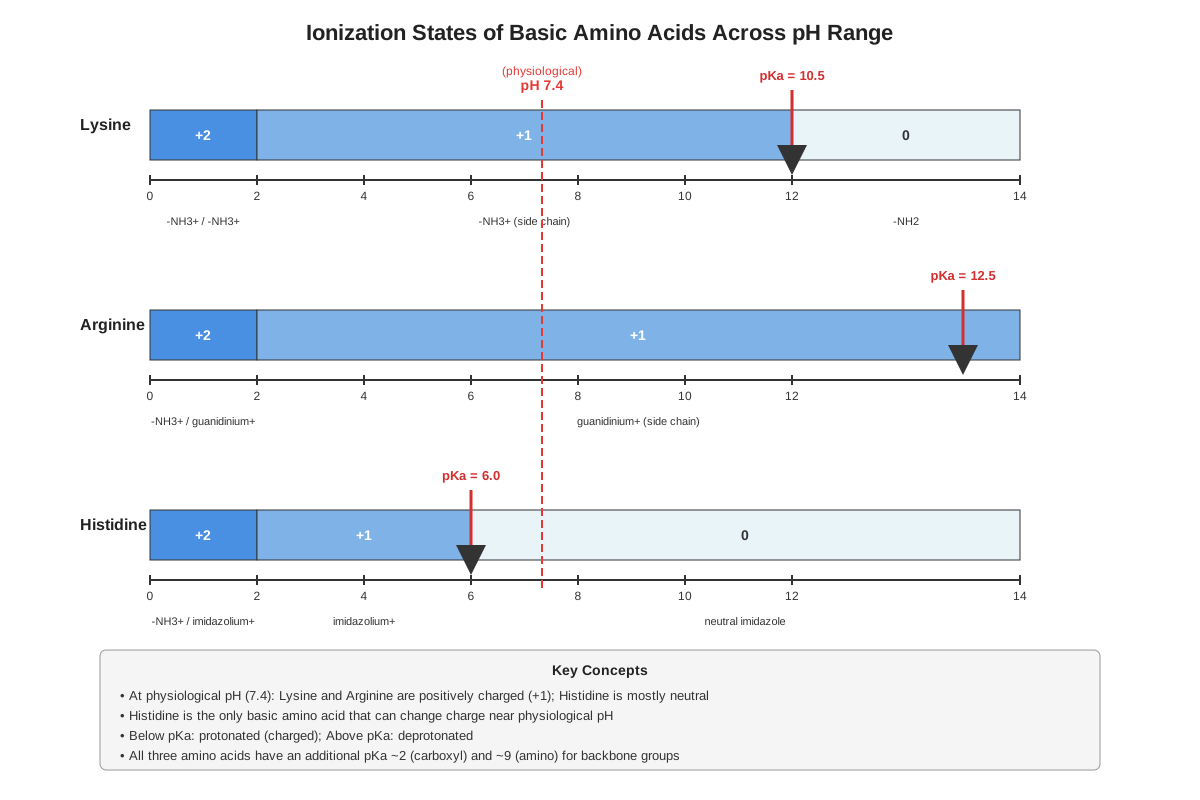
The ionization state of basic amino acids depends critically on the pH of the surrounding environment relative to the pKa of the ionizable group. When pH < pKa, the protonated (positively charged) form predominates; when pH > pKa, the deprotonated (neutral) form predominates. At pH = pKa, the two forms exist in equal concentrations.
For lysine (pKa ≈ 10.5), the side chain remains protonated and positively charged at all physiological pH values (pH 7-8) and even in moderately basic solutions. For arginine (pKa ≈ 12.5), the side chain is virtually always protonated and positively charged under any biologically relevant conditions. For histidine (pKa ≈ 6.0), the ionization state is highly pH-sensitive in the physiological range: at pH 7.4, approximately 3-5% of histidine residues are protonated, but this percentage increases dramatically as pH decreases toward 6.0.
Comparison Table of Basic Amino Acids
| Property | Lysine (K) | Arginine (R) | Histidine (H) |
|---|---|---|---|
| Side chain functional group | Primary amino (-NH₃⁺) | Guanidinium | Imidazole |
| Side chain pKa | ~10.5 | ~12.5 | ~6.0 |
| Charge at pH 7.4 | +1 | +1 | ~0 to +1 (mostly neutral) |
| Number of carbons in side chain | 4 | 3 | 1 (plus aromatic ring) |
| Aromatic | No | No | Yes |
| Common modifications | Acetylation, methylation, ubiquitination | Methylation, citrullination | Phosphorylation |
| Typical protein location | Surface | Surface or binding sites | Active sites, metal binding |
Functional Roles in Proteins
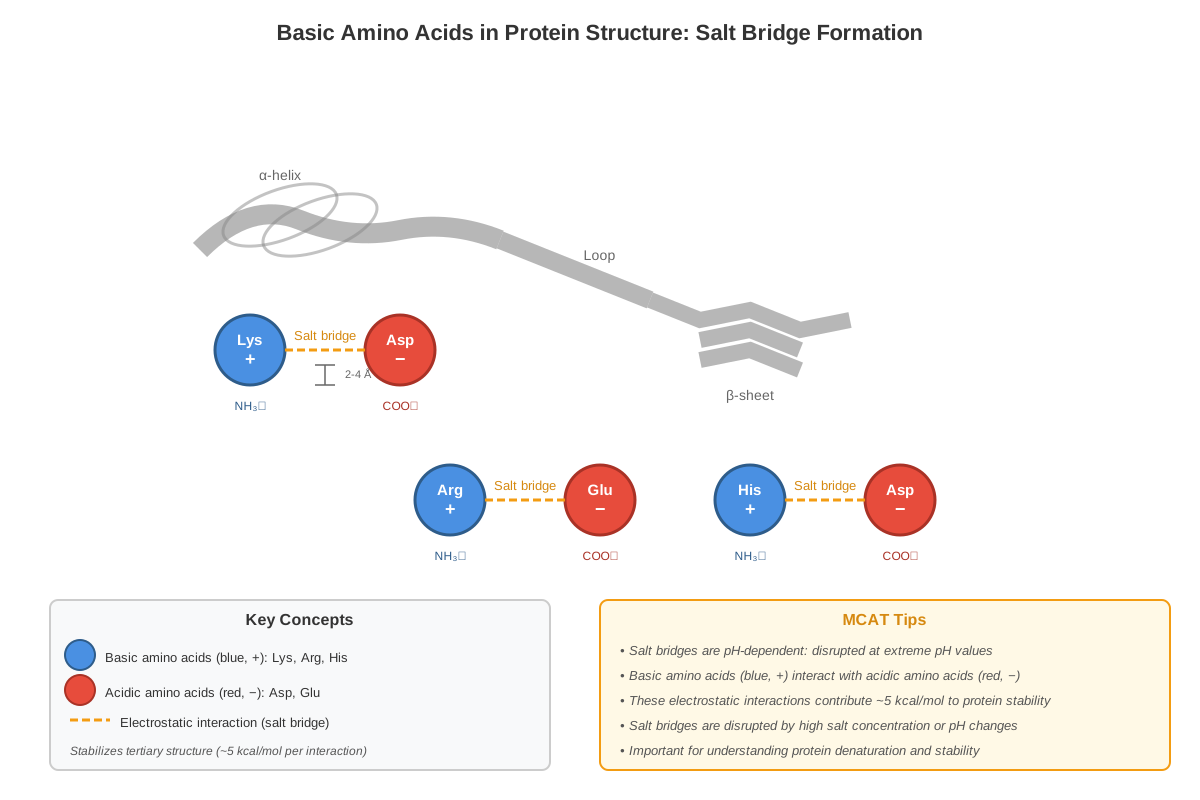
Basic amino acids serve multiple critical functions in protein structure and function. Electrostatic interactions (salt bridges) between basic and acidic amino acids stabilize protein tertiary and quaternary structure. These interactions are particularly important in maintaining protein stability at elevated temperatures and in forming protein-protein interaction interfaces.
DNA and RNA binding is dominated by basic amino acids, particularly arginine and lysine, which interact favorably with the negatively charged phosphate backbone of nucleic acids. Transcription factors, histones, and ribosomal proteins are enriched in basic amino acids. The positive charges create electrostatic attraction while the specific geometry of arginine's guanidinium group allows sequence-specific recognition through hydrogen bonding in the major groove of DNA.
Enzyme catalysis frequently employs histidine residues as general acid-base catalysts. The imidazole group can accept protons from substrates, stabilize transition states, or donate protons to leaving groups. The catalytic triad of serine proteases (Ser-His-Asp) exemplifies this role, where histidine shuttles protons between serine and aspartate during peptide bond hydrolysis.
Post-translational modifications of basic amino acids regulate protein function. Lysine acetylation neutralizes positive charge and is a key mechanism of gene regulation through histone modification. Arginine methylation affects protein-protein interactions and RNA processing. Histidine phosphorylation occurs in two-component signaling systems and some kinase pathways.
Concept Relationships
The three basic amino acids are unified by their ability to accept protons and carry positive charges, but they differ significantly in their pKa values, structural features, and functional roles. Lysine and arginine are similar in that both remain positively charged at physiological pH and both commonly appear on protein surfaces or in nucleic acid-binding sites. However, arginine's higher pKa and resonance-stabilized guanidinium group make it more strongly basic and better suited for specific molecular recognition. Histidine stands apart due to its pKa near physiological pH, making it uniquely suited for pH-dependent functions and catalysis.
Basic amino acids connect to acidic amino acids (aspartate and glutamate) through the formation of salt bridges—electrostatic interactions between oppositely charged residues that stabilize protein structure. This relationship is critical for understanding protein folding, stability, and pH-dependent conformational changes. The concept of isoelectric point (pI) directly depends on the number and type of ionizable amino acids, including basic amino acids, in a protein sequence.
The relationship flows as follows: Amino acid side chain structure → determines → pKa value → determines → ionization state at given pH → determines → charge and chemical properties → determines → functional role in proteins → influences → protein structure, stability, and function. This conceptual chain underlies most MCAT questions about basic amino acids.
Basic amino acids also connect to protein purification techniques: ion-exchange chromatography separates proteins based on charge (basic amino acid content affects net charge), isoelectric focusing separates proteins based on pI (determined by basic and acidic amino acid content), and electrophoresis separates proteins by charge-to-mass ratio (basic amino acids contribute positive charges).
High-Yield Facts
⭐ The three basic amino acids are lysine (K), arginine (R), and histidine (H), each with a positively charged or potentially positively charged side chain at physiological pH.
⭐ Lysine has a pKa of ~10.5, arginine has a pKa of ~12.5, and histidine has a pKa of ~6.0, making histidine the only basic amino acid with a pKa near physiological pH.
⭐ At physiological pH (7.4), lysine and arginine are positively charged (+1), while histidine is mostly neutral with only a small fraction protonated.
⭐ Histidine is the only basic amino acid that is also aromatic, containing an imidazole ring that can participate in π-stacking interactions.
⭐ Basic amino acids form salt bridges with acidic amino acids (aspartate and glutamate), stabilizing protein tertiary and quaternary structure through electrostatic interactions.
- Arginine is the most basic amino acid due to resonance stabilization of its guanidinium group, with a pKa of approximately 12.5.
- Histidine serves as a general acid-base catalyst in many enzymes because its pKa near physiological pH allows it to both accept and donate protons.
- Lysine residues are common sites for post-translational modifications including acetylation, methylation, and ubiquitination.
- Basic amino acids are enriched in DNA-binding proteins and histones because their positive charges interact favorably with the negatively charged phosphate backbone of DNA.
- The one-letter codes K, R, and H correspond to lysine, arginine, and histidine respectively—these must be memorized for rapid MCAT question analysis.
- In ion-exchange chromatography, basic amino acids cause proteins to bind to cation exchangers at pH values below their pI and to anion exchangers at pH values above their pI.
- The Bohr effect in hemoglobin depends on histidine residues that become protonated at lower pH, promoting oxygen release in metabolically active tissues.
Quick check — test yourself on Basic amino acids so far.
Try Flashcards →Common Misconceptions
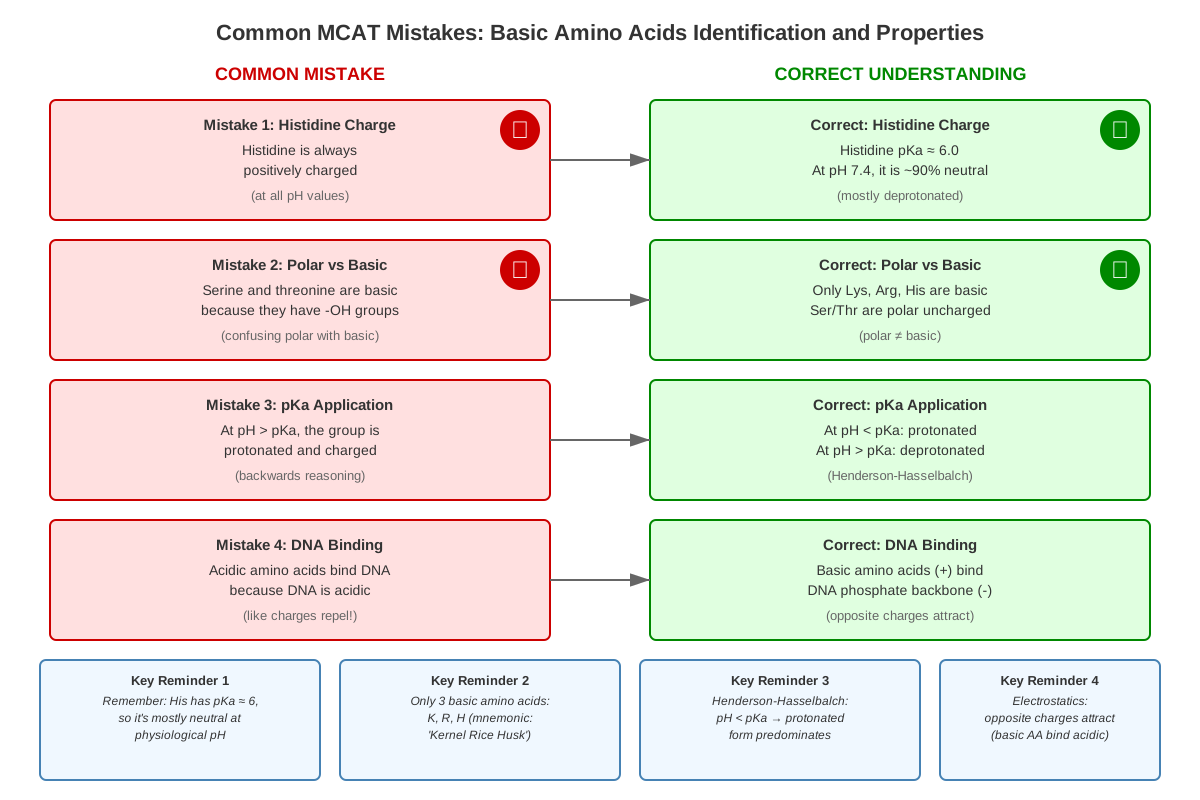
Misconception: All basic amino acids are positively charged at all pH values. → Correction: While lysine and arginine remain positively charged across the physiological pH range due to their high pKa values, histidine (pKa ~6.0) is mostly neutral at pH 7.4. Only when pH drops below approximately 6.0 does histidine become predominantly protonated and positively charged.
Misconception: Histidine is not really a basic amino acid because it's mostly neutral at physiological pH. → Correction: Histidine is classified as a basic amino acid because its side chain can accept protons (pKa > 7 is not required for this classification). The ability to accept protons and the presence of a nitrogen-containing functional group that can be protonated defines basic amino acids. Histidine's unique pKa makes it especially important for biological functions.
Misconception: Basic amino acids are always found on the surface of proteins because they're charged. → Correction: While basic amino acids are often surface-exposed due to their hydrophilicity, they can also be buried in protein interiors when they form salt bridges with acidic residues or when they're part of active sites. Histidine, in particular, is frequently found in enzyme active sites where its ionization properties are essential for catalysis.
Misconception: Arginine and lysine are functionally interchangeable because both are positively charged. → Correction: Although both carry positive charges at physiological pH, arginine and lysine have distinct structural features that make them non-interchangeable in many contexts. Arginine's planar guanidinium group can form multiple hydrogen bonds and is preferred for specific molecular recognition (especially of phosphate groups), while lysine's flexible aliphatic chain is better suited for reaching across distances and for post-translational modifications.
Misconception: The pKa values given for amino acids apply to all contexts. → Correction: The pKa values commonly cited (10.5 for lysine, 12.5 for arginine, 6.0 for histidine) are measured for free amino acids in solution. When amino acids are incorporated into proteins, the local microenvironment can shift pKa values significantly. Nearby charged residues, hydrophobic environments, or hydrogen bonding networks can raise or lower pKa values by several pH units.
Misconception: Basic amino acids only interact with acidic amino acids. → Correction: Basic amino acids participate in diverse interactions beyond salt bridges with acidic residues. They interact with phosphate groups (in phosphorylated proteins, ATP, and nucleic acids), sulfate groups, carboxylate groups in substrates and cofactors, carbonyl oxygens in peptide backbones, and water molecules. Histidine can also participate in π-stacking interactions due to its aromatic imidazole ring.
Worked Examples
Example 1: Charge Calculation at Different pH Values
Question: A tripeptide has the sequence Lys-His-Arg. Calculate the net charge of this peptide at pH 7.4, pH 6.0, and pH 10.0. Assume pKa values: N-terminus = 9.0, C-terminus = 3.0, Lys side chain = 10.5, His side chain = 6.0, Arg side chain = 12.5.
Solution:
First, identify all ionizable groups:
- N-terminus (pKa = 9.0)
- C-terminus (pKa = 3.0)
- Lysine side chain (pKa = 10.5)
- Histidine side chain (pKa = 6.0)
- Arginine side chain (pKa = 12.5)
At pH 7.4:
- N-terminus (pH < pKa): protonated, charge = +1
- C-terminus (pH > pKa): deprotonated, charge = -1
- Lys side chain (pH < pKa): protonated, charge = +1
- His side chain (pH > pKa): mostly deprotonated, charge ≈ 0 (can calculate exactly using Henderson-Hasselbalch: ~3% protonated, but for MCAT purposes, treat as 0)
- Arg side chain (pH < pKa): protonated, charge = +1
Net charge at pH 7.4 = +1 + (-1) + 1 + 0 + 1 = +2
At pH 6.0:
- N-terminus (pH < pKa): protonated, charge = +1
- C-terminus (pH > pKa): deprotonated, charge = -1
- Lys side chain (pH < pKa): protonated, charge = +1
- His side chain (pH = pKa): 50% protonated, charge = +0.5
- Arg side chain (pH < pKa): protonated, charge = +1
Net charge at pH 6.0 = +1 + (-1) + 1 + 0.5 + 1 = +2.5
At pH 10.0:
- N-terminus (pH > pKa): deprotonated, charge = 0
- C-terminus (pH > pKa): deprotonated, charge = -1
- Lys side chain (pH < pKa): mostly protonated, charge ≈ +1 (pH is close to pKa, so ~75% protonated, but treat as +1 for MCAT)
- His side chain (pH > pKa): deprotonated, charge = 0
- Arg side chain (pH < pKa): protonated, charge = +1
Net charge at pH 10.0 = 0 + (-1) + 1 + 0 + 1 = +1
Key takeaway: This example demonstrates how the net charge of a peptide containing basic amino acids changes with pH. Notice that histidine's contribution to charge is most sensitive to pH changes in the physiological range, while arginine remains charged even at pH 10.0 due to its very high pKa.
Example 2: Enzyme Mechanism Analysis
Question: The enzyme ribonuclease A contains a histidine residue (His12) in its active site that is essential for catalysis. Explain why histidine is particularly well-suited for this catalytic role and predict what would happen to enzyme activity if His12 were mutated to lysine.
Solution:
Why histidine is well-suited:
Ribonuclease A catalyzes the hydrolysis of RNA by cleaving phosphodiester bonds. The mechanism requires both proton acceptance (acting as a base) and proton donation (acting as an acid) during different steps of the reaction. Histidine is uniquely suited for this role because:
- pKa near physiological pH: With a pKa of ~6.0, histidine can exist in both protonated and deprotonated forms at physiological pH, allowing it to accept protons in one step and donate them in another.
- Rapid proton exchange: The imidazole ring can quickly interconvert between protonated and deprotonated forms, facilitating the shuttling of protons during catalysis.
- Dual functionality: Histidine can act as a general base (accepting a proton from a nucleophile) and as a general acid (donating a proton to a leaving group) within the same catalytic cycle.
Prediction for His12 → Lys mutation:
If His12 were mutated to lysine, enzyme activity would be dramatically reduced or eliminated because:
- Lysine's pKa (~10.5) is too high: At physiological pH, lysine would be almost exclusively protonated and positively charged. It could not effectively accept protons to act as a general base.
- Loss of acid-base versatility: Lysine cannot easily switch between protonated and deprotonated forms at physiological pH, eliminating the dual acid-base functionality required for the mechanism.
- Altered active site geometry: Lysine's longer, more flexible side chain might not position the amino group optimally for catalysis compared to histidine's rigid imidazole ring.
Experimental evidence: Site-directed mutagenesis studies confirm that His12 mutations in ribonuclease A result in near-complete loss of catalytic activity, validating the essential role of histidine's unique chemical properties.
Key takeaway: This example illustrates why histidine, despite being mostly neutral at physiological pH, is the most common amino acid in enzyme active sites. Its pKa near physiological pH provides catalytic versatility that lysine and arginine cannot match.
Exam Strategy
Approaching MCAT Questions on Basic Amino Acids
When encountering questions about basic amino acids, follow this systematic approach:
- Identify the context: Determine whether the question involves structure identification, charge calculation, protein function, or experimental technique.
- Recall the three basic amino acids immediately: K (lysine), R (arginine), H (histidine). Write down their pKa values if needed: K ~10.5, R ~12.5, H ~6.0.
- Assess the pH: If pH is mentioned, compare it to the pKa values to determine ionization states. Remember: pH < pKa means protonated (charged for basic amino acids); pH > pKa means deprotonated (neutral for basic amino acids).
- Look for functional clues: DNA binding → think arginine/lysine; enzyme catalysis → think histidine; pH buffering → think histidine; post-translational modification → think lysine.
Trigger Words and Phrases
Watch for these high-yield trigger words that signal basic amino acid involvement:
- "Positively charged" or "cationic": Points to lysine or arginine at physiological pH
- "pH-dependent" or "pH-sensitive": Often involves histidine due to its pKa near 7
- "General acid-base catalyst": Strong indicator of histidine in enzyme mechanisms
- "DNA-binding domain" or "nucleic acid interaction": Suggests arginine or lysine
- "Salt bridge" or "electrostatic interaction": Involves basic amino acids paired with acidic amino acids
- "Acetylation" or "methylation": Post-translational modifications typically occur on lysine
- "Bohr effect" or "hemoglobin": Involves histidine residues
- "Catalytic triad": In serine proteases, includes histidine
Process-of-Elimination Tips
When using process of elimination:
- Eliminate based on charge: If the question asks for a neutral amino acid at pH 7.4, eliminate lysine and arginine but consider histidine.
- Eliminate based on aromaticity: If the question specifies aromatic amino acids, only histidine qualifies among basic amino acids (also consider Phe, Trp, Tyr).
- Eliminate based on pKa: If the question involves pH near 6-7 and asks for an amino acid that can change ionization state, histidine is the answer; eliminate lysine and arginine.
- Eliminate based on function: If the question asks about enzyme catalysis requiring proton transfer, histidine is most likely; lysine and arginine are less versatile catalytically.
Time Allocation Advice
Basic amino acid questions typically require 60-90 seconds:
- Structure identification: 30-45 seconds (quick recognition)
- Charge calculations: 60-90 seconds (requires systematic approach)
- Mechanism/function questions: 60-90 seconds (requires reasoning)
- Passage-based questions: 90-120 seconds (requires integration with passage information)
Don't spend excessive time on charge calculations—if you can't quickly determine the answer, make an educated guess based on general principles (e.g., basic amino acids contribute positive charges at physiological pH) and move on.
Memory Techniques
Mnemonics for Basic Amino Acids
"Kids Really Hate" (K-R-H): The three basic amino acids are Kysine, Rarginine, and Histidine.
"Lysine is Long, Arginine is Really long, Histidine is Handy": Lysine has 4 carbons in its side chain, arginine has 3 carbons plus a large guanidinium group, and histidine has a short side chain but is "handy" (versatile) for catalysis.
"10-12-6 Rule": Remember the pKa values in order of the amino acid names alphabetically: Arginine (~12.5), Histidine (~6.0), Lysine (~10.5). Rearranged by pKa: 6-10-12 corresponds to H-K-R.
Visualization Strategy for pKa Values
Visualize a pH scale from 0-14:
- Place histidine at 6 (just below physiological pH of 7.4)
- Place lysine at 10.5 (well above physiological pH)
- Place arginine at 12.5 (near the top of the scale)
This mental image helps you quickly determine that at pH 7.4, histidine is close to its pKa (partially ionized), while lysine and arginine are far below their pKa values (fully protonated).
Acronym for Histidine Functions
"CHAMP" describes histidine's roles:
- Catalysis (general acid-base catalyst)
- Hemoglobin (Bohr effect)
- Aromatic (only basic amino acid with aromatic ring)
- Metal binding (coordinates metal ions in metalloproteins)
- PH buffering (pKa near physiological pH)
Structural Memory Aid
Lysine: Think "Lys-LONG" (long aliphatic chain with amino group at the end)
Arginine: Think "Arg-GUANIDINIUM" (guanidinium group makes it the most basic)
Histidine: Think "His-IMIDAZOLE" (imidazole ring makes it aromatic and catalytic)
Summary
Basic amino acids—lysine, arginine, and histidine—are defined by their nitrogen-containing side chains that can accept protons and carry positive charges. These three amino acids differ significantly in their pKa values (lysine ~10.5, arginine ~12.5, histidine ~6.0), which determines their ionization states at physiological pH. Lysine and arginine remain positively charged under virtually all biological conditions, making them essential for electrostatic interactions, DNA binding, and protein stability through salt bridge formation. Histidine, with its pKa near physiological pH, serves unique roles as a pH buffer and general acid-base catalyst in enzyme active sites. Understanding the structure, ionization behavior, and functional roles of basic amino acids is critical for MCAT success, as these concepts appear frequently in questions about protein structure, enzyme mechanisms, pH-dependent phenomena, and protein purification techniques. Mastery requires the ability to predict ionization states at different pH values, recognize the amino acids from their structures or codes, and apply knowledge of their properties to analyze experimental scenarios and biological functions.
Key Takeaways
- The three basic amino acids are lysine (K), arginine (R), and histidine (H), each with distinct pKa values and functional properties
- Lysine (pKa ~10.5) and arginine (pKa ~12.5) are positively charged at physiological pH, while histidine (pKa ~6.0) is mostly neutral but can accept protons
- Histidine is uniquely suited for enzyme catalysis due to its pKa near physiological pH, allowing it to act as both an acid and a base
- Basic amino acids form salt bridges with acidic amino acids, stabilizing protein structure through electrostatic interactions
- Arginine and lysine are enriched in DNA-binding proteins because their positive charges interact favorably with negatively charged phosphate groups
- Charge calculations require comparing pH to pKa: when pH < pKa, basic amino acids are protonated and positively charged
- Post-translational modifications of lysine (acetylation, methylation, ubiquitination) regulate protein function by altering charge and creating binding sites
Related Topics
Acidic Amino Acids (Aspartate and Glutamate): Understanding acidic amino acids complements knowledge of basic amino acids, particularly for predicting salt bridge formation and calculating isoelectric points. Mastery of basic amino acids provides the foundation for understanding electrostatic interactions in proteins.
Isoelectric Point (pI) Calculations: The pI of a protein depends on the number and type of ionizable amino acids, including basic amino acids. Understanding how basic amino acids contribute positive charges enables accurate pI prediction and interpretation of electrophoresis results.
Protein Purification Techniques: Ion-exchange chromatography, isoelectric focusing, and electrophoresis all depend on the charge properties of amino acids. Knowledge of basic amino acids is essential for predicting protein behavior in these separation techniques.
Enzyme Mechanisms and Catalysis: Many enzyme active sites contain histidine residues that participate in catalysis. Understanding histidine's unique acid-base properties is foundational for learning specific enzyme mechanisms like those of serine proteases, carbonic anhydrase, and phosphatases.
Post-Translational Modifications: Lysine acetylation, methylation, and ubiquitination are major regulatory mechanisms in cell biology. Understanding lysine's structure and reactivity provides the basis for learning how these modifications affect protein function.
Hemoglobin Structure and Function: The Bohr effect depends on histidine residues that become protonated at lower pH. Mastery of histidine's pH-dependent ionization is essential for understanding cooperative oxygen binding and physiological oxygen delivery.
Practice CTA
Now that you've mastered the core concepts of basic amino acids, it's time to reinforce your learning through active practice. Challenge yourself with practice questions that test your ability to identify basic amino acids from structures, calculate net charges at different pH values, and analyze their roles in protein function and enzyme mechanisms. Use flashcards to drill the three-letter and one-letter codes, pKa values, and key functional properties until recall becomes automatic. Remember: understanding basic amino acids is not just about memorization—it's about developing the chemical intuition to predict how these amino acids behave in different contexts. This foundational knowledge will serve you throughout your study of biochemistry and will appear repeatedly on the MCAT. You've got this!
Sign up free to keep reading
Create a free AnvayaPrep account to finish this MCAT guide on Basic amino acids — plus flashcards and practice questions.