Overview
Cooperativity is a fundamental biochemical phenomenon that describes how the binding of one ligand to a protein influences the binding affinity of subsequent ligands to that same protein. This concept is essential for understanding how proteins, particularly those with multiple binding sites, can exhibit sophisticated regulatory behavior that goes beyond simple one-to-one binding relationships. In Cooperativity Biochemistry, the binding of the first ligand induces conformational changes that either enhance (positive cooperativity) or diminish (negative cooperativity) the protein's affinity for additional ligands. This mechanism allows proteins to function as molecular switches, responding sensitively to changes in ligand concentration and enabling precise biological regulation.
For the MCAT, Cooperativity MCAT questions frequently appear in both passage-based and discrete questions within the Biochemistry and Biological Sciences sections. Understanding cooperativity is crucial because it connects multiple high-yield topics including protein structure, enzyme kinetics, oxygen transport, and allosteric regulation. The classic example—hemoglobin's cooperative binding of oxygen—appears regularly on the exam and serves as a prototype for understanding how quaternary protein structure enables sophisticated physiological responses. Questions may ask students to interpret sigmoidal binding curves, compare cooperative versus non-cooperative binding, or predict how mutations affecting protein structure might alter cooperative behavior.
Within the broader context of Amino Acids and Proteins and Biochemistry, cooperativity represents a critical bridge between protein structure and function. It demonstrates how the three-dimensional arrangement of protein subunits (quaternary structure) creates emergent properties that individual subunits cannot achieve alone. This topic connects directly to allosteric regulation, enzyme kinetics (particularly the difference between Michaelis-Menten and sigmoidal kinetics), and physiological systems like oxygen transport and pH buffering. Mastering cooperativity provides the conceptual foundation for understanding how cells achieve precise metabolic control and how organisms maintain homeostasis through protein-mediated responses.
Learning Objectives
- [ ] Define Cooperativity using accurate Biochemistry terminology
- [ ] Explain why Cooperativity matters for the MCAT
- [ ] Apply Cooperativity to exam-style questions
- [ ] Identify common mistakes related to Cooperativity
- [ ] Connect Cooperativity to related Biochemistry concepts
- [ ] Distinguish between positive and negative cooperativity based on binding curves and Hill coefficients
- [ ] Predict the physiological consequences of altered cooperativity in hemoglobin and other proteins
- [ ] Analyze how allosteric effectors modulate cooperative binding behavior
- [ ] Calculate and interpret the Hill coefficient from experimental data
Prerequisites
- Protein structure (primary through quaternary): Cooperativity requires multiple binding sites, which typically exist in proteins with quaternary structure composed of multiple subunits
- Basic enzyme kinetics and Michaelis-Menten equation: Understanding non-cooperative binding provides the baseline for recognizing cooperative behavior
- Ligand-protein binding principles: The concept of binding affinity (Kd) and how ligands interact with binding sites is foundational
- Hemoglobin and myoglobin structure: These serve as the primary examples for cooperative versus non-cooperative binding
- Allosteric regulation basics: Cooperativity is a form of allosteric behavior where one binding site affects another
Why This Topic Matters
Clinical and Real-World Significance
Cooperativity is not merely a theoretical concept—it has profound physiological and clinical implications. Hemoglobin's positive cooperativity enables efficient oxygen loading in the lungs and unloading in tissues, a process essential for aerobic metabolism. Without cooperativity, oxygen delivery would be far less efficient, requiring either higher hemoglobin concentrations or compromised tissue oxygenation. Clinically, mutations that disrupt hemoglobin's cooperative behavior can cause hemoglobinopathies with altered oxygen affinity, leading to tissue hypoxia or inadequate oxygen release. Additionally, understanding cooperativity is crucial for drug design, as many therapeutic targets exhibit cooperative binding that affects drug efficacy and dosing strategies.
MCAT Exam Statistics and Question Types
Cooperativity appears in approximately 15-20% of MCAT Biochemistry passages and is considered a high-yield topic. Questions typically fall into several categories: (1) interpretation of sigmoidal versus hyperbolic binding curves, (2) comparison of hemoglobin and myoglobin oxygen binding, (3) effects of allosteric modulators (2,3-BPG, CO₂, H⁺) on cooperative binding, (4) prediction of physiological consequences from altered cooperativity, and (5) application of the Hill coefficient to quantify cooperativity. The topic frequently appears in passage-based questions that present experimental data showing binding curves or kinetic parameters, requiring students to analyze and interpret the degree of cooperativity.
Common Exam Passage Contexts
MCAT passages featuring cooperativity often present: (1) research on novel oxygen-carrying proteins or hemoglobin variants, (2) enzyme systems with multiple substrate binding sites, (3) receptor proteins that exhibit cooperative ligand binding, (4) comparative physiology examining oxygen transport in different organisms, and (5) drug development studies where compounds show cooperative binding to target proteins. Passages may include graphs of fractional saturation versus ligand concentration, tables of binding parameters, or descriptions of mutations affecting protein quaternary structure. Students must recognize cooperativity from these data presentations and apply their understanding to answer questions about mechanism, physiological impact, and experimental interpretation.
Core Concepts
Definition and Fundamental Principles
Cooperativity is the phenomenon in which the binding of a ligand to one site on a multi-subunit protein affects the binding affinity of other sites on the same protein for subsequent ligands. This interaction between binding sites distinguishes cooperative proteins from those exhibiting simple, independent binding. In proteins displaying cooperativity, the subunits communicate through conformational changes, creating a linked system where the state of one subunit influences the others.
The molecular basis of cooperativity lies in quaternary structure—the arrangement of multiple protein subunits. When a ligand binds to one subunit, it induces a conformational change that propagates through subunit interfaces, altering the shape and binding affinity of neighboring subunits. This structural communication is the hallmark of allosteric proteins, where binding at one site affects activity or binding at distant sites.
Positive Cooperativity
Positive cooperativity occurs when the binding of the first ligand increases the binding affinity for subsequent ligands. This creates a self-reinforcing effect: as more ligands bind, it becomes progressively easier for additional ligands to bind. The classic example is hemoglobin's oxygen binding, where the first oxygen molecule binds with relatively low affinity, but each subsequent oxygen binds with increasing affinity.
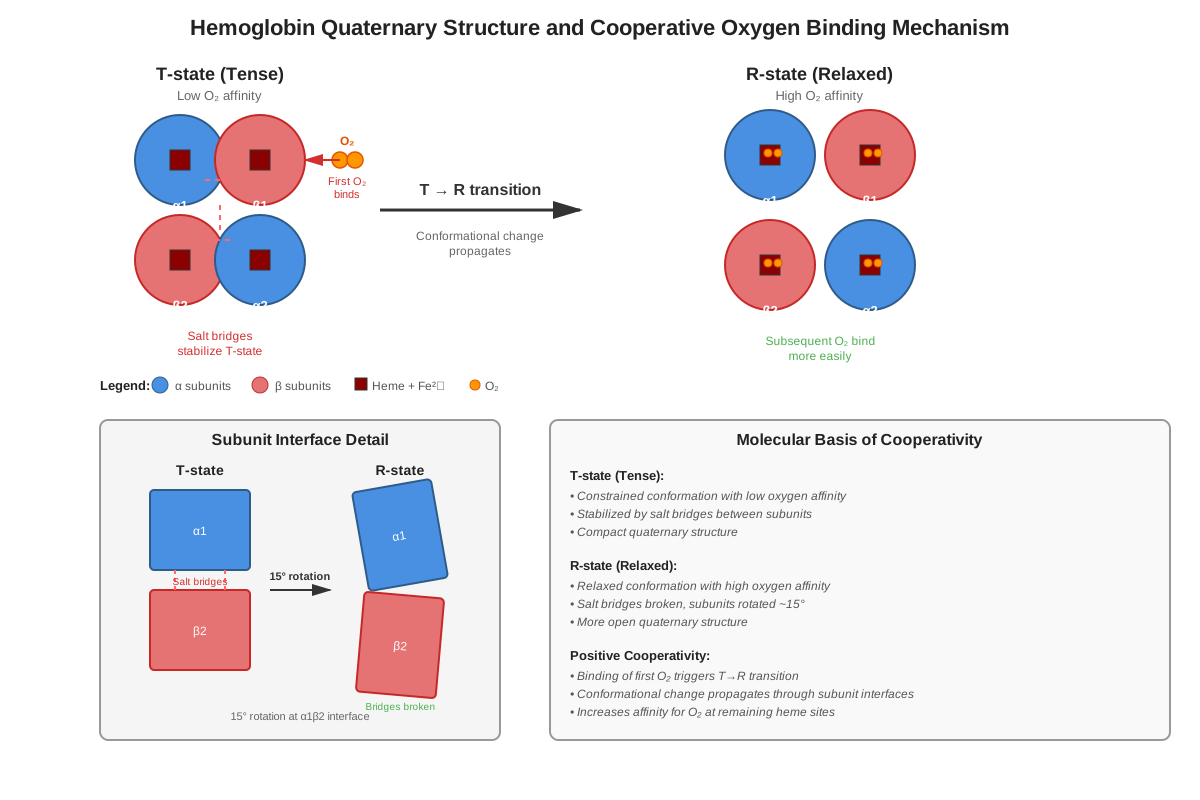
Mechanistically, positive cooperativity follows the concerted model (MWC model) or the sequential model (KNF model). In the concerted model, all subunits exist in equilibrium between two conformational states: a tense (T) state with low ligand affinity and a relaxed (R) state with high affinity. Ligand binding shifts the equilibrium toward the R state for all subunits simultaneously. In the sequential model, ligand binding induces conformational changes one subunit at a time, with each change making the next binding event more favorable.
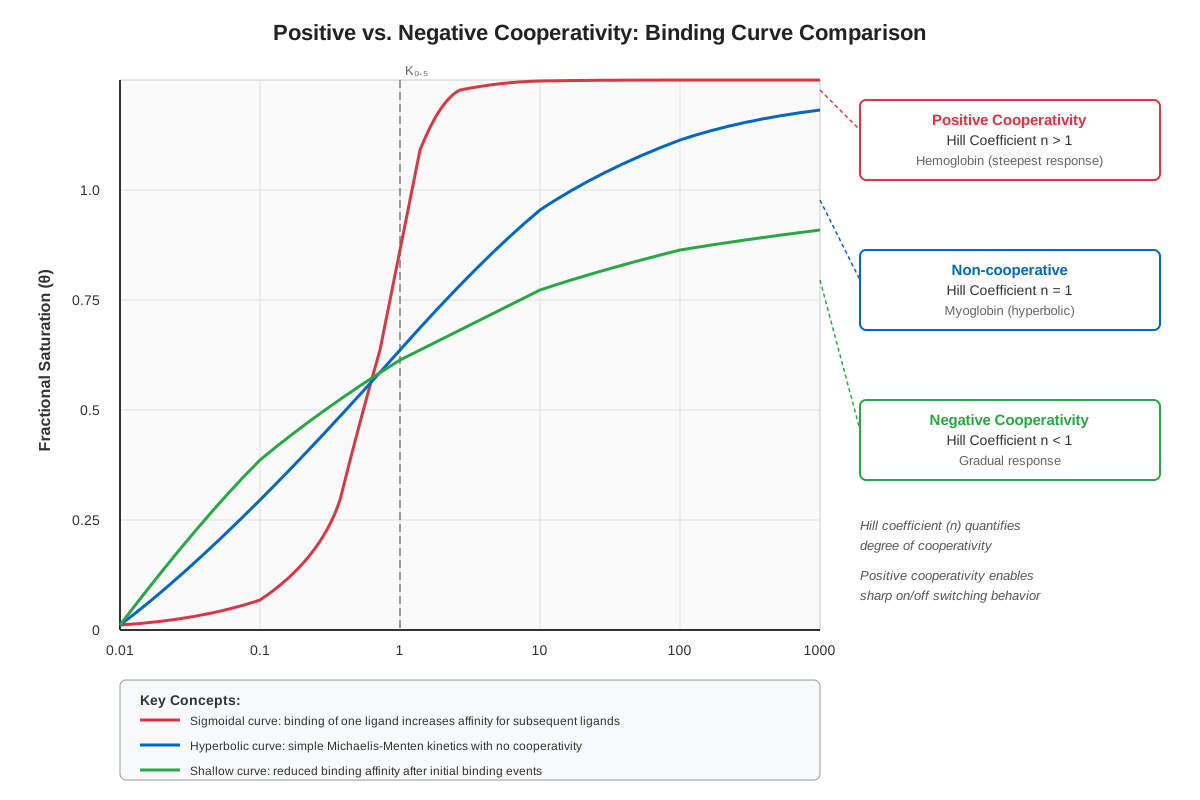
The binding curve for positive cooperativity is sigmoidal (S-shaped) rather than hyperbolic. This shape reflects the slow initial binding (low affinity T state), followed by rapid binding as the protein transitions to the high-affinity R state, and finally saturation as all sites become occupied. This sigmoidal curve is physiologically advantageous because it creates a steep response to small changes in ligand concentration within a specific range, enabling sensitive switching behavior.
Negative Cooperativity
Negative cooperativity occurs when the binding of the first ligand decreases the binding affinity for subsequent ligands. Each binding event makes the next binding more difficult. While less common than positive cooperativity, negative cooperativity serves important regulatory functions. For example, some enzymes exhibit negative cooperativity to dampen their response to substrate concentration changes, preventing overactivation.
The binding curve for negative cooperativity is still hyperbolic but appears more gradual than simple non-cooperative binding. This creates a broader response range, allowing the protein to respond across a wider range of ligand concentrations without becoming fully saturated too quickly.
The Hill Coefficient
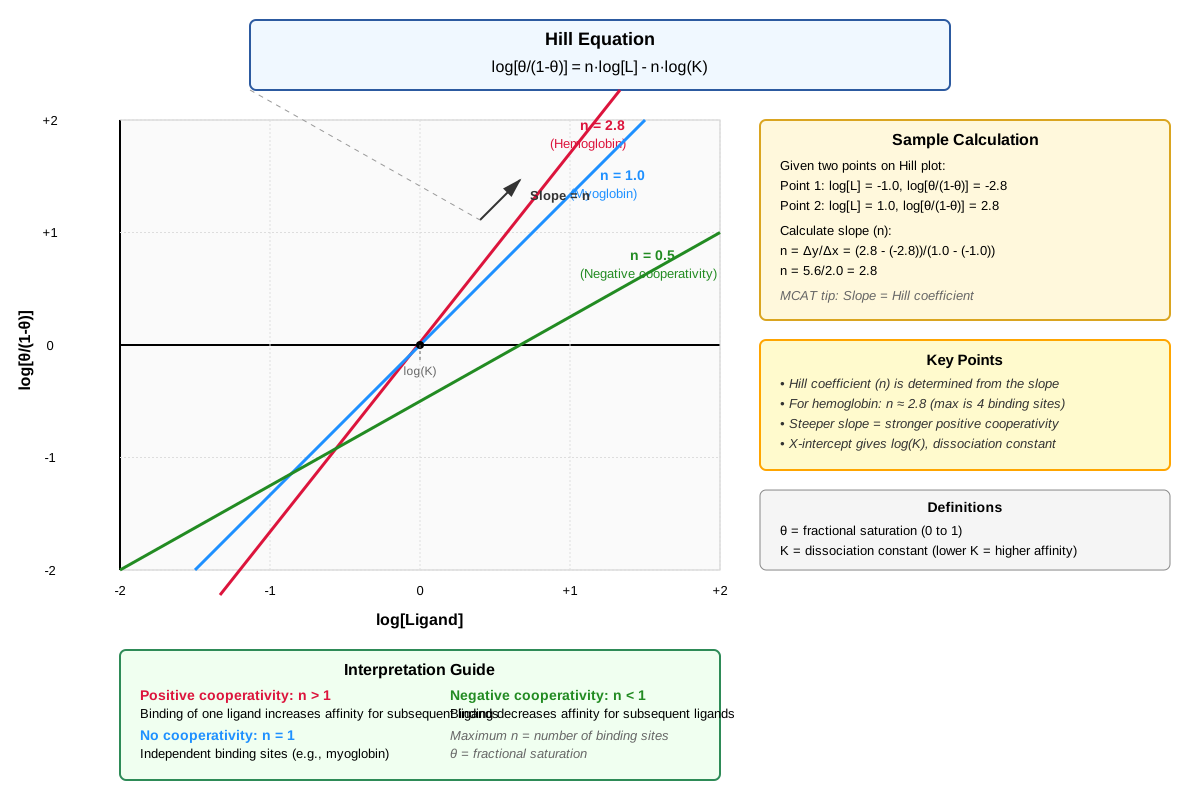
The Hill coefficient (n or nH) quantifies the degree of cooperativity in a binding system. It is derived from the Hill equation, which describes the relationship between ligand concentration and fractional saturation:
θ = [L]^n / (K_d + [L]^n)Where θ is fractional saturation, [L] is ligand concentration, Kd is the dissociation constant, and n is the Hill coefficient.
The Hill coefficient interpretation:
- n = 1: No cooperativity (independent binding sites)
- n > 1: Positive cooperativity (the larger the value, the stronger the cooperativity)
- n < 1: Negative cooperativity
- n = number of subunits: Perfect positive cooperativity (theoretical maximum)
For hemoglobin, which has four subunits, the Hill coefficient is approximately 2.8, indicating strong positive cooperativity but not perfect cooperativity. Myoglobin, with only one subunit, has a Hill coefficient of 1.0, showing no cooperativity.
The Hill plot (log[θ/(1-θ)] versus log[L]) yields a straight line with slope equal to the Hill coefficient, providing a graphical method to determine cooperativity from experimental data.
Hemoglobin: The Prototype Cooperative Protein
Hemoglobin serves as the quintessential example of positive cooperativity and appears frequently on the MCAT. This tetrameric protein (α₂β₂) exhibits cooperative oxygen binding that is essential for efficient oxygen transport. In the lungs, where oxygen partial pressure (pO₂) is high (~100 mmHg), hemoglobin loads oxygen efficiently. In peripheral tissues, where pO₂ is lower (~40 mmHg), hemoglobin releases oxygen readily due to its sigmoidal binding curve.
The T state (tense, deoxygenated) of hemoglobin has low oxygen affinity due to ionic interactions and salt bridges between subunits that constrain the structure. When oxygen binds to one heme group, it causes iron to move into the plane of the porphyrin ring, pulling the attached histidine residue and its associated helix. This conformational change disrupts salt bridges and facilitates the transition to the R state (relaxed, oxygenated), which has higher oxygen affinity.
The physiological advantage of cooperativity becomes clear when comparing hemoglobin to myoglobin. Myoglobin's hyperbolic binding curve means it has high oxygen affinity even at low pO₂, making it excellent for oxygen storage in muscle but poor for oxygen transport. Hemoglobin's sigmoidal curve allows it to be ~98% saturated in lungs but only ~60% saturated in tissues, releasing ~38% of its oxygen—far more efficient than a non-cooperative protein would achieve.
Allosteric Effectors and Cooperativity
Allosteric effectors are molecules that bind to proteins at sites distinct from the active or ligand-binding sites, modulating the protein's activity or binding affinity. These effectors can enhance or diminish cooperativity, providing additional layers of regulation.
For hemoglobin, several allosteric effectors are physiologically important:
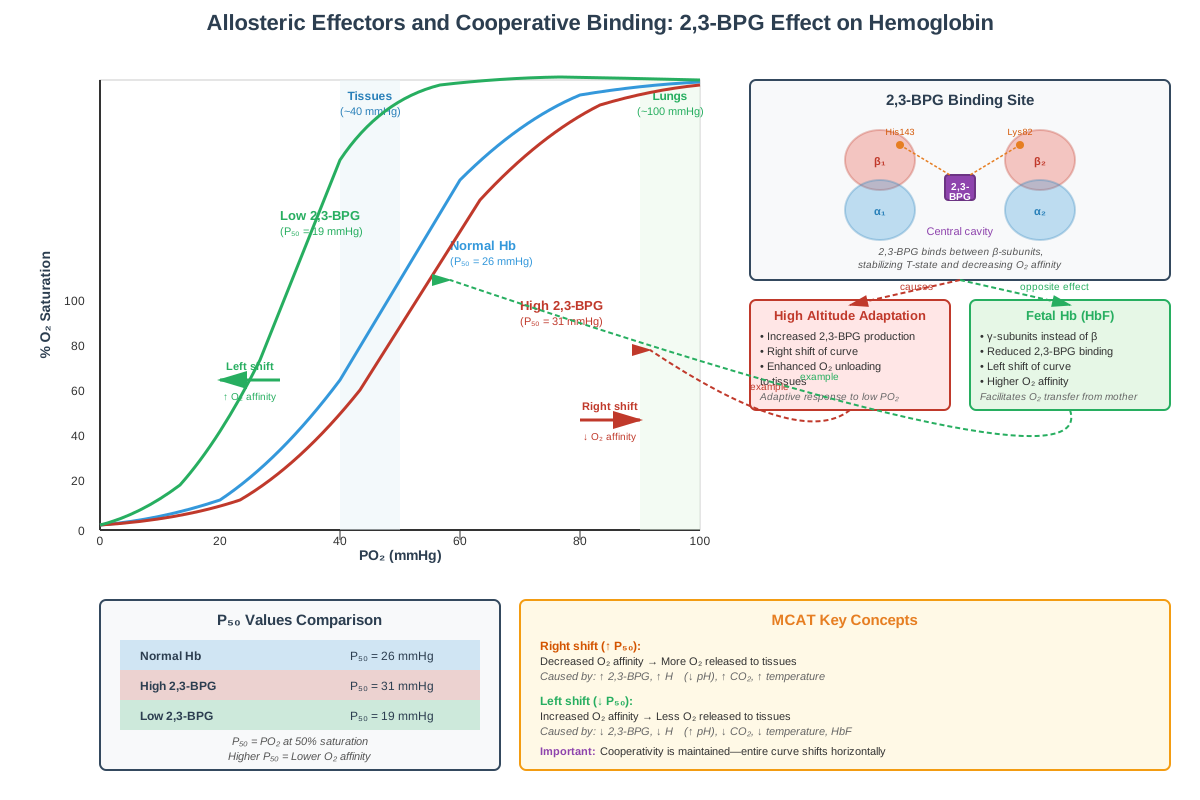
2,3-Bisphosphoglycerate (2,3-BPG): This molecule binds in the central cavity of deoxygenated hemoglobin, stabilizing the T state and decreasing oxygen affinity. This shifts the oxygen dissociation curve to the right (the Bohr effect component), promoting oxygen release in tissues. At high altitudes, increased 2,3-BPG production helps compensate for lower atmospheric oxygen by facilitating oxygen unloading to tissues.
H⁺ ions (pH): Decreased pH (increased H⁺) stabilizes the T state by promoting protonation of specific histidine residues, reducing oxygen affinity. This is the Bohr effect, which is physiologically crucial because metabolically active tissues produce CO₂ and H⁺, creating conditions that favor oxygen release exactly where it's needed.
CO₂: Carbon dioxide binds to the N-terminal amino groups of hemoglobin subunits, forming carbamino compounds that stabilize the T state. This contributes to both oxygen release in tissues and CO₂ transport to the lungs.
Carbon monoxide (CO): This toxic gas binds hemoglobin with ~200 times greater affinity than oxygen. Critically, CO binding not only blocks oxygen binding sites but also increases the oxygen affinity of remaining sites by shifting the equilibrium toward the R state. This reduces cooperativity and impairs oxygen release to tissues, explaining why CO poisoning causes tissue hypoxia even when some oxygen is bound.
Comparison Table: Cooperative vs. Non-Cooperative Binding
| Feature | Cooperative (Hemoglobin) | Non-Cooperative (Myoglobin) |
|---|---|---|
| Subunit structure | Quaternary (4 subunits) | Tertiary (1 subunit) |
| Binding curve shape | Sigmoidal (S-shaped) | Hyperbolic |
| Hill coefficient | ~2.8 | 1.0 |
| Response to [ligand] | Steep in physiological range | Gradual across all ranges |
| Physiological role | Oxygen transport | Oxygen storage |
| Allosteric regulation | Yes (2,3-BPG, H⁺, CO₂) | Minimal |
| Oxygen affinity | Variable (T vs R state) | Constant (high) |
Mathematical Relationships
Understanding the quantitative aspects of cooperativity helps in analyzing experimental data on the MCAT:
Fractional saturation (θ): The fraction of binding sites occupied by ligand
θ = (sites occupied) / (total sites)Hill equation (simplified form):
θ = [L]^n / (K₀.₅^n + [L]^n)Where K₀.₅ is the ligand concentration at half-maximal saturation (analogous to Kd for non-cooperative binding).
P₅₀ value: For oxygen binding, this is the partial pressure of oxygen at which hemoglobin is 50% saturated. Normal P₅₀ for hemoglobin is ~27 mmHg. Factors that decrease oxygen affinity (2,3-BPG, H⁺, CO₂, temperature) increase P₅₀ (right shift), while factors that increase oxygen affinity decrease P₅₀ (left shift).
Cooperativity in Enzymes
While hemoglobin is the most common MCAT example, cooperativity also occurs in enzymes with multiple substrate binding sites. Phosphofructokinase (PFK), a key regulatory enzyme in glycolysis, exhibits positive cooperativity for its substrate fructose-6-phosphate. This creates a sigmoidal relationship between substrate concentration and reaction velocity, allowing sensitive regulation of glycolytic flux.
Enzymes displaying cooperativity do not follow simple Michaelis-Menten kinetics, which assume independent binding sites and produce hyperbolic velocity curves. Instead, cooperative enzymes show sigmoidal kinetics, with the Hill coefficient describing the degree of cooperativity. This distinction is important for MCAT questions that ask students to identify enzyme regulatory mechanisms from kinetic data.
Concept Relationships
Cooperativity sits at the intersection of multiple biochemical concepts, creating a web of interconnected ideas essential for MCAT mastery. The foundational relationship begins with protein structure: primary structure (amino acid sequence) → secondary structure (α-helices and β-sheets) → tertiary structure (3D folding of single polypeptide) → quaternary structure (multiple subunit assembly) → cooperativity (communication between subunits). Without quaternary structure, cooperativity cannot occur, as there must be multiple binding sites that can influence each other.
Cooperativity directly connects to allosteric regulation, which describes any situation where binding at one site affects activity at another site. Cooperativity is a specific type of allosteric interaction where the "other site" is another ligand-binding site rather than an active site. Both phenomena rely on conformational changes that propagate through protein structure, linking distant regions functionally.
The relationship to enzyme kinetics is crucial: non-cooperative enzymes follow Michaelis-Menten kinetics (hyperbolic curves) → cooperative enzymes show sigmoidal kinetics → Hill coefficient quantifies the deviation from Michaelis-Menten behavior. This connects to metabolic regulation, where cooperative enzymes serve as control points that respond sensitively to substrate concentration changes.
For oxygen transport specifically: hemoglobin structure (quaternary) → cooperative oxygen binding → sigmoidal dissociation curve → efficient oxygen loading and unloading → tissue oxygenation. This pathway is modulated by allosteric effectors: metabolic activity → increased CO₂, H⁺, temperature → Bohr effect → decreased oxygen affinity → enhanced oxygen release → meeting tissue oxygen demands.
The concept also connects forward to clinical applications: mutations affecting quaternary structure → altered cooperativity → abnormal oxygen affinity → hemoglobinopathies → clinical symptoms (either tissue hypoxia from high-affinity variants or inadequate oxygen loading from low-affinity variants).
High-Yield Facts
⭐ Cooperativity requires quaternary protein structure with multiple subunits and binding sites
⭐ Positive cooperativity produces a sigmoidal (S-shaped) binding curve; non-cooperative binding produces a hyperbolic curve
⭐ The Hill coefficient (n) quantifies cooperativity: n=1 (none), n>1 (positive), n<1 (negative)
⭐ Hemoglobin exhibits positive cooperativity (n≈2.8) while myoglobin shows no cooperativity (n=1.0)
⭐ The Bohr effect describes how decreased pH and increased CO₂ reduce hemoglobin's oxygen affinity, facilitating oxygen release in metabolically active tissues
- 2,3-BPG stabilizes the T (tense) state of hemoglobin, decreasing oxygen affinity and shifting the dissociation curve right
- The T state (tense, deoxygenated) has low ligand affinity; the R state (relaxed, ligated) has high affinity
- Carbon monoxide poisoning is dangerous not only because CO blocks oxygen binding but also because it increases the oxygen affinity of remaining sites, impairing oxygen release
- Fetal hemoglobin (HbF) has lower affinity for 2,3-BPG than adult hemoglobin (HbA), giving it higher oxygen affinity to facilitate oxygen transfer across the placenta
- Cooperative enzymes like phosphofructokinase serve as metabolic control points because their sigmoidal kinetics create sensitive switches responding to substrate concentration
Quick check — test yourself on Cooperativity so far.
Try Flashcards →Common Misconceptions
Misconception: Cooperativity and allosteric regulation are the same thing.
Correction: Cooperativity is a specific type of allosteric interaction where binding sites for the same ligand influence each other. Allosteric regulation is broader, encompassing any situation where binding at one site affects activity at a different site, including regulation by different molecules at distinct allosteric sites.
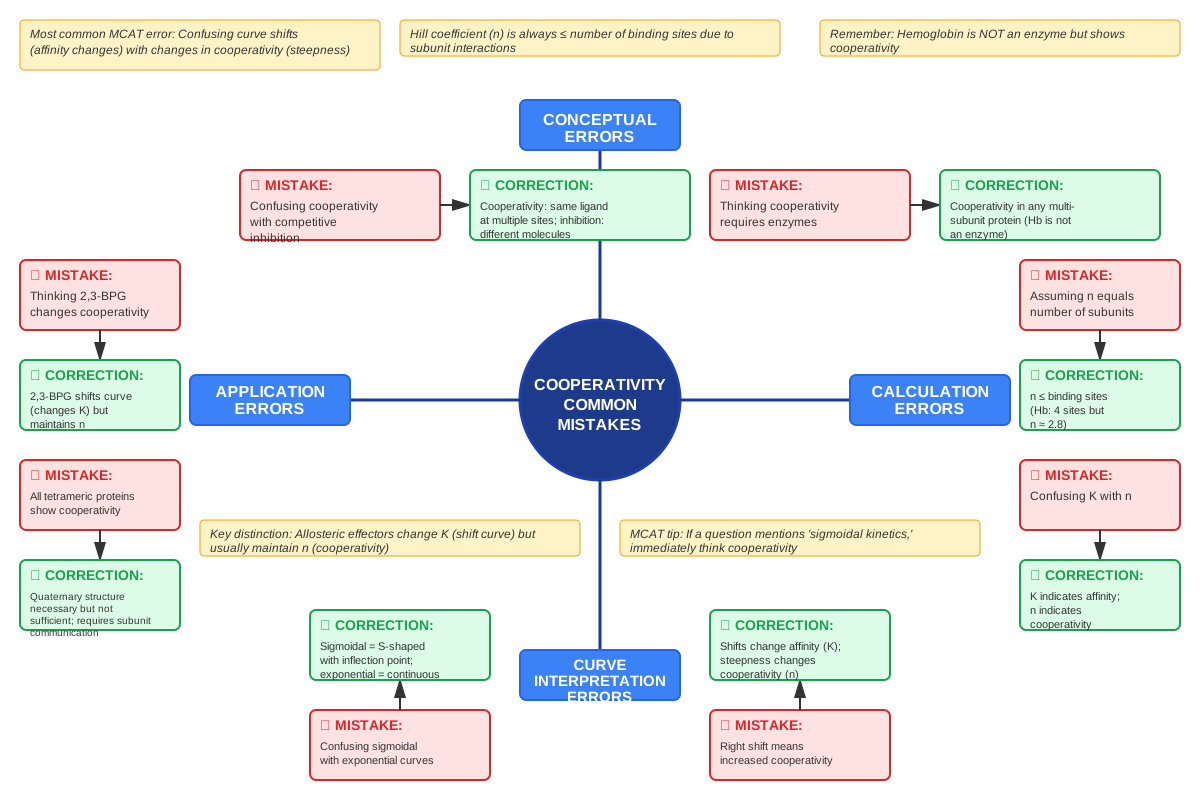
Misconception: The Hill coefficient equals the number of subunits in a protein.
Correction: The Hill coefficient approaches but rarely equals the number of subunits. Hemoglobin has four subunits but a Hill coefficient of ~2.8. The theoretical maximum Hill coefficient equals the number of binding sites, but this requires perfect cooperativity, which doesn't occur in real biological systems.
Misconception: A sigmoidal curve always indicates positive cooperativity.
Correction: While positive cooperativity produces sigmoidal curves, not all sigmoidal responses indicate cooperativity. Some single-subunit enzymes can show sigmoidal kinetics due to other regulatory mechanisms. The key diagnostic is the Hill coefficient: only n>1 definitively indicates positive cooperativity.
Misconception: Myoglobin doesn't bind oxygen cooperatively because it has lower affinity than hemoglobin.
Correction: Myoglobin actually has higher oxygen affinity than hemoglobin (especially than T-state hemoglobin). Myoglobin lacks cooperativity because it has only one subunit and therefore only one binding site—there are no other sites to influence. The lack of cooperativity is structural, not related to affinity.
Misconception: The Bohr effect and 2,3-BPG have the same mechanism.
Correction: While both decrease hemoglobin's oxygen affinity, they work differently. The Bohr effect involves H⁺ and CO₂ binding to specific amino acid residues, stabilizing the T state through electrostatic interactions. 2,3-BPG binds in the central cavity between subunits, physically stabilizing the T state conformation. Both shift the curve right but through distinct molecular mechanisms.
Misconception: Cooperativity always involves identical subunits binding identical ligands.
Correction: While hemoglobin's four subunits (two α, two β) binding oxygen is the classic example, cooperativity can occur in proteins with non-identical subunits or even with different ligands binding to different sites if those sites communicate allosterically. The key is that binding at one site affects binding at another, regardless of subunit identity.
Misconception: Higher Hill coefficient always means better physiological function.
Correction: The optimal degree of cooperativity depends on physiological context. Hemoglobin's Hill coefficient of ~2.8 is ideal for oxygen transport, but higher cooperativity would create too steep a response, potentially causing inadequate oxygen loading in lungs or excessive retention in tissues. The evolved value represents an optimized balance.
Worked Examples
Example 1: Interpreting Binding Curves and Hill Coefficients
Question: A researcher studies three oxygen-binding proteins and obtains the following data:
| Protein | Shape of O₂ binding curve | P₅₀ (mmHg) | Hill coefficient |
|---|---|---|---|
| Protein A | Hyperbolic | 2 | 1.0 |
| Protein B | Sigmoidal | 27 | 2.8 |
| Protein C | Sigmoidal | 40 | 2.5 |
(a) Which protein likely has quaternary structure?
(b) Which protein would be most efficient for oxygen storage in muscle tissue?
(c) If Protein C is a hemoglobin variant, what might explain its altered P₅₀?
(d) At a tissue pO₂ of 40 mmHg, which protein would have the highest oxygen saturation?
Solution:
(a) Proteins B and C likely have quaternary structure. The sigmoidal binding curves and Hill coefficients >1 indicate positive cooperativity, which requires multiple subunits with binding sites that can communicate. Protein A, with a hyperbolic curve and Hill coefficient of 1.0, shows no cooperativity and likely has a single subunit (like myoglobin).
Reasoning: Cooperativity is the hallmark of multi-subunit proteins. The mathematical relationship is that only proteins with multiple binding sites can exhibit n>1. This connects to the learning objective of distinguishing cooperative from non-cooperative binding based on curve shape and Hill coefficient.
(b) Protein A would be most efficient for oxygen storage. Its low P₅₀ (2 mmHg) indicates very high oxygen affinity—it binds oxygen tightly and releases it only at very low pO₂. This is ideal for storage (like myoglobin in muscle) because the protein remains saturated even when tissue pO₂ drops during exercise, providing an oxygen reserve. Additionally, its hyperbolic curve means it maintains high saturation across a wide range of oxygen concentrations.
Reasoning: Storage proteins need high affinity to hold oxygen until it's critically needed. Transport proteins (like hemoglobin) need moderate affinity to both load and unload oxygen efficiently. The P₅₀ value tells us the oxygen concentration at 50% saturation—lower P₅₀ means higher affinity.
(c) Protein C's higher P₅₀ (40 vs. 27 mmHg for normal hemoglobin) indicates decreased oxygen affinity. Possible explanations include:
- Mutation that stabilizes the T state, making the transition to R state more difficult
- Increased sensitivity to 2,3-BPG, which stabilizes the T state
- Altered subunit interfaces that impair cooperative transition
- Mutation affecting the heme pocket that reduces oxygen binding affinity
Reasoning: P₅₀ is inversely related to oxygen affinity—higher P₅₀ means more oxygen is needed to achieve 50% saturation, indicating weaker binding. This variant would release oxygen more readily in tissues (potentially beneficial at altitude) but might not fully saturate in lungs (potentially problematic at sea level).
(d) Protein A would have the highest saturation at 40 mmHg tissue pO₂. At this oxygen level:
- Protein A (P₅₀ = 2): Since 40 mmHg >> 2 mmHg, Protein A would be nearly 100% saturated
- Protein B (P₅₀ = 27): At 40 mmHg, normal hemoglobin is ~75% saturated
- Protein C (P₅₀ = 40): At its P₅₀, it would be exactly 50% saturated by definition
Reasoning: When pO₂ > P₅₀, the protein is more than half-saturated; when pO₂ < P₅₀, it's less than half-saturated. Protein A's very low P₅₀ means it remains highly saturated even at low oxygen tensions. This example demonstrates why myoglobin-like proteins are poor for transport—they don't release oxygen efficiently in tissues.
Example 2: Predicting Effects of Allosteric Modulators
Question: A medical student is studying a patient with chronic hypoxia at sea level. Laboratory analysis reveals normal hemoglobin concentration and structure, but the oxygen dissociation curve is shifted significantly to the left (decreased P₅₀).
(a) What does a left-shifted curve indicate about oxygen affinity?
(b) Why would this cause tissue hypoxia despite normal hemoglobin levels?
(c) Which of the following conditions could cause this left shift?
- Decreased 2,3-BPG levels
- Increased temperature
- Decreased pH (acidosis)
- Carbon monoxide exposure
(d) How would this shift affect the Hill coefficient?
Solution:
(a) A left-shifted curve indicates increased oxygen affinity. The hemoglobin binds oxygen more tightly, requiring lower pO₂ to achieve any given level of saturation. The decreased P₅₀ means hemoglobin reaches 50% saturation at a lower oxygen partial pressure than normal.
Reasoning: Left shift = higher affinity = tighter binding = harder to release. Right shift = lower affinity = weaker binding = easier to release. This is a critical concept for understanding how various factors modulate oxygen delivery.
(b) Increased oxygen affinity causes tissue hypoxia because hemoglobin doesn't release oxygen readily in peripheral tissues. Even though hemoglobin loads oxygen normally in the lungs (where pO₂ is high), it remains highly saturated in tissues (where pO₂ is lower), failing to unload sufficient oxygen to meet metabolic demands. The problem isn't oxygen loading but oxygen delivery.
Reasoning: Efficient oxygen transport requires both loading (in lungs) and unloading (in tissues). Hemoglobin's normal P₅₀ of ~27 mmHg is optimized so that it's ~98% saturated at lung pO₂ (~100 mmHg) but only ~60% saturated at tissue pO₂ (~40 mmHg), releasing ~38% of bound oxygen. With a left-shifted curve, hemoglobin might be ~90% saturated even at tissue pO₂, releasing only ~8% of oxygen—insufficient for tissue needs.
(c) Decreased 2,3-BPG levels and carbon monoxide exposure could cause a left shift:
- Decreased 2,3-BPG: ✓ Causes left shift. 2,3-BPG normally stabilizes the T state (low affinity). Without it, hemoglobin more readily adopts the R state (high affinity), increasing oxygen affinity and shifting the curve left. This can occur in stored blood (2,3-BPG degrades during storage) or certain genetic conditions.
- Increased temperature: ✗ Causes right shift. Higher temperature destabilizes the R state, decreasing oxygen affinity. This is why exercising muscles (which generate heat) receive more oxygen.
- Decreased pH (acidosis): ✗ Causes right shift. This is the Bohr effect—H⁺ ions stabilize the T state, decreasing oxygen affinity and promoting oxygen release.
- Carbon monoxide exposure: ✓ Causes left shift. CO binds hemoglobin with very high affinity, and CO-bound subunits stabilize the R state in remaining subunits, increasing their oxygen affinity. This impairs oxygen release even from the sites that have oxygen bound.
Reasoning: Remember the mnemonic "CADET, face Right!" for factors causing right shift: CO₂, Acid, 2,3-DPG (or BPG), Exercise (increased metabolism/temperature), Temperature. Absence or opposite of these factors causes left shift.
(d) The Hill coefficient would likely decrease. Carbon monoxide binding disrupts normal cooperativity by preventing the full T→R transition. With some subunits locked in a CO-bound state, the remaining subunits cannot undergo the normal cooperative transition, reducing the steepness of the binding curve and thus the Hill coefficient. Decreased 2,3-BPG might not significantly affect the Hill coefficient itself (which measures cooperativity) but would shift the entire curve left.
Reasoning: The Hill coefficient reflects the degree of interaction between binding sites. Anything that disrupts subunit communication or prevents normal conformational transitions will reduce cooperativity. This is why CO poisoning is particularly dangerous—it not only blocks binding sites but also disrupts the cooperative mechanism that normally facilitates oxygen release.
Exam Strategy
Approaching MCAT Questions on Cooperativity
Step 1: Identify the question type. Cooperativity questions typically fall into these categories:
- Curve interpretation (sigmoidal vs. hyperbolic)
- Comparison of proteins (hemoglobin vs. myoglobin)
- Effects of allosteric modulators
- Calculation or interpretation of Hill coefficient
- Prediction of physiological consequences
Step 2: Look for trigger words and phrases:
- "Sigmoidal" or "S-shaped" → positive cooperativity
- "Multiple subunits" or "quaternary structure" → potential for cooperativity
- "Hill coefficient greater than 1" → positive cooperativity
- "Allosteric effector," "2,3-BPG," "Bohr effect" → modulation of cooperativity
- "Right shift" or "increased P₅₀" → decreased oxygen affinity
- "Left shift" or "decreased P₅₀" → increased oxygen affinity
Step 3: Draw or visualize the curves. Even if not provided, sketching a quick graph of fractional saturation vs. ligand concentration helps:
- Hyperbolic curve = no cooperativity (myoglobin, Michaelis-Menten enzymes)
- Sigmoidal curve = positive cooperativity (hemoglobin, cooperative enzymes)
- Identify where on the curve the question is asking about (low, medium, or high ligand concentration)
Step 4: Apply the structure-function relationship:
- Single subunit → no cooperativity possible
- Multiple subunits → cooperativity possible
- Mutations affecting subunit interfaces → altered cooperativity
- Mutations affecting binding sites → altered affinity but not necessarily cooperativity
Process of Elimination Tips
When comparing hemoglobin and myoglobin:
- Eliminate answers suggesting myoglobin has cooperativity (it doesn't—single subunit)
- Eliminate answers suggesting hemoglobin has higher oxygen affinity than myoglobin at all pO₂ values (myoglobin has higher affinity, especially at low pO₂)
- Keep answers that describe hemoglobin as more efficient for transport and myoglobin for storage
When evaluating factors affecting oxygen affinity:
- Eliminate answers that confuse left and right shifts
- Remember: factors that stabilize T state → right shift (decreased affinity)
- Factors that stabilize R state → left shift (increased affinity)
- Eliminate answers that suggest cooperativity changes with every affinity change (cooperativity is about the shape of the curve; affinity is about its position)
When interpreting Hill coefficients:
- Eliminate answers suggesting n can be negative (it's always positive; n<1 means negative cooperativity, not a negative number)
- Eliminate answers suggesting n must equal the number of subunits (it approaches but rarely equals this)
- For hemoglobin questions, n should be between 2 and 3 (typically ~2.8)
Time Allocation Advice
Cooperativity questions are typically medium difficulty and should take 60-90 seconds for discrete questions, 90-120 seconds for passage-based questions. If a question asks you to:
- Identify curve type: 30 seconds—this should be quick pattern recognition
- Compare two proteins: 60 seconds—systematic comparison of structure, curve shape, and function
- Predict effects of modulators: 90 seconds—requires thinking through mechanism and consequences
- Calculate or interpret Hill coefficient: 60 seconds if given data, 90 seconds if you must extract from a graph
Exam Tip: If a passage presents experimental data on a novel protein, first determine whether it shows cooperativity (sigmoidal curve, n>1) or not (hyperbolic curve, n=1). This single determination will help you eliminate wrong answers quickly on multiple questions within that passage.
Memory Techniques
Mnemonics
"CADET, face Right!" for factors causing right shift of oxygen dissociation curve (decreased oxygen affinity):
- CO₂ (increased)
- Acid (decreased pH, increased H⁺)
- DPG or 2,3-BPG (increased)
- Exercise (increased metabolism)
- Temperature (increased)
"Sigmoidal = Subunits" to remember that sigmoidal curves indicate multiple subunits with cooperativity
"Hill Higher = Help each other" to remember that Hill coefficient >1 means binding sites help each other (positive cooperativity)
"T is Tight, R is Relaxed" to remember:
- T state = Tense = Taut = low affinity (hard to bind)
- R state = Relaxed = high affinity (easy to bind)
Visualization Strategies
The Parking Lot Analogy: Imagine a parking lot with four spaces (hemoglobin's four subunits):
- No cooperativity (myoglobin): Each space fills independently based on how many cars are looking for parking
- Positive cooperativity (hemoglobin): The first car has trouble finding the entrance (low affinity), but once it parks, it opens gates that make it easier for the next car to enter, and so on. By the time three cars are parked, the fourth space is very easy to fill
- Allosteric effectors (2,3-BPG, H⁺): Like obstacles that make it harder to enter the parking lot (stabilize T state) or valet service that makes it easier (stabilize R state)
The Domino Effect: Visualize hemoglobin subunits as dominoes arranged in a square. When oxygen binds to one subunit (one domino tips), it triggers a conformational change that propagates to neighboring subunits (other dominoes tip), making it easier for them to bind oxygen. This captures the sequential nature of cooperative binding.
Acronyms
COOP for key features of Cooperativity:
- Conformational changes between subunits
- Oxygen binding (classic example: hemoglobin)
- Oligomeric structure required (multiple subunits)
- Positive feedback (in positive cooperativity)
Summary
Cooperativity is a fundamental biochemical phenomenon in which the binding of a ligand to one site on a multi-subunit protein influences the binding affinity of other sites for subsequent ligands. This property requires quaternary protein structure and enables sophisticated regulatory behavior beyond simple binding. Positive cooperativity, exemplified by hemoglobin's oxygen binding, produces sigmoidal binding curves and is quantified by Hill coefficients greater than 1. The molecular mechanism involves conformational changes that propagate between subunits, transitioning the protein between low-affinity T (tense) and high-affinity R (relaxed) states. Allosteric effectors like 2,3-BPG, H⁺, and CO₂ modulate cooperativity by stabilizing different conformational states, enabling physiological regulation. Understanding cooperativity is essential for interpreting binding curves, predicting physiological consequences of altered protein function, and distinguishing cooperative from non-cooperative systems—all high-yield skills for MCAT success.
Key Takeaways
- Cooperativity requires quaternary structure: Multiple subunits with binding sites that communicate through conformational changes are essential for cooperative behavior
- Positive cooperativity produces sigmoidal binding curves: The S-shape reflects increasing binding affinity as more ligands bind, creating sensitive molecular switches
- Hill coefficient quantifies cooperativity: n=1 indicates no cooperativity, n>1 indicates positive cooperativity, with hemoglobin's n≈2.8 representing strong positive cooperativity
- Hemoglobin vs. myoglobin comparison is high-yield: Hemoglobin (cooperative, sigmoidal, transport) vs. myoglobin (non-cooperative, hyperbolic, storage) appears frequently on the MCAT
- Allosteric effectors modulate oxygen affinity: 2,3-BPG, H⁺, and CO₂ stabilize the T state (right shift, decreased affinity), while their absence or CO binding stabilizes the R state (left shift, increased affinity)
- The Bohr effect is physiologically critical: Decreased pH and increased CO₂ in metabolically active tissues promote oxygen release exactly where it's needed
- Cooperativity enables efficient oxygen transport: The sigmoidal curve allows hemoglobin to load oxygen in lungs and unload in tissues far more efficiently than a non-cooperative protein could achieve
Related Topics
Allosteric Regulation: Cooperativity is a specific type of allosteric interaction; understanding broader allosteric principles including heterotropic effects (different ligands) and enzyme regulation deepens comprehension of protein function control.
Enzyme Kinetics: Cooperative enzymes deviate from Michaelis-Menten kinetics, showing sigmoidal velocity curves; mastering both models enables recognition of regulatory enzymes in metabolic pathways.
Hemoglobin Variants and Hemoglobinopathies: Clinical conditions like sickle cell disease and thalassemias involve altered hemoglobin structure; understanding how structural changes affect cooperativity and oxygen binding connects biochemistry to pathophysiology.
Metabolic Regulation: Cooperative enzymes like phosphofructokinase serve as control points in pathways like glycolysis; understanding cooperativity explains how cells achieve sensitive metabolic control.
Oxygen Transport Physiology: The respiratory and cardiovascular systems depend on cooperative oxygen binding; connecting biochemistry to physiology explains altitude adaptation, exercise physiology, and respiratory diseases.
Protein Structure and Folding: Quaternary structure assembly and the forces maintaining subunit interfaces are prerequisites for cooperativity; deeper study of protein structure explains how mutations affect cooperative behavior.
Practice CTA
Now that you've mastered the core concepts of cooperativity, it's time to reinforce your understanding through active practice. Test yourself with MCAT-style practice questions that challenge you to apply these principles to novel scenarios, interpret experimental data, and make predictions about protein behavior. Use flashcards to drill high-yield facts like the Hill coefficient interpretation, factors affecting oxygen affinity, and the hemoglobin-myoglobin comparison. Remember: understanding cooperativity isn't just about memorizing facts—it's about developing the analytical skills to approach any protein binding question with confidence. The sigmoidal curve you've learned today is your key to unlocking questions about oxygen transport, enzyme regulation, and allosteric control. You've got this!
Sign up free to keep reading
Create a free AnvayaPrep account to finish this MCAT guide on Cooperativity — plus flashcards and practice questions.