Overview
Isoelectric focusing (IEF) is a powerful electrophoretic technique used to separate proteins and other amphoteric molecules based on their isoelectric point (pI). This method exploits the fundamental principle that proteins carry different net charges depending on the pH of their environment. When a protein is placed in a pH gradient and subjected to an electric field, it migrates until it reaches the pH zone where its net charge equals zero—its isoelectric point. At this position, the protein stops migrating and becomes "focused" into a sharp band, hence the name isoelectric focusing.
For the MCAT, isoelectric focusing represents a critical intersection of multiple high-yield concepts in Biochemistry: amino acid properties, protein structure, acid-base chemistry, and laboratory techniques. The MCAT frequently tests students' ability to predict protein behavior under varying pH conditions and to interpret experimental data from separation techniques. Understanding IEF requires mastery of how amino acid side chains contribute to overall protein charge, how pH affects ionization states, and how these principles translate into practical laboratory applications. This topic appears regularly in both discrete questions and passage-based questions, particularly in experimental contexts where researchers are purifying or characterizing proteins.
The conceptual framework of isoelectric focusing connects directly to broader themes in Amino Acids and Proteins, including protein purification strategies, electrophoresis techniques, and the relationship between protein structure and function. IEF serves as an excellent example of how fundamental biochemical properties (charge, pH, ionization) can be harnessed for practical applications. Mastering this topic strengthens understanding of related separation techniques like SDS-PAGE and ion-exchange chromatography, while reinforcing core principles about amino acid behavior that appear throughout the MCAT Biochemistry section.
Learning Objectives
- [ ] Define isoelectric focusing using accurate Biochemistry terminology
- [ ] Explain why isoelectric focusing matters for the MCAT
- [ ] Apply isoelectric focusing to exam-style questions
- [ ] Identify common mistakes related to isoelectric focusing
- [ ] Connect isoelectric focusing to related Biochemistry concepts
- [ ] Calculate the direction of protein migration in an IEF gel given the protein's pI and local pH
- [ ] Predict the relative positions of multiple proteins after isoelectric focusing based on their pI values
- [ ] Analyze experimental data from IEF experiments to determine protein characteristics
- [ ] Compare and contrast isoelectric focusing with other protein separation techniques
Prerequisites
- Amino acid structure and properties: Understanding ionizable groups (amino terminus, carboxyl terminus, and side chains) is essential because these groups determine a protein's charge at any given pH
- Acid-base chemistry and Henderson-Hasselbalch equation: The relationship between pH, pKa, and ionization state directly governs protein charge and migration behavior
- Protein structure: Knowledge of how amino acids link to form polypeptides provides context for understanding how multiple ionizable groups contribute to overall protein charge
- Basic electrophoresis principles: Familiarity with how charged molecules migrate in an electric field forms the foundation for understanding IEF mechanics
- Isoelectric point (pI) concept: The definition and significance of pI must be understood before applying it to separation techniques
Why This Topic Matters
Isoelectric focusing has profound clinical and research significance. In diagnostic medicine, IEF is used to detect hemoglobin variants in patients with suspected hemoglobinopathies, to identify monoclonal proteins in multiple myeloma, and to analyze cerebrospinal fluid proteins in neurological disorders. In research settings, IEF serves as the first dimension in two-dimensional gel electrophoresis (2D-PAGE), one of the most powerful techniques for analyzing complex protein mixtures in proteomics studies. The technique's exceptional resolution—capable of distinguishing proteins that differ by as little as 0.01 pH units in their pI values—makes it invaluable for detecting subtle protein modifications like phosphorylation or deamidation.
On the MCAT, isoelectric focusing appears with notable frequency in the Biochemistry section. Approximately 3-5% of Biochemistry questions involve protein separation techniques, with IEF being one of the most commonly tested methods. Questions typically appear in three formats: (1) discrete questions asking students to predict migration patterns or identify proteins based on pI values, (2) passage-based questions presenting experimental data from IEF experiments that students must interpret, and (3) questions requiring students to compare IEF with other separation techniques like SDS-PAGE or ion-exchange chromatography.
Common MCAT passages involving IEF include scenarios where researchers are purifying a novel protein, characterizing post-translational modifications, or investigating protein-protein interactions. The exam frequently presents diagrams of IEF gels with pH gradients and asks students to identify which band corresponds to which protein, or to predict what would happen if experimental conditions were altered. Understanding IEF is also crucial for answering questions about protein charge, as these concepts are deeply intertwined.
Core Concepts
Fundamental Principles of Isoelectric Focusing
Isoelectric focusing is an electrophoretic separation technique that separates amphoteric molecules (molecules that can act as both acids and bases) based on their isoelectric point. The isoelectric point (pI) is the pH at which a molecule carries no net electrical charge—the positive charges exactly balance the negative charges. For proteins, the pI is determined by the collective ionization states of all ionizable groups: the N-terminus, C-terminus, and all ionizable amino acid side chains (Asp, Glu, His, Cys, Tyr, Lys, Arg).
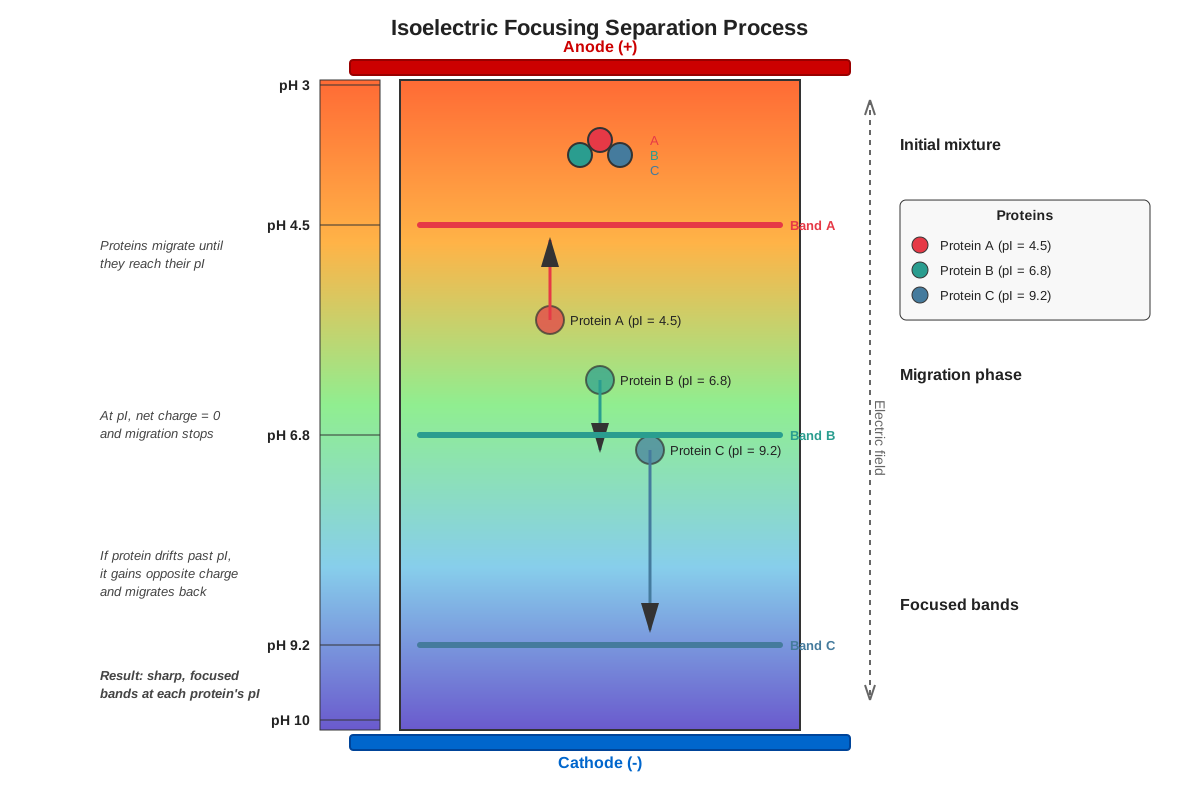
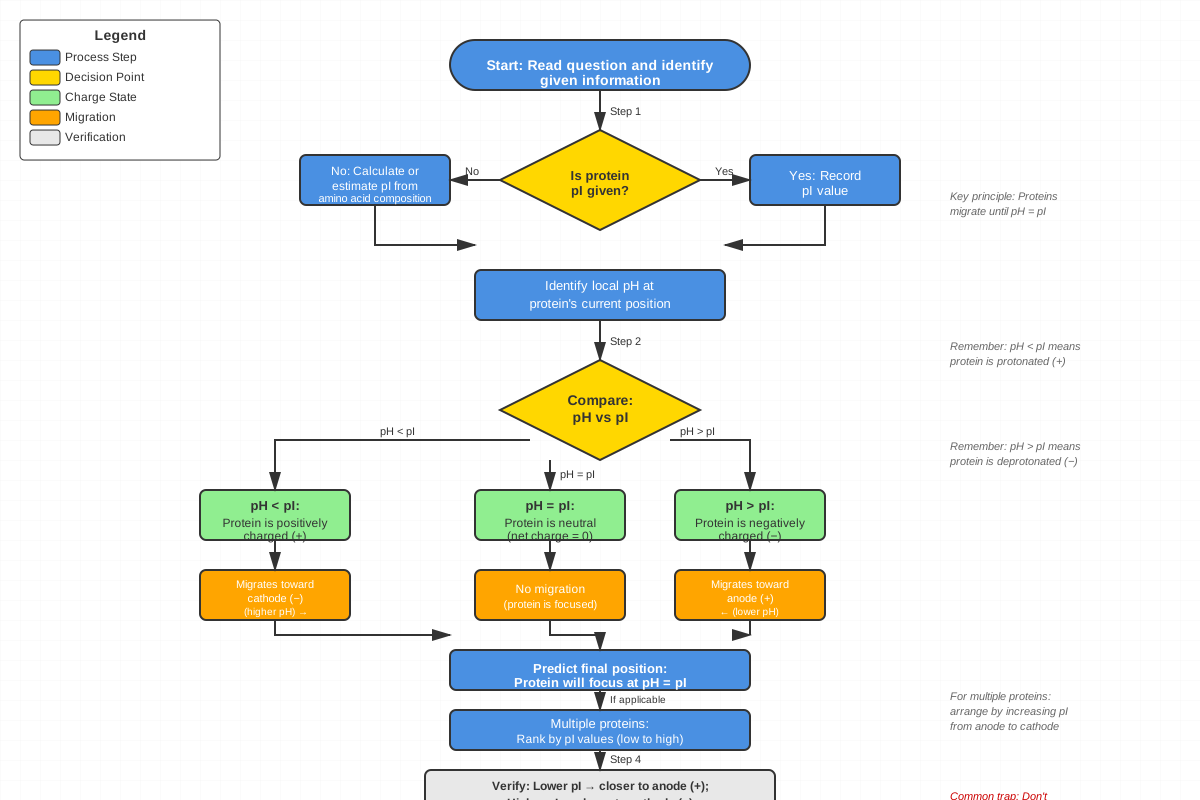
The technique employs a gel or solution containing a stable pH gradient that typically ranges from pH 3 to pH 10. When an electric field is applied across this gradient, proteins migrate according to their net charge. A protein with a net positive charge (when the local pH is below its pI) migrates toward the cathode (negative electrode), while a protein with a net negative charge (when the local pH is above its pI) migrates toward the anode (positive electrode). As the protein moves through the pH gradient, it eventually reaches the pH zone equal to its pI, where its net charge becomes zero and migration ceases.
The pH Gradient and Ampholytes
The pH gradient in isoelectric focusing Biochemistry is established using carrier ampholytes—small amphoteric molecules with closely spaced pI values that span the desired pH range. When an electric field is applied, these ampholytes migrate to their respective isoelectric points and create a stable, continuous pH gradient. Modern IEF often uses immobilized pH gradients (IPG), where buffering groups are covalently attached to the gel matrix, providing greater stability and reproducibility than carrier ampholytes.
The stability of the pH gradient is crucial for successful separation. Unlike conventional electrophoresis where the pH is uniform throughout the gel, IEF requires maintaining distinct pH zones. The ampholytes themselves act as buffers, resisting pH changes and maintaining the gradient even as proteins migrate through it.
Protein Charge and Migration Behavior
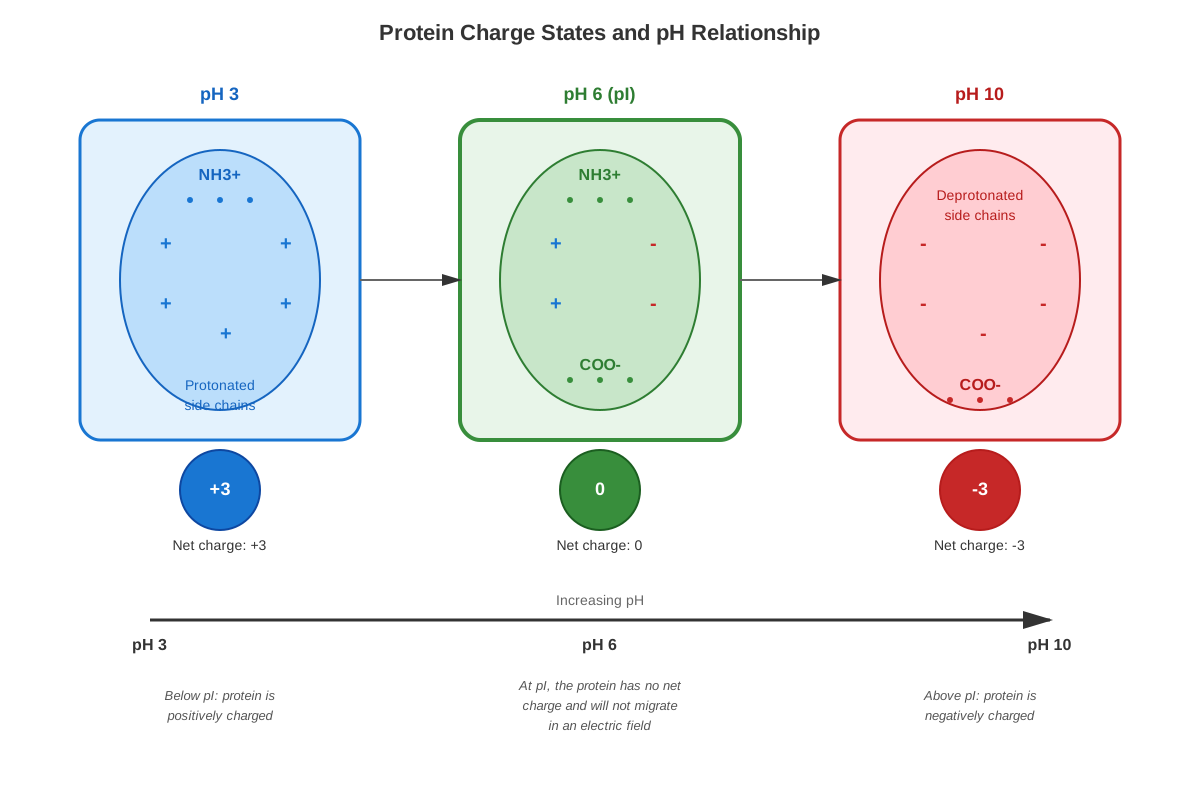
Understanding protein migration in IEF requires analyzing how pH affects protein charge. Consider a protein with a pI of 6.0 placed in a pH gradient:
- At pH 4.0 (below the pI): The protein has a net positive charge because more ionizable groups are protonated. The protein migrates toward the cathode (negative electrode)
- At pH 6.0 (at the pI): The protein has zero net charge and stops migrating—it is "focused"
- At pH 8.0 (above the pI): The protein has a net negative charge because more ionizable groups are deprotonated. The protein migrates toward the anode (positive electrode)
This self-focusing property is what gives the technique its name and exceptional resolution. If a focused protein diffuses away from its pI position, it immediately acquires a charge and is driven back to its isoelectric point by the electric field.
Resolution and Separation Capacity
Isoelectric focusing MCAT questions often test understanding of the technique's remarkable resolution. IEF can separate proteins differing by as little as 0.01 pH units in their pI values, making it one of the highest-resolution separation techniques available. This resolution stems from the focusing effect: proteins concentrate into extremely narrow bands (often less than 0.01 pH units wide) at their isoelectric points.
The separation capacity depends on several factors:
| Factor | Effect on Separation |
|---|---|
| pH gradient range | Narrower ranges provide better resolution for proteins with similar pI values |
| Voltage | Higher voltage increases migration speed but may cause protein denaturation |
| Gel composition | Polyacrylamide gels provide better resolution than agarose |
| Temperature | Lower temperatures reduce diffusion and improve band sharpness |
| Focusing time | Longer times improve resolution but increase risk of protein modifications |
Practical Considerations and Experimental Design
In isoelectric focusing Biochemistry experiments, several practical factors influence results. The technique is typically performed under denaturing conditions using urea (8 M) and detergents to ensure proteins are fully unfolded and their ionizable groups are accessible. This prevents protein aggregation and ensures separation is based solely on pI, not on protein size or shape.
Sample preparation is critical. Proteins must be solubilized completely, and salts must be removed because they disrupt the pH gradient and increase conductivity, leading to excessive heat generation. The sample is typically applied either at the anode, cathode, or throughout the gel, depending on the experimental design.
Detection methods include Coomassie blue staining, silver staining, or fluorescent dyes for general protein visualization. For specific proteins, immunoblotting (Western blot) can be performed after IEF. In two-dimensional gel electrophoresis, the IEF gel strip is placed on top of an SDS-PAGE gel for second-dimension separation by molecular weight.
Calculating and Predicting pI Values
For MCAT purposes, students should understand how to estimate a protein's pI based on its amino acid composition. The pI can be approximated by:
pI ≈ (pKa of group losing proton + pKa of group gaining proton) / 2For simple dipeptides or small proteins, this calculation is straightforward. For larger proteins, the pI is determined by the collective ionization of all groups, and computational methods are typically required for precise calculations. However, the MCAT expects students to make qualitative predictions:
- Proteins rich in acidic amino acids (Asp, Glu) have lower pI values (acidic proteins)
- Proteins rich in basic amino acids (Lys, Arg, His) have higher pI values (basic proteins)
- Most proteins have pI values between 4.5 and 7.5
Comparison with Other Separation Techniques
Understanding IEF requires distinguishing it from related techniques:
| Technique | Separation Basis | Conditions | Resolution |
|---|---|---|---|
| Isoelectric Focusing | Isoelectric point (pI) | pH gradient | Very high (0.01 pH units) |
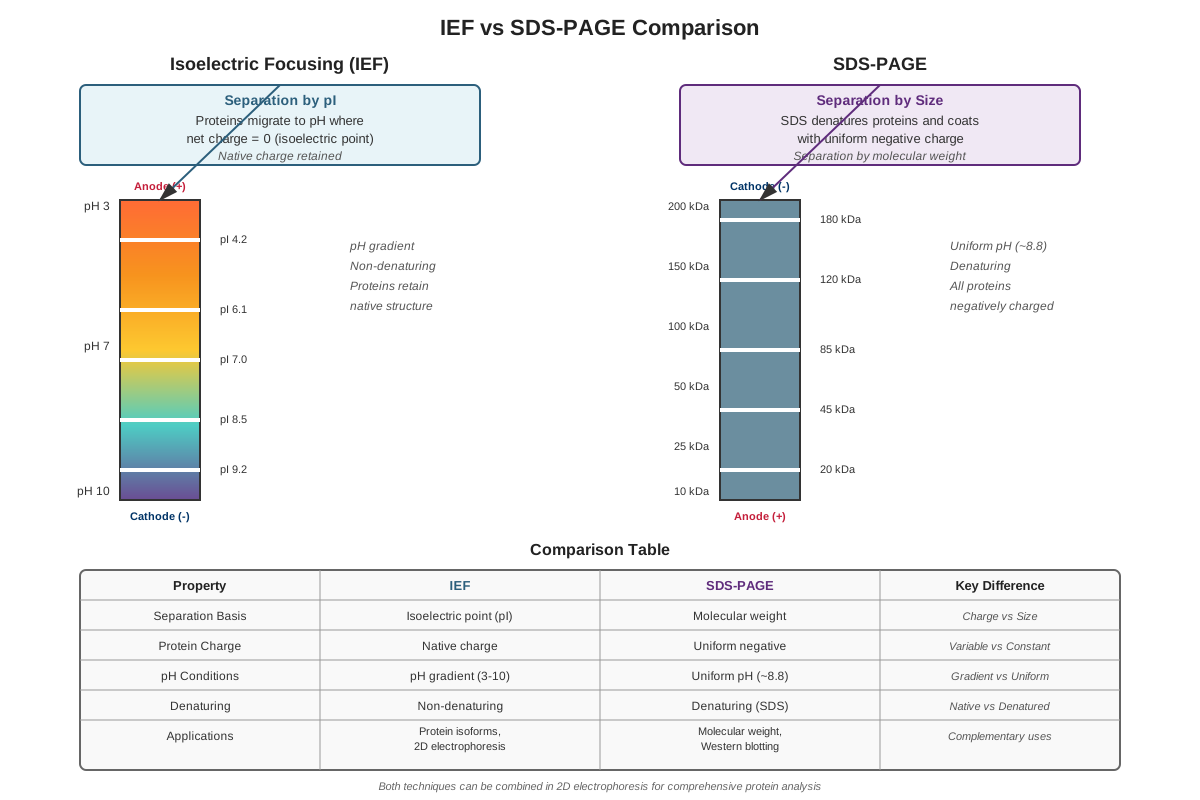
| SDS-PAGE | Molecular weight | Uniform pH, denaturing | Moderate (5-10% size difference) |
| Native PAGE | Charge and size | Uniform pH, native | Moderate |
| Ion-exchange chromatography | Net charge | Uniform pH | Moderate |
Unlike SDS-PAGE, which denatures proteins and coats them with negative charges to separate by size alone, IEF separates based on intrinsic charge properties. Unlike ion-exchange chromatography, which separates based on net charge at a single pH, IEF uses a pH gradient to achieve separation based on the specific pH where charge equals zero.
Concept Relationships
The concepts within isoelectric focusing form an interconnected network centered on the relationship between pH and protein charge. The isoelectric point serves as the central concept, determined by the ionization states of amino acid residues, which in turn depend on the pH of the environment relative to the pKa values of ionizable groups. This relationship drives protein migration in the electric field, with the pH gradient providing the spatial framework for separation.
The connection to prerequisite topics is direct: amino acid properties determine which residues contribute to protein charge; acid-base chemistry governs the ionization equilibria that establish charge states; protein structure determines which ionizable groups are accessible and how they interact; and basic electrophoresis principles explain the physical basis for migration in an electric field.
Isoelectric focusing connects forward to advanced topics in protein biochemistry. It serves as the first dimension in two-dimensional gel electrophoresis (IEF → SDS-PAGE), enabling comprehensive proteome analysis. Understanding IEF enhances comprehension of protein purification strategies, where multiple techniques are combined based on different protein properties. The concept of isoelectric point extends to protein solubility (proteins are least soluble at their pI) and protein-protein interactions (charge complementarity).
Conceptual flow: Amino acid composition → Ionizable groups → pKa values → pH-dependent ionization → Net charge at given pH → Isoelectric point → Migration in pH gradient → Focusing at pI → Protein separation
High-Yield Facts
⭐ Proteins migrate toward their isoelectric point and stop moving when they reach the pH equal to their pI
⭐ At pH < pI, proteins are positively charged and migrate toward the cathode (negative electrode)
⭐ At pH > pI, proteins are negatively charged and migrate toward the anode (positive electrode)
⭐ Proteins with lower pI values (acidic proteins) focus closer to the anode; proteins with higher pI values (basic proteins) focus closer to the cathode
⭐ Isoelectric focusing can resolve proteins differing by as little as 0.01 pH units in their pI values
- The pH gradient in IEF is established by carrier ampholytes or immobilized pH gradients (IPG)
- Proteins are least soluble at their isoelectric point because they lack charge-charge repulsion
- IEF is typically performed under denaturing conditions (8 M urea) to prevent protein aggregation
- The self-focusing property of IEF means that proteins that diffuse away from their pI are automatically driven back
- Two-dimensional gel electrophoresis combines IEF (first dimension, by pI) with SDS-PAGE (second dimension, by molecular weight)
- Acidic amino acids (Asp, Glu) lower a protein's pI; basic amino acids (Lys, Arg, His) raise a protein's pI
- Post-translational modifications like phosphorylation (adds negative charge) shift a protein's pI to lower values
- IEF requires removal of salts from samples because salts disrupt the pH gradient and increase conductivity
- The technique is used clinically to detect hemoglobin variants and to identify monoclonal proteins in multiple myeloma
Quick check — test yourself on Isoelectric focusing so far.
Try Flashcards →Common Misconceptions
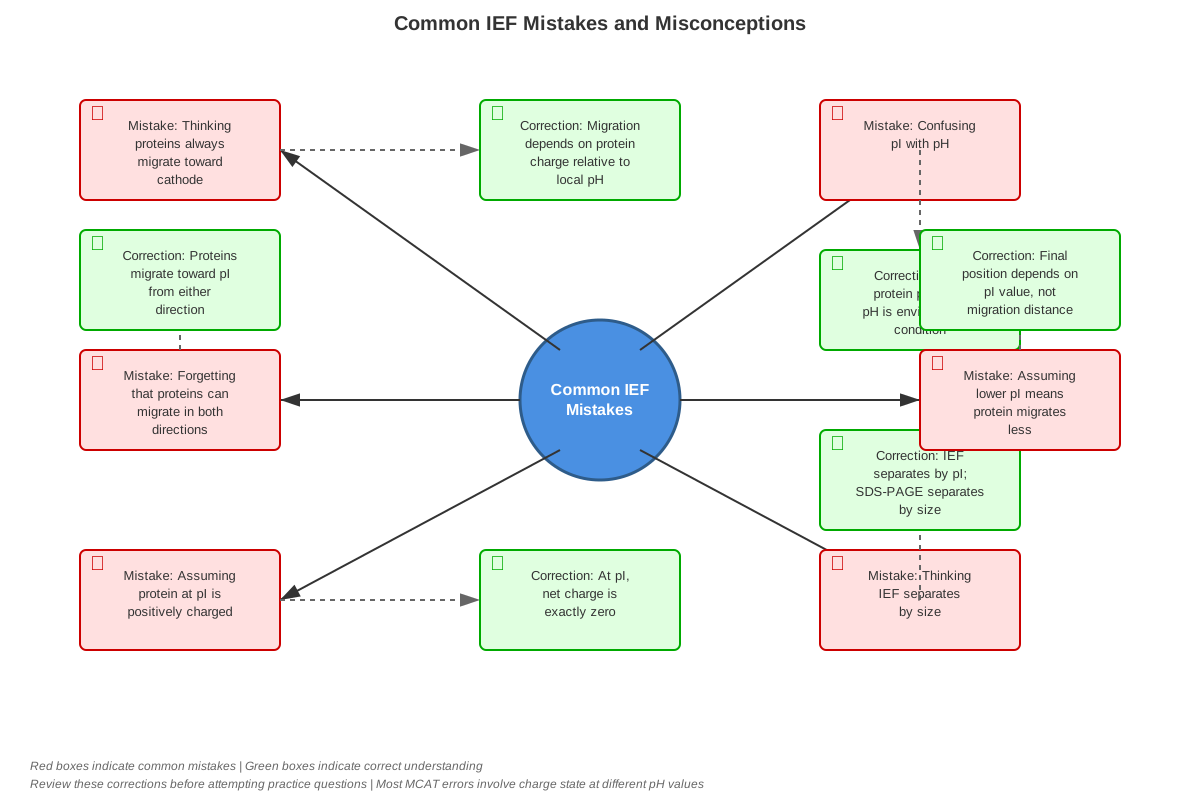
Misconception: Proteins always migrate from the negative electrode to the positive electrode in IEF
Correction: Protein migration direction depends on the protein's charge relative to its pI. Proteins below their pI are positively charged and migrate toward the cathode (negative electrode), while proteins above their pI are negatively charged and migrate toward the anode (positive electrode). Migration is bidirectional depending on starting position and pI.
Misconception: Isoelectric focusing separates proteins by size, just like SDS-PAGE
Correction: IEF separates proteins based solely on their isoelectric point (pI), not their molecular weight. Two proteins of vastly different sizes but identical pI values would focus at the same position in an IEF gel. SDS-PAGE separates by size; IEF separates by charge properties.
Misconception: A protein with a pI of 7.0 is neutral and has no ionizable groups
Correction: A protein with pI 7.0 has many ionizable groups, but at pH 7.0, the positive charges exactly balance the negative charges, resulting in zero net charge. The protein still contains charged residues; they simply cancel out at this pH.
Misconception: The anode is always at the acidic end of the pH gradient
Correction: The anode (positive electrode) is indeed typically placed at the acidic end because negatively charged molecules (which predominate at high pH) migrate toward it. However, the key is understanding that the anode attracts negative charges regardless of pH. The pH gradient orientation is a consequence of where ampholytes focus, not a fixed rule.
Misconception: Adding more basic amino acids to a protein will always increase its pI
Correction: While adding basic amino acids generally increases pI, the effect depends on the overall amino acid composition and the specific pKa values involved. The pI is determined by the collective ionization of all groups, so the context matters. Additionally, if basic residues are added to an already very basic protein, the incremental effect on pI diminishes.
Misconception: Proteins stop migrating in IEF because the electric field weakens at their pI
Correction: Proteins stop migrating because their net charge becomes zero at their pI, not because the electric field changes. The electric field remains constant throughout the gel; it's the protein's charge that changes as it moves through the pH gradient.
Misconception: IEF and ion-exchange chromatography are essentially the same technique
Correction: While both techniques exploit protein charge, they differ fundamentally. IEF uses a pH gradient and separates based on the specific pH where net charge equals zero (pI). Ion-exchange chromatography operates at a single pH and separates based on the magnitude of net charge at that pH. IEF provides much higher resolution for proteins with similar pI values.
Worked Examples
Example 1: Predicting Migration Patterns
Question: Three proteins are subjected to isoelectric focusing in a pH gradient ranging from pH 3 (anode) to pH 10 (cathode). Protein A has a pI of 4.5, Protein B has a pI of 7.0, and Protein C has a pI of 9.0. All proteins are initially loaded at pH 6.0 in the middle of the gel. Describe the migration pattern of each protein and their final positions.
Solution:
Step 1: Determine the initial charge of each protein at pH 6.0 (loading position)
- Protein A (pI 4.5): At pH 6.0 > pI 4.5, the protein is negatively charged
- Protein B (pI 7.0): At pH 6.0 < pI 7.0, the protein is positively charged
- Protein C (pI 9.0): At pH 6.0 < pI 9.0, the protein is positively charged
Step 2: Determine migration direction based on charge
- Protein A (negative): Migrates toward the anode (positive electrode) at the acidic end
- Protein B (positive): Migrates toward the cathode (negative electrode) at the basic end
- Protein C (positive): Migrates toward the cathode (negative electrode) at the basic end
Step 3: Determine where each protein stops
- Protein A: Stops at pH 4.5 (its pI), near the anode
- Protein B: Stops at pH 7.0 (its pI), in the middle region
- Protein C: Stops at pH 9.0 (its pI), near the cathode
Step 4: Describe final positions from anode to cathode
Final order: Protein A (pH 4.5) → Protein B (pH 7.0) → Protein C (pH 9.0)
Key insight: Proteins with lower pI values focus closer to the anode (acidic end), while proteins with higher pI values focus closer to the cathode (basic end). The initial loading position doesn't affect the final outcome—proteins will migrate to their respective pI positions regardless of where they start.
Example 2: Analyzing Post-Translational Modifications
Question: A researcher performs isoelectric focusing on a protein before and after phosphorylation. The unmodified protein focuses at pH 6.5. After phosphorylation of three serine residues, where would you expect the modified protein to focus, and why? If both forms are run on the same IEF gel, how would you distinguish them?
Solution:
Step 1: Analyze the effect of phosphorylation on protein charge
- Phosphorylation adds phosphate groups (PO₄³⁻) to serine residues
- Each phosphate group carries negative charges (typically -2 at physiological pH)
- Adding three phosphate groups adds approximately 6 negative charges to the protein
Step 2: Predict the effect on pI
- Adding negative charges makes the protein more acidic
- The pI will shift to a lower value (more acidic)
- The phosphorylated protein will have a pI lower than 6.5
Step 3: Predict the focusing position
- The phosphorylated protein will focus at a more acidic pH than the unmodified protein
- Expected position: pH < 6.5, closer to the anode
- The exact value depends on the total number of ionizable groups, but a shift of 0.5-1.5 pH units is typical for three phosphorylations
Step 4: Describe how to distinguish the forms
- On an IEF gel, two distinct bands would appear
- The unmodified protein band appears at pH 6.5
- The phosphorylated protein band appears at a lower pH (more acidic), closer to the anode
- The separation between bands depends on the resolution of the pH gradient
Answer: The phosphorylated protein would focus at a pH lower than 6.5 (more acidic), appearing as a separate band closer to the anode on the IEF gel. This shift occurs because phosphorylation adds negative charges, making the protein more acidic and lowering its pI. This principle is used in research to detect and analyze post-translational modifications.
Key insight: Post-translational modifications that add charged groups alter a protein's pI and can be detected by IEF. Phosphorylation, acetylation, and deamidation shift pI to lower values (more acidic), while deamination of acidic residues shifts pI to higher values (more basic).
Exam Strategy
When approaching isoelectric focusing MCAT questions, follow this systematic strategy:
Step 1: Identify the question type
- Is it asking about migration direction? → Compare pH to pI
- Is it asking about final positions? → Rank proteins by pI values
- Is it asking about experimental design? → Consider pH gradient range and resolution
- Is it asking about modifications? → Determine how charge changes affect pI
Step 2: Watch for trigger words and phrases
- "Isoelectric point," "pI" → The pH where net charge = 0
- "Migrate toward the anode" → Protein is negatively charged (pH > pI)
- "Migrate toward the cathode" → Protein is positively charged (pH < pI)
- "Focused" or "stops migrating" → Protein has reached its pI
- "Acidic protein" → Low pI, focuses near anode
- "Basic protein" → High pI, focuses near cathode
- "pH gradient" → The spatial arrangement of pH values in the gel
Step 3: Apply the cardinal rule
If pH < pI, the protein is positively charged. If pH > pI, the protein is negatively charged.
This single rule allows you to answer most IEF questions. Draw a simple diagram if needed, marking the pH gradient and electrode positions.
Step 4: Use process of elimination
- Eliminate answers that violate the pH-pI-charge relationship
- Eliminate answers that place acidic proteins (low pI) near the cathode or basic proteins (high pI) near the anode
- Eliminate answers that suggest proteins migrate away from their pI
- Eliminate answers that confuse IEF with SDS-PAGE (size-based separation)
Step 5: Time allocation
- Discrete IEF questions: 60-90 seconds (straightforward application of pH-pI relationship)
- Passage-based IEF questions: 90-120 seconds (require data interpretation)
- If a question requires complex calculations, estimate rather than calculate precisely—the MCAT rarely requires exact numerical answers for IEF
Common trap answers to avoid:
- Answers suggesting proteins migrate based on size in IEF
- Answers placing proteins in positions inconsistent with their pI values
- Answers suggesting the electric field varies across the gel
- Answers confusing anode and cathode positions
Pro tip: When analyzing IEF gels in passages, immediately label the pH gradient direction and electrode positions. This visual reference prevents confusion about migration direction.
Memory Techniques
Mnemonic for charge and migration: "PAPI" (Positive Above pI)
- When pH is Above the pI, the protein is Negative (migrates to anode)
- When pH is Below the pI, the protein is Positive (migrates to cathode)
- Alternative: "Below = Basic = Positive"
Mnemonic for electrode positions: "A-A-A" (Anode-Acidic-Attracts negative)
- The Anode is at the Acidic end and Attracts negatively charged proteins
- The Cathode is at the basic end and attracts positively charged proteins
- Remember: "Cats are positive" (Cathode = positive electrode)
Visualization strategy: Picture a pH gradient as a hill
- The acidic end (low pH) is at the bottom (anode)
- The basic end (high pH) is at the top (cathode)
- Proteins "roll" to their pI position and stop
- Acidic proteins (low pI) stop near the bottom; basic proteins (high pI) stop near the top
Acronym for IEF characteristics: "SHARP"
- Separates by charge (specifically, by pI)
- High resolution (0.01 pH units)
- Ampholytes create pH gradient
- Reversible focusing (proteins return to pI if they diffuse away)
- Proteins stop at their pI
Memory aid for pI shifts: "PANDA" (Phosphorylation And Negative charges Decrease Acidity... wait, increase acidity!)
- Better: "Phosphorylation Pushes Proteins to Acidic positions"
- Adding negative charges (phosphorylation, acetylation) → Lower pI → Focus at more acidic pH
- Adding positive charges (rare) → Higher pI → Focus at more basic pH
Conceptual anchor: Link IEF to a familiar concept
- Think of IEF as proteins "finding their home" in a pH neighborhood
- Each protein has a specific pH address (its pI) where it's comfortable (uncharged)
- The electric field is like a GPS that guides proteins to their address
- Once home, they stay put (focused)
Summary
Isoelectric focusing is a high-resolution electrophoretic technique that separates proteins based on their isoelectric point (pI)—the pH at which a protein carries no net charge. The technique employs a stable pH gradient established by carrier ampholytes or immobilized pH gradients. When an electric field is applied, proteins migrate through the gradient until they reach the pH equal to their pI, where they become uncharged and stop migrating. This self-focusing property provides exceptional resolution, distinguishing proteins that differ by as little as 0.01 pH units. Proteins with pH below their pI are positively charged and migrate toward the cathode, while proteins with pH above their pI are negatively charged and migrate toward the anode. The final positions reflect pI values: acidic proteins (low pI) focus near the anode, and basic proteins (high pI) focus near the cathode. For the MCAT, students must understand the pH-pI-charge relationship, predict migration patterns, interpret experimental data, and distinguish IEF from other separation techniques like SDS-PAGE.
Key Takeaways
- Isoelectric focusing separates proteins based on their isoelectric point (pI), not their size or shape
- The cardinal rule: At pH < pI, proteins are positively charged; at pH > pI, proteins are negatively charged
- Proteins migrate toward their pI and stop when they reach it, creating sharp, focused bands
- Acidic proteins (low pI) focus near the anode; basic proteins (high pI) focus near the cathode
- IEF provides exceptional resolution (0.01 pH units) due to the self-focusing effect
- Post-translational modifications that add negative charges (phosphorylation) shift pI to lower values
- IEF differs from SDS-PAGE: IEF separates by pI using a pH gradient; SDS-PAGE separates by size using uniform pH and denaturing conditions
Related Topics
Two-Dimensional Gel Electrophoresis (2D-PAGE): Combines IEF as the first dimension with SDS-PAGE as the second dimension, enabling separation of complex protein mixtures by both pI and molecular weight. Mastering IEF is essential for understanding this powerful proteomics technique.
Ion-Exchange Chromatography: Another charge-based separation method that operates at a single pH rather than using a pH gradient. Understanding IEF helps clarify how different charge-based techniques exploit protein properties differently.
Protein Solubility and Precipitation: Proteins are least soluble at their pI because they lack charge-charge repulsion. This principle connects IEF concepts to protein purification and crystallization strategies.
Post-Translational Modifications: Phosphorylation, acetylation, glycosylation, and other modifications alter protein charge and pI. IEF is a key technique for detecting and analyzing these modifications.
Electrophoresis Techniques (SDS-PAGE, Native PAGE): Understanding the distinctions between different electrophoretic methods—what each separates by and under what conditions—is crucial for MCAT success.
Practice CTA
Now that you've mastered the core concepts of isoelectric focusing, it's time to reinforce your understanding through active practice. Work through the practice questions to test your ability to predict protein migration, interpret experimental data, and apply IEF principles to novel scenarios. Use the flashcards to drill the high-yield facts until they become automatic. Remember: understanding the pH-pI-charge relationship is the key to unlocking every IEF question on the MCAT. You've built a strong foundation—now solidify it through deliberate practice. Your ability to quickly analyze IEF scenarios will serve you well not only on discrete questions but also in complex passage-based questions where IEF appears as part of experimental design. Keep pushing forward!
Sign up free to keep reading
Create a free AnvayaPrep account to finish this MCAT guide on Isoelectric focusing — plus flashcards and practice questions.