Overview
Gel electrophoresis is a fundamental laboratory technique in Molecular Biology and Genetics that separates macromolecules—primarily DNA, RNA, and proteins—based on their size and charge. This technique exploits the principle that charged molecules migrate through a porous gel matrix when subjected to an electric field, with smaller molecules traveling faster and farther than larger ones. The method has become indispensable in modern biological research, clinical diagnostics, and forensic science, making it a high-yield topic for the MCAT.
Understanding gel electrophoresis is essential for the MCAT because it frequently appears in experimental passages within the Biological and Biochemical Foundations of Living Systems section. Test-makers use this technique to assess students' ability to interpret experimental data, understand molecular properties, and apply principles of chemistry and physics to biological systems. Questions may ask students to predict migration patterns, identify molecules based on band positions, or troubleshoot experimental protocols. The technique also serves as a gateway to understanding more advanced molecular biology methods like Southern blotting, Western blotting, and DNA fingerprinting.
The broader significance of gel electrophoresis in Biology extends to its connections with DNA structure, protein biochemistry, and genetic analysis. Mastery of this topic requires integrating knowledge of molecular charge, size relationships, buffer chemistry, and the physical properties of nucleic acids and proteins. This integration makes gel electrophoresis an excellent vehicle for testing interdisciplinary understanding—a hallmark of MCAT question design.
Learning Objectives
- [ ] Define gel electrophoresis using accurate Biology terminology
- [ ] Explain why gel electrophoresis matters for the MCAT
- [ ] Apply gel electrophoresis to exam-style questions
- [ ] Identify common mistakes related to gel electrophoresis
- [ ] Connect gel electrophoresis to related Biology concepts
- [ ] Predict the relative migration distances of DNA fragments of different sizes
- [ ] Distinguish between agarose and polyacrylamide gel electrophoresis and their appropriate applications
- [ ] Interpret gel electrophoresis results to determine molecular weight and purity of samples
Prerequisites
- DNA and RNA structure: Understanding nucleic acid composition, including the phosphate backbone that confers negative charge, is essential for predicting migration behavior
- Protein structure: Knowledge of amino acid properties and how pH affects protein charge is necessary for protein electrophoresis applications
- Basic chemistry principles: Familiarity with charge, electric fields, and molecular interactions helps explain the physical basis of separation
- Molecular weight concepts: Understanding the relationship between molecular size and mobility through porous media is fundamental to interpreting results
- Buffer systems: Basic knowledge of pH and ionic strength affects gel performance and molecule migration
Why This Topic Matters
Gel electrophoresis serves as a cornerstone technique in molecular biology laboratories worldwide. Clinically, it enables genetic testing for inherited disorders, paternity testing, cancer diagnostics through DNA and protein analysis, and infectious disease identification. Forensic scientists use gel electrophoresis for DNA fingerprinting in criminal investigations. In research settings, scientists employ this technique daily for cloning verification, PCR product analysis, and protein purification assessment.
On the MCAT, gel electrophoresis appears in approximately 3-5% of Biological and Biochemical Foundations questions, typically within experimental passages. The exam tests this concept through several question formats: interpreting gel images to identify unknown samples, predicting migration patterns based on molecular properties, analyzing experimental controls, and troubleshooting protocol errors. Questions often integrate gel electrophoresis with other techniques like PCR, restriction enzyme digestion, or protein purification, requiring students to synthesize multiple concepts.
Common MCAT passage scenarios include: comparing wild-type and mutant DNA sequences, analyzing protein expression levels in different tissues, verifying successful gene cloning, and identifying restriction fragment length polymorphisms (RFLPs). The exam particularly favors questions that require students to apply principles rather than simply recall facts, such as predicting how changing buffer pH or gel concentration would affect separation quality.
Core Concepts
Fundamental Principles of Gel Electrophoresis
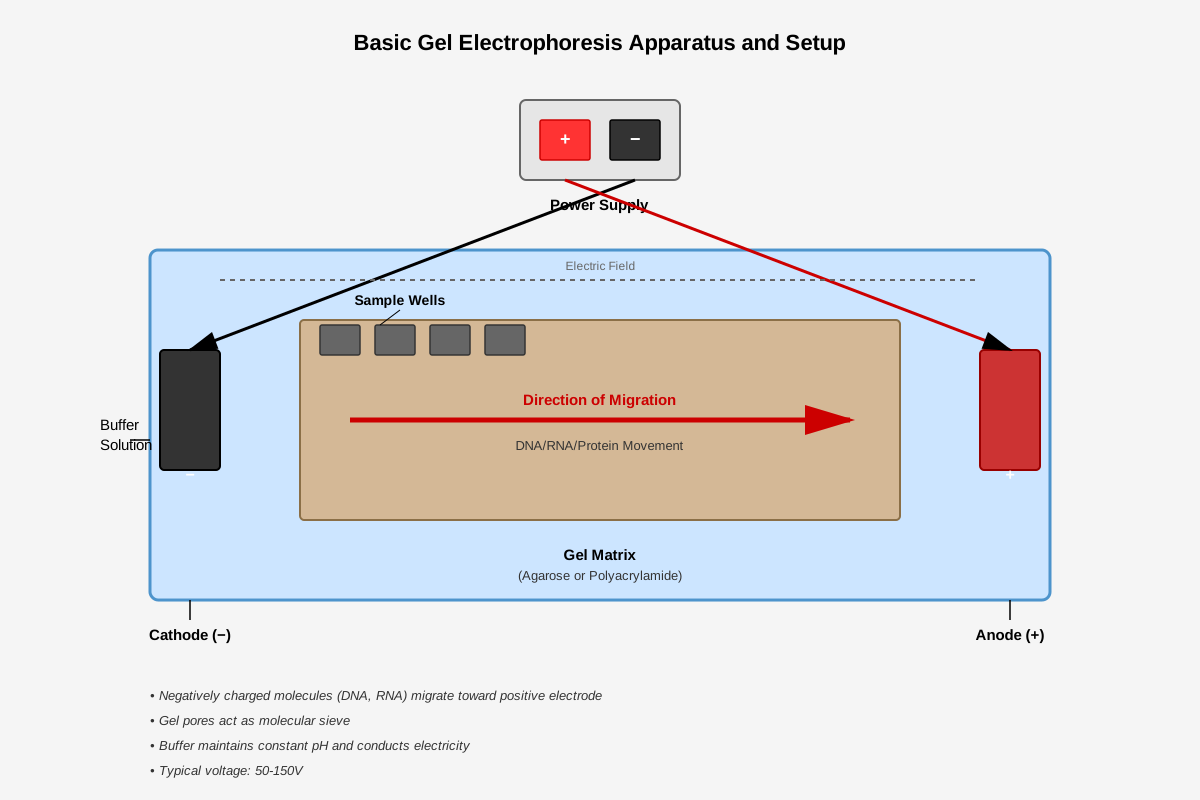
Gel electrophoresis is a separation technique that relies on the differential migration of charged molecules through a porous gel matrix under the influence of an electric field. The gel serves as a molecular sieve, with pore sizes that impede larger molecules more than smaller ones. When voltage is applied across the gel, molecules migrate toward the electrode of opposite charge—negatively charged molecules move toward the positive electrode (anode), while positively charged molecules move toward the negative electrode (cathode).
The rate of migration depends on three primary factors:
- Molecular size: Smaller molecules navigate through gel pores more easily and travel farther in a given time
- Molecular charge: Greater net charge results in stronger attraction to the opposite electrode and faster migration
- Gel matrix properties: Pore size, determined by gel concentration, affects the sieving effect
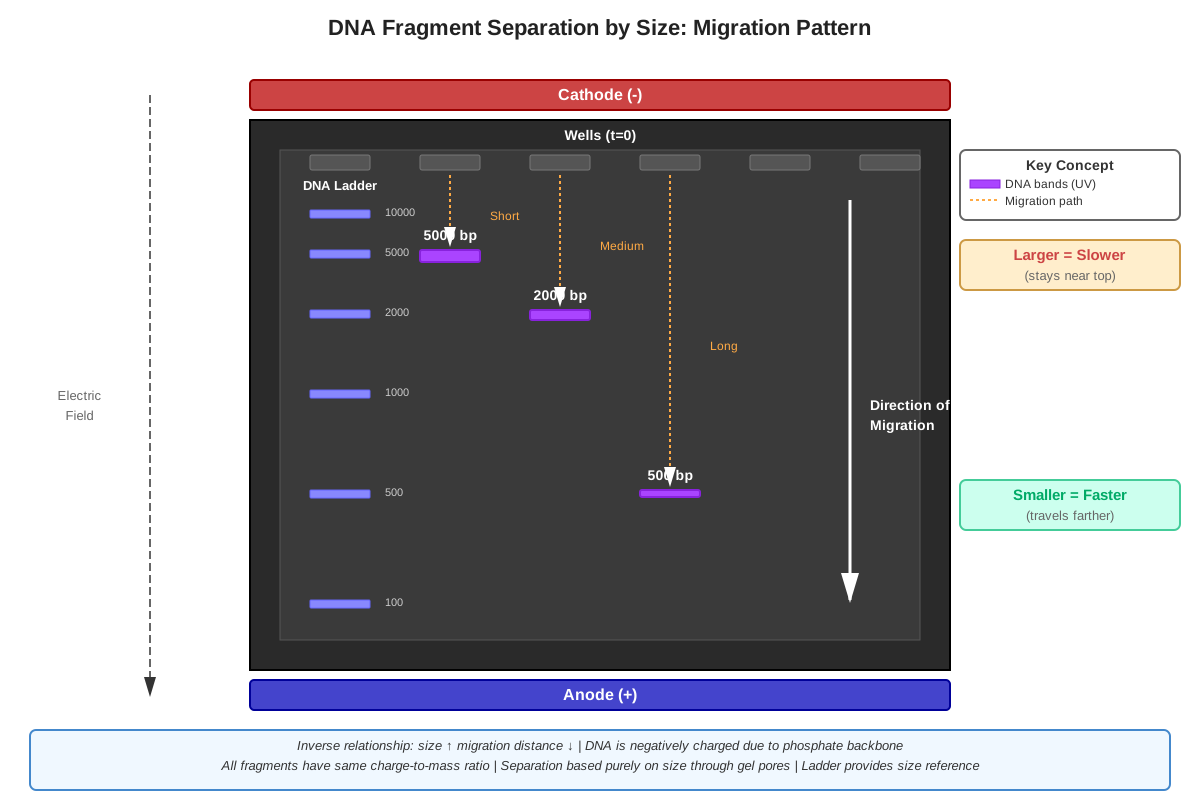
For nucleic acids, the charge-to-mass ratio remains relatively constant because the phosphate backbone provides uniform negative charge per nucleotide. Therefore, DNA and RNA fragments separate almost exclusively by size. Proteins, however, have variable charge-to-mass ratios depending on their amino acid composition, requiring special treatment for size-based separation.
Types of Gel Matrices
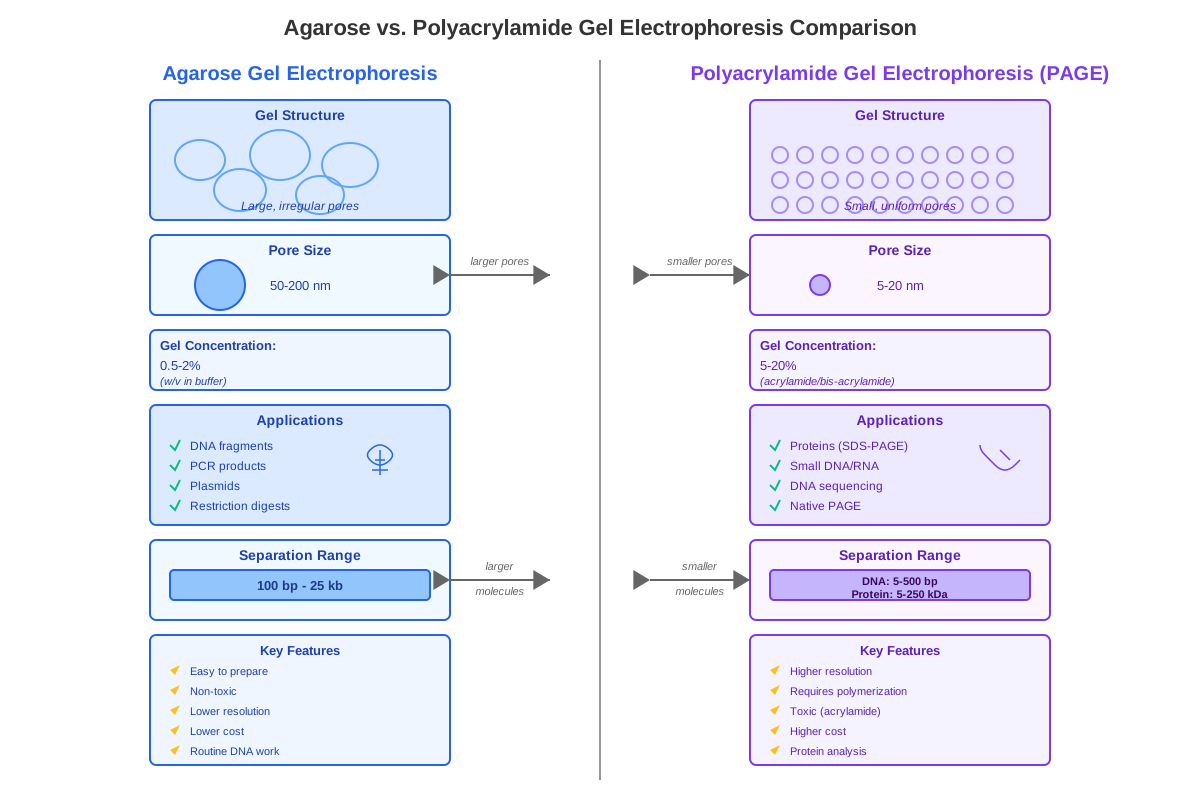
| Gel Type | Composition | Pore Size | Best For | Separation Range |
|---|---|---|---|---|
| Agarose | Polysaccharide from seaweed | Large (0.5-2% typical) | DNA, large RNA | 100 bp - 25 kb |
| Polyacrylamide | Synthetic polymer | Small (5-20% typical) | Proteins, small DNA/RNA | 5 bp - 500 bp (DNA); 10-200 kDa (proteins) |
Agarose gel electrophoresis is the workhorse technique for DNA analysis. Agarose concentration inversely affects pore size: lower concentrations (0.5-0.8%) create larger pores suitable for separating large DNA fragments (5-50 kb), while higher concentrations (1.5-2.0%) provide better resolution for small fragments (100-1000 bp). The gel is prepared by dissolving agarose powder in buffer, heating until clear, then pouring into a casting tray with a comb to create sample wells.
Polyacrylamide gel electrophoresis (PAGE) offers superior resolution for small molecules due to its smaller, more uniform pore structure. The gel forms through polymerization of acrylamide monomers cross-linked with bis-acrylamide. PAGE is essential for protein analysis and DNA sequencing applications. The percentage of acrylamide determines pore size and separation range.
SDS-PAGE for Protein Analysis
Sodium dodecyl sulfate polyacrylamide gel electrophoresis (SDS-PAGE) is the standard method for separating proteins by molecular weight. SDS is an anionic detergent that denatures proteins and coats them with a uniform negative charge proportional to their length. This treatment accomplishes two critical functions:
- Denaturation: SDS disrupts non-covalent interactions, unfolding proteins into linear chains
- Charge masking: The negative charges from SDS overwhelm the protein's intrinsic charge, creating a constant charge-to-mass ratio
Before electrophoresis, protein samples are heated with SDS and a reducing agent (β-mercaptoethanol or DTT) that breaks disulfide bonds. This ensures complete denaturation and linearization. After SDS treatment, all proteins migrate based solely on molecular weight, with smaller proteins traveling farther than larger ones.
A molecular weight ladder (protein standard) containing proteins of known sizes runs alongside samples, enabling molecular weight determination by comparing migration distances. The relationship between migration distance and log(molecular weight) is approximately linear within the separation range.
Visualization Methods
After electrophoresis, molecules must be visualized to interpret results. Different staining methods suit different applications:
For DNA/RNA:
- Ethidium bromide (EtBr): Intercalates between nucleic acid base pairs and fluoresces orange under UV light; highly sensitive but mutagenic
- SYBR dyes: Safer alternatives to EtBr with similar or better sensitivity
- Autoradiography: Uses radioactively labeled samples for maximum sensitivity
For proteins:
- Coomassie Blue: Binds to proteins non-specifically; detects 0.1-1 μg protein per band
- Silver staining: More sensitive (1-10 ng per band) but more complex protocol
- Western blotting: Uses antibodies for specific protein detection after transfer to membrane
Experimental Setup and Procedure
The standard gel electrophoresis protocol follows these steps:
- Gel preparation: Cast gel with appropriate concentration for target molecule size; insert comb to form wells
- Sample preparation: Mix samples with loading dye containing glycerol (for density) and tracking dye (to monitor progress)
- Loading: Carefully pipette samples into wells submerged in buffer
- Electrophoresis: Apply voltage (typically 50-150V for agarose, higher for PAGE); run until tracking dye reaches appropriate position
- Visualization: Stain gel and image under appropriate light source
- Analysis: Compare band positions to standards; measure migration distances
The buffer system maintains constant pH and provides ions for electrical conductivity. Common buffers include TAE (Tris-acetate-EDTA) and TBE (Tris-borate-EDTA) for DNA, and Tris-glycine for proteins. EDTA chelates metal ions that could activate nucleases, protecting DNA from degradation.
Migration Patterns and Analysis
In gel electrophoresis Biology, the migration distance is inversely proportional to the logarithm of molecular size. This relationship allows quantitative analysis:
Migration distance ∝ -log(molecular weight)For DNA fragments, doubling the size approximately halves the migration distance. A 1000 bp fragment travels roughly twice as far as a 2000 bp fragment under identical conditions. This predictable relationship enables:
- Size determination: Compare unknown bands to molecular weight markers
- Quantification: Band intensity correlates with DNA/protein amount (within linear range)
- Purity assessment: Single sharp band indicates pure sample; multiple bands suggest contamination or degradation
Factors Affecting Separation Quality
Several variables influence gel electrophoresis resolution and results:
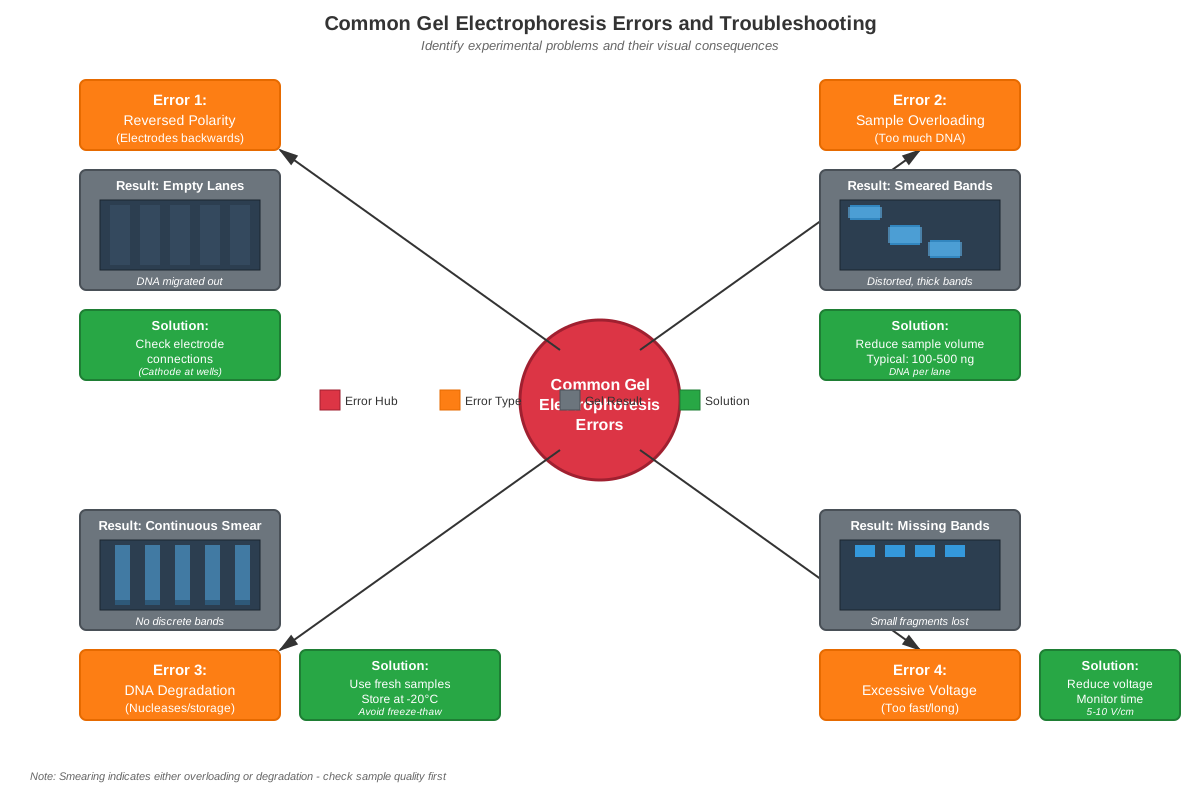
Voltage: Higher voltage increases migration speed but generates more heat, potentially causing band distortion. Optimal voltage balances speed with resolution.
Gel concentration: Must match target molecule size range. Too concentrated impedes large molecules; too dilute provides poor resolution for small molecules.
Buffer ionic strength: Affects conductivity and heat generation. Higher ionic strength increases current and heat.
Temperature: Elevated temperature from excessive current can denature samples and cause uneven migration (smiling or frowning bands).
Sample volume: Overloading wells causes band spreading and poor resolution; underloading reduces detection sensitivity.
Concept Relationships
The principles underlying gel electrophoresis directly connect to fundamental concepts in chemistry and physics. The technique applies electrochemistry principles, where charged molecules respond to electric potential differences. Understanding molecular structure is essential—the phosphate backbone of nucleic acids explains their uniform negative charge, while protein amino acid composition determines their charge at different pH values.
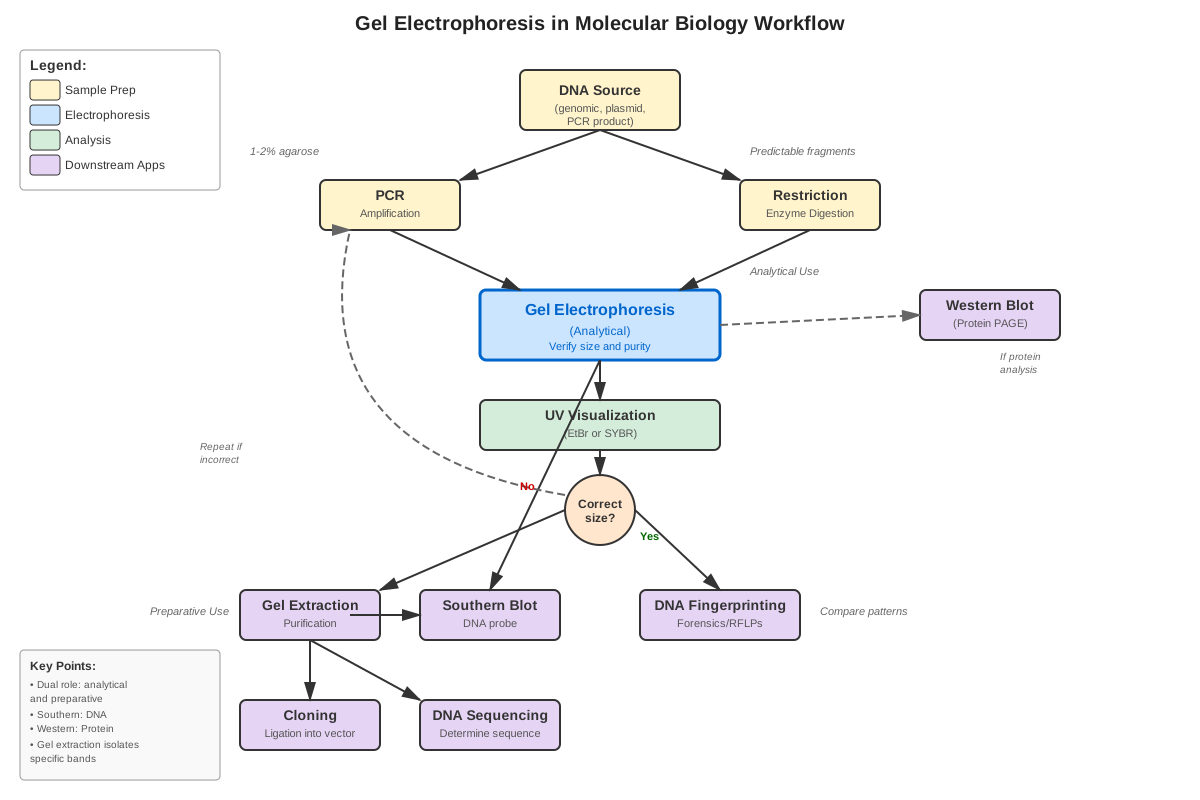
Gel electrophoresis serves as a prerequisite for advanced molecular biology techniques. Southern blotting begins with DNA gel electrophoresis, followed by transfer to a membrane and hybridization with labeled probes. Northern blotting applies the same principle to RNA analysis, while Western blotting analyzes proteins after SDS-PAGE. DNA fingerprinting relies on gel electrophoresis to separate restriction fragments, creating unique patterns for individual identification.
The relationship map flows as follows:
DNA/Protein structure → Charge properties → Migration in electric field → Size-based separation → Band pattern analysis → Molecular identification/quantification → Advanced applications (blotting, fingerprinting, sequencing)
Within the Molecular Biology and Genetics unit, gel electrophoresis connects to PCR (analyzing amplification products), restriction enzymes (separating digestion fragments), cloning (verifying insert size), and gene expression (comparing protein levels). These techniques often appear together in MCAT passages, requiring integrated understanding.
High-Yield Facts
⭐ DNA and RNA migrate toward the positive electrode (anode) because their phosphate backbones carry negative charges
⭐ Smaller molecules migrate farther through the gel than larger molecules in the same time period
⭐ In SDS-PAGE, proteins are denatured and coated with negative charge, allowing separation by molecular weight alone
⭐ Agarose gels separate large DNA fragments (100 bp - 25 kb), while polyacrylamide gels separate small fragments and proteins
⭐ The relationship between migration distance and log(molecular weight) is approximately linear
- Ethidium bromide intercalates into DNA and fluoresces under UV light for visualization
- Lower agarose concentration creates larger pores suitable for separating larger DNA fragments
- Loading dye contains glycerol for density and tracking dye to monitor electrophoresis progress
- Buffer systems maintain pH and provide ions for electrical conductivity
- Molecular weight ladders contain molecules of known sizes for comparison and size determination
- Overloading samples causes band spreading and poor resolution
- Higher voltage increases migration speed but generates more heat, potentially distorting bands
- EDTA in buffers chelates metal ions that could activate nucleases
- Band intensity correlates with the amount of DNA or protein present (within linear detection range)
- Multiple bands in a single lane may indicate sample degradation, contamination, or multiple isoforms
Quick check — test yourself on Gel electrophoresis so far.
Try Flashcards →Common Misconceptions
Misconception: DNA migrates toward the negative electrode because it contains bases.
Correction: DNA migrates toward the positive electrode (anode) because the phosphate groups in the sugar-phosphate backbone carry negative charges. The bases are uncharged and do not determine migration direction.
Misconception: Larger DNA fragments migrate farther than smaller fragments.
Correction: Smaller DNA fragments migrate farther because they navigate through gel pores more easily. Larger fragments are impeded more by the gel matrix and travel shorter distances in the same time period.
Misconception: Proteins always migrate toward the positive electrode in gel electrophoresis.
Correction: Native proteins migrate based on their net charge at the buffer pH, which can be positive, negative, or neutral. Only in SDS-PAGE, where SDS coats proteins with uniform negative charge, do all proteins migrate toward the positive electrode.
Misconception: Agarose and polyacrylamide gels are interchangeable for any application.
Correction: Agarose gels have larger pores and are best for separating large DNA fragments (100 bp - 25 kb), while polyacrylamide gels have smaller pores providing superior resolution for small DNA fragments (5-500 bp) and proteins (10-200 kDa).
Misconception: The intensity of a band directly indicates the concentration of DNA without any limitations.
Correction: Band intensity correlates with DNA concentration only within the linear detection range of the visualization method. Very faint bands may be below detection limits, while very intense bands may saturate the detector, both leading to inaccurate quantification.
Misconception: Higher voltage always improves separation quality.
Correction: While higher voltage increases migration speed, it also generates more heat, which can cause band distortion, uneven migration patterns, and even DNA denaturation. Optimal voltage balances speed with resolution quality.
Misconception: All proteins have the same charge-to-mass ratio, so they separate by size in native PAGE.
Correction: Proteins have variable amino acid compositions, resulting in different charge-to-mass ratios. Native PAGE separates proteins by both size and charge. Only SDS-PAGE, where SDS treatment creates uniform charge-to-mass ratios, separates proteins purely by molecular weight.
Worked Examples
Example 1: Analyzing a DNA Gel Electrophoresis Result
Scenario: A researcher performs restriction enzyme digestion on a 5000 bp plasmid using EcoRI, which cuts at two sites. The digestion products are run on a 1% agarose gel alongside a DNA ladder. The gel shows two bands: one that migrated the same distance as the 3000 bp ladder band, and another that migrated the same distance as the 2000 bp ladder band.
Question: Are these results consistent with complete digestion? What would you expect if the digestion were incomplete?
Solution:
Step 1: Analyze the expected products. If EcoRI cuts at two sites in a circular 5000 bp plasmid, it should produce two linear fragments. The sizes must sum to 5000 bp.
Step 2: Check the observed bands. The gel shows bands at 3000 bp and 2000 bp positions. Sum: 3000 + 2000 = 5000 bp ✓
Step 3: Evaluate completeness. The presence of exactly two bands matching the expected total size indicates complete digestion. All plasmid molecules were cut at both sites.
Step 4: Predict incomplete digestion results. If digestion were incomplete, additional bands would appear:
- Uncut plasmid (supercoiled) would migrate faster than expected for its size due to compact structure
- Plasmid cut at only one site (linearized 5000 bp) would appear as a band at the 5000 bp position
- The presence of these additional bands alongside the 3000 bp and 2000 bp fragments would indicate incomplete digestion
Answer: Yes, the results are consistent with complete digestion. The two bands sum to the original plasmid size, and no additional bands indicate uncut or partially cut plasmid. Incomplete digestion would show additional bands at positions corresponding to uncut (supercoiled) or singly-cut (5000 bp linear) plasmid.
Connection to learning objectives: This example applies gel electrophoresis principles to interpret experimental results, demonstrating how band positions relate to molecular size and how to troubleshoot experimental outcomes.
Example 2: Comparing Protein Migration in SDS-PAGE
Scenario: Three proteins are analyzed by SDS-PAGE: Protein A (50 kDa), Protein B (50 kDa with two disulfide bonds), and Protein C (25 kDa). Samples are prepared under two conditions: Lane 1 contains all three proteins with SDS but without reducing agent; Lane 2 contains all three proteins with SDS and β-mercaptoethanol (reducing agent).
Question: Describe the expected band pattern in each lane and explain the differences.
Solution:
Step 1: Analyze Lane 1 (SDS without reducing agent).
- Protein A (50 kDa, no disulfide bonds): Fully denatured by SDS, migrates according to 50 kDa position
- Protein B (50 kDa with disulfide bonds): SDS denatures the protein but disulfide bonds remain intact, maintaining more compact structure. May migrate faster than expected for 50 kDa (appears smaller)
- Protein C (25 kDa): Fully denatured by SDS, migrates according to 25 kDa position
- Expected pattern: Three bands, with Protein B possibly migrating between the 50 kDa and 25 kDa positions
Step 2: Analyze Lane 2 (SDS with reducing agent).
- β-mercaptoethanol breaks disulfide bonds in all proteins
- Protein A (50 kDa): No change from Lane 1, migrates at 50 kDa position
- Protein B (50 kDa): Now fully linearized with disulfide bonds broken, migrates at true 50 kDa position
- Protein C (25 kDa): No change from Lane 1, migrates at 25 kDa position
- Expected pattern: Two bands—one at 50 kDa (Proteins A and B together) and one at 25 kDa (Protein C)
Step 3: Compare lanes.
- Lane 1 shows three distinct bands (if Protein B's disulfide bonds significantly affect migration)
- Lane 2 shows two bands, with the 50 kDa band potentially more intense (two proteins)
- The difference reveals the importance of reducing agents for accurate molecular weight determination
Answer: Lane 1 shows three bands because Protein B's intact disulfide bonds cause aberrant migration. Lane 2 shows two bands (50 kDa and 25 kDa) because β-mercaptoethanol breaks disulfide bonds, allowing Proteins A and B to co-migrate at their true molecular weight. This demonstrates that complete denaturation requires both SDS and reducing agents for proteins with disulfide bonds.
Connection to learning objectives: This example illustrates the principles of SDS-PAGE, the importance of sample preparation, and how to interpret gel results by applying knowledge of protein structure and denaturation.
Exam Strategy
When approaching gel electrophoresis MCAT questions, begin by identifying what type of molecule is being analyzed (DNA, RNA, or protein) and what gel system is used (agarose, PAGE, or SDS-PAGE). This immediately tells you the basis of separation and migration direction.
Trigger words and phrases to recognize:
- "Migrates toward the anode" → indicates negatively charged molecules (DNA, RNA, SDS-coated proteins)
- "Smaller fragments" → will migrate farther
- "Molecular weight ladder" or "standard" → used for size comparison
- "Reducing conditions" → disulfide bonds are broken
- "Native gel" → proteins retain their charge and structure
- "Restriction digest" → DNA cut into fragments of predictable sizes
Process-of-elimination strategies:
- Eliminate answers that reverse the size-distance relationship (claiming larger molecules migrate farther)
- Eliminate answers that incorrectly state DNA migrates toward the cathode (negative electrode)
- For protein questions, eliminate answers that ignore whether reducing agents were used
- For gel choice questions, eliminate agarose for small molecules (<100 bp) and polyacrylamide for large DNA (>1 kb)
Time allocation advice:
Gel electrophoresis questions typically appear with accompanying gel images in passages. Spend 30-45 seconds analyzing the gel image before reading questions: identify the ladder, note band positions, and determine the molecule type. This upfront investment saves time on individual questions. For standalone questions, 60-90 seconds should suffice—these usually test straightforward principles rather than complex analysis.
Common question formats:
- Interpretation questions: "Which lane contains the smallest DNA fragment?" → Compare migration distances
- Prediction questions: "If the protein contains disulfide bonds and no reducing agent is used, how will it migrate?" → Apply denaturation principles
- Troubleshooting questions: "The gel shows smeared bands instead of sharp bands. What is the most likely cause?" → Consider technical factors
- Application questions: "Which gel type would best separate a 150 bp PCR product?" → Match gel properties to molecule size
Exam Tip: When a passage describes an experiment using gel electrophoresis, immediately note the controls. MCAT questions frequently ask about the purpose of positive controls (known samples) and negative controls (no DNA/protein). Understanding why controls are included demonstrates experimental reasoning skills.
Memory Techniques
Mnemonic for DNA migration: "Negative Nucleic acids go to Anode" (NNA) - The negative charges on DNA and RNA cause migration toward the positive anode.
Mnemonic for gel types: "Agarose for Ample (large) DNA" - Agarose gels separate large DNA fragments, while polyacrylamide handles smaller molecules.
Mnemonic for SDS-PAGE requirements: "SDS = Size Determination System" - Remember that SDS creates uniform charge, enabling size-based separation.
Visualization strategy for migration: Picture a crowded hallway (gel matrix) where small children (small molecules) can weave through quickly while large adults (large molecules) move slowly. The finish line is the positive electrode for DNA/RNA.
Acronym for factors affecting separation: "VGBT" = Voltage, Gel concentration, Buffer, Temperature - These four factors determine separation quality.
Memory aid for band interpretation: "FIST" = Farther = Is = Smaller = Than - Fragments that migrate farther are smaller than those that migrate shorter distances.
Conceptual anchor: Think of gel electrophoresis as a molecular race where the smallest, most negatively charged molecules win by reaching the finish line (anode) first. The gel acts as an obstacle course that slows larger molecules more than smaller ones.
Summary
Gel electrophoresis is an essential molecular biology technique that separates charged macromolecules based on size and charge by applying an electric field across a porous gel matrix. DNA and RNA, with their uniformly negative phosphate backbones, migrate toward the positive electrode with smaller fragments traveling farther than larger ones. Agarose gels separate large DNA fragments (100 bp - 25 kb), while polyacrylamide gels provide superior resolution for small DNA fragments and proteins. SDS-PAGE specifically separates proteins by molecular weight after denaturation and uniform negative charge coating with SDS detergent. The technique requires careful attention to gel concentration, voltage, buffer systems, and sample preparation to achieve optimal separation. Results are visualized through various staining methods and interpreted by comparing band positions to molecular weight standards. For the MCAT, students must understand the physical principles underlying separation, predict migration patterns, interpret gel images, and connect gel electrophoresis to related molecular biology techniques.
Key Takeaways
- Gel electrophoresis separates molecules by size and charge using an electric field applied across a gel matrix, with smaller molecules migrating farther than larger ones
- DNA and RNA migrate toward the positive electrode (anode) due to negative charges on their phosphate backbones, separating primarily by size
- Agarose gels suit large DNA fragments (100 bp - 25 kb), while polyacrylamide gels provide better resolution for small molecules and proteins
- SDS-PAGE denatures proteins and coats them with uniform negative charge, enabling separation purely by molecular weight
- Migration distance is inversely proportional to the logarithm of molecular weight, allowing quantitative size determination using molecular weight standards
- Proper experimental design requires appropriate gel concentration, voltage, buffer selection, and sample preparation for optimal separation quality
- Gel electrophoresis serves as the foundation for advanced techniques including Southern, Northern, and Western blotting, as well as DNA fingerprinting
Related Topics
PCR (Polymerase Chain Reaction): Gel electrophoresis is the standard method for analyzing PCR products, verifying amplification success, and determining product size. Mastering gel electrophoresis enables understanding of how PCR results are validated.
Restriction Enzymes and DNA Cloning: Restriction fragment analysis by gel electrophoresis confirms successful digestion and cloning. Understanding gel electrophoresis is essential for interpreting restriction mapping experiments.
Blotting Techniques: Southern, Northern, and Western blotting all begin with gel electrophoresis separation followed by transfer to membranes. Gel electrophoresis mastery is prerequisite for understanding these detection methods.
DNA Sequencing: Traditional Sanger sequencing uses polyacrylamide gel electrophoresis to separate DNA fragments differing by single nucleotides. Understanding gel principles helps comprehend sequencing methodology.
Protein Purification: SDS-PAGE monitors protein purification progress by revealing which fractions contain the target protein and assessing purity. Connecting gel electrophoresis to purification strategies enhances biochemistry understanding.
Isoelectric Focusing: This related technique separates proteins based on their isoelectric points rather than size, complementing SDS-PAGE for two-dimensional protein analysis.
Practice CTA
Now that you've mastered the principles of gel electrophoresis, it's time to reinforce your understanding through active practice. Attempt the practice questions to test your ability to interpret gel images, predict migration patterns, and apply these concepts to experimental scenarios. Use the flashcards to drill high-yield facts until they become automatic. Remember, the MCAT rewards not just knowledge but the ability to apply that knowledge quickly and accurately under time pressure. Each practice question you complete builds the pattern recognition and analytical skills that will serve you on test day. You've built a strong foundation—now strengthen it through deliberate practice!
Sign up free to keep reading
Create a free AnvayaPrep account to finish this MCAT guide on Gel electrophoresis — plus flashcards and practice questions.