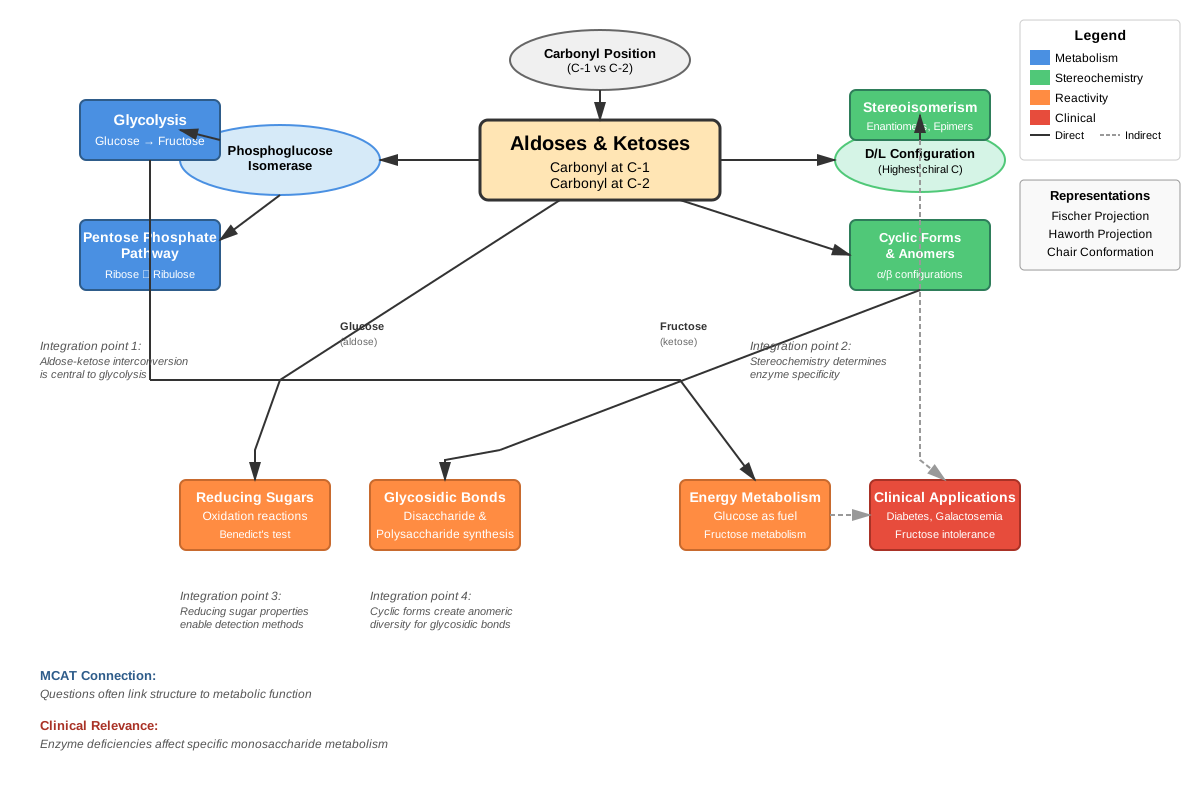
Overview
Aldoses and ketoses represent the two fundamental classes of monosaccharides, distinguished by the position and type of their carbonyl functional group. Aldoses contain an aldehyde group (–CHO) at carbon-1, while ketoses contain a ketone group (C=O) typically at carbon-2. This structural distinction has profound implications for carbohydrate chemistry, including reactivity patterns, stereochemistry, and biological function. Understanding these two classes is essential for mastering carbohydrate biochemistry, as they form the building blocks of more complex sugars, polysaccharides, and glycoconjugates that appear throughout metabolism and cellular recognition processes.
For the MCAT, aldoses and ketoses represent a medium-yield topic that frequently appears in both discrete questions and passage-based contexts. The exam tests not only the ability to classify monosaccharides correctly but also to predict their chemical behavior, recognize their structural representations (Fischer projections, Haworth projections, and chair conformations), and understand their metabolic interconversions. Questions often integrate this topic with enzyme mechanisms, metabolic pathways (particularly glycolysis and gluconeogenesis), and stereochemistry principles.
The distinction between aldoses and ketoses connects to broader themes in organic chemistry and biochemistry. These monosaccharides undergo characteristic reactions—mutarotation, oxidation-reduction, and glycosidic bond formation—that depend on their carbonyl group position. Furthermore, the interconversion between aldoses and ketoses through enzymatic isomerization (catalyzed by isomerases) represents a critical regulatory point in carbohydrate metabolism. Mastering this topic provides the foundation for understanding disaccharides, polysaccharides, glycolysis, the pentose phosphate pathway, and glycoprotein structure.
Learning Objectives
- [ ] Define aldoses and ketoses using accurate biochemistry terminology, including the position and nature of their carbonyl groups
- [ ] Explain why aldoses and ketoses matter for the MCAT, including their frequency in exam questions and integration with other topics
- [ ] Apply aldoses and ketoses concepts to exam-style questions involving structure identification, chemical reactivity, and metabolic pathways
- [ ] Identify common mistakes related to aldoses and ketoses, particularly in Fischer projection interpretation and stereochemistry
- [ ] Connect aldoses and ketoses to related biochemistry concepts including glycolysis, stereoisomerism, and reducing sugar chemistry
- [ ] Distinguish between aldoses and ketoses in various structural representations (Fischer, Haworth, and chair conformations)
- [ ] Predict the products of aldose-ketose isomerization reactions and identify the enzymes that catalyze these transformations
- [ ] Analyze the reducing properties of aldoses and ketoses and explain the mechanistic basis for these differences
Prerequisites
- Basic organic chemistry functional groups: Recognition of aldehydes, ketones, and hydroxyl groups is essential for identifying the carbonyl position that distinguishes aldoses from ketoses
- Stereochemistry fundamentals: Understanding chirality, enantiomers, diastereomers, and Fischer projections enables proper classification of monosaccharide stereoisomers
- Oxidation-reduction chemistry: Knowledge of redox reactions is necessary to understand reducing sugar behavior and the chemical tests used to distinguish monosaccharides
- Basic carbohydrate nomenclature: Familiarity with terms like monosaccharide, hexose, pentose, and triose provides the framework for classifying aldoses and ketoses by carbon number
Why This Topic Matters
Clinical and Real-World Significance
Aldoses and ketoses play critical roles in human metabolism and disease. Glucose, the most important aldose, serves as the primary energy source for cells and is tightly regulated in blood. Dysregulation of glucose metabolism underlies diabetes mellitus, affecting hundreds of millions worldwide. Fructose, a ketose, has gained clinical attention due to its unique metabolic pathway that bypasses key regulatory steps in glycolysis, contributing to metabolic syndrome when consumed in excess. Galactose, another aldose, is essential for lactose synthesis and glycoprotein formation; deficiencies in galactose metabolism cause galactosemia, a serious genetic disorder. Understanding the structural differences between aldoses and ketoses helps explain why these sugars have distinct metabolic fates and physiological effects.
MCAT Exam Statistics and Question Types
Aldoses and ketoses appear in approximately 15-20% of carbohydrate-related MCAT questions, making them a medium-yield topic that warrants focused study. The exam typically tests this material through:
- Structure identification questions: Presenting Fischer or Haworth projections and asking students to classify the sugar as an aldose or ketose
- Passage-based questions on metabolism: Integrating aldose-ketose interconversion into glycolysis or gluconeogenesis pathways
- Reducing sugar questions: Testing understanding of which structural features confer reducing properties
- Stereochemistry problems: Requiring identification of epimers, enantiomers, or anomers among aldoses and ketoses
- Enzyme mechanism questions: Asking about isomerases that interconvert aldoses and ketoses (e.g., phosphoglucose isomerase, triose phosphate isomerase)
Questions often appear in biochemistry passages discussing metabolic disorders, carbohydrate chemistry experiments, or nutritional biochemistry. The MCAT favors questions that integrate multiple concepts, so expect aldoses and ketoses to appear alongside topics like glycosidic bonds, hemiacetal formation, and metabolic regulation.
Core Concepts
Structural Definition and Classification
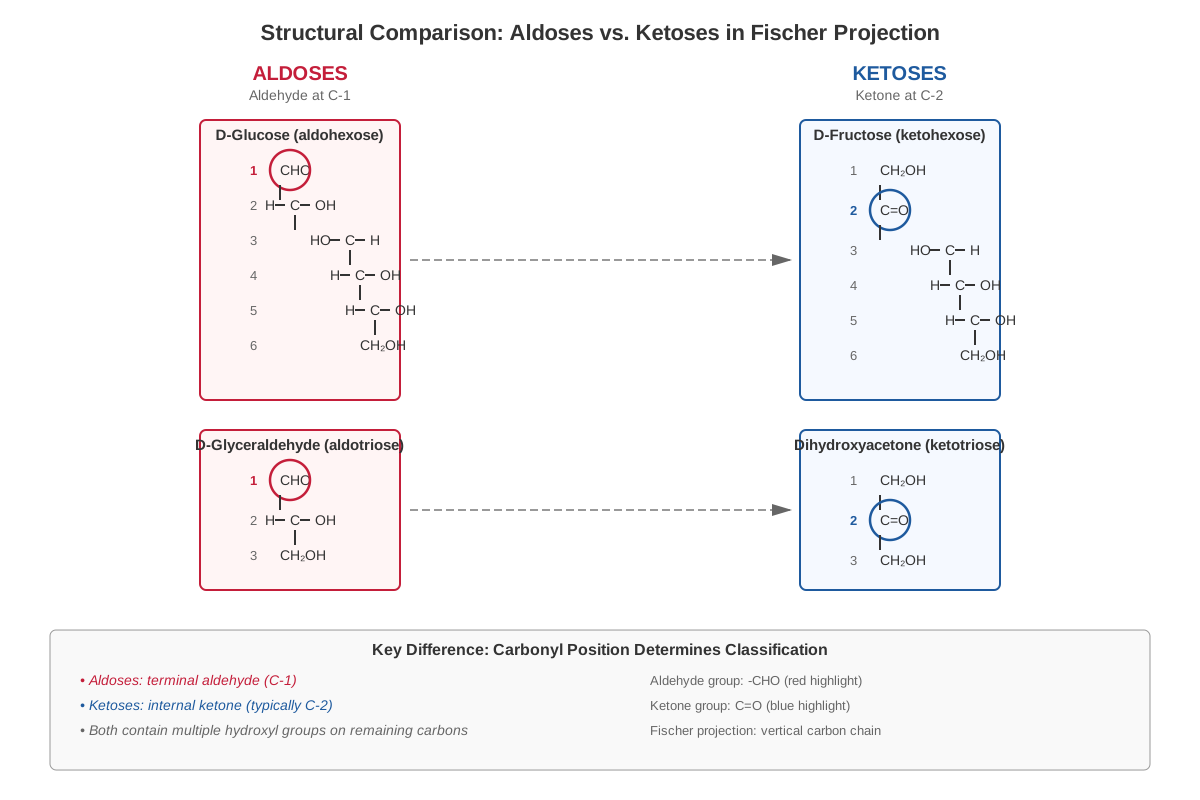
Aldoses are monosaccharides containing an aldehyde functional group (–CHO) at the terminal carbon (carbon-1 in standard numbering). The general formula for aldoses is CₙH₂ₙOₙ, where n ≥ 3. The aldehyde group makes carbon-1 the most oxidized carbon in the molecule, and this positioning creates specific stereochemical and reactivity patterns. Common aldoses include glucose (an aldohexose), ribose (an aldopentose), and glyceraldehyde (an aldotriose).
Ketoses are monosaccharides containing a ketone functional group (C=O) at an internal carbon, most commonly carbon-2. This structural feature distinguishes ketoses from aldoses and affects their chemical behavior, particularly in cyclization reactions and reducing sugar tests. The most clinically relevant ketose is fructose (a ketohexose), while ribulose (a ketopentose) and dihydroxyacetone (a ketotriose) are important metabolic intermediates.
The classification system combines the carbonyl type with the carbon number:
| Carbon Number | Aldose Name | Example | Ketose Name | Example |
|---|---|---|---|---|
| 3 | Aldotriose | Glyceraldehyde | Ketotriose | Dihydroxyacetone |
| 4 | Aldotetrose | Erythrose | Ketotetrose | Erythrulose |
| 5 | Aldopentose | Ribose | Ketopentose | Ribulose |
| 6 | Aldohexose | Glucose | Ketohexose | Fructose |
| 7 | Aldoheptose | Glucoheptose | Ketoheptose | Sedoheptulose |
Fischer Projection Representation
Fischer projections provide a standardized two-dimensional representation of monosaccharide stereochemistry. In these projections:
- The carbon chain is drawn vertically with the most oxidized carbon (aldehyde in aldoses, carbon-1 in ketoses) at the top
- Horizontal lines represent bonds projecting out of the page toward the viewer
- Vertical lines represent bonds projecting behind the page away from the viewer
- The aldehyde group (in aldoses) appears at the top as CHO
- The ketone group (in ketoses) appears at carbon-2 as C=O
For aldoses, identifying the aldehyde at the top immediately classifies the sugar. For ketoses, the ketone group at carbon-2 (second from top) is the diagnostic feature. The D/L designation depends on the configuration of the chiral center farthest from the carbonyl group: if the hydroxyl group points right, it's D-configuration; if left, it's L-configuration. Most naturally occurring sugars are D-sugars.
Cyclic Hemiacetal and Hemiketal Formation
In aqueous solution, monosaccharides with five or more carbons predominantly exist in cyclic forms rather than open-chain structures. This cyclization occurs through intramolecular nucleophilic attack:
For aldoses: The hydroxyl group on carbon-5 (in hexoses) or carbon-4 (in pentoses) attacks the aldehyde carbon (C-1), forming a hemiacetal. This creates a six-membered ring (pyranose) or five-membered ring (furanose), respectively. The former aldehyde carbon becomes a new chiral center called the anomeric carbon.
For ketoses: The hydroxyl group on carbon-5 (in hexoses) attacks the ketone carbon (C-2), forming a hemiketal. Fructose can form both furanose (five-membered, more common in sucrose) and pyranose (six-membered, more common in free solution) rings.
The cyclization creates two possible configurations at the anomeric carbon:
- α-anomer: The anomeric hydroxyl group is trans to the CH₂OH group on the ring (down in standard Haworth projection for D-sugars)
- β-anomer: The anomeric hydroxyl group is cis to the CH₂OH group (up in standard Haworth projection for D-sugars)
Reducing Sugar Properties
The distinction between aldoses and ketoses affects their behavior as reducing sugars—carbohydrates capable of reducing other compounds (particularly metal ions like Cu²⁺ or Ag⁺) while being oxidized themselves.
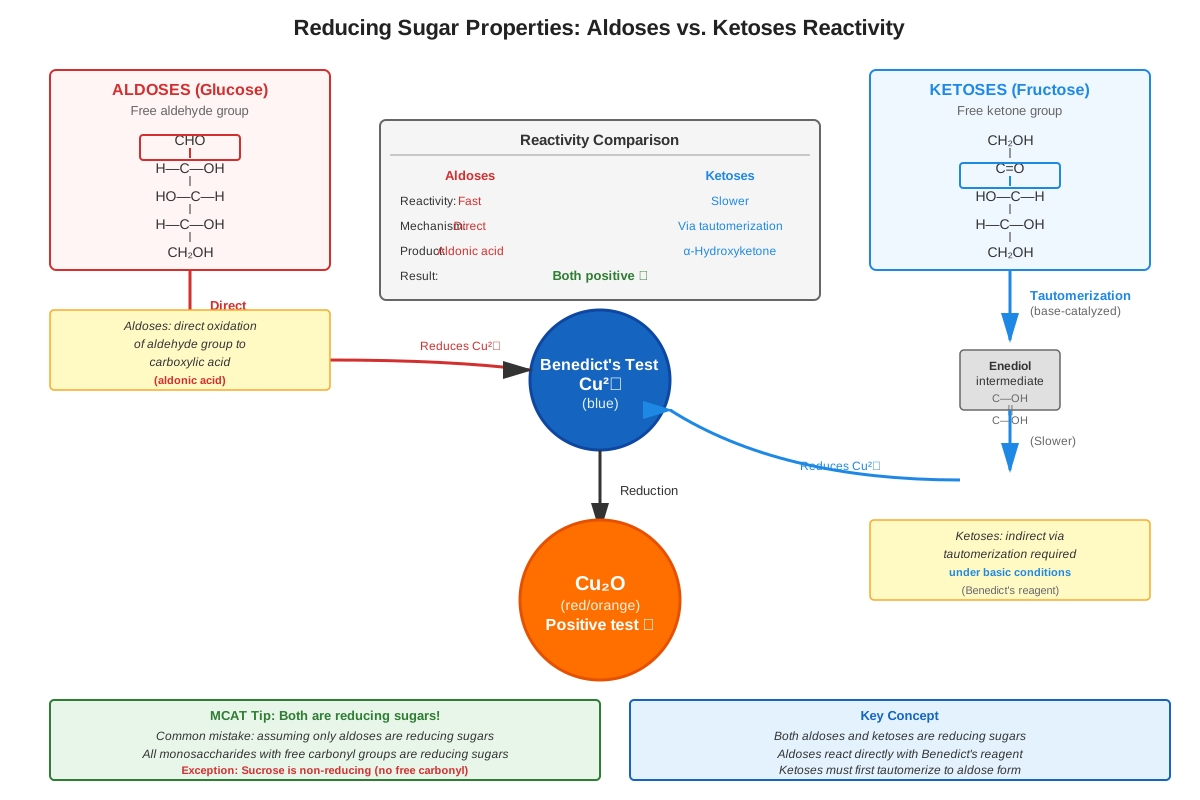
All aldoses are reducing sugars because the aldehyde group can be oxidized to a carboxylic acid. Even in cyclic form, aldoses exist in equilibrium with a small amount of open-chain form, making the aldehyde available for oxidation.
All free ketoses are also reducing sugars, though this seems counterintuitive since ketones are generally not easily oxidized. The mechanism involves tautomerization under the basic conditions of reducing sugar tests (Benedict's or Fehling's test). The ketose undergoes enolization, and the enol intermediate can tautomerize to an aldose, which then undergoes oxidation. For example, fructose can tautomerize to glucose or mannose through an enediol intermediate.
Non-reducing sugars include disaccharides where the anomeric carbons of both monosaccharides are involved in the glycosidic bond (e.g., sucrose, trehalose), preventing equilibrium with the open-chain form.
Aldose-Ketose Isomerization
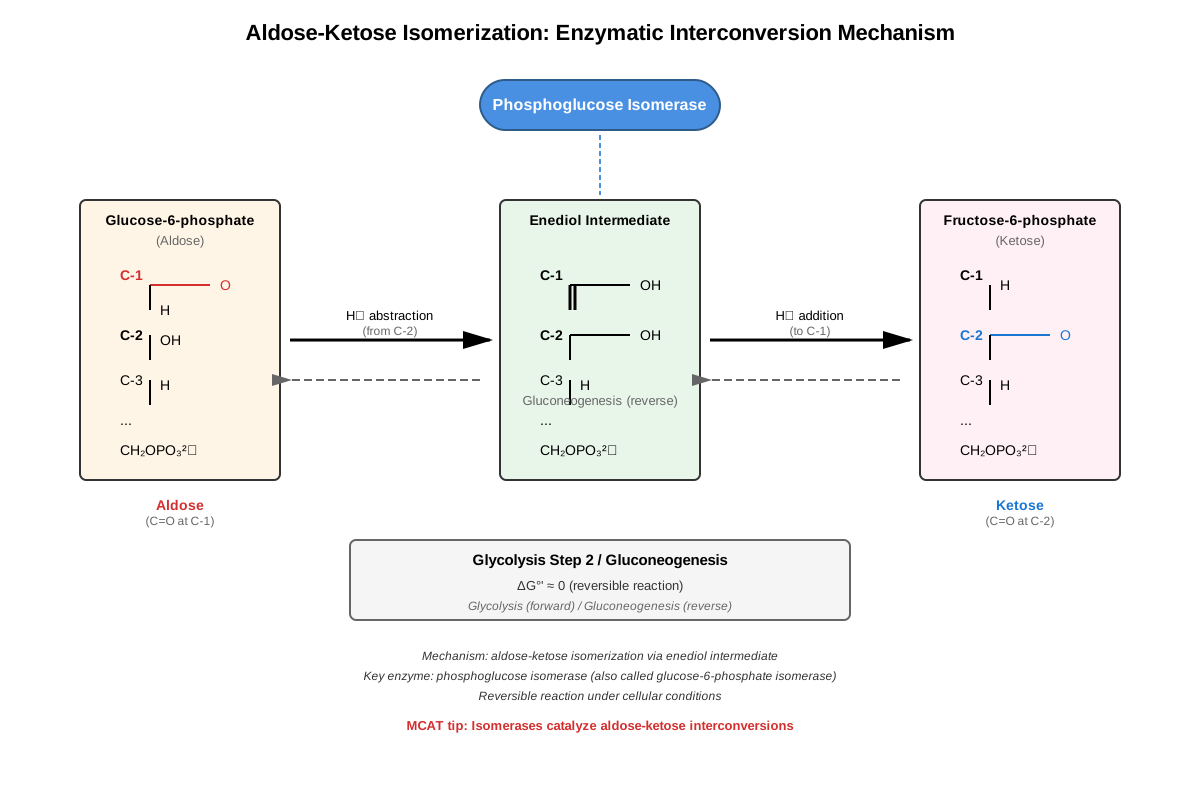
Isomerases catalyze the interconversion between aldoses and ketoses through an enediol intermediate. This reaction is crucial in carbohydrate metabolism:
- Phosphoglucose isomerase converts glucose-6-phosphate (an aldose) to fructose-6-phosphate (a ketose) in glycolysis
- Triose phosphate isomerase interconverts glyceraldehyde-3-phosphate (an aldose) and dihydroxyacetone phosphate (a ketose)
- Phosphomannose isomerase converts mannose-6-phosphate to fructose-6-phosphate
The mechanism involves:
- Abstraction of a proton from carbon-2 of the aldose
- Formation of an enediol intermediate (with OH groups on both C-1 and C-2)
- Protonation at carbon-1 to form the ketose
This reversible reaction allows metabolic flexibility and is essential for channeling various dietary sugars into glycolysis.
Stereochemical Relationships
Both aldoses and ketoses exhibit multiple chiral centers, creating numerous stereoisomers:
- Enantiomers: Mirror-image pairs (D- and L-forms)
- Diastereomers: Non-mirror-image stereoisomers
- Epimers: Diastereomers differing at only one chiral center (e.g., glucose and galactose are C-4 epimers; glucose and mannose are C-2 epimers)
- Anomers: Cyclic forms differing only at the anomeric carbon (α and β forms)
Aldoses have n-2 chiral centers (where n is the number of carbons), while ketoses have n-3 chiral centers because the ketone carbon is not chiral. For example, glucose (aldohexose) has 4 chiral centers, while fructose (ketohexose) has 3 chiral centers.
Concept Relationships
The distinction between aldoses and ketoses serves as a foundational concept that connects to multiple areas of biochemistry. Aldoses and ketoses → cyclization → hemiacetal/hemiketal formation → anomeric carbon creation → glycosidic bond formation → disaccharides and polysaccharides. Understanding the carbonyl position is essential before comprehending how monosaccharides cyclize and subsequently link together.
The reducing sugar concept connects directly to the aldose-ketose distinction: aldehyde/ketone functional group → availability for oxidation → reducing sugar behavior → Benedict's/Fehling's test results. This relationship extends to understanding why certain disaccharides (like maltose) are reducing while others (like sucrose) are not.
Metabolically, aldose-ketose interconversion represents a critical regulatory point: glucose-6-phosphate (aldose) → phosphoglucose isomerase → fructose-6-phosphate (ketose) → phosphofructokinase → fructose-1,6-bisphosphate → aldolase → DHAP (ketose) + G3P (aldose). This pathway demonstrates how the aldose-ketose distinction integrates with glycolysis.
The stereochemistry of aldoses and ketoses connects to prerequisite knowledge: Fischer projections → chiral center identification → D/L designation → epimer relationships → enzyme specificity. Enzymes distinguish between stereoisomers, making this knowledge essential for understanding metabolic pathways.
High-Yield Facts
⭐ Aldoses contain an aldehyde group at carbon-1; ketoses contain a ketone group at carbon-2
⭐ Glucose is the most important aldose; fructose is the most important ketose in human metabolism
⭐ All aldoses and all free ketoses are reducing sugars because they can exist in equilibrium with an open-chain form containing a free carbonyl group
⭐ Phosphoglucose isomerase converts glucose-6-phosphate (aldose) to fructose-6-phosphate (ketose) in the second step of glycolysis
⭐ Ketoses can tautomerize to aldoses through an enediol intermediate under basic conditions, explaining their reducing properties
- Aldoses have one more chiral center than ketoses with the same number of carbons (n-2 vs. n-3 chiral centers)
- The anomeric carbon (formed during cyclization) is the former carbonyl carbon: C-1 in aldoses, C-2 in ketoses
- Fructose is sweeter than glucose despite both being hexoses, due to structural differences affecting taste receptor binding
- Triose phosphate isomerase interconverts glyceraldehyde-3-phosphate (aldose) and dihydroxyacetone phosphate (ketose) with near-perfect catalytic efficiency
- In Fischer projections, the carbonyl group position immediately distinguishes aldoses (top carbon) from ketoses (second carbon)
- Ribose (aldopentose) and deoxyribose are components of RNA and DNA, respectively, while ribulose (ketopentose) is crucial in the Calvin cycle
- Galactose (aldose) and fructose (ketose) are both metabolized to glucose-6-phosphate but through different enzymatic pathways
Quick check — test yourself on Aldoses and ketoses so far.
Try Flashcards →Common Misconceptions
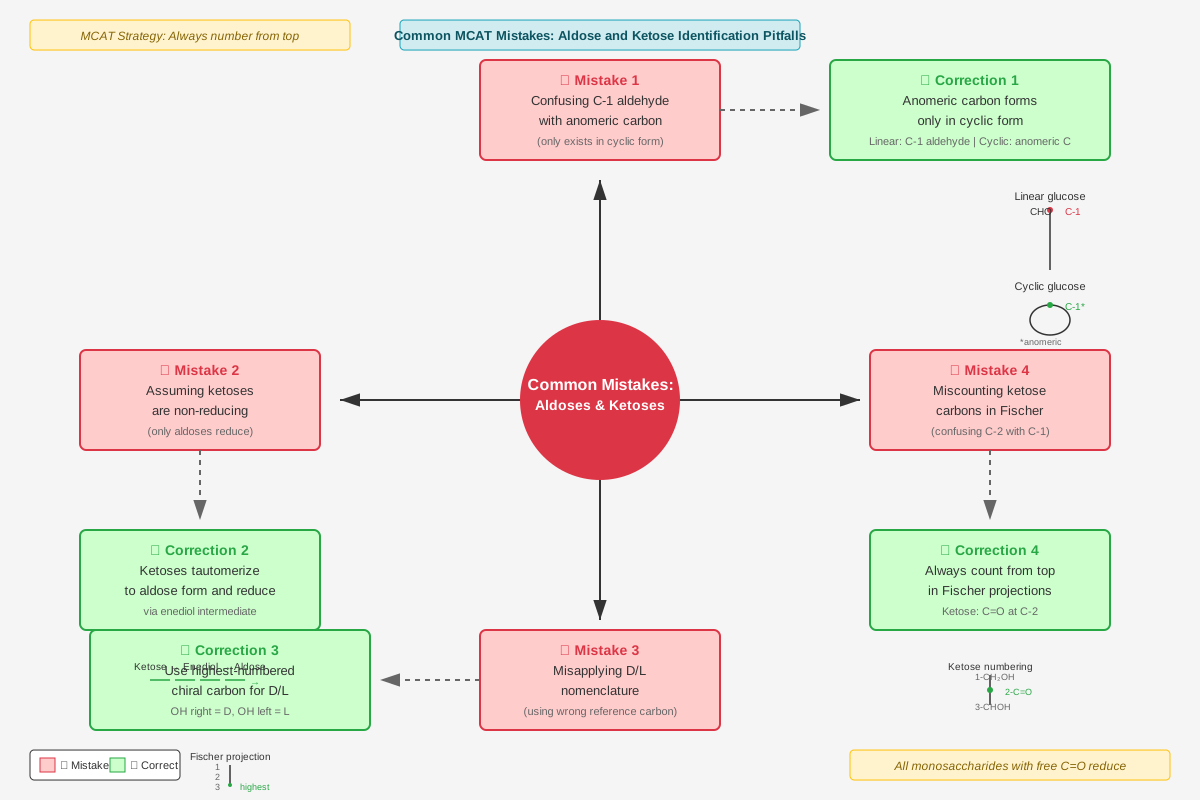
Misconception: All ketoses are non-reducing sugars because ketones cannot be easily oxidized.
Correction: All free ketoses are reducing sugars because they undergo tautomerization to aldoses under the basic conditions of reducing sugar tests. The enediol intermediate allows interconversion between ketose and aldose forms, making the carbonyl available for oxidation.
Misconception: The D/L designation refers to the configuration at the anomeric carbon.
Correction: The D/L designation refers to the configuration at the chiral center farthest from the carbonyl group (the penultimate carbon). The anomeric carbon configuration is designated as α or β. For example, D-glucose can exist as α-D-glucose or β-D-glucose.
Misconception: Ketoses cannot form hemiacetals, only hemiketals.
Correction: While ketoses form hemiketals when their own ketone group reacts with a hydroxyl group, they can participate in hemiacetal formation when acting as the nucleophile (hydroxyl donor) in reactions with other aldehydes or when they tautomerize to aldose forms.
Misconception: Fructose is a ketose, so it must have its carbonyl at carbon-1.
Correction: Ketoses have their carbonyl group at carbon-2, not carbon-1. Carbon-1 in fructose is a CH₂OH group. The ketone at carbon-2 is what defines fructose as a ketose.
Misconception: Aldose-ketose isomerization changes the number of carbons in the sugar.
Correction: Isomerization reactions catalyzed by isomerases simply move the carbonyl group position without changing the carbon count. Glucose-6-phosphate and fructose-6-phosphate both have six carbons; only the carbonyl position differs (C-1 vs. C-2).
Misconception: In cyclic form, aldoses and ketoses are no longer classified as such.
Correction: The aldose/ketose classification persists even in cyclic forms because it refers to the original carbonyl position. Cyclic glucose is still an aldose (specifically, a pyranose form of an aldohexose), and cyclic fructose is still a ketose (a furanose or pyranose form of a ketohexose).
Worked Examples
Example 1: Structure Identification and Classification
Question: A student is given the following Fischer projection of a monosaccharide:
    CHO
    |
H—C—OH
    |
HO—C—H
    |
H—C—OH
    |
    CH₂OH
Classify this sugar as an aldose or ketose, determine if it is a D- or L-sugar, specify the number of carbons, and identify whether it is a reducing sugar.
Solution:
Step 1: Identify the carbonyl group position. The CHO at the top indicates an aldehyde at carbon-1, making this an aldose.
Step 2: Count the carbons. There are 5 carbons total (including the aldehyde carbon and the terminal CH₂OH), making this an aldopentose.
Step 3: Determine D/L configuration. Look at the chiral center farthest from the carbonyl (carbon-4, the penultimate carbon). The hydroxyl group on this carbon points to the right (H—C—OH), indicating D-configuration. This is D-ribose or a D-aldopentose.
Step 4: Determine reducing sugar status. All aldoses are reducing sugars because the aldehyde group can be oxidized. Even though ribose predominantly exists in cyclic form in solution, it maintains equilibrium with the open-chain form, keeping the aldehyde available for oxidation reactions. This is a reducing sugar.
Key Concept Connection: This example demonstrates how Fischer projection interpretation directly reveals the aldose/ketose classification and connects to reducing sugar chemistry—addressing learning objectives about structure identification and chemical reactivity.
Example 2: Metabolic Pathway Application
Question: During glycolysis, glucose-6-phosphate is converted to fructose-6-phosphate by phosphoglucose isomerase. Explain the structural change that occurs, classify both molecules as aldose or ketose, and describe the mechanism by which this isomerization occurs. Why is this step important for subsequent glycolysis reactions?
Solution:
Step 1: Classify the starting and ending molecules.
- Glucose-6-phosphate is a phosphorylated form of glucose, which is an aldohexose (aldehyde at C-1). Therefore, glucose-6-phosphate is an aldose derivative.
- Fructose-6-phosphate is a phosphorylated form of fructose, which is a ketohexose (ketone at C-2). Therefore, fructose-6-phosphate is a ketose derivative.
Step 2: Describe the structural change. The aldehyde group at carbon-1 of glucose-6-phosphate is converted to a CH₂OH group, while the hydroxyl group at carbon-2 is oxidized to a ketone. The carbonyl group has moved from C-1 to C-2, converting an aldose to a ketose while maintaining the same number of carbons (6) and the same phosphorylation state.
Step 3: Explain the mechanism. Phosphoglucose isomerase catalyzes this reaction through an enediol intermediate:
- The enzyme abstracts a proton from carbon-2 of glucose-6-phosphate
- This creates a double bond between C-1 and C-2, with hydroxyl groups on both carbons (enediol intermediate)
- The enzyme then protonates carbon-1, converting the C-1 hydroxyl to a CH₂OH group and establishing the ketone at C-2
- The result is fructose-6-phosphate
Step 4: Explain metabolic importance. This isomerization is crucial because:
- It prepares the molecule for the next committed step of glycolysis (phosphorylation by phosphofructokinase)
- The ketose structure of fructose-6-phosphate allows symmetric cleavage by aldolase later in glycolysis, producing two three-carbon fragments
- Converting the aldose to a ketose repositions the carbonyl group, making carbon-1 available for phosphorylation in the next step
Key Concept Connection: This example integrates aldose-ketose classification with metabolic pathways, demonstrates the importance of isomerase enzymes, and shows how structural differences between aldoses and ketoses affect biochemical function—addressing multiple learning objectives simultaneously.
Exam Strategy
Approaching MCAT Questions on Aldoses and Ketoses
When encountering questions about aldoses and ketoses, follow this systematic approach:
- Identify the carbonyl position first: Look for CHO (aldehyde) at the terminal carbon for aldoses or C=O at carbon-2 for ketoses. This single feature immediately classifies the sugar.
- Count carbons to determine the complete classification: Combine the carbonyl type with carbon number (triose, tetrose, pentose, hexose) for precise identification.
- Check for cyclic vs. open-chain forms: Remember that cyclic forms still retain their aldose/ketose classification based on which carbon was originally the carbonyl.
- Consider the question context: If the question involves metabolism, think about isomerase enzymes; if it involves chemical tests, think about reducing sugar properties; if it involves structure, think about stereochemistry.
Trigger Words and Phrases
Watch for these key terms that signal aldose/ketose concepts:
- "Reducing sugar": Immediately think about free carbonyl groups and the aldose-ketose distinction
- "Isomerase": Indicates aldose-ketose interconversion through enediol intermediates
- "Anomeric carbon": The former carbonyl carbon (C-1 in aldoses, C-2 in ketoses)
- "Hemiacetal" vs. "hemiketal": Hemiacetals form from aldoses; hemiketals from ketoses
- "Benedict's test" or "Fehling's test": Testing for reducing sugars; both aldoses and free ketoses are positive
- "Tautomerization" or "enediol": Mechanism for ketose-to-aldose interconversion
- "Phosphoglucose isomerase": The enzyme converting glucose-6-P (aldose) to fructose-6-P (ketose)
Process-of-Elimination Tips
When facing multiple-choice questions:
- Eliminate answers that misplace the carbonyl: If a structure shows a ketone at C-1 or C-3, it's incorrect for standard ketoses
- Eliminate answers that confuse D/L with α/β: These are different stereochemical designations
- For reducing sugar questions: Eliminate answers claiming free aldoses or ketoses are non-reducing
- For metabolic pathway questions: Eliminate answers that show isomerases changing carbon number or adding/removing functional groups beyond the carbonyl shift
- For structure questions: Eliminate Fischer projections that don't follow conventions (most oxidized carbon at top)
Time Allocation Advice
Aldose and ketose questions typically require 60-90 seconds:
- Structure identification: 30-45 seconds (quick carbonyl location check)
- Metabolic integration questions: 90-120 seconds (requires connecting to pathways)
- Passage-based questions: Read the passage for context first, then apply aldose/ketose knowledge to specific questions
Don't spend excessive time drawing out full structures unless absolutely necessary. Learn to recognize key features (carbonyl position, reducing sugar capability) quickly from partial information.
Memory Techniques
Mnemonics for Key Concepts
"ALDehyde at the END": ALDoses have an ALDehyde at the terminal (end) carbon. This helps distinguish them from ketoses.
"KETO in the MIDDLE": KETOses have their KETOne group in the middle of the carbon chain (specifically at C-2), not at the end.
"All Aldoses Are Reducers, Ketoses Kinda Are Too": Both aldoses and ketoses are reducing sugars, but ketoses require tautomerization first (the "kinda" reminds you of the extra mechanistic step).
"Glucose Is Aldose, Fructose Is Ketose": The two most important monosaccharides in human metabolism—remember these classifications and extrapolate to their derivatives.
"PGI: Phosphoglucose Isomerase Goes from Aldose to Ketose": In glycolysis, PGI converts glucose-6-P (aldose) to fructose-6-P (ketose). The alphabetical order (A before K) matches the glycolysis direction.
Visualization Strategies
The Carbonyl Position Visual: Imagine a vertical chain of carbons. For aldoses, visualize a bright red aldehyde flag at the very top (C-1). For ketoses, visualize a blue ketone flag one carbon down (C-2). This mental image helps quickly classify sugars in Fischer projections.
The Cyclization Concept: Picture the open-chain sugar as a snake that bites its own tail. For aldoses, the "head" (aldehyde at C-1) gets bitten by the "body" (hydroxyl at C-5 for hexoses). For ketoses, the "neck" (ketone at C-2) gets bitten instead. This explains why the anomeric carbon differs between aldoses and ketoses.
The Isomerase Seesaw: Visualize a seesaw with an aldose on one side and a ketose on the other, balanced on an enediol intermediate in the middle. The isomerase enzyme tips the seesaw one way or the other, but the total weight (carbon number) never changes.
Acronyms
RAFT for reducing sugar tests:
- Reducing sugars have
- Available
- Free carbonyl (or
- Tautomerizable carbonyl)
CHEF for cyclic sugar formation:
- Carbonyl carbon becomes
- Hemiacetal (aldose) or
- Equivalent hemiketal (ketose),
- Forming the anomeric carbon
Summary
Aldoses and ketoses represent the two fundamental classes of monosaccharides, distinguished by their carbonyl group position: aldoses contain an aldehyde at carbon-1, while ketoses contain a ketone at carbon-2. This structural difference profoundly affects their chemical reactivity, stereochemistry, and metabolic roles. Both classes are reducing sugars—aldoses directly through their aldehyde group, and ketoses through tautomerization to aldose forms via enediol intermediates. In aqueous solution, these monosaccharides predominantly exist in cyclic forms (hemiacetals for aldoses, hemiketals for ketoses), creating an anomeric carbon at the former carbonyl position. The interconversion between aldoses and ketoses, catalyzed by isomerase enzymes, represents a critical metabolic process, exemplified by phosphoglucose isomerase in glycolysis converting glucose-6-phosphate to fructose-6-phosphate. Understanding the aldose-ketose distinction is essential for mastering carbohydrate biochemistry, as it underlies concepts ranging from reducing sugar tests to metabolic pathway regulation, and frequently appears in MCAT questions testing structure identification, chemical reactivity, and metabolic integration.
Key Takeaways
- Aldoses have an aldehyde group at C-1; ketoses have a ketone group at C-2—this single structural feature determines the classification and affects all subsequent chemistry
- Both aldoses and ketoses are reducing sugars because they can exist in equilibrium with open-chain forms containing free or tautomerizable carbonyl groups
- Glucose (aldose) and fructose (ketose) are the most clinically and metabolically important monosaccharides, serving as prototypes for understanding their respective classes
- Isomerase enzymes interconvert aldoses and ketoses through enediol intermediates without changing carbon number, exemplified by phosphoglucose isomerase in glycolysis
- Cyclization converts the carbonyl carbon into an anomeric carbon, forming hemiacetals from aldoses and hemiketals from ketoses
- Fischer projections immediately reveal aldose vs. ketose classification by showing the carbonyl position at the top (aldose) or second carbon (ketose)
- The aldose-ketose distinction integrates with multiple MCAT topics including stereochemistry, metabolic pathways, reducing sugar chemistry, and glycosidic bond formation
Related Topics
Monosaccharide Stereochemistry: Building on aldose and ketose fundamentals, this topic explores enantiomers, diastereomers, epimers, and anomers in detail, explaining how enzymes distinguish between stereoisomers and why D-sugars predominate in nature.
Glycosidic Bond Formation: Understanding aldoses and ketoses is prerequisite to learning how monosaccharides link through their anomeric carbons to form disaccharides and polysaccharides, including the distinction between α and β linkages.
Glycolysis and Gluconeogenesis: These central metabolic pathways feature multiple aldose-ketose interconversions, including the phosphoglucose isomerase and triose phosphate isomerase reactions, making aldose/ketose knowledge essential for pathway comprehension.
Carbohydrate Chemistry and Reactions: Advanced topics include oxidation to aldonic and aldaric acids, reduction to alditols, and glycoside formation—all of which depend on understanding the carbonyl group position and reactivity in aldoses versus ketoses.
Pentose Phosphate Pathway: This pathway involves multiple aldose and ketose intermediates, including ribulose-5-phosphate (ketose) and ribose-5-phosphate (aldose), with isomerization reactions connecting them.
Mastering aldoses and ketoses provides the foundation for all subsequent carbohydrate biochemistry topics and enables confident approach to MCAT questions integrating multiple aspects of sugar chemistry and metabolism.
Practice CTA
Now that you've mastered the core concepts of aldoses and ketoses, it's time to solidify your understanding through active practice. Challenge yourself with the accompanying practice questions that test structure identification, metabolic integration, and reducing sugar chemistry. Use the flashcards to drill the high-yield facts until you can instantly classify any monosaccharide and predict its chemical behavior. Remember: the MCAT rewards not just knowledge but the ability to apply concepts quickly and accurately under time pressure. Each practice question you complete builds the pattern recognition and conceptual connections that will serve you on test day. You've built a strong foundation—now strengthen it through deliberate practice!
Sign up free to keep reading
Create a free AnvayaPrep account to finish this MCAT guide on Aldoses and ketoses — plus flashcards and practice questions.