Overview
Unsaturated fatty acids are a fundamental class of lipid molecules characterized by the presence of one or more carbon-carbon double bonds in their hydrocarbon chains. These molecules serve as essential building blocks for biological membranes, signaling molecules, and energy storage compounds. Unlike their saturated counterparts, unsaturated fatty acids contain at least one C=C double bond, which introduces structural kinks that profoundly affect their physical properties and biological functions. Understanding the Biochemistry of unsaturated fatty acids is critical for MCAT success, as questions frequently test the relationship between molecular structure and membrane fluidity, the distinction between cis and trans configurations, and the metabolic pathways involving these molecules.
The MCAT extensively tests unsaturated fatty acids within the broader context of Lipids and Membranes, making this a high-yield topic that appears in both discrete questions and passage-based scenarios. Students must understand how the degree of unsaturation affects melting points, membrane properties, and physiological functions. The topic bridges organic chemistry concepts (double bond geometry, nomenclature) with biological applications (membrane structure, essential fatty acids, eicosanoid synthesis), making it an ideal testing ground for integrated reasoning—a core MCAT skill.
Mastery of unsaturated fatty acids MCAT content requires understanding not just the structural features but also the functional consequences of unsaturation. This topic connects directly to membrane biology, lipid metabolism, nutrition, and even cardiovascular health—all areas that appear regularly in MCAT passages. The ability to predict physical properties from structure, recognize essential fatty acids, and understand the biological significance of omega-3 and omega-6 fatty acids represents critical knowledge that distinguishes high-scoring students from those who struggle with biochemistry questions.
Learning Objectives
- [ ] Define unsaturated fatty acids using accurate Biochemistry terminology
- [ ] Explain why unsaturated fatty acids matters for the MCAT
- [ ] Apply unsaturated fatty acids concepts to exam-style questions
- [ ] Identify common mistakes related to unsaturated fatty acids
- [ ] Connect unsaturated fatty acids to related Biochemistry concepts
- [ ] Distinguish between cis and trans configurations and predict their effects on physical properties
- [ ] Explain the nomenclature systems for unsaturated fatty acids (delta and omega notation)
- [ ] Analyze how degree of unsaturation affects membrane fluidity and melting point
- [ ] Identify essential fatty acids and explain their physiological importance
Prerequisites
- Basic organic chemistry: Understanding of carbon-carbon double bonds, cis/trans isomerism, and hydrocarbon chain structure is essential for comprehending fatty acid geometry and properties
- Carboxylic acid chemistry: Fatty acids are carboxylic acids, so familiarity with the carboxyl functional group (-COOH) and its properties is necessary
- Saturated fatty acids: Knowledge of saturated fatty acid structure provides the baseline for understanding how unsaturation modifies properties
- Basic membrane structure: Understanding that phospholipids form bilayers helps contextualize why fatty acid saturation affects membrane behavior
- Intermolecular forces: Comprehension of van der Waals forces and how molecular shape affects packing is crucial for predicting melting points
Why This Topic Matters
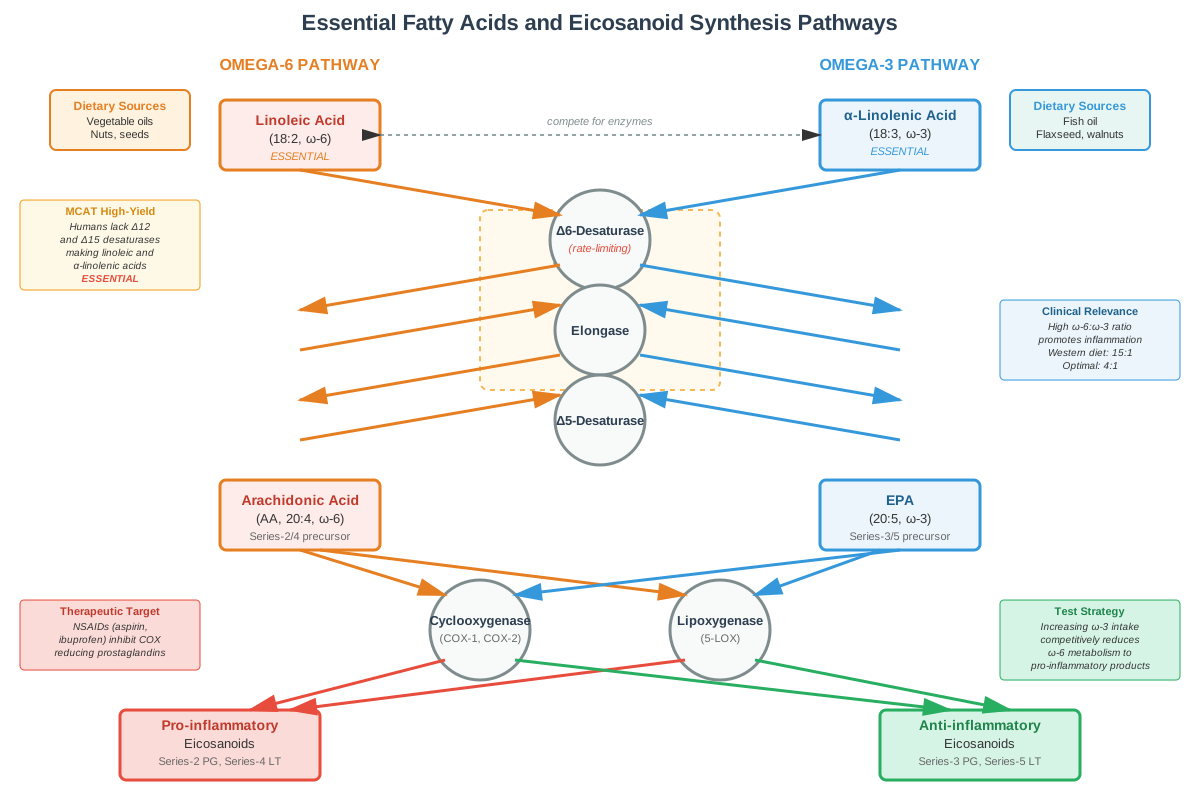
Unsaturated fatty acids represent a clinically significant topic with direct relevance to human health and disease. Dietary recommendations emphasizing polyunsaturated fats over saturated fats stem from the cardiovascular benefits of unsaturated fatty acids. Essential fatty acids like linoleic acid (omega-6) and alpha-linolenic acid (omega-3) cannot be synthesized by humans and must be obtained through diet, making them critical for normal physiological function. These molecules serve as precursors to eicosanoids—signaling molecules including prostaglandins, thromboxanes, and leukotrienes—that regulate inflammation, blood clotting, and immune responses.
On the MCAT, unsaturated fatty acids appear with high frequency across multiple question formats. Approximately 15-20% of biochemistry questions involve lipid structure and function, with unsaturated fatty acids featuring prominently. The topic appears in discrete questions testing structural knowledge, in passage-based questions exploring membrane dynamics or lipid metabolism, and in data interpretation questions requiring students to analyze experimental results involving fatty acid composition. Common question types include: predicting melting points based on structure, identifying essential fatty acids, explaining membrane fluidity changes, and connecting fatty acid structure to biological function.
MCAT passages frequently present unsaturated fatty acids in contexts such as: nutritional studies comparing dietary fat types, membrane fluidity experiments examining temperature adaptation, lipid peroxidation and oxidative stress, cardiovascular disease mechanisms, and inflammatory pathway regulation. The ability to quickly identify the degree and configuration of unsaturation, predict physical properties, and connect structure to function is essential for efficiently answering these questions under time pressure.
Core Concepts
Definition and Basic Structure
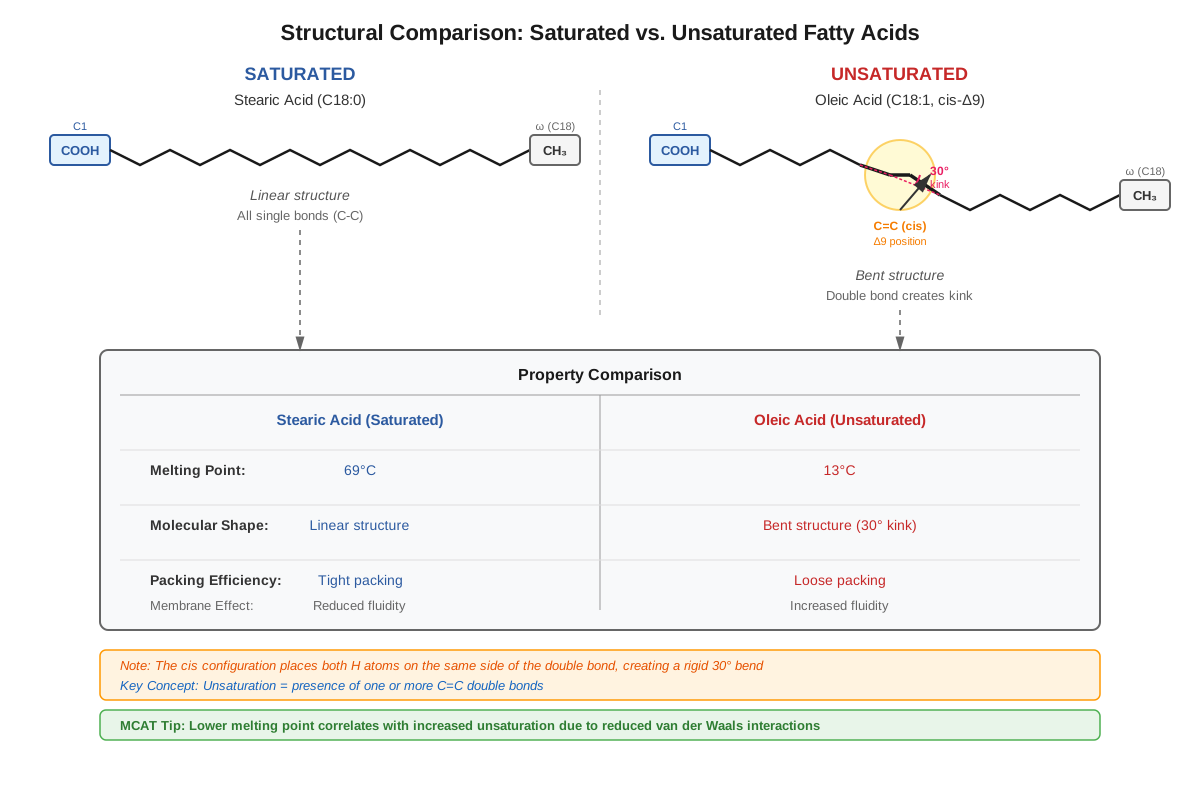
Unsaturated fatty acids are long-chain carboxylic acids containing one or more carbon-carbon double bonds (C=C) in their hydrocarbon tail. The general structure consists of a hydrophilic carboxyl head group (-COOH) attached to a hydrophobic hydrocarbon chain with at least one site of unsaturation. Fatty acids with one double bond are termed monounsaturated fatty acids (MUFAs), while those with two or more double bonds are called polyunsaturated fatty acids (PUFAs).
The presence of double bonds fundamentally alters the geometry and properties of the molecule. Each double bond introduces rigidity at that position while simultaneously creating a bend or "kink" in the chain (in the cis configuration). This structural feature prevents tight packing of fatty acid chains, which has profound implications for membrane fluidity and physical properties.
Nomenclature Systems
Two primary nomenclature systems describe unsaturated fatty acids, and MCAT students must be fluent in both:
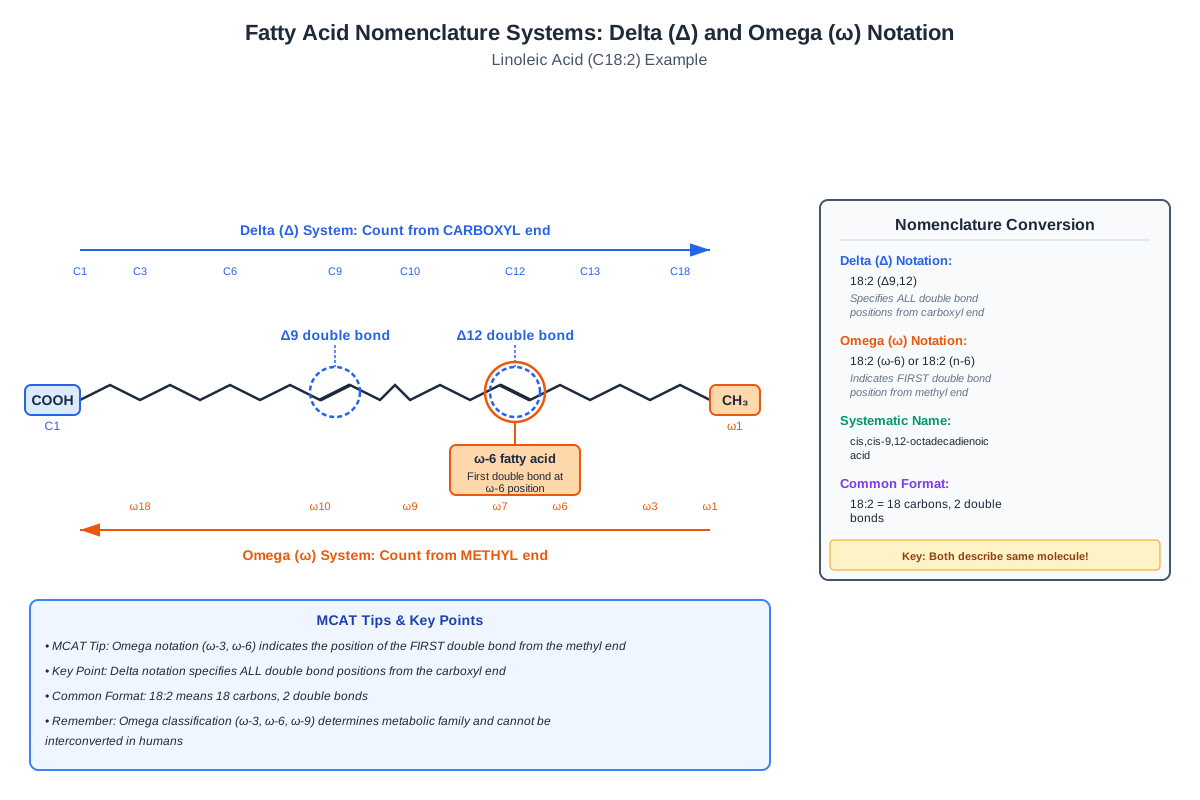
Delta (Δ) notation specifies double bond positions by counting from the carboxyl carbon (C1). For example, oleic acid is designated as 18:1Δ9, indicating 18 carbons, 1 double bond, with the double bond between carbons 9 and 10 counting from the carboxyl end.
Omega (ω or n-) notation counts from the methyl end of the chain, which remains constant during metabolic elongation. Omega-3 fatty acids have their first double bond three carbons from the methyl end, while omega-6 fatty acids have it six carbons from the methyl end. This system is particularly important for classifying essential fatty acids and understanding metabolic relationships.
Cis vs. Trans Configuration
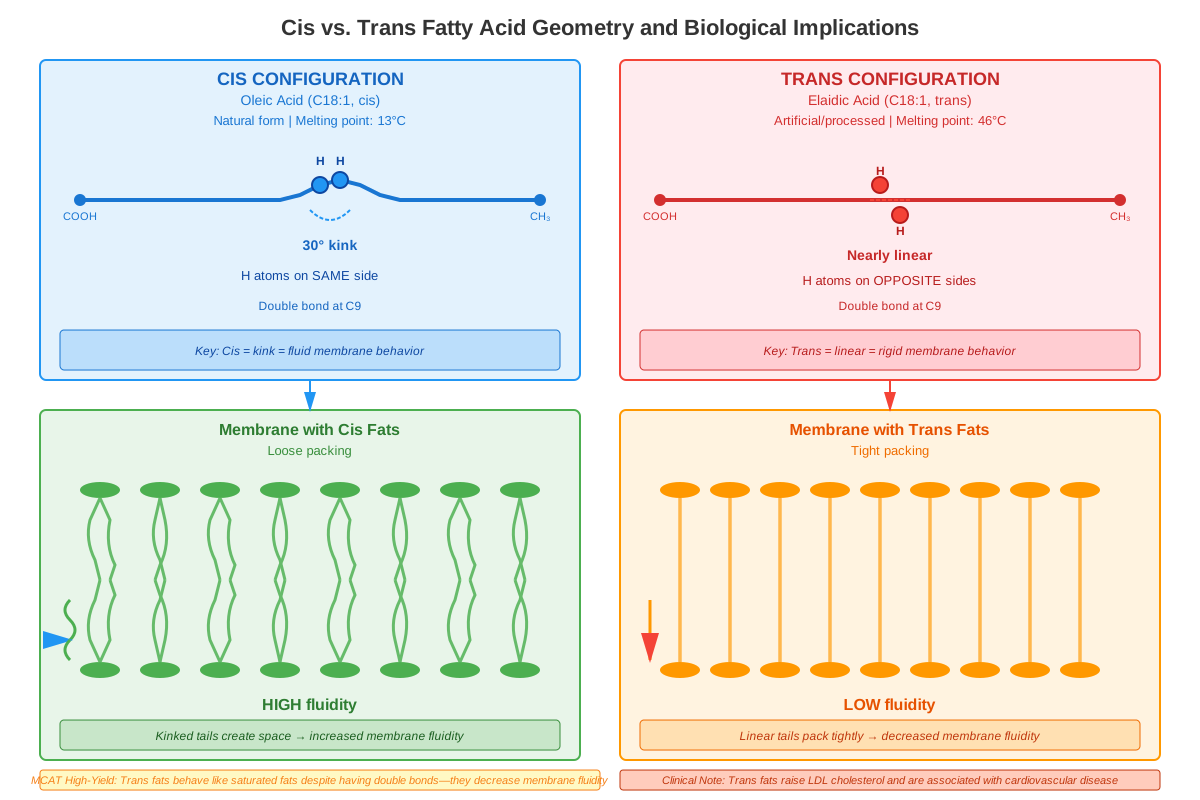
The geometry around carbon-carbon double bonds profoundly affects fatty acid properties. Cis double bonds have hydrogen atoms on the same side of the double bond, creating a ~30° bend in the hydrocarbon chain. This is the naturally occurring configuration in most biological fatty acids. The kink prevents tight packing, lowering melting points and increasing membrane fluidity.
Trans double bonds have hydrogen atoms on opposite sides, resulting in a relatively straight chain similar to saturated fatty acids. Trans fats can pack tightly, have higher melting points, and behave more like saturated fats in biological systems. While rare in nature, trans fats are produced during industrial hydrogenation and have adverse health effects.
| Property | Cis Unsaturated | Trans Unsaturated | Saturated |
|---|---|---|---|
| Chain shape | Kinked/bent | Relatively straight | Straight |
| Packing efficiency | Poor | Good | Excellent |
| Melting point | Low | Intermediate | High |
| Membrane fluidity | Increases | Decreases | Decreases |
| Natural occurrence | Common | Rare | Common |
Degree of Unsaturation and Physical Properties
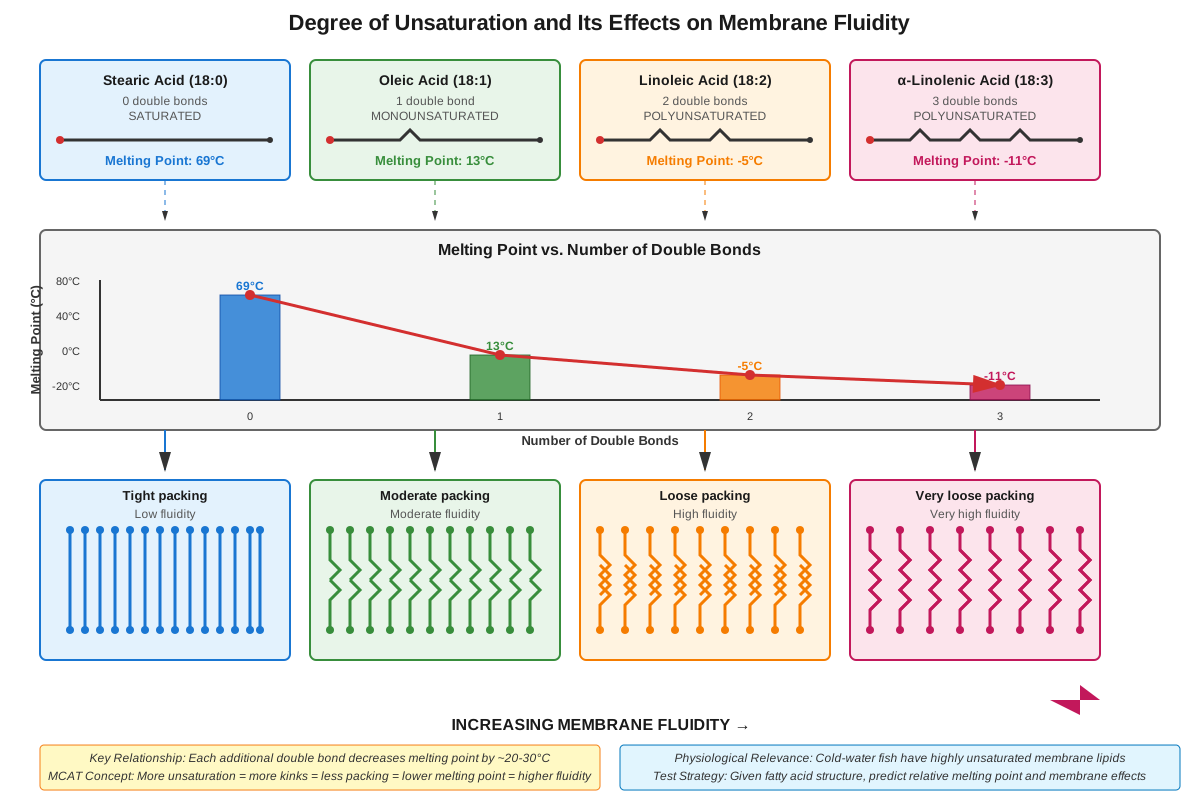
The degree of unsaturation refers to the number of double bonds present. This parameter directly correlates with physical properties:
- Melting point decreases as the number of double bonds increases. Each additional double bond introduces another kink, further disrupting chain packing and weakening van der Waals forces between adjacent molecules.
- Membrane fluidity increases with greater unsaturation. Phospholipids containing polyunsaturated fatty acids create more fluid membranes, which is critical for membrane protein function and cellular adaptation to temperature changes.
- Chemical reactivity increases with more double bonds. Polyunsaturated fatty acids are more susceptible to oxidation and lipid peroxidation, which can damage cellular structures but also serves as a source of signaling molecules.
Common Unsaturated Fatty Acids
Several unsaturated fatty acids appear repeatedly on the MCAT:
Oleic acid (18:1, ω-9): The most abundant monounsaturated fatty acid in nature, found in olive oil. It has one cis double bond at position 9.
Linoleic acid (18:2, ω-6): An essential polyunsaturated fatty acid with two cis double bonds. Humans cannot synthesize this molecule and must obtain it from diet. It serves as a precursor to arachidonic acid.
Alpha-linolenic acid (18:3, ω-3): An essential polyunsaturated fatty acid with three cis double bonds. It's the precursor to EPA and DHA, important omega-3 fatty acids with anti-inflammatory properties.
Arachidonic acid (20:4, ω-6): A polyunsaturated fatty acid with four double bonds, derived from linoleic acid. It serves as the precursor to eicosanoids including prostaglandins, thromboxanes, and leukotrienes.
Essential Fatty Acids
Essential fatty acids are those that cannot be synthesized by humans and must be obtained through diet. Humans lack the enzymes (Δ12 and Δ15 desaturases) needed to introduce double bonds beyond carbon 9 from the carboxyl end. The two essential fatty acids are:
- Linoleic acid (ω-6): Required for synthesis of arachidonic acid and subsequent eicosanoids
- Alpha-linolenic acid (ω-3): Required for synthesis of EPA and DHA, critical for brain function and cardiovascular health
Deficiency in essential fatty acids leads to dermatitis, impaired wound healing, growth retardation, and neurological abnormalities—all potential MCAT passage topics.
Membrane Fluidity and Adaptation
The fatty acid composition of membrane phospholipids directly determines membrane fluidity, which affects:
- Membrane protein function: Many proteins require lateral mobility within the membrane
- Membrane permeability: Fluidity affects the passage of small molecules
- Cell signaling: Receptor clustering and lipid raft formation depend on membrane properties
- Temperature adaptation: Organisms adjust membrane fatty acid composition in response to temperature changes (homeoviscous adaptation)
Cold-adapted organisms increase the proportion of unsaturated fatty acids in their membranes to maintain fluidity at lower temperatures. Conversely, organisms in warm environments increase saturated fatty acid content to prevent excessive fluidity.
Oxidation and Lipid Peroxidation
The double bonds in unsaturated fatty acids are susceptible to oxidation, particularly the bis-allylic hydrogens (hydrogens between two double bonds in polyunsaturated fatty acids). Lipid peroxidation is a chain reaction process where reactive oxygen species (ROS) attack double bonds, generating lipid radicals that propagate damage. While destructive, controlled lipid peroxidation also generates signaling molecules. Antioxidants like vitamin E protect against excessive lipid peroxidation by donating electrons to lipid radicals.
Concept Relationships
The concepts within unsaturated fatty acids form an interconnected network centered on the relationship between structure and function. The presence of double bonds (degree of unsaturation) → determines molecular geometry (cis creates kinks, trans remains straight) → affects packing efficiency → determines physical properties (melting point, fluidity) → influences biological function (membrane dynamics, signaling).
Essential fatty acids connect to broader metabolic pathways: linoleic acid (ω-6) → elongation and desaturation → arachidonic acid → eicosanoid synthesis (prostaglandins, thromboxanes, leukotrienes) → inflammation and immune responses. Similarly, alpha-linolenic acid (ω-3) → EPA and DHA → anti-inflammatory eicosanoids and neuroprotection.
The topic connects to prerequisite knowledge of saturated fatty acids by providing contrast—unsaturated fatty acids demonstrate how introducing double bonds modifies the baseline properties of saturated chains. It connects forward to membrane structure (phospholipids contain fatty acid tails), lipid metabolism (beta-oxidation, fatty acid synthesis), and cell signaling (eicosanoids, lipid mediators).
The relationship between unsaturated fatty acids and membrane fluidity links to protein function, as membrane proteins require appropriate fluidity for conformational changes and lateral movement. This connects to broader topics in cell biology, signal transduction, and transport mechanisms. The oxidation susceptibility of unsaturated fatty acids connects to oxidative stress, antioxidant systems, and aging—all potential MCAT topics.
Quick check — test yourself on Unsaturated fatty acids so far.
Try Flashcards →High-Yield Facts
⭐ Cis double bonds create kinks in fatty acid chains, decreasing melting point and increasing membrane fluidity
⭐ Humans cannot synthesize omega-3 and omega-6 fatty acids; linoleic acid and alpha-linolenic acid are essential fatty acids
⭐ Increasing the number of double bonds (degree of unsaturation) progressively lowers melting point
⭐ Trans fatty acids behave more like saturated fatty acids due to their straight chain configuration
⭐ Arachidonic acid (20:4, ω-6) is the precursor to prostaglandins, thromboxanes, and leukotrienes
- Oleic acid (18:1, ω-9) is the most abundant monounsaturated fatty acid in nature
- The omega notation system counts from the methyl end and remains constant during chain elongation
- Polyunsaturated fatty acids are more susceptible to lipid peroxidation than monounsaturated or saturated fatty acids
- Cold-adapted organisms increase unsaturated fatty acid content in membranes to maintain fluidity (homeoviscous adaptation)
- The delta (Δ) notation counts double bond position from the carboxyl carbon
- Vitamin E functions as an antioxidant protecting unsaturated fatty acids from peroxidation
- Hydrogenation of unsaturated fatty acids (adding hydrogen across double bonds) converts them to saturated or trans fats
- EPA (eicosapentaenoic acid) and DHA (docosahexaenoic acid) are omega-3 fatty acids derived from alpha-linolenic acid
- The bis-allylic hydrogens in polyunsaturated fatty acids are particularly vulnerable to oxidative attack
- Membrane fluidity affects the function of membrane-bound enzymes and receptors
Common Misconceptions
Misconception: All unsaturated fatty acids are healthier than saturated fatty acids.
Correction: While cis-unsaturated fatty acids generally have cardiovascular benefits, trans-unsaturated fatty acids behave like saturated fats and increase cardiovascular disease risk. The configuration of the double bond matters as much as its presence.
Misconception: Omega-3 and omega-6 refer to the number of double bonds in the fatty acid.
Correction: The omega number indicates the position of the first double bond counting from the methyl end, not the total number of double bonds. Alpha-linolenic acid is omega-3 but has three double bonds; arachidonic acid is omega-6 but has four double bonds.
Misconception: Humans can convert omega-6 fatty acids to omega-3 fatty acids or vice versa.
Correction: Humans cannot interconvert omega-3 and omega-6 families because we lack the enzymes to move double bonds toward the methyl end. Once a fatty acid is in the omega-6 family, it remains there through all subsequent modifications.
Misconception: More double bonds always means better membrane fluidity, so maximum unsaturation is optimal.
Correction: While unsaturation increases fluidity, excessive unsaturation increases susceptibility to oxidative damage. Cells maintain a balanced composition of saturated, monounsaturated, and polyunsaturated fatty acids for optimal function and stability.
Misconception: The melting point difference between saturated and unsaturated fatty acids is negligible.
Correction: The difference is dramatic. Stearic acid (18:0, saturated) melts at 69°C, while oleic acid (18:1, one double bond) melts at 13°C—a 56°C difference from a single double bond. This explains why saturated fats are solid at room temperature while unsaturated fats are liquid.
Misconception: Trans fats are just another type of unsaturated fat with similar properties to cis fats.
Correction: Trans fats have fundamentally different properties from cis fats. Their straight chain configuration allows tight packing similar to saturated fats, resulting in higher melting points and adverse effects on membrane fluidity and cardiovascular health.
Misconception: The delta and omega numbering systems will give the same number for double bond position.
Correction: These systems count from opposite ends of the molecule. For oleic acid (18:1), the double bond is at Δ9 (counting from carboxyl) but ω-9 (counting from methyl). They only match when the fatty acid has a specific length and double bond position.
Worked Examples
Example 1: Predicting Melting Points
Question: Rank the following fatty acids from lowest to highest melting point: (A) Stearic acid (18:0), (B) Oleic acid (18:1, cis-Δ9), (C) Linoleic acid (18:2, cis-Δ9,12), (D) Elaidic acid (18:1, trans-Δ9).
Solution Process:
Step 1: Identify the structural features of each fatty acid.
- Stearic acid: 18 carbons, fully saturated (no double bonds)
- Oleic acid: 18 carbons, one cis double bond
- Linoleic acid: 18 carbons, two cis double bonds
- Elaidic acid: 18 carbons, one trans double bond
Step 2: Apply the principles of fatty acid structure and melting point.
- Saturated fatty acids pack tightly → highest melting point
- Cis double bonds create kinks → poor packing → lower melting point
- More cis double bonds → more kinks → even lower melting point
- Trans double bonds → relatively straight → packs better than cis → higher melting point than cis
Step 3: Rank from lowest to highest melting point.
- Linoleic acid (C) has two cis double bonds → most kinks → poorest packing → lowest melting point
- Oleic acid (B) has one cis double bond → intermediate
- Elaidic acid (D) has one trans double bond → straighter than cis → higher than oleic
- Stearic acid (A) is fully saturated → tightest packing → highest melting point
Answer: C < B < D < A (Linoleic < Oleic < Elaidic < Stearic)
Connection to Learning Objectives: This example demonstrates the application of structural knowledge to predict physical properties, a common MCAT question type. It requires understanding how both the number and configuration of double bonds affect molecular packing and melting point.
Example 2: Essential Fatty Acid Pathway Analysis
Question: A patient presents with dermatitis and impaired wound healing. Laboratory analysis reveals deficiency in arachidonic acid and its metabolites. The patient's diet is adequate in alpha-linolenic acid (18:3, ω-3) but deficient in linoleic acid (18:2, ω-6). Explain why supplementation with alpha-linolenic acid alone cannot correct this deficiency.
Solution Process:
Step 1: Identify the metabolic relationship between fatty acids.
- Arachidonic acid (20:4, ω-6) is derived from linoleic acid (18:2, ω-6)
- Both are omega-6 fatty acids
- Alpha-linolenic acid (18:3, ω-3) is an omega-3 fatty acid
Step 2: Recall the biochemical limitation.
- Humans lack Δ12 and Δ15 desaturases
- These enzymes would be required to introduce double bonds beyond carbon 9 from the carboxyl end
- Humans cannot convert omega-3 fatty acids to omega-6 fatty acids or vice versa
- The omega designation (position of first double bond from methyl end) is fixed
Step 3: Connect to the clinical presentation.
- Arachidonic acid is the precursor to prostaglandins, thromboxanes, and leukotrienes
- These eicosanoids are essential for inflammation, wound healing, and skin integrity
- Without linoleic acid, the patient cannot synthesize arachidonic acid
- Alpha-linolenic acid cannot substitute because it's in a different omega family
Step 4: Formulate the explanation.
The patient requires linoleic acid (ω-6) specifically because humans cannot interconvert omega families. Even though alpha-linolenic acid is an essential fatty acid with three double bonds, it cannot be converted to the omega-6 family needed for arachidonic acid synthesis. The position of the first double bond (three carbons from the methyl end in ω-3 vs. six carbons in ω-6) is metabolically fixed. Treatment requires dietary supplementation with linoleic acid or direct arachidonic acid supplementation.
Connection to Learning Objectives: This example integrates essential fatty acid biochemistry with clinical reasoning, demonstrating why the omega classification system matters physiologically. It requires understanding metabolic pathways, enzyme limitations, and the connection between structure and biological function—all high-yield MCAT skills.
Exam Strategy
When approaching MCAT questions on unsaturated fatty acids, begin by identifying the structural features: count the carbons, locate the double bonds, and determine their configuration (cis or trans). This structural analysis immediately allows prediction of physical properties and biological behavior.
Trigger words to watch for include: "membrane fluidity," "melting point," "essential," "omega-3/omega-6," "cis/trans," "hydrogenation," "lipid peroxidation," and "eicosanoids." These terms signal specific concepts that should activate your knowledge of unsaturated fatty acid properties and metabolism.
For process-of-elimination, remember these key principles:
- If a question asks about increasing membrane fluidity, eliminate answers suggesting increased saturation or trans fats
- If a question involves essential fatty acids, eliminate answers suggesting humans can synthesize all fatty acids or interconvert omega families
- If comparing melting points, eliminate any answer that doesn't follow the rule: more double bonds (cis) = lower melting point
- If a passage discusses cardiovascular health, eliminate answers equating trans fats with cis-unsaturated fats
Time allocation: Discrete questions on fatty acid structure should take 30-45 seconds once you've mastered the core concepts. Passage-based questions may require 60-90 seconds, but the structural analysis should be rapid, allowing more time for data interpretation or experimental design questions.
When passages present experimental data on fatty acid composition, quickly scan for patterns in saturation levels, omega classifications, or cis/trans ratios. These patterns often directly relate to the experimental outcome (membrane fluidity, oxidative stress, inflammatory response, etc.).
For questions requiring calculations or predictions, draw a quick structural sketch if needed. Visualizing the kinks in cis fatty acids versus the straight chains of saturated or trans fatty acids can prevent errors and speed up your reasoning.
Memory Techniques
Mnemonic for essential fatty acids: "Linda Loves Alpha" → Linoleic, Linoleic, Alpha-linolenic are the essential fatty acids (note: linoleic appears twice because both linoleic and arachidonic acid are omega-6, but only linoleic is essential since arachidonic can be synthesized from it).
Mnemonic for omega families: "3 Fish, 6 Seeds" → Omega-3 fatty acids are abundant in fish oil (EPA, DHA), while omega-6 fatty acids are abundant in seed oils (linoleic acid).
Visualization for cis vs. trans: Picture a "C" for Cis creating a Curve or kink in the chain. Picture a "T" for Trans as a straight line (the vertical part of the T), representing the straight chain configuration.
Mnemonic for melting point trends: "Kinks Keep Kool" → Kinks (from cis double bonds) keep melting points kool (low). More kinks = lower melting point.
Acronym for polyunsaturated fatty acid effects: "FLOP" → Fluidity increases, Lipid peroxidation susceptibility increases, Oxidation vulnerability increases, Packing efficiency decreases.
Memory palace technique: Imagine walking through a grocery store. In the olive oil aisle, see bottles shaped like the letter "O" for Oleic acid (monounsaturated, ω-9). In the fish section, see three fish for omega-3 fatty acids. In the seed/nut section, see six bags for omega-6 fatty acids. This spatial memory helps recall the sources and classifications.
Summary
Unsaturated fatty acids are carboxylic acids containing one or more carbon-carbon double bonds that fundamentally alter their physical and biological properties compared to saturated fatty acids. The presence of cis double bonds creates kinks in the hydrocarbon chain, preventing tight molecular packing and resulting in lower melting points and increased membrane fluidity. The degree of unsaturation (number of double bonds) directly correlates with these effects—more double bonds mean lower melting points and greater fluidity. Trans double bonds, though technically unsaturated, behave more like saturated fatty acids due to their straight configuration. Humans cannot synthesize omega-3 and omega-6 fatty acids, making linoleic acid and alpha-linolenic acid essential dietary components. These essential fatty acids serve as precursors to longer-chain polyunsaturated fatty acids like arachidonic acid, which generates eicosanoids critical for inflammation and immune function. Understanding the nomenclature (delta and omega systems), structural features, and functional consequences of unsaturated fatty acids is essential for MCAT success, as this topic integrates organic chemistry principles with biochemical and physiological applications.
Key Takeaways
- Unsaturated fatty acids contain one or more C=C double bonds; cis configuration creates kinks that lower melting points and increase membrane fluidity
- The two essential fatty acids are linoleic acid (ω-6) and alpha-linolenic acid (ω-3), which humans cannot synthesize
- Increasing the degree of unsaturation (number of double bonds) progressively decreases melting point and increases membrane fluidity
- Trans fatty acids have straight chains and behave like saturated fats, with higher melting points than cis isomers
- Arachidonic acid (ω-6) serves as the precursor to prostaglandins, thromboxanes, and leukotrienes—key inflammatory mediators
- Omega notation counts from the methyl end and remains constant during metabolism; delta notation counts from the carboxyl end
- Polyunsaturated fatty acids are more susceptible to lipid peroxidation due to reactive bis-allylic hydrogens
Related Topics
Saturated Fatty Acids: Understanding the baseline properties of fully saturated chains provides essential context for appreciating how unsaturation modifies fatty acid behavior. Mastery of unsaturated fatty acids builds directly on this foundation.
Phospholipids and Membrane Structure: Unsaturated fatty acids form the hydrophobic tails of membrane phospholipids, directly determining membrane properties. This topic extends the principles learned here to complex lipid structures.
Fatty Acid Metabolism: Beta-oxidation and fatty acid synthesis pathways process both saturated and unsaturated fatty acids, with special enzymes required for handling double bonds. Understanding unsaturated fatty acid structure is prerequisite knowledge.
Eicosanoids and Cell Signaling: Arachidonic acid and other polyunsaturated fatty acids serve as precursors to prostaglandins, thromboxanes, and leukotrienes. This topic builds directly on essential fatty acid biochemistry.
Lipid Peroxidation and Oxidative Stress: The susceptibility of unsaturated fatty acids to oxidative damage connects to broader topics in cellular stress, aging, and antioxidant systems.
Nutrition and Cardiovascular Health: The health effects of different dietary fats relate directly to the structural and functional properties of unsaturated versus saturated and trans fatty acids.
Practice CTA
Now that you've mastered the core concepts of unsaturated fatty acids, it's time to solidify your understanding through active practice. Attempt the practice questions and flashcards associated with this topic to test your ability to apply these concepts under exam conditions. Focus on questions that require you to predict properties from structure, identify essential fatty acids, and connect molecular features to biological functions. Remember, the MCAT rewards not just knowledge but the ability to apply that knowledge rapidly and accurately. Each practice question you complete strengthens the neural pathways that will serve you on test day. You've built a strong foundation—now reinforce it through deliberate practice!
Sign up free to keep reading
Create a free AnvayaPrep account to finish this MCAT guide on Unsaturated fatty acids — plus flashcards and practice questions.