Overview
ATP synthase is a remarkable molecular machine that stands at the heart of cellular energy production. This enzyme complex catalyzes the synthesis of adenosine triphosphate (ATP) from adenosine diphosphate (ADP) and inorganic phosphate (Pi), harnessing the energy stored in an electrochemical proton gradient across a membrane. Found in the inner mitochondrial membrane of eukaryotes and the plasma membrane of prokaryotes, ATP synthase represents the culmination of cellular respiration and oxidative phosphorylation, producing the vast majority of ATP that powers cellular processes.
For the MCAT, understanding ATP synthase Biochemistry is essential because this enzyme integrates multiple high-yield concepts including chemiosmosis, proton-motive force, membrane structure, and energy coupling. Questions frequently test the mechanism by which this enzyme converts potential energy stored in concentration gradients into the chemical energy of ATP bonds. The MCAT expects students to understand not just the structure and function of ATP synthase, but also how it fits into the broader context of Metabolism, including glycolysis, the citric acid cycle, and the electron transport chain.
ATP synthase MCAT questions often appear in passage-based formats that require students to analyze experimental manipulations of the enzyme, interpret data about proton gradients, or predict the effects of inhibitors on cellular respiration. This topic bridges thermodynamics, membrane biology, and metabolic Biochemistry, making it a favorite for integrated, higher-order thinking questions that distinguish top scorers from average performers.
Learning Objectives
- [ ] Define ATP synthase using accurate Biochemistry terminology
- [ ] Explain why ATP synthase matters for the MCAT
- [ ] Apply ATP synthase to exam-style questions
- [ ] Identify common mistakes related to ATP synthase
- [ ] Connect ATP synthase to related Biochemistry concepts
- [ ] Describe the structural components of ATP synthase and their specific functions
- [ ] Calculate theoretical ATP yield based on proton stoichiometry
- [ ] Predict the effects of various inhibitors and uncouplers on ATP synthase function
Prerequisites
- Electron Transport Chain (ETC): ATP synthase depends on the proton gradient established by the ETC; understanding how complexes I-IV pump protons is essential for grasping the energy source that drives ATP synthesis
- Thermodynamics and Free Energy: The concepts of ΔG, exergonic and endergonic reactions are necessary to understand how ATP synthase couples favorable proton flow to unfavorable ATP synthesis
- Membrane Structure: Knowledge of lipid bilayers, membrane proteins, and the impermeability of membranes to charged particles explains how proton gradients can be maintained
- ATP Structure and Energetics: Understanding the high-energy phosphate bonds in ATP and the energy released during hydrolysis provides context for why ATP synthesis requires energy input
- Chemiosmosis: The fundamental principle that chemical energy can be stored in ion gradients and then harvested underlies the entire mechanism of ATP synthase
Why This Topic Matters
Clinical and Real-World Significance
ATP synthase deficiencies, though rare, cause severe mitochondrial diseases affecting high-energy-demand tissues like muscle and brain. Patients with mutations in ATP synthase subunits may present with neuropathy, ataxia, and retinitis pigmentosa (NARP syndrome) or maternally inherited Leigh syndrome. Understanding ATP synthase also illuminates how certain toxins work—oligomycin, a specific ATP synthase inhibitor, is used in research and has helped elucidate the enzyme's mechanism. Additionally, the bacterial ATP synthase represents a drug target for treating tuberculosis, as bedaquiline specifically inhibits mycobacterial ATP synthase.
MCAT Exam Statistics
ATP synthase appears in approximately 15-20% of MCAT Biochemistry passages related to metabolism. Questions typically fall into three categories: (1) mechanism-based questions requiring understanding of rotary catalysis and proton flow (40%), (2) experimental analysis questions involving inhibitors or genetic mutations (35%), and (3) calculation questions about ATP yield and proton stoichiometry (25%). The topic frequently appears in passages that integrate multiple metabolic pathways, requiring students to trace energy flow from glucose oxidation through the ETC to ATP synthesis.
Common Exam Presentation Formats
MCAT passages often present ATP synthase in the context of experimental manipulations: researchers might add uncouplers like DNP, inhibitors like oligomycin, or alter pH gradients. Students must predict effects on oxygen consumption, heat production, and ATP levels. Another common format involves genetic studies where specific subunits are mutated, requiring analysis of which functions remain intact. Clinical vignettes may describe patients with mitochondrial diseases and ask students to identify the biochemical basis of symptoms.
Core Concepts
Structure of ATP Synthase
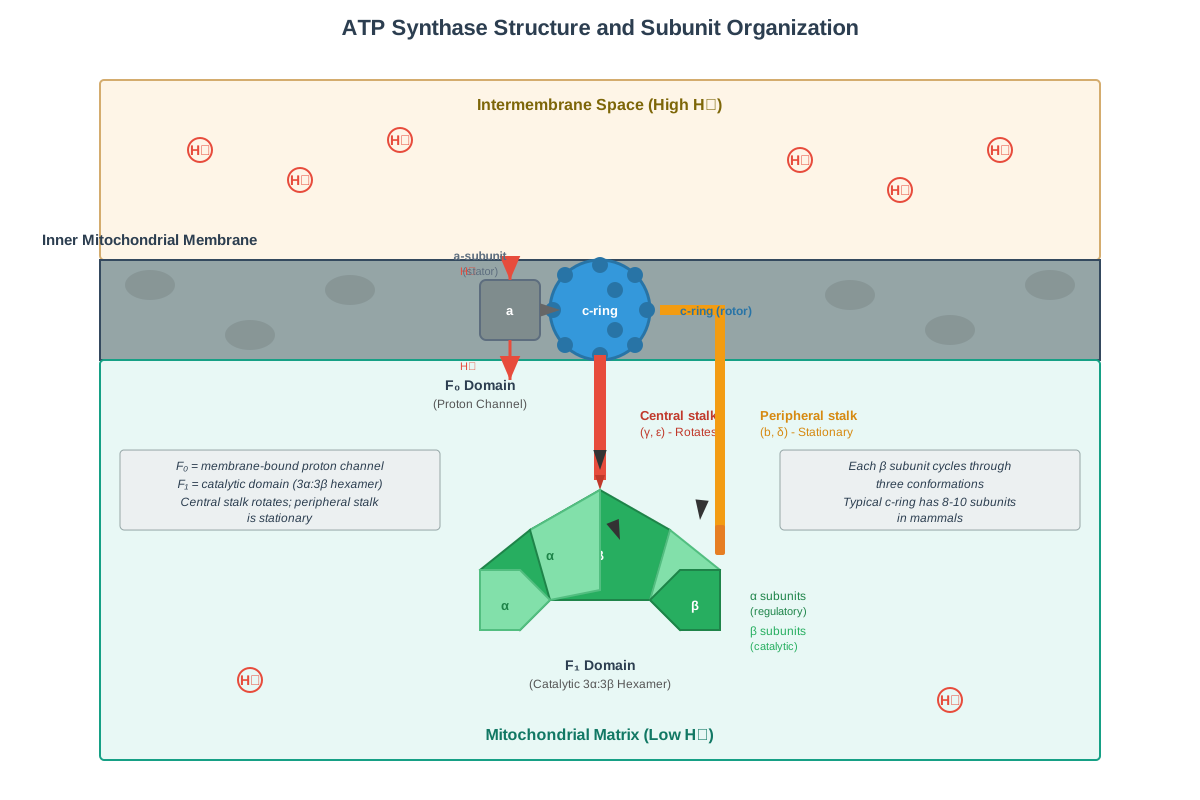
ATP synthase is a multi-subunit enzyme complex with two major functional domains: F₀ and F₁. The F₀ domain is embedded in the membrane and serves as a proton channel, while the F₁ domain extends into the mitochondrial matrix (or bacterial cytoplasm) and contains the catalytic sites for ATP synthesis. Together, these domains function as a rotary motor, one of nature's smallest and most efficient machines.
The F₀ domain consists of a ring of c-subunits (typically 10-14 copies, depending on species) that rotate within the membrane, along with a stationary a-subunit that provides the proton entry and exit channels. Each c-subunit contains a proton-binding site, and as protons flow through the a-subunit channel, they bind to c-subunits, causing the entire c-ring to rotate. This rotation is driven by the proton-motive force—the electrochemical gradient of protons across the inner mitochondrial membrane.
The F₁ domain contains the catalytic machinery arranged in an α₃β₃ hexamer surrounding a central γ-subunit (the "rotor shaft"). The three β-subunits contain the active sites where ATP synthesis occurs, while the α-subunits provide structural support. The γ-subunit connects to the c-ring of F₀ and rotates as the c-ring turns. Additional subunits (δ and ε) help connect F₁ to F₀ and regulate enzyme activity. A peripheral "stator" stalk composed of b and δ subunits holds the α₃β₃ hexamer stationary while the central γ-subunit rotates within it.
Mechanism of ATP Synthesis: Binding Change Mechanism
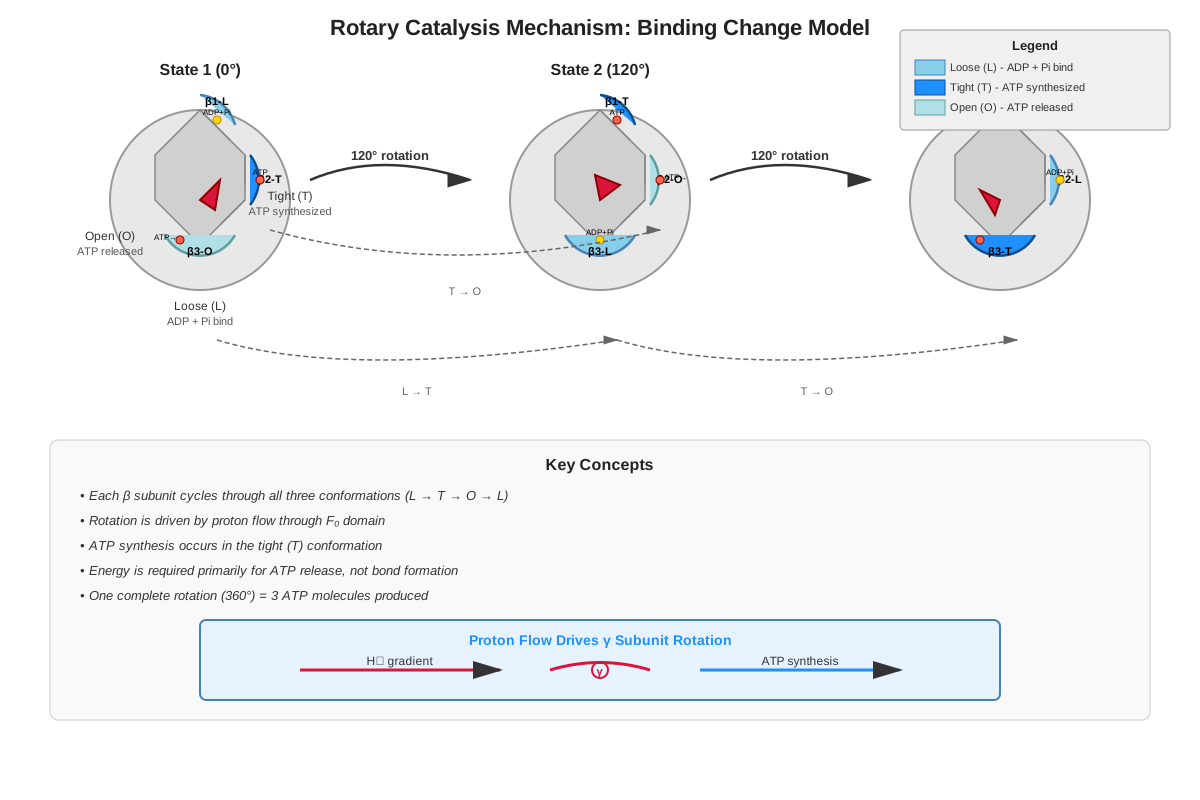
The binding change mechanism, elucidated by Paul Boyer (Nobel Prize 1997), explains how rotational energy is converted into chemical bond formation. Each of the three β-subunits cycles through three conformational states as the γ-subunit rotates:
- Open (O) conformation: Low affinity for substrates; releases newly synthesized ATP
- Loose (L) conformation: Binds ADP and Pi with low affinity
- Tight (T) conformation: Binds substrates with high affinity and catalyzes ATP formation
As the γ-subunit rotates 120° (driven by proton flow through F₀), each β-subunit transitions to the next conformational state. The key insight is that ATP synthesis itself requires minimal energy—the tight conformation brings ADP and Pi so close together that they spontaneously form ATP. The energy from the proton gradient is primarily used to release the tightly bound ATP from the enzyme, allowing the cycle to continue.
The complete catalytic cycle involves:
- ADP + Pi bind to a β-subunit in the L conformation
- Rotation shifts this subunit to T conformation, forming ATP
- Further rotation shifts to O conformation, releasing ATP
- The cycle repeats for each of the three β-subunits
This mechanism means that for every 360° rotation of the γ-subunit, three ATP molecules are synthesized (one per β-subunit). The rotation is continuous and highly efficient, with minimal energy loss.
Proton Stoichiometry and ATP Yield
The number of protons required to synthesize one ATP molecule depends on the size of the c-ring in F₀. In mammalian mitochondria, the c-ring typically contains 8 c-subunits, meaning 8 protons must flow through F₀ to complete one full rotation. Since one full rotation produces 3 ATP molecules, the stoichiometry is approximately 8 protons per 3 ATP, or roughly 2.7 protons per ATP.
However, this calculation must account for the ATP/ADP translocase (also called adenine nucleotide translocator or ANT), which exchanges ATP⁴⁻ in the matrix for ADP³⁻ in the intermembrane space. This electrogenic exchange effectively costs one proton equivalent due to the charge difference. Additionally, the phosphate carrier imports Pi into the matrix along with one H⁺. Therefore, the true cost of producing one cytoplasmic ATP is approximately 4 protons: ~2.7 for ATP synthase itself, plus ~1 for the translocase, plus ~0.3 for phosphate transport (values vary slightly depending on the source and experimental conditions).
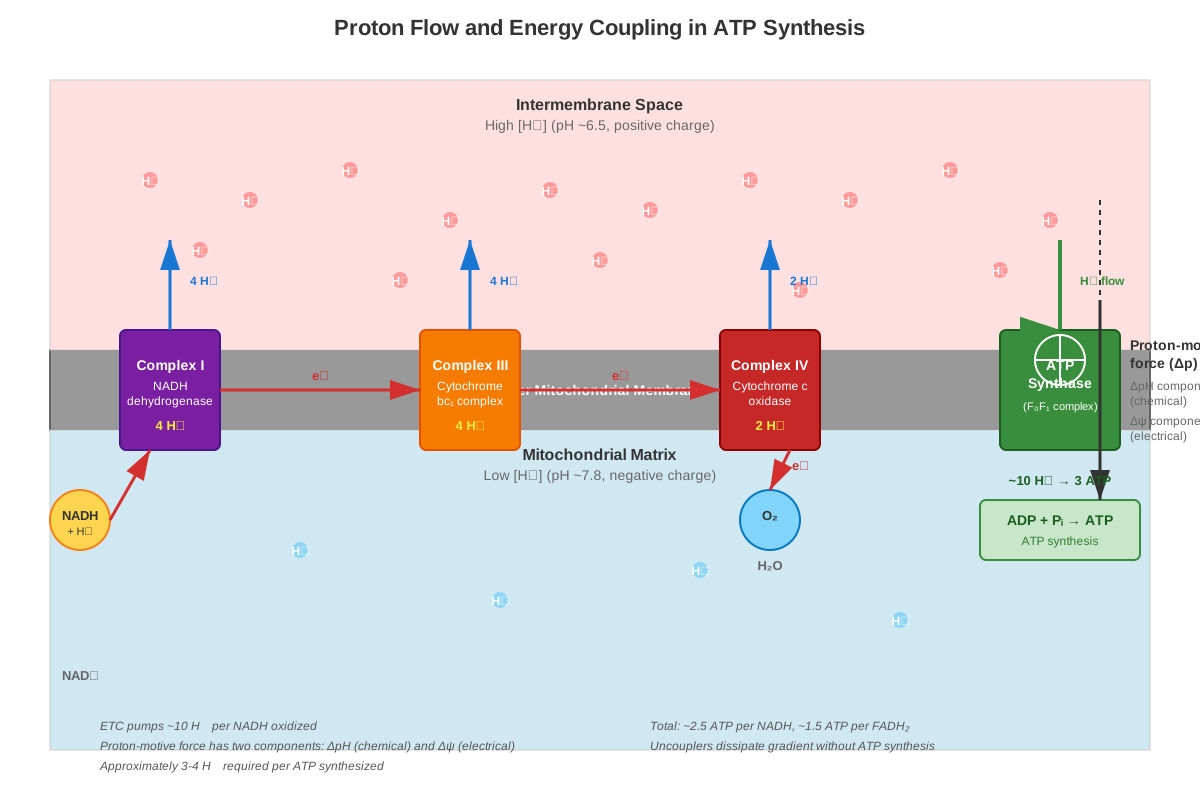
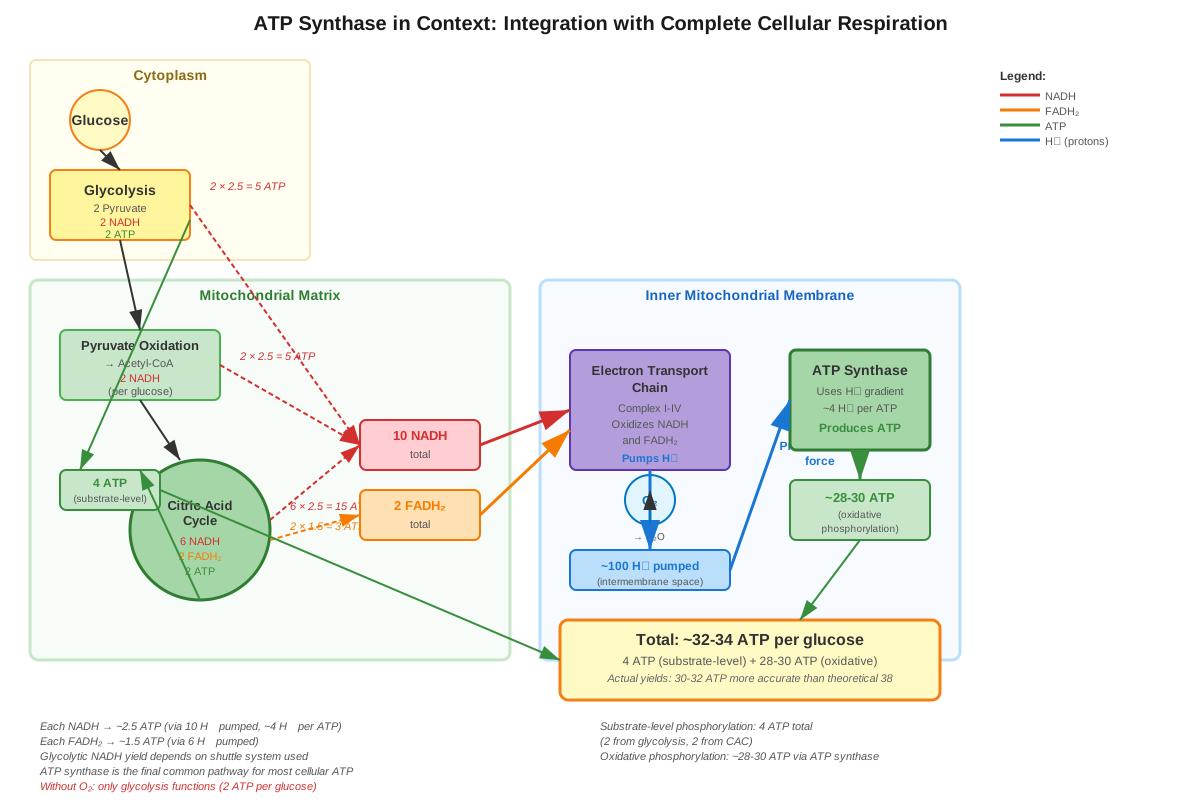
This stoichiometry is crucial for calculating theoretical ATP yields from glucose oxidation. NADH pumps approximately 10 protons across the membrane (via Complexes I, III, and IV), while FADH₂ pumps approximately 6 protons (via Complexes II, III, and IV). Using the 4 protons per ATP ratio:
- Each NADH yields approximately 2.5 ATP
- Each FADH₂ yields approximately 1.5 ATP
These fractional values reflect the actual biochemistry more accurately than the older "3 ATP per NADH" estimates.
Chemiosmotic Theory and Proton-Motive Force
Chemiosmotic theory, proposed by Peter Mitchell (Nobel Prize 1978), revolutionized understanding of ATP synthesis by establishing that the proton gradient itself is the energy intermediate, not a chemical compound. The proton-motive force (PMF) consists of two components:
- Chemical gradient (ΔpH): Higher proton concentration in the intermembrane space than in the matrix (approximately pH 7.4 vs. pH 8.0)
- Electrical gradient (ΔΨ): Positive charge in the intermembrane space, negative in the matrix (approximately -180 mV)
The total proton-motive force can be calculated using:
PMF = ΔΨ - (2.3RT/F)ΔpHWhere R is the gas constant, T is temperature, and F is Faraday's constant. At 37°C, this simplifies to approximately:
PMF ≈ ΔΨ - 60(ΔpH) mVIn mitochondria, the electrical component (ΔΨ) contributes about 80% of the total PMF, while the pH gradient contributes about 20%. The total PMF is approximately -220 mV, representing substantial stored energy that drives ATP synthesis.
Regulation of ATP Synthase
ATP synthase activity is primarily regulated by substrate availability and the magnitude of the proton gradient. When ATP demand is high (low ATP/ADP ratio), ATP is consumed rapidly, increasing ADP availability and allowing ATP synthase to operate at maximum capacity. Conversely, when ATP levels are high, product inhibition slows the enzyme.
The respiratory control phenomenon describes how ATP synthase activity controls the rate of the entire electron transport chain. When ATP synthase is active (consuming the proton gradient), the ETC operates rapidly to replenish the gradient. When ATP synthase slows (due to high ATP levels), the proton gradient builds up, creating back-pressure that slows electron transport and oxygen consumption. This coupling ensures that fuel oxidation matches ATP demand.
The ε-subunit in bacterial ATP synthase acts as an intrinsic inhibitor, blocking the enzyme when the proton gradient is insufficient. In mitochondria, the protein IF₁ (inhibitory factor 1) binds to ATP synthase under conditions of low pH (as occurs during ischemia), preventing the enzyme from running in reverse and hydrolyzing ATP.
ATP Synthase in Reverse: ATP Hydrolysis
Under certain conditions, ATP synthase can operate in reverse, hydrolyzing ATP to pump protons and maintain the membrane potential. This occurs in some bacteria during anaerobic conditions when the ETC cannot function. In mitochondria, reverse operation is generally prevented by IF₁, but can occur pathologically during ischemia if IF₁ is overwhelmed. Reverse operation is energetically wasteful and can deplete cellular ATP reserves, contributing to cell death in ischemic tissues.
Comparison: Mitochondrial vs. Bacterial ATP Synthase
| Feature | Mitochondrial ATP Synthase | Bacterial ATP Synthase |
|---|---|---|
| Location | Inner mitochondrial membrane | Plasma membrane |
| Orientation | F₁ faces matrix | F₁ faces cytoplasm |
| Proton source | Intermembrane space | Periplasmic space |
| Regulation | IF₁ inhibitor | ε-subunit inhibitor |
| Clinical relevance | Mitochondrial diseases | Antibiotic target (bedaquiline) |
| c-ring size | Typically 8 subunits | Typically 10-14 subunits |
Concept Relationships
ATP synthase represents the convergence point of multiple metabolic pathways and biochemical principles. The electron transport chain establishes the proton gradient by pumping H⁺ ions from the matrix to the intermembrane space using energy from NADH and FADH₂ oxidation. These electron carriers are generated by glycolysis (cytoplasmic NADH), the pyruvate dehydrogenase complex (mitochondrial NADH), the citric acid cycle (NADH and FADH₂), and fatty acid β-oxidation (NADH and FADH₂).
The relationship flows: Fuel oxidation → NADH/FADH₂ production → Electron transport → Proton gradient → ATP synthase → ATP production
ATP synthase also connects to thermodynamics: the unfavorable synthesis of ATP (ΔG°' = +7.3 kcal/mol) is coupled to the favorable flow of protons down their electrochemical gradient (ΔG ≈ -5 kcal/mol per proton). This coupling through the rotary mechanism allows the enzyme to harness multiple small energy inputs (individual proton movements) to drive one large energy-requiring reaction (ATP synthesis).
The enzyme's function depends on membrane structure—the lipid bilayer must be impermeable to protons to maintain the gradient. Any disruption of membrane integrity (by uncouplers like DNP or ionophores) dissipates the gradient and prevents ATP synthesis, even if the ETC continues to function.
Cellular respiration can be viewed as a series of energy transformations: chemical energy in glucose → chemical energy in NADH/FADH₂ → potential energy in proton gradient → chemical energy in ATP. ATP synthase catalyzes the final transformation, making it essential for aerobic life.
Quick check — test yourself on ATP synthase so far.
Try Flashcards →High-Yield Facts
⭐ ATP synthase consists of two domains: F₀ (membrane-embedded proton channel) and F₁ (catalytic domain with three β-subunits that synthesize ATP)
⭐ The binding change mechanism explains that ATP synthesis requires minimal energy; most energy is used to release tightly bound ATP from the enzyme
⭐ Approximately 2.7-3 protons flow through F₀ per ATP synthesized at the enzyme level, but the total cost including transport is approximately 4 protons per cytoplasmic ATP
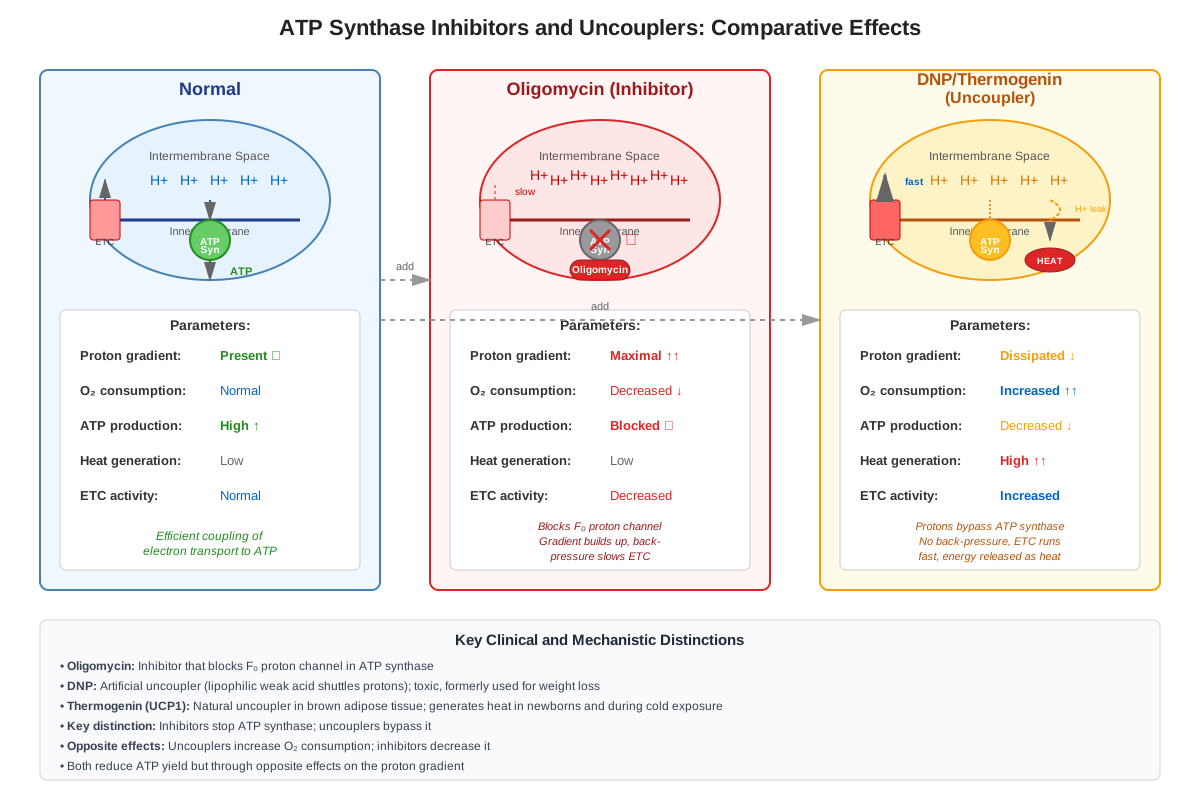
⭐ Oligomycin specifically inhibits ATP synthase by binding to the F₀ domain and blocking proton flow, which also stops the electron transport chain due to respiratory control
⭐ Uncouplers like DNP dissipate the proton gradient without producing ATP, causing increased oxygen consumption, heat production, and no ATP synthesis
- The γ-subunit rotates 120° for each ATP synthesized, completing 360° to produce three ATP molecules
- The proton-motive force consists of both a pH gradient (ΔpH) and an electrical gradient (ΔΨ), with ΔΨ contributing approximately 80% of the total
- ATP synthase can run in reverse under pathological conditions, hydrolyzing ATP to pump protons and maintain membrane potential
- IF₁ (inhibitory factor 1) prevents reverse operation of mitochondrial ATP synthase during ischemia when pH drops
- The c-ring size varies among species (8 in mammals, 10-15 in bacteria), affecting the proton stoichiometry and efficiency of ATP synthesis
- Bacterial ATP synthase is a validated drug target; bedaquiline inhibits mycobacterial ATP synthase to treat tuberculosis
Common Misconceptions
Misconception: ATP synthase directly uses energy from electron transport to synthesize ATP.
Correction: ATP synthase uses the proton gradient established by the electron transport chain. The ETC and ATP synthase are separate processes connected by the intermediate energy storage in the proton-motive force. This is why uncouplers can dissipate the gradient without affecting either process directly.
Misconception: The rotation of ATP synthase requires ATP hydrolysis to power it.
Correction: The rotation is powered by proton flow down the electrochemical gradient, not by ATP hydrolysis. ATP is the product, not the energy source. The enzyme can run in reverse (hydrolyzing ATP to pump protons), but this is not its normal physiological function in mitochondria.
Misconception: Each NADH produces exactly 3 ATP and each FADH₂ produces exactly 2 ATP.
Correction: These are outdated whole-number approximations. Modern understanding of proton stoichiometry indicates that each NADH yields approximately 2.5 ATP and each FADH₂ yields approximately 1.5 ATP when accounting for the actual number of protons pumped and the cost of ATP/ADP exchange.
Misconception: Oligomycin stops ATP synthase but allows the electron transport chain to continue normally.
Correction: While oligomycin directly inhibits only ATP synthase, it indirectly stops the ETC through respiratory control. As the proton gradient builds up (because it's not being consumed by ATP synthase), back-pressure prevents further proton pumping, halting electron transport and oxygen consumption.
Misconception: The F₁ domain is embedded in the membrane and the F₀ domain extends into the matrix.
Correction: This is reversed. F₀ is the membrane-embedded domain (the "o" originally stood for oligomycin-sensitive), while F₁ extends into the matrix and contains the catalytic sites. The F₁ domain can be physically removed from the membrane and will hydrolyze ATP (but cannot synthesize it without the proton gradient).
Misconception: ATP synthase synthesizes ATP by directly transferring phosphate groups from one molecule to another.
Correction: ATP synthase catalyzes the formation of ATP from ADP and inorganic phosphate (Pi), not by transferring phosphate from another organic molecule. The enzyme brings ADP and Pi into close proximity in the tight conformation, allowing them to condense with the release of water.
Worked Examples
Example 1: Predicting Effects of Inhibitors
Question: Researchers add oligomycin to isolated mitochondria that are actively respiring. Predict the effects on: (A) oxygen consumption, (B) proton gradient magnitude, (C) ATP production, and (D) NADH/NAD⁺ ratio.
Solution:
First, identify what oligomycin does: it specifically inhibits ATP synthase by binding to the F₀ domain and blocking proton flow through the channel.
(A) Oxygen consumption: Will decrease dramatically. Although oligomycin doesn't directly affect the electron transport chain, it prevents protons from flowing back through ATP synthase. This causes the proton gradient to build up, creating back-pressure that prevents further proton pumping by the ETC. Without proton pumping, electrons cannot flow through the chain, and oxygen (the final electron acceptor) is not reduced. This is respiratory control in action.
(B) Proton gradient magnitude: Will increase initially, then plateau. When ATP synthase is blocked, protons pumped by the ETC accumulate in the intermembrane space. The gradient builds until it reaches a maximum value where the thermodynamic cost of pumping additional protons against the gradient equals the energy available from electron transport. At this point, the ETC stops.
(C) ATP production: Will stop almost completely. Oligomycin directly blocks the enzyme responsible for oxidative phosphorylation. Any ATP produced would come from substrate-level phosphorylation (glycolysis and citric acid cycle), which is minimal compared to oxidative phosphorylation.
(D) NADH/NAD⁺ ratio: Will increase. Since the ETC is blocked (due to respiratory control), NADH cannot be oxidized to NAD⁺. NADH accumulates while NAD⁺ is depleted, increasing the ratio. This will eventually slow or stop the citric acid cycle and other NAD⁺-dependent reactions.
Key concept: This example demonstrates the tight coupling between ATP synthase and the ETC through respiratory control, a high-yield MCAT concept.
Example 2: Calculating ATP Yield
Question: A researcher isolates mitochondria and provides them with succinate as the only fuel source. Succinate is oxidized by succinate dehydrogenase (Complex II), producing FADH₂ that enters the electron transport chain. If 10 molecules of succinate are completely oxidized, and assuming the modern proton stoichiometry (6 protons pumped per FADH₂, 4 protons required per ATP including transport costs), how many ATP molecules are produced?
Solution:
Step 1: Determine electron carriers produced.
- Each succinate oxidation produces 1 FADH₂
- 10 succinate molecules → 10 FADH₂
Step 2: Calculate protons pumped.
- Each FADH₂ enters at Complex II and passes through Complexes III and IV
- Complex III pumps 4 protons, Complex IV pumps 2 protons
- Total: 6 protons per FADH₂
- 10 FADH₂ × 6 protons = 60 protons pumped
Step 3: Calculate ATP produced.
- 4 protons required per ATP (including transport)
- 60 protons ÷ 4 protons/ATP = 15 ATP
Answer: 15 ATP molecules
Alternative approach using the shortcut:
- Each FADH₂ yields approximately 1.5 ATP
- 10 FADH₂ × 1.5 ATP/FADH₂ = 15 ATP
Key concept: This example reinforces the modern understanding of ATP stoichiometry and the pathway of electrons from FADH₂ through the ETC. Note that succinate oxidation does not produce NADH (unlike most citric acid cycle intermediates), making it a useful experimental substrate for isolating FADH₂-dependent ATP production.
Exam Strategy
Approaching ATP Synthase Questions
When encountering ATP synthase questions on the MCAT, first identify the question type: mechanism (how does it work?), experimental manipulation (what happens when we change something?), or calculation (how much ATP is produced?).
For mechanism questions, focus on the rotary catalysis model and the binding change mechanism. The MCAT loves to test whether students understand that rotation is powered by proton flow, not ATP hydrolysis, and that the energy is primarily used to release ATP, not to form it.
For experimental questions, create a mental flowchart: Manipulation → Direct effect → Indirect effects through coupling. For example, if an inhibitor blocks ATP synthase, the direct effect is no ATP synthesis, but the indirect effects include proton gradient buildup, ETC inhibition through respiratory control, NADH accumulation, and citric acid cycle slowdown.
For calculation questions, use the modern stoichiometry (2.5 ATP per NADH, 1.5 ATP per FADH₂) unless the question specifically provides different values. Always account for where electrons enter the chain—NADH from glycolysis may require the malate-aspartate shuttle, costing ATP.
Trigger Words and Phrases
Watch for these terms that signal ATP synthase involvement:
- "Oxidative phosphorylation": Directly refers to ATP synthesis coupled to electron transport
- "Chemiosmosis": The mechanism by which ATP synthase operates
- "Proton-motive force" or "electrochemical gradient": The energy source for ATP synthase
- "Respiratory control": The coupling between ATP synthase activity and ETC rate
- "Oligomycin": Specific ATP synthase inhibitor
- "Uncoupler" or "DNP": Dissipates gradient without affecting ATP synthase directly
- "Rotary catalysis": The mechanism of ATP synthase
Process of Elimination Tips
When evaluating answer choices:
- Eliminate options that confuse ATP synthase with the electron transport chain—they are separate but coupled processes
- Eliminate options that suggest ATP synthase requires ATP to function (it produces ATP, not consumes it, under normal conditions)
- Eliminate options that ignore respiratory control when discussing inhibitors
- For calculation questions, eliminate answers using old stoichiometry (3 ATP per NADH) if the question uses modern biochemistry
- Eliminate options that place F₀ and F₁ in the wrong locations or orientations
Time Allocation
ATP synthase questions typically require 60-90 seconds. Mechanism questions are usually straightforward if you know the binding change mechanism (45-60 seconds). Experimental questions require more analysis of coupled effects (75-90 seconds). Calculation questions can be quick if you use the shortcut values (45-60 seconds) but take longer if you must calculate from first principles (90-120 seconds). If a passage question requires integrating ATP synthase with multiple other metabolic pathways, budget up to 2 minutes.
Memory Techniques
Mnemonics
"FOF1 Makes ATP": Remember the structure—F₀ is the Foundation (membrane-embedded), F₁ is the Factory (catalytic domain), and together they Make ATP.
"3 Beta, 3 ATP, 3 × 120 = 360": The three β-subunits each make one ATP per full rotation, and each rotates through 120° conformational changes, totaling 360° for three ATP.
"OLD Conformations": The three conformational states in order—Open, Loose, Tight (though they cycle, not linear)—or remember "LOT" for the binding sequence: Loose binds, Open releases, Tight synthesizes.
"Oligo Stops Both": Oligomycin stops both ATP synthase (directly) and the ETC (indirectly through respiratory control).
"Uncouplers Uncouple Heat": Uncouplers separate (uncouple) the ETC from ATP synthesis, releasing energy as heat instead of capturing it in ATP.
Visualization Strategies
Visualize ATP synthase as a water wheel: protons flowing through F₀ are like water flowing past the wheel, causing rotation. The rotation of the wheel (γ-subunit) drives the machinery above (F₁ domain) that grinds grain (synthesizes ATP). Just as the water wheel requires flowing water (proton gradient) and stops if the water is blocked (oligomycin) or diverted (uncouplers), ATP synthase requires proton flow.
For the binding change mechanism, visualize three hands (β-subunits) arranged in a circle, each holding a different object: one holds tightly to a finished product (T conformation with ATP), one loosely holds raw materials (L conformation with ADP + Pi), and one is empty and open (O conformation). As a central shaft rotates, each hand moves to the next position, cycling through all three states.
Acronym for Proton Flow
"PIGS Eat ATP": Protons In Gradient Synthase → Energy → ATP. This reminds you that protons flowing through the gradient via synthase provide energy to make ATP.
Summary
ATP synthase is a rotary motor enzyme that synthesizes ATP by harnessing the proton-motive force across the inner mitochondrial membrane. The enzyme consists of two domains: F₀ (membrane-embedded proton channel with a rotating c-ring) and F₁ (catalytic domain with three β-subunits that cycle through conformational changes). As protons flow through F₀ down their electrochemical gradient, the c-ring rotates, driving rotation of the central γ-subunit within F₁. This rotation forces the β-subunits through open, loose, and tight conformations according to the binding change mechanism. The tight conformation brings ADP and Pi together to form ATP, while rotation provides energy to release the tightly bound product. Approximately 2.7 protons flow through the enzyme per ATP synthesized, though the total cost including transport is about 4 protons per cytoplasmic ATP. ATP synthase is tightly coupled to the electron transport chain through respiratory control—when ATP synthase is inhibited (by oligomycin), the proton gradient builds up and stops the ETC. Uncouplers like DNP dissipate the gradient without producing ATP, causing increased respiration and heat production. Understanding ATP synthase requires integrating concepts of enzyme mechanism, thermodynamics, membrane biology, and metabolic regulation, making it a high-yield topic for MCAT success.
Key Takeaways
- ATP synthase is a rotary motor enzyme with F₀ (membrane proton channel) and F₁ (catalytic domain) that converts proton-motive force into ATP synthesis
- The binding change mechanism explains that rotation drives conformational changes in three β-subunits, with energy primarily used to release ATP rather than synthesize it
- Modern stoichiometry indicates ~2.5 ATP per NADH and ~1.5 ATP per FADH₂, reflecting actual proton pumping and transport costs
- Oligomycin inhibits ATP synthase directly and the ETC indirectly through respiratory control, stopping both oxygen consumption and ATP production
- Uncouplers dissipate the proton gradient without affecting ATP synthase or the ETC directly, causing increased respiration, heat production, and no ATP synthesis
- Respiratory control couples ATP synthase activity to ETC rate, ensuring that fuel oxidation matches ATP demand
- ATP synthase integrates multiple metabolic pathways as the final common pathway for converting fuel energy into usable ATP
Related Topics
Electron Transport Chain: The four protein complexes (I-IV) that pump protons to create the gradient that ATP synthase uses; mastering ATP synthase enables deeper understanding of how these processes are coupled.
Chemiosmotic Theory and Proton-Motive Force: The theoretical framework explaining how chemical energy is stored in ion gradients; ATP synthase is the primary example of chemiosmosis in action.
Metabolic Inhibitors and Uncouplers: Various compounds that disrupt oxidative phosphorylation at different points; understanding ATP synthase clarifies how oligomycin, DNP, and other agents work.
Mitochondrial Diseases: Genetic disorders affecting ATP synthase subunits or assembly factors; clinical context for the biochemistry of ATP synthesis.
Bacterial ATP Synthase and Antibiotics: Differences between prokaryotic and eukaryotic ATP synthase that enable selective drug targeting; application of structural knowledge to medicine.
Thermodynamics of ATP Synthesis: Detailed energetics of coupling unfavorable ATP synthesis to favorable proton flow; quantitative analysis of the efficiency of ATP synthase.
Practice CTA
Now that you have mastered the core concepts of ATP synthase, test your understanding with practice questions and flashcards. Focus on questions that integrate ATP synthase with other metabolic pathways, as these reflect the MCAT's emphasis on connections rather than isolated facts. Challenge yourself with experimental passages that require predicting the effects of novel inhibitors or genetic mutations—these higher-order questions distinguish top scorers. Remember, ATP synthase is not just another enzyme to memorize; it represents the culmination of cellular respiration and exemplifies how cells harness thermodynamic principles to sustain life. Your deep understanding of this molecular machine will serve you well not only on the MCAT but throughout your medical career. Keep pushing forward—mastery of metabolism is within your reach!
Sign up free to keep reading
Create a free AnvayaPrep account to finish this MCAT guide on ATP synthase — plus flashcards and practice questions.