Overview
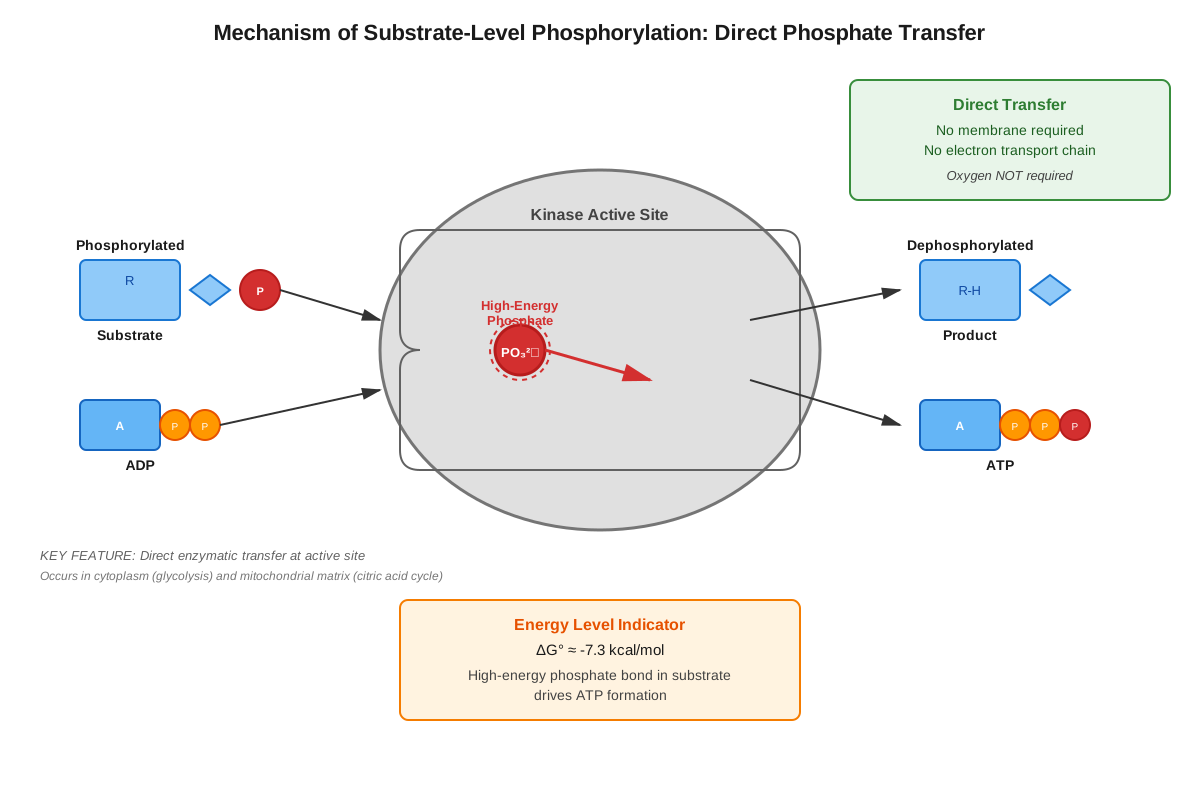
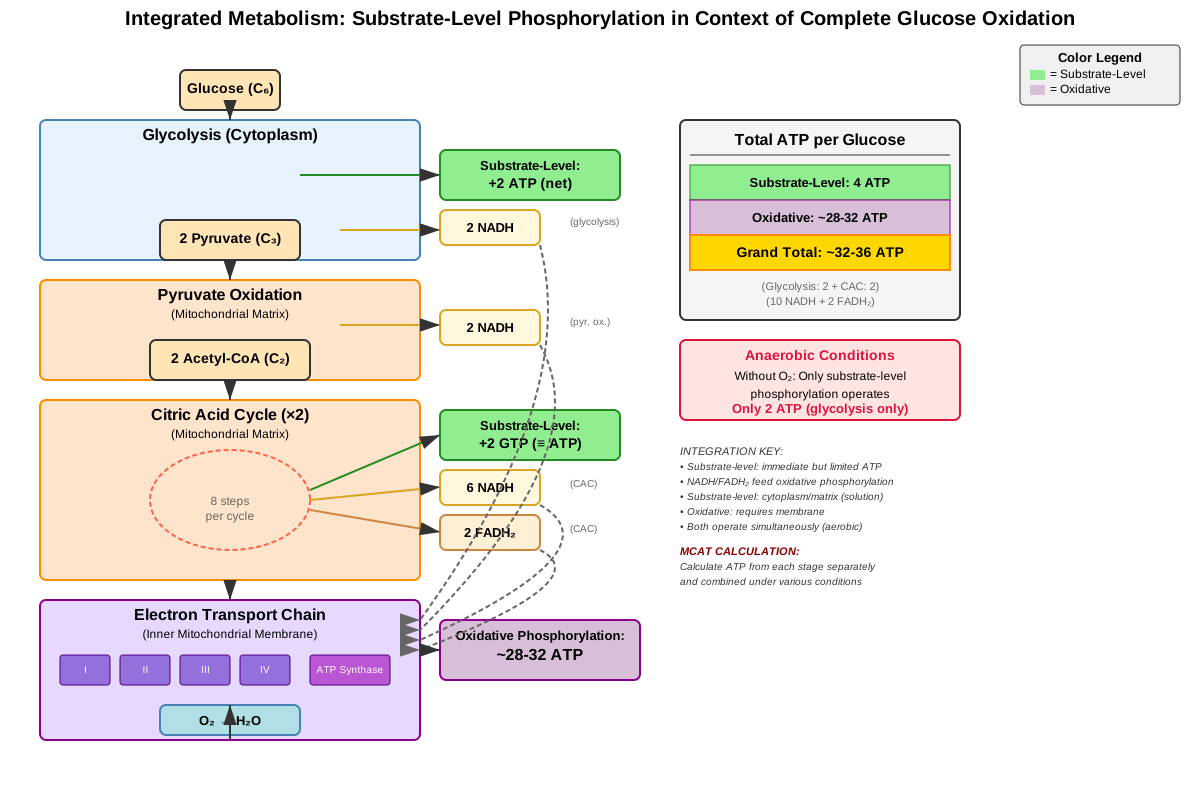
Substrate-level phosphorylation is a fundamental mechanism of ATP synthesis that occurs directly at the enzyme active site, without requiring an electron transport chain or membrane-bound ATP synthase. This process represents one of two major pathways for ATP generation in cellular metabolism, with the other being oxidative phosphorylation. In substrate-level phosphorylation, a high-energy phosphate group is transferred directly from a phosphorylated substrate molecule to ADP, forming ATP through the action of specific kinase enzymes. This direct transfer mechanism distinguishes it from the chemiosmotic coupling used in mitochondrial ATP synthesis.
Understanding substrate-level phosphorylation is essential for MCAT success because it appears in multiple high-yield metabolic pathways tested extensively on the exam, including glycolysis, the citric acid cycle (Krebs cycle), and fermentation. The MCAT frequently tests students' ability to distinguish between substrate-level and oxidative phosphorylation, calculate net ATP yields from various metabolic pathways, and predict cellular responses under different oxygen availability conditions. Questions often embed this concept within experimental passages examining cellular energetics, enzyme kinetics, or metabolic disorders.
From a broader Biochemistry perspective, substrate-level phosphorylation connects energy metabolism to enzyme catalysis, thermodynamics, and cellular regulation. It exemplifies how cells capture energy from nutrient oxidation in a stepwise manner, preventing wasteful heat release while generating usable chemical energy. This topic bridges foundational concepts in enzyme function with advanced understanding of integrated metabolic pathways, making it a cornerstone of MCAT biochemistry preparation. Mastery of substrate-level phosphorylation enables students to analyze complex metabolic scenarios, predict pathway outcomes under various conditions, and understand how cells maintain energy homeostasis.
Learning Objectives
- [ ] Define substrate-level phosphorylation using accurate Biochemistry terminology
- [ ] Explain why substrate-level phosphorylation matters for the MCAT
- [ ] Apply substrate-level phosphorylation to exam-style questions
- [ ] Identify common mistakes related to substrate-level phosphorylation
- [ ] Connect substrate-level phosphorylation to related Biochemistry concepts
- [ ] Compare and contrast substrate-level phosphorylation with oxidative phosphorylation in terms of mechanism, location, and oxygen dependence
- [ ] Calculate the net ATP yield from substrate-level phosphorylation in glycolysis and the citric acid cycle
- [ ] Predict which metabolic conditions favor substrate-level phosphorylation as the primary ATP source
- [ ] Identify all specific enzymes that catalyze substrate-level phosphorylation reactions in major metabolic pathways
Prerequisites
- Basic enzyme kinetics and catalysis: Understanding how enzymes lower activation energy and facilitate substrate-to-product conversion is essential for comprehending how kinases transfer phosphate groups
- ATP structure and high-energy phosphate bonds: Knowledge of ATP's role as the cellular energy currency and the thermodynamics of phosphate bond hydrolysis provides context for why ATP synthesis is energetically favorable
- Glycolysis pathway overview: Familiarity with the ten-step glucose breakdown pathway is necessary since two critical substrate-level phosphorylation reactions occur here
- Citric acid cycle fundamentals: Basic understanding of this eight-step cycle is required because one substrate-level phosphorylation occurs per cycle turn
- Oxidation-reduction reactions: Recognizing how electrons are transferred during substrate oxidation helps explain the energy release that drives phosphorylation
- Thermodynamics and free energy: Understanding ΔG and coupled reactions explains how energetically unfavorable ATP synthesis is driven by favorable substrate breakdown
Why This Topic Matters
Clinical and Real-World Significance: Substrate-level phosphorylation becomes the sole ATP production mechanism during anaerobic conditions, such as intense muscle exercise when oxygen delivery cannot meet demand. This process enables red blood cells, which lack mitochondria, to generate all their ATP through glycolysis alone. Understanding this mechanism is crucial for comprehending metabolic diseases like pyruvate kinase deficiency, which causes hemolytic anemia due to inadequate ATP production in erythrocytes. Cancer cells often rely heavily on substrate-level phosphorylation through glycolysis even in oxygen-rich environments (the Warburg effect), making this pathway a therapeutic target.
MCAT Exam Statistics: Substrate-level phosphorylation appears in approximately 15-20% of biochemistry passages on the MCAT, particularly in questions testing metabolism and bioenergetics. The topic frequently appears in discrete questions asking students to calculate ATP yields, identify phosphorylation mechanisms, or analyze experimental data about cellular respiration. According to AAMC practice materials, questions involving this concept typically require integration of multiple knowledge areas, including enzyme function, pathway regulation, and thermodynamics, making them medium-to-high difficulty.
Common Exam Presentations: The MCAT presents substrate-level phosphorylation through several recurring formats. Experimental passages may describe enzyme inhibition studies where students must predict effects on ATP production. Data interpretation questions often provide graphs showing ATP levels under various oxygen concentrations, requiring students to distinguish contributions from substrate-level versus oxidative phosphorylation. Comparative passages frequently contrast normal cells with cancer cells or compare aerobic versus anaerobic organisms. Discrete questions commonly ask students to identify which reactions produce ATP directly or calculate net ATP yields from specific pathways. Understanding this topic enables confident navigation of these high-yield question types.
Core Concepts
Definition and Mechanism
Substrate-level phosphorylation is the direct enzymatic transfer of a phosphate group from a high-energy phosphorylated substrate molecule to ADP, forming ATP. This process occurs in the aqueous environment of the cytoplasm or mitochondrial matrix, requiring no membrane-bound protein complexes or electrochemical gradients. The reaction is catalyzed by kinase enzymes that position both the phosphorylated substrate and ADP in their active sites, facilitating phosphate group transfer.
The mechanism involves a phosphorylated intermediate with sufficient free energy of hydrolysis (more negative ΔG) than ATP, making the transfer thermodynamically favorable. The general reaction follows this pattern:
Substrate-PO₄²⁻ + ADP → Substrate + ATPThe phosphorylated substrate typically contains either an acyl phosphate bond (mixed anhydride) or a phosphoenol bond, both of which have more negative standard free energies of hydrolysis than ATP's phosphoanhydride bonds (approximately -7.3 kcal/mol). This energy difference drives the reaction forward, making ATP synthesis coupled to substrate dephosphorylation spontaneous under cellular conditions.
Key Enzymes and Reactions in Glycolysis
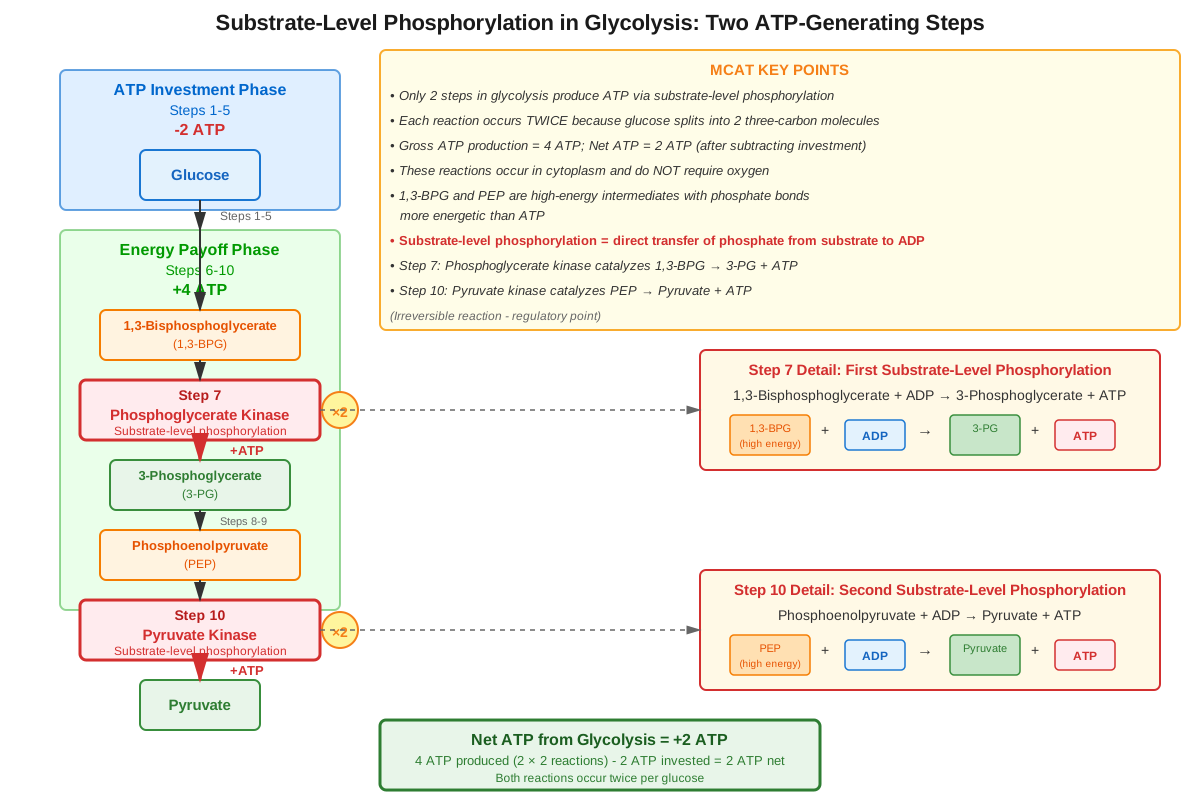
Glycolysis contains two substrate-level phosphorylation reactions, both occurring in the "payoff phase" after glucose has been split into two three-carbon molecules:
Phosphoglycerate Kinase Reaction (Step 7):
- Substrate: 1,3-bisphosphoglycerate (1,3-BPG)
- Product: 3-phosphoglycerate
- This reaction captures energy from the oxidation of glyceraldehyde-3-phosphate
- The acyl phosphate bond in 1,3-BPG has a ΔG°' of hydrolysis of approximately -11.8 kcal/mol
- Produces 2 ATP per glucose (one per triose)
Pyruvate Kinase Reaction (Step 10):
- Substrate: phosphoenolpyruvate (PEP)
- Product: pyruvate
- PEP contains the highest-energy phosphate bond in metabolism (ΔG°' ≈ -14.8 kcal/mol)
- The reaction is essentially irreversible under cellular conditions
- Produces 2 ATP per glucose
- Represents a major regulatory point in glycolysis
Together, these reactions generate 4 ATP molecules per glucose in glycolysis, contributing to the net yield of 2 ATP after subtracting the 2 ATP invested in the preparatory phase.
Citric Acid Cycle Contribution
The citric acid cycle contains one substrate-level phosphorylation reaction per turn:
Succinyl-CoA Synthetase Reaction (also called succinate thiokinase):
- Substrate: succinyl-CoA
- Products: succinate + GTP (or ATP, depending on tissue)
- The thioester bond in succinyl-CoA provides energy for nucleoside triphosphate synthesis
- In mammals, this enzyme exists in two isoforms: one producing GTP (predominant in most tissues) and one producing ATP (in some tissues)
- GTP produced is functionally equivalent to ATP and can be converted by nucleoside diphosphate kinase
Since each glucose molecule generates 2 acetyl-CoA molecules that enter the citric acid cycle, substrate-level phosphorylation in this pathway yields 2 GTP (or ATP) per glucose molecule oxidized completely.
Comparison with Oxidative Phosphorylation
Understanding the distinctions between these two ATP synthesis mechanisms is crucial for MCAT success:
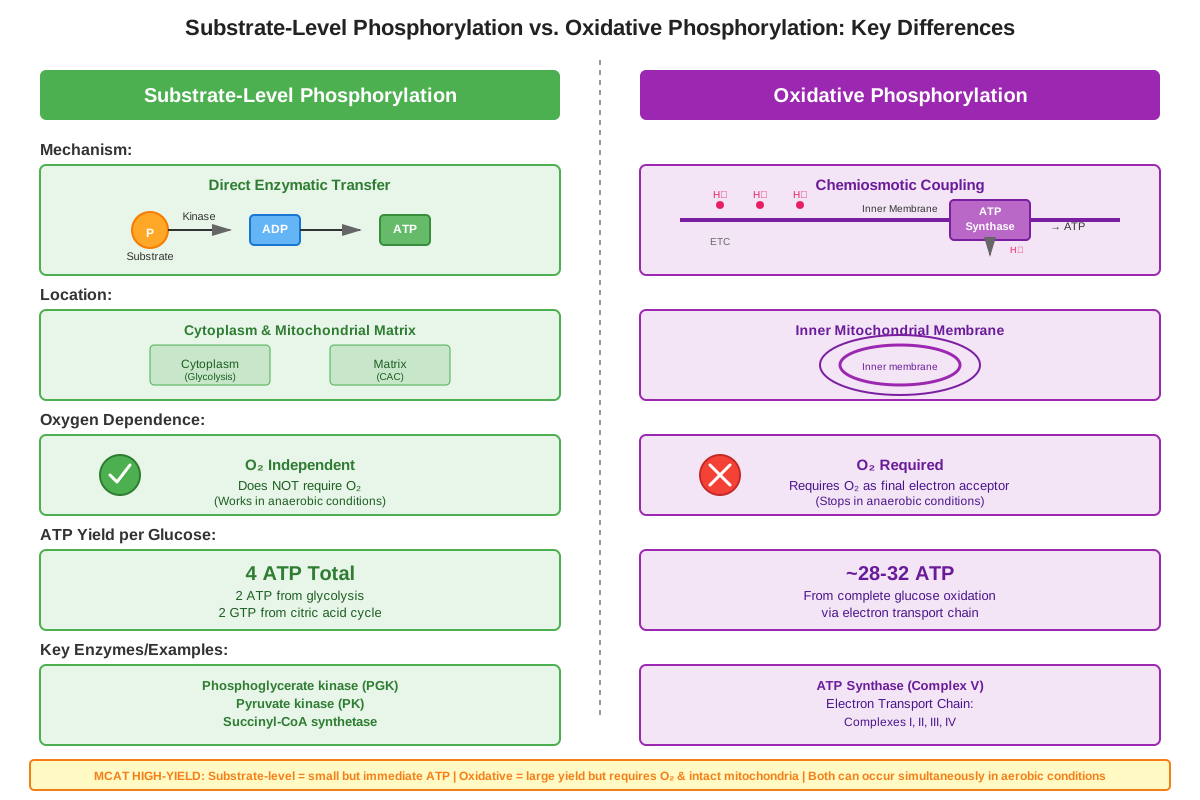
| Feature | Substrate-Level Phosphorylation | Oxidative Phosphorylation |
|---|---|---|
| Location | Cytoplasm (glycolysis) and mitochondrial matrix (citric acid cycle) | Inner mitochondrial membrane |
| Oxygen requirement | None (anaerobic) | Required (aerobic) |
| Mechanism | Direct phosphate transfer from substrate to ADP | Chemiosmotic coupling via proton gradient |
| Enzymes involved | Kinases (phosphoglycerate kinase, pyruvate kinase, succinyl-CoA synthetase) | ATP synthase complex |
| ATP yield per glucose | 4 (glycolysis) + 2 (citric acid cycle) = 6 total | Approximately 26-28 (via electron transport chain) |
| Dependence on ETC | Independent | Dependent on electron transport chain |
| Reversibility | Some reactions reversible, others essentially irreversible | ATP synthase can run in reverse under certain conditions |
| Speed | Rapid (direct enzymatic reaction) | Slower (requires gradient establishment) |
Energetics and Thermodynamics
The thermodynamic favorability of substrate-level phosphorylation depends on the free energy of hydrolysis of the phosphorylated substrate exceeding that of ATP. Under standard conditions, ATP hydrolysis releases approximately -7.3 kcal/mol, but under cellular conditions (considering actual concentrations of ATP, ADP, and Pi), this value is typically -12 to -13 kcal/mol.
For substrate-level phosphorylation to proceed spontaneously:
- The phosphorylated substrate must have ΔG°' of hydrolysis more negative than ATP
- PEP (ΔG°' ≈ -14.8 kcal/mol) and 1,3-BPG (ΔG°' ≈ -11.8 kcal/mol) both meet this criterion
- The overall ΔG for the coupled reaction must be negative
This coupling of reactions exemplifies a fundamental principle in biochemistry: energetically unfavorable reactions (ATP synthesis) can be driven by coupling them to energetically favorable reactions (substrate dephosphorylation).
Metabolic Context and Regulation
Substrate-level phosphorylation reactions are subject to metabolic regulation:
Pyruvate kinase regulation:
- Allosterically activated by fructose-1,6-bisphosphate (feedforward activation)
- Inhibited by ATP and alanine (negative feedback)
- Covalently regulated by phosphorylation (inactive) in liver during fasting
- This regulation coordinates glycolysis with cellular energy status
Phosphoglycerate kinase:
- Generally operates near equilibrium
- Less tightly regulated than pyruvate kinase
- Activity influenced by substrate and product concentrations
Succinyl-CoA synthetase:
- Regulated primarily by substrate availability
- Part of the citric acid cycle's coordinated regulation
Concept Relationships
Substrate-level phosphorylation connects intimately with multiple biochemical concepts, forming a network of metabolic relationships. The process begins with glucose oxidation in glycolysis, where the breakdown of the six-carbon sugar provides the energy captured in high-energy phosphate bonds. This oxidation → creates phosphorylated intermediates (1,3-BPG and PEP) → which undergo substrate-level phosphorylation → generating ATP directly.
The relationship extends to oxidation-reduction reactions: the formation of 1,3-BPG requires the oxidation of glyceraldehyde-3-phosphate by NAD⁺, coupling substrate oxidation → to phosphorylation → enabling subsequent ATP synthesis. This demonstrates how electron transfer reactions provide energy for phosphate bond formation.
Substrate-level phosphorylation connects to anaerobic metabolism through fermentation pathways. When oxygen is unavailable, oxidative phosphorylation ceases → making substrate-level phosphorylation the sole ATP source → necessitating fermentation to regenerate NAD⁺ → allowing glycolysis to continue. This relationship explains why anaerobic organisms and oxygen-deprived tissues rely exclusively on this mechanism.
The concept links to enzyme kinetics through the kinase enzymes that catalyze these reactions. Understanding Michaelis-Menten kinetics → helps predict reaction rates under varying substrate concentrations → which determines ATP production rates → affecting cellular energy status.
Connection to metabolic regulation occurs through feedback mechanisms: ATP produced by substrate-level phosphorylation → inhibits pyruvate kinase and phosphofructokinase → slowing glycolysis → demonstrating negative feedback control. Conversely, ADP accumulation → activates these enzymes → accelerating ATP production.
The relationship to mitochondrial metabolism is bidirectional: substrate-level phosphorylation in the citric acid cycle → contributes to mitochondrial ATP → while cytoplasmic substrate-level phosphorylation → provides ATP for cellular processes when mitochondrial function is compromised.
High-Yield Facts
⭐ Substrate-level phosphorylation produces 4 ATP in glycolysis (2 net after investment) and 2 GTP/ATP in the citric acid cycle per glucose molecule
⭐ Only three enzymes catalyze substrate-level phosphorylation in major pathways: phosphoglycerate kinase, pyruvate kinase, and succinyl-CoA synthetase
⭐ Substrate-level phosphorylation does NOT require oxygen, making it the sole ATP source during anaerobic conditions
⭐ PEP (phosphoenolpyruvate) contains the highest-energy phosphate bond in metabolism with ΔG°' ≈ -14.8 kcal/mol
⭐ The pyruvate kinase reaction is essentially irreversible and represents a major control point in glycolysis
- Substrate-level phosphorylation occurs in both the cytoplasm (glycolysis) and mitochondrial matrix (citric acid cycle)
- Red blood cells rely exclusively on substrate-level phosphorylation because they lack mitochondria
- The phosphorylated substrates (1,3-BPG, PEP, succinyl-CoA) all have more negative ΔG°' of hydrolysis than ATP
- GTP produced by succinyl-CoA synthetase is energetically equivalent to ATP and readily interconverted
- Cancer cells often preferentially use substrate-level phosphorylation even when oxygen is available (Warburg effect)
- Substrate-level phosphorylation is faster than oxidative phosphorylation but produces far less ATP per glucose
- Arsenate can uncouple substrate-level phosphorylation by substituting for phosphate, forming unstable arsenate esters that hydrolyze spontaneously
- The 1,3-BPG intermediate is also used in red blood cells to produce 2,3-BPG, which regulates hemoglobin oxygen affinity
Quick check — test yourself on Substrate level phosphorylation so far.
Try Flashcards →Common Misconceptions
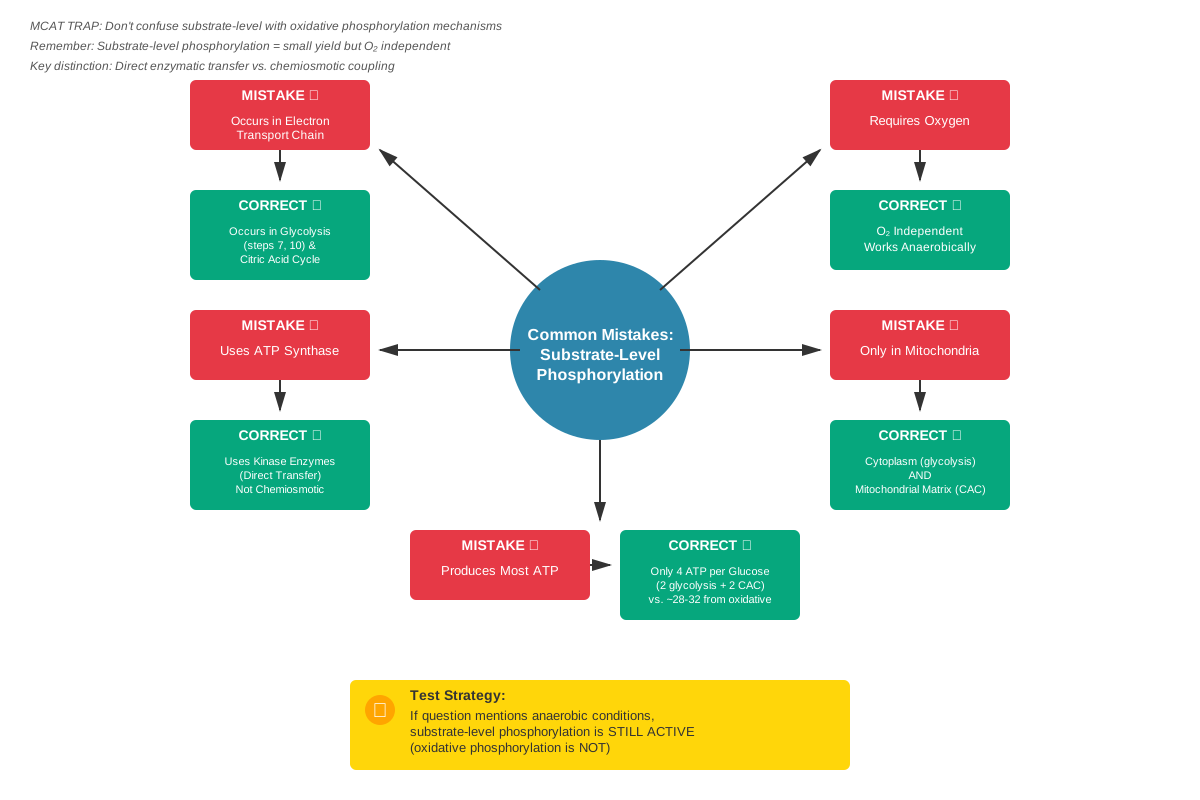
Misconception: Substrate-level phosphorylation only occurs in glycolysis.
Correction: While glycolysis contains two substrate-level phosphorylation reactions, the citric acid cycle also includes one (succinyl-CoA synthetase reaction), and substrate-level phosphorylation can occur in other pathways like the phosphagen system in muscle.
Misconception: All ATP produced during cellular respiration comes from substrate-level phosphorylation.
Correction: Substrate-level phosphorylation produces only about 6 ATP per glucose (4 from glycolysis, 2 from citric acid cycle), while oxidative phosphorylation generates approximately 26-28 ATP, making it the predominant source during aerobic respiration.
Misconception: Substrate-level phosphorylation requires mitochondria.
Correction: The substrate-level phosphorylation reactions in glycolysis occur in the cytoplasm and do not require mitochondria. Only the citric acid cycle substrate-level phosphorylation occurs in mitochondria. This is why cells without mitochondria (like red blood cells) can still produce ATP.
Misconception: Substrate-level phosphorylation and oxidative phosphorylation use the same enzymes.
Correction: These are mechanistically distinct processes. Substrate-level phosphorylation uses kinase enzymes (phosphoglycerate kinase, pyruvate kinase, succinyl-CoA synthetase) that directly transfer phosphate groups, while oxidative phosphorylation uses ATP synthase, which couples proton gradient dissipation to ATP synthesis.
Misconception: The phosphate group in substrate-level phosphorylation comes from free inorganic phosphate (Pi) in solution.
Correction: In substrate-level phosphorylation, the phosphate group is already covalently attached to the substrate molecule (as in 1,3-BPG or PEP) and is transferred directly to ADP. Free Pi is not the immediate phosphate donor, though it may have been incorporated earlier in the pathway.
Misconception: Substrate-level phosphorylation is less important than oxidative phosphorylation because it produces less ATP.
Correction: While substrate-level phosphorylation produces less ATP per glucose, it is critically important because it functions independently of oxygen availability, provides rapid ATP during sudden energy demands, and is the only ATP source for certain cell types and metabolic conditions. Its evolutionary antiquity suggests it was the original ATP synthesis mechanism.
Misconception: All kinase enzymes catalyze substrate-level phosphorylation.
Correction: Most kinases transfer phosphate groups from ATP to substrates (consuming ATP), while only specific kinases involved in substrate-level phosphorylation transfer phosphate from substrates to ADP (producing ATP). The directionality and energetics distinguish these reactions.
Worked Examples
Example 1: Calculating ATP Yield Under Anaerobic Conditions
Question: A muscle cell is performing intense exercise under anaerobic conditions, relying solely on glycolysis for ATP production. If the cell metabolizes 10 glucose molecules, how many ATP molecules are produced via substrate-level phosphorylation? Explain your reasoning and identify which enzymes are responsible.
Solution:
Step 1: Identify substrate-level phosphorylation reactions in glycolysis.
- Under anaerobic conditions, only glycolysis operates (citric acid cycle requires oxygen indirectly)
- Two reactions produce ATP: phosphoglycerate kinase (step 7) and pyruvate kinase (step 10)
Step 2: Calculate ATP per glucose molecule.
- Phosphoglycerate kinase: produces 2 ATP per glucose (one per triose phosphate)
- Pyruvate kinase: produces 2 ATP per glucose (one per triose phosphate)
- Total ATP produced: 4 ATP per glucose
- ATP invested in preparatory phase: 2 ATP per glucose
- Net ATP per glucose: 4 - 2 = 2 ATP
Step 3: Calculate total for 10 glucose molecules.
- Net ATP = 10 glucose × 2 ATP/glucose = 20 ATP
Step 4: Verify the answer addresses anaerobic conditions.
- No oxidative phosphorylation occurs (no oxygen)
- No citric acid cycle substrate-level phosphorylation (requires aerobic conditions to regenerate NAD⁺)
- Fermentation regenerates NAD⁺ but produces no ATP
Answer: 20 ATP molecules are produced via substrate-level phosphorylation from 10 glucose molecules under anaerobic conditions. The enzymes responsible are phosphoglycerate kinase and pyruvate kinase, each producing 2 ATP per glucose, for a gross yield of 4 ATP per glucose and net yield of 2 ATP per glucose after accounting for the investment phase.
Connection to Learning Objectives: This problem applies substrate-level phosphorylation to exam-style calculations, demonstrates understanding of anaerobic metabolism, and requires identification of specific enzymes—all key MCAT skills.
Example 2: Experimental Analysis of Phosphorylation Mechanisms
Question: Researchers are studying ATP production in isolated mitochondria. They measure ATP synthesis under four conditions:
- Condition A: Intact mitochondria with glucose, oxygen present
- Condition B: Intact mitochondria with glucose, cyanide added (blocks electron transport)
- Condition C: Disrupted mitochondria (no intact membranes) with citric acid cycle intermediates, oxygen present
- Condition D: Disrupted mitochondria with citric acid cycle intermediates, no oxygen
Rank these conditions from highest to lowest ATP production and explain which phosphorylation mechanism(s) operate in each.
Solution:
Step 1: Analyze Condition A.
- Intact mitochondria with oxygen allow both substrate-level and oxidative phosphorylation
- Glucose → glycolysis (cytoplasm) → acetyl-CoA → citric acid cycle
- Substrate-level phosphorylation: 2 GTP from citric acid cycle (glycolysis occurs outside mitochondria)
- Oxidative phosphorylation: ~26-28 ATP from NADH and FADH₂
- Total: Highest ATP production (~28-30 ATP per glucose)
Step 2: Analyze Condition B.
- Cyanide blocks Complex IV of electron transport chain
- Oxidative phosphorylation cannot occur (no proton gradient)
- Substrate-level phosphorylation in citric acid cycle can still occur initially
- However, citric acid cycle will slow/stop as NAD⁺ is not regenerated
- Limited ATP production: only substrate-level phosphorylation until NAD⁺ depleted
Step 3: Analyze Condition C.
- Disrupted membranes eliminate oxidative phosphorylation (no gradient possible)
- Citric acid cycle enzymes present in matrix can still function
- Substrate-level phosphorylation via succinyl-CoA synthetase can occur
- Oxygen present but cannot be used without intact electron transport chain
- Moderate ATP production: only substrate-level phosphorylation
Step 4: Analyze Condition D.
- Same as Condition C regarding membrane disruption
- Oxygen absence doesn't matter since oxidative phosphorylation already impossible
- Substrate-level phosphorylation can still occur
- Similar to Condition C
Step 5: Rank conditions.
- Highest: Condition A (both mechanisms functional)
- Second: Conditions C and D (substrate-level only, similar yields)
- Lowest: Condition B (substrate-level only, but NAD⁺ regeneration blocked, pathway stops)
Answer: Ranking from highest to lowest ATP production: A > C ≈ D > B
Condition A allows both substrate-level phosphorylation (citric acid cycle) and oxidative phosphorylation, producing maximum ATP. Conditions C and D allow only substrate-level phosphorylation from the citric acid cycle (1 GTP per cycle turn), producing similar amounts since oxygen isn't required for this mechanism. Condition B produces the least because although substrate-level phosphorylation is initially possible, cyanide prevents NAD⁺ regeneration, causing the citric acid cycle to halt after NAD⁺ is depleted.
Connection to Learning Objectives: This problem requires distinguishing between phosphorylation mechanisms, predicting outcomes under various conditions, and applying knowledge to experimental scenarios—all high-yield MCAT skills.
Exam Strategy
Approaching MCAT Questions: When encountering substrate-level phosphorylation questions, first determine whether the question asks about mechanism, location, ATP yield, or comparison with oxidative phosphorylation. Read carefully for keywords indicating oxygen availability, as this immediately tells you whether oxidative phosphorylation is possible. For calculation questions, systematically account for each substrate-level phosphorylation reaction rather than trying to memorize total yields.
Trigger Words and Phrases:
- "Direct phosphate transfer" → substrate-level phosphorylation
- "Anaerobic conditions" → only substrate-level phosphorylation possible
- "Kinase enzyme" → may indicate substrate-level phosphorylation (but verify directionality)
- "Independent of oxygen" → substrate-level phosphorylation
- "Mitochondrial membrane disrupted" → eliminates oxidative phosphorylation, substrate-level still possible
- "Red blood cells" or "erythrocytes" → only substrate-level phosphorylation (no mitochondria)
- "Immediate ATP production" → likely substrate-level (faster than oxidative)
Process of Elimination Tips:
- Eliminate answers suggesting substrate-level phosphorylation requires oxygen
- Eliminate answers claiming substrate-level phosphorylation uses ATP synthase
- Eliminate answers stating substrate-level phosphorylation requires intact mitochondrial membranes (glycolysis reactions don't)
- Eliminate answers confusing gross ATP production with net ATP production in glycolysis
- For enzyme identification questions, eliminate any enzyme not among the three key kinases
Time Allocation: Substrate-level phosphorylation questions typically require 60-90 seconds for discrete questions and 90-120 seconds for passage-based questions. If a question asks for ATP yield calculations, budget extra time to systematically work through each reaction. Don't spend excessive time trying to recall exact ΔG values unless specifically asked—knowing relative energies (PEP > 1,3-BPG > ATP) is usually sufficient.
Common Question Patterns:
- Calculation questions: "How many ATP are produced by substrate-level phosphorylation when X glucose molecules are metabolized?"
- Comparison questions: "What is the primary difference between substrate-level and oxidative phosphorylation?"
- Experimental questions: "Given these conditions, which phosphorylation mechanism(s) would operate?"
- Enzyme identification: "Which enzyme catalyzes substrate-level phosphorylation in the citric acid cycle?"
Exam Tip: If a question seems to require detailed knowledge of ΔG values, focus instead on the relative ranking of phosphate bond energies. The MCAT rarely requires exact numerical values but frequently tests conceptual understanding of energy relationships.
Memory Techniques
Mnemonic for Substrate-Level Phosphorylation Enzymes: "Please Pay Susan"
- Phosphoglycerate kinase (glycolysis step 7)
- Pyruvate kinase (glycolysis step 10)
- Succinyl-CoA synthetase (citric acid cycle)
Mnemonic for ATP Yield: "Two-Two-One" represents the ATP produced per glucose:
- Two ATP from phosphoglycerate kinase (one per triose)
- Two ATP from pyruvate kinase (one per triose)
- One GTP per acetyl-CoA in citric acid cycle (so 2 total per glucose)
Visualization Strategy: Picture substrate-level phosphorylation as a "direct handoff" where a phosphate group jumps directly from substrate to ADP, like passing a basketball directly to a teammate. In contrast, visualize oxidative phosphorylation as an elaborate "bucket brigade" where electrons pass through multiple carriers before energy is captured. This mental image helps distinguish the mechanisms.
Acronym for Key Features: "SLAP-D" for Substrate-Level phosphorylation characteristics:
- Substrate donates phosphate
- Located in cytoplasm and matrix
- Anaerobic (no oxygen needed)
- Produces less ATP than oxidative
- Direct transfer mechanism
Energy Ranking Memory Aid: "PEP is Powerful, BPG is Big, ATP is Average"
- PEP has the highest-energy phosphate bond (~-14.8 kcal/mol)
- 1,3-BPG has high energy (~-11.8 kcal/mol)
- ATP has moderate energy (~-7.3 kcal/mol standard)
This ranking explains why phosphate transfer from PEP or BPG to ADP is thermodynamically favorable.
Location Memory Device: Remember "GC" for "Glycolysis in Cytoplasm" and "CM" for "Citric acid cycle in Matrix" to quickly recall where substrate-level phosphorylation occurs.
Summary
Substrate-level phosphorylation is the direct enzymatic transfer of a phosphate group from a high-energy phosphorylated substrate to ADP, forming ATP without requiring membrane-bound complexes or oxygen. This mechanism operates through three key enzymes: phosphoglycerate kinase and pyruvate kinase in glycolysis (cytoplasm), and succinyl-CoA synthetase in the citric acid cycle (mitochondrial matrix). The process produces 4 ATP in glycolysis (2 net) and 2 GTP/ATP in the citric acid cycle per glucose molecule, totaling approximately 6 ATP compared to the 26-28 ATP from oxidative phosphorylation. The phosphorylated substrates—1,3-bisphosphoglycerate, phosphoenolpyruvate, and succinyl-CoA—all possess phosphate bonds with more negative free energies of hydrolysis than ATP, making the transfer thermodynamically favorable. This mechanism is crucial during anaerobic conditions, in cells lacking mitochondria, and for rapid ATP production. Understanding substrate-level phosphorylation is essential for MCAT success because it appears frequently in metabolism questions, ATP yield calculations, and experimental passages testing students' ability to distinguish between phosphorylation mechanisms and predict cellular responses under varying oxygen availability.
Key Takeaways
- Substrate-level phosphorylation directly transfers phosphate from substrate to ADP via kinase enzymes, requiring no oxygen or membrane complexes
- Three enzymes catalyze all major substrate-level phosphorylation reactions: phosphoglycerate kinase, pyruvate kinase, and succinyl-CoA synthetase
- This mechanism produces 4 ATP in glycolysis (2 net) and 2 GTP in the citric acid cycle per glucose, totaling ~6 ATP versus ~26-28 from oxidative phosphorylation
- Substrate-level phosphorylation is the sole ATP source during anaerobic conditions and in cells lacking mitochondria (red blood cells)
- The phosphorylated substrates (PEP, 1,3-BPG, succinyl-CoA) have higher-energy phosphate bonds than ATP, making transfer thermodynamically favorable
- MCAT questions frequently test the distinction between substrate-level and oxidative phosphorylation, ATP yield calculations, and predictions under varying oxygen conditions
- Understanding this mechanism connects to broader concepts including glycolysis, citric acid cycle, enzyme kinetics, thermodynamics, and metabolic regulation
Related Topics
Oxidative Phosphorylation: The chemiosmotic mechanism of ATP synthesis using the electron transport chain and ATP synthase. Mastering substrate-level phosphorylation provides the foundation for understanding how these two mechanisms differ and complement each other in cellular energy production.
Glycolysis Regulation: The control mechanisms governing glycolytic flux, including allosteric regulation of phosphofructokinase and pyruvate kinase. Understanding substrate-level phosphorylation in glycolysis enables deeper comprehension of how cells regulate this pathway based on energy status.
Citric Acid Cycle: The eight-step pathway that oxidizes acetyl-CoA while generating NADH, FADH₂, and GTP. Knowledge of substrate-level phosphorylation in this cycle connects to understanding overall cycle energetics and regulation.
Fermentation Pathways: Lactate and ethanol fermentation regenerate NAD⁺ to sustain glycolysis under anaerobic conditions. Understanding substrate-level phosphorylation explains why fermentation is necessary for continued ATP production without oxygen.
Metabolic Integration: How different pathways coordinate to maintain cellular energy homeostasis. Substrate-level phosphorylation knowledge enables analysis of how cells shift between metabolic strategies based on nutrient and oxygen availability.
Enzyme Kinetics and Thermodynamics: The principles governing reaction rates and energy changes. Mastering substrate-level phosphorylation deepens understanding of coupled reactions and how cells capture energy efficiently.
Practice CTA
Now that you've mastered the core concepts of substrate-level phosphorylation, it's time to reinforce your understanding through active practice. Challenge yourself with the practice questions and flashcards designed specifically for this topic. These resources will help you identify any remaining knowledge gaps, improve your speed on calculation questions, and build confidence for test day. Remember, the difference between passive reading and active mastery lies in deliberate practice. The MCAT rewards students who can apply concepts under time pressure—start practicing now to transform your understanding into top-tier performance. You've built the foundation; now strengthen it through repetition and application!
Sign up free to keep reading
Create a free AnvayaPrep account to finish this MCAT guide on Substrate level phosphorylation — plus flashcards and practice questions.