Overview
Nucleosides and nucleotides form the fundamental building blocks of nucleic acids (DNA and RNA), serving as the molecular foundation for genetic information storage, transmission, and expression. Understanding these molecules is critical for Biochemistry mastery on the MCAT, as they appear across multiple contexts: from basic structural questions to complex passages involving DNA replication, transcription, energy metabolism (ATP), and cellular signaling. The distinction between nucleosides and nucleotides, while seemingly simple, is a frequent source of exam questions and requires precise understanding of their chemical composition, nomenclature, and biological functions.
For the MCAT, nucleosides and nucleotides represent high-yield content that bridges multiple disciplines. In Biochemistry, they connect to energy metabolism (ATP, GTP), enzyme cofactors (NAD+, FAD), and second messengers (cAMP, cGMP). In Molecular Biology, they form the monomeric units of DNA and RNA, making them essential for understanding replication, transcription, and translation. The MCAT frequently tests the structural differences between purines and pyrimidines, the components that distinguish nucleosides from nucleotides, and the functional roles of modified nucleotides in cellular processes. Questions may appear as discrete items testing nomenclature or as part of complex passages involving genetic engineering, drug mechanisms, or metabolic pathways.
The relationship between nucleosides and nucleotides and broader Nucleic Acids and Biotechnology concepts cannot be overstated. These molecules serve as the chemical alphabet of life, and their properties dictate the structure and function of DNA and RNA. Understanding phosphodiester bond formation, base pairing rules, and the energetics of nucleotide hydrolysis provides the foundation for comprehending more advanced topics such as PCR, DNA sequencing, gene cloning, and the mechanisms of antiviral and anticancer drugs that target nucleotide metabolism.
Learning Objectives
- [ ] Define nucleosides and nucleotides using accurate Biochemistry terminology
- [ ] Explain why nucleosides and nucleotides matter for the MCAT
- [ ] Apply nucleosides and nucleotides concepts to exam-style questions
- [ ] Identify common mistakes related to nucleosides and nucleotides
- [ ] Connect nucleosides and nucleotides to related Biochemistry concepts
- [ ] Distinguish between purines and pyrimidines based on structure and nomenclature
- [ ] Describe the formation and significance of phosphodiester bonds in nucleic acid structure
- [ ] Explain the biological roles of modified nucleotides including ATP, NAD+, FAD, and cyclic nucleotides
Prerequisites
- Basic organic chemistry functional groups: Understanding of hydroxyl groups, phosphate groups, and ester bonds is essential for recognizing nucleotide structure and phosphodiester linkages
- Carbohydrate chemistry: Familiarity with pentose sugars (ribose and deoxyribose) enables recognition of the sugar component that distinguishes DNA from RNA
- Nitrogenous base structure: Basic knowledge of aromatic heterocyclic compounds helps in understanding purine and pyrimidine ring systems
- Acid-base chemistry: pH-dependent protonation states affect nucleotide behavior and base pairing
- Thermodynamics and energy: Understanding of high-energy bonds and free energy changes is necessary for appreciating ATP's role as cellular energy currency
Why This Topic Matters
Clinical and Real-World Significance
Nucleotides play central roles in human health and disease. Genetic disorders result from mutations in DNA nucleotide sequences, while many antiviral drugs (acyclovir, AZT) and chemotherapy agents (5-fluorouracil, methotrexate) function by interfering with nucleotide synthesis or incorporation. Gout, a painful inflammatory condition, results from purine metabolism dysfunction leading to uric acid crystal deposition. Understanding nucleotide structure enables comprehension of how these therapeutic agents work and why certain genetic diseases manifest their specific phenotypes.
MCAT Exam Statistics and Question Types
Nucleosides and nucleotides appear in approximately 3-5% of Biochemistry questions on the MCAT, with additional indirect appearances in Molecular Biology passages. Questions typically fall into several categories: (1) structural identification and nomenclature (discrete questions), (2) energy metabolism and ATP hydrolysis (calculation and conceptual questions), (3) DNA/RNA structure and function (passage-based questions), and (4) drug mechanisms targeting nucleotide pathways (passage-based questions). The topic frequently appears in passages discussing genetic engineering, enzyme kinetics involving nucleotide cofactors, or metabolic pathways.
Common Exam Passage Contexts
MCAT passages featuring nucleosides and nucleotides often present: experimental techniques involving radioactive nucleotide labeling, enzyme mechanisms requiring nucleotide cofactors (kinases, polymerases), drug development targeting nucleotide analogs, metabolic disorders affecting purine or pyrimidine synthesis, and biotechnology applications such as PCR or DNA sequencing. Recognizing nucleotide involvement in these diverse contexts requires solid foundational knowledge of their structure and function.
Core Concepts
Structural Components of Nucleosides and Nucleotides
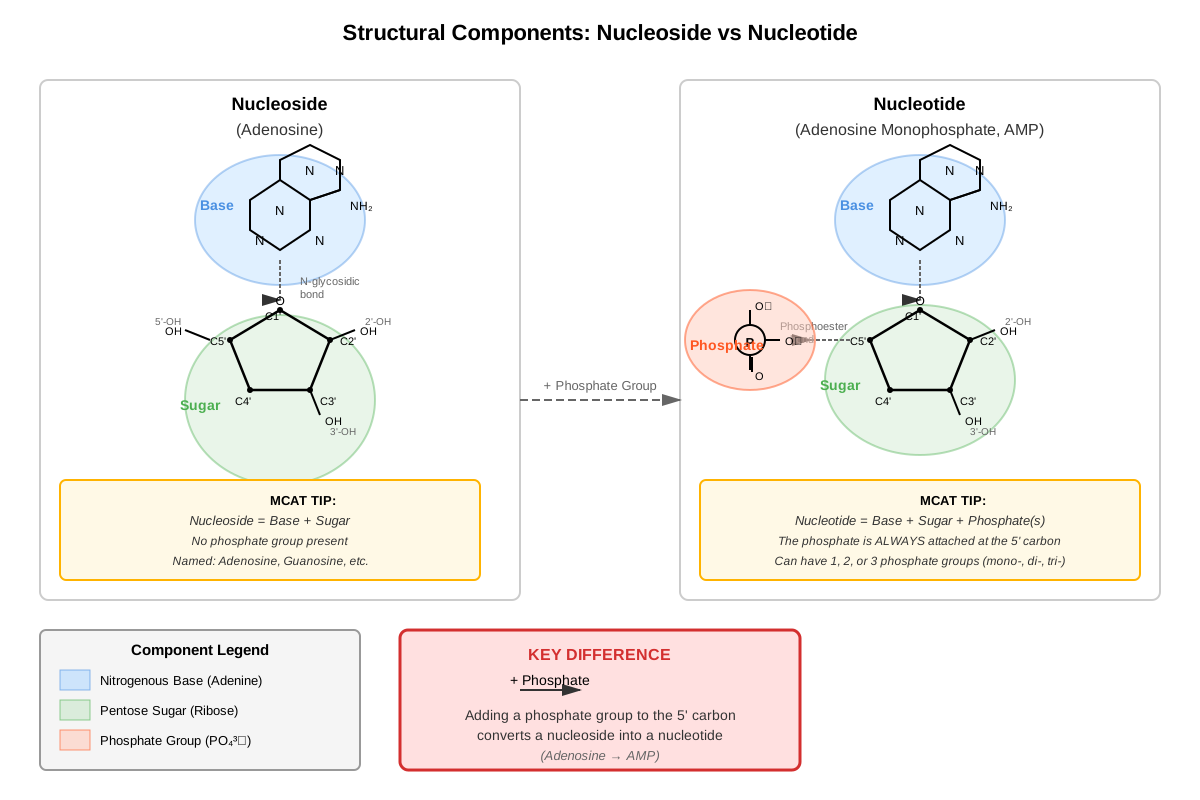
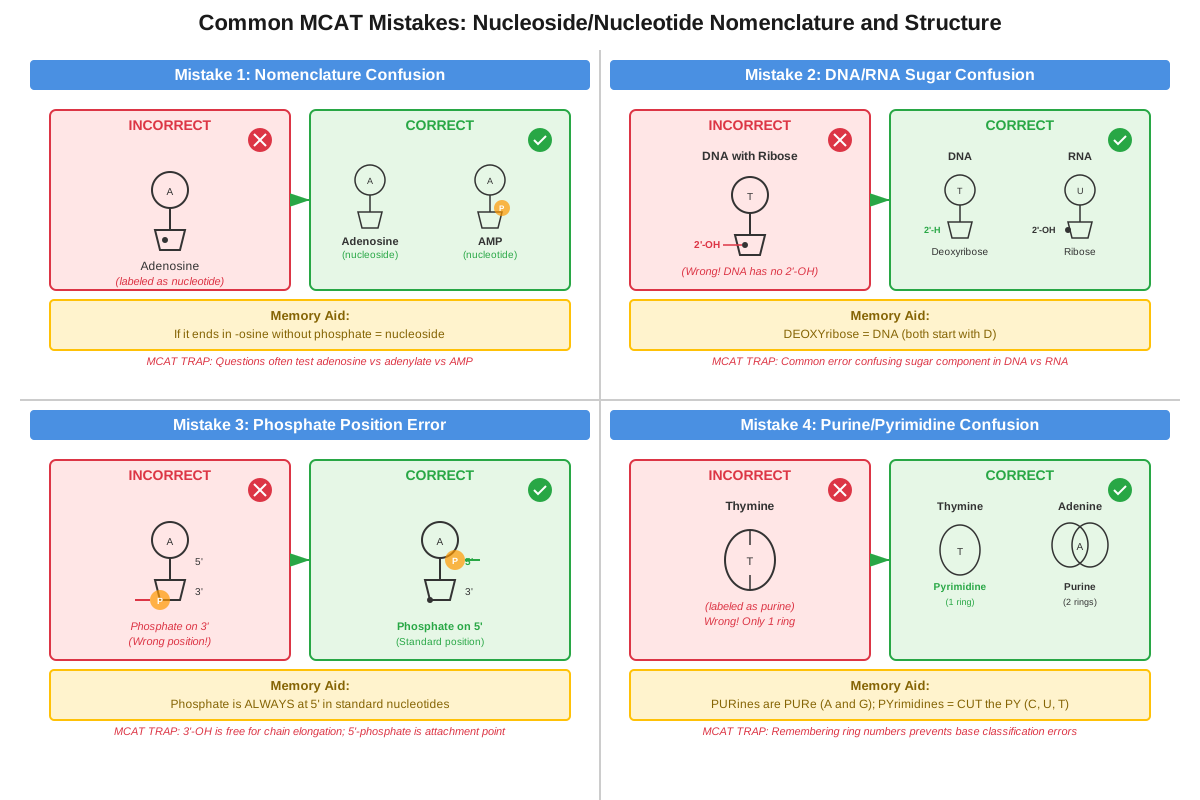
A nucleoside consists of two components: a nitrogenous base (purine or pyrimidine) covalently bonded to a pentose sugar (ribose or deoxyribose) through an N-glycosidic bond. The bond forms between the N9 of purines or N1 of pyrimidines and the C1' carbon of the sugar (the prime notation distinguishes sugar carbons from base carbons). The sugar exists in the β-anomeric configuration, meaning the base projects above the plane of the sugar ring.
A nucleotide is a nucleoside with one or more phosphate groups attached to the 5' carbon of the pentose sugar through a phosphoester bond. Nucleotides can exist as monophosphates (NMP), diphosphates (NDP), or triphosphates (NTP), with each additional phosphate connected via a phosphoanhydride bond—a high-energy bond whose hydrolysis releases substantial free energy.
| Component | Nucleoside | Nucleotide |
|---|---|---|
| Nitrogenous base | ✓ | ✓ |
| Pentose sugar | ✓ | ✓ |
| Phosphate group(s) | ✗ | ✓ (1-3) |
| Example | Adenosine | Adenosine monophosphate (AMP) |
Nitrogenous Bases: Purines and Pyrimidines
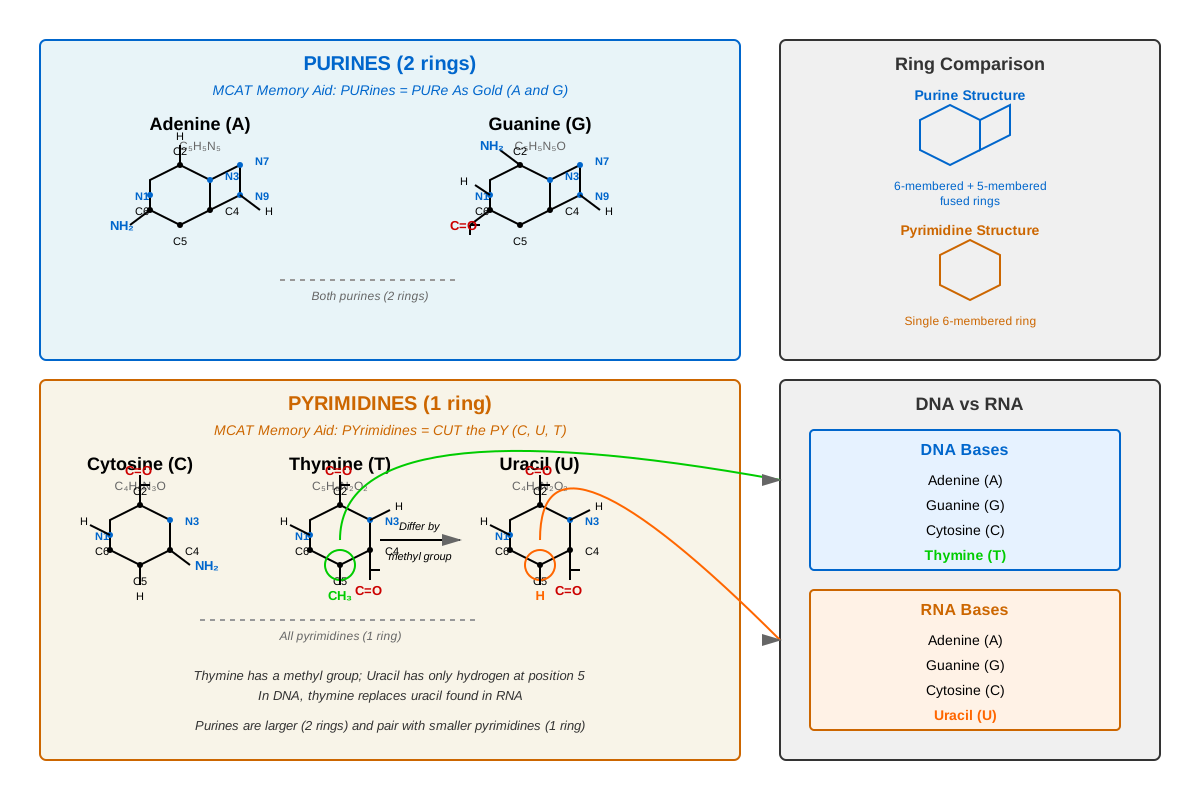
The nitrogenous bases fall into two structural categories. Purines contain a fused two-ring system (a six-membered pyrimidine ring fused to a five-membered imidazole ring), while pyrimidines contain only a single six-membered ring. This structural difference has important implications for base pairing and DNA structure.
Purines (larger, two rings):
- Adenine (A): Contains an amino group at position 6
- Guanine (G): Contains an amino group at position 2 and a carbonyl at position 6
Pyrimidines (smaller, one ring):
- Cytosine (C): Contains an amino group at position 4 and a carbonyl at position 2
- Thymine (T): Contains carbonyl groups at positions 2 and 4, plus a methyl group at position 5 (DNA only)
- Uracil (U): Similar to thymine but lacks the methyl group at position 5 (RNA only)
MCAT Tip: Remember "PURe As Gold" (PURines = Adenine and Guanine) and "CUT the PY" (pyrimidines = Cytosine, Uracil, Thymine). Purines are larger with two rings; pyrimidines are smaller with one ring.
The Pentose Sugar Component
The sugar component distinguishes DNA from RNA. Ribose (in RNA) contains hydroxyl groups at both the 2' and 3' positions, while 2-deoxyribose (in DNA) lacks the hydroxyl group at the 2' position—hence "deoxy." This seemingly minor difference has profound consequences: the 2'-OH in RNA makes it more chemically reactive and susceptible to hydrolysis, explaining why RNA is less stable than DNA and why DNA evolved as the primary genetic storage molecule.
The sugar adopts a furanose (five-membered ring) form, with carbons numbered 1' through 5'. The 1' carbon connects to the nitrogenous base, the 3' carbon typically has a free hydroxyl group (or connects to the next nucleotide in a polynucleotide chain), and the 5' carbon bears the phosphate group(s) in nucleotides.
Nomenclature System
Understanding nucleotide nomenclature is essential for MCAT success. The naming system follows consistent patterns:
Nucleosides (base + sugar):
- Purine nucleosides end in "-osine": adenosine, guanosine
- Pyrimidine nucleosides end in "-idine": cytidine, uridine, thymidine
- Deoxy forms add "deoxy-" prefix: deoxyadenosine, deoxythymidine
Nucleotides (nucleoside + phosphate):
- Add "monophosphate," "diphosphate," or "triphosphate"
- Abbreviated as NMP, NDP, or NTP (where N = base letter)
- Examples: AMP (adenosine monophosphate), dGTP (deoxyguanosine triphosphate), UDP (uridine diphosphate)
Phosphodiester Bonds and Polynucleotide Structure
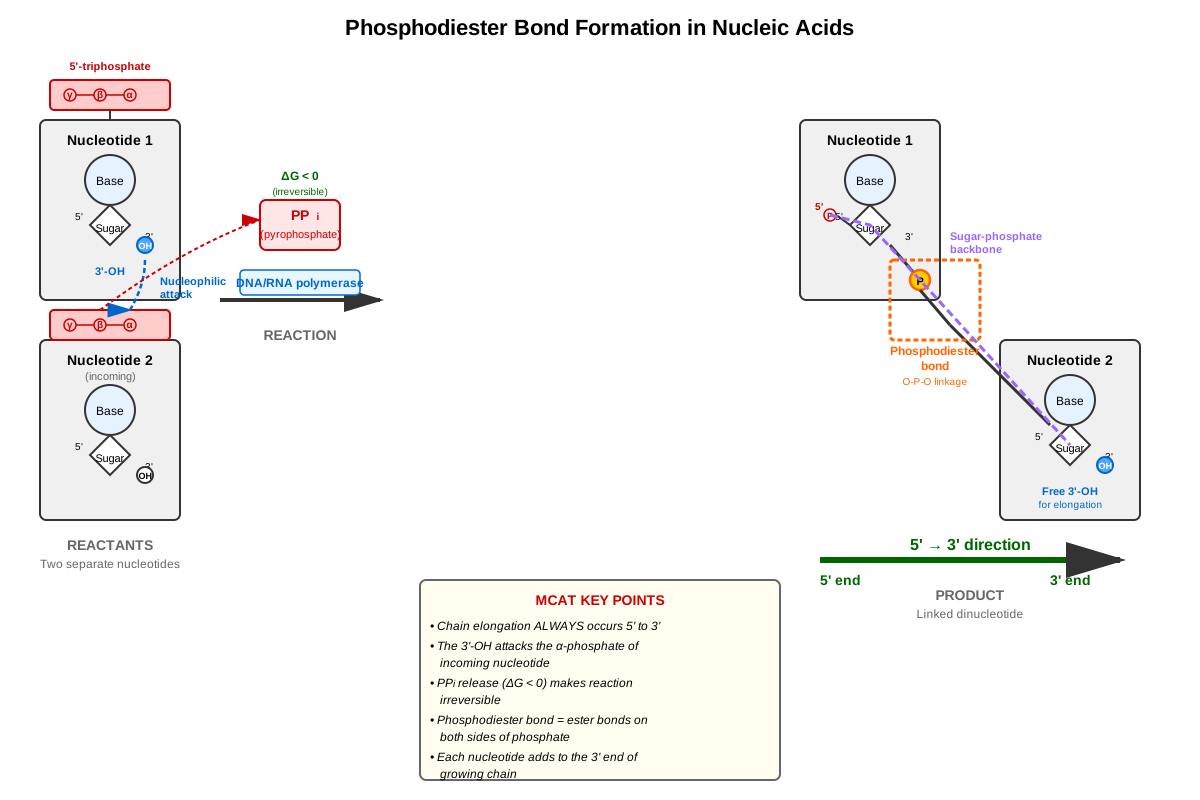
When nucleotides polymerize to form DNA or RNA, they connect through phosphodiester bonds. This bond forms between the 3'-OH of one nucleotide's sugar and the 5'-phosphate of the next nucleotide, with the elimination of water (condensation reaction). The resulting polynucleotide chain has directionality: a 5' end (with a free phosphate group) and a 3' end (with a free hydroxyl group). This directionality is critical for DNA replication and RNA synthesis, which proceed exclusively in the 5' to 3' direction.
The phosphodiester backbone carries negative charges from the phosphate groups, making DNA and RNA polyanionic at physiological pH. This negative charge requires counterions (typically Mg²⁺ or positively charged proteins like histones) for stabilization and explains why DNA migrates toward the positive electrode during gel electrophoresis.
High-Energy Nucleotides: ATP and GTP
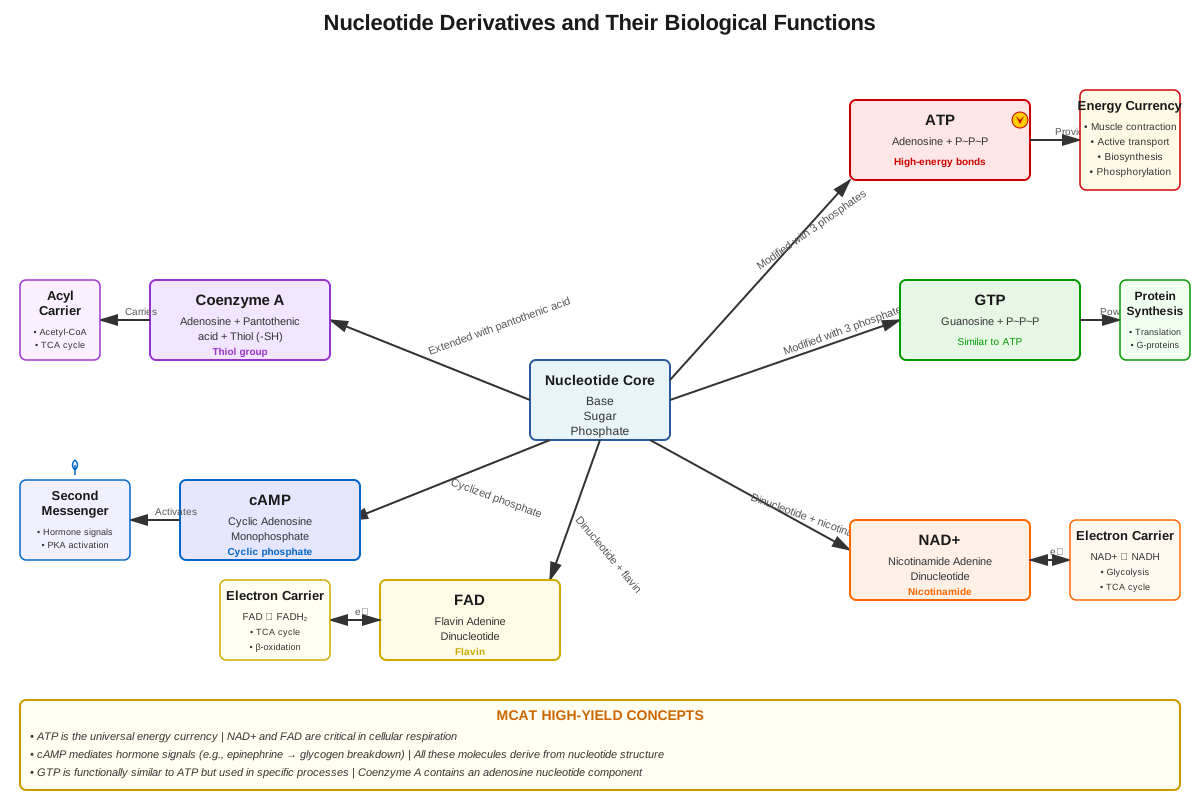
Adenosine triphosphate (ATP) serves as the universal energy currency of cells. The molecule contains three phosphate groups connected by two phosphoanhydride bonds. Hydrolysis of the terminal (γ) phosphate releases approximately 7.3 kcal/mol under standard conditions (more under cellular conditions), converting ATP to ADP + Pi. This energy drives endergonic reactions throughout metabolism.
The high energy of phosphoanhydride bonds results from several factors:
- Electrostatic repulsion relief: Adjacent negative charges on phosphate groups repel each other; hydrolysis separates these charges
- Resonance stabilization: Hydrolysis products (ADP and Pi) have more resonance forms than ATP
- Increased solvation: Products interact more favorably with water than the intact molecule
- Entropy increase: One molecule becomes two, increasing disorder
Guanosine triphosphate (GTP) functions similarly to ATP in specific contexts, particularly in protein synthesis (translation) and signal transduction (G-proteins).
Nucleotide Cofactors: NAD+ and FAD
Several crucial enzyme cofactors derive from nucleotides. Nicotinamide adenine dinucleotide (NAD+) and its phosphorylated form NADP+ consist of two nucleotides (one containing nicotinamide, one containing adenine) joined through their phosphate groups. NAD+/NADH serves as an electron carrier in catabolic pathways (glycolysis, citric acid cycle, electron transport chain), while NADP+/NADPH functions primarily in anabolic pathways (fatty acid synthesis, nucleotide synthesis) and antioxidant defense.
Flavin adenine dinucleotide (FAD) contains riboflavin (vitamin B2) connected to AMP. FAD/FADH₂ serves as an electron carrier, particularly in the citric acid cycle (succinate dehydrogenase) and β-oxidation of fatty acids. Unlike NAD+, which carries two electrons and one proton as a hydride ion (H⁻), FAD can accept two electrons and two protons, making it suitable for different types of oxidation reactions.
Cyclic Nucleotides: Second Messengers
Cyclic AMP (cAMP) and cyclic GMP (cGMP) function as intracellular second messengers in signal transduction pathways. These molecules form when adenylyl cyclase or guanylyl cyclase catalyzes the conversion of ATP or GTP into cyclic forms, creating a phosphodiester bond between the 5'-phosphate and the 3'-OH of the same ribose sugar, forming a ring structure. cAMP mediates the effects of many hormones (epinephrine, glucagon) by activating protein kinase A (PKA), while cGMP functions in visual signal transduction and smooth muscle relaxation.
Modified Nucleotides and Analogs
Cells produce various modified nucleotides for specialized functions. Pseudouridine and inosine appear in tRNA, affecting its structure and function. Methylated bases occur in DNA and RNA, serving regulatory roles. Understanding these modifications helps explain epigenetic regulation and RNA processing.
Synthetic nucleotide analogs serve as antiviral and anticancer drugs. These molecules resemble natural nucleotides but contain modifications that disrupt DNA or RNA synthesis. For example, azidothymidine (AZT) lacks a 3'-OH group, causing chain termination when incorporated into DNA by reverse transcriptase. Acyclovir lacks a complete sugar ring, similarly terminating viral DNA synthesis. The MCAT may present passages describing such drugs and ask students to predict their mechanisms based on structural features.
Concept Relationships
The concepts within nucleosides and nucleotides form an interconnected hierarchy. At the foundation, nitrogenous bases (purines and pyrimidines) combine with pentose sugars (ribose or deoxyribose) to form nucleosides. Adding phosphate groups to nucleosides creates nucleotides, which can exist as mono-, di-, or triphosphates. These nucleotides serve three major biological roles: (1) as monomers that polymerize via phosphodiester bonds to form nucleic acids (DNA and RNA), (2) as energy carriers (ATP, GTP) whose phosphoanhydride bond hydrolysis drives cellular work, and (3) as components of cofactors (NAD+, FAD) and second messengers (cAMP, cGMP) that regulate metabolism and signaling.
The relationship to prerequisite topics is direct: organic chemistry provides the framework for understanding functional groups and bond types; carbohydrate chemistry explains the pentose sugar structure and stereochemistry; thermodynamics explains why ATP hydrolysis releases energy and drives coupled reactions. Moving forward, nucleotide knowledge enables understanding of DNA structure (double helix stabilized by base pairing), DNA replication (nucleotide polymerization by DNA polymerase), transcription (RNA synthesis from ribonucleotides), translation (GTP hydrolysis driving ribosome function), and metabolic regulation (ATP/ADP ratios controlling enzyme activity).
Concept Flow: Bases + Sugar → Nucleoside + Phosphate(s) → Nucleotide → Polymerization → Nucleic Acids (genetic information) OR Hydrolysis → Energy release (cellular work) OR Modification → Cofactors/Messengers (regulation)
Quick check — test yourself on Nucleosides and nucleotides so far.
Try Flashcards →High-Yield Facts
⭐ Nucleosides contain a nitrogenous base and pentose sugar; nucleotides contain a nitrogenous base, pentose sugar, and one or more phosphate groups.
⭐ Purines (adenine and guanine) have two rings; pyrimidines (cytosine, thymine, uracil) have one ring.
⭐ DNA contains deoxyribose (no 2'-OH); RNA contains ribose (has 2'-OH), making RNA more reactive and less stable.
⭐ Phosphodiester bonds connect the 3'-OH of one nucleotide to the 5'-phosphate of the next, creating a directional polynucleotide chain (5' → 3').
⭐ ATP hydrolysis releases approximately 7.3 kcal/mol under standard conditions due to electrostatic repulsion relief, resonance stabilization, and increased entropy.
- Thymine appears in DNA; uracil appears in RNA (both pair with adenine).
- Purine nucleosides end in "-osine" (adenosine, guanosine); pyrimidine nucleosides end in "-idine" (cytidine, uridine, thymidine).
- The N-glycosidic bond connects N9 of purines or N1 of pyrimidines to C1' of the sugar in β-configuration.
- NAD+/NADH functions primarily in catabolic pathways; NADP+/NADPH functions primarily in anabolic pathways.
- Cyclic AMP (cAMP) forms when adenylyl cyclase creates a phosphodiester bond between the 5'-phosphate and 3'-OH of the same ribose.
- Nucleotide analogs lacking a 3'-OH group (like AZT) cause DNA chain termination when incorporated.
- GTP hydrolysis powers protein synthesis (translation) and G-protein signaling cascades.
- The phosphate backbone of nucleic acids is negatively charged at physiological pH, requiring counterions for stabilization.
- FAD/FADH₂ accepts two electrons and two protons, while NAD+/NADH accepts two electrons and one proton (as a hydride ion).
Common Misconceptions
Misconception: Nucleosides and nucleotides are interchangeable terms.
Correction: Nucleosides lack phosphate groups, while nucleotides contain one or more phosphates. This distinction is critical—ATP is a nucleotide (adenosine triphosphate), while adenosine alone is a nucleoside. The MCAT specifically tests this difference.
Misconception: All nucleotides contain ribose sugar.
Correction: Ribonucleotides contain ribose (found in RNA), while deoxyribonucleotides contain deoxyribose (found in DNA). The prefix "deoxy-" indicates the absence of the 2'-OH group. For example, dATP contains deoxyribose, while ATP contains ribose.
Misconception: Thymine and uracil are functionally identical.
Correction: While both pair with adenine, thymine (with a methyl group at position 5) appears in DNA, and uracil appears in RNA. The methylation of thymine allows cells to detect cytosine deamination (which produces uracil) as DNA damage, since uracil should not normally appear in DNA.
Misconception: The energy in ATP comes from breaking the phosphate bond itself.
Correction: The energy release comes from the overall hydrolysis reaction, not simply from breaking the bond. The products (ADP + Pi) are more stable than ATP due to reduced electrostatic repulsion, increased resonance stabilization, and greater solvation. Energy is released because the products are at a lower free energy state than the reactant.
Misconception: Purines and pyrimidines can be distinguished by their names alone.
Correction: While purine nucleosides end in "-osine" and pyrimidine nucleosides end in "-idine," you must memorize which bases are purines (adenine, guanine) versus pyrimidines (cytosine, thymine, uracil). The mnemonic "PURe As Gold" helps: PURines are Adenine and Guanine.
Misconception: Phosphodiester bonds are high-energy bonds like phosphoanhydride bonds.
Correction: Phosphodiester bonds (connecting nucleotides in DNA/RNA) are relatively stable and do not release substantial energy upon hydrolysis. Phosphoanhydride bonds (connecting phosphates in ATP) are high-energy bonds. This difference explains why ATP serves as an energy carrier while DNA/RNA serve as stable information storage molecules.
Misconception: NAD+ and NADH are nucleotides.
Correction: NAD+ is a dinucleotide—it contains two nucleotides joined through their phosphate groups. One nucleotide contains nicotinamide (the active redox center), and the other contains adenine. Understanding this structure helps explain why NAD+ is abbreviated as it is and why it's derived from niacin (vitamin B3).
Worked Examples
Example 1: Structural Identification and Energy Calculation
Question: A researcher isolates a molecule containing adenine, ribose, and three phosphate groups. When this molecule is hydrolyzed to remove one phosphate group, 7.3 kcal/mol of energy is released under standard conditions. In a cellular environment where [ATP] = 5 mM, [ADP] = 0.5 mM, and [Pi] = 10 mM, calculate the actual free energy change (ΔG) for this hydrolysis reaction at 37°C (310 K). Assume R = 1.987 cal/(mol·K) and ΔG° = -7.3 kcal/mol.
Solution:
Step 1: Identify the molecule. The description matches ATP (adenosine triphosphate): adenine base + ribose sugar + three phosphate groups. This is a ribonucleotide triphosphate.
Step 2: Recognize the reaction. ATP hydrolysis: ATP + H₂O → ADP + Pi
Step 3: Apply the free energy equation:
ΔG = ΔG° + RT ln(Q)where Q = [ADP][Pi]/[ATP]
Step 4: Calculate Q:
Q = (0.5 mM × 10 mM)/(5 mM) = (0.5 × 10)/5 = 1.0Step 5: Calculate RT ln(Q):
RT ln(Q) = 1.987 cal/(mol·K) × 310 K × ln(1.0)
RT ln(Q) = 615.97 × 0 = 0 cal/mol = 0 kcal/mol
Step 6: Calculate ΔG:
ΔG = -7.3 kcal/mol + 0 = -7.3 kcal/molAnswer: The actual free energy change is -7.3 kcal/mol under these conditions. When Q = 1, the actual ΔG equals ΔG°.
Key Concepts Applied: This problem integrates nucleotide structure identification (ATP), thermodynamics (free energy calculations), and understanding of high-energy phosphoanhydride bonds. The MCAT may present similar calculations requiring recognition of nucleotide triphosphates and application of the free energy equation.
Example 2: Nucleotide Analog Mechanism
Question: A pharmaceutical company develops a novel antiviral drug with the following structure: the compound contains a guanine base attached to an acyclic sugar analog (lacking the complete ribose ring) with a phosphate group at the 5' position. When viral DNA polymerase incorporates this analog into growing DNA, synthesis terminates. Explain the mechanism by which this drug inhibits viral replication and why it causes chain termination.
Solution:
Step 1: Identify the drug type. This is a nucleotide analog similar to acyclovir, containing a modified sugar component. The presence of guanine indicates it mimics dGTP (deoxyguanosine triphosphate).
Step 2: Understand normal DNA synthesis. DNA polymerase catalyzes phosphodiester bond formation between the 3'-OH of the growing strand and the 5'-phosphate of the incoming nucleotide. This reaction extends the chain in the 5' → 3' direction.
Step 3: Identify the critical structural feature. The acyclic sugar analog lacks a complete ring structure, meaning it lacks a 3'-OH group necessary for the next phosphodiester bond formation.
Step 4: Explain the mechanism:
- Viral DNA polymerase recognizes the analog as a substrate (mimics natural dGTP)
- The enzyme incorporates the analog into the growing DNA chain, forming a phosphodiester bond between the previous nucleotide's 3'-OH and the analog's 5'-phosphate
- Once incorporated, the analog's lack of a 3'-OH prevents formation of the next phosphodiester bond
- DNA synthesis terminates because no further nucleotides can be added
Step 5: Explain selectivity. The drug preferentially inhibits viral DNA polymerase over human DNA polymerase due to differences in enzyme active site structure and substrate specificity. Viral polymerases often have lower fidelity and accept modified substrates more readily than human polymerases.
Answer: The drug functions as a chain terminator by lacking a 3'-OH group necessary for phosphodiester bond formation. After incorporation by viral DNA polymerase, no additional nucleotides can be added, halting viral DNA replication. This mechanism exploits the directional nature of DNA synthesis (5' → 3') and the requirement for a 3'-OH group on the growing strand.
Key Concepts Applied: This problem requires understanding of nucleotide structure (components and their roles), phosphodiester bond formation (mechanism and requirements), DNA synthesis directionality, and how structural modifications affect biological function. The MCAT frequently presents drug mechanism passages requiring this type of structural analysis.
Exam Strategy
Approaching MCAT Questions on Nucleosides and Nucleotides
When encountering questions on this topic, first determine whether the question asks about structure (identification, nomenclature), function (energy metabolism, genetic information), or mechanism (bond formation, drug action). Structure questions often provide a diagram or description and ask for identification or classification. Function questions typically appear in passage contexts involving metabolism or molecular biology. Mechanism questions require understanding of chemical reactions and enzyme catalysis.
Trigger Words and Phrases
Watch for these key terms that signal nucleotide involvement:
- "Phosphodiester bond" → DNA/RNA structure, polymerization
- "High-energy bond" → ATP, phosphoanhydride bonds, energy metabolism
- "Chain termination" → Nucleotide analogs, DNA synthesis inhibition
- "5' to 3' direction" → DNA/RNA synthesis, phosphodiester bond formation
- "Purine" or "pyrimidine" → Base classification, structure questions
- "Cofactor" or "coenzyme" → NAD+, FAD, electron carriers
- "Second messenger" → cAMP, cGMP, signal transduction
- "Ribose" vs. "deoxyribose" → RNA vs. DNA, stability differences
Process of Elimination Tips
For structure identification questions, eliminate options systematically:
- Count rings in the base (one ring = pyrimidine, two rings = purine)
- Check for 2'-OH (present = ribonucleotide/RNA, absent = deoxyribonucleotide/DNA)
- Count phosphate groups (none = nucleoside, one or more = nucleotide)
- Verify nomenclature (purine nucleosides end in "-osine," pyrimidine nucleosides end in "-idine")
For mechanism questions involving nucleotide analogs:
- Identify what structural feature is modified (sugar, base, phosphate)
- Determine which normal function that modification disrupts
- Eliminate options that don't logically follow from the structural change
- Consider selectivity—why does the drug affect viral/cancer cells more than normal cells?
Time Allocation Advice
Discrete questions on nucleotide structure or nomenclature should take 30-45 seconds—these test straightforward recall and classification. Passage-based questions involving nucleotides in metabolic or molecular biology contexts may require 60-90 seconds, as they demand integration of passage information with foundational knowledge. Calculation questions (like ATP free energy changes) may take 90-120 seconds but are often worth the time investment as they typically have definitive answers. If a passage seems heavily focused on nucleotide metabolism or DNA/RNA synthesis, budget slightly more time as these passages often contain multiple related questions that become easier once you understand the passage's central concept.
Memory Techniques
Mnemonics for Base Classification
"PURe As Gold": PURines are Adenine and Guanine (gold). This helps remember that purines are the larger bases with two rings.
"CUT the PY": PYrimidines are Cytosine, Uracil, and Thymine. Imagine cutting a pie (PY) into three pieces.
"Pyramids have one point": PYrimidines have one ring (like a pyramid has one point at the top).
Nucleoside Nomenclature
Purine nucleosides: Think "pure SINE wave" → purines end in "-osine" (adenosine, guanosine)
Pyrimidine nucleosides: Think "pyramid SLIDE" → pyrimidines end in "-idine" (cytidine, uridine, thymidine)
DNA vs. RNA Sugar
"RNA is Ribose, DNA is Deoxy": The first letters match (R-R, D-D).
"RNA is Reactive": The 2'-OH in RNA makes it more reactive and less stable than DNA.
ATP Energy Release
"RISE" explains why ATP hydrolysis releases energy:
- Repulsion relief (negative charges separated)
- Increased resonance (products more stable)
- Solvation increase (products interact better with water)
- Entropy increase (one molecule becomes two)
Phosphodiester Bond Direction
"Five to Three, DNA is Free": DNA synthesis proceeds 5' → 3', adding nucleotides to the free 3'-OH group.
Visualization Strategy
Visualize nucleotides as three-part structures stacked vertically:
- Top: Phosphate group(s) (negative charges, energy storage)
- Middle: Pentose sugar (ribose or deoxyribose, structural scaffold)
- Bottom: Nitrogenous base (information content, base pairing)
When nucleotides polymerize, imagine them linking side-to-side through their phosphate-sugar backbone (phosphodiester bonds), with bases projecting outward ready to pair with complementary bases on another strand.
Summary
Nucleosides and nucleotides represent fundamental biochemical molecules essential for genetic information storage, energy metabolism, and cellular regulation. A nucleoside consists of a nitrogenous base (purine or pyrimidine) linked to a pentose sugar (ribose or deoxyribose), while a nucleotide adds one or more phosphate groups to this structure. Purines (adenine and guanine) contain two fused rings, while pyrimidines (cytosine, thymine, uracil) contain a single ring. DNA contains deoxyribose and thymine, while RNA contains ribose and uracil, with the 2'-OH group in RNA conferring greater reactivity. Nucleotides polymerize through phosphodiester bonds connecting the 3'-OH of one sugar to the 5'-phosphate of the next, creating directional polynucleotide chains. ATP serves as the universal energy currency through high-energy phosphoanhydride bonds, while modified nucleotides function as cofactors (NAD+, FAD) and second messengers (cAMP, cGMP). Understanding nucleotide structure, nomenclature, and function enables comprehension of DNA/RNA structure, replication, transcription, energy metabolism, and the mechanisms of nucleotide analog drugs. For MCAT success, students must distinguish nucleosides from nucleotides, classify bases as purines or pyrimidines, explain ATP's role in energy coupling, and analyze how structural modifications affect nucleotide function in biological systems.
Key Takeaways
- Nucleosides = base + sugar; nucleotides = base + sugar + phosphate(s)—this distinction is frequently tested
- Purines (A, G) have two rings; pyrimidines (C, T, U) have one ring—use "PURe As Gold" to remember
- DNA uses deoxyribose and thymine; RNA uses ribose and uracil—the 2'-OH makes RNA less stable
- Phosphodiester bonds connect nucleotides 3' → 5', creating directional chains that grow 5' → 3'
- ATP hydrolysis releases ~7.3 kcal/mol through phosphoanhydride bond cleavage, driving cellular work
- NAD+/FAD serve as electron carriers in metabolism, while cAMP/cGMP function as second messengers
- Nucleotide analogs lacking 3'-OH groups cause DNA chain termination, forming the basis for antiviral and anticancer drugs
Related Topics
DNA Structure and Base Pairing: Understanding nucleotide structure provides the foundation for comprehending the DNA double helix, Watson-Crick base pairing rules (A-T, G-C), and the role of hydrogen bonds in stabilizing DNA structure. Mastery of nucleotides enables analysis of DNA denaturation, renaturation, and the factors affecting DNA stability.
DNA Replication: Nucleotide polymerization by DNA polymerase requires understanding of phosphodiester bond formation, the requirement for a 3'-OH group, and the role of nucleotide triphosphates as substrates. This topic builds directly on nucleotide structure and energetics.
Transcription and RNA Processing: RNA synthesis involves ribonucleotide polymerization, with the distinction between ribose and deoxyribose becoming critical. Modified nucleotides in RNA (pseudouridine, inosine) relate to post-transcriptional modifications.
Cellular Respiration and Metabolism: ATP's role as energy currency connects nucleotide chemistry to glycolysis, the citric acid cycle, and oxidative phosphorylation. NAD+ and FAD function as electron carriers throughout these pathways, making nucleotide cofactor knowledge essential.
Signal Transduction: Cyclic nucleotides (cAMP, cGMP) serve as second messengers in hormone signaling pathways. Understanding their synthesis from ATP/GTP and their regulatory roles connects nucleotide chemistry to endocrinology and cell biology.
Biotechnology and Genetic Engineering: Techniques like PCR, DNA sequencing, and gene cloning rely on nucleotide chemistry. Understanding nucleotide analogs (ddNTPs in Sanger sequencing) and nucleotide labeling (radioactive or fluorescent) requires solid foundational knowledge of nucleotide structure.
Practice CTA
Now that you've mastered the foundational concepts of nucleosides and nucleotides, it's time to reinforce your understanding through active practice. Attempt the practice questions and flashcards associated with this topic to test your ability to identify structures, apply concepts to novel scenarios, and solve MCAT-style problems under timed conditions. Focus particularly on distinguishing nucleosides from nucleotides, classifying purines versus pyrimidines, and explaining the mechanisms of ATP hydrolysis and nucleotide analog drugs. Remember that active recall and spaced repetition are the most effective study strategies for long-term retention. Each practice question you work through strengthens your neural pathways and builds the pattern recognition skills essential for MCAT success. You've built a strong foundation—now solidify it through deliberate practice!
Sign up free to keep reading
Create a free AnvayaPrep account to finish this MCAT guide on Nucleosides and nucleotides — plus flashcards and practice questions.