Overview
DNA structure is one of the most fundamental topics in Biology and represents a cornerstone of the Molecular Biology and Genetics unit tested on the MCAT. Understanding the molecular architecture of deoxyribonucleic acid is essential not only for answering direct questions about nucleic acid composition but also for comprehending downstream processes including replication, transcription, mutation, and gene expression. The MCAT frequently tests DNA structure through passage-based questions that integrate structural knowledge with experimental techniques, genetic disorders, and biotechnology applications.
The double helix model of DNA structure discovered by Watson and Crick in 1953 remains one of the most elegant examples of how molecular form dictates biological function. The antiparallel arrangement of sugar-phosphate backbones, the specific base-pairing rules, and the major and minor grooves all contribute to DNA's ability to store genetic information, replicate with high fidelity, and interact with proteins that regulate gene expression. For the MCAT, students must understand not just the static structure but how structural features enable dynamic cellular processes.
DNA structure Biology concepts connect to virtually every other topic in molecular biology and genetics. The structure determines how DNA polymerase functions during replication, how mutations arise and are repaired, how restriction enzymes recognize specific sequences, and how epigenetic modifications alter gene expression without changing the underlying sequence. Mastery of DNA structure provides the foundation for understanding everything from PCR and gel electrophoresis to cancer biology and evolutionary relationships—all high-yield topics for the MCAT.
Learning Objectives
- [ ] Define DNA structure using accurate Biology terminology
- [ ] Explain why DNA structure matters for the MCAT
- [ ] Apply DNA structure to exam-style questions
- [ ] Identify common mistakes related to DNA structure
- [ ] Connect DNA structure to related Biology concepts
- [ ] Describe the chemical composition of nucleotides and how they polymerize to form DNA strands
- [ ] Explain the structural differences between A-DNA, B-DNA, and Z-DNA conformations
- [ ] Predict the stability of DNA molecules based on GC content and environmental conditions
- [ ] Analyze how DNA structure facilitates protein-DNA interactions in regulatory processes
Prerequisites
- Basic chemistry of covalent and hydrogen bonds: DNA structure relies on phosphodiester bonds linking nucleotides and hydrogen bonds stabilizing base pairs
- Organic chemistry functional groups: Understanding carbonyl, hydroxyl, amino, and phosphate groups is essential for nucleotide structure
- Polarity and directionality: The 5' to 3' directionality of DNA strands is fundamental to all nucleic acid processes
- Complementary base pairing: Knowledge that A pairs with T and G pairs with C through hydrogen bonding
- Basic biochemistry terminology: Familiarity with terms like polymer, monomer, and macromolecule
Why This Topic Matters
DNA structure appears in approximately 15-20% of MCAT Biology questions, either directly or as foundational knowledge required to answer questions about molecular processes. The MCAT tests this topic through discrete questions about nucleotide composition, passage-based questions involving experimental manipulation of DNA, and integrated questions connecting structure to function. Understanding DNA structure is particularly important for passages involving molecular biology techniques (PCR, sequencing, cloning), genetic disorders, and evolutionary biology.
Clinically, DNA structure knowledge underpins modern medicine. Mutations that alter DNA structure can lead to diseases like xeroderma pigmentosum (defective DNA repair) or progeria (altered nuclear structure). Chemotherapeutic agents like cisplatin work by cross-linking DNA strands, preventing replication. Diagnostic techniques from paternity testing to cancer screening rely on DNA structure principles. The MCAT frequently presents clinical vignettes where understanding DNA structure helps predict disease mechanisms or treatment outcomes.
Common MCAT question formats include: calculating the percentage of specific bases given partial information about DNA composition (using Chargaff's rules), predicting melting temperature based on GC content, identifying which DNA-binding proteins would interact with major versus minor grooves, and analyzing experimental results from techniques that exploit structural features of DNA. Passages may describe novel DNA-binding drugs, genetic engineering techniques, or evolutionary studies—all requiring solid structural knowledge.
Core Concepts
Nucleotide Composition and Structure
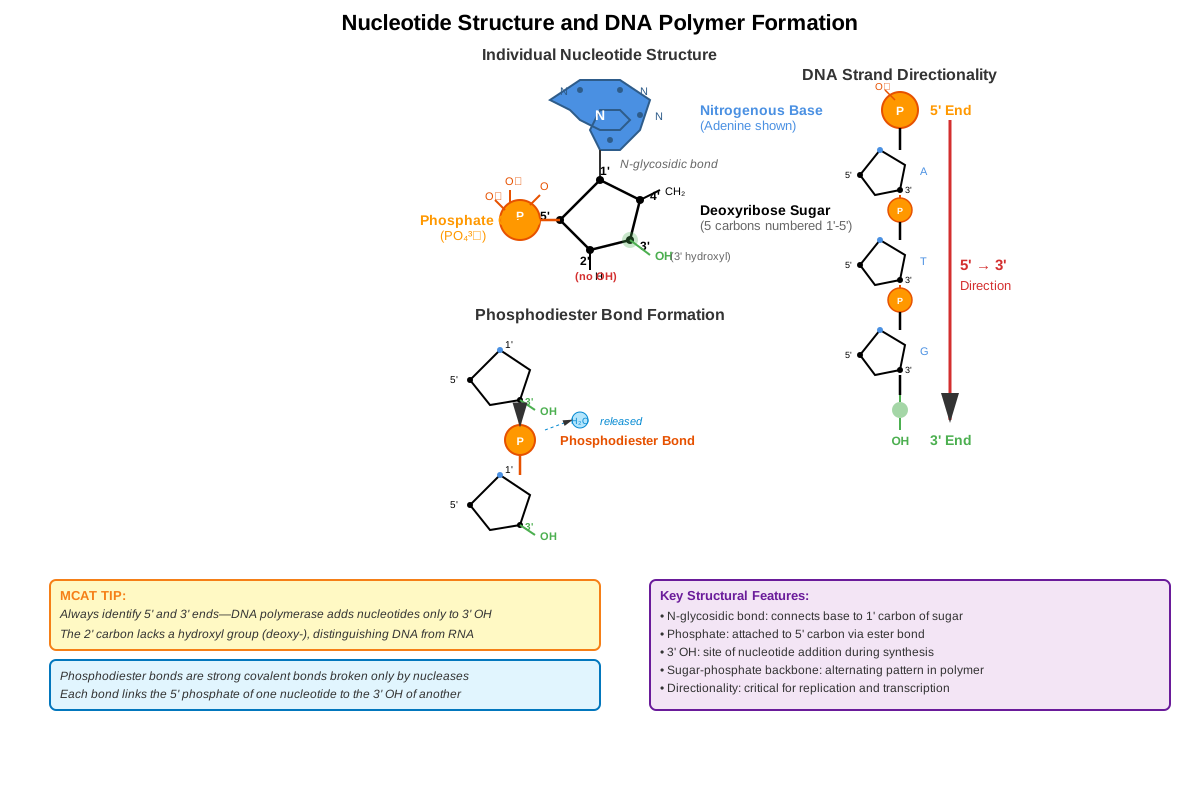
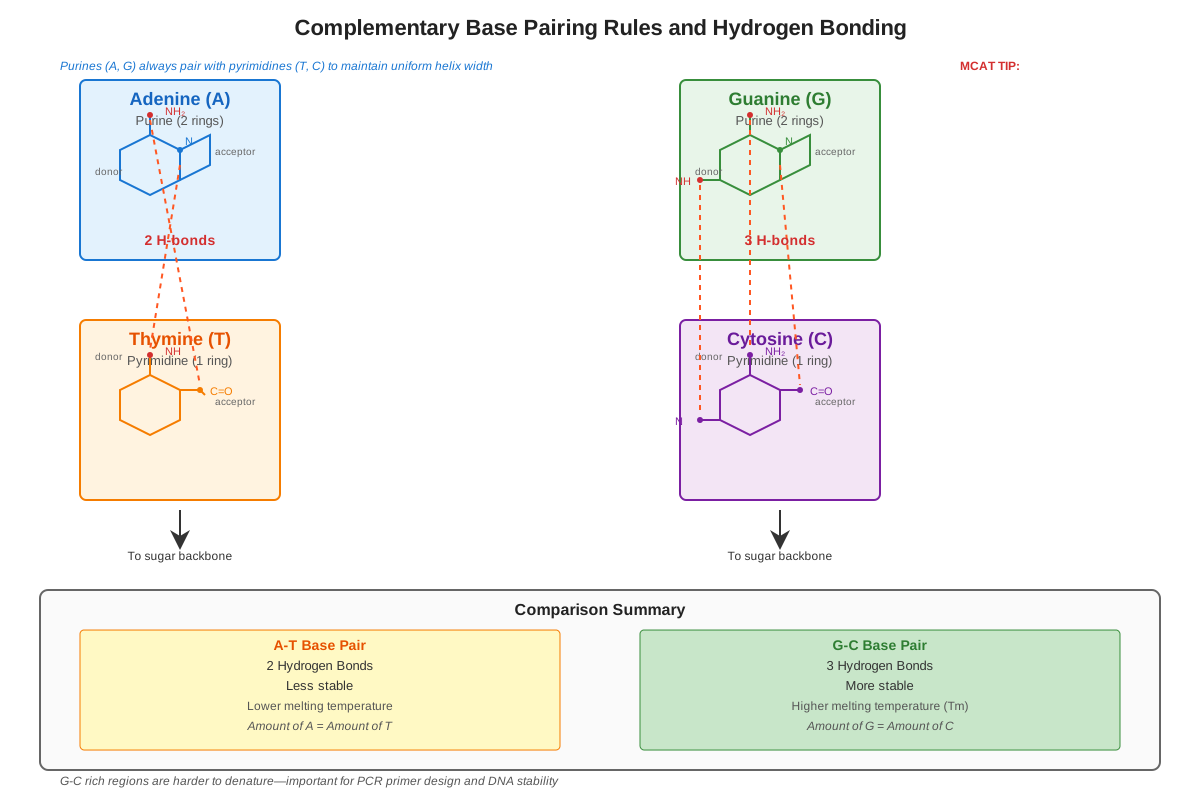
The fundamental building block of DNA is the nucleotide, which consists of three components: a nitrogenous base, a five-carbon sugar (deoxyribose), and a phosphate group. The nitrogenous bases are divided into two categories: purines (adenine and guanine, which have a double-ring structure) and pyrimidines (cytosine and thymine, which have a single-ring structure). This classification is critical for understanding base-pairing geometry—a purine always pairs with a pyrimidine to maintain uniform width of the DNA double helix.
The deoxyribose sugar distinguishes DNA from RNA. This pentose sugar lacks a hydroxyl group at the 2' carbon position (hence "deoxy"), which makes DNA more chemically stable than RNA. The carbons of the sugar are numbered 1' through 5' (pronounced "one prime" through "five prime"), and this numbering system establishes the directionality of DNA strands. The nitrogenous base attaches to the 1' carbon via a glycosidic bond, while the phosphate group attaches to the 5' carbon. The 3' carbon bears a hydroxyl group that is crucial for DNA synthesis.
Phosphodiester bonds link nucleotides together to form a polynucleotide strand. Specifically, the phosphate group attached to the 5' carbon of one nucleotide forms a covalent bond with the 3' hydroxyl group of the adjacent nucleotide. This creates a sugar-phosphate backbone with a repeating pattern of sugar-phosphate-sugar-phosphate, with the nitrogenous bases projecting perpendicular to this backbone. The phosphodiester bond is a strong covalent bond that provides structural stability to the DNA molecule.
The DNA Double Helix
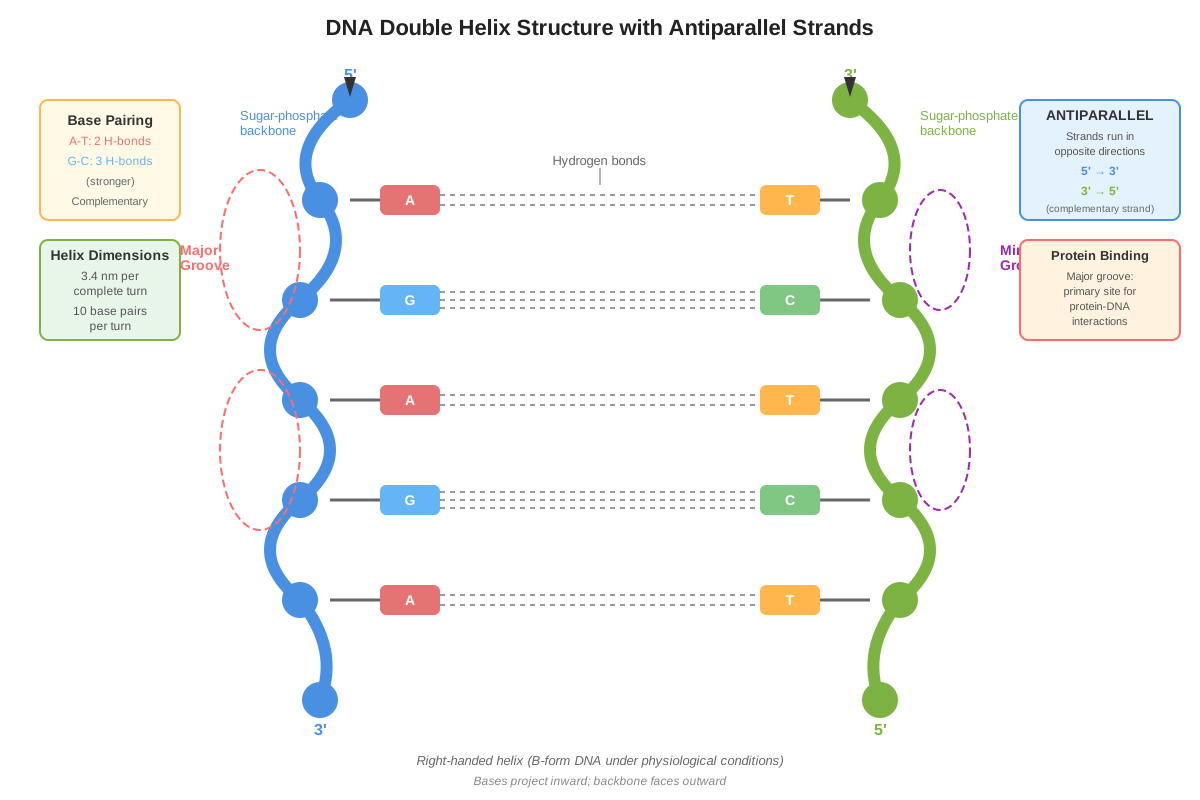
The double helix structure of DNA consists of two antiparallel polynucleotide strands wound around a common axis. Antiparallel means that one strand runs in the 5' to 3' direction while the complementary strand runs in the 3' to 5' direction. This antiparallel arrangement is essential for DNA replication and transcription, as polymerase enzymes can only synthesize DNA in the 5' to 3' direction.
Complementary base pairing holds the two strands together through hydrogen bonds. Adenine (A) pairs with thymine (T) through two hydrogen bonds, while guanine (G) pairs with cytosine (C) through three hydrogen bonds. This specific pairing, known as Chargaff's rules, means that the amount of adenine equals the amount of thymine, and the amount of guanine equals the amount of cytosine in double-stranded DNA. The extra hydrogen bond in G-C pairs makes them more stable than A-T pairs, which has important implications for DNA melting temperature and stability.
The double helix creates two types of grooves: the major groove and the minor groove. These grooves arise because the glycosidic bonds connecting bases to sugars are not directly opposite each other. The major groove is wider and deeper, exposing more of the base-pair edges, making it the primary site for sequence-specific protein-DNA interactions. Transcription factors and other DNA-binding proteins typically insert amino acid side chains into the major groove to "read" the DNA sequence without unwinding the helix.
DNA Conformations and Structural Variations
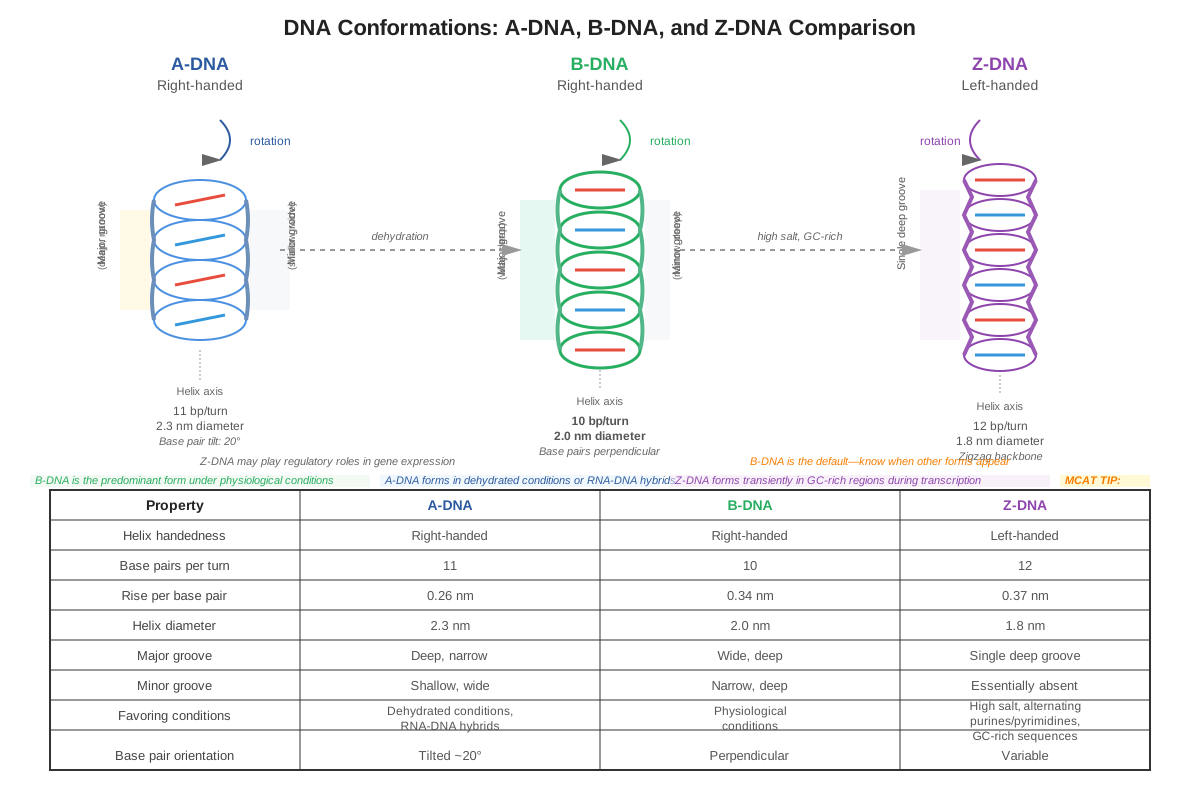
While B-DNA is the predominant form under physiological conditions, DNA can adopt different conformations depending on environmental conditions and sequence composition. B-DNA is a right-handed helix with approximately 10 base pairs per complete turn, a rise of 3.4 Å per base pair, and a diameter of about 20 Å. This is the classic Watson-Crick structure and the form most relevant for MCAT questions.
A-DNA forms under dehydrating conditions and is also a right-handed helix but is shorter and wider than B-DNA, with 11 base pairs per turn. While less common in cells, A-DNA structure is relevant because RNA-DNA hybrids and double-stranded RNA adopt an A-form conformation. Z-DNA is a left-handed helix that forms in regions with alternating purine-pyrimidine sequences (especially alternating GC sequences). Z-DNA is longer and thinner than B-DNA and may play roles in gene regulation, though its biological significance remains under investigation.
| DNA Form | Handedness | Base Pairs/Turn | Helix Diameter | Biological Context |
|---|---|---|---|---|
| B-DNA | Right | ~10 | 20 Å | Predominant physiological form |
| A-DNA | Right | ~11 | 23 Å | Dehydrated conditions, RNA duplexes |
| Z-DNA | Left | ~12 | 18 Å | Alternating purine-pyrimidine sequences |
DNA Stability and Denaturation
The stability of the DNA double helix depends on multiple factors. Hydrogen bonding between complementary bases provides specificity but contributes relatively little to overall stability. More important are base stacking interactions—the van der Waals forces and hydrophobic interactions between adjacent bases stacked on top of each other within the helix. These π-π interactions between aromatic rings are the primary source of helix stability.
GC content significantly affects DNA stability because G-C base pairs have three hydrogen bonds compared to two for A-T pairs, and guanine and cytosine have stronger stacking interactions. DNA with higher GC content has a higher melting temperature (Tm)—the temperature at which 50% of DNA molecules are denatured (separated into single strands). This relationship is exploited in PCR primer design and molecular biology techniques.
DNA denaturation (melting) occurs when DNA is exposed to high temperature, extreme pH, or denaturing agents like urea or formamide. During denaturation, hydrogen bonds break and the two strands separate, but the phosphodiester bonds remain intact. Denatured DNA can reanneal (renature) when conditions return to normal, with complementary strands finding each other and re-forming the double helix. This reversible denaturation is the basis for techniques like Southern blotting, PCR, and DNA hybridization assays.
Supercoiling and Topological Properties
In cells, DNA does not exist as a relaxed linear molecule but is subject to topological constraints. Supercoiling refers to the overwinding (positive supercoiling) or underwinding (negative supercoiling) of the DNA helix. Most cellular DNA is negatively supercoiled, which facilitates strand separation during replication and transcription by storing energy that helps unwind the helix.
Topoisomerases are enzymes that manage DNA topology by creating temporary breaks in the DNA backbone, allowing strands to pass through each other, then resealing the breaks. Type I topoisomerases cut one strand and change the linking number by one, while Type II topoisomerases cut both strands and change the linking number by two. These enzymes are essential for DNA replication and are targets for antibiotics (fluoroquinolones target bacterial topoisomerases) and chemotherapy drugs (topotecan targets human topoisomerases).
Concept Relationships
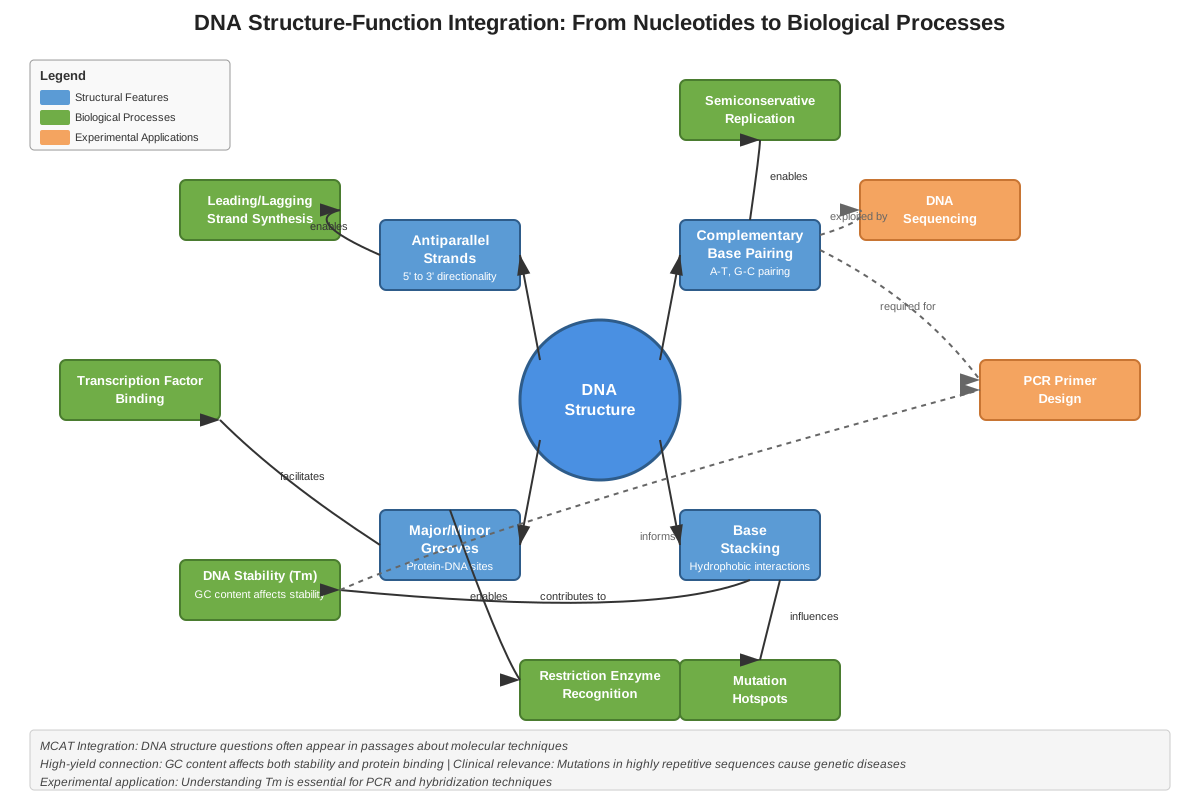
The chemical structure of nucleotides → determines how they polymerize via phosphodiester bonds → creating antiparallel strands with 5' to 3' directionality → which enables complementary base pairing through hydrogen bonds → forming the double helix structure → that creates major and minor grooves → allowing sequence-specific protein-DNA interactions.
Base composition (purine/pyrimidine ratio and GC content) → affects helix stability and melting temperature → which influences DNA denaturation and renaturation → processes exploited in molecular biology techniques like PCR and hybridization → which are used to study gene expression, detect mutations, and perform genetic engineering.
DNA structure → enables semiconservative replication (each strand serves as a template) → requires topoisomerases to manage supercoiling → connects to DNA repair mechanisms that recognize structural distortions → relates to mutation types (point mutations, insertions, deletions) → influences evolutionary relationships studied through sequence comparison.
The major and minor grooves → provide binding sites for transcription factors and regulatory proteins → which control gene expression → connecting DNA structure to cellular differentiation, development, and disease → illustrating how structure determines function at the molecular level.
Quick check — test yourself on DNA structure so far.
Try Flashcards →High-Yield Facts
⭐ DNA strands are antiparallel: one strand runs 5' to 3' while the complementary strand runs 3' to 5', which is essential for replication and transcription
⭐ Adenine pairs with thymine via 2 hydrogen bonds; guanine pairs with cytosine via 3 hydrogen bonds, making G-C pairs more stable than A-T pairs
⭐ Chargaff's rules state that %A = %T and %G = %C in double-stranded DNA, allowing calculation of base composition from partial information
⭐ Higher GC content correlates with higher melting temperature (Tm) because G-C pairs have three hydrogen bonds and stronger stacking interactions
⭐ The major groove is the primary site for sequence-specific protein-DNA interactions because it exposes more base-pair edge information
- Phosphodiester bonds link the 5' phosphate of one nucleotide to the 3' hydroxyl of the next, creating the sugar-phosphate backbone
- B-DNA is the predominant physiological form with ~10 base pairs per helical turn and a diameter of 20 Å
- Base stacking interactions (van der Waals forces between adjacent bases) contribute more to helix stability than hydrogen bonding between base pairs
- DNA denaturation (melting) is reversible; complementary strands can reanneal when conditions normalize
- Negative supercoiling predominates in cells and facilitates strand separation during replication and transcription
- Type I topoisomerases cut one DNA strand and change linking number by ±1; Type II topoisomerases cut both strands and change linking number by ±2
- The deoxyribose sugar (lacking 2' OH) makes DNA more chemically stable than RNA
- Purines (A, G) have double-ring structures; pyrimidines (C, T) have single-ring structures
- Z-DNA is a left-handed helix that forms in alternating purine-pyrimidine sequences, particularly GC repeats
Common Misconceptions
Misconception: Hydrogen bonds between base pairs are the primary source of DNA stability.
Correction: While hydrogen bonds provide specificity for base pairing, base stacking interactions (van der Waals forces and hydrophobic interactions between adjacent bases) contribute more significantly to overall helix stability. This is why DNA remains relatively stable even when some base pairs are disrupted.
Misconception: DNA strands run parallel to each other in the double helix.
Correction: DNA strands are antiparallel, meaning one strand runs 5' to 3' while the complementary strand runs 3' to 5'. This antiparallel arrangement is essential for DNA polymerase function, as these enzymes can only synthesize DNA in the 5' to 3' direction.
Misconception: The percentage of purines equals the percentage of pyrimidines in any DNA sample.
Correction: This is only true for double-stranded DNA. In single-stranded DNA, there is no requirement for equal amounts of purines and pyrimidines. Chargaff's rules (%A = %T and %G = %C) apply only to double-stranded DNA where complementary base pairing occurs.
Misconception: All DNA in cells exists in the B-form conformation.
Correction: While B-DNA is the predominant form under physiological conditions, DNA can adopt A-form (in dehydrated conditions or RNA-DNA hybrids) and Z-form (in alternating purine-pyrimidine sequences) conformations. Additionally, DNA structure is dynamic and can be locally distorted by protein binding or supercoiling.
Misconception: The major and minor grooves are simply structural features with no functional significance.
Correction: The grooves are functionally critical for protein-DNA interactions. The major groove exposes more base-pair edge information and is the primary site where transcription factors and other regulatory proteins bind to recognize specific DNA sequences without unwinding the helix.
Misconception: DNA melting (denaturation) breaks the phosphodiester bonds in the sugar-phosphate backbone.
Correction: Denaturation only breaks the hydrogen bonds between complementary base pairs and disrupts base stacking interactions, causing strand separation. The covalent phosphodiester bonds remain intact, which is why denatured DNA can reanneal when conditions normalize.
Misconception: Higher temperature always causes DNA denaturation.
Correction: While elevated temperature can denature DNA, the specific melting temperature depends on GC content, salt concentration, and pH. DNA with higher GC content requires higher temperatures to denature. Additionally, extreme pH (very acidic or basic conditions) can denature DNA even at lower temperatures.
Worked Examples
Example 1: Calculating Base Composition Using Chargaff's Rules
Question: A sample of double-stranded DNA is analyzed and found to contain 22% adenine. What percentage of the DNA consists of guanine?
Solution:
Step 1: Apply Chargaff's rules. In double-stranded DNA, %A = %T and %G = %C.
Step 2: If adenine comprises 22% of the bases, then thymine must also comprise 22% of the bases.
Step 3: Calculate the combined percentage of A and T:
22% + 22% = 44%
Step 4: The remaining percentage must be G and C combined:
100% - 44% = 56%
Step 5: Since %G = %C, divide the remaining percentage equally:
56% ÷ 2 = 28%
Answer: Guanine comprises 28% of the DNA bases.
Key Concept Connection: This problem tests understanding of complementary base pairing and Chargaff's rules. The MCAT frequently presents variations of this calculation, sometimes providing information about one base and asking about another, or presenting data from single-stranded versus double-stranded DNA to test whether students recognize when Chargaff's rules apply.
Example 2: Predicting DNA Stability Based on Sequence
Question: Two DNA fragments of equal length are compared. Fragment A has the sequence 5'-ATATATATATAT-3' while Fragment B has the sequence 5'-GCGCGCGCGCGC-3'. Which fragment will have a higher melting temperature, and why?
Solution:
Step 1: Identify the base composition of each fragment.
- Fragment A contains only A-T base pairs
- Fragment B contains only G-C base pairs
Step 2: Recall that G-C base pairs form three hydrogen bonds while A-T base pairs form only two hydrogen bonds.
Step 3: Remember that guanine and cytosine also have stronger base stacking interactions than adenine and thymine.
Step 4: Higher GC content correlates with greater DNA stability and higher melting temperature.
Answer: Fragment B will have a higher melting temperature because it consists entirely of G-C base pairs, which are more stable than A-T base pairs due to three hydrogen bonds (versus two) and stronger base stacking interactions.
Key Concept Connection: This problem integrates knowledge of base pairing, hydrogen bonding, and DNA stability. The MCAT may present this concept in the context of PCR primer design (primers with higher GC content have higher annealing temperatures), evolutionary studies (organisms living in extreme heat often have higher genomic GC content), or experimental design (choosing appropriate denaturation conditions for different DNA samples).
Extension: Fragment B's alternating purine-pyrimidine sequence (GC repeats) could also potentially form Z-DNA under certain conditions, though this would not be the primary consideration for melting temperature. The MCAT might include this as a distractor in answer choices to test whether students can distinguish between relevant and tangential structural information.
Exam Strategy
When approaching DNA structure MCAT questions, first identify whether the question asks about primary structure (nucleotide sequence), secondary structure (double helix formation), or tertiary structure (supercoiling and chromosomal organization). Many students waste time considering all structural levels when the question targets only one.
Trigger words to watch for include: "antiparallel" (signals questions about strand directionality and replication), "complementary" (indicates base-pairing questions), "melting temperature" or "Tm" (points to GC content and stability), "major groove" or "minor groove" (suggests protein-DNA interaction questions), and "supercoiling" (relates to topoisomerases and DNA topology). When you see these terms, immediately activate the relevant conceptual framework.
For process-of-elimination strategies, remember that incorrect answer choices often confuse DNA with RNA (watch for references to uracil or ribose in DNA contexts), reverse the directionality of strands (claiming they're parallel), or misstate Chargaff's rules (suggesting %A = %G or applying the rules to single-stranded DNA). Eliminate any answer choice that violates fundamental base-pairing rules or suggests that hydrogen bonds are covalent.
Time allocation: Discrete questions about DNA structure should take 60-90 seconds. If a calculation is required (like determining base composition), write out Chargaff's rules quickly and work systematically. For passage-based questions, spend 30-45 seconds identifying how the passage manipulates or exploits DNA structure (e.g., using restriction enzymes that recognize specific sequences, denaturing DNA for PCR, or using DNA-binding proteins). This upfront investment helps you answer multiple questions more efficiently.
When passages describe experimental techniques, ask yourself: "What structural feature of DNA makes this technique possible?" For example, gel electrophoresis exploits the negatively charged phosphate backbone, PCR exploits reversible denaturation and complementary base pairing, and restriction enzyme digestion exploits sequence-specific recognition via major groove interactions. Making these connections helps you predict experimental outcomes and interpret results.
Memory Techniques
Mnemonic for base pairing: "Apple Trees" (A-T) have 2 branches, "Garden Chairs" (G-C) have 3 legs. This helps remember that A-T pairs have 2 hydrogen bonds while G-C pairs have 3.
Mnemonic for purines vs. pyrimidines: "Pure As Gold" (Purines are Adenine and Guanine). Purines are the larger bases with double rings. Alternatively, "PURe As Gold" emphasizes that PURines are the larger molecules, while PYrimidines are the smaller ones (CUT the PY = Cytosine, Uracil, Thymine are PYrimidines, though uracil is in RNA).
Visualization for antiparallel strands: Picture a ladder where one side has the rungs attached at the top and the other side has rungs attached at the bottom—this represents the 5' and 3' ends being opposite on complementary strands. Or visualize two arrows pointing in opposite directions (↑↓) to represent antiparallel orientation.
Acronym for DNA stability factors: "GHOSTS" - GC content, Hydrogen bonds, Orientation (base stacking), Salt concentration, Temperature, Strand length. This helps remember all factors affecting DNA stability and melting temperature.
Mnemonic for topoisomerase types: "Type I = 1 strand cut, changes linking number by 1; Type II = 2 strands cut, changes linking number by 2." The number of the enzyme type matches the number of strands cut and the change in linking number.
Visualization for major and minor grooves: Imagine looking at the double helix from the side—the major groove is like a wide highway where large protein complexes can drive through to read the DNA sequence, while the minor groove is like a narrow alley with limited access. This helps remember that major grooves are the primary sites for sequence-specific protein binding.
Summary
DNA structure represents a fundamental concept in molecular biology that integrates chemistry, biochemistry, and genetics. The double helix consists of two antiparallel polynucleotide strands held together by complementary base pairing (A with T via 2 hydrogen bonds, G with C via 3 hydrogen bonds) and stabilized primarily by base stacking interactions. The sugar-phosphate backbone provides structural integrity through phosphodiester bonds linking the 5' phosphate of one nucleotide to the 3' hydroxyl of the next. DNA stability depends on GC content, with higher GC content correlating with higher melting temperature due to the extra hydrogen bond and stronger stacking interactions. The major and minor grooves created by the helical structure enable sequence-specific protein-DNA interactions essential for gene regulation. Understanding these structural features is critical for comprehending DNA replication, transcription, mutation, repair mechanisms, and molecular biology techniques—all high-yield topics for the MCAT.
Key Takeaways
- DNA consists of nucleotides (nitrogenous base + deoxyribose sugar + phosphate) linked by phosphodiester bonds to form antiparallel strands with 5' to 3' directionality
- Complementary base pairing follows Chargaff's rules: A pairs with T (2 H-bonds), G pairs with C (3 H-bonds), making %A = %T and %G = %C in double-stranded DNA
- Base stacking interactions contribute more to DNA stability than hydrogen bonding; higher GC content increases melting temperature
- The major groove is the primary site for sequence-specific protein-DNA interactions because it exposes more base-pair information
- B-DNA is the predominant physiological form; A-DNA and Z-DNA represent alternative conformations under specific conditions
- DNA denaturation is reversible and breaks hydrogen bonds between base pairs but not phosphodiester bonds in the backbone
- Topoisomerases manage DNA supercoiling by creating temporary breaks, with Type I cutting one strand and Type II cutting both strands
Related Topics
DNA Replication: Understanding DNA structure is essential for comprehending semiconservative replication, the function of DNA polymerase (which synthesizes in the 5' to 3' direction), and the need for leading and lagging strand synthesis due to antiparallel structure.
Transcription and RNA Structure: DNA structure knowledge enables understanding of how RNA polymerase reads the template strand, how promoter sequences are recognized in the major groove, and structural differences between DNA and RNA (ribose vs. deoxyribose, uracil vs. thymine).
Mutations and DNA Repair: Structural understanding helps explain how mutations arise (tautomeric shifts causing mispairing, intercalating agents distorting the helix) and how repair mechanisms recognize structural distortions.
Molecular Biology Techniques: PCR, gel electrophoresis, Southern blotting, DNA sequencing, and restriction enzyme digestion all exploit specific structural features of DNA, making structure knowledge essential for interpreting experimental results.
Chromatin Structure and Gene Regulation: DNA structure provides the foundation for understanding how DNA wraps around histones to form nucleosomes, how chromatin remodeling affects gene accessibility, and how epigenetic modifications alter DNA-protein interactions.
Practice CTA
Now that you've mastered the structural foundation of DNA, test your understanding with practice questions that challenge you to apply these concepts in exam-style scenarios. Work through problems involving base composition calculations, DNA stability predictions, and experimental design questions that require structural knowledge. Use flashcards to reinforce high-yield facts like Chargaff's rules, the number of hydrogen bonds in each base pair, and the characteristics of different DNA conformations. Remember: understanding DNA structure isn't just about memorizing facts—it's about building the conceptual framework that supports all of molecular biology. Your investment in mastering this topic will pay dividends across multiple MCAT sections and question types. You've got this!
Sign up free to keep reading
Create a free AnvayaPrep account to finish this MCAT guide on DNA structure — plus flashcards and practice questions.