Overview
Ligand gated ion channels represent a critical class of membrane proteins that serve as the molecular basis for rapid chemical signaling in the nervous system and throughout the body. These specialized transmembrane proteins function as both receptors and ion channels, opening or closing in direct response to the binding of specific chemical messengers (ligands). Unlike voltage-gated channels that respond to changes in membrane potential, or mechanically-gated channels that respond to physical deformation, ligand-gated ion channels create an immediate link between chemical signals and electrical responses in cells.
Understanding ligand gated ion channels is essential for MCAT success because they bridge multiple high-yield topics in Biology and biochemistry. These channels are fundamental to neurotransmission at synapses, muscle contraction at neuromuscular junctions, and sensory perception. The MCAT frequently tests students' ability to integrate knowledge of membrane transport, signal transduction, and nervous system physiology—all of which converge in the study of these channels. Questions may appear in passages about neuropharmacology, toxicology, or disease mechanisms, requiring students to apply their understanding of channel structure, function, and regulation.
Within the broader context of Cell Biology, ligand gated ion channels exemplify how cells convert chemical information into electrical signals, a process called chemioelectric transduction. They represent one of several mechanisms cells use to respond to their environment, alongside G-protein coupled receptors, enzyme-linked receptors, and other signaling pathways. Mastery of this topic provides the foundation for understanding synaptic transmission, neuromuscular physiology, and pharmacological interventions targeting the nervous system—all frequently tested areas on the MCAT.
Learning Objectives
- [ ] Define ligand gated ion channels using accurate Biology terminology
- [ ] Explain why ligand gated ion channels matters for the MCAT
- [ ] Apply ligand gated ion channels to exam-style questions
- [ ] Identify common mistakes related to ligand gated ion channels
- [ ] Connect ligand gated ion channels to related Biology concepts
- [ ] Distinguish between ionotropic and metabotropic receptors based on mechanism and time course
- [ ] Predict the physiological effect of ligand binding based on channel ion selectivity
- [ ] Analyze how drugs and toxins can modulate ligand gated ion channel function
- [ ] Explain the structural features that determine ligand specificity and ion selectivity
Prerequisites
- Basic membrane structure and function: Understanding phospholipid bilayers and membrane proteins is essential because ligand gated ion channels are integral membrane proteins that span the lipid bilayer
- Electrochemical gradients: Knowledge of concentration gradients and electrical potential differences is necessary to predict ion flow direction through open channels
- Action potentials and membrane potential: Familiarity with resting potential, depolarization, and hyperpolarization helps explain the functional consequences of channel opening
- Basic neurotransmitter knowledge: Awareness of common neurotransmitters (acetylcholine, GABA, glutamate) provides context for specific channel examples
- Protein structure: Understanding of quaternary structure and conformational changes explains how ligand binding triggers channel opening
Why This Topic Matters
Clinical and Real-World Significance
Ligand gated ion channels are therapeutic targets for numerous medications and are implicated in various neurological and psychiatric disorders. Benzodiazepines (anti-anxiety medications) work by enhancing GABA receptor function, while many anesthetics act on ligand gated ion channels. Myasthenia gravis, an autoimmune disease affecting neuromuscular junctions, involves antibodies against nicotinic acetylcholine receptors. Toxins such as curare (used historically as arrow poison) and strychnine (a potent convulsant) exert their deadly effects by blocking specific ligand gated ion channels. Understanding these channels is crucial for comprehending drug mechanisms, toxicology, and disease pathophysiology.
MCAT Exam Statistics and Question Types
Ligand gated ion channels appear with medium frequency on the MCAT, typically in 2-4 questions per exam. They most commonly appear in:
- Biological and Biochemical Foundations passages (60% of questions) involving neurotransmission, synaptic physiology, or pharmacology
- Standalone questions (25%) testing basic channel properties and ion flow predictions
- Psychological, Social, and Biological Foundations passages (15%) related to sensory systems or drug effects on behavior
Questions typically require students to:
- Predict the effect of channel opening on membrane potential
- Distinguish between different receptor types
- Analyze experimental data showing channel responses to ligands
- Apply knowledge of channel pharmacology to clinical scenarios
Common Exam Passage Contexts
MCAT passages featuring ligand gated ion channels often present:
- Experimental studies of novel neurotransmitter receptors
- Pharmacological research on channel modulators
- Clinical cases involving neuromuscular disorders
- Comparative physiology of different receptor subtypes
- Toxicology studies of channel-blocking compounds
Core Concepts
Definition and Basic Structure
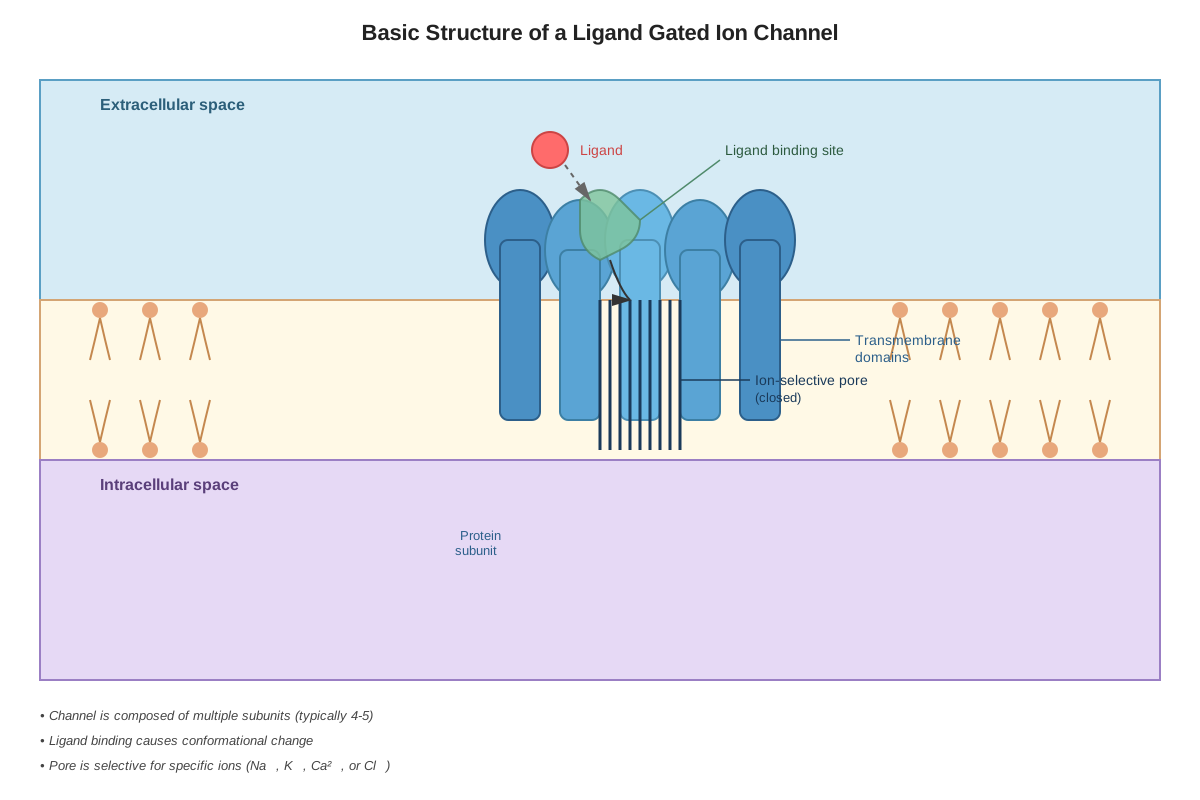
Ligand gated ion channels, also called ionotropic receptors, are transmembrane protein complexes that open or close in response to the binding of specific chemical messengers. These channels possess two essential functional domains: a ligand-binding domain (receptor site) that recognizes specific molecules, and a channel pore that allows ions to flow across the membrane when open. The term "gated" indicates that the channel can exist in open or closed conformations, with ligand binding serving as the "gate" control mechanism.
Structurally, most ligand gated ion channels are composed of multiple protein subunits (typically 4-5) arranged around a central pore. Each subunit contributes to both the ligand-binding sites and the ion-conducting pathway. The quaternary structure is critical for function—ligand binding induces a conformational change that opens the central pore, allowing specific ions to flow down their electrochemical gradients.
Mechanism of Action
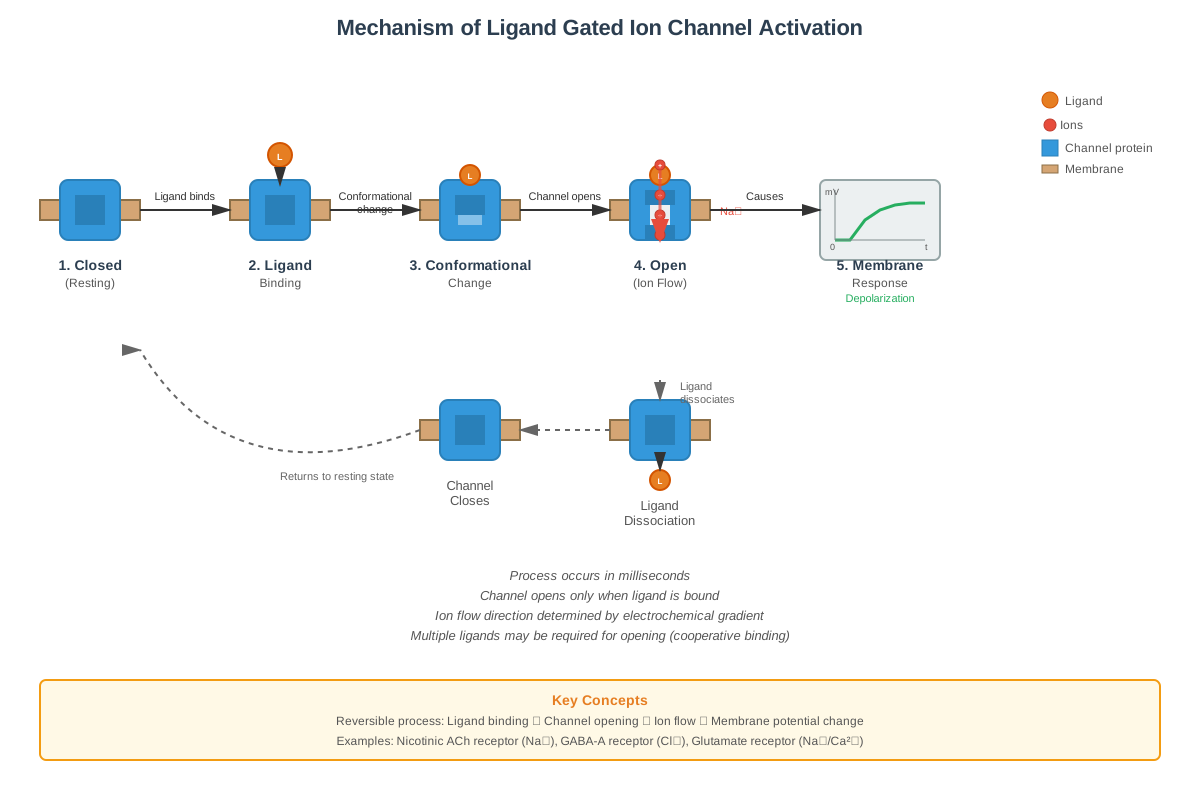
The functional cycle of ligand gated ion channels follows these steps:
- Resting state: Channel is closed; ligand-binding sites are unoccupied
- Ligand binding: Neurotransmitter or other signaling molecule binds to specific sites on the extracellular domain
- Conformational change: Ligand binding triggers a protein shape change that opens the channel pore
- Ion flow: Specific ions move through the open channel down their electrochemical gradient
- Channel closing: Ligand dissociation or receptor desensitization returns the channel to the closed state
This process occurs extremely rapidly (milliseconds), making ligand gated ion channels ideal for fast synaptic transmission. The speed distinguishes them from metabotropic receptors (G-protein coupled receptors), which require multiple intermediate steps and operate on a slower timescale (seconds to minutes).
Major Classes and Examples
| Channel Type | Primary Ligand | Ion Selectivity | Effect on Membrane | Physiological Role |
|---|---|---|---|---|
| Nicotinic ACh receptor | Acetylcholine | Na⁺, K⁺ (cation) | Depolarization (excitatory) | Neuromuscular junction, autonomic ganglia |
| GABA_A receptor | GABA | Cl⁻ (anion) | Hyperpolarization (inhibitory) | CNS inhibitory transmission |
| Glycine receptor | Glycine | Cl⁻ (anion) | Hyperpolarization (inhibitory) | Spinal cord inhibition |
| Glutamate receptors (NMDA, AMPA, Kainate) | Glutamate | Na⁺, K⁺, (Ca²⁺ for NMDA) | Depolarization (excitatory) | CNS excitatory transmission, learning |
| Serotonin 5-HT₃ receptor | Serotonin | Na⁺, K⁺ (cation) | Depolarization (excitatory) | Nausea, anxiety modulation |
Ion Selectivity and Physiological Effects
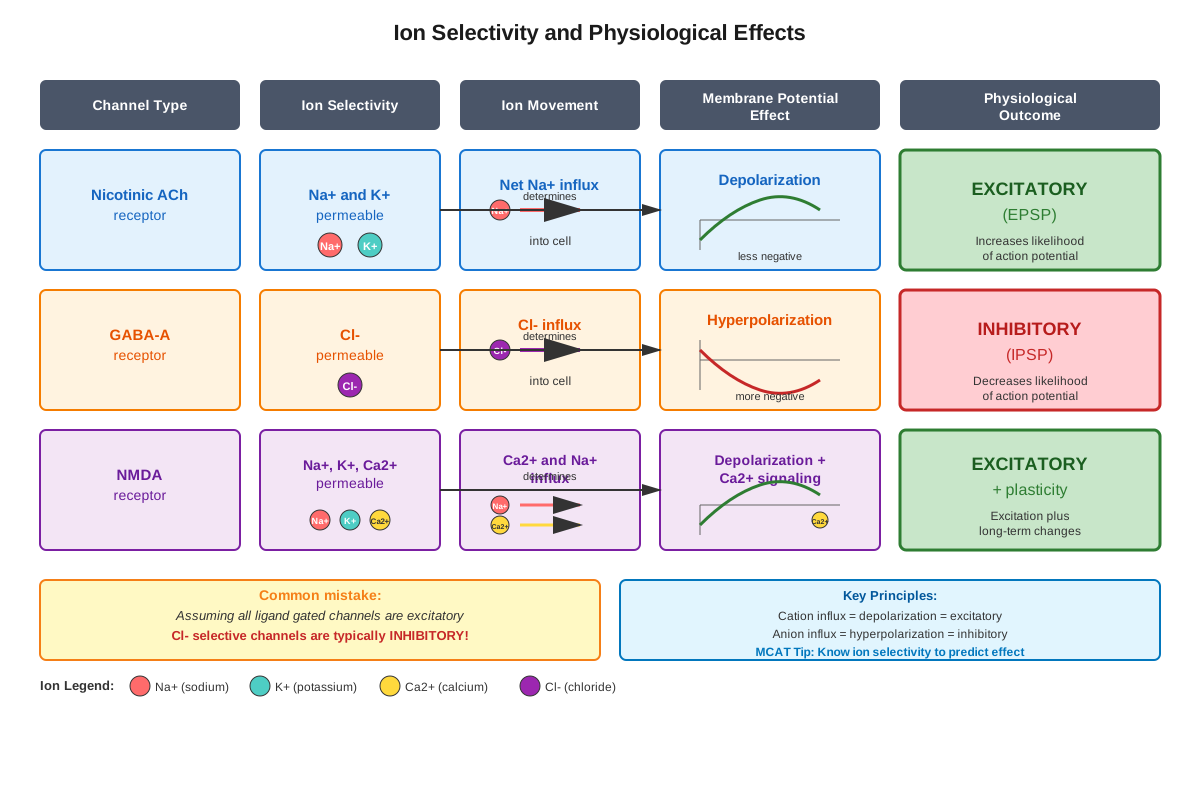
The ion selectivity of a ligand gated ion channel determines its physiological effect. This selectivity depends on the size and charge distribution of the channel pore:
Cation-selective channels (permeable to Na⁺, K⁺, sometimes Ca²⁺):
- Opening causes depolarization because Na⁺ influx exceeds K⁺ efflux
- Generate excitatory postsynaptic potentials (EPSPs)
- Make the neuron more likely to fire an action potential
- Examples: nicotinic acetylcholine receptors, glutamate receptors
Anion-selective channels (permeable to Cl⁻):
- Opening typically causes hyperpolarization or stabilization of resting potential
- Generate inhibitory postsynaptic potentials (IPSPs)
- Make the neuron less likely to fire an action potential
- Examples: GABA_A receptors, glycine receptors
The actual effect depends on the ion's equilibrium potential relative to the resting membrane potential. For chloride channels, if the Cl⁻ equilibrium potential is more negative than resting potential, opening causes hyperpolarization; if it equals resting potential, opening stabilizes the membrane and prevents depolarization.
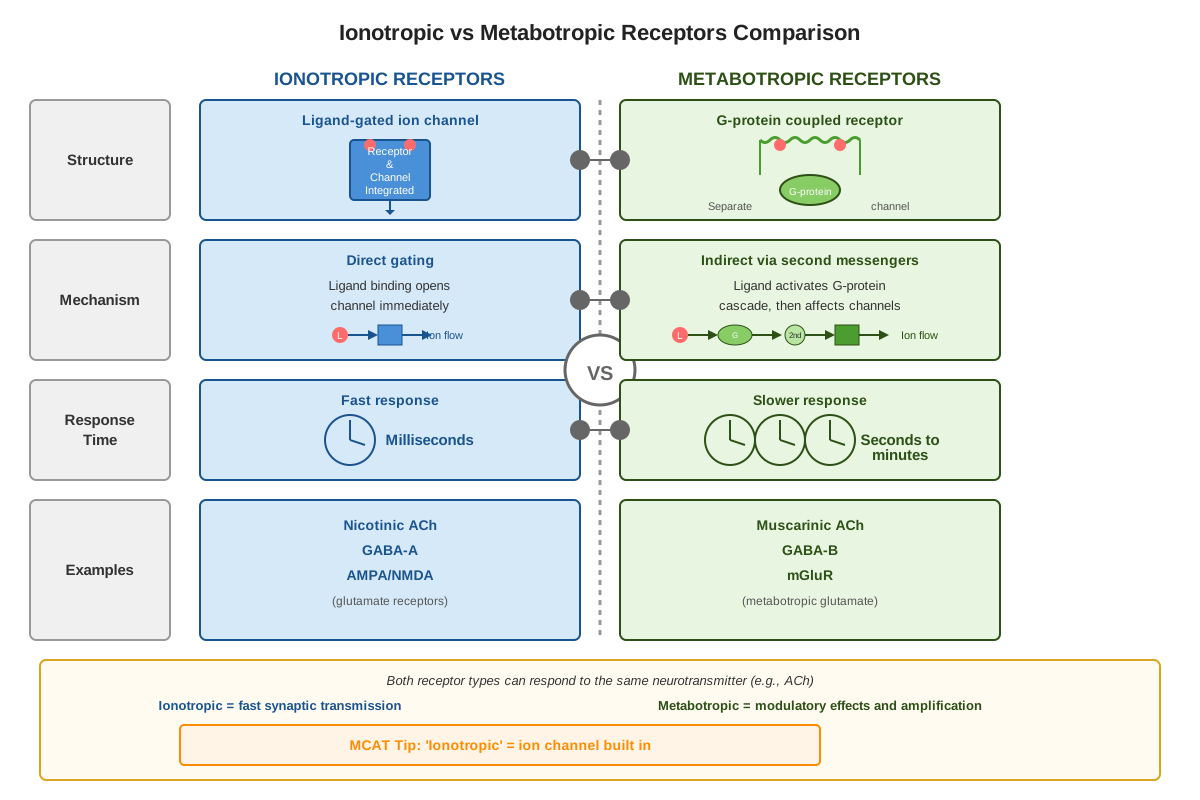
Ionotropic vs. Metabotropic Receptors
A critical distinction for the MCAT is between ionotropic and metabotropic receptors:
Ionotropic receptors (ligand gated ion channels):
- Direct coupling: receptor and effector are the same molecule
- Fast response (1-2 milliseconds)
- Brief duration of effect
- Mediate rapid point-to-point signaling
- Examples: nicotinic ACh, GABA_A, glutamate NMDA/AMPA
Metabotropic receptors (G-protein coupled receptors):
- Indirect coupling: receptor activates G-proteins and second messenger cascades
- Slower response (seconds to minutes)
- Prolonged duration of effect
- Mediate modulatory and widespread effects
- Examples: muscarinic ACh, GABA_B, metabotropic glutamate receptors
Many neurotransmitters have both ionotropic and metabotropic receptor subtypes, allowing for both fast and slow signaling components.
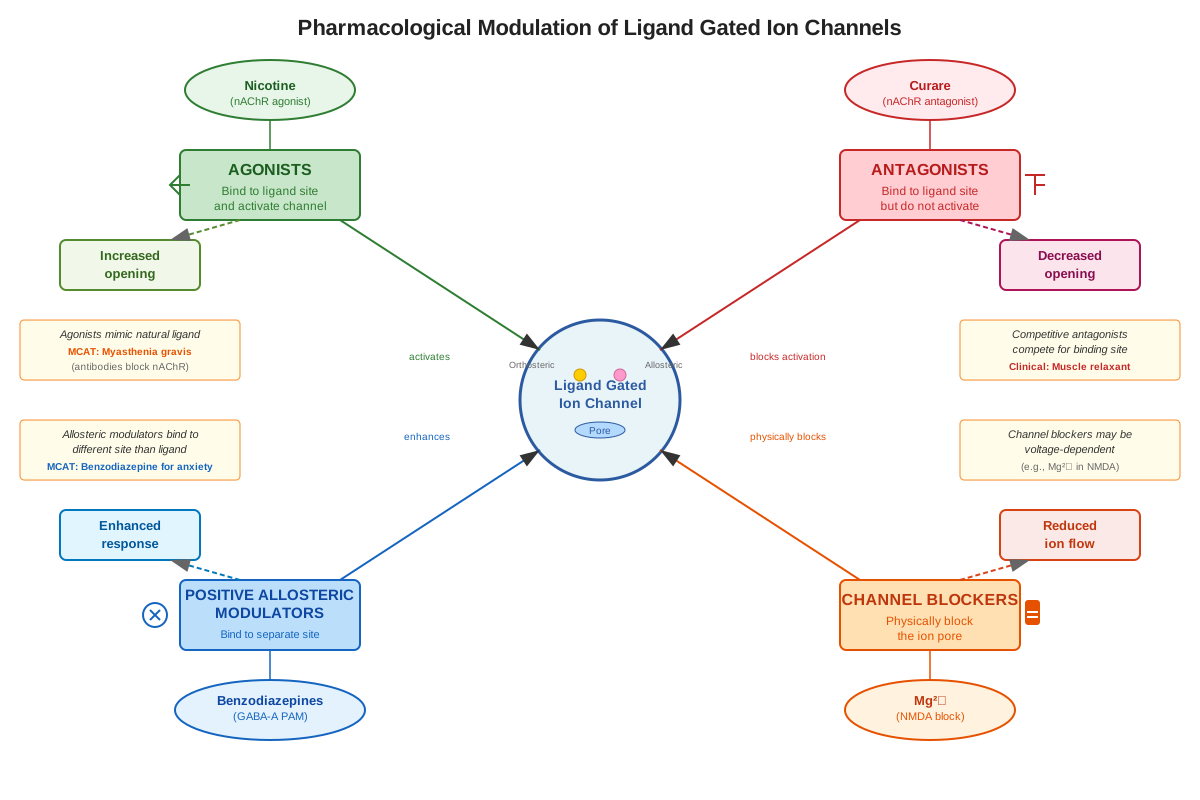
Pharmacological Modulation
Ligand gated ion channels are important drug targets, with several mechanisms of pharmacological modulation:
Agonists: Molecules that bind to the ligand-binding site and open the channel (mimic the natural ligand)
- Example: Nicotine activates nicotinic acetylcholine receptors
Antagonists: Molecules that bind to the ligand-binding site but don't open the channel, blocking natural ligand binding
- Competitive antagonists: Compete with natural ligand for the binding site
- Example: Curare blocks nicotinic receptors at neuromuscular junctions
Allosteric modulators: Molecules that bind to sites distinct from the ligand-binding site and alter channel function
- Positive allosteric modulators (PAMs): Enhance channel response to ligand
- Example: Benzodiazepines enhance GABA_A receptor function
- Negative allosteric modulators (NAMs): Reduce channel response to ligand
Channel blockers: Molecules that physically obstruct the ion pore
- Example: Some local anesthetics can block open channels
Desensitization and Regulation
Desensitization is a regulatory mechanism where prolonged ligand exposure causes channels to enter a closed, unresponsive state despite continued ligand binding. This prevents overstimulation and allows for signal termination. Desensitization occurs through:
- Conformational changes that close the channel while ligand remains bound
- Receptor phosphorylation by kinases
- Receptor internalization (endocytosis)
Recovery from desensitization requires ligand dissociation and can take seconds to minutes, much longer than the initial channel opening/closing cycle.
Concept Relationships
Ligand gated ion channels integrate multiple biological concepts into a unified functional system. The structure-function relationship is paramount: the quaternary structure of multiple subunits creates both the ligand-binding specificity and ion selectivity that determine physiological effects.
Relationship map:
- Neurotransmitter release → binds to ligand gated ion channels → conformational change opens pore → ions flow down electrochemical gradient → membrane potential changes → affects action potential generation → determines synaptic transmission outcome
These channels connect to prerequisite knowledge of membrane potential: understanding that opening cation channels causes depolarization (moving toward threshold) while opening anion channels typically causes hyperpolarization (moving away from threshold) is essential for predicting functional outcomes.
Ligand gated ion channels relate to broader cell signaling concepts by representing one of three major receptor superfamilies (along with G-protein coupled receptors and enzyme-linked receptors). They exemplify the fastest signaling mechanism, contrasting with the slower but more amplified responses of metabotropic pathways.
The concept connects forward to pharmacology and toxicology: many drugs and toxins exert effects by modulating these channels, making them clinically relevant. It also connects to disease mechanisms: autoimmune disorders (myasthenia gravis), genetic channelopathies, and neurodegenerative diseases can involve ligand gated ion channel dysfunction.
High-Yield Facts
⭐ Ligand gated ion channels are ionotropic receptors that combine receptor and ion channel functions in a single protein complex
⭐ Opening of cation-selective channels (Na⁺, K⁺) causes depolarization and excitatory effects; opening of anion-selective channels (Cl⁻) typically causes hyperpolarization and inhibitory effects
⭐ Ionotropic receptors respond in milliseconds, while metabotropic (G-protein coupled) receptors respond in seconds to minutes
⭐ Nicotinic acetylcholine receptors are cation channels that mediate fast excitatory transmission at neuromuscular junctions and autonomic ganglia
⭐ GABA_A receptors are chloride channels that mediate fast inhibitory transmission in the CNS and are enhanced by benzodiazepines and barbiturates
- Glutamate receptors (NMDA, AMPA, kainate) are the primary excitatory ionotropic receptors in the CNS
- NMDA receptors are unique in requiring both glutamate binding AND depolarization to open (voltage-dependent block by Mg²⁺)
- Desensitization causes channels to close despite continued ligand presence, preventing overstimulation
- Competitive antagonists block ligand binding sites, while allosteric modulators bind to separate sites and alter channel function
- The direction of ion flow through open channels depends on the electrochemical gradient, not the channel itself
- Curare blocks nicotinic receptors causing paralysis; strychnine blocks glycine receptors causing convulsions
- Many ligand gated ion channels are pentameric (5 subunits) or tetrameric (4 subunits) structures
Quick check — test yourself on Ligand gated ion channels so far.
Try Flashcards →Common Misconceptions
Misconception: All neurotransmitter receptors are ligand gated ion channels
Correction: Many neurotransmitters bind to both ionotropic (ligand gated ion channels) and metabotropic (G-protein coupled) receptors. For example, acetylcholine binds to nicotinic receptors (ionotropic) and muscarinic receptors (metabotropic). The receptor type, not the neurotransmitter, determines the signaling mechanism.
Misconception: Opening any ion channel always depolarizes the cell
Correction: The effect of channel opening depends on ion selectivity and electrochemical gradients. Opening chloride channels typically hyperpolarizes neurons because Cl⁻ flows in (or prevents depolarization). Opening potassium channels causes hyperpolarization because K⁺ flows out. Only channels that allow net positive charge influx (mainly Na⁺ or Ca²⁺) cause depolarization.
Misconception: Ligand gated ion channels actively pump ions against their gradients
Correction: Ligand gated ion channels are passive transporters—ions flow down their electrochemical gradients when channels open. No ATP is consumed during ion flow through these channels. Active transport (requiring ATP) is performed by separate proteins like Na⁺/K⁺-ATPase, which maintains the gradients that drive passive flow through channels.
Misconception: Desensitization and channel closing are the same process
Correction: Normal channel closing occurs when ligand dissociates, returning the channel to its resting state and allowing rapid reopening if ligand rebinds. Desensitization is a distinct inactivated state where the channel remains closed even with ligand bound, requiring a longer recovery period before the channel can reopen.
Misconception: All ligand gated ion channels are located at synapses
Correction: While many ligand gated ion channels function in synaptic transmission, they also exist in non-synaptic locations. For example, nicotinic acetylcholine receptors at neuromuscular junctions are not technically synapses (they're neuromuscular junctions), and some receptors respond to paracrine or hormonal signals rather than neurotransmitters released at synapses.
Misconception: Antagonists close open channels
Correction: Competitive antagonists prevent channel opening by blocking ligand binding—they don't actively close already-open channels. Once an antagonist binds, it prevents the conformational change needed for opening. Channel blockers (a different class of drugs) can physically obstruct open pores, but this is a distinct mechanism from competitive antagonism.
Worked Examples
Example 1: Predicting Physiological Effects
Question: A researcher is studying a novel ligand gated ion channel that is selectively permeable to potassium ions (K⁺). The equilibrium potential for K⁺ is -90 mV, and the resting membrane potential of the neuron is -70 mV. When the natural ligand binds to this channel, what effect will it have on the neuron's membrane potential and excitability?
Solution:
Step 1: Identify the ion selectivity and relevant equilibrium potential
- Channel is K⁺-selective
- E_K = -90 mV (equilibrium potential for potassium)
- V_rest = -70 mV (resting potential)
Step 2: Determine direction of ion flow
- When the channel opens, K⁺ will flow from high concentration (inside) to low concentration (outside)
- This represents positive charge leaving the cell
- The membrane potential will move toward E_K (-90 mV)
Step 3: Predict effect on membrane potential
- Current membrane potential: -70 mV
- K⁺ efflux will make the inside more negative
- Membrane potential will move from -70 mV toward -90 mV
- This is hyperpolarization
Step 4: Predict effect on excitability
- Hyperpolarization moves the membrane potential away from threshold (typically around -55 mV)
- This makes the neuron less likely to fire an action potential
- The effect is inhibitory
Answer: Opening this K⁺-selective channel will cause hyperpolarization and decrease neuronal excitability, producing an inhibitory effect. This is similar to the mechanism of some inhibitory neurotransmitters that open K⁺ channels.
MCAT Connection: This question type requires integrating knowledge of electrochemical gradients, equilibrium potentials, and the relationship between membrane potential and excitability—all testable concepts that frequently appear together on the MCAT.
Example 2: Pharmacological Analysis
Question: A pharmaceutical company is developing a new anti-anxiety medication. They discover that compound X binds to GABA_A receptors at a site distinct from the GABA-binding site. When compound X is present, lower concentrations of GABA are needed to open the channel, and the channel stays open longer. However, compound X alone (without GABA) does not open the channel.
(a) What type of pharmacological agent is compound X?
(b) How does this mechanism compare to benzodiazepines?
(c) Why might this be therapeutically useful for anxiety?
Solution:
(a) Identifying the drug class:
Step 1: Analyze the binding characteristics
- Compound X binds to a site distinct from the GABA-binding site → allosteric site
- Compound X alone doesn't open the channel → not an agonist
Step 2: Analyze the functional effects
- Increases sensitivity to GABA (lower concentration needed)
- Prolongs channel opening
- Enhances the effect of the natural ligand
Step 3: Classification
- Compound X is a positive allosteric modulator (PAM) of GABA_A receptors
- It enhances receptor function without directly activating it
(b) Comparison to benzodiazepines:
- Benzodiazepines (like diazepam/Valium) are also positive allosteric modulators of GABA_A receptors
- They bind to a specific site (benzodiazepine binding site) on the receptor
- Compound X appears to work through the same general mechanism as benzodiazepines
- Both enhance GABAergic inhibition without directly opening channels
(c) Therapeutic rationale for anxiety:
Step 1: Identify GABA's role
- GABA is the primary inhibitory neurotransmitter in the CNS
- GABA_A receptors are chloride channels that hyperpolarize neurons
Step 2: Connect to anxiety
- Anxiety may involve excessive neuronal excitation
- Enhancing GABAergic inhibition reduces neuronal excitability
- This produces calming, anxiolytic effects
Step 3: Advantage of allosteric modulation
- PAMs only work when GABA is present (endogenous control maintained)
- This is safer than direct agonists, which would activate receptors regardless of physiological need
- Reduces risk of excessive sedation or respiratory depression
Answer: (a) Compound X is a positive allosteric modulator; (b) It works similarly to benzodiazepines, enhancing GABA_A receptor function; (c) By enhancing inhibitory neurotransmission, it reduces excessive neuronal activity associated with anxiety, while maintaining physiological control because it requires endogenous GABA to be present.
MCAT Connection: This question integrates pharmacology, receptor mechanisms, and clinical applications—a common MCAT passage format. Understanding the distinction between agonists, antagonists, and allosteric modulators is high-yield for both biological sciences and psychological sciences sections.
Exam Strategy
Approaching MCAT Questions on Ligand Gated Ion Channels
Step 1: Identify the receptor type
- Look for keywords: "ionotropic," "ligand gated," "channel," or specific receptor names (nicotinic, GABA_A, NMDA)
- Distinguish from metabotropic/G-protein coupled receptors based on speed and mechanism
Step 2: Determine ion selectivity
- Cation channels (Na⁺, K⁺, Ca²⁺) → generally excitatory
- Anion channels (Cl⁻) → generally inhibitory
- If not stated, use knowledge of specific receptors (e.g., GABA_A is always Cl⁻)
Step 3: Predict the physiological effect
- Consider the electrochemical gradient for the relevant ion
- Determine whether opening causes depolarization or hyperpolarization
- Connect to excitability (closer to or farther from threshold)
Step 4: Apply pharmacological principles
- Agonists mimic the natural ligand
- Competitive antagonists block without activating
- Allosteric modulators enhance or reduce natural ligand effects
- Consider whether the drug effect would be excitatory or inhibitory
Trigger Words and Phrases
Watch for these high-yield terms that signal ligand gated ion channel content:
- "Ionotropic receptor" → ligand gated ion channel
- "Fast synaptic transmission" → likely involves ligand gated channels
- "Millisecond timescale" → ionotropic, not metabotropic
- "Neuromuscular junction" → nicotinic acetylcholine receptors
- "Benzodiazepine," "barbiturate" → GABA_A modulation
- "Competitive antagonist" → blocks ligand binding site
- "Allosteric modulator" → binds separate site, alters function
- "Desensitization" → inactivation despite continued ligand presence
Process of Elimination Tips
When evaluating answer choices:
Eliminate options that confuse ionotropic and metabotropic mechanisms:
- If the question describes rapid (millisecond) responses, eliminate answers involving G-proteins or second messengers
- If the question describes a single protein serving as both receptor and channel, eliminate answers involving separate signaling cascades
Eliminate options that reverse ion flow direction:
- Remember: ions flow DOWN electrochemical gradients through open channels
- If an answer suggests Na⁺ flows out or K⁺ flows in under normal conditions, it's likely wrong
Eliminate options that confuse excitatory and inhibitory effects:
- Cation influx → depolarization → excitatory (with rare exceptions)
- Anion influx (Cl⁻) → hyperpolarization or stabilization → inhibitory
- Don't be fooled by complex wording; focus on the ion and its gradient
Time Allocation Advice
For standalone questions (90 seconds):
- Spend 30 seconds identifying receptor type and ion selectivity
- Spend 30 seconds predicting the physiological effect
- Spend 30 seconds evaluating answer choices
For passage-based questions (1.5 minutes per question):
- Quickly scan the passage for receptor identification and experimental setup
- Use figures/data to confirm ion selectivity or functional effects
- Apply general principles rather than memorizing every receptor detail
- If stuck, use the excitatory/inhibitory distinction to eliminate half the answers
Memory Techniques
Mnemonic for Major Inhibitory vs. Excitatory Receptors
"GABA and Glycine Give Inhibition"
- GABA_A and Glycine receptors are the major inhibitory ligand gated ion channels (Cl⁻)
- Everything else mentioned commonly (nicotinic ACh, glutamate receptors) is excitatory (cation channels)
Mnemonic for Ionotropic vs. Metabotropic Speed
"Ions are INSTANT, Metabolism is SLOW"
- Ionotropic (ligand gated ion channels) = milliseconds (instant)
- Metabotropic (G-protein coupled) = seconds to minutes (slow)
Visualization Strategy for Channel Function
Create a mental movie:
- Scene 1: Closed channel, neurotransmitter approaching
- Scene 2: Neurotransmitter binds, protein twists open
- Scene 3: Ions rush through (visualize Na⁺ flooding IN or Cl⁻ flooding IN)
- Scene 4: Membrane potential meter moves (up for depolarization, down for hyperpolarization)
- Scene 5: Neurotransmitter leaves, channel snaps shut
Acronym for GABA_A Modulators
"BABS enhance GABA"
- Benzodiazepines
- Alcohol
- Barbiturates
- Steroids (neurosteroids)
All are positive allosteric modulators of GABA_A receptors
Memory Palace for Major Receptor Types
Assign each receptor type to a room in a familiar building:
- Front door (entry point): Nicotinic ACh receptors at neuromuscular junction (entry of nerve signal to muscle)
- Living room (where you relax): GABA_A receptors (inhibitory, calming)
- Kitchen (energy/excitement): Glutamate receptors (excitatory, energizing)
- Bedroom (rest): Glycine receptors (inhibitory, spinal cord)
Summary
Ligand gated ion channels are transmembrane proteins that function as ionotropic receptors, directly converting chemical signals into electrical responses by opening ion-selective pores when specific ligands bind. These channels mediate the fastest form of chemical signaling in the nervous system, operating on millisecond timescales compared to the slower metabotropic receptors. The physiological effect of channel opening depends critically on ion selectivity: cation-selective channels (permeable to Na⁺, K⁺, or Ca²⁺) typically produce excitatory depolarization, while anion-selective channels (permeable to Cl⁻) typically produce inhibitory hyperpolarization. Major examples include nicotinic acetylcholine receptors (excitatory, neuromuscular transmission), GABA_A receptors (inhibitory, CNS), and glutamate receptors (excitatory, CNS). These channels are important pharmacological targets, with drugs acting as agonists, competitive antagonists, or allosteric modulators. Understanding ligand gated ion channels is essential for MCAT success because they integrate concepts of membrane transport, electrochemistry, neurotransmission, and pharmacology—all frequently tested topics that appear in both passage-based and standalone questions.
Key Takeaways
- Ligand gated ion channels are ionotropic receptors that combine receptor and effector functions in a single protein, enabling rapid (millisecond) chemical-to-electrical signal conversion
- Ion selectivity determines physiological effect: cation channels (Na⁺, K⁺, Ca²⁺) are typically excitatory, while anion channels (Cl⁻) are typically inhibitory
- Distinguish ionotropic (direct, fast) from metabotropic (indirect via G-proteins, slow) receptors—this is a high-yield MCAT distinction
- Major examples to know: nicotinic ACh (excitatory, neuromuscular), GABA_A (inhibitory, CNS), glutamate receptors (excitatory, CNS)
- Pharmacological modulation occurs through agonists (activate), competitive antagonists (block), and allosteric modulators (enhance or reduce function)
- Ions flow passively down electrochemical gradients through open channels—no ATP required for ion movement through ligand gated channels
- Desensitization is a regulatory mechanism where channels become unresponsive despite continued ligand presence, preventing overstimulation
Related Topics
Voltage-Gated Ion Channels: After mastering ligand gated channels, study voltage-gated channels (Na⁺, K⁺, Ca²⁺) that respond to membrane potential changes rather than ligands. These channels are essential for action potential generation and propagation, building on the foundation of ligand gated channels in synaptic transmission.
G-Protein Coupled Receptors (Metabotropic Receptors): Understanding ligand gated channels provides contrast for studying metabotropic receptors, which use indirect signaling through G-proteins and second messengers. Many neurotransmitters have both ionotropic and metabotropic receptor subtypes.
Synaptic Transmission: Ligand gated ion channels are the effector molecules in fast synaptic transmission. Studying the complete synaptic process (neurotransmitter release, receptor binding, signal termination) integrates channel function into broader neurophysiology.
Neuromuscular Junction Physiology: The nicotinic acetylcholine receptor at the neuromuscular junction is the prototypical ligand gated ion channel. Detailed study of this synapse provides a concrete example of channel function in a physiologically important context.
Pharmacology of the Nervous System: Many drugs target ligand gated ion channels, including anesthetics, muscle relaxants, anti-anxiety medications, and anticonvulsants. Understanding channel mechanisms enables comprehension of drug actions and side effects.
Sensory Transduction: Some sensory receptors use ligand gated channels (e.g., olfactory receptors), connecting this topic to sensory physiology and perception.
Practice CTA
Now that you've mastered the core concepts of ligand gated ion channels, it's time to reinforce your learning through active practice. Challenge yourself with MCAT-style practice questions that require you to apply these concepts to novel scenarios, analyze experimental data, and integrate this knowledge with other biological principles. Use flashcards to drill the high-yield facts, especially the distinctions between receptor types, ion selectivities, and pharmacological mechanisms. Remember: understanding ligand gated ion channels isn't just about memorizing facts—it's about developing the ability to predict physiological outcomes and analyze experimental results, skills that will serve you throughout the MCAT and in your future medical career. You've built a strong foundation; now solidify it through deliberate practice!
Sign up free to keep reading
Create a free AnvayaPrep account to finish this MCAT guide on Ligand gated ion channels — plus flashcards and practice questions.