Overview
Osmosis is one of the most fundamental processes in Biology, governing how water moves across biological membranes in response to solute concentration gradients. This passive transport mechanism is essential for maintaining cellular homeostasis, regulating cell volume, and enabling critical physiological functions ranging from kidney filtration to plant turgor pressure. Understanding osmosis requires integrating knowledge of membrane structure, thermodynamics, and solution chemistry—making it a high-yield topic that bridges multiple disciplines tested on the MCAT.
For the MCAT, osmosis appears frequently in both Cell Biology passages and experimental scenarios involving membrane transport, cellular responses to different environments, and physiological regulation. Questions may present clinical vignettes about dehydration, intravenous fluid administration, or cellular responses to changing osmotic conditions. The MCAT tests not only the definition of osmosis but also the ability to predict directional water movement, calculate osmotic pressure, interpret experimental data, and understand the consequences of osmotic imbalances in living systems.
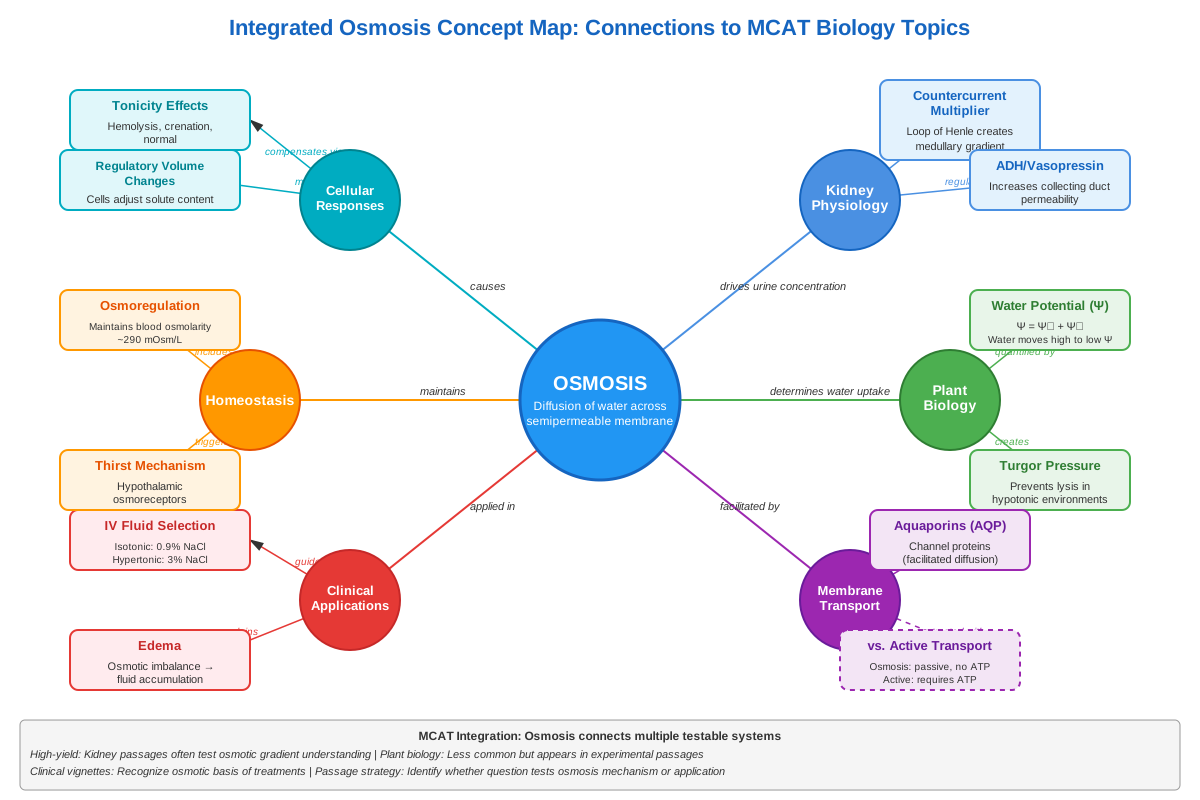
Mastery of Osmosis MCAT concepts connects directly to broader topics including diffusion, membrane transport mechanisms, tonicity, water potential in plants, kidney function, and cellular homeostasis. This topic serves as a foundation for understanding how cells interact with their environment and maintain the precise internal conditions necessary for life. The principles of osmosis extend beyond simple water movement to encompass critical thinking about concentration gradients, membrane permeability, and the thermodynamic forces that drive biological processes.
Learning Objectives
- [ ] Define Osmosis using accurate Biology terminology
- [ ] Explain why Osmosis matters for the MCAT
- [ ] Apply Osmosis to exam-style questions
- [ ] Identify common mistakes related to Osmosis
- [ ] Connect Osmosis to related Biology concepts
- [ ] Calculate osmotic pressure using the van't Hoff equation and predict water movement direction
- [ ] Distinguish between osmolarity, osmolality, and tonicity in biological contexts
- [ ] Predict cellular responses (crenation, lysis, equilibrium) to hypertonic, hypotonic, and isotonic solutions
- [ ] Analyze experimental data involving osmotic phenomena and membrane permeability
Prerequisites
- Diffusion and passive transport: Osmosis is a specialized form of diffusion; understanding concentration gradients and passive movement is essential
- Cell membrane structure: The phospholipid bilayer's selective permeability determines which molecules can cross and establishes the barrier across which osmosis occurs
- Solution chemistry: Concepts of solute, solvent, concentration, and molarity are necessary to understand osmotic gradients
- Thermodynamics basics: Osmosis is driven by entropy and the tendency of systems to reach equilibrium
- Water properties: Hydrogen bonding and water's polarity explain why it requires specialized channels (aquaporins) to cross membranes efficiently
Why This Topic Matters
Clinical and Real-World Significance
Osmosis underlies numerous critical physiological processes and clinical interventions. In medicine, understanding osmosis is essential for fluid management—choosing appropriate intravenous solutions (isotonic saline, hypertonic solutions for cerebral edema, hypotonic solutions for dehydration) requires predicting how water will move between compartments. Kidney function depends entirely on osmotic gradients established in the renal medulla to concentrate urine. Diabetic ketoacidosis creates hyperosmolar conditions that draw water from cells, causing cellular dehydration. Even simple processes like oral rehydration therapy exploit osmotic principles by coupling water absorption to solute transport.
MCAT Exam Statistics
Osmosis appears in approximately 3-5% of MCAT questions directly and is relevant to another 5-10% of questions involving membrane transport, kidney physiology, or cellular homeostasis. Questions typically appear in:
- Biological and Biochemical Foundations passages: Experimental scenarios testing membrane permeability or cellular responses
- Discrete questions: Conceptual understanding of tonicity and water movement
- Data interpretation: Graphs showing cell volume changes or osmotic pressure measurements
- Integrated passages: Clinical vignettes involving fluid balance, kidney function, or plant physiology
Common Exam Presentations
The MCAT presents osmosis through various contexts: experimental setups with dialysis membranes or artificial cells, clinical scenarios involving IV fluid administration, plant cell responses to watering conditions, red blood cell behavior in different solutions, and kidney physiology passages. Questions often require students to predict directional water movement, explain why certain solutions cause cell lysis or crenation, or interpret data showing osmotic pressure changes. The exam frequently tests the distinction between osmolarity (particle concentration) and tonicity (actual water movement), which depends on membrane permeability.
Core Concepts
Definition and Mechanism of Osmosis
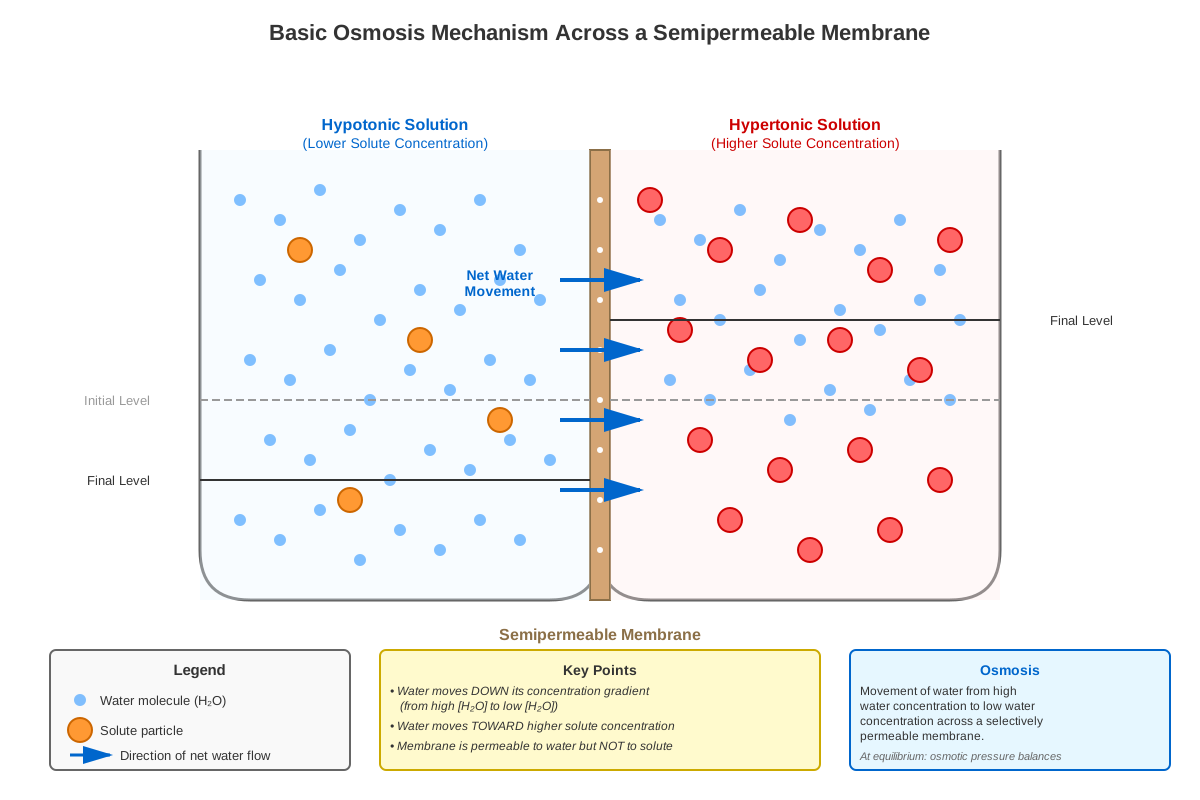
Osmosis is the net movement of water molecules across a selectively permeable membrane from a region of lower solute concentration (higher water concentration) to a region of higher solute concentration (lower water concentration). This process continues until equilibrium is reached or is opposed by another force, such as hydrostatic pressure. Osmosis is a type of passive transport, meaning it does not require cellular energy (ATP) and is driven by the concentration gradient of water itself.
At the molecular level, osmosis occurs because water molecules are in constant random motion. When a membrane separates two solutions of different solute concentrations, more water molecules encounter and cross the membrane from the dilute side (where water molecules are more abundant) than from the concentrated side (where solute particles occupy space and reduce water molecule encounters with the membrane). This creates a net flow of water toward the more concentrated solution.
The selectively permeable membrane is crucial—it must allow water to pass while restricting solute movement. In biological systems, this selectivity comes from the phospholipid bilayer's hydrophobic core, which impedes charged and polar molecules, and from specialized protein channels called aquaporins that facilitate rapid water movement while maintaining selectivity.
Osmotic Pressure
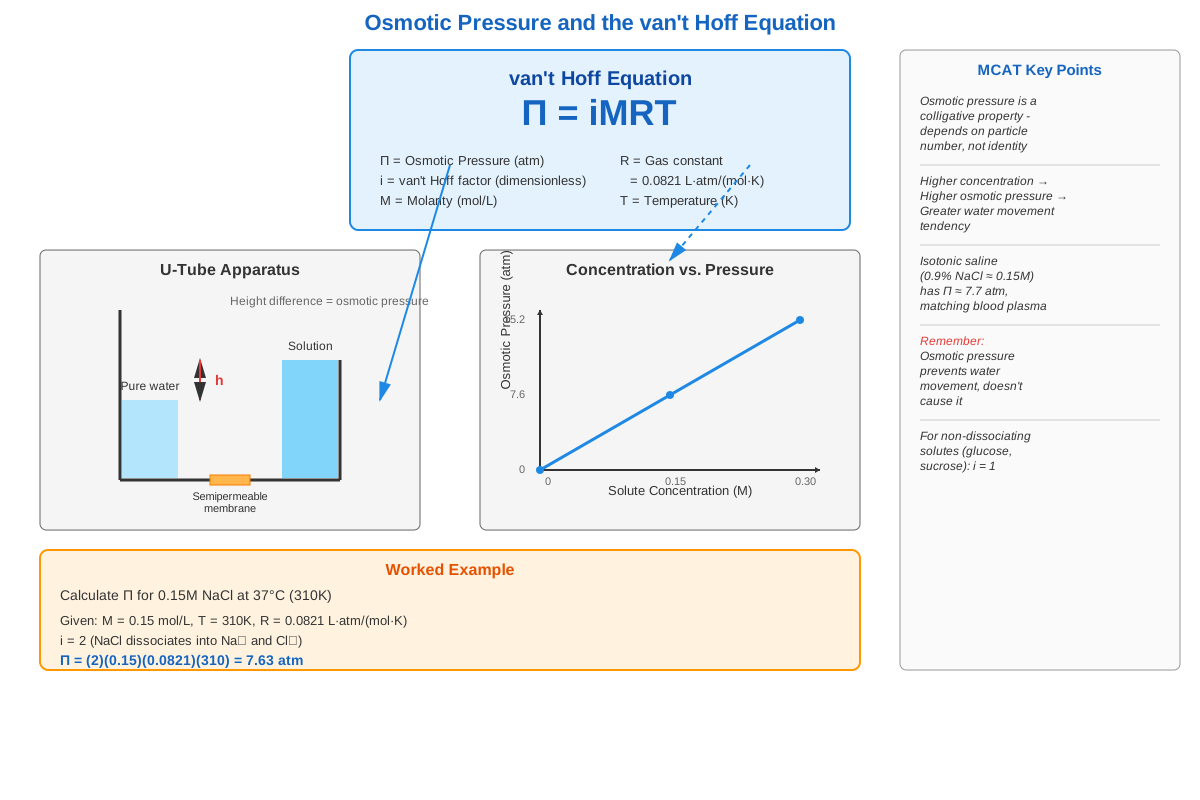
Osmotic pressure (π) is the pressure required to prevent the net movement of water across a membrane separating solutions of different concentrations. It represents the "pulling force" that a solution exerts to draw water toward itself. Osmotic pressure is a colligative property—it depends on the number of dissolved particles, not their identity.
The van't Hoff equation calculates osmotic pressure:
π = iMRTWhere:
- π = osmotic pressure (atm)
- i = van't Hoff factor (number of particles per formula unit when dissolved)
- M = molar concentration (mol/L)
- R = ideal gas constant (0.0821 L·atm/mol·K)
- T = absolute temperature (Kelvin)
For example, NaCl has an i value of approximately 2 (dissociates into Na⁺ and Cl⁻), while glucose has i = 1 (does not dissociate). A 0.1 M NaCl solution therefore has roughly twice the osmotic pressure of a 0.1 M glucose solution at the same temperature.
Osmolarity vs. Osmolality vs. Tonicity
These three related but distinct concepts frequently confuse students:
| Term | Definition | Units | Key Distinction |
|---|---|---|---|
| Osmolarity | Total concentration of osmotically active particles per liter of solution | osmol/L or mOsmol/L | Volume-based; changes with temperature |
| Osmolality | Total concentration of osmotically active particles per kilogram of solvent | osmol/kg or mOsmol/kg | Mass-based; independent of temperature; more precise |
| Tonicity | Relative concentration that determines direction of water movement across a membrane | Qualitative (hypertonic, hypotonic, isotonic) | Considers only non-penetrating solutes; functional measure |
Tonicity is particularly important for the MCAT because it predicts actual cellular responses. A solution can have high osmolarity but be hypotonic if its solutes freely cross the membrane. For example, a urea solution may be isosmotic to blood plasma, but because urea penetrates cell membranes, it acts as a hypotonic solution—water and urea both enter cells, causing them to swell.
Hypertonic, Hypotonic, and Isotonic Solutions
Understanding how cells respond to different solution types is essential for MCAT success:
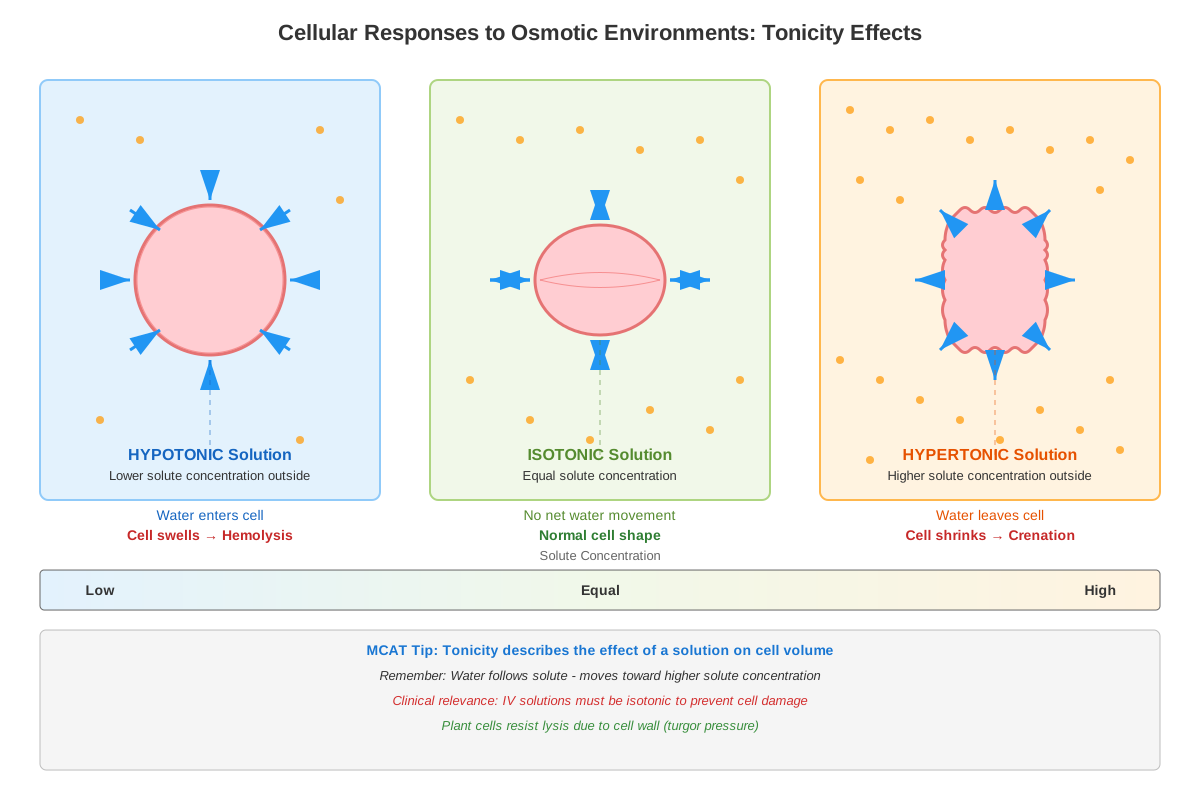
Hypertonic solutions have a higher concentration of non-penetrating solutes than the cell's cytoplasm. Water moves out of the cell by osmosis, causing:
- Animal cells: Shrinkage and crenation (shriveled appearance)
- Plant cells: Plasmolysis (plasma membrane pulls away from cell wall)
- Red blood cells: Crenated, spiky appearance
Hypotonic solutions have a lower concentration of non-penetrating solutes than the cell's cytoplasm. Water moves into the cell by osmosis, causing:
- Animal cells: Swelling and potential lysis (bursting)
- Plant cells: Turgidity (firm, swollen state; normal healthy condition)
- Red blood cells: Hemolysis (rupture and release of hemoglobin)
Isotonic solutions have equal concentrations of non-penetrating solutes. No net water movement occurs, and cells maintain their normal shape and volume. Normal saline (0.9% NaCl) and 5% dextrose solutions are isotonic to human blood cells.
Water Potential in Plant Cells
In plant biology, water potential (Ψ) provides a more comprehensive framework for predicting water movement. Water potential combines the effects of solute concentration and physical pressure:
Ψ = Ψ_s + Ψ_pWhere:
- Ψ = total water potential
- Ψ_s = solute potential (osmotic potential; always negative or zero)
- Ψ_p = pressure potential (turgor pressure; can be positive or negative)
Water moves from regions of higher (less negative) water potential to regions of lower (more negative) water potential. Pure water at atmospheric pressure has Ψ = 0, the reference point. Adding solutes decreases water potential (makes it negative), while positive pressure increases it.
In plant cells, the rigid cell wall allows pressure to build up as water enters, creating turgor pressure that opposes further water entry. At equilibrium, the positive pressure potential exactly balances the negative solute potential, preventing cell lysis even in very hypotonic environments.
Osmosis and Membrane Permeability
The rate and extent of osmosis depend critically on membrane permeability to water. While water can slowly diffuse through the lipid bilayer, aquaporins—specialized channel proteins—dramatically increase water permeability in cells requiring rapid water transport (kidney tubules, red blood cells, plant root cells).
Aquaporins are highly selective, allowing only water molecules to pass while excluding even small ions like H⁺ (protons). This selectivity arises from the channel's narrow pore size and specific amino acid arrangements that form hydrogen bonds with water molecules, orienting them for passage while repelling charged particles.
The presence and regulation of aquaporins allow cells to modulate their osmotic responsiveness. For example, the kidney collecting duct inserts aquaporin-2 channels in response to antidiuretic hormone (ADH), increasing water reabsorption and concentrating urine.
Concept Relationships
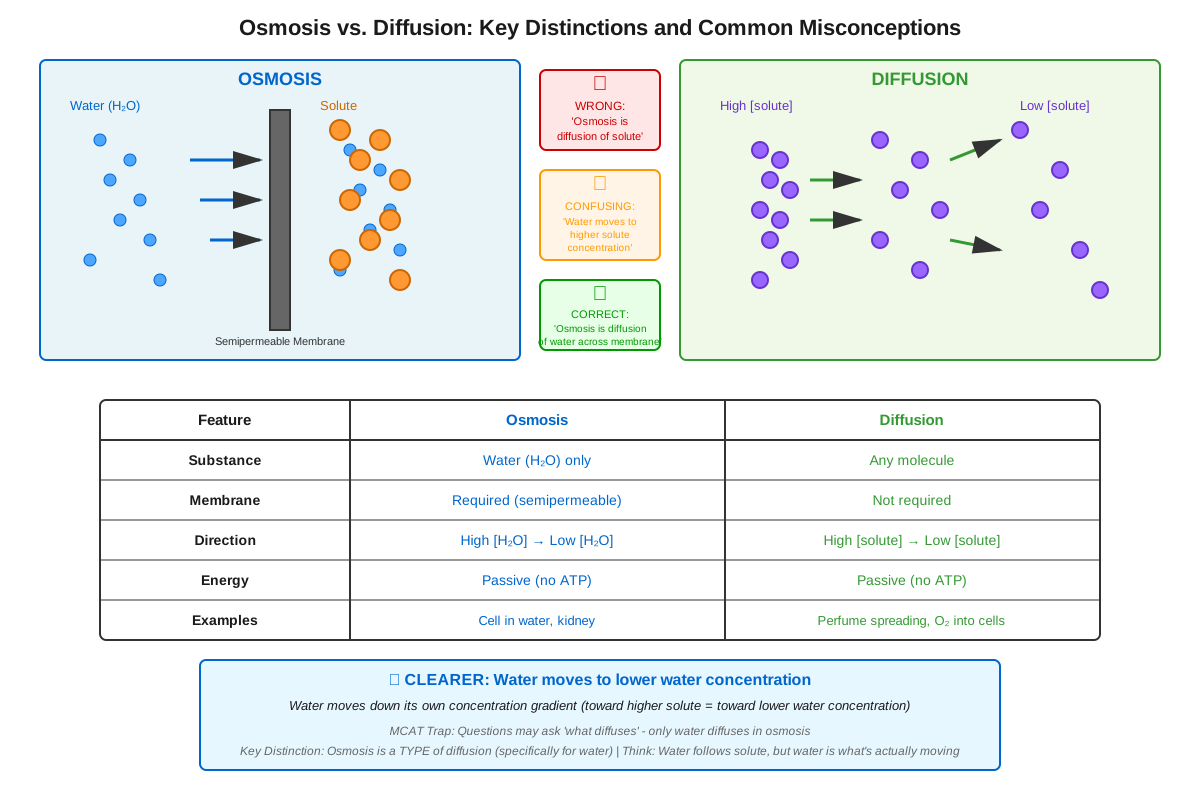
Osmosis connects to diffusion as a specialized case where the diffusing substance is water and movement occurs across a selectively permeable membrane. Both processes are driven by concentration gradients and represent passive transport mechanisms that increase system entropy.
The relationship flows as: Concentration gradient → Chemical potential difference → Net water movement (osmosis) → Osmotic pressure develops → Equilibrium or pressure balance
Osmosis links to membrane structure because the phospholipid bilayer's selective permeability creates the conditions necessary for osmotic gradients to exist. Without membrane selectivity, solutes would equilibrate and eliminate osmotic driving forces.
Tonicity emerges from osmosis principles but adds the critical consideration of membrane permeability to specific solutes. This connects to cell volume regulation, where cells use ion pumps and channels to adjust internal osmolarity and control water movement.
In kidney physiology, osmosis enables water reabsorption in response to the osmotic gradient established by active solute transport. This connects osmosis to active transport and countercurrent multiplication mechanisms.
For plant physiology, osmosis drives water uptake from soil, creates turgor pressure for structural support, and enables transpiration-driven water movement through xylem. This links osmosis to water potential, pressure-flow hypothesis, and plant transport systems.
Quick check — test yourself on Osmosis so far.
Try Flashcards →High-Yield Facts
⭐ Osmosis is the net movement of water across a selectively permeable membrane from lower to higher solute concentration (or from higher to lower water concentration)
⭐ Tonicity depends only on non-penetrating solutes; penetrating solutes do not contribute to tonicity even if they affect osmolarity
⭐ Isotonic solutions for human cells have approximately 300 mOsmol/L (0.9% NaCl or 5% dextrose)
⭐ Plant cells in hypotonic solutions become turgid but do not lyse due to cell wall resistance; animal cells in hypotonic solutions may undergo lysis
⭐ Osmotic pressure is calculated using π = iMRT, where i accounts for particle dissociation
- Aquaporins increase membrane water permeability by up to 100-fold compared to lipid bilayer alone
- Red blood cells in hypertonic solutions undergo crenation; in hypotonic solutions they undergo hemolysis
- Water potential (Ψ) equals solute potential (Ψ_s) plus pressure potential (Ψ_p); water moves from higher to lower water potential
- The van't Hoff factor (i) equals 2 for NaCl, 3 for CaCl₂, and 1 for glucose and other non-dissociating solutes
- Osmolality (osmol/kg) is preferred over osmolarity (osmol/L) in clinical settings because it is temperature-independent
- ADH (vasopressin) increases water reabsorption in kidney collecting ducts by inserting aquaporin-2 channels
- Plasmolysis occurs when plant cells are placed in hypertonic solutions, causing the plasma membrane to pull away from the cell wall
Common Misconceptions
Misconception: Osmosis is the movement of solutes across a membrane.
Correction: Osmosis specifically refers to water movement, not solute movement. The solutes create the concentration gradient that drives water movement, but they themselves do not move in osmosis (by definition, the membrane is impermeable to them).
Misconception: Water always moves from low concentration to high concentration.
Correction: Water moves from regions of high water concentration (low solute concentration) to regions of low water concentration (high solute concentration). Describing it as "low to high concentration" is ambiguous—always specify whether referring to water or solute concentration.
Misconception: A solution with higher osmolarity is always hypertonic.
Correction: Tonicity depends only on non-penetrating solutes. A solution can have high osmolarity due to penetrating solutes (like urea) but still be hypotonic if those solutes cross the membrane freely. Osmolarity measures total particles; tonicity predicts water movement.
Misconception: Osmotic pressure is the pressure that water exerts when moving across a membrane.
Correction: Osmotic pressure is the pressure required to prevent water movement, not the pressure water exerts while moving. It represents the "pulling force" of a solution for water, quantifying the tendency for osmosis to occur.
Misconception: Isotonic solutions have no effect on cells because no water moves.
Correction: In isotonic solutions, water continuously moves in both directions across the membrane at equal rates, resulting in no net movement. Water molecules are always in motion; isotonic conditions mean the rates of entry and exit are balanced.
Misconception: Plant cells and animal cells respond identically to hypotonic solutions.
Correction: Plant cells become turgid in hypotonic solutions but resist lysis due to the rigid cell wall that limits expansion. Animal cells lack cell walls and will continue swelling until the membrane ruptures (lysis) if placed in sufficiently hypotonic solutions.
Misconception: Osmosis requires energy (ATP) because it moves water against its concentration gradient.
Correction: Osmosis is passive transport that moves water down its concentration gradient (from high water concentration to low water concentration). No ATP is required. The confusion arises from thinking about solute concentration rather than water concentration.
Worked Examples
Example 1: Predicting Red Blood Cell Behavior
Question: A patient receives an intravenous infusion of 0.45% NaCl solution. Normal saline is 0.9% NaCl and is isotonic to blood. What will happen to the patient's red blood cells, and why?
Solution:
Step 1: Determine the tonicity of the solution relative to blood cells.
- Normal saline (0.9% NaCl) is isotonic to blood
- The infused solution (0.45% NaCl) has half the NaCl concentration
- Therefore, 0.45% NaCl is hypotonic relative to blood cells
Step 2: Predict water movement based on tonicity.
- In a hypotonic solution, water concentration is higher outside the cell than inside
- Water will move by osmosis from the solution into the red blood cells
- This follows the principle that water moves from lower to higher solute concentration
Step 3: Predict cellular response.
- As water enters, red blood cells will swell
- Red blood cells lack cell walls and have limited membrane elasticity
- Excessive swelling can lead to hemolysis (cell rupture)
- The cells will appear swollen and may eventually lyse if exposure continues
Step 4: Connect to clinical context.
- 0.45% NaCl (half-normal saline) is used clinically for specific purposes
- It provides free water to treat hypernatremia or cellular dehydration
- However, rapid infusion can cause hemolysis and must be administered carefully
- This demonstrates why understanding tonicity is critical for safe medical practice
Answer: The red blood cells will swell and potentially undergo hemolysis because the 0.45% NaCl solution is hypotonic relative to blood, causing net water movement into the cells by osmosis.
Example 2: Calculating and Comparing Osmotic Pressures
Question: Calculate the osmotic pressure at 37°C (310 K) for: (A) 0.15 M NaCl solution, and (B) 0.30 M glucose solution. Which solution would be hypertonic to the other if separated by a membrane permeable only to water?
Solution:
Step 1: Identify the van't Hoff factors.
- NaCl dissociates into Na⁺ and Cl⁻, so i = 2
- Glucose does not dissociate, so i = 1
Step 2: Apply the van't Hoff equation (π = iMRT) for NaCl.
- π = (2)(0.15 mol/L)(0.0821 L·atm/mol·K)(310 K)
- π = (2)(0.15)(0.0821)(310)
- π = 7.63 atm
Step 3: Apply the van't Hoff equation for glucose.
- π = (1)(0.30 mol/L)(0.0821 L·atm/mol·K)(310 K)
- π = (1)(0.30)(0.0821)(310)
- π = 7.63 atm
Step 4: Compare osmotic pressures and determine tonicity.
- Both solutions have identical osmotic pressures (7.63 atm)
- They are isosmotic to each other
- If separated by a membrane permeable only to water, neither would be hypertonic
- No net water movement would occur; they are isotonic to each other
Step 5: Explain the underlying principle.
- Osmotic pressure depends on total particle concentration
- 0.15 M NaCl produces 0.30 M particles (0.15 M Na⁺ + 0.15 M Cl⁻)
- 0.30 M glucose produces 0.30 M particles (glucose doesn't dissociate)
- Equal particle concentrations produce equal osmotic pressures
Answer: Both solutions have an osmotic pressure of 7.63 atm. Neither is hypertonic to the other; they are isotonic because they have equal osmotic pressures despite different molar concentrations. This demonstrates that osmotic pressure depends on particle number, not molecular identity.
Exam Strategy
Approaching MCAT Osmosis Questions
When encountering osmosis questions, first identify what the question is really asking: direction of water movement, cellular response, osmotic pressure calculation, or tonicity determination. Many students rush to answer based on solute concentration without considering membrane permeability—always ask whether solutes can cross the membrane.
Trigger words and phrases to recognize:
- "Selectively permeable" or "semipermeable" → indicates osmosis is relevant
- "Net movement of water" → directly asking about osmosis
- "Crenation," "hemolysis," "plasmolysis," "turgid" → asking about cellular responses to tonicity
- "Isotonic," "hypertonic," "hypotonic" → requires understanding tonicity vs. osmolarity
- "Osmotic pressure" → may require calculation using π = iMRT
- "Water potential" → plant biology context; use Ψ = Ψ_s + Ψ_p
Process of Elimination Tips
When evaluating answer choices:
- Eliminate answers that confuse water and solute movement: If an answer describes solute movement when the question asks about osmosis, eliminate it
- Eliminate answers that ignore membrane permeability: If an answer treats all solutes equally without considering which can cross the membrane, it's likely wrong
- Check for direction errors: Answers stating water moves from high to low water concentration are correct; those saying water moves from low to high solute concentration are also correct; but answers reversing these are wrong
- Verify van't Hoff factor usage: In calculation questions, eliminate answers that don't account for ionic dissociation (i factor)
Time Allocation
Osmosis questions typically require 60-90 seconds:
- Conceptual questions (30-45 seconds): Quickly identify tonicity and predict water movement
- Calculation questions (60-90 seconds): Set up van't Hoff equation, calculate, compare values
- Passage-based questions (90-120 seconds): Extract relevant data, apply osmosis principles to experimental context
Don't overthink simple osmosis questions—if you can identify tonicity, you can predict water movement. Save time for more complex integrated questions.
Memory Techniques
Mnemonic for Water Movement Direction
"SALT Sucks" - Solutions with more SALT (solute) suck water toward themselves. Water moves toward higher solute concentration.
Mnemonic for Cellular Responses
"HYPER-SHRINK, HYPO-SWELL"
- HYPERtonic solutions cause cells to SHRINK (crenation)
- HYPOtonic solutions cause cells to SWELL (potential lysis)
Visualization Strategy for Tonicity
Picture a cell as a water balloon:
- Hypertonic environment: Imagine squeezing water out—balloon shrinks and wrinkles
- Hypotonic environment: Imagine pumping water in—balloon expands and may pop
- Isotonic environment: Balloon stays the same size—balanced
Acronym for van't Hoff Equation Components
"I Must Remember Temperature" for π = iMRT
- I = van't Hoff factor (ions produced)
- M = Molarity
- R = gas constant (Remember: 0.0821)
- T = Temperature (in Kelvin)
Memory Aid for Osmolarity vs. Tonicity
"Osmolarity Counts All, Tonicity Tells Truth"
- Osmolarity counts all particles regardless of membrane permeability
- Tonicity tells the truth about actual water movement (only non-penetrating solutes matter)
Summary
Osmosis is the passive net movement of water across a selectively permeable membrane from regions of lower solute concentration (higher water concentration) to regions of higher solute concentration (lower water concentration). This fundamental process drives cellular responses to environmental conditions, with cells shrinking in hypertonic solutions, swelling in hypotonic solutions, and maintaining volume in isotonic solutions. The distinction between osmolarity (total particle concentration) and tonicity (functional measure considering only non-penetrating solutes) is critical for predicting actual water movement and cellular responses. Osmotic pressure, calculated using the van't Hoff equation (π = iMRT), quantifies the tendency for osmosis to occur and depends on particle number rather than particle identity. Plant cells resist lysis in hypotonic solutions due to cell wall support, while animal cells are vulnerable to hemolysis. Understanding osmosis requires integrating membrane biology, solution chemistry, and thermodynamics—making it a high-yield topic that connects to kidney physiology, fluid management, cellular homeostasis, and plant transport systems on the MCAT.
Key Takeaways
- Osmosis is water movement across a selectively permeable membrane from lower to higher solute concentration; it is passive transport requiring no ATP
- Tonicity (hypertonic, hypotonic, isotonic) predicts water movement and cellular responses; it depends only on non-penetrating solutes, not total osmolarity
- Osmotic pressure (π = iMRT) is a colligative property depending on particle number; the van't Hoff factor (i) accounts for ionic dissociation
- Animal cells undergo crenation in hypertonic solutions and hemolysis in hypotonic solutions; plant cells become plasmolyzed or turgid, respectively, but resist lysis due to cell walls
- Distinguishing osmolarity (all particles) from tonicity (only non-penetrating solutes) is essential for correctly predicting water movement in biological systems
- Aquaporins dramatically increase membrane water permeability and are regulated to control osmotic responsiveness in tissues like kidney collecting ducts
- Water potential (Ψ = Ψ_s + Ψ_p) provides a comprehensive framework for predicting water movement in plant systems by combining osmotic and pressure effects
Related Topics
Diffusion and Passive Transport: Osmosis is a specialized form of diffusion; understanding general diffusion principles and factors affecting diffusion rates provides the foundation for osmosis mastery and extends to gas exchange and membrane permeability concepts.
Active Transport and Ion Pumps: Cells use ATP-dependent pumps to establish ion gradients that create osmotic gradients; the Na⁺/K⁺-ATPase maintains cell volume by controlling intracellular osmolarity, connecting osmosis to energy-dependent homeostatic mechanisms.
Kidney Physiology and Urine Concentration: The kidney's ability to concentrate urine depends entirely on osmotic gradients in the renal medulla established by the countercurrent multiplier system; mastering osmosis enables understanding of ADH action, diuretics, and fluid balance disorders.
Cell Membrane Structure and Function: The phospholipid bilayer's selective permeability and aquaporin channels determine osmotic behavior; understanding membrane composition and protein function is essential for predicting osmotic responses.
Plant Water Transport: Osmosis drives water uptake from soil, transpiration, and pressure-flow in phloem; water potential concepts extend osmosis principles to explain long-distance water movement in plants.
Colligative Properties: Osmotic pressure is one of several colligative properties (along with vapor pressure lowering, boiling point elevation, and freezing point depression) that depend on particle number; this connects osmosis to general chemistry principles tested on the MCAT.
Practice CTA
Now that you've mastered the core concepts of osmosis, it's time to solidify your understanding through active practice. Challenge yourself with MCAT-style practice questions that test your ability to predict water movement, calculate osmotic pressure, and analyze experimental scenarios. Use flashcards to reinforce the distinctions between osmolarity and tonicity, memorize the van't Hoff equation components, and internalize cellular responses to different solution types. Remember: understanding osmosis isn't just about memorizing definitions—it's about developing the intuition to quickly analyze any scenario involving water movement across membranes. Your ability to master this topic will pay dividends across multiple MCAT sections, from passage-based questions in biological sciences to discrete questions testing fundamental concepts. You've got this—practice deliberately, review your mistakes, and watch your confidence grow!
Sign up free to keep reading
Create a free AnvayaPrep account to finish this MCAT guide on Osmosis — plus flashcards and practice questions.