Overview
Secondary active transport is a fundamental mechanism by which cells move molecules across their plasma membranes against concentration gradients without directly consuming ATP. Instead, this process harnesses the potential energy stored in electrochemical gradients—typically the sodium (Na⁺) gradient established by the Na⁺/K⁺-ATPase pump—to drive the movement of other substances. This elegant coupling of favorable and unfavorable transport processes represents one of the most efficient energy utilization strategies in Cell Biology, enabling cells to accumulate nutrients, expel waste products, and maintain proper ionic balance essential for survival.
Understanding secondary active transport is crucial for MCAT success because it bridges multiple high-yield topics in Biology, including membrane transport, cellular energetics, and physiological systems. The MCAT frequently tests students' ability to distinguish between primary and secondary active transport, predict the direction of molecular movement based on gradient information, and apply these principles to organ system physiology—particularly in the kidneys, intestines, and neurons. Questions may appear as standalone discrete items or embedded within passage-based scenarios describing experimental manipulations of transport proteins or clinical conditions affecting membrane transport.
The concept of secondary active transport connects intimately with cellular metabolism, signal transduction, and homeostasis. It demonstrates how cells maximize energy efficiency by using one ATP-dependent process (primary active transport) to create an ionic gradient that subsequently powers multiple secondary transport events. This cascading energy utilization exemplifies the interconnected nature of cellular processes and highlights why membrane transport dysfunction can have devastating physiological consequences, from cystic fibrosis to glucose malabsorption syndromes.
Learning Objectives
- [ ] Define secondary active transport using accurate Biology terminology
- [ ] Explain why secondary active transport matters for the MCAT
- [ ] Apply secondary active transport to exam-style questions
- [ ] Identify common mistakes related to secondary active transport
- [ ] Connect secondary active transport to related Biology concepts
- [ ] Distinguish between symport and antiport mechanisms with specific physiological examples
- [ ] Predict the effects of disrupting electrochemical gradients on secondary transport function
- [ ] Analyze experimental data to determine whether a transport process is primary or secondary active transport
Prerequisites
- Primary active transport: Understanding ATP-dependent pumps (especially Na⁺/K⁺-ATPase) is essential because they establish the gradients that power secondary active transport
- Electrochemical gradients: Knowledge of how concentration and electrical gradients combine to determine ion movement is necessary to predict transport direction
- Membrane structure: Familiarity with the phospholipid bilayer and integral membrane proteins provides context for how transport proteins function
- Thermodynamics basics: Understanding favorable (ΔG < 0) versus unfavorable (ΔG > 0) processes explains why gradient coupling is necessary
- Facilitated diffusion: Distinguishing passive carrier-mediated transport from active transport prevents conceptual confusion
Why This Topic Matters
Clinical and Real-World Significance: Secondary active transport mechanisms are therapeutic targets for numerous medications and underlie several disease states. The sodium-glucose cotransporter 2 (SGLT2) inhibitors represent a major drug class for type 2 diabetes management, working by blocking secondary active glucose reabsorption in the kidneys. Oral rehydration therapy—one of the most cost-effective medical interventions globally—exploits the sodium-glucose symporter in intestinal cells to enhance water absorption during diarrheal illness. Genetic defects in secondary transporters cause conditions like cystinuria (amino acid transport defect) and glucose-galactose malabsorption syndrome, demonstrating the physiological necessity of these systems.
Exam Statistics: Secondary active transport appears in approximately 3-5% of MCAT Biology questions, with particular emphasis in passages about renal physiology, intestinal absorption, and neuronal function. The topic frequently appears in questions requiring students to integrate multiple concepts—for example, predicting how changes in extracellular sodium concentration affect glucose uptake, or explaining why certain toxins that inhibit the Na⁺/K⁺-ATPase indirectly impair nutrient absorption. The MCAT favors questions that test mechanistic understanding over rote memorization, so students must grasp not just what secondary active transport is, but how and why it functions.
Common Exam Contexts: Expect to encounter secondary active transport in passages describing experimental manipulations of transport proteins, clinical vignettes about electrolyte disorders, or physiological scenarios involving epithelial transport in the kidneys or intestines. Questions may present data showing substrate uptake rates under various conditions (with/without sodium, with/without ATP, with/without specific inhibitors) and ask students to identify the transport mechanism. The MCAT also tests this concept through questions about neurotransmitter reuptake, acid-base balance regulation, and the effects of cardiac glycosides like digoxin.
Core Concepts
Definition and Fundamental Mechanism
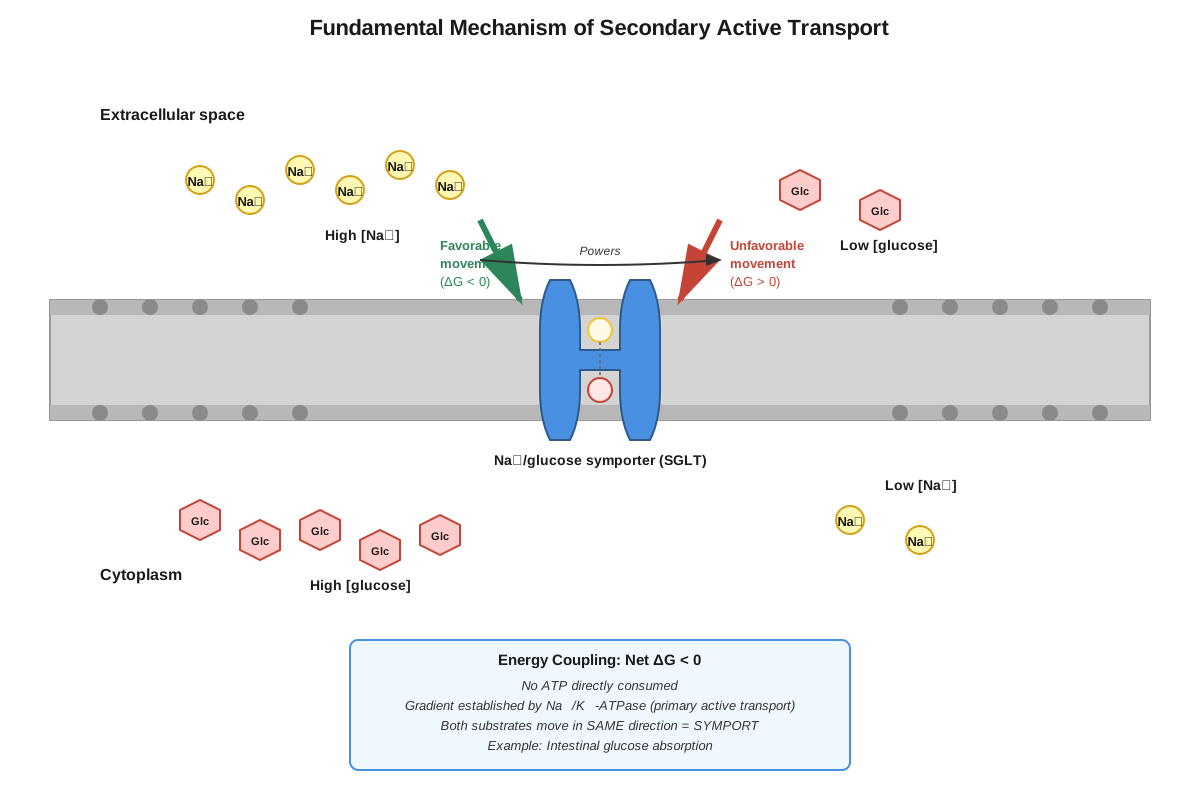
Secondary active transport (also called cotransport or coupled transport) is a form of active transport that moves molecules against their concentration gradient by coupling this unfavorable movement to the favorable movement of another substance down its electrochemical gradient. Unlike primary active transport, which directly hydrolyzes ATP to power transport, secondary active transport uses the potential energy stored in ion gradients—most commonly the sodium gradient maintained by the Na⁺/K⁺-ATPase pump.
The process requires a specialized transport protein (carrier protein) that simultaneously or sequentially binds both the driving ion (usually Na⁺) and the transported substrate. When the driving ion moves down its electrochemical gradient (a thermodynamically favorable process with negative ΔG), the energy released is coupled to move the substrate against its concentration gradient (thermodynamically unfavorable with positive ΔG). The overall coupled process has a negative ΔG, making it spontaneous despite moving one substance "uphill."
Types of Secondary Active Transport
Secondary active transport mechanisms are classified based on the relative direction of movement of the two coupled substances:
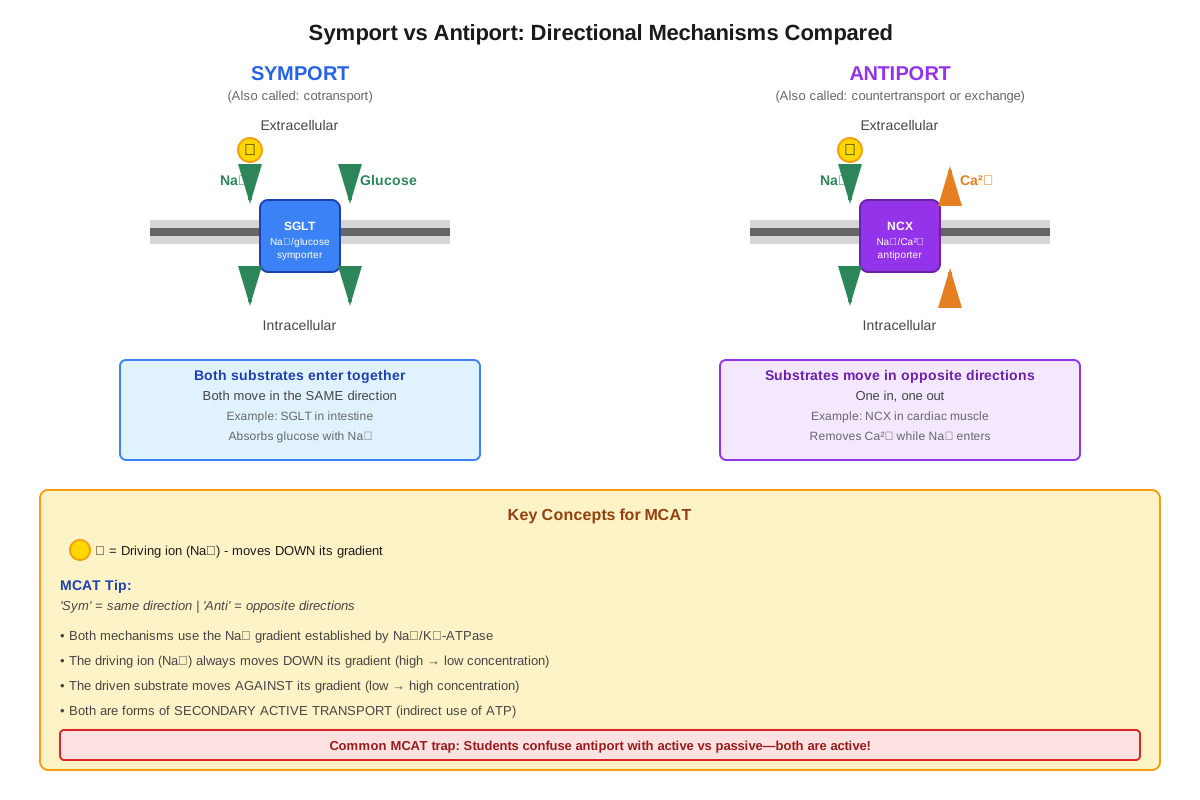
Symport (Cotransport): Both the driving ion and the transported substrate move in the same direction across the membrane. The sodium-glucose cotransporter (SGLT) exemplifies this mechanism—as sodium ions flow into the cell down their concentration gradient, glucose molecules are simultaneously transported into the cell against their concentration gradient. Other physiologically important symporters include the sodium-amino acid cotransporters in the intestinal epithelium and renal proximal tubule, and the sodium-iodide symporter in thyroid follicular cells.
Antiport (Exchange): The driving ion and transported substrate move in opposite directions across the membrane. The sodium-calcium exchanger (NCX) in cardiac myocytes represents a critical antiport system—three sodium ions enter the cell while one calcium ion exits, using the sodium gradient to maintain low intracellular calcium concentrations during diastole. The sodium-hydrogen exchanger (NHE) in various cell types, including renal tubular cells, exchanges extracellular sodium for intracellular hydrogen ions, contributing to pH regulation and sodium reabsorption.
| Feature | Symport | Antiport |
|---|---|---|
| Direction | Same direction | Opposite directions |
| Alternative name | Cotransport | Exchange/Countertransport |
| Example | Na⁺-glucose cotransporter (SGLT) | Na⁺-Ca²⁺ exchanger (NCX) |
| Typical stoichiometry | 1-2 Na⁺ : 1 substrate | 3 Na⁺ : 1 Ca²⁺ (variable) |
| Common locations | Intestinal epithelium, kidney proximal tubule | Cardiac myocytes, neurons |
The Sodium Gradient: Universal Energy Currency
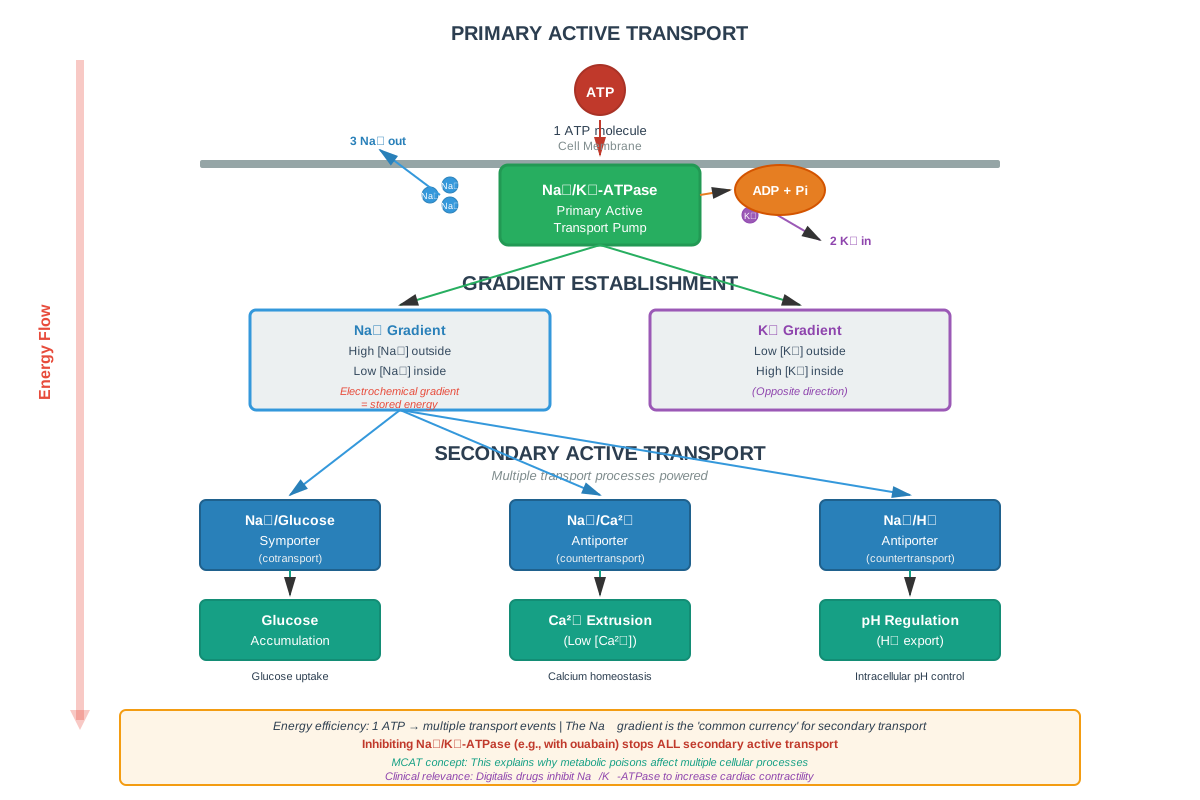
The sodium electrochemical gradient serves as the primary driving force for most secondary active transport in animal cells. The Na⁺/K⁺-ATPase pump continuously maintains low intracellular sodium concentration (~10-15 mM) and high extracellular sodium concentration (~140 mM), creating both a concentration gradient and an electrical gradient (since the pump is electrogenic, moving 3 Na⁺ out for 2 K⁺ in). This gradient represents stored potential energy that can be harnessed by secondary transporters.
The energetic favorability of sodium entry into cells (ΔG ≈ -3 to -4 kcal/mol under typical physiological conditions) provides sufficient energy to drive the uphill transport of various substrates. The stoichiometry of coupling determines how much substrate can be moved per sodium ion—transporters that couple multiple sodium ions to one substrate molecule can achieve greater concentration gradients of the substrate. For example, the intestinal SGLT1 couples 2 Na⁺ ions to 1 glucose molecule, enabling glucose accumulation against concentration gradients exceeding 100-fold.
Energetic Considerations and Thermodynamics
Understanding the thermodynamics of secondary active transport is essential for predicting transport behavior and answering MCAT questions. The overall free energy change (ΔG_total) for the coupled process equals the sum of the individual free energy changes:
ΔG_total = ΔG_Na + ΔG_substrateFor transport to occur spontaneously, ΔG_total must be negative. The favorable sodium movement (negative ΔG_Na) must be sufficiently negative to overcome the unfavorable substrate movement (positive ΔG_substrate). The magnitude of ΔG for each component depends on the concentration gradient and, for charged species, the membrane potential:
ΔG = RT ln([inside]/[outside]) + zFVWhere R is the gas constant, T is temperature, z is the charge, F is Faraday's constant, and V is the membrane potential.
This relationship explains why disrupting the sodium gradient—whether by inhibiting the Na⁺/K⁺-ATPase with cardiac glycosides or by increasing extracellular potassium concentration—impairs all sodium-dependent secondary transport processes. It also explains why secondary active transport is indirectly ATP-dependent: although the transport protein itself doesn't hydrolyze ATP, the system requires continuous ATP consumption by the Na⁺/K⁺-ATPase to maintain the driving gradient.
Physiological Examples and Applications
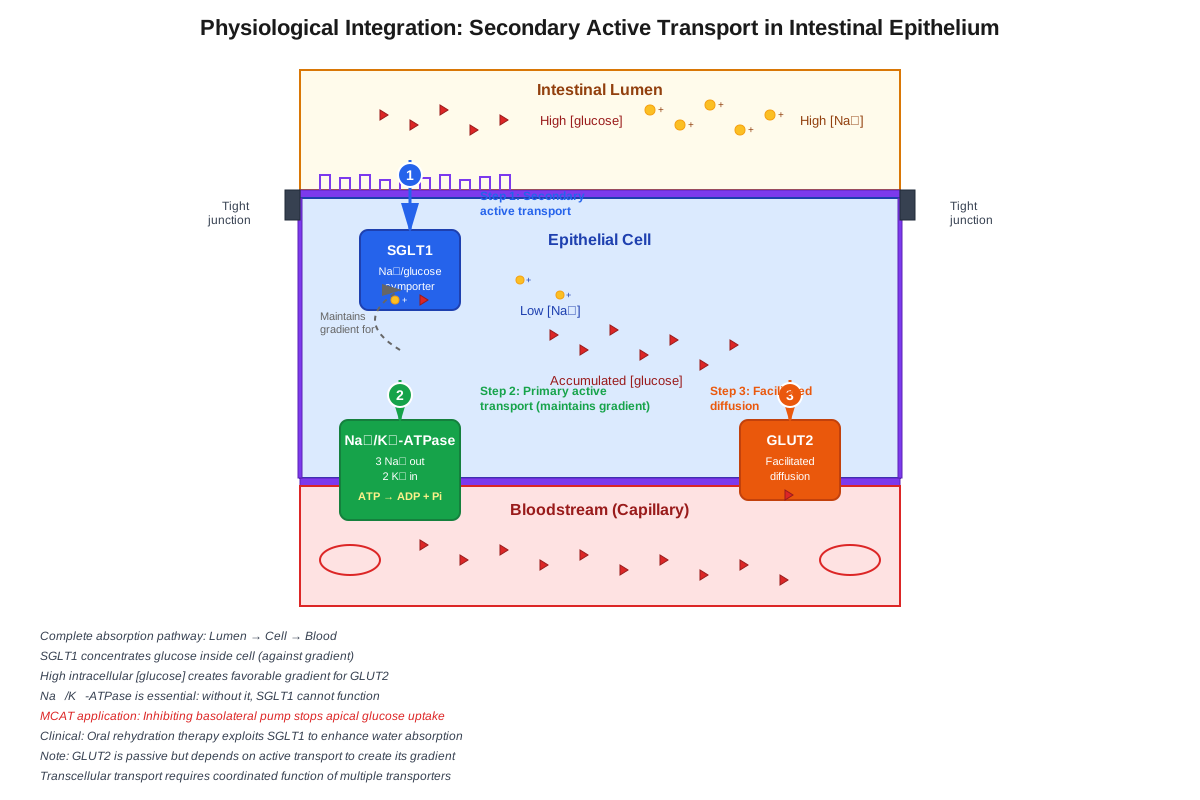
Intestinal Glucose Absorption: The SGLT1 transporter in the apical membrane of intestinal epithelial cells couples sodium entry to glucose uptake from the intestinal lumen. This secondary active transport concentrates glucose inside the epithelial cell, from which it exits via facilitated diffusion through GLUT2 transporters on the basolateral membrane into the bloodstream. This two-step process (secondary active transport followed by facilitated diffusion) enables efficient nutrient absorption even when luminal glucose concentrations are low.
Renal Glucose Reabsorption: The proximal tubule of the nephron reabsorbs virtually all filtered glucose using SGLT2 (and SGLT1 in later segments). This prevents glucose loss in urine under normal conditions. The high capacity of this system explains why glucosuria only occurs when blood glucose exceeds the renal threshold (~180 mg/dL), saturating the transporters. SGLT2 inhibitors therapeutically exploit this system by blocking glucose reabsorption, causing glucosuria and lowering blood glucose in diabetic patients.
Neurotransmitter Reuptake: Neurons and glial cells use sodium-dependent secondary active transport to remove neurotransmitters from the synaptic cleft, terminating synaptic transmission. The serotonin transporter (SERT), dopamine transporter (DAT), and norepinephrine transporter (NET) are all sodium-dependent symporters. Many psychoactive medications, including selective serotonin reuptake inhibitors (SSRIs) and cocaine, work by blocking these secondary active transporters, prolonging neurotransmitter action.
Cardiac Calcium Regulation: The sodium-calcium exchanger (NCX) in cardiac myocytes uses the sodium gradient to extrude calcium during diastole, enabling cardiac relaxation. Cardiac glycosides like digoxin inhibit the Na⁺/K⁺-ATPase, causing intracellular sodium accumulation. This reduces the sodium gradient, impairing NCX function and causing calcium accumulation, which increases cardiac contractility—the therapeutic effect of digoxin in heart failure.
Concept Relationships
Secondary active transport exists within a hierarchical energy flow in cells: ATP hydrolysis → primary active transport (Na⁺/K⁺-ATPase) → sodium electrochemical gradient → secondary active transport → substrate accumulation. This cascade demonstrates how cells amplify the utility of ATP by using one primary pump to power multiple secondary transport processes.
The relationship between primary and secondary active transport is complementary and interdependent. Primary active transport establishes the gradients that secondary active transport exploits, while the activity of secondary transporters dissipates these gradients, necessitating continued primary pump activity. This creates a dynamic steady state where ATP consumption rate by the Na⁺/K⁺-ATPase must match the rate of gradient dissipation by all sodium-dependent processes.
Secondary active transport connects to facilitated diffusion in epithelial transport processes. Many absorptive epithelia use secondary active transport on the apical membrane (facing the lumen) to concentrate substances inside the cell, then use facilitated diffusion on the basolateral membrane to release these substances into the bloodstream. This combination—active uptake followed by passive exit—enables vectorial transport across epithelial layers.
The concept also relates to membrane potential and action potentials. The sodium gradient maintained by the Na⁺/K⁺-ATPase not only powers secondary transport but also provides the driving force for action potential depolarization. Conditions that dissipate the sodium gradient (like hypoxia reducing ATP production) simultaneously impair both secondary active transport and neuronal excitability.
Understanding secondary active transport enhances comprehension of cellular energetics and metabolic efficiency. By using one ATP-dependent process to power multiple transport events, cells achieve greater energy efficiency than if each substrate required its own ATP-dependent pump. This principle of gradient coupling appears throughout biology, from mitochondrial ATP synthesis (using the proton gradient) to bacterial nutrient uptake.
Quick check — test yourself on Secondary active transport so far.
Try Flashcards →High-Yield Facts
⭐ Secondary active transport uses the energy stored in ion gradients (usually Na⁺) rather than directly hydrolyzing ATP to move substances against their concentration gradients.
⭐ The Na⁺/K⁺-ATPase pump is essential for secondary active transport because it maintains the sodium gradient that powers most secondary transporters in animal cells.
⭐ Symporters move both substances in the same direction; antiporters move substances in opposite directions.
⭐ Secondary active transport is indirectly ATP-dependent because maintaining the driving gradient requires continuous ATP consumption by primary pumps.
⭐ Inhibiting the Na⁺/K⁺-ATPase (with cardiac glycosides or by depleting ATP) impairs all sodium-dependent secondary active transport processes.
- The sodium-glucose cotransporter (SGLT) in intestinal and renal epithelial cells couples 2 Na⁺ ions to 1 glucose molecule, enabling glucose accumulation against concentration gradients exceeding 100-fold.
- The sodium-calcium exchanger (NCX) in cardiac myocytes exchanges 3 Na⁺ ions for 1 Ca²⁺ ion, using the sodium gradient to maintain low intracellular calcium during diastole.
- Oral rehydration therapy exploits the sodium-glucose symporter to enhance water absorption during diarrheal illness—glucose uptake drives sodium uptake, which osmotically draws water into cells.
- Neurotransmitter reuptake transporters (SERT, DAT, NET) are sodium-dependent symporters; SSRIs and cocaine work by blocking these secondary active transporters.
- The stoichiometry of ion coupling determines the maximum concentration gradient achievable—more driving ions per substrate molecule enables steeper substrate gradients.
- Secondary active transport can be electrogenic (net charge movement) or electroneutral depending on the stoichiometry and charges of transported species.
- Epithelial cells often use secondary active transport on the apical membrane and facilitated diffusion on the basolateral membrane to achieve vectorial transport across the epithelium.
Common Misconceptions
Misconception: Secondary active transport directly uses ATP to move molecules against their concentration gradient.
Correction: Secondary active transport does NOT directly hydrolyze ATP. Instead, it harnesses the potential energy stored in electrochemical gradients (established by ATP-dependent primary pumps) to drive uphill transport. The transport protein itself has no ATPase activity; it's a carrier protein that couples favorable and unfavorable movements.
Misconception: All active transport requires transport proteins to change shape using energy from ATP hydrolysis.
Correction: Only primary active transport proteins (pumps) directly hydrolyze ATP and undergo conformational changes powered by ATP. Secondary active transporters undergo conformational changes triggered by substrate binding, not ATP hydrolysis. The energy comes from the electrochemical gradient, not direct ATP binding.
Misconception: Secondary active transport can function indefinitely without ATP as long as the initial gradient exists.
Correction: Secondary active transport continuously dissipates the driving gradient, so it requires ongoing ATP consumption by primary pumps to maintain that gradient. Without ATP to power the Na⁺/K⁺-ATPase, the sodium gradient would quickly dissipate and secondary transport would cease. Thus, secondary active transport is indirectly but absolutely ATP-dependent.
Misconception: Symport and antiport are different names for the same process.
Correction: Symport and antiport are fundamentally different mechanisms. Symport (cotransport) moves both substances in the same direction across the membrane, while antiport (exchange) moves substances in opposite directions. This distinction affects the physiological function—symporters typically accumulate nutrients, while antiporters often regulate ion concentrations or pH.
Misconception: The sodium-glucose cotransporter moves glucose down its concentration gradient.
Correction: The SGLT moves glucose AGAINST its concentration gradient (from low to high concentration), which is why it's classified as active transport. The sodium moves down its electrochemical gradient, providing the energy to drive glucose uphill. If glucose moved down its gradient, the process would be facilitated diffusion (like GLUT transporters), not active transport.
Misconception: Increasing extracellular sodium concentration will always increase secondary active transport rate.
Correction: While increasing extracellular sodium generally enhances sodium-dependent secondary transport (by increasing the driving force), the relationship is not linear and has limits. At very high sodium concentrations, the gradient may saturate the transporter (reaching Vmax), and other factors like substrate availability, transporter number, and membrane potential also influence transport rate. Additionally, extreme sodium changes can affect cell volume and other processes.
Worked Examples
Example 1: Experimental Analysis of Glucose Transport
Scenario: Researchers measure glucose uptake by intestinal epithelial cells under different conditions:
- Condition A: Normal extracellular fluid (140 mM Na⁺, 5 mM glucose)
- Condition B: Sodium-free extracellular fluid (0 mM Na⁺, 5 mM glucose)
- Condition C: Normal extracellular fluid + ouabain (Na⁺/K⁺-ATPase inhibitor)
- Condition D: Normal extracellular fluid + metabolic poison (depletes ATP)
Results show high glucose uptake in Condition A, near-zero uptake in Conditions B, C, and D. Intracellular glucose concentration is 20 mM in all conditions. What transport mechanism explains these results?
Analysis:
Step 1: Determine if transport is against or with the concentration gradient. Glucose moves from 5 mM (outside) to 20 mM (inside), so transport is against the concentration gradient—this indicates active transport, not passive diffusion or facilitated diffusion.
Step 2: Evaluate sodium dependence. Glucose uptake requires extracellular sodium (Condition B shows no uptake without Na⁺), indicating sodium-coupled transport—characteristic of secondary active transport, specifically a sodium-glucose symporter.
Step 3: Assess ATP dependence. Both ouabain (Condition C) and ATP depletion (Condition D) eliminate glucose uptake despite the presence of sodium. This seems contradictory if the transport is secondary active transport, which doesn't directly use ATP. However, both conditions prevent the Na⁺/K⁺-ATPase from maintaining the sodium gradient. Without the pump, intracellular sodium accumulates, dissipating the gradient that drives secondary transport.
Step 4: Integrate findings. The transport mechanism is secondary active transport via a sodium-glucose symporter (SGLT). The process is directly sodium-dependent and indirectly ATP-dependent (requiring ATP to maintain the sodium gradient via the Na⁺/K⁺-ATPase).
Conclusion: This example demonstrates the SGLT1 transporter in intestinal epithelium, illustrating how experimental manipulation of sodium concentration, pump inhibitors, and ATP availability can distinguish secondary active transport from other mechanisms. This type of experimental analysis frequently appears in MCAT passages.
Example 2: Clinical Application of Cardiac Glycosides
Scenario: A patient with heart failure receives digoxin, which inhibits the Na⁺/K⁺-ATPase. Explain the cascade of effects leading to increased cardiac contractility, including the role of secondary active transport.
Analysis:
Step 1: Identify the primary effect. Digoxin inhibits the Na⁺/K⁺-ATPase pump in cardiac myocytes, reducing the rate at which sodium is pumped out of cells and potassium is pumped in.
Step 2: Predict gradient changes. With reduced pump activity, intracellular sodium concentration gradually increases (less sodium is being removed), and the sodium electrochemical gradient (high outside, low inside) decreases in magnitude.
Step 3: Connect to secondary active transport. The sodium-calcium exchanger (NCX) is an antiporter that normally uses the sodium gradient to extrude calcium from the cell (3 Na⁺ in, 1 Ca²⁺ out). As the sodium gradient decreases, the driving force for calcium extrusion diminishes, and NCX activity decreases.
Step 4: Determine calcium effects. With impaired calcium extrusion, intracellular calcium concentration increases during diastole. Higher baseline calcium means that when the next action potential triggers calcium release from the sarcoplasmic reticulum, more total calcium is available for contraction.
Step 5: Link to contractility. Increased intracellular calcium enhances the interaction between actin and myosin filaments, producing stronger contractions (positive inotropic effect). This increased contractility is the therapeutic benefit of digoxin in heart failure.
Conclusion: This example illustrates how inhibiting primary active transport (Na⁺/K⁺-ATPase) indirectly affects secondary active transport (NCX), demonstrating the interdependence of these systems. It also shows how understanding transport mechanisms explains drug actions—a common MCAT theme connecting molecular biology to clinical medicine. The cascade is: digoxin → ↓ Na⁺/K⁺-ATPase → ↓ Na⁺ gradient → ↓ NCX activity → ↑ intracellular Ca²⁺ → ↑ contractility.
Exam Strategy
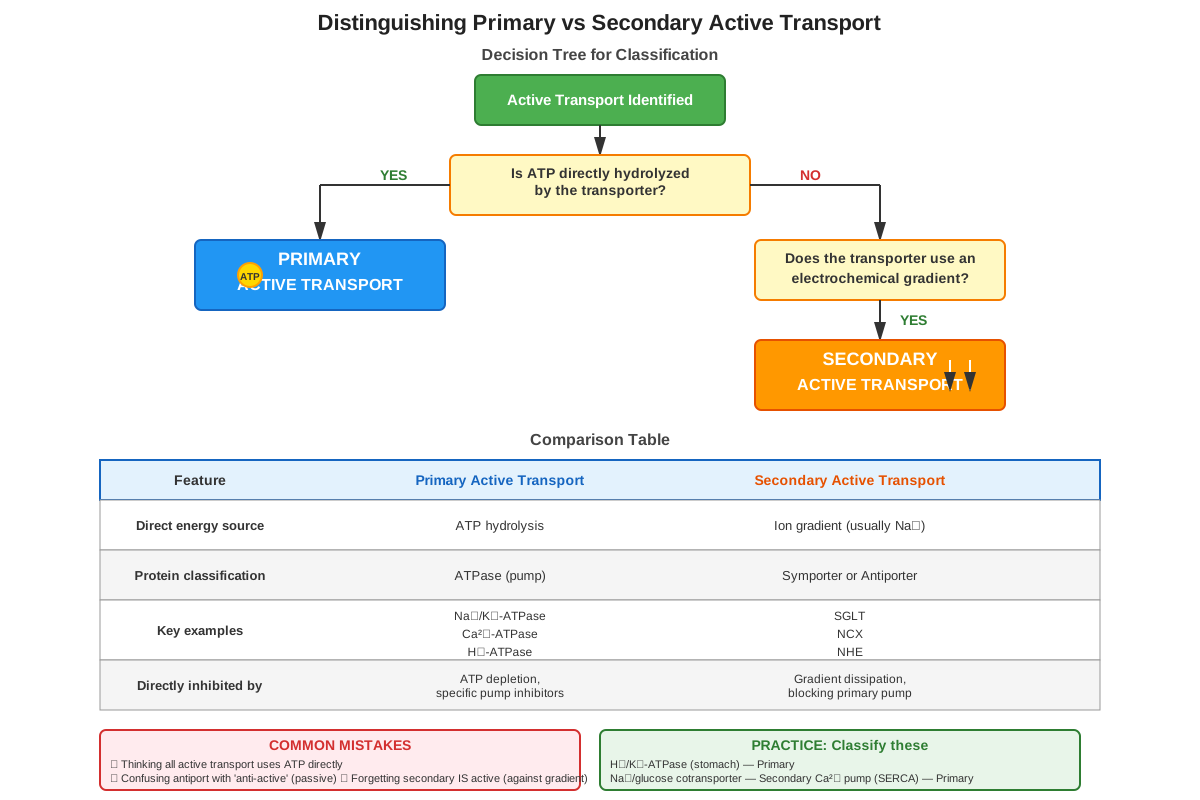
Approaching MCAT Questions: When encountering questions about membrane transport, systematically determine: (1) Is the substance moving with or against its concentration gradient? (2) Is ATP directly involved? (3) Is an ion gradient required? (4) What happens when you manipulate sodium concentration or ATP availability? This decision tree helps distinguish between passive transport, facilitated diffusion, primary active transport, and secondary active transport.
Trigger Words and Phrases: Watch for these exam clues indicating secondary active transport:
- "Sodium-dependent" or "requires extracellular sodium"
- "Cotransporter," "symporter," or "antiporter"
- "Indirectly ATP-dependent" or "does not directly hydrolyze ATP"
- "Couples the movement of two substances"
- "Uses an electrochemical gradient"
- Specific transporters: SGLT, NCX, NHE, neurotransmitter reuptake transporters
- Clinical contexts: oral rehydration therapy, SGLT2 inhibitors, cardiac glycoside effects
Process of Elimination Tips:
- If a question states that transport continues in the absence of ATP but stops when sodium is removed, eliminate primary active transport (which requires ATP) and select secondary active transport.
- If transport moves a substance against its gradient but the transport protein has no ATPase activity, eliminate primary active transport.
- If inhibiting the Na⁺/K⁺-ATPase stops the transport process, this supports secondary active transport (indirectly ATP-dependent) over simple facilitated diffusion.
- If two substances must be present simultaneously for transport to occur, this indicates coupled transport (secondary active transport), not independent transport processes.
Time Allocation: For discrete questions on secondary active transport, spend 60-90 seconds identifying the key features (gradient direction, sodium dependence, ATP involvement) before selecting an answer. For passage-based questions, invest 3-4 minutes understanding the experimental setup or clinical scenario, then 60-90 seconds per question applying that understanding. Don't get bogged down in complex calculations—the MCAT typically tests conceptual understanding rather than quantitative thermodynamics for this topic.
Exam Tip: If a passage describes an experiment measuring substrate uptake under various conditions (±sodium, ±ATP, ±pump inhibitors), create a quick table in your scratch paper showing the results. Pattern recognition becomes much easier when data is organized, helping you quickly identify secondary active transport characteristics.
Memory Techniques
Mnemonic for Secondary Active Transport Features: "SIGN"
- Sodium-dependent (usually)
- Indirectly uses ATP
- Gradient-driven (uses electrochemical gradient)
- No direct ATP hydrolysis by the transporter
Symport vs. Antiport: Remember "SAME" for SYmport—both substances move in the SAME direction. For antiport, think "ANTI" means AGAINST—substances move against each other (opposite directions).
Visualization Strategy: Picture the Na⁺/K⁺-ATPase as a "battery" that charges the cell with potential energy (the sodium gradient). Secondary active transporters are "devices" that run on this battery. Just as your phone battery eventually dies without recharging (ATP), the sodium gradient dissipates without the pump continuously working.
Acronym for Major Secondary Transporters: "SGLN"
- SGLT (sodium-glucose cotransporter)
- Glutamate transporters
- Lactate-H⁺ symporter
- NCX (sodium-calcium exchanger)
Conceptual Anchor: Think of secondary active transport as "piggyback transport"—the substrate molecule hitches a ride on the sodium ion that's already moving downhill. The sodium does the "work" of pulling the substrate uphill by providing energy from its own downhill journey.
Summary
Secondary active transport represents an elegant energy-coupling mechanism that enables cells to move substances against concentration gradients without directly consuming ATP. By harnessing the potential energy stored in electrochemical gradients—primarily the sodium gradient maintained by the Na⁺/K⁺-ATPase—secondary transporters achieve efficient substrate accumulation essential for nutrient absorption, ion homeostasis, and neurotransmitter regulation. The two main types, symporters and antiporters, differ in whether coupled substances move in the same or opposite directions, respectively. Understanding that secondary active transport is indirectly ATP-dependent (requiring ATP to maintain the driving gradient) distinguishes it from both primary active transport (directly ATP-dependent) and facilitated diffusion (ATP-independent). This mechanism appears throughout physiology in contexts ranging from intestinal glucose absorption to cardiac calcium regulation, making it a high-yield topic for MCAT success. Mastery requires recognizing the interdependence of primary and secondary active transport, predicting the effects of gradient manipulation, and applying these principles to experimental and clinical scenarios.
Key Takeaways
- Secondary active transport moves substances against their concentration gradient by coupling this movement to the favorable movement of another substance (usually Na⁺) down its electrochemical gradient, without directly hydrolyzing ATP.
- The Na⁺/K⁺-ATPase pump is essential for secondary active transport because it maintains the sodium gradient that powers most secondary transporters; inhibiting this pump impairs all sodium-dependent secondary transport.
- Symporters (cotransporters) move both substances in the same direction, while antiporters (exchangers) move substances in opposite directions—this distinction is functionally significant and frequently tested.
- Secondary active transport is indirectly ATP-dependent because maintaining the driving gradient requires continuous ATP consumption by primary pumps, even though the transport protein itself doesn't hydrolyze ATP.
- Physiologically important examples include the sodium-glucose cotransporter (SGLT) in intestinal and renal epithelium, the sodium-calcium exchanger (NCX) in cardiac myocytes, and neurotransmitter reuptake transporters in neurons.
- Experimental conditions that eliminate secondary active transport include removing extracellular sodium, inhibiting the Na⁺/K⁺-ATPase with ouabain or cardiac glycosides, and depleting cellular ATP—recognizing these patterns helps identify transport mechanisms in MCAT passages.
- The stoichiometry of ion coupling (number of driving ions per substrate molecule) determines the maximum concentration gradient achievable and whether the transport process is electrogenic or electroneutral.
Related Topics
Primary Active Transport: Understanding ATP-dependent pumps, particularly the Na⁺/K⁺-ATPase, provides the foundation for comprehending how the gradients that power secondary active transport are established and maintained.
Facilitated Diffusion: Distinguishing between carrier-mediated passive transport (facilitated diffusion) and carrier-mediated active transport (secondary active transport) is essential for correctly categorizing transport mechanisms based on gradient direction and energy requirements.
Epithelial Transport and Absorption: Secondary active transport is central to understanding how intestinal and renal epithelia absorb nutrients and reabsorb filtered substances, connecting cellular mechanisms to organ system physiology.
Cardiac Physiology and Pharmacology: The role of the sodium-calcium exchanger in cardiac myocyte relaxation and the mechanism of cardiac glycosides builds on secondary active transport principles, linking cell biology to cardiovascular medicine.
Neurophysiology and Synaptic Transmission: Neurotransmitter reuptake via sodium-dependent secondary active transporters connects membrane transport to neural signaling and psychopharmacology, topics frequently integrated in MCAT passages.
Cellular Energetics and Metabolism: Understanding how cells maximize ATP efficiency through gradient coupling and how metabolic state affects transport processes connects secondary active transport to broader themes in biochemistry and cellular respiration.
Practice CTA
Now that you've mastered the core concepts of secondary active transport, it's time to solidify your understanding through active practice. Challenge yourself with practice questions that require you to distinguish between transport mechanisms, predict the effects of experimental manipulations, and apply these principles to clinical scenarios. Work through flashcards focusing on specific transporters, their locations, and their physiological roles. The more you practice identifying secondary active transport in various contexts, the more automatic this recognition will become on test day. Remember: understanding the "why" behind secondary active transport—how it achieves energy efficiency and why cells evolved this mechanism—will serve you better than memorizing isolated facts. You've built a strong foundation; now reinforce it through deliberate practice, and watch your confidence and performance soar!
Sign up free to keep reading
Create a free AnvayaPrep account to finish this MCAT guide on Secondary active transport — plus flashcards and practice questions.