Overview
Simple diffusion is one of the most fundamental passive transport mechanisms in Biology, governing how molecules move across biological membranes without the expenditure of cellular energy. This process relies entirely on the kinetic energy inherent in molecules and the concentration gradient that exists across a membrane. Understanding simple diffusion is critical for Cell Biology because it explains how small, nonpolar molecules like oxygen, carbon dioxide, and lipid-soluble substances traverse the lipid bilayer of cell membranes to maintain cellular homeostasis.
For the MCAT, simple diffusion represents a foundational concept that appears frequently in both standalone questions and passage-based scenarios. The exam tests not only the basic definition but also the ability to predict molecular behavior based on chemical properties, calculate diffusion rates using Fick's law, and distinguish simple diffusion from other transport mechanisms like facilitated diffusion and active transport. Questions often embed simple diffusion within physiological contexts—such as gas exchange in alveoli, drug absorption across intestinal epithelium, or anesthetic distribution in neural tissue—requiring integration of chemistry, physics, and biological principles.
Simple diffusion connects to broader themes in biology including membrane structure and function, thermodynamics, cellular respiration, and pharmacokinetics. Mastery of this topic enables students to understand more complex transport phenomena, predict how changes in membrane composition affect permeability, and analyze experimental data involving concentration gradients. The concept also bridges multiple MCAT sections, appearing in Biological and Biochemical Foundations passages as well as Chemical and Physical Foundations questions involving kinetics and thermodynamics.
Learning Objectives
- [ ] Define simple diffusion using accurate Biology terminology
- [ ] Explain why simple diffusion matters for the MCAT
- [ ] Apply simple diffusion to exam-style questions
- [ ] Identify common mistakes related to simple diffusion
- [ ] Connect simple diffusion to related Biology concepts
- [ ] Calculate the rate of diffusion using Fick's law of diffusion
- [ ] Predict which molecules can cross membranes via simple diffusion based on their chemical properties
- [ ] Distinguish simple diffusion from facilitated diffusion and active transport mechanisms
- [ ] Analyze how temperature, molecular size, and concentration gradient affect diffusion rate
Prerequisites
- Basic membrane structure: Understanding the phospholipid bilayer composition is essential because simple diffusion occurs directly through this lipid matrix
- Concentration gradients: Knowledge of how concentration differences create potential energy is necessary to understand the driving force behind diffusion
- Thermodynamics fundamentals: Familiarity with entropy, free energy, and spontaneous processes explains why diffusion occurs without energy input
- Molecular polarity: Understanding polar versus nonpolar molecules predicts which substances can undergo simple diffusion through lipid membranes
- Kinetic molecular theory: Basic physics of molecular motion provides the mechanistic basis for diffusion
Why This Topic Matters
Clinical and Real-World Significance
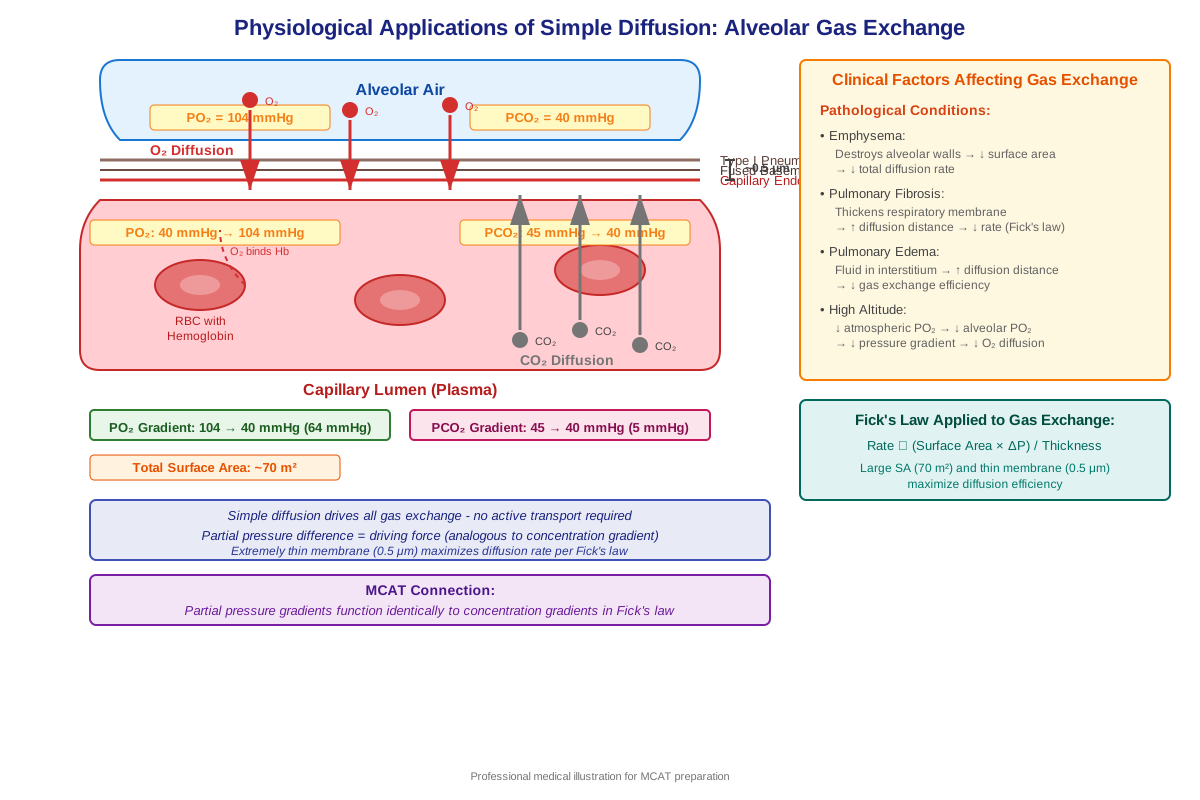
Simple diffusion governs critical physiological processes that maintain life. Gas exchange in the lungs depends entirely on simple diffusion of oxygen from alveolar air into pulmonary capillaries and carbon dioxide in the reverse direction. Anesthetic gases like nitrous oxide and halothane enter the bloodstream and cross the blood-brain barrier through simple diffusion, making this process central to anesthesiology. Alcohol absorption in the stomach and small intestine occurs via simple diffusion, explaining its rapid effects. Many lipid-soluble drugs, including steroid hormones and certain antibiotics, rely on simple diffusion for cellular entry, making this concept essential for pharmacology and drug design.
Exam Statistics and Question Types
Simple diffusion appears in approximately 3-5% of MCAT questions directly and is embedded in another 10-15% of questions involving membrane transport, cellular respiration, or pharmacology. The MCAT tests this topic through:
- Standalone questions asking students to identify transport mechanisms based on molecular properties
- Passage-based questions presenting experimental data on membrane permeability and requiring interpretation
- Calculation problems involving Fick's law or comparing diffusion rates under different conditions
- Comparative questions distinguishing simple diffusion from other transport types
- Application scenarios in physiology, pharmacology, or experimental biology contexts
Common Exam Appearances
Passages frequently present scenarios involving drug permeability studies, artificial membrane experiments measuring diffusion coefficients, or physiological situations like altitude adaptation affecting oxygen diffusion. Questions may provide molecular structures and ask which can cross membranes via simple diffusion, or present graphs showing concentration changes over time and require identification of the transport mechanism. The MCAT particularly favors questions that integrate simple diffusion with other concepts like osmosis, membrane potential, or enzyme kinetics.
Core Concepts
Definition and Fundamental Mechanism
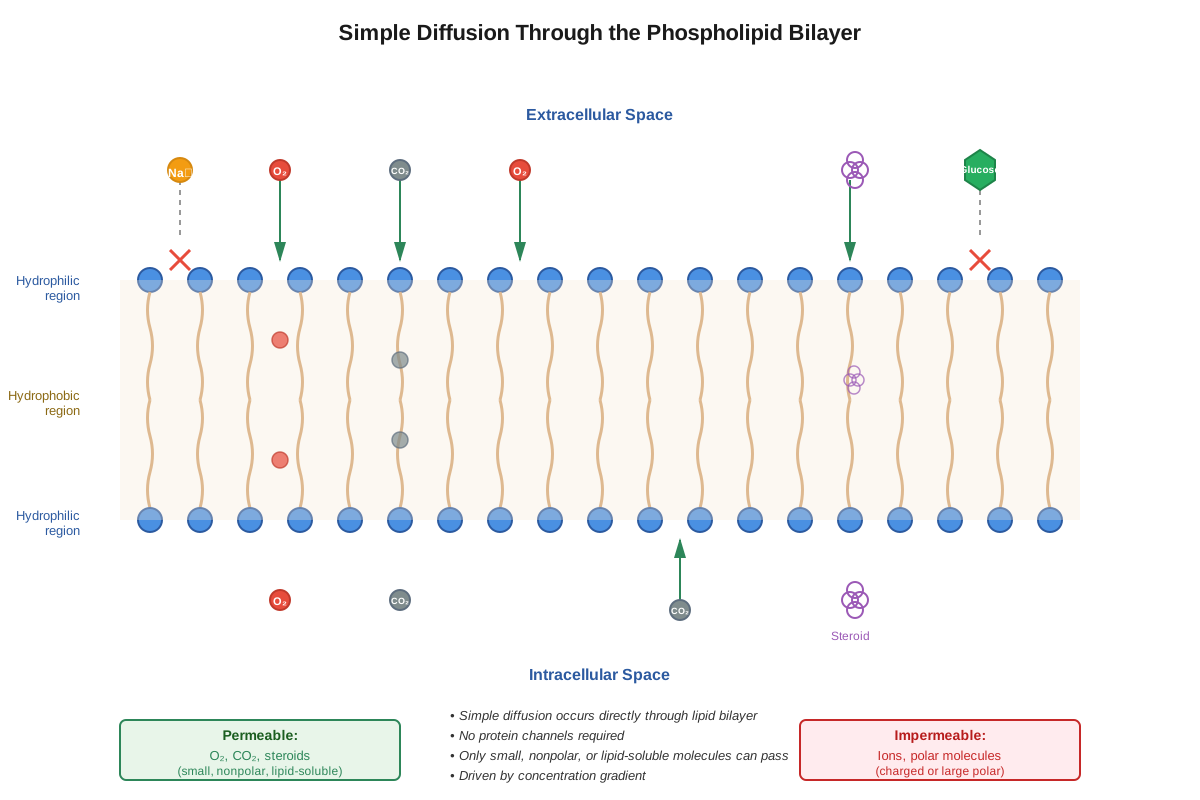
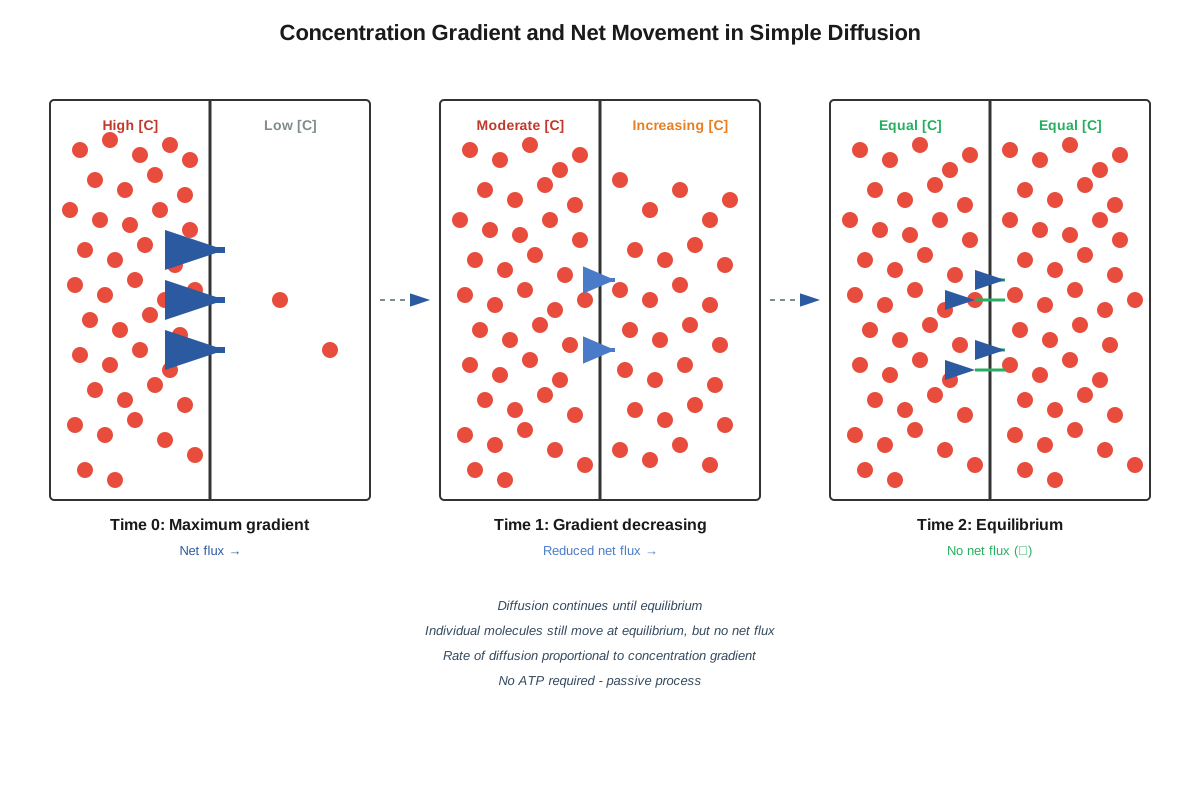
Simple diffusion is the passive movement of molecules from an area of higher concentration to an area of lower concentration directly through the phospholipid bilayer of a cell membrane, driven solely by the concentration gradient and requiring no cellular energy (ATP) or membrane proteins. This process continues until equilibrium is reached, where the concentration becomes equal on both sides of the membrane, though individual molecules continue to move randomly in both directions at equal rates.
The mechanism relies on the random thermal motion of molecules. Each molecule possesses kinetic energy that causes constant, random movement. When a concentration gradient exists, statistically more molecules move from the high-concentration side to the low-concentration side simply because more molecules are present on that side to make the journey. This net movement represents diffusion, though individual molecular motion remains random and bidirectional.
Molecular Requirements for Simple Diffusion
Not all molecules can cross membranes via simple diffusion. The lipid bilayer acts as a selective barrier, and only molecules with specific properties can traverse it:
Molecules that undergo simple diffusion:
- Small, nonpolar molecules (O₂, CO₂, N₂)
- Lipid-soluble substances (steroid hormones, fat-soluble vitamins A, D, E, K)
- Small, uncharged polar molecules in limited amounts (H₂O, ethanol, urea, glycerol)
Molecules that CANNOT undergo simple diffusion:
- Large polar molecules (glucose, amino acids)
- Charged molecules/ions (Na⁺, K⁺, Cl⁻, Ca²⁺)
- Hydrophilic substances that cannot dissolve in the lipid core
The key determinant is the molecule's ability to dissolve in the hydrophobic core of the membrane. The partition coefficient (K) quantifies this property, representing the ratio of a substance's solubility in lipid versus water. Higher partition coefficients indicate greater membrane permeability via simple diffusion.
Fick's Law of Diffusion
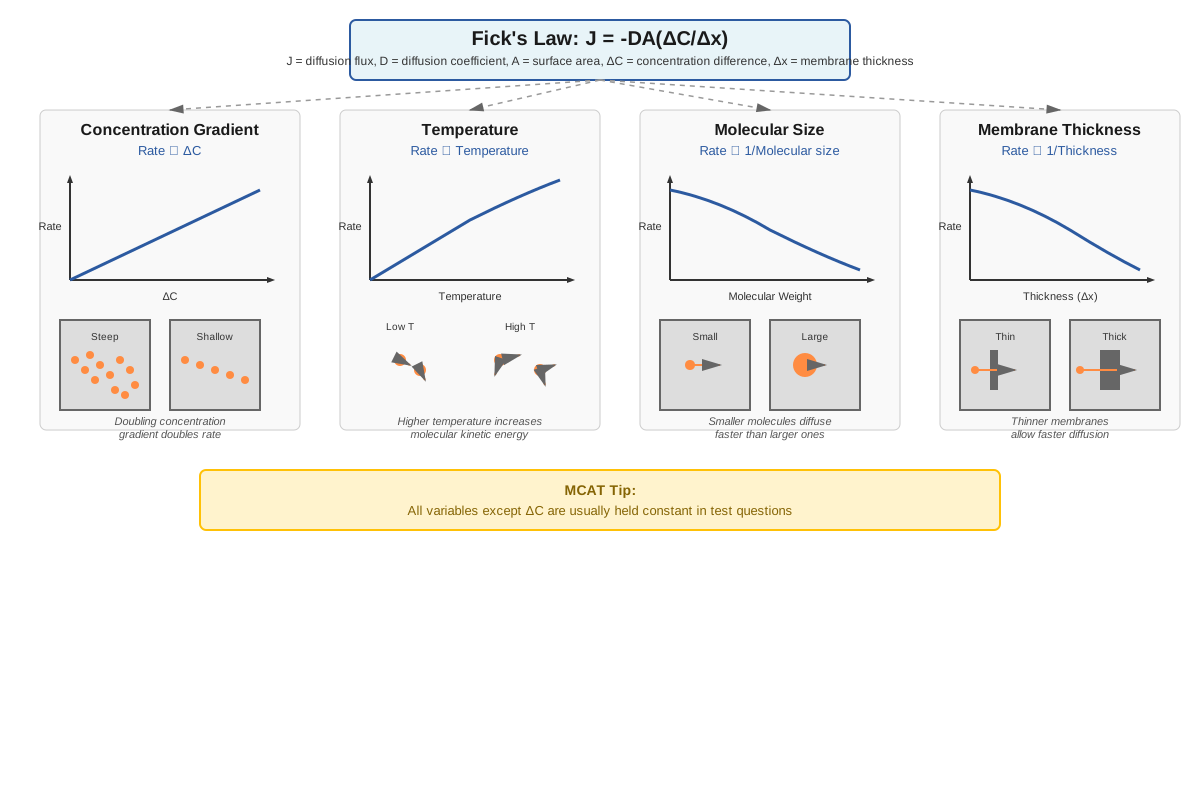
The rate of simple diffusion can be quantified using Fick's law, which states:
J = -DA(ΔC/Δx)Where:
- J = flux (rate of diffusion, amount per unit time)
- D = diffusion coefficient (depends on molecule size and temperature)
- A = surface area available for diffusion
- ΔC = concentration difference across the membrane
- Δx = thickness of the membrane
- The negative sign indicates movement down the concentration gradient
This equation reveals that diffusion rate increases with:
- Larger concentration gradients (ΔC)
- Greater surface area (A)
- Higher diffusion coefficients (smaller molecules, higher temperatures)
- Thinner membranes (smaller Δx)
Factors Affecting Diffusion Rate
| Factor | Effect on Diffusion Rate | Explanation |
|---|---|---|
| Concentration gradient | Directly proportional | Steeper gradients drive faster net movement |
| Temperature | Directly proportional | Higher temperature increases kinetic energy and molecular velocity |
| Molecular size | Inversely proportional | Smaller molecules move faster and encounter less resistance |
| Membrane thickness | Inversely proportional | Thicker membranes increase the distance molecules must travel |
| Surface area | Directly proportional | More area provides more pathways for crossing |
| Lipid solubility | Directly proportional | Higher solubility in lipid bilayer increases permeability |
| Molecular charge | Charged molecules cannot undergo simple diffusion | Hydrophobic core repels charged species |
Energetics and Thermodynamics
Simple diffusion is a spontaneous process with negative free energy change (ΔG < 0). The driving force comes from the increase in entropy as molecules spread from concentrated to dispersed states. No ATP hydrolysis or energy input is required because the system moves toward thermodynamic equilibrium.
The relationship between free energy and concentration gradient is:
ΔG = RT ln(C₂/C₁)Where C₁ is the higher concentration and C₂ is the lower concentration. When C₁ > C₂, the natural logarithm is negative, making ΔG negative and the process spontaneous.
Equilibrium and Net Movement
At equilibrium, the concentration becomes equal on both sides of the membrane, and net diffusion ceases. However, individual molecules continue crossing in both directions at equal rates—this is dynamic equilibrium. The system has reached maximum entropy for that particular configuration. Important distinctions:
- Net diffusion = movement in one direction minus movement in the opposite direction
- At equilibrium: net diffusion = 0, but individual molecular movement ≠ 0
- Before equilibrium: net diffusion occurs down the concentration gradient
- Simple diffusion cannot create concentration gradients; it only dissipates them
Comparison with Other Transport Mechanisms
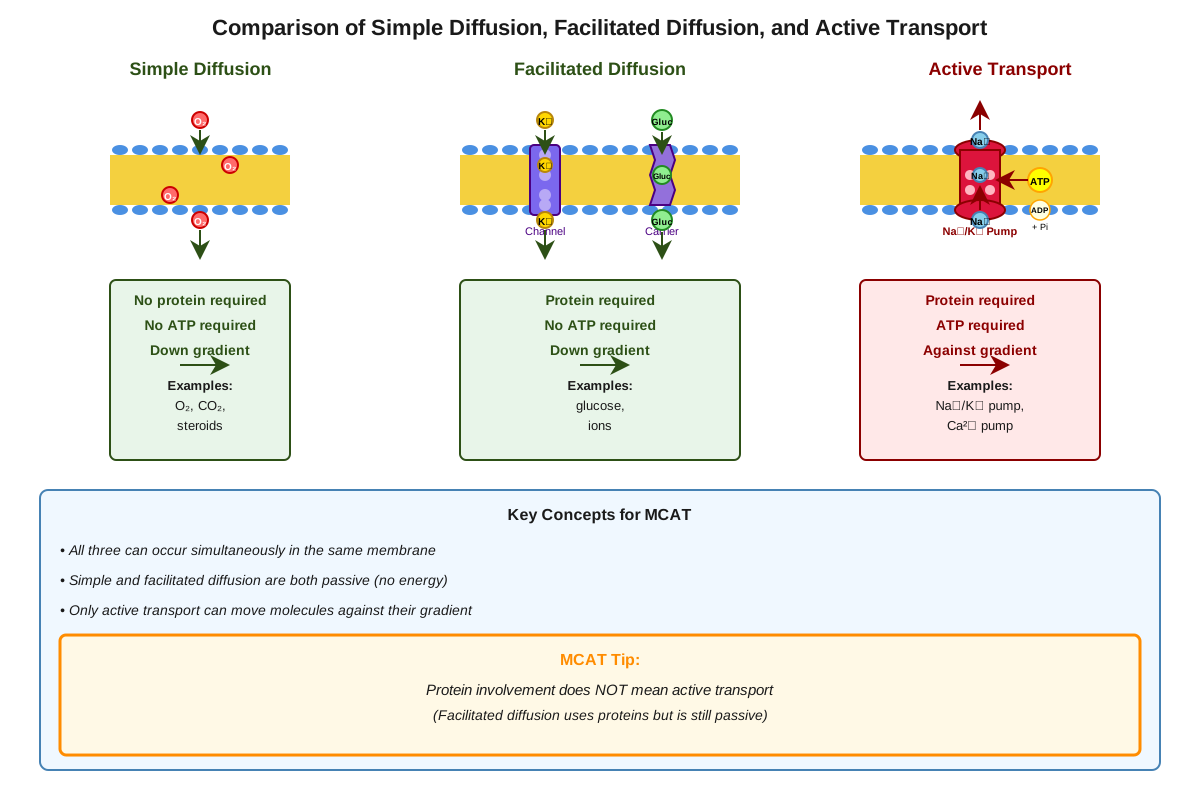
Understanding what simple diffusion is NOT helps clarify the concept:
| Feature | Simple Diffusion | Facilitated Diffusion | Active Transport |
|---|---|---|---|
| Energy required | No (passive) | No (passive) | Yes (ATP) |
| Proteins required | No | Yes (channels/carriers) | Yes (pumps) |
| Direction | Down gradient | Down gradient | Against gradient |
| Saturation | No | Yes | Yes |
| Specificity | Low | High | High |
| Examples | O₂, CO₂, steroids | Glucose, ions through channels | Na⁺/K⁺ pump |
The absence of saturation kinetics distinguishes simple diffusion from protein-mediated transport. Because simple diffusion doesn't involve binding sites, the rate increases linearly with concentration rather than plateauing at high concentrations.
Concept Relationships
Simple diffusion serves as the foundation for understanding all membrane transport phenomena. The concept builds directly on membrane structure, specifically the fluid mosaic model and the properties of the phospholipid bilayer. The hydrophobic core of the membrane determines which molecules can undergo simple diffusion, creating a direct link between membrane composition and transport selectivity.
Concentration gradients → drive → simple diffusion → leads to → equilibrium
This fundamental relationship extends to more complex scenarios. Simple diffusion of water molecules is specifically termed osmosis, which generates osmotic pressure and affects cell volume. The inability of ions to undergo simple diffusion necessitates facilitated diffusion through ion channels and creates the foundation for membrane potential in neurons and muscle cells.
Simple diffusion connects to cellular respiration through oxygen delivery to mitochondria and carbon dioxide removal from cells. It relates to pharmacokinetics by determining drug absorption, distribution, and blood-brain barrier penetration. The concept also underlies gas exchange in respiratory physiology and hormone signaling for lipid-soluble hormones like cortisol and estrogen.
The thermodynamic principles governing simple diffusion (entropy increase, spontaneous processes) connect to broader concepts in bioenergetics and explain why cells must expend energy to maintain concentration gradients through active transport. This creates a conceptual bridge: simple diffusion dissipates gradients → active transport creates gradients → cellular energy (ATP) is required to maintain non-equilibrium states essential for life.
High-Yield Facts
⭐ Simple diffusion requires no cellular energy (ATP) and no membrane proteins—molecules pass directly through the lipid bilayer
⭐ Only small, nonpolar molecules and lipid-soluble substances can undergo simple diffusion; charged molecules and large polar molecules cannot
⭐ The rate of simple diffusion is directly proportional to the concentration gradient, surface area, and temperature, but inversely proportional to molecular size and membrane thickness
⭐ Simple diffusion shows no saturation kinetics—the rate increases linearly with concentration, unlike facilitated diffusion which plateaus
⭐ At equilibrium, net diffusion equals zero, but individual molecules continue moving bidirectionally at equal rates (dynamic equilibrium)
- Simple diffusion is a spontaneous process with negative free energy change (ΔG < 0) driven by entropy increase
- Fick's law (J = -DA(ΔC/Δx)) quantifies diffusion rate and appears in MCAT calculations
- The partition coefficient (lipid solubility/water solubility) predicts a molecule's ability to undergo simple diffusion
- Oxygen and carbon dioxide exchange in alveoli occurs entirely through simple diffusion
- Steroid hormones (cortisol, testosterone, estrogen) enter target cells via simple diffusion due to their lipid solubility
- Increasing temperature increases diffusion rate by increasing molecular kinetic energy
- Simple diffusion cannot move molecules against their concentration gradient or create concentration differences
Quick check — test yourself on Simple diffusion so far.
Try Flashcards →Common Misconceptions
Misconception: Simple diffusion requires energy because molecules are moving.
Correction: While molecules possess kinetic energy from thermal motion, simple diffusion requires no additional cellular energy input (no ATP consumption). The process is thermodynamically spontaneous, driven by the concentration gradient and entropy increase.
Misconception: All small molecules can cross membranes via simple diffusion.
Correction: Size is only one factor; polarity and charge are equally important. Small ions like Na⁺ and Cl⁻ cannot undergo simple diffusion despite their small size because their charge prevents them from dissolving in the hydrophobic membrane core. Small nonpolar molecules like O₂ can diffuse, but small charged molecules cannot.
Misconception: At equilibrium, molecular movement stops.
Correction: At equilibrium, NET movement stops, but individual molecules continue crossing the membrane in both directions at equal rates. This is dynamic equilibrium—the concentrations remain constant because bidirectional movement is balanced, not because movement has ceased.
Misconception: Simple diffusion and facilitated diffusion are the same because both are passive.
Correction: While both are passive (no ATP required) and move molecules down concentration gradients, simple diffusion occurs directly through the lipid bilayer without proteins, while facilitated diffusion requires channel or carrier proteins. Additionally, facilitated diffusion shows saturation kinetics and specificity, whereas simple diffusion does not.
Misconception: Simple diffusion can create concentration gradients.
Correction: Simple diffusion can only dissipate (eliminate) concentration gradients by moving molecules from high to low concentration until equilibrium is reached. Creating or maintaining concentration gradients requires active transport with energy input. Simple diffusion is a passive process that moves systems toward equilibrium, not away from it.
Misconception: Water cannot undergo simple diffusion because it's polar.
Correction: While water is polar, its small size allows limited simple diffusion through the lipid bilayer, though the rate is relatively slow. Most water movement across membranes occurs through aquaporin channels (facilitated diffusion), but some simple diffusion of water does occur. The MCAT may test this nuance by asking about water movement in cells lacking aquaporins.
Worked Examples
Example 1: Predicting Membrane Permeability
Question: A researcher studies four molecules for their ability to cross an artificial lipid bilayer membrane without proteins. The molecules are: (A) glucose (C₆H₁₂O₆), (B) oxygen (O₂), (C) sodium ion (Na⁺), and (D) testosterone (a steroid hormone). Which molecule(s) can cross via simple diffusion?
Solution:
Step 1: Identify the requirements for simple diffusion
- Must be small and nonpolar, OR lipid-soluble
- Cannot be charged or large and polar
Step 2: Analyze each molecule
(A) Glucose: Large polar molecule with multiple hydroxyl groups. Despite being uncharged, its size and polarity prevent dissolution in the lipid bilayer. Cannot undergo simple diffusion. (Requires GLUT transporters for facilitated diffusion)
(B) Oxygen: Small, nonpolar molecule. Easily dissolves in lipid bilayer. CAN undergo simple diffusion. This is how O₂ enters cells and crosses alveolar membranes.
(C) Sodium ion: Small but carries a positive charge. The hydrophobic membrane core repels charged species. Cannot undergo simple diffusion. (Requires ion channels or Na⁺/K⁺ pump)
(D) Testosterone: Steroid hormone with a lipid-soluble structure derived from cholesterol. Despite being relatively large, its lipophilic nature allows it to dissolve in and cross the membrane. CAN undergo simple diffusion.
Answer: B and D can cross via simple diffusion.
Key Concept: Lipid solubility trumps size for larger molecules. Small size and nonpolarity allow simple diffusion for small molecules. Charge always prevents simple diffusion regardless of size.
Example 2: Applying Fick's Law
Question: An experiment measures oxygen diffusion across an artificial membrane. Initially, the O₂ concentration is 40 mmHg on side A and 10 mmHg on side B. The membrane has surface area 2 cm², thickness 0.5 mm, and diffusion coefficient for O₂ is 1.5 × 10⁻⁵ cm²/s. Calculate the initial flux of oxygen. Then predict how the flux changes if: (1) the concentration on side A increases to 80 mmHg, or (2) the membrane thickness doubles.
Solution:
Step 1: Apply Fick's law
J = -DA(ΔC/Δx)Step 2: Identify values
- D = 1.5 × 10⁻⁵ cm²/s
- A = 2 cm²
- ΔC = 40 - 10 = 30 mmHg
- Δx = 0.5 mm = 0.05 cm
Step 3: Calculate initial flux
J = (1.5 × 10⁻⁵ cm²/s)(2 cm²)(30 mmHg / 0.05 cm)
J = (1.5 × 10⁻⁵)(2)(600) mmHg·cm/s
J = 1.8 × 10⁻² mmHg·cm/s
Step 4: Scenario 1 - Concentration on side A increases to 80 mmHg
- New ΔC = 80 - 10 = 70 mmHg
- Ratio of new to old gradient: 70/30 = 2.33
- New flux = 2.33 × original flux (flux is directly proportional to concentration gradient)
- The flux more than doubles
Step 5: Scenario 2 - Membrane thickness doubles
- New Δx = 1.0 mm = 0.10 cm
- Ratio of new to old thickness: 0.10/0.05 = 2
- New flux = 0.5 × original flux (flux is inversely proportional to thickness)
- The flux is cut in half
Key Concepts:
- Diffusion rate increases linearly with concentration gradient
- Diffusion rate decreases linearly with membrane thickness
- These relationships are testable on the MCAT through both calculations and conceptual questions
- Physiological applications: emphysema increases alveolar wall thickness, reducing O₂ diffusion; increasing inspired O₂ concentration increases the gradient and improves diffusion
Exam Strategy
Approaching MCAT Questions on Simple Diffusion
Step 1: Identify the transport mechanism being tested
- Look for keywords: "passive," "no energy," "down gradient," "through lipid bilayer"
- Eliminate active transport if no mention of ATP or energy
- Distinguish from facilitated diffusion by checking for protein involvement
Step 2: Assess molecular properties
- Check size, polarity, and charge
- Apply the rule: small + nonpolar OR lipid-soluble = simple diffusion possible
- Charged molecules automatically rule out simple diffusion
Step 3: Analyze the scenario
- Determine if a concentration gradient exists and its direction
- Identify factors that might affect rate (temperature, surface area, membrane thickness)
- Check if the question asks about rate, direction, or mechanism
Trigger Words and Phrases
Words indicating simple diffusion:
- "Passive transport"
- "Down the concentration gradient"
- "No protein required"
- "Lipid-soluble"
- "Directly through the membrane"
- "Nonpolar molecule"
Words suggesting NOT simple diffusion:
- "Channel protein" or "carrier protein" → facilitated diffusion
- "ATP" or "energy required" → active transport
- "Against the gradient" → active transport
- "Saturation" or "maximum rate" → facilitated diffusion or active transport
- "Polar" or "charged" (for large molecules) → not simple diffusion
Process of Elimination Tips
Exam Tip: When comparing transport mechanisms, eliminate options systematically. If the molecule is charged, immediately eliminate simple diffusion. If ATP is mentioned, eliminate all passive transport. If proteins are mentioned, eliminate simple diffusion.
Common wrong answer patterns:
- Confusing simple diffusion with facilitated diffusion (both passive, but only simple diffusion lacks proteins)
- Selecting simple diffusion for glucose (requires GLUT transporters)
- Choosing simple diffusion for ions (always require channels or pumps)
- Assuming all small molecules undergo simple diffusion (must also consider polarity)
Time Allocation
For standalone questions on simple diffusion: 45-60 seconds
- Quick molecular property assessment (15 seconds)
- Apply rules (20 seconds)
- Verify answer (10-15 seconds)
For passage-based questions: 1-1.5 minutes per question
- Reference relevant passage data (20-30 seconds)
- Apply simple diffusion principles (30-45 seconds)
- Eliminate wrong answers (15-20 seconds)
For calculation questions using Fick's law: 1.5-2 minutes
- Set up equation (30 seconds)
- Plug in values (30-45 seconds)
- Calculate and check units (45 seconds)
Memory Techniques
Mnemonic for Molecules That Undergo Simple Diffusion
"Small Nonpolar Substances Slip Through Lipids"
- Small molecules (O₂, CO₂, N₂)
- Nonpolar molecules
- Steroid hormones
- Slip through (no proteins needed)
- Lipid-soluble substances
Visualization Strategy
Picture the cell membrane as a "lipid ocean" with a hydrophobic core. Only molecules that can "swim" in oil can cross:
- Oxygen and CO₂ = small fish that slip through easily
- Steroid hormones = oil-soluble substances that dissolve right in
- Glucose and ions = wearing life jackets (polar/charged), can't dive into the oil, need a boat (protein) to cross
Acronym for Factors Affecting Diffusion Rate
"CATS-MT" for factors in Fick's law:
- Concentration gradient (ΔC)
- Area (surface area)
- Temperature (affects D)
- Size of molecule (affects D)
- Membrane thickness (Δx)
- Type of molecule (lipid solubility)
Comparison Memory Aid
"Simple = Solo, Facilitated = Friend, Active = Against"
- Simple diffusion: molecules go solo through the lipid bilayer
- Facilitated diffusion: molecules need a protein friend to help
- Active transport: molecules go against the gradient (needs energy)
Summary
Simple diffusion is the passive movement of molecules directly through the phospholipid bilayer from high to low concentration, requiring no cellular energy or membrane proteins. This fundamental transport mechanism is governed by the concentration gradient, molecular properties (size, polarity, lipid solubility), and physical factors described by Fick's law. Only small nonpolar molecules like O₂ and CO₂, or lipid-soluble substances like steroid hormones, can undergo simple diffusion; charged molecules and large polar molecules cannot penetrate the hydrophobic membrane core. The process continues until dynamic equilibrium is reached, where net movement ceases but individual molecules continue crossing bidirectionally. Simple diffusion differs from facilitated diffusion in its lack of protein involvement and absence of saturation kinetics, and from active transport in its inability to move molecules against concentration gradients. Understanding simple diffusion is essential for MCAT success because it appears in questions about membrane transport, gas exchange, drug pharmacokinetics, and cellular physiology, often requiring integration of chemistry, physics, and biology principles to predict molecular behavior and calculate diffusion rates.
Key Takeaways
- Simple diffusion is passive transport directly through the lipid bilayer, requiring no ATP or proteins, moving molecules down their concentration gradient
- Only small nonpolar molecules (O₂, CO₂) and lipid-soluble substances (steroid hormones) can undergo simple diffusion; charged and large polar molecules cannot
- Fick's law (J = -DA(ΔC/Δx)) quantifies diffusion rate, showing direct proportionality to concentration gradient and surface area, inverse proportionality to membrane thickness
- Simple diffusion lacks saturation kinetics (rate increases linearly with concentration) and protein specificity, distinguishing it from facilitated diffusion
- At equilibrium, net diffusion stops but individual molecular movement continues bidirectionally (dynamic equilibrium)
- The MCAT tests simple diffusion through molecular property analysis, mechanism comparison, Fick's law calculations, and physiological applications
- Critical applications include alveolar gas exchange, lipid-soluble drug absorption, and steroid hormone cellular entry
Related Topics
Facilitated Diffusion: Builds directly on simple diffusion by introducing protein channels and carriers that enable polar molecules and ions to cross membranes passively. Understanding simple diffusion first makes the distinction clear.
Active Transport: Contrasts with simple diffusion by using ATP to move molecules against concentration gradients. Mastering simple diffusion provides the baseline for understanding why energy is needed to oppose natural diffusion.
Osmosis: A specific case of simple diffusion involving water movement across semipermeable membranes. The principles of simple diffusion apply directly to understanding osmotic pressure and cell volume regulation.
Membrane Structure and Function: The fluid mosaic model and phospholipid bilayer properties determine which molecules can undergo simple diffusion. This topic provides the structural foundation for understanding transport mechanisms.
Cellular Respiration: Oxygen delivery to mitochondria and CO₂ removal from cells occur via simple diffusion. Understanding this transport mechanism is essential for comprehending gas exchange in metabolism.
Pharmacokinetics: Drug absorption, distribution, and blood-brain barrier penetration often depend on simple diffusion for lipid-soluble medications. This clinical application frequently appears in MCAT passages.
Practice CTA
Now that you've mastered the core concepts of simple diffusion, it's time to solidify your understanding through active practice. Attempt the practice questions to test your ability to identify transport mechanisms, predict molecular behavior, and apply Fick's law to calculations. Use the flashcards to reinforce high-yield facts and distinctions between transport types. Remember: understanding simple diffusion is not just about memorizing facts—it's about developing the analytical skills to approach any membrane transport question with confidence. The MCAT rewards students who can integrate concepts across disciplines, and simple diffusion is a perfect opportunity to demonstrate that mastery. You've got this!
Sign up free to keep reading
Create a free AnvayaPrep account to finish this MCAT guide on Simple diffusion — plus flashcards and practice questions.