Overview
DNA polymerase is a critical enzyme family responsible for synthesizing new DNA strands during replication, repair, and recombination processes. These enzymes catalyze the addition of nucleotides to a growing DNA strand by forming phosphodiester bonds between the 3'-OH group of the previous nucleotide and the 5'-phosphate group of the incoming nucleotide. Understanding DNA polymerase function is fundamental to Molecular Biology and Genetics, as these enzymes ensure genetic information is accurately copied and transmitted from one generation to the next. The enzyme's remarkable fidelity, achieved through multiple proofreading mechanisms, maintains genomic stability and prevents mutations that could lead to disease.
For the MCAT, DNA polymerase represents a high-yield topic that appears frequently across multiple question formats. Test-makers favor this topic because it integrates biochemistry, molecular biology, and genetics while testing students' ability to understand enzyme mechanisms, directionality of synthesis, and the relationship between structure and function. Questions often present experimental scenarios involving DNA replication, PCR (polymerase chain reaction), or DNA repair mechanisms, requiring students to apply their knowledge of polymerase properties to novel situations.
The study of DNA polymerase Biology connects to broader themes in cellular biology, including the central dogma of molecular biology, cell cycle regulation, cancer biology, and biotechnology applications. Mastery of DNA polymerase function provides the foundation for understanding how cells maintain genetic integrity, how mutations arise when polymerase function is compromised, and how scientists exploit polymerase properties in laboratory techniques. This topic bridges fundamental biochemistry with clinical applications, making it essential for both the Biological and Biochemical Foundations of Living Systems section and the Chemical and Physical Foundations of Biological Systems section of the MCAT.
Learning Objectives
- [ ] Define DNA polymerase using accurate Biology terminology
- [ ] Explain why DNA polymerase matters for the MCAT
- [ ] Apply DNA polymerase to exam-style questions
- [ ] Identify common mistakes related to DNA polymerase
- [ ] Connect DNA polymerase to related Biology concepts
- [ ] Compare and contrast the functions of different DNA polymerase types in prokaryotes and eukaryotes
- [ ] Explain the molecular mechanism of 3' to 5' exonuclease activity and its role in proofreading
- [ ] Analyze experimental data involving DNA polymerase function in replication and repair scenarios
Prerequisites
- DNA structure and base pairing: Understanding the antiparallel nature of DNA strands and complementary base pairing is essential for comprehending how polymerase synthesizes new strands
- Enzyme kinetics and mechanisms: Basic knowledge of enzyme-substrate interactions helps explain how polymerase catalyzes phosphodiester bond formation
- Chemical bonds: Familiarity with phosphodiester bonds and hydrogen bonds is necessary to understand the chemistry of DNA synthesis
- Directionality notation (5' and 3'): Recognizing the structural difference between the 5' phosphate and 3' hydroxyl ends of DNA is critical for understanding synthesis direction
- Nucleotide structure: Knowledge of deoxyribonucleotides (dNTPs) and their triphosphate groups is required to understand the substrate and energy source for polymerization
Why This Topic Matters
DNA polymerase has profound clinical significance in human health and disease. Mutations in genes encoding DNA polymerases or their accessory proteins can lead to cancer predisposition syndromes, premature aging disorders, and immunodeficiency conditions. For example, defects in DNA polymerase proofreading activity are associated with hereditary colorectal cancer syndromes. Additionally, many chemotherapy drugs and antiviral medications target DNA polymerase function, making this enzyme family a critical therapeutic target. Understanding polymerase function is essential for comprehending how cells respond to DNA damage and maintain genomic stability throughout an organism's lifetime.
On the MCAT, DNA polymerase appears in approximately 3-5% of Biology/Biochemistry questions, making it a high-yield topic that warrants thorough preparation. Questions typically fall into several categories: mechanism-based questions testing understanding of the catalytic process, comparison questions contrasting prokaryotic and eukaryotic polymerases, experimental interpretation questions involving PCR or DNA sequencing, and application questions connecting polymerase function to DNA repair or replication errors. The topic frequently appears in passage-based questions where students must analyze experimental data or novel scenarios involving polymerase function.
Common exam presentations include passages describing DNA replication experiments with mutant polymerases, PCR protocols requiring students to understand primer extension, DNA repair mechanisms involving polymerase-mediated gap filling, and biotechnology applications such as DNA sequencing. Discrete questions often test specific properties like directionality, substrate requirements, or the distinction between polymerase and primase. The MCAT particularly favors questions that integrate DNA polymerase with other topics such as cell cycle checkpoints, mutation rates, or the effects of environmental mutagens.
Core Concepts
DNA Polymerase Definition and Basic Function
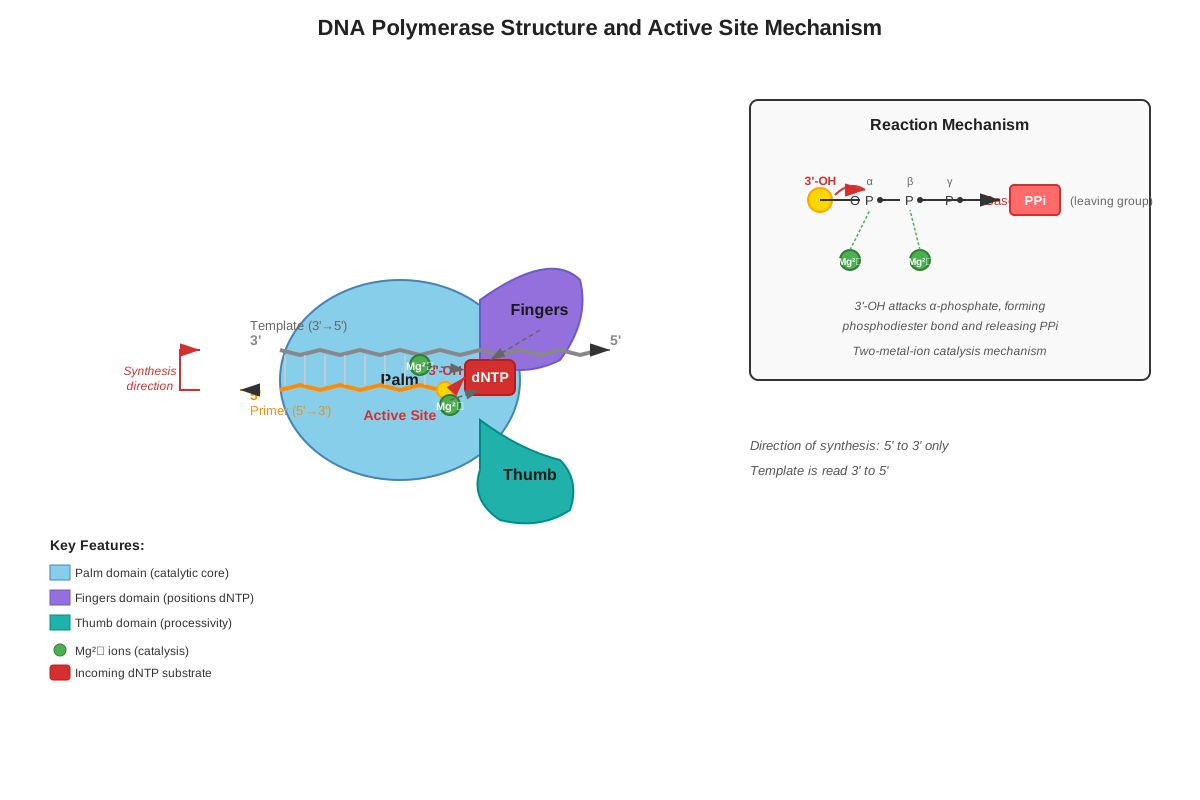
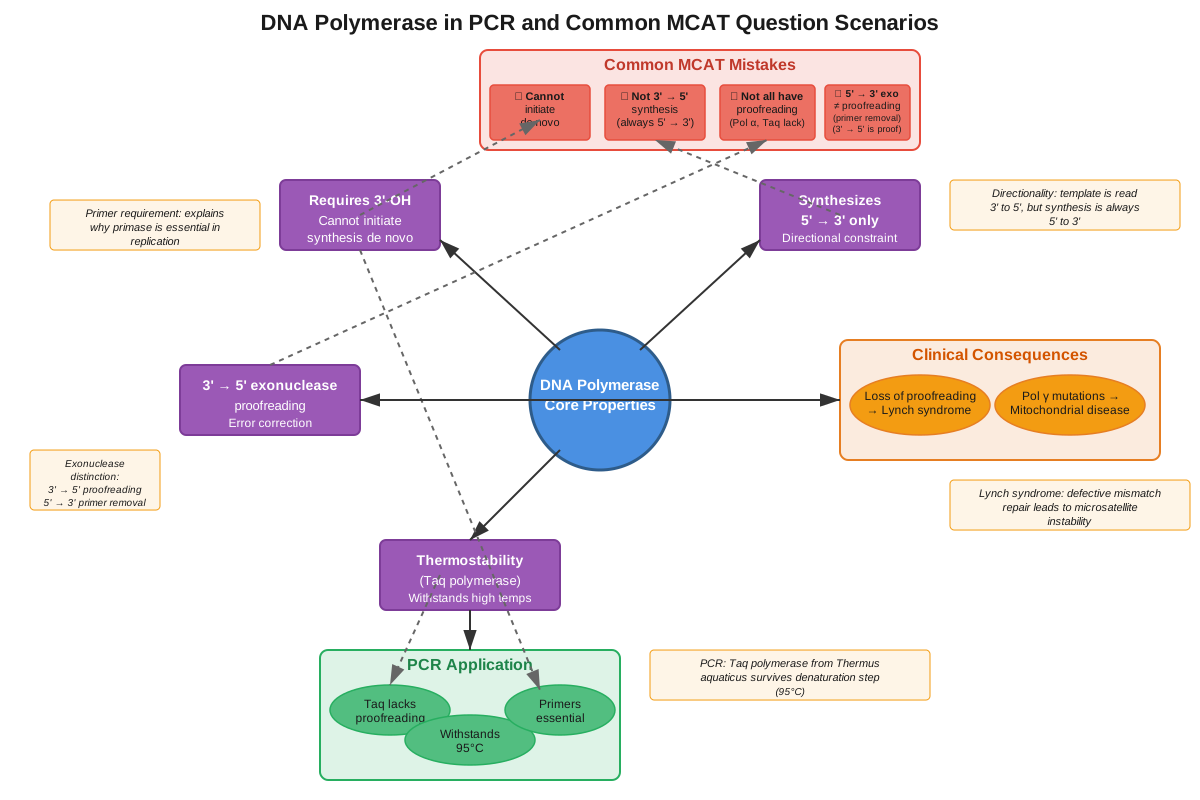
DNA polymerase is an enzyme that catalyzes the template-directed synthesis of DNA by adding deoxyribonucleotides to the 3'-hydroxyl end of a growing DNA strand. The enzyme reads a template strand in the 3' to 5' direction while synthesizing the new complementary strand in the 5' to 3' direction. This directionality is absolute and represents one of the most fundamental properties tested on the MCAT. The polymerase active site accommodates the incoming deoxyribonucleoside triphosphate (dNTP) and catalyzes nucleophilic attack by the 3'-OH group on the α-phosphate of the incoming nucleotide, releasing pyrophosphate (PPi) and forming a new phosphodiester bond.
All DNA polymerases share several critical requirements for activity. First, they require a primer with a free 3'-OH group—DNA polymerases cannot initiate synthesis de novo. This primer is typically a short RNA sequence synthesized by primase during replication. Second, they require a template strand that provides the sequence information through complementary base pairing. Third, they require all four deoxyribonucleoside triphosphates (dATP, dGTP, dCTP, dTTP) as substrates. Fourth, they require divalent metal ions, typically Mg²⁺, which coordinate the catalytic mechanism and stabilize the negative charges on the phosphate groups.
Prokaryotic DNA Polymerases
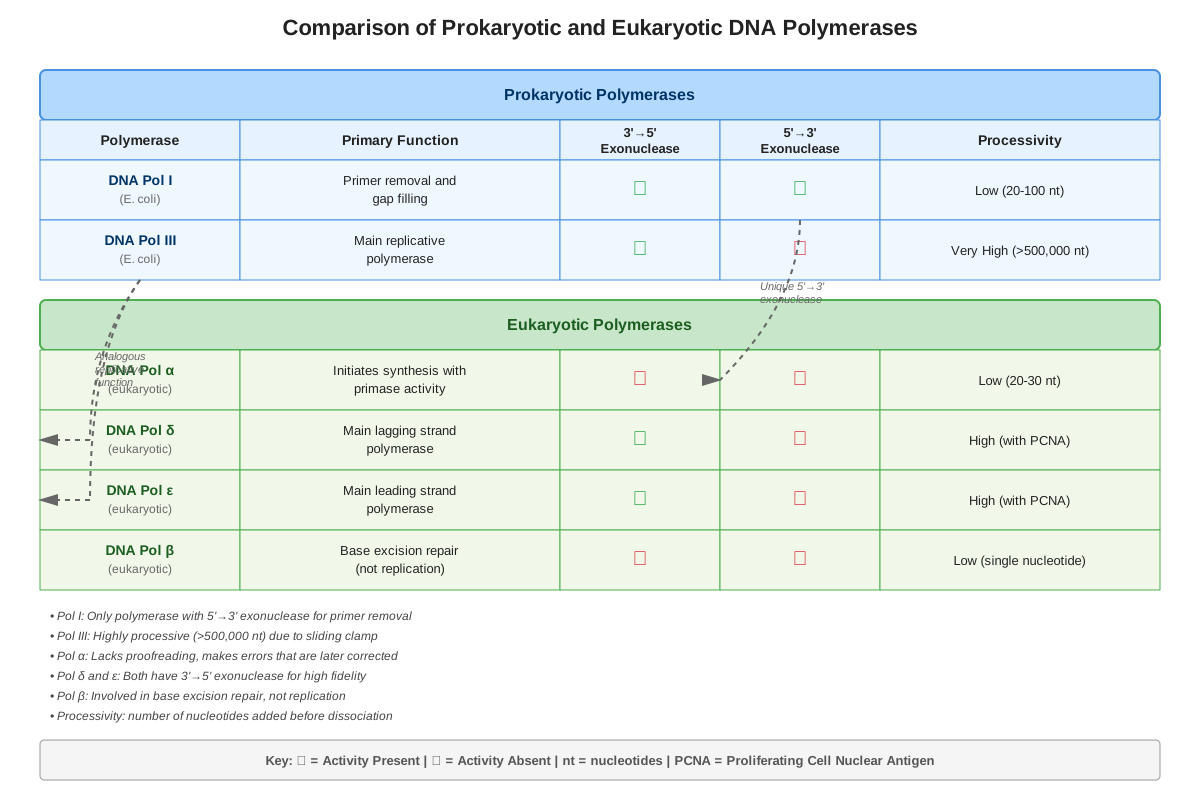
Prokaryotic organisms, particularly Escherichia coli, possess multiple DNA polymerases with distinct functions. DNA Polymerase III (Pol III) serves as the primary replicative enzyme, responsible for synthesizing both the leading strand continuously and the lagging strand discontinuously. Pol III is a highly processive enzyme, meaning it adds many nucleotides without dissociating from the template, and it possesses 3' to 5' exonuclease activity for proofreading. This exonuclease activity allows the enzyme to remove incorrectly incorporated nucleotides by catalyzing hydrolysis of the phosphodiester bond in the reverse direction.
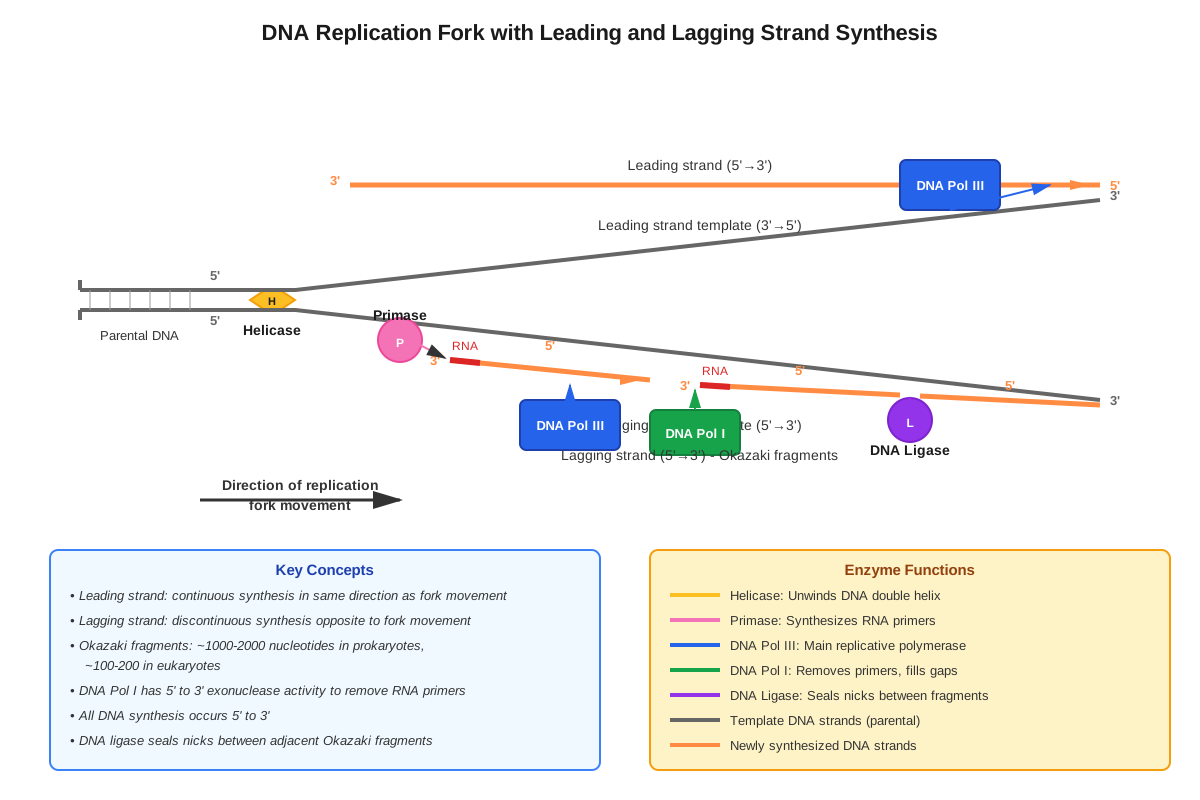
DNA Polymerase I (Pol I) plays a crucial role in DNA replication and repair, particularly in removing RNA primers and filling in the resulting gaps. Pol I possesses three distinct enzymatic activities: 5' to 3' polymerase activity, 3' to 5' exonuclease activity (proofreading), and unique 5' to 3' exonuclease activity. This 5' to 3' exonuclease activity enables Pol I to remove nucleotides ahead of the polymerase as it synthesizes DNA, a process called nick translation. This property makes Pol I essential for processing Okazaki fragments on the lagging strand.
DNA Polymerase II (Pol II) primarily functions in DNA repair pathways and can restart replication when the replication fork encounters DNA damage. While less abundant than Pol I and Pol III, Pol II contributes to maintaining genomic integrity under stress conditions.
Eukaryotic DNA Polymerases
Eukaryotic cells possess a more complex array of DNA polymerases, each specialized for particular functions. DNA Polymerase α (alpha) associates with primase to form the pol α-primase complex, which initiates DNA synthesis by laying down a short RNA-DNA primer. Pol α synthesizes approximately 20-30 nucleotides of DNA after primase creates the initial RNA primer, but it lacks proofreading activity and is subsequently replaced by more accurate polymerases.
DNA Polymerase δ (delta) is the primary enzyme for lagging strand synthesis in eukaryotes, processing Okazaki fragments with high fidelity due to its 3' to 5' exonuclease activity. DNA Polymerase ε (epsilon) primarily synthesizes the leading strand and also possesses proofreading capability. Both Pol δ and Pol ε interact with PCNA (proliferating cell nuclear antigen), a sliding clamp protein that enhances processivity by tethering the polymerase to DNA.
DNA Polymerase β (beta) functions primarily in base excision repair, filling in small gaps created when damaged bases are removed. DNA Polymerase γ (gamma) is unique in being localized to mitochondria, where it replicates the mitochondrial genome. Understanding these specialized functions is important for MCAT questions that present scenarios involving specific types of DNA damage or cellular compartments.
Proofreading and Fidelity
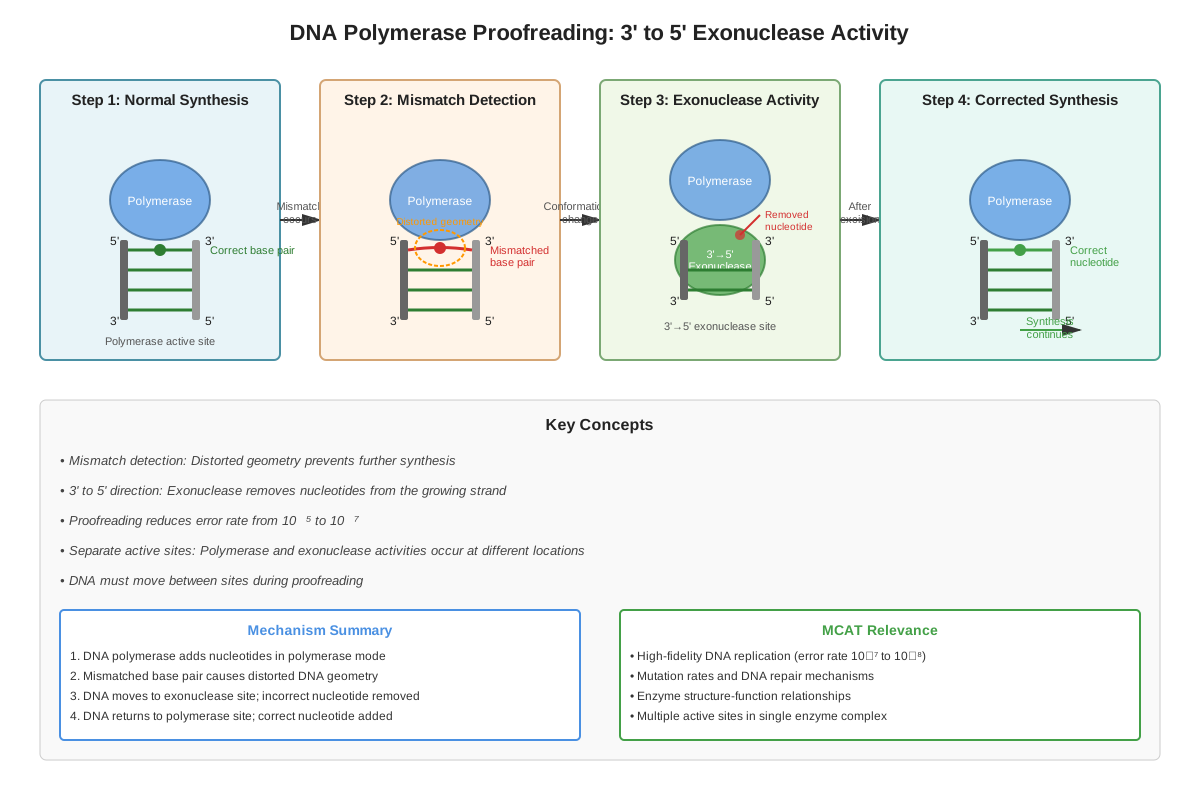
The remarkable accuracy of DNA replication depends on multiple mechanisms that minimize errors. Proofreading through 3' to 5' exonuclease activity represents the most important error-correction mechanism during replication. When an incorrect nucleotide is incorporated, the resulting mismatch creates a distortion in the DNA helix that is detected by the polymerase. The enzyme then shifts the 3' end of the growing strand from the polymerase active site to the exonuclease active site, where the incorrect nucleotide is removed. The 3' end then returns to the polymerase site for another attempt at correct incorporation.
This proofreading mechanism reduces the error rate from approximately 1 in 10⁵ (based on base-pairing alone) to approximately 1 in 10⁷. Additional post-replication mismatch repair systems further reduce the error rate to approximately 1 in 10⁹ to 10¹⁰. The MCAT frequently tests understanding of how these multiple mechanisms work together to maintain genomic stability and what happens when they fail.
Processivity and Accessory Proteins
Processivity refers to the number of nucleotides a polymerase adds before dissociating from the template. High processivity is essential for efficient replication of large genomes. DNA polymerases achieve high processivity through association with sliding clamp proteins: the β-clamp in prokaryotes and PCNA in eukaryotes. These ring-shaped protein complexes encircle the DNA and tether the polymerase to the template, preventing dissociation while still allowing the polymerase to slide along the DNA.
Clamp loader proteins (the γ-complex in prokaryotes, RFC in eukaryotes) use ATP hydrolysis to open the sliding clamp and load it onto DNA at primer-template junctions. This coordinated system of polymerase, sliding clamp, and clamp loader constitutes the core of the replisome, the multi-protein machine that carries out DNA replication.
Leading vs. Lagging Strand Synthesis
The antiparallel nature of DNA and the unidirectional synthesis capability of DNA polymerase create an asymmetry in replication. The leading strand is synthesized continuously in the same direction as replication fork movement, requiring only a single primer. The lagging strand must be synthesized discontinuously in short segments called Okazaki fragments (1000-2000 nucleotides in prokaryotes, 100-200 nucleotides in eukaryotes), each requiring a separate primer.
This discontinuous synthesis creates additional complexity: multiple primers must be synthesized, removed, and replaced with DNA, and the resulting nicks must be sealed by DNA ligase. Understanding this asymmetry is crucial for MCAT questions involving replication mechanisms, primer requirements, or the consequences of polymerase mutations.
| Feature | Leading Strand | Lagging Strand |
|---|---|---|
| Direction of synthesis | 5' to 3' (continuous) | 5' to 3' (discontinuous) |
| Number of primers | One | Multiple |
| Synthesis pattern | Continuous | Okazaki fragments |
| Primary polymerase (prokaryotes) | Pol III | Pol III (synthesis), Pol I (gap filling) |
| Primary polymerase (eukaryotes) | Pol ε | Pol α (priming), Pol δ (extension) |
Biotechnology Applications
DNA polymerase properties have been exploited in numerous laboratory techniques essential to modern molecular biology. Polymerase Chain Reaction (PCR) uses thermostable DNA polymerases (such as Taq polymerase from Thermus aquaticus) to amplify specific DNA sequences through repeated cycles of denaturation, primer annealing, and extension. The MCAT frequently presents PCR-based questions requiring students to understand primer design, temperature requirements, and the exponential nature of amplification.
DNA sequencing technologies, including Sanger sequencing and next-generation sequencing platforms, rely on modified DNA polymerases and nucleotide analogs. Understanding how polymerase incorporates dideoxynucleotides (ddNTPs) that lack a 3'-OH group and therefore terminate synthesis is important for interpreting sequencing data in MCAT passages.
Concept Relationships
DNA polymerase function integrates multiple levels of biological organization. At the molecular level, polymerase catalytic mechanism → depends on → nucleotide structure and phosphodiester bond chemistry. The enzyme's substrate specificity → determines → base pairing fidelity → which maintains → genetic information accuracy. Proofreading exonuclease activity → reduces → mutation rate → which prevents → cancer and genetic disease.
At the cellular level, DNA polymerase function → enables → DNA replication → which is required for → cell division and the cell cycle. Polymerase activity → is coordinated with → helicase (unwinding DNA) and primase (synthesizing primers) → within → the replisome complex. Different polymerases → function in → distinct DNA repair pathways → which respond to → various types of DNA damage.
The topic connects to prerequisite knowledge through its dependence on DNA structure (antiparallel strands, base pairing) and enzyme mechanisms (active sites, substrate binding, catalysis). It extends to related topics including DNA replication (origin recognition, replication fork progression), DNA repair (base excision repair, nucleotide excision repair, mismatch repair), and mutation (point mutations, frameshift mutations, consequences of replication errors). Understanding polymerase function also provides foundation for studying transcription (RNA polymerase shares mechanistic similarities), recombination (polymerases fill gaps during homologous recombination), and biotechnology (PCR, cloning, sequencing).
Quick check — test yourself on DNA polymerase so far.
Try Flashcards →High-Yield Facts
⭐ DNA polymerase synthesizes DNA exclusively in the 5' to 3' direction by adding nucleotides to the 3'-OH group of the growing strand
⭐ DNA polymerase requires a primer with a free 3'-OH group and cannot initiate synthesis de novo
⭐ 3' to 5' exonuclease activity provides proofreading capability, removing incorrectly incorporated nucleotides
⭐ The leading strand is synthesized continuously while the lagging strand is synthesized discontinuously as Okazaki fragments
⭐ DNA Polymerase III is the primary replicative enzyme in prokaryotes; DNA Polymerase δ and ε are primary replicative enzymes in eukaryotes
- DNA Polymerase I in prokaryotes possesses unique 5' to 3' exonuclease activity used for removing RNA primers
- Sliding clamp proteins (β-clamp in prokaryotes, PCNA in eukaryotes) enhance polymerase processivity
- The energy for phosphodiester bond formation comes from hydrolysis of the high-energy phosphate bonds in dNTPs, releasing pyrophosphate
- Taq polymerase used in PCR is thermostable, allowing it to survive the high temperatures required for DNA denaturation
- DNA polymerase fidelity results from three mechanisms: base-pairing selectivity, proofreading, and post-replication mismatch repair
- Eukaryotic DNA Polymerase α lacks proofreading activity and synthesizes short, relatively error-prone stretches that are later extended by Pol δ or ε
- DNA polymerase requires Mg²⁺ ions for catalytic activity to coordinate the reaction mechanism and stabilize charged intermediates
Common Misconceptions
Misconception: DNA polymerase can synthesize DNA in both 5' to 3' and 3' to 5' directions depending on which strand is being synthesized.
Correction: DNA polymerase ALWAYS synthesizes in the 5' to 3' direction. The lagging strand is synthesized discontinuously in short fragments, each in the 5' to 3' direction, to accommodate this unidirectional synthesis while moving in the opposite direction relative to fork progression.
Misconception: DNA polymerase can start DNA synthesis on a bare single-stranded template without any primer.
Correction: DNA polymerase absolutely requires a primer with a free 3'-OH group to initiate synthesis. This is why primase is essential during replication to synthesize short RNA primers that DNA polymerase can extend.
Misconception: The 3' to 5' exonuclease activity and 5' to 3' exonuclease activity serve the same proofreading function.
Correction: These activities have distinct functions. The 3' to 5' exonuclease activity removes nucleotides from the growing 3' end for proofreading during synthesis. The 5' to 3' exonuclease activity (found only in some polymerases like Pol I) removes nucleotides ahead of the polymerase, particularly useful for removing RNA primers during lagging strand synthesis.
Misconception: All DNA polymerases have the same functions and properties across different organisms.
Correction: Different DNA polymerases are specialized for distinct roles. Replicative polymerases (Pol III in prokaryotes, Pol δ and ε in eukaryotes) have high processivity and fidelity, while repair polymerases (Pol I in prokaryotes, Pol β in eukaryotes) are specialized for filling gaps. Some polymerases lack proofreading activity (Pol α), while others have unique enzymatic activities (Pol I's 5' to 3' exonuclease).
Misconception: DNA polymerase uses ATP as the energy source for adding nucleotides.
Correction: DNA polymerase uses deoxyribonucleoside triphosphates (dNTPs) as both the substrate and energy source. The energy released from cleaving the high-energy phosphate bonds (releasing pyrophosphate) drives phosphodiester bond formation. ATP is used by other replication proteins like helicases and clamp loaders, but not directly by polymerase for nucleotide addition.
Misconception: Okazaki fragments are synthesized in the 3' to 5' direction on the lagging strand.
Correction: Okazaki fragments are synthesized in the 5' to 3' direction, just like all DNA synthesis by DNA polymerase. The lagging strand template is read in the 3' to 5' direction (as always), but each Okazaki fragment is synthesized 5' to 3', creating the discontinuous synthesis pattern.
Misconception: Proofreading by DNA polymerase eliminates all replication errors.
Correction: While proofreading significantly reduces errors (from ~10⁻⁵ to ~10⁻⁷), it does not eliminate all mistakes. Additional mismatch repair systems further reduce the error rate to approximately 10⁻⁹ to 10⁻¹⁰. This multi-layered approach is necessary to maintain genomic stability.
Worked Examples
Example 1: Analyzing a Replication Experiment
Question: Researchers study a mutant bacterial strain with a defective DNA Polymerase III that lacks 3' to 5' exonuclease activity but retains normal polymerase activity. Compared to wild-type bacteria, what would be the expected outcome in the mutant strain?
Step 1 - Identify the function being disrupted: The 3' to 5' exonuclease activity is responsible for proofreading during DNA synthesis. This activity removes incorrectly incorporated nucleotides from the 3' end of the growing strand.
Step 2 - Predict the immediate consequence: Without proofreading, incorrectly incorporated nucleotides will not be removed during replication. The polymerase will continue synthesis, incorporating the error into the newly synthesized DNA strand.
Step 3 - Consider the broader implications: The mutation rate will increase significantly. While base-pairing selectivity still provides some fidelity, the loss of proofreading increases the error rate from approximately 10⁻⁷ to 10⁻⁵ per nucleotide incorporated.
Step 4 - Evaluate secondary effects: The increased mutation rate will lead to accumulation of mutations over generations. Some mutations may be lethal, reducing cell viability. Others may be neutral or occasionally beneficial, but overall genomic instability will increase. Mismatch repair systems may partially compensate, but cannot fully restore normal fidelity.
Answer: The mutant strain would exhibit a significantly increased mutation rate (approximately 100-fold higher than wild-type) due to loss of proofreading capability. This would result in decreased cell viability, increased genetic variability, and potential accumulation of deleterious mutations over time. The bacteria would still replicate DNA, but with much lower fidelity.
Connection to learning objectives: This example demonstrates application of DNA polymerase knowledge to experimental scenarios, requires understanding of the specific function of exonuclease activity, and connects polymerase function to broader concepts of mutation and genomic stability.
Example 2: PCR Primer Design Problem
Question: A researcher wants to amplify a 500 base-pair region of DNA using PCR. The target sequence begins at position 1000 and ends at position 1500 on a linear DNA molecule. The researcher designs two primers: Primer F (forward) complementary to positions 1000-1020 on the template strand, and Primer R (reverse) complementary to positions 1480-1500 on the coding strand. After 30 cycles of PCR with Taq polymerase, what will be the predominant product?
Step 1 - Understand PCR mechanism: PCR involves repeated cycles of denaturation (separating strands), annealing (primers binding to complementary sequences), and extension (Taq polymerase synthesizing new DNA from primers).
Step 2 - Analyze primer orientation: DNA polymerase synthesizes 5' to 3'. For primers to amplify a specific region, they must be oriented so that synthesis proceeds toward each other. Primer F should bind to the template strand and extend toward position 1500. Primer R should bind to the coding strand and extend toward position 1000.
Step 3 - Determine what happens in the first cycle: After denaturation, Primer F anneals to the template strand at positions 1000-1020 and Taq polymerase extends it in the 5' to 3' direction, synthesizing past position 1500 (since there's no stop signal). Primer R anneals to the coding strand at positions 1480-1500 and extends past position 1000.
Step 4 - Determine what happens in subsequent cycles: In the second cycle, the products from cycle 1 serve as templates. Now primers can bind to these products, creating defined endpoints. Primer F binding to the product synthesized from Primer R creates a product ending at the Primer R binding site. Primer R binding to the product synthesized from Primer F creates a product ending at the Primer F binding site.
Step 5 - Apply exponential amplification: The defined 500 bp product (from position 1000 to 1500) is amplified exponentially starting in cycle 2, while longer products increase only linearly. After 30 cycles, the 500 bp product will be overwhelmingly predominant.
Answer: The predominant product will be a 500 base-pair DNA fragment spanning positions 1000-1500. This defined product accumulates exponentially (2²⁸ copies by cycle 30), while longer products from the first cycle increase only linearly and become negligible in comparison.
Connection to learning objectives: This example applies DNA polymerase properties (directionality, primer requirement, continuous synthesis) to a biotechnology application, demonstrates understanding of how polymerase function enables PCR, and requires integration of multiple concepts including complementary base pairing and exponential amplification.
Exam Strategy
When approaching DNA polymerase MCAT questions, first identify whether the question focuses on mechanism, function, or application. Mechanism questions typically ask about the catalytic process, directionality, or substrate requirements. Function questions compare different polymerases or ask about roles in replication versus repair. Application questions present experimental scenarios involving PCR, sequencing, or mutant polymerases.
Trigger words to watch for include: "5' to 3'," "3' to 5'," "primer," "template," "proofreading," "exonuclease," "processivity," "leading strand," "lagging strand," "Okazaki fragments," "continuous," "discontinuous," "fidelity," and "mutation rate." When you see these terms, immediately activate your knowledge of the specific polymerase property being tested.
For process-of-elimination, remember these key principles: (1) DNA polymerase NEVER synthesizes 3' to 5', so eliminate any answer suggesting this; (2) DNA polymerase ALWAYS requires a primer, so eliminate answers suggesting de novo synthesis; (3) the energy for synthesis comes from dNTP hydrolysis, not separate ATP hydrolysis; (4) proofreading occurs through 3' to 5' exonuclease activity, not 5' to 3'. These absolute rules allow rapid elimination of incorrect answers.
When facing passage-based questions, pay attention to which organism is being studied (prokaryote vs. eukaryote) and which specific polymerase is mentioned. Different polymerases have different properties, and the MCAT expects you to know these distinctions. If a passage describes an experiment with mutant polymerases, immediately consider what function is disrupted and predict the consequences before looking at answer choices.
Time allocation: Discrete questions on DNA polymerase should take 60-90 seconds. Passage-based questions may require 90-120 seconds, with additional time for analyzing experimental data or figures. If a question asks about multiple steps in a process (e.g., complete replication of both strands), break it into components: leading strand synthesis, lagging strand priming, Okazaki fragment synthesis, primer removal, gap filling, and ligation.
Memory Techniques
Mnemonic for DNA Polymerase requirements: "P-T-N-M" = Primer, Template, Nucleotides (dNTPs), Magnesium ions. All four are absolutely required for polymerase activity.
Mnemonic for prokaryotic polymerases: "One Repairs, Two Repairs, Three Replicates" = Pol I Repairs (and removes primers), Pol II Repairs (damage response), Pol III Replicates (main replicative enzyme).
Directionality visualization: Picture DNA polymerase as a train that can only move forward on tracks. The tracks run 3' to 5' (template reading direction), but the train itself (new strand synthesis) moves 5' to 3'. The train cannot reverse direction, explaining why lagging strand synthesis must be discontinuous.
Proofreading mechanism: Visualize the polymerase as having two active sites—a "building site" (polymerase active site) and a "demolition site" (exonuclease active site). When an error is detected, the 3' end swings from the building site to the demolition site, the incorrect nucleotide is removed, and the 3' end swings back to the building site for another attempt.
Leading vs. Lagging acronym: "LEADing strand = Long, Easy, All-at-once, Direct" versus "LAGging strand = Lots of primers, Awkward, Gaps to fill."
Eukaryotic polymerase functions: "Alpha Primes, Beta Repairs, Gamma's in Mitochondria, Delta Does Lagging, Epsilon Extends Leading" captures the primary function of each major eukaryotic polymerase.
Summary
DNA polymerase is a fundamental enzyme that catalyzes template-directed DNA synthesis by adding nucleotides to the 3'-OH end of a primer, synthesizing exclusively in the 5' to 3' direction. The enzyme requires a primer, template, dNTPs, and metal ions for activity. Prokaryotic DNA Polymerase III and eukaryotic DNA Polymerases δ and ε serve as primary replicative enzymes with high fidelity achieved through 3' to 5' exonuclease proofreading activity. The asymmetry of replication creates continuous leading strand synthesis and discontinuous lagging strand synthesis in Okazaki fragments. Different polymerases are specialized for replication versus repair functions, with distinct properties regarding processivity, fidelity, and associated enzymatic activities. Understanding DNA polymerase mechanism, directionality, and functional specialization is essential for MCAT success, as this topic integrates molecular biology, biochemistry, and genetics while appearing frequently in both discrete and passage-based questions. Mastery requires knowing absolute rules (directionality, primer requirement), distinguishing between different polymerase types, and applying this knowledge to experimental scenarios and biotechnology applications.
Key Takeaways
- DNA polymerase synthesizes DNA exclusively in the 5' to 3' direction and absolutely requires a primer with a free 3'-OH group to initiate synthesis
- 3' to 5' exonuclease activity provides proofreading capability that is essential for maintaining replication fidelity and preventing mutations
- Leading strand synthesis is continuous while lagging strand synthesis is discontinuous, producing Okazaki fragments that require primer removal and gap filling
- Different DNA polymerases are specialized for distinct functions: Pol III (prokaryotic replication), Pol I (primer removal and gap filling), Pol δ and ε (eukaryotic replication), Pol β (base excision repair)
- Sliding clamp proteins (β-clamp, PCNA) enhance processivity by tethering polymerase to DNA, enabling efficient replication of large genomes
- The energy for phosphodiester bond formation comes from hydrolysis of dNTPs, not separate ATP molecules
- DNA polymerase properties are exploited in biotechnology applications including PCR (using thermostable Taq polymerase) and DNA sequencing
Related Topics
DNA Replication: Understanding the complete replication process including origin recognition, helicase function, primase activity, and coordination of leading and lagging strand synthesis builds directly on DNA polymerase knowledge and is essential for comprehensive understanding of genome duplication.
DNA Repair Mechanisms: Multiple repair pathways (base excision repair, nucleotide excision repair, mismatch repair) utilize specialized DNA polymerases to fill gaps after damaged DNA is removed, connecting polymerase function to maintenance of genomic integrity.
Cell Cycle and Cell Division: DNA replication occurs during S phase and is tightly regulated by cell cycle checkpoints, linking polymerase function to broader cellular processes and cancer biology.
Mutations and Mutagenesis: Understanding how replication errors occur, how polymerase fidelity mechanisms prevent mutations, and what happens when these mechanisms fail connects to genetics, evolution, and disease.
Biotechnology and Molecular Techniques: PCR, DNA sequencing, site-directed mutagenesis, and DNA cloning all exploit DNA polymerase properties, making this knowledge essential for interpreting experimental passages on the MCAT.
Practice CTA
Now that you have mastered the core concepts of DNA polymerase, challenge yourself with practice questions and flashcards to reinforce your understanding. Focus on applying these concepts to novel scenarios, distinguishing between different polymerase types, and integrating this knowledge with related topics in molecular biology. The more you practice, the more automatic your recognition of DNA polymerase principles will become, allowing you to quickly and accurately answer MCAT questions on test day. Remember that DNA polymerase appears frequently on the exam, making your investment in mastering this topic highly valuable for achieving your target score. Keep pushing forward—you're building the strong foundation in molecular biology that will serve you throughout your medical career!
Sign up free to keep reading
Create a free AnvayaPrep account to finish this MCAT guide on DNA polymerase — plus flashcards and practice questions.