Overview
Dominant traits represent one of the foundational concepts in classical genetics and are essential for understanding inheritance patterns tested extensively on the MCAT. In Molecular Biology and Genetics, dominant traits refer to phenotypic characteristics that are expressed when at least one copy of a dominant allele is present in an organism's genotype. This concept, first systematically studied by Gregor Mendel in the 19th century, forms the basis for predicting offspring phenotypes and understanding human genetic diseases. The MCAT frequently tests students' ability to analyze pedigrees, predict inheritance patterns, and apply Mendelian genetics principles to both theoretical and clinical scenarios.
Understanding dominant traits requires mastery of the relationship between genotype and phenotype, the molecular mechanisms underlying dominance, and the ability to distinguish between different inheritance patterns. The MCAT regularly presents genetics problems embedded within experimental passages, pedigree analyses, and clinical vignettes where students must identify inheritance patterns, calculate probabilities, and explain why certain traits appear in specific generations. This topic bridges classical genetics with molecular biology, connecting observable phenotypes to underlying DNA sequences and protein function.
The concept of dominant traits integrates seamlessly with broader Biology topics including gene expression, protein function, metabolic pathways, and evolutionary fitness. On the MCAT, questions about dominant traits often appear alongside discussions of recessive traits, incomplete dominance, codominance, and sex-linked inheritance. Mastery of this topic enables students to tackle complex genetics problems, interpret experimental data, and understand the molecular basis of human genetic diseases—all high-yield areas for exam success.
Learning Objectives
- [ ] Define dominant traits using accurate Biology terminology
- [ ] Explain why dominant traits matters for the MCAT
- [ ] Apply dominant traits to exam-style questions
- [ ] Identify common mistakes related to dominant traits
- [ ] Connect dominant traits to related Biology concepts
- [ ] Distinguish between complete dominance, incomplete dominance, and codominance at the molecular level
- [ ] Predict phenotypic ratios in monohybrid and dihybrid crosses involving dominant traits
- [ ] Analyze pedigrees to determine whether a trait follows a dominant inheritance pattern
- [ ] Explain the molecular mechanisms that result in dominant versus recessive alleles
Prerequisites
- Mendelian genetics fundamentals: Understanding basic inheritance principles is essential for comprehending how dominant alleles are transmitted across generations
- Genotype versus phenotype: Distinguishing between genetic composition and observable characteristics is necessary to understand dominance relationships
- Alleles and chromosomes: Knowledge of how genes exist in alternative forms on homologous chromosomes provides the foundation for understanding dominance
- Meiosis and sexual reproduction: Understanding how alleles segregate during gamete formation is critical for predicting offspring genotypes
- Basic probability: Mathematical skills for calculating inheritance probabilities using Punnett squares and probability rules are required for problem-solving
Why This Topic Matters
Dominant traits appear regularly on the MCAT, with genetics questions comprising approximately 5-10% of the Biological and Biochemical Foundations section. The exam tests this concept through multiple question formats: discrete questions requiring calculation of inheritance probabilities, passage-based questions analyzing experimental crosses, and pedigree interpretation problems that require pattern recognition and logical reasoning.
Clinically, understanding dominant inheritance patterns is crucial for genetic counseling and predicting disease risk. Many significant human genetic disorders follow autosomal dominant inheritance, including Huntington's disease, Marfan syndrome, achondroplasia, and familial hypercholesterolemia. Healthcare providers must understand that individuals with just one mutant allele will express these conditions, and each offspring has a 50% chance of inheriting the disorder from an affected parent. This knowledge directly impacts patient counseling, family planning decisions, and understanding disease prevalence in populations.
On the MCAT, dominant traits commonly appear in passages describing genetic experiments with model organisms (fruit flies, plants, mice), human pedigree analyses requiring students to determine inheritance patterns, and biochemical passages explaining how protein function relates to dominance at the molecular level. Questions may ask students to calculate probabilities, identify inheritance patterns, explain molecular mechanisms, or predict phenotypes across multiple generations. The ability to quickly recognize dominant inheritance patterns and apply appropriate problem-solving strategies is essential for maximizing points in the genetics section.
Core Concepts
Definition and Molecular Basis of Dominance
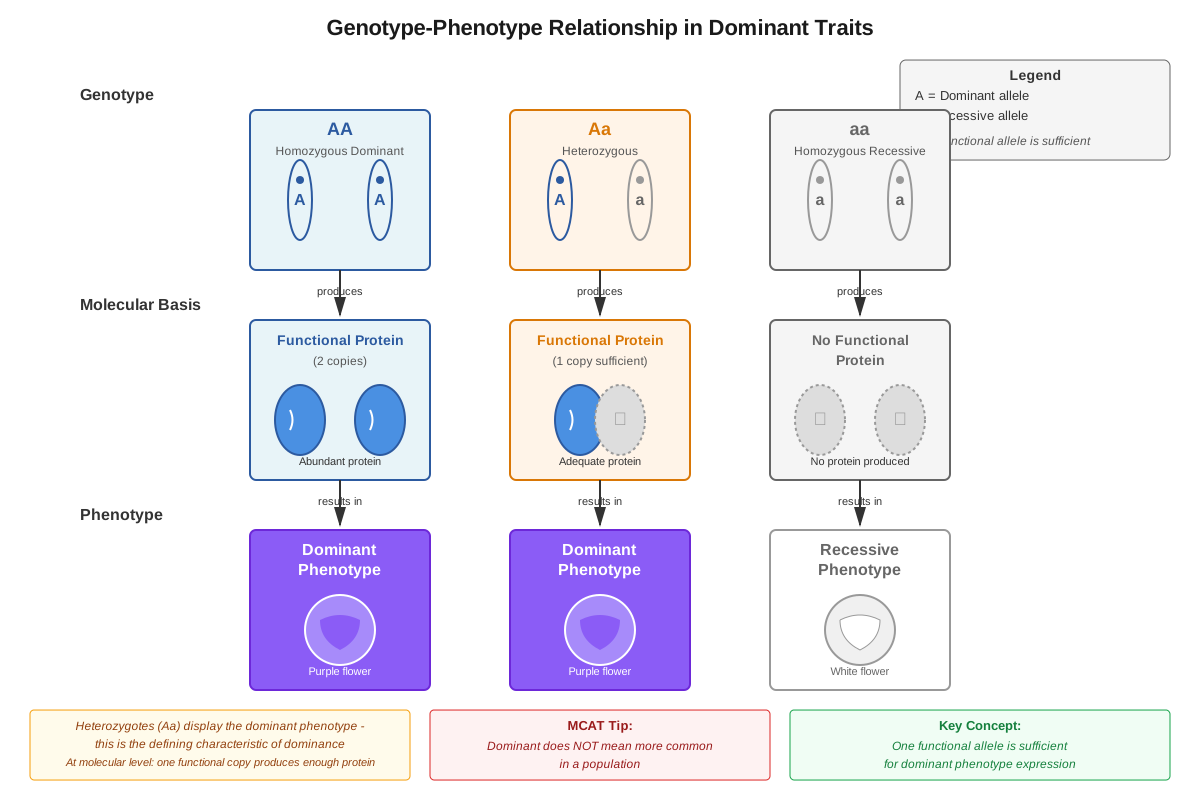
A dominant trait is a phenotypic characteristic that is expressed in the heterozygous condition—when an organism possesses one dominant allele and one recessive allele for a particular gene. At the molecular level, dominant alleles typically encode functional proteins that produce sufficient gene product to generate the dominant phenotype, even when only one copy is present. The Biology of dominance reflects the relationship between gene dosage, protein function, and phenotypic expression.
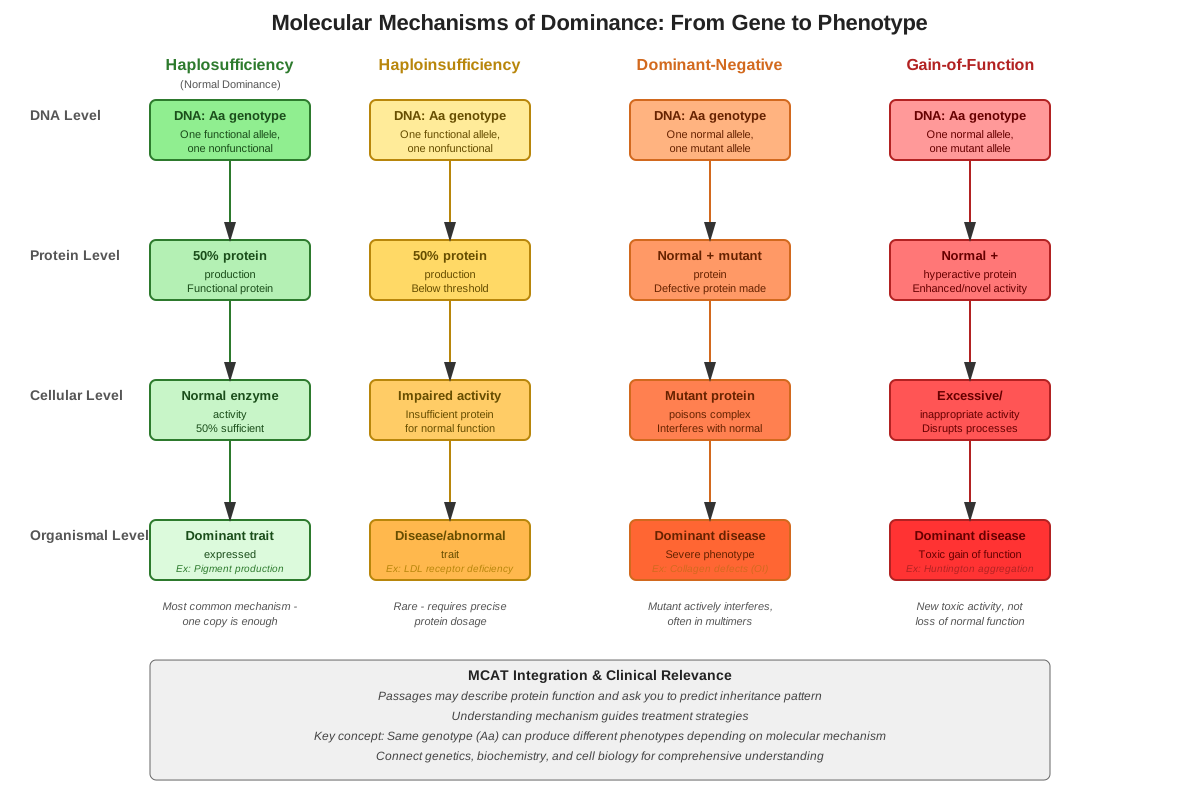
Dominance occurs through several molecular mechanisms. In haploinsufficiency, one functional allele produces enough protein (typically >50% of normal levels) to maintain normal function, making the wild-type allele dominant over loss-of-function mutations. In gain-of-function mutations, the mutant allele produces a protein with enhanced or novel activity that manifests even in the presence of a normal allele, making the mutation dominant. In dominant-negative mutations, the mutant protein interferes with the function of the wild-type protein, often by forming nonfunctional multimers in heterozygous individuals.
The notation system for dominant traits uses uppercase letters (A, B, T) to represent dominant alleles and lowercase letters (a, b, t) for recessive alleles. A homozygous dominant individual (AA) possesses two copies of the dominant allele, a heterozygous individual (Aa) possesses one dominant and one recessive allele, and a homozygous recessive individual (aa) possesses two recessive alleles. Both homozygous dominant and heterozygous individuals express the dominant phenotype, while only homozygous recessive individuals express the recessive phenotype.
Complete Dominance
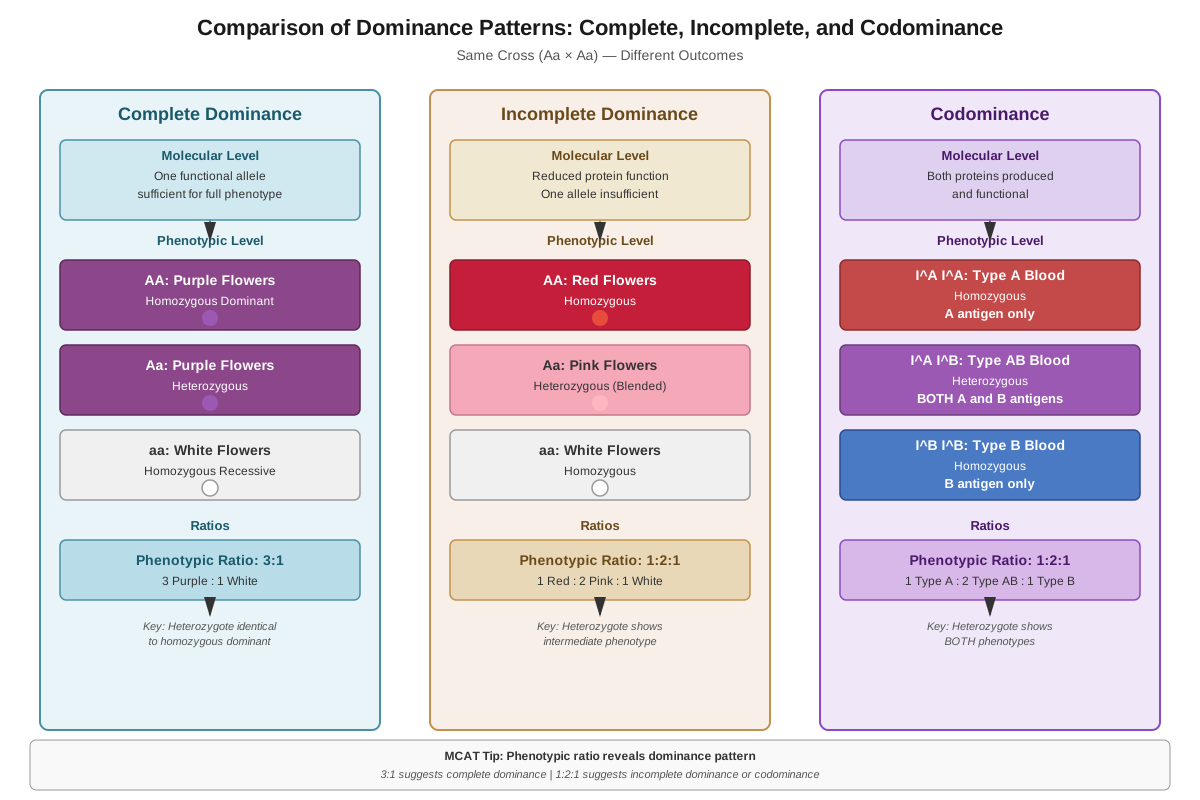
Complete dominance represents the classical Mendelian pattern where the heterozygote (Aa) is phenotypically indistinguishable from the homozygous dominant (AA) individual. In this scenario, one functional copy of the gene produces sufficient protein to generate the full dominant phenotype. Many of Mendel's original pea plant traits exhibited complete dominance: tall versus short plants, round versus wrinkled seeds, and purple versus white flowers.
At the molecular level, complete dominance often occurs when the gene product is an enzyme in a metabolic pathway. If one functional allele produces enough enzyme to maintain normal metabolic flux, the heterozygote appears phenotypically normal. For example, in phenylketonuria (PKU), the recessive condition, heterozygous carriers (Aa) produce approximately 50% of normal phenylalanine hydroxylase enzyme activity, which is sufficient to prevent disease symptoms, making the normal allele completely dominant.
Autosomal Dominant Inheritance Patterns
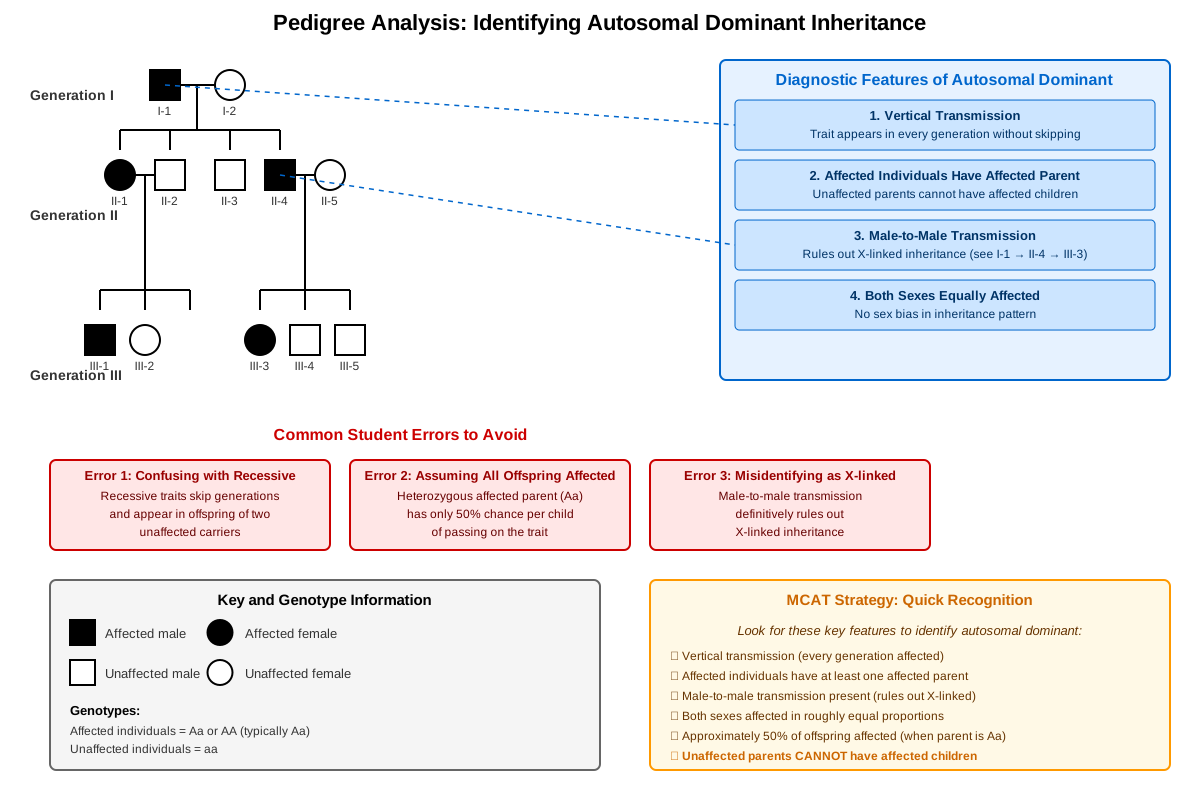
Autosomal dominant traits are controlled by genes located on autosomes (non-sex chromosomes) and require only one mutant allele for phenotypic expression. These traits exhibit characteristic pedigree patterns: affected individuals appear in every generation (no skipping), males and females are equally affected, and affected individuals typically have at least one affected parent. Each child of an affected heterozygous parent has a 50% probability of inheriting the dominant allele and expressing the trait.
Key features distinguishing autosomal dominant inheritance include vertical transmission (trait passes from parent to child across consecutive generations), the appearance of the trait in both sexes with equal frequency, and male-to-male transmission (ruling out X-linked inheritance). When both parents are unaffected, all offspring are typically unaffected, unless a new mutation occurs. When one parent is heterozygous affected (Aa) and the other is homozygous unaffected (aa), the expected phenotypic ratio is 1:1 (affected:unaffected).
Dominant Genetic Disorders
Several clinically significant human genetic disorders follow autosomal dominant inheritance patterns. Huntington's disease, caused by a CAG trinucleotide repeat expansion in the huntingtin gene, manifests in heterozygous individuals with progressive neurodegeneration typically beginning in middle age. The mutant huntingtin protein exhibits toxic gain-of-function properties, causing neuronal death despite the presence of normal huntingtin from the other allele.
Achondroplasia, the most common form of dwarfism, results from gain-of-function mutations in the FGFR3 gene. The mutant receptor exhibits constitutive activation, inhibiting bone growth even when one normal allele is present. Interestingly, homozygous achondroplasia (AA) is typically lethal, demonstrating that some dominant conditions show dosage effects at the phenotypic level. Marfan syndrome, caused by mutations in the fibrillin-1 gene, produces defective connective tissue proteins that disrupt normal extracellular matrix structure through dominant-negative effects—the mutant fibrillin-1 incorporates into fibrils and compromises their structural integrity.
Punnett Squares and Probability Calculations
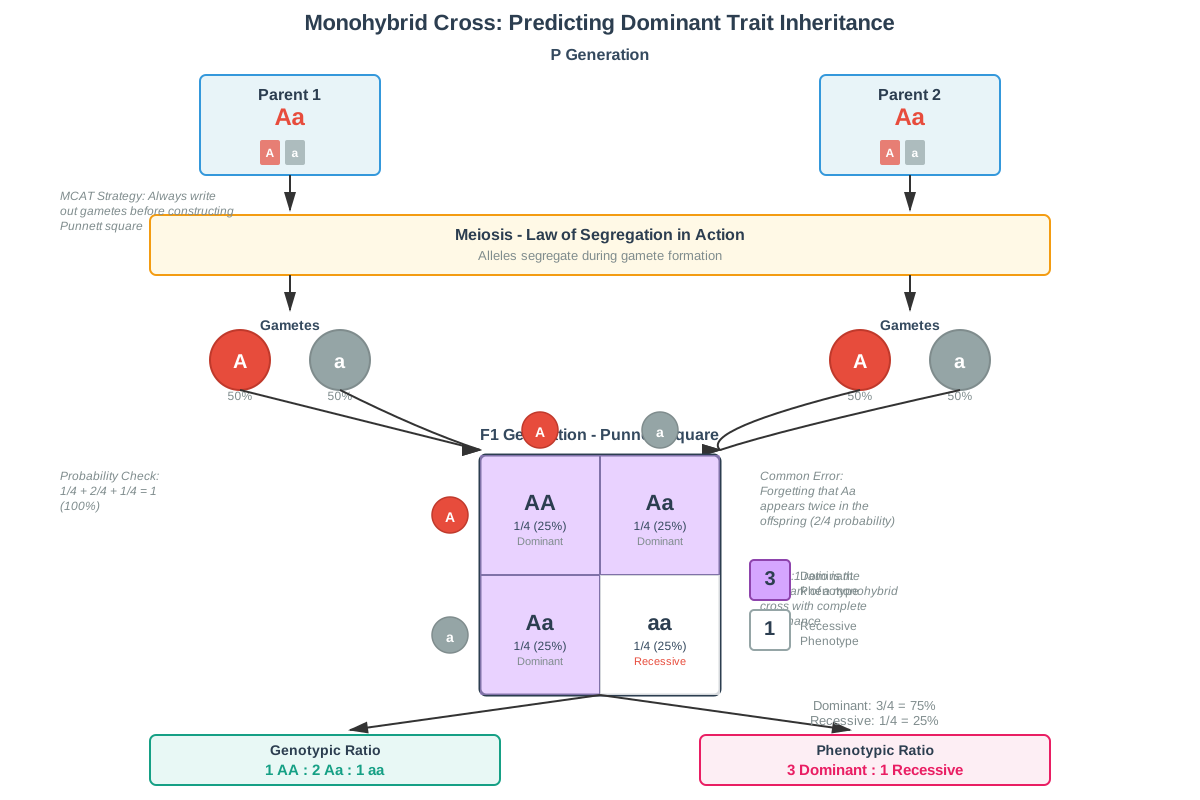
Punnett squares provide a systematic method for predicting offspring genotypes and phenotypes in genetic crosses involving dominant traits. For a monohybrid cross between two heterozygous individuals (Aa × Aa), the Punnett square reveals a 3:1 phenotypic ratio (dominant:recessive) and a 1:2:1 genotypic ratio (AA:Aa:aa). This 3:1 ratio is a hallmark of complete dominance and appears frequently in MCAT questions.
When crossing a heterozygous individual with a homozygous recessive individual (Aa × aa)—a testcross—the expected phenotypic ratio is 1:1 (dominant:recessive). This cross is particularly useful for determining whether an individual expressing a dominant phenotype is homozygous or heterozygous. For dihybrid crosses involving two independently assorting genes (AaBb × AaBb), the phenotypic ratio is 9:3:3:1, assuming complete dominance at both loci.
| Cross Type | Parental Genotypes | Offspring Genotypic Ratio | Offspring Phenotypic Ratio |
|---|---|---|---|
| Monohybrid | Aa × Aa | 1 AA : 2 Aa : 1 aa | 3 dominant : 1 recessive |
| Testcross | Aa × aa | 1 Aa : 1 aa | 1 dominant : 1 recessive |
| Homozygous × Heterozygous | AA × Aa | 1 AA : 1 Aa | All dominant |
| Dihybrid | AaBb × AaBb | 9:3:3:1 (complex) | 9:3:3:1 |
Distinguishing Dominance Patterns
The MCAT requires students to distinguish between complete dominance, incomplete dominance, and codominance. In incomplete dominance, the heterozygote displays an intermediate phenotype between the two homozygotes. For example, in snapdragons, crossing red-flowered (RR) and white-flowered (rr) plants produces pink-flowered (Rr) offspring. The phenotypic ratio for an F2 cross becomes 1:2:1 (red:pink:white), matching the genotypic ratio because each genotype produces a distinct phenotype.
Codominance occurs when both alleles are fully expressed simultaneously in the heterozygote, rather than blending. The ABO blood group system exemplifies codominance: individuals with genotype I^A I^B express both A and B antigens on red blood cells, resulting in type AB blood. Both complete dominance and codominance result in expression of the dominant allele(s) in heterozygotes, but codominance produces a phenotype showing both traits simultaneously rather than just one dominant trait.
Penetrance and Expressivity
Penetrance refers to the percentage of individuals with a particular genotype who actually express the associated phenotype. Some dominant alleles show incomplete penetrance—not all individuals carrying the dominant allele display the dominant phenotype. For example, the BRCA1 mutation for breast cancer susceptibility shows approximately 70-80% penetrance; not all women carrying the mutation develop breast cancer. Environmental factors, genetic background, and stochastic events influence penetrance.
Expressivity describes the degree or intensity with which a genotype is phenotypically expressed among individuals who show the trait. Variable expressivity means that individuals with the same dominant genotype may show different severity of the phenotype. Marfan syndrome exhibits variable expressivity—some affected individuals have severe cardiovascular complications while others show primarily skeletal features. Understanding these concepts is crucial for MCAT passages discussing genetic counseling or population genetics.
Concept Relationships
The concept of dominant traits serves as a central node connecting multiple genetics principles. At the most fundamental level, dominance relationships emerge from the molecular interaction between alleles → which determines genotype → which produces observable phenotype. The dominance relationship depends on protein function: gene expression → protein production → biochemical pathway function → phenotypic outcome.
Dominant traits connect directly to Mendelian inheritance patterns → which predict segregation ratios → enabling Punnett square analysis → producing probability calculations. These mathematical predictions allow testing of genetic hypotheses through chi-square analysis, another MCAT-relevant topic. The concept also links to pedigree analysis: recognizing autosomal dominant patterns → identifying vertical transmission → distinguishing from autosomal recessive or sex-linked inheritance.
At the molecular level, understanding dominance requires knowledge of gene dosage effects → haploinsufficiency → protein complex formation → metabolic pathway flux. This connects dominant traits to biochemistry and cell biology. The relationship extends to population genetics: dominant allele frequency → Hardy-Weinberg equilibrium → evolutionary fitness → natural selection. Finally, dominant traits relate to medical genetics: genetic counseling → risk assessment → inheritance probability → clinical decision-making.
Quick check — test yourself on Dominant traits so far.
Try Flashcards →High-Yield Facts
⭐ Dominant traits are expressed in both homozygous (AA) and heterozygous (Aa) individuals, requiring only one copy of the dominant allele for phenotypic expression.
⭐ The classic monohybrid cross between two heterozygotes (Aa × Aa) produces a 3:1 phenotypic ratio (dominant:recessive) and 1:2:1 genotypic ratio.
⭐ Autosomal dominant pedigrees show vertical transmission (trait appears in every generation), equal male and female frequency, and affected individuals typically have at least one affected parent.
⭐ A testcross (Aa × aa) produces a 1:1 phenotypic ratio and is used to determine whether an individual showing the dominant phenotype is homozygous or heterozygous.
⭐ Complete dominance occurs when the heterozygote is phenotypically identical to the homozygous dominant individual, often because one functional allele produces sufficient gene product.
- Dominant genetic disorders include Huntington's disease, achondroplasia, Marfan syndrome, and familial hypercholesterolemia.
- Incomplete penetrance means not all individuals with a dominant genotype express the phenotype; expressivity refers to the degree of phenotypic expression.
- Gain-of-function mutations and dominant-negative mutations are molecular mechanisms that produce dominant phenotypes.
- In dihybrid crosses with complete dominance at both loci (AaBb × AaBb), the phenotypic ratio is 9:3:3:1.
- Uppercase letters denote dominant alleles while lowercase letters denote recessive alleles in genetic notation.
- Each child of a heterozygous affected parent (Aa) and unaffected parent (aa) has exactly 50% probability of inheriting the dominant trait.
- Codominance differs from complete dominance in that both alleles are fully expressed simultaneously in heterozygotes (e.g., AB blood type).
Common Misconceptions
Misconception: Dominant alleles are always more common in populations than recessive alleles.
Correction: Dominance describes the phenotypic relationship between alleles in heterozygotes, not allele frequency. Many dominant disease alleles are rare in populations because they may reduce fitness. Allele frequencies are determined by evolutionary forces (selection, drift, mutation, migration), not dominance relationships.
Misconception: Dominant traits are "stronger" or "better" than recessive traits.
Correction: Dominance is a molecular phenomenon related to gene dosage and protein function, not trait superiority. Many dominant alleles cause severe genetic diseases (Huntington's disease), while many recessive alleles are beneficial or neutral. The terms "dominant" and "recessive" describe expression patterns, not evolutionary fitness or trait quality.
Misconception: If both parents show a dominant trait, all offspring must show the trait.
Correction: If both parents are heterozygous (Aa × Aa), 25% of offspring will be homozygous recessive (aa) and will not express the dominant trait. Only when at least one parent is homozygous dominant (AA) will all offspring necessarily express the dominant phenotype.
Misconception: Dominant alleles will eventually replace recessive alleles in a population.
Correction: Under Hardy-Weinberg equilibrium (no selection, mutation, migration, drift, or non-random mating), allele frequencies remain constant regardless of dominance relationships. Dominance affects phenotype ratios but does not inherently change allele frequencies across generations.
Misconception: In incomplete dominance, the alleles are no longer dominant or recessive.
Correction: Incomplete dominance represents a different type of dominance relationship, not an absence of dominance. The heterozygote shows an intermediate phenotype, but this is still a predictable dominance relationship. The terminology may shift to using different symbols (e.g., R^R and R^W instead of R and r) to emphasize that neither allele is completely dominant.
Misconception: All genetic traits follow simple dominant/recessive patterns.
Correction: Many traits show complex inheritance patterns including incomplete dominance, codominance, polygenic inheritance, epistasis, pleiotropy, and environmental influences. While Mendelian genetics provides a foundation, most human traits (height, skin color, intelligence) involve multiple genes and environmental factors.
Worked Examples
Example 1: Pedigree Analysis and Probability Calculation
Problem: A pedigree shows a trait appearing in every generation. Individual II-3 (affected female) marries individual II-4 (unaffected male), and they have four children: two affected daughters, one affected son, and one unaffected son. Individual III-2 (affected daughter) marries an unaffected male (III-3). What is the probability that their first child will be affected?
Solution:
Step 1: Determine the inheritance pattern
The trait appears in every generation (vertical transmission), affects both males and females equally, and shows male-to-male transmission in other parts of the pedigree. This pattern is consistent with autosomal dominant inheritance.
Step 2: Assign genotypes
Let A = dominant disease allele, a = recessive normal allele
- II-4 (unaffected male) must be aa
- II-3 (affected female) must be Aa (not AA, because they have an unaffected son who must be aa)
- III-2 (affected daughter) could be AA or Aa
Step 3: Determine III-2's genotype probability
From the cross Aa × aa (II-3 × II-4), affected offspring have a 1/2 chance of being AA and 1/2 chance of being Aa. However, we know III-2 is affected, so we use conditional probability:
- P(AA | affected) = 0 (since mother is Aa, cannot produce AA offspring with aa father)
- P(Aa | affected) = 1
Therefore, III-2 must be Aa.
Step 4: Calculate probability for III-2's child
Cross: Aa (III-2) × aa (III-3)
Using a Punnett square:
- 50% Aa (affected)
- 50% aa (unaffected)
Answer: The probability that their first child will be affected is 50% or 1/2.
Key concepts applied: Autosomal dominant inheritance pattern recognition, conditional probability, genotype determination from pedigree information, and Punnett square analysis.
Example 2: Molecular Mechanism and Phenotype Prediction
Problem: A researcher studies a metabolic enzyme that functions as a homodimer (two identical subunits). The wild-type enzyme (E+) has normal activity, while a mutant form (E-) is completely nonfunctional. When E+ and E- subunits are mixed, they randomly associate to form dimers. In heterozygous individuals (E+/E-), what percentage of enzyme dimers will be fully functional? Would you expect the wild-type allele to be dominant, and why?
Solution:
Step 1: Determine possible dimer combinations
In a heterozygous individual producing equal amounts of E+ and E- subunits, random association produces three types of dimers:
- E+/E+ (both subunits functional)
- E+/E- (one functional, one nonfunctional subunit)
- E-/E- (both subunits nonfunctional)
Step 2: Calculate dimer frequencies
Using probability:
- P(E+/E+) = 0.5 × 0.5 = 0.25 (25%)
- P(E+/E-) = 2 × (0.5 × 0.5) = 0.50 (50%) [factor of 2 because E+/E- and E-/E+ are equivalent]
- P(E-/E-) = 0.5 × 0.5 = 0.25 (25%)
Step 3: Determine functional enzyme percentage
Assuming only E+/E+ dimers are fully functional (E+/E- and E-/E- are nonfunctional), heterozygotes have only 25% functional enzyme activity.
Step 4: Predict dominance relationship
With only 25% normal enzyme activity, whether the wild-type allele appears dominant depends on the enzyme's role:
- If the metabolic pathway requires >25% enzyme activity for normal phenotype, the wild-type allele would be recessive (heterozygotes would show disease phenotype)
- If 25% activity is sufficient for normal phenotype, the wild-type allele would be dominant
- This represents a dominant-negative mutation mechanism where the mutant protein interferes with wild-type protein function
Answer: Only 25% of dimers are fully functional. The wild-type allele would likely be recessive in this scenario because the mutant protein exerts a dominant-negative effect, reducing functional enzyme below the threshold needed for normal phenotype. This explains why some loss-of-function mutations behave as dominant when the protein functions as a multimer.
Key concepts applied: Protein complex formation, dominant-negative mutations, gene dosage effects, molecular basis of dominance, and connecting genotype to phenotype through biochemical mechanisms.
Exam Strategy
When approaching MCAT questions about dominant traits, begin by identifying the inheritance pattern from the information provided. Look for key phrases: "appears in every generation" suggests dominant, "skips generations" suggests recessive, "only males affected" suggests X-linked. For pedigree questions, systematically assign genotypes starting with individuals whose genotypes are certain (homozygous recessive individuals showing the recessive phenotype, or unaffected individuals when the trait is dominant).
Trigger words indicating dominant inheritance include: "heterozygous individuals express the trait," "one mutant allele is sufficient," "vertical transmission," "affected individuals have affected parents," and "appears in every generation." Watch for questions asking about molecular mechanisms—these often test understanding of haploinsufficiency, gain-of-function, or dominant-negative effects. When you see enzyme activity percentages or protein function data, consider whether one functional allele produces sufficient gene product for normal phenotype.
For probability calculations, draw Punnett squares for simple crosses but use the multiplication rule for complex multi-generation problems. Remember that each child represents an independent event—previous children's phenotypes don't affect subsequent probabilities. When questions provide phenotypic ratios that deviate from expected Mendelian ratios, consider incomplete dominance, codominance, epistasis, or linked genes as alternative explanations.
Process-of-elimination strategies: Eliminate answer choices showing recessive inheritance patterns (skipping generations, affected individuals with unaffected parents) when the question describes dominant traits. Eliminate choices suggesting all offspring will be affected when both parents are heterozygous (correct answer: 75% affected). For molecular mechanism questions, eliminate choices suggesting the recessive allele is expressed in heterozygotes when complete dominance is specified.
Time allocation: Spend 30-45 seconds identifying the inheritance pattern, 30-60 seconds assigning genotypes or drawing Punnett squares, and 15-30 seconds calculating probabilities. For passage-based questions, invest time understanding the experimental system in the passage—this context often provides clues about dominance relationships and molecular mechanisms that apply to all questions in the set.
Memory Techniques
Mnemonic for Autosomal Dominant Pedigree Features: "VENOM"
- Vertical transmission (every generation)
- Equal male and female frequency
- No skipping of generations
- One affected parent typically
- Male-to-male transmission possible
Visualization for Dominance: Picture a "loud voice" (dominant allele) and a "whisper" (recessive allele). When both are present (heterozygote), you only hear the loud voice—the whisper is masked. This helps remember that dominant alleles mask recessive alleles in heterozygotes.
Acronym for Molecular Dominance Mechanisms: "HGD"
- Haploinsufficiency (one allele makes enough protein)
- Gain-of-function (mutant protein has enhanced activity)
- Dominant-negative (mutant protein interferes with normal protein)
Punnett Square Ratios Memory Aid: "3-1 for fun, 1-1 for test, 9-3-3-1 for best"
- 3:1 ratio from monohybrid cross (Aa × Aa) - "for fun" (basic cross)
- 1:1 ratio from testcross (Aa × aa) - "for test" (testing genotype)
- 9:3:3:1 ratio from dihybrid cross (AaBb × AaBb) - "for best" (most complex)
Distinguishing Dominance Types: Create a mental image:
- Complete dominance: One color completely covers another (red paint over white)
- Incomplete dominance: Two colors blend (red + white = pink)
- Codominance: Two colors appear side-by-side (red and white stripes)
Summary
Dominant traits represent phenotypic characteristics expressed when at least one dominant allele is present in an organism's genotype, forming a cornerstone of Mendelian genetics tested extensively on the MCAT. Complete dominance occurs when heterozygotes (Aa) are phenotypically identical to homozygous dominant individuals (AA), typically because one functional allele produces sufficient gene product for normal function. Autosomal dominant inheritance shows characteristic pedigree patterns including vertical transmission, equal sex distribution, and affected individuals in every generation. The molecular basis of dominance involves mechanisms including haploinsufficiency, gain-of-function mutations, and dominant-negative effects. Students must distinguish complete dominance from incomplete dominance and codominance, apply Punnett squares to predict offspring ratios (3:1 for monohybrid crosses, 1:1 for testcrosses, 9:3:3:1 for dihybrid crosses), and analyze pedigrees to determine inheritance patterns. Understanding dominant traits enables prediction of genetic disease risk, interpretation of experimental crosses, and connection of genotype to phenotype through molecular mechanisms—all essential skills for MCAT success.
Key Takeaways
- Dominant alleles are expressed in both homozygous (AA) and heterozygous (Aa) genotypes, requiring only one copy for phenotypic expression
- Autosomal dominant pedigrees show vertical transmission, equal male/female frequency, and no generation skipping
- The 3:1 phenotypic ratio from Aa × Aa crosses and 1:1 ratio from Aa × aa testcrosses are hallmarks of complete dominance
- Molecular mechanisms of dominance include haploinsufficiency, gain-of-function, and dominant-negative effects
- Complete dominance, incomplete dominance, and codominance represent different relationships between alleles in heterozygotes
- Many clinically significant genetic disorders (Huntington's, achondroplasia, Marfan syndrome) follow autosomal dominant inheritance
- Dominance describes phenotypic expression patterns, not allele frequency, evolutionary fitness, or trait superiority
Related Topics
Recessive Traits and Inheritance: Understanding recessive inheritance patterns provides essential contrast to dominant traits, enabling comprehensive pedigree analysis and recognition of carrier states. Mastery of dominant traits naturally leads to studying recessive conditions like cystic fibrosis, sickle cell disease, and phenylketonuria.
Incomplete Dominance and Codominance: These alternative dominance relationships expand understanding beyond simple Mendelian genetics, explaining traits like ABO blood groups and snapdragon flower color that don't follow complete dominance patterns.
Sex-Linked Inheritance: X-linked and Y-linked traits represent special cases where dominance relationships interact with sex chromosomes, producing gender-specific inheritance patterns seen in conditions like hemophilia and color blindness.
Pedigree Analysis: Advanced pedigree interpretation skills build directly on dominant trait recognition, enabling determination of inheritance patterns, carrier identification, and probability calculations for genetic counseling scenarios.
Hardy-Weinberg Equilibrium: Population genetics principles connect dominant trait frequencies to evolutionary forces, explaining how allele frequencies change (or remain stable) across generations in populations.
Practice CTA
Now that you've mastered the core concepts of dominant traits, it's time to solidify your understanding through active practice. Challenge yourself with MCAT-style practice questions that test pedigree analysis, probability calculations, and molecular mechanisms of dominance. Use flashcards to memorize high-yield facts, pedigree patterns, and phenotypic ratios until they become automatic. Remember: genetics questions are highly predictable on the MCAT—consistent practice with these fundamental concepts will translate directly into points on test day. Your investment in understanding dominant traits now will pay dividends not only in the genetics section but also in passages integrating molecular biology, biochemistry, and clinical scenarios. You've got this!
Sign up free to keep reading
Create a free AnvayaPrep account to finish this MCAT guide on Dominant traits — plus flashcards and practice questions.