Overview
Frameshift mutations represent one of the most consequential types of genetic alterations that can occur in DNA sequences. Unlike point mutations that affect only a single nucleotide, frameshift mutations involve the insertion or deletion of nucleotides in numbers that are not divisible by three, thereby disrupting the reading frame of the genetic code. This disruption fundamentally alters how the ribosome interprets the mRNA sequence during translation, typically resulting in a completely different and nonfunctional protein downstream of the mutation site.
Understanding frameshift mutations is essential for MCAT success because these mutations exemplify the relationship between DNA structure, the genetic code, and protein function—a conceptual bridge that appears frequently in Molecular Biology and Genetics questions. The MCAT tests not only the ability to recognize frameshift mutations but also to predict their consequences on protein structure and cellular function. Questions may present experimental scenarios involving mutagens, ask students to analyze DNA sequences, or require interpretation of pedigrees where frameshift mutations cause genetic diseases.
Within the broader landscape of Biology, frameshift mutations connect multiple high-yield topics including the central dogma of molecular biology, gene expression regulation, DNA repair mechanisms, and evolutionary biology. They serve as excellent examples of how small molecular changes can have dramatic phenotypic consequences, illustrating principles of genotype-phenotype relationships that are fundamental to understanding inheritance patterns, cancer biology, and pharmacogenomics—all topics that appear regularly on the MCAT.
Learning Objectives
- [ ] Define frameshift mutations using accurate Biology terminology
- [ ] Explain why frameshift mutations matter for the MCAT
- [ ] Apply frameshift mutations to exam-style questions
- [ ] Identify common mistakes related to frameshift mutations
- [ ] Connect frameshift mutations to related Biology concepts
- [ ] Predict the molecular consequences of specific insertion or deletion mutations on protein structure
- [ ] Distinguish between frameshift mutations and other mutation types based on their effects on the reading frame
- [ ] Analyze experimental data or genetic sequences to identify frameshift mutations and their phenotypic outcomes
Prerequisites
- The genetic code and codon structure: Understanding that codons are three-nucleotide sequences is essential because frameshift mutations specifically disrupt this triplet reading pattern
- Transcription and translation mechanisms: Knowledge of how DNA is transcribed to mRNA and translated to protein is necessary to predict how frameshift mutations affect the final protein product
- DNA structure and replication: Familiarity with nucleotide composition and DNA synthesis helps explain how insertions and deletions occur during replication errors
- Point mutations (substitutions): Understanding single nucleotide changes provides a comparison point for appreciating the more severe consequences of frameshift mutations
- Protein structure basics: Knowledge of amino acid sequences and protein folding is needed to understand why frameshift mutations typically produce nonfunctional proteins
Why This Topic Matters
Clinical and Real-World Significance
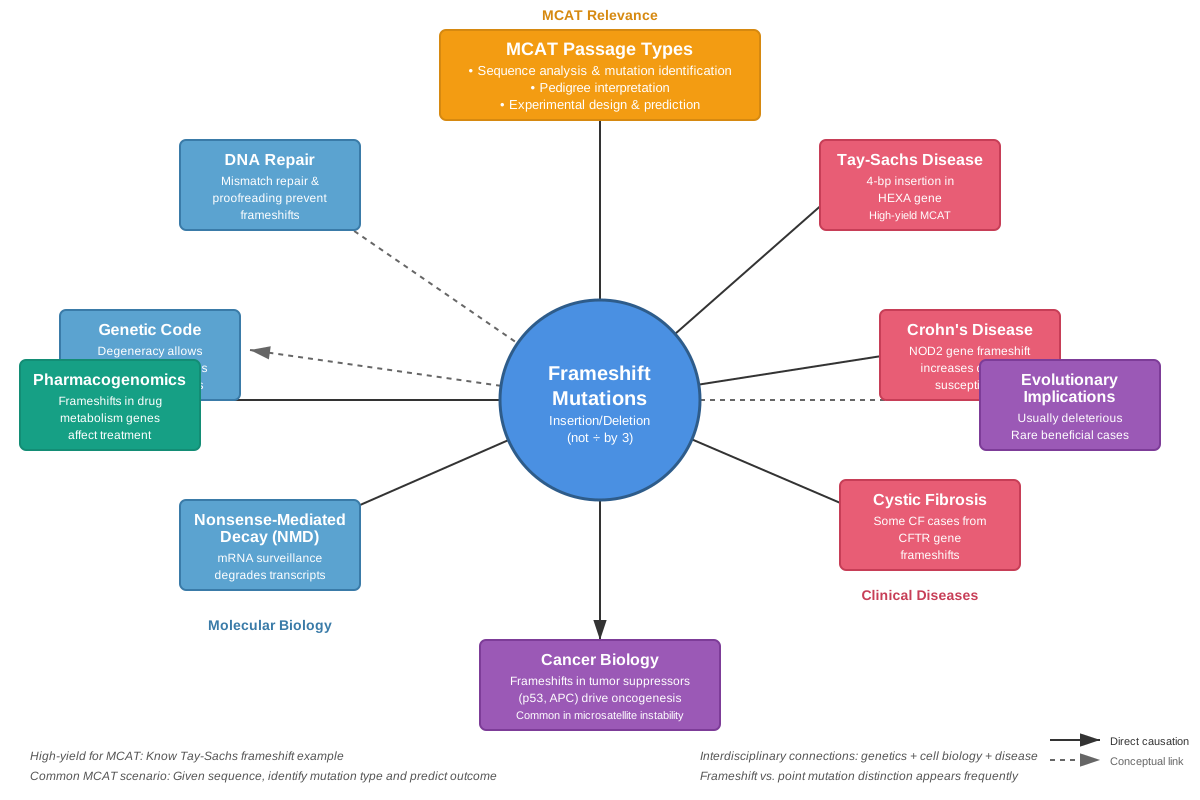
Frameshift mutations are responsible for numerous human genetic diseases, making them clinically relevant beyond their theoretical importance. Tay-Sachs disease, Crohn's disease susceptibility, and certain forms of cystic fibrosis result from frameshift mutations. Many cancer-causing mutations involve frameshifts in tumor suppressor genes or oncogenes. Understanding frameshift mutations is also critical in pharmacology, as they can affect drug metabolism genes, and in evolutionary biology, where they represent one mechanism for generating genetic diversity (though usually deleterious).
MCAT Exam Statistics
Frameshift mutations appear in approximately 3-5% of MCAT Biology passages, typically within genetics, molecular biology, or biochemistry contexts. Questions may be discrete (standalone) or passage-based, often requiring students to:
- Analyze DNA or mRNA sequences to predict mutation effects
- Interpret experimental results involving mutant organisms
- Compare different mutation types and their relative severity
- Apply knowledge of the genetic code to predict amino acid changes
Common Exam Presentations
The MCAT presents frameshift mutations through several recurring formats:
- Sequence analysis questions: Students receive wild-type and mutant DNA/RNA sequences and must identify the mutation type and consequences
- Experimental passages: Research scenarios describe phenotypes of mutant organisms, requiring students to deduce the underlying genetic mechanism
- Pedigree analysis: Family trees show inheritance patterns of diseases caused by frameshift mutations
- Comparative questions: Students must distinguish frameshift mutations from point mutations, silent mutations, or chromosomal aberrations
Core Concepts
Definition and Molecular Mechanism
A frameshift mutation is a genetic alteration caused by insertions or deletions (collectively called indels) of nucleotides in a DNA sequence where the number of nucleotides added or removed is not a multiple of three. Because the genetic code is read in consecutive, non-overlapping triplets (codons) during translation, any insertion or deletion that is not in multiples of three shifts the reading frame downstream of the mutation. This shift causes the ribosome to group nucleotides into entirely different codons than those present in the wild-type sequence.
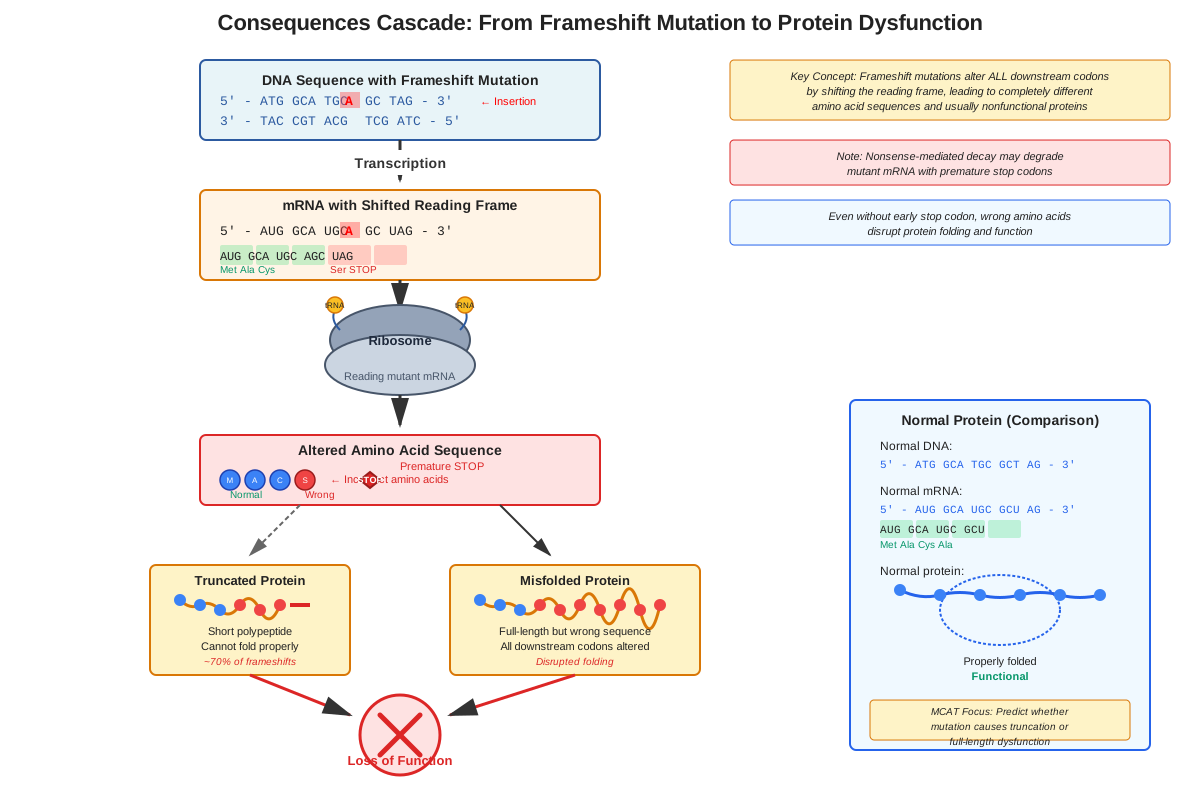
The molecular mechanism begins during DNA replication, recombination, or repair when errors introduce extra nucleotides or remove existing ones. When the altered DNA is transcribed into mRNA, the frameshift is preserved in the transcript. During translation, the ribosome begins reading from the start codon (AUG) and proceeds in the same triplet pattern regardless of the mutation. Once the ribosome reaches the frameshift site, every subsequent codon is read incorrectly, producing a completely different amino acid sequence from that point forward.
Types of Frameshift Mutations
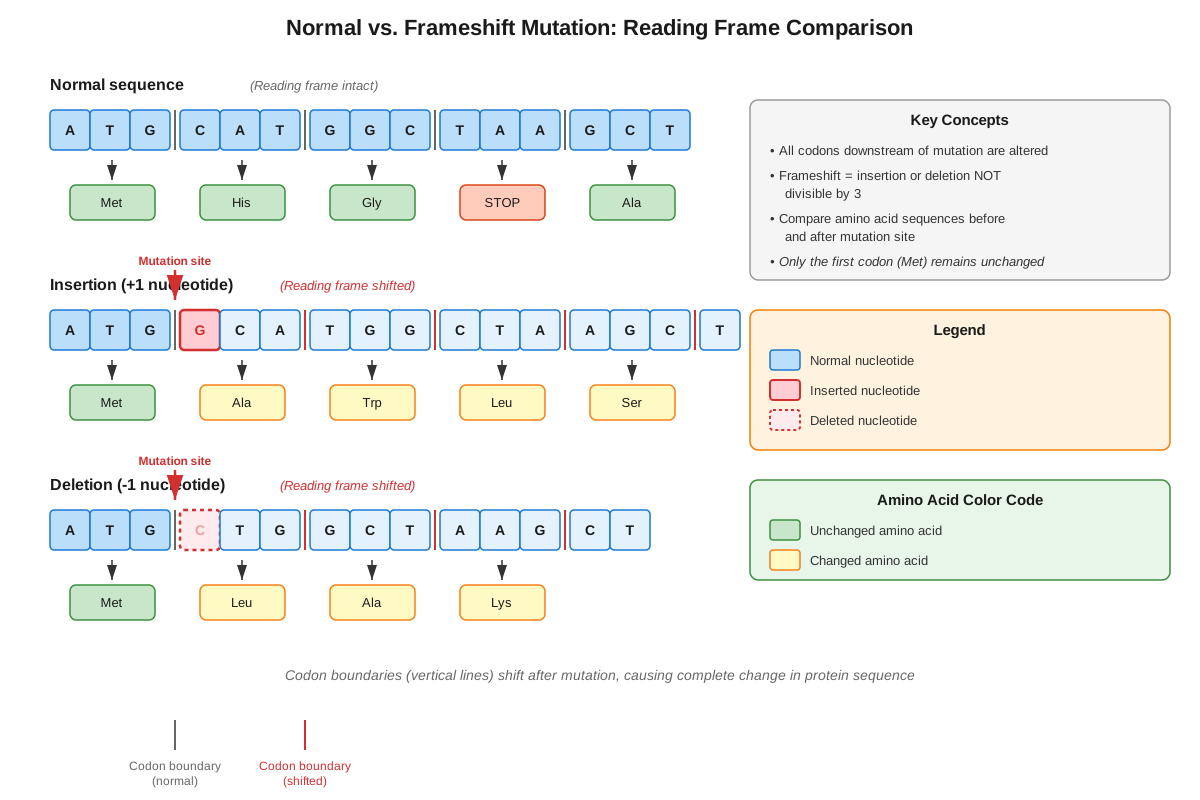
Insertion mutations occur when one or more nucleotides are added to the DNA sequence. For example, if a single adenine (A) is inserted into the sequence:
- Wild-type: ATG CAT GGC TAA
- Mutant: ATG ACA TGG CTA A
The reading frame shifts after the insertion, changing all downstream codons.
Deletion mutations occur when one or more nucleotides are removed from the sequence:
- Wild-type: ATG CAT GGC TAA
- Mutant: ATG C~~A~~T GGC TAA → ATG CTG GCT AA
Again, the reading frame shifts, altering all subsequent codons.
Consequences on Protein Structure
The consequences of frameshift mutations on protein structure are typically severe and multifaceted:
- Altered amino acid sequence: Every codon downstream of the mutation codes for a different amino acid than in the wild-type protein
- Premature stop codons: The shifted reading frame frequently introduces a stop codon (UAA, UAG, or UGA) earlier than the normal termination point, resulting in a truncated protein
- Extended proteins: Occasionally, the normal stop codon is read through, and translation continues until a stop codon appears in the new frame, producing an abnormally long protein
- Loss of function: The dramatically altered amino acid sequence typically destroys the protein's three-dimensional structure, eliminating its biological activity
Comparison with Other Mutation Types
Understanding frameshift mutations requires distinguishing them from other genetic alterations:
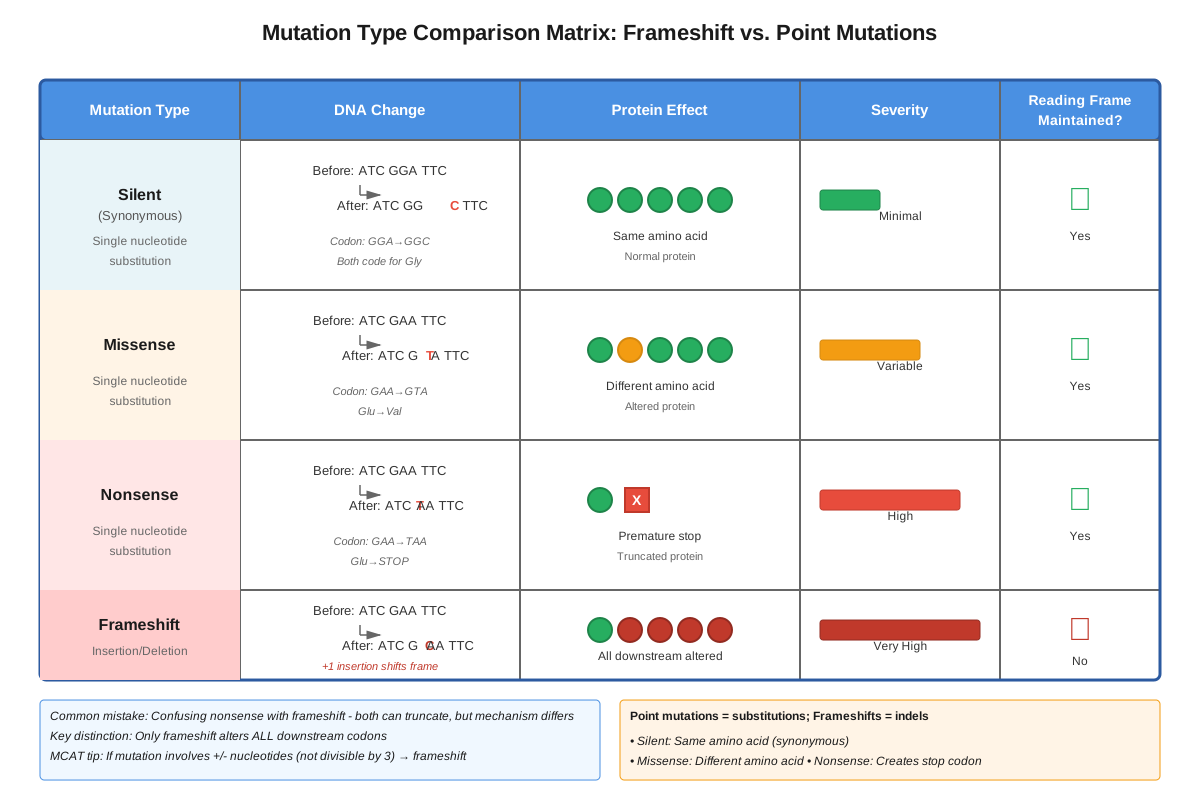
| Mutation Type | Nucleotide Change | Reading Frame | Typical Consequence |
|---|---|---|---|
| Frameshift | Insertion/deletion (not multiple of 3) | Shifted | Completely altered protein; usually nonfunctional |
| Point (substitution) | Single nucleotide replacement | Unchanged | Single amino acid change; variable effect |
| Silent | Substitution in wobble position | Unchanged | No amino acid change; no effect |
| Nonsense | Substitution creating stop codon | Unchanged | Truncated protein |
| Missense | Substitution changing amino acid | Unchanged | Single amino acid change; variable effect |
| In-frame indel | Insertion/deletion (multiple of 3) | Unchanged | Addition/deletion of amino acids; variable effect |
The Reading Frame Concept
The reading frame is the way nucleotides are grouped into codons during translation. Because there are no punctuation marks or spaces in mRNA, the ribosome must maintain the correct grouping established by the start codon. Consider the sequence:
THE CAT ATE THE RAT
If we delete one letter (a frameshift):
TH~~E~~ CAT ATE THE RAT → THC ATA TET HER AT
The "reading frame" has shifted, creating nonsense. Similarly, in genetic sequences:
- Normal frame: AUG | CAU | GGC | UAA
- After +1 frameshift: AUG | ACA | UGG | CUA | A
- After -1 frameshift: AUG | C~~A~~U | GGC | UAA → AUG | CUG | GCU | AA
Molecular Mechanisms of Frameshift Generation
Several molecular processes can generate frameshift mutations:
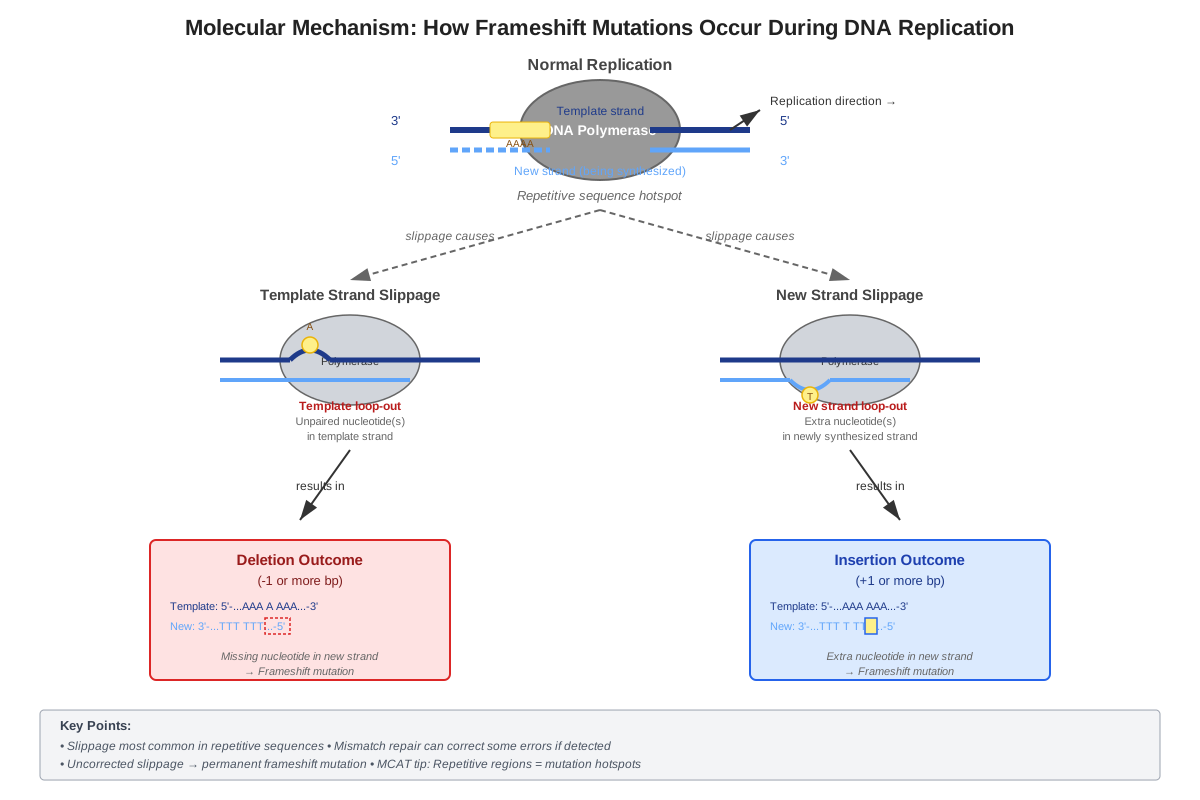
- DNA polymerase slippage: During replication, particularly in repetitive sequences, the polymerase may slip, causing insertions or deletions
- Transposable elements: Mobile genetic elements can insert into genes, causing frameshift mutations if their length is not a multiple of three
- Errors in DNA repair: Non-homologous end joining and other repair mechanisms may add or remove nucleotides incorrectly
- Chemical mutagens: Certain compounds (like acridine dyes) intercalate between DNA bases, causing insertions during replication
- Radiation damage: Ionizing radiation can cause DNA breaks that are repaired imperfectly, resulting in small deletions
Frameshift Suppression
While frameshift mutations are typically deleterious, cells possess mechanisms that can occasionally suppress their effects:
- Suppressor tRNAs: Rare tRNAs with altered anticodons can read through frameshift mutations under specific circumstances
- Ribosomal frameshifting: Programmed ribosomal frameshifting occurs naturally in some viruses and can be exploited therapeutically
- Compensatory mutations: A second frameshift mutation downstream can restore the original reading frame between the two mutations
Concept Relationships
Frameshift mutations sit at the intersection of multiple fundamental biological concepts, creating a web of interconnected ideas essential for MCAT mastery. The relationship begins with DNA structure → which determines how replication errors occur → leading to frameshift mutations → which alter mRNA sequences → affecting translation → ultimately changing protein structure → resulting in altered phenotypes.
Within the topic itself, the concepts connect as follows: Understanding the genetic code's triplet nature is prerequisite to comprehending why insertions and deletions cause reading frame shifts. This shifted frame produces altered amino acid sequences, which typically leads to premature termination or nonfunctional proteins. The severity of these effects depends on the location of the mutation within the gene and whether compensatory mechanisms exist.
Frameshift mutations connect to prerequisite topics through the central dogma: DNA replication errors create the mutations, transcription preserves them in mRNA, and translation manifests their effects in proteins. They relate to point mutations by contrast—both alter DNA sequences, but frameshifts have more extensive downstream effects. The connection to protein structure is direct: frameshift mutations destroy primary structure, which prevents proper secondary, tertiary, and quaternary structure formation.
Looking forward, frameshift mutations connect to genetic diseases (many result from frameshifts), cancer biology (tumor suppressors often harbor frameshift mutations), evolutionary biology (frameshifts provide genetic variation, though usually deleterious), and biotechnology (CRISPR can create targeted frameshifts for gene knockout).
High-Yield Facts
⭐ Frameshift mutations result from insertions or deletions of nucleotides in numbers NOT divisible by three, shifting the reading frame downstream of the mutation
⭐ Frameshift mutations typically have more severe consequences than point mutations because they alter every amino acid after the mutation site
⭐ Premature stop codons frequently appear in the shifted reading frame, producing truncated, nonfunctional proteins
⭐ In-frame insertions or deletions (multiples of three nucleotides) do NOT cause frameshifts and generally have less severe effects
⭐ Frameshift mutations closer to the 5' end of a gene are typically more deleterious than those near the 3' end because they affect more of the protein
- Frameshift mutations can occasionally extend proteins beyond their normal length if the original stop codon is read through in the new frame
- Repetitive DNA sequences (like trinucleotide repeats) are hotspots for frameshift mutations due to DNA polymerase slippage
- Acridine dyes are classic frameshift mutagens that intercalate between DNA bases, causing insertions during replication
- Two frameshift mutations can cancel each other out if they occur close together and shift the frame in opposite directions (one insertion, one deletion)
- Nonsense-mediated decay often degrades mRNA containing premature stop codons from frameshift mutations, reducing the amount of truncated protein produced
- Frameshift mutations in tumor suppressor genes (like APC or BRCA1) are common in various cancers
- The genetic code's degeneracy (multiple codons per amino acid) does NOT protect against frameshift mutations, unlike its protection against some point mutations
Quick check — test yourself on Frameshift mutations so far.
Try Flashcards →Common Misconceptions
Misconception: All insertions and deletions cause frameshift mutations.
Correction: Only insertions or deletions where the number of nucleotides is NOT a multiple of three cause frameshifts. Inserting or deleting 3, 6, 9, etc. nucleotides maintains the reading frame, though it adds or removes amino acids from the protein.
Misconception: Frameshift mutations only affect the protein sequence immediately after the mutation site.
Correction: Frameshift mutations alter EVERY codon downstream of the mutation until a stop codon is reached. The entire C-terminal portion of the protein (everything after the mutation) has a completely different amino acid sequence.
Misconception: Frameshift mutations and point mutations have similar severity.
Correction: Frameshift mutations are typically much more severe than point mutations. While a point mutation changes only one amino acid (and may even be silent), a frameshift mutation changes every amino acid after the mutation site and usually creates a nonfunctional protein.
Misconception: The reading frame can "reset" or "correct itself" after a frameshift mutation.
Correction: Once a frameshift occurs, the reading frame remains shifted for the remainder of the sequence unless a second, compensatory frameshift mutation occurs. The ribosome has no mechanism to detect or correct the shifted frame during translation.
Misconception: Frameshift mutations always make proteins shorter through premature stop codons.
Correction: While premature termination is common, frameshift mutations can also extend proteins if the normal stop codon is read through and translation continues until a stop codon appears in the new frame. Additionally, the shifted frame might not encounter a stop codon for some distance.
Misconception: Frameshift mutations occur randomly throughout the genome at equal rates.
Correction: Certain DNA sequences are more prone to frameshift mutations, particularly repetitive sequences and homopolymeric runs (stretches of the same nucleotide). These regions are hotspots for DNA polymerase slippage during replication.
Misconception: All frameshift mutations are inherited from parents.
Correction: While some frameshift mutations are inherited, many arise de novo (spontaneously) during DNA replication in somatic cells or during gametogenesis. Somatic frameshift mutations are particularly important in cancer development.
Worked Examples
Example 1: Sequence Analysis and Prediction
Question: A researcher is studying a bacterial gene encoding a 50-amino-acid protein. The wild-type DNA coding strand sequence begins: 5'-ATG GCA TTC GGA AAA...-3'. A mutant strain shows a single adenine (A) insertion after the 9th nucleotide. Predict the consequences of this mutation on the protein product.
Solution:
Step 1: Identify the mutation type and location.
- The insertion of one nucleotide (not a multiple of three) creates a frameshift mutation
- The insertion occurs after position 9, which is after the third codon (ATG GCA TTC)
Step 2: Determine the reading frame before and after the mutation.
- Wild-type codons: ATG | GCA | TTC | GGA | AAA...
- After insertion: ATG | GCA | TTAC | GGA | AAA... → ATG | GCA | TTA | CGG | AAA...
Step 3: Translate both sequences to compare amino acids.
- Wild-type: Met-Ala-Phe-Gly-Lys...
- Mutant: Met-Ala-Leu-Arg-Lys...
Step 4: Predict downstream consequences.
- The first two amino acids (Met-Ala) remain unchanged because they occur before the frameshift
- Every amino acid from position 3 onward is different (Phe→Leu, Gly→Arg, etc.)
- The shifted reading frame will likely encounter a premature stop codon, truncating the protein
- Even if no premature stop occurs, the protein will be nonfunctional due to the completely altered amino acid sequence affecting 48 of 50 amino acids
Step 5: Connect to learning objectives.
This frameshift mutation demonstrates why these mutations are typically more severe than point mutations—a single nucleotide insertion has altered 96% of the protein's sequence, almost certainly destroying its function. This exemplifies the importance of maintaining the correct reading frame during translation.
Example 2: Experimental Analysis
Question: An MCAT passage describes an experiment where researchers expose bacterial cultures to different mutagens and sequence the resulting mutations in a reporter gene. They observe the following:
- Mutagen A produces primarily G→A transitions
- Mutagen B produces primarily single-nucleotide deletions in homopolymeric runs
- Mutagen C produces primarily three-nucleotide deletions
The passage asks: Which mutagen(s) would most likely produce proteins with completely altered amino acid sequences throughout most of their length?
Solution:
Step 1: Classify each mutation type.
- Mutagen A: G→A transitions are point mutations (substitutions)
- Mutagen B: Single-nucleotide deletions are frameshift mutations (1 is not divisible by 3)
- Mutagen C: Three-nucleotide deletions are in-frame deletions (3 is divisible by 3)
Step 2: Predict consequences of each mutation type.
- Point mutations (Mutagen A): Change only one amino acid per mutation; do not alter the entire downstream sequence
- Frameshift mutations (Mutagen B): Shift the reading frame, changing every amino acid after the mutation site
- In-frame deletions (Mutagen C): Remove one amino acid but maintain the reading frame for all downstream codons
Step 3: Identify which produces "completely altered amino acid sequences throughout most of their length."
- Only frameshift mutations (Mutagen B) produce this effect
- Point mutations and in-frame deletions have localized effects
Step 4: Consider additional factors.
- The question specifies "homopolymeric runs" for Mutagen B, which are indeed hotspots for frameshift mutations due to polymerase slippage
- This detail confirms that Mutagen B causes frameshift mutations
Answer: Mutagen B would most likely produce proteins with completely altered amino acid sequences because single-nucleotide deletions cause frameshift mutations that change every codon downstream of the mutation site.
This example demonstrates how the MCAT tests frameshift mutations in experimental contexts, requiring students to connect mutation mechanisms to their molecular consequences and distinguish between different mutation types based on their effects.
Exam Strategy
Approaching MCAT Questions on Frameshift Mutations
When encountering frameshift mutation questions, follow this systematic approach:
- Identify the mutation type first: Determine whether the question involves an insertion, deletion, or substitution, and count the number of nucleotides affected
- Apply the "divisible by three" rule: If the number of nucleotides inserted or deleted is divisible by three, it's NOT a frameshift
- Map the reading frame: Mentally or on scratch paper, divide the sequence into triplet codons starting from the start codon
- Locate the mutation: Identify exactly where in the reading frame the mutation occurs
- Predict downstream effects: Remember that everything after the mutation is affected, not just the immediate area
Trigger Words and Phrases
Watch for these key phrases that signal frameshift mutation content:
- "Insertion of [number not divisible by 3] nucleotides"
- "Deletion of a single base"
- "Reading frame shift"
- "Completely altered protein sequence"
- "Premature termination"
- "Truncated protein"
- "Nonfunctional protein product"
- "Polymerase slippage"
- "Repetitive sequences"
Process of Elimination Tips
When answering multiple-choice questions:
- Eliminate answers suggesting localized effects if the question describes a frameshift (frameshifts have extensive downstream effects)
- Eliminate "silent mutation" or "no effect" options for frameshift questions (frameshifts always have significant effects)
- Choose answers indicating severe consequences over mild ones when frameshift mutations are involved
- Eliminate answers confusing frameshift with point mutations (watch for options that describe single amino acid changes)
- Select answers mentioning premature stop codons when asked about typical frameshift consequences
Time Allocation Advice
Frameshift mutation questions typically require 60-90 seconds:
- Discrete questions: 60 seconds—quickly identify mutation type, apply the divisible-by-three rule, select answer
- Passage-based questions: 90 seconds—read the relevant passage section, analyze any sequences provided, apply concepts, eliminate wrong answers
- Sequence analysis questions: Allow extra time (up to 2 minutes) if you need to write out codons on scratch paper, but practice mental codon grouping to save time
Exam Tip: If a question provides DNA or RNA sequences, immediately mark off triplet codons starting from the start codon. This visual organization prevents errors and speeds up analysis.
Memory Techniques
Mnemonics
"Frameshift = SHIFT Everything After"
- Severe consequences
- Huge downstream effects
- Insertions or deletions (not multiples of 3)
- Frame is permanently shifted
- Truncation often occurs
"Three's Company, One's a Crowd"
Remember that insertions/deletions of THREE nucleotides are fine (in-frame), but ONE nucleotide causes problems (frameshift).
"STOP Appears Prematurely"
- Shifted reading frame
- Truncated protein
- Often nonfunctional
- Premature termination codon
Visualization Strategies
The Sentence Analogy: Visualize DNA as a sentence where each three-letter word is a codon:
- Normal: THE CAT ATE THE RAT
- After deleting one letter: THC ATA TET HER AT (frameshift)
- After deleting three letters: THE ATE THE RAT (in-frame deletion)
This analogy helps remember that removing/adding letters (nucleotides) in groups of three maintains meaning (reading frame), while other numbers destroy it.
The Train Track Model: Picture codons as train cars connected in groups of three. A frameshift mutation is like uncoupling the cars and reconnecting them incorrectly—every car after the break is in the wrong position.
Acronyms
FRAME for remembering frameshift characteristics:
- Frequently causes loss of function
- Reading frame is shifted
- All downstream codons affected
- More severe than point mutations
- Eliminated by multiples of three
Summary
Frameshift mutations represent a critical category of genetic alterations that fundamentally disrupt the reading frame of genetic information during translation. These mutations result from insertions or deletions of nucleotides in numbers not divisible by three, causing the ribosome to group nucleotides into entirely different codons downstream of the mutation site. Unlike point mutations that affect single amino acids, frameshift mutations alter every amino acid in the protein sequence after the mutation, typically producing completely nonfunctional proteins. The severity of frameshift mutations stems from their extensive downstream effects, often including premature stop codons that truncate the protein. Understanding frameshift mutations requires mastery of the genetic code's triplet nature, the translation mechanism, and the relationship between DNA sequence and protein structure. For MCAT success, students must be able to identify frameshift mutations from sequence data, predict their molecular consequences, distinguish them from other mutation types, and apply this knowledge to experimental scenarios and clinical contexts. The key principle is simple but profound: maintaining the correct reading frame is essential for proper protein synthesis, and frameshift mutations destroy this frame, with devastating consequences for protein function.
Key Takeaways
- Frameshift mutations occur when insertions or deletions involve nucleotide numbers NOT divisible by three, shifting the reading frame for all downstream codons
- These mutations typically have more severe consequences than point mutations because they alter the entire amino acid sequence after the mutation site, not just a single amino acid
- Premature stop codons frequently appear in shifted reading frames, producing truncated, nonfunctional proteins
- In-frame insertions or deletions (multiples of three nucleotides) do NOT cause frameshifts and generally have less severe effects
- The location of a frameshift mutation matters—mutations near the 5' end of a gene affect more of the protein and are typically more deleterious
- Frameshift mutations can arise from DNA polymerase slippage (especially in repetitive sequences), transposable elements, repair errors, or chemical mutagens like acridine dyes
- For MCAT questions, always apply the "divisible by three" rule first to determine whether an insertion or deletion causes a frameshift
Related Topics
Point Mutations (Substitutions): Understanding silent, missense, and nonsense mutations provides essential contrast to frameshift mutations and helps distinguish between mutation types on the MCAT. Mastering frameshift mutations makes point mutation questions easier by comparison.
DNA Repair Mechanisms: Mismatch repair, nucleotide excision repair, and other DNA repair pathways prevent or correct frameshift mutations. Understanding how cells detect and fix these errors connects to cancer biology and genetic stability.
The Genetic Code: Deep knowledge of codon assignments, degeneracy, and wobble base pairing enhances understanding of why frameshift mutations have such severe consequences and why the reading frame must be maintained.
Gene Expression Regulation: Frameshift mutations can affect regulatory sequences, promoters, and enhancers, connecting mutation biology to transcriptional control mechanisms tested on the MCAT.
Cancer Biology: Many tumor suppressor genes (like APC, BRCA1, and p53) harbor frameshift mutations in cancer cells, making this topic essential for understanding oncogenesis and tumor progression.
Genetic Diseases: Specific diseases like Tay-Sachs, certain cystic fibrosis variants, and Crohn's disease result from frameshift mutations, providing clinical context for MCAT passages.
Practice CTA
Now that you've mastered the core concepts of frameshift mutations, it's time to solidify your understanding through active practice. Attempt the practice questions and flashcards associated with this topic to test your ability to identify frameshift mutations, predict their consequences, and apply this knowledge to MCAT-style scenarios. Remember, the difference between passive reading and active mastery lies in deliberate practice. Challenge yourself with sequence analysis problems, work through experimental passages, and time yourself to build both accuracy and speed. Each practice question you complete strengthens the neural pathways that will serve you on test day. You've built a strong foundation—now transform that knowledge into exam-ready skills through consistent, focused practice. Your future MCAT success depends on the work you put in today!
Sign up free to keep reading
Create a free AnvayaPrep account to finish this MCAT guide on Frameshift mutations — plus flashcards and practice questions.