Overview
Ligase enzymes represent a critical class of biological catalysts that form covalent bonds between molecules, most notably joining DNA fragments by catalyzing the formation of phosphodiester bonds between adjacent nucleotides. In the context of Molecular Biology and Genetics, ligases serve as essential molecular "glue" that seals breaks in the sugar-phosphate backbone of DNA, making them indispensable for DNA replication, repair, and recombination processes. Understanding ligase function is fundamental to comprehending how cells maintain genomic integrity and how molecular biology techniques exploit these enzymes for biotechnology applications.
For the MCAT, ligase knowledge bridges multiple high-yield topics including DNA replication, DNA repair mechanisms, recombinant DNA technology, and enzyme kinetics. The exam frequently tests ligase function within passage-based questions describing experimental procedures, particularly those involving cloning vectors, PCR applications, or cellular responses to DNA damage. Questions may present scenarios requiring students to predict the consequences of ligase deficiency, identify the role of ligase in multi-step processes, or analyze experimental designs that depend on ligase activity.
The significance of ligase extends beyond isolated enzyme function to interconnect with broader Biology concepts including the central dogma of molecular biology, cell cycle regulation, and the molecular basis of genetic diseases. Ligase deficiencies can result in immunodeficiency disorders and increased cancer susceptibility, illustrating the clinical relevance that makes this topic particularly attractive for MCAT passage writers. Mastery of ligase biochemistry provides the foundation for understanding both fundamental cellular processes and the biotechnology revolution that has transformed modern medicine and research.
Learning Objectives
- [ ] Define Ligase using accurate Biology terminology
- [ ] Explain why Ligase matters for the MCAT
- [ ] Apply Ligase to exam-style questions
- [ ] Identify common mistakes related to Ligase
- [ ] Connect Ligase to related Biology concepts
- [ ] Describe the mechanism of DNA ligase catalysis including cofactor requirements
- [ ] Compare and contrast different types of ligases and their specific cellular roles
- [ ] Analyze experimental scenarios involving ligase to predict outcomes and troubleshoot problems
Prerequisites
- DNA structure and the sugar-phosphate backbone: Understanding the 3' hydroxyl and 5' phosphate groups is essential because ligase specifically catalyzes bond formation between these groups
- Basic enzyme function and catalysis: Knowledge of how enzymes lower activation energy and facilitate reactions provides the framework for understanding ligase mechanism
- DNA replication fundamentals: Familiarity with leading and lagging strand synthesis is necessary because ligase plays distinct roles in each process
- ATP and energy coupling: Ligases require energy input, typically from ATP or NAD+, making understanding of energy currency molecules critical
- Phosphodiester bonds: Recognizing these as the covalent linkages in the DNA backbone clarifies what ligase actually creates
Why This Topic Matters
Clinical and Real-World Significance: DNA ligase deficiencies cause severe human diseases, most notably DNA ligase IV deficiency, which results in immunodeficiency, developmental delay, and radiation sensitivity. These clinical presentations demonstrate the enzyme's critical role in DNA double-strand break repair and V(D)J recombination during immune system development. Additionally, DNA ligase represents a validated antibiotic target, as bacterial ligases differ structurally from human enzymes, making them attractive for selective drug development. The biotechnology industry depends entirely on ligase for recombinant DNA technology, gene therapy vector construction, and next-generation sequencing library preparation—applications worth billions of dollars annually.
Exam Statistics and Question Types: Ligase appears in approximately 3-5% of MCAT Biology questions, most frequently within passages describing experimental techniques or cellular processes. The topic typically appears in medium-difficulty questions that require integration of multiple concepts rather than simple recall. Common question formats include: (1) experimental design questions asking students to identify which enzyme is needed at specific steps, (2) troubleshooting scenarios where ligase malfunction must be diagnosed, (3) comparison questions contrasting ligase with other DNA-modifying enzymes like polymerase or nuclease, and (4) passage-based questions describing DNA repair pathways where students must identify ligase's role.
Common Passage Contexts: MCAT passages featuring ligase often describe cloning experiments where students must track DNA fragments through restriction digestion, ligation, and transformation steps. Other high-yield contexts include DNA repair pathway descriptions (particularly base excision repair and nucleotide excision repair), Okazaki fragment processing during replication, and CRISPR-based genome editing where ligase repairs the final DNA breaks. Passages may present experimental data showing incomplete ligation or compare wild-type versus ligase-deficient cell lines responding to DNA damage.
Core Concepts
Definition and Basic Function
Ligase (specifically DNA ligase) is an enzyme that catalyzes the formation of a phosphodiester bond between the 3' hydroxyl group of one nucleotide and the 5' phosphate group of an adjacent nucleotide, effectively sealing breaks or "nicks" in the DNA sugar-phosphate backbone. This reaction is thermodynamically unfavorable and requires energy input, distinguishing ligases from hydrolytic enzymes that break bonds while releasing energy. The term "ligase" derives from the Latin "ligare," meaning "to bind," which accurately describes the enzyme's function as a molecular connector.
Ligases belong to the EC 6 class of enzymes (ligases/synthetases) in the systematic enzyme classification system. While multiple types of ligases exist in biology (including RNA ligases and protein ligases), DNA ligase represents the most MCAT-relevant form. The enzyme exhibits remarkable specificity, recognizing only properly base-paired DNA with adjacent 3'-OH and 5'-phosphate groups, ensuring that only correctly aligned DNA strands are joined.
Mechanism of Catalysis
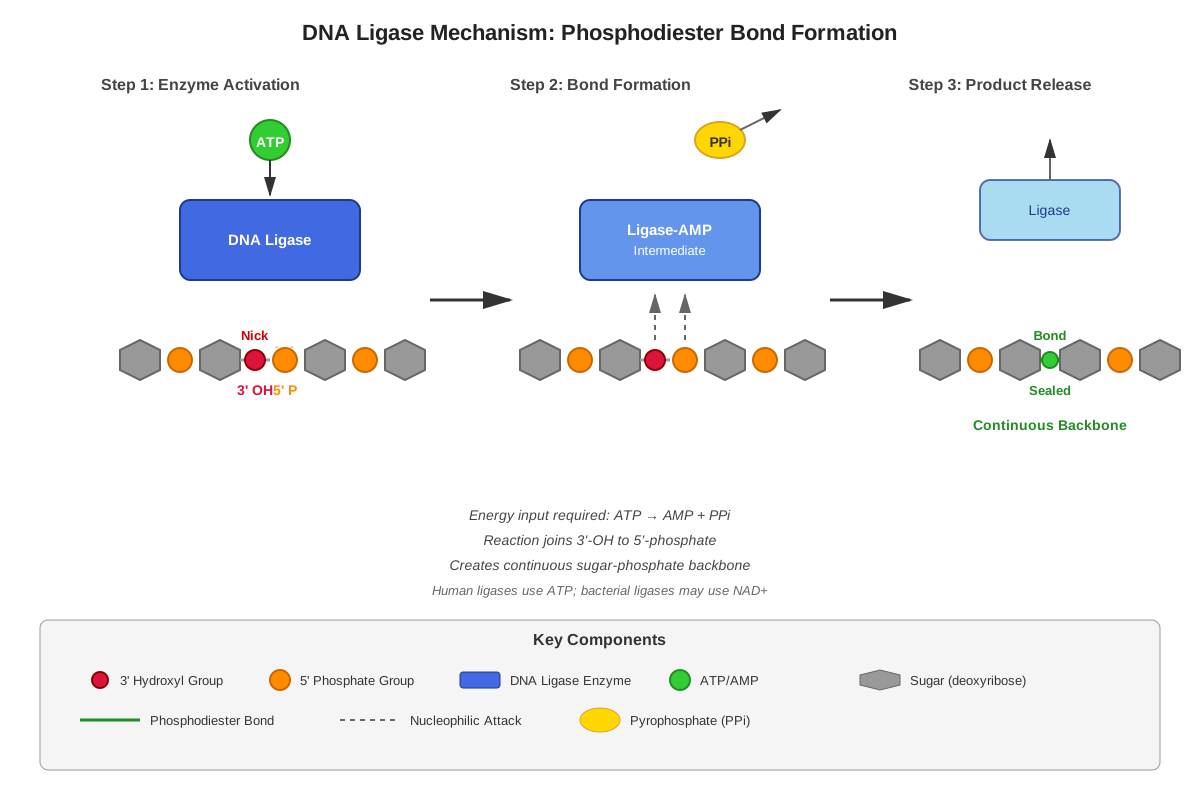
The DNA ligase catalytic mechanism proceeds through three distinct steps, each involving specific chemical intermediates:
- Adenylation of the enzyme: The ligase enzyme reacts with ATP (in eukaryotes and bacteriophages) or NAD+ (in bacteria) to form a ligase-AMP intermediate, releasing pyrophosphate (PPi) or nicotinamide mononucleotide (NMN), respectively. The AMP becomes covalently attached to a lysine residue in the enzyme's active site.
- Transfer of AMP to DNA: The activated AMP group transfers from the lysine residue to the 5' phosphate group of the DNA nick, creating a DNA-adenylate intermediate (5'-5' phosphoanhydride bond). This step activates the phosphate group for nucleophilic attack.
- Phosphodiester bond formation: The 3' hydroxyl group performs a nucleophilic attack on the activated 5' phosphate, displacing AMP and forming the phosphodiester bond. This step releases AMP and completes the ligation reaction.
This mechanism explains why ligase requires an energy cofactor (ATP or NAD+) and why the enzyme cannot join DNA fragments with incompatible ends (such as a 3' phosphate with a 5' hydroxyl—the reverse orientation).
Types of DNA Ligases
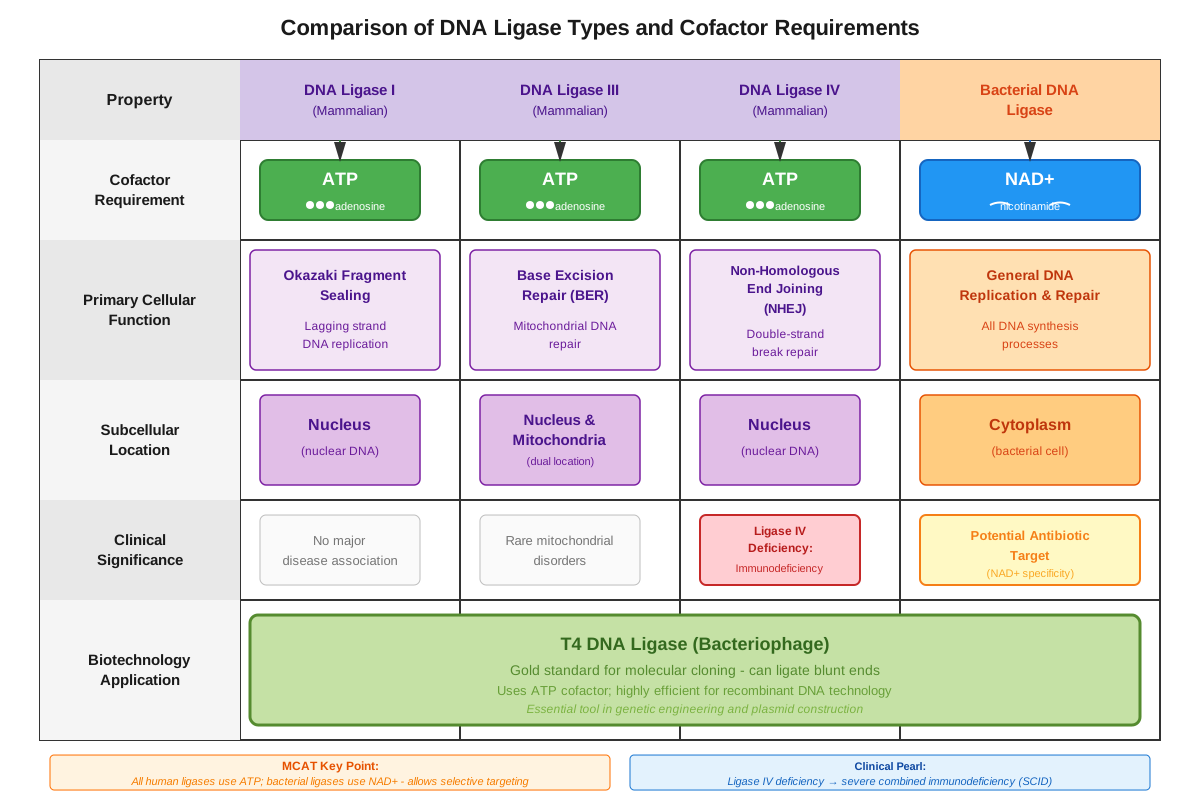
Different organisms utilize structurally and mechanistically distinct ligases:
| Ligase Type | Organism | Energy Source | Primary Function | MCAT Relevance |
|---|---|---|---|---|
| DNA Ligase I | Eukaryotes | ATP | Okazaki fragment joining, base excision repair | High - replication questions |
| DNA Ligase III | Eukaryotes | ATP | Base excision repair, mitochondrial DNA repair | Medium - repair pathways |
| DNA Ligase IV | Eukaryotes | ATP | Non-homologous end joining (NHEJ) | Medium - double-strand break repair |
| DNA Ligase (NAD+-dependent) | Bacteria | NAD+ | All bacterial ligation needs | High - antibiotic targets, cloning |
| T4 DNA Ligase | Bacteriophage T4 | ATP | Viral DNA replication | Very High - laboratory standard for cloning |
T4 DNA ligase deserves special attention for the MCAT because it represents the workhorse enzyme for molecular biology applications. Unlike most ligases that only join "sticky ends" (complementary overhangs), T4 ligase can join "blunt ends" (flush DNA termini with no overhangs), though with lower efficiency. This property makes T4 ligase invaluable for cloning applications and explains why it appears frequently in experimental passages.
Role in DNA Replication
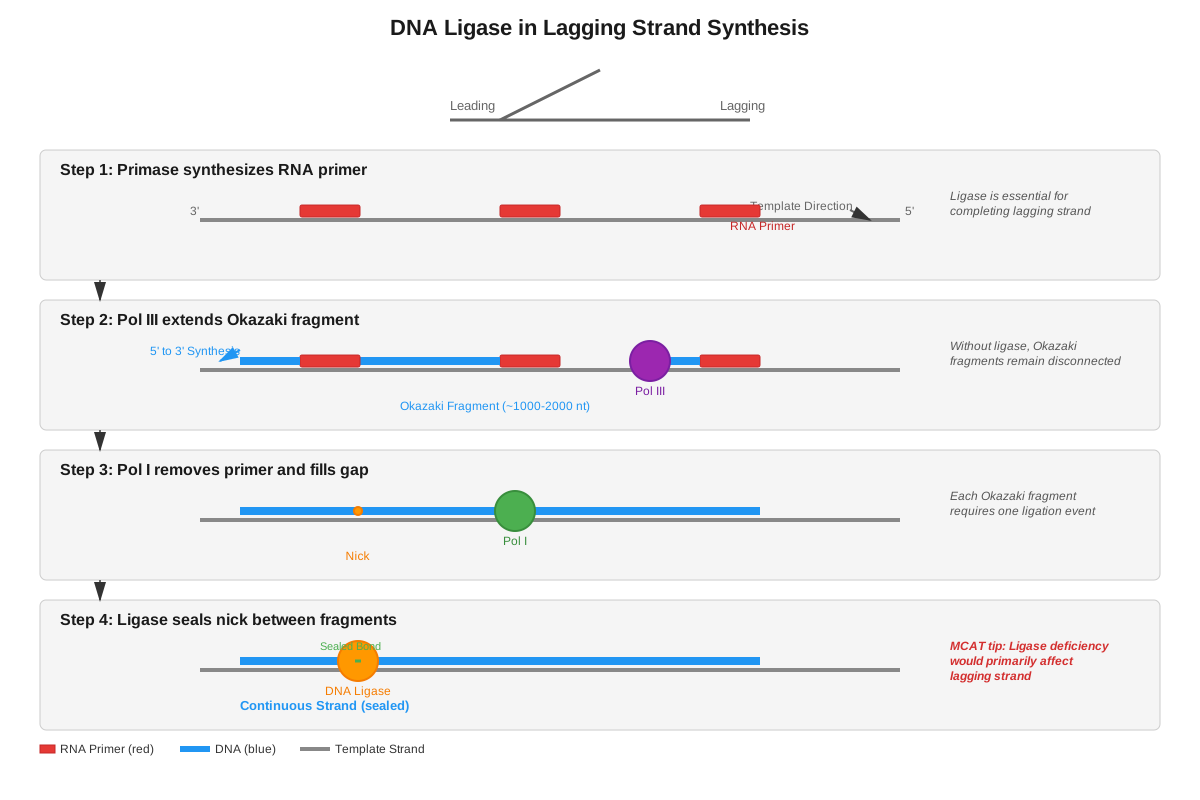
During DNA replication, ligase performs the essential function of joining Okazaki fragments on the lagging strand. As DNA polymerase III synthesizes short RNA-primed DNA segments (1000-2000 nucleotides in prokaryotes, 100-200 in eukaryotes), these fragments initially remain disconnected. The maturation process requires:
- RNA primer removal: DNA polymerase I (in prokaryotes) or RNase H and FEN1 (in eukaryotes) remove RNA primers
- Gap filling: DNA polymerase fills the gaps with DNA nucleotides
- Nick sealing: DNA ligase joins the final phosphodiester bond between adjacent Okazaki fragments
Without functional ligase, the lagging strand would remain fragmented, leading to chromosome instability and cell death. This explains why ligase mutations are typically lethal or cause severe disease. On the leading strand, ligase plays a less prominent but still important role in sealing occasional nicks that arise from polymerase dissociation or damage repair.
Role in DNA Repair
DNA ligase participates in virtually all DNA repair pathways, serving as the final step that restores backbone continuity after damage removal and gap filling:
Base Excision Repair (BER): After a damaged base is removed by a glycosylase and the resulting abasic site is processed by AP endonuclease and DNA polymerase β, DNA ligase III (complexed with XRCC1 protein) seals the nick. This pathway repairs oxidative damage, alkylation, and deamination.
Nucleotide Excision Repair (NER): Following removal of bulky DNA lesions (like thymine dimers from UV exposure) and gap-filling by DNA polymerase, DNA ligase I seals the remaining nick. This pathway is critical for preventing skin cancer.
Non-Homologous End Joining (NHEJ): DNA ligase IV (complexed with XRCC4 and XLF proteins) directly joins broken DNA ends in double-strand break repair. This error-prone pathway is essential for V(D)J recombination in immune cells and general double-strand break repair.
Mismatch Repair (MMR): After excision of the mismatch-containing strand segment and resynthesis, ligase seals the final nick to complete repair.
The diversity of ligase involvement in repair pathways explains why ligase deficiencies cause pleiotropic effects including immunodeficiency, cancer predisposition, and developmental abnormalities.
Biotechnology Applications
Understanding ligase applications in molecular biology is high-yield for MCAT experimental passages:
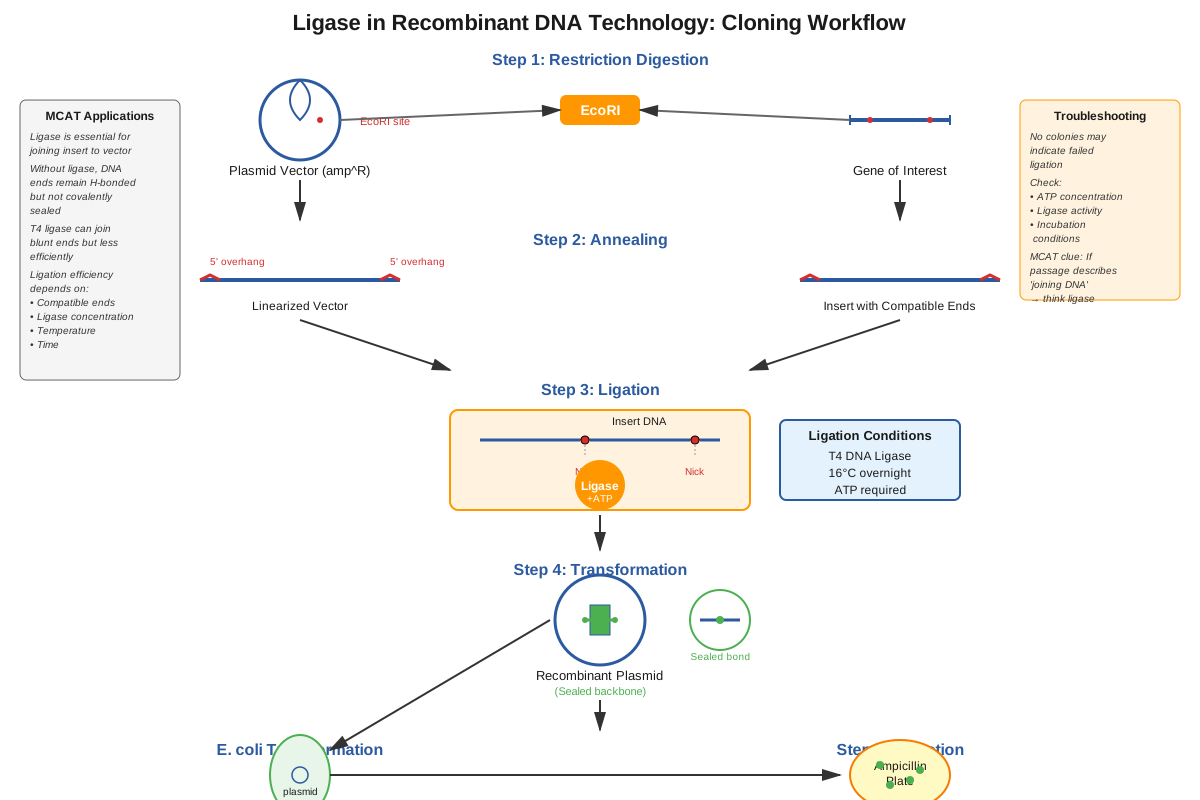
Recombinant DNA Technology: Ligase joins restriction fragment ends to create recombinant plasmids. The process involves: (1) cutting vector and insert DNA with compatible restriction enzymes, (2) mixing the fragments, (3) adding ligase and ATP, and (4) transforming bacteria with the ligation products. Questions may ask students to predict ligation outcomes or troubleshoot failed experiments.
DNA Sequencing: Next-generation sequencing requires ligating adapters (short DNA sequences) to fragmented genomic DNA. These adapters enable PCR amplification and sequencing primer binding.
Site-Directed Mutagenesis: Ligase seals nicks in plasmids after introducing specific mutations, enabling creation of altered proteins for structure-function studies.
DNA Assembly Methods: Modern techniques like Gibson assembly use ligase (along with exonuclease and polymerase) to join multiple DNA fragments simultaneously, streamlining cloning workflows.
Concept Relationships
The core concepts of ligase function interconnect hierarchically and functionally. At the foundation, ligase mechanism (adenylation → AMP transfer → phosphodiester bond formation) determines all subsequent functions and explains the enzyme's cofactor requirements. This mechanism directly connects to ligase types, as the structural differences between ATP-dependent and NAD+-dependent ligases reflect mechanistic variations while maintaining the same basic three-step process.
The mechanistic understanding enables comprehension of ligase roles in replication, where the enzyme's specificity for nicked DNA (not gaps) explains why gap-filling must precede ligation during Okazaki fragment maturation. This replication function connects to cell cycle regulation (prerequisite knowledge), as ligase activity must be coordinated with DNA polymerase activity to ensure complete chromosome duplication before mitosis.
Similarly, ligase's role in DNA repair pathways builds upon the basic mechanism but adds complexity through protein-protein interactions (ligase III-XRCC1, ligase IV-XRCC4) that target specific ligases to particular repair contexts. These repair functions connect to mutation and cancer biology (related topics), as ligase deficiencies increase mutation rates and cancer risk.
The biotechnology applications represent practical exploitation of ligase's natural functions, translating cellular processes into laboratory techniques. Understanding why T4 ligase can join blunt ends (more flexible substrate recognition) while mammalian ligases cannot requires integrating structural biology with mechanism.
Relationship Map:
DNA Structure (3'-OH, 5'-PO₄) → Ligase Mechanism (requires energy, forms phosphodiester bonds) → Ligase Types (ATP vs. NAD+ dependent) → Cellular Functions (replication, repair) → Physiological Consequences (disease when deficient) → Biotechnology Applications (cloning, sequencing)
Quick check — test yourself on Ligase so far.
Try Flashcards →High-Yield Facts
⭐ DNA ligase catalyzes formation of phosphodiester bonds between 3'-OH and 5'-phosphate groups, requiring ATP (eukaryotes) or NAD+ (bacteria) as an energy cofactor
⭐ During DNA replication, ligase joins Okazaki fragments on the lagging strand after RNA primers are removed and gaps are filled
⭐ T4 DNA ligase (from bacteriophage) can ligate both sticky ends and blunt ends, making it the preferred enzyme for molecular cloning
⭐ DNA ligase participates in all major DNA repair pathways (BER, NER, NHEJ, MMR) as the final step that seals the repaired strand
⭐ Ligase cannot join DNA fragments with incompatible ends (e.g., 3'-phosphate to 5'-OH) or fill gaps—it only seals nicks where nucleotides are adjacent
- DNA ligase I is the primary enzyme for joining Okazaki fragments in eukaryotic DNA replication
- DNA ligase IV deficiency causes severe combined immunodeficiency (SCID) due to impaired V(D)J recombination
- Bacterial DNA ligase uses NAD+ instead of ATP, making it a potential antibiotic target since human ligases use ATP
- The ligase reaction mechanism involves a ligase-AMP intermediate where AMP is covalently attached to a lysine residue
- Ligase requires properly base-paired DNA substrates; it will not efficiently ligate mismatched or unpaired ends
- In base excision repair, DNA ligase III (with XRCC1) seals single-nucleotide gaps after polymerase β fills them
- Ligation efficiency is much higher for cohesive (sticky) ends than blunt ends due to base-pairing stabilization
- Temperature affects ligation: lower temperatures (16°C) favor intermolecular ligation (vector + insert), while higher temperatures (room temperature) favor intramolecular ligation (self-circularization)
Common Misconceptions
Misconception: Ligase can fill gaps in DNA by adding nucleotides between separated strands.
Correction: Ligase only seals nicks where nucleotides are already adjacent (no gap). DNA polymerase must first fill any gaps before ligase can act. Ligase catalyzes bond formation between existing nucleotides, not nucleotide addition.
Misconception: All ligases use ATP as their energy source.
Correction: Bacterial ligases use NAD+ as their cofactor, while eukaryotic and bacteriophage ligases use ATP. This difference has important implications for antibiotic development and explains why certain inhibitors selectively target bacterial ligases.
Misconception: Ligase works equally well on any DNA ends, regardless of their structure.
Correction: Ligase requires a 3'-OH and 5'-phosphate in close proximity with proper base-pairing. It cannot join 3'-phosphate to 5'-OH (reverse polarity), and it works much more efficiently on cohesive ends than blunt ends due to base-pairing stabilization. Additionally, ligase cannot join chemically modified or damaged ends.
Misconception: DNA ligase and DNA polymerase perform the same function in DNA replication.
Correction: DNA polymerase synthesizes new DNA strands by adding nucleotides (5' to 3' direction), while ligase joins existing DNA fragments by forming phosphodiester bonds between adjacent nucleotides. Both are essential but perform distinct, complementary roles—polymerase creates, ligase connects.
Misconception: Ligase deficiency would primarily affect the leading strand during DNA replication.
Correction: Ligase deficiency most severely impacts the lagging strand, where Okazaki fragments must be joined. The leading strand is synthesized continuously and requires minimal ligase activity except for occasional nick repair. Lagging strand synthesis is inherently discontinuous, making it absolutely dependent on ligase function.
Misconception: In cloning experiments, adding more ligase always improves ligation efficiency.
Correction: Excess ligase can actually decrease cloning efficiency by promoting vector self-ligation (recircularization without insert) rather than vector-insert ligation. Optimal ligation requires balanced ratios of vector, insert, and ligase, with typical protocols using 1-3 Weiss units of T4 ligase per 20 μL reaction.
Worked Examples
Example 1: Okazaki Fragment Processing
Question: A researcher studies DNA replication in cells with a temperature-sensitive mutation in DNA ligase I. At the permissive temperature (30°C), cells grow normally. When shifted to the restrictive temperature (37°C), ligase I becomes non-functional. The researcher pulses cells with radioactive thymidine for 30 seconds at 37°C, then extracts DNA and analyzes it by alkaline gel electrophoresis (which denatures DNA into single strands). What size DNA fragments would be observed from the lagging strand?
Analysis:
Step 1: Identify what process is affected. DNA ligase I joins Okazaki fragments on the lagging strand. Without functional ligase, these fragments cannot be joined.
Step 2: Determine Okazaki fragment size. In eukaryotic cells, Okazaki fragments are approximately 100-200 nucleotides long.
Step 3: Consider the experimental conditions. The 30-second pulse is brief, so only newly synthesized DNA will be radioactive. Alkaline conditions denature DNA, separating strands so we can observe lagging strand fragments independently.
Step 4: Predict the result. Without functional ligase at 37°C, Okazaki fragments remain unjoined. The gel would show radioactive DNA fragments of 100-200 nucleotides.
Answer: The researcher would observe small DNA fragments of approximately 100-200 nucleotides, representing unjoined Okazaki fragments. In contrast, cells at the permissive temperature (functional ligase) would show much larger DNA fragments because ligase would have joined the Okazaki fragments into continuous lagging strands.
Connection to Learning Objectives: This example applies ligase knowledge to predict experimental outcomes (LO: Apply Ligase to exam-style questions) and demonstrates ligase's essential role in lagging strand synthesis (LO: Connect Ligase to related Biology concepts).
Example 2: Troubleshooting a Cloning Experiment
Question: A student attempts to clone a 2 kb PCR product into a plasmid vector. She digests both the PCR product and vector with EcoRI (which creates 4-base cohesive ends), purifies the digested DNA, mixes vector and insert in a 1:3 molar ratio, adds T4 DNA ligase and ATP, and incubates overnight at 16°C. After transforming bacteria and plating on selective media, she observes many colonies. However, when she analyzes plasmid DNA from 10 colonies, all contain vector without insert (self-ligated vector). What are three possible explanations for this result, and how could she modify the protocol to improve insert-containing clone recovery?
Analysis:
Possible Explanation 1: The PCR product ends were not properly phosphorylated. PCR products typically lack 5'-phosphate groups (DNA polymerases don't add them). Without a 5'-phosphate on the insert, ligase cannot form the phosphodiester bond. The vector, cut with restriction enzyme, retains 5'-phosphates and can self-ligate.
Solution 1: Treat the digested PCR product with T4 polynucleotide kinase (PNK) and ATP to add 5'-phosphate groups before ligation.
Possible Explanation 2: The insert concentration was too low relative to vector, despite the intended 1:3 molar ratio. If the insert was lost during purification or the concentration was miscalculated, the vector would primarily encounter other vector molecules, favoring self-ligation.
Solution 2: Verify DNA concentrations spectrophotometrically, recalculate the molar ratio, and potentially increase the insert:vector ratio to 5:1 or higher to favor vector-insert ligation.
Possible Explanation 3: The vector was not dephosphorylated. Restriction enzyme-cut vectors retain 5'-phosphates on both ends, allowing efficient self-ligation. This competes with vector-insert ligation.
Solution 3: Treat the digested vector with alkaline phosphatase (CIP or SAP) to remove 5'-phosphate groups. This prevents vector self-ligation because ligase requires a 5'-phosphate. The insert (after PNK treatment) provides the necessary 5'-phosphate for vector-insert ligation.
Optimal Protocol Modification: (1) Digest vector and PCR product with EcoRI, (2) treat vector with alkaline phosphatase, (3) treat PCR product with PNK and ATP, (4) purify both, (5) mix at 5:1 insert:vector molar ratio, (6) add T4 ligase and ATP, (7) incubate at 16°C overnight.
Connection to Learning Objectives: This example demonstrates application of ligase mechanism to troubleshoot experimental problems (LO: Apply Ligase to exam-style questions), identifies common mistakes in ligase-dependent procedures (LO: Identify common mistakes related to Ligase), and connects ligase function to biotechnology applications (LO: Connect Ligase to related Biology concepts).
Exam Strategy
Approaching MCAT Ligase Questions:
When encountering ligase-related questions, first identify the biological context: Is this about DNA replication, repair, or biotechnology? This immediately narrows the relevant concepts. For replication questions, focus on Okazaki fragments and lagging strand synthesis. For repair questions, identify which pathway is described and remember that ligase is always the final step. For experimental questions, track the DNA ends through each manipulation step.
Trigger Words and Phrases:
- "Joining," "sealing," or "connecting" DNA fragments → Think ligase
- "Okazaki fragments" → Ligase is required to join them
- "Nick" in DNA → Ligase seals nicks
- "Restriction enzyme" followed by "cloning" → Ligase will be needed to join vector and insert
- "ATP-dependent" or "NAD+-dependent" → Distinguishing ligase types
- "Blunt ends" in cloning context → T4 ligase specifically
- "Final step" in repair pathways → Often ligase
- Temperature-sensitive mutation affecting DNA replication → Consider ligase deficiency
Process of Elimination Tips:
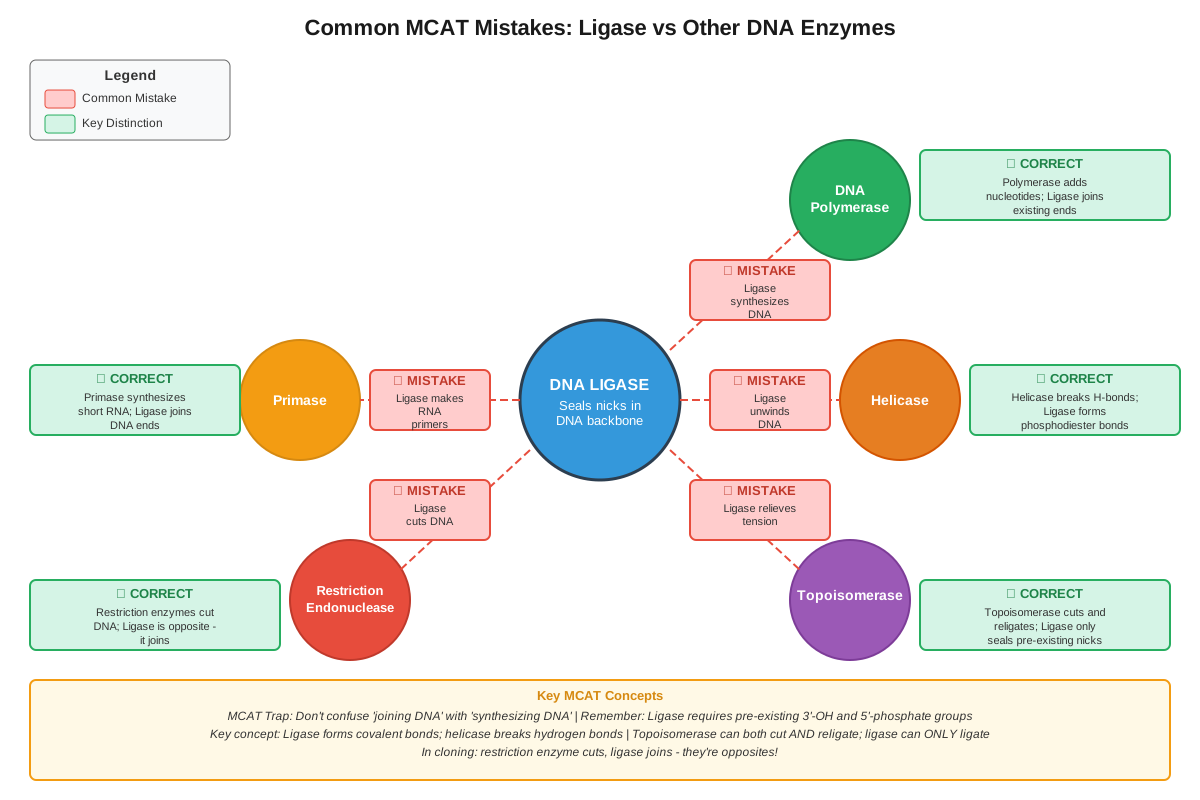
When ligase appears among answer choices with other DNA-modifying enzymes:
- Eliminate DNA polymerase if the question asks about joining existing fragments (polymerase adds nucleotides, doesn't join)
- Eliminate helicase if the question involves bond formation (helicase breaks bonds)
- Eliminate nuclease if the question involves sealing or joining (nucleases cut)
- Eliminate topoisomerase if the question is about permanent joining (topoisomerase temporarily breaks and rejoins to relieve tension)
If a question asks what would happen if ligase were non-functional:
- Eliminate answers suggesting complete replication failure (leading strand would still synthesize)
- Eliminate answers suggesting no DNA repair (some repair steps would still occur, just not completion)
- Select answers mentioning accumulated nicks, fragmented lagging strands, or incomplete repair
Time Allocation:
Ligase questions are typically medium difficulty and should take 60-90 seconds. Don't overthink—if you've identified the context (replication/repair/cloning) and the specific role (joining fragments), you can usually answer quickly. Spend extra time only on complex experimental passages where you must track DNA through multiple steps.
Memory Techniques
Mnemonic for Ligase Mechanism - "LATE":
- Ligase gets Adenylated (enzyme-AMP forms)
- AMP Transfers to DNA (DNA-adenylate intermediate)
- Ester bond forms (phosphodiester bond created, AMP released)
Mnemonic for Ligase Types - "BATS":
- Bacteria use NAD+ (think: bacteria are "bad" so they use the "different" cofactor)
- ATP for eukaryotes
- T4 ligase (from bacteriophage) uses ATP and is the "Tool" for cloning
- Specific ligases for specific repairs (I, III, IV)
Visualization Strategy:
Picture ligase as a molecular "stapler" that only works when two pieces of paper (DNA strands) are already aligned and touching. The stapler needs batteries (ATP/NAD+) to function. Just as a stapler can't close a gap between separated papers, ligase can't fill gaps—it only staples adjacent edges. This visualization helps remember that polymerase must fill gaps before ligase can act.
Acronym for Ligase Requirements - "PEANUT":
- Phosphodiester bond formation
- Energy (ATP or NAD+)
- Adjacent nucleotides (no gaps)
- Nick in double-stranded DNA
- Unmodified 3'-OH and 5'-phosphate
- Temperature affects efficiency
Memory Hook for Okazaki Fragments:
"Okazaki fragments are On the Lagging strand and need Ligase" (OLL). The leading strand is continuous, so it needs less ligase.
Summary
DNA ligase is an essential enzyme that catalyzes phosphodiester bond formation between adjacent nucleotides, specifically joining a 3'-hydroxyl group to a 5'-phosphate group in the DNA backbone. This ATP-dependent (or NAD+-dependent in bacteria) reaction proceeds through a three-step mechanism involving enzyme adenylation, AMP transfer to DNA, and final bond formation. Ligase plays critical roles in DNA replication (joining Okazaki fragments on the lagging strand), all major DNA repair pathways (as the final sealing step), and biotechnology applications (creating recombinant DNA). Different ligase types exist with specialized functions: ligase I for replication and long-patch repair, ligase III for base excision repair, and ligase IV for non-homologous end joining. T4 DNA ligase from bacteriophage is the standard tool for molecular cloning due to its ability to join both cohesive and blunt ends. Understanding ligase mechanism, substrate requirements, and functional contexts enables students to analyze experimental designs, predict outcomes of ligase deficiency, and troubleshoot molecular biology procedures—all high-yield skills for MCAT success.
Key Takeaways
- DNA ligase forms phosphodiester bonds between 3'-OH and 5'-phosphate groups, requiring ATP or NAD+ as energy cofactor, and cannot fill gaps or join incompatible ends
- Ligase is essential for joining Okazaki fragments during lagging strand synthesis in DNA replication, explaining why ligase deficiency severely impairs cell division
- All major DNA repair pathways (BER, NER, NHEJ, MMR) require ligase as the final step to seal the repaired strand after damage removal and gap filling
- T4 DNA ligase is the preferred enzyme for molecular cloning because it can ligate both sticky ends and blunt ends, unlike most cellular ligases
- Bacterial ligases use NAD+ while eukaryotic ligases use ATP, a difference exploited for antibiotic development and explaining species-specific enzyme properties
- Ligase deficiencies cause severe diseases including immunodeficiency and cancer predisposition, demonstrating the enzyme's critical physiological importance
- In experimental contexts, successful ligation requires proper DNA end chemistry (5'-phosphate present), appropriate enzyme choice, and optimized reaction conditions
Related Topics
DNA Polymerase: Understanding polymerase function complements ligase knowledge, as these enzymes work sequentially—polymerase fills gaps, then ligase seals nicks. Mastering both enables comprehensive understanding of DNA replication and repair.
DNA Repair Pathways: Deep knowledge of BER, NER, MMR, and NHEJ builds upon ligase fundamentals, showing how ligase integrates into complex multi-enzyme pathways that maintain genomic integrity.
Recombinant DNA Technology: Restriction enzymes, vectors, and transformation procedures all depend on ligase function, making this topic essential for understanding biotechnology applications and experimental design questions.
Okazaki Fragments and Lagging Strand Synthesis: Detailed study of discontinuous DNA replication mechanisms reveals why ligase is absolutely essential and how its activity is coordinated with primase, polymerase, and other replication machinery.
Enzyme Kinetics and Mechanism: Advanced understanding of enzyme catalysis, including transition states, activation energy, and cofactor roles, provides deeper insight into how ligase achieves its remarkable specificity and efficiency.
Practice CTA
Now that you've mastered the core concepts of DNA ligase, it's time to solidify your understanding through active practice. Challenge yourself with MCAT-style practice questions that test your ability to apply ligase knowledge in experimental contexts, predict outcomes of ligase deficiency, and analyze multi-step molecular biology procedures. Use flashcards to reinforce high-yield facts, particularly the ligase mechanism steps, cofactor requirements, and specific roles of different ligase types. Remember: understanding ligase isn't just about memorizing facts—it's about developing the analytical skills to tackle any DNA metabolism question the MCAT presents. Your investment in mastering this topic will pay dividends across multiple Biology content areas. You've got this!
Sign up free to keep reading
Create a free AnvayaPrep account to finish this MCAT guide on Ligase — plus flashcards and practice questions.