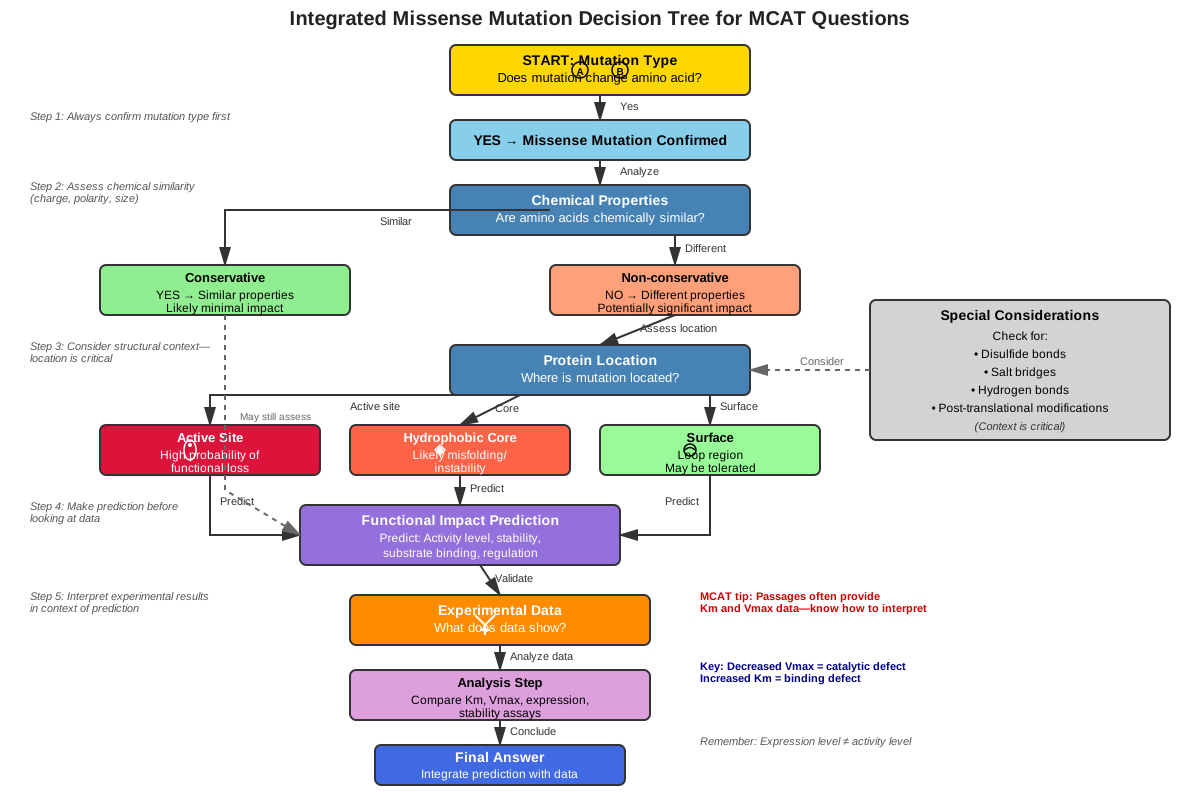
Overview
Missense mutations represent one of the most clinically significant and frequently tested categories of genetic alterations in Molecular Biology and Genetics. A missense mutation occurs when a single nucleotide substitution in DNA results in a codon that codes for a different amino acid than the original sequence. Unlike silent mutations that preserve the amino acid sequence or nonsense mutations that introduce premature stop codons, missense mutations alter the primary structure of the resulting protein, potentially affecting its folding, stability, function, or interactions with other molecules.
Understanding missense mutations Biology is essential for MCAT success because these mutations bridge multiple high-yield topics including DNA replication, transcription, translation, protein structure, and enzyme function. The MCAT frequently presents missense mutations in the context of experimental passages analyzing protein function, disease mechanisms, or evolutionary adaptations. Questions may require students to predict the functional consequences of specific amino acid substitutions, interpret experimental data showing altered protein activity, or connect genetic changes to phenotypic outcomes.
The significance of missense mutations MCAT content extends beyond pure memorization to application and analysis. Test-makers favor this topic because it requires integration of multiple concepts: students must understand the genetic code's degeneracy, the chemical properties of amino acids, the relationship between protein structure and function, and the principles of natural selection. Missense mutations also provide an excellent framework for understanding human genetic diseases such as sickle cell anemia, cystic fibrosis variants, and numerous enzyme deficiencies, making them clinically relevant and frequently featured in passage-based questions that assess both scientific reasoning and biological knowledge.
Learning Objectives
- [ ] Define missense mutations using accurate Biology terminology
- [ ] Explain why missense mutations matters for the MCAT
- [ ] Apply missense mutations to exam-style questions
- [ ] Identify common mistakes related to missense mutations
- [ ] Connect missense mutations to related Biology concepts
- [ ] Predict the functional consequences of specific amino acid substitutions based on chemical properties
- [ ] Distinguish between conservative and non-conservative missense mutations and their relative impacts
- [ ] Analyze experimental data to determine whether a missense mutation affects protein function
- [ ] Evaluate the evolutionary and clinical significance of missense mutations in specific genes
Prerequisites
- DNA structure and the genetic code: Understanding the triplet codon system is essential for recognizing how single nucleotide changes alter amino acid sequences
- Transcription and translation mechanisms: Knowledge of how DNA sequences are converted to mRNA and then to proteins enables comprehension of where missense mutations exert their effects
- Amino acid properties and classification: Familiarity with hydrophobic, hydrophilic, charged, and polar amino acids is necessary to predict mutation consequences
- Protein structure levels (primary, secondary, tertiary, quaternary): Understanding how amino acid sequence determines higher-order structure explains why missense mutations can be deleterious
- Basic principles of enzyme function: Knowledge of active sites, substrate binding, and catalytic mechanisms helps predict how amino acid substitutions affect protein activity
Why This Topic Matters
Clinical and Real-World Significance
Missense mutations account for approximately half of all known disease-causing mutations in humans. Sickle cell disease, one of the most studied genetic disorders, results from a single missense mutation (glutamic acid to valine at position 6 of the β-globin chain). This single amino acid change demonstrates how a point mutation can have profound physiological consequences, affecting red blood cell shape, oxygen transport, and causing vascular occlusions. Other clinically significant missense mutations include those in the CFTR gene (cystic fibrosis), BRCA1/BRCA2 genes (breast cancer susceptibility), and numerous metabolic enzyme genes (phenylketonuria, Tay-Sachs disease variants).
MCAT Exam Statistics and Question Types
Missense mutations appear in approximately 15-20% of MCAT Biology passages, particularly in sections testing Biological and Biochemical Foundations of Living Systems. The MCAT presents this topic through multiple question formats: discrete questions testing conceptual understanding, passage-based questions requiring interpretation of experimental data showing altered protein function, and research-style passages describing novel mutations and their phenotypic effects. Questions frequently require students to integrate knowledge across multiple domains, such as connecting a DNA sequence change to altered protein function and ultimately to a disease phenotype.
Common Exam Passage Contexts
The MCAT typically presents missense mutations in several recurring contexts: (1) comparative studies of wild-type versus mutant proteins showing differences in enzymatic activity, stability, or substrate affinity; (2) evolutionary biology passages examining adaptive mutations in different populations; (3) clinical vignettes describing patients with genetic diseases and asking students to predict molecular consequences; (4) biochemistry experiments using site-directed mutagenesis to probe protein structure-function relationships. Recognizing these patterns helps students quickly identify the relevant concepts and apply appropriate reasoning strategies.
Core Concepts
Definition and Molecular Mechanism
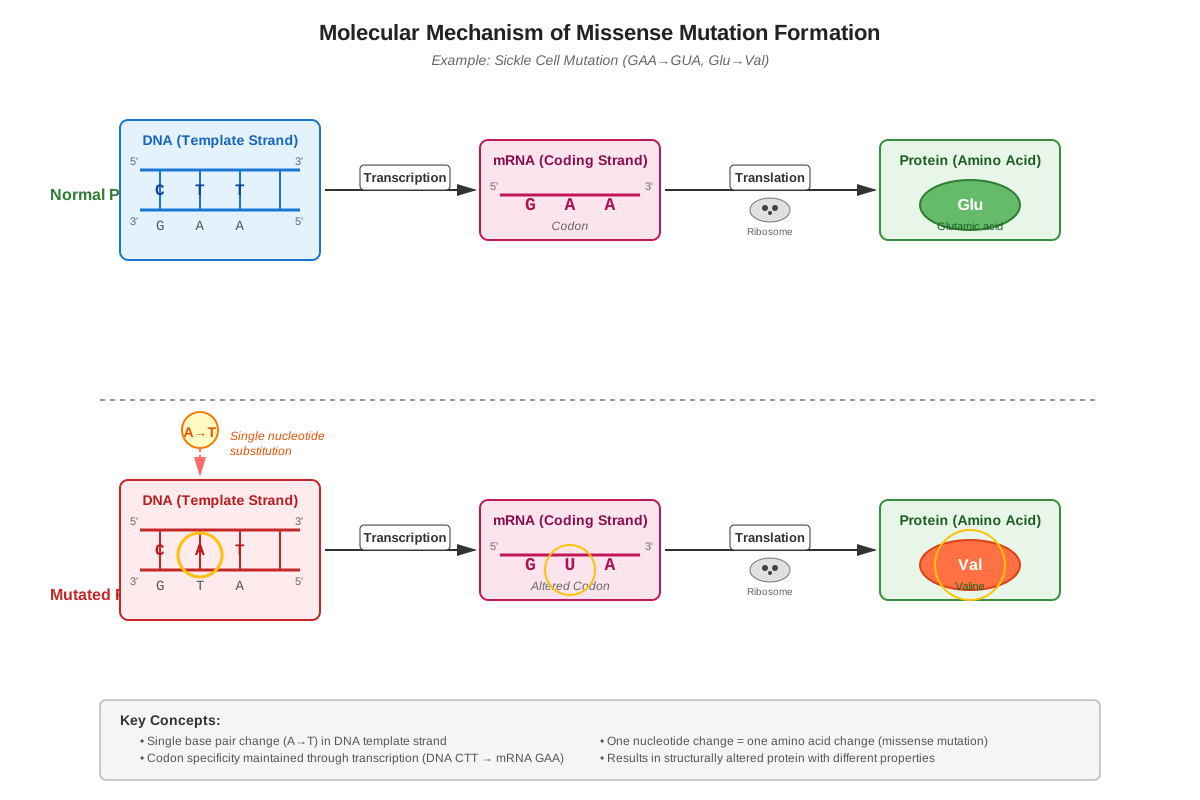
A missense mutation is a type of point mutation in which a single nucleotide substitution in the DNA coding sequence results in a codon that specifies a different amino acid than the wild-type sequence. The molecular mechanism involves a change at one position in the DNA double helix, which is then transcribed into mRNA with the altered nucleotide, and subsequently translated by ribosomes into a protein containing a different amino acid at the corresponding position. This distinguishes missense mutations from silent mutations (which change the nucleotide but not the amino acid due to codon degeneracy) and nonsense mutations (which create a premature stop codon).
The impact of a missense mutation depends on several factors: the chemical properties of the substituted amino acid, the location of the change within the protein structure, and the functional importance of that region. For example, a mutation in an enzyme's active site is more likely to be deleterious than one on the protein's surface far from functional domains.
Types of Missense Mutations
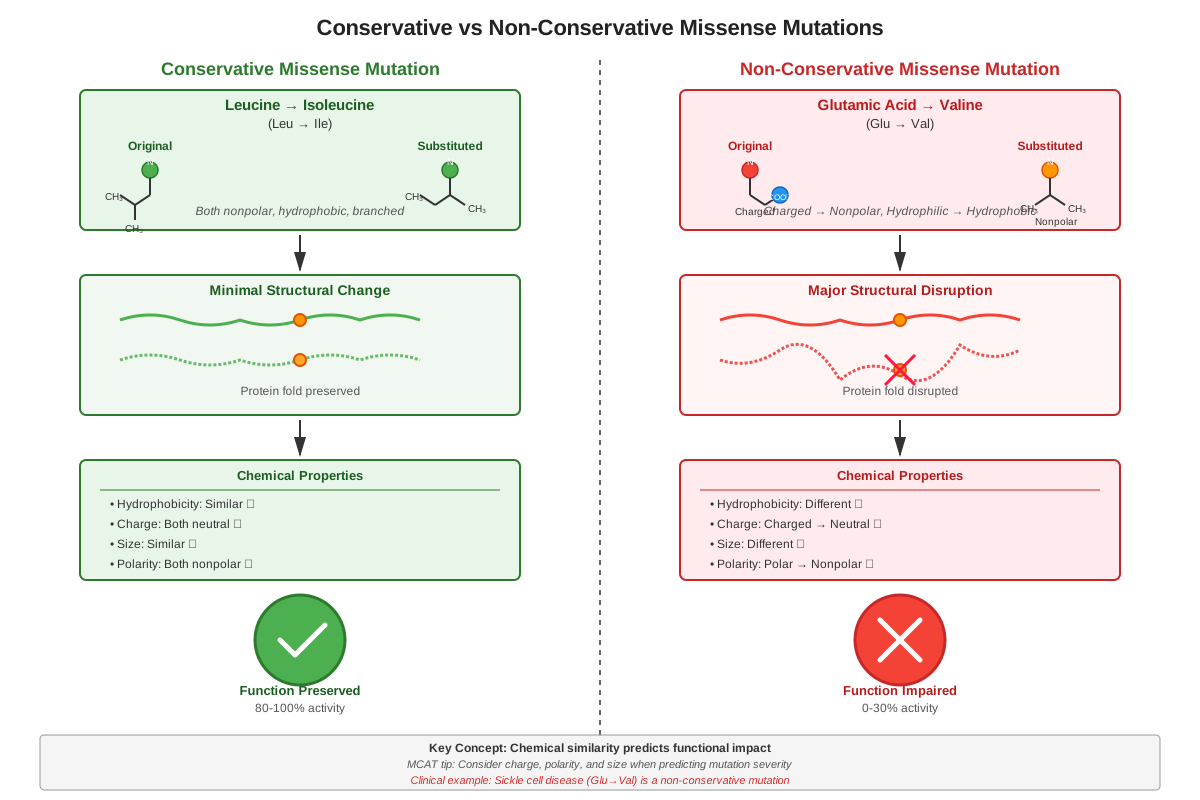
Missense mutations are classified based on the chemical similarity between the original and substituted amino acids:
Conservative missense mutations involve substitution of an amino acid with another that has similar chemical properties. For example, replacing leucine (hydrophobic, nonpolar) with isoleucine (also hydrophobic, nonpolar) often has minimal impact on protein structure and function because both amino acids have similar size and hydrophobicity. These mutations are more likely to be tolerated and may not produce observable phenotypic changes.
Non-conservative missense mutations involve substitution with an amino acid having different chemical properties. Replacing a charged amino acid like glutamic acid (negatively charged, hydrophilic) with valine (hydrophobic, nonpolar) represents a dramatic change that can significantly alter protein folding, stability, or function. The sickle cell mutation exemplifies a non-conservative change with severe consequences.
| Mutation Type | Amino Acid Property Change | Structural Impact | Functional Impact | Example |
|---|---|---|---|---|
| Conservative | Minimal (similar properties) | Usually minor | Often tolerated | Leu → Ile |
| Non-conservative | Significant (different properties) | Potentially major | Often deleterious | Glu → Val |
| Charge-reversal | Complete (opposite charge) | Severe | Usually deleterious | Asp → Lys |
| Size-change | Variable | Depends on location | Context-dependent | Gly → Trp |
Functional Consequences
The functional consequences of missense mutations span a spectrum from completely benign to lethal:
- Loss of function: The mutant protein has reduced or absent activity compared to wild-type. This occurs when the substituted amino acid disrupts the active site, destabilizes the protein fold, or prevents proper localization.
- Gain of function: The mutant protein acquires a new activity or enhanced function. These mutations are rarer but clinically significant in oncogenes where constitutive activation drives cancer.
- Dominant-negative effects: The mutant protein interferes with wild-type protein function, often in multimeric proteins where one defective subunit compromises the entire complex.
- Neutral effects: The mutation has no detectable impact on protein function, often because it occurs in a non-critical region or represents a conservative substitution.
Molecular Basis of Sickle Cell Disease
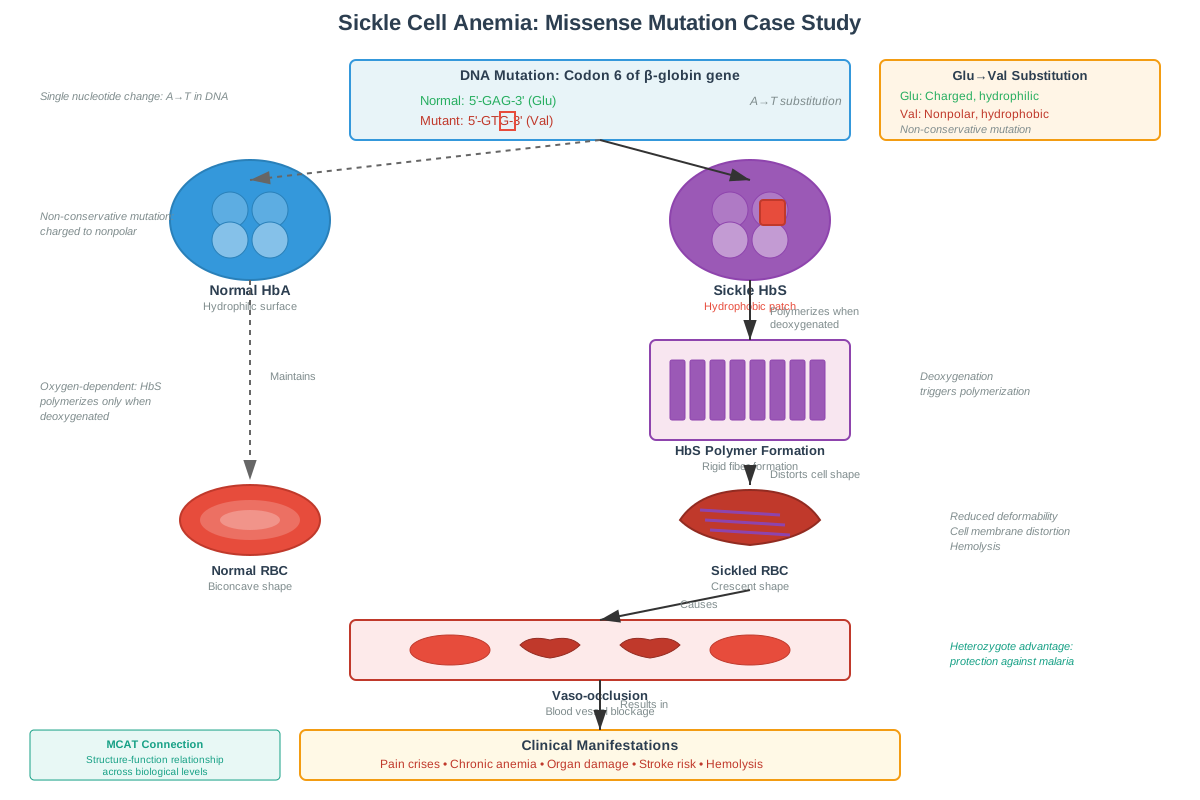
The classic example of a pathogenic missense mutation occurs in the β-globin gene causing sickle cell disease. The mutation changes the sixth codon from GAG (glutamic acid) to GTG (valine). This single nucleotide change (A→T) has cascading consequences:
- Primary structure change: Glutamic acid (hydrophilic, negatively charged) is replaced by valine (hydrophobic, nonpolar)
- Quaternary structure alteration: The hydrophobic valine creates a "sticky patch" on the hemoglobin surface
- Protein aggregation: Deoxygenated hemoglobin molecules polymerize into rigid fibers
- Cellular consequences: Red blood cells assume a sickle shape, become rigid, and are prone to hemolysis
- Physiological effects: Vascular occlusions, pain crises, organ damage, and anemia
This example demonstrates how a single missense mutation can propagate effects through multiple levels of biological organization, from molecular to organismal.
Predicting Mutation Severity
Several factors help predict whether a missense mutation will significantly impact protein function:
Location within the protein: Mutations in active sites, binding pockets, or structurally critical regions (like α-helix or β-sheet cores) are more likely to be deleterious than those in flexible loops or surface regions distant from functional sites.
Chemical property changes: The greater the difference in properties between original and substituted amino acids, the more likely the mutation will affect function. Charge changes (positive ↔ negative) and hydrophobicity changes (hydrophobic ↔ hydrophilic) typically have the most severe impacts.
Evolutionary conservation: Amino acids that are highly conserved across species are usually functionally important. Mutations at these positions are more likely to be deleterious because natural selection has maintained the original amino acid.
Structural constraints: Glycine, with its small size and flexibility, often occupies tight turns in protein structures. Replacing glycine with larger amino acids can create steric clashes. Similarly, proline's rigid structure makes it critical in certain contexts, and its substitution can disrupt protein folding.
Missense Mutations and Natural Selection
From an evolutionary perspective, missense mutations provide raw material for natural selection. Most missense mutations are either neutral or slightly deleterious and are eliminated by purifying selection. However, some confer selective advantages in specific environments. The sickle cell mutation, while causing disease in homozygotes, provides malaria resistance in heterozygotes, demonstrating heterozygote advantage or balanced polymorphism. This explains why the sickle cell allele remains at relatively high frequencies in populations historically exposed to malaria.
Detection and Analysis Methods
Several experimental and computational approaches identify and characterize missense mutations:
- DNA sequencing: Direct sequencing reveals nucleotide changes in genomic DNA or cDNA
- Site-directed mutagenesis: Researchers intentionally introduce specific missense mutations to study structure-function relationships
- Functional assays: Comparing wild-type and mutant protein activity reveals functional consequences
- Structural analysis: X-ray crystallography or cryo-EM can show how amino acid substitutions alter three-dimensional structure
- Computational prediction: Algorithms like SIFT and PolyPhen predict mutation pathogenicity based on conservation and structural modeling
Concept Relationships
Missense mutations serve as a conceptual bridge connecting multiple areas of molecular biology and genetics. The relationship map flows as follows:
DNA replication errors or mutagen exposure → nucleotide substitution in coding sequence → altered mRNA codon → different amino acid incorporated during translation → changed primary protein structure → potential alterations in secondary/tertiary/quaternary structure → modified protein function → altered cellular phenotype → organismal effects or disease
This topic connects directly to prerequisite knowledge of the genetic code, as understanding codon-amino acid relationships is essential for predicting which nucleotide changes produce missense versus silent mutations. The degeneracy of the genetic code explains why not all nucleotide substitutions result in amino acid changes—most amino acids are encoded by multiple codons, particularly differing at the third "wobble" position.
Missense mutations relate to protein structure and function concepts because predicting mutation consequences requires understanding how amino acid properties influence folding, stability, and activity. A mutation changing a hydrophobic amino acid in a protein's core to a charged residue would likely destabilize the structure, while a surface substitution might be tolerated.
The connection to enzyme kinetics appears when missense mutations affect catalytic residues or substrate binding sites, potentially altering Km (substrate affinity) or Vmax (catalytic rate). MCAT passages frequently present kinetic data comparing wild-type and mutant enzymes, requiring students to interpret how specific amino acid changes affect these parameters.
Missense mutations also connect to population genetics and evolution, as the frequency and distribution of these mutations in populations reflect selection pressures, genetic drift, and migration patterns. Understanding Hardy-Weinberg equilibrium helps predict allele frequencies for disease-causing missense mutations.
High-Yield Facts
⭐ A missense mutation is a point mutation that changes one nucleotide, resulting in a codon that specifies a different amino acid in the protein product
⭐ Conservative missense mutations substitute amino acids with similar properties and typically have minimal functional impact, while non-conservative mutations involve amino acids with different properties and are more likely to be deleterious
⭐ The sickle cell mutation (Glu→Val at position 6 of β-globin) is the classic example of a pathogenic missense mutation, demonstrating how a single amino acid change can cause severe disease
⭐ Missense mutations in active sites or highly conserved regions are more likely to significantly affect protein function than those in variable surface regions
⭐ The functional consequence of a missense mutation depends on the chemical properties of both the original and substituted amino acids, the location within the protein structure, and the functional importance of that region
- Missense mutations differ from silent mutations (no amino acid change) and nonsense mutations (premature stop codon)
- Approximately 50% of known disease-causing mutations in humans are missense mutations
- Heterozygote advantage explains the persistence of the sickle cell allele in malaria-endemic regions despite its harmful effects in homozygotes
- Replacing glycine (the smallest, most flexible amino acid) often has severe structural consequences due to steric clashes
- Charge-reversal mutations (positive to negative or vice versa) typically have more severe effects than other substitution types
- Site-directed mutagenesis is an experimental technique used to deliberately introduce missense mutations for studying protein structure-function relationships
- Computational tools like SIFT and PolyPhen predict whether missense mutations are likely to be pathogenic based on evolutionary conservation and structural considerations
- Missense mutations can result in loss of function, gain of function, or dominant-negative effects depending on the specific change and protein context
- The wobble position (third nucleotide) of codons is most tolerant to substitutions due to genetic code degeneracy
- Proline substitutions often disrupt protein structure because proline's cyclic structure restricts backbone flexibility and cannot participate in typical hydrogen bonding patterns
Quick check — test yourself on Missense mutations so far.
Try Flashcards →Common Misconceptions
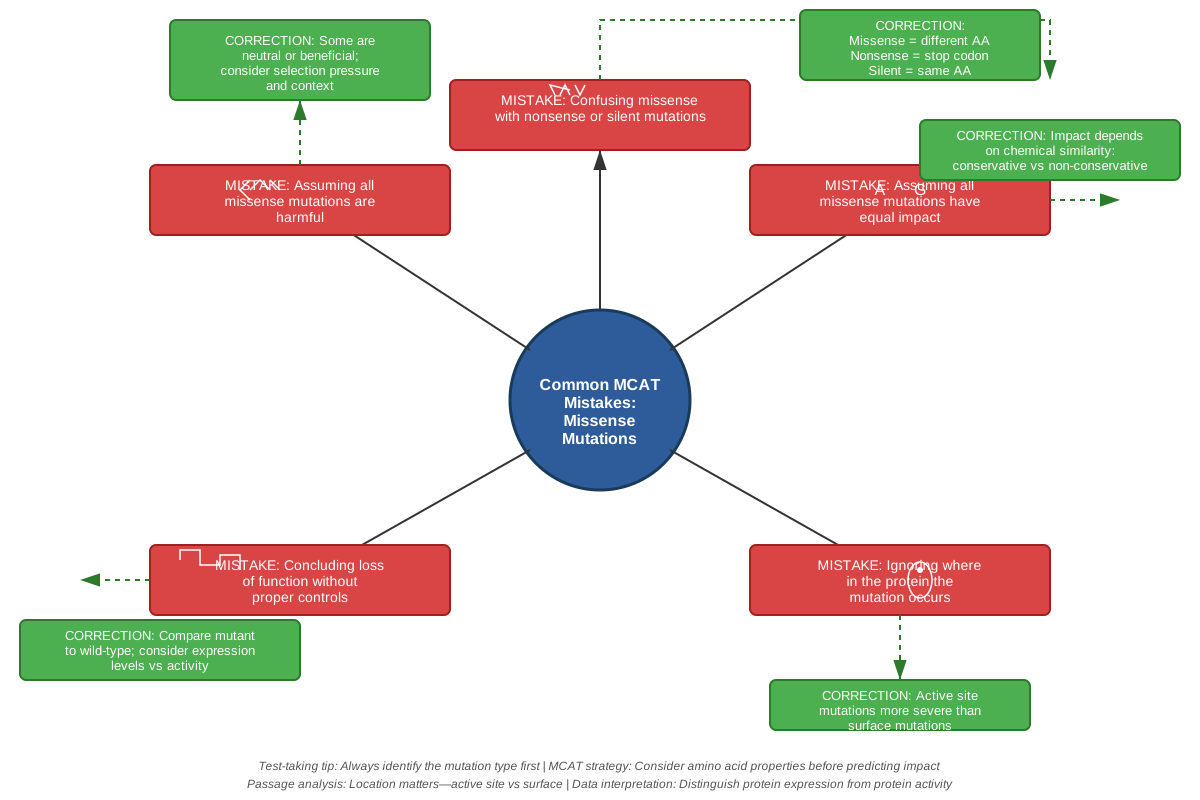
Misconception: All missense mutations cause disease or significantly impair protein function.
Correction: Many missense mutations are neutral or nearly neutral, having minimal impact on protein function. Conservative substitutions in non-critical regions often produce no observable phenotype. The human genome contains numerous missense variants that represent normal population variation rather than pathogenic mutations.
Misconception: Missense mutations and point mutations are synonymous terms.
Correction: Point mutations are a broader category that includes any single nucleotide substitution. Missense mutations are one type of point mutation (those that change the amino acid), but point mutations also include silent mutations (no amino acid change) and nonsense mutations (create stop codons). All missense mutations are point mutations, but not all point mutations are missense mutations.
Misconception: A missense mutation that changes amino acid charge will always be more severe than one that changes size.
Correction: While charge changes are often significant, the severity depends on context. A charge change on a protein's surface far from functional sites might be tolerated, while replacing glycine with a larger amino acid in a tight structural turn could be devastating even though both are uncharged. Location and structural context matter as much as the chemical property change.
Misconception: Conservative missense mutations never cause disease.
Correction: Although conservative mutations are generally better tolerated, they can still be pathogenic if they occur at critical positions. For example, even replacing one hydrophobic amino acid with another in an enzyme's active site might alter substrate specificity or binding affinity enough to cause disease, particularly in metabolic enzymes where precise substrate recognition is essential.
Misconception: The genetic code's degeneracy means that most nucleotide changes in coding sequences result in missense mutations.
Correction: Degeneracy actually reduces the frequency of missense mutations. Because most amino acids are encoded by multiple codons (especially differing at the wobble position), many nucleotide substitutions result in silent mutations rather than missense mutations. Approximately 70% of possible single nucleotide changes in coding sequences would result in missense mutations, while about 24% would be silent and 6% would be nonsense mutations.
Misconception: Heterozygotes for missense mutations always show intermediate phenotypes between homozygous wild-type and homozygous mutant individuals.
Correction: Dominance relationships vary. Some missense mutations are completely recessive (heterozygotes appear normal), others show incomplete dominance (intermediate phenotype), and some are dominant (heterozygotes are affected). Additionally, some mutations show dominant-negative effects where the mutant protein actively interferes with wild-type protein function, potentially making heterozygotes more severely affected than expected.
Misconception: All missense mutations in the same gene will have similar effects.
Correction: Different missense mutations in the same gene can have vastly different consequences depending on which amino acid is changed and what it's changed to. A gene might have dozens of different missense mutations, some causing severe disease, others causing mild symptoms, and still others being completely benign. This explains why genetic diseases often show variable severity even when caused by mutations in the same gene.
Worked Examples
Example 1: Predicting Functional Consequences
Question: A researcher identifies a missense mutation in a metabolic enzyme that changes amino acid 45 from aspartic acid to asparagine. The wild-type enzyme has a Km of 0.5 mM and Vmax of 100 μmol/min. The mutant enzyme has a Km of 2.0 mM and Vmax of 95 μmol/min. Based on this data, what is the most likely location and role of amino acid 45?
Solution:
Step 1: Analyze the amino acid change
- Aspartic acid: negatively charged, hydrophilic
- Asparagine: polar but uncharged, hydrophilic
- This is a non-conservative mutation involving loss of negative charge
Step 2: Interpret the kinetic data
- Km increased 4-fold (0.5 → 2.0 mM): decreased substrate affinity
- Vmax essentially unchanged (100 → 95 μmol/min): catalytic machinery intact
Step 3: Connect structure to function
- The unchanged Vmax suggests the catalytic residues are unaffected
- The increased Km indicates reduced substrate binding
- The charge loss (Asp → Asn) likely disrupted electrostatic interactions with substrate
Step 4: Determine location and role
- Amino acid 45 is most likely in or near the substrate binding site
- The aspartic acid probably formed an ionic interaction with a positively charged group on the substrate
- Loss of this charge weakens substrate binding without affecting catalysis
Answer: Amino acid 45 is most likely located in the substrate binding pocket where the negatively charged aspartic acid forms an electrostatic interaction with the substrate. The mutation to uncharged asparagine eliminates this favorable interaction, reducing substrate affinity (increased Km) while leaving the catalytic mechanism intact (unchanged Vmax).
Connection to learning objectives: This example demonstrates application of missense mutation concepts to experimental data interpretation, requiring integration of amino acid properties, enzyme kinetics, and protein structure-function relationships.
Example 2: Clinical Vignette Analysis
Question: A 6-month-old infant presents with severe hemolytic anemia. Genetic testing reveals the child is homozygous for a mutation in the β-globin gene: the codon at position 6 is changed from GAG to GTG. The parents, who are both heterozygous for this mutation, are asymptomatic. Explain the molecular basis of the child's symptoms and why the parents are unaffected.
Solution:
Step 1: Identify the mutation type and amino acid change
- GAG codes for glutamic acid (Glu)
- GTG codes for valine (Val)
- This is a missense mutation: Glu→Val at position 6 of β-globin
- This is the sickle cell mutation
Step 2: Analyze the chemical property change
- Glutamic acid: hydrophilic, negatively charged
- Valine: hydrophobic, nonpolar
- This is a non-conservative, charge-eliminating substitution
Step 3: Explain molecular consequences
- The hydrophobic valine creates a "sticky patch" on hemoglobin's surface
- In the deoxygenated state, hemoglobin molecules polymerize
- Polymerization causes red blood cells to assume a rigid sickle shape
- Sickled cells are fragile (leading to hemolysis) and cause vascular occlusions
Step 4: Explain the inheritance pattern
- The child is homozygous (HbS/HbS): all hemoglobin is abnormal → severe disease
- Parents are heterozygous (HbA/HbS): ~50% normal hemoglobin → sufficient for normal function
- This demonstrates recessive inheritance for the disease phenotype
- Heterozygotes have sickle cell trait (usually asymptomatic) rather than sickle cell disease
Step 5: Connect to hemolytic anemia
- Sickled cells are destroyed prematurely by the spleen
- Increased red blood cell destruction → hemolytic anemia
- Reduced oxygen-carrying capacity → symptoms of anemia
Answer: The child has sickle cell disease caused by homozygosity for the Glu→Val missense mutation at position 6 of β-globin. This non-conservative substitution creates a hydrophobic patch that causes hemoglobin polymerization and red blood cell sickling, leading to hemolysis and anemia. The parents are asymptomatic because they are heterozygous, producing sufficient normal hemoglobin (HbA) to maintain function despite also producing abnormal hemoglobin (HbS).
Connection to learning objectives: This example integrates missense mutation concepts with clinical presentation, inheritance patterns, and the relationship between molecular changes and organismal phenotypes, demonstrating the multi-level reasoning required for MCAT passages.
Exam Strategy
Approaching MCAT Questions on Missense Mutations
When encountering missense mutation questions, follow this systematic approach:
- Identify the mutation type: Confirm it's actually a missense mutation (amino acid change) rather than silent or nonsense
- Analyze amino acid properties: Compare the chemical characteristics of original and substituted amino acids
- Consider location: Determine whether the mutation affects active sites, binding regions, structural elements, or less critical areas
- Predict consequences: Use property changes and location to predict effects on structure and function
- Integrate with passage data: Connect predictions to experimental results or clinical information provided
Trigger Words and Phrases
Watch for these key phrases that signal missense mutation content:
- "Single nucleotide substitution resulting in..."
- "Amino acid change from [X] to [Y]"
- "Point mutation in the coding sequence"
- "Non-synonymous mutation"
- "Altered protein function due to..."
- "Conservative/non-conservative substitution"
- "Site-directed mutagenesis"
- "Comparison of wild-type and mutant proteins"
Process of Elimination Tips
When evaluating answer choices:
Eliminate options that:
- Confuse missense with silent or nonsense mutations
- Ignore the chemical properties of the amino acids involved
- Assume all missense mutations are equally severe
- Fail to consider the location of the mutation within the protein
- Suggest that conservative mutations in non-critical regions will be highly deleterious
Favor options that:
- Correctly identify the type of amino acid property change
- Consider both the chemical change and structural context
- Recognize that effects depend on location and functional importance
- Acknowledge that some missense mutations may be neutral
- Connect molecular changes to functional consequences through logical reasoning
Time Allocation Advice
For discrete questions on missense mutations: allocate 60-90 seconds. These typically require straightforward application of amino acid properties and mutation classification.
For passage-based questions: allocate 90-120 seconds per question. These require integration of passage data (kinetic parameters, structural information, clinical presentations) with missense mutation concepts. Quickly identify the relevant data in the passage before attempting to answer.
Exam Tip: When a passage presents kinetic data for wild-type and mutant enzymes, immediately check whether Km, Vmax, or both are affected. Changes in Km alone suggest substrate binding alterations, changes in Vmax alone suggest catalytic mechanism effects, and changes in both suggest more global structural disruption.
Memory Techniques
Mnemonics
"CLAPS" for predicting missense mutation severity:
- Conservation: Is the amino acid conserved across species?
- Location: Is it in an active site or critical structural region?
- Acid properties: How different are the chemical properties?
- Protein context: What is the protein's function and structure?
- Size matters: Are there steric constraints?
"CHARGE CHANGES CAUSE CHAOS": Remember that mutations changing amino acid charge (especially charge reversals) are among the most likely to significantly affect protein function.
Visualization Strategy
Create a mental image of the sickle cell mutation as the prototype:
- Visualize the β-globin chain with glutamic acid (a negatively charged amino acid represented as a red sphere with minus signs) at position 6
- See the mutation changing it to valine (a hydrophobic amino acid represented as a gray sphere)
- Picture the gray hydrophobic patch attracting other hydrophobic patches on adjacent hemoglobin molecules
- Visualize the hemoglobin molecules stacking like bricks into rigid fibers
- See the red blood cell deforming into a sickle shape
This concrete example helps anchor abstract concepts about how amino acid properties influence protein behavior.
Acronym for Amino Acid Property Categories
"CHOPS" for remembering amino acid categories relevant to missense mutations:
- Charged (Asp, Glu, Lys, Arg, His)
- Hydrophobic (Val, Leu, Ile, Met, Phe, Trp)
- Odd ones (Gly, Pro, Cys) with special structural properties
- Polar uncharged (Ser, Thr, Asn, Gln, Tyr)
- Small (Gly, Ala, Ser)
Understanding these categories helps quickly assess whether a substitution is conservative or non-conservative.
Summary
Missense mutations represent a critical category of genetic alterations where single nucleotide substitutions result in amino acid changes in the encoded protein. These mutations bridge multiple high-yield MCAT topics including molecular genetics, protein structure-function relationships, and disease mechanisms. The functional consequences of missense mutations span a spectrum from completely neutral to severely pathogenic, depending on the chemical properties of the substituted amino acids, the location within the protein structure, and the functional importance of the affected region. Conservative mutations involve amino acids with similar properties and are generally better tolerated, while non-conservative mutations—particularly those changing charge or hydrophobicity—are more likely to disrupt protein function. The classic example of sickle cell disease demonstrates how a single Glu→Val substitution can have cascading effects from molecular to organismal levels. Success on MCAT questions requires integrating knowledge of the genetic code, amino acid properties, protein structure, and experimental interpretation to predict mutation consequences and analyze data comparing wild-type and mutant proteins.
Key Takeaways
- Missense mutations are point mutations that change a single nucleotide, resulting in a codon specifying a different amino acid in the protein product
- The severity of a missense mutation depends on three key factors: the chemical property difference between original and substituted amino acids, the location within the protein structure, and the functional importance of that region
- Conservative substitutions (similar amino acid properties) are generally better tolerated than non-conservative substitutions (different properties), especially charge changes
- Sickle cell disease exemplifies how a single missense mutation (Glu→Val at β-globin position 6) can cause severe disease through effects on protein structure, cellular morphology, and physiological function
- MCAT questions on missense mutations frequently require integration of genetic code knowledge, amino acid properties, enzyme kinetics, and experimental data interpretation
- Not all missense mutations are pathogenic—many represent neutral variation with no functional consequences
- Evolutionary conservation of amino acids indicates functional importance, making mutations at conserved positions more likely to be deleterious
Related Topics
Silent Mutations: Understanding mutations that change nucleotides without altering amino acids helps distinguish different point mutation types and reinforces genetic code degeneracy concepts. Mastering missense mutations provides the foundation for appreciating why wobble position changes are often silent.
Nonsense Mutations: These mutations create premature stop codons, contrasting with missense mutations that substitute amino acids. Comparing these mutation types clarifies their distinct molecular and phenotypic consequences.
Frameshift Mutations: While missense mutations preserve the reading frame, frameshift mutations alter it completely. Understanding both types provides comprehensive knowledge of how genetic alterations affect protein products.
Protein Folding and Stability: Deep knowledge of how amino acid sequences determine three-dimensional structure enables more sophisticated prediction of missense mutation consequences, particularly for non-conservative substitutions.
Enzyme Kinetics and Inhibition: Many MCAT passages present kinetic data for mutant enzymes. Mastering missense mutations combined with kinetics knowledge allows interpretation of how specific amino acid changes affect Km and Vmax values.
Population Genetics and Hardy-Weinberg Equilibrium: Understanding allele frequency calculations and selection pressures explains the distribution of disease-causing missense mutations in populations, particularly concepts like heterozygote advantage in sickle cell trait.
Practice CTA
Now that you've mastered the core concepts of missense mutations, it's time to solidify your understanding through active practice. Work through the practice questions to apply these concepts to MCAT-style scenarios, and use the flashcards to reinforce high-yield facts and amino acid properties. Remember, the MCAT rewards not just knowledge but the ability to apply concepts to novel situations—practice is essential for developing this skill. Each question you work through strengthens your ability to quickly identify mutation types, predict functional consequences, and integrate experimental data. You've built a strong foundation; now transform that knowledge into test-day success through deliberate practice!
Sign up free to keep reading
Create a free AnvayaPrep account to finish this MCAT guide on Missense mutations — plus flashcards and practice questions.