Overview
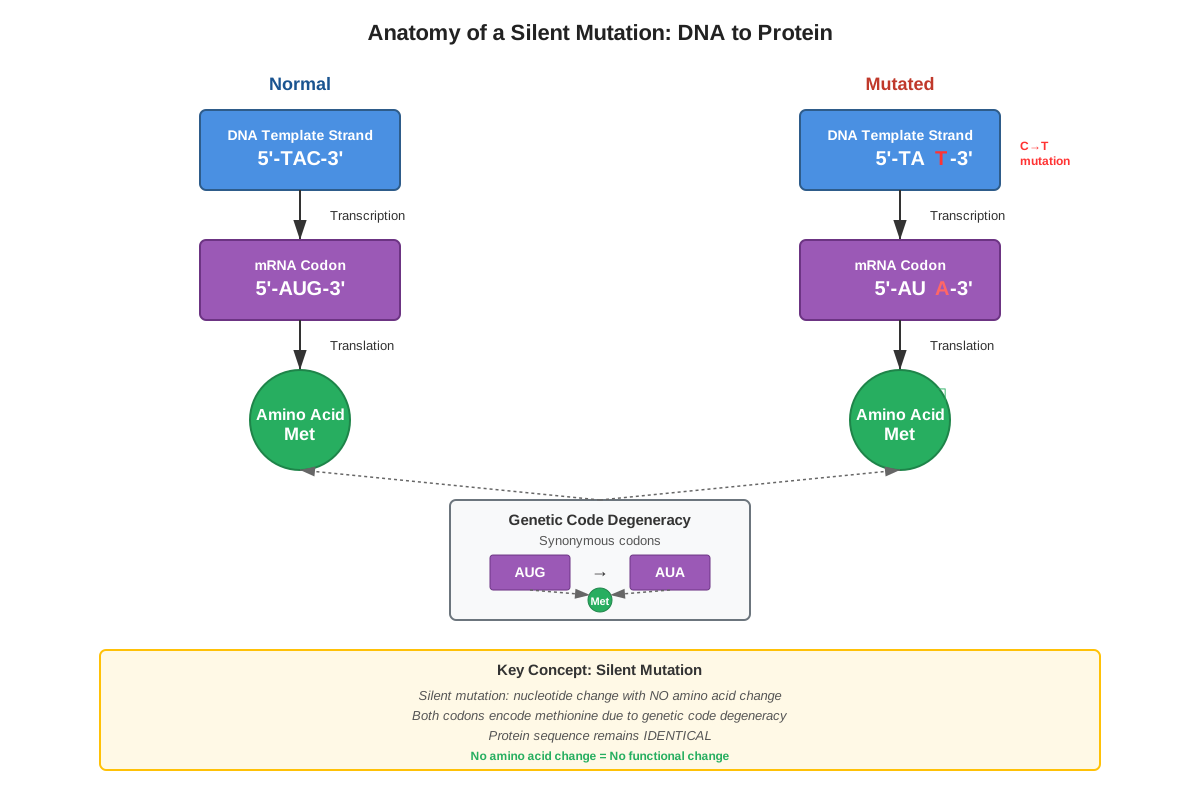
Silent mutations are a fundamental class of genetic alterations that occur when a nucleotide substitution in DNA results in a codon that encodes the same amino acid as the original sequence. This phenomenon is made possible by the degeneracy (or redundancy) of the genetic code, where multiple codons can specify the same amino acid. For example, both GCU and GCC code for alanine, so a mutation changing one to the other would be silent. Understanding silent mutations is essential for Molecular Biology and Genetics because they represent one of three possible outcomes of point mutations, alongside missense and nonsense mutations.
For the MCAT, silent mutations serve as a critical testing ground for understanding the relationship between genotype and phenotype. The Biology section frequently presents scenarios requiring students to predict the functional consequences of genetic changes, and silent mutations exemplify situations where DNA sequence changes do not necessarily translate to protein-level alterations. This concept connects directly to central dogma principles (DNA → RNA → protein), codon recognition by tRNA molecules, and the wobble hypothesis governing third-position codon flexibility.
Silent mutations MCAT questions often appear in passage-based formats where students must analyze experimental data involving mutagenesis studies, evolutionary conservation patterns, or protein function assays. These questions test not only factual recall but also the ability to apply genetic principles to predict outcomes and interpret results. Mastery of silent mutations provides the foundation for understanding more complex topics including genetic drift, molecular clocks, synonymous substitution rates, and the distinction between neutral and adaptive evolution—all high-yield concepts for the exam.
Learning Objectives
- [ ] Define silent mutations using accurate Biology terminology
- [ ] Explain why silent mutations matters for the MCAT
- [ ] Apply silent mutations to exam-style questions
- [ ] Identify common mistakes related to silent mutations
- [ ] Connect silent mutations to related Biology concepts
- [ ] Predict whether a given nucleotide substitution will result in a silent mutation using the genetic code table
- [ ] Distinguish between silent mutations and other types of point mutations (missense, nonsense) based on their molecular and phenotypic consequences
- [ ] Analyze the relationship between codon position and the likelihood of silent mutations occurring
Prerequisites
- The genetic code and codon structure: Understanding that triplet codons specify amino acids is essential for recognizing when a nucleotide change preserves amino acid identity
- Transcription and translation mechanisms: Knowledge of how DNA is transcribed to mRNA and translated to protein enables comprehension of where and how silent mutations exert (or fail to exert) their effects
- DNA structure and base pairing: Familiarity with nucleotide composition allows recognition of which specific base changes can occur
- Amino acid properties: Basic knowledge of the 20 standard amino acids helps in understanding why maintaining the same amino acid preserves protein function
- Point mutations as a mutation category: Recognizing that silent mutations are a subset of point mutations (single nucleotide changes) provides taxonomic context
Why This Topic Matters
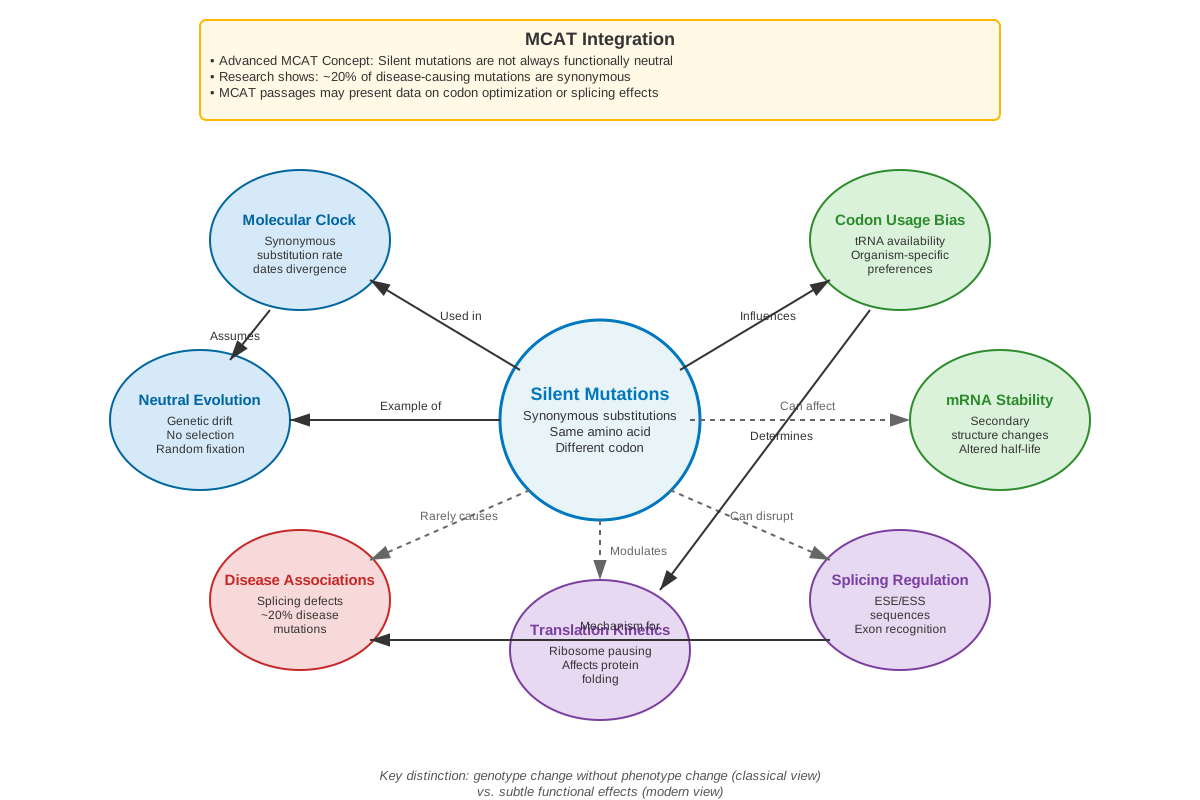
Silent mutations Biology concepts have significant real-world and clinical implications. While traditionally considered "neutral" because they don't alter amino acid sequence, research has revealed that silent mutations can affect mRNA stability, splicing efficiency, translation kinetics, and protein folding. Some genetic diseases have been traced to silent mutations that alter splicing patterns, demonstrating that "silent" doesn't always mean "without consequence." In pharmacogenomics, silent mutations in drug-metabolizing enzymes can affect treatment efficacy through changes in codon usage bias affecting protein expression levels.
On the MCAT, silent mutations appear with moderate frequency across multiple question formats. Approximately 3-5% of Molecular Biology and Genetics questions directly test mutation classification, and silent mutations feature prominently in these items. The topic appears in:
- Discrete questions asking students to classify mutations based on DNA/RNA sequences
- Passage-based questions involving experimental mutagenesis studies where students must predict phenotypic outcomes
- Data interpretation questions presenting genetic sequencing results requiring analysis of functional consequences
- Evolution and population genetics passages discussing neutral variation and molecular clocks
The MCAT particularly favors questions that require students to integrate multiple concepts—for example, combining silent mutation knowledge with understanding of tRNA wobble pairing, evolutionary selection pressure, or experimental design in molecular biology research. Questions often present novel scenarios requiring application rather than simple recall, making deep conceptual understanding essential.
Core Concepts
Definition and Molecular Basis
A silent mutation (also called a synonymous mutation) is a point mutation—a single nucleotide substitution—that changes the DNA sequence but does not alter the amino acid sequence of the resulting protein. This occurs because of the degeneracy of the genetic code, a fundamental property where 61 of the 64 possible codons specify amino acids (the remaining three are stop codons), meaning most amino acids are encoded by more than one codon.
The molecular mechanism underlying silent mutations involves the relationship between codons and their corresponding tRNAs. During translation, each codon in mRNA is recognized by a complementary anticodon on a tRNA molecule carrying a specific amino acid. Because multiple codons can specify the same amino acid (synonymous codons), a mutation that converts one synonymous codon to another will result in the same tRNA being recruited and the same amino acid being incorporated into the growing polypeptide chain.
The Genetic Code and Codon Degeneracy
The genetic code exhibits a specific pattern of degeneracy that makes silent mutations possible:
| Amino Acid | Number of Codons | Example Codons |
|---|---|---|
| Leucine | 6 | UUA, UUG, CUU, CUC, CUA, CUG |
| Serine | 6 | UCU, UCC, UCA, UCG, AGU, AGC |
| Arginine | 6 | CGU, CGC, CGA, CGG, AGA, AGG |
| Alanine | 4 | GCU, GCC, GCA, GCG |
| Glycine | 4 | GGU, GGC, GGA, GGG |
| Methionine | 1 | AUG |
| Tryptophan | 1 | UGG |
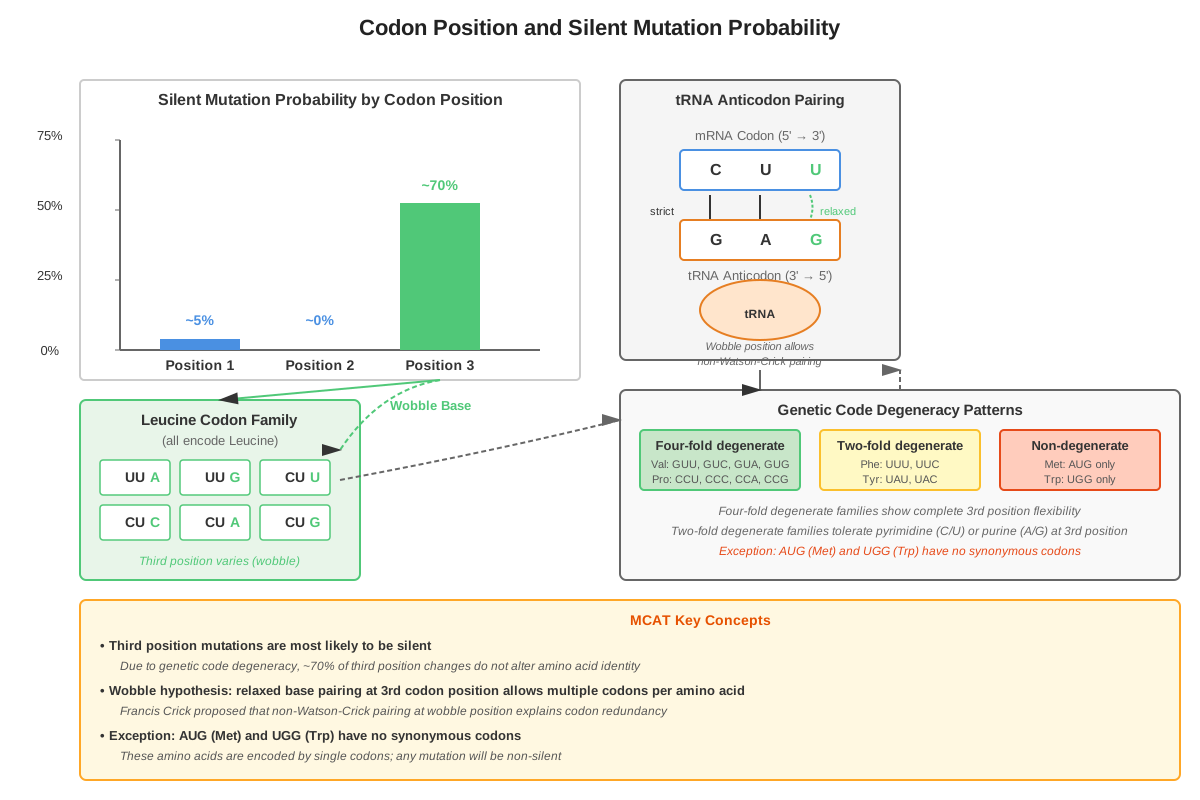
Amino acids with only one codon (methionine and tryptophan) cannot experience silent mutations—any nucleotide change in their codons will result in either a missense mutation (different amino acid) or a nonsense mutation (stop codon).
Wobble Base Pairing and Third Position Flexibility
The wobble hypothesis, proposed by Francis Crick, explains why silent mutations occur most frequently at the third codon position (the 3' end of the codon). The third position exhibits relaxed base-pairing rules between codon and anticodon, allowing non-Watson-Crick base pairs to form. This flexibility means that changes at the third position often don't affect which tRNA (and therefore which amino acid) is recruited.
For example, the four codons for valine (GUU, GUC, GUA, GUG) differ only in the third position. A mutation changing GUU to GUC would be silent because both specify valine. In contrast, mutations at the first or second positions almost always change the amino acid specified, making silent mutations at these positions rare.
Classification Within Point Mutations
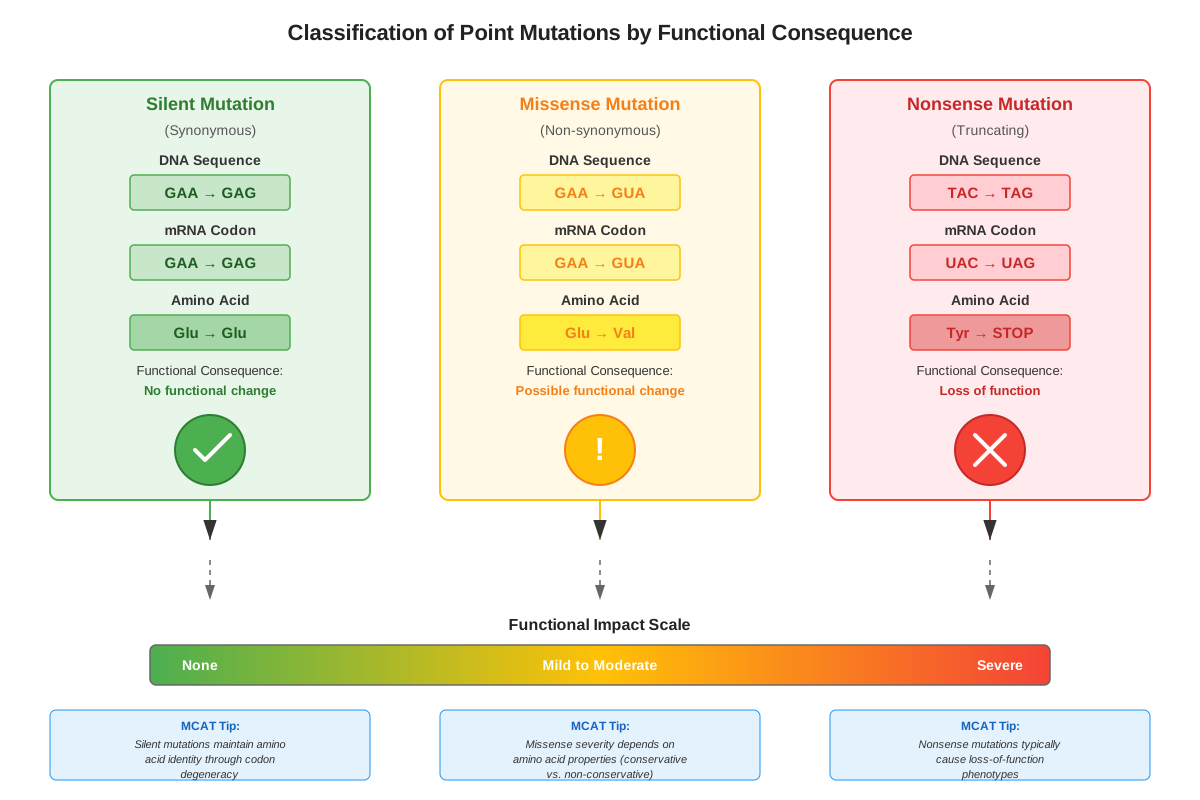
Point mutations are categorized based on their effects on the protein product:
- Silent (synonymous) mutations: Change nucleotide but not amino acid
- Missense (nonsynonymous) mutations: Change nucleotide and amino acid, but not to a stop codon
- Nonsense mutations: Change an amino acid codon to a stop codon (UAA, UAG, UGA)
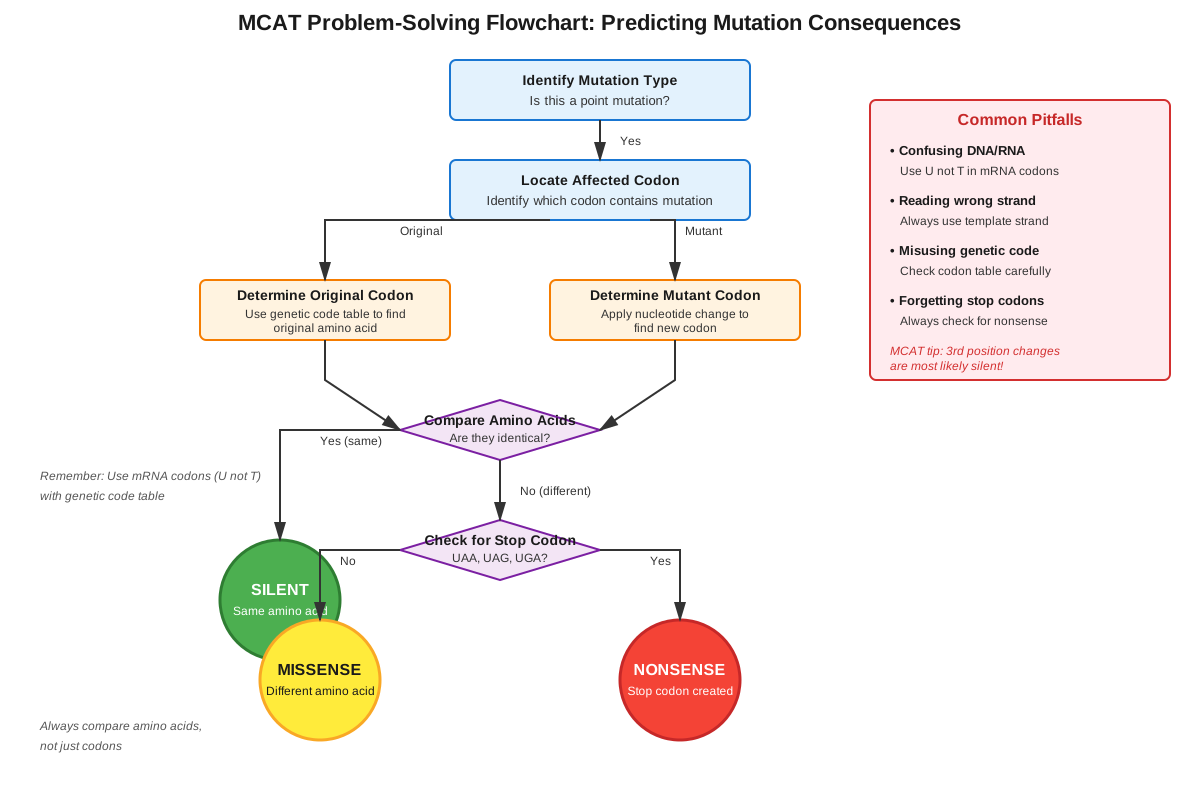
This classification system is crucial for MCAT questions that present a DNA or RNA sequence change and ask students to predict the functional consequence. The key decision tree involves:
- Does the codon change? (If no → not a mutation in coding sequence)
- Does the amino acid change? (If no → silent mutation)
- Does it create a stop codon? (If yes → nonsense; if no → missense)
Functional Consequences and the "Silent" Misnomer
While traditionally considered functionally neutral, modern research has revealed that silent mutations can have subtle but significant effects:
mRNA stability effects: Different synonymous codons can affect mRNA secondary structure, influencing degradation rates and overall transcript abundance.
Translation kinetics: Rare codons (those with lower tRNA availability) slow translation, potentially affecting protein folding. A silent mutation changing a common codon to a rare one can alter the timing of translation, leading to different folding outcomes.
Splicing alterations: Silent mutations in exons can disrupt exonic splicing enhancers (ESEs) or create exonic splicing silencers (ESSs), leading to aberrant splicing patterns despite not changing the amino acid sequence when properly spliced.
Codon usage bias: Organisms preferentially use certain synonymous codons over others. Silent mutations that create rarely used codons can reduce translation efficiency and protein expression levels.
For the MCAT, students should understand that while silent mutations typically don't alter amino acid sequence (the primary definition), they may have subtle effects on gene expression—a nuance that appears in higher-level passage-based questions.
Evolutionary Significance
Silent mutations play a crucial role in molecular evolution and population genetics. Because they generally don't affect fitness, they accumulate at a relatively constant rate over time, serving as a molecular clock for estimating evolutionary divergence times. The ratio of nonsynonymous to synonymous substitution rates (dN/dS ratio) is used to detect selection pressure:
- dN/dS < 1: Purifying selection (nonsynonymous changes are deleterious)
- dN/dS = 1: Neutral evolution (no selection)
- dN/dS > 1: Positive selection (nonsynonymous changes are advantageous)
This concept bridges molecular biology with evolution, a common MCAT integration point.
Concept Relationships
Silent mutations exist within a hierarchical framework of genetic concepts. At the broadest level, they are a subset of point mutations → which are a type of gene mutation → which fall under the general category of genetic mutations.
The relationship flows as follows:
DNA sequence → (transcription) → mRNA sequence → (translation) → amino acid sequence → (folding) → protein structure → protein function → phenotype
Silent mutations interrupt this flow at the mRNA-to-amino acid step: the mRNA changes, but the amino acid sequence remains constant, theoretically preserving all downstream elements.
Silent mutations connect directly to codon degeneracy and the genetic code, which enable their existence. They relate to wobble base pairing, which explains their positional bias toward third codon positions. Understanding silent mutations requires knowledge of tRNA structure and function, as the anticodon-codon interaction determines whether a nucleotide change affects amino acid selection.
The concept also connects to mutation rate and DNA repair mechanisms—silent mutations that escape repair systems contribute to genetic variation. In population genetics, silent mutations relate to genetic drift and neutral theory of molecular evolution, as they represent changes that typically don't experience selection pressure.
For clinical applications, silent mutations connect to genetic screening and diagnosis—distinguishing pathogenic mutations from benign silent variants is crucial in genetic counseling. They also relate to pharmacogenomics, where silent mutations affecting codon usage can influence drug-metabolizing enzyme expression.
Quick check — test yourself on Silent mutations so far.
Try Flashcards →High-Yield Facts
⭐ Silent mutations change the DNA/RNA sequence but do not change the amino acid sequence due to genetic code degeneracy
⭐ Silent mutations occur most frequently at the third (wobble) position of codons due to relaxed base-pairing rules
⭐ Methionine (AUG) and tryptophan (UGG) cannot undergo silent mutations because each is encoded by only one codon
⭐ Silent mutations are synonymous mutations, while missense and nonsense mutations are nonsynonymous
⭐ Not all silent mutations are truly "silent"—they can affect mRNA stability, splicing, translation kinetics, and protein folding
- Silent mutations accumulate at relatively constant rates and serve as molecular clocks for evolutionary studies
- The dN/dS ratio (nonsynonymous to synonymous substitution rate) indicates selection pressure on genes
- Leucine, serine, and arginine (each with 6 codons) have the highest potential for silent mutations
- Silent mutations in exonic splicing enhancers can cause disease despite not changing amino acid sequence
- Codon usage bias means that some synonymous codons are preferred over others in different organisms
Common Misconceptions
Misconception: All silent mutations have absolutely no effect on the organism.
Correction: While silent mutations don't change amino acid sequence, they can affect mRNA stability, splicing patterns, translation speed, and protein folding kinetics. Some genetic diseases result from silent mutations that disrupt splicing.
Misconception: Silent mutations can occur at any position within a codon with equal probability.
Correction: Silent mutations occur predominantly at the third (wobble) position due to degeneracy patterns in the genetic code. First and second position changes almost always alter the amino acid specified.
Misconception: Silent and neutral mutations are the same thing.
Correction: Silent mutations are a structural classification (no amino acid change), while neutral mutations are a functional/evolutionary classification (no fitness effect). Most silent mutations are neutral, but not all neutral mutations are silent (some missense mutations are also neutral if they substitute similar amino acids).
Misconception: If a mutation doesn't change the phenotype, it must be a silent mutation.
Correction: Many missense mutations also don't change phenotype if they substitute chemically similar amino acids (conservative substitutions) or occur in non-critical protein regions. Silent mutations specifically refer to those that don't change amino acid sequence.
Misconception: Silent mutations never appear in genetic disease.
Correction: Silent mutations can cause disease through mechanisms like altered splicing. For example, some cases of hereditary disease result from silent mutations that disrupt exonic splicing enhancers, leading to exon skipping.
Misconception: All codons for the same amino acid are completely interchangeable.
Correction: While synonymous codons specify the same amino acid, they differ in usage frequency (codon bias) and can affect translation efficiency. Rare codons slow translation, potentially affecting protein folding.
Worked Examples
Example 1: Classifying a Mutation
Question: A researcher sequences a gene and identifies a point mutation in the coding region. The original codon is 5'-GAA-3' and the mutated codon is 5'-GAG-3'. Using the genetic code (GAA = glutamate, GAG = glutamate), classify this mutation and explain its likely phenotypic effect.
Solution:
Step 1: Identify what changed at the DNA level.
- The third position changed from A to G
- This is a point mutation (single nucleotide substitution)
Step 2: Determine if the amino acid changed.
- Original codon GAA codes for glutamate (Glu)
- Mutated codon GAG also codes for glutamate (Glu)
- The amino acid sequence remains unchanged
Step 3: Classify the mutation.
- Because the nucleotide changed but the amino acid did not, this is a silent (synonymous) mutation
Step 4: Predict phenotypic effects.
- Primary prediction: No change in protein structure or function because the amino acid sequence is preserved
- Secondary considerations: Possible subtle effects on mRNA stability or translation kinetics, but these are generally minimal
- Expected phenotype: Normal, indistinguishable from wild-type
Key takeaway: This example demonstrates the decision tree for mutation classification. The critical step is comparing amino acid identity before and after the mutation. This connects to Learning Objective 3 (applying to exam-style questions) and demonstrates why understanding the genetic code is prerequisite knowledge.
Example 2: Predicting Mutation Outcomes
Question: A gene contains the codon 5'-AUG-3' (methionine). A mutagen causes a transition mutation (purine to purine or pyrimidine to pyrimidine) at the third position. What type of mutation will result?
Solution:
Step 1: Identify the original codon and its amino acid.
- AUG codes for methionine (Met)
- AUG is also the start codon
Step 2: Determine possible mutations at the third position.
- Original third position: G (purine)
- Transition mutation: purine to purine means G → A
- Mutated codon: AUA
Step 3: Look up the mutated codon.
- AUA codes for isoleucine (Ile)
- This is a different amino acid from methionine
Step 4: Classify the mutation.
- The amino acid changed from Met to Ile
- This is a missense mutation, not a silent mutation
Step 5: Explain why a silent mutation is impossible.
- Methionine is encoded by only one codon (AUG)
- Any change to this codon must result in a different amino acid or a stop codon
- Silent mutations cannot occur for amino acids with single codons
Key takeaway: This example illustrates an important principle—amino acids encoded by single codons (Met and Trp) cannot undergo silent mutations. This connects to the high-yield fact about codon degeneracy and demonstrates critical thinking required for MCAT questions that test understanding rather than memorization.
Exam Strategy
When approaching silent mutations MCAT questions, employ this systematic strategy:
Step 1: Identify the question type
- Direct classification: "What type of mutation is this?"
- Prediction: "What will be the effect of this mutation?"
- Comparison: "Which mutation would have the least effect?"
Step 2: Locate the critical information
- Find the original and mutated sequences
- Identify whether you're given DNA or RNA (watch for T vs U)
- Note which codon position changed
Step 3: Use the genetic code efficiently
- Focus on the codon that changed, not the entire sequence
- Remember that third-position changes are most likely to be silent
- Quickly eliminate options if the amino acid has only one codon
Trigger words and phrases to watch for:
- "Synonymous substitution" = silent mutation
- "Wobble position" = third codon position, high silent mutation probability
- "No change in amino acid sequence" = defining feature of silent mutation
- "Degenerate code" = multiple codons per amino acid, enables silent mutations
- "Conservative substitution" = NOT a silent mutation (amino acid changes, but to similar one)
Process of elimination tips:
- If the question states the protein function is normal, silent mutation is likely (but confirm amino acid sequence)
- If methionine or tryptophan codons are involved, eliminate "silent mutation" as an answer
- If the mutation is in a non-coding region (intron, promoter), it's not classified as silent/missense/nonsense
- If the question mentions phenotypic change, be cautious—most silent mutations don't cause phenotypic changes, but exceptions exist
Time allocation:
- Discrete questions on mutation classification: 30-45 seconds
- Passage-based questions requiring genetic code lookup: 60-90 seconds
- Complex questions integrating multiple concepts: 90-120 seconds
Exam Tip: If you need to use the genetic code table during the exam, focus on codon families (codons differing only in third position) rather than memorizing all 64 codons. Knowing that GCX (where X = any base) codes for alanine is more efficient than memorizing each individually.
Memory Techniques
Mnemonic for mutation types: "Some Mice Never Stop"
- Silent: Same amino acid
- Missense: Modified amino acid
- Nonsense: No amino acid (stop codon)
- Stop: (reinforces nonsense)
Mnemonic for single-codon amino acids: "Met a Trp"
- Methionine (AUG) and Trptophan (UGG) are the only amino acids with single codons
- These cannot undergo silent mutations
Visualization strategy for wobble position:
Picture a codon as a three-person team where the third person is "wobbly" or flexible. Changes to this person don't affect the team's identity (amino acid), but changes to the first or second person fundamentally alter the team.
Acronym for degeneracy: "LSRA-6"
- Leucine, Serine, Rarginine, Arginine each have 6 codons
- These amino acids have the highest potential for silent mutations
Memory palace technique:
Imagine walking through a house where:
- First room (position 1): Rigid, formal, everything must be exact (rarely silent)
- Second room (position 2): Still organized but slightly flexible (rarely silent)
- Third room (position 3): Messy, wobbling furniture, very flexible (often silent)
Conceptual anchor:
Think of synonyms in language—different words (codons) with the same meaning (amino acid). Just as "happy" and "joyful" convey the same idea, synonymous codons specify the same amino acid.
Summary
Silent mutations represent a fundamental class of point mutations where a single nucleotide substitution changes the DNA or RNA sequence without altering the amino acid sequence of the resulting protein. This phenomenon is made possible by the degeneracy of the genetic code, where most amino acids are specified by multiple synonymous codons. Silent mutations occur predominantly at the third (wobble) position of codons due to relaxed base-pairing rules between codon and anticodon. While traditionally considered functionally neutral, modern research reveals that silent mutations can affect mRNA stability, splicing patterns, and translation kinetics, though these effects are generally subtle. For the MCAT, students must be able to classify mutations by comparing original and mutated sequences, predict functional consequences, and understand that amino acids encoded by single codons (methionine and tryptophan) cannot undergo silent mutations. Silent mutations connect to broader concepts in molecular biology, evolution, and genetics, serving as molecular clocks and representing neutral genetic variation that accumulates over evolutionary time.
Key Takeaways
- Silent mutations change DNA/RNA sequence but preserve amino acid sequence due to genetic code degeneracy—this is the defining characteristic tested on the MCAT
- The third (wobble) codon position is the most common site for silent mutations because of flexible base-pairing rules, while first and second position changes almost always alter amino acids
- Methionine (AUG) and tryptophan (UGG) cannot undergo silent mutations because each is encoded by only one codon—any change must be missense or nonsense
- Silent mutations are not always truly "silent"—they can affect mRNA stability, splicing, and translation kinetics, a nuance that appears in advanced MCAT passages
- Classification requires systematic comparison: identify the nucleotide change, determine if the amino acid changed, then categorize as silent (same amino acid), missense (different amino acid), or nonsense (stop codon)
- Silent mutations accumulate at constant rates and serve as molecular clocks in evolutionary biology, connecting molecular genetics to evolution concepts
- Understanding codon degeneracy patterns (which amino acids have multiple codons) enables rapid prediction of whether a mutation could be silent
Related Topics
Missense and Nonsense Mutations: These represent the other two categories of point mutations in coding sequences. Mastering silent mutations provides the foundation for understanding how different nucleotide changes produce different functional outcomes, essential for genetic disease mechanisms.
Wobble Base Pairing and tRNA Structure: Deep understanding of how tRNAs recognize codons through anticodon-codon interactions explains why third-position changes are often silent. This topic extends the molecular mechanism underlying silent mutations.
Genetic Code and Translation: Comprehensive knowledge of how the genetic code is read during translation provides the mechanistic basis for all mutation classifications, including silent mutations.
Molecular Evolution and Neutral Theory: Silent mutations exemplify neutral genetic variation, connecting molecular biology to evolutionary concepts. The dN/dS ratio and molecular clock concepts build directly on silent mutation understanding.
Splicing and RNA Processing: Advanced understanding of how silent mutations can affect splicing despite not changing amino acid sequence connects to gene expression regulation and genetic disease mechanisms.
DNA Repair Mechanisms: Understanding which mutations escape repair systems and become fixed in populations connects to mutation rates and genetic variation.
Practice CTA
Now that you've mastered the core concepts of silent mutations, it's time to solidify your understanding through active practice. Challenge yourself with MCAT-style practice questions that require you to classify mutations, predict functional outcomes, and integrate silent mutation concepts with other molecular biology principles. Use flashcards to reinforce the genetic code patterns and codon degeneracy that make silent mutations possible. Remember: the MCAT tests application and analysis, not just memorization, so focus on understanding why silent mutations occur and how to systematically approach mutation classification questions. Your ability to quickly and accurately analyze genetic sequences will serve you well not only on test day but throughout your medical career. You've got this!
Sign up free to keep reading
Create a free AnvayaPrep account to finish this MCAT guide on Silent mutations — plus flashcards and practice questions.