Overview
Monohybrid crosses represent one of the foundational concepts in classical genetics and remain a critical component of the Molecular Biology and Genetics section tested on the MCAT. A monohybrid cross examines the inheritance pattern of a single trait controlled by one gene with two alleles, typically following Mendelian inheritance principles. This experimental approach, first systematically studied by Gregor Mendel using pea plants in the 1860s, allows scientists and students to predict offspring genotypes and phenotypes based on parental genetic makeup. Understanding monohybrid crosses requires mastery of fundamental genetic terminology including dominant and recessive alleles, homozygous and heterozygous genotypes, and the relationship between genotype and phenotype.
The MCAT frequently tests monohybrid crosses through both discrete questions and passage-based scenarios, making this topic essential for achieving a competitive score in Biology. Questions may present pedigrees, Punnett squares, or experimental breeding data requiring students to calculate probability ratios, determine parental genotypes from offspring distributions, or predict inheritance patterns. The topic serves as a gateway to understanding more complex genetic concepts including dihybrid crosses, incomplete dominance, codominance, and sex-linked inheritance patterns.
Mastery of monohybrid crosses connects directly to broader biological principles including population genetics, evolutionary biology, and molecular mechanisms of gene expression. The mathematical reasoning skills developed through monohybrid cross analysis—particularly probability calculations and ratio interpretation—transfer to numerous other MCAT topics including Hardy-Weinberg equilibrium, linkage analysis, and biochemical pathway predictions. This topic exemplifies how the MCAT integrates quantitative reasoning with biological content knowledge, requiring students to move fluidly between conceptual understanding and mathematical application.
Learning Objectives
- [ ] Define monohybrid crosses using accurate Biology terminology
- [ ] Explain why monohybrid crosses matters for the MCAT
- [ ] Apply monohybrid crosses to exam-style questions
- [ ] Identify common mistakes related to monohybrid crosses
- [ ] Connect monohybrid crosses to related Biology concepts
- [ ] Construct and interpret Punnett squares for monohybrid crosses with complete accuracy
- [ ] Calculate phenotypic and genotypic ratios from monohybrid crosses and determine parental genotypes from offspring data
- [ ] Distinguish between monohybrid crosses and other inheritance patterns (incomplete dominance, codominance, multiple alleles)
Prerequisites
- Basic Mendelian genetics terminology: Understanding terms like allele, gene, dominant, recessive, homozygous, and heterozygous is essential for interpreting cross outcomes
- Chromosome structure and meiosis: Knowledge of how alleles segregate during gamete formation explains the mechanistic basis for inheritance ratios
- Probability fundamentals: Basic probability rules (multiplication and addition rules) are necessary for calculating offspring likelihood
- Genotype versus phenotype distinction: Recognizing that genetic makeup (genotype) determines observable traits (phenotype) underlies all cross analysis
Why This Topic Matters
Clinical and Real-World Significance
Monohybrid cross analysis forms the foundation for genetic counseling, allowing healthcare professionals to predict the probability that parents will transmit genetic conditions to their children. Many human genetic disorders follow simple Mendelian inheritance patterns analyzable through monohybrid cross logic, including cystic fibrosis (autosomal recessive), Huntington's disease (autosomal dominant), and sickle cell anemia (autosomal recessive with codominant expression at the molecular level). Agricultural scientists use monohybrid cross principles to develop crop varieties with desired traits, while evolutionary biologists apply these concepts to understand allele frequency changes in populations over time.
MCAT Exam Statistics
Monohybrid crosses appear in approximately 2-4 questions per MCAT administration, representing roughly 3-5% of the Biological and Biochemical Foundations section. Questions typically fall into three categories: (1) discrete questions requiring Punnett square construction or ratio calculation (40%), (2) passage-based questions interpreting experimental breeding data (45%), and (3) pedigree analysis questions requiring backward reasoning from offspring to parents (15%). The topic frequently appears integrated with other genetics concepts, requiring students to first identify that a monohybrid cross is appropriate before applying the relevant analysis.
Common Exam Presentation Formats
The MCAT presents monohybrid crosses through multiple formats including classical Punnett square problems, pedigree charts showing trait transmission across generations, experimental passages describing breeding experiments with statistical data, and clinical vignettes involving genetic counseling scenarios. Passages may provide chi-square analysis requiring students to determine whether observed ratios match expected Mendelian ratios, or present molecular biology data requiring integration of genetic and biochemical knowledge. High-yield passages often combine monohybrid cross analysis with concepts like penetrance, expressivity, or environmental influences on phenotype.
Core Concepts
Definition and Fundamental Principles
A monohybrid cross is a genetic cross between two organisms that examines the inheritance of a single trait controlled by one gene locus with two alleles. The term "monohybrid" derives from "mono" (one) and "hybrid" (heterozygous), though the cross itself may involve any combination of genotypes. In classical Mendelian genetics, one allele is dominant (expressed in both homozygous and heterozygous conditions) while the other is recessive (expressed only in homozygous conditions). The organisms involved in the cross are designated as the P generation (parental), their offspring as the F₁ generation (first filial), and subsequent offspring as the F₂ generation (second filial).
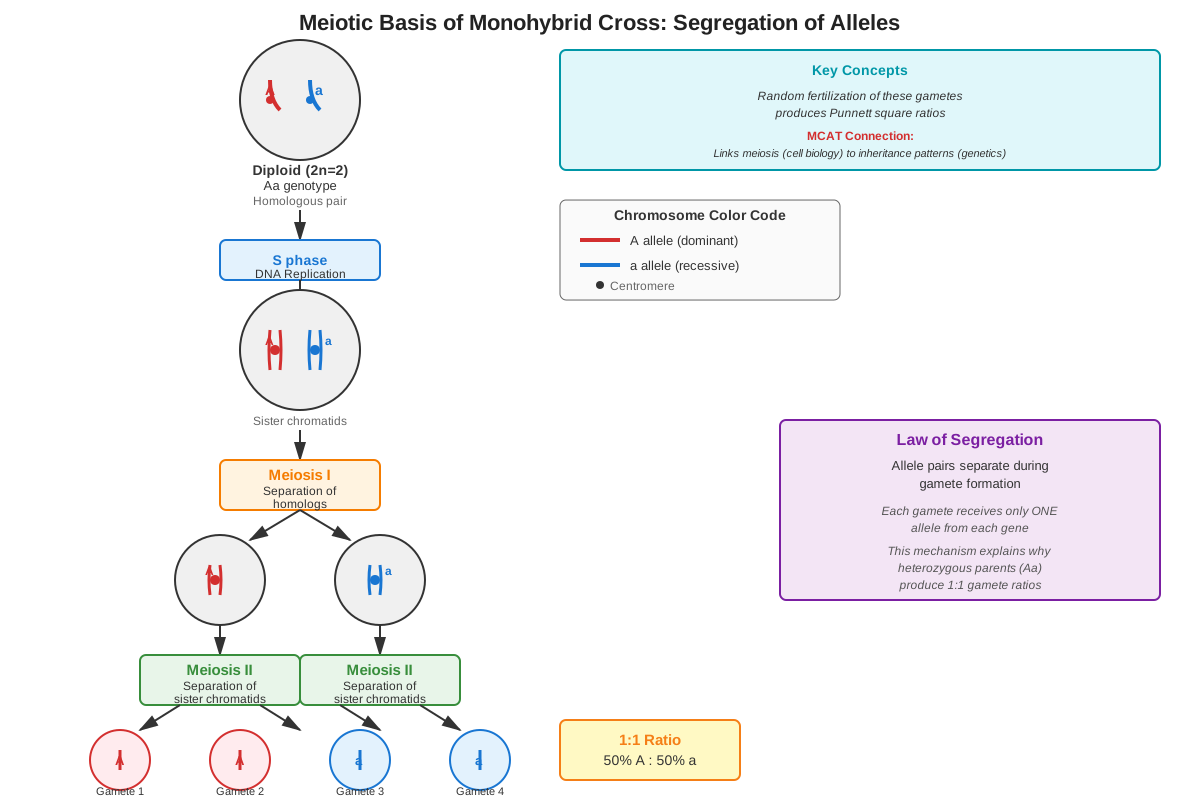
The fundamental principle underlying monohybrid crosses is the Law of Segregation, Mendel's First Law, which states that paired alleles separate during gamete formation such that each gamete receives only one allele for each gene. During fertilization, gametes randomly combine to restore the diploid state, creating predictable genotypic and phenotypic ratios in offspring. This segregation occurs during meiosis I when homologous chromosomes separate, ensuring that each gamete carries only one copy of each gene.
Genotype and Phenotype Notation
Geneticists use standardized notation to represent alleles and genotypes. The dominant allele is represented by an uppercase letter (e.g., A, B, T), while the recessive allele uses the corresponding lowercase letter (e.g., a, b, t). A homozygous dominant individual has two copies of the dominant allele (AA), a homozygous recessive individual has two copies of the recessive allele (aa), and a heterozygous individual has one of each (Aa). The phenotype describes the observable trait, while the genotype describes the genetic composition.
For MCAT purposes, students must recognize that heterozygous individuals (Aa) display the dominant phenotype but can transmit the recessive allele to offspring—these individuals are called carriers when discussing recessive genetic diseases. The distinction between genotype and phenotype becomes critical when analyzing crosses, as individuals with different genotypes (AA versus Aa) may share identical phenotypes.
The Punnett Square Method
The Punnett square is a grid-based tool for predicting offspring genotypes and phenotypes from a genetic cross. To construct a Punnett square for a monohybrid cross:
- Determine the genotypes of both parents
- Identify all possible gametes each parent can produce (each gamete contains one allele)
- Create a grid with one parent's gametes along the top and the other parent's gametes along the side
- Fill each box by combining the corresponding gametes
- Count genotypes and phenotypes to determine ratios
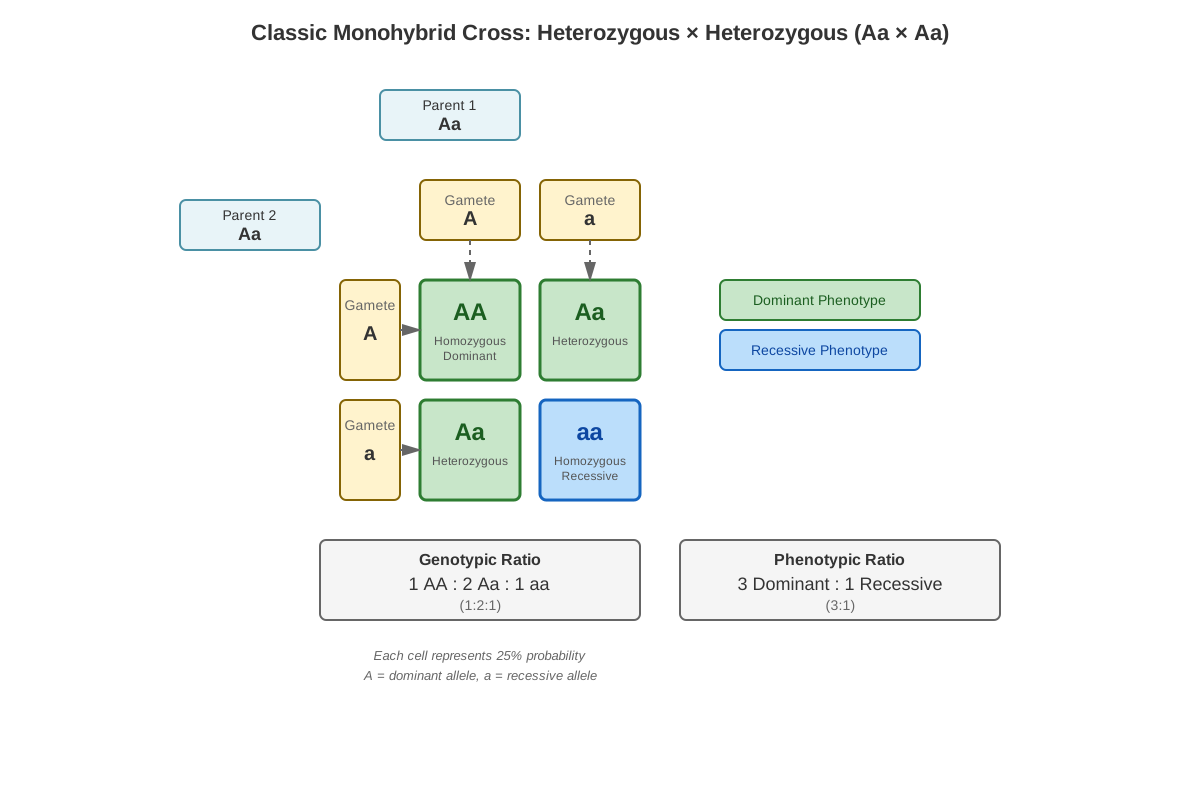
For example, crossing two heterozygous individuals (Aa × Aa):
| A | a | |
|---|---|---|
| A | AA | Aa |
| a | Aa | aa |
This produces a genotypic ratio of 1 AA : 2 Aa : 1 aa and a phenotypic ratio of 3 dominant : 1 recessive (or 3:1).
Classic Monohybrid Cross Ratios
Several standard monohybrid crosses produce characteristic ratios that MCAT students must recognize instantly:
| Cross Type | Parental Genotypes | F₁ Genotypic Ratio | F₁ Phenotypic Ratio |
|---|---|---|---|
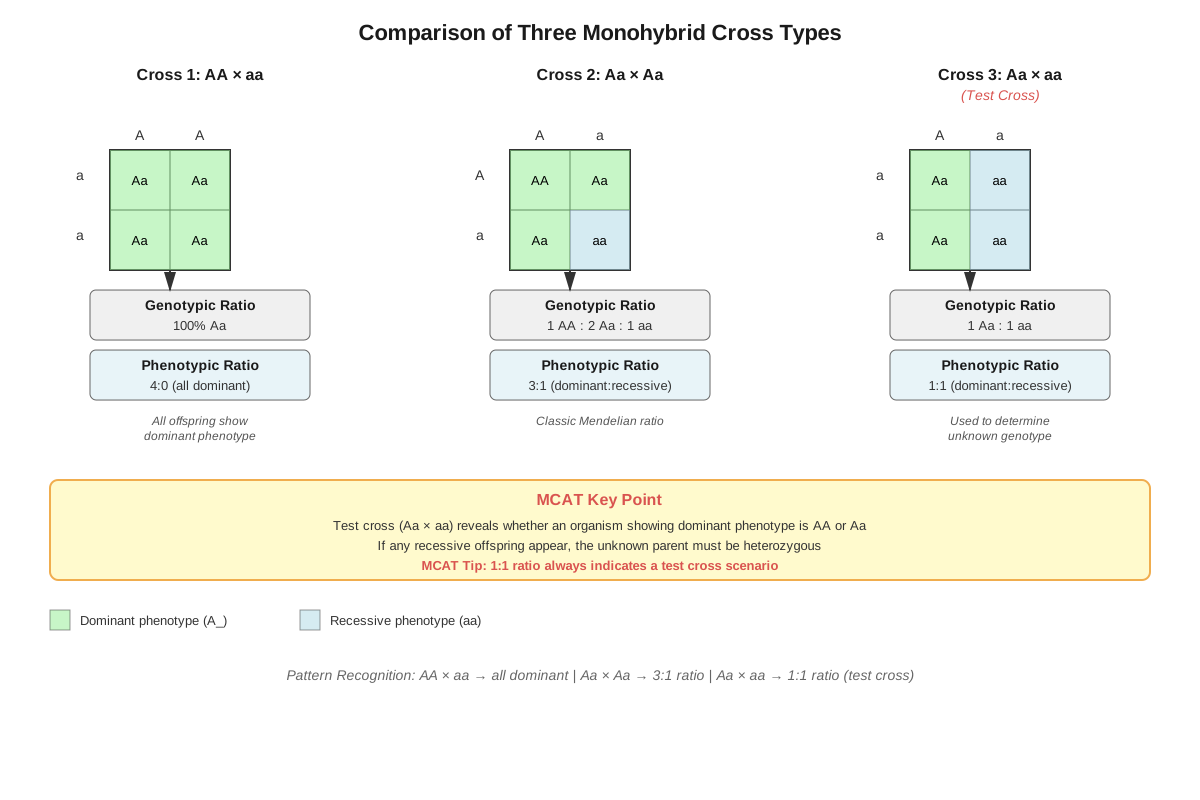
| Homozygous dominant × Homozygous recessive | AA × aa | 100% Aa | 100% dominant |
| Heterozygous × Heterozygous | Aa × Aa | 1 AA : 2 Aa : 1 aa | 3 dominant : 1 recessive |
| Heterozygous × Homozygous recessive | Aa × aa | 1 Aa : 1 aa | 1 dominant : 1 recessive |
| Homozygous dominant × Heterozygous | AA × Aa | 1 AA : 1 Aa | 100% dominant |
The 3:1 phenotypic ratio from an Aa × Aa cross represents the most frequently tested ratio on the MCAT and serves as a hallmark of Mendelian inheritance. Deviation from expected ratios may indicate incomplete dominance, codominance, lethal alleles, or linked genes.
Testcross and Determining Unknown Genotypes
A testcross involves crossing an individual with a dominant phenotype but unknown genotype with a homozygous recessive individual (aa). This technique determines whether the unknown individual is homozygous dominant (AA) or heterozygous (Aa). If any offspring display the recessive phenotype, the unknown parent must be heterozygous because homozygous dominant individuals cannot produce recessive offspring when crossed with any genotype.
Testcross outcomes:
- If unknown is AA: AA × aa → 100% Aa (all dominant phenotype)
- If unknown is Aa: Aa × aa → 1 Aa : 1 aa (50% dominant, 50% recessive phenotype)
The testcross principle extends to determining parental genotypes from offspring ratios, a common MCAT question type. For example, if a cross produces offspring in a 3:1 phenotypic ratio, both parents must be heterozygous (Aa × Aa).
Probability Calculations in Monohybrid Crosses
Beyond Punnett squares, students must apply probability rules to monohybrid crosses. The product rule (multiplication rule) states that the probability of independent events occurring together equals the product of their individual probabilities. The sum rule (addition rule) states that the probability of either of two mutually exclusive events occurring equals the sum of their individual probabilities.
For example, in an Aa × Aa cross:
- Probability of AA offspring = 1/4
- Probability of Aa offspring = 1/2 (because Aa can form two ways: A from parent 1 + a from parent 2, OR a from parent 1 + A from parent 2)
- Probability of aa offspring = 1/4
- Probability of dominant phenotype = 3/4 (AA or Aa)
When calculating the probability of specific outcomes across multiple offspring, apply the product rule. The probability that two offspring from an Aa × Aa cross will both show the recessive phenotype is 1/4 × 1/4 = 1/16.
Molecular Basis of Dominance
Understanding why one allele is dominant over another requires molecular perspective. Complete dominance occurs when one functional allele produces enough gene product (usually protein) to generate the dominant phenotype. The recessive phenotype appears only when no functional alleles are present (homozygous recessive). This often involves haploinsufficiency scenarios where 50% of normal protein levels (from one functional allele) suffice for normal phenotype.
At the molecular level, many recessive alleles represent loss-of-function mutations producing nonfunctional proteins, while dominant alleles encode functional proteins. However, some dominant alleles represent gain-of-function mutations or dominant-negative mutations where the mutant protein interferes with normal protein function. This molecular understanding helps students recognize that dominance relationships describe phenotypic expression patterns, not inherent allele "strength."
Concept Relationships
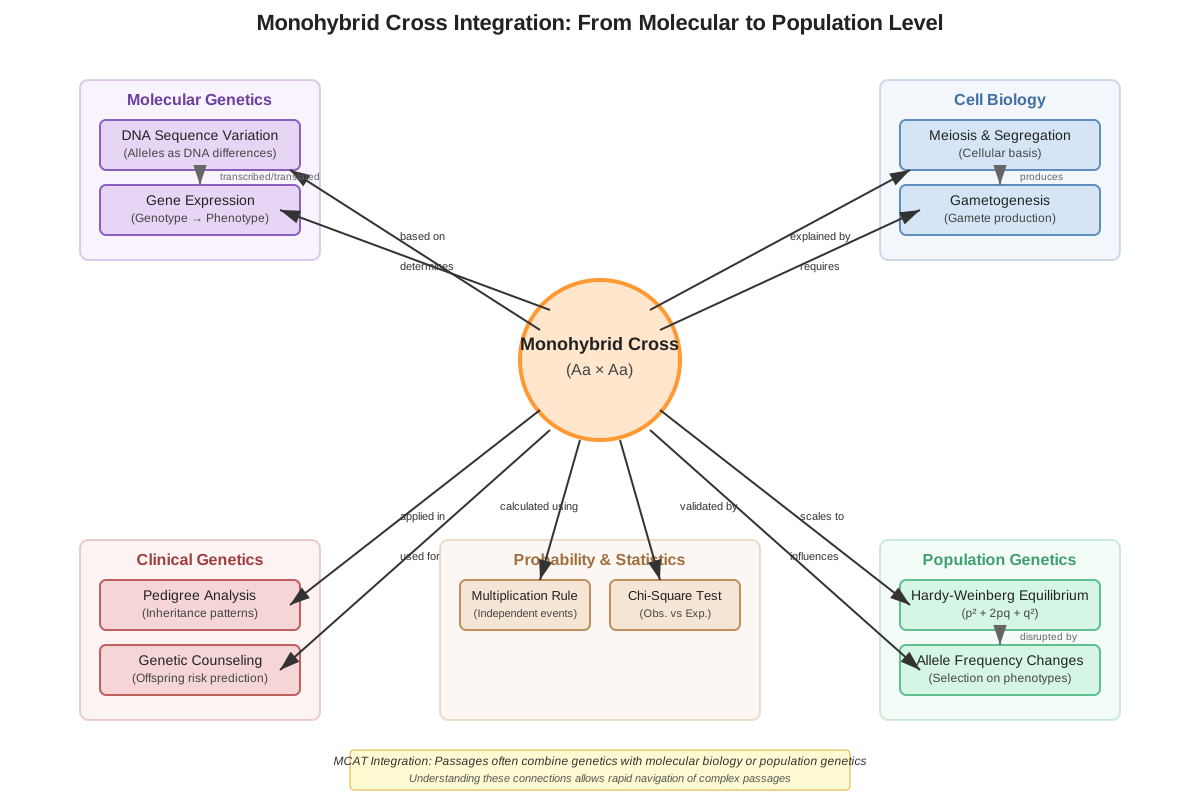
Monohybrid crosses serve as the foundational concept from which more complex genetic analyses emerge. The Law of Segregation demonstrated through monohybrid crosses → provides the mechanistic basis for → the Law of Independent Assortment tested in dihybrid crosses. Understanding monohybrid ratios → enables recognition of → deviations from Mendelian patterns including incomplete dominance (1:2:1 phenotypic ratio matching genotypic ratio) and codominance (both alleles fully expressed).
The probability calculations mastered in monohybrid crosses → directly transfer to → Hardy-Weinberg equilibrium calculations in population genetics, where p² + 2pq + q² = 1 represents genotype frequencies. The testcross concept → extends to → linkage analysis and gene mapping, where deviations from expected ratios indicate genes are linked on the same chromosome rather than assorting independently.
Monohybrid crosses → connect to meiosis through → the physical mechanism of allele segregation during anaphase I when homologous chromosomes separate. The concept → relates to pedigree analysis through → the ability to determine inheritance patterns (autosomal dominant, autosomal recessive) by examining trait transmission across generations. Finally, monohybrid cross principles → integrate with molecular biology through → understanding how genotype (DNA sequence) determines phenotype (protein function and observable traits).
Quick check — test yourself on Monohybrid crosses so far.
Try Flashcards →High-Yield Facts
⭐ The classic Aa × Aa monohybrid cross produces a 3:1 phenotypic ratio and 1:2:1 genotypic ratio in offspring
⭐ A testcross (crossing with homozygous recessive) reveals whether a dominant-phenotype individual is homozygous or heterozygous
⭐ Each parent contributes exactly one allele to each offspring through gamete formation during meiosis
⭐ The Law of Segregation states that paired alleles separate during gamete formation, with each gamete receiving only one allele
⭐ Heterozygous individuals (Aa) display the dominant phenotype but can transmit the recessive allele to offspring
- The probability of a specific genotype in offspring equals the product of the probabilities of receiving each allele from each parent
- A 1:1 phenotypic ratio indicates a cross between a heterozygote and a homozygous recessive individual (Aa × aa)
- Homozygous dominant individuals (AA) cannot produce offspring with the recessive phenotype regardless of the other parent's genotype
- The F₂ generation from an F₁ × F₁ cross (where F₁ are all heterozygous) produces the characteristic 3:1 ratio
- Deviation from expected Mendelian ratios may indicate incomplete dominance, codominance, lethal alleles, or linked genes
- In a monohybrid cross between two heterozygotes, 1/4 of offspring will be homozygous dominant, 1/2 heterozygous, and 1/4 homozygous recessive
- The recessive phenotype only appears in homozygous recessive individuals (aa) in complete dominance scenarios
Common Misconceptions
Misconception: Dominant alleles are more common in populations than recessive alleles → Correction: Dominance describes expression patterns in heterozygotes, not allele frequency. Recessive alleles can be more common than dominant alleles in populations (e.g., the allele for blue eyes is recessive but common in some populations).
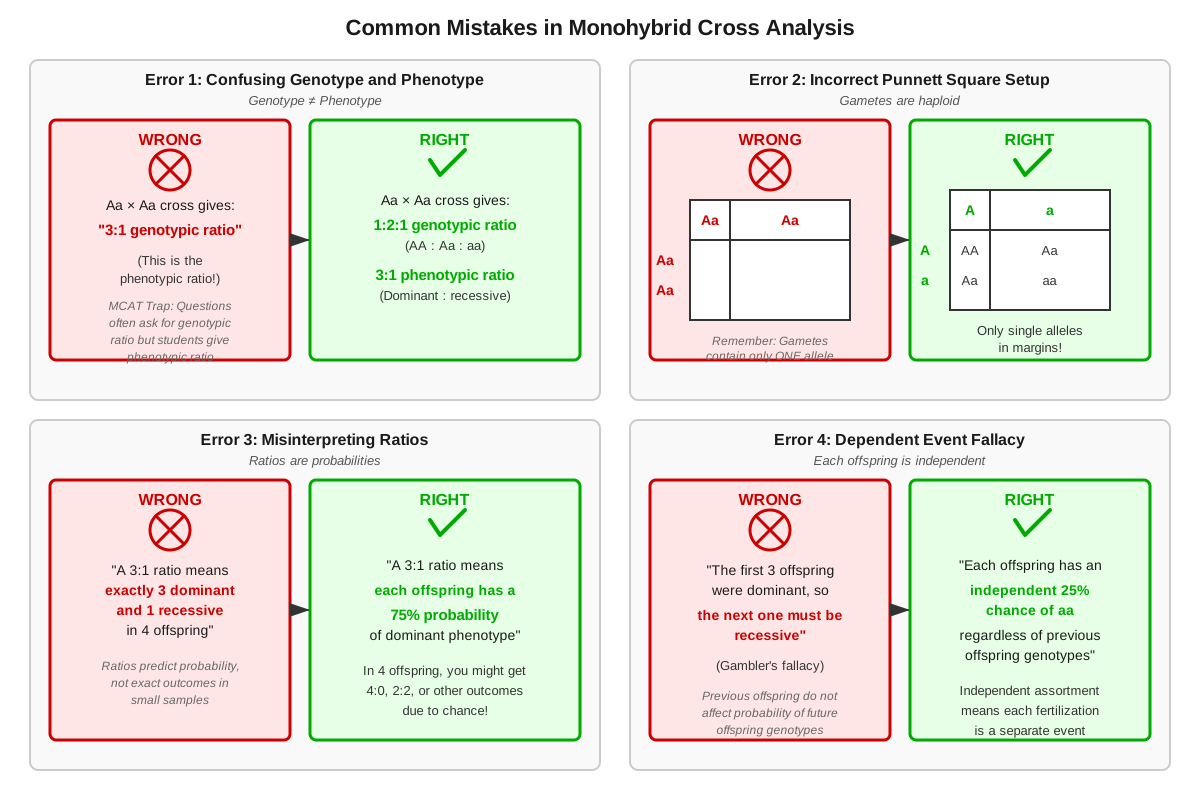
Misconception: In an Aa × Aa cross, the genotypic ratio is 3:1 → Correction: The genotypic ratio is 1:2:1 (1 AA : 2 Aa : 1 aa), while the phenotypic ratio is 3:1 (3 dominant : 1 recessive). Students frequently confuse these two ratios.
Misconception: Heterozygous individuals (Aa) show a blended or intermediate phenotype → Correction: In complete dominance (the standard assumption for monohybrid crosses), heterozygotes display the dominant phenotype indistinguishably from homozygous dominant individuals. Blending occurs in incomplete dominance, a different inheritance pattern.
Misconception: Each offspring's genotype is independent, so if three offspring are dominant phenotype, the fourth must be recessive to maintain the 3:1 ratio → Correction: Each offspring represents an independent probability event. The 3:1 ratio is a statistical expectation over many offspring, not a guaranteed sequence. Each offspring from an Aa × Aa cross has a 3/4 chance of dominant phenotype regardless of previous offspring.
Misconception: A cross producing all dominant phenotype offspring proves both parents are homozygous dominant → Correction: Several genotype combinations can produce all dominant offspring in small sample sizes: AA × AA, AA × Aa, AA × aa, and even Aa × Aa (by chance with small numbers). Only large sample sizes or molecular testing can definitively determine genotypes.
Misconception: The Punnett square shows what will happen in a cross → Correction: The Punnett square shows probabilities and expected ratios, not guaranteed outcomes. Actual offspring distributions may deviate from expected ratios due to chance, especially with small sample sizes. Chi-square analysis determines whether observed deviations are statistically significant.
Worked Examples
Example 1: Classic Monohybrid Cross with Probability Calculation
Problem: In pea plants, tall (T) is dominant to short (t). Two heterozygous tall plants are crossed. (a) What are the expected genotypic and phenotypic ratios in the offspring? (b) What is the probability that the first three offspring will all be tall? (c) If a tall offspring is selected, what is the probability it is heterozygous?
Solution:
(a) Parental genotypes: Tt × Tt
Punnett square:
| T | t | |
|---|---|---|
| T | TT | Tt |
| t | Tt | tt |
Genotypic ratio: 1 TT : 2 Tt : 1 tt (or 1:2:1)
Phenotypic ratio: 3 tall : 1 short (or 3:1)
(b) Probability calculation:
- Probability one offspring is tall = 3/4
- Probability three independent offspring are all tall = (3/4) × (3/4) × (3/4) = 27/64 ≈ 0.42 or 42%
This applies the product rule for independent events.
(c) Conditional probability:
- Among tall offspring, genotypes are TT or Tt
- From the Punnett square: 1 TT and 2 Tt among the 3 tall offspring
- Probability a tall plant is heterozygous = 2/3
This is a conditional probability—given that the plant is tall, what's the probability of a specific genotype? This question type frequently appears on the MCAT and requires recognizing that the sample space is restricted to tall plants only.
Example 2: Testcross and Backward Reasoning
Problem: A researcher crosses a purple-flowered pea plant with a white-flowered pea plant. The offspring consist of 52 purple-flowered and 48 white-flowered plants. (a) Which trait is dominant? (b) What are the genotypes of the parents? (c) If the researcher crosses two of the purple-flowered offspring, what phenotypic ratio would be expected?
Solution:
(a) Purple is dominant because it appears in the offspring. If white were dominant, crossing a white plant with any other plant would produce some white offspring, but all offspring would need at least one white allele. The approximately 1:1 ratio indicates a heterozygote × homozygous recessive cross.
(b) Let P = purple (dominant), p = white (recessive)
- White-flowered parent must be pp (recessive phenotype requires homozygous recessive genotype)
- The 1:1 ratio (52:48 ≈ 50:50) indicates the purple parent is heterozygous (Pp)
- Cross: Pp × pp → 1 Pp : 1 pp (1:1 ratio)
If the purple parent were PP, all offspring would be purple (PP × pp → all Pp).
(c) Crossing two purple offspring from the F₁ generation:
- Both F₁ purple plants are Pp (from part b)
- Cross: Pp × Pp → 1 PP : 2 Pp : 1 pp
- Phenotypic ratio: 3 purple : 1 white (3:1)
This example demonstrates backward reasoning from offspring ratios to parental genotypes, a high-yield MCAT skill. The approximately 1:1 ratio is the key trigger indicating a heterozygote × homozygous recessive cross.
Exam Strategy
Approaching MCAT Monohybrid Cross Questions
When encountering genetics questions on the MCAT, follow this systematic approach:
- Identify the inheritance pattern: Confirm the question involves a single trait (monohybrid) versus multiple traits (dihybrid). Look for phrases like "one gene," "single trait," or problems presenting only one characteristic.
- Establish dominance relationships: Determine which allele is dominant, either from explicit statement or by analyzing offspring ratios. A 3:1 ratio indicates complete dominance; a 1:2:1 phenotypic ratio suggests incomplete dominance or codominance.
- Assign genotypes systematically: Start with what you know for certain (homozygous recessive individuals always have aa genotype), then work toward unknown genotypes using offspring data.
- Choose the appropriate tool: Use Punnett squares for visualizing crosses with small numbers of offspring or when determining all possible outcomes. Use probability calculations for specific outcome questions or when dealing with multiple offspring.
Trigger Words and Phrases
Watch for these high-yield trigger phrases that indicate specific approaches:
- "True-breeding" or "pure-breeding": Indicates homozygous individuals (AA or aa)
- "Testcross" or "crossed with a recessive individual": Signals a heterozygote × homozygous recessive cross to determine unknown genotypes
- "F₁ generation" or "first filial": First-generation offspring; in classic crosses between homozygous parents, F₁ are all heterozygous
- "F₂ generation" or "second filial": Offspring from F₁ × F₁ cross; typically produces 3:1 ratio
- "Carrier": Heterozygous individual (Aa) for a recessive trait
- "What is the probability that...": Use probability rules rather than Punnett squares for efficiency
Process of Elimination Tips
When evaluating answer choices:
- Eliminate ratios inconsistent with Mendelian genetics: For monohybrid crosses with complete dominance, only certain ratios are possible (1:0, 3:1, 1:1, 1:2:1 for genotypes). Ratios like 2:1 or 4:1 indicate non-Mendelian inheritance or lethal alleles.
- Check mathematical consistency: If a question asks for probability, ensure answer choices sum appropriately. For example, if asking for probability of dominant phenotype, the recessive probability should be 1 minus that value.
- Verify genotype-phenotype relationships: Eliminate answers that incorrectly match genotypes to phenotypes (e.g., claiming Aa shows recessive phenotype in complete dominance).
- Consider sample size: Small sample sizes may not perfectly match expected ratios. If a question presents data from 8 offspring, don't expect exactly 6:2 (3:1 ratio); 7:1 or 5:3 might occur by chance.
Time Allocation
For discrete monohybrid cross questions, allocate 60-90 seconds. Quickly construct a Punnett square or apply probability rules without extensive calculation. For passage-based questions, spend 30-45 seconds per question after passage analysis. If a question requires extensive calculation, mark it and return if time permits—the MCAT rewards efficient time management over perfect completion.
Memory Techniques
Mnemonic for Genotypic Ratios
"One-Two-One, Done" - The genotypic ratio from Aa × Aa is always 1:2:1 (1 AA : 2 Aa : 1 aa)
Mnemonic for Phenotypic Ratios
"Three-to-One, Hetero Fun" - A 3:1 phenotypic ratio indicates both parents are heterozygous (Aa × Aa)
Visualization Strategy: The Ratio Recognition System
Create a mental flowchart for ratio recognition:
Offspring ratio observed:
├─ All one phenotype (1:0) → At least one parent is homozygous dominant
├─ 3:1 ratio → Both parents heterozygous (Aa × Aa)
├─ 1:1 ratio → Heterozygous × homozygous recessive (Aa × aa)
└─ 1:2:1 phenotypic ratio → Incomplete dominance or codominance
Acronym for Testcross Analysis
"RUTH" - Recessive Used To Help (determine unknown genotypes)
- Recessive phenotype individual (aa)
- Used in cross
- To determine
- Heterozygous vs. homozygous dominant
Memory Palace Technique
Visualize a garden with four quadrants (like a Punnett square):
- Top-left quadrant: Tall, dark green plants (homozygous dominant - AA)
- Top-right and bottom-left: Medium green plants (heterozygous - Aa)
- Bottom-right: Short, light green plants (homozygous recessive - aa)
This 1:2:1 spatial arrangement reinforces the genotypic ratio visually.
Summary
Monohybrid crosses examine the inheritance of a single trait controlled by one gene with two alleles, forming the foundation of Mendelian genetics tested on the MCAT. The Law of Segregation explains how paired alleles separate during meiosis, with each gamete receiving one allele and fertilization randomly combining gametes to produce predictable offspring ratios. The classic Aa × Aa cross produces a 3:1 phenotypic ratio (dominant:recessive) and 1:2:1 genotypic ratio (AA:Aa:aa), representing the most frequently tested pattern on the exam. Punnett squares provide a visual method for determining all possible offspring genotypes, while probability calculations efficiently solve specific outcome questions. Testcrosses (crossing with homozygous recessive individuals) reveal unknown genotypes by examining offspring phenotypes. MCAT success requires instant recognition of standard ratios, ability to work backward from offspring to parental genotypes, and integration of monohybrid cross principles with molecular mechanisms of dominance, meiosis, and population genetics. Students must distinguish between genotypic and phenotypic ratios, understand that ratios represent statistical expectations rather than guaranteed outcomes, and recognize deviations from expected Mendelian ratios that indicate alternative inheritance patterns.
Key Takeaways
- Monohybrid crosses analyze single-trait inheritance following Mendel's Law of Segregation, with each parent contributing one allele per gene to offspring
- The Aa × Aa cross produces the hallmark 3:1 phenotypic ratio and 1:2:1 genotypic ratio, the most tested pattern on the MCAT
- Testcrosses (crossing with aa) determine whether dominant-phenotype individuals are AA or Aa based on offspring ratios
- Probability calculations using product and sum rules efficiently solve monohybrid cross problems without constructing full Punnett squares
- Heterozygous individuals (Aa) display dominant phenotypes but carry and can transmit recessive alleles to offspring
- Backward reasoning from offspring ratios to parental genotypes represents a high-yield MCAT skill requiring recognition of characteristic ratios
- Deviations from expected Mendelian ratios indicate incomplete dominance, codominance, lethal alleles, or linked genes rather than simple monohybrid inheritance
Related Topics
Dihybrid Crosses and Independent Assortment: Building on monohybrid cross principles, dihybrid crosses examine two traits simultaneously, introducing the Law of Independent Assortment and 9:3:3:1 ratios. Mastering monohybrid crosses provides the foundation for understanding how multiple genes assort during meiosis.
Incomplete Dominance and Codominance: These non-Mendelian inheritance patterns modify the standard dominance relationships seen in monohybrid crosses, producing 1:2:1 phenotypic ratios or expression of both alleles. Understanding classic monohybrid crosses enables recognition of deviations from expected patterns.
Pedigree Analysis: Pedigrees track trait inheritance across multiple generations, requiring application of monohybrid cross logic to determine inheritance patterns (autosomal dominant, autosomal recessive, sex-linked). The probability calculations and genotype determination skills from monohybrid crosses transfer directly to pedigree interpretation.
Hardy-Weinberg Equilibrium: Population genetics extends monohybrid cross principles to entire populations, using p² + 2pq + q² = 1 to calculate genotype frequencies. The 1:2:1 genotypic ratio from Aa × Aa crosses relates directly to Hardy-Weinberg genotype frequency predictions.
Chi-Square Analysis: Statistical testing determines whether observed offspring ratios significantly deviate from expected Mendelian ratios, integrating monohybrid cross predictions with quantitative analysis skills tested on the MCAT.
Practice CTA
Now that you've mastered the core concepts of monohybrid crosses, reinforce your understanding by working through practice questions and flashcards. Focus on problems requiring backward reasoning from offspring to parents, probability calculations for multiple offspring, and integration with pedigree analysis. The more you practice recognizing characteristic ratios and applying systematic problem-solving approaches, the more efficiently you'll handle genetics questions on test day. Remember: genetics questions are highly predictable and reward pattern recognition—invest time now in deliberate practice to build the automaticity that will save you valuable minutes during the actual MCAT. You've built a strong foundation; now apply it!
Sign up free to keep reading
Create a free AnvayaPrep account to finish this MCAT guide on Monohybrid crosses — plus flashcards and practice questions.