Overview
Primase is a specialized RNA polymerase enzyme that plays an indispensable role in DNA replication by synthesizing short RNA primers that provide the 3'-OH group necessary for DNA polymerase to begin synthesis. Understanding primase function is fundamental to grasping the molecular mechanisms of DNA replication, a high-yield topic in Molecular Biology and Genetics for the MCAT. Without primase activity, DNA polymerases would be unable to initiate new DNA strand synthesis, as these enzymes can only extend existing nucleotide chains rather than start them de novo.
For MCAT preparation, primase represents a critical junction point where students must integrate knowledge of enzyme specificity, the directionality of nucleic acid synthesis, and the distinction between leading and lagging strand replication. The enzyme's unique ability to synthesize RNA in a DNA replication context frequently appears in passage-based questions that test mechanistic understanding rather than simple memorization. Questions often present experimental scenarios involving replication inhibitors, mutations affecting primer synthesis, or comparative biochemistry between prokaryotic and eukaryotic replication machinery.
The study of primase connects directly to broader Biology concepts including enzyme kinetics, the central dogma of molecular biology, cell cycle regulation, and the evolutionary conservation of replication mechanisms across domains of life. Mastery of primase function enables deeper understanding of topics such as Okazaki fragment formation, the replication fork architecture, and the coordination of multiple enzymatic activities during genome duplication—all testable concepts on the MCAT that frequently distinguish high-scoring students from average performers.
Learning Objectives
- [ ] Define Primase using accurate Biology terminology
- [ ] Explain why Primase matters for the MCAT
- [ ] Apply Primase to exam-style questions
- [ ] Identify common mistakes related to Primase
- [ ] Connect Primase to related Biology concepts
- [ ] Distinguish between primase function in prokaryotic versus eukaryotic systems
- [ ] Explain the biochemical rationale for why DNA polymerase requires a primer
- [ ] Analyze experimental scenarios involving primase inhibition and predict outcomes
Prerequisites
- DNA structure and antiparallel orientation: Essential for understanding why primers are needed and how primase synthesizes in the 5' to 3' direction
- DNA polymerase function and limitations: Necessary to comprehend why primase exists as a separate enzyme—DNA polymerase cannot initiate synthesis de novo
- Basic enzyme kinetics and substrate specificity: Required to understand how primase selectively uses ribonucleotides despite operating in a DNA synthesis context
- Semiconservative replication model: Provides the framework for understanding where and when primase acts during replication
- Leading vs. lagging strand synthesis: Critical for recognizing the differential frequency of primase activity on each strand
Why This Topic Matters
Primase appears regularly on the MCAT in both discrete questions and passage-based contexts, particularly in questions testing mechanistic understanding of DNA replication. Approximately 15-20% of Molecular Biology questions on recent MCAT administrations have involved replication machinery, with primase function being directly or indirectly tested in roughly one-third of these questions. The topic frequently appears in experimental passages describing replication assays, temperature-sensitive mutants, or antibiotic mechanisms of action.
Clinically, understanding primase has direct relevance to antibiotic development and cancer therapeutics. Several antibacterial agents target bacterial primase specifically, exploiting structural differences between prokaryotic and eukaryotic versions of the enzyme. Cancer cells, which replicate rapidly, are particularly vulnerable to agents that interfere with primase function, making this enzyme a target for chemotherapeutic development. These real-world applications frequently form the basis of MCAT passages that require students to apply basic science knowledge to clinical scenarios.
The topic commonly appears in passages that present experimental data showing replication defects, require interpretation of gel electrophoresis results showing Okazaki fragments, or describe mutant phenotypes affecting replication initiation. Questions may ask students to predict the consequences of primase inhibition, identify which replication components are affected by specific mutations, or explain why certain replication steps fail under particular experimental conditions. The ability to quickly recognize primase's role and limitations is essential for efficiently navigating these complex, multi-part questions.
Core Concepts
Definition and Basic Function
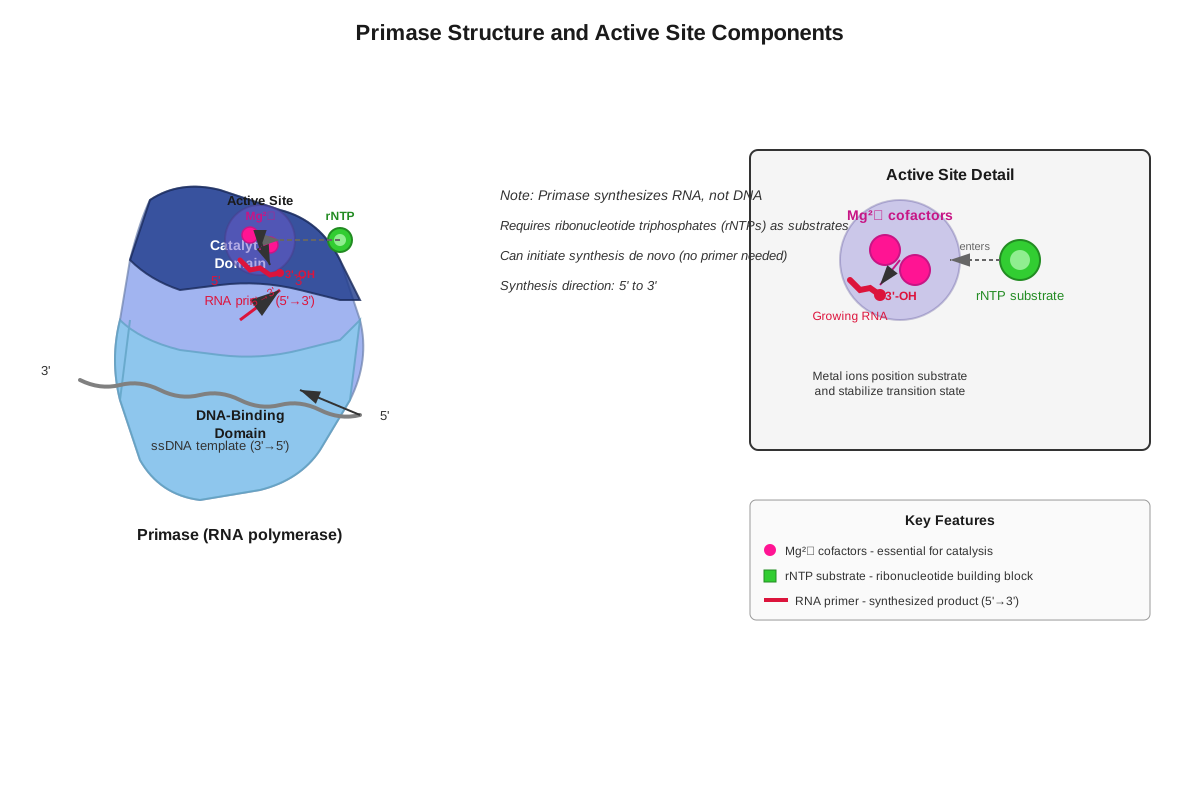
Primase is a specialized RNA polymerase enzyme (EC 2.7.7.6) that synthesizes short RNA oligonucleotides called primers during DNA replication. Unlike DNA polymerases, primase possesses the unique ability to initiate nucleic acid synthesis de novo—meaning it can begin synthesis without requiring a pre-existing 3'-hydroxyl group. The enzyme catalyzes the formation of phosphodiester bonds between ribonucleotides (not deoxyribonucleotides), creating short RNA sequences typically 8-12 nucleotides long in prokaryotes and 8-10 nucleotides in eukaryotes.
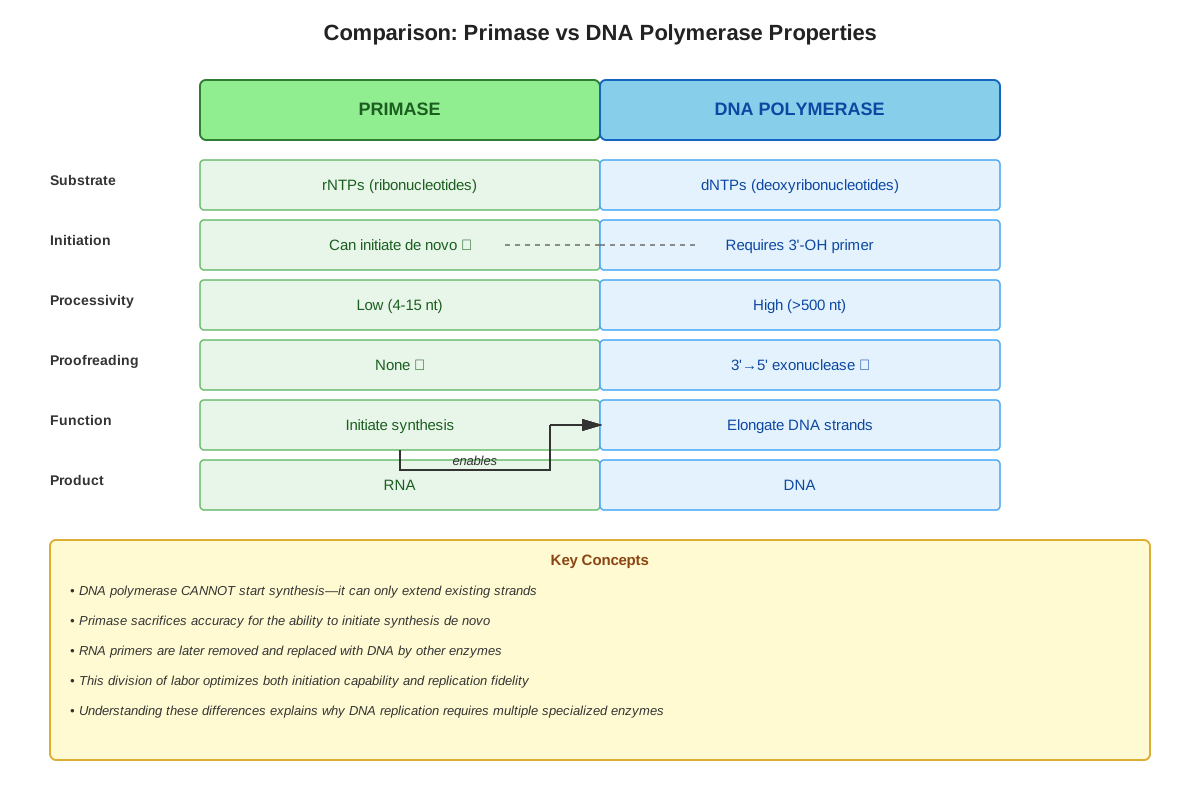
The fundamental biochemical necessity for primase stems from an inherent limitation of DNA polymerases: these enzymes can only add nucleotides to an existing 3'-OH group on a polynucleotide chain. They cannot join two individual nucleotides together to start a new chain. Primase solves this problem by providing the initial RNA segment with a free 3'-OH group, which DNA polymerase can then recognize and extend. This makes primase an absolutely essential component of the replication machinery in all domains of life.
Mechanism of Primer Synthesis
Primase synthesizes RNA primers through a mechanism similar to other RNA polymerases, but with distinct characteristics optimized for its replication role. The enzyme binds to single-stranded DNA template exposed by helicase activity at the replication fork. It then catalyzes the condensation reaction between the 3'-OH group of one ribonucleotide and the 5'-triphosphate group of the incoming ribonucleotide, releasing pyrophosphate and forming a phosphodiester bond.
The synthesis proceeds in the 5' to 3' direction, reading the template strand in the 3' to 5' direction—maintaining the universal directionality rule for nucleic acid polymerases. Primase does not require high processivity (the ability to add many nucleotides without dissociating) because primers are intentionally short. After synthesizing approximately 10 nucleotides, primase dissociates, and DNA polymerase III (in prokaryotes) or DNA polymerase α (in eukaryotes) takes over to extend the primer with deoxyribonucleotides.
Prokaryotic vs. Eukaryotic Primase
Significant structural and functional differences exist between prokaryotic and eukaryotic primase systems, making this a high-yield comparison for the MCAT:
| Feature | Prokaryotic (E. coli) | Eukaryotic (Mammals) |
|---|---|---|
| Gene/Protein | DnaG protein | Part of Pol α-primase complex |
| Primer Length | 10-12 ribonucleotides | 8-10 ribonucleotides |
| Association | Part of primosome | Tightly bound to DNA Pol α |
| Extension | DNA Pol III extends primer | Pol α extends ~20 nt, then Pol δ/ε takes over |
| Frequency on Leading Strand | Once per replication fork | Once per replication fork |
| Frequency on Lagging Strand | Every Okazaki fragment (~1000-2000 nt) | Every Okazaki fragment (~100-200 nt) |
In prokaryotes, DnaG primase functions as part of the primosome, a mobile complex that moves along the lagging strand template. In eukaryotes, primase exists as a heterodimeric enzyme (two subunits) that forms a stable complex with DNA polymerase α, creating a four-subunit holoenzyme. This structural difference reflects the greater complexity of eukaryotic replication and the tighter coordination required among replication components.
Primase Activity on Leading vs. Lagging Strands
The frequency and pattern of primase activity differs dramatically between the two newly synthesized strands, a concept frequently tested on the MCAT:
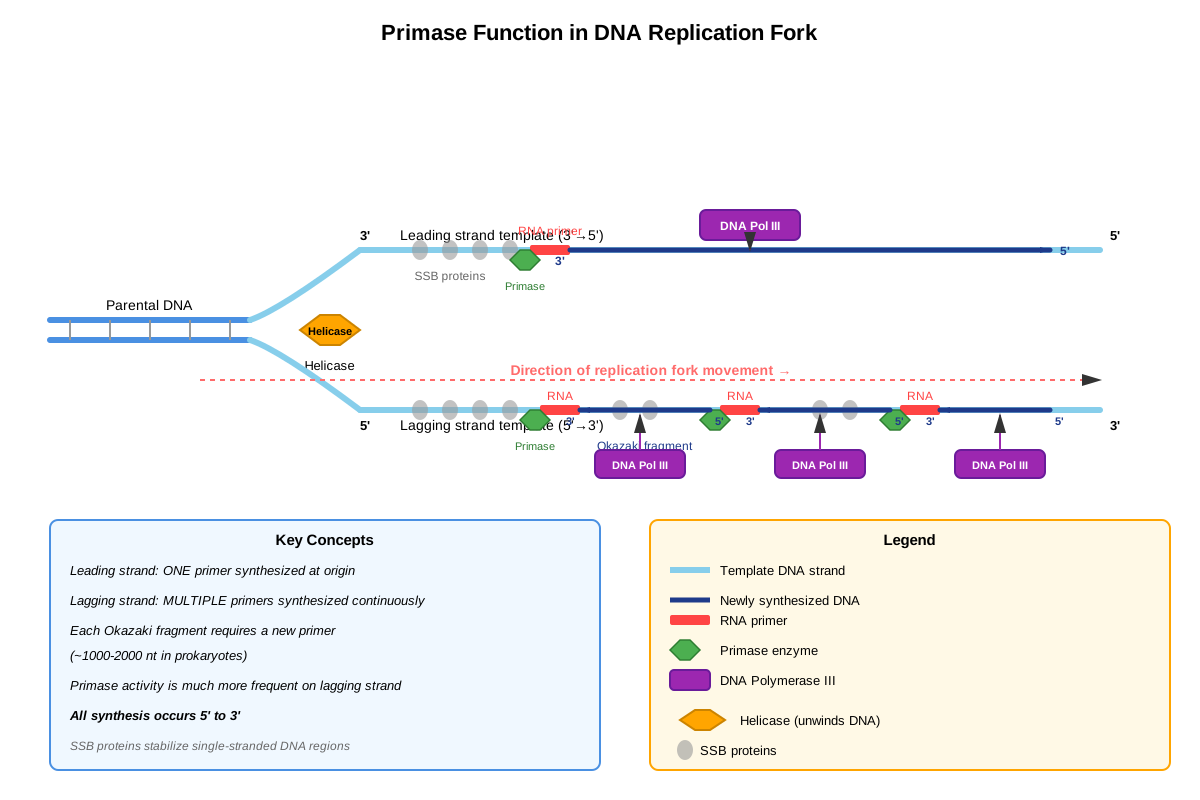
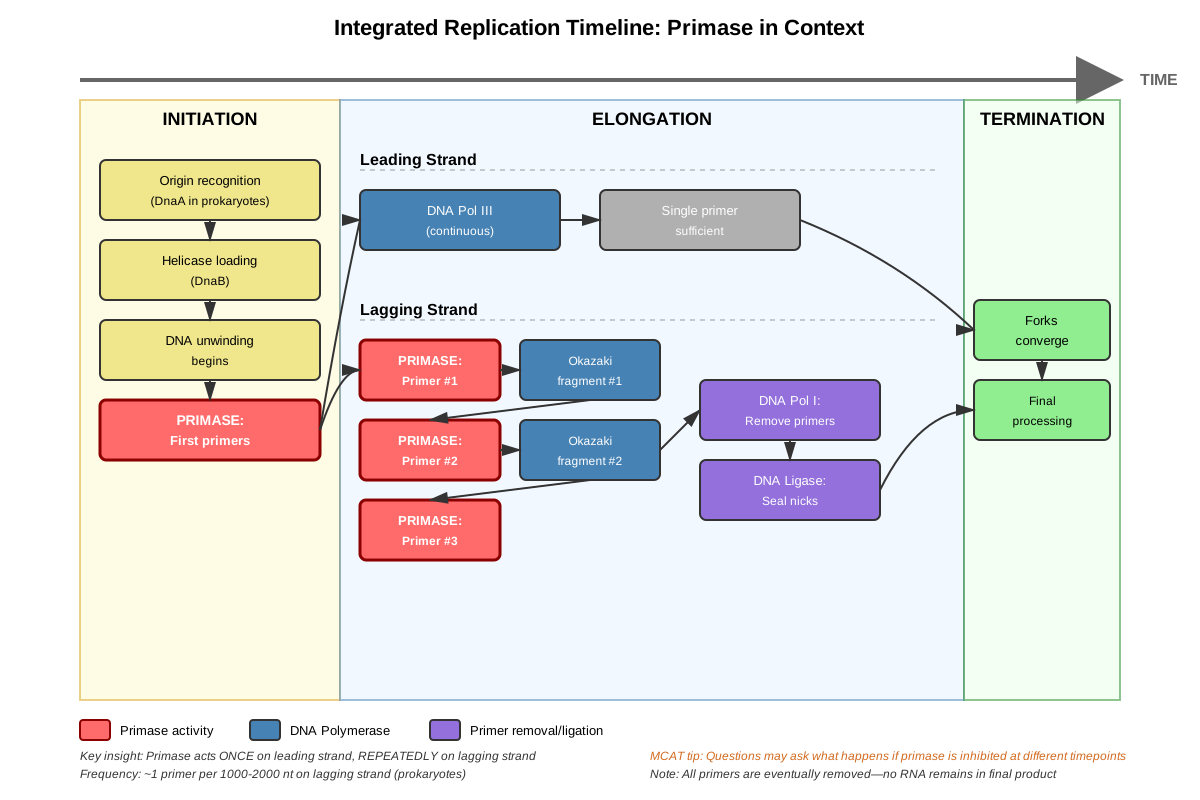
Leading Strand: Primase acts only once at the origin of replication to synthesize a single primer. After this initial priming event, DNA polymerase can synthesize continuously in the 5' to 3' direction as the replication fork progresses, because the template strand is oriented 3' to 5' in the direction of fork movement. No additional primers are needed for leading strand synthesis.
Lagging Strand: Primase must act repeatedly, synthesizing a new primer for each Okazaki fragment. Because the lagging strand template runs 5' to 3' in the direction of fork movement, synthesis must occur discontinuously in short segments moving away from the replication fork. Each Okazaki fragment requires its own primer, meaning primase activity on the lagging strand is hundreds to thousands of times more frequent than on the leading strand. In prokaryotes, with Okazaki fragments of ~1000-2000 nucleotides, primase acts every 1-2 seconds on the lagging strand. In eukaryotes, with shorter fragments of ~100-200 nucleotides, primase activity is even more frequent.
Primer Removal and Replacement
An essential but often overlooked aspect of primase function is that the RNA primers it synthesizes are temporary structures that must be removed and replaced with DNA. This process involves several enzymes and represents a critical quality control step in replication:
- RNase H (in prokaryotes) or RNase H1 and FEN1 (in eukaryotes) recognize and remove most of the RNA primer
- DNA polymerase I (prokaryotes) or DNA polymerase δ (eukaryotes) fills in the gap with deoxyribonucleotides using its 5' to 3' polymerase activity
- DNA ligase seals the final phosphodiester bond between adjacent Okazaki fragments
The necessity of primer removal explains why cells use RNA rather than DNA for primers: RNA is chemically distinct from DNA, allowing specific recognition and removal by RNases without risking degradation of the newly synthesized DNA strands. This represents an elegant molecular solution to the primer problem.
Regulation and Coordination
Primase activity must be precisely coordinated with other replication fork components to ensure efficient and accurate DNA synthesis. In prokaryotes, this coordination occurs through the replisome, a large multi-protein complex that includes helicase, primase, DNA polymerase, and accessory proteins. Physical interactions between these components ensure that primase acts at the appropriate time and location.
In eukaryotes, the Pol α-primase complex provides built-in coordination: after primase synthesizes the RNA primer, the associated DNA polymerase α immediately extends it with 20-30 deoxyribonucleotides before dissociating. This creates a short RNA-DNA hybrid that serves as the substrate for the more processive DNA polymerases δ and ε. The clamp loader (RFC complex) recognizes this primer-template junction and loads the PCNA sliding clamp, which then recruits the appropriate polymerase for continued synthesis.
Concept Relationships
Primase function sits at the nexus of multiple interconnected molecular biology concepts, forming a conceptual hub for understanding DNA replication. The enzyme's activity directly depends on helicase function, which must first unwind the DNA double helix to expose single-stranded template regions where primase can bind. This creates a temporal sequence: helicase action → primase binding → primer synthesis → DNA polymerase extension.
The relationship between primase and DNA polymerase represents a classic example of complementary enzyme functions solving a biochemical problem. DNA polymerase's limitation (cannot initiate synthesis) necessitates primase's existence (can initiate synthesis), while primase's limitation (synthesizes only short RNA segments) requires DNA polymerase's strength (processive DNA synthesis). This interdependence exemplifies the modular organization of cellular machinery.
Primase connects to Okazaki fragment formation through a direct causal relationship: each Okazaki fragment begins with a primase-synthesized primer. The frequency of Okazaki fragments (and thus primase activity) inversely correlates with fragment length—shorter fragments in eukaryotes mean more frequent primase activity. This relationship extends to DNA ligase function, as more Okazaki fragments require more ligation events to create continuous DNA strands.
The concept map flows as follows: DNA unwinding (helicase) → Single-stranded template exposure → Primase binding and primer synthesis → DNA polymerase recruitment and extension → Primer removal (RNase H) → Gap filling (DNA Pol I/δ) → Ligation (DNA ligase) → Continuous DNA strand. Understanding this sequence enables students to predict the consequences of disrupting any single step.
Quick check — test yourself on Primase so far.
Try Flashcards →High-Yield Facts
⭐ Primase is an RNA polymerase that synthesizes short RNA primers (8-12 nucleotides) necessary for DNA polymerase to initiate synthesis
⭐ DNA polymerase cannot initiate synthesis de novo; it requires a 3'-OH group provided by a primer
⭐ Primase acts once on the leading strand but repeatedly on the lagging strand (once per Okazaki fragment)
⭐ Prokaryotic Okazaki fragments are 1000-2000 nt long; eukaryotic fragments are 100-200 nt long, meaning eukaryotic primase acts more frequently
⭐ RNA primers are eventually removed by RNase H and replaced with DNA by DNA polymerase I (prokaryotes) or DNA polymerase δ (eukaryotes)
- Primase synthesizes in the 5' to 3' direction, like all nucleic acid polymerases
- In eukaryotes, primase is part of the Pol α-primase complex, providing tight coordination between priming and initial DNA synthesis
- Primase uses ribonucleoside triphosphates (ATP, GTP, CTP, UTP) as substrates, not deoxyribonucleotides
- The enzyme does not require high fidelity because primers are temporary and will be removed
- Primase activity can be specifically inhibited by certain antibiotics, making it a target for antimicrobial therapy
- The enzyme does not possess 3' to 5' exonuclease (proofreading) activity, unlike replicative DNA polymerases
- Primase recognizes specific sequences on the template strand that signal appropriate priming sites, particularly on the lagging strand
Common Misconceptions
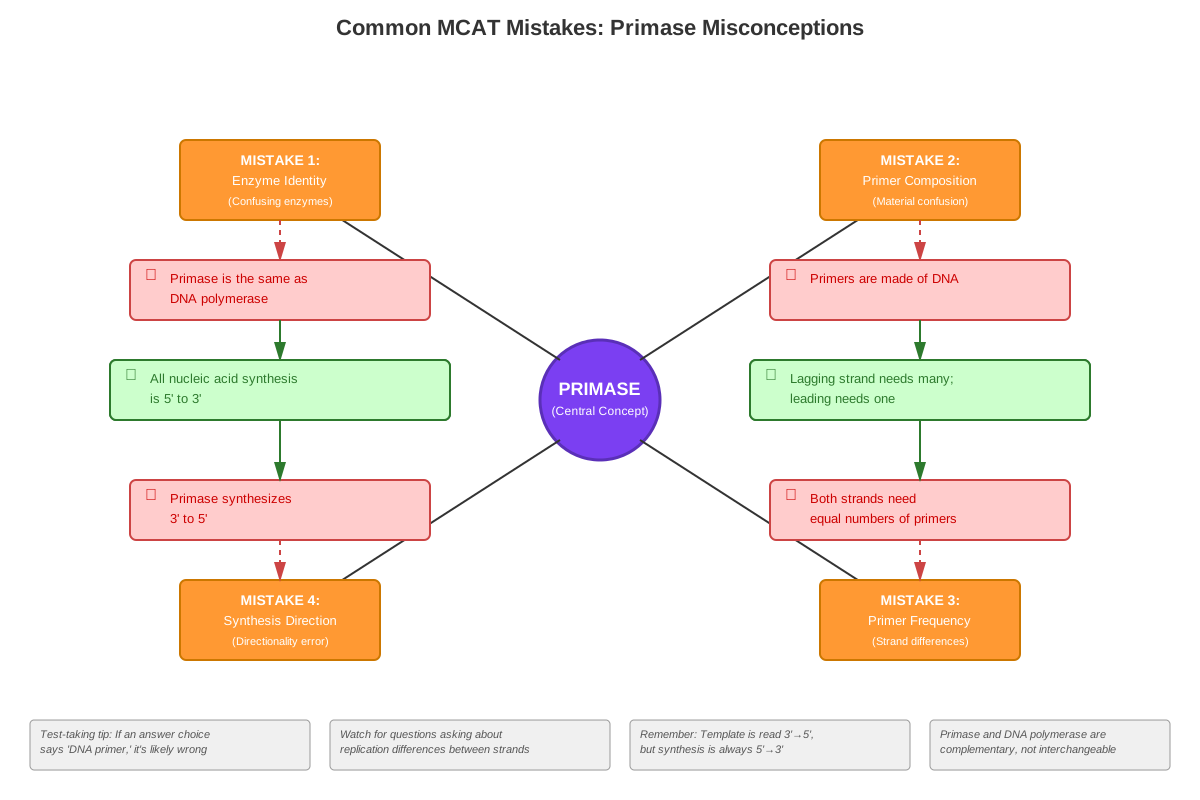
Misconception: Primase synthesizes DNA primers → Correction: Primase synthesizes RNA primers using ribonucleotides, not deoxyribonucleotides. This is why it's classified as an RNA polymerase despite functioning in DNA replication. The RNA nature of primers allows specific recognition and removal by RNases.
Misconception: Primase is needed equally on both leading and lagging strands → Correction: Primase acts only once on the leading strand (at initiation) but repeatedly on the lagging strand (once per Okazaki fragment). This difference stems from the continuous versus discontinuous nature of synthesis on each strand.
Misconception: DNA polymerase could theoretically start synthesis without a primer if given the right conditions → Correction: DNA polymerase fundamentally lacks the catalytic mechanism to join two individual nucleotides together. The enzyme's active site is structurally designed to recognize and extend an existing 3'-OH group, making primer requirement an absolute biochemical necessity, not just a preference.
Misconception: Primers remain in the final DNA molecule → Correction: All RNA primers are removed and replaced with DNA through the coordinated action of RNase H, DNA polymerase I/δ, and DNA ligase. The mature DNA molecule contains no RNA sequences from the original primers.
Misconception: Primase and DNA polymerase α are the same enzyme → Correction: In eukaryotes, these are distinct enzymes that form a stable complex (Pol α-primase complex). Primase synthesizes the RNA primer (8-10 nt), then Pol α extends it with DNA (20-30 nt), after which more processive polymerases take over. They have different catalytic activities and substrate specificities.
Misconception: Primase has proofreading capability like replicative DNA polymerases → Correction: Primase lacks 3' to 5' exonuclease activity and does not proofread its synthesis. This is acceptable because primers are temporary structures that will be removed, so high fidelity is unnecessary and would slow the priming process.
Worked Examples
Example 1: Experimental Analysis of Primase Inhibition
Question: Researchers treat replicating E. coli cells with a compound that specifically inhibits DnaG primase activity without affecting DNA polymerase, helicase, or ligase. After treatment, they analyze newly synthesized DNA using gel electrophoresis and autoradiography. Which of the following results would most likely be observed?
A) No DNA synthesis on either strand
B) Normal leading strand synthesis; no lagging strand synthesis
C) Normal lagging strand synthesis; no leading strand synthesis
D) Short DNA fragments accumulate on both strands
Worked Solution:
Step 1: Identify what primase does and when it's needed
- Primase synthesizes RNA primers required for DNA polymerase to initiate synthesis
- Leading strand requires one primer (at origin)
- Lagging strand requires many primers (one per Okazaki fragment)
Step 2: Consider the timing of the experiment
- The question states cells are "replicating," meaning replication has already begun
- Leading strand synthesis was likely already initiated before drug treatment
- Once initiated, leading strand synthesis is continuous and doesn't require additional primers
Step 3: Analyze each strand's dependence on continued primase activity
- Leading strand: Already has its primer from initiation; can continue synthesis without additional primase activity
- Lagging strand: Continuously requires new primers for each Okazaki fragment; cannot continue without primase
Step 4: Predict the experimental outcome
- Leading strand synthesis continues normally
- Lagging strand synthesis halts because new Okazaki fragments cannot be initiated
- Previously initiated Okazaki fragments might complete, but no new ones begin
Answer: B - Normal leading strand synthesis; no lagging strand synthesis
This question tests understanding of the differential primase requirements between leading and lagging strands, a high-yield concept that distinguishes students who truly understand replication mechanics from those who have merely memorized facts.
Example 2: Comparative Biochemistry Analysis
Question: A molecular biology student purifies primase from both E. coli and human cells and performs in vitro primer synthesis assays using identical single-stranded DNA templates. The student measures the average number of primers synthesized per minute and the average length of each primer. Based on the known properties of prokaryotic versus eukaryotic replication, which results would be most consistent with the biological function of these enzymes?
Worked Solution:
Step 1: Recall key differences between prokaryotic and eukaryotic replication
- Prokaryotic Okazaki fragments: 1000-2000 nucleotides
- Eukaryotic Okazaki fragments: 100-200 nucleotides
- Shorter fragments mean more frequent priming events
Step 2: Consider what "primers per minute" reveals
- In vivo, eukaryotic primase must work faster or more frequently because Okazaki fragments are shorter
- More fragments per unit length of DNA = more primers needed
- However, in vitro conditions may not perfectly reflect in vivo rates
Step 3: Analyze primer length expectations
- Prokaryotic (E. coli DnaG): typically 10-12 nucleotides
- Eukaryotic (human): typically 8-10 nucleotides
- This difference is relatively small but consistent
Step 4: Consider the biological rationale
- Shorter primers in eukaryotes may reflect tighter coordination with Pol α
- The Pol α-primase complex in eukaryotes immediately extends primers, so shorter RNA portions are sufficient
- Prokaryotic primase operates more independently, so slightly longer primers may provide more stable substrates
Expected Results:
- Human primase synthesizes slightly shorter primers (8-10 nt vs. 10-12 nt)
- Both enzymes should synthesize primers at comparable rates in vitro (though in vivo context differs)
- Both should show 5' to 3' synthesis directionality
- Both should use ribonucleotides exclusively
This example reinforces the importance of connecting enzyme structure and function to biological context, a critical skill for passage-based MCAT questions that present experimental data requiring interpretation.
Exam Strategy
When approaching MCAT questions involving primase, first identify whether the question tests mechanism (how primase works), necessity (why primase is required), or coordination (how primase interacts with other replication components). Questions testing mechanism often include experimental scenarios with inhibitors or mutations; necessity questions typically present hypothetical situations asking what would happen without primase; coordination questions involve timing and sequence of replication events.
Trigger words and phrases to watch for include: "initiate synthesis," "primer," "RNA-DNA hybrid," "Okazaki fragment," "leading versus lagging strand," "discontinuous synthesis," "replication fork," and "de novo synthesis." When you see these terms, immediately activate your primase knowledge framework. Questions using phrases like "cannot begin synthesis" or "requires a 3'-OH group" are almost certainly testing understanding of why primase is necessary.
For process-of-elimination strategies, remember these key principles:
- Any answer suggesting DNA polymerase can initiate synthesis without a primer is incorrect
- Any answer suggesting primase synthesizes DNA (rather than RNA) is incorrect
- Any answer suggesting equal primase activity on leading and lagging strands is incorrect
- Any answer suggesting primers remain in the final DNA product is incorrect
Time allocation: Primase questions are typically medium difficulty and should take 60-90 seconds for discrete questions, 90-120 seconds for passage-based questions. If you find yourself spending more time, you may be overthinking. Return to the fundamental principle: primase makes RNA primers that DNA polymerase needs to start synthesis. Most questions can be answered by applying this core concept to the specific scenario presented.
When passages present experimental data (gel electrophoresis, replication assays, mutant phenotypes), quickly identify which replication component is affected and trace the downstream consequences. If primase is inhibited or mutated, predict: leading strand synthesis may continue (if already initiated) but lagging strand synthesis will halt or show accumulation of unreplicated gaps.
Memory Techniques
Mnemonic for primase function: "Primase Provides the Primer for Polymerase" - The four P's remind you of the essential relationship between these enzymes.
Mnemonic for primer composition: "RNA Primers Require Removal" - The three R's emphasize that primers are RNA (not DNA) and temporary (must be removed).
Visualization strategy: Picture a construction site where DNA polymerase is a worker who can only extend an existing structure but cannot pour the foundation. Primase is the foundation specialist who comes first, lays a small foundation (primer), then leaves so the main construction worker (DNA polymerase) can build the full structure. This analogy helps remember why both enzymes are necessary and their sequential relationship.
Acronym for primer removal process: "RIP" - RNase H removes primer, DNA polymerase I (or δ) fills gap, DNA ligase Puts together (ligates) the final strand. This sequence is frequently tested.
Leading vs. Lagging memory aid: "Leading = Less primase" (one primer only); "Lagging = Lots of primase" (many primers). The alliteration helps distinguish the frequency of primase activity on each strand.
Number memory: Remember "10-10-100-1000" - approximately 10 nucleotides per primer, 10 primers synthesized per second on lagging strand (eukaryotes), 100-200 nt Okazaki fragments (eukaryotes), 1000-2000 nt Okazaki fragments (prokaryotes). This sequence captures key quantitative information.
Summary
Primase is a specialized RNA polymerase essential for DNA replication, synthesizing short RNA primers that provide the 3'-OH group required by DNA polymerase to initiate synthesis. This enzyme solves a fundamental biochemical problem: DNA polymerase cannot join two individual nucleotides to start a new chain but can only extend existing chains. Primase acts once on the leading strand but repeatedly on the lagging strand, synthesizing a new primer for each Okazaki fragment. The enzyme uses ribonucleotides to create 8-12 nucleotide primers that are later removed by RNase H and replaced with DNA by DNA polymerase I (prokaryotes) or DNA polymerase δ (eukaryotes). Understanding primase requires integrating knowledge of enzyme specificity, replication directionality, and the coordination of multiple enzymatic activities at the replication fork. For the MCAT, students must be able to predict consequences of primase inhibition, distinguish between prokaryotic and eukaryotic systems, and explain the mechanistic basis for differential primase activity on leading versus lagging strands.
Key Takeaways
- Primase synthesizes short RNA primers (8-12 nt) that are absolutely required for DNA polymerase to initiate synthesis
- DNA polymerase cannot initiate synthesis de novo because it lacks the catalytic mechanism to join two individual nucleotides
- Primase acts once on the leading strand but repeatedly on the lagging strand (once per Okazaki fragment)
- Prokaryotic Okazaki fragments (1000-2000 nt) are much longer than eukaryotic fragments (100-200 nt), affecting primase frequency
- RNA primers are temporary structures that must be removed by RNase H and replaced with DNA before ligation
- In eukaryotes, primase forms a stable complex with DNA polymerase α, providing tight coordination between priming and initial DNA synthesis
- Primase is an RNA polymerase that uses ribonucleotides as substrates and lacks proofreading activity
Related Topics
DNA Polymerase Structure and Function: Understanding the specific limitations of DNA polymerase (requirement for 3'-OH group, 5' to 3' synthesis direction, proofreading mechanisms) provides essential context for why primase exists and how the two enzymes work together during replication.
Okazaki Fragments and Lagging Strand Synthesis: Mastering primase function enables deeper understanding of discontinuous DNA synthesis, including the frequency of priming events, the maturation process of Okazaki fragments, and the coordination required for lagging strand completion.
DNA Ligase and Nick Sealing: After primers are removed and gaps filled, DNA ligase completes the replication process by sealing nicks between adjacent DNA segments—the final step in the pathway that begins with primase activity.
Replication Fork Dynamics: Primase is one component of the larger replisome complex; understanding how helicase, primase, DNA polymerase, and accessory proteins coordinate their activities provides a systems-level view of replication.
Antibiotic Mechanisms Targeting Replication: Several antibiotics specifically inhibit bacterial primase, exploiting structural differences from eukaryotic primase; this connects basic biochemistry to clinical applications frequently tested on the MCAT.
Practice CTA
Now that you've mastered the core concepts of primase function, challenge yourself with practice questions that test your ability to apply this knowledge in experimental and clinical contexts. Focus on passage-based questions involving replication assays, mutant phenotypes, and inhibitor studies—these mirror the complexity you'll encounter on test day. Use flashcards to reinforce the quantitative details (primer length, Okazaki fragment sizes, frequency of primase activity) and the key distinctions between prokaryotic and eukaryotic systems. Remember: understanding primase isn't just about memorizing facts; it's about building a mechanistic framework that allows you to reason through novel scenarios. Your ability to explain why primase is necessary, predict the consequences of its inhibition, and connect its function to the broader replication machinery will distinguish you as a high-scoring test-taker. Keep pushing forward—you're building the molecular biology foundation that will serve you throughout your medical career!
Sign up free to keep reading
Create a free AnvayaPrep account to finish this MCAT guide on Primase — plus flashcards and practice questions.