Overview
The start codon represents one of the most fundamental concepts in molecular biology and genetics, serving as the molecular "green light" that initiates protein synthesis in all living organisms. This triplet nucleotide sequence—AUG in mRNA—marks the precise point where ribosomes begin translating genetic information into functional proteins. Understanding the start codon is essential for comprehending how cells regulate gene expression, how mutations can disrupt protein production, and how the genetic code operates universally across life forms.
For the MCAT, the start codon appears frequently in passages involving translation, gene expression, and molecular genetics. Questions may test your understanding of how ribosomes recognize the start codon, why mutations affecting this sequence can be devastating, or how the start codon relates to reading frame establishment. The topic bridges multiple high-yield areas including transcription, translation, genetic mutations, and protein synthesis regulation. Mastery of this concept enables you to tackle complex passages involving recombinant DNA technology, genetic disorders, and experimental molecular biology techniques.
The start codon connects intimately with broader Biology concepts including the central dogma of molecular biology, ribosomal function, tRNA recognition, and the genetic code's degeneracy. It serves as a critical control point in gene expression, linking DNA sequence information to the actual production of functional proteins that carry out cellular processes. This topic exemplifies how molecular precision—a single three-nucleotide sequence—can determine whether a gene produces a functional protein or remains silent.
Learning Objectives
- [ ] Define start codon using accurate Biology terminology
- [ ] Explain why start codon matters for the MCAT
- [ ] Apply start codon to exam-style questions
- [ ] Identify common mistakes related to start codon
- [ ] Connect start codon to related Biology concepts
- [ ] Describe the molecular mechanism by which ribosomes recognize and bind to the start codon
- [ ] Analyze the consequences of mutations affecting the start codon sequence
- [ ] Compare and contrast start codon recognition in prokaryotes versus eukaryotes
- [ ] Predict the effects of alternative start codon usage on protein structure and function
Prerequisites
- DNA structure and base pairing rules: Essential for understanding how DNA sequences are transcribed into mRNA containing the start codon
- Transcription process: Required to comprehend how the start codon sequence originates from DNA template strands
- mRNA structure: Necessary to understand where the start codon is located within the mature mRNA molecule
- Basic genetic code knowledge: Foundational for recognizing that codons are triplet nucleotide sequences that specify amino acids
- Ribosome structure and function: Critical for understanding how the start codon is recognized during translation initiation
- tRNA structure and anticodon recognition: Important for comprehending how the initiator tRNA pairs with the start codon
Why This Topic Matters
Clinical and Real-World Significance
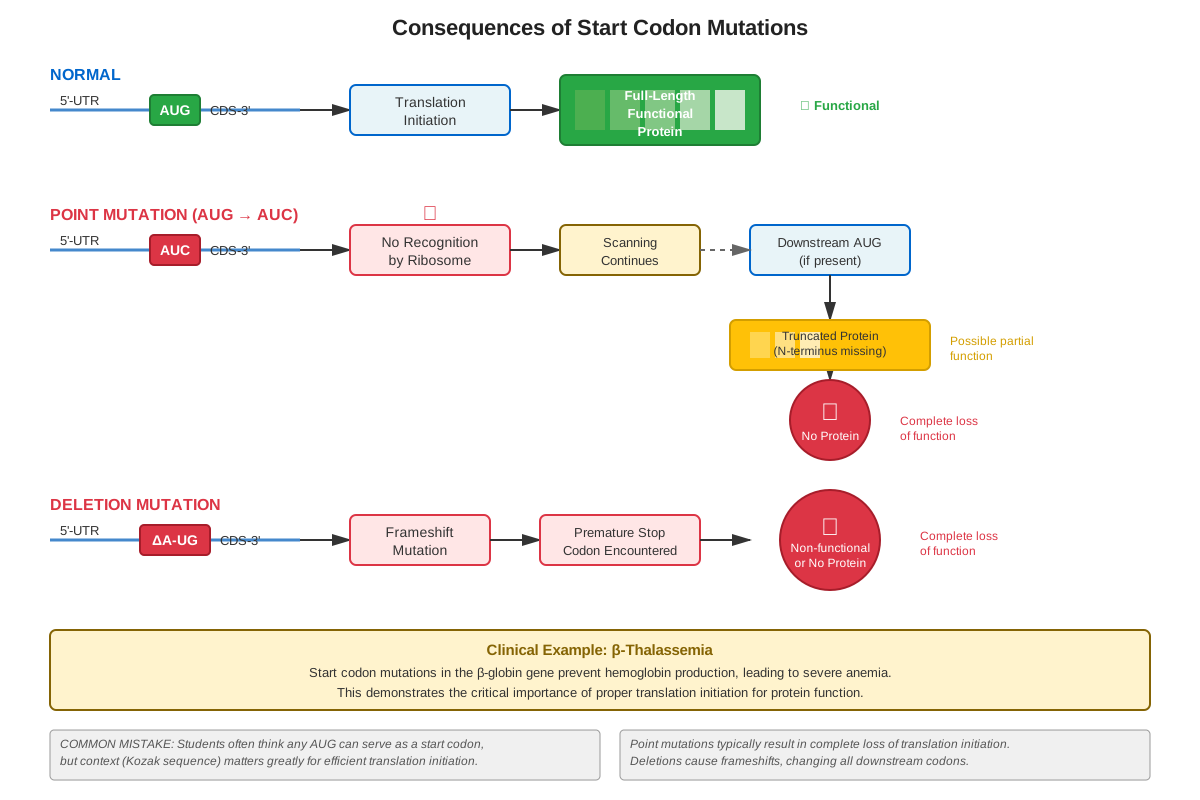
Start codon mutations represent a significant category of genetic disorders. When the AUG start codon is mutated or deleted, the ribosome cannot initiate translation at the correct position, often resulting in complete loss of protein function. This mechanism underlies certain forms of β-thalassemia, where mutations in the start codon of the β-globin gene prevent hemoglobin production. Understanding start codon function is also crucial for biotechnology applications, including recombinant protein production, where researchers must ensure proper translation initiation to generate functional therapeutic proteins like insulin or growth hormone.
MCAT Exam Statistics
Start codon questions appear in approximately 15-20% of MCAT passages involving molecular biology and genetics. The topic most commonly appears in:
- Discrete questions testing basic translation mechanics (30% of start codon questions)
- Passage-based questions involving experimental manipulation of gene expression (45%)
- Research-based passages describing novel translation mechanisms or genetic engineering (25%)
Common Exam Contexts
The MCAT frequently presents start codon concepts within passages describing:
- Genetic mutations and their phenotypic consequences
- Experimental techniques involving reporter genes or fusion proteins
- Comparative biology examining translation differences across domains of life
- Drug mechanisms that target translation initiation
- Evolutionary conservation of molecular mechanisms
- Frameshift mutations and their relationship to reading frame establishment
Core Concepts
The Start Codon: Definition and Structure
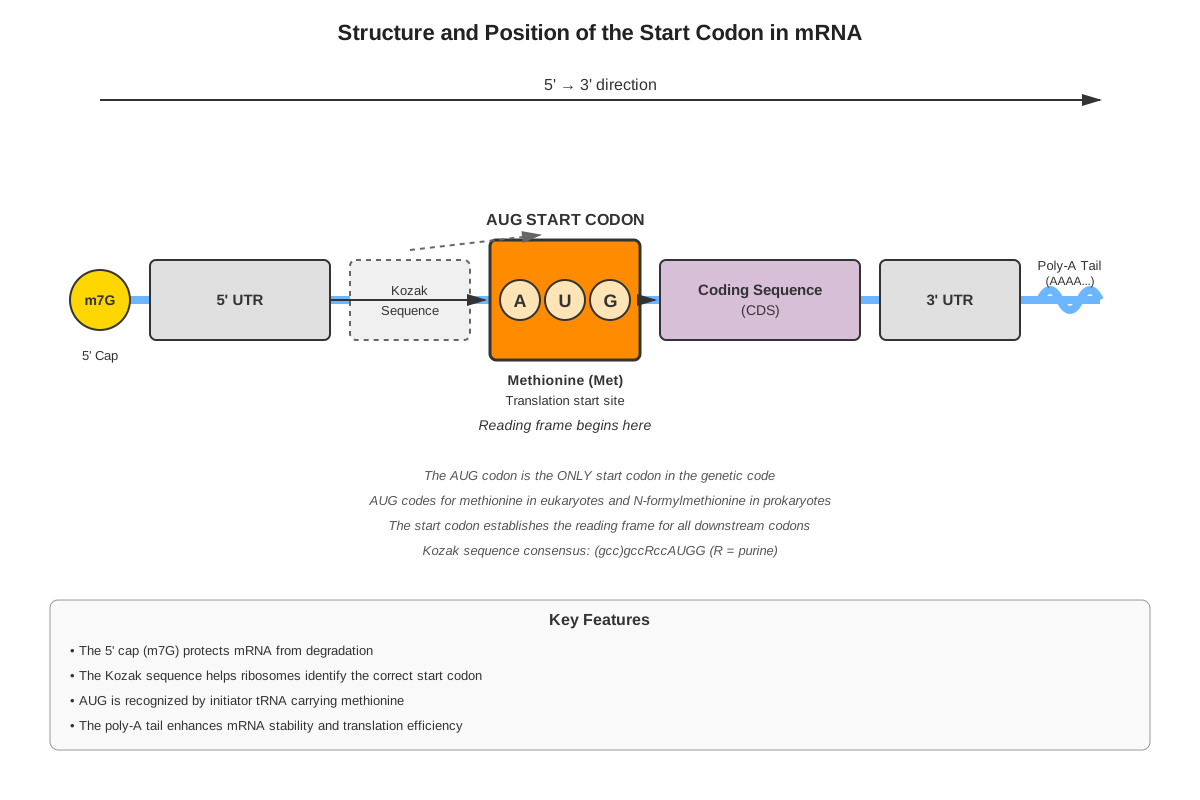
The start codon is the specific mRNA triplet sequence AUG that signals the beginning of translation and establishes the reading frame for protein synthesis. This codon is recognized by the ribosome's small subunit in conjunction with a specialized initiator tRNA molecule. The AUG sequence is unique because it serves a dual function: it both initiates translation AND codes for the amino acid methionine (Met in eukaryotes) or N-formylmethionine (fMet in prokaryotes).
The start codon's position within mRNA is critical. In eukaryotes, it is typically the first AUG encountered by the ribosome as it scans from the 5' cap structure. In prokaryotes, the start codon is located approximately 8 nucleotides downstream from the Shine-Dalgarno sequence (ribosomal binding site). The start codon establishes the reading frame—the grouping of nucleotides into sequential triplets that determines which amino acids will be incorporated into the growing polypeptide chain.
Molecular Recognition Mechanisms
The recognition of the start codon involves sophisticated molecular interactions that differ between prokaryotes and eukaryotes:
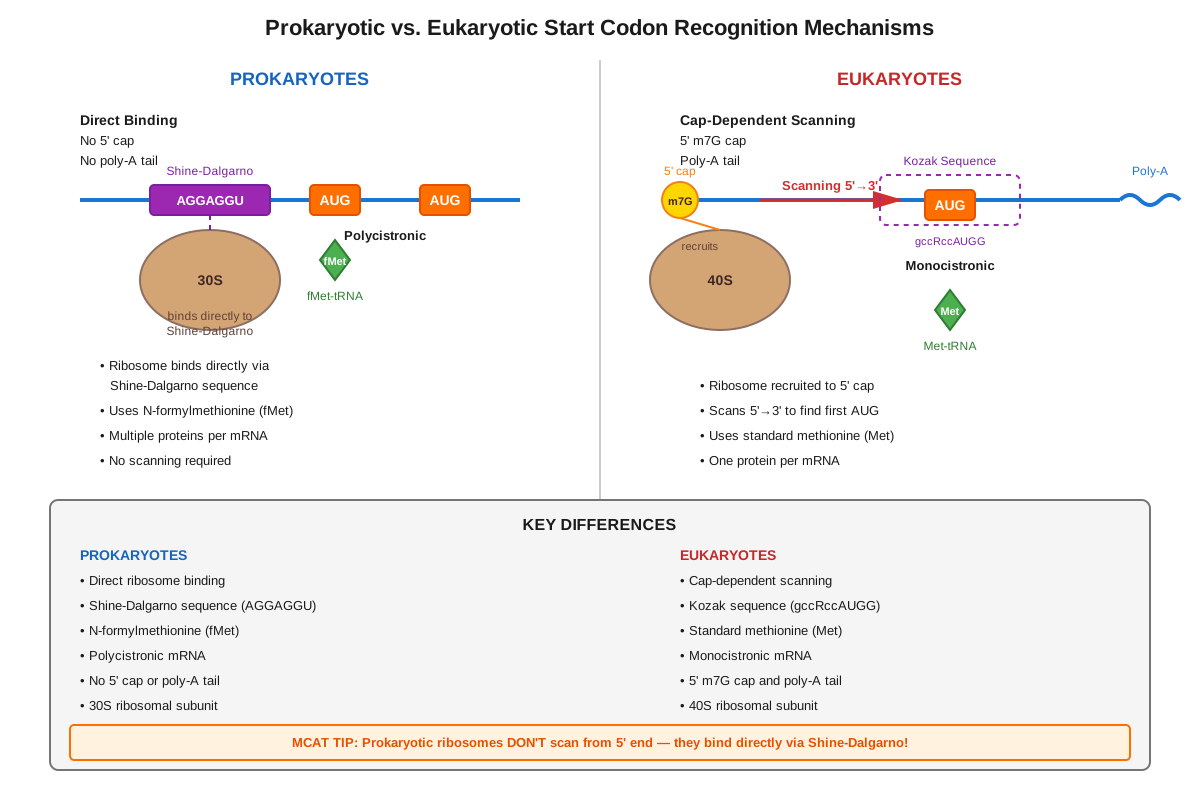
Prokaryotic Start Codon Recognition:
- The 16S rRNA component of the 30S ribosomal subunit binds to the Shine-Dalgarno sequence (AGGAGGU) in the 5' untranslated region (5' UTR)
- This positions the ribosome approximately 8 nucleotides upstream of the AUG start codon
- The initiator tRNA (fMet-tRNA^fMet) carrying N-formylmethionine recognizes the AUG through complementary anticodon pairing (3'-UAC-5')
- Initiation factors (IF1, IF2, IF3) facilitate this process
- The 50S subunit joins to form the complete 70S ribosome, with fMet-tRNA positioned in the P site
Eukaryotic Start Codon Recognition:
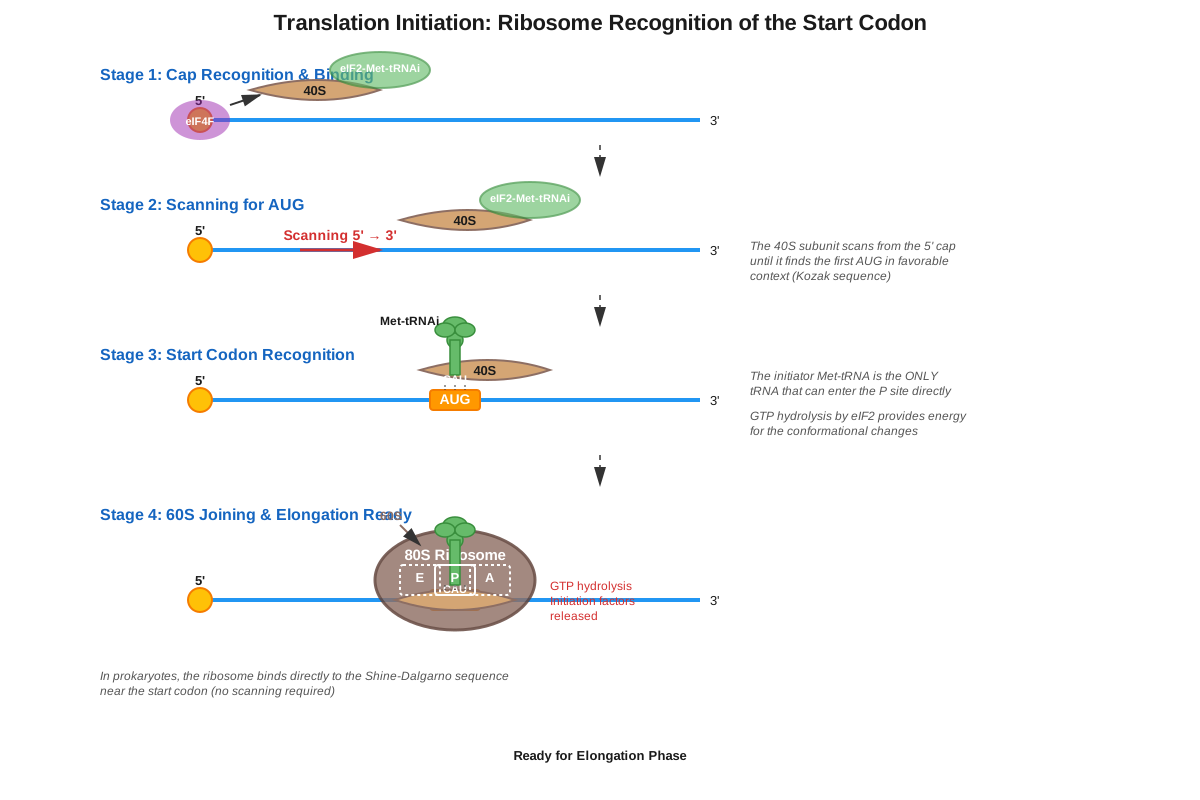
- The 40S ribosomal subunit binds to the 5' methylguanosine cap structure of mRNA
- The ribosome scans in the 3' direction (5' to 3' scanning) until encountering the first AUG
- The Kozak sequence (consensus: GCCRCCAUGG, where R = purine) surrounding the AUG enhances recognition efficiency
- The initiator tRNA (Met-tRNA^Met) carrying methionine pairs with the AUG codon
- Eukaryotic initiation factors (eIFs) coordinate this process
- The 60S subunit joins to form the complete 80S ribosome
The Kozak Sequence and Translation Efficiency
The Kozak sequence represents a critical context for start codon recognition in eukaryotes. This consensus sequence (GCCRCCAUGG) flanks the AUG start codon, with the most important positions being -3 (typically a purine, especially A) and +4 (typically G). Strong Kozak sequences dramatically increase translation efficiency, while weak Kozak sequences may allow ribosomal scanning to bypass the first AUG and initiate at a downstream AUG (leaky scanning).
| Position Relative to AUG | Preferred Nucleotide | Impact on Translation |
|---|---|---|
| -6 | G | Moderate |
| -3 | A or G (purine) | Critical |
| +1, +2, +3 | AUG (start codon) | Essential |
| +4 | G | Critical |
Reading Frame Establishment
The start codon's most crucial function is establishing the reading frame—the register in which the ribosome reads subsequent codons. Because the genetic code is read in non-overlapping triplets, the position of the start codon determines how all downstream nucleotides are grouped. Consider this mRNA sequence:
5'...AUGGUACUAGCUAAG...3'Starting from AUG, the reading frame is: AUG-GUA-CUA-GCU-AAG...
If translation incorrectly began one nucleotide later, the reading frame would be completely different: A-UGG-UAC-UAG-CUA-AG..., producing an entirely different amino acid sequence and likely encountering a premature stop codon.
Alternative Start Codons
While AUG is the canonical start codon, alternative start codons exist but are rare in eukaryotes. In prokaryotes, GUG (valine) and UUG (leucine) can occasionally function as start codons, though they still incorporate N-formylmethionine when used for initiation. In eukaryotes, non-AUG start codons are extremely rare and typically represent regulatory mechanisms or result from specific cellular contexts. When alternative start codons are used, translation efficiency is typically reduced by 80-90% compared to AUG initiation.
Start Codon in Polycistronic vs. Monocistronic mRNA
Prokaryotic mRNA is typically polycistronic, meaning a single mRNA molecule contains multiple coding sequences, each with its own start codon and stop codon. Each coding sequence has an associated Shine-Dalgarno sequence that allows ribosomes to initiate translation independently at multiple start codons on the same mRNA molecule.
Eukaryotic mRNA is monocistronic, containing only one coding sequence with a single start codon. The 5' cap-dependent scanning mechanism typically ensures that only the first AUG is recognized, though exceptions exist (internal ribosome entry sites, or IRES, allow cap-independent translation initiation).
Initiation Factors and Start Codon Recognition
Translation initiation requires multiple protein factors that ensure accurate start codon recognition:
Prokaryotic Initiation Factors:
- IF1: Blocks the A site, ensuring initiator tRNA enters the P site
- IF2: GTPase that binds initiator tRNA and facilitates its positioning at the start codon
- IF3: Prevents premature 50S subunit joining and promotes start codon fidelity
Eukaryotic Initiation Factors:
- eIF2: Delivers initiator Met-tRNA to the 40S subunit in a GTP-dependent manner
- eIF4F complex: Recognizes the 5' cap and facilitates ribosome recruitment
- eIF1 and eIF1A: Promote scanning and accurate start codon selection
- eIF5: Stimulates GTP hydrolysis by eIF2 upon start codon recognition
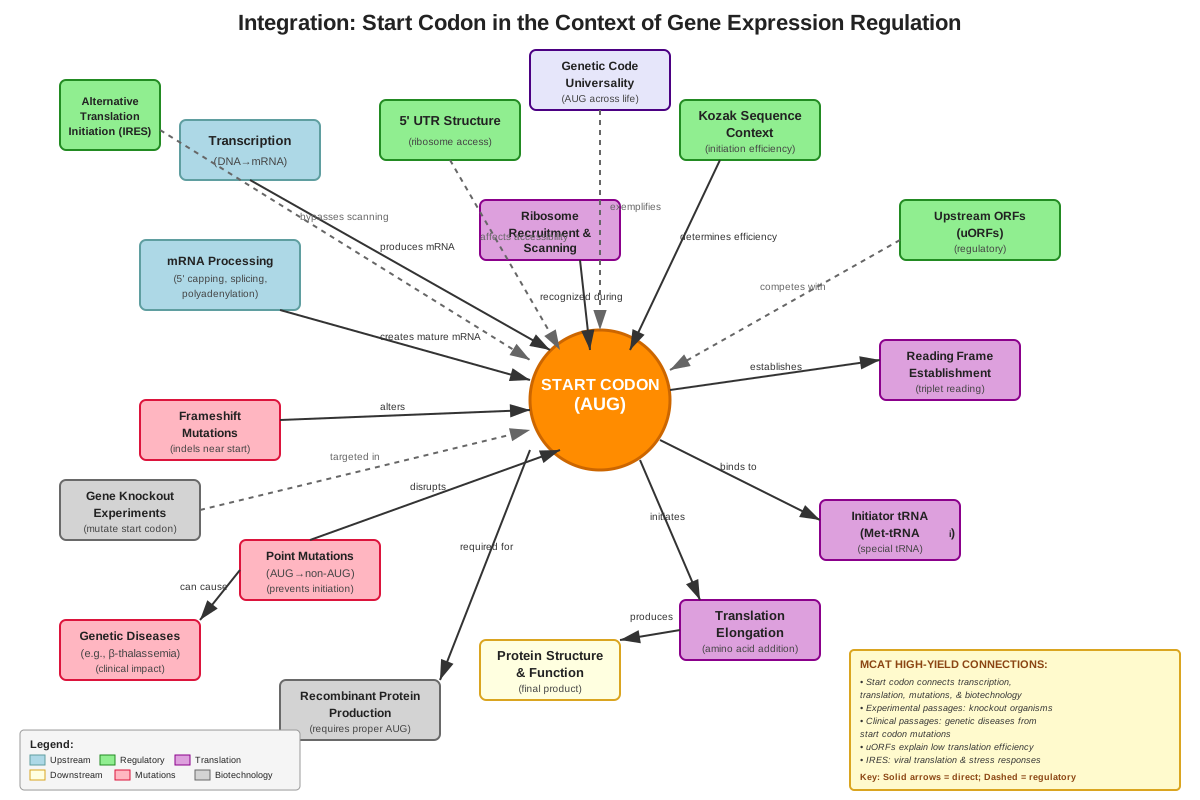
Concept Relationships
The start codon serves as a central hub connecting multiple molecular biology concepts. DNA sequence → transcription → mRNA containing start codon → ribosome recognition → translation initiation → protein synthesis represents the linear flow of genetic information. The start codon's recognition depends on ribosome structure, specifically the small subunit's ability to bind mRNA and position the start codon in the P site. This recognition requires initiator tRNA, which differs from elongator tRNAs in its ability to enter the P site directly.
The start codon concept connects to mutations through several mechanisms: point mutations can destroy the start codon (AUG → AUA), preventing translation initiation; insertions or deletions upstream of the start codon can create new, upstream AUG sequences that alter the reading frame; and mutations in the Kozak sequence can reduce translation efficiency without eliminating it entirely.
Gene regulation connects to start codon function through mechanisms like upstream open reading frames (uORFs), where AUG codons in the 5' UTR can regulate translation of the main coding sequence. The start codon also relates to protein structure because the N-terminal methionine is often removed post-translationally by methionine aminopeptidases, affecting the final protein's properties.
The relationship between start codon recognition and cellular energy is significant: GTP hydrolysis by initiation factors provides the energy and irreversibility needed for accurate start codon selection. This connects to cellular metabolism and the availability of nucleotide triphosphates for translation.
High-Yield Facts
⭐ The start codon AUG is the only codon that initiates translation in eukaryotes and codes for methionine (Met) or N-formylmethionine (fMet) in prokaryotes
⭐ The Kozak sequence (GCCRCCAUGG) enhances start codon recognition in eukaryotes, with positions -3 and +4 being most critical
⭐ Prokaryotes use the Shine-Dalgarno sequence to position the ribosome near the start codon, while eukaryotes use 5' cap-dependent scanning
⭐ The start codon establishes the reading frame for all downstream codons, making its position absolutely critical for correct protein synthesis
⭐ Mutations in the start codon typically result in complete loss of protein function because translation cannot initiate
- The initiator tRNA (Met-tRNA^Met in eukaryotes, fMet-tRNA^fMet in prokaryotes) is the only tRNA that can enter the ribosomal P site directly
- Prokaryotic mRNA is polycistronic with multiple start codons, while eukaryotic mRNA is monocistronic with typically one start codon
- Alternative start codons (GUG, UUG) can function in prokaryotes but are extremely rare in eukaryotes
- The first AUG encountered during ribosomal scanning is usually selected as the start codon in eukaryotes (first-AUG rule)
- Upstream open reading frames (uORFs) containing AUG codons in the 5' UTR can regulate translation of the main coding sequence
- Internal ribosome entry sites (IRES) allow cap-independent translation initiation at start codons located internally in mRNA
- The N-terminal methionine encoded by the start codon is frequently removed post-translationally by methionine aminopeptidases
- Start codon recognition requires GTP hydrolysis by initiation factors, making it an energy-dependent process
- Leaky scanning occurs when ribosomes bypass a weak start codon and initiate at a downstream AUG
- The anticodon of initiator tRNA (3'-UAC-5') is complementary to the start codon (5'-AUG-3')
Quick check — test yourself on Start codon so far.
Try Flashcards →Common Misconceptions
Misconception: The start codon always remains as methionine in the final protein.
Correction: While the start codon codes for methionine, this N-terminal methionine is frequently removed by methionine aminopeptidases during or after translation. Many mature proteins do not have methionine as their first amino acid, though it was incorporated initially during translation initiation.
Misconception: Any AUG sequence in mRNA will function as a start codon.
Correction: Not all AUG sequences initiate translation. In eukaryotes, the first AUG encountered during 5' to 3' scanning is typically selected, and its context (Kozak sequence) affects recognition efficiency. AUG codons within the coding sequence serve as internal methionine codons, not start codons. In prokaryotes, only AUG sequences positioned appropriately downstream of Shine-Dalgarno sequences function as start codons.
Misconception: The start codon is part of the promoter region.
Correction: The start codon is located in the mRNA molecule (and correspondingly in the coding region of DNA), not in the promoter. The promoter is a DNA regulatory region where RNA polymerase binds to initiate transcription. The start codon is downstream from the promoter and is part of the transcribed sequence that appears in mRNA.
Misconception: Prokaryotes and eukaryotes use identical mechanisms for start codon recognition.
Correction: Start codon recognition differs significantly between prokaryotes and eukaryotes. Prokaryotes use the Shine-Dalgarno sequence for ribosome positioning and can initiate at multiple start codons on polycistronic mRNA. Eukaryotes use 5' cap-dependent scanning to locate the first AUG on monocistronic mRNA, with the Kozak sequence enhancing recognition.
Misconception: A mutation changing the start codon will shift the reading frame.
Correction: A point mutation that changes the start codon (e.g., AUG → AUA) does not shift the reading frame; it prevents translation initiation at that position. The ribosome may scan further and initiate at a downstream AUG (if present), which would create a truncated protein missing N-terminal amino acids. Frameshift mutations (insertions or deletions) are different events that alter the reading frame.
Misconception: The start codon is the same as the transcription start site.
Correction: The transcription start site (+1) is where RNA polymerase begins synthesizing RNA from the DNA template. The start codon (AUG) is located downstream in the transcribed mRNA, typically within the coding sequence. In eukaryotes, the 5' UTR (untranslated region) separates the transcription start site from the start codon.
Misconception: All proteins begin with the same amino acid because they all use the AUG start codon.
Correction: While translation always initiates with methionine (or N-formylmethionine in prokaryotes) encoded by AUG, post-translational modifications frequently remove this initial methionine. Additionally, proteins can undergo N-terminal processing, signal peptide cleavage, or other modifications that alter the final N-terminal amino acid.
Worked Examples
Example 1: Analyzing a Start Codon Mutation
Question: A patient presents with a severe form of β-thalassemia. Genetic sequencing reveals a point mutation in the β-globin gene where the start codon has been changed from ATG to ATT (in DNA; AUG to AUU in mRNA). The next ATG codon appears 45 nucleotides downstream. What is the most likely molecular consequence of this mutation?
Solution:
Step 1: Identify what the mutation affects.
The mutation changes the canonical start codon (AUG) to AUU, which is not a start codon. This prevents the ribosome from initiating translation at the normal position.
Step 2: Consider alternative initiation possibilities.
The ribosome will continue scanning in the 3' direction until it encounters the next AUG codon, located 45 nucleotides downstream.
Step 3: Calculate the effect on the protein.
45 nucleotides ÷ 3 nucleotides per codon = 15 codons
If translation initiates at the downstream AUG, the resulting protein will be missing the first 15 amino acids from its N-terminus.
Step 4: Evaluate functional consequences.
β-globin requires its N-terminal region for proper folding and hemoglobin assembly. A protein missing 15 N-terminal amino acids would likely be:
- Improperly folded
- Unable to form functional hemoglobin tetramers
- Rapidly degraded by cellular quality control mechanisms
Step 5: Consider alternative outcomes.
If the downstream AUG is out of frame or if no functional AUG exists downstream, no β-globin protein would be produced at all, resulting in β⁰-thalassemia (complete absence of β-globin).
Answer: The mutation prevents normal translation initiation, likely resulting in either no β-globin production or production of a severely truncated, non-functional protein. This explains the severe thalassemia phenotype, as the patient cannot produce adequate functional hemoglobin.
Connection to Learning Objectives: This example demonstrates how start codon mutations cause disease (clinical application), requires understanding of reading frame establishment, and illustrates the critical importance of the start codon for protein function.
Example 2: Experimental Design with Start Codons
Question: Researchers want to express a human therapeutic protein in E. coli bacteria. The human gene's mRNA sequence begins: 5'-GCCGCCACCAUGGCUAAG...-3'. When they insert this sequence into a bacterial expression vector with a strong Shine-Dalgarno sequence positioned 8 nucleotides upstream of the AUG, protein expression is only 30% of expected levels. Suggest two molecular explanations for the reduced expression and propose solutions.
Solution:
Step 1: Identify differences between eukaryotic and prokaryotic translation initiation.
- Eukaryotes use Kozak sequence context; prokaryotes use Shine-Dalgarno positioning
- Eukaryotes incorporate methionine (Met); prokaryotes incorporate N-formylmethionine (fMet)
- Codon usage preferences differ between humans and E. coli
Step 2: Analyze the sequence context.
The sequence GCCGCCACCAUGGCUAAG shows:
- Multiple G and C nucleotides upstream of AUG
- This represents a strong Kozak sequence for eukaryotes
- However, prokaryotes don't use Kozak sequences
Step 3: Identify potential problems.
Problem 1 - Secondary Structure: The GC-rich sequence (GCCGCCACC) upstream of the AUG may form stable secondary structures in the mRNA that impede ribosome access to the start codon in the prokaryotic system. Eukaryotic initiation factors (like eIF4A helicase) unwind such structures during scanning, but prokaryotes lack this scanning mechanism.
Solution 1: Redesign the 5' UTR to reduce GC content and minimize secondary structure formation while maintaining the Shine-Dalgarno sequence at the appropriate distance from AUG. Use mRNA folding prediction software to identify and eliminate stable hairpins.
Problem 2 - Codon Usage: The codons immediately following the start codon (GCU for alanine, AAG for lysine) may be rare in E. coli, causing ribosome stalling during early elongation. This can lead to premature termination or reduced translation efficiency.
Solution 2: Perform codon optimization by replacing rare codons with synonymous codons that are frequently used in E. coli without changing the amino acid sequence. For example, if GCU (alanine) is rare in E. coli, replace it with GCG or GCC if those are more common.
Step 4: Additional consideration.
The researchers should verify that the Shine-Dalgarno sequence has optimal spacing (typically 5-9 nucleotides) and sequence complementarity to the 16S rRNA. The consensus Shine-Dalgarno sequence (AGGAGGU) should be present and properly positioned.
Answer: The reduced expression likely results from (1) mRNA secondary structures in the GC-rich region blocking ribosome access to the start codon, and (2) rare codon usage in E. coli causing translation inefficiency. Solutions include redesigning the 5' UTR to reduce secondary structure and performing codon optimization for E. coli expression.
Connection to Learning Objectives: This example requires understanding of start codon recognition differences between prokaryotes and eukaryotes, demonstrates practical application of start codon concepts in biotechnology, and illustrates how context affects start codon function.
Exam Strategy
Question Recognition Triggers
When you encounter these phrases in MCAT questions, start codon concepts are likely being tested:
- "Translation initiation"
- "First amino acid incorporated"
- "Reading frame establishment"
- "Ribosome binding site"
- "Kozak sequence" or "Shine-Dalgarno sequence"
- "Mutation in the initiation codon"
- "5' untranslated region (5' UTR)"
- "Scanning mechanism"
- "Polycistronic mRNA"
Systematic Approach to Start Codon Questions
- Identify the organism: Prokaryote or eukaryote? This determines the recognition mechanism (Shine-Dalgarno vs. Kozak/scanning).
- Locate the start codon: Find AUG in the sequence provided. Remember it's in mRNA (not DNA), so look for AUG, not ATG.
- Assess the context:
- For eukaryotes: Is there a strong Kozak sequence? Is this the first AUG from the 5' end?
- For prokaryotes: Is there a Shine-Dalgarno sequence 5-9 nucleotides upstream?
- Consider the reading frame: If the question involves mutations or sequence analysis, establish the reading frame starting from the AUG and group subsequent nucleotides in triplets.
- Evaluate functional consequences: If a mutation is described, determine whether it:
- Destroys the start codon (prevents initiation)
- Creates a new upstream start codon (produces extended protein)
- Affects context sequences (reduces efficiency)
- Causes frameshift (changes all downstream codons)
Process of Elimination Tips
When answer choices describe translation initiation:
- Eliminate choices that confuse transcription with translation (e.g., "RNA polymerase recognizes the start codon")
- Eliminate choices that place the start codon in the wrong location (e.g., "in the promoter region")
- Eliminate choices that ignore organism-specific mechanisms (e.g., describing Kozak sequences in bacteria)
When answer choices describe mutation effects:
- Eliminate choices that confuse point mutations with frameshift mutations
- Eliminate choices suggesting the start codon is "optional" or that translation can begin anywhere
- Eliminate choices that ignore the reading frame concept
When answer choices involve experimental design:
- Eliminate choices that don't account for prokaryote vs. eukaryote differences in expression systems
- Eliminate choices suggesting the start codon can be omitted from expression constructs
Time Management
Start codon questions typically require 60-90 seconds:
- 15-20 seconds: Read and identify the question type
- 30-40 seconds: Analyze the sequence or scenario
- 15-20 seconds: Eliminate wrong answers
- 10-15 seconds: Confirm your answer
Exam Tip: If a passage provides a long mRNA sequence, don't waste time reading the entire sequence. Quickly scan for AUG codons and focus on the region around them. The MCAT often includes extraneous sequence information to test your ability to identify relevant data.
Memory Techniques
Mnemonic for Start Codon Function
"AUG Always Unlocks Gene translation"
- AUG = the start codon sequence
- Always = it's universal across life
- Unlocks = initiates/begins
- Gene = genetic information
- Translation = protein synthesis
Kozak Sequence Memory Aid
"Kozak's -3 and +4 Are Really Good"
- Positions -3 and +4 relative to AUG are most critical
- A (adenine) at position -3
- R (purine: A or G) at position -3
- G (guanine) at position +4
Prokaryote vs. Eukaryote Recognition
"Shine-Dalgarno Shines in Prokaryotes; Kozak Caps eukaryotes"
- Shine-Dalgarno = prokaryotic ribosome binding sequence
- Shines = directly positions ribosome
- Kozak = eukaryotic context sequence
- Caps = works with 5' cap structure
Reading Frame Visualization
Visualize the start codon as a "molecular bookmark" that tells the ribosome exactly where to begin reading. Just as a bookmark placed one page off would cause you to read the wrong chapter, a start codon in the wrong position causes the ribosome to read the wrong "protein story."
Initiation Factor Memory
"IF you're Starting, you need Factors"
- IF = Initiation Factors
- Prokaryotes: IF1, IF2, IF3 (three factors)
- Eukaryotes: eIF1, eIF2, eIF4F, etc. (many more factors, more complex)
Met vs. fMet
"Formyl is For Prokaryotes"
- Formyl = fMet
- For = Prokaryotes (both start with consonants)
- Eukaryotes use regular Met (no formyl group)
Summary
The start codon (AUG) serves as the universal molecular signal for translation initiation, establishing the reading frame and encoding the first amino acid (methionine or N-formylmethionine) of every protein. Recognition mechanisms differ fundamentally between prokaryotes (Shine-Dalgarno sequence positioning) and eukaryotes (5' cap-dependent scanning with Kozak sequence context), reflecting their distinct cellular organizations. The start codon's position is absolutely critical—mutations destroying it typically eliminate protein production entirely, while mutations creating new upstream start codons produce altered proteins with extended or truncated sequences. Understanding start codon function requires integrating knowledge of ribosome structure, tRNA recognition, initiation factors, and the genetic code's triplet nature. For the MCAT, focus on recognizing how start codon context affects translation efficiency, distinguishing prokaryotic from eukaryotic mechanisms, predicting mutation consequences, and analyzing experimental scenarios involving gene expression. The start codon exemplifies molecular biology's precision: a single three-nucleotide sequence determines whether genetic information becomes functional protein or remains dormant.
Key Takeaways
- AUG is the universal start codon that initiates translation and codes for methionine (Met) in eukaryotes or N-formylmethionine (fMet) in prokaryotes
- The start codon establishes the reading frame, determining how all downstream nucleotides are grouped into codons—its position is therefore absolutely critical for correct protein synthesis
- Prokaryotes use Shine-Dalgarno sequences to position ribosomes near start codons on polycistronic mRNA, while eukaryotes use 5' cap-dependent scanning to locate the first AUG on monocistronic mRNA
- The Kozak sequence context (especially positions -3 and +4 relative to AUG) significantly affects translation efficiency in eukaryotes, with strong contexts increasing protein production
- Start codon mutations typically cause complete loss of protein function because translation cannot initiate properly, making them clinically significant in genetic diseases
- Initiator tRNA is unique in its ability to enter the ribosomal P site directly and differs from elongator tRNAs in structure and function
- Understanding start codon recognition mechanisms is essential for interpreting experimental molecular biology passages and predicting outcomes of genetic manipulations on the MCAT
Related Topics
Translation Elongation and Termination: After mastering start codon function, study how ribosomes move along mRNA during elongation and how stop codons terminate translation. Understanding the complete translation cycle provides context for why proper initiation is critical.
Genetic Mutations and Their Effects: Explore how different mutation types (point mutations, insertions, deletions) affect protein synthesis differently. Start codon mutations represent one specific category within the broader landscape of genetic variation.
Gene Expression Regulation: Investigate how cells control when and how much protein is produced from genes. Start codon accessibility and context represent important regulatory mechanisms alongside transcriptional control.
Post-Translational Modifications: Learn how proteins are modified after translation, including N-terminal methionine removal, signal peptide cleavage, and other modifications that affect the final protein product.
Recombinant DNA Technology: Study how scientists manipulate start codons and surrounding sequences to express proteins in heterologous systems, applying start codon concepts to biotechnology and research applications.
Ribosome Structure and Function: Deepen understanding of how ribosomal RNA and proteins create the molecular machine that recognizes start codons and catalyzes peptide bond formation.
Practice CTA
Now that you've mastered the start codon concept, reinforce your understanding by attempting practice questions and flashcards focused on translation initiation, reading frame establishment, and mutation analysis. Challenge yourself with passages involving experimental molecular biology scenarios where start codon manipulation affects protein expression. The more you apply these concepts to varied question formats, the more automatic your recognition and analysis will become on test day. Remember: understanding the start codon isn't just about memorizing AUG—it's about comprehending how this molecular signal integrates with cellular machinery to transform genetic information into functional proteins. Your investment in mastering this foundational concept will pay dividends across multiple MCAT topics. Keep pushing forward!
Sign up free to keep reading
Create a free AnvayaPrep account to finish this MCAT guide on Start codon — plus flashcards and practice questions.