Overview
Stop codons are three specific nucleotide triplets in messenger RNA (mRNA) that signal the termination of protein synthesis during translation. These codons—UAA, UAG, and UGA—do not code for any amino acid but instead serve as molecular "punctuation marks" that instruct the ribosome to release the completed polypeptide chain. Understanding stop codons is fundamental to comprehending how genetic information flows from DNA to functional proteins, a cornerstone concept in Molecular Biology and Genetics.
For the MCAT, stop codons represent a high-yield topic that bridges multiple biological concepts including gene expression, protein synthesis, and genetic mutations. Questions involving stop codons frequently appear in passages discussing experimental techniques, genetic disorders, or molecular mechanisms. The MCAT tests not only recognition of these codons but also understanding of their functional consequences—particularly how mutations affecting stop codons can lead to truncated or abnormally extended proteins, both of which have significant clinical implications.
The significance of stop codons Biology extends beyond simple memorization. These termination signals connect to broader themes including the universality of the genetic code, the fidelity of translation, the role of release factors in translation termination, and the molecular basis of nonsense and readthrough mutations. Mastery of stop codons enables deeper understanding of topics ranging from frameshift mutations to gene regulation, making this concept essential for achieving a competitive Biology score on the MCAT.
Learning Objectives
- [ ] Define stop codons using accurate Biology terminology
- [ ] Explain why stop codons matters for the MCAT
- [ ] Apply stop codons to exam-style questions
- [ ] Identify common mistakes related to stop codons
- [ ] Connect stop codons to related Biology concepts
- [ ] Distinguish between the three stop codons and their recognition mechanisms
- [ ] Predict the phenotypic consequences of mutations that create or eliminate stop codons
- [ ] Analyze experimental scenarios involving nonsense suppressor mutations and readthrough mechanisms
Prerequisites
- The Central Dogma of Molecular Biology: Understanding DNA → RNA → Protein flow is essential because stop codons function during the translation phase of gene expression
- Structure of mRNA and the genetic code: Knowledge of codon structure (three-nucleotide sequences) and how they correspond to amino acids provides the foundation for understanding why stop codons are unique
- Translation mechanism: Familiarity with ribosome structure, tRNA function, and the elongation cycle is necessary to comprehend how stop codons trigger termination rather than amino acid incorporation
- Basic mutation types: Understanding point mutations, frameshift mutations, and their nomenclature helps contextualize how stop codons can be created or eliminated through genetic changes
Why This Topic Matters
Clinical Significance
Stop codon mutations have profound medical implications. Nonsense mutations that create premature stop codons are responsible for approximately 11% of all genetic diseases, including Duchenne muscular dystrophy, cystic fibrosis variants, and certain forms of beta-thalassemia. These mutations produce truncated, nonfunctional proteins that often undergo rapid degradation through nonsense-mediated decay pathways. Conversely, mutations that eliminate normal stop codons or cause readthrough can produce abnormally extended proteins with altered or toxic functions.
MCAT Exam Statistics
Stop codons appear in approximately 8-12% of MCAT Biology passages, particularly in sections testing Molecular Biology and Genetics. Questions typically assess:
- Recognition of stop codons in sequence analysis
- Prediction of mutation consequences
- Understanding of experimental suppressor systems
- Analysis of translation termination mechanisms
Common Exam Contexts
The MCAT frequently presents stop codons within:
- Genetic disorder passages describing the molecular basis of disease
- Experimental design questions involving site-directed mutagenesis or suppressor tRNA studies
- Sequence analysis problems requiring identification of open reading frames
- Comparative biology passages discussing variations in the genetic code across organisms
Core Concepts
The Three Stop Codons
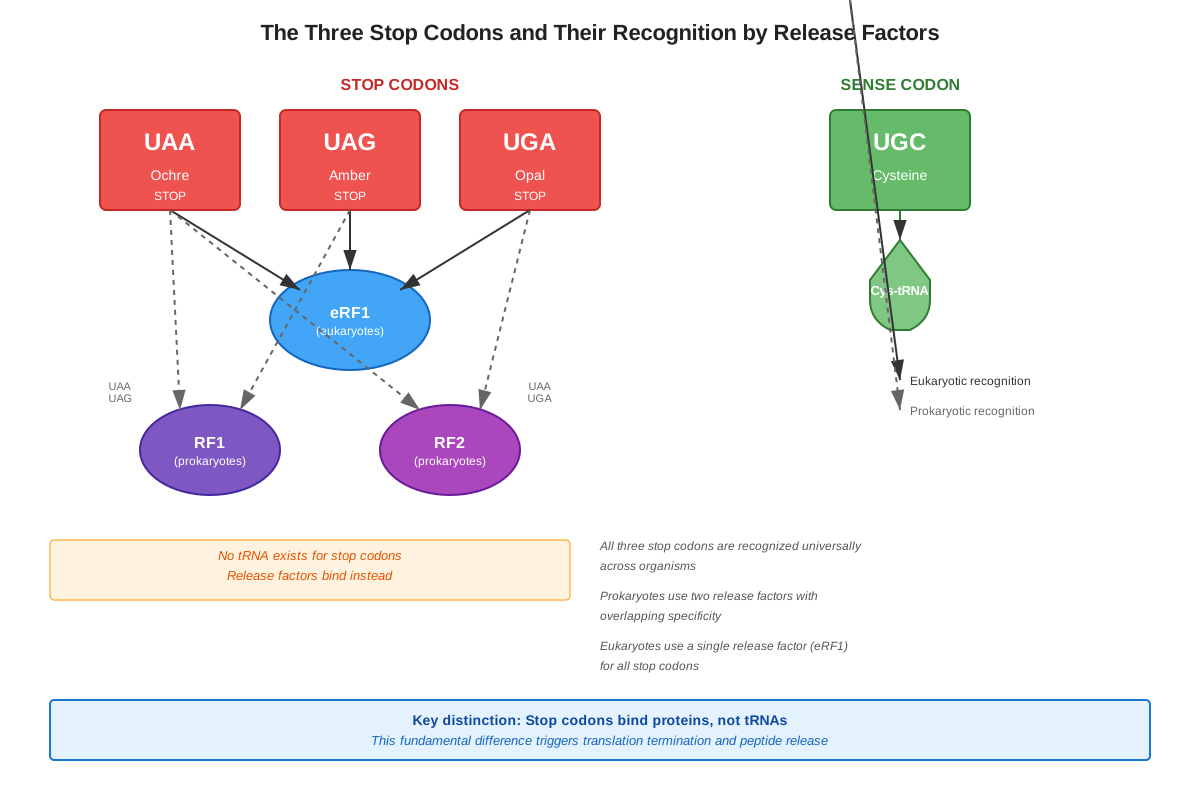
Stop codons (also called nonsense codons or termination codons) are three specific mRNA sequences that signal translation termination: UAA (ochre), UAG (amber), and UGA (opal). Unlike the 61 sense codons that specify amino acids, these three codons are not recognized by any standard aminoacyl-tRNA molecules in the cell. The historical names (amber, ochre, opal) derive from the surnames of researchers who first identified nonsense mutations, though these names are less commonly used in modern molecular biology.
The universal genetic code contains exactly three stop codons out of 64 possible triplet combinations, representing approximately 4.7% of all codons. This redundancy in termination signals provides evolutionary robustness—multiple stop codons reduce the probability that a single mutation will eliminate translation termination entirely. In most genes, the stop codon is immediately followed by a 3' untranslated region (3' UTR) that contains regulatory elements affecting mRNA stability and localization.
Molecular Recognition Mechanism
Stop codons are recognized not by tRNA molecules but by release factors (RFs), specialized proteins that bind to the ribosomal A site when a stop codon is positioned there. In prokaryotes, RF1 recognizes UAA and UAG, while RF2 recognizes UAA and UGA. Note that UAA is recognized by both release factors, providing additional redundancy. In eukaryotes, a single release factor called eRF1 recognizes all three stop codons, demonstrating a more streamlined termination system.
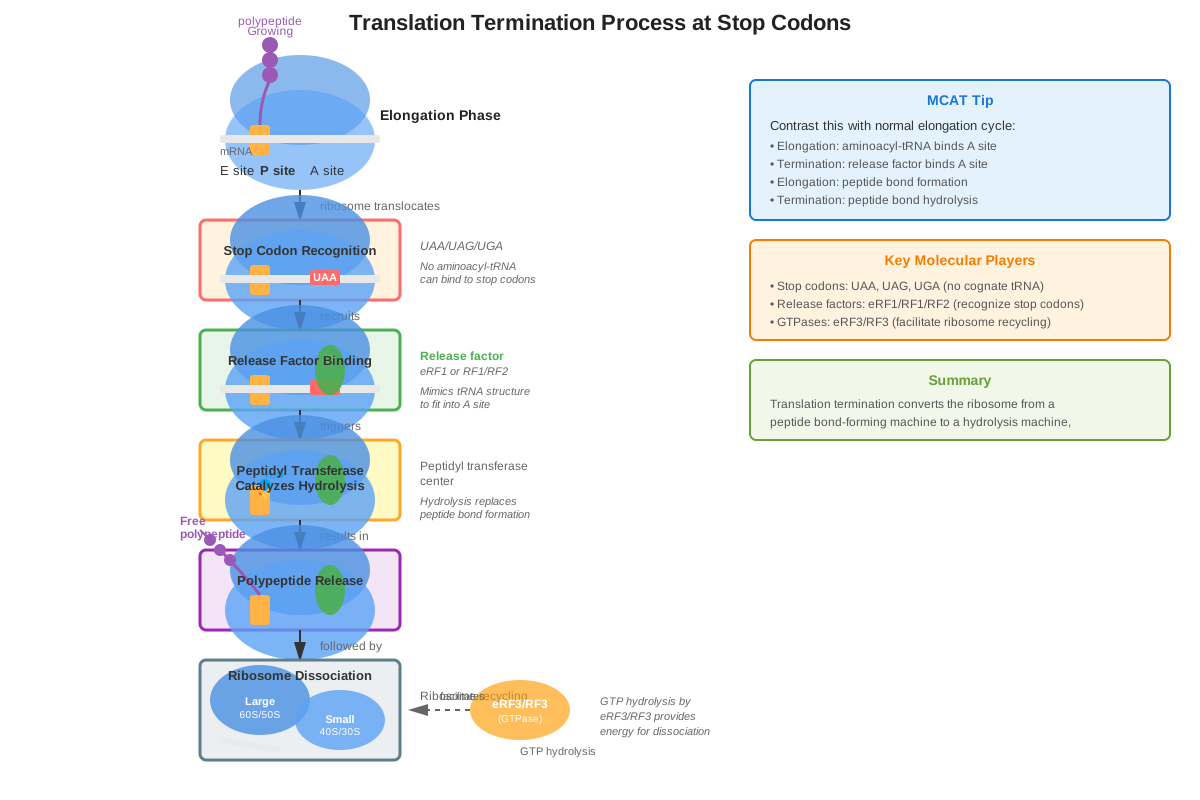
When a release factor binds to a stop codon in the A site, it triggers hydrolysis of the ester bond linking the completed polypeptide chain to the tRNA in the P site. This hydrolysis reaction releases the polypeptide from the ribosome. Subsequently, additional factors (RF3 in prokaryotes, eRF3 in eukaryotes) facilitate dissociation of the release factor and ribosome recycling, preparing the ribosomal subunits for another round of translation.
Stop Codon Context and Efficiency
Not all stop codons terminate translation with equal efficiency. The nucleotides immediately surrounding a stop codon—particularly the +4 position (the nucleotide immediately following the stop codon)—significantly influence termination efficiency. In eukaryotes, the most efficient termination context is a purine (A or G) at the +4 position. Suboptimal contexts can lead to readthrough, where the ribosome occasionally incorporates an amino acid instead of terminating, producing extended protein variants.
| Stop Codon | Prokaryotic RF | Eukaryotic RF | Relative Efficiency | Common +4 Nucleotide |
|---|---|---|---|---|
| UAA | RF1, RF2 | eRF1 | Highest | A, G preferred |
| UAG | RF1 | eRF1 | Intermediate | A, G preferred |
| UGA | RF2 | eRF1 | Lowest (most readthrough) | A, G preferred |
Mutations Creating Stop Codons
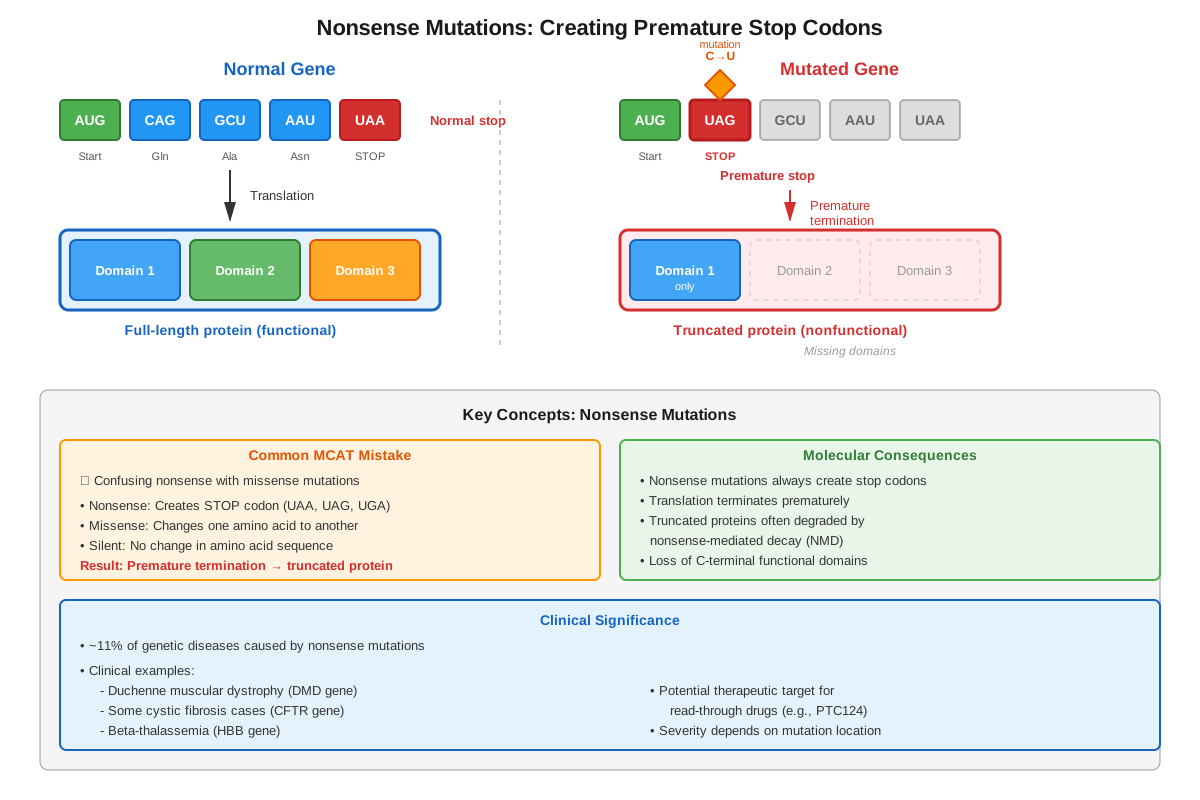
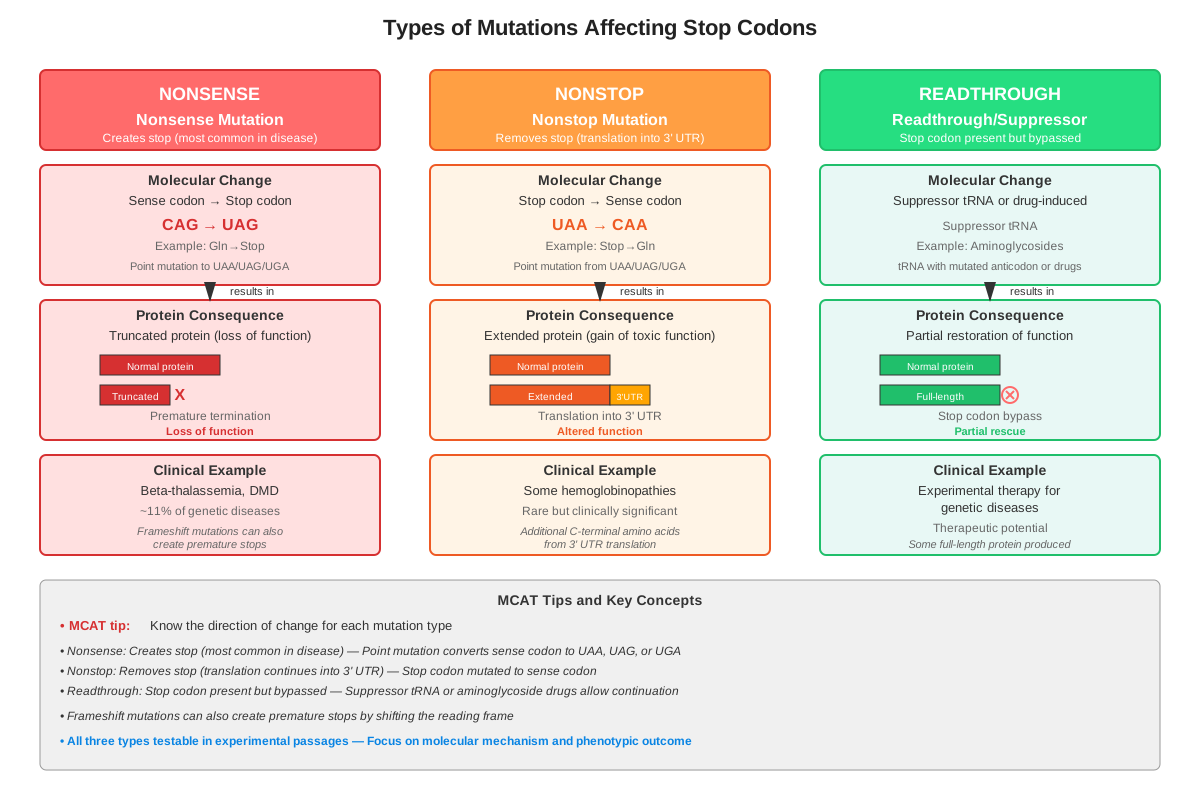
Nonsense mutations are point mutations that convert a sense codon (one specifying an amino acid) into a stop codon. These mutations are particularly deleterious because they produce truncated proteins that typically lack critical functional domains. The severity of a nonsense mutation depends on its location within the gene:
- Early nonsense mutations (near the 5' end) produce severely truncated proteins that are usually completely nonfunctional and rapidly degraded
- Late nonsense mutations (near the 3' end) may produce partially functional proteins if critical domains remain intact
- Nonsense mutations in the last exon often escape nonsense-mediated decay, leading to stable but truncated protein expression
Common single-nucleotide changes that create stop codons include:
- CAG (Gln) → UAG (stop)
- UGG (Trp) → UGA (stop)
- UAC (Tyr) → UAA (stop)
- GAA (Glu) → UAA (stop)
Mutations Eliminating Stop Codons
Mutations that change a stop codon to a sense codon cause readthrough or nonstop translation, where the ribosome continues translating into the 3' UTR until it encounters another stop codon. This produces an abnormally extended protein with additional amino acids at the C-terminus. These extended proteins may:
- Lose normal localization signals
- Gain toxic functions
- Become unstable and aggregate
- Interfere with normal cellular processes
Suppressor Mutations
Nonsense suppressor mutations are changes in tRNA genes that allow readthrough of stop codons. A suppressor tRNA contains an anticodon complementary to a stop codon but is charged with an amino acid. For example, an amber suppressor tRNA has a CUA anticodon (complementary to UAG) and can insert an amino acid at UAG positions. These suppressors are:
- Typically inefficient (10-50% readthrough)
- Usually involve tRNA genes with redundant copies
- Important experimental tools for studying protein function
- Naturally occurring in some organisms as regulatory mechanisms
Concept Relationships
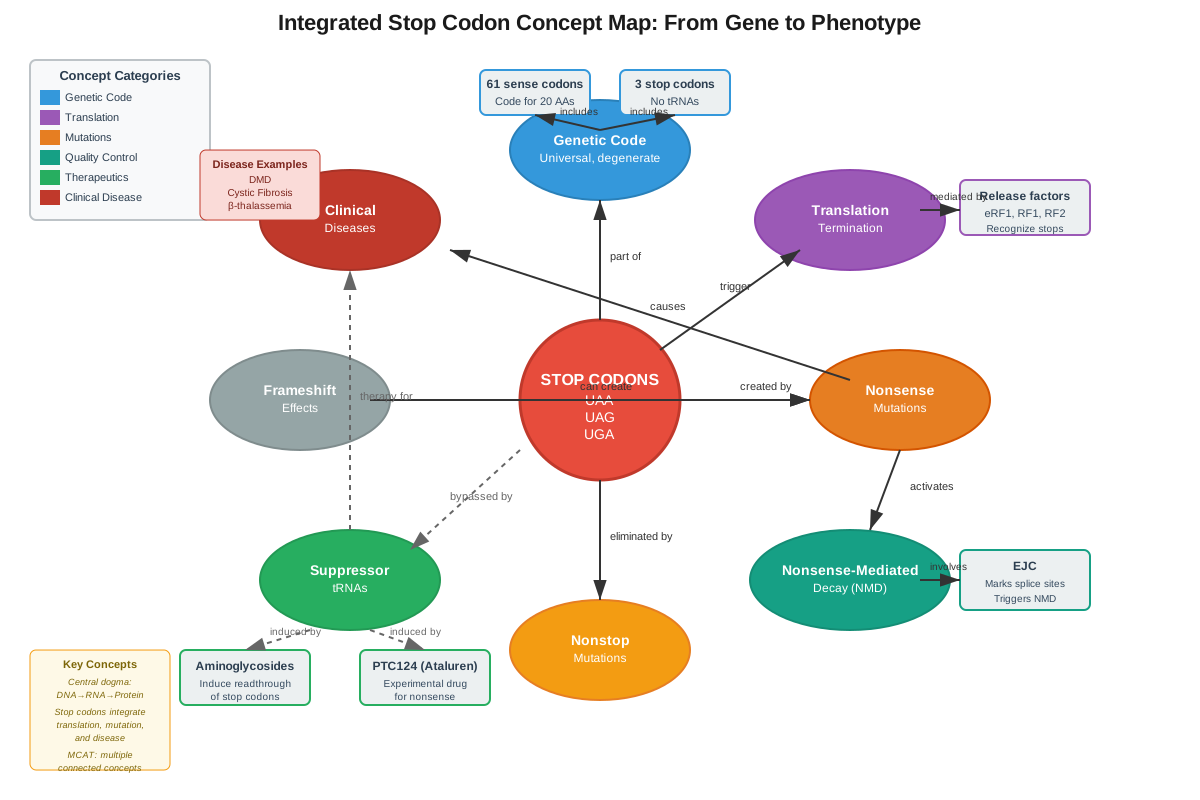
The understanding of stop codons builds directly upon knowledge of the genetic code and translation mechanism. The genetic code → defines the 64 possible codons → three of which are stop codons → recognized by release factors → triggering translation termination → producing completed polypeptides.
Stop codons connect intimately with mutation concepts: point mutations → can create nonsense mutations → producing premature stop codons → leading to truncated proteins → often causing genetic diseases. Conversely, mutations in stop codons → eliminate normal termination → causing readthrough → producing extended proteins.
The relationship extends to gene structure: open reading frames (ORFs) → defined by start and stop codons → determine coding sequences → used in genome annotation → identifying potential genes. Additionally, frameshift mutations → alter the reading frame → often create premature stop codons → because stop codons are common in out-of-frame sequences.
Stop codons also connect to quality control mechanisms: premature stop codons → trigger nonsense-mediated decay → degrading aberrant mRNAs → preventing accumulation of truncated proteins. This relationship links translation termination to mRNA surveillance pathways, demonstrating how cells maintain protein quality.
High-Yield Facts
⭐ The three stop codons are UAA, UAG, and UGA—no standard tRNA molecules recognize these sequences in normal translation
⭐ Release factors, not tRNAs, recognize stop codons—RF1 and RF2 in prokaryotes, eRF1 in eukaryotes
⭐ Nonsense mutations create premature stop codons, producing truncated proteins that are usually nonfunctional and often degraded by nonsense-mediated decay
⭐ UAA is the most efficient stop codon, recognized by both prokaryotic release factors and showing the least readthrough
⭐ The nucleotide at the +4 position influences termination efficiency—purines (A or G) promote more efficient termination than pyrimidines
- Stop codons are also called nonsense codons or termination codons in molecular biology literature
- Approximately 11% of genetic disease mutations are nonsense mutations creating premature stop codons
- Suppressor tRNAs can read through stop codons by inserting amino acids, though typically with low efficiency
- UGA can code for selenocysteine in special contexts with specific sequence elements (SECIS elements), representing an exception to the standard genetic code
- Frameshift mutations frequently create premature stop codons because stop codons appear approximately every 21 codons in random sequence
Quick check — test yourself on Stop codons so far.
Try Flashcards →Common Misconceptions
Misconception: Stop codons are recognized by special "stop tRNAs" that don't carry amino acids
Correction: Stop codons are recognized by protein release factors (RF1, RF2, eRF1), not by tRNA molecules. This is a fundamental distinction—tRNAs recognize sense codons, while release factors recognize nonsense codons.
Misconception: All three stop codons function identically with equal efficiency
Correction: The three stop codons differ in termination efficiency, with UAA being most efficient and UGA showing the highest readthrough rates. Context, particularly the +4 nucleotide, also significantly affects efficiency.
Misconception: A mutation in a stop codon always leads to complete loss of translation termination
Correction: When a stop codon mutates to a sense codon, the ribosome continues translating into the 3' UTR until encountering another stop codon (which statistically occurs within ~60 nucleotides). The result is an extended protein, not infinite translation.
Misconception: Nonsense mutations always produce no protein at all
Correction: Nonsense mutations produce truncated proteins, not absent proteins. However, these truncated proteins are often rapidly degraded through nonsense-mediated decay or proteasomal pathways, which may result in very low steady-state levels.
Misconception: The genetic code is absolutely universal, so stop codons always mean termination in all organisms
Correction: While stop codons are highly conserved, some organisms show variations. For example, in some mitochondria and certain protozoa, UGA codes for tryptophan rather than serving as a stop codon. Additionally, UGA can specify selenocysteine in special contexts.
Misconception: Stop codons only appear at the end of genes
Correction: While functional stop codons appear at the end of open reading frames, stop codons appear randomly throughout DNA sequences. In non-coding regions and in alternative reading frames, stop codons are common and help define which reading frame is actually used for translation.
Worked Examples
Example 1: Predicting Mutation Consequences
Question: A gene normally encodes a 450-amino acid protein. A researcher identifies a point mutation that changes nucleotide 678 from C to T in the mRNA sequence. The original codon at this position was CAG (glutamine). What is the likely consequence of this mutation?
Solution:
Step 1: Determine the new codon
- Original codon: CAG (glutamine)
- Mutation: C → T at first position
- New codon: UAG (stop codon - amber)
Step 2: Calculate the position in the protein
- Nucleotide 678 ÷ 3 = codon position 226
- This creates a stop codon at amino acid position 226
Step 3: Predict the consequence
- The mutation is a nonsense mutation
- Translation will terminate prematurely at position 226
- The resulting protein will be 226 amino acids instead of 450
- This truncated protein lacks the C-terminal 224 amino acids (50% of the protein)
Step 4: Consider additional consequences
- The truncated protein likely lacks critical functional domains
- The mRNA may be degraded by nonsense-mediated decay if the stop codon is >50 nucleotides upstream of the last exon-exon junction
- The phenotype would likely be severe, similar to a null mutation
Answer: This nonsense mutation creates a premature stop codon (UAG) at position 226, producing a severely truncated protein that is likely nonfunctional. This demonstrates how a single nucleotide change can have catastrophic consequences when it creates a stop codon.
Example 2: Analyzing Suppressor Mutations
Question: A bacterial strain carries a nonsense mutation (UAG) in an essential gene, making it unable to grow on minimal media. Researchers isolate spontaneous revertants that can grow on minimal media. Genetic analysis reveals that some revertants have acquired a second mutation in a tRNA gene, not in the original gene with the nonsense mutation. Explain how this suppressor mutation restores growth.
Solution:
Step 1: Identify the problem
- Original mutation: UAG stop codon in essential gene
- Result: Truncated, nonfunctional protein
- Phenotype: Cannot grow on minimal media
Step 2: Analyze the suppressor mutation location
- Suppressor is in a tRNA gene, not the original gene
- This is an intergenic suppressor (suppresses a mutation in a different gene)
- Specifically, this is a nonsense suppressor
Step 3: Explain the mechanism
- The mutant tRNA has an anticodon that recognizes UAG (CUA anticodon)
- This tRNA is charged with an amino acid (likely tyrosine, glutamine, or serine)
- When the ribosome encounters the UAG stop codon, the suppressor tRNA can insert an amino acid instead of terminating
- Translation continues, producing a full-length (or nearly full-length) protein
Step 4: Consider why this doesn't kill the cell
- The suppressor tRNA must come from a redundant tRNA gene family
- Suppression is typically inefficient (10-50%), so normal stop codons still terminate most of the time
- The cell can tolerate some readthrough at normal stop codons
Step 5: Predict experimental observations
- The suppressor strain would show partial restoration of function
- Growth might be slower than wild-type due to some readthrough at normal stop codons
- The suppressor would rescue other UAG nonsense mutations in different genes
Answer: The suppressor mutation creates an amber suppressor tRNA with a CUA anticodon that recognizes UAG stop codons and inserts an amino acid, allowing readthrough of the nonsense mutation. This produces full-length protein and restores function, demonstrating how tRNA mutations can suppress nonsense mutations in other genes.
Exam Strategy
Approaching Stop Codon Questions
When encountering stop codons MCAT questions, first identify the question type:
- Recognition questions: Simply identifying stop codons in sequences (UAA, UAG, UGA)
- Mutation consequence questions: Predicting effects of creating or eliminating stop codons
- Mechanism questions: Explaining how release factors function or how suppression works
- Experimental questions: Analyzing genetic crosses or molecular biology experiments involving nonsense mutations
Trigger Words and Phrases
Watch for these high-yield terms that signal stop codon involvement:
- "Nonsense mutation" → always creates a premature stop codon
- "Truncated protein" → suggests a premature stop codon
- "Readthrough" or "suppressor" → indicates stop codon recognition failure
- "Amber, ochre, or opal" → historical names for UAG, UAA, and UGA respectively
- "Release factor" → the mechanism of stop codon recognition
- "Premature termination" → indicates a stop codon appeared too early
Process of Elimination Tips
When analyzing answer choices:
- Eliminate answers confusing tRNAs with release factors—stop codons are NOT recognized by tRNAs in normal translation
- Eliminate answers suggesting complete absence of protein from nonsense mutations—these produce truncated proteins (though they may be rapidly degraded)
- Eliminate answers treating all stop codons identically—they differ in efficiency and recognition
- Watch for answers incorrectly describing the genetic code as absolutely universal—there are exceptions in mitochondria and some organisms
Time Allocation
Stop codon questions are typically straightforward recognition or one-step logic problems. Allocate:
- 30-45 seconds for simple recognition questions
- 60-90 seconds for mutation consequence predictions
- 90-120 seconds for complex experimental analysis or multi-step problems
If a passage involves stop codons, quickly scan for:
- Sequence data showing stop codons
- Mutation descriptions (especially C→T or G→A changes that commonly create stops)
- Phenotypic descriptions suggesting truncated proteins
- Experimental designs involving suppressor strains
Memory Techniques
Mnemonic for Stop Codons
"U Are Away, U Are Gone, U Go Away"
- UAA = U Are Away
- UAG = U Are Gone
- UGA = U Go Away
All three stop codons start with U and contain A, making them easy to distinguish from sense codons.
Alternative Mnemonic
"Stop U-turning At Amber, Ochre, And opal lights"
- Emphasizes that all stop codons begin with U
- Links to the historical color names (Amber = UAG, Ochre = UAA, Opal = UGA)
Visualization Strategy
Picture a ribosome as a train moving along mRNA tracks. Stop codons are red traffic lights where:
- Release factors are stop signs that make the train release its cargo (the polypeptide)
- Nonsense mutations are unexpected red lights that appear too early on the track
- Suppressor tRNAs are special passes that let the train run the red light occasionally
Efficiency Ranking Memory Aid
"UAA is the BEST, UGA is the WORST"
- UAA = most efficient termination (recognized by both prokaryotic RFs)
- UGA = least efficient, most readthrough
- UAG = intermediate
Release Factor Memory Aid
For prokaryotes: "RF1 likes A and G at the end, RF2 likes A alone"
- RF1: UAA, UAG (both end in A, one has G)
- RF2: UAA, UGA (both end in A, one has G in middle)
- Both recognize UAA (redundancy)
Summary
Stop codons are three specific mRNA sequences (UAA, UAG, and UGA) that signal translation termination rather than specifying amino acids. These nonsense codons are recognized by protein release factors—not tRNAs—which trigger hydrolysis of the peptidyl-tRNA bond and release of the completed polypeptide chain. For the MCAT, understanding stop codons requires knowledge of their molecular recognition mechanism, their role in defining open reading frames, and the consequences of mutations that create or eliminate them. Nonsense mutations that generate premature stop codons produce truncated proteins and account for approximately 11% of genetic diseases, while mutations eliminating stop codons cause readthrough and abnormally extended proteins. The three stop codons differ in termination efficiency, with UAA being most efficient and UGA showing the highest readthrough rates. Context effects, particularly the +4 nucleotide, further modulate termination efficiency. Suppressor tRNAs can read through stop codons by inserting amino acids, providing both a natural regulatory mechanism and an important experimental tool. Mastery of stop codon biology enables analysis of mutation consequences, interpretation of genetic experiments, and understanding of the molecular basis of genetic diseases—all high-yield topics for MCAT success.
Key Takeaways
- The three stop codons (UAA, UAG, UGA) are recognized by release factors, not tRNAs, triggering translation termination through peptidyl-tRNA hydrolysis
- Nonsense mutations create premature stop codons, producing truncated proteins that are typically nonfunctional and often degraded by cellular quality control mechanisms
- Stop codon efficiency varies: UAA is most efficient, UGA shows the most readthrough, and context (especially the +4 nucleotide) significantly affects termination
- Mutations eliminating stop codons cause readthrough into the 3' UTR, producing abnormally extended proteins with additional C-terminal amino acids
- Suppressor tRNAs can insert amino acids at stop codons, providing a mechanism for nonsense mutation suppression and an important experimental tool
- Stop codons appear approximately every 21 codons in random sequence, making frameshift mutations likely to create premature termination
- Understanding stop codons is essential for predicting mutation consequences, analyzing genetic experiments, and comprehending the molecular basis of genetic diseases on the MCAT
Related Topics
Nonsense-Mediated Decay (NMD): This mRNA surveillance pathway specifically degrades transcripts containing premature stop codons, preventing accumulation of truncated proteins. Understanding NMD deepens comprehension of how cells respond to nonsense mutations and connects translation to mRNA stability.
The Genetic Code and Wobble Base Pairing: Mastery of stop codons naturally leads to deeper study of the complete genetic code, including degeneracy, wobble pairing, and codon usage bias. This broader understanding enhances ability to predict mutation consequences.
Translation Mechanism and Ribosome Structure: Detailed knowledge of how ribosomes function during elongation, termination, and recycling provides context for understanding release factor function and stop codon recognition at the molecular level.
Frameshift Mutations: Since frameshift mutations frequently create premature stop codons, studying these mutations alongside stop codons provides integrated understanding of how reading frame alterations affect protein synthesis.
Selenocysteine and Pyrrolysine: These "21st and 22nd amino acids" involve recoding of stop codons (particularly UGA) in special contexts, representing fascinating exceptions to the standard genetic code and demonstrating evolutionary flexibility.
Practice CTA
Now that you've mastered the molecular biology of stop codons, reinforce your understanding by attempting practice questions and flashcards focused on this topic. Challenge yourself with questions involving mutation analysis, experimental interpretation, and mechanism-based reasoning. The more you apply these concepts to MCAT-style problems, the more automatic your recognition and analysis will become on test day. Remember: stop codons appear in approximately 10% of MCAT Biology passages, making this knowledge a high-yield investment in your preparation. You've built a strong foundation—now strengthen it through active practice and application!
Sign up free to keep reading
Create a free AnvayaPrep account to finish this MCAT guide on Stop codons — plus flashcards and practice questions.