Overview
Transfer RNA (tRNA) is a critical adapter molecule that serves as the physical link between the genetic information encoded in messenger RNA (mRNA) and the amino acid sequence of proteins. This small, cloverleaf-shaped RNA molecule is essential for translation, the process by which cells synthesize proteins according to the genetic blueprint. Each tRNA molecule carries a specific amino acid to the ribosome and recognizes the corresponding codon on mRNA through its anticodon region, ensuring that amino acids are added to the growing polypeptide chain in the correct sequence. Understanding tRNA structure, function, and its role in the central dogma of molecular biology is fundamental to mastering Molecular Biology and Genetics for the MCAT.
The tRNA molecule represents one of the most elegant solutions in molecular biology to the problem of translating nucleic acid language (four-letter code) into protein language (twenty-letter code). Without tRNA, cells would have no mechanism to decode mRNA sequences into functional proteins. The specificity of tRNA-amino acid pairing, mediated by aminoacyl-tRNA synthetases, ensures the fidelity of protein synthesis with an error rate of less than 1 in 10,000. This remarkable accuracy is crucial for cellular function and survival, making tRNA an indispensable component of the translation machinery.
For the MCAT, tRNA Biology appears frequently in passages and discrete questions testing translation mechanisms, genetic code interpretation, and protein synthesis regulation. Questions often integrate tRNA function with topics such as mutations, antibiotic mechanisms, post-transcriptional modifications, and energy requirements of translation. A thorough understanding of tRNA enables students to tackle complex passages involving experimental manipulations of translation, genetic engineering, and molecular biology techniques. This topic bridges fundamental molecular biology with clinical applications, making it high-yield for both the Biological and Biochemical Foundations of Living Systems section.
Learning Objectives
- [ ] Define tRNA using accurate Biology terminology
- [ ] Explain why tRNA matters for the MCAT
- [ ] Apply tRNA to exam-style questions
- [ ] Identify common mistakes related to tRNA
- [ ] Connect tRNA to related Biology concepts
- [ ] Describe the three-dimensional structure of tRNA and identify its functional regions
- [ ] Explain the mechanism of aminoacyl-tRNA synthetase function and the wobble hypothesis
- [ ] Analyze how mutations in tRNA genes or synthetases affect protein synthesis
- [ ] Compare and contrast the roles of different tRNA modifications in translation fidelity
Prerequisites
- DNA structure and replication: Understanding nucleic acid structure provides the foundation for comprehending tRNA's unique folded architecture and base-pairing patterns
- RNA transcription: Knowledge of how RNA is synthesized from DNA templates is necessary to understand tRNA gene expression and processing
- The genetic code: Familiarity with codons and the triplet nature of genetic information is essential for understanding how tRNA anticodons recognize mRNA
- Basic protein structure: Understanding amino acids and peptide bonds helps contextualize tRNA's role in delivering building blocks for protein synthesis
- Central dogma of molecular biology: The DNA → RNA → Protein flow of information frames where tRNA functions in cellular processes
Why This Topic Matters
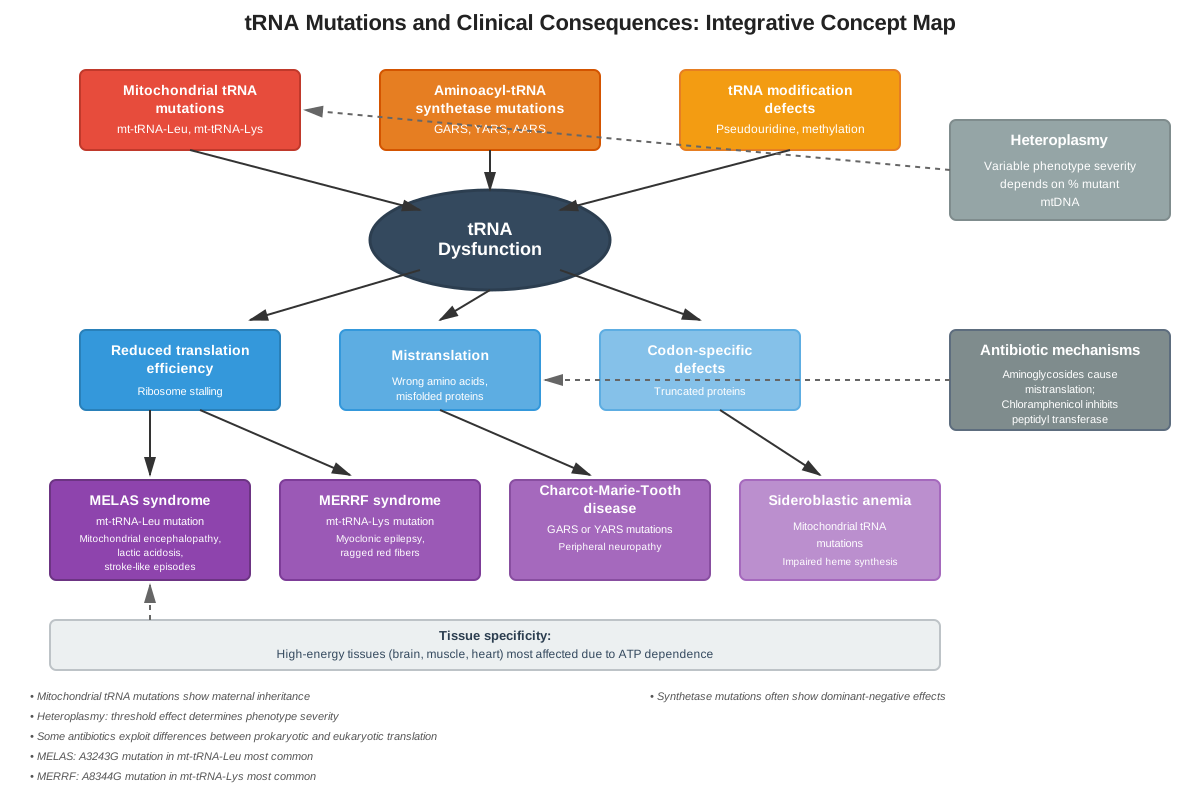
tRNA is clinically significant because defects in tRNA genes or aminoacyl-tRNA synthetases cause human diseases, including mitochondrial disorders, neurological conditions, and certain forms of anemia. Mutations in mitochondrial tRNA genes are particularly important because mitochondria have their own translation machinery, and defects can lead to conditions like MELAS syndrome (Mitochondrial Encephalopathy, Lactic Acidosis, and Stroke-like episodes) and MERRF syndrome (Myoclonic Epilepsy with Ragged Red Fibers). Additionally, many antibiotics target bacterial ribosomes and tRNA interactions, making this knowledge relevant for understanding antimicrobial mechanisms in pharmacology.
On the MCAT, tRNA MCAT questions appear in approximately 15-20% of passages involving molecular biology and genetics. The exam frequently tests tRNA through discrete questions about translation mechanics, passage-based questions involving experimental manipulation of protein synthesis, and integrated questions connecting mutations to phenotypic outcomes. Common question formats include identifying the correct anticodon for a given codon, predicting the effects of aminoacyl-tRNA synthetase mutations, analyzing wobble base pairing, and interpreting experimental data from translation assays.
This topic commonly appears in MCAT passages describing: (1) experiments using radioactively labeled amino acids to track protein synthesis, (2) antibiotic mechanisms that interfere with tRNA binding to ribosomes, (3) genetic engineering techniques involving suppressor tRNAs, (4) evolutionary studies comparing tRNA genes across species, and (5) clinical vignettes describing patients with mitochondrial diseases. The ability to quickly identify tRNA's role in these contexts and apply mechanistic understanding to novel scenarios is essential for achieving a competitive score.
Core Concepts
Structure of tRNA
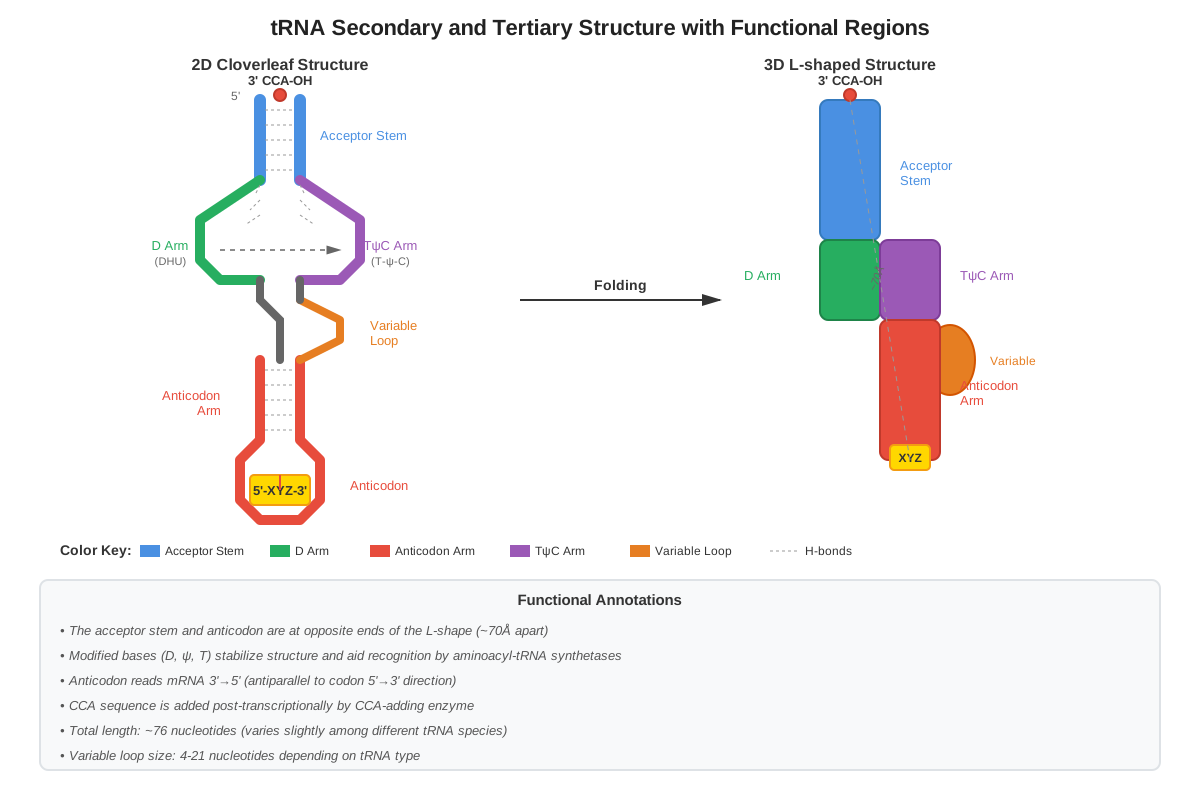
Transfer RNA (tRNA) is a small RNA molecule, typically 76-90 nucleotides in length, that adopts a characteristic cloverleaf secondary structure and an L-shaped tertiary structure. The molecule contains four main arms formed by complementary base pairing: the acceptor arm, the D arm, the anticodon arm, and the TψC arm (also called the T arm). The acceptor arm terminates in a conserved CCA sequence at the 3' end, where amino acids attach to the 3'-hydroxyl group of the terminal adenosine. This attachment site is critical because it holds the amino acid that will be incorporated into the growing polypeptide chain.
The anticodon is a three-nucleotide sequence located in the anticodon loop that is complementary and antiparallel to the mRNA codon. This region is responsible for the specificity of tRNA-mRNA recognition during translation. The anticodon reads the mRNA codon in the 3' to 5' direction, while the mRNA itself is read 5' to 3' by the ribosome. The D arm contains dihydrouridine modifications, and the TψC arm contains pseudouridine (ψ) and thymine, both unusual modifications that stabilize tRNA structure and facilitate ribosome binding.
The three-dimensional L-shaped structure positions the acceptor arm and anticodon arm at opposite ends of the molecule, approximately 70-80 Ångströms apart. This spatial arrangement is functionally important because it allows the anticodon to interact with mRNA in the ribosome's decoding center while simultaneously positioning the amino acid near the peptidyl transferase center where peptide bond formation occurs. The structure is stabilized by extensive hydrogen bonding, including non-Watson-Crick base pairs and interactions between the D and TψC loops.
Aminoacylation: Charging tRNA
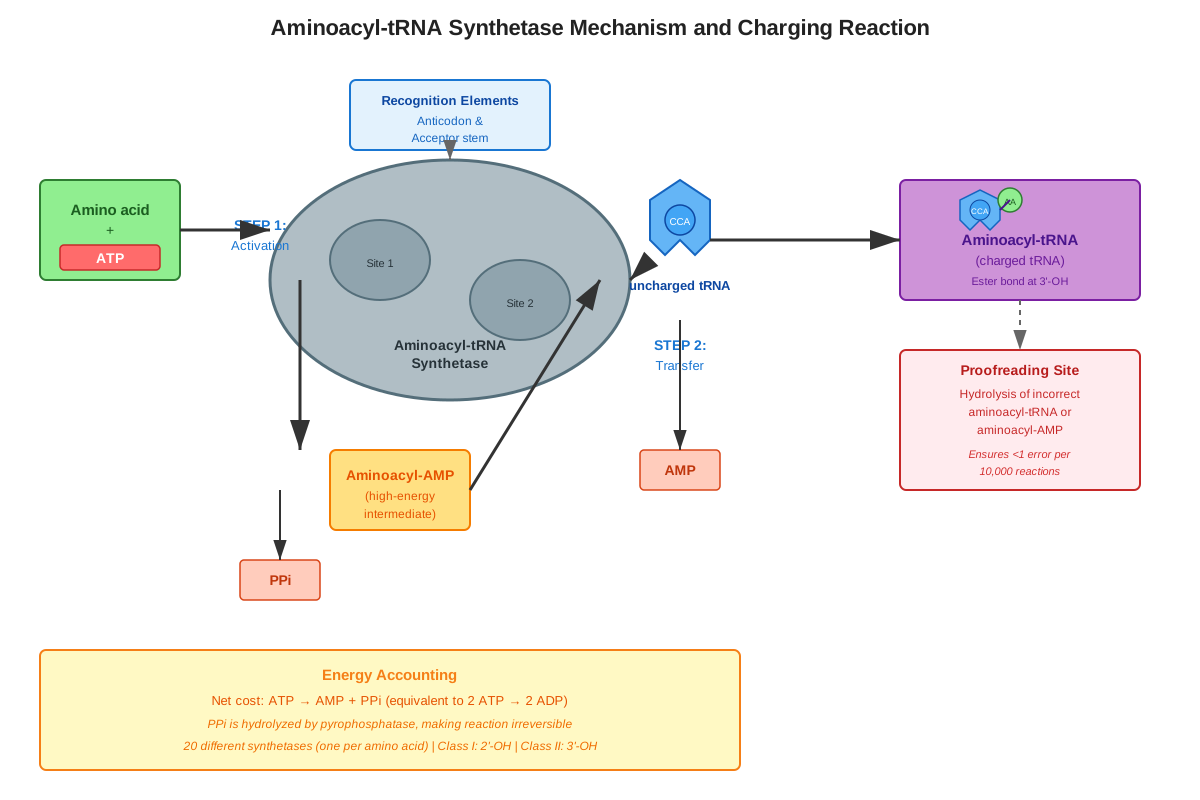
Aminoacyl-tRNA synthetases are enzymes that catalyze the attachment of specific amino acids to their corresponding tRNA molecules, a process called aminoacylation or "charging." There are typically 20 different aminoacyl-tRNA synthetases in cells, one for each amino acid (though some organisms have variations). These enzymes exhibit remarkable specificity, recognizing both the correct amino acid and the appropriate tRNA molecules through interactions with the anticodon and other identity elements in the tRNA structure.
The aminoacylation reaction occurs in two steps:
- Activation: The amino acid reacts with ATP to form an aminoacyl-AMP intermediate, releasing pyrophosphate (PPi)
- Amino acid + ATP → Aminoacyl-AMP + PPi
- Transfer: The activated amino acid is transferred from aminoacyl-AMP to the 3'-OH of the tRNA's terminal adenosine, forming an aminoacyl-tRNA (also called charged tRNA) and releasing AMP
- Aminoacyl-AMP + tRNA → Aminoacyl-tRNA + AMP
The overall reaction is: Amino acid + tRNA + ATP → Aminoacyl-tRNA + AMP + PPi
This process requires energy input (ATP hydrolysis) and is highly accurate due to proofreading mechanisms. Many aminoacyl-tRNA synthetases have editing sites that hydrolyze incorrectly attached amino acids, ensuring translation fidelity. The proofreading function is particularly important for distinguishing between structurally similar amino acids (e.g., valine and isoleucine).
The Genetic Code and Wobble Base Pairing
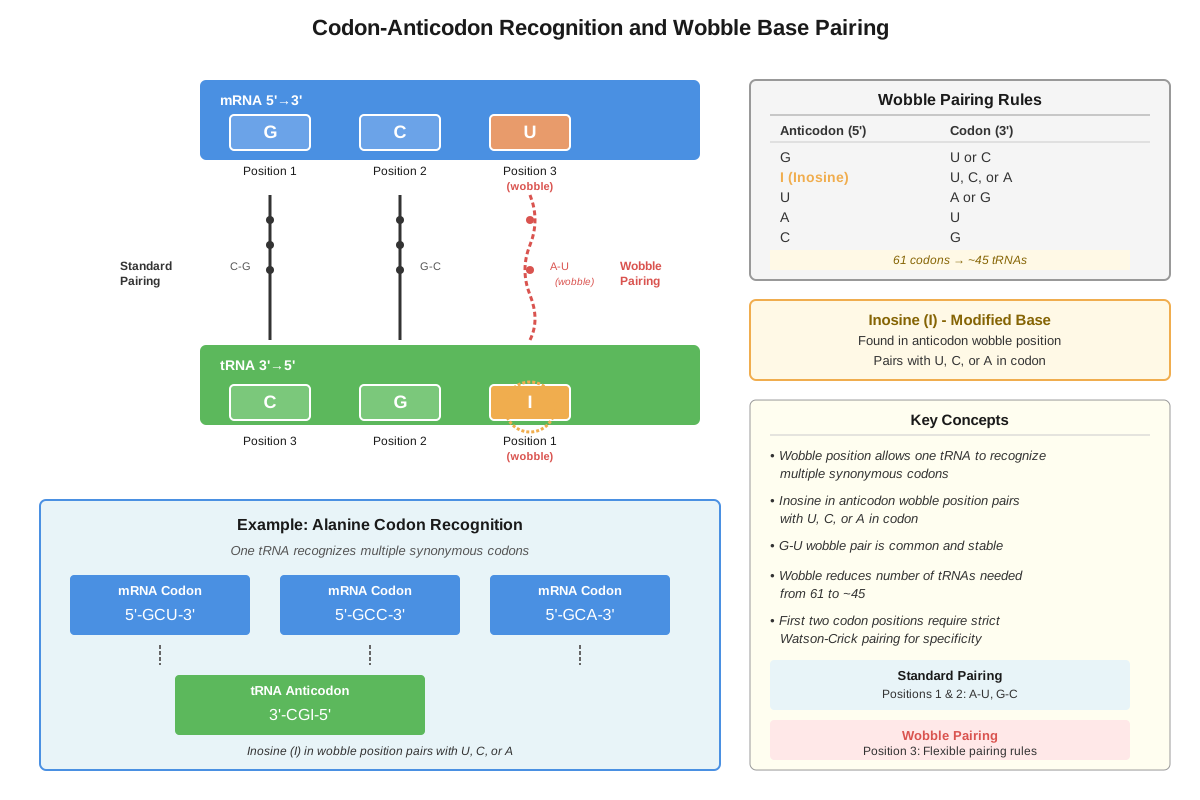
The genetic code is degenerate, meaning multiple codons can specify the same amino acid. There are 61 sense codons (coding for amino acids) and 3 stop codons, but typically fewer than 61 different tRNA molecules in cells. This apparent discrepancy is resolved by the wobble hypothesis, proposed by Francis Crick, which states that non-Watson-Crick base pairing can occur between the third position of the codon (3' end) and the first position of the anticodon (5' end).
The wobble position allows for flexibility in base pairing according to specific rules:
| Anticodon Base (5' position) | Can Pair with Codon Base (3' position) |
|---|---|
| G | C or U |
| C | G only |
| A | U only |
| U | A or G |
| I (inosine) | A, C, or U |
Inosine is a modified nucleotide commonly found in the wobble position of tRNA anticodons. It is formed by deamination of adenosine and can pair with three different bases (A, C, or U), allowing a single tRNA to recognize multiple codons. This wobble base pairing explains why organisms can function with fewer tRNA species than the number of sense codons and why mutations in the third codon position (synonymous mutations) often do not change the amino acid incorporated.
tRNA in Translation
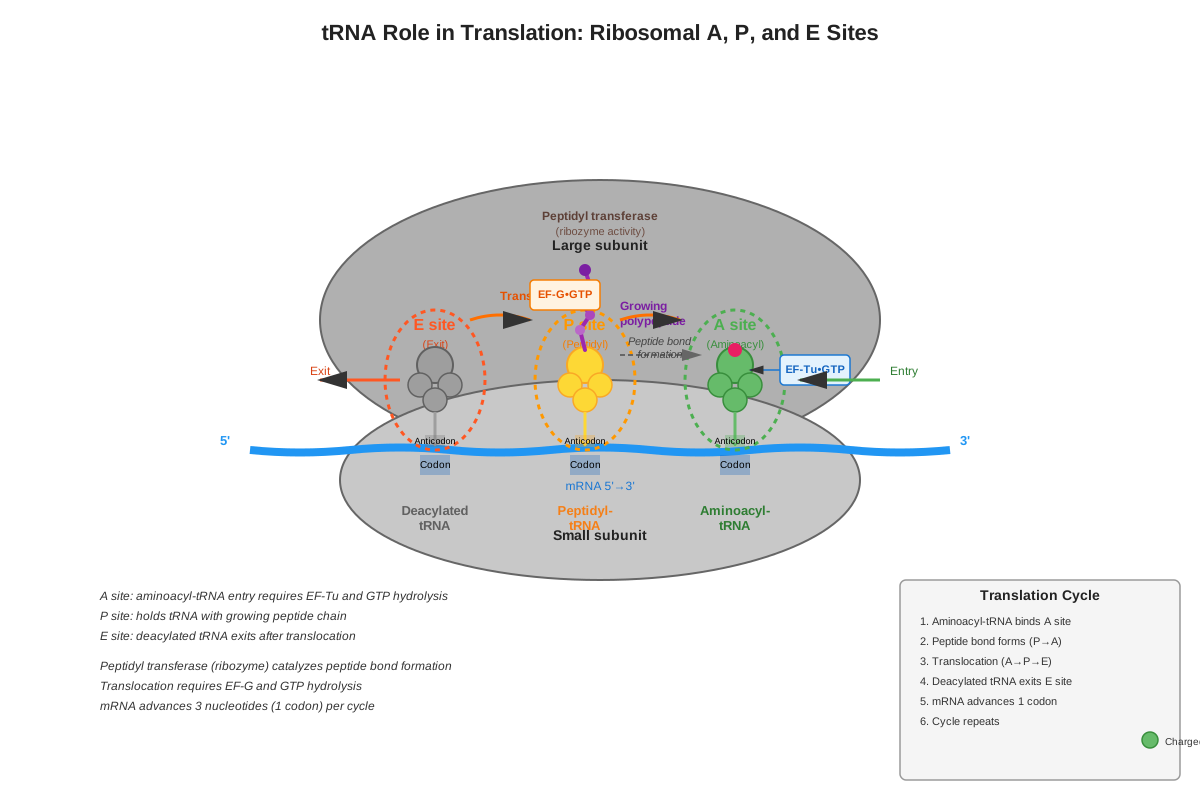
During translation, tRNA molecules cycle through three binding sites in the ribosome: the A site (aminoacyl site), P site (peptidyl site), and E site (exit site). The process follows these steps:
- Initiation: A special initiator tRNA (carrying methionine in eukaryotes, N-formylmethionine in prokaryotes) binds to the start codon (AUG) in the P site
- Elongation:
- An aminoacyl-tRNA enters the A site when its anticodon matches the mRNA codon
- Peptidyl transferase (a ribozyme activity of ribosomal RNA) catalyzes peptide bond formation between the amino acid in the A site and the growing polypeptide chain in the P site
- Translocation moves the ribosome three nucleotides along the mRNA, shifting the deacylated tRNA to the E site and the peptidyl-tRNA to the P site
- The deacylated tRNA exits from the E site and can be recharged
- Termination: When a stop codon (UAA, UAG, or UGA) enters the A site, release factors bind instead of tRNA, triggering hydrolysis of the polypeptide from the tRNA and ribosome disassembly
Elongation factors (EF-Tu and EF-G in prokaryotes; eEF1A and eEF2 in eukaryotes) facilitate tRNA binding and translocation, both requiring GTP hydrolysis. This energy expenditure ensures accuracy and directionality of translation. Each amino acid incorporation requires the hydrolysis of at least 4 high-energy phosphate bonds (2 from ATP during aminoacylation, 2 from GTP during elongation), making translation one of the most energy-intensive cellular processes.
Post-transcriptional Modifications
tRNA molecules undergo extensive post-transcriptional modifications, with over 100 different types of modified nucleotides identified across all tRNA species. These modifications are crucial for tRNA stability, proper folding, and accurate codon recognition. Common modifications include:
- Pseudouridine (ψ): Isomerization of uridine, enhancing structural stability
- Dihydrouridine (D): Reduction of uridine, increasing flexibility in the D arm
- Inosine (I): Deamination of adenosine in the wobble position, expanding codon recognition
- Methylation: Addition of methyl groups to various bases and ribose sugars, affecting structure and function
- Queuosine (Q): Complex modification in the wobble position of certain tRNAs, affecting translation efficiency
These modifications occur after transcription and are catalyzed by specific enzymes. Defects in tRNA modification enzymes have been linked to human diseases, including intellectual disabilities and cancer. The modifications are particularly important in the anticodon loop, where they fine-tune codon recognition and prevent misreading of the genetic code.
Concept Relationships
The structure of tRNA directly determines its function in translation. The acceptor arm → enables aminoacylation by aminoacyl-tRNA synthetases → produces charged tRNA → which delivers amino acids to the ribosome. Simultaneously, the anticodon → recognizes specific mRNA codons through complementary base pairing (including wobble pairing) → ensures correct amino acid incorporation → maintains translation fidelity.
The genetic code connects to tRNA through the anticodon-codon relationship: each codon in mRNA → is recognized by a complementary anticodon in tRNA → which carries the corresponding amino acid specified by the genetic code. The wobble hypothesis modifies this relationship by allowing flexibility in the third codon position → reduces the number of required tRNA species → explains codon degeneracy.
Post-transcriptional modifications → enhance tRNA structure and function → improve codon recognition accuracy → increase translation efficiency. These modifications particularly affect the anticodon loop → influence wobble base pairing → determine which codons a tRNA can recognize.
The energy requirements connect multiple concepts: ATP hydrolysis during aminoacylation → charges tRNA with amino acids → GTP hydrolysis during elongation → facilitates tRNA binding and translocation → overall translation requires significant energy investment → reflects the importance of accurate protein synthesis.
tRNA function integrates with broader molecular biology concepts: transcription produces tRNA genes → RNA processing and modification create mature tRNA → translation uses tRNA to decode mRNA → produces proteins that perform cellular functions. Mutations in any component (tRNA genes, modification enzymes, or aminoacyl-tRNA synthetases) → can disrupt translation → leading to disease phenotypes.
Quick check — test yourself on tRNA so far.
Try Flashcards →High-Yield Facts
⭐ tRNA has a cloverleaf secondary structure and L-shaped tertiary structure with four main arms: acceptor, D, anticodon, and TψC arms
⭐ Amino acids attach to the 3'-OH of the terminal adenosine in the CCA sequence at the acceptor arm
⭐ Aminoacyl-tRNA synthetases charge tRNA in a two-step reaction requiring ATP, producing aminoacyl-tRNA + AMP + PPi
⭐ The anticodon is complementary and antiparallel to the mRNA codon, reading 3' to 5' while mRNA is read 5' to 3'
⭐ Wobble base pairing occurs at the third codon position, allowing one tRNA to recognize multiple codons
- Inosine in the wobble position of the anticodon can pair with A, C, or U in the codon
- The initiator tRNA carries methionine (Met) in eukaryotes and N-formylmethionine (fMet) in prokaryotes
- tRNA cycles through three ribosomal sites: A (aminoacyl), P (peptidyl), and E (exit)
- Each amino acid incorporation requires hydrolysis of at least 4 high-energy phosphate bonds (2 ATP, 2 GTP equivalents)
- Aminoacyl-tRNA synthetases have proofreading mechanisms to ensure correct amino acid-tRNA pairing
- Over 100 different post-transcriptional modifications occur in tRNA molecules, affecting stability and function
- Suppressor tRNAs have mutated anticodons that can read stop codons, allowing read-through of nonsense mutations
- Mitochondria have their own set of tRNAs, and mutations in mitochondrial tRNA genes cause human diseases
- The peptidyl transferase activity that forms peptide bonds is catalyzed by ribosomal RNA (23S rRNA in prokaryotes, 28S rRNA in eukaryotes), not protein
- Certain antibiotics (e.g., tetracycline, aminoglycosides) interfere with tRNA binding to bacterial ribosomes
Common Misconceptions
Misconception: tRNA directly reads DNA to determine which amino acid to carry.
Correction: tRNA reads mRNA codons, not DNA. The anticodon on tRNA is complementary to mRNA codons, which are transcribed from DNA. The flow is DNA → mRNA → tRNA recognition during translation.
Misconception: The anticodon and codon pair in parallel orientation.
Correction: The anticodon and codon are antiparallel. The anticodon is read 3' to 5' while the codon is read 5' to 3'. For example, the mRNA codon 5'-AUG-3' pairs with the tRNA anticodon 3'-UAC-5'.
Misconception: Each codon requires a unique tRNA molecule.
Correction: Due to wobble base pairing, fewer tRNA species exist than the 61 sense codons. One tRNA can recognize multiple codons, particularly those differing only in the third position. For example, a tRNA with anticodon 3'-UAI-5' (where I is inosine) can recognize codons 5'-AUU-3', 5'-AUC-3', and 5'-AUA-3', all coding for isoleucine.
Misconception: Aminoacyl-tRNA synthetases recognize only the anticodon to ensure specificity.
Correction: While the anticodon is important, aminoacyl-tRNA synthetases recognize multiple "identity elements" throughout the tRNA structure, including the acceptor stem, D arm, and variable loop. Some synthetases primarily recognize the acceptor stem rather than the anticodon.
Misconception: The energy for peptide bond formation comes from GTP hydrolysis.
Correction: The energy for peptide bond formation comes from the high-energy ester bond between the amino acid and tRNA (formed during aminoacylation using ATP). GTP hydrolysis during elongation provides energy for conformational changes in elongation factors and ribosome translocation, not for peptide bond formation itself.
Misconception: All tRNA molecules are identical except for their anticodon sequences.
Correction: tRNA molecules vary in sequence throughout their structure, not just in the anticodon. They also differ in their post-transcriptional modifications, which affect their stability, codon recognition, and interaction with aminoacyl-tRNA synthetases and elongation factors.
Misconception: Stop codons have corresponding tRNAs.
Correction: Stop codons (UAA, UAG, UGA) do not have corresponding tRNAs under normal circumstances. Instead, release factors recognize stop codons and trigger translation termination. However, suppressor tRNAs with mutated anticodons can sometimes read stop codons, though this is not the normal mechanism.
Worked Examples
Example 1: Determining Anticodon Sequences and Wobble Pairing
Question: A segment of mRNA has the sequence 5'-AUGCCUGGCAAU-3'.
(a) What are the anticodon sequences of the tRNAs that would bind to each codon?
(b) If a tRNA has inosine (I) in the wobble position of its anticodon, which codons for the same amino acid could it potentially recognize?
Solution:
(a) First, divide the mRNA into codons (read 5' to 3'):
- 5'-AUG-3'
- 5'-CCU-3'
- 5'-GGC-3'
- 5'-AAU-3'
Remember that anticodons are antiparallel to codons. To find the anticodon, write the complement and reverse the direction:
For 5'-AUG-3':
- Complement: UAC
- Reverse to antiparallel: 3'-UAC-5' or written conventionally: 5'-CAU-3'
For 5'-CCU-3':
- Complement: GGA
- Antiparallel: 3'-AGG-5' or 5'-GGA-3'
For 5'-GGC-3':
- Complement: CCG
- Antiparallel: 3'-GCC-5' or 5'-CCG-3'
For 5'-AAU-3':
- Complement: UUA
- Antiparallel: 3'-AUU-5' or 5'-UUA-3'
Answer: The anticodons are 3'-UAC-5', 3'-AGG-5', 3'-GCC-5', and 3'-AUU-5' (or written 5' to 3': CAU, GGA, CCG, UUA)
(b) Consider proline, which has codons CCU, CCC, CCA, and CCG. If a tRNA has the anticodon 3'-GGI-5' (where I is in the wobble position, corresponding to the 5' end of the anticodon):
According to wobble rules, inosine can pair with A, C, or U in the third position of the codon.
The anticodon 3'-GGI-5' would pair with:
- 5'-CCU-3' (I pairs with U)
- 5'-CCC-3' (I pairs with C)
- 5'-CCA-3' (I pairs with A)
But NOT with 5'-CCG-3' (I cannot pair with G)
Answer: A single tRNA with inosine in the wobble position could recognize three of the four proline codons (CCU, CCC, CCA), but a second tRNA would be needed for CCG.
Example 2: Analyzing an Aminoacyl-tRNA Synthetase Mutation
Question: A researcher discovers a mutant aminoacyl-tRNA synthetase for alanine (Ala-tRNA synthetase) that has lost its proofreading function but retains its ability to attach amino acids to tRNA. The mutant enzyme occasionally attaches serine (Ser) to tRNA^Ala instead of alanine.
(a) What would be the consequence for protein synthesis?
(b) Why is this error particularly problematic for the cell?
(c) If the normal error rate for this synthetase is 1 in 10,000, and the mutant has an error rate of 1 in 100, estimate the impact on a protein of 500 amino acids that normally contains 50 alanine residues.
Solution:
(a) When Ser-tRNA^Ala (serine attached to alanine tRNA) enters the ribosome, the ribosome recognizes only the anticodon, not the attached amino acid. Therefore, serine would be incorporated into the protein at positions where the genetic code specifies alanine. This would produce proteins with incorrect amino acid sequences.
Consequence: Proteins would have serine substituted for alanine at random positions, potentially affecting protein folding, stability, and function. The severity would depend on whether the substitutions occur at critical positions.
(b) This error is particularly problematic because:
- The ribosome has no mechanism to check whether the correct amino acid is attached to a tRNA—it relies entirely on the fidelity of aminoacyl-tRNA synthetases
- Alanine and serine have different chemical properties (alanine is hydrophobic with a methyl side chain; serine is polar with a hydroxyl group)
- These substitutions could disrupt protein structure, especially in hydrophobic cores or at functional sites
- The error would affect all proteins containing alanine, potentially compromising multiple cellular functions simultaneously
- Unlike DNA replication errors, translation errors cannot be repaired and accumulate in the proteome
(c) Calculation:
Normal error rate: 1/10,000 = 0.0001
Expected errors in 50 alanine residues: 50 × 0.0001 = 0.005 errors per protein
(Essentially, fewer than 1 in 100 proteins would have an error)
Mutant error rate: 1/100 = 0.01
Expected errors in 50 alanine residues: 50 × 0.01 = 0.5 errors per protein
(On average, every other protein would have at least one serine substituted for alanine)
Answer: The mutation increases the error rate 100-fold. While normal cells would produce mostly error-free proteins, the mutant would produce proteins where approximately 50% contain at least one incorrect amino acid substitution. This would likely be lethal or severely compromise cellular function, as many proteins would be non-functional or misfolded.
Exam Strategy
When approaching tRNA MCAT questions, first identify what aspect of tRNA the question addresses: structure, aminoacylation, codon recognition, or translation mechanics. Questions often test the relationship between anticodons and codons, so immediately note the directionality (antiparallel pairing). If given an mRNA sequence, mentally divide it into codons reading 5' to 3', then determine anticodons by complementing and reversing.
Trigger words and phrases to watch for:
- "Charged tRNA" or "aminoacyl-tRNA" → indicates tRNA with amino acid attached
- "Wobble" or "third position" → refers to flexible base pairing at codon position 3
- "Aminoacyl-tRNA synthetase" → enzyme that charges tRNA; think about specificity and proofreading
- "Anticodon" → always antiparallel to codon
- "Inosine" → modified base in wobble position that pairs with A, C, or U
- "Suppressor tRNA" → mutant tRNA that reads stop codons
- "Peptidyl transferase" → catalyzes peptide bond formation (ribozyme activity)
Exam Tip: When questions ask about energy requirements, remember that aminoacylation requires ATP (producing AMP + PPi), while tRNA binding and translocation require GTP. Each amino acid incorporation costs at least 4 high-energy phosphate bonds total.
For process-of-elimination strategies:
- Eliminate answers suggesting tRNA reads DNA directly (it reads mRNA)
- Eliminate answers showing parallel anticodon-codon pairing (they're antiparallel)
- Eliminate answers suggesting ribosomes check the amino acid attached to tRNA (they only check the anticodon)
- Eliminate answers claiming all 61 sense codons require unique tRNAs (wobble reduces this number)
- Eliminate answers attributing peptide bond formation energy to GTP (it comes from the aminoacyl-tRNA ester bond)
Time allocation: For discrete questions on tRNA structure or function, aim for 60-90 seconds. For passage-based questions involving experimental data on translation, allocate 90-120 seconds to integrate the passage information with your knowledge. If a question requires drawing out anticodon-codon pairing, quickly sketch it on your noteboard to avoid directional errors—this 10-second investment prevents careless mistakes.
When passages describe mutations or experimental manipulations, immediately ask: "How does this affect tRNA charging, codon recognition, or ribosome binding?" This framework helps organize information and predict experimental outcomes. For questions involving wobble pairing, focus on the third codon position and remember that inosine is the most flexible wobble base.
Memory Techniques
Mnemonic for tRNA arms: "A-D-A-T" (Acceptor, D, Anticodon, TψC/T)
- Acceptor arm: where Amino acids Attach
- D arm: contains Dihydrouridine
- Anticodon arm: contains the Anticodon loop
- TψC arm: contains Thymine and pseudouridine (ψ)
Mnemonic for ribosome binding sites: "APE" (A-P-E)
- A site: Aminoacyl-tRNA enters (new tRNA arrives)
- P site: Peptidyl-tRNA holds growing chain
- E site: Exit site (deacylated tRNA leaves)
Visualization for anticodon-codon pairing: Picture a ladder where the rungs are base pairs, but one side is upside down. The mRNA (codon) runs 5' to 3' going up, while the tRNA (anticodon) runs 3' to 5' going up—they're reading in opposite directions along the same ladder.
Mnemonic for wobble pairing with inosine: "I ACU" (sounds like "I see you")
- Inosine pairs with A, C, and U (but not G)
Acronym for aminoacylation steps: "AT" (Activation, Transfer)
- Activation: Amino acid + ATP → Aminoacyl-AMP + PPi
- Transfer: Aminoacyl-AMP + tRNA → Aminoacyl-tRNA + AMP
Memory aid for energy requirements: "2 + 2 = 4"
- 2 ATP equivalents for aminoacylation (ATP → AMP + PPi counts as 2 high-energy bonds)
- 2 GTP for elongation (one for tRNA binding, one for translocation)
- 4 total high-energy phosphate bonds per amino acid
Visualization for tRNA L-shape: Picture an uppercase "L" where the vertical part is the acceptor arm (amino acid at top) and the horizontal part is the anticodon arm (anticodon at the end). This spatial separation (~70-80 Å) allows simultaneous interaction with both the peptidyl transferase center and the decoding center of the ribosome.
Summary
Transfer RNA (tRNA) serves as the essential adapter molecule in translation, bridging the genetic information in mRNA with the amino acid sequence of proteins. Each tRNA has a characteristic cloverleaf secondary structure and L-shaped tertiary structure, featuring an acceptor arm where amino acids attach to the 3'-CCA terminus and an anticodon arm that recognizes mRNA codons through complementary, antiparallel base pairing. Aminoacyl-tRNA synthetases charge tRNA molecules in an ATP-dependent two-step reaction, ensuring high fidelity through proofreading mechanisms. The wobble hypothesis explains how fewer tRNA species than codons can exist, with flexible base pairing at the third codon position, particularly involving inosine. During translation, tRNA cycles through the A, P, and E sites of the ribosome, delivering amino acids for peptide bond formation catalyzed by peptidyl transferase. Post-transcriptional modifications enhance tRNA stability and function. Understanding tRNA structure, aminoacylation, codon recognition, and translation mechanics is essential for MCAT success, as these concepts integrate with broader topics in molecular biology, genetics, and cellular metabolism.
Key Takeaways
- tRNA structure: Cloverleaf secondary structure with four arms (acceptor, D, anticodon, TψC) and L-shaped tertiary structure; amino acids attach at 3'-CCA terminus
- Aminoacylation: Two-step ATP-dependent process catalyzed by aminoacyl-tRNA synthetases with proofreading capability; produces aminoacyl-tRNA + AMP + PPi
- Anticodon-codon recognition: Antiparallel, complementary base pairing; anticodon reads 3' to 5' while codon reads 5' to 3'
- Wobble hypothesis: Flexible base pairing at third codon position allows one tRNA to recognize multiple codons; inosine pairs with A, C, or U
- Translation cycle: tRNA moves through A (aminoacyl), P (peptidyl), and E (exit) sites; each amino acid incorporation requires 4 high-energy phosphate bonds
- Ribosome specificity: Ribosomes recognize only the anticodon, not the attached amino acid, making aminoacyl-tRNA synthetase fidelity critical
- Clinical relevance: Mutations in tRNA genes or synthetases cause human diseases, particularly mitochondrial disorders; antibiotics target bacterial tRNA-ribosome interactions
Related Topics
- mRNA and Transcription: Understanding mRNA structure and the genetic code provides context for how tRNA recognizes codons during translation
- Ribosome Structure and Function: The ribosome provides the platform where tRNA delivers amino acids; knowledge of ribosomal sites (A, P, E) and rRNA catalytic activity complements tRNA function
- Translation Regulation: Mechanisms controlling translation initiation, elongation, and termination integrate with tRNA availability and modifications
- Protein Synthesis and the Central Dogma: tRNA function is central to the DNA → RNA → Protein flow of genetic information
- Mutations and Genetic Code: Understanding how mutations affect codons helps predict impacts on tRNA recognition and protein synthesis
- Post-transcriptional Modifications: RNA modifications in tRNA parallel modifications in other RNA types (mRNA, rRNA) and affect function
- Mitochondrial Genetics: Mitochondria have their own tRNA genes; mutations cause specific disease patterns due to maternal inheritance and tissue-specific energy demands
- Antibiotics and Translation Inhibitors: Many clinically important antibiotics target bacterial translation machinery, including tRNA binding sites
Practice CTA
Now that you've mastered the structure, function, and mechanisms of tRNA, it's time to reinforce your understanding through active practice. Attempt the practice questions and flashcards associated with this topic to test your ability to apply these concepts to MCAT-style scenarios. Focus particularly on questions involving anticodon-codon pairing, wobble base pairing, and the energetics of translation—these are high-yield areas where students often make mistakes under time pressure. Remember, understanding tRNA is not just about memorizing structures; it's about seeing how this elegant molecule solves the fundamental problem of translating genetic information into functional proteins. Your ability to quickly analyze tRNA-related questions will serve you well not only on discrete questions but also in complex passages integrating molecular biology with experimental design. Keep pushing forward—mastery of these foundational concepts builds the confidence needed for test day success!
Sign up free to keep reading
Create a free AnvayaPrep account to finish this MCAT guide on tRNA — plus flashcards and practice questions.